




Abstract
Randol Contreras’ drug-robber respondents were not born criminals or torturers, so how did they become “stick-up kids”?
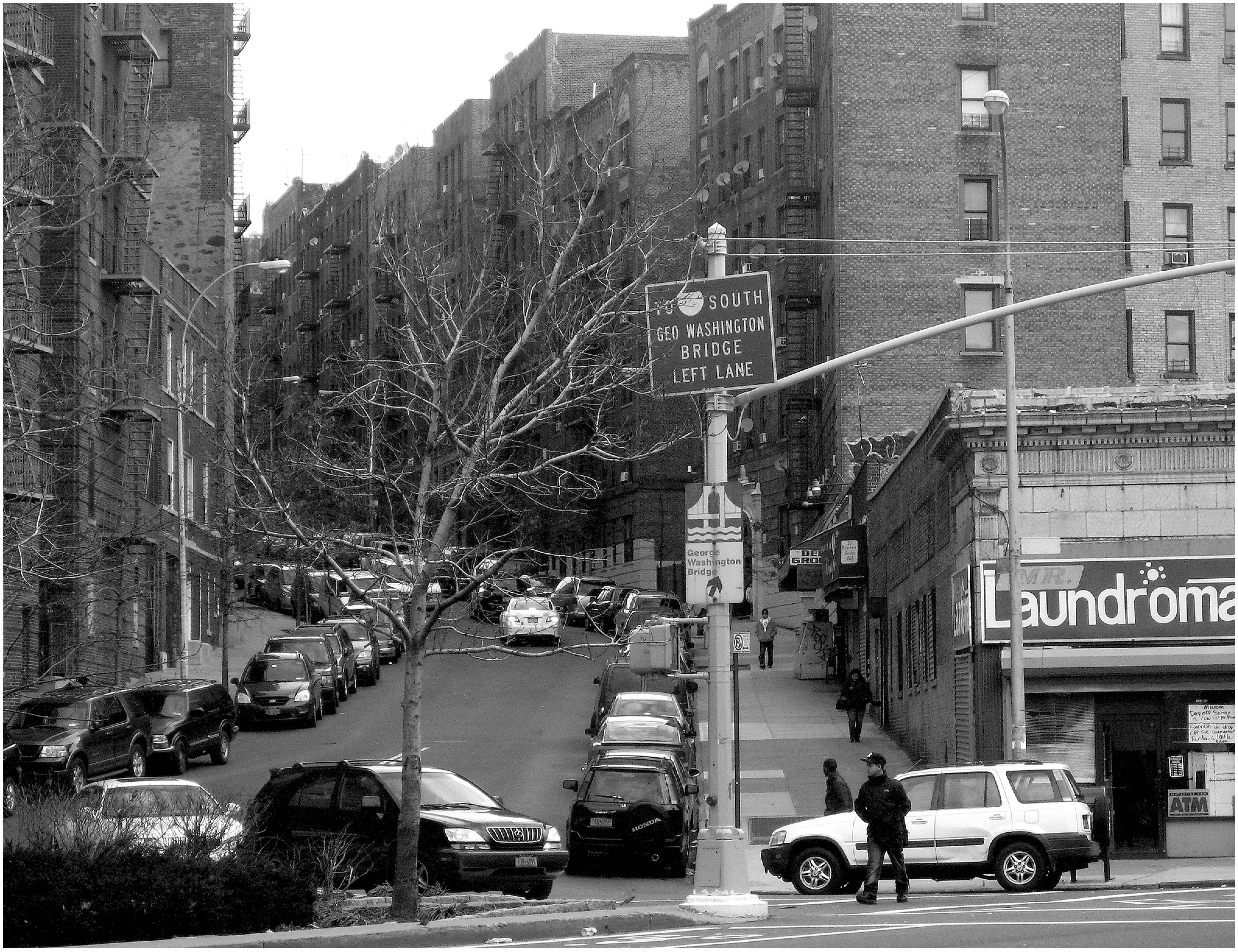
The South Bronx summer night was warm and moist, with that mild glow we always felt after it rained. The neighborhood residents slowly resumed their places on the streets, first standing next to building entrances, then next to wet cars, and then sitting on the cars after they’d dried. The neighborhood bodega, or grocery store, revitalized the block, blasting the 1980s salsa classics that brought bolero lyrics to the dance floor: Y me duele a pensar, que nunca mia seras, De mi enamorate-e-e-e . . .
The South Bronx neigbhorhood.
Courtesy Randol Contreras
Dressed in large T-shirts, Nikes, and baggy shorts, some young Dominican men listened to the cool music alongside me. “Yo, that used to be the jam!”—we nodded our heads; “I used to dance to this shit!”—we tapped our feet; “A si mi’mo!”—one of us did a fancy salsa step; Mira que e, e, e, e, e, e, e—el-l-l-l!—some of us sang along, straining our voices with each rising octave. We were all in a good mood. Just chillin’. Chilliando, baby.
Then Jonah arrived. He pulled Gus aside for a furtive chat. Despite their low voices, we could hear them planning a drug robbery. After about ten minutes, they returned to the group, energized, and recounted stories of their past tumbes (drug robbery hits). Most of the young Dominican men joined in with their own tales of brutality and adventure.
Jonah and Gus recounted a drug robbery when they’d targeted a Dominican drug courier who always delivered five kilos of cocaine to a certain dealer on a certain day. For a share of the take, the dealer told Jonah and Gus where to intercept the courier as he walked out of an apartment building. At gunpoint, they led him to the building’s rooftop, beat him, and stole $100,000 worth of drugs.
Just chillin’. Chilliando, baby. The young Dominican men recounted tales of drug robberies, of adventure and brutality.
Tukee and Pablo told the group about a drug robbery where they had pretended to be undercover officers. With fake badges and real guns, they stopped a pair of drug dealers on the street: “Freeze! Don’t move, motherfucker!” they yelled out. They faced the dealers against a wall and grabbed their suitcase, stuffed with $40,000 in cash. “Keep facing the wall!” they commanded before trotting around the corner to their getaway car.
Neno and Gus told a third story, of a drug robbery that went wrong. They had tortured a drug dealer—punched and kicked him, choked and gagged him, mutilated and burned him—until he passed out. The victim, however, remained unconscious. Afraid, se fueron volando—they hurried out so if the victim died, they wouldn’t be there.
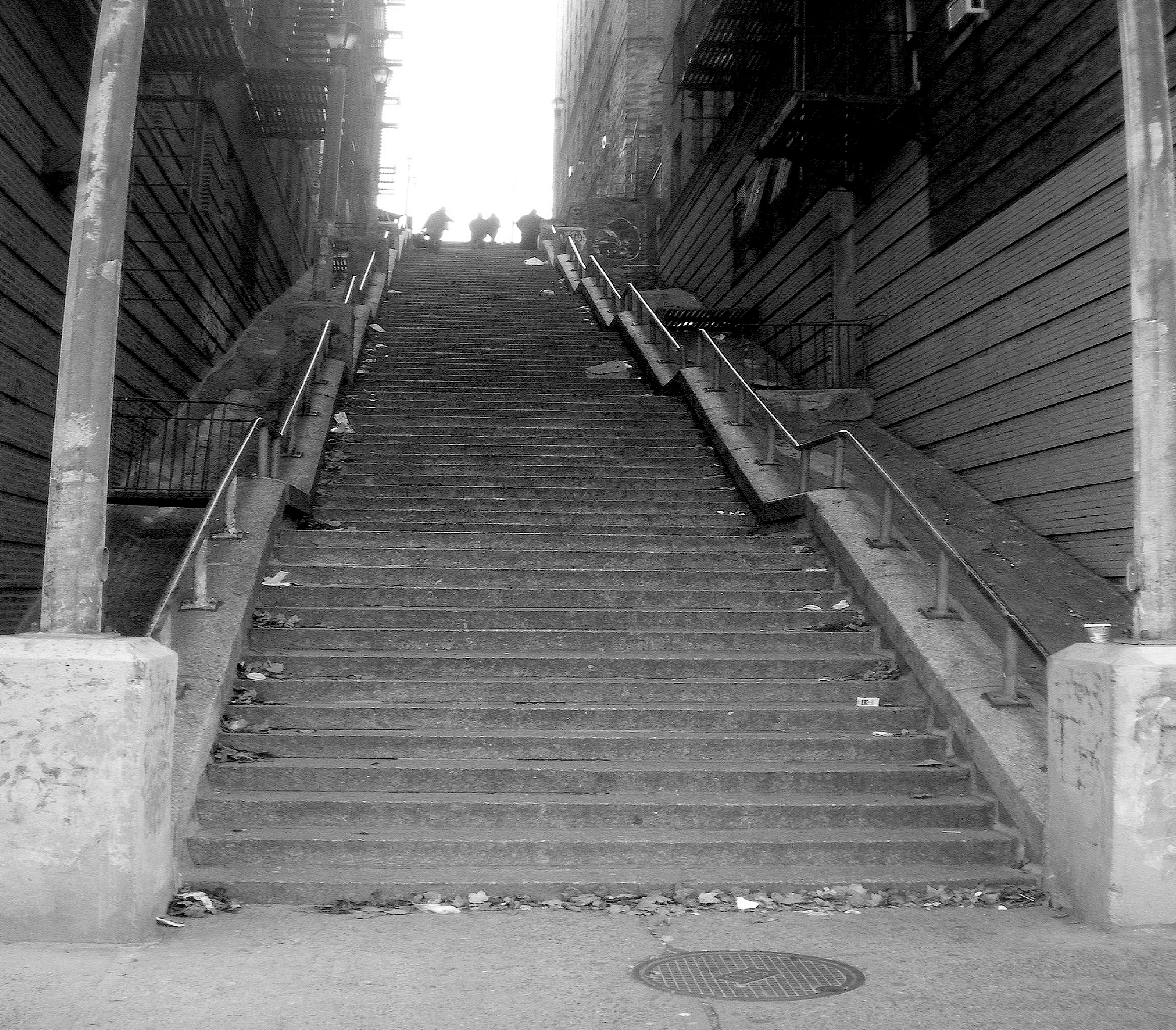
A favorite hangout for the study participants.
Courtesy Randol Contreras
Throughout my field research, I heard many of these robbery tales. In fact, I grew up with these stories and these men. As a young man, I had tried my hand at drug dealing. So I was used to seeing and hearing about drug market violence. Yet there were times when I questioned the humanity of the men next to me on front stoops and car hoods.
How could Pablo almost beat someone to death? How could Gus repeatedly burn someone with an iron? How could Tukee chop off someone’s finger? How could Neno sodomize a dealer with an object? How could all of these men torture, a cruel and deplorable human act?
In trying to understand drug robbery violence, I realized how easy it was to fall into an individualistic, sociopathic-reasoning trap. Could one not argue that these men were sociopaths who enjoyed inflicting pain on others? Maybe they were evil and solely pursued the emotional thrills of crime?
As a sociologist, though, I took a step back to frame what seemed solely evil and sociopathic within larger historical and social forces, forces that sweep people in one direction or another, that shape “why” some people do violence or crime.
Everyone respects Tukee for his tremendous violence during drug robberies. It seems like he could chop off fingers and pistol-whip someone to the brink of death with no hesitation or thought. Sometimes, he even seemed to enjoy torture:
“I remember one time, we put a[n] iron on this dude’s back,” Tukee recounts, laughing. “I had told him, ‘Just tell me where the shit is [the drugs and cash]. If you don’t tell us, I’ma do some things to you, B[ro]. Things you won’t like.’ He ain’t tell us so, boom, [we] took off his shirt and made the iron real hot. I put that shit on his back and the dude started screaming, B, ha-ha-ha! Then he was like, ‘Alright, take it! It’s inside the mattress!’ That shit was funny, B! Ha-ha-ha!”
Taken out of the proper socio-historical context, the laughter and joy in Tukee’s account make it seem like he’s pure evil. Tukee, though, was born neither a drug robber nor torturer. His biography emerged within a particular social context: the rise and fall of crack cocaine in the abandoned and burned-out South Bronx.
Tukee’s Story
Tukee was born to a Dominican father and a Puerto Rican mother in the South Bronx during the early 1970s. For reasons he never disclosed, his father abandoned the family, never to be seen or heard from again. His mother worked several informal jobs, mostly as a seamstress in a local sweatshop. Tukee went to underfunded public schools—when he went. A disengaged and unprepared student, he eventually dropped out of high school. He worked part-time, here and there, moving from one fast-food chain job to the next. But he wanted to make money, get rich.
Tukee’s chances for upward mobility, though, were fading. Between 1947 and 1976, New York City lost about 500,000 factory jobs. That’s half a million unionized jobs that, for about three-quarters of the twentieth century, had provided security and upward mobility for European immigrants and their children. By the time Blacks, Puerto Ricans, and, later, Dominicans, settled in the Bronx, the burgeoning service economy had taken hold. There were lower wages and less job security available to workers with little education, like Tukee.
Crack showed up right on time.
Crack had its origins in the powder cocaine craze of the 1970s. This was a time when professionals like doctors, Wall Street executives, and lawyers likened a line of cocaine to a sip of champagne. The federal government’s hysteria over marijuana and its reduction of drug treatment funds further widened the demand for and use of cocaine. Later, in the early 1980s, when cocaine users reduced their intake, desperate cocaine dealers then turned to crack, a smokable form of the drug, to maintain profits. Instead, their profits soared: crack yielded more quantity than cocaine after preparation. More importantly, crack invited binging. Soon many users were consuming the drug around-the-clock.
Crack quickly proliferated in inner cities across the United States. For marginal urban residents, who suffered because of both a declining manufacturing sector and Reaganomics but still hoped to take part in the grandest version of the American Dream—crack was a Godsend. The start-up money for a crack business was low. And unlike the tightly knit heroin market, there was no need for pre-existing family or ethnic ties to edge your way in. Almost anyone could enter this market.
Tukee walked right in.
He and a friend started selling crack in his Highbridge neighborhood. He began earning between $300 and $500 per day, all profit. He purchased a salvaged luxury car and restored it to its former glory with stolen car parts. Along with his new expensive jewelry and clothes, the car made him a neighborhood celebrity. Yo, here comes Tukee! The sidewalk crowd flocked around. What up Tuke’, where you going? The guys and gals wanted to cruise around in his ride.
Tukee also spent his riquezas, or riches, living the high life. He arrived at nightclubs con estilo, or in style, with an entourage-packed white limousine. Inside, he treated his broke neighborhood friends to over-priced bottles of liquor and bought attractive women expensive drinks. Afterward, if he was still around, the weed was on him, too. Everyone loved Tukee. He was a drug market star.
For marginal urban residents who still hoped to take part in the grandest version of the American Dream, crack cocaine was a Godsend.
Of course, Tukee was also feared. As crack use rose, more dealers tried to squeeze into the now-saturated market. Tukee pulled his gun on several newcomers, warning them to stay away from his “spot.” He became a legend after he shot a dealer for dealing drugs without his permission. After coming out of hiding (the police investigation lasted a few weeks), everyone deferred to him, greeting him with open arms and a smile. Tukee—he’s crazy!
Then, after about a year, it was over. Tukee’s lucrative crack business slowed down. His nightclubbing and largesse took a hit, and he limited his outings to the affordable Dallas BBQ restaurant. “That was the only place I could take girls to,” he remembers. “They served these big-ass glasses of margaritas for real cheap. Those shits looked like they came in Cheerio [cereal] bowls, so I could get bitches drunk for real cheap. I’m telling you, B[ro], times were real hard.”
Tukee wasn’t alone. During the mid-1990s, crack dealing across New York City took a mighty hit. Unbeknownst to dealers, many crack users had reduced their intake because of the drug’s stigma and frenetic, binging lifestyle. Also, the new generation of youth shunned crack because they had seen what it did to their family members, neighbors, and friends. Malt liquor beer and marijuana would become their recreational drugs of choice. The crack market shrank, bringing once-successful crack dealers to the lowest of the lows.
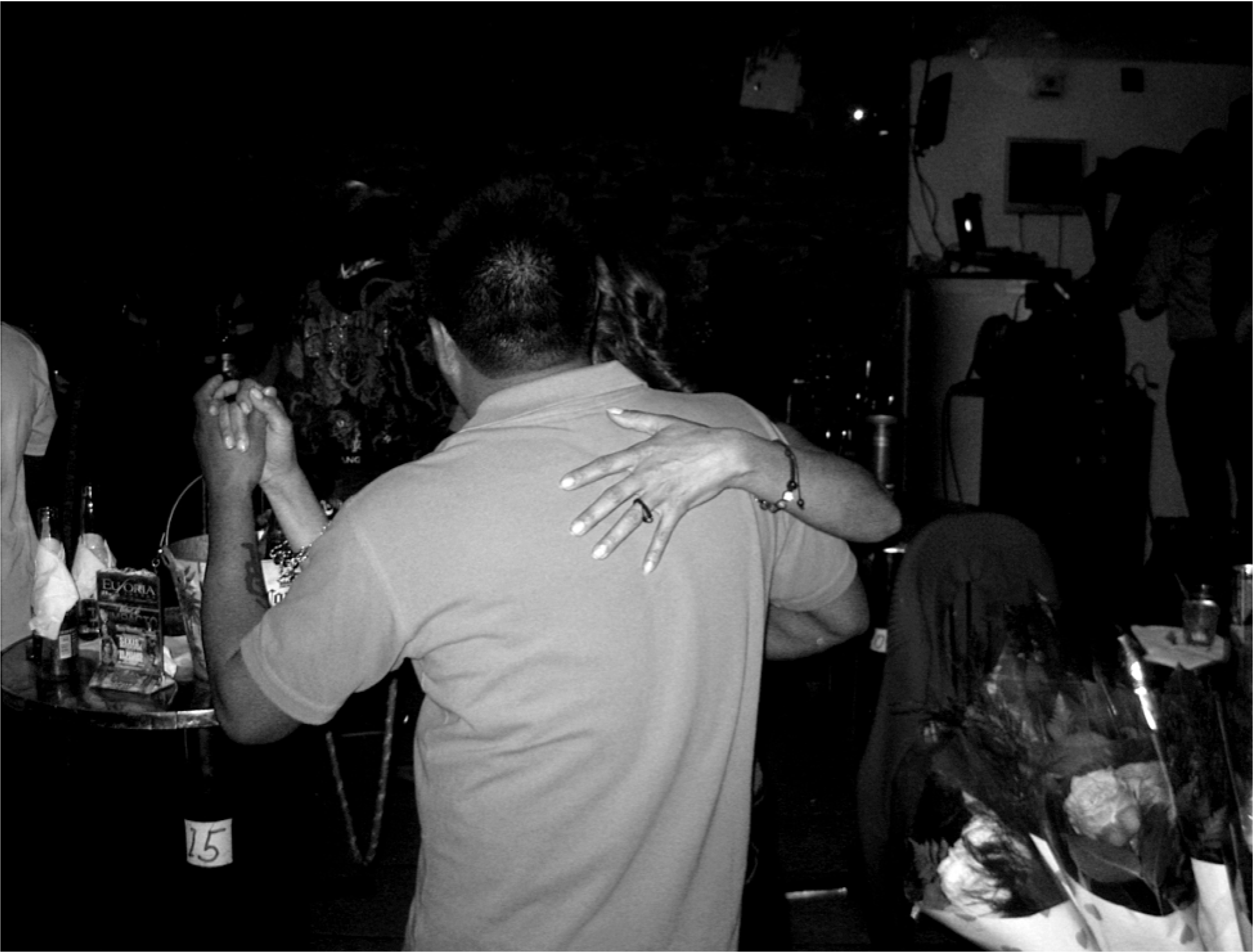
Hanging out at the local club
Courtesy Randol Contreras
Riches and highlife—gone.
To maintain his dealing income, Tukee started transporting crack to Philadelphia, where he established a selling spot with a local. The money was decent, but it wasn’t “Donald Trump” money. When he got word that the police were watching him, he returned to the South Bronx dejected and broke.
“I was sellin’ all my guns, all my jewelry, everything B[ro], just to stay in the game,” Tukee recounts. “I used that money to buy some dope [heroin] and sell that shit.”
Now these former dealers became Stickup Kids, the perpetrators of the worst violence in the drug world. They created a lucrative new niche: drug robberies.
However, Tukee struggled to find an open dealing spot. The heroin dealers—who funded quasi-armies for protection—demanded a daily “rent” of $1,200 to $2,000 for the right to sell on their block. Tukee could not afford the rent. So he returned to Philadelphia to sell his heroin. No luck. Philly heroin users remained loyal to local brands. Defeated, Tukee again returned to the South Bronx.
Eventually, Tukee joined an auto theft crew that catered to the Crack Era’s big-time drug dealers (the same crew that had sold him the stolen car parts for his own ride). But the stolen car business was no longer lucrative—the shrinking crack market lessened its need, too. Tukee hardly earned any money. He was at a loss: “I was like, ‘This is it,’” Tukee recalls. “Nothing’s workin’ out. This is the end of me.”
Like Tukee, other displaced drug dealers felt a financial strain because of the crack market’s decline. Several of them responded by creating a lucrative new niche in drug robberies. Now they beat, burned, choked, and mutilated their drug-dealing victims. Now they committed horrific acts that they had never done before. Now they were Stickup Kids, the perpetrators of the worst violence in the drug world. Tukee joined their ranks.
A former drug dealing connection contacted Tukee for a drug robbery. They planned to rob a drug dealer for about eight kilos of cocaine and $30,000 in cash. Tukee had never done a drug robbery before, not even a street robbery. But he was handy with a gun. “I didn’t even think twice about it,” Tukee recalls. “I was like, ‘Fuck it. Show me where the money’s at.’”
It was an inside job, where a drug dealer wanted to get himself and his partner robbed. The dealer, of course, would be absent. But he gave the Stickup crew the best time to storm the stash apartment, where his partner sometimes stayed alone. If all went well, the treacherous dealer would get half the proceeds just for providing the information. The crew would split the other half: $95,000 in drugs and cash.
For the robbery, they brought along “The Girl,” a young, attractive female accomplice. “We needed her ‘cause we can’t just knock on the door and the dude just gonna open.” Tukee explained. “He don’t know us and he’s fuckin’ holding drugs. He’s gonna be like, ‘These motherfuckers are cops or trying to rob my ass.’ So we got her to knock on the door and get the door open.”
It worked. She knocked. The dealer peeped through the peephole. She smiled and flirted and asked for help. When he opened the door to get a better sense of her needs, the drug robbers, crouched on either side of the door, guns in hand, exploded into action. Tukee’s crew rushed the dealer, rammed him back into the apartment, slammed him onto the floor, kicked him, punched him, pistol-whipped him, threatened him to stay down, not to move, or they would stab him, shoot him, would do everything imaginable that would cause his death.
“The shit was crazy, son,” Tukee recalls. “I was like watching at first. But then I had to make sure that niggas saw me do shit. Let niggas know that I ain’t no slouch. [So] I started kickin’ the dude—Bah! Bah! Then we tied him up with duct tape and I put my gun in his head [sic], I was like, ‘Where’s the shit at! You wanna die, nigga?”
As Tukee and a partner terrified the dealer, the other two robbers frantically searched the apartment for the drugs and cash. After flipping mattresses, pulling out dresser drawers, and yanking out clothes from a closet, they found it. Everyone scrambled out of the apartment, leaving the dealer bloody, bruised, and bound on the living room floor.
There was no need for torture in this robbery. But the thrill energized Tukee. “I was amped up after that, like for awhile, B. I remember we was counting the money, weighing the drugs, splitting everything, giving this dude this much, me this much, him that much… I was like, ‘I’m ready to do this again.’ Let’s go, B!”
According to Tukee, the robbery netted him about $30,000 worth of drugs and cash. This was more than he had earned in a year of stealing cars and selling heroin. So, for him, the violence was worth the money. He wanted to be rich again. Soon, he became a violence expert. He knew how to overcome resistant victims.
“I started doing all types of shit,” Tukee explains. “Like I would tie them [the dealers] up and ask them, ‘Where the fuck the kilos at?’ If they don’t tell me, or be like, ‘I don’t sell drugs. I don’t know why you doing this,’ then I pistol-whipped them. If they still don’t say nothin’, I choked them. If they still don’t say nothin’, then you bring the iron out and burn them. Or you could go to the kitchen and get a kitchen knife, some butcher-type shit, and chop-off one of their fingers. Then those dudes be like, ‘Alright, alright, take it! It’s over there!’”
Tukee, then, learned how to do one-on-one violence —fist-to-face, knife-to-neck, hands-to-throat violence—to someone vulnerable, tied up, who pled for mercy, to please, please leave them alone. Tukee felt he had to. You gotta do what you gotta do, he always said. Violence for money would become his way of life. Tukee—he’s no joke.
Social Context and Violence
Throughout his life, Tukee pursued meaning through the illegal drug market. And his words seem to support an evil and sociopathic understanding of his behavior. Did Tukee enjoy the emotional rush of a drug robbery—yes. Did Tukee enjoy doing violence—yes. But we must also ask: Why did he seek thrills as a drug robber rather than as a courtroom lawyer or a Wall Street executive? Why did he enjoy physically hurting people as a drug robber rather than as a hockey player, football player, or mixed-martial artist?
The answer lies in the social context, the South Bronx setting in which Tukee’s life unfolded. He came of age during the Crack Era, which resulted from misguided drug policies, the decline of manufacturing, and the collapse of inner cities. If we add the daily cultural messages that try to make Americans pursue the ultimate, most gluttonous version of the American Dream, then we see marginal residents who not only used crack to exit poverty, but also to strike it rich. They wanted the material status symbols that Madison Avenue advertising agencies taught them to want and need.
Tukee was born neither a drug robber nor torturer. His biography emerged within a particular social context.
Tukee was born into this world, a world not of his own creation, but one that influenced him first into crack dealing, then into drug robberies. If the Crack Era had not appeared, there is a great chance—though not absolute—that Tukee would have become neither a drug dealer nor drug robber. These lucrative criminal opportunities would have been unlikely, less abundant options. So to understand Tukee, we must understand how history and social structure intersects with his biography. Otherwise, the study of poverty-related brutality becomes a distorted enterprise in which Tukee and other marginal criminals are improperly portrayed.