



Abstract
A neighborhood’s bars can help tell the complex story of gentrification, symbolic ownership, and public space in today’s New York City.

Milano’s Bar is a tiny old watering hole on Houston Street near the Bowery in downtown Manhattan, which used to be New York City’s Skid Row. For most of the twentieth century, Milano’s catered to homeless men. The bar was their refuge, where they were accepted, got mail, cashed checks, slept, and drank. The 1970s saw the rise of glam and punk rock downtown, with the clubs Max’s Kansas City and CBGB, around the corner from Milano’s, serving as homes for numerous bands, artists, and poets. In the 1980s, college students and recent college graduates began to move in. Milano’s, still filled with homeless men, became a cheap destination for these newcomers, and the old-timers had to deal with the change.
Milano’s Bar in 2010.
Meryl Huxham, Flickr Creative Commons
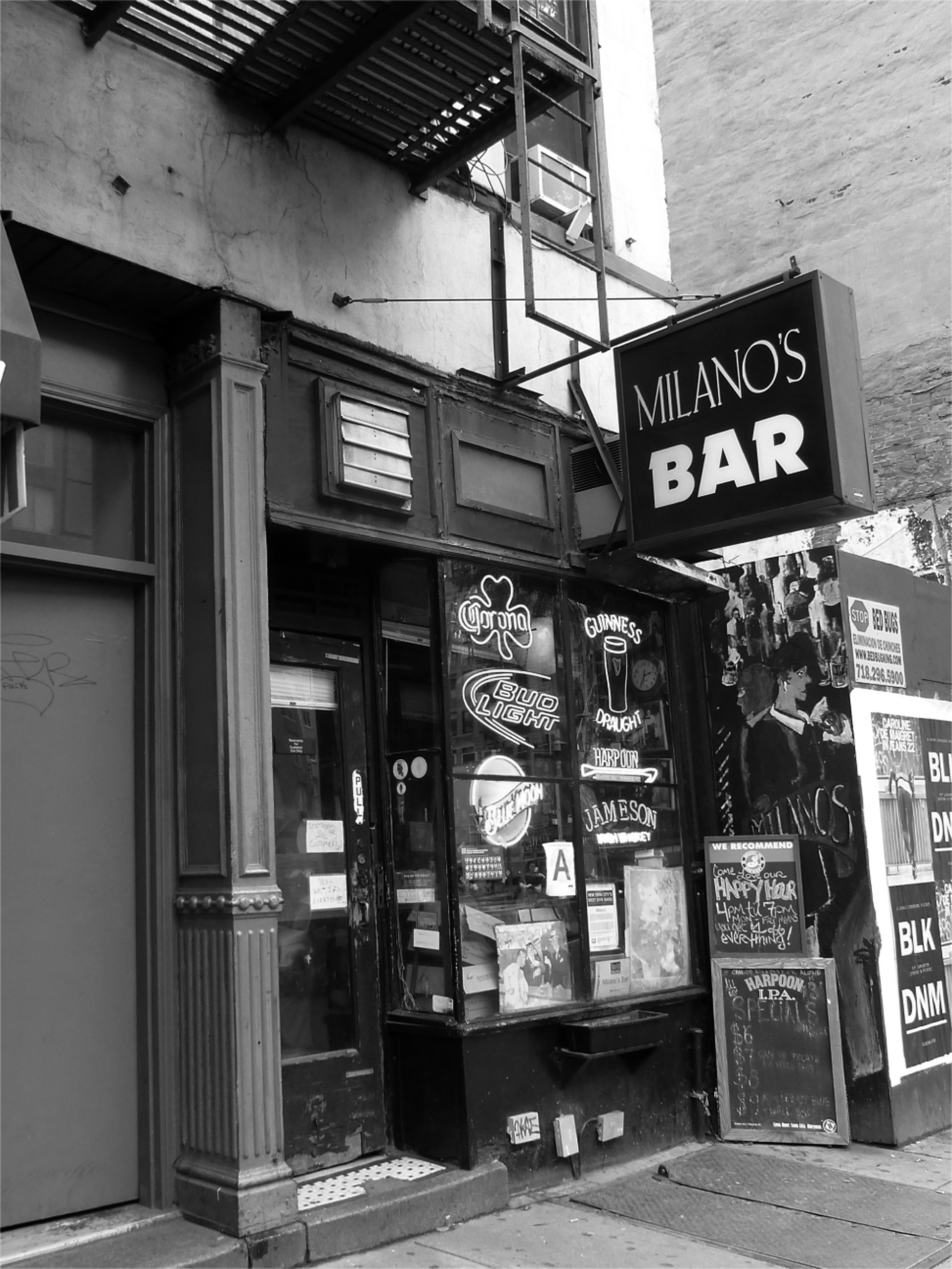
By the time I started studying the bar in 2004, many of the old guard had either passed away or moved on as the Bowery’s SRO (single room occupancy) hotels closed. Milanos’ non-homeless, longtime regulars were in their 40s and 50s. The new crop of customers looked more like me: White, well-educated men in their 20s and 30s, mostly just visiting the area. Some became regulars, but most just dropped in, late at night and especially on weekends. To them, Milano’s was—and is—a piece of the endangered “authentic” downtown New York and a quintessential “dive,” standing in stark contrast to the scene’s fancy new glamorous nightspots. It is a destination for a night of debauchery or a stop on a bar crawl (whether a first stop or a sloppy finale). As they embrace the bar and downtown, some of that old “authenticity” they seek gets squeezed out; Milano’s adjusts to attract these newcomers and stay in business, and homeless men and regulars watch their bar become less “theirs.”
Since the 1980s, the downtown Manhattan areas of the Bowery, East Village, and Lower East Side have begun the transformation from neglected, poor slums to some of the most coveted destinations for young urbanites. Before gentrification, this area was replete with abandoned buildings and had high rates of poverty, unemployment, and crime. The rents were cheap and daily life here was adventurous for young, white artists, students, and recent college graduates.
An important aspect of the gentrification of downtown has been the growth of large nightlife scenes with an abundance of bars, restaurants, and clubs. City officials praise such changes as positive examples of New York City’s rebirth, while most research and discussions of gentrification focus on housing, especially the displacement of long-time residents. The commercial dimension usually gets secondary treatment, seen as a mere byproduct of the residential change. But the growth of nightlife scenes with a destination status has become a significant source of conflict for people living, working, and doing business in these neighborhoods. Bars help tell the complicated story of gentrification in today’s city.
The chief conflict pits longtime residents, such as the first wave of newcomers at Milano’s, against new bar owners, visiting revelers, and new, wealthy residents. The former most commonly make “quality of life complaints”: bars and their patrons make a lot of noise, the detritus from a night of partying (cigarette butts, urine, vomit) remains on the street the next day, and property gets damaged. Bar owners, meanwhile, open more and more places with a variety of themes and styles—dance clubs, sleek lounges, Irish pubs, and even carefully constructed “dives”—to attract different niches of the visiting masses. Big-drinking partiers, well-heeled big-spenders, or discerning consumers with rarefied tastes for specialized offerings (cocktails, cuisines, wines) all find a home for the evening. Downtown’s most marginal and vulnerable groups—its homeless and remaining low-income and immigrant populations—are generally ignored, while wealthier residents and partying visitors (whose very presence draws residents’ ire) appreciate and support the nightlife scenes’ many options. While usually latent, such as when young newcomers and old homeless men compete over the use of Milano’s, the conflicts between these groups sometimes manifest into open dispute.
Gentrification and Nightlife Scenes
After decades of disinvestment, the seeds for downtown’s rebirth were sown in the 1980s. The area’s artistic and countercultural activities attracted real estate and business speculators, and the media circulated images of downtown as an exciting place to live. New, non-artist residents moved in and businesses opened to cater to them. Landlords renovated rundown tenement buildings. In the 1990s, nearby New York University built dorms in these neighborhoods, increasing the student presence. Rents went up, and existing businesses started closing. In short, downtown gentrified.
By the 2000s, high-rise buildings for high-end housing and hotels had been built, galleries displayed the work of global artists, and boutique clothing stores sold expensive brands. Real estate and business actors actually started using the word “luxury” for downtown, a slum twenty years prior. As New York City experienced a major resurgence with a booming service economy and unprecedented tourism, downtown Manhattan became an upscale destination.
Of downtown’s new features, its bars and nightlife scenes symbolize its transformation and stand out for their impact on neighborhood life. We can trace the roots and progress of the area’s gentrification through a look at the increasing quantity and changing quality of its bars. In terms of raw numbers, a scroll through the Cole Directory, a reverse phone book of people and businesses, shows in 1975 there were 67 bars in the area. By 1985, after the city’s fiscal crisis took its toll, the number had decreased to 35. The names of these places triangulated with interviews with longtime residents reveal that most of the existing bars served the area’s immigrant groups, specifically Ukrainians and Puerto Ricans, and its homeless population.
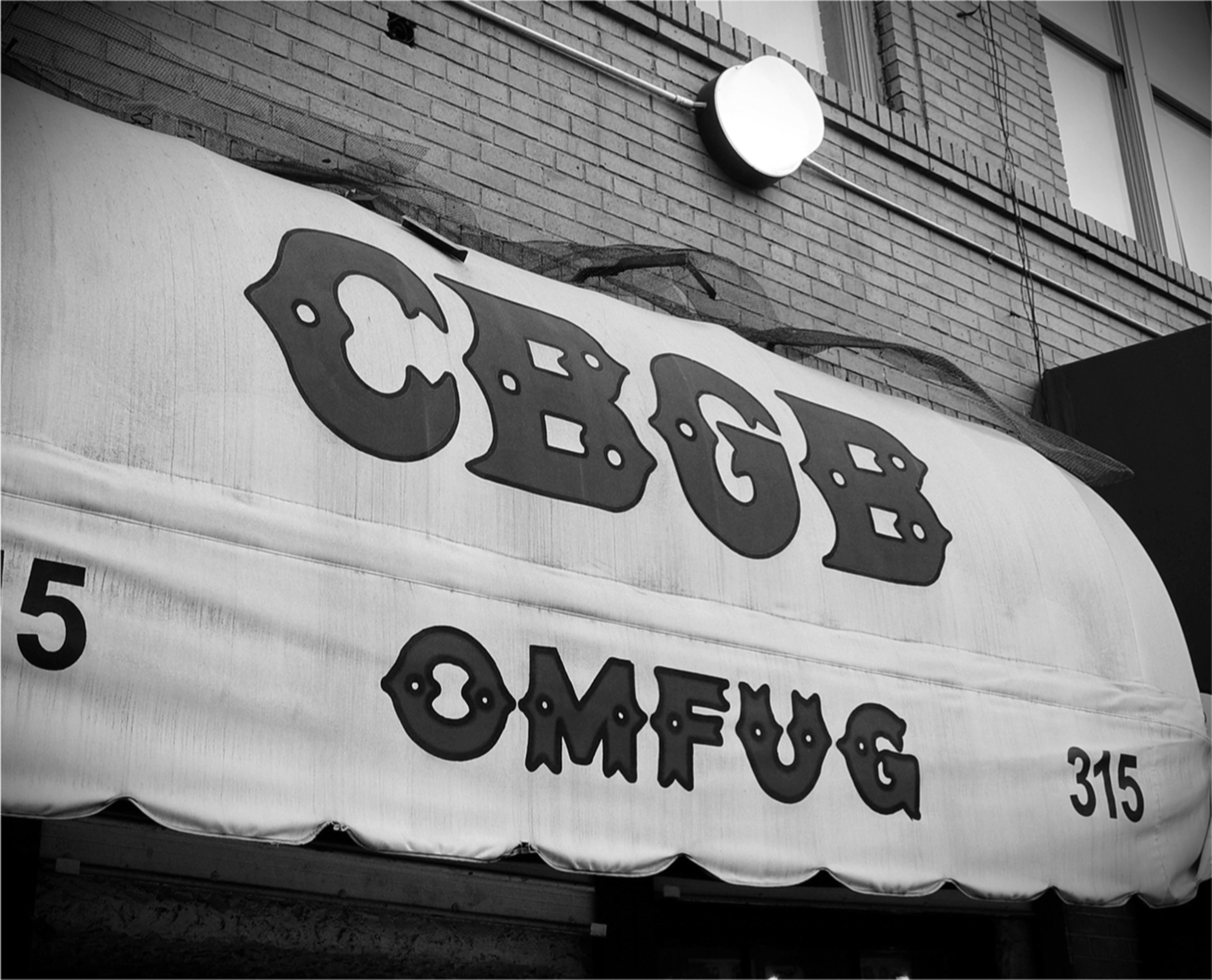
New bar owners also frequented these older establishments. “When I came into the business, there were maybe twelve, fifteen owners,” says David, who opened his first bar in the late 1980s. “We all knew each other, we talked, we went to each other’s bars. And there were maybe six or seven Ukrainian bar owners, but they never talked to non-Ukrainians.” Today’s remaining residents and longtime bar owners stress the importance of the places that opened then—CBGB, 2A, Brownies, and Pyramid, among them—for undergirding their sense of community and supporting the area’s artistic activities.
As gentrification took place, the number of bars doubled to 76 in 1995, doubled again to 144 in 2000, and increased to 177 in 2005. As important as their number is their spatial concentration. The New York State Liquor Authority (SLA), the state agency in charge of liquor licensing, helped cluster these bars together. State law prohibits another full liquor license (for beer, wine, and liquor) getting approved for a location that already has three or more licenses operating within 500 feet, unless it is in the “public interest” to do so. During this period, the SLA regularly defined “public interest” in economic terms: bars would “increase the tax base,” “provide employment,” and “improve the neighborhood.” By 2008, according to official records from the SLA, these neighborhoods had 692 licensed establishments (including restaurants, clubs, lounges, cafes, and hotels) in a 1.8 square mile area. It was the densest concentration of licensed venues in the United States.
Bars help tell the complicated story of gentrification in today’s city.
The types of bars that opened and their clientele changed as gentrification continued. As young professionals started moving into the neighborhoods, more bars opened to accommodate them and their lifestyles. As downtown’s nightlife scenes acquired their reputation as destinations, bars adopted familiar themes and styles (Irish pubs, sports bars, lounges) to attract their mass of revelers. Other bars appealed to specific elite tastes, such as Milk and Honey and Death and Company, both high-end cocktail bars, or well-heeled visitors, such as the nightspots in THOR and the Thompson, both boutique, luxury hotels. Many of the new bar owners of the twenty-first century had backgrounds in business and finance, not in art, music, or service, and they didn’t live downtown.
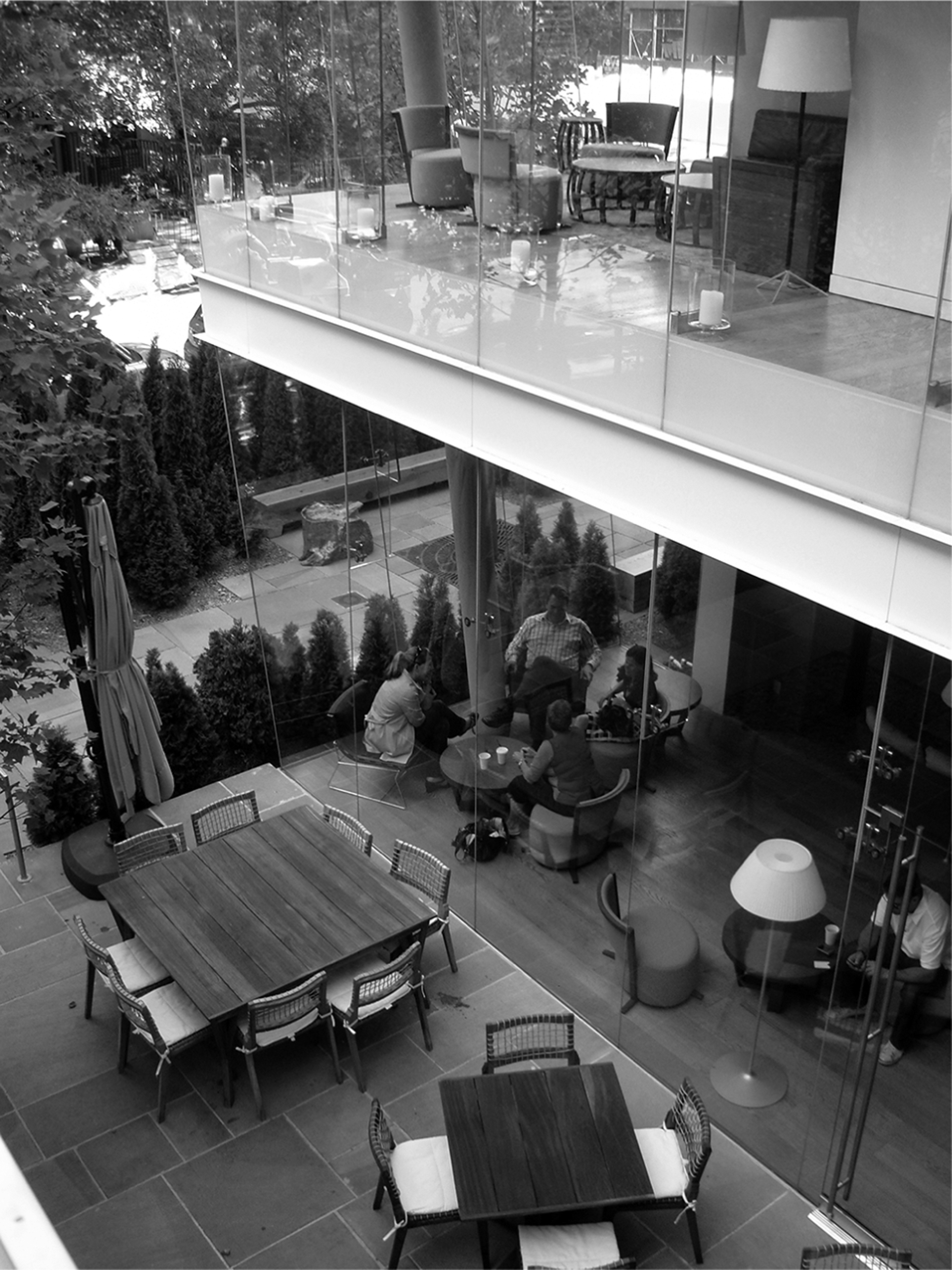
The Cooper Square Hotel has been a flashpoint. Many see it as a symbol of gentrification, out of keeping with the character of the Bowery.
Cristina Bejarano, Flickr Creative Commons
Existing bars like Milano’s, Holiday Cocktail Lounge, and Blue and Gold, which served the area’s homeless, working-class, and Ukrainian residents, respectively, shifted in meaning and use as the nightlife scenes grew. They became the novel, “dive bar” destinations. Others, like CBGB, closed due to rising rents, or, like Brownies and Continental, switched from rock clubs to volume bars to stay in business. Like those of today, downtown’s bars of the 1970s and 1980s had opened for newcomers and certainly attracted visitors. But today’s bars and visitors differ in terms of quantity and type, serving a wider variety of tastes and greater wealth, with almost no connection to neighborhood-based cultural activities.
Protesting and Defending Bars
People use many tactics to resist gentrification in their neighborhoods. Some organize resident and tenant groups. Some support existing businesses while boycotting new ones. Some vigorously maintain and promote their local traditions with block parties and parades.
Once reviled for its clientele of punks, artists, and self-described low-lifes, legendary club and performance space CBGB is now mourned as a lost gem of the Bowery’s “heyday.”
thenails, Flickr Creative Commons
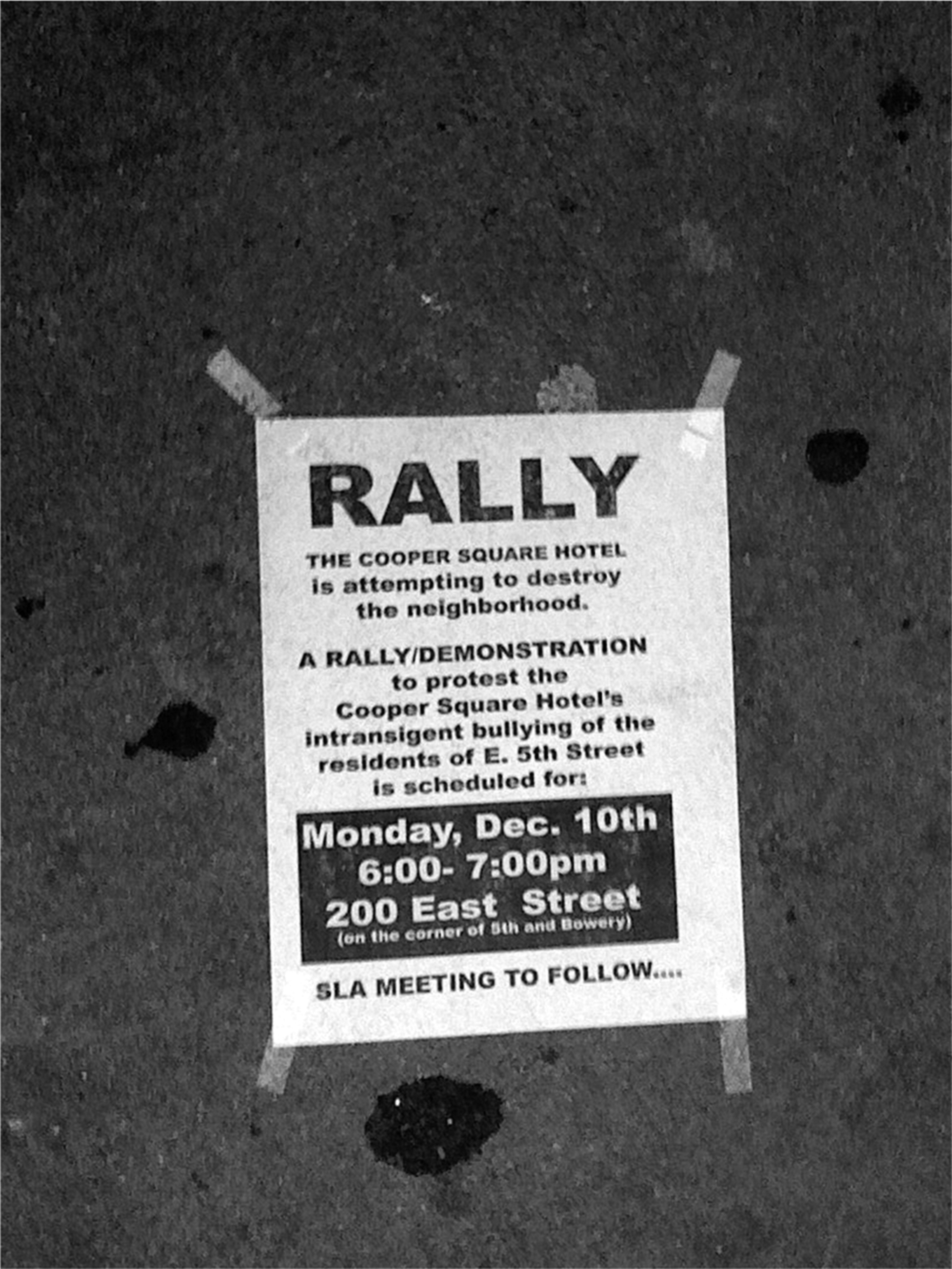
The folks in downtown Manhattan use them all. They also protest bars and confront bar owners at community meetings, where open conflicts regularly occur. Throughout 2007, dozens of residents attended a series of meetings and organized protests to fight the liquor license application of the Cooper Square Hotel, a 21-story boutique hotel that wanted enough nightlife spaces to accommodate 731 people, a much higher number than it could accommodate in its 146 rooms. State law requires prospective nightlife owners to appear before the communities in which they wish to open their establishment, and the SLA must factor communities’ desires about liquor licenses into their decisions. Residents near the Cooper Square Hotel made signs and posters and confronted its owners, calling them out for creating more options for visiting revelers and ruining the character of the neighborhood. Despite residents’ efforts, however, the SLA approved licenses (including one for Cooper Square), bars kept opening, and the nightlife scenes continued expanding.
Residents who protest bars are almost always longtime White residents who moved to the neighborhood at the start of its gentrification and remain there today. They often arrived as well-educated young artists or students, searching for cheap apartments and inspiring surroundings. Newcomers delighted in downtown’s cultural diversity and its opportunities for creative pursuits. Daniel remembers, “There used to be just abandoned buildings and like we’d have a party at 27 East 6th Street, you know, be there at 7. Or it would be an impromptu art gallery for the evening, and then a party in the evening.” Despite not actually owning any property downtown, these residents claim what Andrew Deener calls “symbolic ownership” over it. Based on their experiences, they describe themselves as firmly rooted in the space. Virgil, a community activist in his mid-50s who moved to the East Village in the mid-1970s, explains this sentiment: “It used to be that this was an abandoned part of the city. The landlords, they were absent landlords, developers did not look at this neighborhood, the city did not care about the neighborhood—it was left to the people that lived here. The people that lived here appropriated it to themselves. They treated it as if it belonged to them.”
For these residents, the constant visual and aural assault of today’s steady stream of visiting revelers, bars, and nightly partying threaten to socially and culturally displace them from their own neighborhood. They can stay, but the sociocultural worlds and spaces they remember and that ground their local identities disappear. Susie, a longtime resident in her mid-50s, explains, “Your services start to disappear, your cultural centers disappear, and your employment opportunities disappear. You have nothing left. There’s no way you can stay in your community.” Unlike them, they argue, visitors and wealthy newcomers have no interest in downtown’s existing cultures and communities. Edward says of his building’s newer tenants, “New people, they don’t say hello to me. They’re too busy with their own lives to get to know anyone.”
New bar owners don’t see themselves as destroyers, but progenitors and even saviors of community.
The past looms large for these residents. They passionately wield a “nostalgia narrative” that places their experiences in the neighborhood at the heart of its recent history as they ignore other realities of downtown, such as threats to low-income groups. Their narrative leaves out their own former status as newcomers to the area and denies the possibility that today’s newcomers can ever become rooted, as they did. Finally, these residents leave out their own culpability in making these neighborhoods attractive for further gentrification—how trailblazing creative activities in art, music, and theatre kicked off the revitalization. They laud, for instance, CBGB and Continental for once supporting a “local” music scene and bands with members from the neighborhood, in contrast to what they consider the wanton, uncreative consumption of today. Bob laments, “You know, this [neighborhood] used to have a lot more nightlife. You could come out here any fucking night of the week, and the bars were packed, people were doing stuff. Today, the bars are empty during the week. [T]hat’s why the bars encourage crowds—they have to make their money on the weekend.”
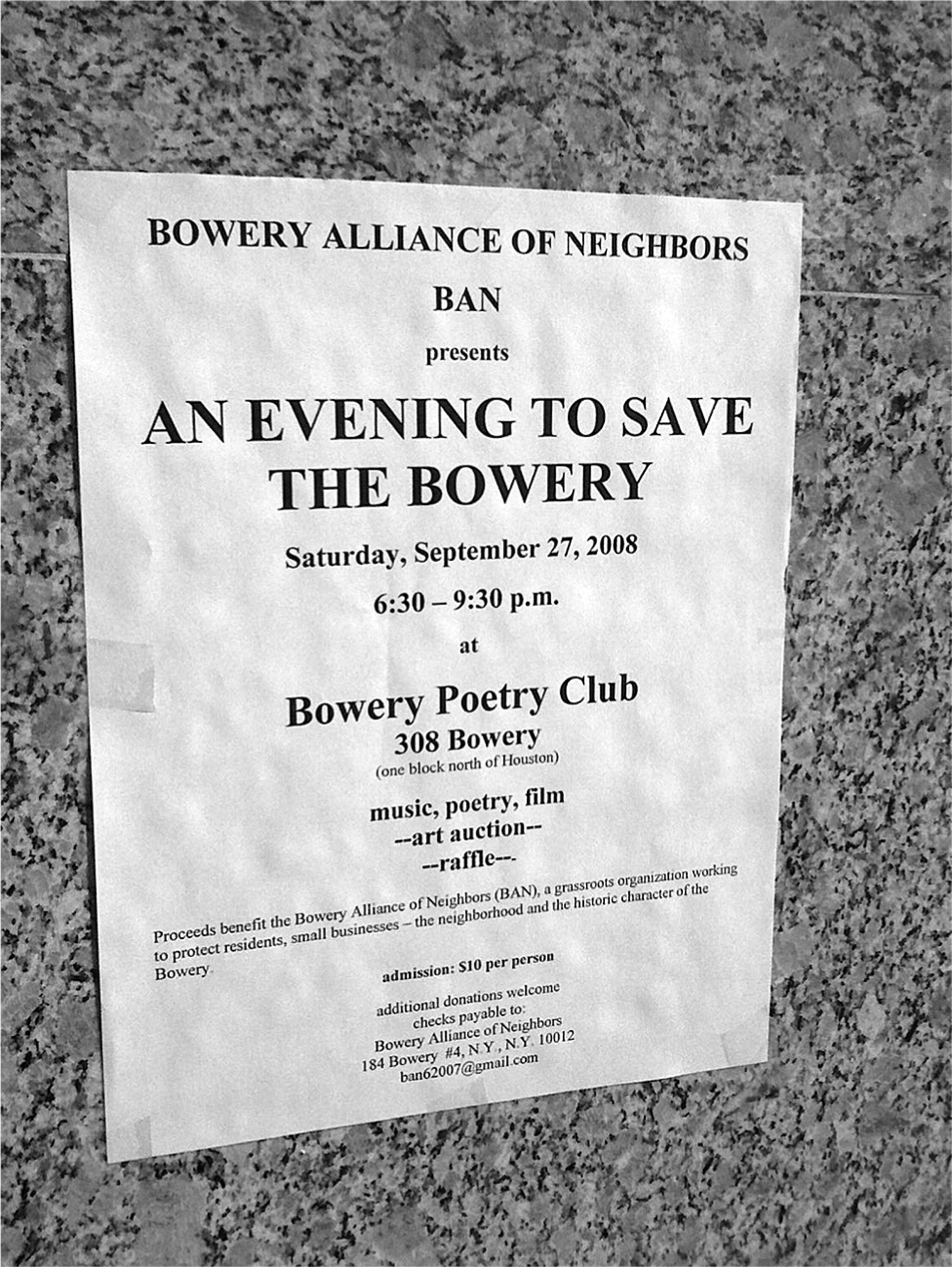
Neighborhood groups like BAN want to protect the “historic character” of their enclave, but which historic character remains an open question.
jebb, Flickr Creative Commons
New bar owners have a far different perspective about downtown, and they do not accept residents’ assessment of them. They don’t see themselves as destroyers, but progenitors and even saviors of community. Even owners and bars that didn’t open until long after gentrification had begun to claim nightlife scenes and see themselves as playing a role in improving the neighborhood. Dave, who is in his early 30s and opened his bar in 2007, says, “You’re looking around at all these people that have been here for ten years, and you’re like, ‘Listen, remember ten years ago? And look at it now. You know why it’s better? Because the fucking restaurants and the bars came in here!’ What makes people comfortable to come here, venture here, and eventually start moving in here is going to make it a safe place, and it is now.” Dave has a point about the impact of new businesses on the area’s rejuvenation and increased safety, but more recent owners like him came after this transition. Standing against those who want them out of the Bowery, the East Village, and the Lower East Side, these owners see themselves as providing spaces that generate social connection and cultural activity. To them a bar is the ultimate community institution, the gathering place for public conversation and debate among a wide swath of people with a stake in their neighborhood.
Residents who protest bars are almost always longtime White residents who moved to the neighborhood at the start of its gentrification and remain there today. They claim what Andrew Deener calls “symbolic ownership.”
Another protest aimed directly at the Cooper Square Hotel.
jebb, Flickr Creative Commons
But these owners also recognize the large number of visitors to the neighborhood they must attract to stay in business. Liz, a new bar owner in her mid-30s, says “I want people to come in and drink and chill out and have dialogue. Now, you need to do [DJs and themed parties], which is exhausting, because that’s like running a club. Because now [patrons] can go to all these other bars that compete, they’ll have an open bar, and they just follow the party.” Many owners like Liz intended their bars to be community hangouts, specifically for younger residents. But dense nightlife scenes attract patrons who come downtown because of its reputation as a destination for nighttime consumption. In this crowded marketplace and with high rents to pay, owners must try to distinguish their bars from others, such as by offering unique products (e.g., craft cocktails, microbrews, small plates) and activities (e.g., live music, DJs, burlesque performances). People from around the city seek these places out.
Other new owners, however, prefer patrons who recognize the area as a place for “downtown luxury.” Aside from the community’s wealthiest residents, they’re not aiming to be local hangouts. Harold says of the bar in his boutique hotel, “When we opened the place, we wanted to make a statement that this was a place that catered to people who pay $400 a night for a room. We wanted to send a message to everybody that this wasn’t a Lower East Side budget destination, it was a destination on its own.” These bars reinforce the downtown nightlife scenes’ transient nature, as well as downtown’s advanced level of gentrification. They also show that, regardless of a new owner’s intentions, new bars in dense concentrations create conditions that draw the ire of local residents over quality of life, gentrification, and the future of “their” neighborhood.
Core Public Space
In many ways, this tale of urban conflict is rather common. Whether through gentrification or other processes, newcomers bring different lifestyles and attitudes to a neighborhood and often rub existing residents and business owners the wrong way. But this generic expression is merely a starting point for understanding the consequences of how cities change. To city leaders, bars and nightlife scenes signify vitality in today’s postindustrial city. They see cultural dynamos and economic benefits. A look at the social worlds surrounding bars and nightlife scenes reveals the conflicts successful urban growth causes in everyday life, particularly between the “old” and the “new.”
People use many tactics to resist gentrification in their neighborhoods. Some organize resident and tenant groups. Some support existing businesses while boycotting new ones. Some vigorously maintain and promote their local traditions with block parties and parades.
Bars are excellent places to find these conflicts (and, of course, plenty of others). Their clientele can be longtime regulars from the neighborhood or newcomers visiting from across town or across the country. Businesses can be old stalwarts or interlopers. They are grounded in their neighborhoods but attract outsiders. But what attracts new people to downtown Manhattan’s nightlife scenes today—as prospective owners or as consumers—does not reflect a shared sense of history in the area, as it does for longtime residents who remain connected to their neighborhood. The old and new of downtown Manhattan certainly share an understanding of the area as a destination for nighttime consumption. And time will tell if some new bars will become the longtime regular hangouts of today’s generation of wealthy residents. But destination culture guides how people connect to a place. It transforms bars from to “refuges” and “local hangouts” into “dives” worthy of gawkers, nightlife scenes from insular places of creativity into places to visit and consume. If bars are traditionally seen as leisure places that ground communities, today’s downtown bars reflect the importance of taste, consumption, and increasing wealth in today’s New York City.