Abstract
When a devastating earthquake and tsunami hit japan in 2011, the effects were felt by over a million expatriates worldwide.
L’oeil étranger via Flickr Creative Commons
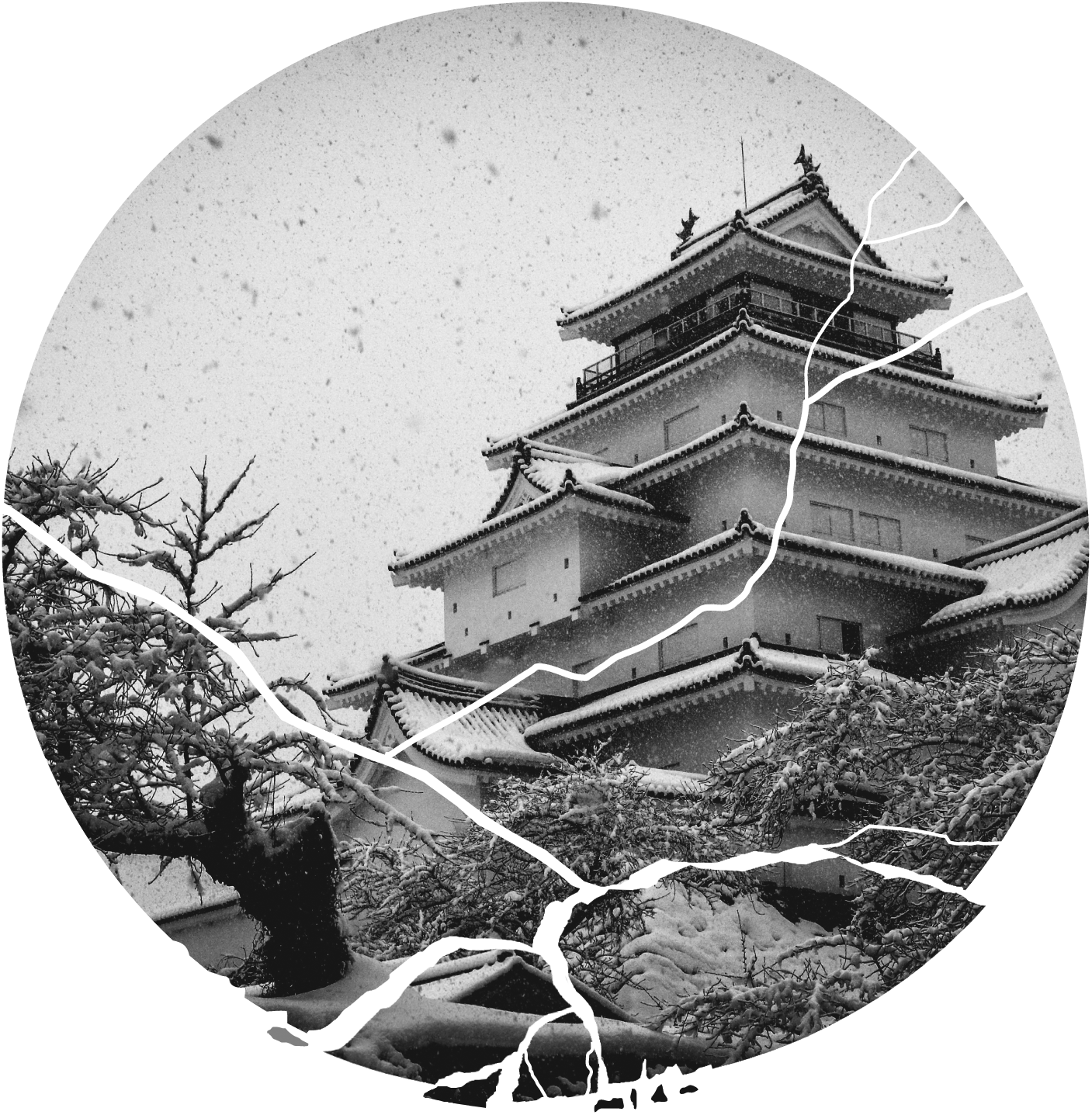
<< Tsurugajo Castle, Aizu-Wakamatsu, is a popular tourist attraction in Fukushima.
On the afternoon of March 11, 2011, a magnitude 9.0 earthquake struck the northeast coast of the main Japanese island, just east of the city of Sendai. The mega-quake generated enormous tsunami waves that swept ashore within minutes, one after another, destroying everything in their path. Fishing villages, farming communities, industrial centers, and ports were utterly destroyed. It soon became clear that the tsunami had inflicted extensive damage on the nuclear reactors at the Fukushima Daiichi Nuclear Power Complex, located 148 miles north of Tokyo. The waves cut off the power to the plant’s cooling system, leading to meltdowns in three of the reactors and, eventually, a series of hydrogen explosions. The surrounding land and water were contaminated by radiation leaks. The Japanese government declared an official state of emergency.
The disaster continued as residents experienced aftershocks, fires, overwhelmed emergency services, blackouts, and death on a scale not seen in Japan since World War II. According to the National Police Agency of Japan, the earthquakes and tsunamis left 15,891 people dead, over 6,000 injured, and 2,584 missing. Japan’s Reconstruction Agency reported that, within three years, additional 3,193 people passed away due to the disaster-related causes, such as worsening condition of the injuries and health after the earthquake. More than four years later, about 230,000 people remained evacuated from the affected areas. The Japanese government has placed the total cost of the disasters at $309 billion.
Japan is known as the “earthquake” capital of the world. Although the regularity of earthquakes in Japan has motivated the country to invest in building quake-resistant structures, prepare plans for emergency evacuation, and conduct research on earthquakes, the Great East Japan Earthquake was beyond imagining, beyond preparation. Recovery will take decades.
Expatriates and the Earthquake
Japanese expatriates around the world watched the unfolding catastrophe with increasing fear and concern. They experienced the earthquake, tsunami, and aftermath through television, social media, and communication with their families. The Ministry of Foreign Affairs reports that about 1.3 million (approximately 1 in 100) Japanese citizens currently live abroad. The number of Japanese expatriates has been increasing and has doubled over the past 25 years. The United States has been the destination for the largest number of “expatriate” Japanese; 412,639 Japanese citizens currently live in the United States.
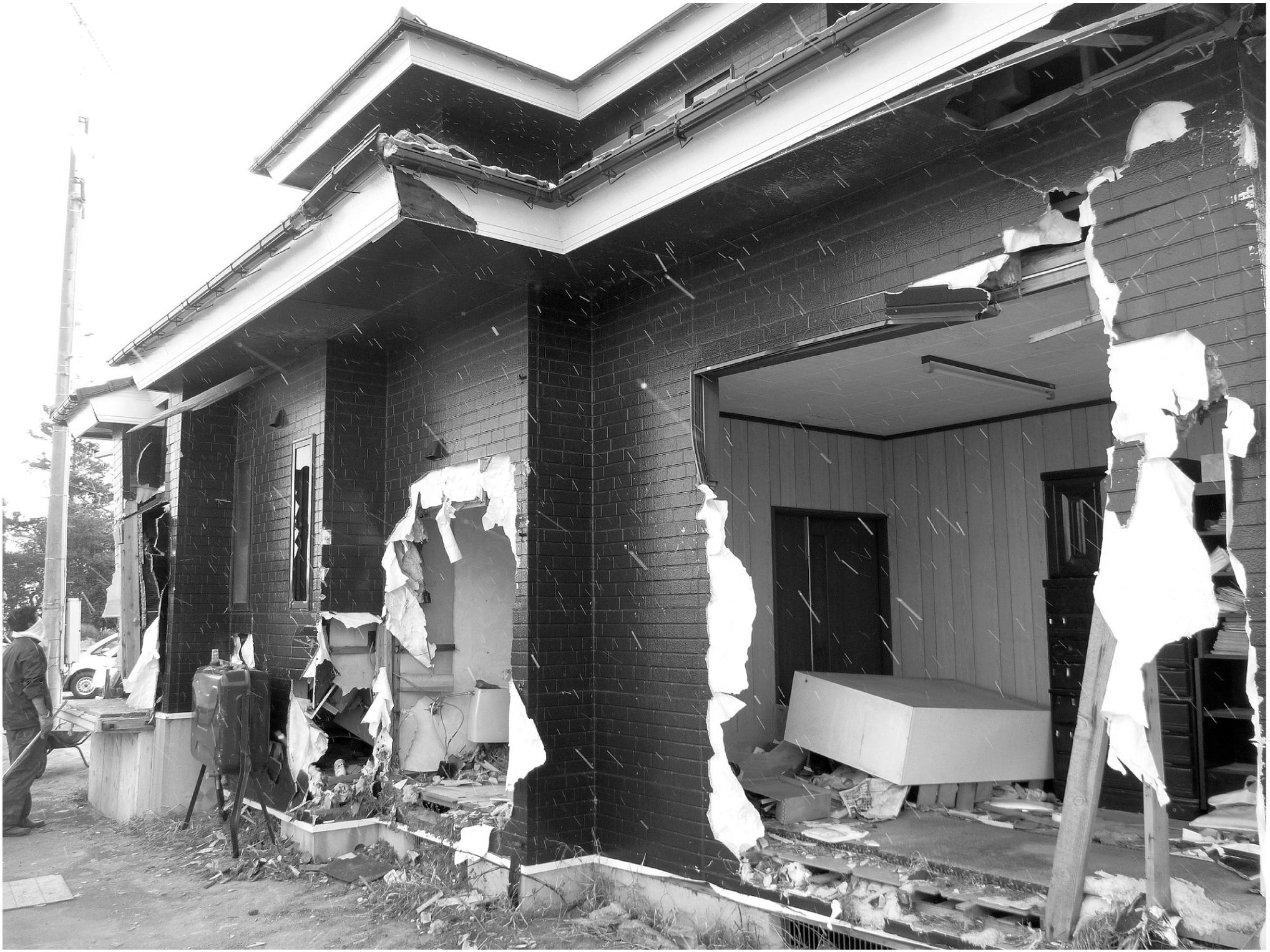
Volunteers assess the damage in Minamisoma city, Fukushima prefecture, 8 months after the earthquake.
Hajime Nakano via Flickr Creative Commons
When the Great East Japan Earthquake struck, we were in the middle of preparations for a qualitative online survey project on Japanese nationals’ parenting in Northern California. We watched the media coverage in shock and disbelief, worried about the safety of our family and friends in Japan. The disaster prompted our team to include additional, open-ended questions in the online survey, asking how respondents felt and acted after the disaster. Thus, in May 2011, just two months after the earthquake, 53 Japanese expatriates living in Northern California (25 were permanent residents and 28 described themselves as long-term visitors) provided a written paragraph explaining their and their family members’ reactions to the earthquake, tsunami, and nuclear plant crisis.
Media saturation, social media, and family contact amplified the concerns of expatriates, experiencing the disaster almost in real time.
While the world watched the unfolding disaster in shock, Japanese people in the U.S. keenly felt their shared national identity with victims and survivors. The availability of TV and the Internet played an important role in allowing them to experience the earthquake and tsunami in almost real time. In fact, some expatriates reported that the foreign media (for example, CNN) were more explicit and descriptive in their reporting than media in Japan. They even recognized that their reactions may have been much stronger than those of their families and friends living in less affected areas of Japan. Kanako said, “Since my family lives in west Japan, they seemed fine. Even my brothers living in east Japan seemed not so emotionally affected. It almost made me feel that people like us who live abroad were more worried and panicked than my family members back home.” Media saturation, social media, and family contact amplified the concerns of expatriates.
In the midst of the chaos, people in Japan and abroad were voicing their shock and disbelief on social networking sites such as Twitter and Facebook. Some even used social networking sites to find out whether their family members and friends were alive and safe when they were not able to get in touch by phone. Internet phone services, such as Skype, also played a major role for expats’ responses to the earthquake. Skype allowed expats to “reunite” even as the telecommunication system in Japan was overwhelmed for several days. The media reported that people waited in long lines to use pay phones, because many cell phones and landlines were unusable. Meanwhile, Internet phone services provided relief from the mounting anxiety reinforced with the endless, cyclical media portrayals of the disasters.
Advanced information technology provided valuable services, but also led to an unanticipated negative consequence. When expatriates could not reach their family member or friends in the hours after the quake, they became increasingly worried. The modern telecommunication system is so advanced and ubiquitous that they expected to be able to communicate instantly with friends and family, even in an unparalleled disaster. Delays of any sort escalated concerns.
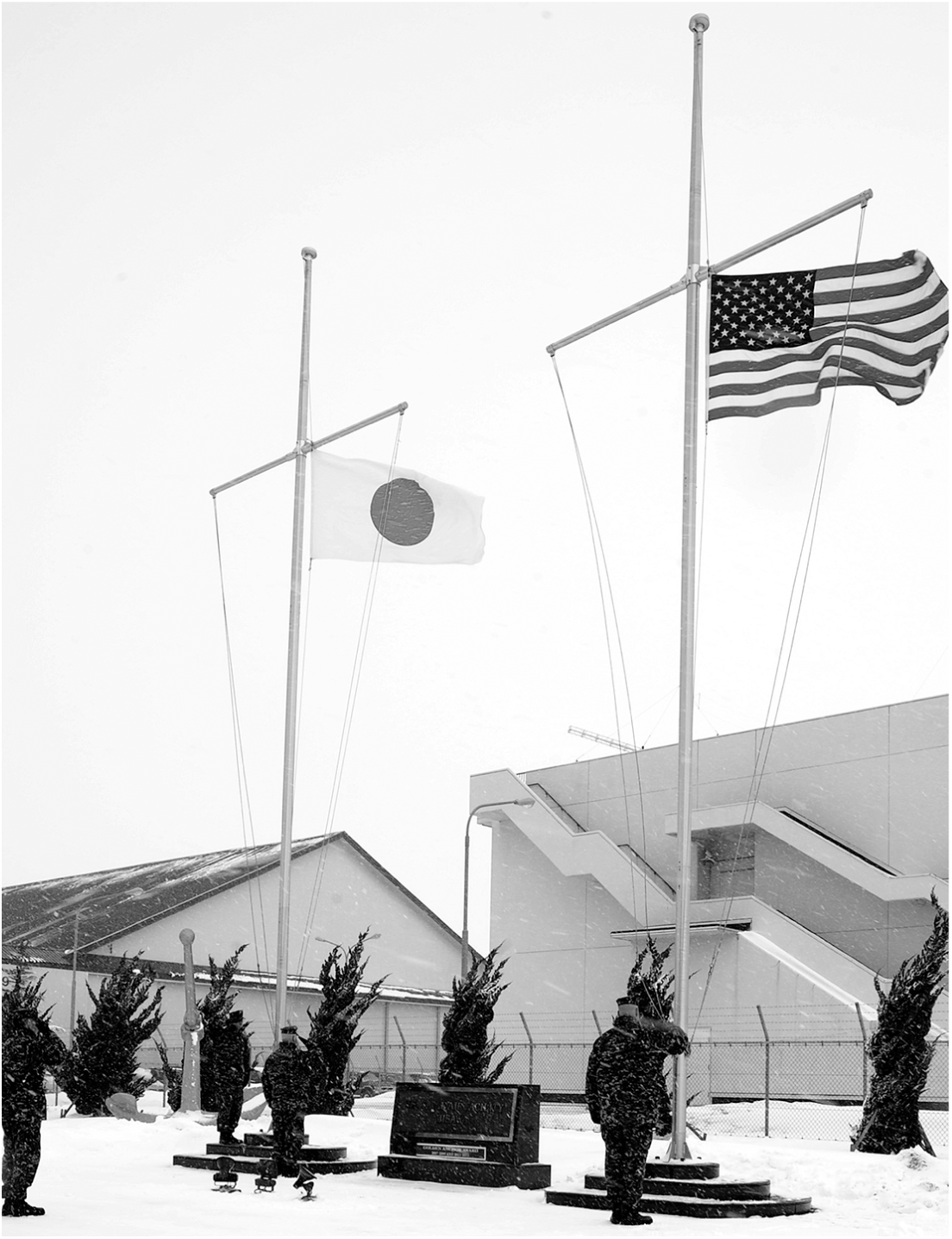
Soldiers at the Misawi Naval Air Facility in Japan lower flags to halfstaff, remembering the earthquake on its second anniversary
U.S. Navy
Clearly, shock and fear suffused the world. As many sociologists have recognized, advanced information technology helps transnational families maintain their ties to family members back home and experience events in their home countries as they unfold. Not so very long ago, Japanese expatriates would have experienced the Great East Japan Earthquake much differently. Telephone systems destroyed, reporters unable to reach areas that satellites can now show, and slower news cycles would have cut off much of Japan in the immediate aftermath. Thus, the earthquake and tsunami highlighted just how dependent individuals have become on advanced technology, as well as how it affects social relationships and emotions. Japanese people living abroad knew more about the disaster faster than ever before, but that knowledge opened up new questions, fear, and anxiety.
Altruism and Coping
Some of the pioneers of disaster research, including Charles Fritz and Allen Barton, recognize that when a natural disaster occurs, people usually unite and develop an “altruistic” or “therapeutic” community in which they tap available networks and resources and reaffirm their social ties. This was evident in the case of the Great East Japan Earthquake. Through media reports, expatriates learned about various forms of aid being sent to Japan. Japan’s Ministry of Foreign Affairs reported that the country received financial support, donations of physical labor and equipment, and words of encouragement from organizations and communities across the world. For example, the U.S. military’s “Operation Tomodachi (Friendship)” aided search and rescue efforts and delivered tons of food and supplies to survivors. Fundraising events were held all over the United States beginning as soon as the day after the earthquake, and Japanese Americans and expats played a pivotal role in planning and facilitating those events. The Association of Nikkei & Japanese Abroad reported over $301,000 in donations received from Japanese citizens living aboard, descendants of Japanese immigrants, and their friends. Respondents in our study reported being moved by stories of the bonds and altruistic efforts that extended beyond borders and a renewed sense of volunteerism. Kyoko felt ashamed that she had not previously valued volunteering; she reflected, “People from different countries were concerned and asked me how we were holding up, which made me think that I should become more aware of the issues facing their countries, too. It also inspired me to think about what I could do for the disaster victims.”
Japanese people living abroad knew more about the disaster faster than ever before, but that knowledge opened up new questions, fear, and anxiety.
A former Japanese resident folded 1,000 paper cranes in 17 hours as part of an earthquake relief fundraiser held by the American company OshKosh.
Andrew Hudson, Flickr Creative Commons
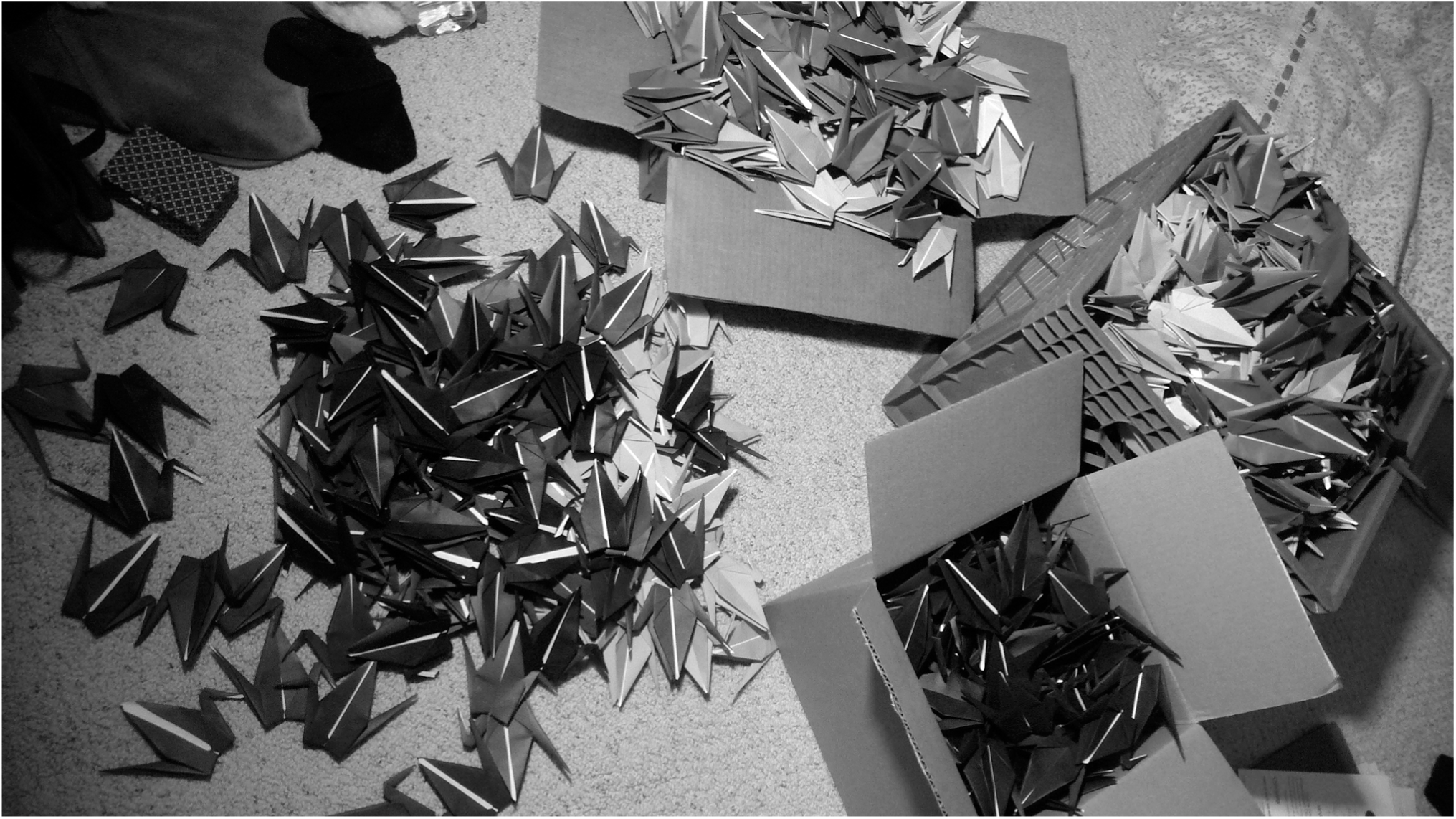
Many also described frustration that they were not able to leave their families and work to fly to Japan to directly help the disaster victims and/or their families. Inspired by the altruism reported in the media, many expatriates coped with their frustrations by organizing or participating in charity events and donation drives. Kyoko, for example, found ways in which she could contribute despite her limited social network: “Since I had not developed a trusting network in the community, it was difficult to initiate a charity event on my own, so, I joined a relief effort organized by others instead. I became active in various disaster relief events. When people found out that I was Japanese, they extended words of empathy and willingly offered monetary contributions. I was able to experience something that I had never encountered before, and my original effort to help the victims ended up helping me through this emotionally difficult time.” Like Kyoko, others found relief in relief efforts. Their frustration, anxiety, and fear were alleviated through the overseas altruistic communities working to aid the restoration effort in Japan. Helping others helped Japanese expatriates cope with their reactions to the earthquake’s devastation.
Jishuku, or voluntary restraint, helped expatriates express solidarity with the disaster’s victims.
Jishuku
Jishuku ( ), a Japanese practice of voluntary restraint from fun, luxury, and celebration, offered another comfort to Japanese people in Japan and abroad. It helped expatriates express solidarity with the victims. According to the New York Times, several actions were undertaken in this spirit of collective mourning: people in Japan turned off lights and heaters to conserve energy for the electricity-deprived northeast region; cherry blossom viewing parties and other festivals were cancelled; schools postponed commencement ceremonies; stores and restaurants shortened business hours or closed; and political candidates literally quieted their campaign efforts by disavowing the usual practice of circulating around neighborhoods campaigning with loudspeakers. Japanese expats participated in jishuku by canceling vacations, leisure activities, and fun family events. “I found myself feeling guilty engaging in leisure activities,” said Ikuko. Ken explained, “Luckily, my family was ok, but I felt hurt because I could have lost my family members. It made me feel that it was inappropriate to enjoy any leisure activities.” Even kids felt drawn to the practice of jishuku. Kyoko reported that her children “decided to give up their birthday gifts this year and donate the money instead.” No one was forced to forego enjoyable activities, but many Japanese people, no matter where they lived, chose to follow this cultural norm. It helped them connect, as a Japanese community, regardless of geography.
Amplifying Japanese Identity
After the disasters, many felt a heightened sense of Japanese identity. Media shared personal stories about the resilience of disaster survivors and praised the orderliness of Japanese people even in such extreme circumstances. Some expatriates in our study, having seen such reports, felt proud and “more Japanese” than ever. Learning about the suffering and the resilience of survivors in their country of origin increased the strength of their nationalist pride. Sayo put it well: “I felt so proud to be Japanese, hearing that the survivors never engaged in looting or riots and never forgot the spirit of mutual concession and altruism while undergoing hardship.” Like many immigrants, Japanese people strive to adapt to U.S. culture and, in doing so, sometimes find it difficult to maintain a strong identification with and pride in their Japanese heritage. However, the disaster in their home country made many reaffirm their ethnic identity. Feeling more Japanese than ever, they felt a greater need to seek information, volunteer, and engage in jishuku.
The respondents in our study seemed to have reacted in similar ways to how Haitian expatriates did to the 2010 Haitian earthquake. Sociologist Garvey Lundy is among the few researchers to have investigated how immigrant communities react to disasters in their country of origin, having looked at the response of Philadelphia’s Haitians and their children to the news of the devastating earthquake there. Overseas Haitian communities played a major role in gathering resources that aided the recovery, and the earthquake heightened their sense of Haitian identity. We found similar themes among Japanese expats. They all described being in a state of shock and disbelief immediately after the disaster; later many reaffirmed their ethnic identity as Japanese and joined charity efforts. In addition, the availability of advanced information technology played a crucial role in the Japanese expat experience of the disaster.
After studying the social consequences of Hurricane Katrina, sociologist Duane A. Gill wrote in a 2007 article that, in order to understand the impact of disaster fully—in a sociological sense—we must look at not only the physical damage to a natural or built environment, but also its social contexts: residents’ experiences with and reactions to the disaster. In this transnational age, Gill’s research can be expanded to include the expatriate experience of disaster—not felt physically, disasters “at home” can cause emotional trauma, feelings of helplessness, renewed national pride, anxiety and watchfulness, and a host of other, even conflicting feelings. Today anyone, expatriates included, can contribute to their home nation’s needs regardless of physical presence, if only in expressing the suffering they, too, feel, far from the disaster zone. Be it through a Skype call, a donation drive, or ongoing jishuku, Japanese expatriates showed us all how modern world citizens can be present, suffer with, and help when disaster strikes.
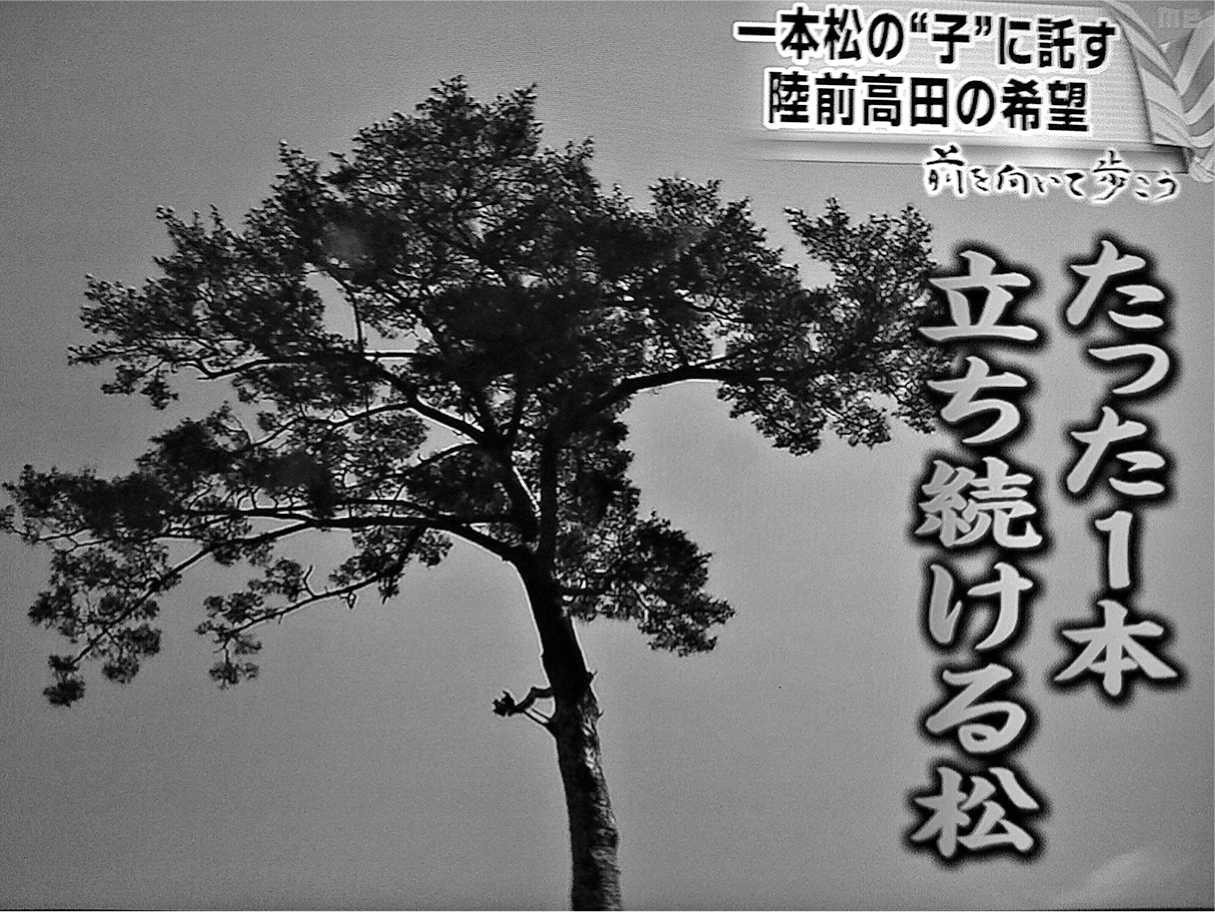
The “miraculous lone pine tree,” shown here on a TV news report, survived the tsunami and became a Japanese symbol of emotional resilience.
Bert Kamura, Flickr Creative Commons