



Abstract
In this review of two books, Caroline Kieu-Linh Valverede’s, Transnationalizing Vietnam: Community, Culture, and Politics in the Diaspora and Cathy J. Schlund-Vials’ War, Genocide and Justice: Cambodian American Memory Work, sociologist Kimberly Goyette discusses how memory may be shaped and contested for two Southeast Asian immigrant groups, Vietnamese Americans and Cambodian Americans. She also considers how memory is important for identity, and ultimately, assimilation in the United States.
Keywords
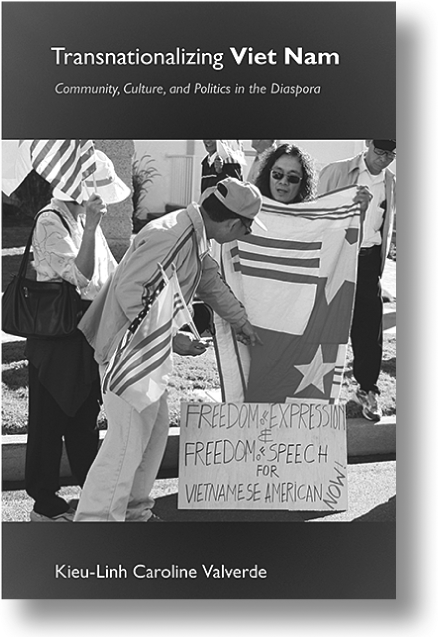
Transnationalizing Viet Nam: Community, Culture, and Politics in the Diaspora By Kieu-Linh Caroline Valverde Temple University Press, 2012 198 pages
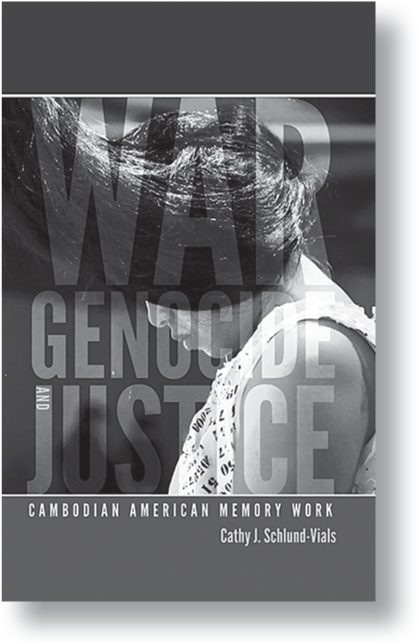
War, Genocide and Justice: Cambodian American Memory Work By Cathy J. Schlund-Vials University of Minnesota Press, 2012 264 pages
In the cases of Vietnam and Cambodia, children of immigrants have memories of the home country that are impressionistic at best. When events are shrouded in traumatic loss and there are few trusted sources to rely upon, remembrance is fraught. Assimilation requires selective forgetting and remembering.
Those who fled political persecution in Vietnam often carried memories of a country that no longer exists.
Kieu-Linh Caroline Valverde’s Transnationalizing Viet Nam is based on extensive field work. A refugee from Vietnam, having left as a child in 1975 with the first large wave of immigrants from Vietnam, Valverde possesses insider access to the Vietnamese diasporic community, and has spent almost two decades immersed in field work in the United States, France, and Vietnam, conducting approximately 250 interviews. That time spanned historic changes in Vietnamese and U.S. government relations, which influenced dramatic changes in the Vietnamese community in the United States, changes she observed and in which she participated.
According to Valverde, 1.5 and second-generation immigrant Vietnamese often feel at odds with the citizens and nation of Vietnam. These children of refugees struggle to redefine their relationship to Vietnam, and what it means to be Vietnamese-American, while contending with the often vehement anti-Communism of their parents. She shows us how community and culture are often defined and redefined through popular music.
Before 1975, music in Saigon was a mixture of Vietnamese folk and resistance songs, influenced by France and the United States. After 1975, the Socialist government censored much of this music, though it found an enthusiastic audience among the Vietnamese diaspora. Videos and DVDs of a popular musical variety show called Paris by Night made their way to many Vietnamese American homes, and eventually found their way back to Vietnam. Although initially banned, these recordings were sold on the black market. Vietnamese performers took great interest in and began to emulate the singers in these shows, adding new elements to the music, and fans clamored to see these new stars. First-generation Vietnamese, fueled by anti-Communist fervor, used these performances as an opportunity to voice their displeasure with the government.
Valverde shows how Vietnamese Americans and Vietnamese residing in Vietnam negotiated tensions through virtual communities such as the Vietnam Forum (VNForum). Vietnamese in the United States desired to maintain communications with family in Vietnam and some managed to convince computer specialists in Vietnam to develop their internet capacity, which was indeed something the government was eager to do. Launched in the early 1990s, VNForum promoted communication on issues of interest to Vietnamese or overseas Vietnamese, drawing 300 subscribers in over 50 countries. It was largely ignored by the Vietnamese government, but those who posted to the list were often careful to be neutral for fear that they would be accused of being Communist, or that the government would start to take notice and censor the forum. Despite these challenges, VNForum was successful in facilitating mobilization for labor rights in Nike factories.
Valverde also documents the conflicts over representing the past among Vietnamese immigrants in the United States. In 2006, artist Chau Huynh exhibited an installation, Pedicure Basin, composed of a series of pedicure basins painted in the colors of the Republic of Vietnam (RVN) flag. The exhibit sparked protests from anti-Communist Vietnamese Americans who felt it showed disrespect for the RVN flag and pre-Communist South Vietnam. When a local Vietnamese-American newspaper published a picture of the exhibit, the editors were fired and the publisher issued an apology to the community. In spite of such conflicts, or perhaps because of them, controversial art continues to be made by a younger generation of Vietnamese American artists.
In her final case study, the author describes the intense conflicts that have broken out between members of the community over politics and representation, such as when San Jose, California, faced controversy over what to call its predominantly Vietnamese business district. The largely first-generation, anti-Communist faction of the community wanted it to be named “Little Saigon,” commemorating their immigrant experience. Other constituents suggested more inclusive names, such as the Vietnamese Business District. As a compromise, city council person Madison Nguyen chose the name “Saigon Business District.”
But the anti-Communist faction of the community, unhappy with the decision, branded Nguyen a Communist and tried to remove her from office. Nguyen eventually won the recall election, signaling a change in the Vietnamese community, one that moved away from the anti-Communist feelings of the first generation toward a multi-dimensional and more inclusive Vietnamese American identity. The intensity of the conflict, Valverde suggests, demonstrates the ongoing importance of memory and symbolism not only in Vietnamese American politics, but also in relation to the process of assimilation.
Because Cambodian Americans have difficulty locating family to provide stories from the past, their collective memories remain fragmented and disrupted.
In her book, War, Genocide, and Justice, Cathy J. Schlund-Vials also looks at how Cambodian American memory is created through museum exhibits and texts, and how such memory work reveals community tensions. Cambodian American immigrants and their children often find themselves in conflict with the Cambodian government. Immigrants want justice and reparations for the damage done to their livelihoods, their families, and their country. Past and current Cambodian governments (which include former members of the Khmer Rouge) believe that acceptance, forgiveness, and silence are the best ways to repair the damage done by the regime. But since many children of Cambodian refugees have difficulty locating family to provide stories from the past, they face great difficulty constructing coherent narratives, and their collective memories remain fragmented and disrupted.
Schlund-Vials describes how the genocide is represented in the Tuol Sleng Genocide Museum and the Choeng Ek Center for Genocidal Crimes in Phnom Penh. Exhibits thoroughly document Khmer Rouge crimes and provide viewers with the perspectives of those who were imprisoned by the Khmer Rouge. Built after the Vietnamese took control of the government in 1979, these museums represent the past in such a way as to create loyalty to the People’s Republic of Kampuchea, in opposition to the former Khmer Rouge leadership. Despite these clear and chilling representations of Khmer Rouge crimes, former Khmer Rouge leaders have not been tried and have in fact have been incorporated in the post-Vietnamese Cambodian government.
Schlund-Vials shows how the two commemorative museums, as well as the site of the Killing Fields, now privately managed, rather than serving as sensitive representations of the past for Cambodians wishing to memorialize their families and their lost country, have become sites for “atrocity” tourism for foreigners. In contrast, Cambodian American commemorative efforts, such as the Cambodian American Heritage Museum and the Killing Fields Memorial in the United States, which are directed to survivors of the genocide and their descendants, offer education in Khmer art and culture prior to the Khmer Rouge, representing the population’s resilience in the face of atrocities.
Memory is not something that occurs in isolation; it is never just a simple recollection of past events.
Schlund-Vials shows how films represent the genocide in very different ways. For example, Hollywood’s The Killing Fields, narrated by a white American reporter Sydney Schanberg, fails to implicate the United States for helping to create the conditions that made the genocide possible, and is largely a tale of hope and redemption. New Year Baby, a documentary by Cambodian-American Socheata Poeuv, in contrast, is more nuanced. It follows the filmmaker’s journey to remember and document the past, beginning in the United States and then continuing with her travels to Cambodia, where she visits various sites and conducts many interviews. Images and interviews provide snippets of the past, but do not produce a consistent, straightforward narrative, consistent with the refugee immigrant experience; remembrance, not redemption, is the goal.
Schlund-Vials also examines two autobiographies by Cambodian-American authors, First They Killed My Father: A Daughter of Cambodia Remembers by Loung Ung and When Broken Glass Floats: Growing Up under the Khmer Rouge by Chanrithy Him, which document the crimes of the Khmer Rouge. While these books call for justice against the Khmer Rouge, they have been heavily scrutinized regarding the accuracy of collective memories of the past. Schlund-Vials also looks at how hip-hop artist praCh has incorporated his experiences with racism and gangs growing up as an immigrant in California into representations of a Cambodia he does not remember. The work of these authors and artists shows that how they remember Cambodia is essential to how they feel they fit into the United States.
Literature on both voluntary immigrant and refugee experiences often focuses on how “successful” the assimilation process is. Although there are complex debates about how assimilation occurs, sociologists tend to consider such indicators as educational attainment and job market outcomes, degrees of segregation in housing, and rates of out-marriage. While some consider whether or not ethnic groups abandon cultural traditions and create new ones, few focus on how forgetting and remembering figure into assimilation.
These books show that what gets forgotten and what gets selectively remembered shape Vietnamese and Cambodian identities for multiple generations. Among Vietnamese, memories of war can make forging an identity in the U.S. difficult and fraught with conflict. For Cambodians, forgetting the past often induces a sense of rootlessness, which leads young Cambodians to recreate memories of why and from where exactly they fled. These books show that the shared cognitive and emotional processes underlying assimilation influence individuals’ sense of belonging, and they affect local and national politics.
As Valverde and Schlund-Vials vividly show, memory is never just a simple recollection of the actually existing past. While individuals interpret events from their own social positions, using their own experiences as a way to make sense of that past, the act of remembering is never simply an individual process—it is a collective one, too. Groups with different socioeconomic circumstances, resources, and access to power vie to control representations of the past. How the past is represented has consequences for how immigrant groups shape their current identities. These identities reverberate for generations to come.