



Abstract
Sociologist Janice M. Irvine examines biographies of Alfred Kinsey in order to explore stigma attached to sexuality research.
Keywords

With the recent Showtime series Masters of Sex, sexuality research assumed its 15 minutes in the spotlight. The docudrama about sexologists William Masters and Virginia Johnson and their mid-twentieth century sexuality laboratory normalizes sex research while relying on its exoticism for the show’s buzz. It delighted reviewers, one of whom enthused, “Masters of Sex is a contemporary show about retro attitudes that we can look back on now from the safety of more enlightened times.”
In recent years, we have seen the emergence of a new genre: life stories about sex researchers. Recent biographies feature Alfred Kinsey, Michel Foucault, Richard von Krafft-Ebing, Magnus Hirschfeld, and Jeannette Foster Howard, the first librarian at the Kinsey Institute. And there is the 2004 Oscar-nominated film, Kinsey, in addition to Thomas Maier’s biography of Masters and Johnson that inspired the Showtime series.
Researchers Virginia Johnson and William Masters in 1965, long before they became “Masters of Sex.”
© Bettman/Corbis
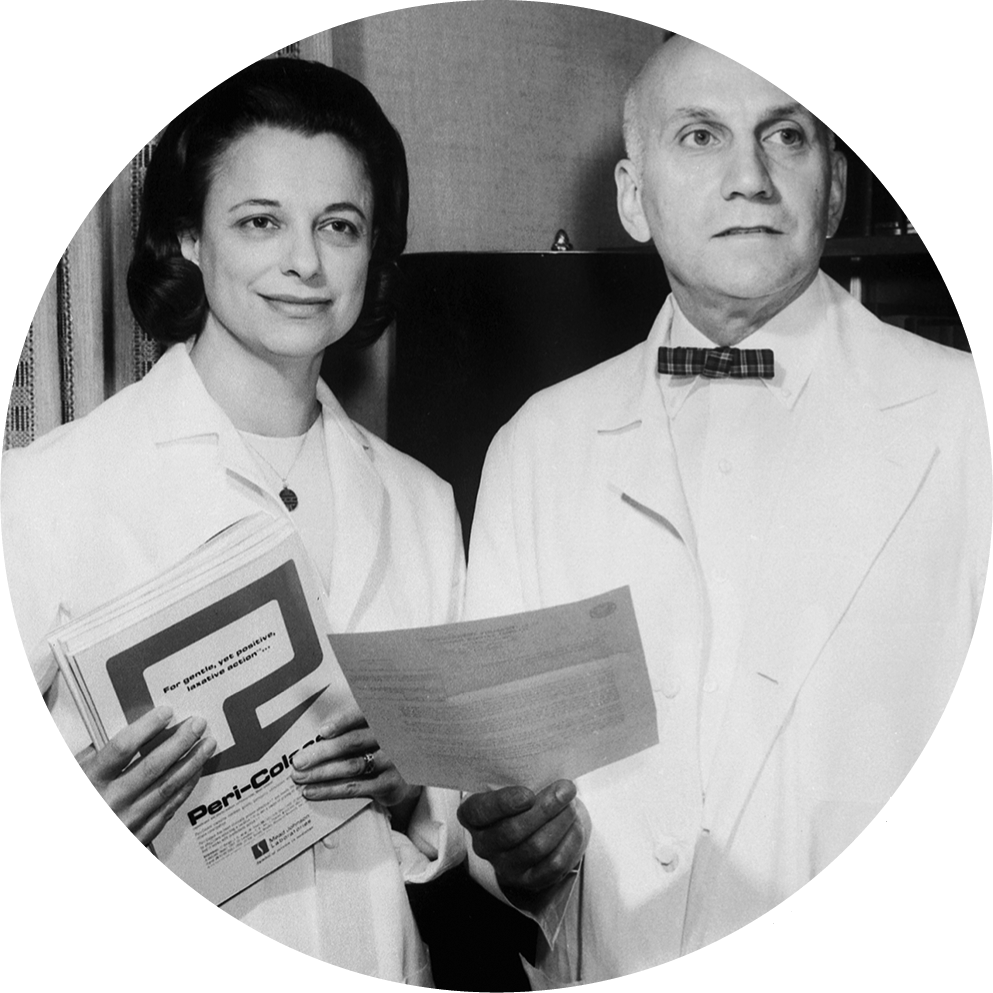
These stories purport to shed light on the motivations of sexuality scholars, the quality of the work, and the status of sex research itself—a field that has long struggled to achieve academic legitimacy. While this visibility is welcome, these stories suggest a troubling pattern: they tend to focus on researchers’ alleged sexual proclivities, spinning them as deviant motivations which compromise the research.
For example, James Miller’s biography of Michel Foucault links Foucault’s work to unconventional sexual activities like sadomasochism. Thomas Maier begins his biography with Virginia Johnson losing her virginity, portrays her as a sexually conniving secretary, and delights in exposing complicated aspects of the researchers’ sex life together. And historian James Jones depicts Kinsey as deeply twisted.
The problem is not simply that sexuality research remains stigmatized. It is that, in many circumstances, sex itself remains stubbornly discrediting. Sexuality’s cultural meanings are paradoxical—it is simultaneously repulsive and attractive, taboo yet vital to our happiness. It is difficult to write sexual stories without reproducing what Michael Warner calls “the ordinary power of sexual shame.” Moreover, stories that examine sex research through the prism of the researcher’s sex life rely on the simplistic notion that there is a specific connection between one’s sexual experiences and research.
My two recent projects unexpectedly converged around the problem of how researching sex can discredit the researcher. In a study on biographies of sex researchers, I explored archives and interviewed authors, looking at how these stories are told against the cultural backdrop of stigma. I also conducted a survey of current sociologists of sexuality, who reported experiences of sexualization and marginalization because of the topics they researched. Both projects complicate the notion that we live in enlightened times.
My investigations began where most tales of modern sex research commence: with Alfred C. Kinsey, the pioneering sex researcher, and his circle.
The Kinsey Archive
The Kinsey report, released in 1948, was the first scientific sexuality study in the United States to become a runaway bestseller. Based on extensive sex histories of 5,300 white men, the report suggested that the sex lives of American men were far more robust and unconventional than popularly imagined in the mid-twentieth century. Kinsey criticized the harsh sex laws and restrictive social norms of his day, insisting that behaviors like homosexuality and masturbation were natural artifacts of “our mammalian origins.”
Researching sex can discredit the researcher since the focus often turns to sex researchers’ personal lives.
At the height of public clamor over the study, a newsmagazine quoted Kinsey’s wife as saying, “I hardly see him anymore since he’s taken up sex.” The quote went viral, as we would say now, repeated so often that its original source became elusive. In one sentence it seemed to condense multiple stories, the most irresistible one being the paradox by which the sex researcher’s fanatical devotion to the work of sex seemingly produced a sexless marriage. When Laura Linney, playing Mac (as Clara Kinsey was known) in the 2004 film, Kinsey, delivered the line in earnest, she revived it for a new generation.
Today, however, there is little ambiguity about the Kinseys’ sex life. Two major biographies of Alfred Kinsey were published in the mid-1990s, one by historian James Jones (Alfred C. Kinsey, 1997), and a year later, Sex the Measure of All Things, by British author Jonathan Gathorne-Hardy. Both biographers worked in the same archive, combed the same documents, and interviewed the same informants. But biographers select life events and decide how to interpret them, and choose, as American author Joyce Carole Oates points out, “slant, emphasis, tone.” A study in contrasts, these biographies illustrate how differently the same story about a sexuality researcher can be told, depending on the narrative framing.
Aptly subtitled A Public/Private Life, James Jones’s book was the first to publicly expose details of the Kinseys’ private sex life, relating activities among the Kinsey research team and their wives, including the fact that Alfred enjoyed sex with men, Mac had other lovers, and sex among members of the research team and their wives was not uncommon. The researchers filmed sexual activities (in the so-called “attic films”), including one in which Mac was allegedly shown masturbating.
The Jones biography illustrates how sex as a framing device tilts toward stigma: he concluded that Kinsey’s research was driven by “inner demons” including homosexuality, masochism, voyeurism, exhibitionism. Kinsey, he asserted, regularly engaged in “bizarre behavior,” such as inserting objects into his urethra. Jones cast Kinsey, as he gardened without a shirt, or shaved nude in the bathroom, in the most unflattering light. The biography strikes a tone of disgust, and offers a cascade of judgments, describing its subject as “grotesque,” “twisted,” and “compulsive,” and suggests that Kinsey’s suspicious sexual motivations undermined the validity of his studies.
A biography of Kinsey concludes that Kinsey’s research was driven by “inner demons” including homosexuality, masochism, voyeurism, exhibitionism.
Having long studied sexuality scholars, the stigmatizing strategies of the Jones biography are familiar ones to me. I have seen how opponents discredit sexuality researchers, depicting them as deviants (the early twentieth century), communists (the 1960s), or pedophiles (the culture wars of the 1990s).
Alfred Kinsey and his family, shown in 1953. His wife Clara is second from the left.
© Bettman/Corbis
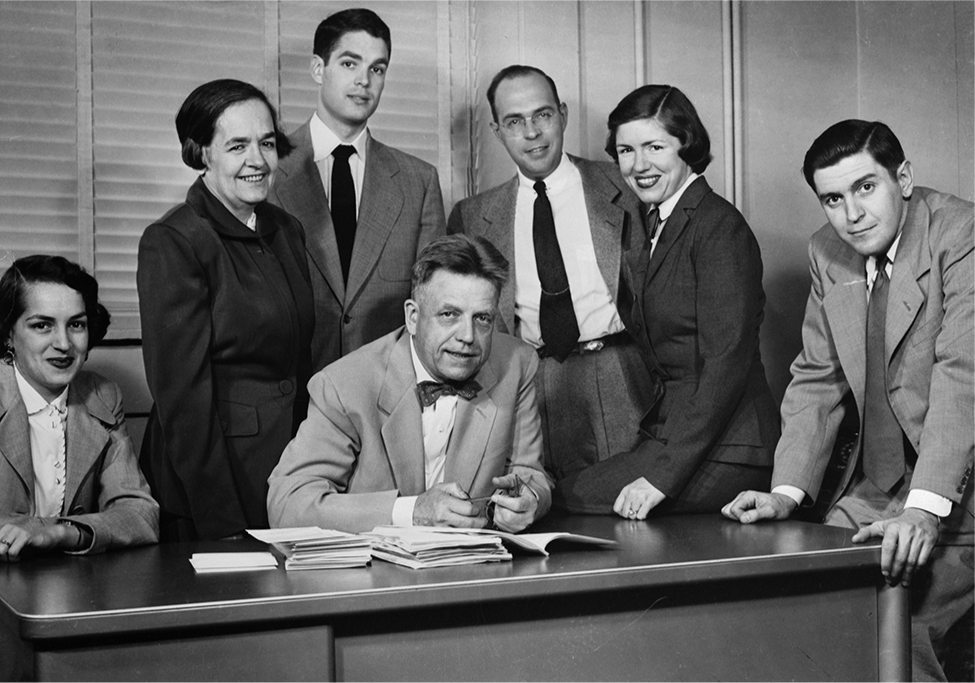
But a second Kinsey biography explicitly repudiated a stigmatizing frame. Written by Jonathan Gathorne-Hardy, this biography offers not only a radically different reading of an archive, but a biographical narrative that refuses easy appeals to sexual sensationalism. Just when it seemed that there’d be nothing left to say about the Kinseys, it turned out there were more stories and different ways to tell them.
Resisting Sensationalism
I spent a day in England talking with Gathorne-Hardy, who is known as Jonny. After a white-knuckle drive navigating the “other” side of roads and roundabouts through rural England, I sat in his attic study in the tiny village of Binham, and we discussed the Kinseys and the ethics of narrating their stories.
Jonny was in the later stages of his own Kinsey biography when the Jones book was published. Every scholar’s nightmare, he had not known that someone else was also working on this topic. Having kept a journal for his entire life, Jonny regularly plucked yellowing notebooks from a towering pile and read from sections he had penned during his work on the biography. In one excerpt, he had just received the Jones biography and was “by turns appalled, astonished, exhausted, depressed,” he wrote. “I have to go to America again. Oh God!”
When Jonny returned to the Kinsey Institute at Indiana University, a key source told him that the Jones book was riddled with exaggerations and misreadings. Principal interviewees disputed Jones’s interpretations, and in some cases even the facts he reported. (In my own reading of Jones’ oral histories at the Institute archive, I found he consistently put a negative spin on questions, attempting to lead interviewees to disparage Kinsey’s leadership style, personality, and even his “spartan” furniture.) In his book’s Introduction, Gathorne-Hardy challenged the framing of Jones’s biography as “an unrelenting stream, pejorative page after pejorative page” in which “there emerges a portrait of someone so unpleasant as to be actually grotesque.”
Kinsey and his research team in Bloomington, Indiana, circa 1953.
© Bettman/Corbis
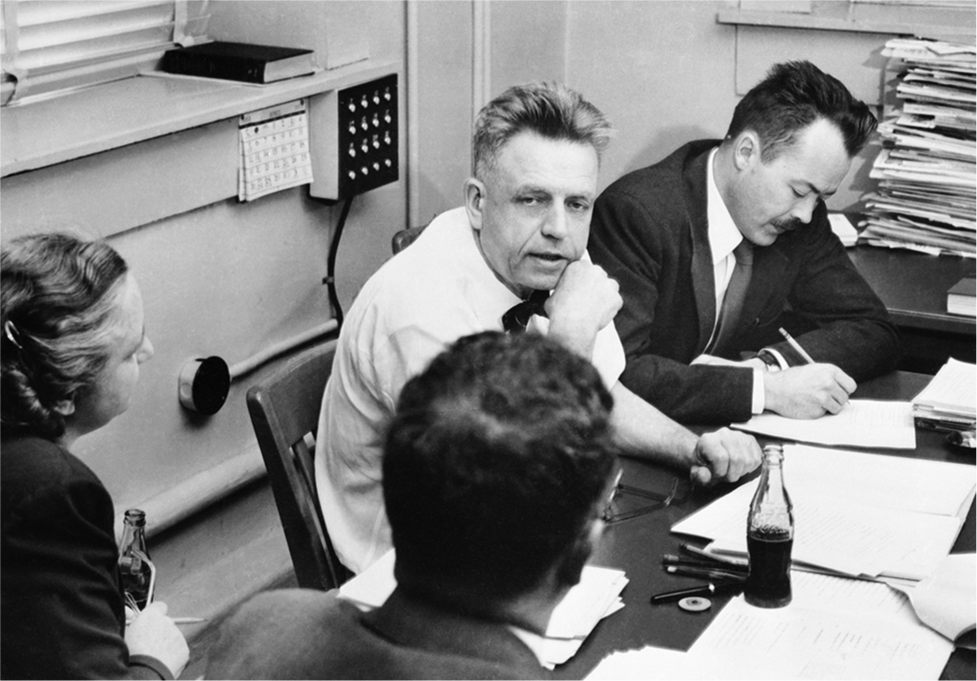
Because it resisted rather than reinforced the cultural frame of stigma, Jonny’s narrative of Kinsey was a more difficult story to tell. I asked him why he decided to challenge Jones so directly. “I was angry,” he said, “and it seemed the only thing to do, particularly as I went into it in detail, just how wrong [the book] was. I felt I couldn’t let it stand.”
Sex was, of course, an important part of Jonny’s story of the Kinseys, too. But rather than demonizing them, he narrates them as a sexually vibrant, experimental couple, though admittedly outside the norms of their 1940s Midwestern community. Jones suggested that Kinsey coerced Mac into sexual activity with others; Jonny’s version, in contrast, features her agency and pleasure. Jones viewed the attic films as evidence of Kinsey’s voyeurism; Jonny saw them as scientific. “If you are to study some field scientifically,” he told me, “you must know as much of it as possible. Nothing can be evaded—and Kinsey didn’t evade. He not only filmed every variant of sexual behavior that he could, he observed where he couldn’t film.”
Routinizing Sex
Biographers weave a story about the connections between life and work, teasing out what anthropologist Ruth Behar calls the “emotional motivations” of their subjects. To Jones, Kinsey’s “inner demons”—his alleged perversions motivated a career in sexuality research. Gathorne-Hardy, in contrast, contexualized the sexual lives of the research team within the intense dynamics of their pioneering research project. He told a sociological story, where history, context, and situation matter in interpreting the sex lives of sex researchers.
Once we see their stories sociologically, we can appreciate how the Kinseys’ (and Masters and Johnson’s), scientific aspirations prompted them to abandon certain notions of sexual conformity, fostering a deep ease with the topic. In a case of art imitating life, Lizzy Caplan—the actor playing Virginia Johnson in the television series Masters of Sex—described this normalizing dynamic during the filming: “I was driving home one day and it dawned on me, like, ‘Oh yeah, I measured a girl’s nipple today.’ And I forgot about it. Because it just happens now all the time.” As sociologist John Gagnon frequently notes about sex, the situation is the motive.
Alluding to the disclosure that some of Kinsey’s interviewers had sex with one another, Gathorne-Hardy said he could never have worked for Kinsey: “Whether I could have allowed the team to bugger me or not, I sort of doubt it.” I suggested his reluctance might have diminished had he been part of the team over the years. “Quite,” he conceded, “And obviously all of them who stayed there, lost all inhibitions.” For Gathorne-Hardy, it was obvious that Kinsey was “dead set on sex, condemning moralism and embracing sexual variation.” He was interested in “all sorts of sex,” and that’s why “he tried to have some homosexual experiences.” According to Gathorne-Hardy, “To get a proper sex history Kinsey thought you should have experienced as much as you can of sexual practices. And I have no doubt he was right.”
Rather than focusing on how the researcher is motivated by sex, one could say, then, that the sexual situation shapes the researcher. “Clearly this was true of Kinsey and I imagine it was true of Mac,” according to Galthorne-Hardy. “The conventions gradually sort of evaporate really, through habituation. And Kinsey was convinced that an open and free sex life was very, very important and they should both have it. And I think Mac agreed.”
Privacy and Politics
The Kinseys and their colleagues went to great length to keep their sexual activities private, and in the 1940s, the days before our present media-saturated culture, they had no reason to think their activities would ever be exposed. But as Irish writer Oscar Wilde once wrote, “biography lends to death a new terror.” Biographies, memoirs, and works of social science are fraught with dilemmas about how to frame stories, which stories to tell and which to hold back to protect those we observe.
Death, in other words, does not protect subjects. Rather, it raises ethical questions about narrating secrets and exposing private details when subjects are no longer able to reframe their own stories. The potential impact of such stigmatizing stories also extends beyond the subject, to family and friends. Galthorne-Hardy worried about how the Kinsey daughters might respond to his own work.
He read me an excerpt from his journal from 1997, written after he had read the Jones biography: “For the first time, that criticism some reviewers make about how distasteful all this prying into the private lives of the dead is, which I’ve always dismissed as prudish and absurd, I now feel. As for poor Joan Reid and Anne Call, I don’t see how they will survive. Their lives will be ruined.”
Before Jonny left Bloomington, Kinsey’s daughter Joan phoned him. The Jones book had just come out, and she wanted to know: “is it true?” Jonny told her: “Yes it is, a lot of it anyway,” including “your father’s sexual experiments.” Her father was not homosexual, he told her. He was, however, “an extremely courageous man.”
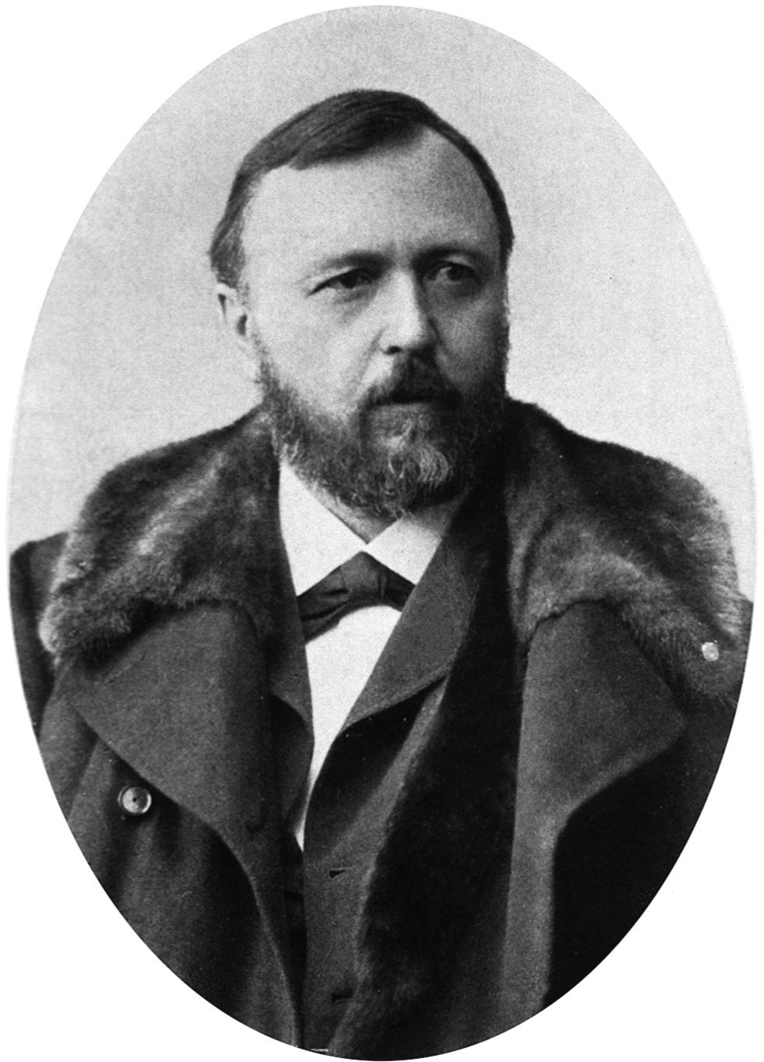
Richard von Krafft-Ebing, author of Psychopathia Sexualis (1886).
Wikimedia
Jonny was reframing the story, but not simply to soothe Kinseys’ descendants. He imagined if he himself were in their position. “If I had discovered at age 72 that my father and mother had done what Kinsey and Mac had done, I would be surprised. But not horrified. And certainly wouldn’t desperately deny it,” he wrote in his journal. “But for Joan and Anne, it is far more as if a murder had been committed. As if Kinsey and Mac had turned out to be these two murderers Ian Brady and Myra Hindley, who killed about eight little children.”
Director Bill Condon had long wanted to make a film about Kinsey, Jonny told me, but then, “they read the Jones book and thought ‘we can’t make the film.’” After Jonny’s book came out, Condon based the film largely on that story, although tell-tale scenes from the Jones book, depicting Kinsey as repressed and tortured, crept into the film.
Despite decades of cultural liberalization, we still frame sexuality researchers in relation to the topics they study, making up stories about how they live.
Recently, while doing research at the Kinsey Institute, I spent two social occasions with Kinsey and Mac’s daughter, Anne Kinsey Call, then in her mid-80s, and their granddaughter Wendy Kinsey Corning. At dinner in Bloomington, Wendy told me that when Kinsey was released in 2004, Indiana University held a special screening for researchers and associates of the Kinsey Institute. Paul Gebhard, a surviving member of the original Kinsey team, stood up at the end and in the silent theater loudly proclaimed, “Well, at least we didn’t harm any animals,” and then walked out. His reaction spoke of how the film stumbles in its depiction of the team’s passionate attachments to research, as well as to each other.
Today, the judgments, and stories, about the Kinseys and their team continue to travel internationally, producing new forms of cultural and political knowledge about sex. For example, religious conservatives, who have long blamed Kinsey for launching the sexual revolution, immediately adopted the Jones biography as ammunition in their culture wars over sex. So did British journalist Timothy Tate, director of a 1998 documentary Secret History: Kinsey’s Paedophiles. The film draws heavily on the James Jones biography, which repeated long-discredited allegations that Kinsey was a pedophile.
In 2013, American conservative religious activist Judith Reisman spoke out at Parliament against Croatia’s new sexuality education program, accompanied by Tate’s film. Croatia’s Constitutional Court subsequently suspended the public school program, and a headline read: “Croatian court quashes Kinsey-based national sex-ed.”
Vulnerable Researchers
Passions drive our research in ways that may have little to do with our personal lives. Yet choosing a career in sexuality studies often elicits curiosity and judgment, and leads others to make assumptions about one’s sexual proclivities.
In 1987, The Chronicle of Higher Education featured an article on sexuality researchers entitled, “Out of the Closet Now but Misunderstood.” Social scientists and historians described careers fraught with stigma and bias because of their research on sexuality. Some kept their research a secret from family members; others spoke of discrimination in promotion and funding. One woman noted, “If you are researching adultery, people automatically assume that you’re into it. There is also the attitude that nice girls don’t study sex, so you find yourself excluded from some groups.”
In the book Vulnerable Subjects, G. Thomas Couser looks at biographical writing about people whose stories are easily distorted and exploitable, such as those—like mental illness or physical challenges—where the subject has a “disadvantaging or stigmatizing” condition. Couser warns of the risk of over-writing the story, by which he means imposing an “alien shape” on it. His caveat also applies to those who research particular subjects as well, such as sexuality.
Sociology has long been vexed by the relationship between our biographical experiences and our research. At times we value participant-observation, as well-received ethnographies of musicians and boxers attest. But in marginalized areas of social life, identification can be read as lack of objectivity. Many assume that a stigmatized topic would only be studied by someone who her/himself occupies that stigmatized status. For example, sociologist Abigail Saguy noted that after writing a book about the cultural framing of obesity, audiences expected her to be overweight herself—and a fat advocate. (And yet they never considered her thinness to be a standpoint or bias.)
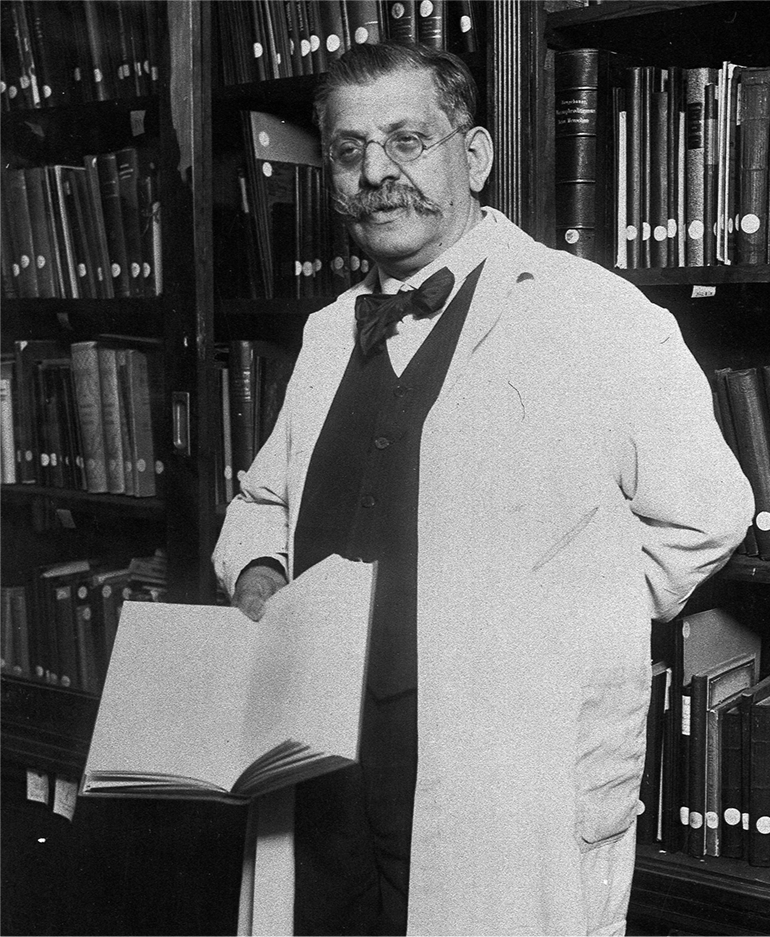
Magnus Hirschfeld in his Berlin clinic, in the 1920s.
© Sophie Bassouls/Sygma/Corbis
Sex is culturally “sticky.” Its complicated cultural meanings attach to sexuality scholars, leaving them vulnerable to those who would discredit their motivations and research. As pioneering sexuality researcher Martin Weinberg, who has studied topics such as nudism, homosexuality, and bestiality since the 1960s, recently told me, “Every study I’ve done, people assume it’s about behavior I engage in myself. The allegations are always there.”
Despite decades of cultural liberalization, we still frame sexuality researchers in relation to the topics they study, making up stories about how they live. For example, when I surveyed members the American Sociological Association’s Section on Sexualities recently, I found that three quarters of its members reported that others made assumptions about their sexual identities, and almost half said others made assumptions about their sexual practices. “I constantly hear how people make assumptions about my sexual orientation based on my research,“ one said. Another noted, “I have been at times reluctant to see myself as a ‘sexualities scholar’ because many of my colleagues leap to conclusions about my sexual identity and then treat me differently.”
Some women mentioned that others interpreted their research as implying their own sexual availability. As one put it, “I avoided dating people who thought my research meant I’d do anything with anyone.” In more extreme cases, women scholars reported that their research on sexuality made them a target of harassment. One said, “I received emails from male stalkers around the world from the U.S. to Asia.” Some sociologists said that leaving the field of sexuality studies was the only way they could see escaping the persistent stigma attached to it.
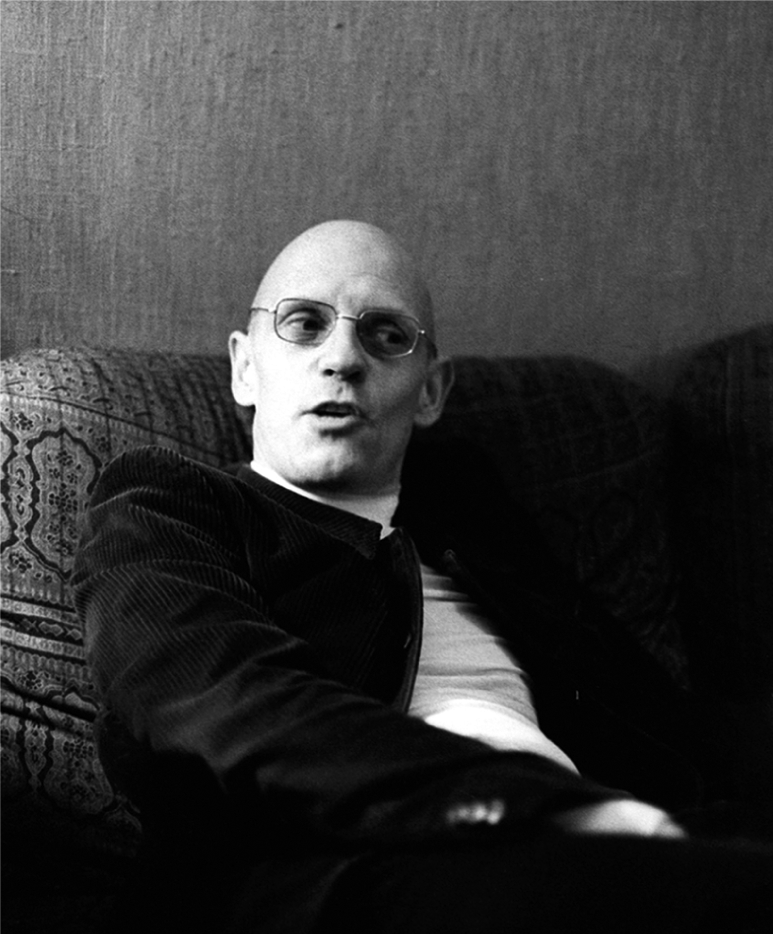
Michel Foucault, author of the influential History of Sexuality, was at times disparaged by critics for his sexual choices.
© Sophie Bassouls/Sygma/Corbis
After Indiana University held its special screening of Kinsey, Kinsey’s granddaughter Wendy lamented, “As a film, it is beautifully made, amazingly well acted and directed. But as a story of my family, there are certainly some parts of it that I think should remain private.” As a sexuality researcher myself, I understand her feelings. Still, I would suggest that the problem is less about the fact that certain sexual details were revealed, but rather how they were framed.
Instead of secrecy, we need more and better stories, ones that normalize and contextualize rather than demonize sex, difference, and non-conformity. We need stories that refuse and reframe the well-worn and highly marketable frame of sexual stigma, stories which help produce alternative meanings—not just about sexuality research—but about sexuality more broadly. That is how culture changes.