



Abstract
Insitutional Review Boards (IRBs) pose many challenges for sexuality researchers. Sociologist Janice M. Irvine explores how IRBs marginalize sexuality research and the effects of this process.
Sexuality research has a history of controversy that long predates the more recent institutionalization of human subjects review. In the early 20th century, for example, obscenity disputes arose over sexuality studies, such as those by British sexologist Havelock Ellis. As sexual science emerged in the United States during the 1950s, the work of researchers such as Alfred C. Kinsey also triggered volatile conflicts. In 1987, The Chronicle of Higher Education featured an article on sexuality researchers entitled, “Out of the Closet Now but Misunderstood.” As the headline suggests, social scientists and historians described careers marked by marginalization and discrimination. Many had been humiliated by colleagues at public academic events because of their research topics. Some kept their research a secret from family members; others spoke of institutional bias in promotion and funding.
More recently, new subfields within the social sciences and humanities, as well as the emergence of interdisciplinary fields such as sexuality studies and queer studies, have expanded academic inquiry into sexuality. Sexuality researchers may be “out of the closet now”—but not necessarily their work. Institutional Review Boards (IRBs)—federally-mandated but decentralized bureaucracies for ethical regulation of research—play a significant but largely unnoticed role in the marginalization of sexuality research. In the sense that we understand “the closet” as hidden, stigmatized sexuality, IRBs keep sex in the closet. But while “the closet” refers to structures of oppression applying to sexual minorities, the IRB closet obstructs a broad production of sexual knowledge—not simply about identities and communities, but also about a range of sexual acts, desires, and attitudes.
Despite myriad critiques of IRBs among social scientists over the last decades, there is little discussion of the impact IRBs have had on specific fields of research such as sexuality studies. Sexuality has been a “special case” in the history of IRB expansion over the social sciences, falling among a few topics automatically deemed “sensitive” and therefore generally subject to enhanced scrutiny in IRB deliberations. Consequently, IRBs operate as bureaucracies of sexuality simultaneously constraining sexual knowledge while reinforcing sexual stigma.
Bureaucracies of Sexuality
Ethical review has proceeded unevenly in the decades since Nazi experimentation triggered concern about protection of human subjects. Biomedical abuses, such as the Tuskegee Syphilis Study (made public in 1972), led to Congressional passage of the National Research Act in 1974, and the establishment of the National Commission for the Protection of Human Subjects of Biomedical and Behavior Research. By 1979, the Commission published The Belmont Report: Ethical Principles and Guidelines for the Protection of Human Subjects of Research. Belmont’s three so-called pillars—respect for persons, beneficence, and justice—are the principles that guide IRB reviews. Through the 1980s and mid-’90s, however, IRB oversight of the social sciences and humanities was less sweeping than it would later become.
The late ‘90s marked what historian Zachary Schrag calls “the crackdown” on the social sciences, when power over research moved from researchers themselves to federal ethics regulators. The shift was striking, as qualitative researchers in particular had been largely oblivious to IRBs. For example, sociologist Julia Ericksen noted that when she began research on sex surveys in the early 1990s, “There was no sense that I had to go through something called an IRB. So I just contacted people, did my interviews and kept the data thereafter.” All that changed a few years later. Since 2000, the Department of Health & Human Services Office of Human Subjects Research (OHRP) has enforced Belmont’s principles through The Criteria for Institutional Review Board Approval of Research Involving Human Subjects. As Schrag notes, Belmont now has “quasi-legal force.” Researchers must submit even unfunded proposed work to an IRB for approval. Thousands of decentralized bureaucracies across the country now weigh the potential harm that might be inflicted by online surveys, interviews, ethnographies, oral history projects, or focus groups.
We know little about how often IRBs block social research, or how often IRBs demand that researchers substantially modify their proposals. Sociologist Jack Katz, who is documenting cases of what he calls “IRB censorship” at U.S. universities, suggests that it may be impossible, based on anecdotal cases, to determine “the iceberg of suppressed research plans from the tips.” IRB horror stories circulate among sexuality researchers but, until recently, there has been no systematic evidence on the experiences of sociologists in this subfield.
To address this question, in the summer of 2011, I conducted a survey with members of the American Sociological Association Section on Sexualities. Using 80 questions, I inquired about aspects of their academic careers, such as graduate training, access to funding, promotion decisions, IRB experiences, and potential controversies. The section is fairly young, founded in 1997, with approximately 450 members at the time of my survey. With a response rate approaching 40 percent, it is the only survey of its kind to examine the career experiences of sociologists who study sexuality. The comments in this article derive from this survey and from a number of follow-up interviews.
Survey responses suggest ongoing dilemmas of stigma and marginalization, with the questions about IRBs prompting some of the most impassioned responses. Of 155 respondents who reported conducting research, 119 had submitted sexuality-related projects to an Institutional Review Board. Of these, 52 sociologists—approximately 45 percent—report that they had experienced difficulty getting IRB approval. IRB practices, according to these researchers, had either slowed down or discouraged their research. Moreover, 41 percent report that other sexuality researchers at their university had also had IRB difficulties.
IRBs exert a chilling effect on sexuality research.
A Chilling Effect
Many responses suggest that IRBs may exert a chilling effect on sexuality research. Some researchers simply give up. As one sociologist noted, “I am less likely to do research on alternative sexualities.” Twenty-six percent of faculty in my survey reported that their students had experienced trouble getting IRB approval for sexuality projects. One said, “A student who wanted to use letters written by queer prisoners had a difficult time getting approval. After the third try, he changed topics.” Some professors warned students away entirely. As one noted, “I have tended to discourage students from trying to investigate topics of youth sexuality, generally telling them that it will be hard to get past IRB.” In some cases students censor themselves. One professor said, “I think that what happens is that graduate students have a sense of what the IRB will and won’t approve. So they don’t even try to do certain kinds of research because they assume that it won’t be approved.”
Restrictive IRB practices may disadvantage faculty for promotion or other career moves. One junior scholar noted: “It’s made [my research] actually very difficult. I’m facing tenure review right now and needing to explain, for example, why my book’s not published yet. Well, I spent a year and a half getting IRB [approval]. It’s definitely hindered my ability to do the actual research and then write up the results, spending so much time trying to get the approval, and then all of the torturous hurdles they put in front of me as well makes it more difficult.” Another said, “By and large, the IRB is the most difficult process and institution I encounter in my sexuality research. The word “sex” sets off a set of red flags that can double or triple the amount of red tape I have to go through to get approval for my research.” IRBs can shape a field of knowledge and discourage researchers, simply through following their bureaucratic procedures.
Sex & Sensitivity
Cultural anxieties about sex may disadvantage research projects that pertain to sexuality. IRB history reveals early fears about the danger that sexuality allegedly posed in research. For example, James Shannon, director of the National Institutes for Health in the 1960s, told an interviewer in 1971, “It’s not the scientist who puts a needle in the bloodstream who causes the trouble. It’s the behavioral scientist who probes into the sex life of an insecure person who really raises hell.” Shannon was probably referring to the research scandal after the publication of sociologist Laud Humphreys’s 1970 book about sex between men in public places, Tearoom Trade. The book was referenced regularly in deliberations by the National Commission during 1977-78 as they began developing their formal recommendations for the protection of human subjects. Zachary Schrag told me, “It became a kind of shorthand for the perils of interview research, rather than something that was investigated in any depth, the way that the Commission did, say, go out to prisons to talk with prisoners about their participation in medical experimentation.”
Humphreys was never invited to a Commission meeting to discuss his research methods, nor did the Commissioners specify which of his methods they considered unethical. Although other social researchers at that time had used deception, for example posing as patients at hospitals or attending Alcoholics Anonymous meetings, no studies other than Tearoom Trade were discussed by the Commission. Of course, none of these studies had generated the controversy that Tearoom Trade did, a development likely not unrelated to his research topic. As sociologist Earl Babbie notes, “Only adding the sacrifice of Christian babies could have made this more inflammatory for the great majority of Americans in 1970.”
In later regulatory deliberations, sexuality was typically clustered with “deviance”: criminal behavior, substance use, and mental illness. In the late seventies, as health officials debated the level of risk posed by surveys and observation, a federal official proposed that all survey research be excluded from regulation if it did “not deal with sensitive topics, such as sexual behavior, drug or alcohol abuse, illegal conduct, or family planning.” Regulations in 1981 specified that social research be exempted from IRB review unless it “deals with sensitive aspects of the subject’s own behavior, such as illegal conduct, drug use, sexual behavior, or use of alcohol.” So while earlier regulators were willing to exempt most social science research, sexuality fell outside these boundaries. My survey responses suggest that many IRBs still assume that sexuality research is “sensitive.”
Additionally, IRBs may treat the researchers themselves as suspect because of their interest in sexuality. Sociologist Laura Stark found that one key aspect of IRB decision-making was the members’ assessment of the researcher. They read proposals “like tea leaves for signs of good character.” This strategy, unfortunately, disadvantages sexuality researchers, who have historically been vulnerable to mischaracterizations such as “pervert,” “pedophile,” and “sex-crazed.” Many respondents in my survey reported such stigmatizing experiences. One said, “No one at my university will even talk about the work. They seem to think it’s shameful.” Another said, “I’ve been called ‘obsessed with sex’ in a derogatory and judgmental manner.” As Stark notes, group process in IRB meetings can elicit both the strengths as well as “the most unsavory biases” of individual members. It would not be surprising, given broader cultural suspicion about sex, if some board members gazed with mistrust upon sexuality researchers.
Risk and Vulnerability
Two ambiguous but powerful concepts routinely trouble contemporary IRB deliberations on sexuality research: risk and vulnerability. Both connote danger. Regulations require that “risks to subjects are minimized.” “Risk,” however, is not defined beyond “harm or discomfort.” Likewise, the term “vulnerable populations” is defined only through examples: “The IRB must be particularly attentive to the special problems that may arise when research involves vulnerable populations, such as children, pregnant women, prisoners, mentally disabled persons, or economically or educationally disadvantaged persons.” Such safeguards, which make sense for biomedicine, are easily misapplied in social science research, where IRB members may be influenced by cultural anxieties or personal bias when interpreting vague terms like “risk.”
Wired
A series of photographs by Sarah Sudhoff. This series documents sexual devices from the Kinsey Institute for Research in Sex, Gender, and Reproduction, most of which are currently used in psychophysiological research.
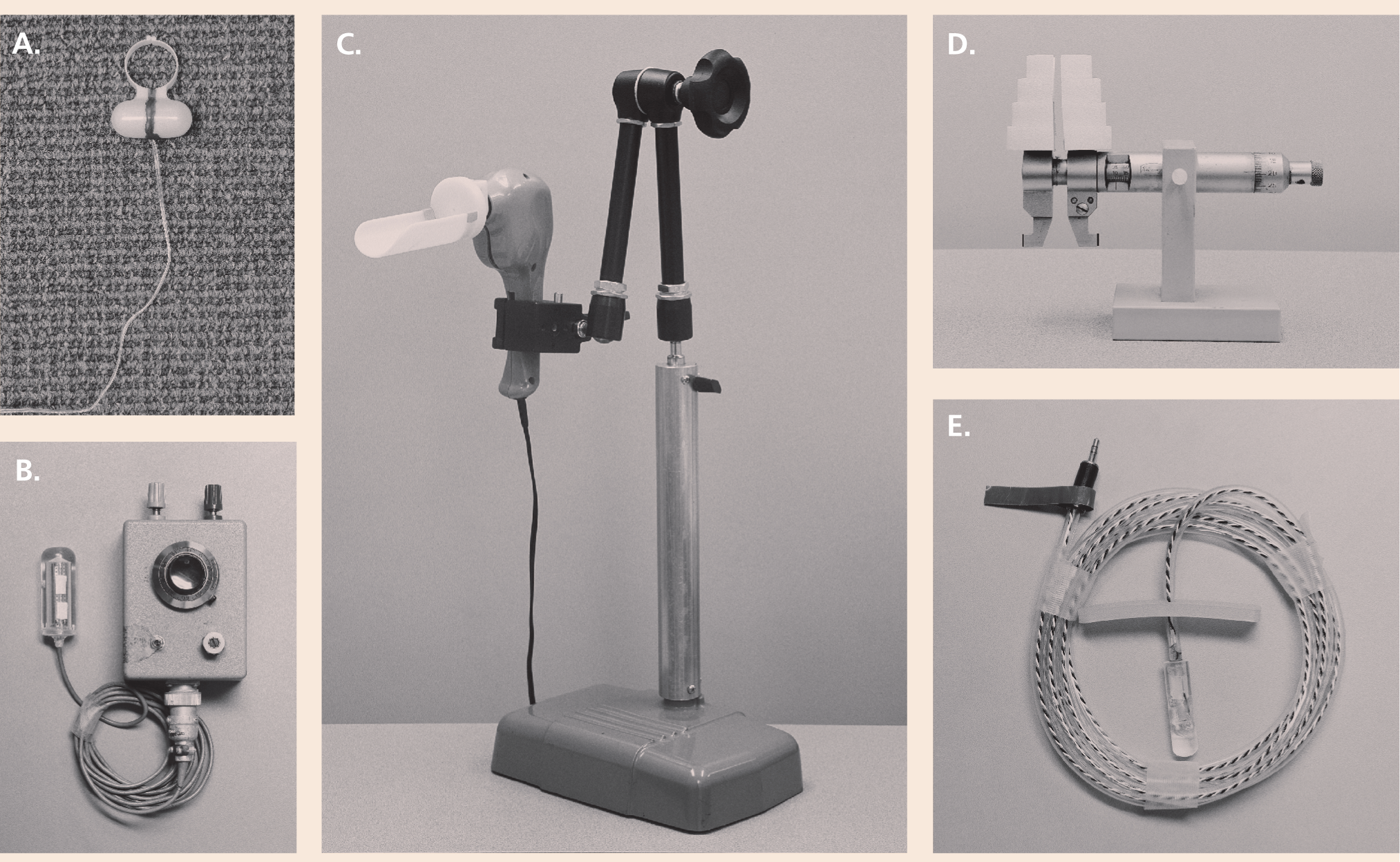
Belmont’s “respect for persons” principle has two prongs: individuals should be treated as autonomous agents; and individuals of diminished autonomy should be protected. Many of the decisions reported by respondents to my survey equate vulnerability to social discrimination with diminished autonomy. Under the guise of protection, IRBs exclude sexual minorities from research and deny them a voice which, as my respondents note, actually reinforces hierarchies: “The process reproduces inequality, for example: it’s not okay to ask someone about their sexuality if they are presumed to be LGBTQ, but it is okay if they are presumed to identify as heterosexual.” Also while many IRBs automatically view sexuality research as risky, they differ in where they locate it.
IRBs turn us all into “outlaws” and “low-level cheaters.”
Often, it is the sexual subjects themselves whom IRBs consider too vulnerable to speak. Some of these cases involve children or adolescents, an explicitly protected category in IRB regulations. For this reason, sexuality researchers tend to avoid such projects (“In general, my students are leery of studying sexuality because of perceived problems with IRB, especially studying child and youth sexuality”). In an alarming twist, however, my respondents reported that IRBs routinely blocked research on adult sexual minorities, particularly LGBTQ communities, because of their alleged vulnerability. For instance, one respondent noted, “Demographic surveys could not include any identifying information. I was told that because the information I was collecting was “sensitive” (life histories of black gay men), this would prevent the unanticipated “outing” of participants. Somehow the sexual identity of my participants was construed as clandestine and shameful.”
Another respondent reports, “They made me change the reporting of names to be completely anonymous even though almost all of my subjects WANTED to be identified in the study—it was a Pride organization whose entire goal was about being out and proud!!” My own student, Shawn, became the only researcher in our department to have his proposal rejected by the university IRB. His proposed study was to explore the impact of the military policy, Don’t Ask, Don’t Tell (DADT) on the day-to-day lives of gay servicemen. The IRB wrote that because DADT prohibits military personnel from disclosing their homosexuality, “the Committee considered the risks to subjects too great and could not grant approval of the study.” Denied sexual citizenship by federal military policy and thereby made “vulnerable,” lesbian and gay soldiers were then denied opportunity by the IRB to exercise political agency and speak out, even anonymously.
Sometimes IRBs view projects as too risky because they consider the researcher to be vulnerable. In these cases, the research subjects are deemed dangerous, typically because of non-normative identities or behaviors. For example, sociologist Elisabeth Scheff of Georgia State University proposed a study of people who identify as kinky. IRB approval “took just a hideously long time. They said that I couldn’t go to respondents’ homes to interview them. That it wasn’t safe. These people, who knew what they would do, if they were going to engage in kinky sex, maybe they would kidnap and torture me. And I was like, ‘it doesn’t really work that way.’ I had to agree to meet people in my office, a public library, cafés.” She found that the prohibition to go to her respondents’ homes interfered with her ability to recruit subjects and conduct private interviews. In some cases when IRBs see the sexual subject as the source of risk, their decisions seem designed to protect the university: “My student was doing interviews with sex workers. The IRB expressed concern that this population was dangerous. They seemed scared that putting the university name on the flier would invite sex workers to campus.”
A Dangerous Method?
Critics have observed IRB “mission creep,” as a new industry of IRB professionals, often having little or no research experience themselves, review proposals. One outcome has been requirements for design modifications. For example, many survey respondents reported that IRBs required them to incorporate therapeutic provisions in the event that participants became overwrought while talking about sexuality. As one professor notes, “My student was told that GLBTQ people are mentally vulnerable and that he would need to provide counseling if one of them caved in sharing his or her coming out story.” Another reports, “This was about fear [by the IRB] that teenagers would be upset in a focus group interview, and requiring a counselor be ‘on hand’ in case they were. The school chose not to participate under this condition.”
IRBs may also require researchers to change their theoretical framework or methodological strategies. My respondents reported demands that certain questions be expunged from surveys and interview schedules, or protocol requirements that impeded the project. Reports such as the following were typical, “The IRB would not allow me to conduct traditional snowball sampling of women who are consultants for at-home sex toy parties, despite the fact that my participants run successful businesses selling sex toys/sexual aids and they often advertise their businesses in public places.” Or, “They objected to asking questions about sex life. Basically the IRB wanted nothing to do with an ethnographic investigation of gender and sexuality among high school students. [My proposal was held] to a higher standard, initially arguing that I would need to get permission from every parent in the high school to conduct an ethnography, not just the principal’s permission (which was suitable for all the other projects, apparently).”
IRB reviews may even object to the commonly used language. One respondent reports, “One of the significant changes I had to make to my IRB application was removing the word ‘queer’ from my title and all recruiting materials. The IRB felt that it would be potentially offensive. This seriously hinders my ability to recruit queer-identified women, many of whom specifically don’t identify as lesbians.” In the end, these IRB practices may turn sexuality researchers into “outlaws” and “low-level cheaters,” as they bargain, omit information, and, finally, ignore impossible demands.
Another pernicious IRB requirement is that researchers must destroy their data. This practice prevents longitudinal research, historical comparisons, and the vital accumulation of knowledge. My respondents report requirements to either destroy or never collect identifying information on their interviewees, under the guise of protecting confidentiality. Scheff, for example, submitted a proposal on polyamory as a graduate student: “They were very nervous about me studying adult polyamorists.” The IRB approved her study as long as she instructed her respondents to sign consent forms using pseudonyms (“Mary,” for example) and did not collect identifying names with pseudonyms. Later Scheff found that longitudinal follow-up was impossible. “Naively, I thought, ‘Oh well, I’ll just remember.’ Well, fifteen years later, I can’t remember who ‘Mary’ was.” The IRB made her destroy her interview tapes. She has the transcripts but “that doesn’t help me find people for longitudinal research. Really, if you’re going to resample the original sample, you need to know who the initial sample was.” Because of these IRB requirements, Scheff could not locate members of her original sample.
Regarding her research on breast cancer, Julia Ericksen notes that her IRB was concerned that “it was about breasts and about sex.” They required that she destroy all of her data—tapes and transcripts of 98 interviews. Ericksen said, “I had marvelous data in them. Even though people will again interview women who had breast cancer, they won’t interview women at that particular moment in time.” IRB requirements for data destruction not only make longitudinal work impossible, but prevent archiving interviews for future scholars. “It would have been very interesting for somebody 50 years from now, to go back and say, hypothetically, ‘Now we know how to cure breast cancer, and we have this historical material from people from when they didn’t know.’”
Cumulatively, these findings suggest that boards may apply tropes of danger and risk to projects involving sexuality. But is talking about sex to a researcher harmful, and if so, how harmful? IRB regulations allow expedited or exempt review for research estimated as “minimal risk,” defined as not exceeding harm normally encountered in daily life. Anecdotal evidence, dating back to Kinsey’s respondents, suggests that many interviewees may even enjoy participating in sexuality research. As Julia Ericksen noted, “IRB members assume people don’t want to talk about these things and that was not my experience.” Not surprisingly, we have little empirical data. In 1977, two years before Belmont’s publication, psychologist Paul Abramson conducted an impact experiment on 80 undergraduates. His procedure—designed to replicate protocols of that era—involved deception, soft pornography in a waiting room, and tests to measure sexual orientation. He found that subjects enjoyed the research and reported no negative aftereffects. More recently, health researcher Brian Mustanski found that 90 percent of adolescent participants in an LGBT health study reported that they were “very comfortable” or “comfortable” answering questions about sexuality, and he urged researchers not to let IRBs discourage them from sexuality research with adolescents. Ironically, IRBs might well block further research of this type that could inform their deliberations.
Ironies abound in IRB regulation of sexuality research. IRBs keep sex in the closet while themselves operating in what Katz calls a “miasma of discretion,” with virtually no public oversight or transparency to the researchers they regulate. IRBs that assume sexuality is “sensitive” prohibit the very research that might demonstrate that, for many, it is not. IRBs that presume sexuality is “risky,” prohibit the production of sexual knowledge and silence the voices of diverse sexualities—knowledge which might itself challenge cultural fears about sex. IRB practices that disadvantage sexuality research have the effect of wresting sex out of politics and history and denying the possibility of social change. Timeless and taboo, sex remains outside of what is knowable.