




Abstract
Sociologist Ivy Ken questions the activities of two non-profit organizations that broker agreements with food companies to provide healthier products for schools.
Elementary school students in Washington, D.C., recently sat down to a meal of baked chicken drumsticks served with a whole-wheat roll, local braised kale, local potato salad, and a banana. It wasn’t a special occasion. This was a typical school cafeteria lunch. The students loved it and there was very little “plate waste” because local legislation encourages schools here to conduct taste tests to find out how the students like the food prepared. The school—one of ten in my town where meals like this are served—also occasionally gets students involved in preparing the food and teaches them the importance of cooking without a lot of salt, fat, or sugar.
At most other schools in the United States, students are accustomed to options like pepperoni pizza, chocolate milk, and chicken nuggets. A recent investigation revealed that, unlike the simple but tasty drumsticks, the “chicken” part of chicken nuggets commonly served in school meals is actually made from 28 ingredients—not including the breading. Many of the agro-chemicals, hormones, antibiotics, and ingredients in food products like this have been linked to diabetes, cancer, food allergies, obesity, and other serious health concerns. The Centers for Disease Control report that the body-mass indexes of school-aged children have risen substantially over the last three decades, causing concern about an “obesity epidemic.”
Architecture and the price of labor have a lot to do with the kind of food children eat at school. Federal legislation in the late 1940s provided funds for schools to install well-equipped and fully operational kitchens, but slashed budgets in the 1970s and ‘80s meant that school districts could not afford to hire the skilled workers to occupy them. Enter pre-packaged meals. By the 1990s, according to school food historian Janet Poppendieck, private food companies had made it easy for schools to purchase bulk “airplane meal packs” by providing schools with the freezers and ovens to accommodate them. No skilled on-site labor necessary, and no need to dip into the school’s budget to finance and maintain real kitchen equipment. Just hire people to open the freezer, heat, and serve.
Corey Fields
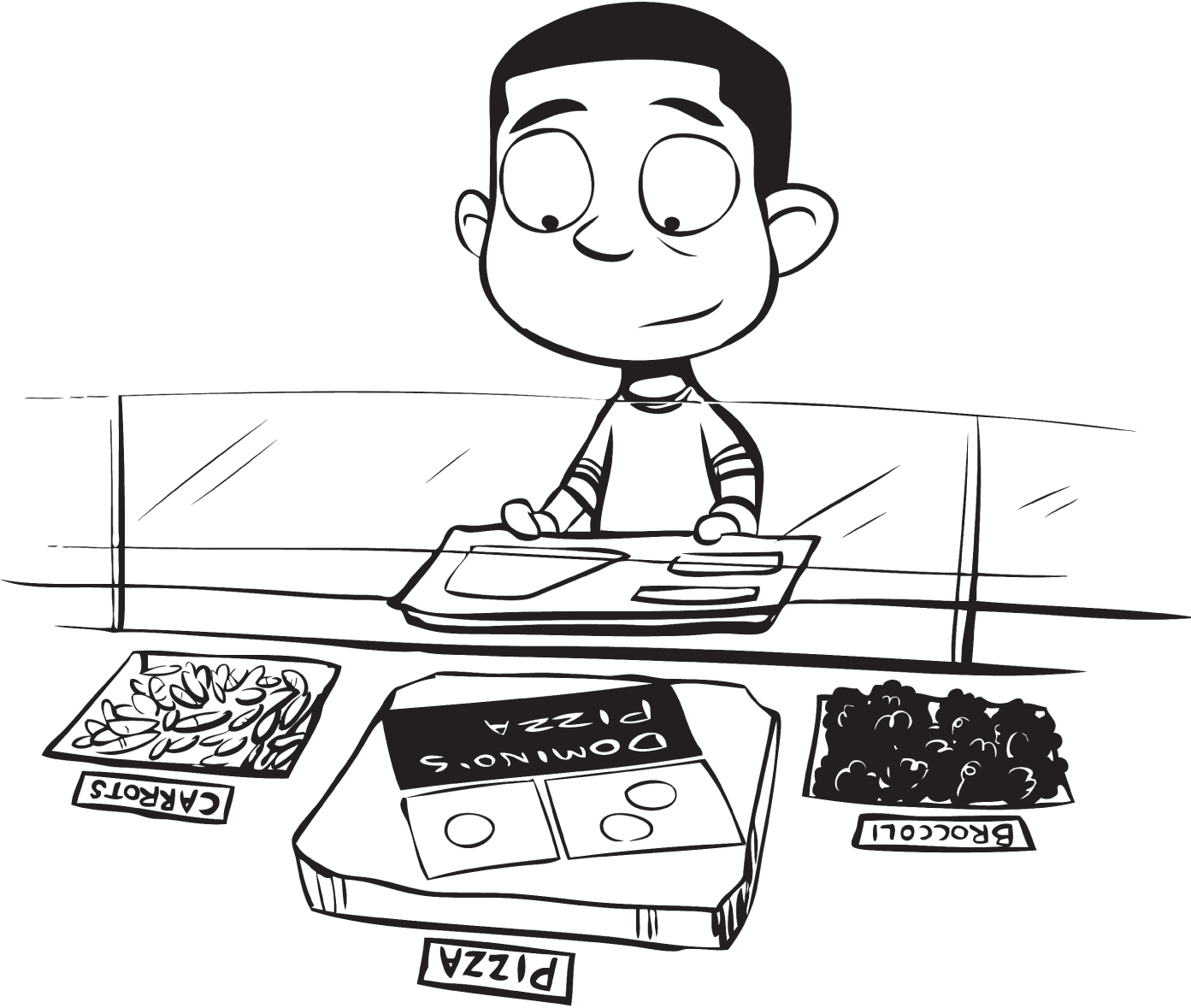
Today, over 7 billion meals are provided by the National School Lunch and School Breakfast Programs each year, which means that selling food products to schools is big business. Large food companies are eager to nurture this segment of the market. These same companies are also aware that sales of their products could be jeopardized by parents, students, and public health advocates who blame pre-packed, processed foods in schools with the rise in obesity and other food-related ills. To deflect this sales-shrinking public advocacy, several companies have formed “alliances” and “partnerships” that are engaged in coordinated public relations campaigns to send the message that they are working together to keep children and communities healthy.
What are we to make of the fact that corporations whose profits are tied up in mass levels of consumption claim to be leading the fight against unhealthy school diets and childhood obesity?
Partners for Healthier Food or Better Business?
The Partnership for a Healthier America and the Alliance for a Healthier Generation are two nonprofit organizations that have been created to “make the healthy choice the easy choice” for kids in schools and families at the store. I have been watching and participating in the events of these organizations for four years, and I’ve seen a lot of impressive activity. For example, both organizations use social media to provide health tips for kids, and offer resources to make exercise fun and appealing. Each year President Bill Clinton presents awards to schools based on the Alliance’s excellent criteria, which include a school’s efforts to remove junk food from the cafeteria line, and to create a culture of health among teachers, staff, and students.
Since school wellness committees are often made up of just two or three concerned parents or teachers who try to get initiatives going, the backing of a major organization like the Alliance, with its evidence-based practices and well thought-out structure for connecting with schools—all for free—can provide an amazing boost for many schools.
In one of my first interactions with the Alliance I was flown to Little Rock, Arkansas, in 2011 along with hundreds of other parents, physical education teachers, health teachers, and coaches whose schools had received one of the organization’s Bronze, Silver, or Gold Level Awards. I attended this event as a member of the wellness team at my children’s elementary school and I was thrilled: thrilled that the school was making important strides, thrilled that an organization like this used smart scientists to come up with rigorous criteria for schools to implement, and thrilled to get two full nights of sleep in a cushy hotel without interruption from my young kids.
My bubble was burst when I attended an event two years later for the Partnership for a Healthier America. The keynote speaker at that event was first lady Michelle Obama who gave a rousing speech (repeated in her subsequent article in the Wall Street Journal) about how the obesity crisis can be solved “in a way that’s good for our kids and good for businesses.”
Why so much concern for businesses, I wondered? I thought we were here for a ‘’healthier America” and a “healthier generation.” Then it dawned on me that at this event and at the Alliance events many speakers talked about childhood obesity and healthy communities, but also about all the work companies are doing to fight obesity. I suddenly noticed how slick and overly choreographed the materials and events were, and how many times I heard that companies are our “partners,” “working together” with us. An unsettling set of questions came to me: Were these organizations really created to help make communities healthy? Or were they created to help companies enhance their reputations by making claims about “working together” in the fight against childhood obesity?
Corey Fields

To deflect criticism, several companies have formed “alliances” and “partnerships” that are engaged in coordinated public relations campaigns to send the message that they working together to keep children and communities healthy.
According to the Alliance, “We work with leading companies from across the business community to develop mutually beneficial corporate collaborations to ensure the next generation lives long, healthy lives.” The Alliance has 120 corporate allies such as Barrel O’Fun, Slush Puppie, Dr. Pepper Snapple Group, and Domino’s. Likewise, the Partnership’s 50 private sector partners include Walmart, Nestle, PepsiCo, Coca-Cola, and Hershey. These do not seem like companies that ensure children’s health. They seem much more like the source of the problem.
Obesity is almost always framed in one of two ways: individualistically, as a choice; or medically, as a disease. But blaming our choices or our genes for a social problem obscures the important dynamics that influence what foods appear on the menu for us to choose from in the first place. This is especially true for schools, since the decision a third-grader makes between tater tots and French fries in the lunch line of an enclosed cafeteria could hardly be called a “choice.”
Packaged for Profit
In order to make sense of having companies like Hershey and PepsiCo leading the push to fight childhood obesity, I carefully examined the “voluntary agreements” each company has made, scrutinized the speeches by the first lady and other prominent figures in support of these organizations, and analyzed the messages these organizations put out on their websites and in press releases, videos, conference programs, and related materials.
One traceable consequence of the Alliance and the Partnership’s activities is that the reputation and profits of the food giants they partner with have been enhanced with only meager changes to the food products they produce and sell. The companies that have been marketing Funyuns and Mountain Dew to children for decades would not seem to be morally invested in fighting the “obesity crisis,” but they have been swift to realize that when their market is threatened by community groups, legislation, and popular disapproval, the cover of the Alliance and the Partnership—including an A-list of public endorsements—serves as a powerful merger. The benefits to these companies include less public disapproval, as well as increased venues for easy marketing and distribution of their products. In return, they have only to make a voluntary commitment to offer or market slightly healthier products, especially to children.
Corey Fields

The Alliance rewards schools’ efforts to remove junk food from the cafeteria line, and to create a culture of health among teachers, staff, and students.
And what of these commitments? On the Alliance website describing its “Healthy Schools Program,” a company called Barrel O’Fun says it is a “family-owned company that believes in the environment, their employees and offers great tasting items that you want to serve to your students again and again.” Barrel O’Fun has long made a product called Cheesey Puffs in which 85 percent of the calories come from fat. Because of its partnership with the Alliance, Barrel O’Fun now also makes a product called Jonny Rapp’s Cheesy O’s, which is specifically formulated to meet the federal government’s new requirement that food sold in schools can contain no more than 35 percent of calories from fat. Cheesy O’s meets the lower fat requirement, and also contains maltodextrin, disodium phosphate, Yellow 6, Yellow 5, and an unnamed “Artificial Flavor.”
The Alliance and the Partnership have welcomed many companies like Barrel O’Fun that have created or modified their products to fit government requirements for schools. PepsiCo’s FritoLay brand, for example, now makes RF Doritos (reduced fat) and Domino’s now offers Smart Slice Cheezzzilla Pizza with 51 percent whole-wheat flour and “Lite” cheese. McCain makes Crispy Seasoned Bakeable Fries, which have been “par-fried,” or fried at the manufacturing plant so they can simply be warmed on-site. ConAgra has a whole line of Max Snax, which, in the Totally Taco flavor, are “small triangular shapes made with two layers of quesadilla dough with Whole Grain, filled with beef, a blend of two cheeses and taco seasoned sauce.”
Each of these products has been designed to just barely meet the government rules on what can be served in school meals (a pizza crust that is 51 percent whole-wheat, for example, is still 49 percent non-whole-wheat). But the major new federal legislation—the Healthy, Hunger-Free Kids Act of 2010—that prompted the creation of these products still allows snack products to have as much sugar as Cotton Candy Ice Cream and does not limit the amount of sugar in beverages like chocolate milk. The law does not stipulate that artificial colors, artificial flavors, artificial sweeteners, or other additives known to be harmful cannot be served, nor does it specify that food sources should be free of antibiotics, hormones, or pesticides. Some of the same companies that have partnered with the Alliance and the Partnership and received praise and endorsement from high-profile health advocates argued strongly against these additional restrictions.
This year the U.S. Department of Agriculture sent a memo to all state agencies to make them aware of an “important new tool” from the Alliance. The “Smart Snacks Product Calculator” on the Alliance’s website helps food service directors determine which snacks comply with federal regulations. A related tool on the website, the “Product Navigator,” provides easy access to “compliant” product listings and “streamlines the procurement process.” Simple, fresh fruits and vegetables are not “products” so they are not included among the options. Rather, food service directors who seek help from the federal government are directed to the Alliance as a reliable source for finding and purchasing packaged products that meet the necessary requirements. The result for Alliance companies is a profitable and efficient distribution chain.
Community Partnerships not Corporate Alliances
At a glance, the affiliation among corporate food giants within the Alliance for a Healthier Generation and the Partnership for a Healthier America is a problematic one. The reputation, marketing, and profits of corporate food producers have been greatly enhanced through this partnership, but the quality of the food students are consuming has improved only nominally. Nutritionists and advocates on staff at these organizations argue that it is better that these companies make some changes rather than no changes, and both organizations turn away companies that will not meet their terms. But the changes are paltry and amount to no more than an attempt to meet minimal government standards for school food. The real “health” indicators in this arrangement are large food companies’ profit margins. More troubling still is the fact that these partnerships have conveyed legitimacy on corporate food giants just at a time when the public has come increasingly to question them.
We cannot rely on food companies to fix the problem of too much processed, unhealthy food on schools’ menus. Instead, we have to depend on and contribute to our communities, and use tools like legislation, advocacy, and participation to ensure that students have access to good food. This is not as easy as using the free online procurement tools that feature products from the food industry, but our communities will be healthier for it in the long run.
Genuine school food reform requires partnerships with community groups like the Farm to School Network or the Edible Schoolyard Project aimed at creating an infrastructure for meals that contributes to the local economy, nurtures children’s ecological literacy, and prioritizes children’s health. Excellent models for this now exist. The meal of drumsticks and kale that I described in the opening illustration was prepared by chefs from a community organization called DC Central Kitchen, which provides a culinary job-training program for adults who have faced economic hardship and homelessness. This organization served over 4,200 from-scratch meals every day this year to students across ten schools in some of the city’s poorest neighborhoods. They also paid their workers a living wage and made sure 30 percent of their food was purchased from local farms.
This all sounds expensive, but because students love the food and participate in the program, the model is sustainable enough to provide revenue to support the organization’s other enterprises, such as providing meals to homeless shelters. It can be done. And it can be done without heavy reliance on pre-packed, additive-laden, obesity-related products manufactured for profit rather than for health. DC Central Kitchen works in schools that have operational kitchens, within a legislative environment that both mandates strict nutrition standards and provides monetary incentives for providing locally-grown, unprocessed foods, thanks to the advocacy of organizations like the Farm to School Network. Now those are real alliances for a healthy community.