




Abstract
Sociologist Tracy E. Ore explores how transformations in American social practices of work and life changed and were changed by what and how people ate at the turn of the century, and how these trends continue today. She reviews Buying into Fari Trade and Repast.
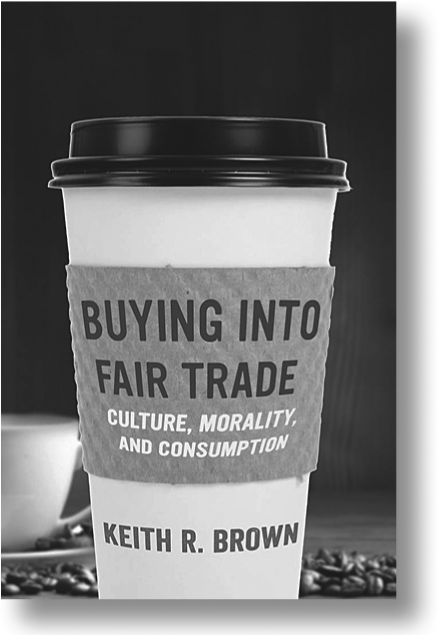
Buying into Fair Trade: Culture, Morality, and Consumption by Keith R. Brown New York University Press, 2013 199 pages
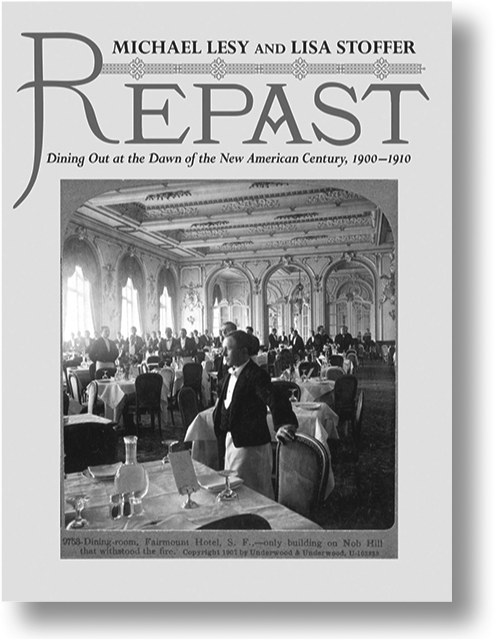
Repast: Dining Out at the Dawn of the New American Century, 1900-1910 by Michael Lesy and Lisa Stoffer W.W. Norton, 2013 264 pages
In 1825, French attorney, politician, and connoisseur of all things food Anthelme Brillat-Savarin wrote in The Physiology of Taste, “Tell me what you eat and I will tell you what you are.” One hundred and fifty years before the advent of the Atkins diet, Brillat-Savarin had concluded, among other things, that sugar and white flour were the causes of obesity and that the healthiest diets were rich in proteins.
Tell me what you eat and I will tell you what you are.
Today, history repeats itself, with twenty-first century dietary anxieties strangely echoing nineteenth century concerns, according to Michael Lesy and Lisa Stoffer’s Repast, which chronicles the American dining experience through the prism of social and cultural changes at the beginning of the twentieth century. The authors offer insight into how early twentieth century urban America changed (and was, in turn, changed) by what and how people ate in public. Inspired by a meticulously preserved collection of ornate, detailed menus in the New York City Public Library’s Buttolph collection, Lesy and Stoffer tell a history in food of class, gender, and—sometimes—race that foreshadows a number of our contemporary food trends and obsessions, including food safety, nutrition, flavor, access, and health.
Repast focuses on a time of social, economic, demographic, and cultural turmoil of 1900-1910 that mirrors many of the social strains the United States faces today. The authors recount changes in the nation’s eating habits at a time of great economic inequality, when, according to the authors, one-third of one percent of the nation’s wealthiest people controlled 75 percent of the nation’s wealth. It was the period that led sociologist Thorsten Veblen to coin the term “conspicuous consumption.” Menus and photos document excessive galas featuring lavish costumes, endangered and exotic foods, and, on some occasions, live animals; some of these parties cost the equivalent of over one million dollars.
In 1905, newspapers juxtaposed their coverage of one of the most excessive of these events with a story of a young newspaper boy who starved to death while trying to support his family. Today, similarly, stories of conspicuous consumption capture our attention, while stories of everyday people in the United States experiencing hunger and food insecurity receive little attention—except, perhaps, when media turns its focus to hard-luck, human-interest stories during the holidays.
Repast begins by describing the battles against adulterated and spoiled food that led to the Pure Food and Drug Act and Meat Inspection Act of 1906, the foundation of today’s food and safety regulations. A major impetus for this legislation was the investigative reporting of Upton Sinclair, whose novel The Jungle created moral outrage among Progressive era reformers such as Jane Addams, and President Theodore Roosevelt’s experience of tainted meat on the battlefield during the Spanish-American war. However, weakened by pressure from major meat packing corporations such as Armour, legislators passed a diluted bill. Nevertheless, the decade was a time of scrutiny of “pure food,” which led to the labeling of ingredients in prepared foods, and lengthy studies documenting the potential harm caused by adulterated foods.
Urban dwellers in the early twentieth century experienced what the authors refer to as “the problem of lunch.” In 1900, when food wagons and quick lunch establishments began to proliferate in urban areas near factories, workers stopped bringing their lunch pails and began eating out—which had significant economic and gastric costs. Lesy and Stoffer describe how short break times resulted in workers shoveling in food. As a New York Times story on “The Prevalence of the ‘American Disease’” described: “inferior food, catch-as-catch can service, the noise, the hurry, even the heavy, permanent odor of the average quick lunch restaurant, all conspire against good digestion”—long before the rise of McDonald’s and Burger King. Quick lunch establishments failed elsewhere; Londoners, for example, were sickened by the size of the American meal, and refused to “swallow their food in chunks.”
There were also labor struggles at lunch counters. In 1903, white waiters attempted to form unions to combat poor working conditions and low wages. In response, business owners replaced them with black waiters, paying them even lower wages. When the black male workers staged the largest and most publicized strike of the decade, white female workers were hired—at even lower wages—to replace them. When women workers went on strike, restaurant owners introduced the “automat”—automated food service. Childs’ Restaurants and Horn & Hardart eliminated the need for servers—white or black, male or female—and created conditions that many of us take for granted today: consistency and uniformity in our food experiences. As the founders of Childs’ Restaurants espoused, “If there are no surprises, there are no disappointments.”
At times, the authors are unconvincing, particularly when they claim that whites who dined in Chinatowns were somehow behaving in ways inconsistent with the anti-immigrant attitudes of the era. From my viewpoint, these anecdotes of white urban dwellers “slumming it” in Chinatowns illustrate the old and continuing practice of anti-immigrant whites “consuming the exotic.” Nevertheless, Repast provides a fascinating glimpse into the advent of modern dining in the United States. If the influence of food manufacturers on federal policy was significant at the turn of the twentieth century, today the control exerted by corporate food behemoths—over everything from the U.S. Department of Agriculture’s ChooseMyPlate.gov to the Farm Bill—is overwhelming. For example, food and safety standards adopted by the USDA over a century ago are now at risk as officials consider replacing regulations that require the inspection of poultry and beef by trained government regulators with a privatized process that would allow the corporations to do it themselves.
Food history tends to repeat itself: twentyfirst century dietary anxieties echo nineteenth century concerns.
And yet, ethical eating is not dead, as Keith R. Brown’s Buying into Fair Trade: Culture, Morality, and Consumption, shows. A sociologist at Saint Joseph’s University in Philadelphia, Brown studied more than 100 “fair-trade” consumers, describing how they make meaning at the point of purchase. Like Repast, Buying into Fair Trade provides readers with insights into how consumption trends shape food cultures; the latter looks at how participation in fair-trade markets can foster a more socially just world.
Brown’s investigation was inspired by a “reality tour” of Nicaragua sponsored by Global Exchange, an international human rights organization “dedicated to promoting social, economic, and environmental justice around the world.” In Buying into Fair Trade, he examines the potential of fair trade to create a more socially just world, drawing on interviews, reality tour experiences, interactions with fair-trade advocates, and volunteering at Ten Thousand Villages, a company dedicated to promoting the fair trade of products made by artisans in developing countries.
The largest group of consumers who have any contact with fair-trade products possess little knowledge of fair-trade; they buy items on the basis of aesthetics, price, taste, or usefulness. (Think Prius-driving, pink ribbon-wearing, food co-op- and Target-shopping consumers.) But Brown also documents the store owners, managers, employees of non-governmental organizations, and activists who organize their purchasing experiences exclusively around social responsibility.
Highlighting the story of fair-trade coffee shop owner Joe Cesa, the author tries to understand why a person would remain committed to a cause even though they do not gain traditional economic benefits from doing so. Although Cesa’s shop ultimately fails, his dedication to fair trade is unwavering, and he gains social rewards from his enhanced moral image in the community. It is rewards such as these that fuel the efforts of promoters of fair trade.
Buying into Fair Trade also examines “conscientious consumers”: those who enjoy purchasing fair-trade and other socially responsible products, but do not organize all of their consumption habits around these principles. By purchasing a few fair-trade items, they can assuage their guilt from shopping in stores like Target and Walmart, buying goods that are frequently manufactured in sweatshops.
To understand the impact of such consumers, Brown coins the term “fairwashing.” Akin to greenwashing (when corporations promote their products as environmentally-friendly in order to deflect attention away from poor environmental practices) and pinkwashing (when companies that produce and sell products linked to breast cancer simultaneously promote pink-ribbon products to fund breast cancer research), fairwashing, he says, distracts us from the goals of the movement, dilutes its politics, and may ultimately derail social justice efforts.
Tell me what you eat and I’ll tell you what you are. While Repast and Buying Into Fair Trade examine food consumption trends at two very different points in time in the United States, both adopt Brillat-Savarin’s maxim as an analytical strategy. What they make quite clear is that what we eat clearly matters—not only for what we are today, but for what we will one day become.