




Abstract
Drawing on more than five years of research with women who inhabit a circuit of suffering made up of prison, homeless shelters, drug programs and the streets, sociologist Susan Sered argues that punishment and treatment often function as two sides of the same coin: a coin that construes women’s suffering in terms of their private traumas, personal flaws, and poor choices. This ideological script functions to blame the victim, obscure the structural causes of poverty and violence, and absolves governments from public responsibilities for the well-being of citizens.
© Jane Evelyn Atwood/Contact Press Images
© Jane Evelyn Atwood/Contact Press Images
I was sitting on a stoop with Gloria, an African American woman in her early 50s, when a man came by who had been stalking her, and making threatening and suggestive gestures. I had heard him call out the window to her with an aggressive demand for sex. This was not a one-time event: Gloria has been violently assaulted, raped, homeless, broke, and incarcerated throughout much of her adult life.
Her comments to me that afternoon were surprising.
“People helped me realize [that] I went up into my head too much.” The issues were “all up in my head,” and “I have stopped going there.”
Why, I wondered, was Gloria saying that her “issues” had to do with her own mental state rather than with the actions of the stalker—and the many other men who have abused her?
Gloria is like many women who have been victimized by sexual and physical assaults, and seen the blame turned back on them either for making “bad choices” to put themselves in “dangerous situations” or for failing to “get over the trauma” in a timely fashion.
I first encountered Gloria in 2008 when she agreed to participate in a five-year project designed to understand the life experiences of women in Massachusetts who have been incarcerated. At first we interacted primarily at a halfway house for women on parole and at a drop-in center where homeless women could put down their bags and relax in easy chairs. Our relationship grew gradually as I visited Gloria and several dozen other women in prisons, hospitals and shelters; joined them for coffee and participated in family events; and frequently picked them up curbside when they were kicked out by a boyfriend, evicted from housing, released from jails or hospitals or simply could not bear another night on the street.
Vicious Cycles
Like Gloria, more than three-quarters of incarcerated women have been targets of sexual abuse. Nearly all are poor and living with chronic pain and illness. A vicious cycle shapes their lives: they may initially run away from abusive homes, partners, and husbands only to find that they are struggling to survive on streets without support for themselves and their children. Shoplifting or other petty crimes often become the only way to scrape by, and illicit drug use may be increasingly attractive in order to “self medicate” (Gloria’s words) in the wake of fear, pain, and violence. Addiction exacerbates the struggle to maintain health and stability, arrest and incarceration add more layers of misery, and on it goes. Among women in my project, nearly two-thirds left home by the age of seventeen, only 30 percent graduated high school, less than half have ever held a full-time job, nearly all lack stable housing, all live with chronic physical and mental illnesses, and all but one were arrested for drug-related offenses.
The suffering of individuals is attributed to private trauma, personal flaws, and their own poor choices.
Gloria has spent a great deal of her adult life traveling through various institutions that serve the poor and afflicted, from jails and prisons, to hospitals and rehabilitation programs, social worker and welfare offices, and homeless shelters. While the mandates of each institution vary—punishment, protection, helping, curing—each promotes, albeit in different words, the notion that individuals can choose their health, employment and social status, and that we are responsible for our own misfortune. In line with the American narrative of individualism, the penal-welfare-healthcare circuit drills women like Gloria in an ideological script that attributes suffering to private trauma, personal flaws, female gender attributes, and their own poor choices.
Despite abundant good will on the part of nearly all caseworkers, nurses, doctors, therapists—and even many correctional officers—this institutional circuit repeatedly has failed to help Gloria gain health, security, or financial self-sufficiency. Ignoring the real social, racial, gender and economic inequalities and violence that thrust her and kept her stuck in miserable circumstances, the institutional script attributes her suffering to her own flaws to explain why she suffers.
Highly gender specific, this script typically casts women as “co-dependent,” “stuck in a victim mentality,” or “lacking self-esteem.” Echoing ideas that resonate throughout American culture, this script holds enormous power for women like Gloria. Adhering to it may bring rewards, including custody of children, appropriate medical care, and reinstatement of welfare eligibility. Individuals who choose not to play their assigned role, by failing to “own up” to their own role and blaming others or the “system” for their situation, may find that they do not “earn” early release from prison, favorable evaluations from caseworkers, or other benefits. Despite the harshness of their lives, the homeless, impoverished, abused, and criminalized women whom I have come to know do not describe the world as a place of relentless suffering. Rather, they depict themselves as anomalous in that they suffer so much in a world in which other people are able to have “normal” (their word) families, jobs, houses, and health. Most believe (or at least hope) that someday they will have the kinds of homes and families they see on television.
Gloria’s “Choices”
The daughter of blue- and pink-collar workers, Gloria grew up in a working-class African-American family in one of Boston’s racially segregated neighborhoods. Shortly after graduating high school Gloria gave birth to her first child. Unable to rely on the baby’s father, Gloria continued living with her mother who helped her take care of the baby. Shifts “dancing” (stripping) at a local bar were not her first choice of employment, but they helped pay the bills. At about that time Gloria met a man who gave her one hit of a crack pipe. A year later Gloria fell in love with a man who tried to pimp her. Shortly afterwards, her mother died and she became homeless. And, when it looked like bad couldn’t get worse, Gloria suffered an assault that changed her life. Attacked in a drug deal gone bad, she suffered a traumatic head injury causing chronic memory loss. After two years in the hospital and a rehabilitation facility receiving treatment for a brain injury and PTSD, she was released to the streets, homeless, with an expectation that she would get by on her disability payment (Social Security Income) of less than $700 each month. For the next 10 years Gloria moved in and out of homeless shelters, the apartments of male acquaintances (in return for sex), crack houses and occasionally spent nights at her son’s grandmother’s apartment. She relies on an impressive array of pharmaceuticals to get by—anti-anxiety, anti-depressant, and sundry pain medications. She has become one of millions of Americans who, according to recent studies over the past four decades, take psychiatric medication to cope with day-to-day pressures.
© Jane Evelyn Atwood/Contact Press Images
Beating Herself Up
Gloria’s greatest concern has been housing. Without a stable place to live she is dependent on men, vulnerable to assaults on the streets, and visible to police who stop her for loitering, soliciting or simply “walking while black.”
Shortly after I first met her, she was placed into an SRO (single resident occupancy) building by an agency that helps the homeless. She enjoyed coming and going as she pleased. She liked the local caseworker who visited. But, without her own bathroom or access to a kitchen or extra bedroom for guests and her children, the downsides of her rooming house are clear. To make matters worse, because she is officially housed, she has been removed from the priority list for subsidized apartments. “They are giving them first to homeless people and I [already] have a place,” Gloria says wistfully.
Gloria witnesses the byzantine nature of bureaucracies, but her explanations for her plight focus on herself as the source of her problems. She blames herself for not finding an agency that could place her in an apartment instead of an SRO (although the waiting list for an apartment is years as opposed to months for an SRO). She legitimates her self-blame, pointing out that, “even my caseworker says I need to work on myself first, before I can work on better housing.” If housing is Gloria’s biggest worry, men are a close second. For two years, she has been stalked at the SRO by a man who lives directly above her, and she is harassed by a different male neighbor. Though she reports these problems, the SRO building manager takes little action. All the while, Gloria reiterates the language of therapeutic culture by framing her suffering as the result of her own “paranoia” or inability to “be alone and stand up for myself.”
© Jane Evelyn Atwood/Contact Press Images
Making matters worse, her boyfriend John was released from prison and insisted on staying with her. Gloria could be evicted for hosting an overnight guest and she pleaded for John to leave, but he ignored or mocked her cries. (In his defense, he was released from prison with no money, no job, no chance of finding a job with his criminal record, and, due to his record, no eligibility for public housing.)
Within days of moving in with her, John resumed his drug use and began helping himself to Gloria’s money and possessions. Soon, he began to wage a campaign of physical abuse. She didn’t call the police because, like many women, she was afraid to make her abuser even angrier.
Institutions too often fail to help Gloria and others gain health, security or financial self-sufficiency. Instead, they give them simple—and simplistic—language to explain why they suffer.
Like so many other women, she struggles to come to terms with his behavior. “He is the best man I’ve ever been with,” she says. “He makes me feel loved. He hugs me on the street.” And, when we speak, she blames herself, saying, “my problem is that I need a man, I don’t want to be on my own” and then her own “paranoia” as the cause of her fear of John. Gloria’s focus on her own deficiencies is part of a widespread tendency in America to blame victims for their lot in life. In her book The Cult of True Victimhood: From the War on Welfare to the War on Terror, scholar Alyson Cole argues that in American culture blaming others for one’s misfortunes is often seen as “an expression of weakness, moral or psychological, and a dangerous abdication of personal responsibility,” and that victimhood has come to be associated with weakness, dependence, effeminacy, being manipulative, and even criminality. Sentiments of this sort were infamously proclaimed in 2012 presidential candidate Mitt Romney’s comment that there are “47 percent of Americans who will automatically vote for Obama… [These are people] who are dependent upon government, who believe that they are victims, who believe the government has a responsibility to care for them, who believe that they are entitled to health care, to food, to housing, to you-name-it… These are people who pay no income tax.”
© Jane Evelyn Atwood/Contact Press Images
By assigning individual rather than collective responsibility for human suffering, we absolve governments and corporate leaders from responsibility.
Although Romney did not win the election, his remarks resonate with the personal responsibility script that Gloria and other women learn throughout the social service and correctional circuit. Not only has this script failed to help Gloria stay out of danger or out of jail, it has compounded her misery by telling her that her problems are her own fault.
Admitting Powerlessness
A year or so after John moved in with her, Gloria’s drug use escalated and her family responded. Her adult sons and sisters kept her with family, and then eventually registered her at a drug rehab program for women. While there is a spectrum of rehabilitation facilities, ranging from the elite Betty Ford clinic to programs associated with prisons or homeless shelters, the core ideologies tend to be similar. Understanding drug use as a symptom of an individual being out of control, these programs tend to be highly structured and routinized. At Gloria’s facility, residents cannot leave to see their children and they have limited phone privileges.
The program is modeled on the Twelve Step principles made famous by Alcoholics Anonymous. Staff members encourage women to “work on themselves” in terms of dealing with resentment, disappointment, frustration, anger and sadness, and supports “spiritual growth.”
Group leaders—some of whom are psychotherapists and some of whom are simply AA/NA (Alcoholics Anonymous/Narcotics Anonymous) “veterans”—preach that the individual is responsible for his or her failings, that blaming others for one’s suffering is actually a symptom of the disease of addiction (“denial”), and that it is either hubris or pathology to try to change the world. Women are urged to admit “powerlessness” over the incurable disease of addiction, turn their lives over to a Higher Power, and carry out an audit of their “defects of character.” Over the past decades Gloria has participated in countless Twelve Step groups. Judges mandate AA/NA attendance for individuals accused or convicted of drunk driving or illegal drug use; drug courts routinely include AA/NA meetings as part of the program; and AA/NA attendance is often required by a judge as a condition for contact with children or for parole. While AA/NA participation is not obligatory in Massachusetts prisons, obtaining a certificate attesting one’s attendance at meetings can prove to caseworkers that one is “doing the right thing” and earn early release from jail or satisfy the demands of a parole or probation officer. As a consequence of repeated contact with AA/NA, Gloria is a pro at reciting AA/NA slogans such as “Let Go and Let God.”
Gloria’s program also provided individual and group therapy sessions on topics such as “how to lose the victim mentality.”Requirements to attend therapy are common for women on probation or parole and for women who are involved with child welfare services as a condition to see or keep their children. Many have been treated in in-patient hospital settings and have seen therapists while in prison. And virtually all of the women spend large amounts of time, especially while in prison and in programs, watching television shows such as Jerry Springer and Oprah that implicitly and explicitly rehearse psycho-therapeutically informed scripts that mock women for masochistically choosing to stay with cheating men (Jerry) or encourage women to develop the self-esteem to leave abusive men (Oprah).
Repeatedly, in virtually all settings within the rehabilitation program, Gloria was coached in the iconic American script for individuals down on their luck: they should “work harder,” “pull themselves together” and “get over it.”
Self-Blaming
A few days after leaving rehab, Gloria stopped by my office to share her excitement about the progress she had made in the program. I asked why this most recent program was so helpful while the many other similar programs she had done in the past had not led to changes in her life circumstances. After a bit of thought she explained that, “this time I was ready to hear it,” and she shared this example: “In one group [therapy session] they asked about bad things that happened in our childhoods. I said I couldn’t think of anything. The counselor told me that I am blocking something. But I didn’t remember any bad things. Then I heard a voice in the room say ‘abandonment’ and I thought ‘yes, that is it!’ God was showing me [through this voice] that is thing I am blocking—abandonment.”
Gloria had never before mentioned that she had been abandoned as a child; quite the contrary, she often described growing up as the beloved baby sister in a large close-knit family. On more than one occasion she had told me that her mother and father “were the best parents ever—they stuck it out ‘til death do us part.’” Later on, after we went our separate ways, I mused on cruelty in the encouragement Gloria was given to “discover” that the true cause of her current misery lay in her own experiences and family—when, in fact, her family has been the sole source of physical and emotional support for her over decades in which she has struggled with poverty, homelessness, racism and violence. In this way, the script of personal responsibility for suffering pours salt on the wounds of sufferers. At the same time, by assigning individual rather than collective responsibility for human suffering, we divert attention from the misery caused by economic, racial and gender inequalities and absolve governments and corporate leadership from public responsibilities for the wellbeing of citizens.
When I first met Gloria, the United States had the highest incarceration rate in the world, and those rates were steadily going up. Six years later, incarceration rates are declining (more so for men than for women) and the White House has outlined a new drug policy that shifts the focus from punishment to treatment for drug abuse. While treatment aimed at helping the individual is certainly more benign than prison, both place the onus of responsibility on the personal flaws of individuals rather than on the broader social inequalities, including sexual violence, that shape the life worlds of women like Gloria. As I have learned in Massachusetts, even with the best of intentions—and virtually all of the rehab staff, therapists, doctors, nurses, social workers, caseworkers and even correctional officers I have met are indeed well-intentioned—individualized treatment cannot cure structural inequalities.
Footnotes
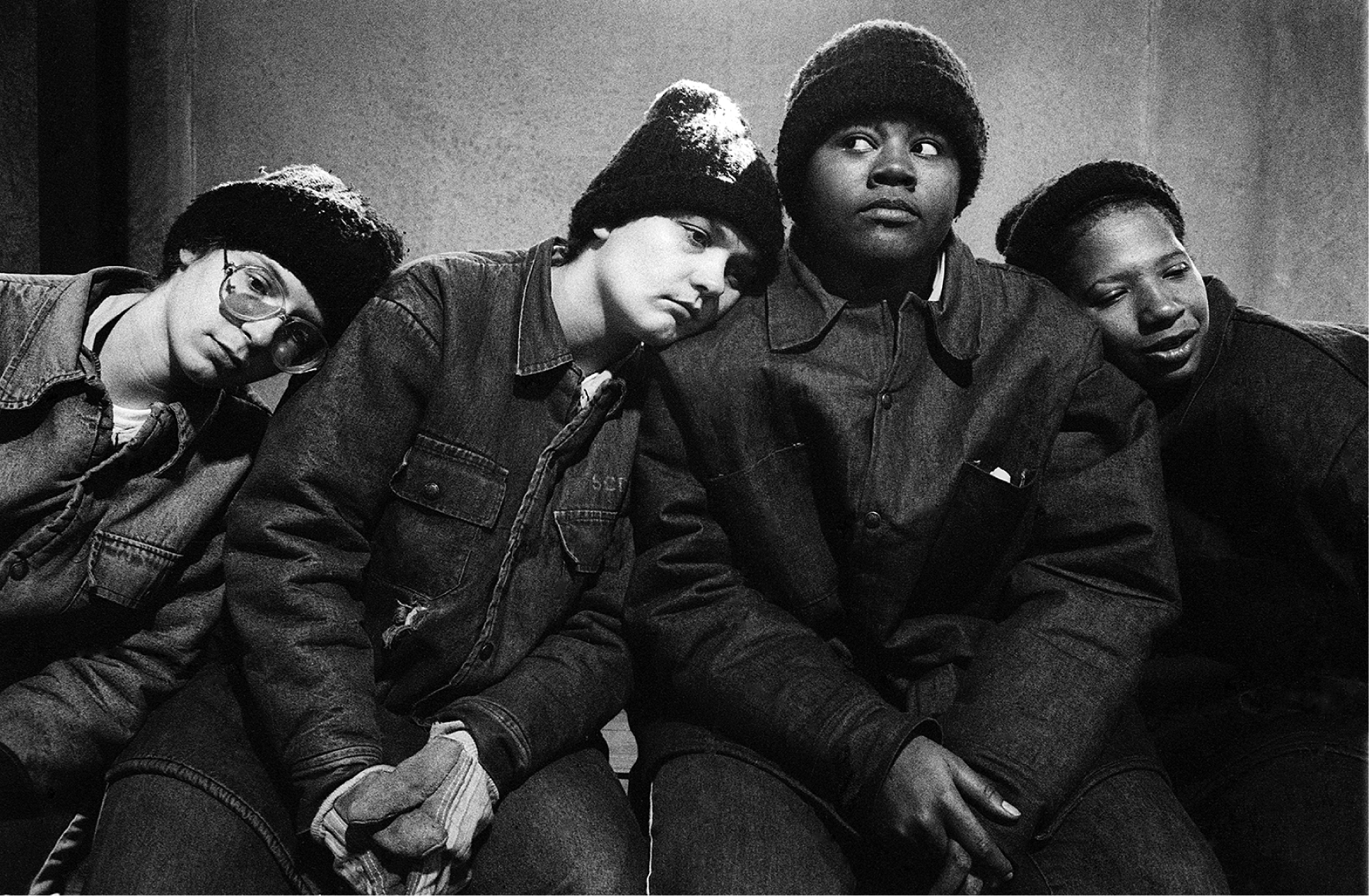
The images accompanying this article are from photographer Jane Evelyn Atwood’s decade-long study of women in prisons around the world. They appear in the 2000 book, Too Much Time: Women in Prison, which is considered the definitive photographic work on women in prison.