sherri grasmuck George Saunders’s Tenth of December, a collection of short stories, offers a frightening yet compassionate dystopia of how corporate market culture saps moral and emotional calculations. Here moral choices often mean social ruin. With telegraphic prose, the story “Seplica” chillingly links status hunger to immigrant “incorporation.”
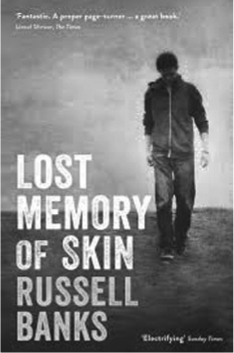
After watching a student’s recent traumatic journey through IRB approval of a project involving pedophile narratives, I was mesmerized by Russell Banks’s human exploration in Lost Memory of Skin, of the life of Kid, a sexual offender. Banks bravely links the creation of one of our most stigmatized figures to broader social needs. It even features a practicing sociologist as secondary protagonist who becomes central to Kid’s hard earned self-understanding. I’m not sure I would like the novel as much had I read it rather than listened to it through Scott Shepherd’s addictive narration.
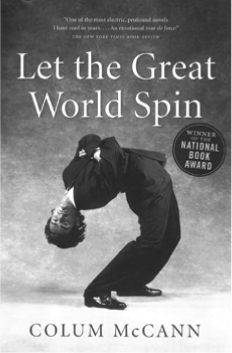
I took up Colum McCann’s Let the Great World Spin in order to feel entitled to read his newer TransAtlantic that I have just begun. In the former, he embodies in fiction what C. Wright Mills sought to do with history and autobiography. But here we find a blurring of fiction and non-fiction through the complex crisscrossing of spinning worlds that overlap and, tangentially, mutually influence one another: grieving mothers, heroine addicted hookers, priests who inhabit the world outside churches, and more. His approach has been described as “radical empathy,” which resonates with my experience of his characters.
Annika Hinze’s Turkish Berlin: Immigration Policy and Urban Space offers an engaging and grounded integration of various of my new personal obsessions: Turkey and its emigrants, the autonomous role of local space in newcomer’s integration, and the disjuncture between policy makers’ and immigrants’ notions of belonging.
Donna Krolik Hollenberg’s biography, A Poet’s Revolution: The Life of Denise Levertov, offers an insightful and revelatory exploration of how Levertov’s social, political, and personal encounters echo in her poems. We hear about the specifics of her lived world precisely as the poems emerge. The poems do speak for themselves. But, for me, seeing these personal layers illuminates them further.
hugh gusterson In Thinking in an Emergency, Elaine Scarry explores the ways nuclear weapons have deformed American democracy, confronting the troubling erosion of democratic practices in the United States in favor of executive power. Scarry was trained as a Thomas Hardy scholar, but for years has been writing about nuclear weapons and war with a unique and original voice—a welcome alternative to the expert blather coming out of the think tanks. I’m thinking of writing a short book of essays on drones and am reading it to learn the form as much as the content.
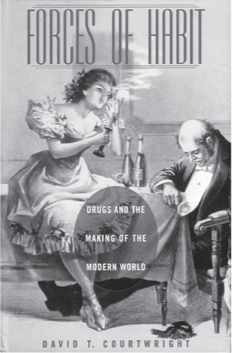
David Courtwright’s Forces of Habit: Drugs and the Making of the Modern World is a tour de force of global history, narrating the rise (and occasional fall) of different drugs through time and space. Imagine a society with no stimulants, as Europe was until the sixteenth century! Courtwright has command of an astounding array of detail, is entertaining, and never loses the narrative thread.
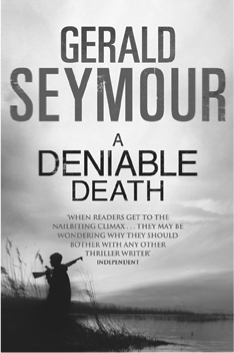
Gerald Seymour’s Timebomb is a middlebrow thriller about two impoverished Russian military officers who sell a small nuclear weapon to Islamic terrorists for a million dollars. Nuclear weapons experts have long debated the likelihood of such a scenario, so it’s interesting to see a plausible scenario worked through in detail by a skilled narrator, and Seymour somehow makes the two Russian military officers the most sympathetic characters in the novel. I’m now moving on to read A Deniable Death, also by Seymour, who has been likened to John LeCarré and who seems to know an awful lot about Britain’s spy services.
joseph p. parsons The 57 songs—along with drawings and trenchant writings—of the self-described hillbilly performer collected in Jeff Santelli and Robert Place’s Woody at 100: The Woody Guthrie Centennial Collection remind us of the power and timelessness of Guthrie’s work, particularly as we limp through this weak recovery following the Great Recession.
Greil Marcus and Werner Sollors’s brilliant A New Literary History of America provides an encyclopedic sweep of the United States and its place in the world. Its entries range from the first appearance of the name “America” on a map—Martin Waldseemuler’s Universalis Cosmographia, in 1507—to a searing account of the pathological disregard of an American city when Katrina hit the Gulf Coast, to the election of Barack Obama in 2008.
If poets are the “unacknowledged legislators of the world,” to fall back to what Adrienne Rich (Poetry and Commitment) correctively calls the “piously overquoted” Shelley, then Nick Flynn stands as a contemporary poet and philosopher, taking to heart his duty to challenge the powerful. Flynn’s The Captain Asks for a Show of Hands explores the moral vacuum at the heart of Abu Ghraib and the particularities of American culture that led to those abuses.
Nathan Englander’s What We Talk About When We Talk About Anne Frank is by turns hilarious and wrenching and stands as an object lesson that the short story is far from dead but is, in fact, as vital as ever.
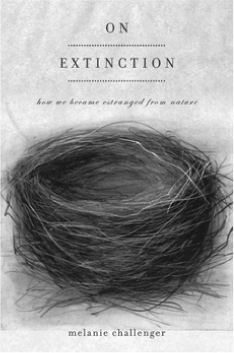
Finally, in On Extinction: How We Became Estranged from Nature, Melanie Challenger brings a poet’s eye and ear to the natural world, reminding us that we are of Earth, not apart from it.
alex holzman Ira Katznelson’s Fear Itself: The New Deal and the Origins of Our Time combines history and political science very effectively. First, Katznelson recalls for those of us living eighty years later just how severe the crisis of liberal democracy was in 1933. Serious commentators were suggesting that only fascism could operate with the strength and speed necessary to end a global economic crisis. Then, by analyzing Congressional votes and putting the New Deal in a larger context, he shows how Southern Democrats allowed FDR’s broad expansion of the federal government in exchange for the continued tolerance of Jim Crow. We continue to live with the results of that ugly compromise today.
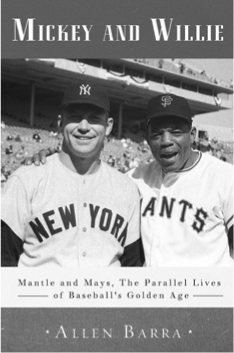
Allan Barra’s Mickey and Willie: Mantle and Mays, the Parallel Lives of Baseball’s Golden Age is a dream book for baseball aficionados of a certain age. A joy to read, the book shows how similar the two were in ability and temperament and how each was really the only person who could understand what the other was going through as both of the shy, somewhat prickly stars tried to deal with sudden fame and impossible expectations. Barra makes his case as to which of the reluctant heroes was the better player. But as with all great baseball arguments, the debate will continue.
Gillian Flynn’s Dark Places provides a deceptively fast-paced mystery that deals with questions of belief, memory, family, guilt, and innocence. It’s a page-turner that makes you think.
Kathleen Fitzpatrick’s Planned Obsolescence: Publishing, Technology, and the Future of the Academy challenges anyone involved in the academic world to think in new ways about how we disseminate scholarship. I’m not sure she has all the answers—and she doesn’t claim she does—but she surely is helping us ask the right questions about authorship, peer review, presentation, archiving, and the future of university presses.