Abstract
Sociologists Xi Chen and Keith Kerr explore Hui-Muslim double identities.
To understand the reality of the Great Wall is to understand the reality of China. Outsiders often mistakenly perceive the Great Wall as a monolithic structure, spanning unbroken across the expansive width of China. It actually consists of many overlapping, disjointed, architecturally distinct and unconnected walls. Conceived of and built over thousands of years by various dynasties, in various locations, the different sections of wall are lost in representations of Chinese culture as monolithic.
There are, in reality, many Chinas: 56 recognized ethnic groups, with distinct cultures, dialects and, in some cases, languages, as well as a diversity of religious practices and beliefs. This photo essay explores one aspect of China’s often-ignored multicultural reality, the presence of Hui Muslims.
Hui is the name of the largest of 10 Muslim ethnic groups in China, encompassing nearly half of China’s approximately 20 million Muslims. They comprise one of the world’s largest minority-Muslim populations in a single country. Hui communities are found in nearly every province and major city within China, though they are concentrated in China’s north-central Ningxia Hui Autonomous Region. These pictures were taken in villages and urban enclaves around Ningxia, as well as in the Muslim District of Xi’an, south of Ningxia.
Unlike the Muslim Uyghurs, an ethnic group of Turkish descent in the western Xinjiang province, who have recently clashed violently with Chinese authorities over human rights and separatism, the Hui enjoy relatively peaceful relations with the Han majority. This may be due to the Hui’s perceived “Chineseness.” While the Uyghurs have historically not seen themselves as part of a Chinese civilization, maintaining a distinct language and culture, this is not the case for the Hui. Centuries of migration throughout China, combined with intermarriages and close contact with Han Chinese, has led to shared phenotypical features and cultural assimilation.
Despite this outward assimilation, however, the Hui have many religious differences from the Han—most notably their dress, and dietary restrictions on pork—which have led to discrimination. Many Hui people, after their defeat in the Hui Minorities War (1862-1877), were relocated to southern Ningxia, one of the poorest and most isolated regions of China. Many Hui remain concentrated in this region with far less access to guanxi networks, the system of relationships customarily leveraged by the majority Han to achieve upward mobility. During the Cultural Revolution, Hui in most parts of China were discriminated against and attacked for their Islamic beliefs. Today, Hui are poorer and less educated than the Han majority, and more isolated in rural areas.
As these pictures depict, the Hui are Chinese and Muslim, insider and outsider.
To rectify these inequalities, the state has tried to increase Hui enrollment in higher education, shift poor rural Hui villages toward service-sector economies, and create business ties between the Middle East and Hui urban enclaves. Hui families are also permitted to bear as many as four children, depending on their residential status and where they live in China. Clearly, the Chinese government sees the Hui as crucial to China, and their dual Chinese and Muslim status as a potential bridge to the larger Muslim world.
The images presented here thus seek to explore the double identity of the Hui ethnic group. While the Hui are seen as the “Chinese Muslim,” the addition of the Muslim modifier to their “Chinese” status demonstrates their dual position within China. As these pictures depict, the Hui are Chinese and Muslim, insider and outsider and stand as a testament to the diversity and misperceptions of both China and Islam.
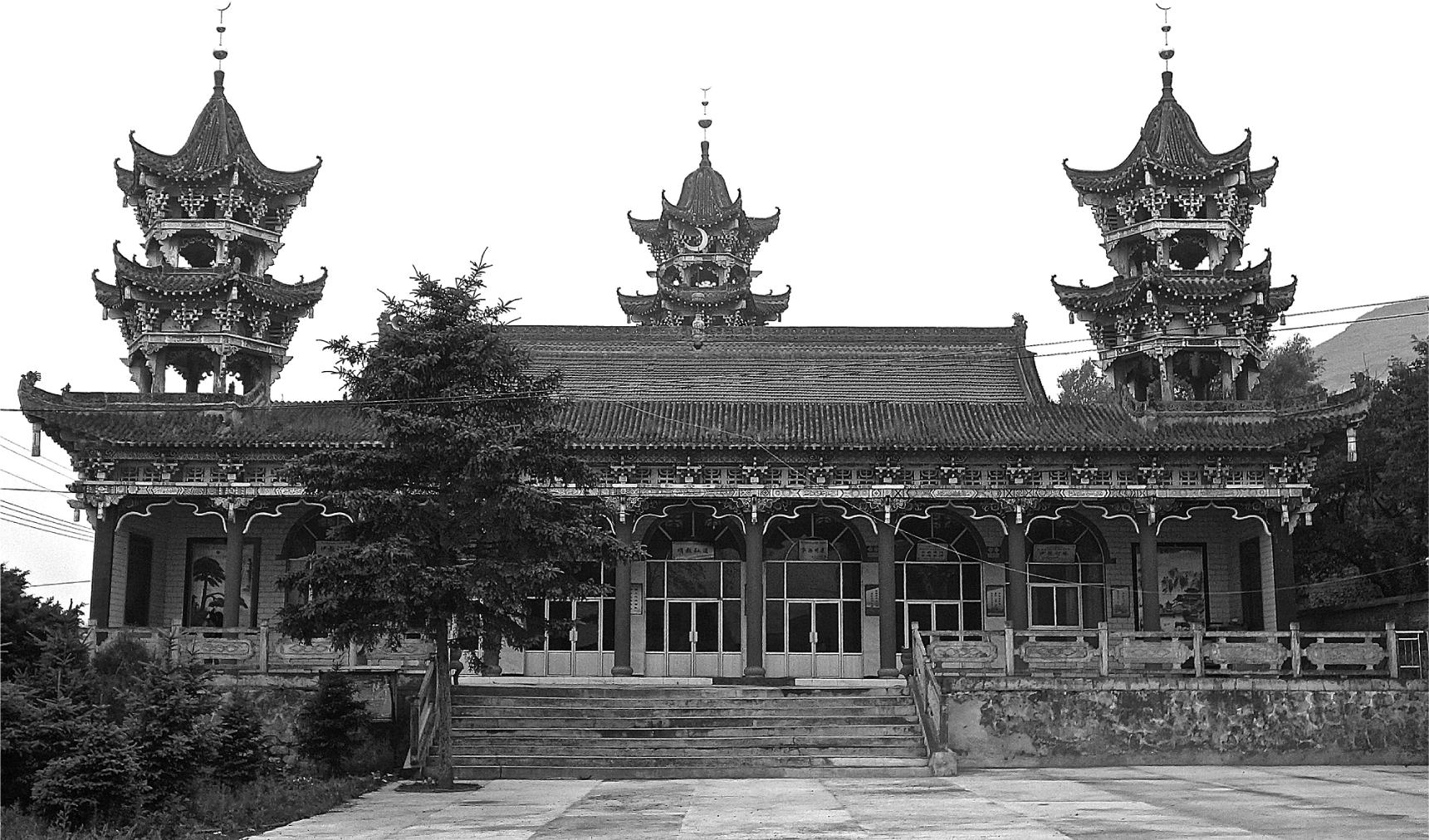
Jingyuan County, Ningxia Hui Autonomous Region
Located in a remote rural area of Jingyuan County, this mosque plays down Arabic influences, incorporating traditional Chinese styling, seen in its eaves and intricate woodwork.
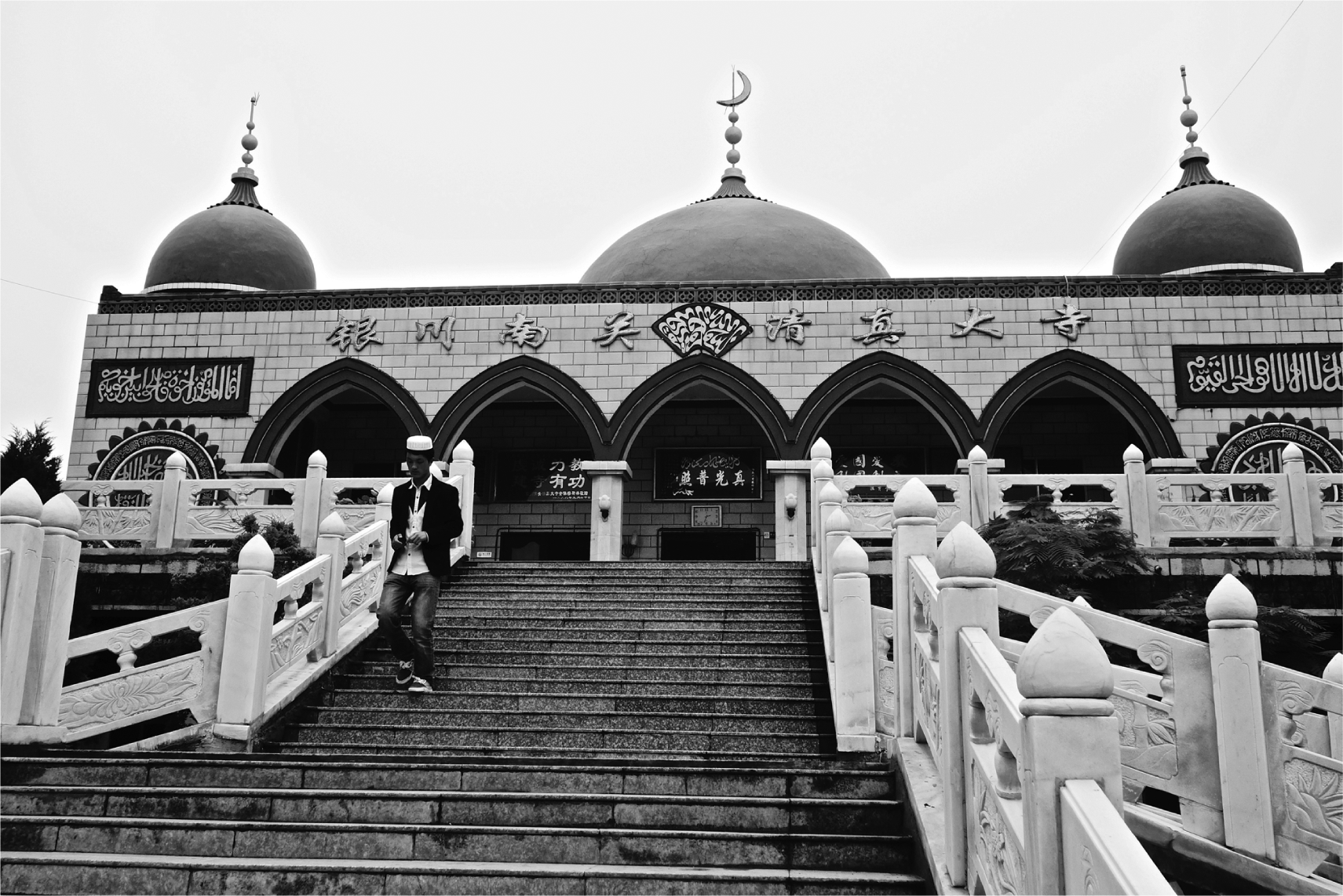
Yinchuan, Ningxia Hui Autonomous Region
Several centuries old, the Nanguan Mosque, located in Ningxia’s capital, is one of the largest and most important Hui Muslim structures in the region. Destroyed or badly damaged several times, most recently during the Cultural Revolution, it was rebuilt in 1981 in the alabo de (Arabic) style, with few Han influences in its design.
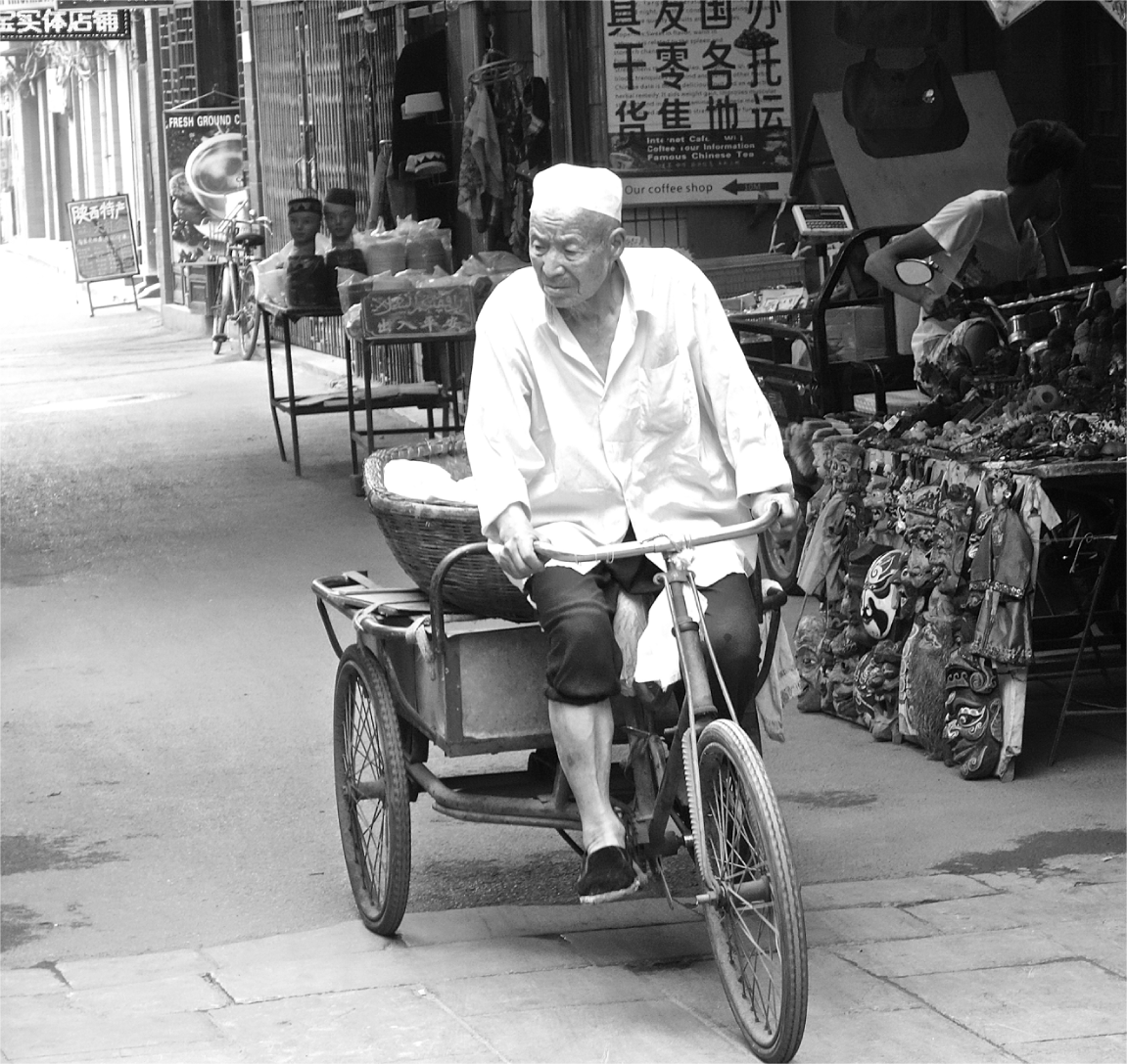
Xi’an’s Muslim District, Shaanxi Province
An elderly Chinese Muslim sells bread from his bicycle. He makes morning rounds before the alleyways become too crowded to navigate by bike. Selling nang (馕), a type of bread popular with Chinese Muslims, he advertises his product by riding through the streets and calling out. On his daily rounds he passes shops selling Muslim head coverings, Chinese masks, and coffee with Wi-Fi access.
Jingyuan County, Ningxia Hui Autonomous Region
Since Ningxia province’s large Muslim population prohibits eating pork, the lamb industry plays a major economic role in the region. The province’s arid climate helps produce a distinctive, sought-after sweet-flavored lamb. With such a high demand for lamb, sheep herding has been a traditional way of life in the region for centuries, as has fur trading.
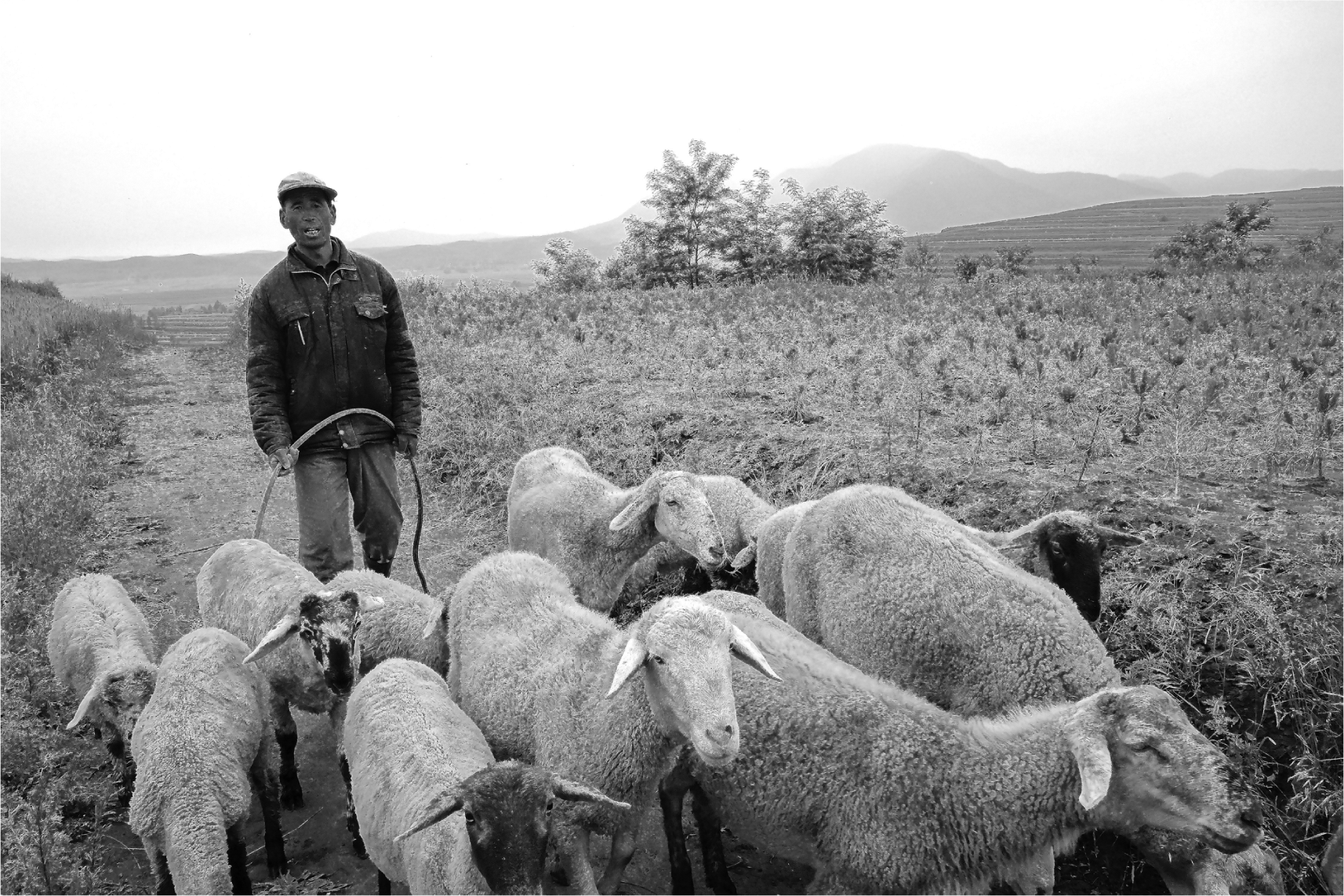
Jingyuan County, Ningxia Hui Autonomous Region
Among Hui people who live in rural areas, agricultural work is still largely done by hand. Rural Huis, who are concentrated in the poorest farming areas in China, have some of the lowest living standards in the country.
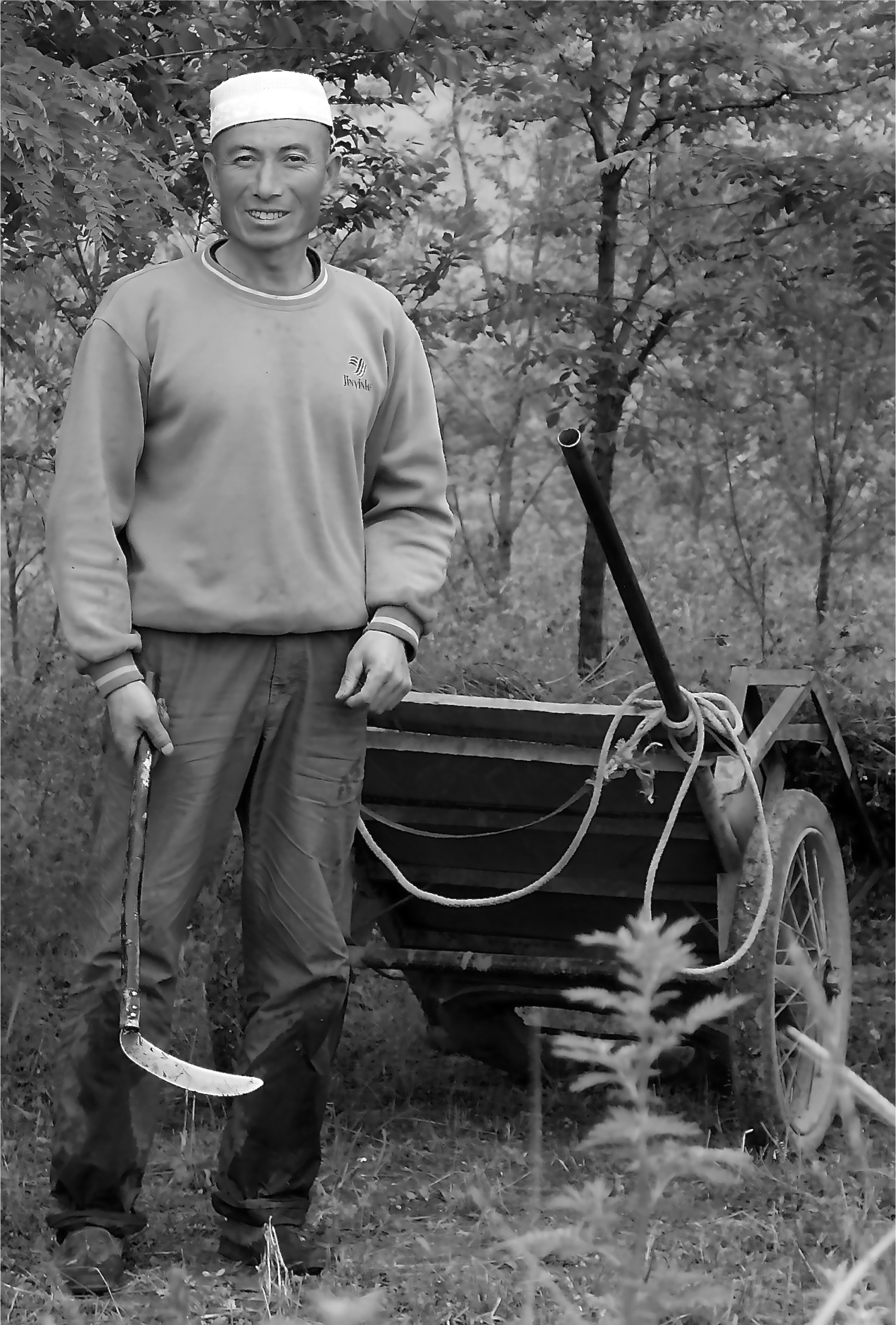
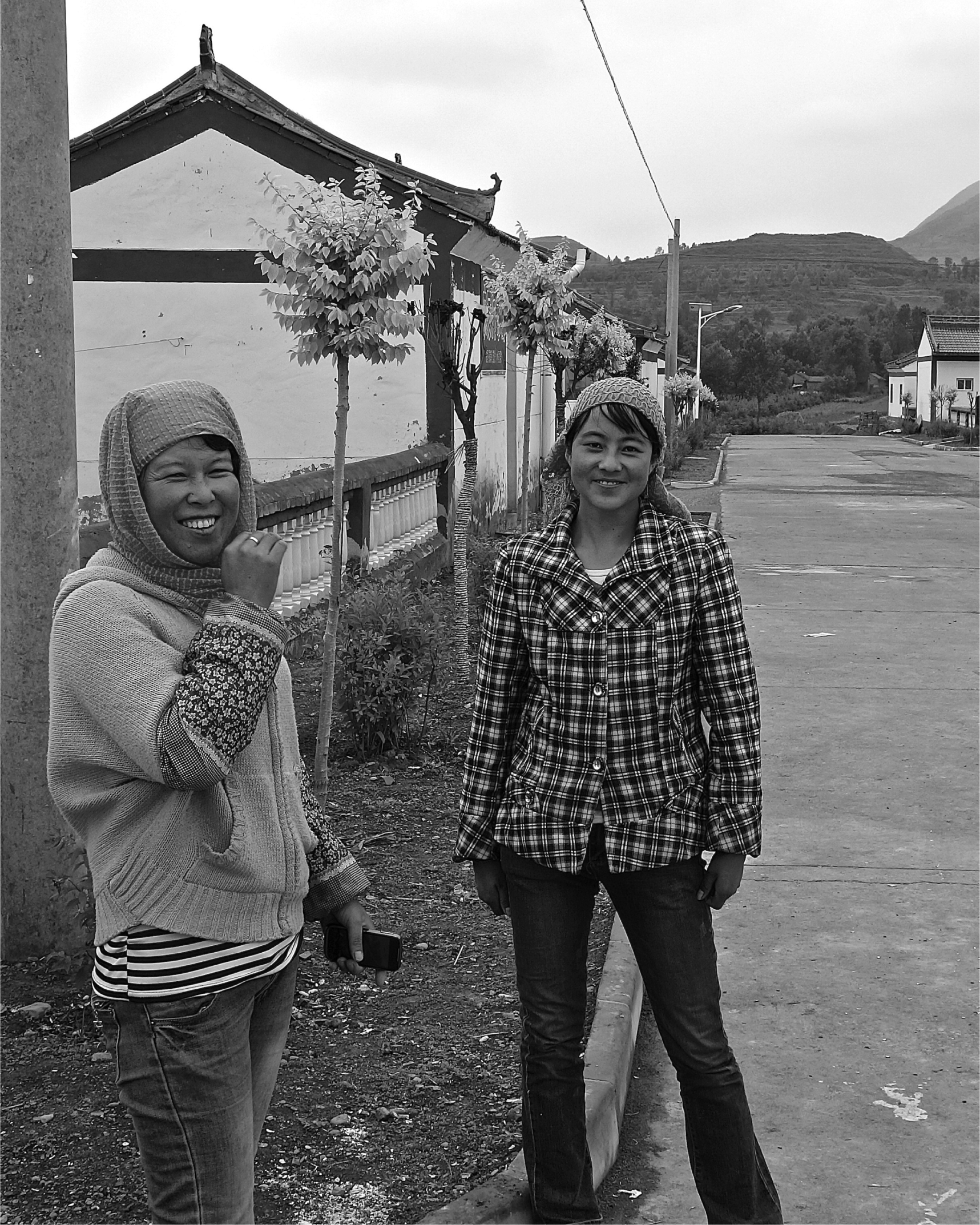
Zhijia Cun, Ningxia Hui Autonomous Region
Two Hui friends meet in the main street of a recently constructed model village, part of the nation’s shift toward developing inland rural areas. Zhijia Cun was built near the entrance to a national park in order to shift the local economy toward tourism, permitting the two women depicted here to remain in their home village rather than become migrant laborers.
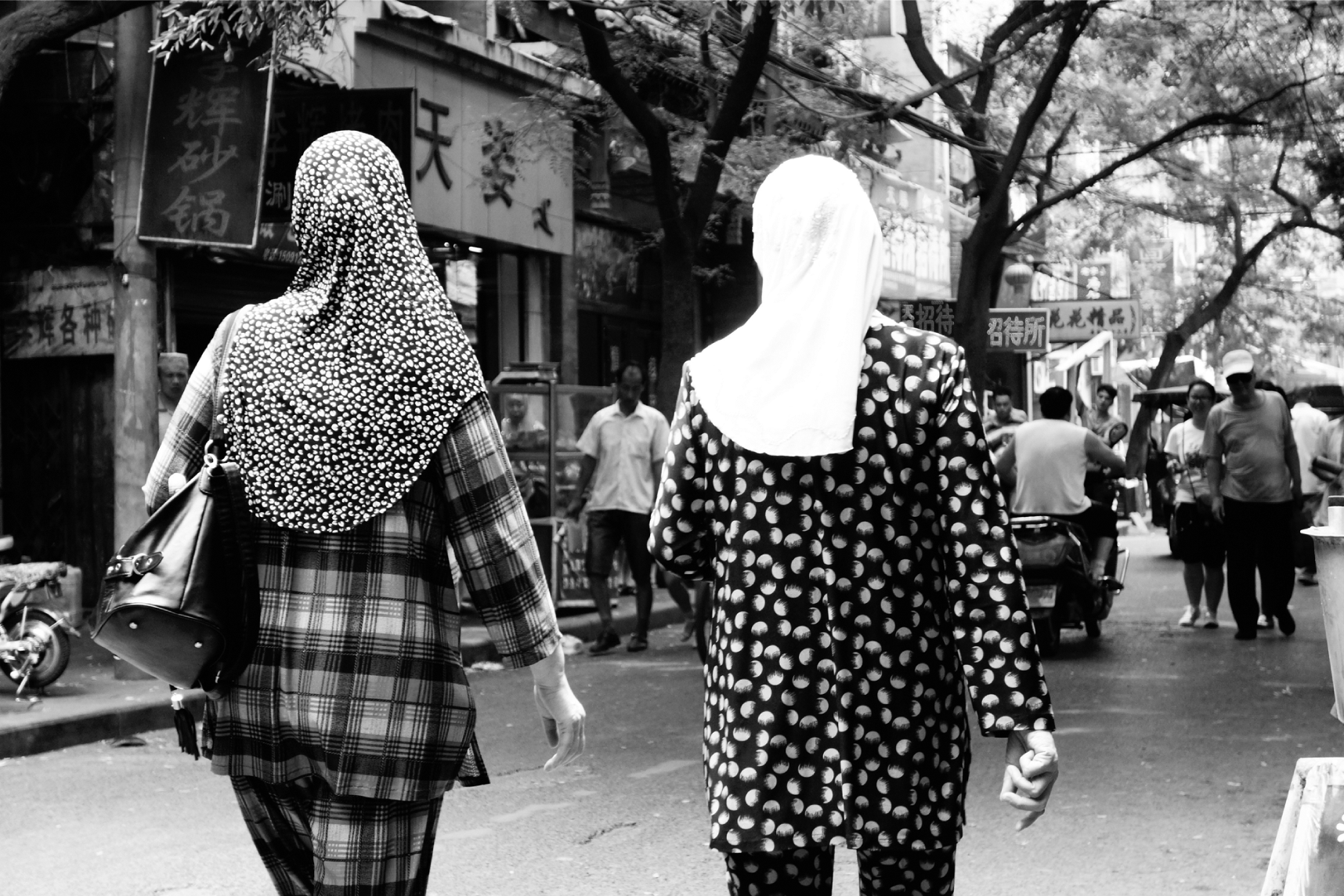
Xi’an Muslim District, Shaanxi Province
Two urban Chinese Muslims shop in Xi’an’s Muslim District. While Chinese Muslims have traditionally lagged behind the majority Han due to discrimination and segregation, there is a growing Muslim urban middle class in China. Many Chinese Muslims have leveraged consumerism to combat stereotypes that depict them as backward.
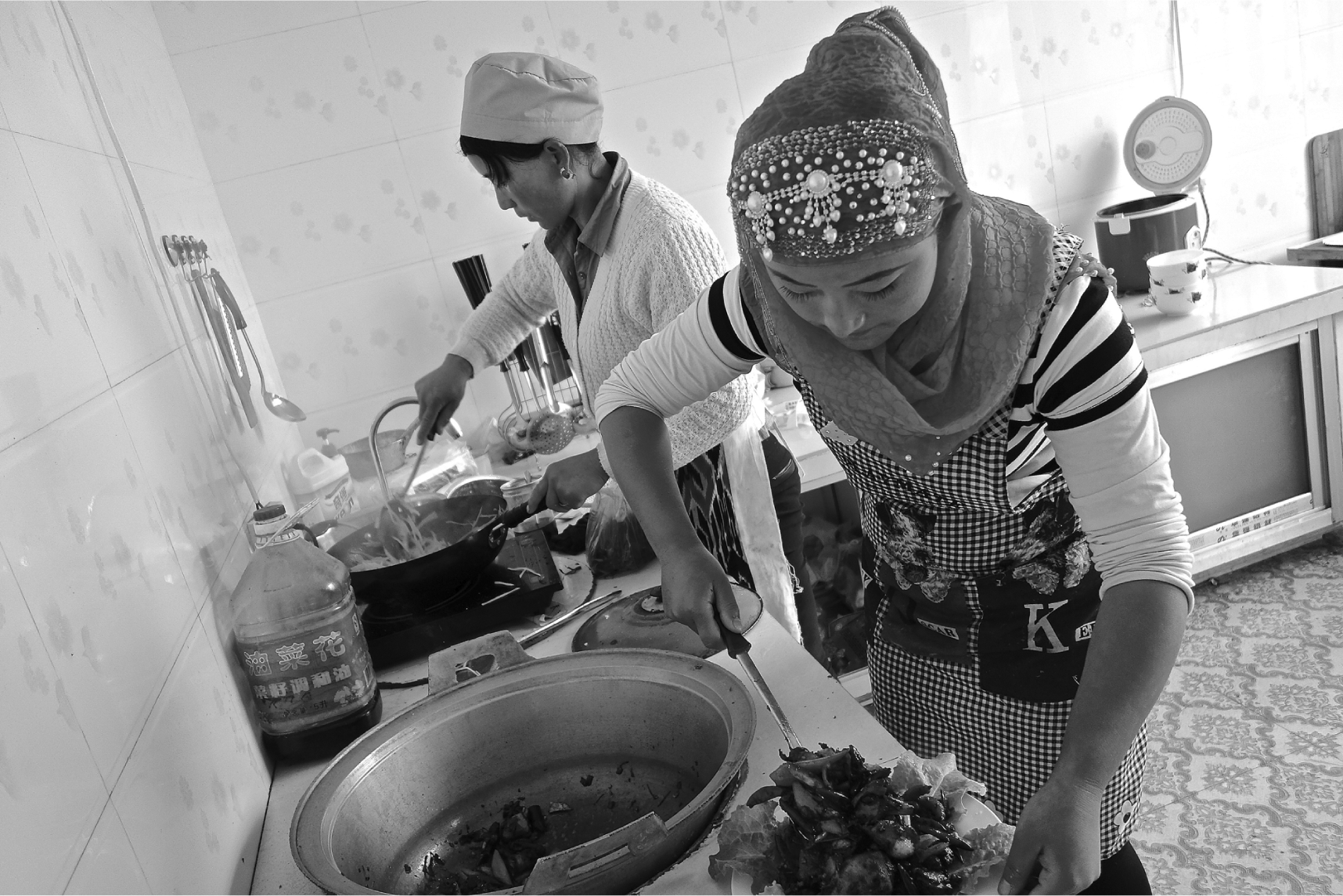
Zhijia Cun, Ningxia Hui Autonomous Region
Hoping to cash in on the growing internal tourist industry in China, many Hui living near tourist destinations have opened bed and breakfast-style businesses in their homes. Here, a mother and daughter prepare traditional local dishes for recently arrived guests. Prior to 2005, residents engaged in agricultural work, averaging 1300 Yuan a year (US$200) in income per person; by 2012 average income per person had increased threefold.
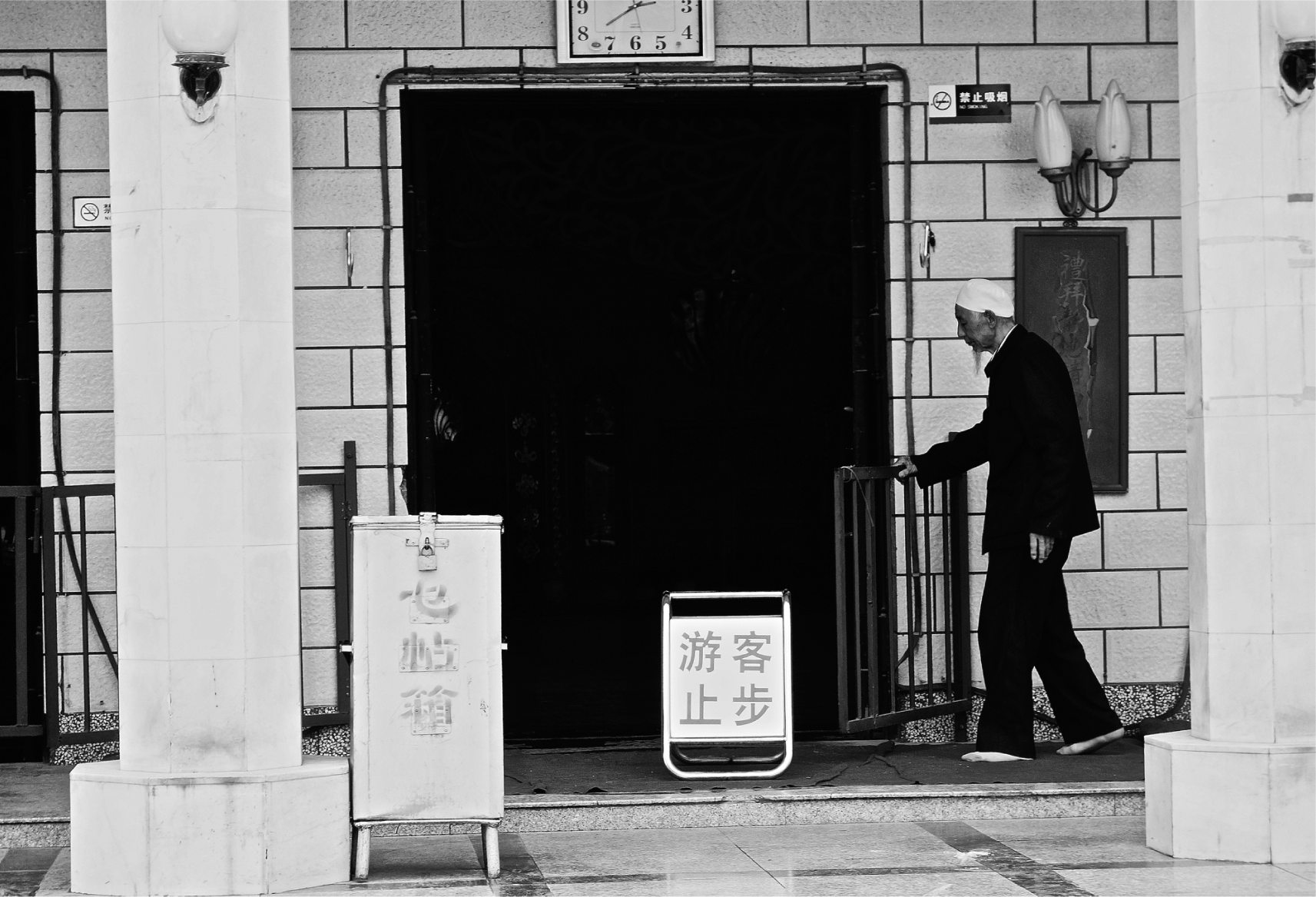
Yinchuan, Ningxia Hui Autonomous Region
In Yinchuan, an elderly man closes the front entrance to a Hui mosque. Weekday prayers can be sparse, attracting the elderly mainly. However, Friday prayers in Yinchuan, capital of Ningxia, are attended by hundreds of people, and on important Islamic dates, or Chinese holidays, the number swells into the thousands.
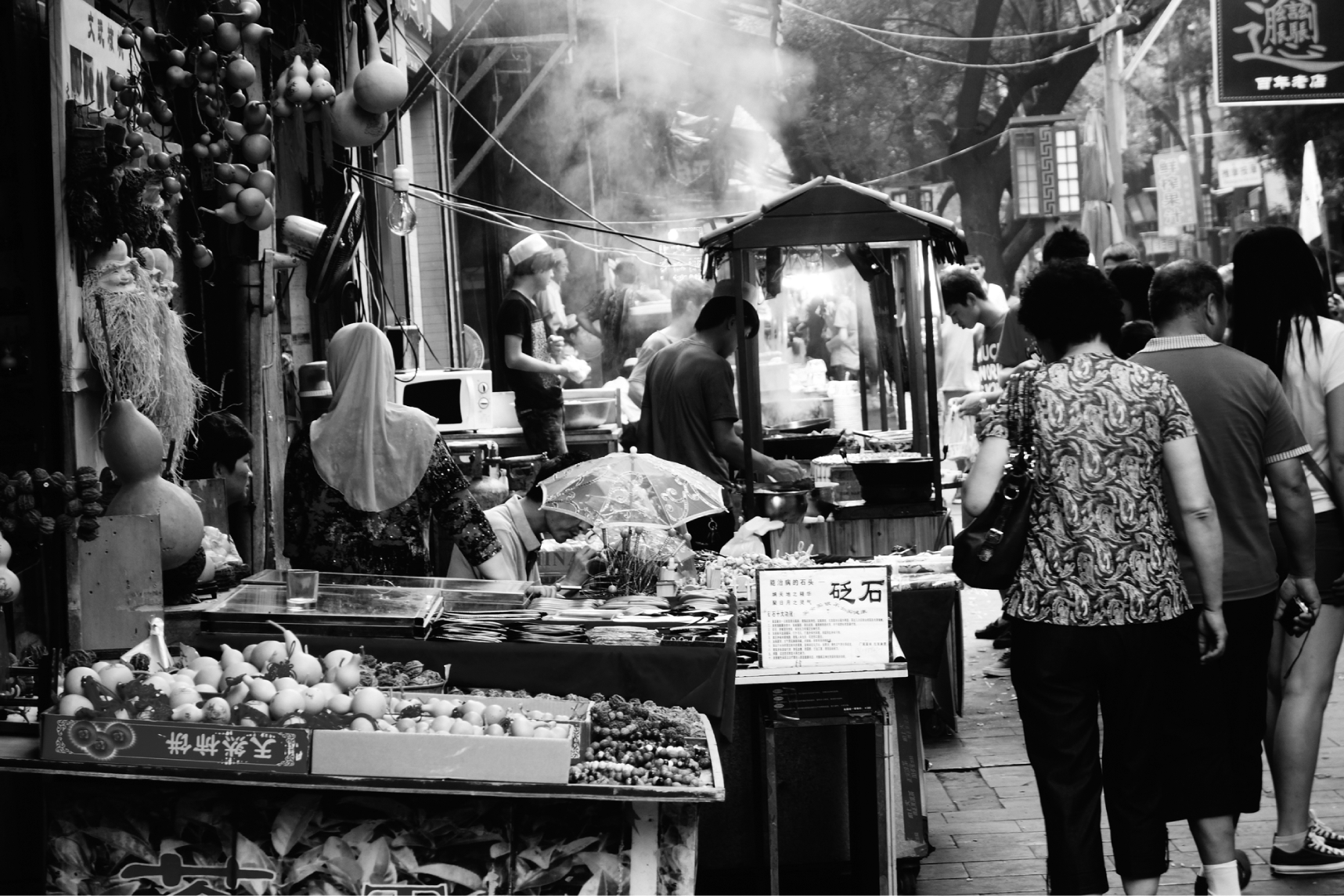
Xi’an Muslim District, Shaanxi Province
The Xi’an Muslim District displays the diverse origins of Muslims in China. With evidence of Persian, Arab, and even some European influences, mixed with traditional Han culture, the Muslim District is famous for its food. The busy district offers a wide array of Halal food and consumable items for the shoppers that flock here every day, but pork and Chinese whiskey, found nearly everywhere else in China, are difficult to come by here.
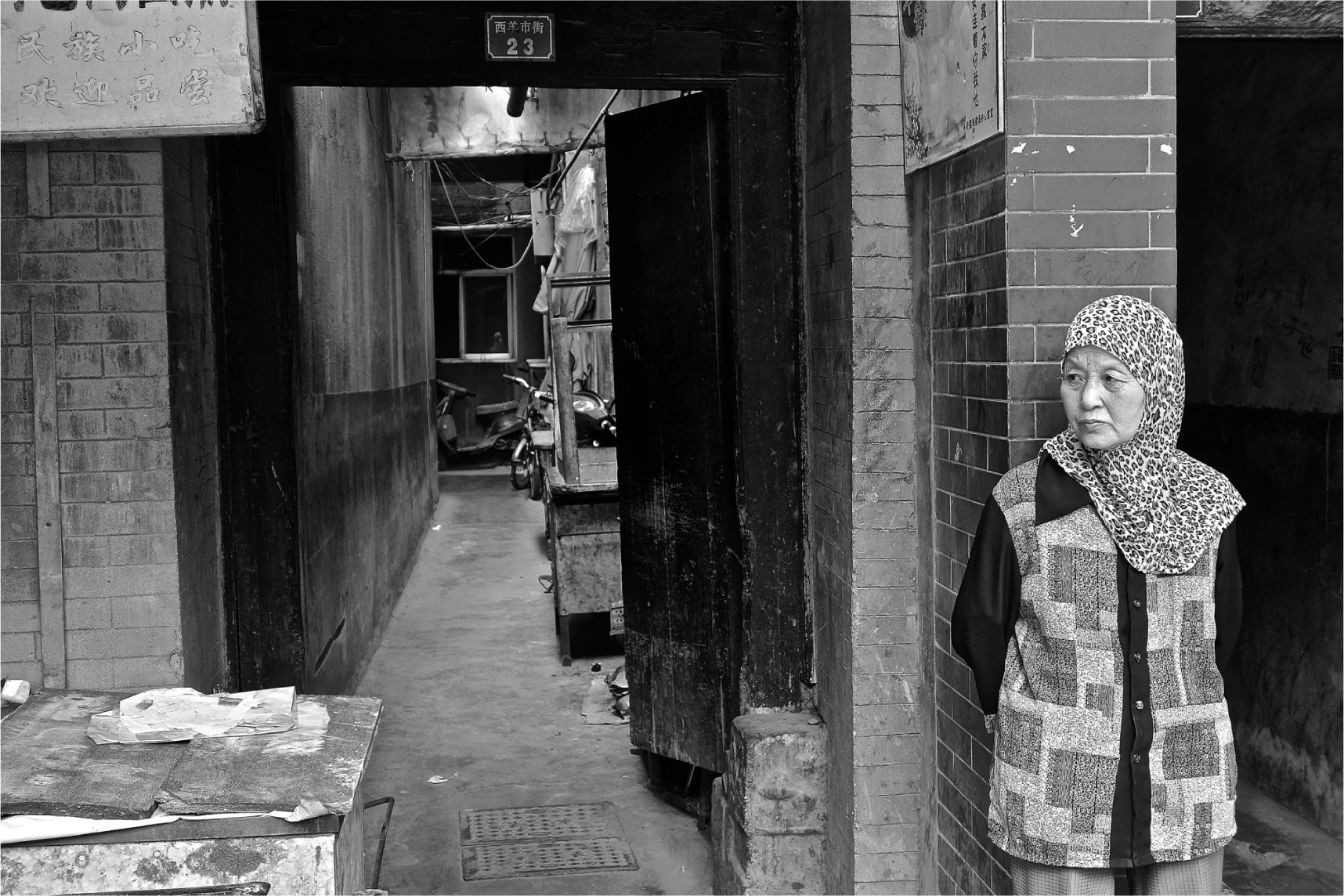
Xi’an Muslim District, Shaanxi Province
While most of China’s cities have remade themselves in recent decades, Xi’an’s Muslim District looks much the same as it did hundreds of years ago. Vendors set up shop outside of small alleys and courtyards where they live. Here a vendor stands between the entrance leading to her home and the alleyway where her street-side shop is situated.
Yinchuan, Ningxia Hui Autonomous Region
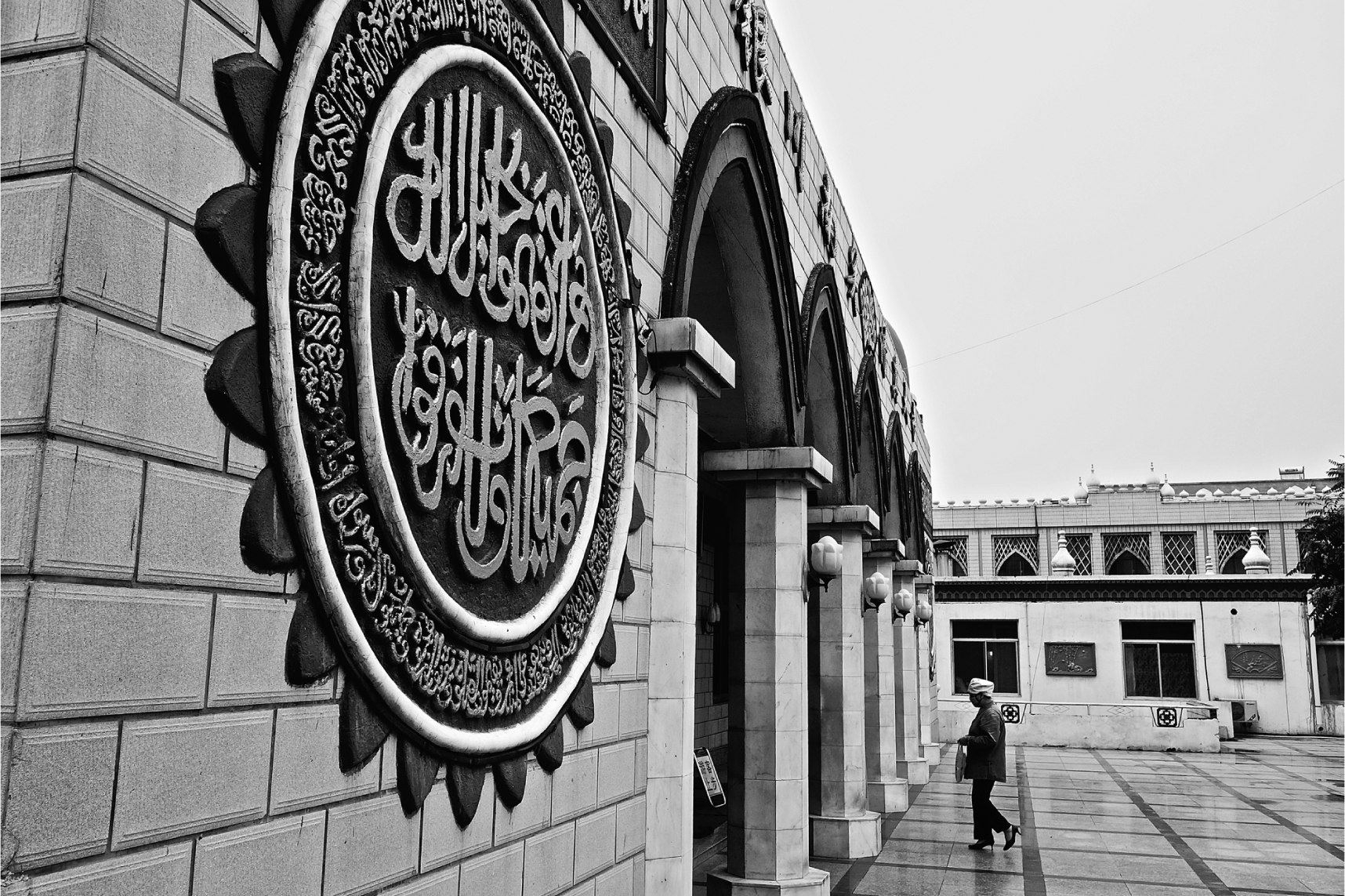
A female visitor approaches the main Nanguan mosque prayer hall. China hosts some of the world’s few female-only mosques, and women have been imams since the early 1800s. Known as nu ahong (女阿訇), the state oversees the education, training and practice of women imams. While providing opportunities that are rare among women in the Muslim world, Beijing also asserts control over Hui practices, restricting outside Muslim influences.