Abstract
Many people purchase fair trade certified products because they trust that doing so makes a difference in the lives of small producers around the world. Sociologists Nicki Lisa Cole and Keith Brown discuss how changes to certification policy have modified the meaning of fair trade in a way that has troubling implications for small coffee farmers.
Images by Bridget Beorse
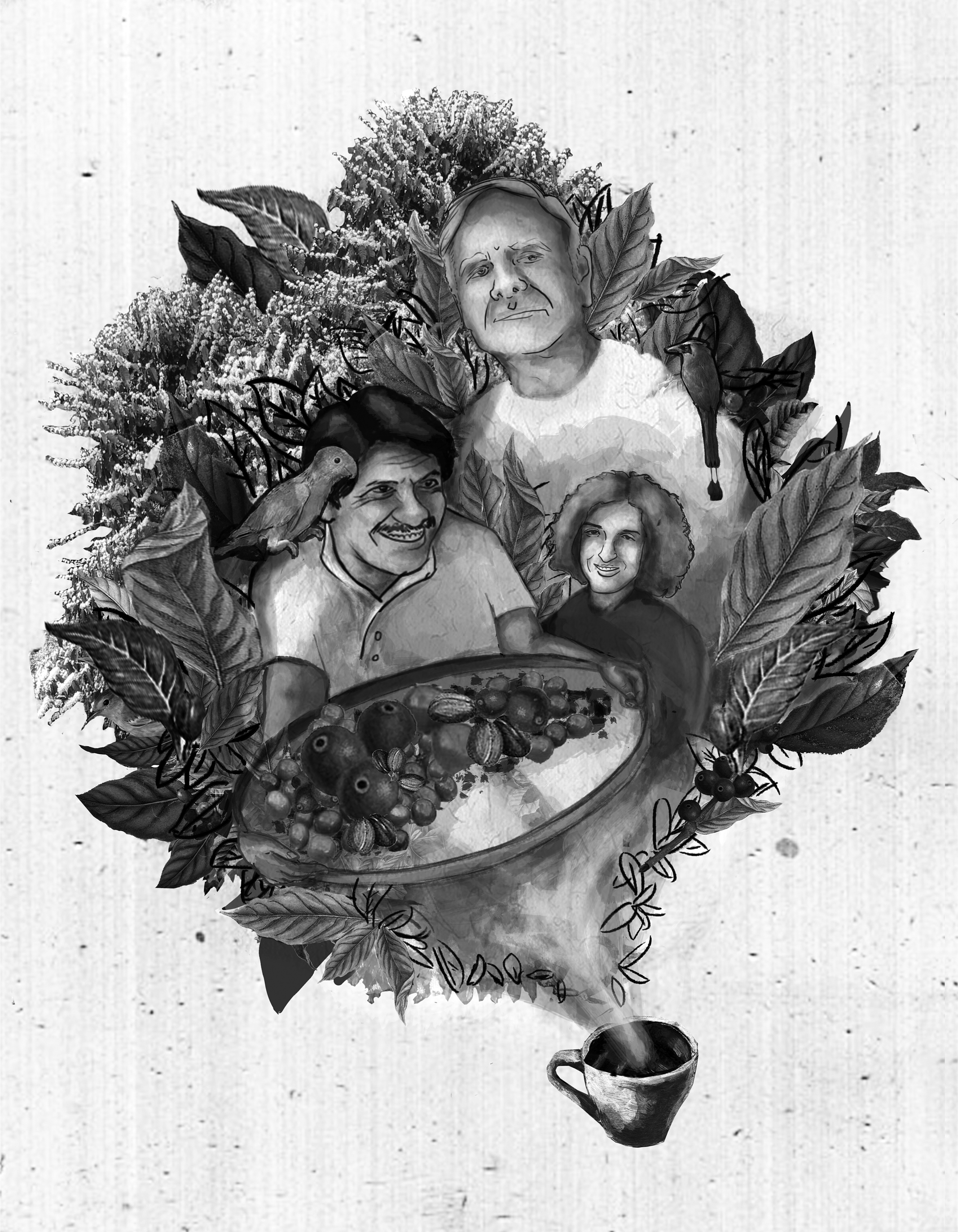
Byron Corrales is known for growing some of the best coffee in Central America. His family-owned farm sits next to a nature reserve in a cloud forest north of Matagalpa, Nicaragua. Byron speaks poetically about his coffee: each morning he wakes and listens to his trees, trying to understand their needs. On his organic farm, Byron takes great efforts to reduce his oil consumption, lower his carbon footprint, and pay his employees a fair wage. He views himself as a socially conscious farmer and even sells some of his beans to Paul and Joan Katzeff, owners of Thanksgiving Coffee Company, longtime champions of the fair trade movement.
Corrales and the Katzeffs represent the core values of the fair trade movement. Corrales works meticulously to care for the local ecosystem and pay his workers fairly. The Katzeffs educate their consumers about fair trade’s benefits and pay a premium for Corrales’ coffee. Yet they all refuse to certify their coffee as “fair trade” with the largest certifier in the United States. They are part of a growing faction of small farmers and U.S. buyers of fair trade coffee who find themselves increasingly frustrated with the fair trade certification process.
While there is some diversity of opinion about what fair trade means, certification is designed to provide economic premiums for social and environmental investments—important for farmers who have historically received inadequate compensation for their crops. Recently some members of the global fair trade movement have become angry with Fair Trade USA, the organization that sets certification policy and licenses products for distribution in the United States. In January 2012, Fair Trade USA unilaterally altered their coffee sourcing policy to include not just cooperatives of small producers, but also large scale plantations. Under the slogan “Fair Trade for All,” this new policy has changed the meaning of certification, and may negatively impact the very small-scale farmers fair trade was originally meant to protect.
We have interviewed fair trade store owners, coffeehouse managers and baristas, importers and exporters, coffee industry consultants, cooperative and movement leaders, farmers, artisans, and consumers. We have also conducted content analysis of fair trade advertisements and story displays, attended conferences around the United States, and lived alongside farmers in Nicaragua. Through this research, we came to learn how important fair trade certification is to small producers. We also learned that farmers’ displeasure with Fair Trade USA’s new policy reflects a long-standing tension between the founding values of the fair trade movement and profit-driven ethos of the fair trade market.
A Brief History of Fair Trade
European and American imports of textiles and handcrafts from war-torn and poverty-stricken communities around the world provided the foundation for today’s fair trade system. In the mid-1980s, the concept was forever changed when coffee was folded into the fair trade model. At this time, a range of progressive entrepreneurs, including Paul Katzeff, began importing coffee from Nicaragua as an expression of support for Sandinista farmers. These Nicaraguan farmers were suffering from malnutrition and even starvation during the U.S.-imposed boycott of their country’s goods. Over time, these seemingly disparate efforts—importing handicrafts, coffee, and other goods—coalesced into fair trade certification.
What is Fair Trade Certified Coffee?
Fair trade certification guarantees that coffee producers are paid a stable, minimum price per pound for their product. Historically, this protection has been offered to small producers who are members of democratically organized cooperatives. These cooperatives give producers entry into a global market that is dominated by large transnational buyers.
The minimum price per pound is set by Fairtrade International, the umbrella organization that, until 2012, determined the global standards for fair trade criteria. The guaranteed minimum price creates economic stability for producers who would otherwise be at the whims of the volatile New York commodities market, which sets the international price for coffee. The New York “C” price can fluctuate widely, and was as low as 41 cents per pound in 2001. Depending on how the coffee is processed prior to export, the fair trade minimum price is either $1.35 or $1.40 per pound, which includes a 20-cent per pound premium earmarked for development in producing communities. Because Fairtrade International sets a minimum price, coffee that is certified can be—and often is—sold for more. Sometimes a buyer pays more based on quality, and, when the New York price exceeds the fair trade minimum, the fair trade price increases to best it by 10 cents.
The fair trade system also provides small loans to producer groups to facilitate improved infrastructure for farms and communities. In the past, these benefits were available only to small producers affiliated with democratically organized cooperatives, since the movement was conceived to both increase access to the global market and protection from manipulative and exploitative buyers. Until recently, this was an important hallmark of fair trade certified coffee, as most of the world’s coffee is grown by small-scale producers in remote areas. (To learn more about the coffee beans you consume, ask your local coffee vendor where their coffee is purchased, and on what terms.)
Independent labeling organizations such as Max Havelaar in the Netherlands (established in 1988) and TransFair in the U.S. (now Fair Trade USA, established in 1998) set national standards for fair trade certification. Fairtrade International (formerly Fairtrade Labeling Organizations International) was formed in 1997 as an umbrella organization to coordinate the various definitions of fair trade across national borders. These groups’ dogged efforts provided legitimacy to the fair trade label and helped grow the movement throughout the late 1990s and early 2000s.
The tremendous growth of the fair trade coffee market has been beneficial to the many small farmers around the world. U.S. importers alone have paid over $61 million in premiums to producer cooperatives since 1998. It’s neither a perfect system nor a solution to global poverty, but many lives have been improved through farmer and buyer participation in fair trade programs. However, on January 1, 2012, the fair trade movement underwent a significant change: Fair Trade USA implemented a new policy that would fold coffee produced on large-scale plantations into its certication system. Calling the change the “Fair Trade for All” policy, the organization claimed that including more types of farms would vastly increase the number of people served by the movement.
There is a long-standing tension between the founding values of the fair trade movement and the profit-driven ethos of the fair trade market.
This seemingly benevolent change stirred controversy within the specialty coffee industry. Many believe that it breaks with the founding goal of the movement—to empower small producers in the global market. To implement “Fair Trade for All,” Fair Trade USA was forced to sever its ties with Fairtrade International. The global group felt the move to include large-scale, commercial farms was a betrayal of the core values of fair trade.
The Case for Fair Trade for All
In an open letter addressed to all fair trade supporters, Paul Rice, the founder and CEO of Fair Trade USA, cites three reasons for the change in his organization’s policy. First, he claims that Fair Trade for All will reduce inconsistencies in the certification process. Some products, like bananas and tea grown on plantations, were already eligible for fair trade certification. By including coffee plantations, the certification process will be more consistent across products. Second, Rice wants to greatly increase consumer awareness about fair trade initiatives, further increasing the market for fair trade products. He believes consistency across all products will give consumers a clearer understanding of the overriding principles of fair trade.
Third, Rice argues that greater sales of fair trade products will help educate consumers about the plight of producers around the world. By his own estimate, a greater demand for fair trade will help an additional four million people gain access to fair trade benefits, including improved living conditions.
Rice believes that the new policy will extend benefits to not only farmers who own their land and are members of cooperatives, but also to tens of thousands of laborers who migrate seasonally to pick coffee. In Nicaragua, for instance, many coffee pickers are represented by the Association of Rural Workers, a large trade union that helps fight for better working conditions. Leaders of this organization told us that fair trade is just a “drop in the bucket” of the coffee market and that it offers no benefits to many coffee pickers who do not own their own land.
According to Fair Trade USA, laborers around the world would see improved wages and working conditions that currently only reach those farmers already fortunate enough to be landholders and cooperative members.
Backlash
At the Specialty Coffee Association of America’s annual industry convention held in Portland, Oregon, in 2012, dissent was in the air. From baristas to buyers, roasters, coffee company owners, and producers, thousands assembled from around the world for the five-day meeting. As it followed so closely on the heels of Fair Trade USA’s announcement of their new policy, the tension at the convention was palpable.
On the third morning, over a hundred people came together to discuss the future of fair trade in the United States. Through our own research, we’ve come to align ourselves with the critics present at this meeting. We find many flaws in “Fair Trade for All.”
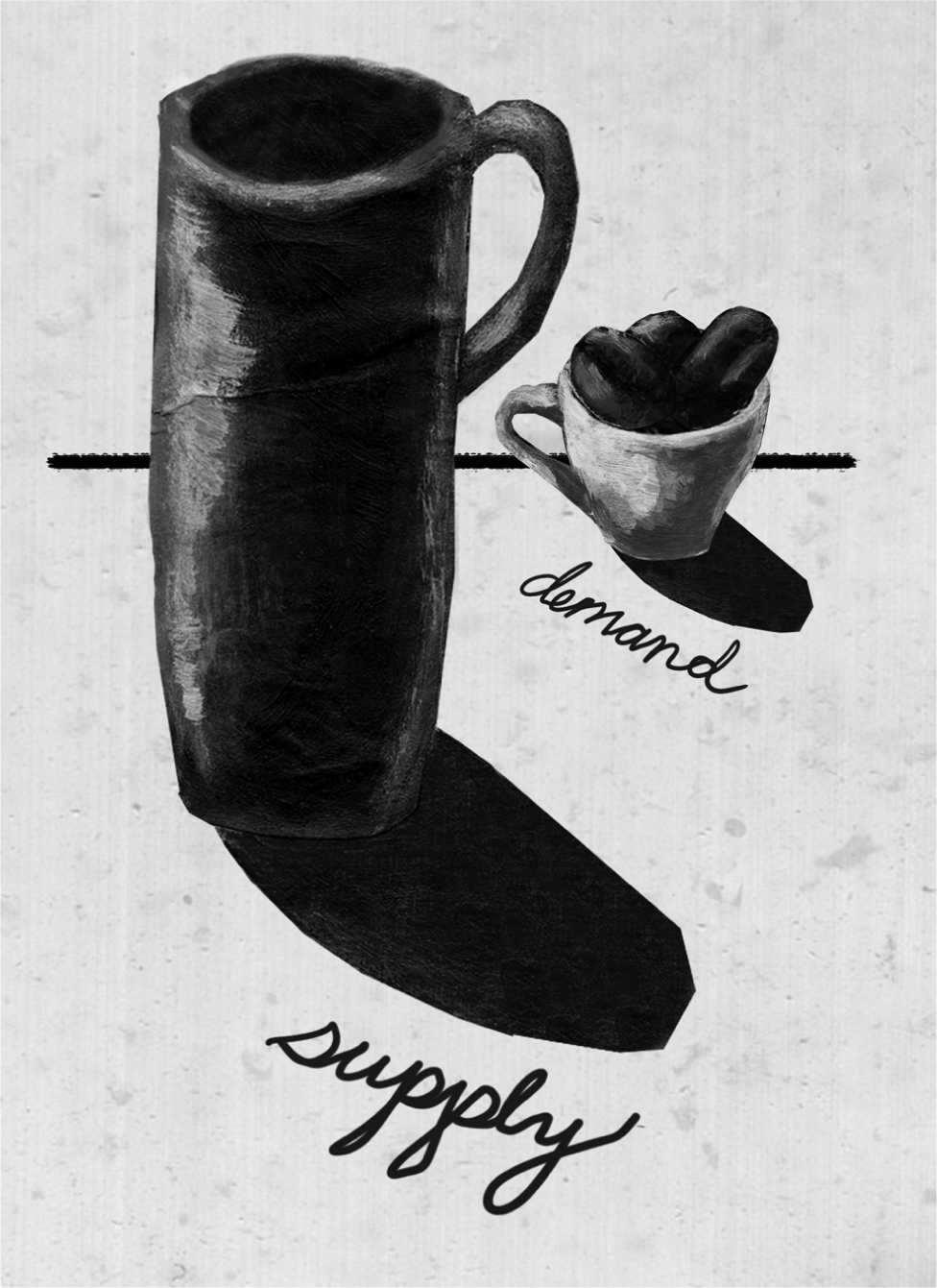
One of the most serious problems is that the supply for fair trade coffee currently outpaces demand. Today, only about 20 percent of the global supply of fair trade certified coffee is actually sold at the fair trade minimum price. As a result, many farmers work hard to meet fair trade certification’s standards, but sell their coffee at the lower prices set on the commodities market.
Samuel Kamau, Executive Director of the African Fine Coffees Association, described how this disparity affects small producers when he spoke with Nicki at the convention: “…[W]e got so efficient in fair trade production, fair trade [buyers are] no longer interested in us… we over-produced fair trade certified coffee.” Kamau explained that despite being members of certified fair trade cooperatives, many small producers are forced to sell their coffee with no guaranteed minimum price. It remains unclear to many within the fair trade movement why Fair Trade USA wants to increase the supply of fair trade coffee by including large plantations when demand, while growing, is still insufficient.
Aside from the supply and demand issue, the Fair Trade for All campaign mistakenly assumes that plantations will provide the same health, safety, and economic benefits for farmers as do cooperatives. Anthropologists and sociologists have been looking at this issue for the last decade and have shown that workers on fair trade plantations for products like tea and bananas do not receive the same benefits as farmers working in cooperatives.
Some see fair trade as a form of eco- or neo-colonialism.
Dana Geffner, Executive Director of the Fair World Project, a non-profit organization that promotes fair trade and produces a quarterly magazine, says that fair trade certification is ineffective for laborers on large plantations, and that it “often undermines in-country [labor] organizing efforts” by embedding the regulation of labor rights in a transnational market rather than domestic governmental structure. Richard Hyde of Twin Trading, a fair trade coffee importer based in the United Kingdom, pointed out that plantations have also been found to use intimidation tactics against worker organization and collective bargaining; by including them Fair Trade USA betrays the founding values of fair trade.
The Plight of Small Farmers
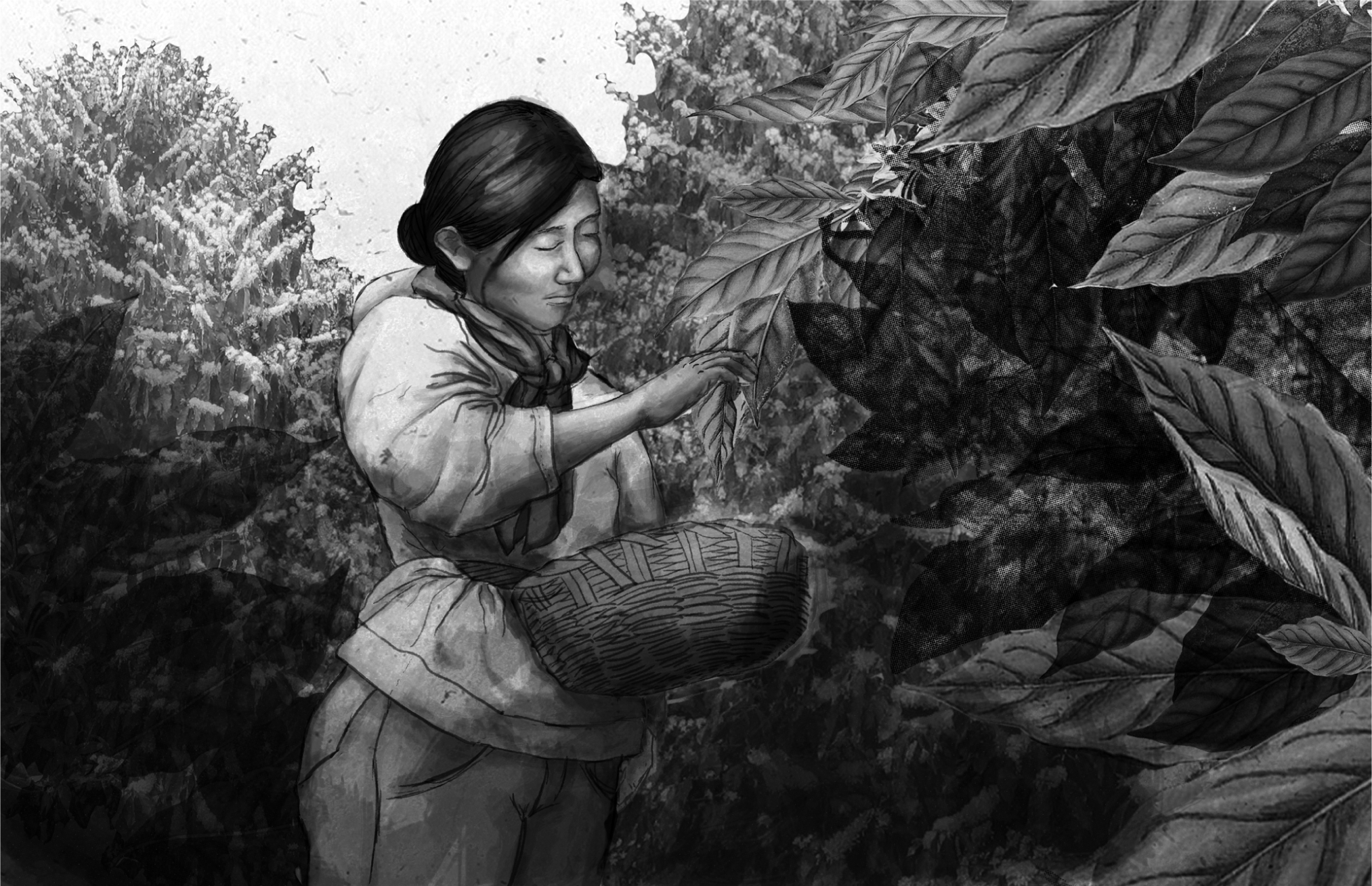
Some claim that Fair Trade for All will hinder the chances of small-scale farmers to make a living with coffee. Silvio Cerda, Coffee Director of CLAC (Latin American and Caribbean Network of Small Fair Trade Producers), spoke with Nicki about the new policy’s implications: “In this situation, the small producer organizations will be competing under unequal conditions with big plantations and exporters. Because of the resources, technologies, and the economies of scale, the big plantations have lower costs in comparison to small producers.”
Farmers have little voice within a system of trade that is supposed to provide them with social, economic, and environmental benefits.
Possibly the biggest problem with Fair Trade for All relates to governance. Many farmers feel betrayed: they were not included in the decision-making process at Fair Trade USA. Whereas producers hold a 50 percent stake in decision-making at Fairtrade International, they have little say in the U.S. organization. The bold, unilateral move is a dangerous precedent for how policy is decided at Fair Trade USA. When farmers have little voice within a system of trade that is supposed to provide them with social, economic, and environmental benefits, they become disillusioned. The policies meant to address their concerns and needs do not reflect their concerns and needs.
Other critics, including farmers like Byron, question the need for an outside organization to determine whether they are growing coffee “fairly.” Some farmers, activists, and scholars have come to brand fair trade as a form of eco- or neo-colonialism. In order to access these “fair” markets, farmers must abide by a set of standards they did not create and cannot change. The majority of the voices we have heard from within the fair trade movement are disappointed at the concentration of power within Fair Trade USA. It doesn’t seem, well, fair.
For all of these reasons, small producers and their advocates are frustrated and angry. These feelings bubbled to the surface at the Specialty Coffee Association of America forum when Paul Katzeff said that he felt betrayed by Fair Trade USA’s leadership. When the translator struggled to find the Spanish word for “betrayal,” a member of the audience shouted “¡Traición!” This elicited cheers, whistles, and raucous applause from the producers, importers, co-op leaders, and other movement allies. The moment illustrated the intensity of the anger and disappointment felt by many members of the movement.
What’s Fair?
While the question of corporate participation has long been resolved, the issue of governance—how fair trade organizations are run and how fair trade policy will evolve—remains pressing. Though Fair Trade USA seems to stand nearly alone in its decision to fold plantations into the coffee certification system, the choice (motivated by the capitalist goal of growing the fair trade market, even though, at the moment, supply far exceeds demand) will have sweeping consequences for millions of small fair trade coffee farmers. Fair trade activists and scholars are also worried about the unilateral way in which Fair Trade USA implemented a sweeping new policy. It was a top-down decision in an organization that, ideally, should work in the opposite direction.
Here, Fair Trade USA ignored the vocal resistance of small producer organizations and movement members around the world. The governance issue is not just a question of how fair trade policy affects the livelihoods of small farmers, but also what the trusted “fair trade certified” label means to consumers. Previously, these virtuous little labels meant that small producers organized in democratically run cooperatives cultivated the coffee you purchased. Today, you cannot know for certain whether that coffee came from a small producer or from a large plantation controlled by a wealthy landowner.
This problem—that meanings of labels often change dramatically as the certification system behind them evolves—is not unique to fair trade. The dilution of the meaning of “organic” by large corporate farms is a case well-documented by Julie Guthman in her book Agrarian Dreams: The Paradox of Organic Farming in California, and it is aptly parsed by food scholar and activist Michael Pollan, who draws a distinction between “big organic” and “small organic.” In the case of fair trade, the inclusion of large corporate buyers in the early 2000s grew the market significantly and funneled economic benefits to producers.
But for small growers, that growth came at a tremendous cost. The very movement that was founded to challenge the dominance of large transnational buyers in the coffee market is penalizing those who can least afford it: small farmers.