



Abstract
What should sociologists do when their everyday lives are at odds with their sociological values? Authors Ara Francis and Jill Bakehorn examine the contradictions that stem from trying to live sociologically and consider how scholars might put personal inconsistencies to good use.
“Working class” is too romantic an adjective for Danielle’s background. She describes herself as poverty-class. “I am covered in tattoos, my teeth are a mess, and my speech often gives me away.” Danielle is finishing her Ph.D. in sociology and was one of the lucky few candidates who secured a tenure-track job this year, but her two identities—a “scholar in an institution of privilege and [a] poverty-class intellectual”—place her in an uncomfortable position. On the job market and in the classroom, it is to Danielle’s advantage to try and conceal her past. “In an age where job security is more tenuous for academics and education is more consumer-driven,” she writes, “the pressure to conform bears down like a millstone.” At the same time, Danielle is deeply committed to accessible education; downplaying her own background feels like a violation of that commitment. “What do I do with my desire to arrive in the classroom, in front of my students, and have the one, two, or three of them who’ve also come from similar backgrounds see a familiar-looking body staring back at them and in a position of (assumed) power and influence? By covering, concealing, and compromising,” she explains, “I preempt that possibility.”
There is, no doubt, a certain arrogance in believing that sociology should make us better people.
Though most academics do not share Danielle’s class-specific dilemma, her experiences bear out what many of us are intimately familiar with: a contradiction between the values we derive from sociology and how we operate in our day-to-day lives. Many of us come to this discipline because we believe that the sociological perspective has transformative potential. We hope that by garnering a better understanding of the social world, we can change how people think and behave. However, the relationship between sociology and social change is tenuous, even in the context of our own lives.
Much like biologists who are vulnerable to the viruses beneath their microscopes, social scientists are subject to the social forces we study. The difference, as some have pointed out, is that biologists take precautions. What should or could we do about our participation in systems of inequality? Are complicity and personal contradiction inevitable? Should our inconsistencies trouble us? What might we gain—and what might we teach our students—by talking openly about dissonance?
Discussing Dissonance
Not all sociologists experience these contradictions, and not all who do find them troubling. Nonetheless, our conversations with graduate students and faculty members suggest that an uncomfortable incongruity between what we value as sociologists and how we operate in everyday life is quite common. For some, membership in the academy is itself a source of dissonance. Sociologists like Patricia Hill Collins point out that although higher education is a potential venue for transformative politics, the production of academic knowledge is intricately bound up in relations of power. It serves elite interests. This contradiction manifests in numerous ways. A graduate student named Jo, for example, explained that she values “critical thinking and engaged pedagogy,” yet she works for a professor who uses multiple-choice tests. Many of our colleagues worry that university grading systems work to reproduce inequality when educators employ the same standard to evaluate all students, despite significant disparities in terms of college preparation. But teaching assistants like Jo lack the power to make decisions about how to assess students, and she recognizes that “professors are constrained by the system where they have to teach 200 students.” Clearly, Jo feels torn about the kind of teaching she must do in this context.
The material we teach often spotlights our own contradictions. Ellis, a sociologist who teaches courses on consumer responsibility, dreads running into his students in the supermarket, lest they see that his own consumption habits are not entirely “pure.” Katherine, a tenured sociologist who teaches about poverty and inequality explained that she does so “while living a comfortable suburban life.” The mismatch makes her uneasy. “I just don’t even know what to do about it,” she said. Ellis and Katherine are in good company. Sociologist David Karp, in the introduction to his well-known Speaking of Sadness, writes eloquently about the dissonance he experienced when he began taking anti-depressant medication: “One of the central messages of my discipline is that culture, rather than biology, is destiny. This was the message I preached in my introductory sociology class… I knew all this and often felt confused about the interplay of nature and nurture in making me depressed.”
Corey Fields
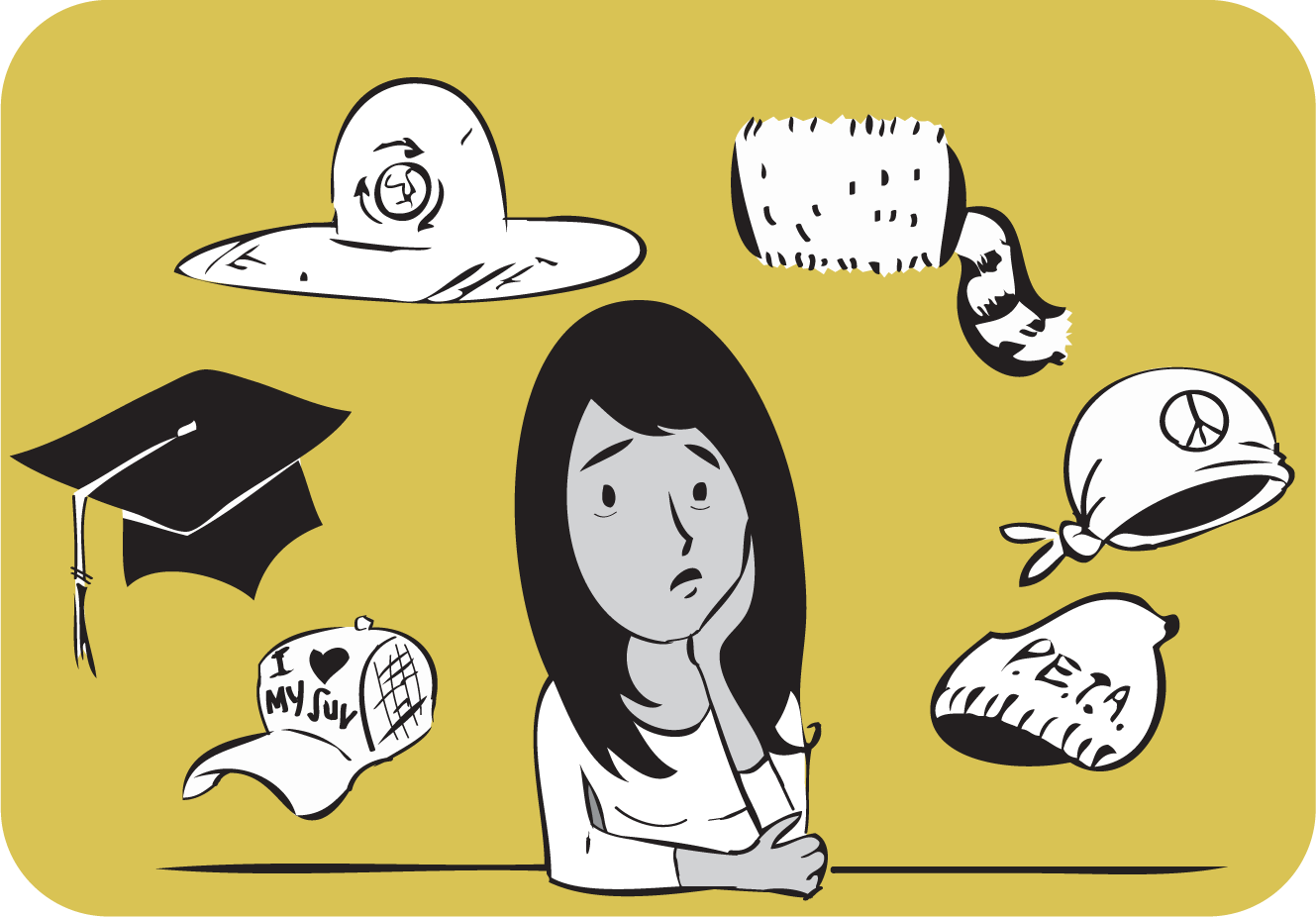
The possibilities for contradiction between classroom and personal life are seemingly boundless. Just as sociologist George Herbert Mead teaches us that our selves are constructed in dialogue with the “generalized other,” some of us are plagued by the “sociological other.” Rachel, a graduate student, grapples with her body image. “[Even though] no one has ever told me that I’m overweight, and certainly no doctor has ever indicated that,” she explained, “[my body shape] bothers me every single day.” She knows there must be other sociologists who feel this way, but, she says, “I am embarrassed to admit [to colleagues] that I still think these thoughts… [because] I should know better, I know where it comes from… I should be able to sociologize it away.”
Marriage and the household division of labor are also key sources of contradiction for some of the women we talked with. A graduate student named Krysti described herself as “failing” as a sociologist and a feminist because she is married and follows a stereotypically feminine script in the context of her marriage. She made a number of compromises when she got married, not the least of which was changing her last name. “It was incredibly hard for me to do that… [I felt like] I was kind of failing in my perceived identity of who I was and what my priorities were, gender-wise.” For Krysti, sociologists are expected “to push, to resist.” She worries that her colleagues will judge her.
Two of the sociologists we spoke with are so strongly conflicted they feel as though they are living in two separate worlds. A tenured professor, Heather, explained, “The first is my work world (the university), where my interactions with colleagues and students reflect an intellectual, progressive, politically correct, yet somewhat elitist, worldview… The second is my home world (which I also think of as the ‘real world’), where I live in a small, mostly conservative town where my interactions with family, friends, neighbors, my kids’ teachers, etc., mostly downplay my professional self… the primary identity I share with others is as my kids’ mom. It is somewhat jarring at times.” Katherine said she doesn’t feel at home in either of the worlds Heather describes. “I can’t be ‘just’ a normal suburban mom even though that’s mostly what I am, because I know too much and have read too much and have thought about things (and critiqued things) too much. But then I also don’t fit into the intellectual culture either, because I take my kids to fast food restaurants sometimes and let them play video games and other types of low-brow suburbia parent stuff…”
To complicate matters, dissonance may be most likely to plague the least privileged among us. Perhaps because privilege tends to grant its possessor a blindness to inequality, gender does not appear to be as much a source of contradiction for men as it is for women. Poor and working-class sociologists struggle with more than mere complicity; some are haunted by a shameful sense of disloyalty. For them, the feeling of “living in two worlds” is tinged by insecurity and fear.
In her introduction to an edited volume on working-class academics, Carolyn Leste Law recalls, “Even as early as my freshman year, I was learning to become a double agent, learning to lie with conviction in two contexts at once and fearing expulsion from both.” Similarly, academic careers present a veritable minefield for women of color. In their recent book Presumed Incompetent, Angela P. Harris and Carmen G. González explain, “Women of color must perform their social identities carefully and selectively to avoid being criticized, marginalized, dismissed, or rejected by colleagues and students.” This kind of identity work, the authors add, is particularly treacherous in fields like sociology, where one’s fellow scholars are committed to social justice but unaware of “the demoralizing and potentially career-threatening microaggressions that routinely confront women faculty of color.” Cleary, sociologists whose identities are underrepresented in the academy face multiple layers of contradiction.
Corey Fields
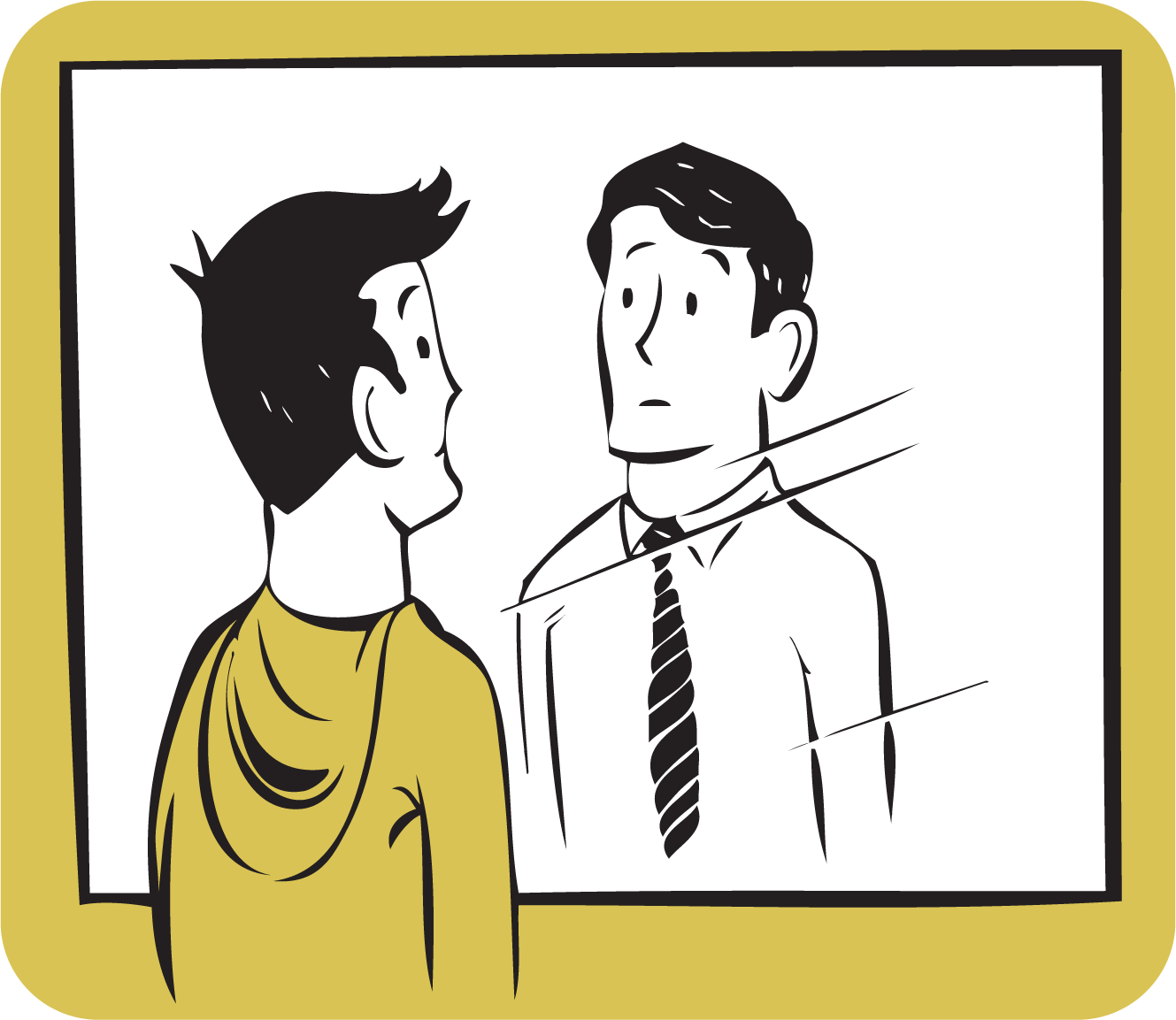
Biologists follow strict safety protocols to prevent the hazardous materials they study from contaminating their own environments. As ordinary human beings inevitably immersed in our own social worlds, sociologists do not have this luxury. But are the contradictions we experience “just part of the human condition,” as a graduate student named Tressie tentatively concludes? Or can dissonance somehow enrich our teaching, scholarship, and citizenship?
Humility is just the right mindset for research. Beyond encouraging us to reexamine how we live, dissonance can serve as a catalyst to reexamine what we know… or think we know.
Putting Contradictions to Work
There are no definitive answers to this question, but we can tell you what others have tried. One approach is to extend to ourselves the compassion that can stem from verstehen. We are human, after all, and if our work teaches us anything, it is that human beings are complex creatures, subject to myriad forces beyond our control. Whitney, a graduate student, copes with dissonance by asking, “What structures are influencing this or are creating this situation?” She confronts her discomfort.
Although the wisdom of this orientation seems, to us, like a good starting point, few of the people we talked to were content with this take-it-easy-on-yourself approach. In fact, several sociologists insisted that recognizing the sociological reasons for their dissonance did not and could not make them feel any better. When it came to changing her last name, for example, Krysti felt bad for yielding to social forces: “I just kind of gave in to all these paternalistic pressures and structures,” she said, “I didn’t stick it out…”
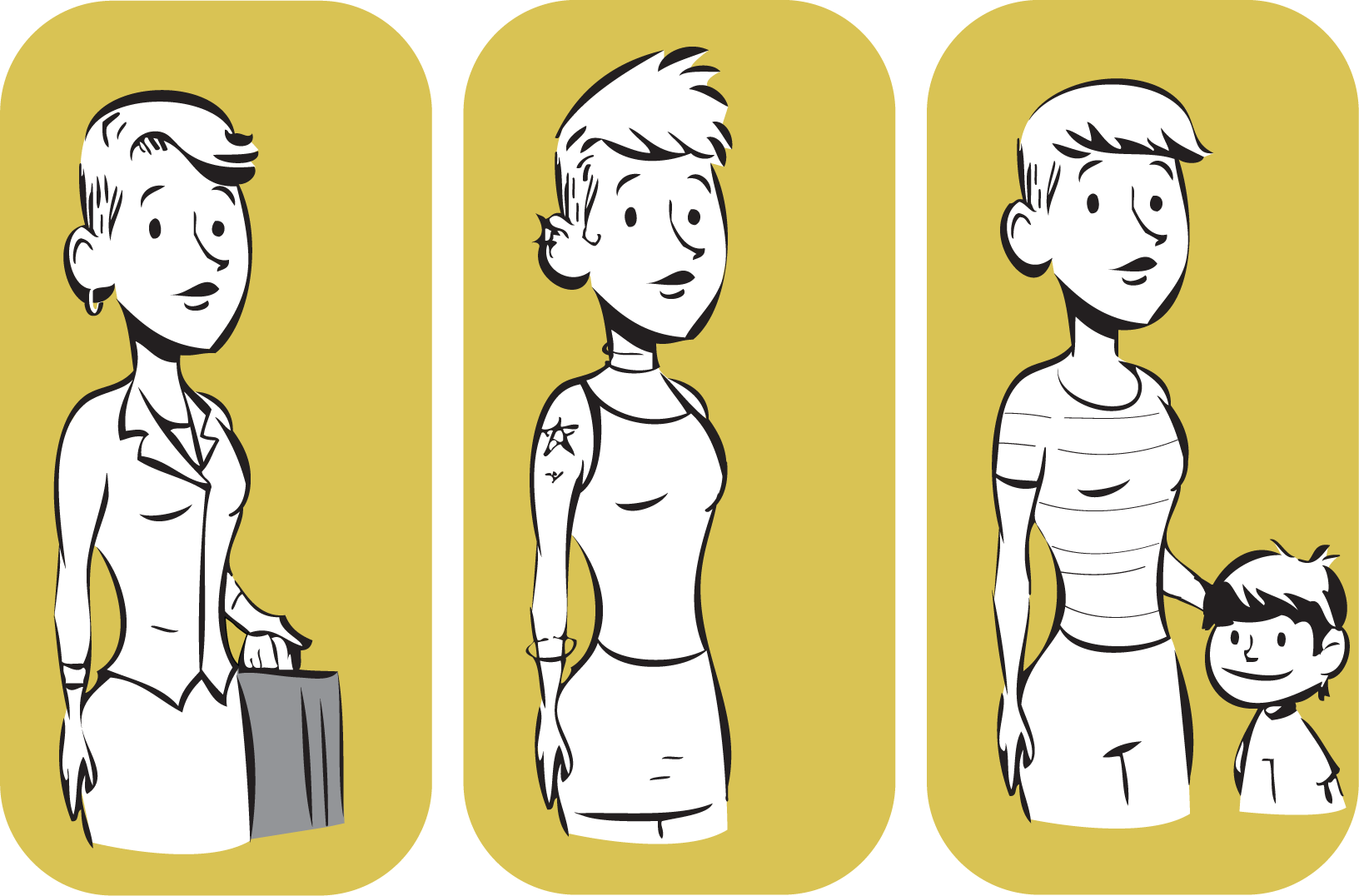
A more satisfying strategy might be to try to bridge the gap between our sociologically informed values and our everyday lives. Dramaturgically speaking, we can seek out situations and audiences that encourage more consistent performances. Jill, a coauthor of this piece, noticed that after years of teaching gender and sexuality, her performance of femininity has changed. Having spent so much time explaining how inequality is premised on the collective “doing” of gender difference, her own performance has come to align more strongly with the political orientation of her scholarship, incorporating both masculine and feminine characteristics. Jill’s students, many of whom look to her for examples of how to undermine the gender system, say that they are inspired by her alternative appearance. Jo uses the embodiment of gender in a different way, using her stereotypically feminine clothing as an opportunity to discuss the social construction and devaluation of femininity.
Despite efforts like these, our own and other’s accounts suggest that some degree of dissonance is likely, if not inevitable. When the alignment of sociological ethos and everyday life isn’t possible, dissonance offers a healthy dose of humility. Ara, a coauthor of this essay, remembers how sharply she had critiqued contemporary constructions of motherhood before she, herself, had a child. As a new mother, she found herself parenting in ways that reinforced the very system she tried to undermine in her writing. It was only then that she recognized her own hubris. There is, no doubt, a certain arrogance in believing that sociology should make us better people. Some might go so far as to say that it is an elitist notion, pregnant with the assumption that education grants moral superiority. Recognizing the limitations of what of what we can do with our knowledge can serve to curb self-importance, and rightly so.
Corey Fields
Humility is just the right mindset for research. Beyond encouraging us to reexamine how we live, dissonance can serve as a catalyst to reexamine what we know… or think we know. Social psychologists find that people are less likely to “walk the talk” when their values are not firmly grounded in personal experience. Indeed, much of what we know, sociologically speaking, stems not from first-hand experience, but from what we read in books or see among those we study. Although these ideas are carefully culled from empirical observation, they nonetheless reflect the practiced distance of sociological analysis. What can our own lived experiences bring to our scholarship? Ara’s dissonance revealed a problematic tendency to emphasize agency at the expense of constraint in her work. Her own maternal experiences underscored the highly persuasive and pernicious elements of contemporary parenting culture and encouraged her to readjust her sociological lens to reflect this insight.
Finally, dissonance can be a unique pedagogical tool. A visiting professor named Andrea once found herself “automatically appointing the male students as team leaders” during a class exercise. In that moment, she not only changed her decision-making process, but also decided to talk with the class about what had happened. Her willingness to expose her unintentional bias provided students with a powerful lesson in how inequality operates and how thinking sociologically does not make us immune to its effects.
Anyone who takes seriously the intersection of sociology and personal life will face dilemmas.
When we’re lucky, students enroll in our classes with the assumption that what they learn will have direct implications for how they should live. Nonetheless, anyone who takes seriously the intersection of sociology and personal life will face dilemmas. Some students make sense of their dissonance by concluding that sociology is an interesting intellectual exercise, something best suited to college classrooms but with little relevance to their own lives. Others throw themselves into activism with such militancy that their efforts end in burnout or disappointment. Neither of these extreme responses promotes critical thought. To encourage ourselves and our students to appreciate the complexities of social order and social change, we might try and bring whatever personal wisdom we have gained (or have failed to gain) into the classroom. In the end, recognizing that sociology offers no clear blueprint for how we should live may provide the strongest foundation for exploring its transformative potential.