



Abstract
Sociologist John A. Stover III highlights the significant impact documentary filmmakers can have on social movement agendas and frames via their production, distribution, and outreach strategies. New Day Films, a cooperative collective of social issue filmmakers, is spotlighted as particularly effective in promoting social change and justice.
Keywords
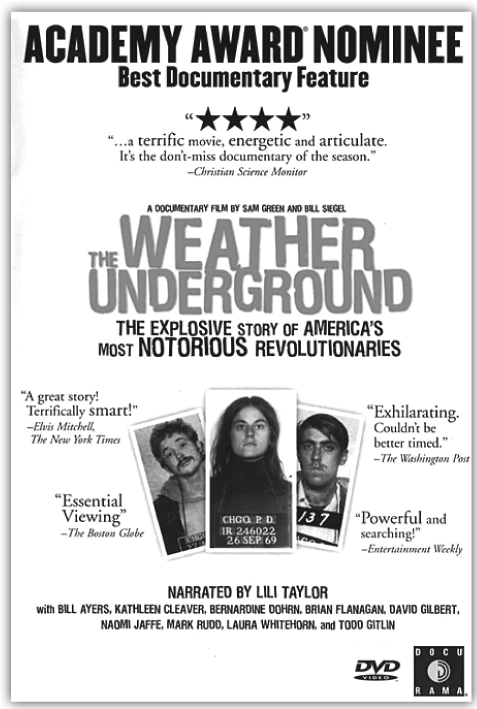
Viewing the documentary The Weather Underground by Sam Green changed my perceptions of social movements and the media. When I later taught introductory sociology I screened the film to demonstrate how the protests of the 1960s and 1970s extended beyond nonviolent marches and boycotts—there was more to this era than both my students and I had been taught. Each semester our perspectives on social movement activities shifted, and the film propelled the most ambitious of us, myself included, to learn more.
Documentary filmmakers play a significant role in shaping messages about activist histories.
We know of social movement events like the 1954 Montgomery Bus Boycotts in Alabama, the 1969 Annual Convention of Students for a Democratic Society (SDS) in Chicago, and the 2004 same-sex marriage of Del Martin and Phyllis Lyon in San Francisco largely because media coverage brought them to our attention. Whether it was newspaper headlines in 1954, television broadcasts in 1969, or web postings in 2004, social movements have depended on media coverage to transmit messages and foster support. While mainstream media coverage has played a significant role in disseminating social movement activities, technological advances such as inexpensive, high-definition equipment, filmmaking software, and camera phones have made alternative and independent media coverage increasingly significant in disseminating social movement agendas.
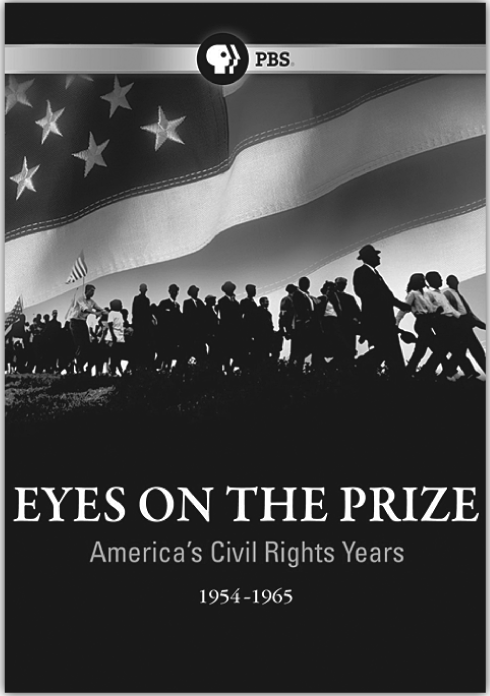
Within the independent media market, documentary filmmakers play a particularly significant role in shaping activist histories long after events have transpired. Decades after the brutal murder of Emmett Till and the racial integration of the Arkansas public school system, the Academy Award-winning series Eyes on the Prize (1987) brings the struggles of the Civil Rights Movement to subsequent generations of students, teachers, and citizens.
Framing History and Activism
Documentary films are a visual, dynamic way to frame sociological concepts for twenty-first century students. But if we are “framing” students’ sociological imagination through the use of these films, then who is “framing” the content of the films? How are documentary films’ frames of meaning being constructed and distributed? Who decides what frames to represent and which frames to de-emphasize? Is that decision-making process different from other filmmaking or social movement strategies? These primary questions shaped my recent study of documentary filmmaking and social activism.
Early in my research, Lexi Leban and her filmmaking partner Lidia Szajko invited me to sit in on the viewing of reels from their film on Proposition 8, the California ballot initiative recently struck down by the U.S. Supreme Court that limited marriage to one man and one woman. Almost immediately I recognized the role of activist filmmakers as engaged in a socially and artistically constructed process of framing social movement issues via the selection of visual images, characters, and storylines. I watched as Leban and Szajko viewed footage and made determinations about what to emphasize, what to drop, and what to reshoot or work around. Their decisions highlighted certain themes, subjects, and messages over others, and I saw how documentary filmmakers explicitly framed social movement histories.
Filmmakers’ artistic decisions explicitly frame social movement agendas and issues.
During this time, I also learned about the New Day Films distribution collective to which the filmmakers belonged. I began to understand New Day as both a distributor and a network of activist filmmakers engaged in the broader pursuit of social change. Thus began my education in how documentary filmmakers use artistic strategies in chronicling past and present-day social movement activities.
Activist Filmmakers
Founded in 1971 by documentarians emerging from the feminist movement, New Day Films is an independent, cooperative collective of activist filmmakers representing a unique type of social movement organization. It exists within a broader social movement industry of film distributors, funders, fiscal agents, nonprofit organizations, and film festivals that use documentaries to advance social movement goals. The New Day Films collection supports the advancement and dissemination of social movement agendas in areas such as disability activism, environmentalism, and immigrant, prisoner, and queer rights, among many other social justice issues and causes.
For instance, One Wedding and Revolution, by the prolific and Academy Award-winning documentary filmmaker Debra Chasnoff, documents the strategizing between then-Mayor Gavin Newsom and the National Center for Lesbian Rights, which lead to the 2004 same-sex marriages performed in San Francisco. The film visually and sociologically demonstrates the importance of cross-organizational alliances between social movement organizations and elected officials/insider activists.
Other films in the New Day collection bring attention to the rights of the disabled to lead independent lives, one of the primary goals of the disability rights movement. Alice Elliott’s films, the Academy Award nominated The Collector of Bedford Street and Body and Soul: Diana and Kathy, highlight the personal struggles and community efforts that go into supporting differently able people to live on their own. The Key of G by Robert Arnold documents the transition of 22-year-old Gannet from his mother’s home to an “apartment with three musicians and artists as primary caregivers.” Gannet was born with “Mowat-Wilson syndrome, a genetic condition which results in a myriad of physical and developmental disabilities with symptoms resembling autism.” Arnold crafted a compelling storyline focused on the intricate, constant web of support necessary for Gannet’s non-institutionalized daily living arrangements. In doing so, Arnold focused explicitly on the complex and touching relationships between Gannet and his caretakers, documenting one particular relationship (with Donal) above the others.
Documentarians can (and do) use their films to advance a wide array of social justice causes.
© 2008 New Day Films
© 1987 PBS
©2002 Independent Lens/PBS
© 2002 New Day Films
Documentary filmmaking is a vibrant form of social activism and part of a broader, unique media-based social movement industry.
Documentarians also contribute an important avenue of media imagery for queer identity and politics. The importance of recognizing and supporting transgendered rights are themes found in the films No Dumb Questions by New Day member Melissa Regan and Diagnosing Differences by independent filmmaker Annalise Ophelian. By producing these images, the filmmakers have helped audiences move beyond the broad, homophobic stereotypes often depicted in mainstream milieus.
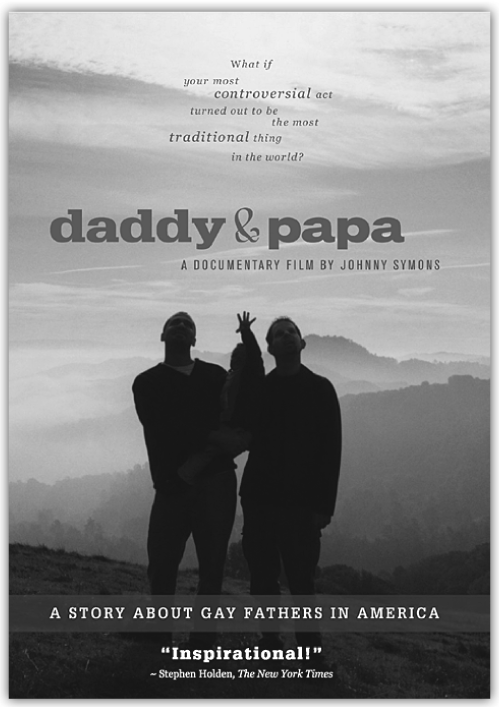
Queer family and gender diversity issues are popular themes in the works of activist filmmakers I interviewed. Filmmakers explored family-building practices among lesbians (such as anonymous sperm donation methods highlighted in Deidre Fishel’s Sperm Donor X: A Different Contraception) and gay men (adoption in Johnny Symons’ Daddy and Papa). That’s a Family! by Debra Chasnoff and Helen Cohen reveals how family diversity comes in a variety of gendered, sexual, and color combinations via adoptive, biological, remarried, and surrogacy-related methods.
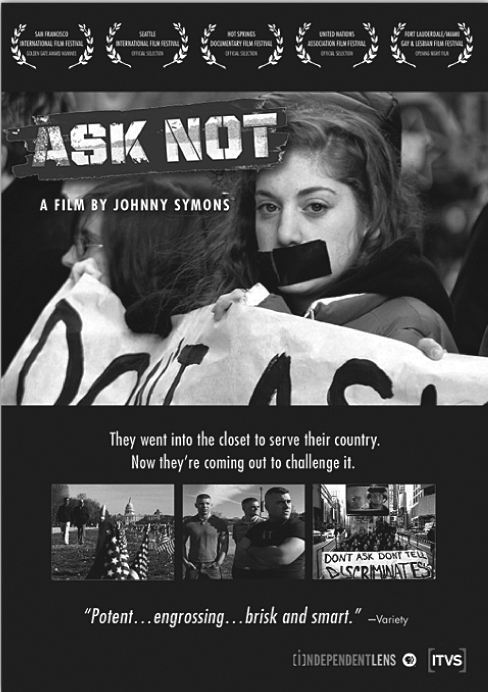
Films by Chasnoff (One Wedding and a Revolution) and Symons (Ask Not) document struggles concerning same-sex marriage and gays in the military (respectively). From a frame alignment perspective, their films’ messages align with the recent agendas of the queer movement overall. Symon’s 2009 film Ask Not is also widely considered a pivotal, contributing voice in the successful repeal of the “Don’t Ask Don’t Tell” policy in 2010, and several of the film subjects and Symons attended the official Presidential repeal ceremony.
The importance of straight allies in the queer movement is documented in films such as Tom Shepard’s Scouts Honor and Chasnoff’s One Wedding and a Revolution, and both films highlight how heterosexuals can do just as much, if not more, as queer activists. Non-queer filmmakers also operate as straight allies and Carrie Lozano, for one, documents the groundbreaking HIV-AIDS reporting of late journalist Randy Shilts in her short-format documentary Reporter Zero.
Queer filmmakers implement intersectional approaches in discussing sexuality and life course events. For example, death, disease, and dying are difficult subjects, and several films provide cinematically poetic and community-oriented stories about end-of-life accounts in lesbian (Pam Walton’s Liberty: Three Stories about Life and Death), gay (Andy Wilson’s Hope Is the Thing with Feathers), and gay/straight (Leo Chiang’s One + One) communities.
New Day filmmakers also employ cross-platform strategies for disseminating films’ social justice messaging. New Day member Kelly Anderson developed a companion app to her film My Brooklyn, which charted the enveloping gentrification of Brooklyn and the widespread displacement of communities and businesses of color. In the game, players learn about areas that were replaced with high-end housing and businesses catering to a richer and whiter elite. The film’s website is also an important site for information dissemination and community organizing against ongoing gentrification. Other websites, such as “The Respect for All Project” by Debra Chasnoff’s non-profit group GroundSpark, similarly advance film activism via web-based strategies.
New Day Filmmakers provide compelling storylines and artful social justice messaging unique to their documentaries. Documentaries, like feature films, also have explicit, subjective points of views that are shaped by these (and other) activist directors, editors, and producers. As viewers we must remain aware of this socially-artistically constructed process of framed messaging in all documentary films. Activist filmmakers are also just one part of an entire social movement industry using documentary films for social change, and other activists use these films as part of their own advocacy efforts and to their own ends.
Documentary filmmaking is a vibrant form of social activism and one part of a broader, unique media-based social movement industry. Although documentaries are just one form of social movement messaging, they are a significant, successful way activists advance social justice causes via the framing of their own messages.