




Abstract
Johanna Bockman unpacks a hefty term, neoliberalism. She cites its roots and its uses, decoding it as a description of a “bootstraps” ideology that trumpets individualism and opportunity but enforces conformity and ignores structural constraints.
“Neoliberalism” is both an approach to government and a defining political movement today. In both senses, neoliberalism is grounded in the assumption that governments cannot create economic growth or provide social welfare; rather, by trying to help, governments make the world worse for everyone, including the poor. Instead, private companies, private individuals, and, most importantly, unhindered markets are best able to generate economic growth and social welfare. Nobel-laureate economist Joseph Stiglitz has criticized this unrestricted support of free markets and unrelenting attack on government as “market fundamentalism.” Since the 1970s, neoliberalism has shaped policies at international, national, and local levels.
Recently, the term “neoliberal” has been extended to a wide range of phenomena: the corporatization of universities, the shift of welfare policy toward philanthropy and entrepreneurship, the spread of “intensive mothering,” the privatization of state companies, the expansion of low-wage service work, the growth of mass incarceration, and so on. While this list may seem excessively broad, the concept of neoliberalism suggests that such economic, political, social, and cultural phenomena worldwide might be connected to larger transformations in global capitalism. Neoliberalism manifests itself differently in different places, and sociologists use the concept to examine the potential connections among these changes around the globe.
The term “neoliberalism” originated in the 1930s, and it is much more than markets, money, and commodities. In Europe and elsewhere, many understood the devastation of 1929’s Great Depression as having been caused by the “old” liberalism—laissez-faire capitalism with no role for the state. Thus, they sought new approaches to big problems, whether in the form of socialism, state planning of the economy, or some form of state regulation. For their part, a group of European liberals, most famously Friedrich von Hayek, envisioned a new kind of liberalism, a “neoliberalism,” which would preserve laissez-faire markets while adding a role for what they considered a minimal state. This minimal state would protect private property, maintain order, and provide some protection for the poor. In spite of its anti-state rhetoric, neoliberal policies were not meant to eradicate the state, but rather to have forged a new kind of state.
Most scholars consider a powerful state necessary to create and sustain a minimal state. Only powerful states can implement policies that deregulate industry, relax restrictions on foreign trade and flows of money, privatize state companies, maintain order through expanding prison and security systems, and make “austerity” budget cuts to areas like social services, education, and welfare benefits. The Bolivian “water wars” of 2000 and the recent uprisings in Greece are recent examples of the historically violent battles that ensue when states are forced to defend these austerity cuts against the protests of their own citizens.
Neoliberal History
Most sociologists agree that political leaders began to forge neoliberal states in the 1970s. Capitalism had entered a series of worldwide crises—the oil crisis, fiscal crisis, stagflation, debt crisis, and legitimacy crisis due to the widespread popularity of socialism—all of which undermined capitalists’ profits and control over the economy. For Marxist scholars like David Harvey, neoliberalism was a capitalist response. Capitalists and their political allies sought to implement neoliberal policies in order to restore the conditions for profitability and capitalist power. To that end, politicians privatized formerly state-owned industries, sold off public or pseudo-public land, and contracted out former state activities. Market actors, particularly corporations, did not have to generate new wealth, but could profit from ownership of entities often created by former socialist or progressive governments. In addition, corporations profited from the “commonwealth.” Political philosophers Michael Hardt and Antonio Negri suggest that the collective goods and experiments in living that we create together (think of the content and unpaid labor we put into Facebook or the community organizing that raises property values) are appropriated by corporations to create new conditions for profit and capitalist power.
Philosopher Michel Foucault agreed that neoliberalism brings together markets and powerful states, but he argued that what makes these states truly neoliberal is using the market to govern, distributing services and benefits according to the market logic of efficiency, competitiveness, and profitability. With these new “technologies of governance,” the state ensures that citizens manage themselves (however badly or well). Sociologist Ulrich Beck has described how citizens are forced to become entrepreneurs in their own lives, managing choices within a highly volatile world and taking individual responsibility for their failures. As the state cuts social services, neoliberal subjects must compete to find assistance from non-governmental organizations, religious organizations, microfinance institutions, and corporations, all of which join the state in networks of neoliberal governance. Thus, neoliberal societies move from national government to public-private governance and entrepreneurial citizenship. Those who cannot compete—such as the homeless, the incarcerated, or the formerly incarcerated—are excluded from full citizenship, abandoned.
Oleg Atbashian, ThePeoplesCube.com
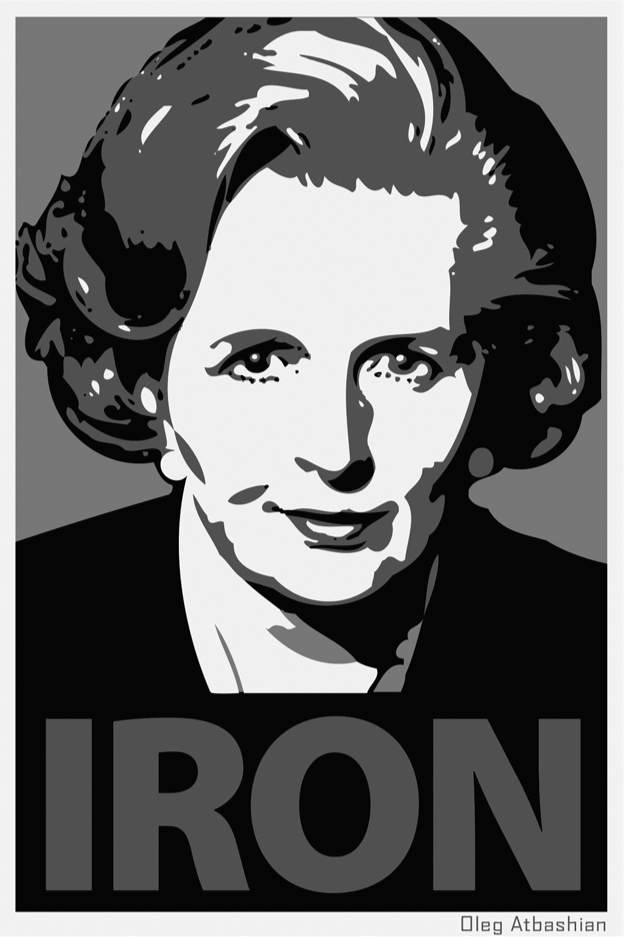
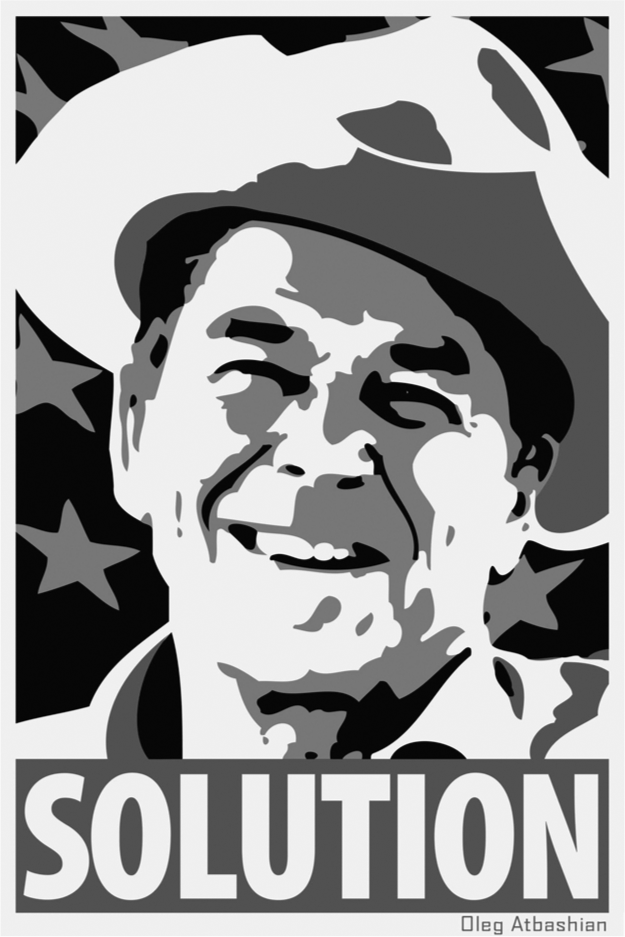
Chile was one of the earliest neoliberal testing grounds. In 1973, General Augusto Pinochet staged a coup and violently implemented neoliberal policies, dismantling institutions created by the previous, democratically elected socialist regime. American president Ronald Reagan (in power from 1981 to 1989) and British prime minister Margaret Thatcher (1979-1990) soon realized such policies in their own countries. At the same time, for the many developing countries defaulting on loans during the debt crisis, the World Bank and the International Monetary Fund made new loans conditional on neoliberal reforms, which came to be known as “structural adjustment policies” based on “the Washington Consensus.” Similarly, with the end of socialism in Eastern Europe in 1989 and in Russia in 1991, international bankers demanded “shock therapy”—the immediate implementation of neoliberalism.
Contradictions of Neoliberalism
Neoliberalism is more than just a right-wing ideology or Americanization (the imposition of American ideas onto the rest of the world). Neoliberalism appears worldwide and comes in many different and contradictory forms. The Democratic Party in the US, the Labor Party in the UK, the Social Democratic Party of Germany, the Chinese Communist Party, and other left or left-of-center political parties have all implemented neoliberal policies. People around the world criticize their governments—for example, for ineffectiveness, corruption, and repression—and long for more control over their lives, more flexibility in their work, more free time, and more freedom. Politicians from the right and the left have co-opted and distorted these criticisms and desires into entrepreneurial citizenship. In the United States, politicians transformed criticisms of public housing into the destruction of public housing so that low-income people might be allowed to make “choices” in expensive rental markets. In this way, neoliberalism can be very appealing; it embodies local criticisms, desires, and experiments in distorted form. Neoliberalism often fuses genuine citizen input with the devastating effects of capitalism (increasing inequalities, newly excluded populations, superficial democracy, and widespread unemployment) creating different, though often connected, neoliberal phenomena worldwide.
Has the current financial crisis delegitimized neoliberalism? Will it end? It is difficult to say. In his 1944 book The Great Transformation, Karl Polanyi argued that attempts to create free markets always provoke countermovements to protect society from these “disembedded” markets. We can see now a proliferation of social movements against austerity, privatization, and economic liberalization as in the Occupy Wall Street movement. American conservatives, for example, have augmented neoliberalism with nationalism, militarization, Christianity, and social conservatism, creating “neoconservatism.” In contrast, Bolivia and Venezuela’s governments have turned to new forms of socialism. Many states now take a more active role in the development of their economies. Like many big concepts, “neoliberalism” may seem excessively broad, but the term illuminates how many changes around the world and over time might be connected in ways of great interest to, and relevance for, sociologists.