



Abstract
Sociologist Janet Enke explores the challenges of teaching a course on the body. She discusses how to synthesize the subjective experience of the body with academic theory, and convey knowledge about the politics of the body.
As I was walking on the indoor track at a YWCA in Minneapolis, a teenage girl approached me. “Can I walk with you?” she asked. “Sure,” I replied. After a few minutes she blurted out, “I need to lose five pounds.” I looked at her; she was wearing loose clothing and a hijab. I responded, “I cannot see your body clearly, but I can see your face. You don’t look like you need to lose weight.” She shouted, “You don’t know what it’s like to be 14.” I paused for a moment. I just wanted to finish my workout and go home; yet, I could not ignore her anguish. I calmly replied, “Look at my body.” “You are slender,” she said. “Do you think I am happier than other women because I have a slender body?” “Yes,” she quickly answered. “No,” I replied adamantly. A lengthy conversation ensued.
The 14-year-old Muslim teen and I never exchanged names; yet, we walked and talked for over 30 minutes. The teen talked about wearing the hijab, peers’ reactions to her head covering, and the pressure she felt to lose weight. Like other young people her age, mainstream images of women’s bodies affect her identity. In the teen’s mind, life would be better if she lost a few pounds. I tried to counter the power of media through our dialogue, but I sensed I was no match for the culture industry.
I often engage in conversations with people about their bodies, particularly women. Sharing stories is a way to make sense of bodily experience. These conversations also illuminate the politics of the body in everyday life. As a woman of working class origin, I know that having a slender body contributed to my upward mobility as much as my intelligence and hard work. At the same time, I live with an invisible impairment from whiplash injuries and concussions that affects how I live my life and see myself.
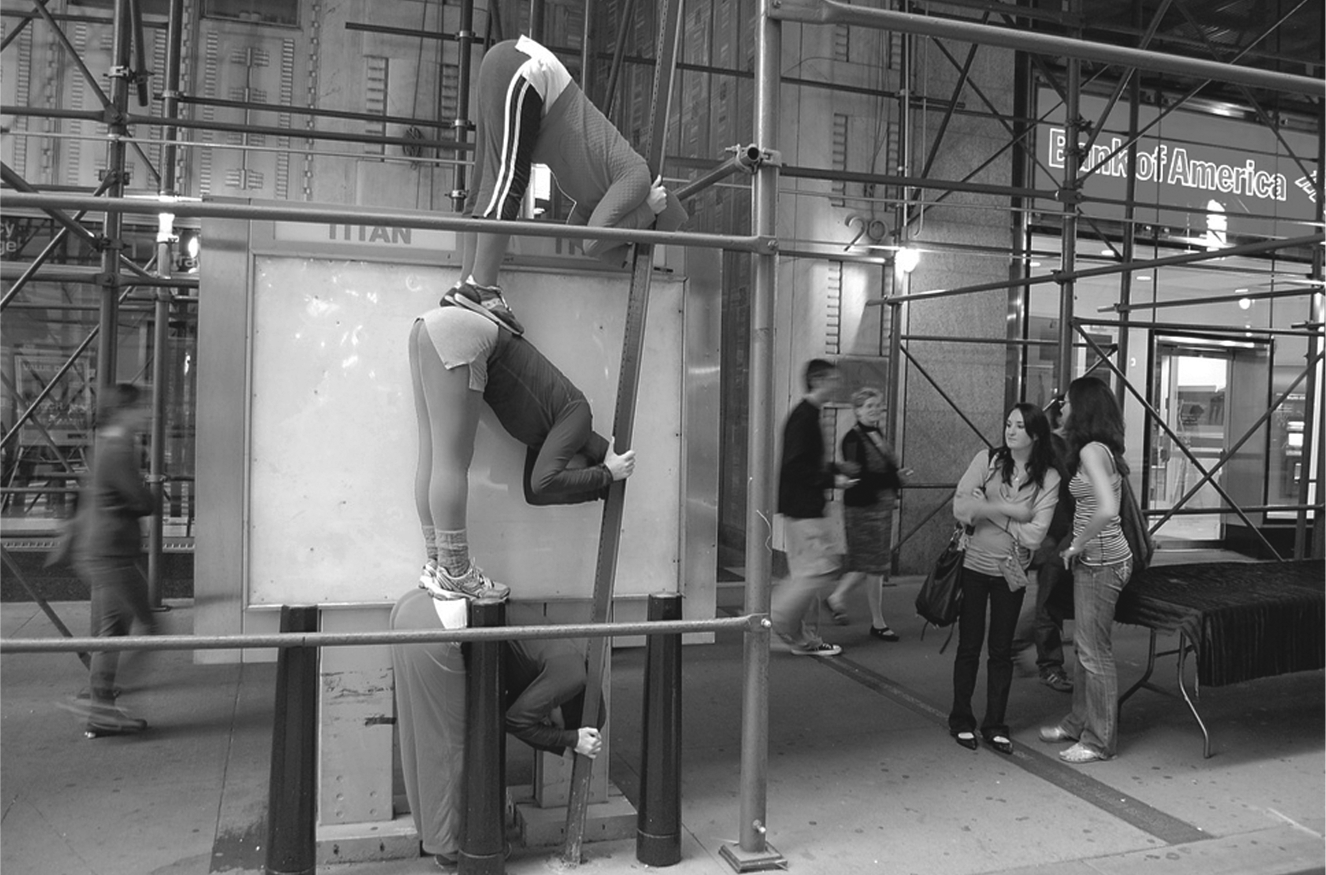
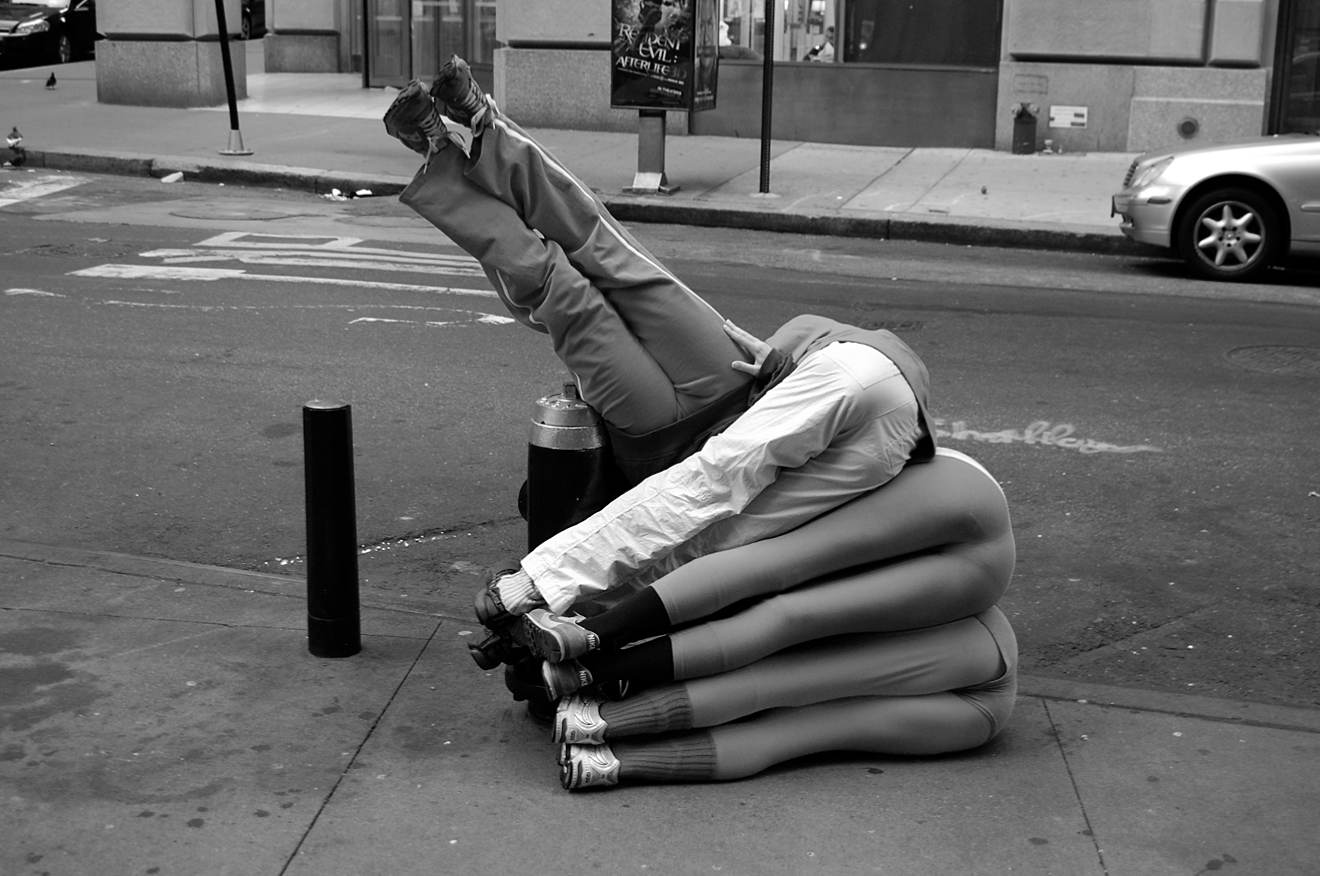
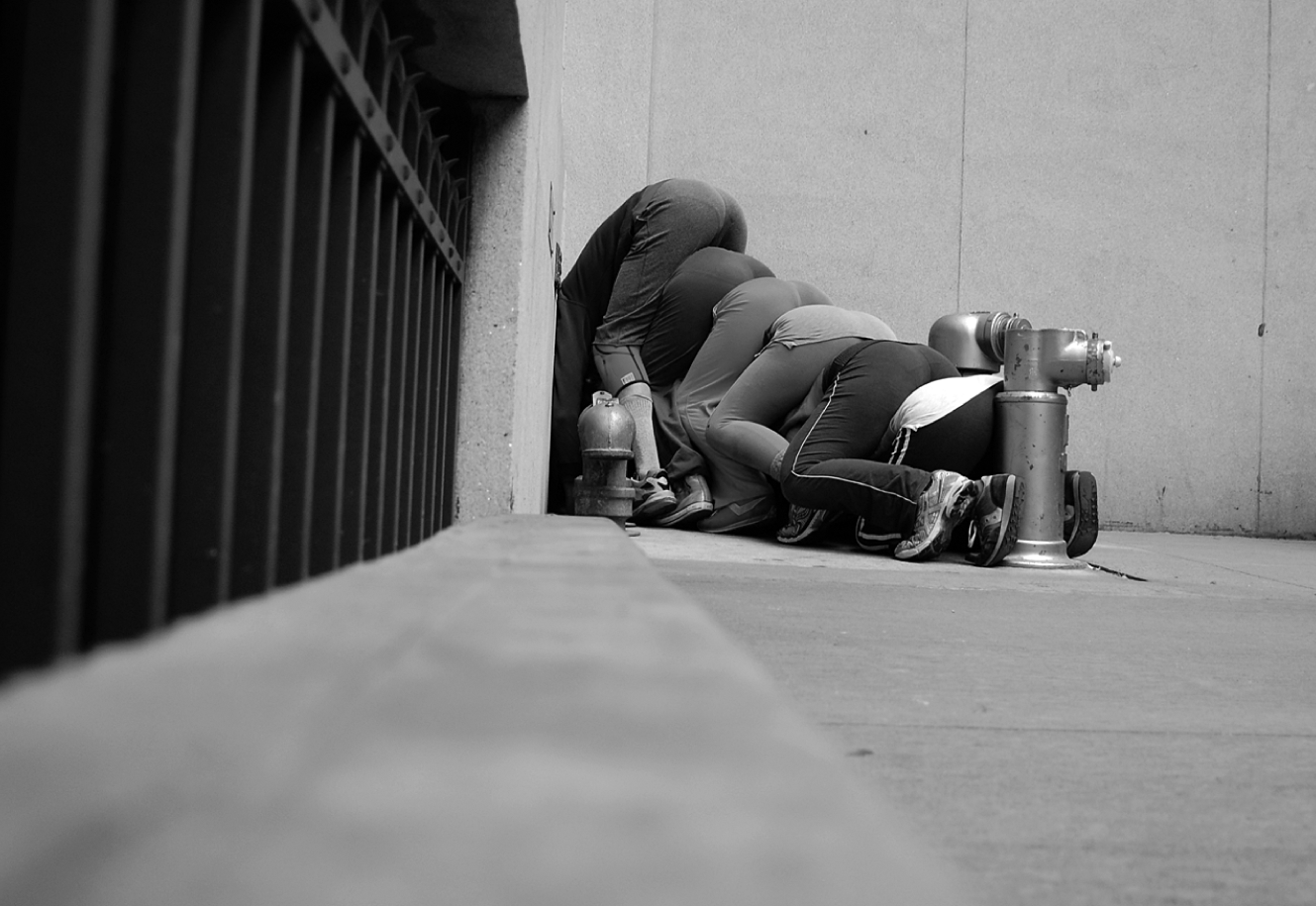
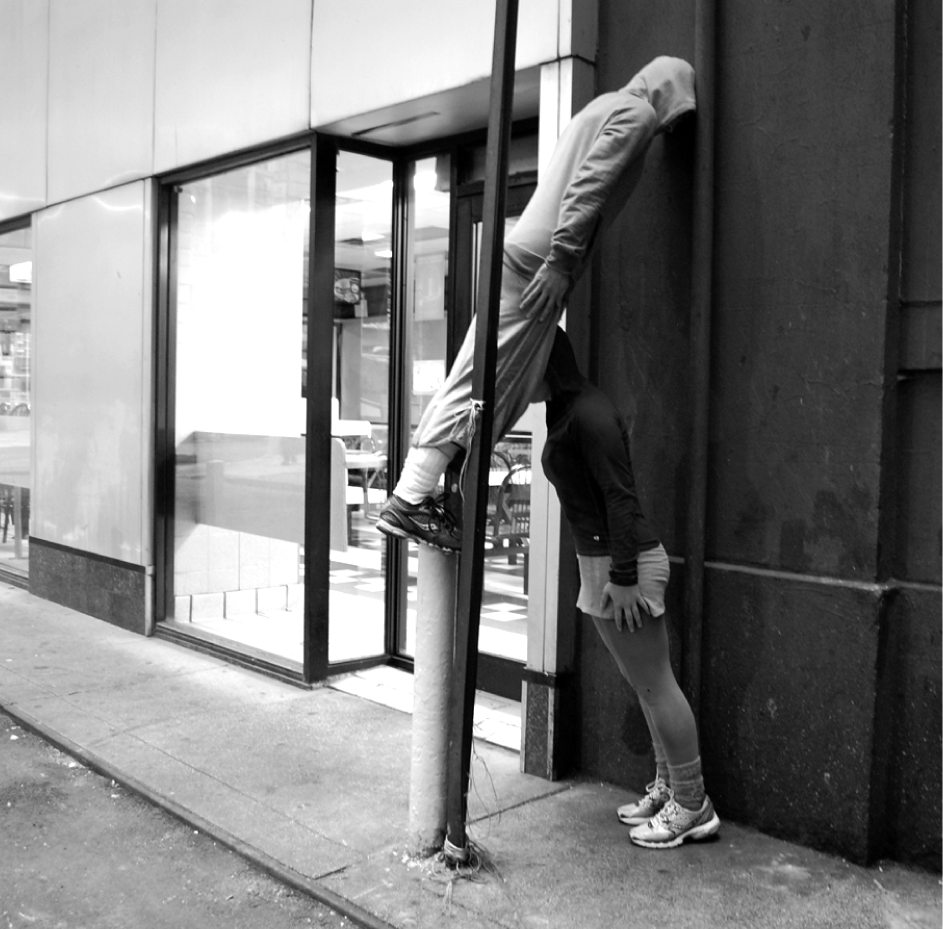
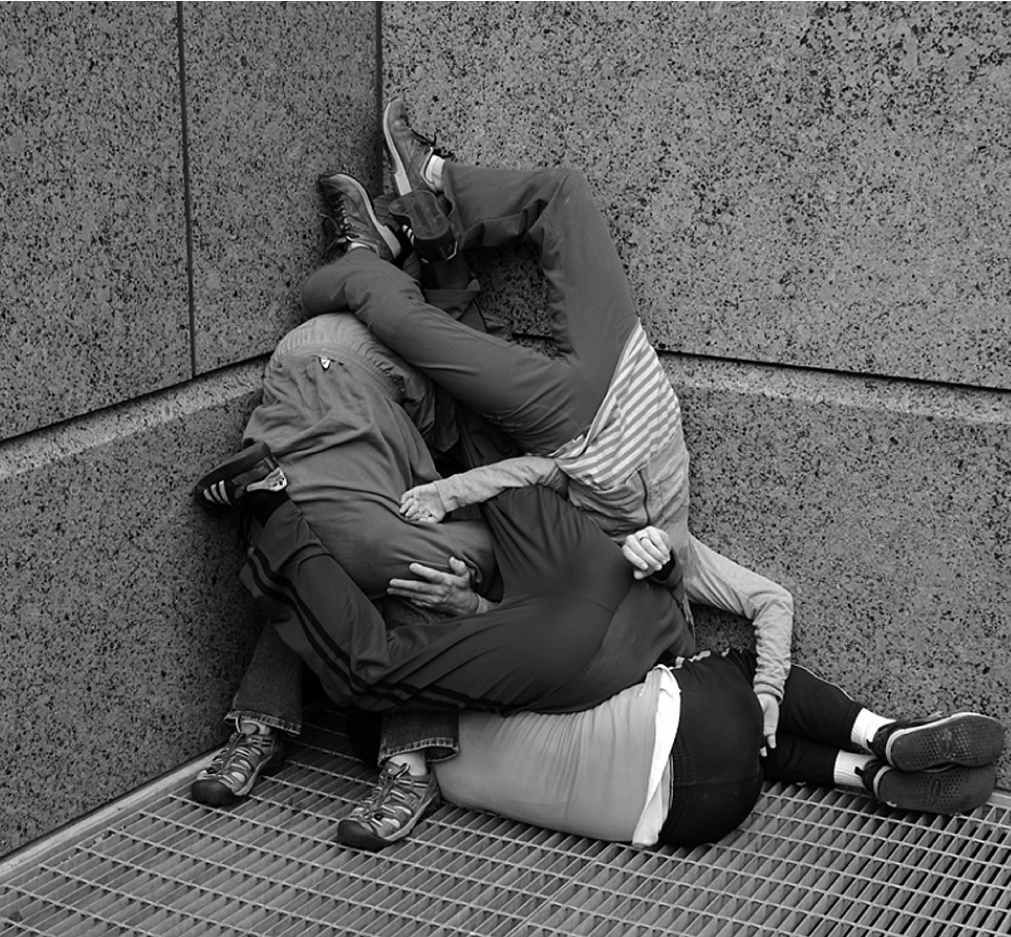
Dancers become human sculptures in “Bodies in Urban Spaces,” a performance piece by Vienna-based choreographer Willi Dorner.
Andrew Russeth
I wanted to study the body for my doctoral research. My desire was rooted in experience. Like the teenage girl at the gym, I was trying to understand my own physical and social experiences with my body. However, few sociologists were studying the body in the late 1980s and I was advised to choose a different topic. I abandoned my scholarly interest in the body for many years until, ironically, an injury from a car accident in 2006 revived my scholarly interest. It was at this point that I thought about teaching a course on the body, but I knew the learning curve would be steep.
Despite much critical discussion of the limitations of Cartesian dualism, the conceptual separation of mind and body still underlies much of Western thinking. One of the legacies of this mind-body dualism is a split between experience and theory. From this perspective, experiential knowledge is less valid than theoretical knowledge. Contemporary scholars who challenge this dualism theorize from the lived experience of the body rather than in the abstract. This work holds considerable promise for a sociology of the body, and is especially relevant for the everyday life of our students. Yet, few scholars are discussing how this synthesis translates into the classroom. As teachers, how do we synthesize the subjective experience of the body with academic theory, and convey knowledge about the politics of the body?
Andrew Russeth
Exploring the Body
In the spring of 2010, I used my sabbatical leave to develop a course on the body. I was a voracious reader of scholarly literature, memoirs, and body stories. When I started working on the syllabus, I felt “terrorized by the literature,” to use sociologist Howard Becker’s phrase. The range of approaches to the body was overwhelming and the language used to talk about the body varies greatly across academic fields. There is little consensus about how to define key concepts like body and embodiment. Some scholarly materials are too theoretical, abstract, or obtuse to use in an undergraduate classroom. Personal narratives are captivating, but they do not offer conceptual frameworks for helping students to understand the lived experience of the body. The literature also did not offer many clues about how to teach a course on the body that integrates the many diverse ideas across disciplines.
While I grappled with the literature, I continued talking with people at the gym. I listened to how people spoke about their bodies and bodily experience. These conversations deepened my understanding of how bodily experience intersects with gender, race, class, ethnicity, ability, age, and sexuality.
I offered “Body Politics” at Metropolitan State University for the first time in the spring semester of 2011 and taught the course again in the spring of 2012. Both times the class enrollment was less than 30 and included a significant number of men. Metro State is an urban university committed to lifelong learning among under-served populations. Thirty-four percent are students of color and the average age is 32. Teaching and learning about the body in a formal setting posed challenges that I had not anticipated. I wanted students to analyze the body as a social, cultural, and political phenomenon, and as a lived experience. Learning how to teach a course that synthesized each of these aspects proved daunting though.
This sense of embodiment resides in a particular social, historical, and theoretical milieu.
Teaching the Body Challenges
The first time I taught “Body Politics” with the intent of integrating my scholarly and experiential knowledge of the body I met with limited success: students liked the readings, but had mixed feelings about the classroom experience and the required response papers. In my quest to cover the relevant literature, I sometimes lost sight of the lived body. At those moments, I talked about the body as an abstract object of study. Initially, most students were reluctant to talk about their own bodily experience. As the semester progressed, some students felt comfortable sharing body stories in the classroom, but the discussions seemed disconnected from the course readings.
In my other courses, I selectively reveal pieces of my own history to create a comfortable space for adult learners. However, talking about my own body in this class backfired. Students did not want to hear about my bodily experience. Yet, they enjoyed the three guest speakers who talked about living with terminal cancer, being transgender, and coping with mental illness. I sensed that talking about my own body crossed a boundary for some students. Unlike the gym, I have power and authority in the classroom and perhaps they prefer me to maintain my academic cloaking in this environment.
After a period of introspection, I identified ways to improve the course. I needed to show students how to synthesize the subjective experience of the body with academic theory and move beyond simplistic dualistic thinking. I also needed to find alternative ways to create a safe space in the classroom for students to talk about the body and explore intersections in their own lives.
I developed several tools to address these challenges and subsequently started the first evening of the revised course with an activity: I gave each student a marker and three-foot sheet of butcher-block paper. I instructed them to answer the following question on the sheet, “When you hear the word body, what comes to mind?” I informed students that we would tape the sheets of paper on the wall for public display so they should only write what they were comfortable sharing with others. Since the class met once a week for 3 hours and 20 minutes, we were able to meander around the room, chat about what we read, and highlight words on the paper.
Andrew Russeth
As a group, we attempted to identify the multiple lenses used for studying and understanding the body, including sociological perspectives. However, when I asked for definitions of body and embodiment based on the assigned readings for the evening, the room turned silent. I informed them that sociologists also struggle to define the terms. We explored the meaning of both words and agreed to live with our imperfect definitions of these core concepts. The activity set the stage for more positive classroom dynamics.
How do we synthesize the subjective experience of the body with academic theory, and convey knowledge about the politics of the body?
Pairing Theory and Experience
One approach that worked especially well was pairing conceptual or theoretical ideas about the body with author Simi Linton’s memoir, My Body Politic, and articles from popular publications. For example, I paired sociologist Erving Goffman’s work on impression management and stigma with an article by sports writer David Fleming from the body issue of ESPN The Magazine. The article, “It Happens,” explores an unspeakable aspect of athletic life, the uncontrollable release of bowels during athletic performances. The article explains how exercise triggers the physiological response and discusses the subjective experiences of a number of professional athletes. We applied Goffman’s ideas about bodily control, impression management, embarrassment, and stigma to the article and discussed how people learn to manage bodily processes.
I also experimented with weekly media presentations and discovered a way for students to share how they were making sense of the body in a sociology class. Each week two students were responsible for sharing media materials with the class (typically an image, a video clip, or song) and briefly discussing how the materials connected to readings, class discussions, or themes in the course. For example, a young student with multiple sclerosis showed several clips about MS and educated the class about the lived experience of the disease. Another student showed a clip on “photoshopping,” the digital editing of photos to create ideal images of beauty. The alteration of women’s bodies was not surprising to the class. However, the changes to men’s bodies provoked discussion. In addition to these media presentations, students gave final group presentations in which they shared a diverse array of materials concerning the body—from sexual fetishes to female circumcision to body modification practices. Both these presentation assignments enriched the content of the course.
Body Hierarchies
Lisa Wade, co-editor of the website Sociological Images, created a group activity that explores the relationship between difference and hierarchy. “Comparing Apples and Oranges” illustrates that biological differences are not innately unequal; they must be interpreted as unequal. I adapted the activity for my course by placing students in groups and giving them the following instructions: list the criteria for comparing apples and oranges, and discuss the ways the pieces of fruit are similar and different from one another. Choose one of the pieces of fruit and make an argument for why it is superior to the other piece. I encouraged students to eat the fruit as they completed the activity.
During the class discussion, students shared their criteria and arguments. They connected the assigned reading on the classification of bodies to the activity. On a cognitive level, students understood how humans assign meaning to physical differences. However, without a concrete example, they were emotionally detached from the implications of the process. After the break, I showed the film The Life and Times of Sara Baartman: “The Hottentot Venus.” Sara, a Khoikhoi woman from South Africa, was publicly exhibited in England and France during the early 1800s. Her body also became the object of scientific research.
Andrew Russeth
Greg Headley
Students were familiar with the process of classification before the class. Most, if not all, human societies classify objects. The learning deepened from pairing Wade’s group activity with the film. Students realized that in their own lives they too participated in a process that was similar to the objectification of Sara’s body and the devaluation of her life. The socio-political dimensions of body classification became apparent. The learning was not only cognitive and affective, but tactile as well, because students touched, smelled, and ate the fruit. They were sensitized to the process of dehumanization in a holistic manner.
Another fascinating topic the class examined is twin reduction, a procedure that reduces twins to a single fetus. I paired Ruth Padawer’s article in The New York Times Magazine titled “Unnatural Selection” with a chapter from the text on the natural body. We discussed how twin reduction alters our understanding of the natural body and why terminating a twin pregnancy is more controversial than other reductions or a single abortion. The pairing led to a deeper discussion of an old dualism, the nature-culture divide, and introduced ideas about the medicalized body.
Centering the Body
Historically, the body was largely invisible within the discipline of sociology. In the past two decades, however, there has been a surge of interest in the body. Many academic fields are producing scholarship pertaining to the body including sociology, anthropology, philosophy, women, gender and sexuality studies, cultural studies, and disability studies. As a result, the body no longer occupies a peripheral place within sociology.
In the twenty-first century, the body is central to a sociological interpretation of everyday life, and the structure and dynamics of contemporary societies. As scholars break free of simplistic dualisms, they are challenging how we think about the mind, body, self, and society. Understanding the politics of the body requires a synthesis of experiential and theoretical knowledge in both research and teaching. However, the classroom is a particular challenge. We need to construct an active learning environment where students can grasp their own embodied nature. Raising consciousness is not enough though. We also need to convey that this sense of embodiment, or lack thereof, resides in a particular social, historical, and theoretical milieu.
Why did a black, teen-aged girl from Africa approach a white, middle-aged woman at the YWCA? How did she interpret our conversation? I do not have clear answers to these questions; I never saw her again. For me, the conversation was a tipping point. My scholarly interest in the body was renewed. It was time to reclaim my passion within an institutional context, to integrate my way of knowing about the world with disciplinary ways of knowing about the body, and to foster learning through formal settings like the classroom as well as informal settings like the gym. As I look ahead to teaching “Body Politics” a third time, I know there will be new body lessons to learn.