Abstract
Sociologist Amy C. Finnegan provides a critical analysis of the movement behind the Kony 2012 campaign and how this unique form of activism coalesces with the biographies of the activists, who are notably white, privileged, Christian, adolescent females.
Angel A. Acevedo
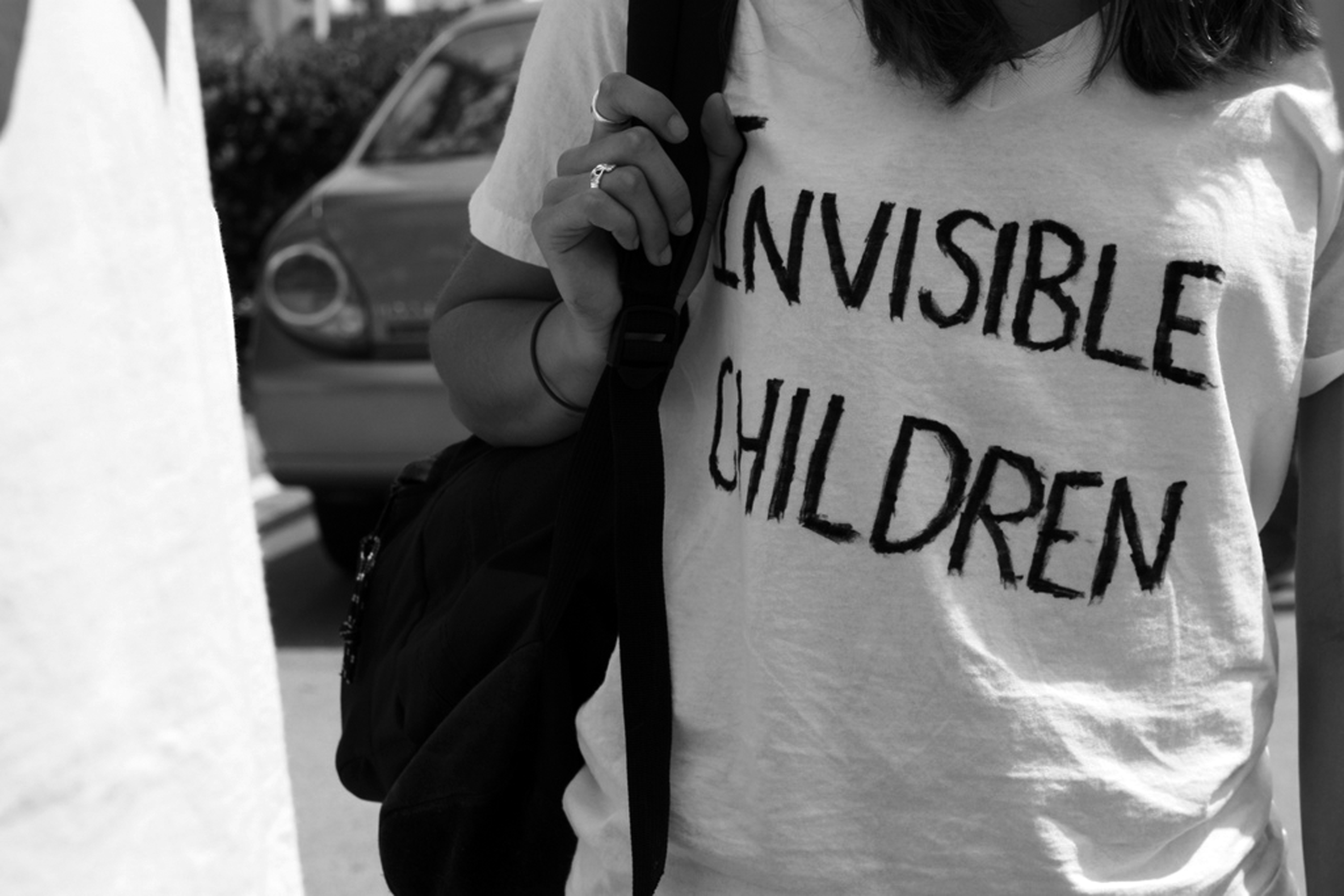
Last March, over 100 million people viewed Kony 2012, a 30-minute online video produced by the organization Invisible Children. The video quickly became the most popular Twitter trend, infiltrating major news outlets across the globe, and sparking widespread concern about the devastating Lord’s Resistance Army (LRA) war in central Africa. Through fundraising, event planning, and policy advocacy, Invisible Children invites young Americans to “end the longest running war in Africa.”
Since 2003, the group has mobilized tens of thousands of young people in North America and raised tens of millions of dollars. Many observers praise the fact that a politically apathetic generation of American youth is fi nally taking action on behalf of universal human rights. The organization’s success certainly illustrates the potential for mass mobilization through new social media.
Invisible Children mobilizes predominantly young, privileged, evangelical Christian, female Americans to participate in a unique form of “non-wave-making activism.” While driven by a genuine desire to address wrongs unfolding on the other side of the globe, the racial and class privilege of Invisible Children’s constituents defines their particular brand of activism.
“When you see something so wrong, you just gotta do something,” explained Terry, a bright-eyed, white teenager who raised $15,000 for Invisible Children with her high school club. Libbie, another white activist, raised $50,000 as a high-school student over 16 months by doing “every fundraiser you could ever imagine”— including bake sales, car washes, fashion shows, improv shows, basketball games, art sales, concerts, coffee houses, garage sales, children’s carnivals, and overnight camp-outs. “It honestly consumed every day for us, and it was wonderful being able to see the tangible difference we were making,” she said.
“When you see something so wrong, you just gotta do something,” explained Terry, a bright-eyed, white teenager who raised $15,000 for Invisible Children.
Having worked for the past 12 years on issues related to health, education, conflict, and human rights in Uganda, I became curious about Invisible Children when they first emerged in 2005. Although its media seemed to misrepresent what I had come to know about Uganda, I identified with many of the young participants who were not all that different from myself. As an undergraduate situated in privilege, I too had developed global awareness and a desire to “serve others in need.”
To find out more about Invisible Children and what it represents, I carried out an ethnographic study in Uganda and the United States, and interviewed 60 Invisible Children student activists and employees, along with critics, scholars, and political and social activists from northern Uganda. What I found is that the organization has been very successful in mobilizing affluent, Christian, and largely female activists to “save Africa” from itself. But its neocolonial narrative reduces politics to a contest between “good guys” and “bad guys,” and implores westerners to intervene in a nation they know little about.
Advantaged Activists
“This story begins in the suburbs of California with three normal dudes.” The Rescue, an Invisible Children film released in January 2009, is narrated by Jason Russell, one of the organization’s founders. “We grew up surfing, playing sports, and goofing around. But the one thing that we had in common is that we all love to make movies.” The “three normal dudes” who founded Invisible Children easily connect with the organization’s constituency, who are drawn from a similar white and upper-middle-class demographic group. As Russell describes them, “the majority” of American activists are “young, I would say 14-15 to 23-24 year-old girls who are white, who have been raised in suburbia, who are Christian, who have enough disposable income to donate or buy stuff.” That, he says, is the organization’s “core.”
Russell explains that Invisible Children imagines its target audience member as a 14-year-old high school freshman girl who “would have never thought of being a part of something like this.” This may seem like an unusual demographic from which to draw activists. But since Invisible Children promotes a unique form of “non-wave-making activism” that centers upon fundraising, event planning, and supporting mainstream policies toward Africa, it is a good choice.
Invisible Children activists tend to live in communities with considerable financial resources, and in affluent families. Most are aware of their privileges. Jenny, a recent college graduate, said: “I just don’t feel comfortable going through my life, living my life as if those things aren’t happening. I just don’t feel like I have a right to live a normal life if other people aren’t.”
Like other activists, Jenny became aware of the LRA war through Invisible Children’s extensive media campaign—more than a dozen films, as well as hundreds of trailers, short videos, and podcasts. These emotionally compelling reality-TV genre productions depict haunting stories of African children affected by violence, interlaced with catchy hip-hop music and the travel adventures of three young, American men. After watching the films, many young Americans—particularly females who often profess fascination with the Invisible Children male protagonists, feel a deep-seated compassion for the African children and an urgency to respond and do something. In the face of the international community’s failure to respond to the Rwandan genocide, Invisible Children’s activists believe that inactivity equals apathy. Uneasy about their social and economic advantages and eager to respond, many want to do something—really, anything—after watching Invisible Children videos.
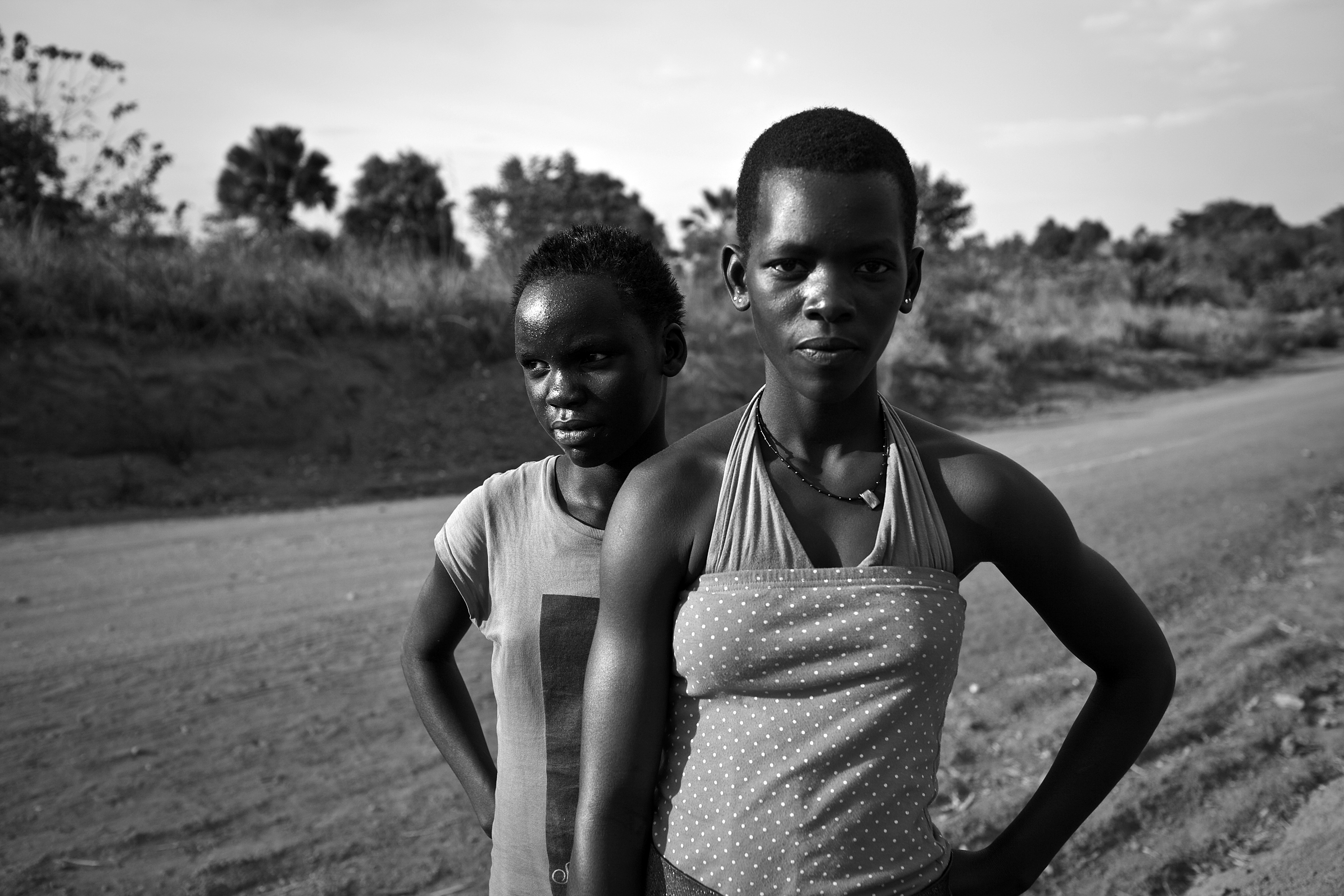
photos by glenna gordon > Gordon had spent two years as a stringer for Associated Press in Northern Uganda when Invisible Children’s Kony 2012 video was released. The Uganda she sees is in post-war recovery, where disease and land conflicts are the biggest problems— not Kony. She finds that Ugandans themselves are conflicted about Kony 2012: they may need aid for recovery, but “they don’t want the American military to solve their problems and they certainly don’t want American college kids to solve their problems,” she says.
Young women stand on the side of the road just outside of Gulu town, once the epicenter of violence in Northern Uganda, now a place on the mend.
Fundraising is an essential feature of non-wave-making activism for this privileged demographic. The students are “either semi-affluent or really pretty affluent,” according to one activist, and are able to use their networks to access economic resources. At one meeting of high school students involved with Invisible Children, Dana, a cheerful white girl announced: “My dad has connections at the [Boston] Globe!” Later in the meeting, she told members how her father also knew people at Gillette and Fenway, two other businesses in the community. Perhaps, they could help with the citywide event they were organizing, she suggested. At the same meeting, Dana and her two white female friends announced that they had recently organized a fashion show at their 300-student high school, entitled “Wear Awareness.” With 450 people in attendance, they raised over $6,000.
In the organization’s Schools for Schools program, a student from Pace Academy in Atlanta, Georgia raised $16,000 in 2009. A high school in Newport Beach, California, where the median family income is $145,000, raised $44,000. In January 2010, through Facebook, Invisible Children raised $1 million in a single week. With their well-heeled networks, Invisible Children activists have the capacity to raise lots of money.
Saving Children
Taking action by providing assistance to vulnerable children in Africa also synergizes with another dimension of their biographies: their evangelical Christian faith. The group flourishes in many Christian associations. Though not officially faith-based, its goal to make visible that which is unseen, and rescue defenseless victims, resonates with Protestant believers who see their faith in Jesus Christ as a vehicle for personal and worldly salvation from evil.
The organization has been very successful in mobilizing affluent, Christian, and largely female activists to “save Africa” from itself.
“Bobby, Laren and I [the co-founders of Invisible Children] all have a faith and we share it whenever we can or whenever we’re asked,” said Jason Russell when I asked him about his faith, and its role in Invisible Children. But he cautioned that the organization’s founders “were disillusioned by faith, religion and…business being intertwined.” They did not want that to happen, he said. “Let’s make it just like personal and have the faith element be a bridge when, you know, we feel God is moving people’s lives.”
But they did not want their faith to be explicit at all times. “It becomes somehow cheapened in a way,” said Russell. “And so we do speak at churches or we do get to share our faith. And there are times, you know, I just say, I am going to pray, you know, even at Invisible Children and, you know, but it’s not a requirement.”
The group’s Christian values affirm a moral perspective that speaks of caring for the underdog. It allows privileged youth to mark their individuality, to feel special, and to belong to something bigger than themselves. Nicole, a 21-year-old undergraduate explained that after learning about poverty and justice as a freshman, Invisible Children provided “an attractive way to get involved, and…a sexy way to get involved.” This sexy undertone—which makes participants feel special and desired—helps them assuage guilt about their own privilege. They “feel special” when they focus on a social problem such as the LRA war, which seems both exotic and obscure to the vast majority of their peers.
“Omigosh, I can’t believe I didn’t know about this conflict that is happening for 30-something years,” said Lauren, a white college student. By filming their own events and inviting participants to make and post short videos online, Invisible Children offers occasions for participants to “see” themselves in action, and to feel exceptional.
The remoteness of the conflict facilitates an easy, noncontentious form of activism that does not threaten the students’ futures. By inspiring them to think beyond themselves, to set bold goals, and to be creative in their efforts to raise awareness and funds for children in eastern and central Africa, the organization offers opportunities for young Americans to feel that their contributions are truly unique and noteworthy. Ultimately, however, Invisible Children also promotes policies that are highly controversial; its state-centric orientation seeks to eliminate the LRA through U.S.-supported military intervention carried out by the Ugandan army.
Operating Within the System
Distinct from activism that seeks to make social change by engaging institutions through civil disobedience or public protests, Invisible Children promotes legal, institutional forms of engagement. Blake, a 28-year-old male staff member working in Uganda, emphasized the appeal of its distinctive form of activism. “When I grew up, like if you used the word ‘activist’ when I was in high school or college…I immediately thought [of]
someone who is going to a WTO protest, someone…learning anti-policing strategies, and like ways to like get around tear gas.” What’s interesting, he said, “is that this group is the total opposite.” They are not only nonviolent but they are, he says, “non-wave-making, they don’t want to make ripples.” As he put it, “they want to operate within the system to get as much done as possible instead of flipping the system on its head.”
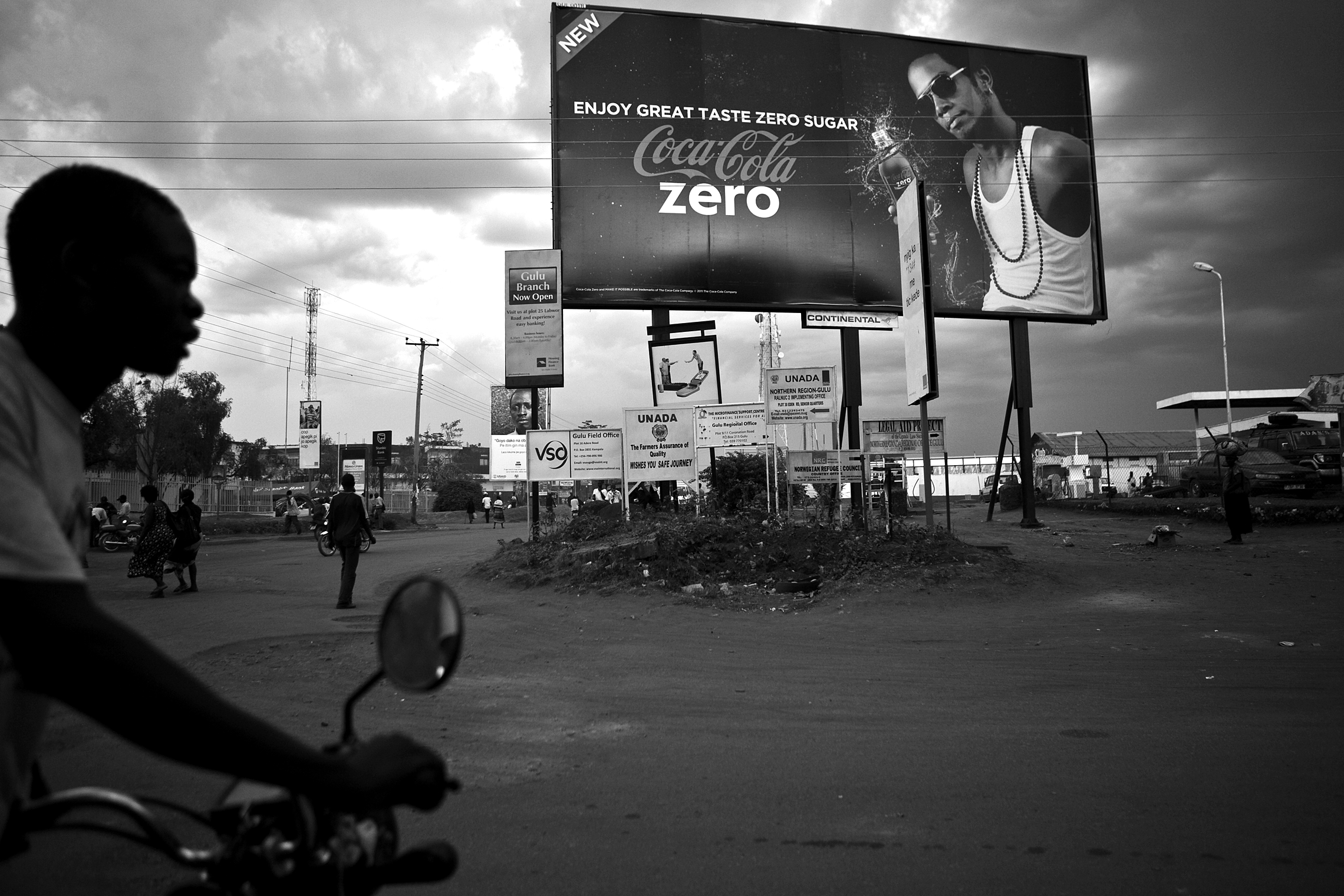
NGO sign posts and commercial billboards compete for space at an intersection in Gulu town, a testament to development and economic activity in post-war Northern Uganda.
A bus breaks down on the side of the road between Kitgum and Gulu. During the conflict, few if any commercial vehicles would dare to make this trek. Now people move freely, if slowly.
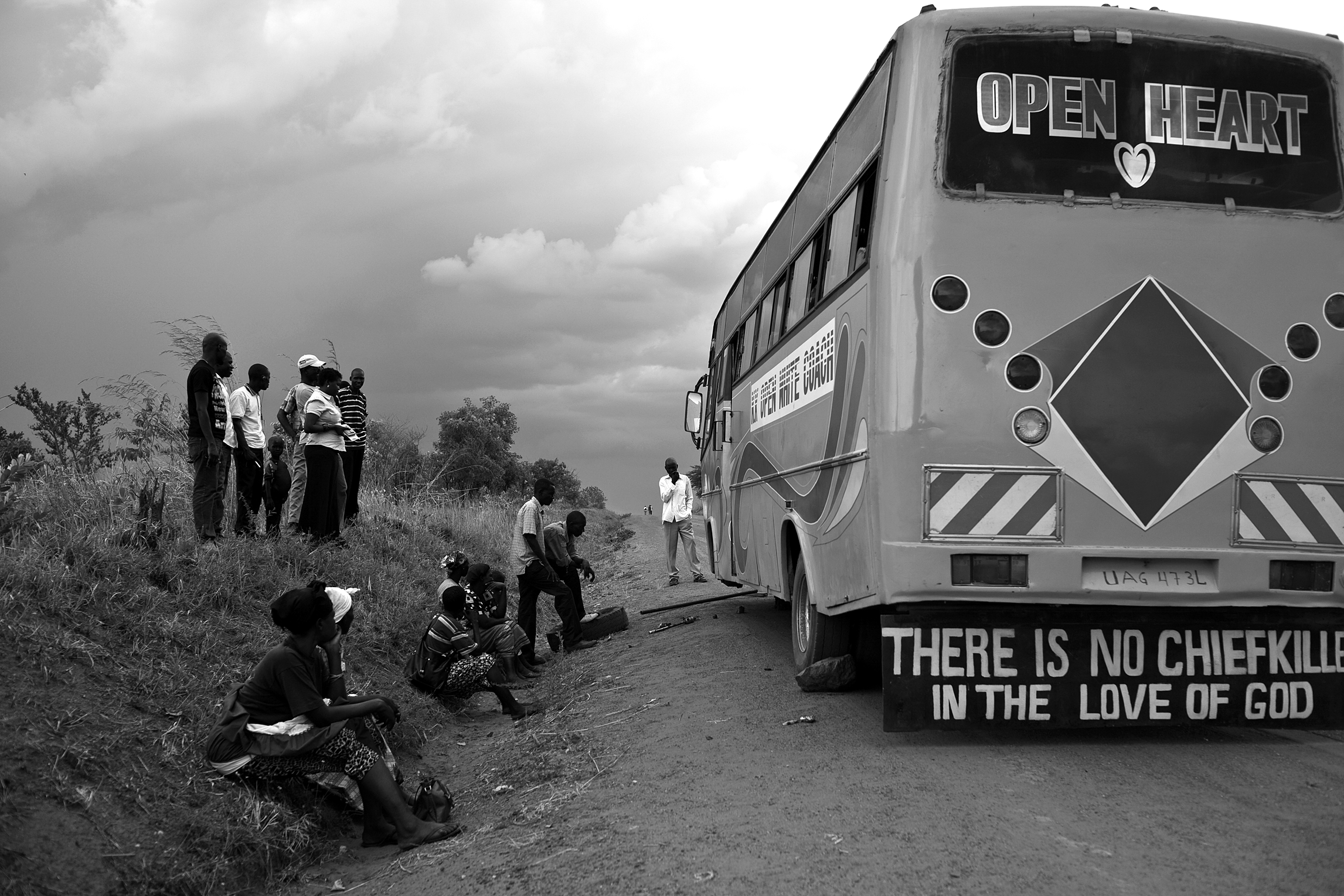
The remoteness of the conflict facilitates an easy, non-contentious form of activism that does not threaten the students’ futures.
After days of gathering and singing outside a television studio in May 2009, activists convinced Oprah to grant them several minutes of unscheduled airtime to proclaim their cause on her live show, which garnered an estimated audience of 15 million. One month later, Invisible Children hosted the largest ever lobby day on an African issue in U.S. history. This lobbying effort, along with sustained grassroots mobilization and political engagement at the local level, led to the passage, in less than one year, of the Lord’s Resistance Army Disarmament and Northern Uganda Recovery Act, a bipartisan piece of legislation that mandated that the Obama administration provide funds for northern Uganda recovery and transitional justice initiatives, and eventually send 100 military advisors to the region in October 2011.
Representative Susan Davis, a Democrat from California, proclaimed that Invisible Children “galvanized an entire generation of young people here to care about children halfway around the world.” Describing their efforts, she said, “the volunteers have traveled to our cities, our schools, our businesses, probably even to many of our offices here in Washington to show their films and speak out against Joseph Kony and his army’s brutality.”
Through its non-contentious fundraising and by promoting policies that embolden American and Ugandan military intervention in the region, Invisible Children reinforces the dominant understanding of Africa as a place that is both deeply alluring and in grave need of assistance. It is a frame that is also reinforced by celebrities such as Oprah and George Clooney, and popular Hollywood films like Blood Diamond. As the New York Times style section noted in 2006, “Africa—rife with disease, famine, poverty, and civil war—is suddenly ‘hot.’”
In such efforts to provide relief to Africa, a moral framework substitutes for a political one. “There is no discussion of history or politics: no context, no analysis of causes of political violence or possible consequences of a military intervention,” writes Ugandan anthropologist Mahmood Mamdani. “What you see and what you get is a full-blown pornography of violence, an assault of images without context,” Describing Western-led efforts to address the conflict in Darfur, Mamdani says that such frameworks are designed to “drive a wedge between your political and moral senses, to numb the former and appeal to the latter—to the need to bear witness.”
After the 1994 Rwandan genocide, a moral framework for American engagement came to be supported by parties across the political spectrum, who call for humanitarian intervention well beyond Darfur—to the entire African continent. But as diplomat Princeton Lyman noted in 2006: “The United States does not approach any other part of the world with an initially humanitarian focus.” South Asia’s numbers of poor rival those in sub-Saharan Africa. In Latin America, persistent poverty remains a major fact of life. And China had until recently the largest number of people in absolute poverty. The moral, humanitarian lens affixed on Africa is exceptional, promising to rescue distressed populations, rather than enact sustainable social change.
Mobilizing young people to become active on these issues is admirable. As someone from a similar demographic who was also inspired to take action on global social problems in my college years, I appreciate the appeal of Invisible Children. But, by identifying Africa and its people as exotic victims, Invisible Children offers young Americans a shallow and ill-informed understanding of Africa, and a distorted picture of their own role in social change. It overlooks the efforts of indigenous activism, and endorses military intervention.
For decades, dedicated individuals and groups from the region have nonviolently struggled for peace and human rights. They have organized public demonstrations, circulated open letters to officials, led grassroots peace negotiations, mobilized community-based human rights volunteers, conducted popular education campaigns, and participated in speaking tours abroad. For young Americans seeking to address complex circumstances, such as the LRA war, building real partnerships with African activists is a more viable avenue for achieving sustainable social change.
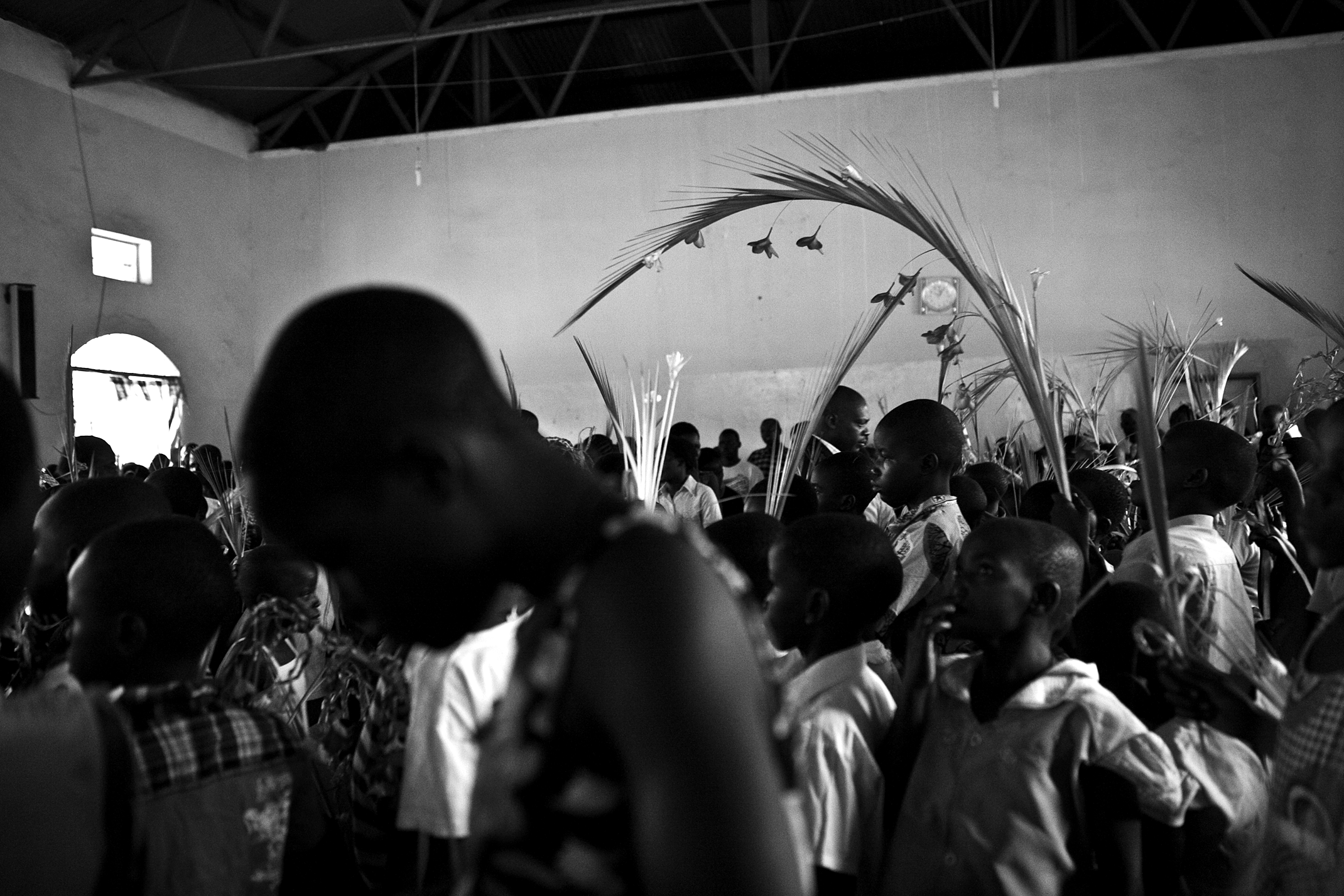
A church in Gulu is filled to the brim on Palm Sunday, April 1, 2012.
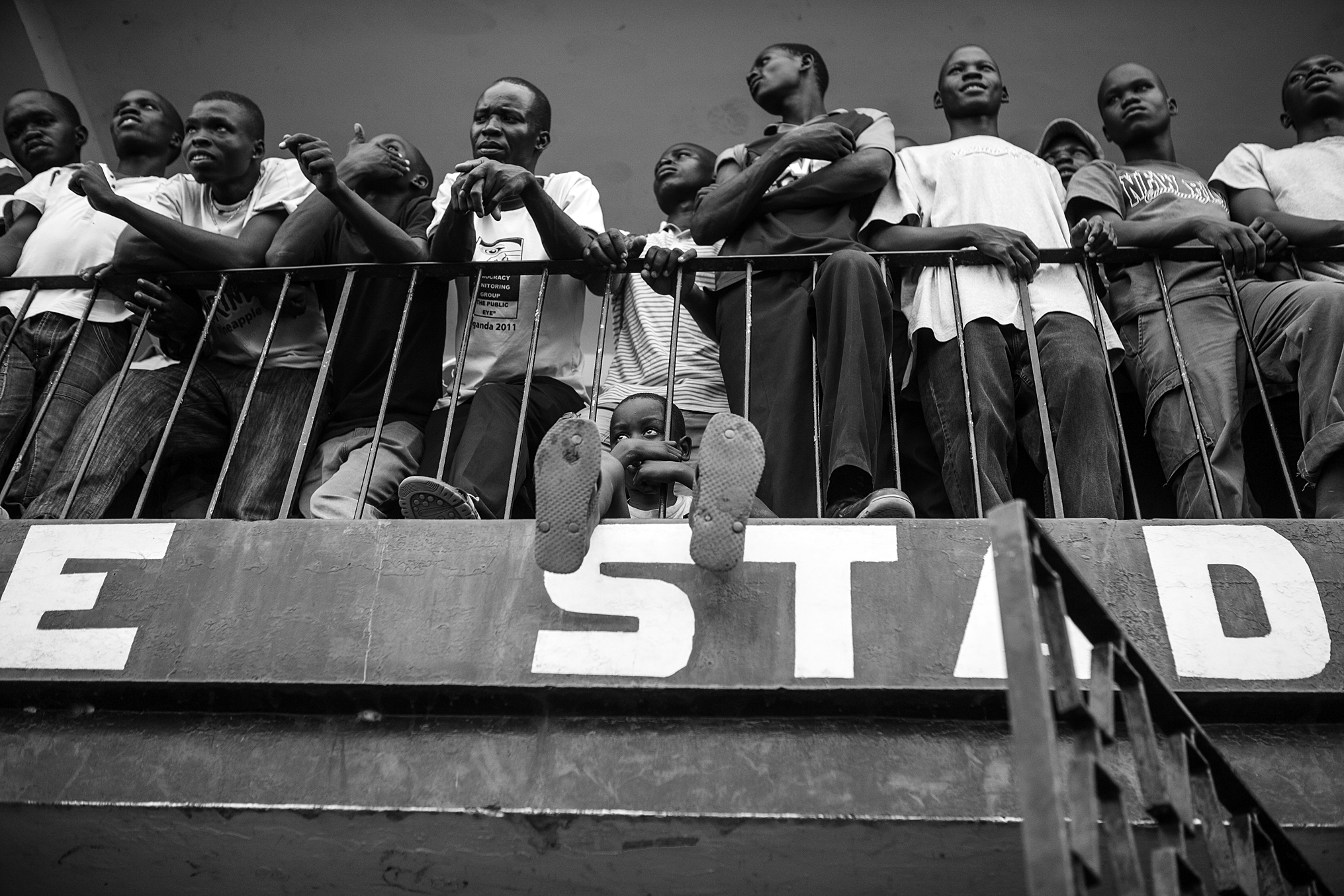
Crowds watch a soccer match at Pece Stadium in Gulu.