



Abstract
Using life stories and observing opera fans in Buenos Aires, Argentina, Claudio E. Benzecry shows how passion for a cultural object develops, gets refined and sustained over time and the consequences this has for personal identity. In addition, Benzecry argues that his observations at the opera house serves as a template to understand other forms of fandom, cultural consumption and passionate behavior more generally.

Franco calls himself an “opera thug.” He is 41 years old and lives alone in a large apartment next to a traditional church in Buenos Aires, Argentina. He’s tall and fit, easily approachable, and attends just about every opera performance in the city. There are many to choose from; opera exploded in Buenos Aires in the early 2000s, and a full secondary circuit boasts performances about every other night. The first time we met, in the standing-room area of the Colón, the nation’s main opera house, Franco asked whether I was planning to attend a seldom-performed opera by Vivaldi. He had just returned from another performance at an off-circuit opera house, and got lost when he was detoured by a street protest along the way. “It’s the risk you run if you want to attend everything!” he said.
Franco’s family was never interested in classical music, and well into his teens he liked pop music. But during his fourth year of high school, a music teacher at his small, rural school suggested to students that if they wanted to listen to something that would never fall out of fashion, they should consider classical music, such as Vivaldi’s Four Seasons. Franco told his mother, and she bought him some classical works. When Franco went away to study medicine, he saw that Mozart’s The Magic Flute was playing and on a whim decided to attend. Though he understood little about it, he remembered “Queen of the Night Aria.” The next day he bought a version sung by Maria Callas. He was at the time “an absolute virgin” and “completely ignorant,” as he put it. A month later, he saw his second opera Lucia and was hooked. He began attending multiple—and sometimes all—performances of each opera.
The first time he came to the Colón, for Wagner’s Tannhäuser, Franco had already been living in Buenos Aires for four years. When I asked him what took him so long to get there, he said that he was scared. He had believed that opera was for the elite and that, if he did not have enough money or social status, he was going to feel out of place. But those days are long gone; the Colón is now his second home. And though he has met many people through opera, he does not socialize with them outside. They are, he says, like the “imaginary friends” he had when he was a child. Franco’s family does not share his passion. “It’s all mine. I didn’t inherit anything from my parents,” he says. They didn’t have a stereo, and classical radio broadcasts did not reach all the way to their home. Plus, they never had much leisure time. His father was from a German farming family and his mother was a housewife. For a long time his family disapproved of his interest in opera because they considered it to be an inappropriate activity for a rugged, rural man.
Teatro Colón, Buenos Aires’ gilded opera house, is considered one of the world’s best acoustic halls.
Natacha Pisarenko/Associated Press
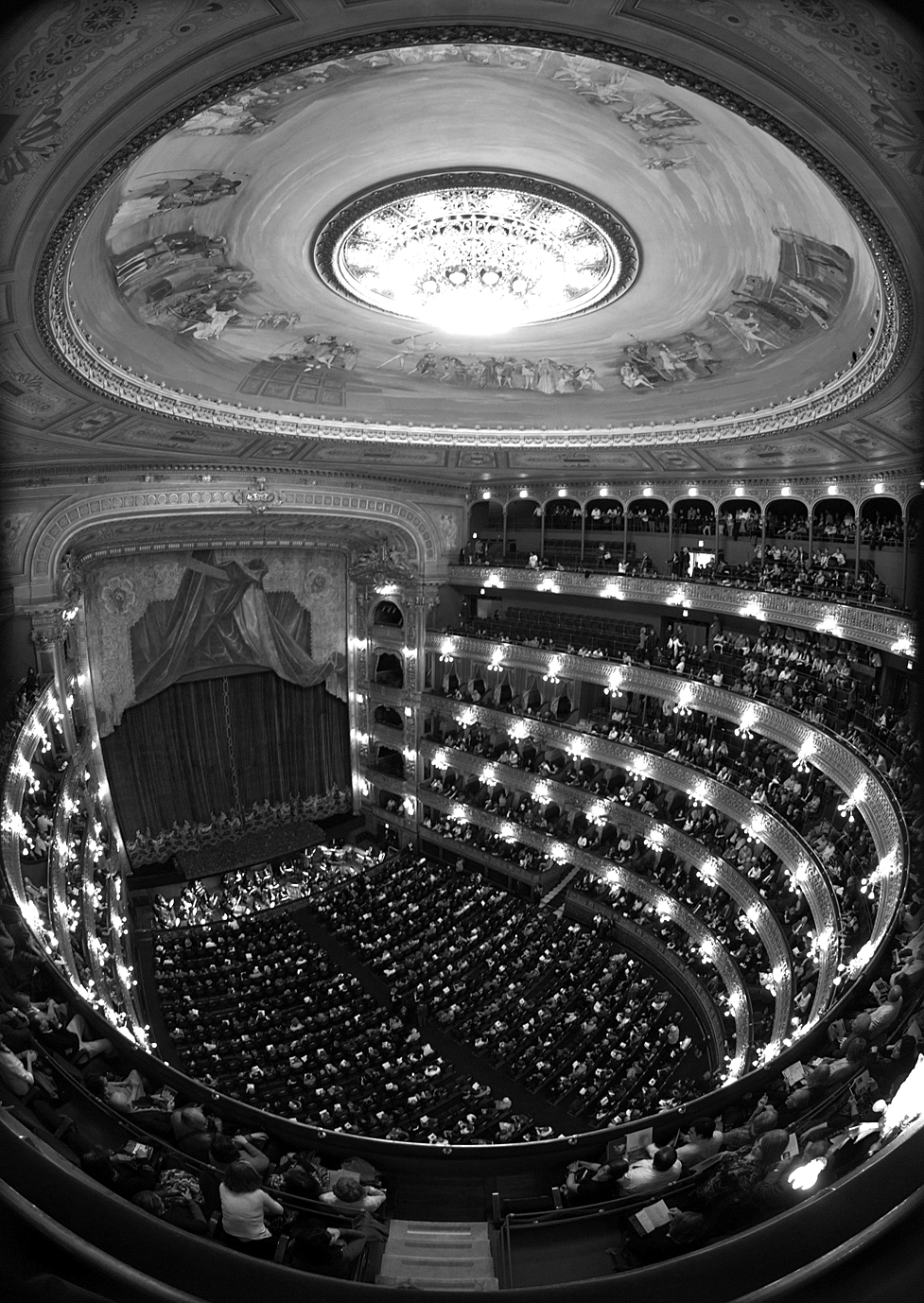
Opera fans gather for Teatro Colón’s debut after a four-year restoration process is complete.
Natacha Pisarenko/Associated Press
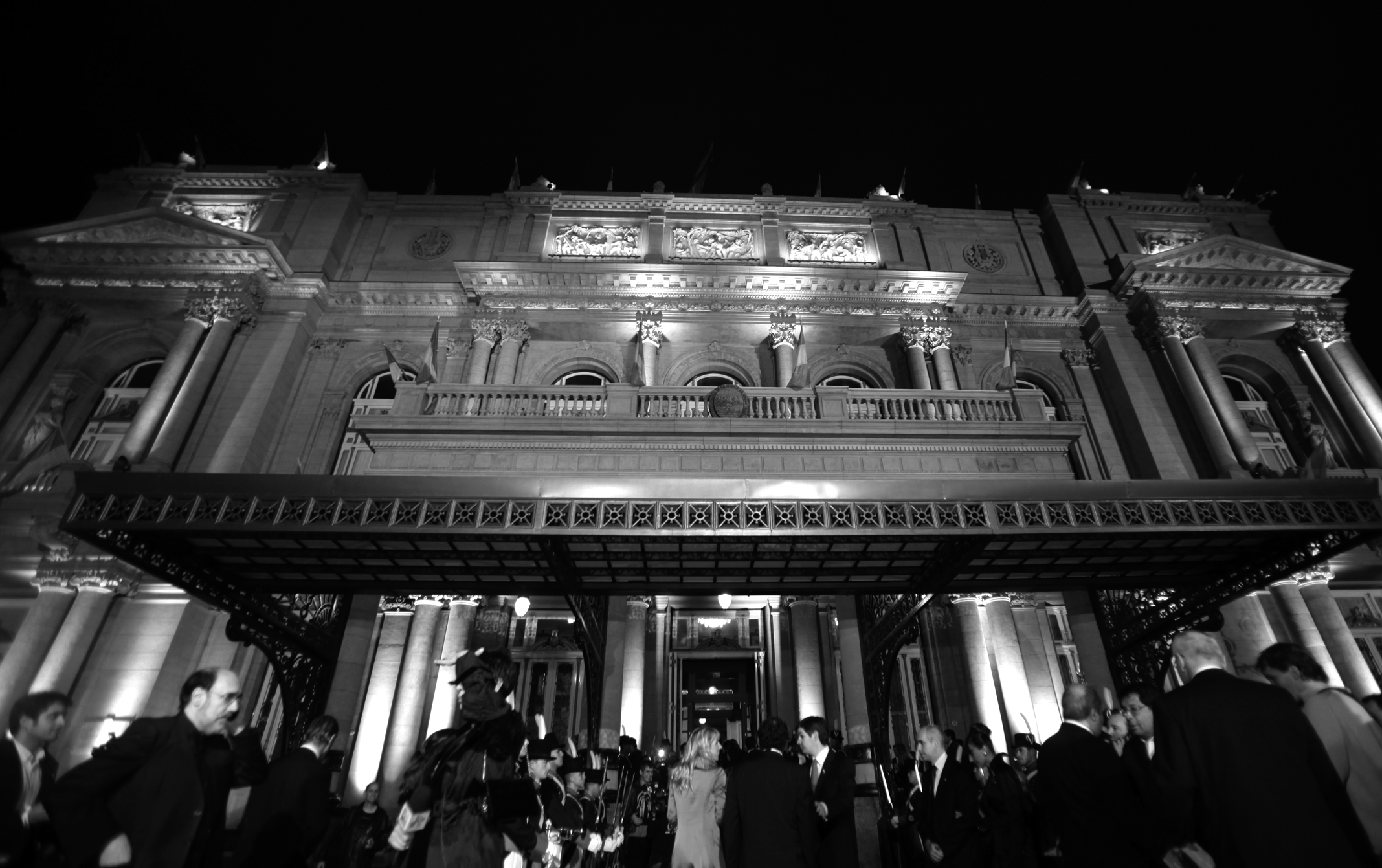
Franco describes himself as “a professional opera fan,” and spends about a quarter of his income on opera-related activities. He attends performance three times a week—five, if his schedule permits—regularly buys CDs, books, and DVDs, and constantly listens to opera on the radio. Although he has enough money to purchase subscription tickets, for him, opera is not about sitting quietly and properly; it is an activity that must be experienced standing. But key to being a “professional fan” is study. “After the show is over, I continue at home. I read, I listen to radio shows, pay attention to certain fragments of music in my records,” he says. He dedicates at least two hours of every day to opera, in addition to the performances themselves, listening for one hour in the morning and one hour in the afternoon. He listens while cooking or ironing his shirts, or before going to work. Pre-show preparation takes place on the weekends, when he has more time, is a bit more relaxed, and can focus intently. Like most opera fans, he tries to avoid reading reviews before attending an opera for the first time, so as not to cloud his critical judgment. There was a time when Franco used to do other things, like go to the movies. But that is no longer the case.
There was a time when Franco used to do other things, like go to the movies. But that is no longer the case.
What makes someone like Franco an opera fan? Is it something that starts in one’s home and upbringing, or is it something people pick up along the way? While class background and socialization are certainly part of the equation, the story of Franco—someone from a rural, working class family who had no predisposition toward opera—suggests that such explanations can only be partial ones. While one’s class position may influence the probability of being exposed to opera in the family, or at school, engaging and investing in opera works like a career in which individuals learn, day after day, to simultaneously enjoy opera and become fans. The affective connection typically happens first—and often suddenly.
To love someone or something is to reorganize your life, navigate constraints and trials, rearrange activities, and even exclude others from entering or becoming close. These are often the terms fans used to speak of opera. In interviews, they talk of falling in love at first sight, working to maintain that love, being addicted to certain moments, and tragically falling out of love. Key to understanding what makes someone a fan, what pushes a person past an affection for a certain something into a real, genuine, overpowering love for it, requires us to look at how people come into fandom.
If loving opera happens suddenly for passionate fans, sustaining the love over time requires making an emotional commitment, dedicating oneself to learning, and informally socializing with other fans.
Love at First Sight
José Luis is 70 years old and works in the press department of the Catholic University. His Spanish parents were absolutely oblivious to opera. When he was eight years old, he discovered a Viennese waltz show that broadcasted on state radio. In 1950, one of his favorite conductors, Arthur Roshinski, came to Buenos Aires to conduct Rimsky-Korsakov’s The Golden Cockerel. He thought that Roshinski would be conducting the symphonic suite drawn from the opera, which lasts 20 minutes. To his surprise, it was the whole opera—which lasted a bit over three hours. After attending with his mother, he was entranced by what he calls “the spectacle” of opera, and the next season he started going on his own to every performance. He still attends.
Fans often speak of their sense of surprise the first time they visited an opera house. They say they were ill-prepared to make sense of opera when they first encountered it, describing a kind of dissonance between what they were used to hearing, and what they experienced during that initial live performance. They describe the pleasing rush they felt, which they felt compelled to make sense of, and their passage from a regular, everyday state to an intensely frantic one in which they lost control and became a passive object moved by an outside force. “It drove me crazy,” “It froze me,” “It moved me,” “It killed me,” “It filled me up,” “It made me stupid” is what they say. Their initial, passionate sense of surprise pushed fans to engage in activities designed to enable them both enjoy and control that initial sense of pleasure, and they made a career out of trying to re-experience that first rush.
Some fans were surprised by how powerful singers’ voices were and by what they were able to do with their bodies. Those who had listened to opera in their homes were moved by live visual and sensorial experience. Others went crazy for the grandeur of the lush Beaux-Arts interiors of the halls. Later on, when they slowly become part of fan culture, they developed an understanding of “being an opera fan.” Fan careers channel one’s love for opera and solidify it in one’s life trajectory. It is useful to think of this learning as an investment. In addition to bringing deeper aesthetic pleasures, it brings refinements to personal identity, and a distinctive sense of who they are as individuals.
Julio is a semi-retired musical coach who is in his 60s. His parents, who lived in a working class industrial area in the southern part of the city, took him to the opera for the first time when he was only eight, and he saw several children’s operas, like Hansel and Gretel. When he was 17, he went to his first adult—or as he calls it “real”—opera, and then decided to attend the opera on a regular basis. It was a 1962 production of Barbiere with Victoria de los Ángeles that sparked his interest, and both the opera and the singer became his personal favorites. By 1977, he was following her all to the way to Montevideo, the capital of Uruguay. Julio can still vividly describe the timbre of her voice and the pastel pink and sepia-red dress she wore that first time.
By interacting with other fans, individuals learn to sustain the excitement of the initial encounter. They’re “newbies” who want to learn more about what they’ve enjoyed, and how to enjoy it more. For them, passion becomes a career. The production of fandom tends to occur outside of the family, through informal channels such as bus trips, intermissions, and lines awaiting entry at the opera house door. Novices depend upon companions to experience opera with, with whom they learn to respond like seasoned opera lovers. They hang out with opera lovers, experience and observe events, and adopt words that more experienced opera fans use to describe and qualify particular shows and singers.
While waiting in line for Wagner’s Die Walkuüre one evening, someone came to the secondary door of the Colón Opera House to distribute leaflets advertising a performance of Un Ballo in Maschera. It prompted the woman next to me to comment on how bad the first night of that performance was, which generated a conversation about who had already seen it, which in turn devolved into a discussion of the soprano in Un Ballo, whom many fans recognize, as they call her by her first name. An older gentleman mentioned the previous time he had heard the soprano. A younger guy reminisced about seeing her as the lead in Verdi’s Simone Boccanegra and “being amazed.” The woman and the older men disagreed about the quality of her performance, which led to a conversation about whether or not it was smart to stage an opera like Un Ballo, which had been performed so many times before, and by so many great singers. When the line finally moved, the small group became quiet as they prepared to bound up the hundreds of stairs that separated them from a complete and unobstructed view of the stage.
“If loving opera happens suddenly for passionate fans, sustaining the love over time requires emotional commitment.”
As new fans listen to opera live, they also take into account how others describe different shows and competing performances. They improve as fans as they attend more performances and as others react to their comments and gestures about what is being watched and listened to. Becoming a fan means getting to know opera and understanding what it means to be an opera lover. It entails making comparisons, associating and distinguishing one’s private responses from that of others. This preparation increases the enjoyment, until the names of arias and references to music fragments spill out when an opera fan opens his or her mouth.
Most of us have a difficult time making sense of fans’ seemingly irrational relationships to opera, monster truck rallies, or Twilight movies.
Coupling With Opera
Older fans play a central role in getting novices excited about participating passionately in the world of opera. They discuss with them librettos and their staging, and share tales of their brushes with stars and their “treasure” hunts for new and talented singers and unheard before operas. Some spoke of traveling eight hours in a dilapidated bus to Cordoba, some 450 miles away, in order to explore undiscovered singers and musical pieces. Others waited for the artists as they exited the opera house or their hotels. Some become so well acquainted with them that they receive phone calls when the artists are in town, or they drive to pick them up to bring them to the hall and are rewarded by getting pictures and recordings signed with special dedications, which they proudly display in their houses.
While fandom requires one to know recordings, as well as dates, casts, and personal histories of the performers, how that knowledge is acquired is important. This is the element that has newbies in awe of older audience members. While a person may know a lot about opera, she or he must experience it live. Showing one’s sacrifice, enthusiasm and knowledge validates the claims of the most committed opera fans, which they assert through comparison with others. People tend to respect the elders and the experience they’ve acquired. Tito, an Italian-Argentinean in his 50s, deferred to Archimedes, an older man who witnessed Toscanini conduct in Buenos Aires in the early 40s, as someone “who actually has been going forever and really knows about it.” I saw Tito at the opera house every time I attended. When I asked him how long he has been going, he said, “just 25 years.”
Following their passions
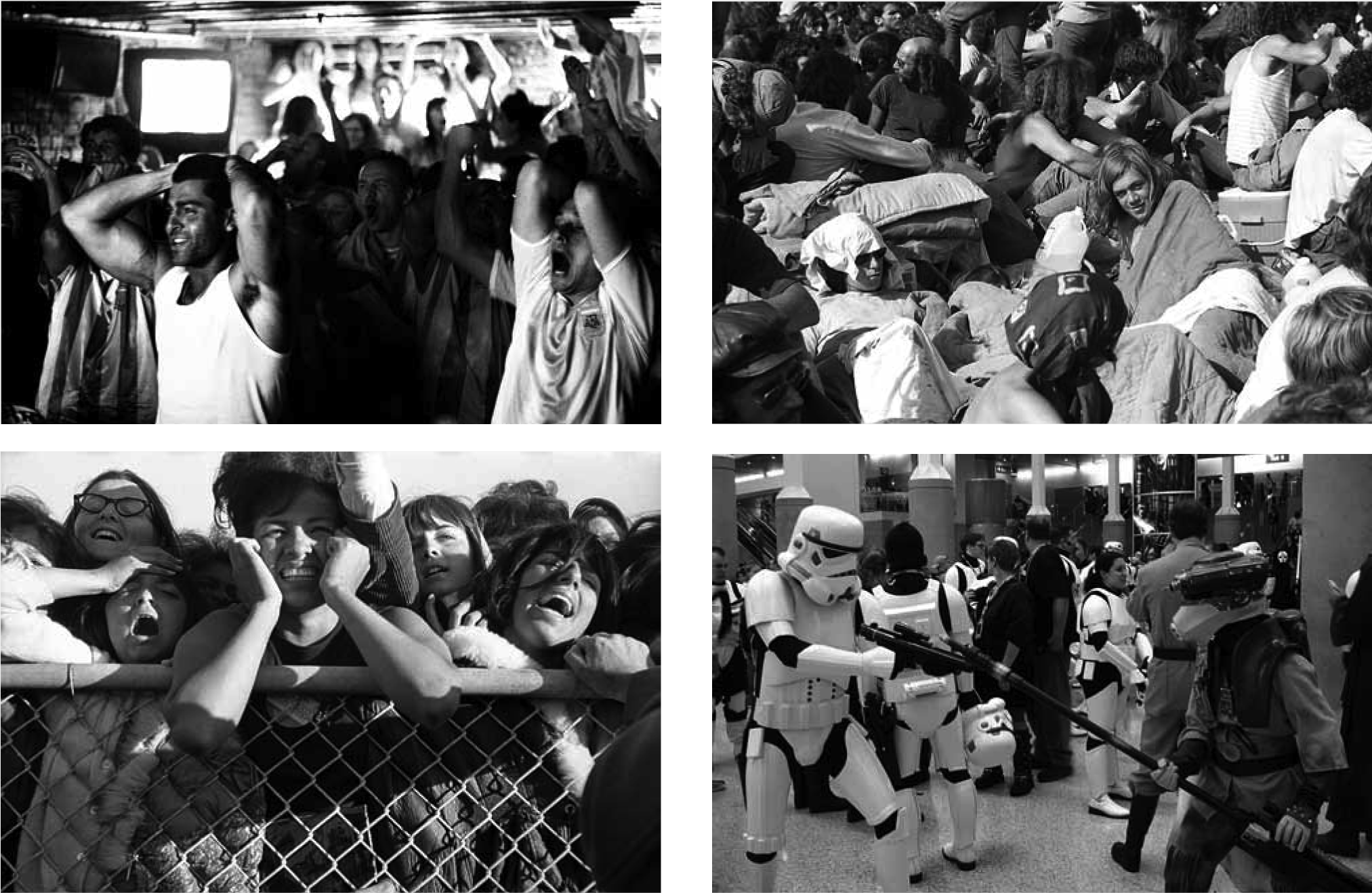
Clockwise from top left: Argentina’s soccer—ahem, fútbol—fans; Deadheads and other music devotees; Star Wars enthusiasts; teenage Beatlemaniacs.
Moazzam Ali Brohi (moazzambrohi.com/ui-designer/portfolio)
Grant Gouldon (flickr.com/photos/grantdabassman/sets)
© Bettmann/Corbis /AP Images
Doug Kline
From older fans, apprentices learn how to move, when to clap, when to stand, and how to act when their bodies are overwhelmed with emotion. Novices want to learn more about what they are listening to; older fans want to cultivate audiences for their war stories. They do so in isolated spaces, separated from other kinds of audience members. Much like baseball enthusiasts remembering the statistics of a forgotten player, they discuss whether an opera had ever been performed in Buenos Aires, whether it is the best version they’ve ever heard, who would be the best singer for a particular role, and how a singer might be judged in comparison to a big name from the past.
The compulsion to talk about, listen to, and learn about opera results in an intense relationship with the performance. While this entails numerous interactions, if asked, passionate opera fans would say they do not participate in the opera world because of the social aspects of the activity; on the contrary, they see their relationship to it as highly individualized. Together, they fall in love alone. They learn from and with others in order to enjoy the music in an intimate communion, surrounded by strangers in a full opera house. As Franco describes them, those around him on the top floors are his “his invisible friends.”
Once they become a passionate fan, there’s little going back. The pull of live music is too strong, and the love becomes an integral part of who they are. Though others might question their excessive love, fans care little about these opinions. Organizing one’s life around operatic activities (going to the opera, music appreciation conferences, or small recitals) means that one cannot share this experience with very many other people. Therefore, many passionate fans choose to hide this part of their lives from others, and they develop long term, albeit thin, relationships with those who can appreciate their degree of devotion. Other fans are really the only group of people they feel at home with, who truly understand them, who know they are “for real.” They depend upon other passionate fans to share their experiences with, to discuss the music with, and to enact their love.
For these fans, cultural objects orient life and give it meaning. Most of us have a difficult time making sense of their seemingly irrational, or at least overly emotional, relationships to opera, monster truck rallies or Twilight movies. This behavior is difficult to categorize and understand. We may see the objects of their fandom as “fluff” that is undeserving of such attention. Yet attachments to cultural products help us define ourselves, shape how we present ourselves to others, and imagine who we wish to be.
The types of people I’ve described are not simply found in opera houses. They are also found among fans of Manchester United football, who followed their team around Europe during the 1980s, sacrificing the rhythm of their daily lives, and wreaking havoc along the way. They are found among carnival goers in Brazil, who exploded with anger when their venue was moved into a strip exclusively dedicated to it, altering their love for the celebration, and among “deadheads,” who followed the Grateful Dead on tour, went on pilgrimages to commemorate the death of band leader Jerry Garcia, and continue their dedication to innumerable Grateful Dead cover bands. In 2004, some nostalgic Red Sox baseball fans lamented that because their team had finally won the World Series they had become like fans of any other team.
Looking seriously at what people do with culture in a passionate way helps us better understand who participates in certain types of cultural events, but also how and why they do so. When I met him, José Luis was skeptical about what a sociologist could say about why people attend opera. “Why is it that you sociologists always ask if I go to the opera to be seen, to meet people, to see my friends, to achieve a better professional status?” he asked. “You always fail to ask me if I go because I like it or, better, because I love it?”
Attachments to cultural products help us define ourselves and imagine who we wish to be.
What José Luis did not realize was that loving opera, or any cultural object, is a socially produced experience in which one learns, with (and against) others, how to be a unique individual. Through this process, individuals develop a passionate commitment to the object of their love and to a way of being in the world. It’s what being fanatical is all about.