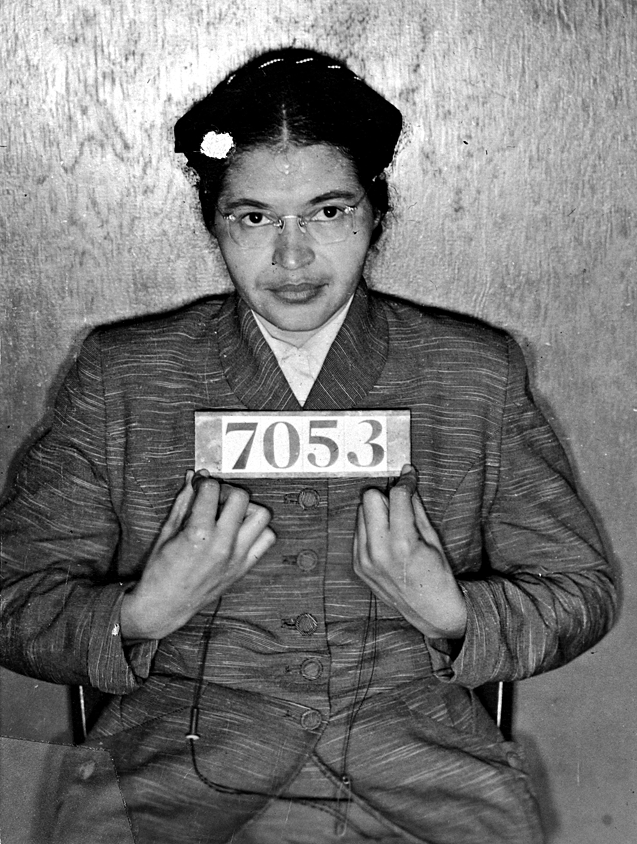
Abstract
Accompanying Michael Schudson’s feature on Rosa Parks, Aldon Morris provides commentary to enhance our understanding of Rosa Parks and her activism.
On October 14, 1981, I interviewed Rosa Parks in Detroit, Michigan. I began by asking, “What went through your mind when you refused to give up your seat to a white man?” Mrs. Parks responded, “My resistance to being mistreated on the buses and anywhere else was just a regular thing with me and not just that day.”
In the interview, Parks emphasized her longstanding activism, including her refusal to relinquish her seat on the same segregated Montgomery bus in the 1940s. She also emphasized her activist networks and involvement with protest organizations, especially her leadership roles in the local and statewide NAACP. The evidence is clear that by the time of her arrest, Parks was a seasoned activist both temperamentally and organizationally. It is for these reasons that Montgomery’s black community organized in support of her protest thus sparking the modern Civil Rights Movement.
Yet, like many great activists, Parks did not know instinctively how to engage in effective protest. She sought out opportunities to learn from seasoned activists like those at the Highlander Folk School she visited just months prior to her arrest. At Highlander she met the influential civil rights leader Septima Clark who in an interview with me stated, “Rosa Parks was afraid for white people to know that she was as militant as she was. She didn’t want to speak before the whites that she met up there, because she was afraid they would take it back to the whites in Montgomery. After she talked it out in that workshop that morning and she went back home, then she decided that, “I’m not going to move out of that seat.”
Gene Herrick/Associated Press
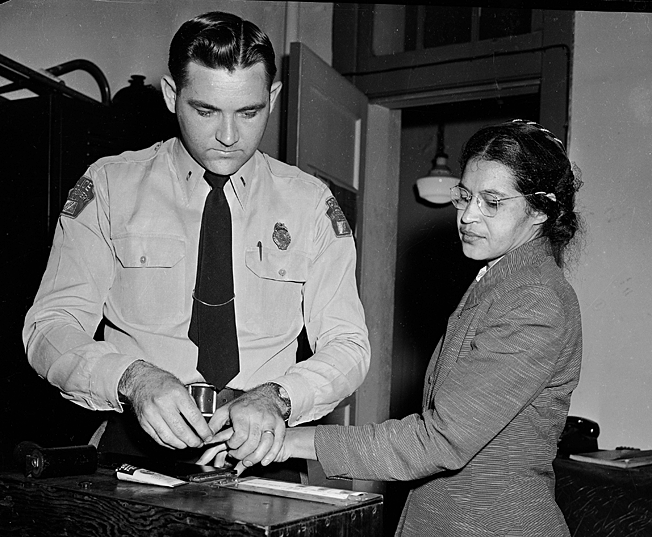
The Rosa Parks I interviewed was eager to discuss her activist career and how her historic arrest was anchored in a pattern of resistance. Narratives of “spontaneity” and claims suggesting she was befuddled as to why her act was so consequential are incorrect. Worse, they eclipse Parks’s intelligence, civic engagement, and strategic thinking and, on doing so deny her agency and disconnect from her personhood. The common myth that Parks was simply a tired old lady full of dignity who spontaneously rose up in defiance one day may be soothing and tantalizing to the guardians of the status quo, but this story does not square with the historical record. To explain Parks’s defiance one must examine power dynamics, social networks, strategic choices, injustice frames and how decisions are made to engage in social disruption. Mrs. Parks was clearly interested in setting the record straight when she spoke with me that gray day in Detroit. The narrative she articulated in that interview demonstrates the significance of both social processes and strategic agency in her historical actions.
Montgomery County Sheriff’s Office/Associated Press