



Abstract
The neurodiversity movement emerged as an extension of the disability rights movement to include the those individuals with neurological differences. Micki McGee posits that neurodiversity is also a response to the neoliberalism of the past three decades that has (1) shifted responsibility for individuals with neurological and cognitive challenges back to the family, and (2) fostered a crippling speed-up in our workplaces while simultaneously requiring new levels of sociability and flexibility that render more people debilitated or disabled. The article concludes that demands for the rights of neurologically diverse populations may challenge the very framework of liberal personhood.
The term “neurodiversity” is less an example of academic jargon than a political naming. It suggests that the discourse of individual rights, and the celebration of diversity that accrues to the categories of race, gender, ethnicity, and sexual orientation, ought to apply to individuals whose neurological predispositions are not typical.
Advocates for neurodiversity extend discussions from the disabilities rights movement into the realm of cognitive, affective, and perceptual difference. Credit for originating the term goes to Australian autism and disabilities activist Judy Singer, whose 1998 honors thesis argued that neurological differences constituted a new category of political engagement by marginalized groups which would, and should, take its place alongside other familiar categories for political action.
In a world of ever-expanding demands for flexible productivity and sociability, what were formerly personality characteristics become handicaps.
The most vocal advocates for neurodiversity have been persons whom the medical, psychiatric, and educational domains would categorize as autistic or “on the autism spectrum.” But the movement also includes those with neurological differences as varied as ADHD, Alzheimer’s disease, bipolar disorder, dyslexia, dyspraxia, depression, epilepsy, Tourette’s Syndrome, and any number of other psychiatric and neurological classifications.
Like biodiversity, which is seen as critical to the health of ecosystems, advocates of neurodiversity assert that neurological variation is not only natural, but is central to the success of the human species. Although there are traces of the discourse of the anti-psychiatric movement of the 1960s (most prominently in the work of Thomas Szasz and R.D. Laing), the ideals of neurodiversity owe more to the discourse of civil rights, the rise of the disability rights movement, and the broader embrace of multiculturalism.
The emergence of the idea of neurodiversity coincides not only with the mobilization of the disability rights movement, but also with the ascendance of neoliberalism during the last three decades, which has elevated the logics of markets and the rights of individuals to unprecedented heights. Sociologist Gil Eyal and his collaborators, in their 2010 book The Autism Matrix, argue persuasively that the development of neurodiversity as a concept (along with anxiety about a possible autism epidemic) coincides with the movement to shift responsibility for the most vulnerable, cognitively-impaired members of our society away from the institutions supported by the state, back to the site of the family.
Such a move, driven by the bureaucratic horror of mental institutions (such as the infamous Willowbrook) converged with the conservative movements of the last three decades that aimed to relieve the state of responsibility for the care of its most vulnerable members. In shifting those responsibilities back to the fragile and variable resources of families and charitable institutions, these political forces precipitated a disability activism that extended well beyond the mobility-impairment that had been the face of this movement.
Efforts to dismantle government provisions for the care of the most vulnerable, and the valorization of individual responsibility that are the hallmarks of conservative political discourse over the last 30 years, also coincide with an enormous speed-up in the labor market. Increases in the pace of production include expectations that one should be available to employers or clients across what was the previous divide of work and family, the related demand for multi-tasking, as well as an increased emphasis on flexibility and sociability as prerequisites for employability. These changes have rendered many who were formerly within the broad continuum of normal functioning “handicapped” in an accelerated and unpredictable production cycle that aims to compete in global labor markets.
Philosopher and disabilities rights theorist Susan Wendall, in her 2006 book The Rejected Body, argues that just as the built environment handicaps the mobility impaired, the temporal environment of accelerated work schedules makes formerly acceptable levels of production deficient, rendering those who cannot maintain the new speed of production debilitated. The speedup in production in the last two decades has created a whole new sector of the debilitated, if not the fully disabled: those with deficits of attention, flexibility, or sociability.
Corey Fields (coreyfieldsart.com)
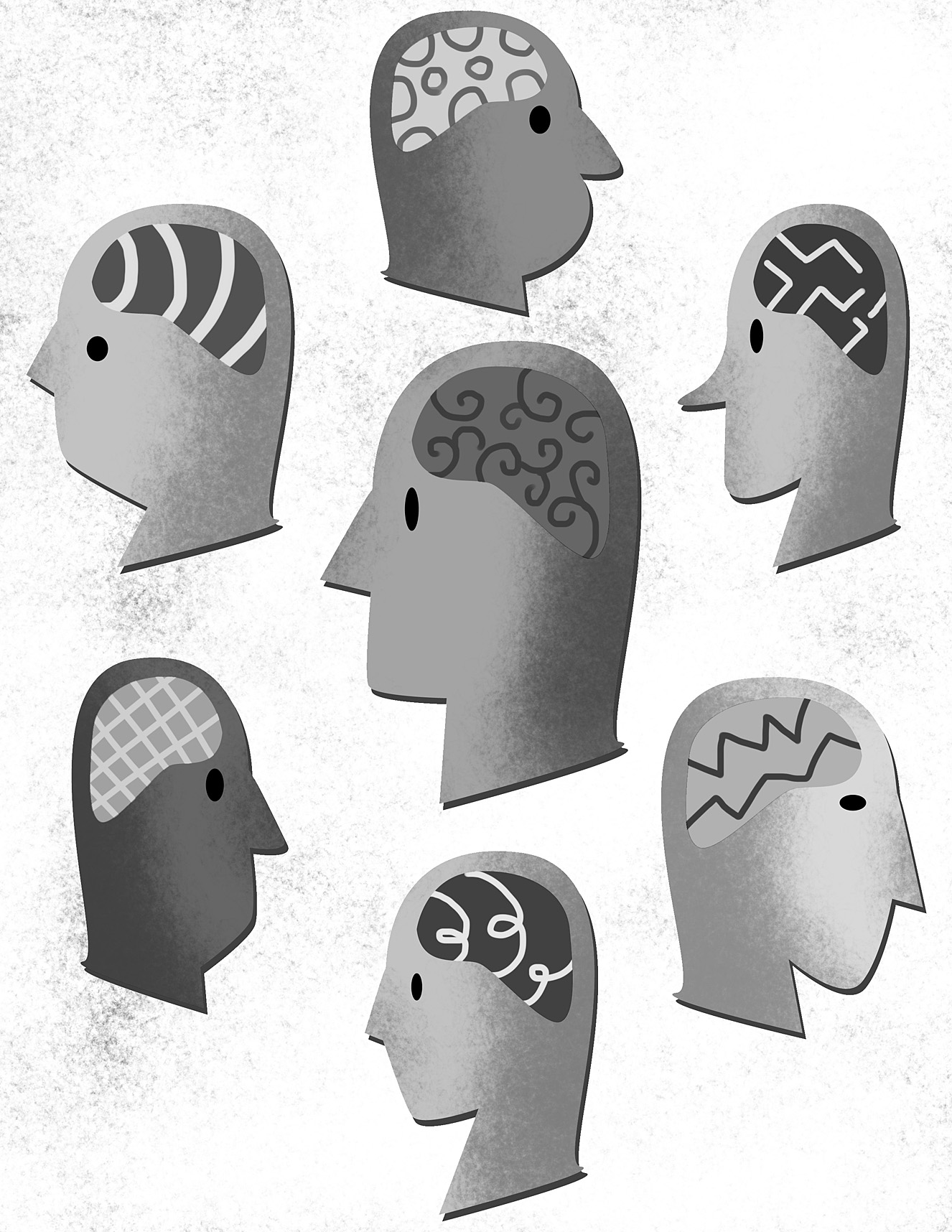
In a world of ever-expanding demands for flexible productivity and sociability, what were formerly personality characteristics (for example, the social differences or inflexibility typical to autistic individuals) become handicaps. For autistics, these new demands have been mitigated by the increased use of technologically enhanced communication (chatrooms, blogs, electronic bulletin boards), and these new forms of electronic communications have, in turn, contributed to the emergence of the neurodiversity movement. The neurodiversity movement provides a remarkable example of how oppressive conditions may bring with them the seeds of their own undoing.
Indeed, neurodiversity may provide what feminist philosopher Eva Feder Kittay (in her 2002 book, The Subject of Care) calls “liberalism’s limit case.” As a category that includes those individuals previously understood as insane, mad, or deranged (for example, schizophrenics) or cognitively-impaired (formerly “mentally-retarded” and before that, “feebleminded”) the idea of neurodiversity necessarily strains the very notion of the rational, choosing subject that is at the heart of the liberal ideal. Our ideals of personhood (and the associated status of citizenship) are located in the notion that we are reasonable creatures. Predicating personhood on rationality has always been a dubious proposition, and advocating equal rights for the neurologically atypical and the cognitively-impaired tests and troubles this formation.
Advocates of neurodiversity assert that neurological variation is central to the success of the human species.
Liberalism, Kittay argues, relies on the idea of an individual who is rational, independent, and capable of self-sufficiency. It assumes that we are a society of equals with respect to rationality and self-sufficiency, all evidence to the contrary notwithstanding. Indeed, many who would fall into the category of neurologically different are disadvantaged in precisely the way that liberalism holds as a defining feature of personhood: the ability to give voice to one’s position and advocate for one’s own needs.
The emergence of the term neurodiversity, and the activism that produced it, may be a symptom of our failure to come up with a theory of personhood that doesn’t rest on the faulty premises of individual equality and rational agency, and that doesn’t privilege the reasonable, the sociable, and the productive. It may be evidence of liberalism’s failure to replace the pity and malicious wonder that adhere to those with neurological and cognitive differences with a more useful framework of human worth and dignity. Perhaps neurodiversity moves far beyond jargon, to being a keyword, even a key, to unlocking the limits of liberalism.