



Abstract
J.D. Salinger’s novel The Catcher in the Rye has been on bookshelves since the 1950s—and its presence there has been protested for almost as long. This review explores why that Holden Caulfield can still elicit such social opprobrium in a new millennium.
He resides in various incarnations on MySpace and Facebook. Newspaper op-eds defend and attack him, school boards debate him, and guerilla censors quietly deface him on library shelves. With his backward red hunting cap, his cigarettes, and his copy of Out of Africa, he’s been a decades-long poster boy for teenage angst. He just won’t go away.
This year marks the sixtieth anniversary of J.D. Salinger’s controversial protagonist, Holden Caulfield, who simultaneously sulks and philosophizes within the pages of The Catcher in the Rye. The iconic tome, holding fast at number two on the American Library Association’s most challenged literary classics list, has a checkered past. In 1960, high school teachers in Louisville, Kentucky, and Tulsa, Oklahoma, lost their jobs for assigning Catcher. Fifty years later, a Florida student’s mother fought to ban the book from the entire Martin County school district. Catcher landed at top spots for most frequently challenged books in the decades of 1990-1999 and 2000-2009 and continues to incite a particular segment of the population fighting for the power to define morality.
Complaints about “obscene,” “immoral,” and “vulgar” language and “sexual references” have peppered the litany of objections lodged against Catcher since its publication. One gung-ho critic went so far as to tally the number of offensive words, finding “goddam” 237 times, “bastard/s” 58 times, and “Chrissakes” 31 times. Other objections center on an errant fart in chapel, while the Florida mother cited multiple occurrences of “the ‘F’ word” (culture critic Pamela Hunt Steinle notes that, ironically, Holden Caulfield actually exerts a considerable amount of effort trying to rid New York City walls of “the ‘F’ word”).
A powerful cultural object resonates with audiences, even as its historical context begins to disappear.
Are these words dangerous?
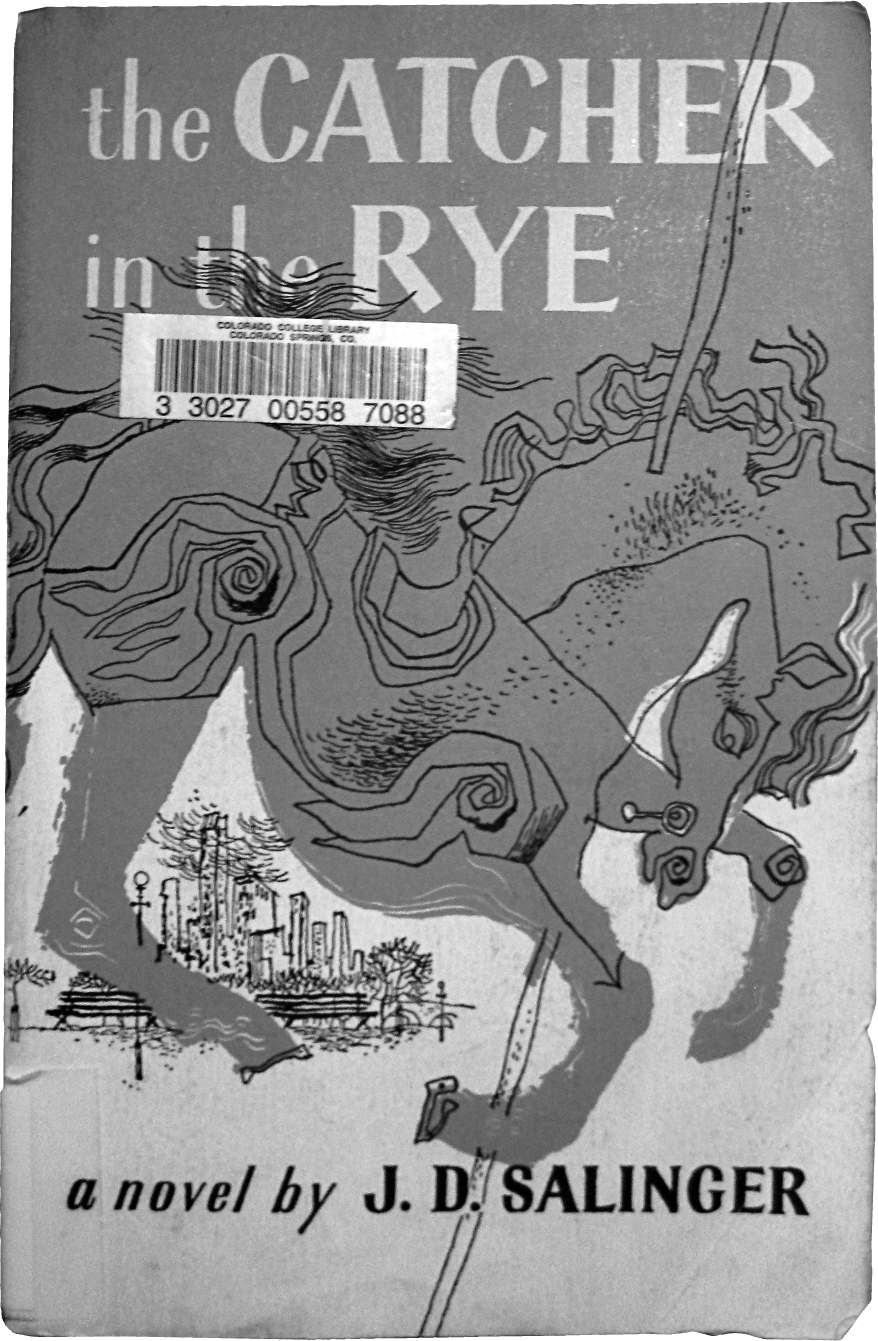
Those wishing to censor or ban Catcher from schools and libraries exhibit what cultural sociologist Joseph Gusfield calls moral indignation, a type of frustration arising when one group’s definitions or interpretations of morality aren’t validated by other groups. For example, an Albuquerque, New Mexico, church group in the 1960s accused Catcher of contributing to immorality and delinquency of minors, and felt that school officials ignored their objections. The pastor announced he would turn to the courts to air his grievances. Sociologist Steven Tepper writes that conflicts like these must be public and dramaturgical to make a statement, echoing the Puritans’ practice of displaying a rule-breaker in stocks in the village square. The New Mexico church made headlines to illustrate their point.
Interestingly, the obscenities and sexual references found in The Catcher in the Rye pale in comparison to the curse words and sexual situations popping up in PG-13 movies like Easy A or Transformers: Dark of the Moon. The Motion Picture Association of America (the organization responsible for rating films) allows several expletives in a PG-13 flick—including one instance of the word “fuck”—in addition to sexual situations and brief nudity. Further, teens likely encounter more obscenities and sex-related lingo during any typical school bus ride than they do in one of those PG-13 movies. In a world with video games like “Grand Theft Auto,” suggestive reality show dialogue, and Lady Gaga’s penis-shaped heels, what is it about a 1951 teenager that could possibly fan the flame of modern objections? The more that cursing and sexuality become normalized within the everyday world of American teenagers, the harder it becomes to justify withholding Holden’s voice from an entire population of middle and high school readers. Yet Catcher’s reputation as a longstanding field of skirmish demands explanation; clearly the book has the ability to communicate multifaceted meanings to interpretive groups, transcending its 1950s cultural context.
Different communities interpret cultural works, such as books of fiction, in various ways. These interpretations often do battle in a public arena—whether in the newspaper, behind the pulpit, or at the school board meeting—with the winner gaining standing for their group and its way of life. Max Weber classically defined these interpretive communities as “status groups,” comprised of members who share collective values, lifestyles, and morals. The struggle over The Catcher in the Rye is, in Weber’s terms, the struggle over one status group’s right to control, own, and reproduce the definitions of obscenity and morality.
Sociologists working within the framework of what Gusfield called “symbolic politics” have explored between-group tensions over paintings, music, dancing, comic books, and pornography. Participants in struggles over such cultural forms don’t seek concrete resources or political authority, but look to gain status for their group and its way of life. Gusfield’s theory emerged from his study of the temperance movement, which he concluded was mainly undertaken to convey that the lifestyle (i.e., drinking and carousing) of the average Catholic worker wasn’t appropriate for the rapidly-dominating middle-class American. Such crusades can include everything from movements to ban public smoking, health department posters promoting breastfeeding, or petitions protesting a specific book assigned by the local high school English teacher.
The issue isn’t The Catcher in the Rye sitting on a bookshelf, but the lifestyle presented between its covers.
So, public, collective responses to a cultural work like Catcher help articulate how one group defines its values, whether those definitions concern art or obscenity. And the actual definition does not matter as much as the power to control the definition. When a status group undertakes a symbolic crusade, such as challenging a text in front of a school board, it does so both to preserve its way of life from outside threats and to publicly display the specifics of its values and definitions. It’s the clear ownership of definitions—and the status and prestige that go with it—that is at stake.
Following Gusfield, then, the issue is not The Catcher in the Rye sitting on a bookshelf, but the lifestyle presented between the covers. Holden’s lifestyle, critics realize, aligns itself with a certain group, privileging that group’s definition of morality. Leaving this book on the high school reading list or in circulation at the public library, they believe, symbolizes that the views on morality held by school board members, school administrators, and politicians are correct (and demonstrates that those groups have the power to define morality at all). It is a familiar and well-traversed battleground for parents, school boards, and librarians, all accused of using the novel to “promote” the lifestyle of their respective status group, rather than simply exposing young people to a piece of great literature, flawed main character and all.
How many more years will status groups continue to use The Catcher in the Rye as an arena to fight over control for definitions of morality? Sociologist Wendy Griswold observes that a powerful cultural object resonates with audiences even as the historical context from which it was drawn begins to disappear. That makes Catcher awfully powerful. Holden Caulfield, expressing 1950s teen angst, offers his dialogue, his perspective, and his behaviors to present and future audiences, inviting interpretation and public sparring over the production and control of meanings. Holden’s here to stay.