



Abstract
Pushy parenting is a central theme in Amy Chua's Battle Hymn of the Tiger Mother, but Chinese mothers aren't the only caregivers well-schooled in the business of concerted cultivation.
Keywords
On January 25, 2011, Stephen Colbert announced, “My guest tonight is a Yale professor who has written a controversial book about the demands Chinese mothers put on their children. Not Harvard? Her mother must be so disappointed. Please welcome Amy Chua!” Chua’s appearance on The Colbert Report capped off a whirlwind media tour that most academics can only dream of. Today Show? Check. CNN? Check. And, then, of course, Colbert. Chua’s month of controversy started on January 8, 2011 when the Wall Street Journal ran a story, “Why Chinese Mothers Are Superior,” in advance of the January 11 release date of her book, Battle Hymn of the Tiger Mother.
The Journal article, comprised of excerpts from the book, spread like wildfire as people emailed, tweeted, and shared the link on Facebook. Over 8,000 people commented on the article on the Journal’s website, telling Amy Chua their thoughts on her parenting practices, which include: calling her daughters trash when they do not perform up to her expectations, forcing the girls to practice their musical instruments for at least three hours a day, and even denying them dinner if they do not perfect a piece. The comments definitely weren’t all pretty. But the press helped propel Battle Hymn to the New York Times’ bestseller list, giving credence to the adage “all press is good press.”
One of the most common memes in press coverage was an attribution of public agitation to abiding fears of the “China Threat.” A few weeks before the Chua controversy, educators had been stunned by the superlative test scores coming out of Shanghai on the Program for International Student Assessment (PISA). Some commentators thought Battle Hymn could be America’s new “Sputnik moment”—except that Amy Chua was born in the United States and her parents grew up in the Philippines as Chinese immigrants.
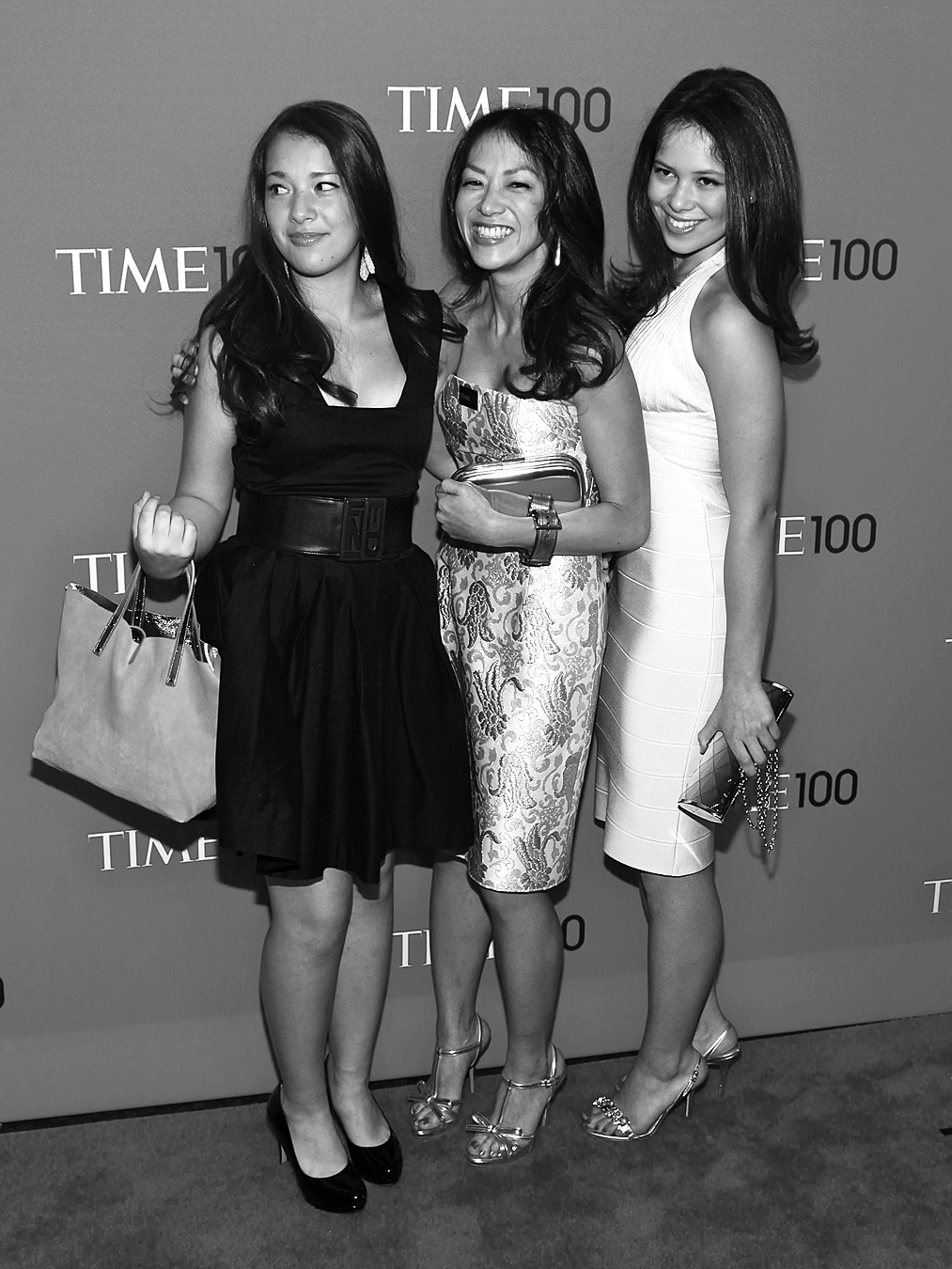
Law professor and self-professed “Tiger Mother” Amy Chua poses with her daughters Louisa and Sophia at the 2011 TIME gala for the 100 Most Influential People in the World.
If the entire furor wasn’t really over China’s high-performing young students, though, people wondered what it was actually about. The answer is fairly simple: Aside from being appalled by threats to burn stuffed animals, parents worry that Amy Chua is actually right.
While the “Chinese mothering” described by Chua is unquestionably extreme, it’s not a foreign concept within a distinctly middle-class American parenting sensibility. Examples of kids raised this way include celebrated young tennis and golf phenoms, alongside any number of gymnastics and figure skating champions. Olympic-caliber athletes might seem like outlier examples, but similar parenting practices that many American mothers and fathers embrace are common—think of the “concerted cultivation” described by sociologist Annette Lareau in Unequal Childhoods.
For more than a decade, I have studied families with young children who compete in child beauty pageants, chess and soccer tournaments, dance competitions, and enrichment math courses. All of these parents are “Tiger Mothers” in some way—especially when they force their children to practice or rehearse in the pursuit of both immediate and future accolades and success. Within this American context children can be “Chinese parented” in a much wider range of acceptable arenas, as the meaning of success is not limited to academic and musical spheres. For example, in this country being pushed to excel in athletics, even under extreme conditions, is revered. Sports are a pathway to academic achievement (via valuable sports scholarships), fame, and fortune.
Oh, yes, college and the college admissions frenzy. It’s not a stretch to say that much of middle- and upper-middle class parenting is focused on obtaining a thick admissions envelope come April 2025. With this focus comes a great deal of anxiety and a concern with doing everything “right” to get into the “right” school, often starting in utero.
And, guess what? Amy Chua did it. Her eldest daughter, Sophia, was admitted to the Harvard class of 2015 during the most competitive admissions cycle in Harvard’s history, with a 6.2 percent admit rate (insert Colbert joke about how her mother feels about Harvard versus Yale here).
In March 2011, a few months after the Tiger Mom became infamous, another mother came out with claws bared, trying to claim the title of pushiest/most competitive mom-of-the-year. On March 14, the New York Daily News ran a story with the attention-getting headline: “Manhattan mom sues $19k/yr. preschool for damaging 4-year-old daughter’s Ivy league chances.” The short version of the story is that Nicole Imprescia sued York Avenue Preschool for not properly preparing her daughter for the ERB exam—a sort of “baby-SAT” needed for private school admissions in New York City. The article reports, “The court papers implied the school could have damaged Lucia’s chances of getting into a top college, citing an article that identifies preschools as the first step to ‘the Ivy League.’” I fear Imprescia would make Chua look positively domesticated.
This story illustrates the extreme parental anxiety about the college admissions process, especially in upper-middle class communities and even for very young children. Imprescia’s focus on the Ivy League isn’t extraordinary today—what’s extraordinary is her willingness to sue because of her unwavering sense that her daughter is entitled to end up at Harvard, Princeton, Yale, Brown, Columbia, Cornell, Dartmouth, or Penn.
Chua, on the other hand, at least knows that it takes hard work, no matter your parents’ backgrounds and credentials, to get to the Ivy League. Her book seemed to be billed as a how-to guide to parents about how to raise exceptional children, and many picked it up hoping only to glean some tips. But in a recent speech (at Harvard, no less), Chua proclaimed, “I could not in a million years imagine my book to be perceived this way, as preaching Chinese parenting as superior… This is not a parenting book. It is a memoir.” Indeed Battle Hymn covers Chua’s childhood and family life. Chua claims she was trying to pen a funny memoir, but any self-deprecating humor doesn’t come across as genuine, especially when she repeatedly lists the accolades of her various family members—including her sister who has Down Syndrome, but wins when she swims in the Special Olympics. The implication is that the Chua women are always superb, no matter the context.
Several months after the publication of Battle Hymn, one of the most persistent laments is that the book feeds the stereotype of robotic Asian-American children, pushed by their parents to always win. That is, by only allowing her daughters to play piano or violin and insisting that they only earn As in school, Chua perpetuates many traditional stereotypes about Asian immigrants. An April 2011 Boston Globe article on discrimination against Asian-American students argues that “the attention given Chua’s book will only make things worse,” as many assume these students lack creativity because they are more like hard-working automatons. So we’re back to the “China threat,” though in the American context of access to the Ivy League vis-à-vis Asian-American students.
Is Battle Hymn this generation’s “Sputnik moment”?
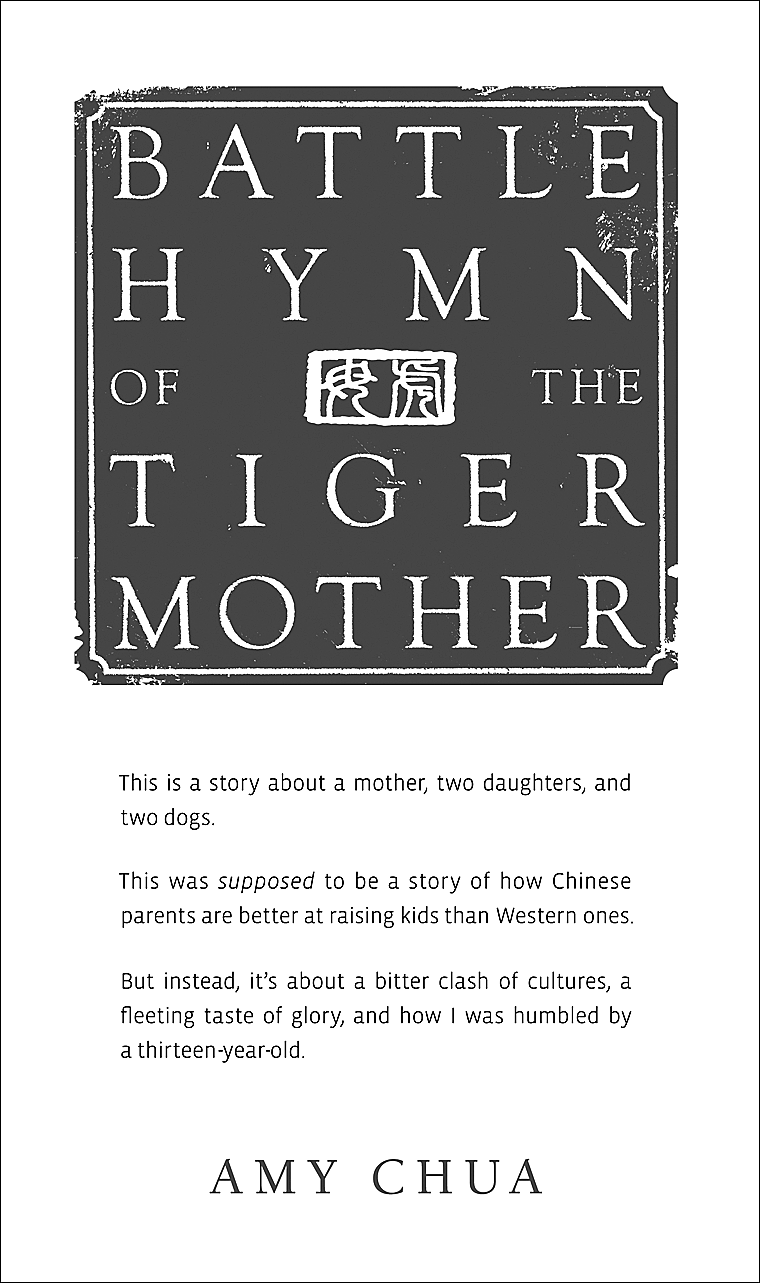
Chua’s “Chinese mothering” is unquestionably extreme, but not uncommon—think of the “concerted cultivation” of Unequal Childhoods.
Commentators responded to this brouhaha with stereotypes of their own parenting techniques. Articles by “dolphin moms,” “panda dads,” “camel moms,” and even “Irish Setter dads” appeared. The thing is, these commentator-parents simply direct their children in different ways. So let’s not kid ourselves into thinking that “Chinese” Tiger Moms like Amy Chua own the title of pushiest parents in the world. Various American parents compete for that title as well—they just haven’t penned a bestseller or appeared on The Colbert Report to trumpet their strategies… yet.