




Abstract
Introduction:
Biological safety cabinets (BSCs) are the primary means of containment used in laboratories worldwide. To ensure the proper functioning of BSCs, they need to be certified annually, at a minimum, per National Sanitation Foundation (NSF)/American National Standards Institute Standard 49.
Objectives:
A common problem most organizations face is that in many instances, the technicians who certify the cabinets are not accredited by the NSF. Additionally, in states or regions that do not have local NSF accredited field certifiers, it takes weeks to get a service request completed, thereby delaying the research work of the laboratory. Moreover, in such instances, the cost associated with cabinet certification and repair can be very high.
Materials and Methods:
This led the Office of Safety at the University of North Dakota to do a thorough cost-benefit analysis of developing an in-house BSC certification program. After completing the training and testing requirements for the NSF’s advanced accreditation program, the BSC certification program was initiated on campus.
Results:
The identified benefits led to the initiation of a program in both local and regional capacity for repair, maintenance, and certification of BSCs, and the university’s experiences were shared with other universities.
Conclusions:
By developing an in-house BSC certification program, the University of North Dakota was able to reduce wait times associated with service repairs, reduce costs, and generate revenue for the department. Furthermore, this led to improved hands-on training programs related to BSC use in laboratories working with biohazardous agents.
Keywords
According to a 2018 report by the World Health Organization, infectious diseases remain a leading cause of death globally.1 –4 The global threat of infectious diseases is exacerbated by the emergence of newly identified pathogens, as well as the reemergence of pathogens with public health significance.5,6 There have been several emerging diseases across the world, and this has led to the commissioning of several high-containment laboratories to study these pathogens.7,8 However, there are very few programs and organizations across the globe that provide expertise in the field of biological safety to future safety professionals and researchers.9,10
Biological safety cabinets (BSCs) used in laboratories across the world are the primary means of containment for the safe handling of infectious agents. 11 BSCs first became commercially available in 1950. 12 The primary purpose of a BSC is to protect laboratory workers and the surrounding environment from pathogens.12,13 BSCs also provide product protection by preventing possible contamination.13,14 Unlike laminar flow hoods, all exhaust air from a BSC is HEPA filtered, removing harmful bacteria, viruses, and other airborne particles.13,15 National Sanitation Foundation (NSF)/American National Standards Institute (ANSI) Standard 49, Annex E, classifies BSCs into 3 classes.15,16 These classes and the types of BSCs within them are distinguished in 2 ways: the level of personnel and environmental protection provided and the level of product protection provided.12,13 Class I BSCs protect users and the surrounding environment but do not offer product protection. 12 Class II BSCs provide protection for users, the environment, and samples and are divided into 5 types: A1, A2, B1, B2, and C1. 11 The main differences are their minimum inflow velocities and exhaust systems.15,16 Class III BSCs, also known as glove boxes, provide maximum protection; the enclosure is gas-tight, and all materials enter and leave through a dunk tank or double-door autoclave.16,17 Choice of a BSC, therefore, depends on the level of protection needed for laboratory workers and the sample of interest.11,14,16 However, these highly specialized engineering controls are the least understood pieces of laboratory equipment, and most organizations do not have the in-house expertise to manage technical issues related to BSC certification, repairs, and commissioning process.17 –19
The first independent standard for design, manufacture, and testing of BSCs (NSF Standard 49 for Class II BSCs) was published in 1976. 16 This standard “replaced” the National Institutes of Health specifications, which were used by other institutions and organizations purchasing BSCs.16,20 NSF/ANSI Standard 49-2018 incorporates current specifications regarding design, materials, construction, and testing of BSCs. 16 Furthermore, it establishes performance criteria and provides the minimum testing requirements for BSCs that are accepted in the United States. 16 All BSCs that meet the standard and are certified by the NSF bear an NSF mark. 16 Additionally, BSC operation, as specified by NSF/ANSI Standard 49-2018, Annex F, needs to be verified at the time of installation and, at a minimum, annually thereafter. 16 In the United States it is strongly recommended that, whenever possible, accredited field certifiers be employed to test and certify BSCs per the NSF/ANSI standard.16,20 If in-house personnel are performing the certifications, these individuals are recommended to be accredited by the NSF.16,20 However, in many low-resource regions and states, several practical problems arise with regard to certification and repairs of BSC. One major issue that most organizations in remote areas and states face is the lack of awareness of this requirement and the absence of local NSF-accredited field certifiers. Moreover, the time delay associated with certification and repairs related to BSC certification from out-of-state vendors can have a significant impact on the research functioning of an organization.
In an effort to address some of the issues associated with delays in BSC certification and repairs from out-of-state vendors and the lack of NSF-accredited trained personnel who can install and certify BSCs in a cost-effective and practical manner, we initiated a program for the repair, maintenance, and certification of BSCs. The biological safety officer (BSO), who had expertise in the field of infectious diseases, was selected from the organization to participate in the NSF mentoring and training program. The BSO was accredited by the NSF within 18 months of initial selection and was able to mentor and train other members of the organization during the same time. The present study is the first of its kind to perform a comprehensive cost-benefit evaluation of establishing an in-house certification program. We hope that the program outlined here serves as a guideline for developing in-house BSC certification programs to meet institution-specific regulations and requirements.
Methods
Candidate Selection
The most critical step in establishing an in-house BSC certification program is to select a candidate with the right technical background for BSC certification. We chose the BSO from our organization as the individual had the background of working with infectious agents in a high-containment facility and had the required engineering background to understand the functioning of the BSC. Additionally, the selected candidate was a certified safety professional affiliated with national and international organizations, indicating prior expertise in the field. Although the minimum requirement to appear for the NSF accreditation process is a high school diploma or equivalent, we selected an individual with such a technical background because the goal was to send an expert in the field of biological safety so that the individual, once accredited by the NSF, could train the other members of our team and help establish a program at the state level. Furthermore, sending 1 expert from our organization helped us save some expenses associated with training multiple individuals at the same time, as the NSF certification program is complicated, expensive, and a lengthy process.
Training Process
The selected candidate (BSO) had to undergo training for the first year to meet the eligibility criteria set forth for the NSF Biosafety Cabinet Field Certifier Accreditation Program.16,20 –22 As part of the NSF requirement, the selected individual had to undergo a training course on BSCs and was required to perform field certification tests on BSCs (submit test reports on 20 cabinets). 22 The model we used divided the training program into 2 formal courses (both advanced), with a minimum of 16 months between them, during which the BSO was required to perform certifications of 20 BSCs (5 Class II Type B2 and 15 Class II Type A2 Cabinets). The selected individual attended the 5-day advanced courses offered at CEPA Operations (Ontario, CA, USA) and the Eagleson Institute (Sanford, ME, USA), as all instructors were NSF accredited engineers, and the organization had many years of hands-on design, manufacturing, testing, and troubleshooting experience. Furthermore, we collaborated with 1 of the NSF-accredited field certifiers, who served as a mentor for the selected candidate for a duration of 16 months. This partnership allowed our selected candidate develop and validate the required skills through one-on-one instruction and meet the 1 year of practical experience requirement criteria set forth by the NSF from the date of the basic course. This approach also provided immediate troubleshooting, repair, and problem-solving assistance through the greater experience of the mentor.
Equipment
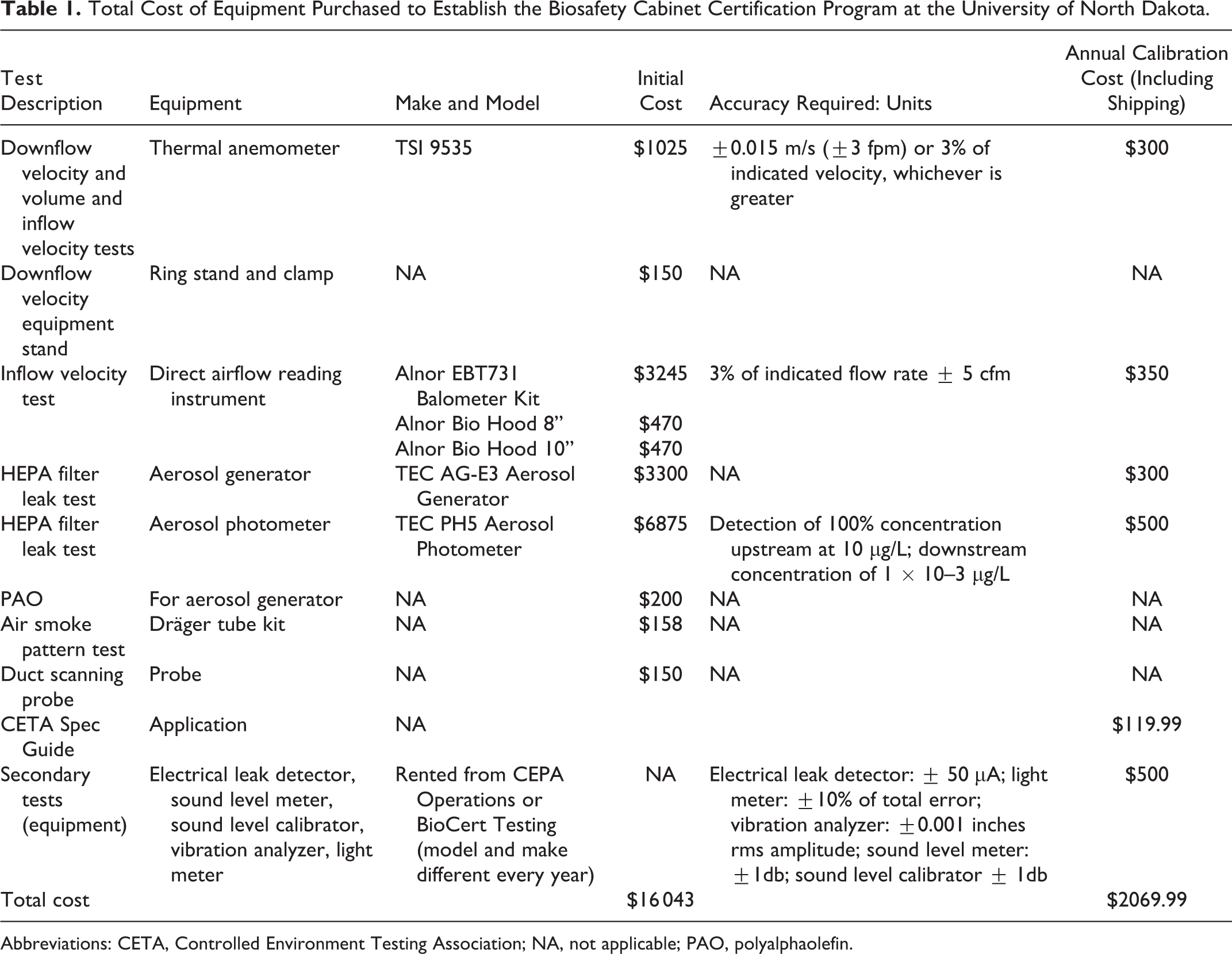
BSC testing and certification requirements set forth by the NSF require that Class II BSCs be certified at a minimum on an annual basis to NSF/ANSI Standard 49 and manufacturer specifications.16,20,22 The required tests include downflow velocity profiling, inflow velocity profiling, airflow smoke patterns test, HEPA filter integrity testing, site installation assessment testing including alarm calibration (as applicable), and cabinet integrity testing (A1 cabinets only).20,22 Additionally, relevant optional tests include light intensity test, vibration test, noise level test, electrical leakage, ground circuit resistance, and polarity testing.16,20,22 The essential equipment used to determine the performance of BSCs in the primary tests necessary for certification is detailed in Table 1. We collaborated with CEPA Operations, the leader in the field of clean room and BSC certifications, to establish the BSC testing program at our organization. With the help of CEPA Operations, we were able to purchase all the equipment at a discounted rate and were able to bring our total investment to approximately $16 043. Additional equipment for optional secondary testing, which ensures a comfortable work environment (measuring noise, vibration, and lighting levels in the BSC) were rented from CEPA Operations or BioCert testing whenever such testing was requested, as secondary equipment costs can range between $5000 and $7000. We decided to rent the equipment required for secondary testing because the calibration requirements for the light meter, vibration analyzer, and sound level meter change every year. For the first year, we used the mobile application offered by the Controlled Environment Testing Association Spec Guide which includes certification specifications for all major manufacturers of BSCs ($119.99 per year). 10 Additionally, we created an in-house application to do the data analysis of collected tests in an attempt to save the cost associated with software purchase, which can range from $4500 to $6000. 10
Total Cost of Equipment Purchased to Establish the Biosafety Cabinet Certification Program at the University of North Dakota.
Abbreviations: CETA, Controlled Environment Testing Association; NA, not applicable; PAO, polyalphaolefin.
NSF Enhanced Accreditation Process
The NSF enhanced accreditation program is the same as the NSF’s original accreditation program, which was initiated in the 1990s.16,20,22 NSF’s initial program was rebranded in early 2017 as “enhanced” to differentiate it from the newly introduced basic accreditation program. The major difference is that the basic accreditation program is geared toward field certifiers living and working outside North America, particularly those in underresourced countries. All field certifiers in North America can apply only to the NSF enhanced accreditation program, as it is the established norm for that region. As a result, our selected candidate had to apply for the enhanced accreditation program.
To become accredited, 3 obligations must be met: (1) a passing score of ≥80% on the written examination, (2) a ≥90% score on primary and at least 70% on secondary practical tests, and (3) signature of an ethics statement.16,20,22 Furthermore, continuing education and periodic reexamination are required to maintain accreditation. The NSF written examination for the enhanced accreditation program is 3.5 hours long and consists of 120 multiple choice questions.16,22 The written examination covers topics ranging from cabinet design to air velocity measurements to decontamination and prior NSF standards.16,20,22,23 The written examination is open book. Candidates may reference NSF/ANSI Standard 49 and NSF policies during the examination. 22 The practical examination entails the evaluation of type A and B BSCs, covering both primary and secondary tests.16,20,22 Each test has a time limit with a maximum of 9 hours for the full examination. 22 At the request of the candidates, NSF may mail written examination packets to independent proctors, such as librarians, test centers, university professors, and so on, under the enhanced accreditation program. 22 However, the practical examinations can be taken only at the following preapproved test sites for the enhanced accreditation program: (1) CEPA Operations, (2) Con-Test (Ajax, ON, Canada), (3) Eagleson Institute (Sanford, ME, USA), (4) ENV Services (Hatfield, PA, USA), and (5) Micro-Clean (Bethlehem, PA, USA). 22 Under certain circumstances, other test sites outside of North America may be requested.16,22 Our selected candidate from the organization was able to take the tests at the Eagleson Institute and ENV Services. The Eagleson Institute and ENV Services may provide test equipment with current calibration documentation on a case-by-case basis. In our case, we were able to ship our equipment with the certification records to the Eagleson Institute and ENV Services.
Financial Requirements
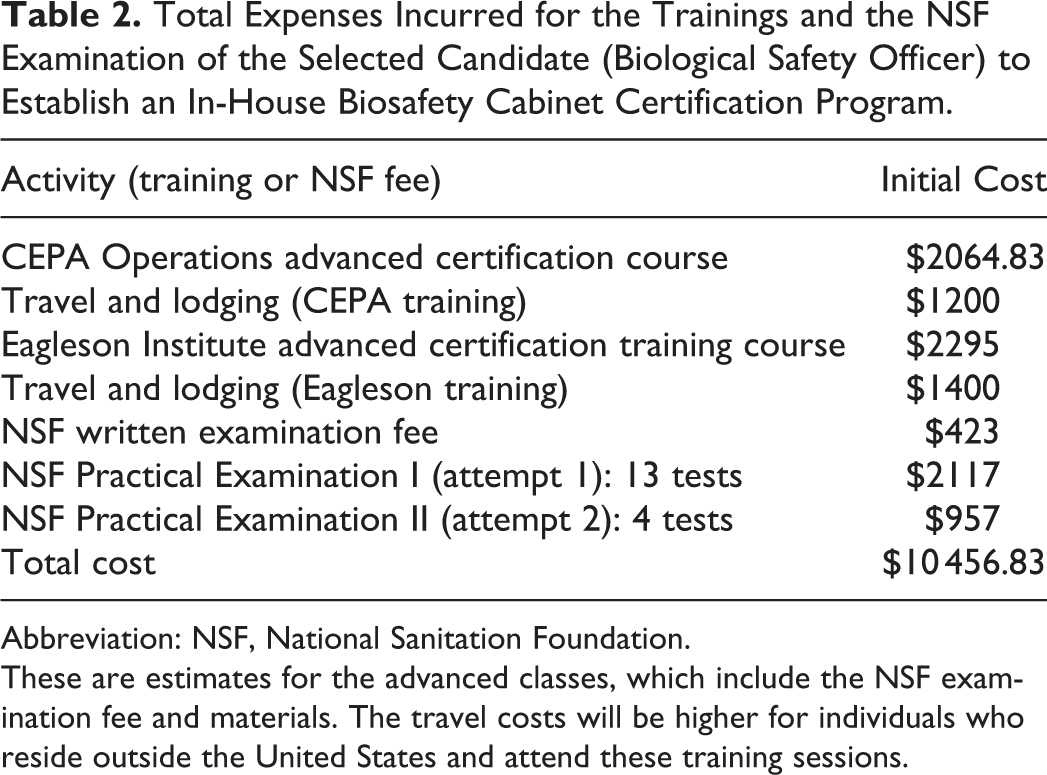
To set up a BSC certification program, a significant financial commitment is required by the organization. One primary reason for this is that highly specialized, expensive equipment is needed to perform certifications per the NSF standard (Table 1). Additionally, training and testing requirements of the selected individual may vary depending upon the individual’s technical background and expertise. Expenses incurred for the training and NSF examination for our organization are detailed in Table 2 and are accurate as of January 2019. Furthermore, to ensure equipment performance (and maintain accreditation), annual calibration and general maintenance are required. In our case, this service was available in country, and we have included the cost associated with calibration of the equipment for our organization in Table 1 (including shipping expenses).
Total Expenses Incurred for the Trainings and the NSF Examination of the Selected Candidate (Biological Safety Officer) to Establish an In-House Biosafety Cabinet Certification Program.
Abbreviation: NSF, National Sanitation Foundation.
These are estimates for the advanced classes, which include the NSF examination fee and materials. The travel costs will be higher for individuals who reside outside the United States and attend these training sessions.
BSC Certification Program Requirements
The certification program of our organization requires the field certifier to share the certification document with our laboratory managers and clients in the university system 3 weeks before their arrival. This document details which BSCs will be certified, when this should happen (time and date), and what preparation is needed prior to the certifier’s arrival (eg, decontamination). When we visited the laboratories to do the certification of the BSCs, we also took the opportunity to train the individuals of the laboratory in the proper operation of the BSCs, as most prior safety violations were related to BSC use at our organization. Training materials that have been developed since implementing this program include videos, presentations, and standard operating procedures.
Results
Before the implementation of the in-house certification program at our organization, we were dependent on an outside vendor for certification of the BSCs. Because there was no NSF-accredited certifier in North Dakota, we were required to schedule the certification dates with an out-of-state vendor at least 2 months in advance. Furthermore, unexpected repairs and decontamination of cabinets had to be coordinated 1 month in advance. This process resulted in 2 significant problems: the research work of a laboratory was delayed or stalled if the cabinet was out of service for 1 month, and in some cases the BSCs were certified by technicians who were not accredited by the NSF or currently undergoing training in their organization. Because research productivity is critical in every university’s strategic plan, we decided to do a thorough cost-benefit analysis to determine whether developing an in-house certification program might be beneficial for our organization, which had 72 BSCs, 12 laminar flow hoods, 18 cage changing stations, and 8 polymerase chain reaction stations.
The University of North Dakota finally initiated the BSC certification training program in July 2016. For NSF accreditation, the BSO from the organization completed all the training requirements and passed both the written and practical examinations. The candidate selected was able to pass the written examination on the first try. However, the practical examination was passed on the second attempt, indicating its difficulty level and the stringent requirements of the test conducted by the NSF. Furthermore, because the BSO from our organization was the only NSF-accredited certifier in North Dakota, we were able to develop a local, statewide certification program.
In the first year of the implementation of the program, we were able to certify a total of 72 Class II BSCs, 12 laminar flow hoods, 18 cage changing stations, and 8 polymerase chain reaction stations. The development of the in-house program resulted in a total savings of about $31 540 in 2018 (Figure 1) compared with total expenses incurred with BSC certifications in 2016 ($33 543) and 2017 ($29 890). In June 2018, we extended the training program to other universities in the North Dakota University System, and by January 2019 we had 2 employees trained with the requirements of the NSF accreditation program. Moreover, in only 6 months we were able to generate $5880 for our department by certifying 41 Class II BSCs on adjoining campuses of the North Dakota University System (Figure 1). This collaboration with other universities in the North Dakota University System helped offset some of the costs associated with BSC certification on their campuses, and at the same time revenue generated could be used toward annual calibration of the equipment and training of our employees.
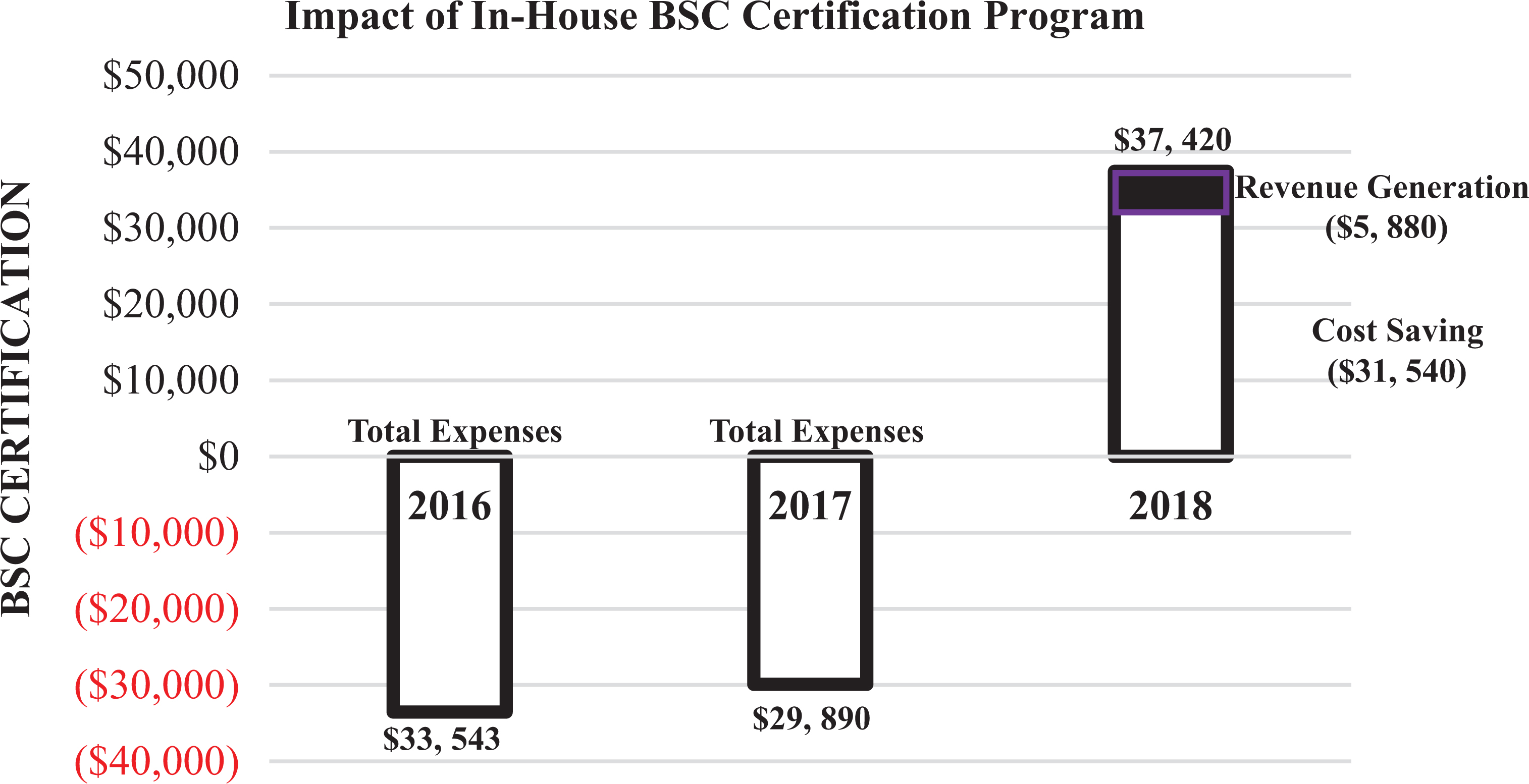
Impact of the in-house biosafety cabinet (BSC) certification program on total expenses, savings, and revenue of the organization.
The total cost of training and equipment was $28 569.82 for our organization (Tables 1 and 2). Comparing this with the overall savings incurred in 2018 (Figure 1) and total revenue generated in 2018 (Figure 1) suggests that the development of such an in-house BSC certification program might be beneficial for organizations that do not have access to local NSF-certified vendors. Additionally, a cost/benefit analysis makes it clear that the initial financial investment by an organization can be recovered within a couple of years of implementation of the program.
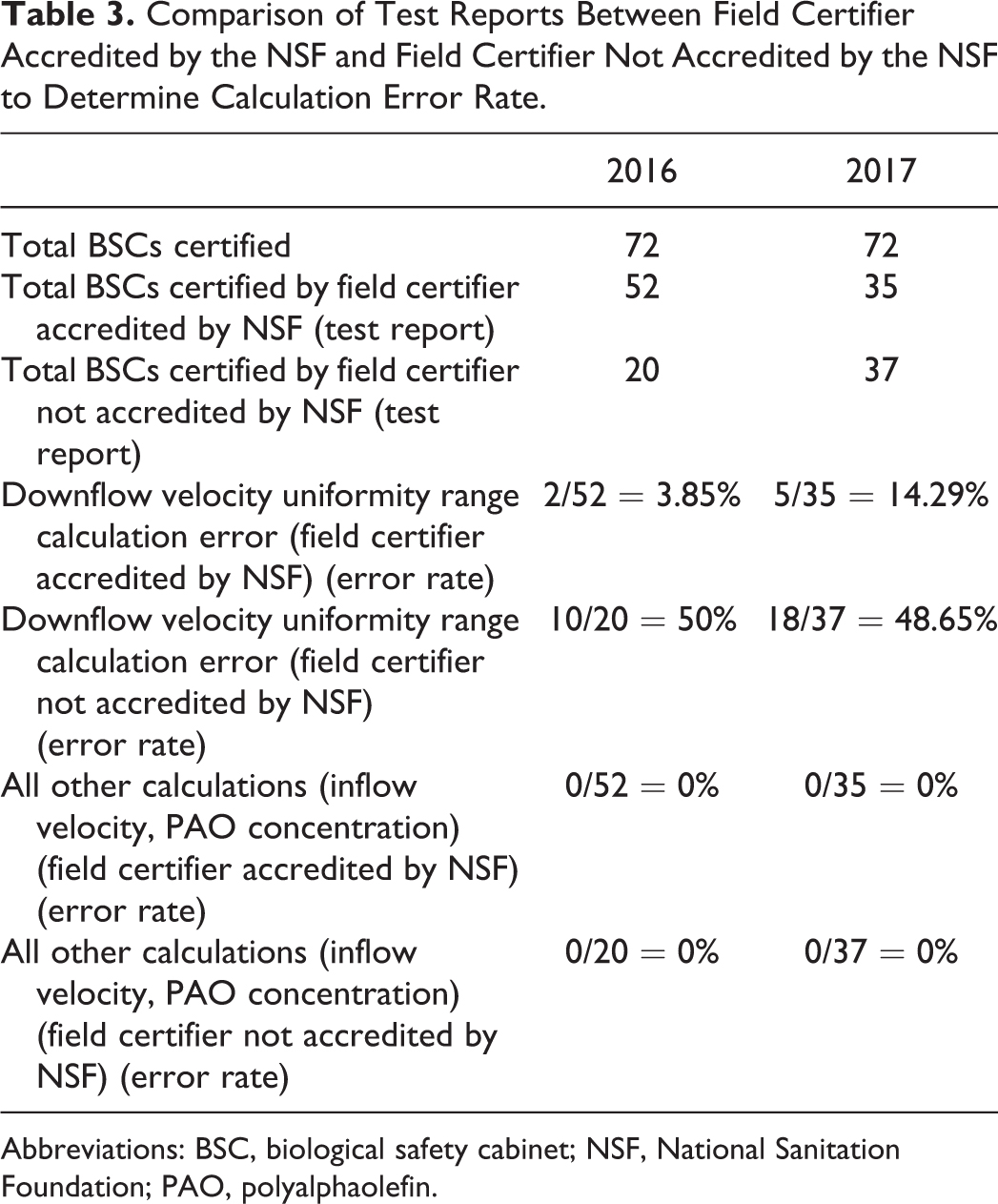
The advanced accreditation program is a lengthy process, and as a result, many vendors do not have all of their technicians accredited by NSF. After the implementation of the BSC certification program, we wanted to see if the qualification of the field certifier (not accredited vs accredited by the NSF) had an impact on the testing reports of the BSCs. We therefore compared the Class II BSC testing records from 2016 and 2017 of our organization and grouped them into reports from NSF-certified and noncertified individuals (Table 3). We found that the error rate for calculation of downflow velocity uniformity range among field certifiers accredited by the NSF was 3.85% in 2016 and 14.29% in 2017 (Table 3). On the other hand, the error rate for calculation of downflow velocity uniformity range among field certifiers not accredited by NSF was significantly higher at 50% in 2016 and 48.65% in 2017 (Table 3). However, there was no difference in error rates of other calculations (inflow velocity, polyalphaolefin concentration, etc) associated with the BSC certification process. The most common error was not calculating the individual point reading per Annex F requirements (±25% or 16 fpm, whichever is greater, from the average downflow velocity). However, the overall cabinet certification was done in an acceptable manner by both NSF-certified and noncertified individuals, indicating that the on-job training plays an important role in increasing proficiency and technical expertise.
Comparison of Test Reports Between Field Certifier Accredited by the NSF and Field Certifier Not Accredited by the NSF to Determine Calculation Error Rate.
Abbreviations: BSC, biological safety cabinet; NSF, National Sanitation Foundation; PAO, polyalphaolefin.
All laboratories at the University of North Dakota are annually evaluated on the basis of the requirements set forth by Biosafety in Microbiological and Biomedical Laboratories, fifth edition. 20 Before the establishment of the in-house certification program on our campus, the most common safety violation was with the blocking of the rear grilles of the BSCs. The development of the BSC certification program helped us coordinate our BSC training programs with laboratories at the same time when they were certified. The coordination of both the programs helped our organization reduce the safety violations associated with BSC operation by 87.04% during the first year of implementation. This indicates that coordinated safety programs that focus on hands-on training can help reduce violations associated with BSC use across laboratories (Figure 2).
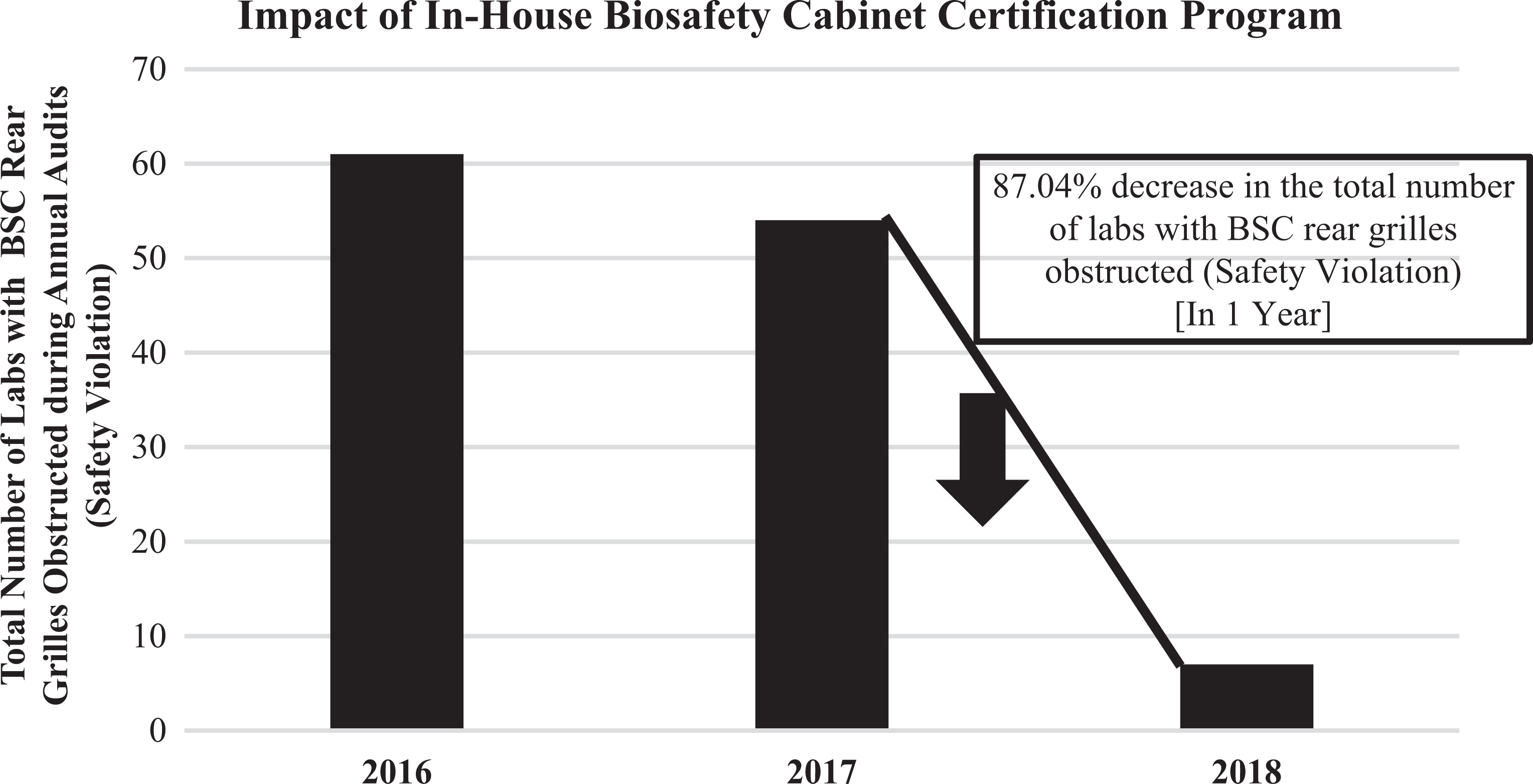
Impact of coordinated training programs on total number of safety violations related to biosafety cabinet (BSC) use.
Discussion
BSCs are used in laboratories across the world and are among the most critical engineering controls used in the detection, isolation, and diagnosis of infectious agents.12,24,25 In high-containment laboratories, the functioning of BSCs is critical, as poorly functioning equipment can result in a breach in containment, which can ultimately cause severe illness and/or death of laboratory personnel.24,25 In this work, we showed how developing an in-house BSC certification program can be beneficial to reduce wait times associated with service repairs, reduce costs, and at the same generate revenue for an organization. Additionally, we demonstrate how coordinating safety programs can improve the compliance of laboratories working with biohazardous agents.
In many states and regions that do not have NSF-accredited certifiers, the cost associated with BSC certifications can be instrumental, as they must rely on out-of-state vendors. Moreover, in such cases, the time associated with repairs and certification of cabinets can range from a few weeks to months. As a result, many small institutions cite expense as the main reason for not having BSCs certified annually. 10 In most states in the United States, the certification services provided by local distributors range in price from $160 to $300 per BSC. 10 This certification fee can significantly change if there are no local vendors accredited by NSF and travel costs are included. The other critical factor is the delay associated with certification of cabinets or repairs, as most laboratories cannot stop research for more extended periods and are continually competing with federal and state laboratories for research grants. Competitive bidding for the contract for the certification of all BSCs within an organization can bring the price down. However, this is more relevant when 3 or more vendors in a region are competing to provide services. Moreover, other considerations, such as the qualifications and experience of certifiers, the standard to which certifications are performed, and experience with a broad range of manufacturers, all should be considered in making this critical decision for any organization.
The program developed at the University of North Dakota required an initial financial commitment of $28,570 per candidate, the cost of certifying 96 BSCs using a commercial vendor. This suggests that any organization that has close to 100 BSCs can recover the costs associated with initial financial investment within a couple of years of implementation of the program. However, this cost can vary from state to state, as having a local vendor can offset some of the costs associated with travel and certification of cabinets. Further studies should be directed to see if such programs may be beneficial to more substantial organizations that have more than 500 BSCs and have access to local NSF-certified vendors. Additionally, it would be interesting to see the relationship between cabinet numbers and the time commitment required by full-time employees in research organizations to develop such programs.
Developing a certification training program requires a considerable time commitment from a department. The NSF-accredited field certifier needs to schedule at least 2 hours for each BSC certification. Additionally, time is also required to complete testing reports of BSCs. The program developed at our organization coordinated the hands-on BSC training program with the laboratory at the time of certification. The overall decrease in safety violations by coordinating these programs together indicate that hands-on training plays a critical role in increasing the BSC safety compliance of an organization. In the future, if more organizations follow this model, more time must be invested in advertising the programs to gain local buy-in and support for activities ensuring sustainability once training requirements are completed.
BSC certification is part of a biological risk management program, and every organization that performs high-quality research needs to have access to qualified BSC certifiers who can complete all required tests to NSF/ANSI standards. Additionally, the NSF should develop programs whereby field certifiers not accredited through the NSF can receive training until they meet the eligibility requirements of the advanced certification program. This gap in training must be addressed in the immediate future, as over the past few years several organizations have reported complaints to ABSA International about field certifiers not certifying BSCs to NSF/ANSI standard. We are hopeful that sharing our experience on the implementation of an in-house BSC certification training program will assist other organizations in the quest to provide practical, sustainable solutions for effective biocontainment in regions and states with limited resources.
Conclusions
In this report, we have outlined a program for the development of an in-house BSC certification program and the benefits associated with it. Where applicable, our program embodies cost-effective, practical containment strategies that can be adapted to a wide variety of facilities. Our hope is that the procedures outlined here serve as guidelines for establishing in-house BSC certification programs to serve institution-specific regulations and departments.
Footnotes
Acknowledgment
We thank the School of Medicine and Health Sciences at the University of North Dakota for providing funding required with equipment purchase and training.
Ethical Approval Statement
Not applicable.
Statement of Human and Animal Rights
Not applicable.
Statement of Informed Consent
Not applicable.
Declaration of Conflicting Interests
The author(s) declared no potential conflicts of interest with respect to the research, authorship, and/or publication of this article.
Disclaimer
The views presented in this publication are those of the author(s) and do not necessarily reflect the position of the associated institutions.
Funding
The author(s) received no financial support for the research, authorship, and/or publication of this article.
