



Abstract
It is a well-known fact that personnel activities can have an adverse effect on the protective functions of biological safety cabinets. Increased air turbulence within the work area or within the surrounding room can disrupt the essential directional airflows of the cabinet, which generate the protective barrier between the environment and the products handled inside. This may result in an enhanced escape and/or invasion of airborne particles or microorganisms. Nevertheless, manufacturers tend to reduce downflow and inflow velocities up to the limits of the allowed values to improve energy efficiency or to reduce noise and vibration. Reliable data based on standardized test procedures to estimate the consequences arising from these measures are rare. In this study, the influence of different static and dynamic disturbing factors on the personnel protection performance of 2 Class II biological safety cabinets was quantified. A microbiological test procedure given by the relevant European and US standards (EN 12649, NSF/ANSI 49) was used, but in contrast to the low requirements defined there, 4 more complex and realistic test scenarios were chosen to simulate working activities: static covering of the front sash opening caused by a sitting or standing person was simulated by a “dummy worker” and a “body plate,” respectively. Dynamic airflow perturbations were generated by an artificial “moving arm” swinging regularly inside the cabinet and by a flat plate running outside the cabinet parallel to its front opening to simulate a “walking man”. It could be demonstrated that dynamic airflow disturbances caused by rapid body movements have a major impact on the cabinet’s protecting performance. Compared with an undisturbed working situation, personnel-protecting capabilities of both safety cabinets tested declined substantially when the worker’s movement next to the front opening was simulated. Therefore, downflow and inflow velocities should not be reduced to minimum values, to allow a sufficient margin of safety for actual in-use laboratory conditions (“disturbed”).
Class II biological safety cabinets (BSCs) are used as small contained areas for the safe and aseptic handling of sensitive and/or infectious substances, tissues, or organisms.1 –3 The functioning principle of this type of BSC is based on 2 directional airflows. The downflow moves downward to the interior working surface before it is drawn through the front or rear grille. Room air is directed inward across the working opening and passes into the front grille before it reaches the working zone (inflow). Downflow and inflow are mixed outside the working zone and then filtered by a combination of supply and exhaust HEPA (high-efficiency particulate air) filters to remove airborne contaminants. For Class II, type A and B1 BSCs, clean (particulate-free) air is recirculated back to the working area (approximately 70%) and, to a smaller extent (approximately 30%), to the environment (laboratory room or building exhaust system). Both airflows are driven by ≥1 internal fans. Downflow and inflow characteristics ensure that no particles or microorganisms are released from the containment (personnel protection) or that products handled inside the BSC are contaminated by agents from outside (product protection) or by impurities released from other products (cross-contamination protection).
To ensure a correct and safe functioning of the cabinet, a proper balance between downflow and inflow velocities is necessary. Required values are given by the European standard 4 (EN 12469), with a minimum average inflow velocity of 78.7 ft/min (0.4 m/s) and a downflow velocity of 49.2 to 98.4 ft/min (0.25-0.5 m/s), or by the American standard 5 (NSF/ANSI 49), with a minimum average inflow velocity of 75 ft/min (0.38 m/s; type A1) or 100 ft/min (0.51 m/s; types A2, B1, and B2). Within this framework, suitable settings are defined by the manufacturer having regard to an adequate level of protection as well as to other criteria, such as noise level, vibration, and filter life. The operational airflow adjustment recommended by the manufacturer is called the “nominal set point.” Within the last few years, the nominal set point velocities have been lowered successively, primarily to meet energy-saving requirements. These efforts make sense both economically and ecologically, but lowering of fundamental safety parameters can result in a system with a reduced “safety margin.” Especially dynamic flow disturbances caused by rapid or inappropriate movements inside or outside the cabinet may affect the safeguarding air curtain spanned across the front opening by the 2 airflows. Although these negative impacts have been well known for several decades,6 –8 they are not yet integrated into the prescribed test procedures. Until today, airflow perturbation caused by rapid body or arm movement is widely ignored. Relevant guidelines for the proper use of BSCs (eg, Occupational Safety and Health Administration 9 ) mention the adverse effects of personnel activities, but only limited quantitative information is available.
In this study, typical working situations potentially compromising the BSC air barrier were simulated to evaluate their influence on personnel protection. By comparing the performance limits (ie, the lowest airflow balance settings with which the cabinet passes microbiological testing), the interfering influence of different kinds of personnel activity should be quantified. Normally, BSCs were tested in a standardized, undisturbed scenario. In contrast, data from this study should help to estimate the personnel-protecting capabilities of safety cabinets when used under realistic working conditions.
Material and Methods
Approach
The influence of static and dynamic airflow disturbances on the personnel-protecting performance of 2 biosafety cabinets (BSC 1 and BSC 2) was evaluated. Performance was quantified by microbiological tests specified in the European and American standards, EN 12469 and NSF/ANSI 49, respectively. Starting from the nominal set points, the cabinet airflow velocities (downflow, inflow) were reduced stepwise with a maximum step size of 9.8 ft/min (0.05 m/s) until the cabinets did not fulfill the requirements for personnel protection. The last pair of velocity values that met the standard criteria was defined as the limit of the safe range. To mimic blocked or disrupted BSC airflows caused by laboratory staff, different types of perturbing devices (dummy worker, body plate, moving arm, walking man) were mounted in front of and/or inside the cabinets. The effect upon protecting capabilities could be quantified by comparing the performance limits determined under these conditions with those evaluated under undisturbed conditions.
Safety Cabinets
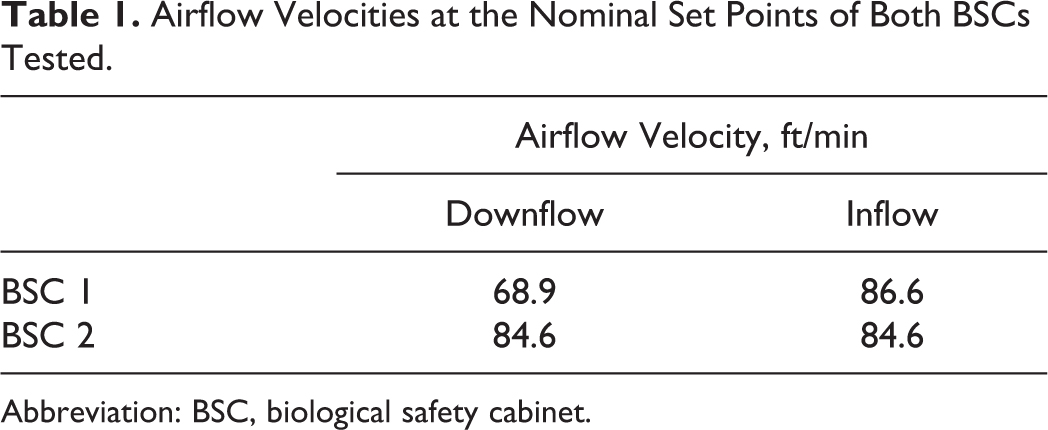
The tests were carried out with 2 Class II, type A1 biosafety cabinets from different manufacturers. Both units are compatible with EN 12469 and can be used for the handling of (potentially) hazardous microorganisms. Access opening measures were 7.9 × 46.9 in (20 × 119 cm, BSC 1) and 7.1 × 49.2 in (18 × 125 cm, BSC 2). Common special features include a 3-HEPA filter system and a V-shaped grille in front of the working area. Nominal set points for inflow and downflow velocities can be taken from Table 1. Lower values could be realized by downregulating the fan speed and/or readjusting the exhaust damper. Airflow velocities were determined according to EN 12469. For downflow measurements inside the cabinet, a thermal anemometer (model 454; Testo AG, Lenzkirch, Germany) was used. The sensor was placed in 8 positions in a horizontal plane 2 in (5 cm) above the bottom edge of the front window. Inflow velocity was measured volumetrically with an air-capture hood kit (model 8710 micromanometer attached to a model 8375 flow hood; TSI, Inc., Shoreview, Minnesota). Both instruments were calibrated before use. The cabinets were tested individually in a 194-ft2 (18-m2) laboratory room. Before testing, the room ventilation system was switched off.
Airflow Velocities at the Nominal Set Points of Both BSCs Tested.
Abbreviation: BSC, biological safety cabinet.
Microbiological Testing
To evaluate the ability of the safety cabinets to keep airborne particles from migrating out of the working area, protection experiments were conducted according to the relevant standards. The test setups given in EN 12469 and NSF/ANSI 49 are nearly the same. Spores of Bacillus subtilis var niger (ATCC 9372, 5×10⁸ colony-forming units [CFUs]/mL; obtained from Presque Isle Cultures, Erie, Pennsylvania) were aerolized inside or outside the cabinet with a CN31I NSF Collison Nebulizer (BGI, Inc., Waltham, Massachusetts). Spores that penetrated the air curtain were collected with different kinds of air samplers (impinger samplers, slit samplers with trypticase soy agar [TSA] culture plates, TSA settling plates). After sampling, media were kept in an incubator up to 48 hours. Colonies grown during this period were counted. Exact information about the settings and positioning of all devices used for microbiological testing can be taken from the standard instructions. Test conditions exactly corresponding to the requirements of the EN 12469 standard were designated as “undisturbed.”
Personnel Protection Testing
The nebulizer containing a spore suspension of 5.0 × 10⁸ CFUs/mL was mounted inside the safety cabinet with the opening directed toward the front window (Figure 1). To simulate the influence of an (unmoving) arm, a circular stainless-steel cylinder has to be placed at the center of the working area conforming to the standards. The duration of a complete test cycle was 30 minutes, including a 6.5-minute aerosolization period. Samples were collected outside the containment with 6 type AGI 30 impinger samplers (Ace Glass, Inc., Vineland, New Jersey) positioned around the cylinder, as well as with 2 slit-type air samplers (Impaktor FH5; Markus Klotz GmbH, Bad Liebenzell, Germany) positioned to the right and left of the cabinet front (Figure 1). A settling plate was placed over the front grille beneath the cylinder to serve as control plate. Sampling fluid from all impinger samplers was filtered by means of a sterile membrane filter unit (0.2 µm, MicroFunnel Filter Unit; Pall Corporation, Ann Arbor, Michigan) and placed on a small TSA plate under aseptic conditions. Slit sampler plates, the filter membrane-containing plate and the control plate were incubated at 37°C and checked for microbial growth after 24 and 48 hours. By standard definition, the cabinet passes the personnel protection test if CFUs recovered from the impinger samplers do not exceed 10 CFUs and total slit sampler plate counts do not exceed 5 CFUs. Each test was performed at least 3 times.
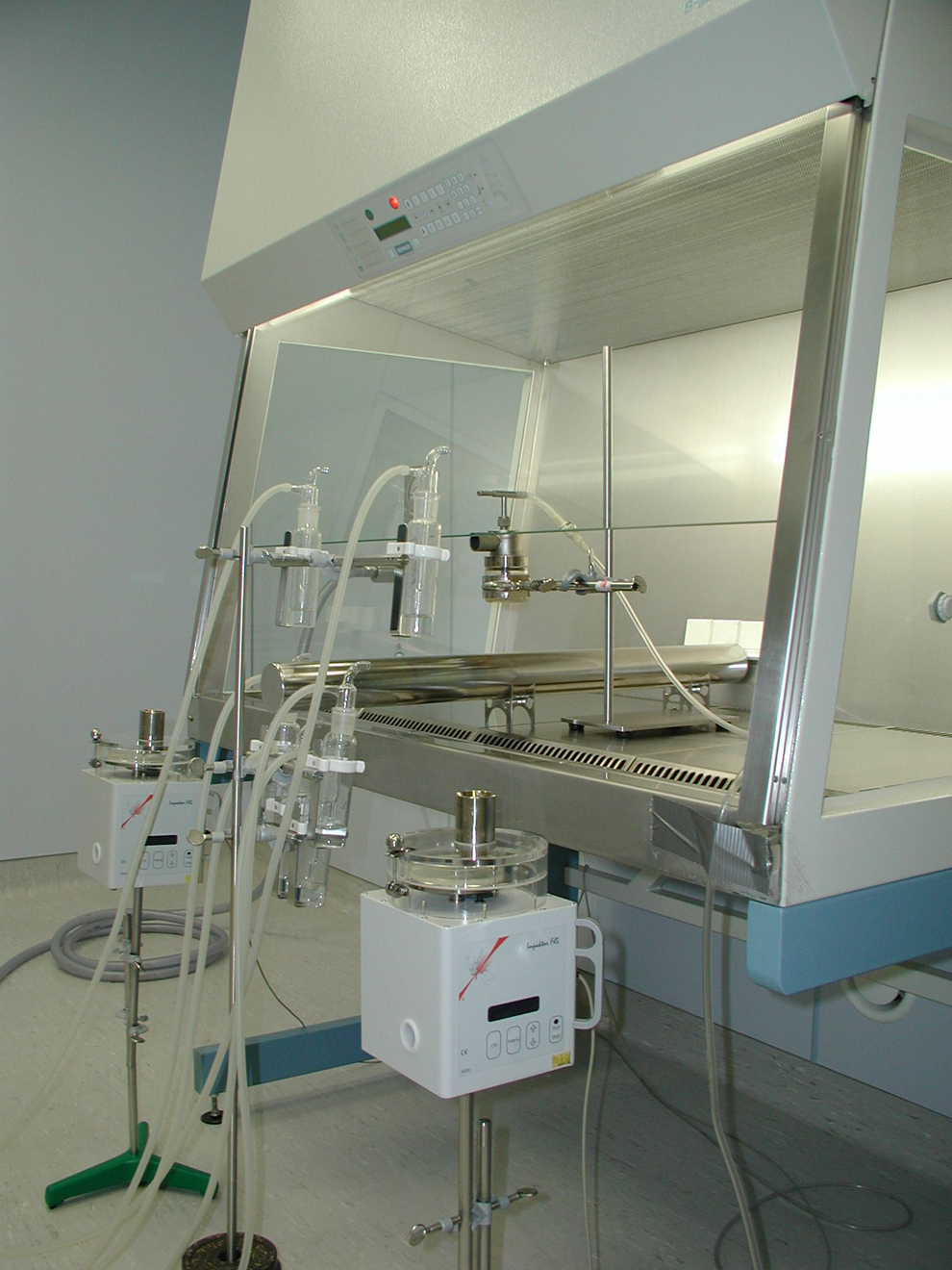
Personnel protection test setup according to European and American standards EN 12469 and NSF/ANSI 49, respectively.
Airflow Perturbation
Performance tests were carried out according to the usual practice (undisturbed) and under 4 simulated working conditions (disturbed). In contrast to the test conditions given in EN 12469 and NSF/ANSI 49, static and dynamic disturbances were caused with a dummy worker by introducing its arms through the front aperture, a static body-shaped plate positioned directly in front of the opening (body plate), a robot arm swinging inside the working area (moving arm), and a rail-based plate (walking man) moving parallel to the cabinet opening.
Dummy Worker
To simulate the static airflow perturbation caused by a person working in an upright sitting position, a dummy was placed on a chair in front of the BSC (Figure 2). The distances from head and chest to the front window were adapted to real working conditions determined before the testing. The penetration depth of the arms into the opening was defined as 9.8 in (25 cm).
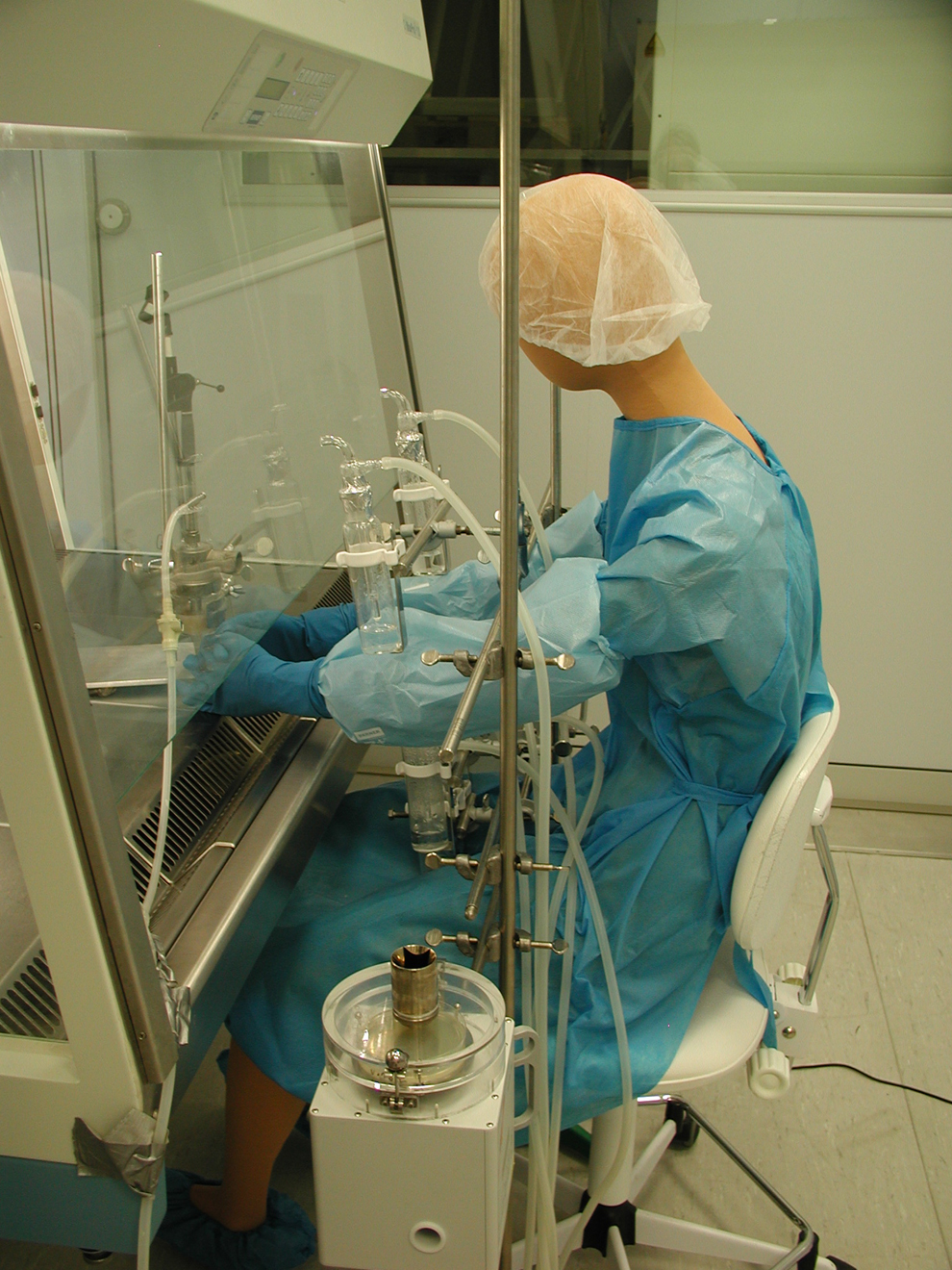
Personnel protection test setup with the dummy worker.
Body Plate
Airflow disturbances caused by a person standing directly in front of the BSC opening were simulated by a plate formed similar to the shape of a human body, with the following dimensions: height, 31.1 in (79 cm); upper edge, 17.7 in (45 cm); and lower edge, 13.0 in (33 cm). The plate was positioned parallel to the front window touching the outside edge of the cabinet (Figure 3). As defined in the standards, a cylinder was placed inside the working area to disrupt the airflow. Due to the small distance between the plate and the front aperture, the impinger samplers and the cylinder had to be brought into standard position via square cutouts in the plate.
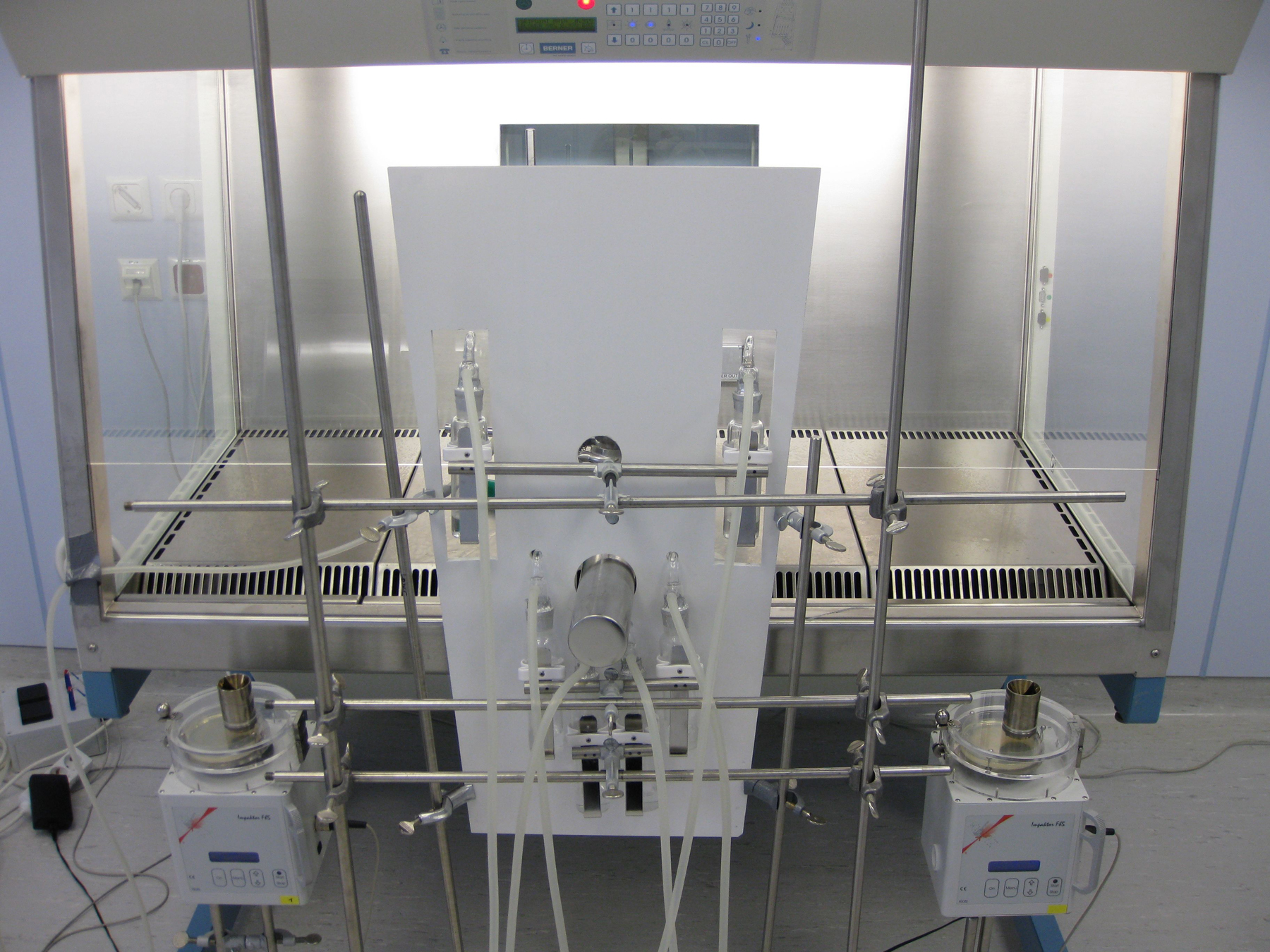
Personnel protection test setup with the body plate.
Moving Arm
To investigate the effect of a dynamic airflow perturbation within the front opening and inside the working area, a robot arm was used as an external disruptive factor (Figure 4). The arm could be moved electrically in a 2-dimensional way on a horizontal plane (maximum velocity: 35°/s). Reproducible movement patterns were triggered by an external control unit. The arm was placed centrally in front of the BSC extending 21.6 in (55 cm) into the working area. The use of personal protective equipment was simulated by providing the arm with a glove and a sleeve cover. During the test sequence, it swung from the central starting position 55° to the left or right side. At the turning points, the arm moved 4.3 in (11 cm) out of the front opening, to imitate the shoulder motion of a working person. Airflow perturbation was considered separately for each side of the cabinet.
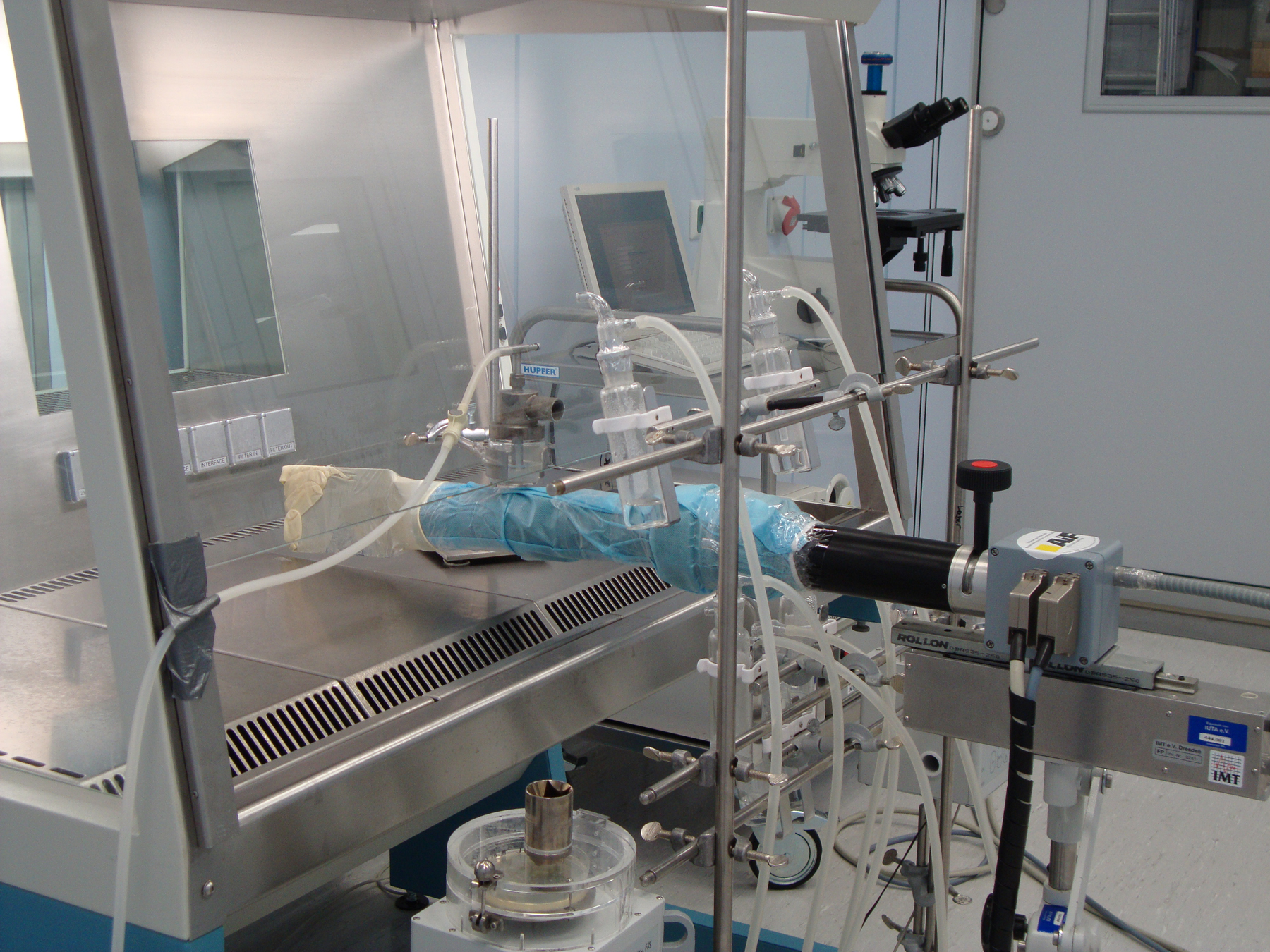
Personnel protection test setup with the moving arm.
Walking Man
A dynamic airflow perturbation induced by a moving person was simulated via a plate that ran parallel to the front aperture (Figure 5). The geometry and test instructions were derived from the European standard for fume cupboards. 10 The plate, with a width of 15.7 in (40 cm) and a height of 74.8 in (190 cm), was mounted on a moveable slide, which ran on a linear guide. The distance between the track system and the front aperture was 15.7 in (40 cm). Starting centrally in front of the opening, the plate ran 31.5 in (80 cm) farther than the outer edges of the BSC. At the end point of its motion path, the plate stopped for 30 s, before it returned to the starting position. The motion speed was fixed to 196.8 ± 19.7 ft/min (1.0 ± 0.1 m/s).
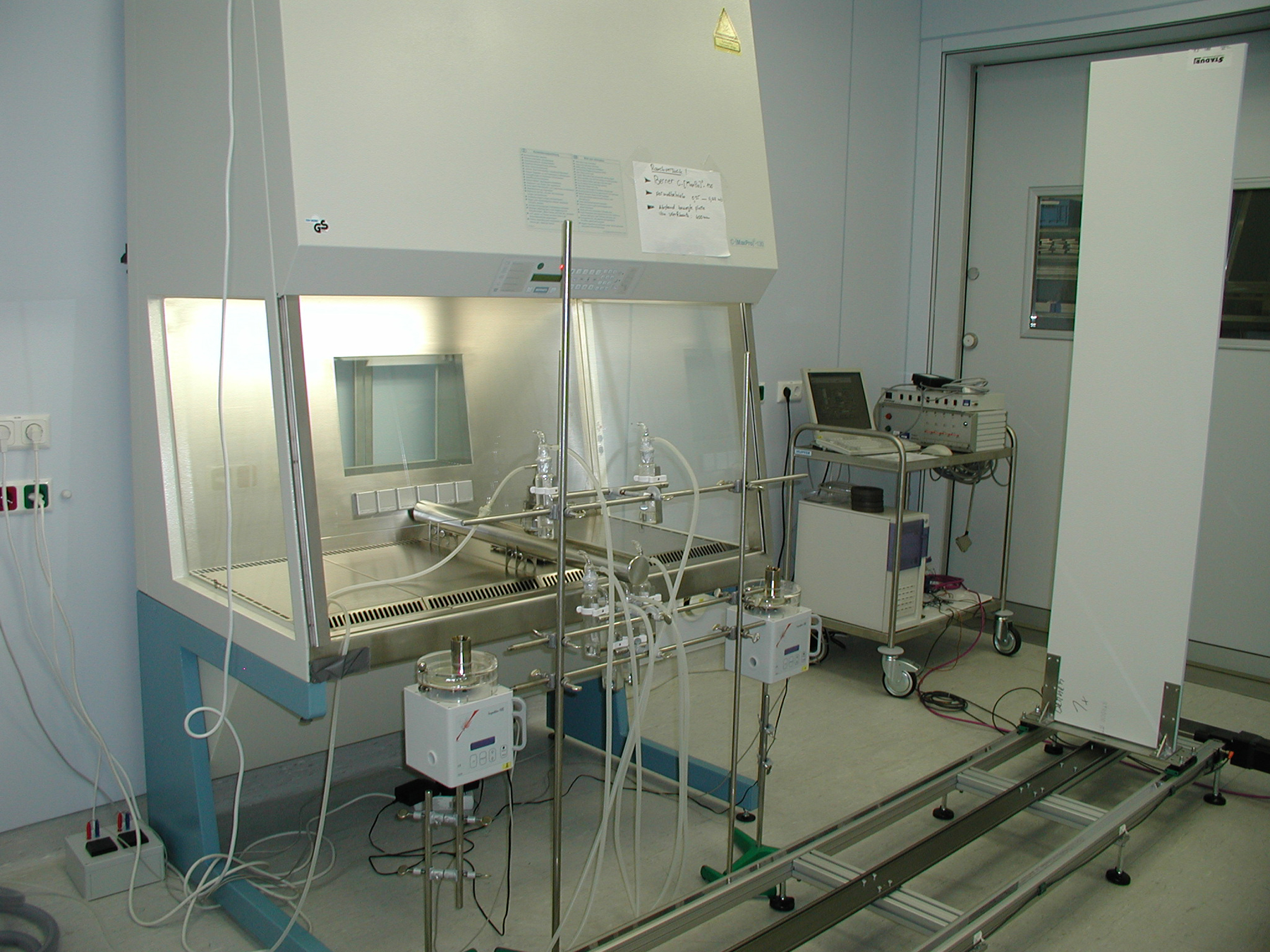
Personnel protection test setup with the walking man.
Results
As expected, lowering of downflow and inflow velocities weakens the personnel protection performance provided by both biosafety cabinets tested. Figure 6 shows the performance limits for the BSCs when downflow and inflow velocities were downregulated stepwise under undisturbed conditions. Starting from the nominal set point for downflow and inflow velocities, personnel protection could be maintained over a wide range of reduced settings (Table 1). However, air velocities <39.4 ft/min (0.2 m/s) resulted in a rising number of CFUs escaping from the working area. The safety limit below which protection cannot be said to be “effective” according to EN 12469 or NSF/ANSI 49 was reached when downflow velocities fell <21.7 ft/min (0.11 m/s, BSC 1) and <35.5 ft/min (0.18 m/s, BSC 2) and inflow velocities were <37.4 ft/min (0.19 m/s, BSC 1) and <25.6 ft/min (0.13 m/s, BSC 2). This represents a maximum acceptable negative deviation from the set point (reduction potential) of 69% or 58% for downflow velocities and 57% or 70% for inflow velocities, respectively. The average value was 64%.
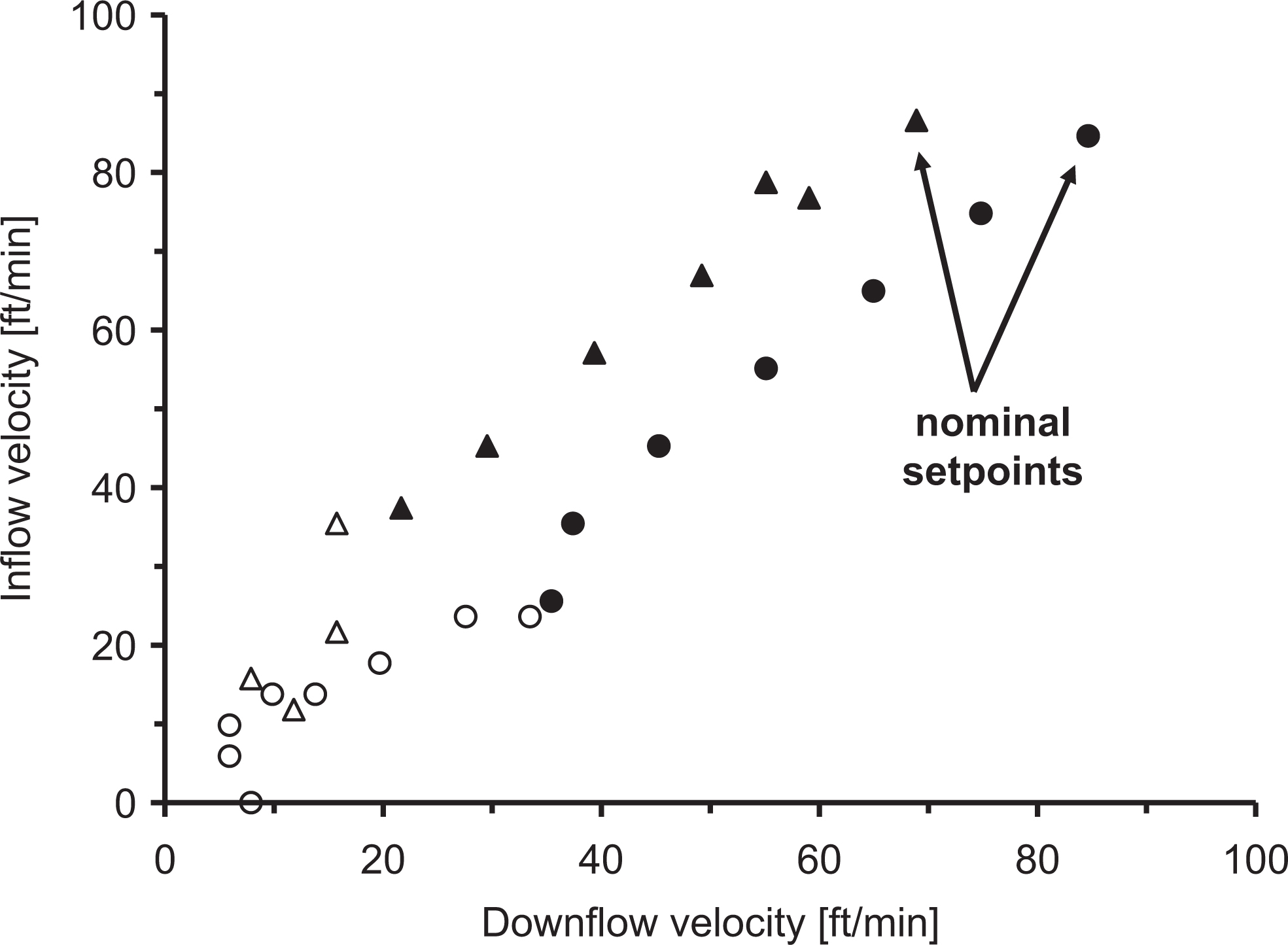
Performance limits (personnel protection test) of both biological safety cabinets (BSCs) tested in this study under undisturbed conditions. Filled symbols represent airflow combinations meeting the standard test requirements. Open symbols indicate airflow settings that did not fulfill the criteria (triangles: BSC 1, circles: BSC 2).
The performance limits of both cabinets decreased when they were operated under disturbed airflow conditions (Table 2). Static and dynamic factors influenced the protection capacities to different extents. In general, dynamic perturbation factors had a greater impact than static ones. Differences between BSC 1 and BSC 2, as well as between the perturbation of downflow and inflow velocities, could be detected but were mostly small and showed a similar trend. Without any airflow perturbation (undisturbed working situation), downflow and inflow velocities could be reduced on average by 63.5% before microbiological release from the containment exceeded the limits mentioned in EN 12469 and NSF/ANSI 49. Disturbances caused by the dummy worker had no or negligible effects on the personnel protection capacities of both BSCs, as seen from a nearly unchanged average airflow reduction potential (63%). However, with the second static disturbing construction (body plate) mounted directly to the cabinet opening, the tolerable performance limit reduction was clearly lower (on average 53%). A further decrease of the protective potential could be observed when the cabinets were exposed to dynamic disturbing factors. Interestingly, results measured with the moving arm differ in regard to the BSC side tested: the maximum tolerable airflow reduction on the right side was relatively high (on average 51%). The airflow velocities on the left side, in contrast, could be reduced by only 37% to fulfill the requirements for personnel protection. The reason remains unclear, but the differences may be due to the fact that the artificial arm was “protected” with a glove and a sleeve cover to mimic aseptic working conditions (Figure 4). Covering could have an impact on the shape of the artificial arm so that airflow perturbation showed an asymmetrical pattern. The highest disturbing effect was triggered by the walking man. With this kind of working simulation, downflow and inflow velocities could be reduced by only 24% before CFUs sampled outside the cabinets exceeded the standard threshold values. When the distance between the walking man and the front aperture was increased, airflow perturbation declined. From a distance of 31.5 in (80 cm), no influence on the protective function of the BSCs could be detected (data not shown).
Airflow Reduction Potential as a Function of Airflow Disturbing Factors.a
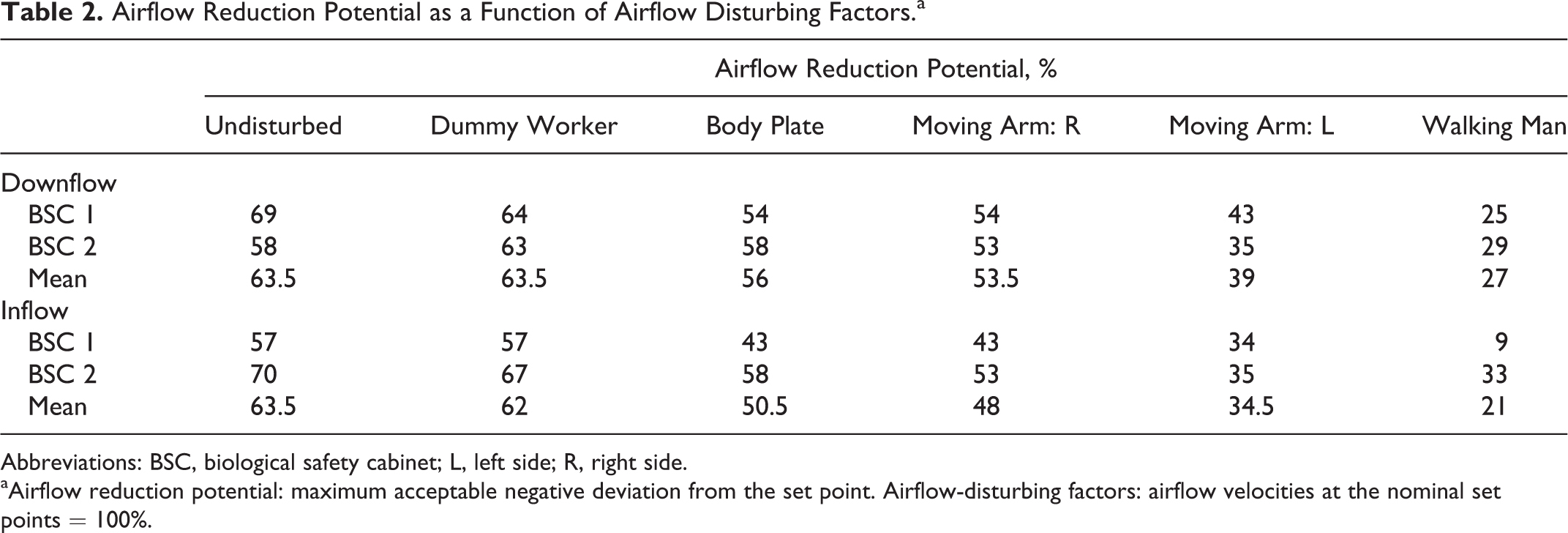
Abbreviations: BSC, biological safety cabinet; L, left side; R, right side.
Airflow reduction potential: maximum acceptable negative deviation from the set point. Airflow-disturbing factors: airflow velocities at the nominal set points = 100%.
Discussion
The personnel protection performance of 2 BSCs was tested under undisturbed as well as reproducible static and dynamic working conditions. The results show that, in particular, dynamic airflow perturbations caused by the movement of the arms or the whole body present a major challenge to these devices. While downflow and inflow velocities could be reduced up to 63% under undisturbed conditions to meet the minimum standard requirements, this safety margin shrank to only 24% when rapid walking of a person was simulated. BSCs are therefore more susceptible to the effect of operator movement and turbulence than what could be expected from the results of certification testings carried out in accordance with current standards. Although these deficiencies have been known for many years, they become acutely relevant because manufacturers tend to reduce nominal set points for inflow and downflow velocity close to the normative threshold limits. This is done in response to customer wishes for higher energy efficiency and more comfort. However, any attempt to reduce energy consumption at the expense of safety may prove counterproductive. The nominal set point for inflow and downflow velocity must be selected in such a way that even significant airflow perturbations caused by a moving worker can be compensated. A safety cabinet can normally not be used without external disturbances. To ensure that the protection capabilities are high enough to guarantee safe working under “everyday” conditions, standard requirements for the testing of BSCs should be extended. Artificial models, such as those used in this study, represent a first attempt to create a realistic but nevertheless reproducible test scenario. Especially dynamic devices such as the moving arm and the walking man could be helpful to mimic the most relevant airflow-perturbing factors within a typical work process. Even though not all problematic situations can be taken into consideration with this test setup, it would be a significant progress toward increased safety for laboratory staff as well as for products handled inside a BSC.
Footnotes
Declaration of Conflicting Interests
The author(s) declared no potential conflicts of interest with respect to the research, authorship, and/or publication of this article.
Funding
The author(s) disclosed receipt of the following financial support for the research, authorship, and/or publication of this article: This work was funded by the German Federal Ministry of Economics and Technology under the program PRO INNO II (PROgramme to foster the INNOvative capacity of small and medium-sized enterprises). The investigations were conducted in cooperation with the Institute of Energy and Environmental Technology e. V. (IUTA), Duisburg, Germany.