




Abstract
Since 2020, more than 2000 illnesses have been linked to foodborne outbreaks associated with onions. In 2023, the U.S. Food and Drug Administration (FDA), the Centers for Disease Control and Prevention, and state partners investigated a multistate outbreak of Salmonella Thompson infections linked to diced onions grown and processed in California. The outbreak resulted in 80 ill people, 18 hospitalizations, and one death reported in 23 states. FDA conducted a traceback investigation that included three illness clusters comprised of five total ill people from four Long-Term Care Facilities. Three inspections, each accompanied by sampling, were conducted at Processor A, Grower A, and Packing Shed A, respectively. The FDA analyzed 18 samples, six of which yielded Salmonella spp. isolates. Isolates recovered from water, sediment, and piping below irrigation equipment, near the growing environment, matched the outbreak strain. Additional isolates recovered from environmental samples matched eight Salmonella Saintpaul clinical isolates from 2022, four Salmonella Infantis clinical isolates from four states from 2022 to 2023, and two unrelated Salmonella Newport clinical clusters from 2021 to 2023. Laboratory, traceback, and epidemiological evidence indicated onions grown in three specific fields as the source of the outbreak, suggesting that the outbreak strain was present at the farm level, established in the soil, and potentially disseminated through agricultural water. Further processing into diced onions could have also spread and/or amplified the pathogen in the product due to the practices and conditions at the processor. This investigation highlighted the importance of outreach and education to enhance onion industry food safety practices and prevent future outbreaks. It also emphasized the need for focused research on onion industry practices, including growing, harvesting, curing, processing, packing, and holding.
Introduction
Since 2020, more than 2000 illnesses have been linked to multistate foodborne outbreaks associated with onions. In 2020, an outbreak of Salmonella Newport infections in the United States and Canada was linked to consumption of whole onions from Bakersfield, California. This outbreak resulted in 1,127 U.S. illnesses and 167 hospitalizations reported across 48 states and ranked as the third largest U.S. foodborne Salmonella outbreak in the last 30 years (McCormic et al., 2022). In 2021, the U.S. Food and Drug Administration (FDA), the Centers for Disease Control and Prevention (CDC), and state and local health and regulatory partners investigated an outbreak of Salmonella Oranienburg infections linked to bulb onions from the state of Chihuahua, Mexico, resulting in 1040 illnesses and 260 hospitalizations across 39 states, the District of Columbia, and Puerto Rico (Mitchell et al., 2024). The 2020 and 2021 outbreaks in the U.S. cost an estimated $203 and $188 million in consumer health-related losses, respectively (U.S. Food and Drug Administration, 2022).
In 2023, the FDA and CDC, in collaboration with state and local partners, investigated a multistate outbreak of Salmonella Thompson infections linked to diced onions from California, resulting in 80 illnesses, 18 hospitalizations, and one death, reported in 23 states. Here, we report the details of this investigation and focus on the traceback analysis that determined the growing location of the contaminated onions, the on-farm and processor investigation, and the laboratory findings that helped support public health actions.
Materials and Methods
Outbreak detection and epidemiological investigation
PulseNet, CDC’s laboratory network for foodborne disease surveillance, was used to identify outbreak-associated cases (U.S. Centers for Disease Control and Prevention, 2016). A case was defined as an infection in a person with Salmonella Thompson yielding an isolate highly related to the outbreak strain, within 0—6 alleles, by Core Genome Multilocus Sequence Typing (cgMLST) with dates of illness onset from August 2, 2023, to November 11, 2023. Local and state public health officials interviewed ill people using a combination of state and CDC-specific enteric disease-focused questionnaires to identify foods commonly eaten in the week before illness and collect detailed information for foods of most interest. This activity was reviewed by CDC, deemed not research, and was conducted consistent with applicable federal law and CDC policy.
Traceback investigation
A traceback investigation was initiated as per standard FDA traceback practices (Council to Improve Foodborne Outbreak Response, 2020; Irvin et al., 2021). Traceback cases were selected based on meal history, exposure to onions, and available purchase information. Information related to onion exposure, including dates, receipts, and/or other purchase documentation collected by federal, state, and local regulatory partners, was reviewed.
Laboratory investigation
Clinical isolates
Salmonella isolates from ill people were sent to PulseNet-affiliated public health laboratories and further characterized by whole genome sequencing (WGS) using standard methods; results were submitted to the PulseNet national database (Besser et al., 2019; Tolar et al., 2019; U.S. Centers for Disease Control and Prevention, 2016).
Product and environmental samples
State and FDA laboratories used the FDA Bacteriological Analytical Manual method to test for Salmonella spp. from food samples and environmental samples collected by investigators at various points in the supply chain, including the processor and farm (Andrews et al., 2021). The environmental swabs and water and sediment samples were collected using the grab and dead-end ultrafiltration (DEUF) method (Mull and Hill, 2009, 2012). Serotyping and phylogenetic analyses of WGS data (Davis et al, 2015) were conducted to characterize the isolates and compare them to clinical and historical product sample isolates (Crowe et al., 2017; Pightling et al., 2018).
Inspections
Based on the convergence noted in the onion traceback investigation, FDA and state partners inspected Processor A, Grower A, and Packing Shed A, located in California, to collect records, product, and environmental samples, including detailed interviews with farm and facility representatives (U.S. Food and Drug Administration, 2021).
Results
Outbreak detection and epidemiological investigation
A case was defined as infection in a person with a Salmonella Thompson yielding an isolate highly related within 0–6 alleles differences by cgMLST and illness onset during from August 2, 2023, to November 11, 2023, (Fig. 1). A total of 80 illnesses, 18 hospitalizations, and one death were reported from 23 states (Fig. 2). Ill people ranged in age from <1 to 90 years (median: 42) and 60% were female. Seven ill people resided in long term care facilities (LTCF) and investigators identified an illness sub-cluster of three people who resided in the same long-term care facility. A third case that resided in the same LTCF as two other cases was not included in the traceback investigation because records were unavailable to confirm onion exposure. In total, 27 out of 32 (84%) ill people reported eating or likely eating onions or were served pre-cut onions. Onion consumption in this outbreak (84%) is similar to a 2020 outbreak of Salmonella Newport infections linked to onions (78% reporting white or yellow onion consumption) and is higher than the reported background frequency (71%) for white and yellow onion consumption reported in the 2006–2007U.S. FoodNet Population Survey (McCormic et al., 2022; U.S. Centers for Disease Control and Prevention, 2007).
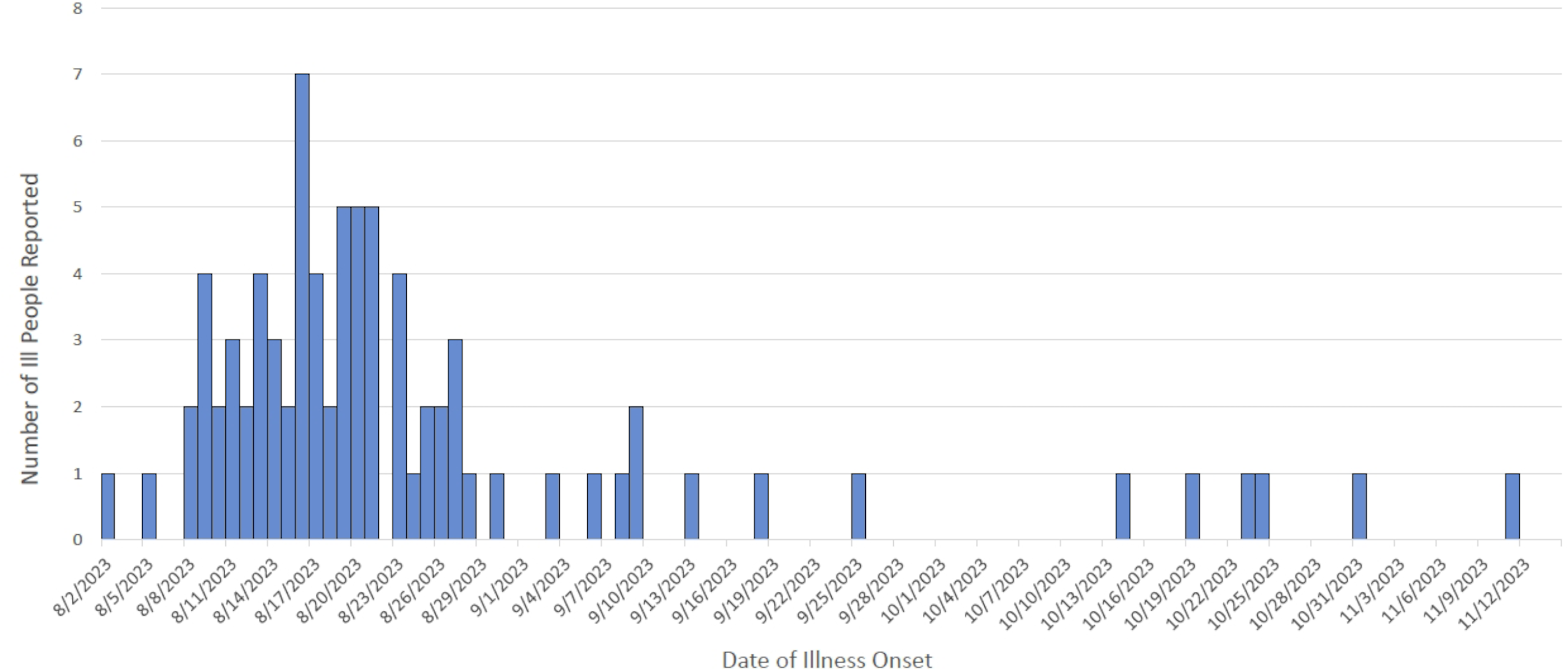
Epidemic curve of reported illnesses by onset date. Summary: Number of reported illnesses in the Salmonella Thompson onions-associated outbreak, by date of illness onset, August 2, 2023, to November 11, 2023, (n = 80). Some illness onset dates have been estimated from other reported information.
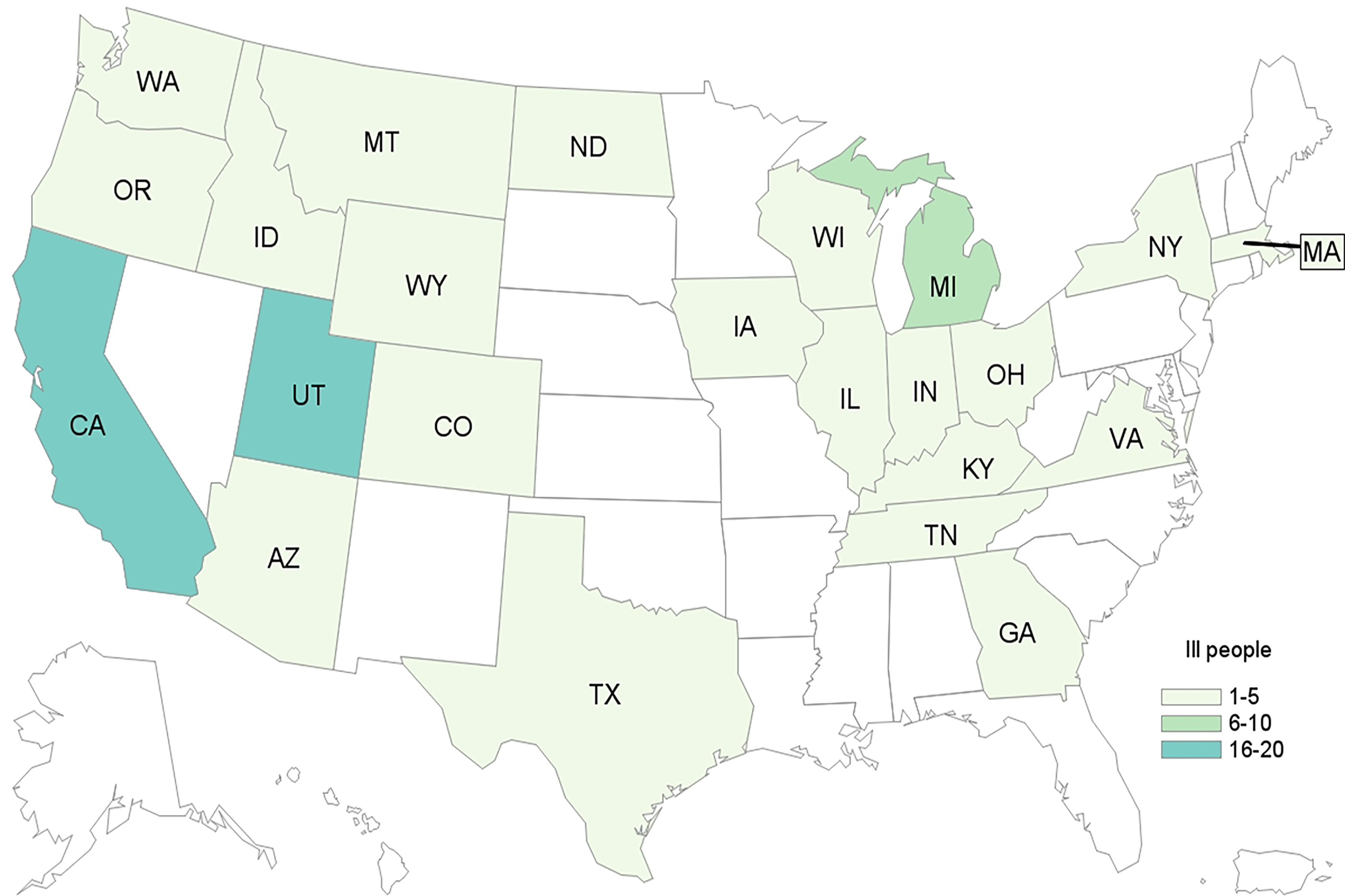
Map of residence of reported ill persons. Summary: Number of reported illnesses in the Salmonella Thompson onions-associated outbreak, by state of residence (n = 80).
Traceback investigation
The traceback investigation included three traceback legs representing five ill people and four LTCFs, with two people each in Illinois and Michigan and one person in Ohio (Fig. 3). Diced yellow onions were the only common food item supplied to each of the LTCFs. FDA identified nine shipments of diced yellow onions that would have been available for consumption at the LTCFs during the timeframe of interest, which was 2 weeks prior to each case’s illness onset. These shipments were processed from four raw lots. FDA identified four distributors, one processor (Processor A), two growers, and at least three growing fields for onions. The LTCFs included in the traceback investigation received diced yellow onions processed by Processor A and sourced from Grower A. FDA was unable to rule out whole onions as a potential source of illness.
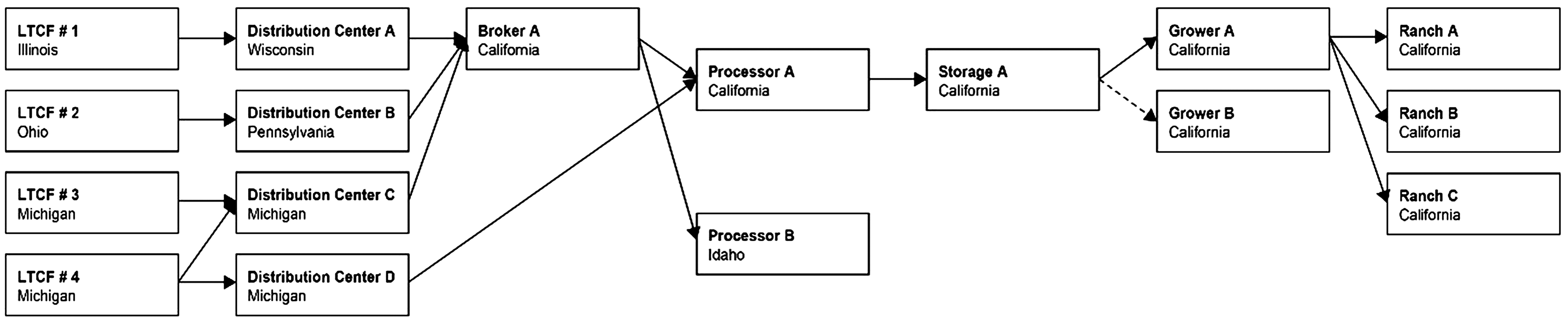
Traceback diagram of onions for the multistate outbreak of Salmonella Thompson infections in the United States, 2023. Purchases of implicated products are traced from the point of service, through the distribution chain, to distributors. Product originates from growers that are denoted on the right side of the diagram.
Inspections
At Processor A, investigators conducted a full-scope Preventive Controls for Human Food inspection and collected records, as well as environmental and finished product samples (Food and Drug Administration, 2019). During the inspection, investigators observed diced onions being blown onto previously sanitized food contact surfaces during the operational sanitizer rinse; improper storage and usage of sanitizer hose and sprayer; failure to remove diced onions from the conveyor belt prior to sanitizing the equipment; and the Quality Assurance technician releasing production areas for production even though food contact equipment was not clean. Inspections and sampling were also carried out at Grower A and Packing Shed A. Investigators were unable to observe growing, harvesting, packing, and holding activities at either location because inspections occurred after the conclusion of the onion season in this region. Inspections completed with no regulatory violations observed at either location. At Grower A, some of the fields that had been used in onion production had transitioned to other commodities. Carrots were growing on lots where implicated onions had been grown and the carrots were scheduled for harvest approximately 2 months after the inspection. One onion debris sample remaining from harvest was collected from the tailpit, the area where water flowed off from the growing area, on Ranch C. No carrot samples were collected from the field locations.
Laboratory investigation
In total, FDA analyzed 18 samples, 12 of which were collected from Grower A, five from Processor A, and one from Packing Shed A. During the inspection at Grower A, FDA collected eight environmental samples consisting of 99 sub-samples, three DEUF water samples consisting of seven sub-samples, and one product-debris consisting of one sub sample. Of the 12 samples collected from Grower A, six samples, comprised of three DEUF water samples collected from three different ranches (Ranch A–C), one environmental swab from piping with apparent dust and bird feces located below irrigation equipment on Ranch A, one sediment sample from Ranch A, and one soil sample from Ranch B, yielded Salmonella spp. isolates (Table 1). The remaining six samples were negative. All product and environmental samples collected at Processor A were also negative, as were environmental samples collected at Packing Shed A.
Summary of Salmonella Positive Results from Product and Environmental Samples Collected by FDA During the Inspection of Grower A, as Part of the Outbreak Investigation of Salmonella Thompson Infections in 2023

Matched the outbreak strain (2308MLJP6-1).
Matched two unrelated outbreak strains (2110MLJJP-1 and 2309MLJJP-1).
DEUF, dead-end ultrafiltration.
The Salmonella Thompson clinical isolates included in this outbreak were considered highly related and spanned 0–9 SNPs by WGS and by 0–6 alleles by cgMLST; additionally, these isolates were issued a unique allele code by PulseNet, which differed by at least four alleles from other PulseNet isolates. These clinical isolates were not highly related to any other historical outbreaks or non-clinical isolates (Fig. 4a).
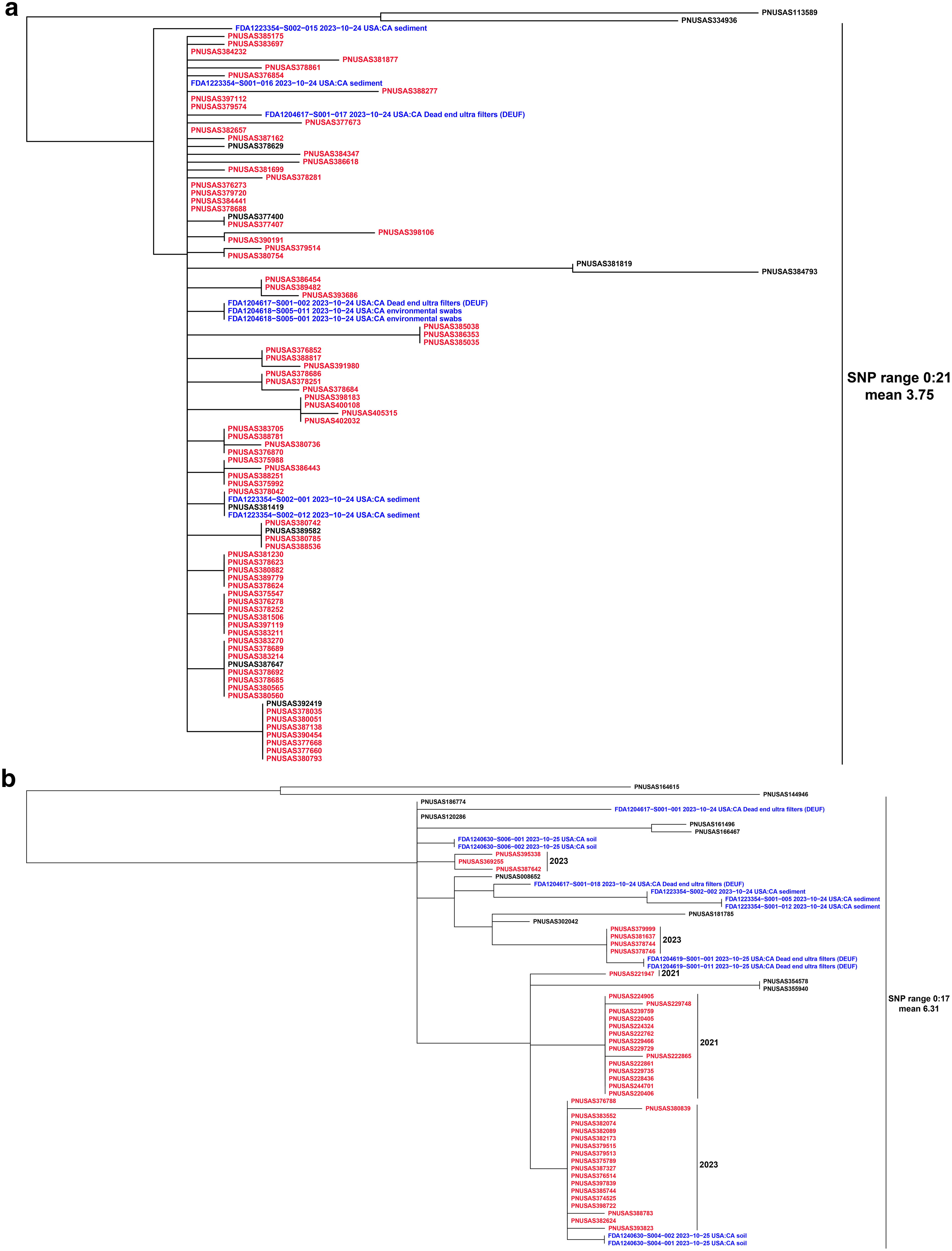
Isolates from samples #1204617 (DEUF), 1204618 (environmental swab) and 1223354 (sediment) matched the outbreak strain of Salmonella Thompson. Isolates from sample (#1204621) matched eight Salmonella Saintpaul clinical isolates with specimen collection dates in 2019 and 2022. An isolate from one sample (#1223354) matched four Salmonella Infantis clinical isolates with specimen collection dates in 2022 and 2023 (Fig. 4b). Isolates from four samples (#1204617, 1204619, 1223354, 1240630) matched Salmonella Newport clinical isolates with specimen collection dates in 2017–2023.
Investigational outcomes and public communications
On October 23, 2023, Processor A recalled diced yellow onions, diced celery and onions, diced mirepoix, and diced red onions with “Use By” dates between August 8, 2023, and August 28, 2023. Recalled products were distributed to foodservice, institutions, and retail in the domestic U.S. market and foodservice and institutions in the Canadian market. On October 25, 2023, FDA and CDC issued advisories that include details of the outbreak investigation and relevant recall information (U.S. Centers for Disease Control and Prevention, 2023; U.S. Food and Drug Administration, 2023).
Discussion
Impact and significance
This 2023 Salmonella Thompson outbreak linked to onions from California resulted in 80 reported illnesses. The 2020 Salmonella Newport outbreak linked to whole onions from California caused more than 1600 reported illnesses in the U.S. and Canada between June and October 2020 (McCormic et al., 2022; U.S. Food and Drug Administration, 2020). The 2020 and 2021 outbreaks linked to whole onions or bulb onions were two of the largest Salmonella outbreaks in the United States in over a decade. The 2023 outbreak of Salmonella Thompson infections linked to onions, while smaller in scope, highlights the continued food safety concern posed by contaminated onions.
Traceback and epidemiological challenges and successes
Upon outbreak detection, CDC worked with state and local health officials to systematically collect food consumption histories and other information reported by ill people during interviews with state and CDC-specific questionnaires. Overall, 27 out of 32 (84%) ill people reported eating or likely eating onions or were served pre-cut onions. Seven ill people were identified that resided in LTCF, with three living in the same LTCF location, representing an illness subcluster and indicating contaminated food causing the outbreak was likely consumed at the LTCF. The identification of illnesses linked to LTCF was critical to the investigation; menus and food product invoices were readily obtained and assessed for commonly sourced foods across facilities. The analysis of LTCF invoices identified processed pre-cut onions as a food item commonly identified in multiple LTCF invoice records and a potential source of the outbreak.
As others have noted, onions can be a stealth ingredient and are often consumed in mixed dishes with consumers unaware of previous consumption (Mitchell et al., 2024). Ill people who resided in LTCFs had difficulty remembering what foods they ate prior to illness onset; however, investigators were told they generally consumed menu items served to them by LTCF staff and may have been exposed to onions based on a review of menus and invoices of menu ingredients.
In addition to reviewing supplier records obtained from LTCF settings and assessing food exposure data collected through patient interviews, other investigational techniques were used to assist hypothesis generation. Comparing case distribution and outbreak timeframe to historical outbreaks linked to onions further supported the hypothesis that the outbreak vehicle could be onions and that traceback for onions should be pursued. Several historical outbreaks linked to onions have had case distributions and seasonal patterns like those in this outbreak. For example, since 2016, there have been three multistate outbreaks of Salmonella with a suspected link to dry bulb onions (McCormic et al., 2022). These outbreaks varied in size from 29 to 149 illnesses and were all identified between August and September of their respective years (McCormic et al., 2022). Of these outbreaks, most span several or more states and multiple geographical areas. These outbreak patterns were not statistically evaluated but were still considered noteworthy for outbreak hypothesis development; however, the ultimate outbreak attribution was based on a combination of epidemiological, traceback, and laboratory findings, including isolating the outbreak strain of Salmonella Thompson from the onion-growing environment.
In the 2020 outbreak investigation, a conclusive root cause was not identified at the farm the onions were sourced from, but there were several contributing factors, with the leading hypothesis that contaminated irrigation water used in a growing field could have led to contamination of the onions (McCormic et al., 2022). In the 2021 outbreak, an on-farm investigation was not feasible, and therefore the source of the outbreak pack was not determined (Mitchell et al., 2024). During the 2023 outbreak investigation, investigators were unable to directly observe Grower A and Packing Shed A’s operations because growing, harvesting, packing, and holding activities had ceased for the season. The time lag between identifying an outbreak, confirming that it is linked to onions, and the investigative partners’ ability to observe the field they were grown in is long, despite efforts to shorten it as much as possible. This is a characteristic challenge of produce-related outbreaks, as evidenced by similar past outbreaks linked to onions and other produce such as melons and leafy greens (Irvin et al., 2021; Jenkins et al., 2023; McCormic et al., 2022). However, Grower A indicated that prior to harvest there was an over-watering event on the onion field of interest that was initially done to loosen the soil for harvest equipment. This over-watered field was left to dry out for approximately a week, after which the onions were harvested and transported to Packing Shed A. The onions were not otherwise cured. They were left stacked in plastic totes under an open-air awning for up to 2 weeks until they were transported to Processor A. During the inspection at Processor A, the investigator observed that the firm was not implementing their own sanitation procedures and noted several concerning sanitation practices as discussed previously. Although produce may become contaminated on the farm before reaching a fresh-cut produce processing establishment, the practices and conditions at the processing establishment may also lead to pathogen contamination or amplification of the product contamination. If incoming produce is contaminated on the farm, processing produce into fresh-cut products and breaking the natural exterior barrier of the produce could increase the risk of bacterial growth and contamination. When produce is diced, chopped, or shredded, plant cellular fluids are released and provide a nutritive medium in which pathogens, if present, can survive and grow (U.S. Food and Drug Administration, 2018). In addition, the onions were not cured prior to processing. Curing is more common with long-day onions, which stay in long-term storage (National Onion Association, 2022). Although curing may not be a common practice for onions destined for processing into a fresh-cut finished product, research suggests that ensuring dry conditions combined with curing time after drip irrigation of bulb onions may reduce pathogen levels due to the hurdle concept, which applies a combination of approaches to ensure the safety of the product (National Onion Association, 2022). Salmonella Thompson isolates recovered from samples of environmental swabs, DEUF, and sediment collected at Grower A matched the 2023 outbreak strain. This suggests that the outbreak strain was present at the farm level, possibly introduced by animal intrusion, established in the soil, and disseminated through agricultural water or dust. In addition, multiple other Salmonella isolates were recovered from environmental and water samples collected from Grower A that were linked to illness. However, there was not enough epidemiological or traceback evidence to implicate a product or source of contamination for these illnesses. Similar to the recurring Salmonella outbreaks linked to melons from southwest Indiana (Jenkins et al., 2023), the recovery of multiple Salmonella isolates linked by WGS to clinical isolates suggests that there is the potential for widespread environmental contamination in the region. Research is necessary to assess the extent, source, and route of the contamination in the farm environment. FDA has developed a prevention strategy to help prevent salmonellosis outbreaks associated with bulb onions (U.S. Food and Drug Administration, 2022). One of the measures in the strategy is to support research efforts to better understand bulb onion production practices and the impact of different soil conditions and curing practices on the safety of bulb onions. The agency aims to support industry-led efforts to develop and implement best practices for onion production. It is important to obtain high rates of compliance with the applicable FDA food safety requirements across the onion supply chain through education, outreach, and technical assistance to the growers, processors, and distributors of onions and fresh-cut onion products.
Conclusions
Epidemiological, traceback, and laboratory evidence identified onions as the source of this outbreak, which resulted in 80 illnesses, 18 hospitalizations, and one death, reported in 23 states. Traceback confirmed a link between onions grown by Grower A in California and multiple POS where ill people purchased or were exposed to onions. The outbreak strain was identified in samples collected by the FDA, including samples of complex environmental swabs and sediment. In addition, other Salmonella serotypes and strains were recovered from environmental samples that matched clinical isolates by WGS, but there was not enough epidemiological or traceback information to link these other illnesses to this outbreak. This outbreak supports the need for ongoing education and outreach to the onion industry and specific research focused on onion industry practices, including growing, harvesting, curing, packing, processing, and holding. It is critical to identify improved practices across the supply chain that could prevent contamination of onions.
Footnotes
Acknowledgments
The assistance of state partners, including the contributions of the California Department of Public Health, California Department of Food and Agriculture, Ohio Department of Health, Illinois Department of Public Health, Michigan Department of Agriculture and Rural Development, and Michigan Department of Health and Human Services, was crucial in the collection and analysis of product samples, traceback documents, and epidemiological information. Special thanks to FDA’s emergency response coordinators, laboratory staff, and Division of Produce Safety, as well as Crystal McKenna, Joseph Frost, Kurt Nolte, and other FDA staff instrumental in the outbreak response coordination for their tireless efforts and assistance.
Funding Information
No funding was received for this article.
Disclaimer
The findings and conclusions in this report are those of the authors and do not necessarily represent the official position of the Centers for Disease Control and Prevention and the U.S. Food and Drug Administration.
Disclosure Statement
No competing financial interests exist.