



Abstract
In spite of billions of dollars spent on cancer research each year, overall cancer incidence and cancer survival has not changed significantly in the last half century. Instead, the recent projection from the World Health Organization suggests that global cancer incidence and death is expected to double within the next decade. This requires an “out of the box” thinking approach. While traditional medicine used for thousands of years is safe and affordable, its efficacy and mechanism of action are not fully reported. Demonstrating that traditional medicine is efficacious and how it works can provide a “bed to bench” and “bench to bed” back approach toward prevention and treatment of cancer. This current review is an attempt to describe the contributions of traditional Korean medicine (TKM) to modern medicine and, in particular, cancer treatment. TKM suggests that cancer is an outcome of an imbalance of body, mind, and spirit; thus, it requires a multimodal treatment approach that involves lifestyle modification, herbal prescription, acupuncture, moxibustion, traditional exercise, and meditation to restore the balance. Old wisdoms in combination with modern science can find a new way to deal with the “emperor of all maladies.”
Introduction
Despite the tremendous efforts and financial support invested in the prevention and treatment of cancer, the global cancer incidence and survival rate have not significantly changed in recent decades and are expected to continue increasing over the next decade. Additionally, the efficacy and the safety of primary approaches for cancer treatment in conventional medicine, which include surgery, chemotherapy, and radiation therapy, fall short of expectations. 1 Although progress in treating cancer is still lagging, modern science has made some major progress in understanding cancer on a molecular basis. 2 Pathways associated with cancer have been linked to chronic inflammation, a major modulator of tumor progression, 3 with more than 90% of cancer causes related to environmental and lifestyle factors that can be prevented. 4 These studies support the importance of lifestyle change along with systemic cancer treatment using a multitarget therapeutic approach to prevent and treat cancer.
Recently, increased emphasis has been put on researching traditional medicines that have been used to manage cancer for thousands of years. Many herbs and medicinal plants have been reported to prevent and inhibit cancer,5,6 and between 1986 and 2006, 63 of 81 (77.8%) drugs approved for cancer treatment either were natural products, were based on natural products, or mimicked natural products in one form or another. 7 Many promising dietary agents or medicinal plants in eastern countries have been identified that modulate inflammatory processes and suppress multiple pathways of carcinogenesis.3,5,6 In addition, the holistic approach of traditional medicine is now being integrated into modern medical care to supplement the weaknesses of the current conventional medical system.8,9 Based on scientific evidence, treatment modalities such as medicinal plants, acupuncture, traditional exercise, and meditation have become an important part of an integrative oncology setting.10,11
Traditional Korean medicine (TKM) is one of traditional East Asian medical systems and has been used for treating various kinds of disease, including cancer, for more than 2000 years. 12 TKM has been influenced by traditional Chinese medicine (TCM) at the origin but developed uniquely in adaptation to its circumstance and culture with distinct features. The main philosophy of TKM is a holistic approach incorporating the concepts of the body–mind–spirit network, the balancing theory of Yin–Yang and Five Phases, and a symptom differentiation method. While these concepts are also core principles in TCM, TKM is characterized by an equal emphasis on the individual’s differences as well as symptom pattern differentiation, and these characteristics are well reflected in 4 constitutional medicine, or Sasang medicine.13 -15
The broad aim of this article is to provide a general outline describing cancer management in terms of TKM practitioners’ perspectives along with scientific evidence regarding TKM modalities, especially in the use of natural products in treating the disease. In addition, the similarities and differences in cancer treatment strategies between TKM and modern medicine, including TKM’s integrated approaches to cancer care, are also suggested to offer new insight. While studies published in Korea were mainly reviewed to reflect current research trend, studies from various sources reporting the efficacy of acupuncture, moxibustion, or herbs are also reviewed as major treatment modalities overlap between traditional medical systems.
Different Perspectives on Cancer
The Biology of Cancer in Modern Science
Modern medical science has found that cancer is a hyperproliferative disorder that involves transformation, dysregulation of apoptosis, proliferation, invasion, angiogenesis, and metastasis. 3 Extensive research has also revealed much about the biology of cancer. Drugs used to treat most cancers are those that can block cell signaling, including growth factor signaling (eg, epidermal growth factors [EGFs]), prostaglandin production (eg, cyclooxygenases [COX-1 and COX-2]), inflammation (eg, inflammatory cytokines: nuclear factor kappa-light-chain-enhancer of activated B cells [NF-κκB], tumor necrosis factors [TNFs], interukin-6 [IL-6], and chemokines), drug resistance gene products (eg, multidrug resistance [MDRs]), cell cycle proteins (eg, cyclin D1 and cyclin E), angiogenesis (eg, vascular endothelial growth factor [VEGF]), invasion (eg, matrix metalloproteinases [MMPs]), antiapoptosis (eg, B-cell lymphoma 2 [bcl-2], B-cell lymphoma extra-large [bcl-XL], X-linked inhibitor of apoptosis protein [XIAP], survivin, and FLICE-like inhibitory protein [FLIP]), and transcription factors (eg, c-myc, activator protein 1 [AP-1]).5,16
Traditionally, approaches to drug discovery have been aimed at systemic targets. However, when Paul Ehrlich announced his pioneering search for “magic bullets” that could selectively target a disease-causing organism, 17 a gradual shift began from using complex extracts to using small, defined molecules, leading to today’s targeted therapies such as very specific binding monoclonal antibodies. In spite of this progress, poor efficacy, undesirable side effects, high cost, and tumor resistance have hindered the development of “smart” drugs that target specific cell signaling pathways. 18 One of the reasons why these drugs have failed is because most modern searches for new cancer drugs employ the 1-target, 1-drug paradigm. Clearly, cancerous phenotypes result from the dysregulation of hundreds of genes at multiple steps in cell signaling pathways. 2 Therefore, inhibition of a single gene product or cell signaling pathway is unlikely to effectively prevent or treat cancer. Accordingly, the current paradigm for cancer treatment is either to combine several single-target drugs or to design drugs that target multiple signaling pathways.
Cancer: A Disease of Imbalance and Lifestyle
In modern medicine, cancer has usually been viewed as a set of clonal cells that have outgrown their environmental constraints and control mechanisms. These cells are abnormal and are considered to be foreign to the body; thus, they are targeted for elimination by aggressive and destructive therapies. In contrast, in traditional medicine, cancer is viewed as part of a syndrome where the presenting features represent an imbalance of the body–mind–spirit network as a whole.19,20 This indicates that cancer is a systemic disease from the beginning, and the whole body is considered to be equally important as the tumor itself. It is believed that by strengthening and restoring this balance, the normal pattern will be restored and this will help resolve the cancer.
To restore the balance of the body–mind–spirit network, multimodalities such as diet and lifestyle modification, medicinal plant prescriptions, acupuncture, moxibustion, traditional exercise, and meditation can be employed to the cancer patients. The growing number of people living with advanced cancer presents numerous unique, multidimensional needs that require a holistic approach to be adequately addressed. 21
Considering that carcinogenesis is a multistep process involving the transformation, survival, proliferation, invasion, angiogenesis, and metastasis of a tumor occurring over decades, daily lifestyle is especially important in the prevention and development of cancer. As most biological activities will result from complex interaction between proteins and cells working with environmental factors, and are not necessarily driven directly by genetics, only 5% to 10% of all cancer cases can be attributed to genetic defects. The remaining 90% to 95% have their roots in environmental and lifestyle factors, including cigarette smoking, diet (consumption of fried foods, red meat), alcohol, sun exposure, environmental pollutants, infections, stress, obesity, and physical inactivity.
Traditional Korean Medicine and Cancer
Nourishing Life and Preventive Medicine
According to the theory of TKM, common causes that impede healthy living are an excess of mental, physical, and sexual activities; immoderate indulgence in outside pleasures lessens a person’s original life span.
Life patterns should follow the change of seasons to nurture Yin and Yang in the human body. In the seasons of spring and summer, which belong to Yang, more active and outward mental and physical activities during daytime are encouraged, whereas in fall and winter, which belong to Yin, passive and inward activities are recommended. 22 Following the circadian rhythms of day and night also helps preserve health.
Internal impairment due to the 7 emotions (joy, anger, worry, pensiveness, sadness, fear, and fright) is considered as the fundamental and initial cause of many chronic diseases. Maintaining a good state of mind while regulating temperament and following a moral code is indispensable for nourishing life and for disease recovery. Continuous emotional turbulence can result in an imbalance of the entire body.23,24
In the context of TKM, the human body consists of Yin and Yang. The material body, which belongs to Yin, is nourished by food from the earth, while the spirit, which belongs to Yang, is nourished by Qi from heaven. Relaxed, deep breathing from nose to lower abdomen (called Dan-jeon) is a life-nourishing technique for gathering Qi. Once the spirit becomes sound and healthy from accumulating Qi, the vital energy in the body springs from it. 23
Traditional exercises combined with meditation are necessary to promote the flow of Qi and can slow the aging process. Swallowing saliva after tapping the teeth several times in the early morning is emphasized as one of the important techniques for longevity. Although there are some differences, traditional exercise and meditation techniques are inherent to Qigong, Tai-chi, and meditation and are now encouraged by the medical field.25 -27
Geriatrics is embraced, with treatments providing supplemental medicinal plants or prescriptions for the weakened Yin and Yang of the elderly. Combinations of “superior medicinal plants,” which can help invigorate and replenish Qi and blood, are administered to the elderly persistently to rejuvenate the body and are generally considered very safe despite long-term use. Medicinal plants such as Rehmannia glutinosa, Polygonum multiflorum, and Cuscuta chinensis are frequently used for this purpose. 23
Concepts of Cancer in Traditional Korean Medicine
Modern medicine has usually recognized disease as a thing of substance, while TKM has recognized disease with a phenomenalistic viewpoint. This implies that modern medicine analytically focuses on the disease itself, while TKM understands disease as one of the phenomena within a whole body. All symptoms and signs that can be detected by human senses are considered as the disease itself in TKM, and cancer can also be detected in various ways, in accordance with its appearance and character. 28
Jeok-Chi, a type of disease in TKM, is closely linked to abdominal tumors accumulated over a long period. Jeok means immovable tumor, and Chi means movable tumor. This can be related to malignant and benign, invasive and noninvasive, advanced and early-stage tumors, respectively. 29 Although Jeok-Chi is a tangible disease, it originates from an intangible disorder of Qi. Stagnation of Qi induces stagnations in dampness, heat, phlegm, blood, and food consecutively. At the stage of stagnation of Qi, stagnation of dampness or stagnation of heat, the tumor does not surface. However, at the phlegm, blood, and food stagnation stages, the tumor can be detected by human senses (Figure 1). 23

Concept of cancer and inflammation in traditional Korean medicine.
The stagnation of Qi that accounts for tumor development can arise from various causes, including external, internal, and environmental factors. Among these factors, TKM puts emphasis on internal factors such as emotions and physical inactivity. Among 7 emotions, anger, worry, and pensiveness in particular cause stagnation of Qi, whereas joy, fear, fright, and sorrow do not cause stagnation of Qi. 23
The stagnation of Qi can lead to diminished local blood circulation and can create localized hypoxic conditions that may promote inflammation and tumor growth.30,31 This traditional theory is consistent with recent studies. Red blood cell deformity that resists normal blood flow was found in small cell lung cancer patients as the principal determinant of capillary blood flow, which may result in decreased tumor oxygenation and decreased delivery of chemotherapeutic agents to the tumor tissue. 32 Another study showed that reduced disaggregation of red blood cells is evident in patients with ovarian cancer as well as a tendency to have hyperviscous blood. 33 Removing the pathologic products can make blood flow smoothly and can increase the local perfusion of oxygenated blood into tissues. The function of blood in carrying oxygen to tissues is directly related to the function of Qi.30,34
Another disease name that relates to cancer is Ong-juh, which refers to all acute and chronic inflammation, including abscesses and carbuncles. Ong means acute inflammation and belongs among Yang symptoms, such as swelling, heating, and pain. Juh means chronic inflammation, which belongs among Yin symptoms rarely associated with swelling, heating, and pain. 35 Various kinds of cancer and chronic inflammation are related to Ong-juh. Treatment strategies vary widely according to symptoms of Yin and Yang. Juh, a Yin symptom, exhibits poorer prognosis and more aggressive tumor development than Ong, a Yang symptom. The main cause of this disease is accumulated toxic substances in the human body, though it can also be influenced by Jeok-Chi.23,36
Principles of Cancer Prevention and Therapy in Traditional Korean Medicine
The philosophical strategy of TKM puts emphasis on holistic modulation and improvement of the whole body rather than just removing tumors or killing cancer cells. It is the patient, not the tumor mass, that should be treated, pursuing the goal of extending life expectancy and improving quality of life. Most chronic diseases, including cancer, are caused by continuous imbalance of the network of body, mind, and spirit. The holistic approach is applicable in the broad spectrum of diagnosis, treatment, and prognosis in TKM (Figure 2).

Multimodalities for cancer treatment in traditional Korean medicine.
The body’s internal condition plays a dominant role in cancer onset, meaning that exogenous pathogenic factors can induce cancer only when the body’s own defense system fails. According to TKM, chronic inflammation that cannot return to the normal state is mainly due to Qi deficiency. 23 Invigorating Qi and expelling pathogenic factors are the fundamental therapies used in cancer prevention and treatment and are used alternately or concurrently according to the physical condition of the patient and the severity of the pathogen.
Most modern medicine therapies for cancer concentrate on expelling the pathogenic factor. This makes the patient weak and tired, which increases vulnerability to cancer recurrence due to immune system deficiency. On the other hand, TKM emphasizes the balance of Qi reinforcement and pathogen expulsion, so the clinical purpose is not complete tumor response, but partial response or stable tumor disease while maintaining the body’s defenses. This is a more important strategy for a cancer patient with late-stage disease, whose Qi is lacking. Even during the early stage when aggressive therapy can be applied to expel the pathogen, TKM is very cautious not to cause further harm to Qi. 12
TKM insists that aggressive therapy for tumor inhibition should be applied to a half-way point and then stopped, because aggressive therapy weakens Qi, which could result in tumor recurrence. In turn, invigorating Qi therapy to activate the immune system also should reach a half-way point and be stopped, because extreme Qi invigoration can induce Qi stagnation, which can also lead to tumor recurrence. 23
For the same cancer type in different persons, diagnosis and treatment schemes should be tailored according to their symptom pattern and constitution. The main categories for symptom pattern differentiation include the following: Yin and Yang, deficiency and excess, cold and hot, and superficial and deep. In detail, common trends in symptom patterns that manifest in many cancers include the following: stagnation of Qi and blood, phlegm and dampness accumulation, severe deficiency, and interior heat or heat-dampness. 30 The symptom pattern differentiation also takes into consideration the differentiation of the 4 constitutions. Basically, an accurate symptom pattern differentiation, with individual characteristics such as constitution, can provide the most powerful tool for cancer prevention and therapy in TKM.
Lifestyle Modification
TKM suggests that if a person is diagnosed with a potentially fatal disease like cancer, the patient’s overall lifestyle should be modified to focus on restoring a healthy lifestyle, because it is difficult to treat cancer with only outside therapeutic modalities. The first step toward a healthy lifestyle is to step away from unhealthy concern over worldly affairs and seek peace via a mindset change. 23 As mood disorders such as helplessness and hopelessness may inhibit immune system function, treating depression and feelings of hopelessness in terms of the body–mind–spirit network is important in the management of cancer patients, and this may not only heighten quality of life but also increase survival.37,38
It is interesting to note that the approach used in psychosocial intervention in cancer is different between modern medicine and traditional medicine. Modern psychosocial interventions put emphasis on an active and positive attitude, with a “fighting spirit” toward cancer and life, in order to cope with disease. However, Eastern cultures and philosophies emphasize the importance of living with cancer while maintaining peace, balance, and harmony. 8 If a patient focuses on winning the battle with cancer, of which the outcome is uncontrollable, it might result in a greater sense of loss for the patient. Instead, traditional intervention focuses on promoting a positive attitude toward care, treatment, and rehabilitation and helping patients accept the unpredictability of life, of cancer, of recurrence, or even death. 39
Regular mountain climbing is one of the most recommended exercises because it can offer moderate to intense physical activity, a feeling of fulfillment, fresh air, and detoxification by sweating. A simple and plain diet, instead of a calorie-dense diet, is another recommended change for treating cancer and maintaining a healthy life.
Medicinal Plant Prescriptions
Using medicinal plants is one of the vital therapeutic modalities in TKM and requires detailed knowledge of the medicinal characteristics not only of each plant but also of the combined effects of individual components in formulations. Medicinal plant formulas, which usually consist of several plants, are chosen after careful diagnosis. Formulas are built through a metaphorical hierarchy-based TKM theory and are balanced to strengthen the intended effects and minimize any complications from individual plants.
Traditional medicine and its natural products have been rich and efficacious resources for new drug discovery. 7 TKM-based medicinal plants, which have been used in cancer treatment for more than 2000 years, are now gaining further attention as their anticancer mechanisms and targets are revealed (Table 1, Figures 3 and 4). The administration of multiple low-dose pharmaceutical agents synergistically is in complete contrast to modern medicine, which typically focuses on a high-dose effect of a single pharmaceutical agent. 9 To treat cancer, various kinds of herbs with different capacities to boost Qi, remove blood stagnation, clear damp/phlegm and toxin, and inhibit tumor growth are mixed in a formula (Table 2). Natural medicinal plants that have been used to treat Jeok-chi or Ong-juh, such as Rhus verniciflua, Allium sativum, Corydalis turtschaninovii, Curcuma longa, Curcuma zedoaria, Sparganium stoloniferum, Boswellia carterii, and Ferula assafoetida, have been studied extensively for their anticancer effects. Some traditional formulas used to treat Jeok-chi and Ong-juh through multitargeted therapy are shown in Table 3.
Molecular Targets of Select Medicinal Plants Used for Inflammation and Cancer.

Abbreviations: AKT, v-akt murine thymoma viral oncogene homolog 1; COX-2, cyclooxygenase 2; CXCR, C-X-C chemokine receptor; EGF, epidermal growth factor; IL, interleukin; IFN, interferon; iNOS, inducible nitric oxide synthase; MAPK, mitogen-activated protein kinase; LOX, lysyl oxidase; MMP, matrix metalloproteinases; NF-κB, nuclear factor κB; NO, nitric oxide; Nrf-2, NF-E2-related factor 2; PKC, protein kinase C; TGF-β, transforming growth factor-β; TNF, tumor necrosis factor; VEGF, vascular endothelial growth factor; Topo, topoisomerase.
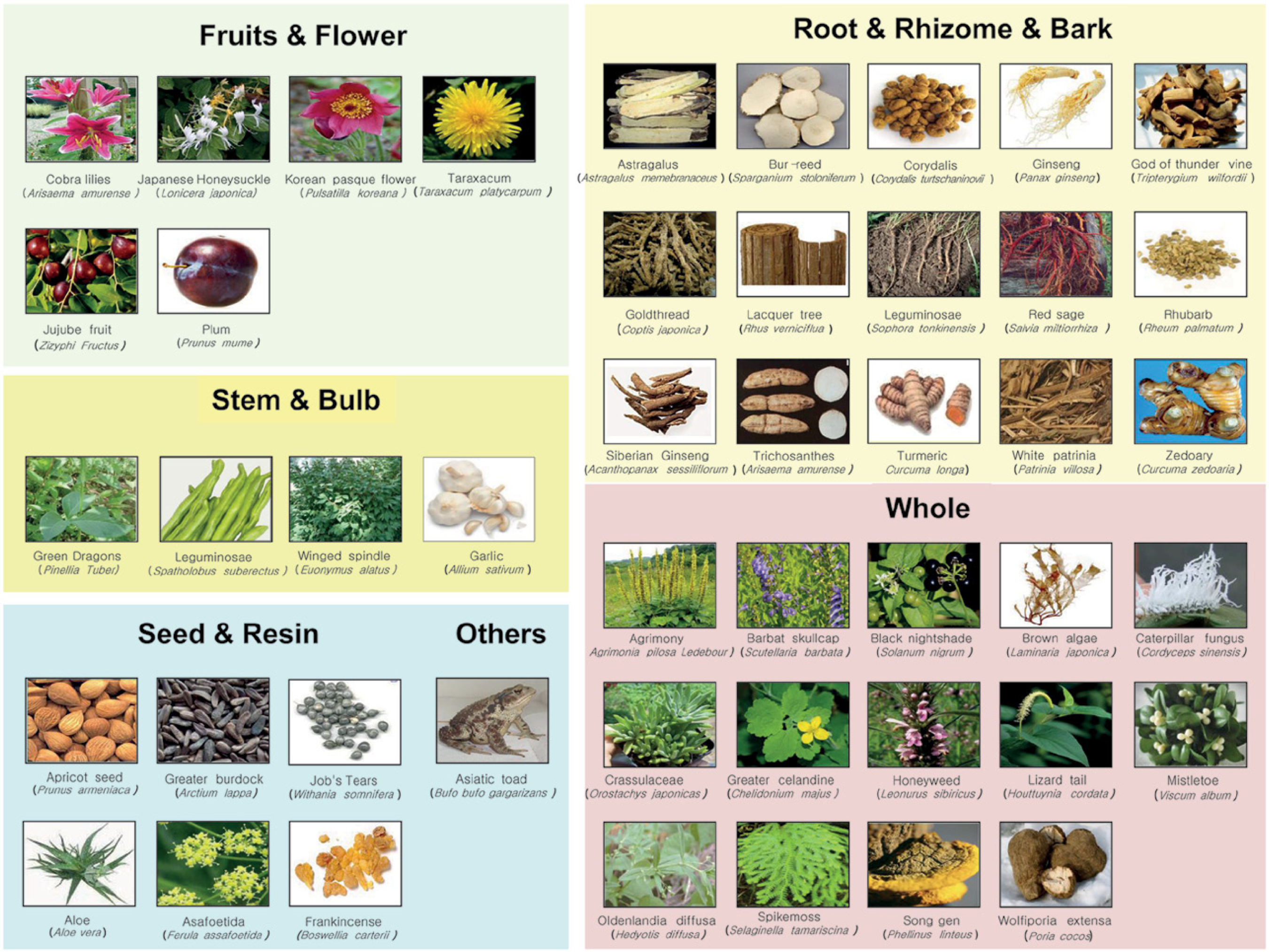
Medicinal plants used in traditional Korean medicine for cancer prevention and therapy.

Anticancer molecular targets of traditional Korean medicine.
List of Medicinal Plants Commonly Used in Traditional Korean Medicine for Cancer Prevention and Treatment.

Abbreviations: CGA, chlorogenic acid; CCGA, cryptochlorogenic acid; hhC, 8-hydroxydihydrochelerythrine; hhS, 8-hydroxydihydrosanguinarine.
Examples of Herbal Formulas Used to Treat Jeoch-Chi and Ong-Juh in Traditional Korean Medicine. 23

Acupuncture and Moxibustion
According to TKM, when the body is in a healthy state, communication between bodily systems occurs freely as a process of information flow, just as Qi flows smoothly. Cancer is associated with a disturbance in this information flow, or stagnation of Qi, manifested by a disorganized system that becomes irreversibly chaotic.229,230 Acupuncture aids the flow of Qi and may restore this information flow, for example, through the autonomic nervous system by balancing the sympathetic and parasympathetic components of the body. 231 Acupuncture is applied extensively in cancer treatment because it can cover many symptoms related to cancer or the side effects of conventional cancer treatment. Recent research has revealed that acupuncture can reduce pain, fatigue, dyspnea, or adverse effects from other conventional modalities such as chemotherapy-induced nausea and vomiting, neuropathy, xerostomia, or hot flashes. 232
Moxibustion is a therapeutic method that uses the heat generated by burning herbal preparations containing Artemisia vulgaris to stimulate acupuncture points. 233 Heat is usually applied during moxibustion to cure diseases by regulating the function of meridians and visceral organs. A possible explanation for how moxibustion works is that the heat stimulates the acupuncture points, which increases Qi circulation and relieves Qi stagnation, leading to an improved physical state. This heat stimulation can produce inflammatory responses and induce vascular changes and is often used to treat a wide range of symptomatic conditions in clinical practice.233,234 In addition, moxibustion can both invigorate and circulate Qi, while acupuncture typically only circulates Qi. As cancer is a chronic disease that requires activation of the body’s own defense system, moxibustion is one of the favored therapeutic modalities in a large population of East Asian cancer patients and is usually practiced in combination with acupuncture.
Traditional Exercise and Meditation
Traditional Exercise is a mind–body practice that combines meditation with slow, gentle, graceful movement and deep breathing and relaxation techniques to move vital Qi throughout the body and harmonize the body, mind, and spirit. It has been used to prevent or cure disease, to improve health and longevity, and to strengthen Qi. This modality helps the patient recover from cancer by improving quality of life and reducing fatigue, mood disturbance, and inflammation. 25 Diverse methods of traditional exercise, such as Qigong, can be prescribed according to the patient’s condition and symptoms.
Comparison of Approaches With Modern Medicine
In terms of the development and treatment of cancer, TKM and modern medicine share several common concepts. In modern medicine, cancer is linked to chronic inflammation and results from the dysregulation of genes at multiple steps involving the transformation, survival, proliferation, invasion, angiogenesis, and metastasis of tumor cells that may take up to 30 years.2,3 Similarly, TKM suggests that cancer arises from the stagnation of Qi, the functional disharmony of energy in the body, and develops slowly over many years, passing through several steps involving consecutive stagnation of dampness, heat, phlegm, blood, and food. 23
Whereas modern medicine has developed chemotherapy drugs targeting a single gene, the medicinal plants or formulas used in TKM or other traditional medical systems are naturally multitarget agents. The usage of a whole plant instead of a single chemical compound extracted from a plant likely inhibits the adverse effects and drug resistance that plague modern medicine. 235 The medicinal plant formulations, which are typically administered in TKM, contain multiple active components that may operate synergistically, producing therapeutic benefits and lowering the chances of adverse effects. 236 These treatments can be compared with combination regimens in chemotherapy, such as CHOP (cyclophosphamide, hydroxydoxorubicin, vincristine, prednisone) or FOLFIRI (fluorouracil, irinotecan, leucovorin), which are combined solely to enhance their anticancer effects, not to balance their synergistic effects or toxicity.
The strategy of cancer therapies in modern medicine is mainly to ablate cancerous lesions by killing cancer cells. Therefore, normal healthy cells as well as the body’s immune system are also negatively affected by anticancer therapies, which can result in various adverse events including immune suppression. Balancing tumor suppression with boosting the immune system is one of the most important therapeutic principles in TKM. In TKM, aggressive anticancer therapies exceeding the immune system’s fundamental capabilities of resistance may worsen the general health of the patient, possibly promoting the recurrence of cancer.
Integration of Traditional Korean Medicine and Modern Medicine Cancer Treatments
An increasing number of studies have demonstrated the efficacy of TKM treatment modalities and support the need to integrate TKM into modern cancer care. Data from both preliminary and clinical studies are included, specifically addressing cancer prevention and treatment.
Daily Lifestyle Improvement
Traditional exercise such as Qigong or Tai-Chi training can be recommended to cancer patients to maintain appropriate physical activity and to reduce anxiety. In one study, breast cancer patients who received these types of training showed increased health-related quality of life as well as increased self-esteem. 237
Maintaining a healthy mind–body network helps relieve stress and improve quality of life, and studies have shown the impacts of psychological response on cancer patients’ survival. 238 Since following the natural circadian rhythms is important in TKM, a strict sleep schedule is recommended to improve sleep quality. Acupuncture treatment has been shown to improve sleep quality in patients with insomnia and anxiety. 239
Anticancer Effects
There are many medicinal plants that have been reported having anticancer effects as shown in Table 2. Formulas such as Ka-mi-kae-kyuk-tang, 240 Pal-jin-hang-ahm-dan, 241 Yuk-hap-tang, 242 Ge-jee-bok-ryung-hwan, 243 Je-chun-jun, 244 Si-ho-ga-yong-gol-moryo-tang, 245 Hae-am-tang, 246 and Sip-jeon-dae-bo-tang247,248 have also been reported for their anticarcinogenic effects in preclinical studies.
Lacquer Tree (Rhus verniciflua) has been intensively studied for its tumor inhibition effects; flavonoids purified from this herb actively inhibit cell growth and induce apoptosis.160,212 Rhus verniciflua is also a clinically studied agent for the treatment of cancer, with published clinical evidence suggesting efficacy in metastatic colorectal cancer, renal cell carcinoma, stomach cancer, and lung cancer.249 -252
Hang-am-dan (HAD) or Hang-am-plus (HAP) is a formula that consists of Panax notoginseng radix, Cordyceps militaris, Cremastrae appendiculata tuber, Panax ginseng radix, Bovis calculus, Margarita, Boswellia carteri, and Commiphora myrrha. HAP has been studied for its efficacy in antiangiogenesis, inhibition of cancer cell proliferation, and metastasis, 253 and promising clinical results for HAP-based cancer treatment have also been reported.254 -256
Pharmacopuncture is a newly developed treatment modality in TKM using a combination of herbal formulas and acupuncture techniques. Mountain ginseng pharmacopuncture has shown anecdotal effectiveness in the management of non–small cell lung cancer. 257
Alleviation of Adverse Effects
Adverse effects associated with conventional cancer treatment can be alleviated using TKM modalities. Chemotherapy-induced nausea and vomiting is a common symptom among cancer patients and can be controlled with conventional anti-emetic drugs. However, patients with poor response or those who have difficulty with oral administration can be benefited by electro-acupuncture 258 or by stimulating the P6 acupuncture point. 259 Peripheral neuropathy can be experienced by patients due to chemotherapy, while surgery and radiotherapy can also cause neuropathy in the targeted area. Opioids and other analgesics as well as some anticonvulsants are prescribed for controlling these symptoms, 260 but acupuncture also showed positive effects on chemotherapy-induced peripheral neuropathy in a pilot study and case series.261,262 Pharmacopuncture with bee venom has also been used to manage neuropathy. 263 Woo-cha-sin-ki-hwan, when concurrently administered with a chemotherapy regimen, was useful in preventing neuropathy in nonresectable or recurrent colorectal cancer patients treated with a FOLFOX regimen. 264 Herbal medication can also be used to decrease estrogen-deficiency symptoms associated with chemotherapy-related amenorrhea, 265 or to reduce adverse gastrointestinal treatment effects, such as diarrhea or vomiting.266,267
Radiation-induced xerostomia is a dry mouth condition caused by radiation therapy in patients with head and neck cancer, and it can significantly impair patients’ quality of life. Multiple studies have revealed that acupuncture provides significant symptom relief compared to a control group.268,269 In patients with head and neck cancer, concurrent use of herbal medicines during radiation therapy also decreased weight loss and improved quality of life. 270
Management of Other Common Symptoms
Pain is a common symptom among cancer patients and is usually managed according to the World Health Organization analgesic ladder. In cases of pharmacological failure to control pain, or of increased analgesic-related side effects, moxibustion or acupuncture can be used alone or in addition to conventional pharmacologic treatement.271,272 As many cancer patients also have pain that is not directly cancer-related, such as back pain or headache, acupuncture can help relieve these additional symptoms.273,274
Cancer-related fatigue interferes with daily activities and affects various aspects of life including the physiological, social, and psychological facets. Many studies have found that the prevalence of fatigue in cancer patients exceeds 60%. 275 Acupuncture treatment had excellent potential for management of cancer-related fatigue in a randomized clinical trial setting. 276 Medicinal plants with invigorating Qi properties such as Panax ginseng or Astragali radix can also be used according to TKM treatment regimens. 23 Bojungikki-tang is an herbal formulation containing both Panax ginseng and Astragali radix, which has been proven effective in reducing cancer-related fatigue. 277 A mix of Astragali radix and Salviae radix extracts also ameliorated chronic fatigue in a randomized, double-blind, controlled study. 278
Anorexia and cachexia are also common and debilitating symptoms of cancer, affecting 60% to 70% of patients. Multiple factors such as gastrointestinal effects, systemic effects with metabolic alterations, and adverse effects from cancer treatment can contribute to these symptoms.279,280 An Astragali radix–based herbal decoction demonstrated some potential in managing cancer-related anorexia. 281 Aractylenolide I, extracted from Atractylodes rhizome, has been suggested as a beneficial treatment alleviating gastric cancer cachexia. 282 Bojungikki-tang, which contains both Astragali radix and Atractylodes rhizome, stimulated appetite and increased food intake in clinical observations. 283
Clinical studies on acupuncture have been performed on various cancer-related conditions, such as hot flashes, 284 dyspnea, 285 and leukopenia, 286 and further research with higher level of strength is warranted. Although Sasang constitutional medicine is an important part of TKM, rigorous clinical studies regarding cancer treatment have yet to be performed, while interesting case studies of cancer therapies using Sasang constitutional medicine have been published, including treatment of refractory ascites, abdominal pain, diarrhea, and urinary disorders.287 -290
Radioprotective or Radiosensitizing Effects
Various herbs such as licorice, 291 Vigna radiate, 292 Angelica sinensis, 293 Cordyceps sinensis, 294 and Panax ginseng 295 have been shown to have radioprotective properties. Curcumin and Panax notoginseng were found to have a sensitizing effect when used with radiation, possibly by inhibiting pathways that lead to treatment resistance.296,297
Chemoprotective or Chemosensitizing Effects
In cancer treatment, chemoprotective agents are drugs that protect healthy tissue from the toxic effects of anticancer drugs. 298 Cultivated wild Ginseng showed a protective effect against chemotherapeutic agent-induced toxicity. 299 Recent reports have indicated that decursin derived from medicinal plants such as Angelica gigas nakai can induce apoptosis, suppress tumor growth, and inhibit angiogenesis. Based on this experiment, decursin could be a potential candidate to overcome chemoresistance through signaling pathway suppression. 300 The relevance of curcumin as sensitizer of many chemoresistant cancer cell lines to chemotherapeutic agents has also been studied.301,302 Concurrent use of Astragalus-based herbal medication in combination with platinum-based chemotherapy improved tumor response, warranting further research on the efficacy of such treatments. 303
Conclusion
TKM has a long history of perceiving and managing cancer, and recent scientific evidence in both preliminary and clinical studies has supported the integration of TKM into conventional cancer care. TKM suggests that cancer is an outcome of an imbalanced body–mind–spirit network, which requires multimodal approaches, including lifestyle modification, medicinal plant prescription, acupuncture, moxibustion, traditional exercise, and meditation, to restore the balance and invigoration of Qi. In TKM, the emotions in particular are considered important factors in the initiation and development of cancer. Sustaining Qi, or immune function, during cancer treatment is also a key principle of TKM, since surgery or other cytotoxic cancer treatments can damage the patient’s natural defense system.
Various studies have investigated TKM, especially in the areas of lifestyle modification; anticancer, radioprotective/radiosensitizing, and chemoprotective/chemosensitizing effects; and the alleviation of adverse effects. TKM is also useful in the management of common cancer symptoms, such as pain, cancer-related fatigue, anorexia, and cachexia, and recent studies suggest that the use of TKM treatments in patients with cancer can increase survival. Based on the results of these studies, TKM treatment can be effectively integrated into the modern cancer care system. For general medical practitioners, a better understanding of the principles of TKM and its clinical application to neoplastic patients will promote integrative, synergistic cancer care, and can narrow the communication gap between practitioners.
While a randomized, double-blind clinical trial is considered the most desirable clinical evidence for general medical practitioners, not many clinical trials of TKM treatments have been reported in this way, since authentic TKM treatment or TKM-integrated cancer care can be very individualized. Still, further randomized clinical trials reflecting the essential characteristics of TKM treatment should be conducted and, if necessary, pragmatic or context-sensitive clinical trial design can be applied. 304 Moreover, considering that sustaining Qi is one of the most important principles of TKM, clinical studies are warranted that will investigate cancer treatment strategies that put more emphasis on preserving a patient’s Qi as opposed to simply killing cancer cells or reducing tumor size.
Footnotes
Authors’ Note
Seong Woo Yoon and Jong Soo Jeong contribute equally as first authors.
Declaration of Conflicting Interests
The author(s) declared no potential conflicts of interest with respect to the research, authorship, and/or publication of this article.
Funding
The author(s) received no financial support for the research, authorship, and/or publication of this article.