




Abstract
While leadership undeniably holds a substantial influence on subordinates’ work behaviors and career trajectories, the comprehensive exploration of these dynamics has remained limited. This integrative review aims to fill this gap by collectively examining the interplay among organizational leadership, employee job crafting, and career development. Our study analyzes and synthesizes findings from 47 selected empirical studies and presents an integrated model that suggests for the expansion of the current research landscape. This review further serves as a valuable guide for human resource development (HRD) professionals and practitioners. It also provides insights for designing effective approaches that enable leaders to fulfill crucial roles in facilitating employee job crafting and career development within organizational contexts.
In 2022, almost 50% of U.S. employees changed their jobs, with 70% of them leaving the workplace voluntarily (U.S. Bureau of Labor Statistics, 2022). This is a remarkable increase in comparison to the roughly 40% voluntary turnover rate a decade ago (U.S. Bureau of Labor Statistics, 2009). This trend indicates a growing inclination among workers to steer their own career trajectories rather than following the conventional organizational routes. In response, to attract and maintain talented individuals, leading global companies are heavily investing in fostering employee autonomy at work and diverse career development support, such as by supporting self-initiative strategies to gain advanced education and training in new, in-demand skills (Kim et al., 2024). Such interventions for employee careers extend beyond developing their growth in specific roles within organizations; instead, they consider the breadth and depth of individual career-related experiences in achieving their career objectives (McDonald & Hite, 2023). This phenomenon highlights the necessity for organizations to evolve their roles to adapt to various dynamics, ensuring their continuous competitiveness in the changing marketplace and work environment.
One of the strategies that organizations pursue for sustainable advantages is job crafting—defined as employees’ proactive work behavior that enhances their fit with jobs—which has attracted considerable interest from both scholars and practitioners across diverse fields (Kim & Beehr, 2017; Wrzesniewski & Dutton, 2001). Research has demonstrated that job crafting has numerous positive individual outcomes, including enhanced engagement (Lee et al., 2016), performance (Lee & Lee, 2018), well-being (Plomp et al., 2016), work meaningfulness and career identity (Kim & Beehr, 2017), as well as job and career satisfaction (Ghadi & Almanaga'h, 2020). Additionally, it benefits organizations, linking to organizational commitment (Wang et al., 2018) and organizational prosocial behaviors (Ding et al., 2020).
While early literature on employee job crafting and career development focused on exploring personal factors, such as traits or characteristics (e.g., Gori et al., 2021) and job or career related competencies (Akkermans & Tims, 2017), recent studies highlight the significance of contextual factors, such as leaders’ roles, work groups, and organizational support (Park & Park, 2023). For instance, perceived organizational support enhances job crafting behaviors, leading to achieving greater efforts to job satisfaction and career advancement (Oubibi et al., 2022). Additionally, interacting with colleagues about their tasks influences individual job crafting (Audenaert et al., 2020). However, a meta-analysis has revealed that leadership, in particular, exerts a more significant influence on job crafting than coworker support, through leader-member exchanges (LMX, Wang et al., 2020). Furthermore, the style of leadership can either promote (e.g., Audenaert et al., 2020) or limit (e.g., Oprea, Miulescu, & Iliescu, 2022) employees’ job crafting behaviors at both individual and team levels, emphasizing leaders’ roles in directly providing job resources that motivate and empower employees to adjust the scope of their tasks (Chen et al., 2021).
Although organizational leadership plays a significant role in followers’ job and career-related factors, current literature lacks research that elucidates the specific impact of leaders on employees’ autonomous job behaviors and career development within the scope of human resource development (HRD). Specifically, three key concepts of this research, leadership, job crafting, career development, are pivotal subjects within HRD, yet discussions on their interplay within organizational contexts are remarkably scarce. Attention to the leadership role and its influence on both job and career aspects of followers from the HRD perspective is essential as organizations strive to expand interventions to foster work environments supportive of flexibility and autonomy to enhance the employees’ engagement, productivity, and satisfaction in the workplace (Park & Park, 2023; Xue & Woo, 2022). The significance of this integrative review lies in its endeavor to bridge these crucial gaps in existing literature. This paper provides meaningful insights for future HRD research and practices by analyzing, integrating, and presenting how leadership influences employees’ job crafting and career development. The paper delves into the intricate connections and potential synergies among leadership and employees’ job crafting and career development, acknowledging the substantial effect of organizational leaders on their followers (Wang et al., 2020).
Research Purpose and Questions
To identify connecting points within the domains of leadership, job crafting, and career development literature, and suggest desirable research directions for the field of HRD, we constructed the following three research questions: (1) Which key theories, terms, and concepts were examined in the literature? (2) How have leadership, employee job crafting, and career development been studied in the literature? (3) What are the crucial connections among leadership, employee job crafting, and career development?
This research is structured into three sections. (1) method: describing the process for selecting relevant literature, (2) findings: presenting the relationship between leadership, job crafting, and career development, (3) discussion and implications: suggesting future research agendas and HRD strategies.
Research Method
For this research, we applied the integrative literature review method to comprehensively synthesize and analyze the current literature (Toracco, 2005; Whittemore & Knafl, 2005). By integrating key findings observed from relevant studies, we attempted to capture nomological relationships among leadership, job crafting, and career development.
We utilized eight databases covering a wide range of disciplines: Business Source Ultimate, Human Resources Abstracts, Vocational Studies Complete, Vocational and Career Collection, Psychology and Behavioral Sciences Collection, APA PsycInfo, Academic Search Ultimate, and MEDLINE. Initially, we conducted a literature search using the combined keywords “leader*“, “job crafting or work crafting”, and “career development” without applying any search constraints (e.g., year or abstract). To our surprise, there were no articles that contained all three keywords. This led us to explore content addressing connections among the three keywords through separate searches using two sets of keywords: “leader*” and “job crafting or work crafting”, and “job crafting or work crafting” and “career development”. The first set of keywords yielded 88 articles and the second set yielded 81 articles. We focused on peer-reviewed publications written in English to ensure both quality and accessibility.
After reviewing the title and the abstract, we excluded articles unrelated to leadership and job crafting or job crafting and career development. We then carefully analyzed the abstracts and skimmed the main texts, identifying 20 out of the original 88 articles on leadership and job crafting and 27 out of 81 articles on job crafting and career development. Although we included both empirical and non-empirical papers during the initial search, all selected articles remained empirical after the removal of irrelevant articles. Ultimately, a total of 47 articles were included in our analysis (see Figure 1). Literature Screening Process.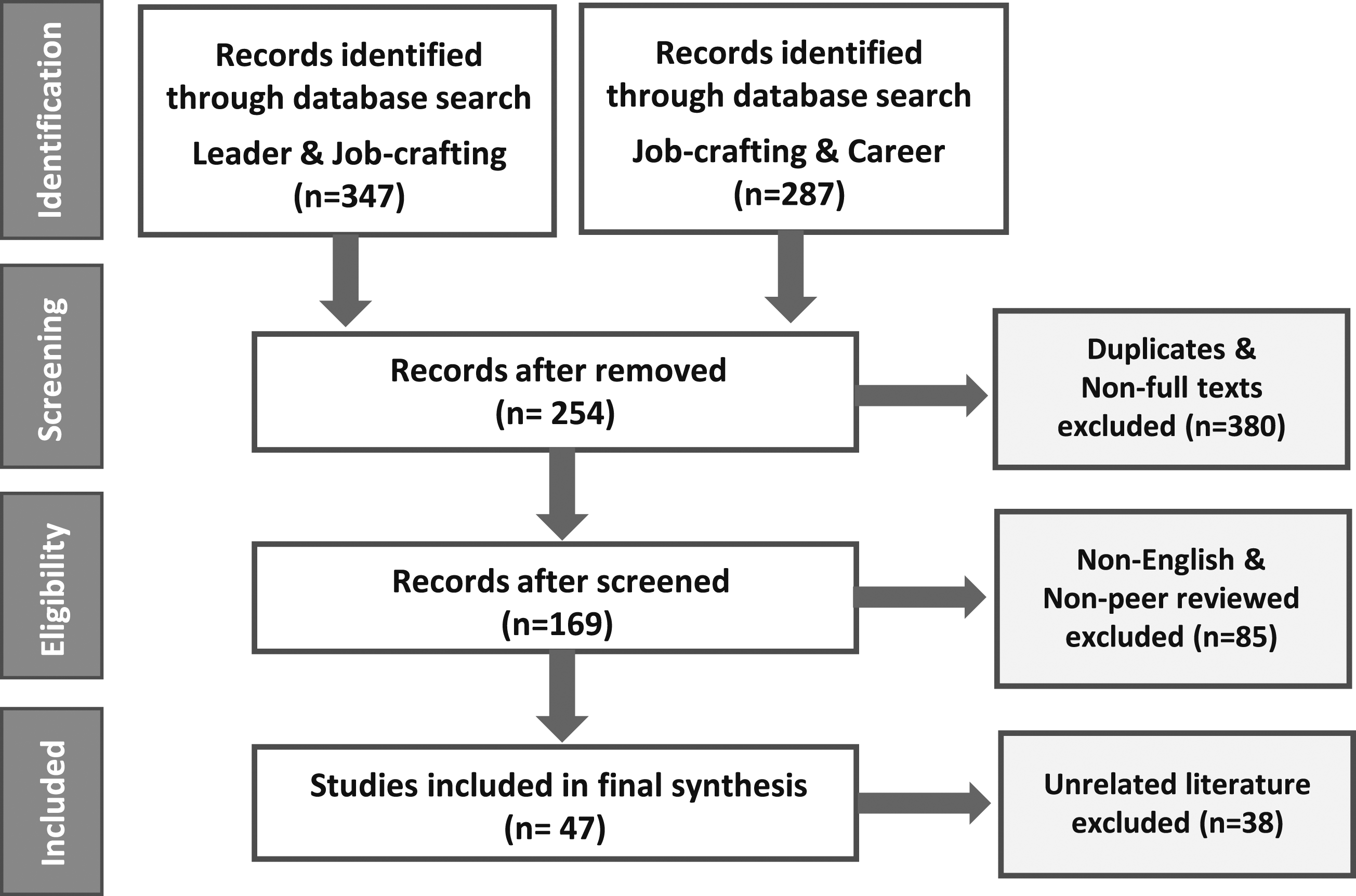
Findings on Leadership, Job Crafting, and Career Development
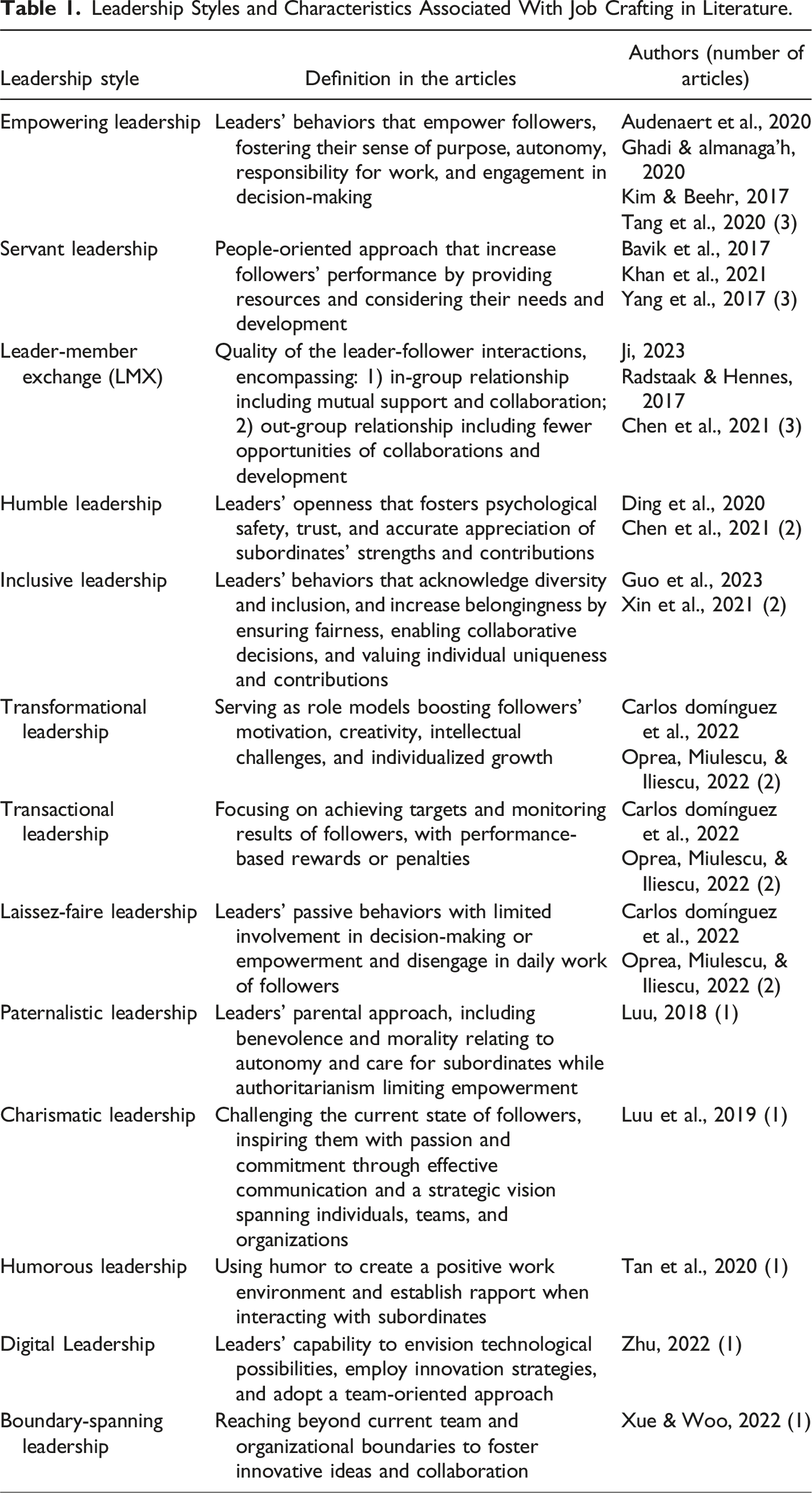
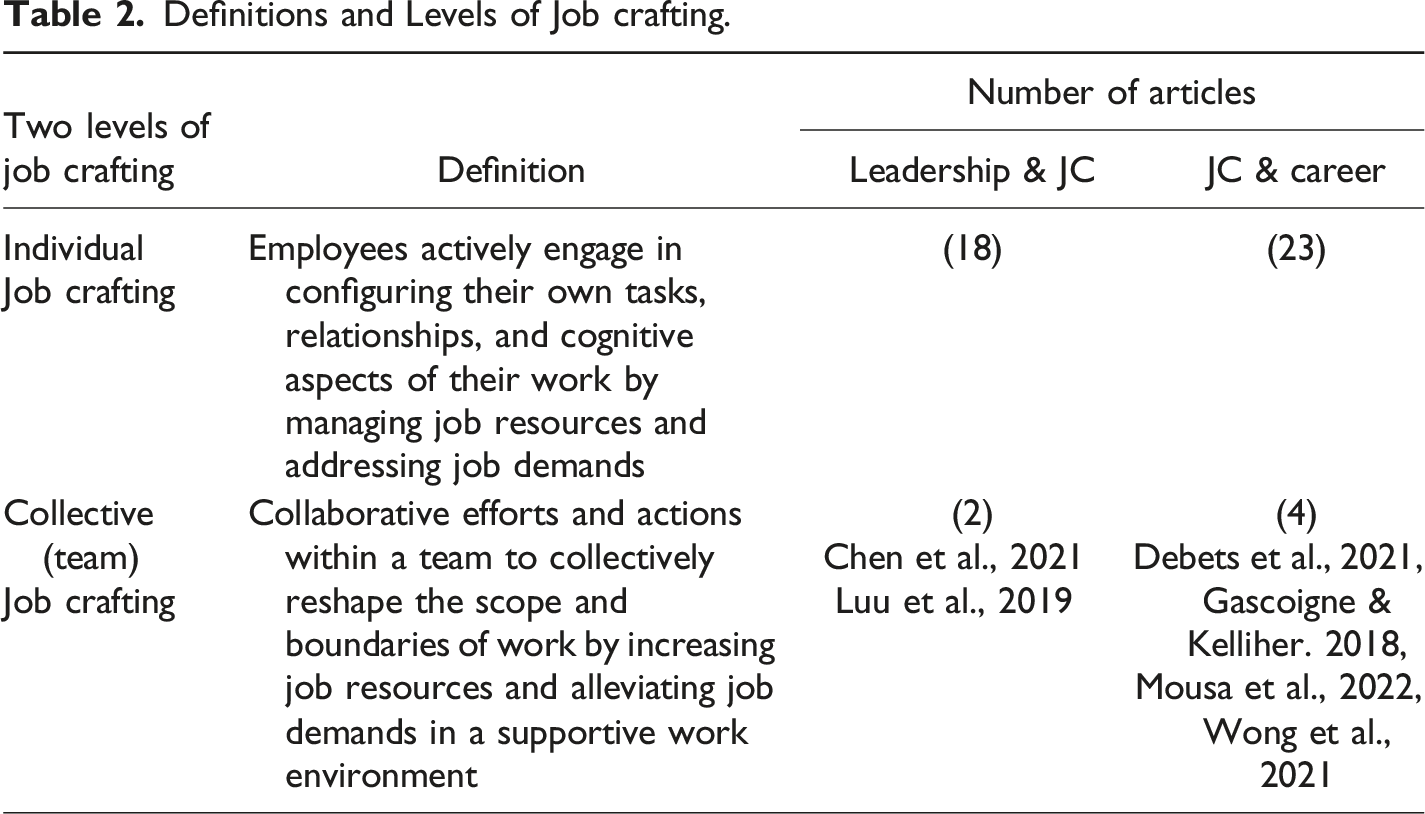
This section is organized based on the synthesized findings of definitions, theories, and related concepts of leadership, job crafting, and career development within the selected literature. First, we identify 12 leadership styles in studies and present two distinct levels of definitions for job crafting, encompassing both individual and team levels. We then explore the key theories and constructs of career development. Our review also captures the variables that have been examined as the predictors, mediators, moderators, and consequences within nomological relationships.
Definitions, Key Theories, and Related Concepts
Leadership Styles and Characteristics Associated With Job Crafting in Literature.
Job Crafting Theories and Levels
Definitions and Levels of Job crafting.
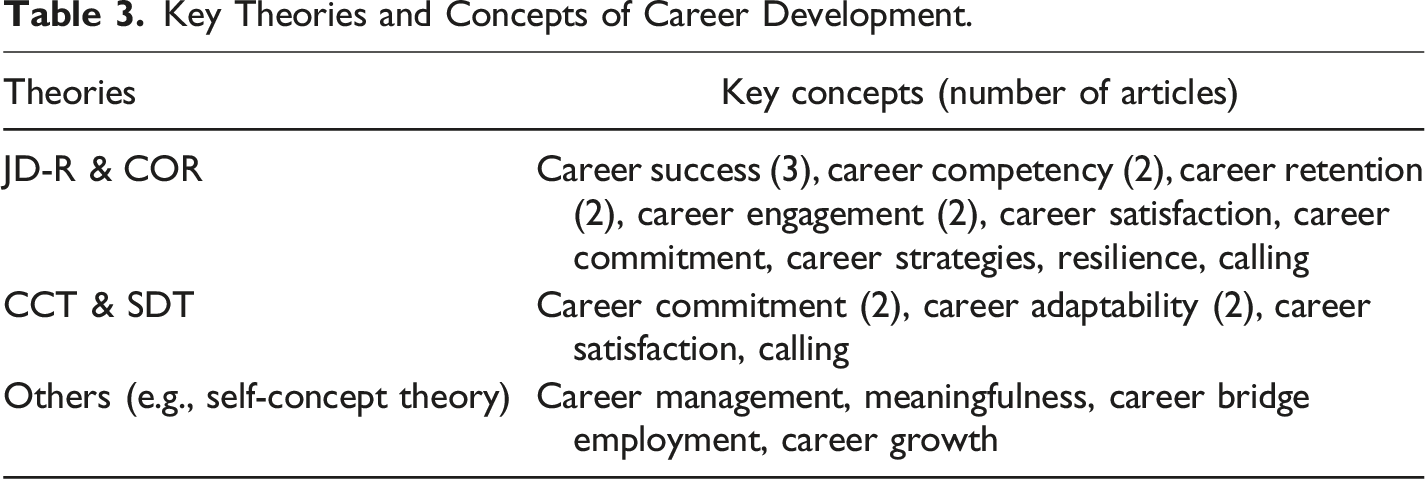
Career Development Theories and Constructs
Drawing from various theories, such as traits, developmental, cognitive, and behavioral, the current understanding of career development depicts an individual’s continual process of obtaining and adapting a variety of career roles and experiences to achieve their career goals (Hoekstra, 2011; McDonald & Hite, 2023). In literature, constructs of career development are based on four major theories: JD-R theory, Conservation of Resources theory (COR), Career Construction theory (CCT), and Self-determination theory (SDT). These theories can be grouped into two perspectives. One perspective is JD-R and COR, which highlights the influence of workplace resources and demands on employees, with JD-R emphasizing job-specific factors and COR focusing on the retention of personal resources within the context of careers. For example, individuals who balance resources (e.g., job and social support) and demands (e.g., mentally intense tasks) at work may navigate their career paths more effectively than those with fewer resources and greater demands (Esteves & Lopes, 2017). Meanwhile, CCT and SDT are rooted in psychological frameworks, underscoring self-directed career decisions and career development driven by intrinsic motivations throughout individual lives (Chang et al., 2021).
Key Theories and Concepts of Career Development.
Our analysis further revealed that selected literature was studied across various national contexts, displaying distinct characteristics in two separate areas of research. Studies on leadership and job crafting were conducted in 10 different countries, including six Asian countries (e.g., China, Vietnam), three European countries (e.g., Netherlands, Romania), and the U.S. It is noteworthy that 15 out of 20 studies were conducted within Asian contexts, with China being the most active location of studying the impact of leadership on job crafting (9 studies). Interestingly, despite having the largest sample size (1930 participants), only one study was identified within the U.S. context.
Within the job crafting and career literature, the majority of 16 studies (60%) out of 27 were conducted in European countries, with four studies from the Netherlands, two from Italy, and one each from Switzerland, Germany, France, Finland, and Norway. Notably, among these last five European countries, none were represented in the leadership and job crafting literature. Furthermore, six studies were conducted in Asian countries (e.g., China, Indonesia), while the U.S. accounted for three studies. Our findings revealed that Asian countries predominately focused on studying the leaders’ influence on followers’ job crafting, whereas European countries were more engaged in investigating the relationship between employee job crafting and career development.
Variables in the Relationship of Leadership, Job Crafting, and Career Development
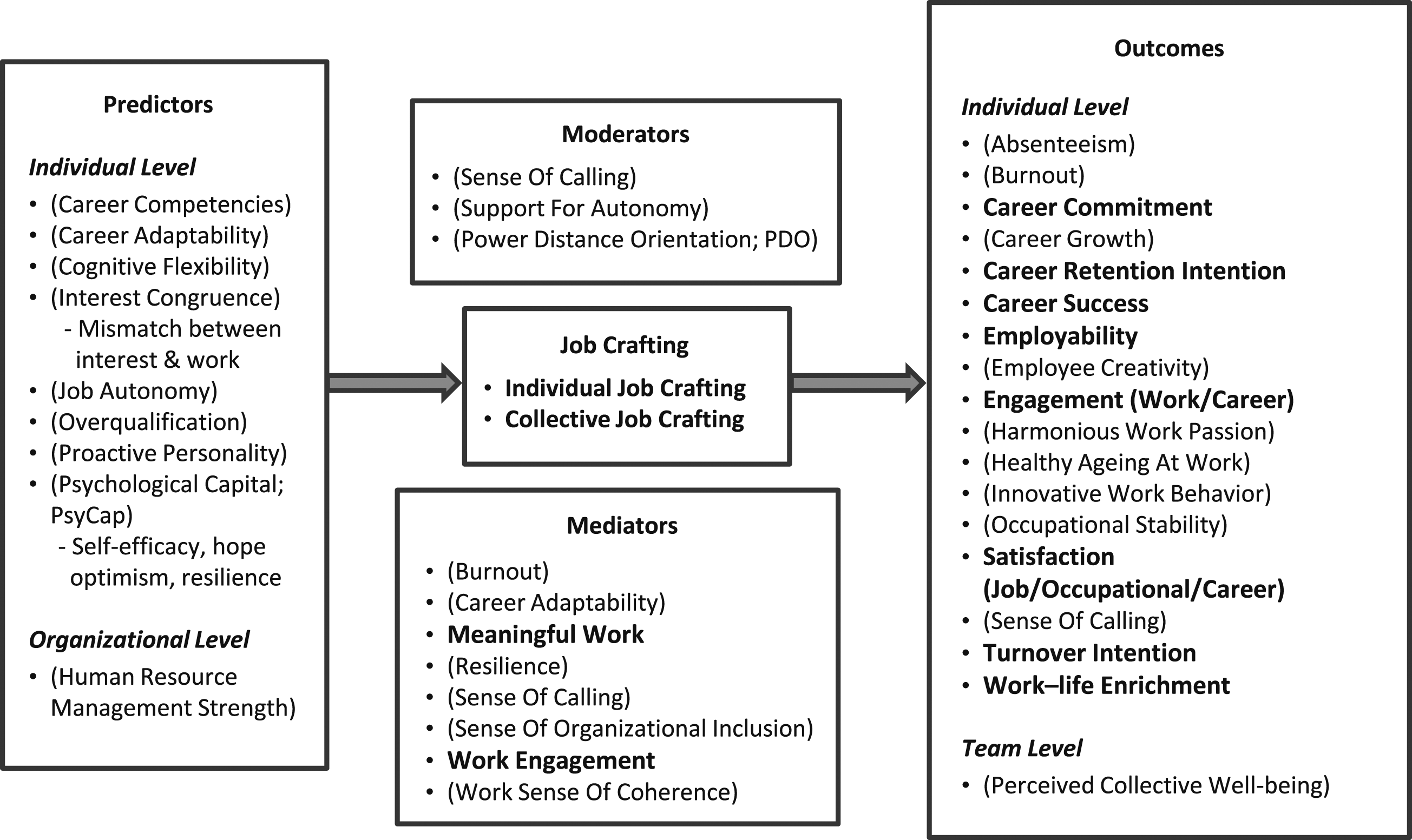
Figure 2 summarizes variables examined in the empirical literature on leadership and job crafting, while Figure 3 shows variables from job crafting and career development literature. We will connect the two disconnected literatures in the discussion section by integrating these two figures. We will do this by aligning closely related concepts and empirical results reported in the literature. Together, Figures 2 and 3 highlight that job crafting can be a key anchor for aligning leadership with employee career development. The list of variables in both figures supports the idea that in order to enhance leadership and employees’ job crafting and career development, diverse levels of factors at the individual, team, and organizational levels are necessary. Additionally, sizable numbers of mediators and moderators have been identified, intervening in relationships between the leadership and job crafting, as well as job crafting and career development. Variables Related to Leadership and Employee Job crafting. Variables Related to Job crafting and Career Development.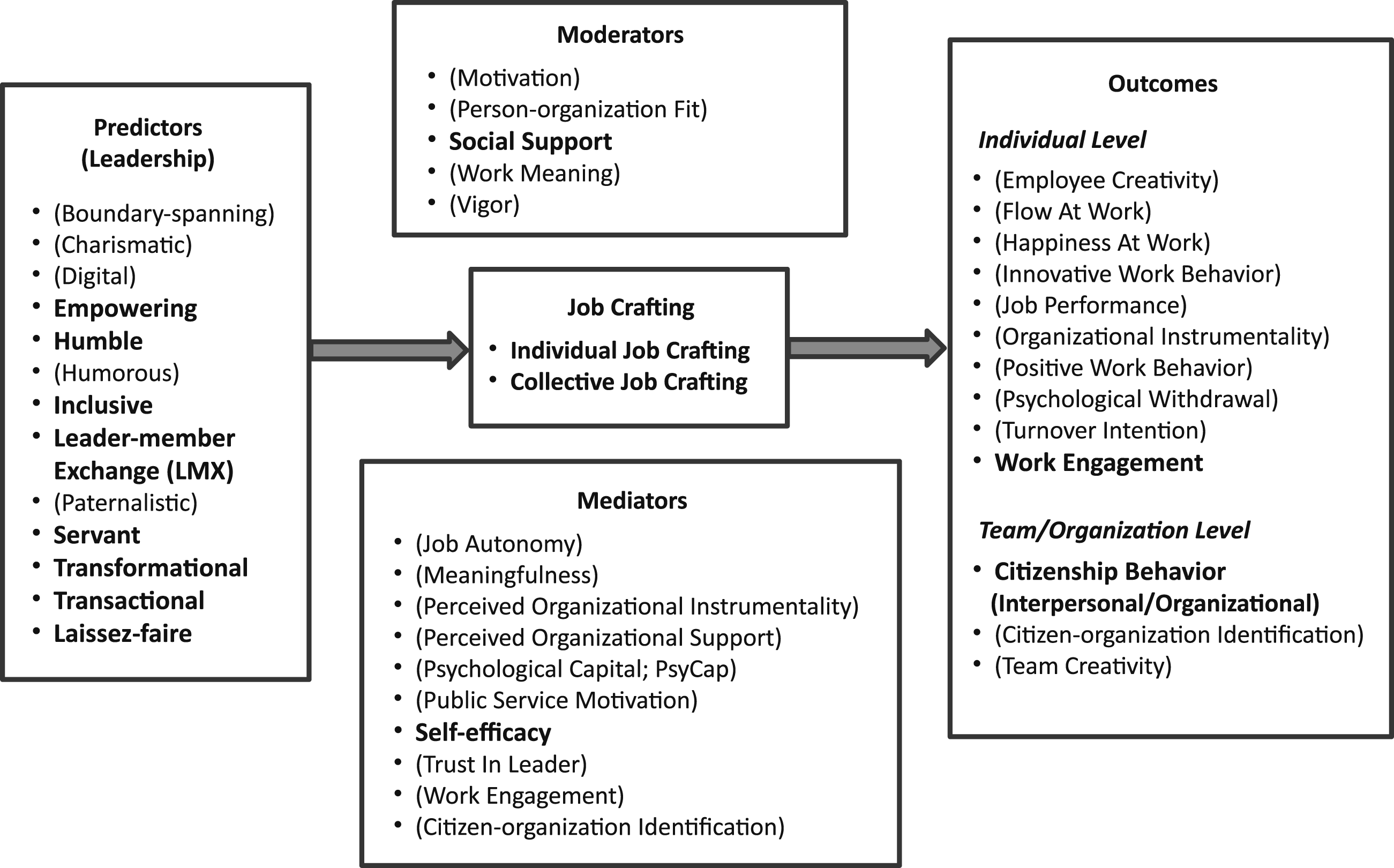
In both figures, variables sourced from a single article are presented within parentheses, while variables reported in more than two publications are boldfaced to denote their perceived dominance or importance in the literature. Specifically, as depicted in Figure 2, key leadership styles include empowering, humble, inclusive, servant, and a set of transformational, transactional, and laissez-fair, as well as LMX. It was found that the empowerment of leaders enhances employees’ structural and social job resources for adapting tasks, and their relationship is mediated by employees’ self-efficacy (Kim & Beehr, 2019; Oprea, Miulescu, & Iliescu, 2022). Self-efficacy, also a significant component of psychological capital, serves as a resource influencing job crafting and positive work behaviors and outcomes (Kim & Beehr, 2019). Beyond the individual-level factor, contextual influences including support from colleagues and supervisors emerged as a key moderator in the relationship between empowering or inclusive leadership and job crafting (Audenaert et al., 2020; Xin et al., 2021). For instance, empowering leaders foster proactive work behaviors among followers, such as resource acquisition and reducing work demands; in this context, social support as a resource enables employees to secure necessary tools and opportunities, thereby facilitating job crafting (Audenaert et al., 2020).
Among a range of outcomes investigated at individual and team/organizational levels, work engagement was revealed as a key outcome, supported by four studies (e.g., Radstaak & Hennes, 2017; Yang et al., 2017). Additionally, interpersonal and organizational citizenship behaviors represent the team/organization-related outcomes, underscoring that people-centered leaders could boost employees’ prosocial and altruistic behaviors toward both internal and external stakeholders (e.g., colleagues and customers), and employees’ job crafting under such leadership positively influence these citizenship behaviors (Bavik et al., 2017).
Figure 3 also shows that numerous constructs were examined as both predictors and outcomes in the job crafting and career development literature, while other contextual factors, such as leadership styles and social support from colleagues, have been largely missing. That is, although Figure 2 supports strong evidence that certain types of leaders positively influence job crafting, the role of leaders has not been considered in the job crafting and career development literature. Except for one organizational-level predictor and a team-level outcome, studies mainly focus on individual factors, including personality, psychological capital, and jobs- and careers-related perceptions. However, in comparison to variables within leadership and job crafting literature, it is evident that career development literature encompasses a wider range of variables across various career stages. For instance, Lichtenthaler and Fischbach (2016) assessed career retention intention, considering the desire to continue working after retirement age, and Peng et al. (2020) investigated the career bridge employment, involving working after retiring from a major career but before completely retiring (Peng et al., 2020).
In terms of key outcomes, three variables were revealed: career success (e.g., Akkermans & Tims, 2017), job/occupational/career satisfaction (e.g., Mousa et al., 2022), and work/career engagement (e.g., Barclay & Markel, 2022). These were found to be the most significant outcomes, each of which was investigated in more than three articles. Specifically, one study emphasized that job crafting predicts a sense of inclusion within organizational contexts, leading to higher satisfaction with both jobs and long-term careers, as employees become more involved in decision making processes related to their roles (Mousa et al., 2022).
Moreover, ‘employability’ (e.g., Brenninkmeijer & Hekkert-Koning, 2015), ‘career commitment’ (e.g., Wong et al., 2021), ‘turnover or retention intention’ (e.g., Esteves & Lopes, 2017), and ‘work-life enrichment or well-being’ (e.g., Debets et al., 2021) were also analyzed as frequently examined outcomes in literature. These variables present the contribution of job crafting to positive psychological and behavioral outcomes to individuals in career domains and the broader life domain. Notably, turnover intention showed a negative relationship with job crafting, suggesting that with greater autonomy to adjust their job fit, employees’ turnover intention diminishes (Esteves & Lopes, 2017). Two mediators, meaningful work and work engagement, were also highlighted. Crafting jobs is associated with the meaning-making process, promoting a sense of purpose in work and leading to increased dedication towards both work and career development (Oprea, Păduraru, & Iliescu, 2022).
Discussion
This study intended to elucidate the dynamics among leadership, employee job crafting, and employee career development by examining key theories, related concepts, and empirical findings in the existing literature. Surprisingly, database searches including all three keywords failed to retrieve any articles, indicating the disjointed landscape of this research. Our review emphasizes that job crafting has been examined with organizational leadership and with employee career development. Each research stream has even identified various mediators and moderators to indicate the buildup of knowledge on multivariate relationships. Based on our findings, Figure 4 is our synthesis of the findings connecting two different research areas. Although various leadership styles were examined in the job crafting contexts, when further integrated with career development literature, the current research landscape shows that there are significant gaps. Integrated Model of Leadership, Employee Job Crafting, and Career Development.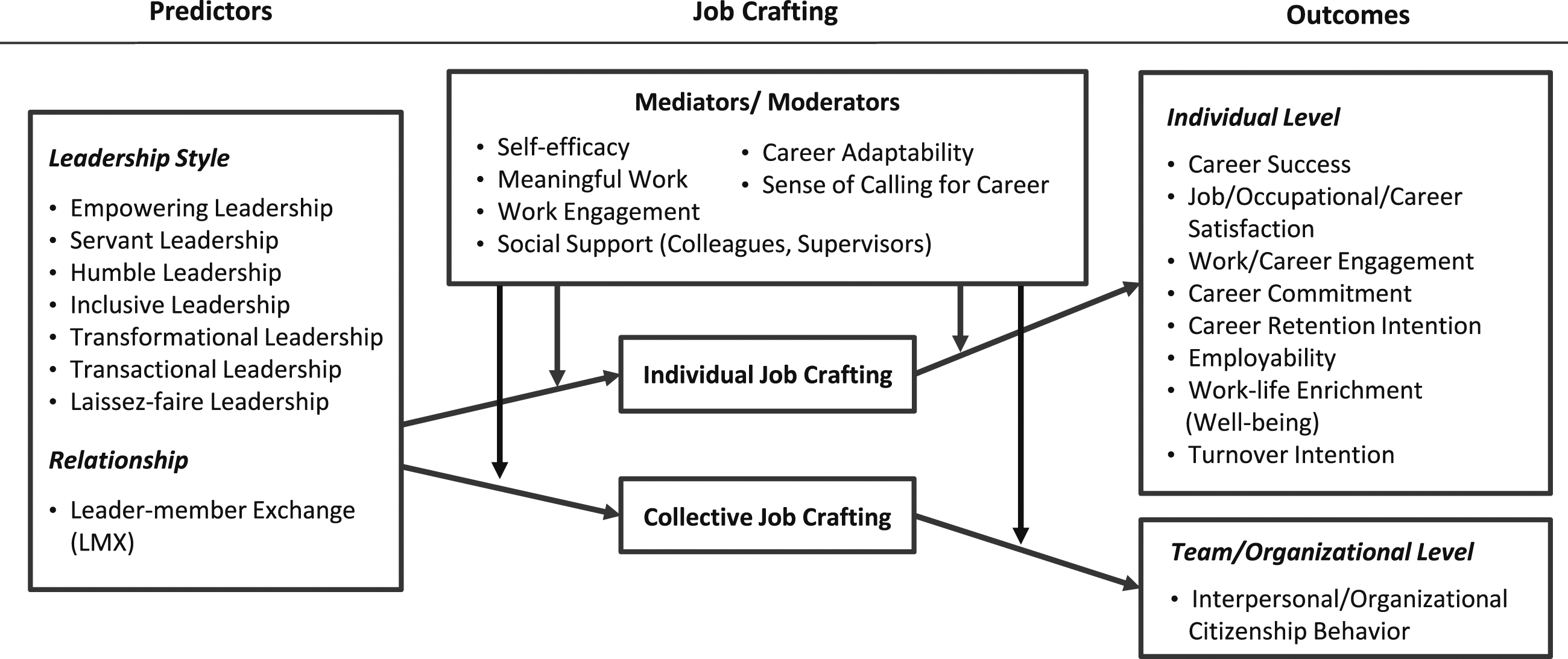
Instead of starting from scratch, empirical literature on leadership and job crafting and job crafting and career development have established a useful body of knowledge. This can be a starting point to address the growing challenge to harmonize individual and organizational efforts into the employees’ career development outcomes. Scholars have argued that career development used to be traditionally managed by employers during times of lifetime employment with a single company, where career progression meant promotion within the organization (McDonald & Hite, 2023). However, changes such as loosened employment contracts, mass layoffs during the economic downturn, and enhanced job mobility shifted the focal entity of career development from the firm to the employees (Chang et al., 2021; Ren et al., 2020). More recently, labor shortages, high voluntary turnovers, and younger generations’ emphasis on career growth have changed the pendulum back to the organization, making career development a critical factor for attracting and retaining talent (Kim et al., 2024; Medici et al., 2023). Furthermore, media and practitioner sources increasingly highlight the importance of new designs of work and career paths, such as job rotations and cross-functional team experiences, in talent management and development (see https://www.linkedin.com/advice/1/what-best-strategies-career-growth-through-job). In this context, we believe that leaders play a pivotal role in leveraging job crafting as a mechanism to facilitate employees’ career development, resulting in benefits for both individuals and organizations.
We propose a model emphasizing that while various leadership styles each offering distinct forms of influence on employees have been explored, they share a key factor – leader support, which is essential in encouraging employee job crafting behaviors (See Figure 4). Job crafting is facilitated by emotional support and leaders’ attentiveness (e.g., empowering and servant leadership), as well as the employees’ perception of leader attributes or behaviors related to modesty, inspiration, recognition, and relationship building (Khan et al., 2021; Yang et al., 2017). Particularly, leaders’ psychological empowerment and creating a supportive climate for job autonomy may boost employees’ engagement in decision-making for their task, relational, and cognitive crafting (Audenaert et al., 2020; Chen et al., 2021).
We also suggest that leaders’ influence on job crafting can be nuanced, requiring close attention to organizational and relational contexts. Among leadership studies in the literature, several unexpected results have emerged. For instance, Oprea, Miulescu, and Iliescu (2022) found that laissez-faire leadership negatively influences job crafting, but paradoxically, some employees exhibit self-motivation to craft their jobs even under such disengaged leadership, particularly among those with high levels of self-efficacy, work engagement, and job autonomy. An example of this unexpected result can be found in the informal learning literature, where reduced job resources promoted employees to utilize informal learning as an alternative solution to improve their job performance (Kwon et al., 2024). Additionally, a leader’s people-oriented approach significantly promotes employee job crafting (e.g., servant, humble, inclusive leadership), while performance-oriented leadership (e.g., transactional leaders) can decrease hindering demands for job crafting by clarifying goals and offering visible rewards (Oprea, Miulescu, & Iliescu, 2022). Luu and colleagues (2019) also argue that highlighting incentives with shared visions from leaders may improve collective job crafting, particularly within bureaucratic organizations.
Moreover, various multifaceted factors, including individual, work, and organizational factors, can play dual roles as both mediators and moderators. The empirical research has reported that these variables intervene between leaders and employees’ job crafting behaviors. For example, individuals with different levels of self-efficacy may act as mediators in the interplay between leadership styles and job crafting outcomes in the organization (Chang et al., 2021). Additionally, social support from colleagues could moderate the connection between empowering leadership and engagement in job crafting, suggesting that collaborative assistance among colleagues may enhance the effectiveness of the leadership in fostering job crafting initiatives (Audenaert et al., 2020).
As for the impact of job crafting behaviors on diverse outcome levels, career development constructs can serve to mediate and moderate the job crafting impact. As illustrated in Figure 4, we have added two significant factors, career adaptability and sense of calling, as mediators and moderators, which were not boldfaced in Figures 2 and 3. We included these factors in the integrated model (Figure 4), as they have been assessed across predictors, mediators, and moderators in multiple job crafting and career development studies. Federici et al. (2021) highlight that job crafting mediates the link between career adaptability and work engagement, indicating that individuals who effectively manage career challenges in fast-changing work conditions align themselves with their work through job crafting. Additionally, Esteves and Lopes (2017) found that employees’ sense of calling in their careers meditates the relationship between job crafting and the intention to leave their organization, emphasizing the significance of finding meaning in one’s work. These two career-related factors are closely related to employees’ self-regulatory and self-initiative career development behaviors; thus supporting CCT and SDT. Our proposed model can test whether diverse leadership styles can improve the accountability of the previous study even further. By integrating key variables from our analysis of both bodies of literature, the model seeks to demonstrate leaders’ roles in employees’ job and career outcomes via multifaceted and multilevel individual/team/organization and job/career factors.
Drawing from insights in the empirical literature, this review advocates that leaders can drive individual and team job crafting, thereby promoting various job resources essential for employee career advancement. Instead of treating career factors solely as the primary outcome as indicated in Figure 3, our proposed framework positions them as intervening variables that would be more meaningful when resulting in individual and organizational benefits. Additionally, at the center of the proposed nomological relationships, job crafting acts as a mechanism enabling leaders and employees to boost their work-related outcomes and contribute to overall organizational success.
Implications for Future Research and Practice
Perhaps the absence of studies on leadership in career development through job crafting is not surprising. Scholarly exploration of this dynamic has uncovered a noticeable lack of attention from both the HRD discipline and organizational leadership. In HRD, the predominant themes in publications and conferences revolve around organization and employee development through formal and informal learning, with career development receiving comparatively less emphasis (Shirmohammadi et al., 2021). However, for organizations, the recent recognition of high turnover stemming from career mismatches or career growth opportunities has placed employee career development strategies as a renewed priority for attracting and retaining talents to achieve business success (Kim et al., 2024). Also, with leaders serving as primary change agents with high decision authority, their roles have become crucial in achieving balanced success for both employees and the organization (Xin et al., 2021). Employees are more likely to be engaged and contribute positively when their job accommodates opportunities to complete both in-role and extra-role behaviors (Radstaak & Hennes, 2017). By leveraging theories and models, such as JD-R, COR, CCT, and SDT, combined with motivational, supportive, and empowering leadership constructs, research studies can provide more empirical evidence to guide employees in pursuing their career success. The proposed framework provides potential linkages among these topics and various workplace and organizational outcomes.
Implications for Research
Despite the known impact of leaders on employee job crafting, our knowledge of their role in job and work design, as well as career development, is in a nascent stage, and more research is necessary. To illustrate, with regard to leadership types, further studies could be beneficial in areas where scholarly and practitioner interests have been heightened (Alblooshi et al., 2021), such as leading teams (e.g., shared or team leadership to enhance team job crafting), implementing career development as a strategic priority for recruitment (e.g., strategic leadership), and managing turnover to overcome labor shortage (e.g., contingent or adaptive leadership).
Additionally, more research is needed to examine the interplay and impact of individual and organizational constructs contributing to career and organizational outcomes. This would help address the current critique and confusion surrounding the shifting responsibility for career development between organizations and employees. Such research should also explore how career development has resurfaced as a significant factor in talent attraction and retention (Kim et al., 2024). To provide deeper insights, it is imperative to collectively investigate the dynamics among employees, leaders, and organizations, with an emphasis on the intentional and explicit participation and collaboration between both the leader and the employee. This study underscores that career development should no longer be viewed solely as the responsibility of employees and leaders can play a crucial role in supporting employees’ job crafting and career development efforts. Establishing both conceptual frameworks and empirical evidence is a foundational step toward understanding and exploring these complex dynamics.
Importantly, previous studies have yielded valuable insights into mediation and moderation effects within the relationships among leadership, employee job crafting, and career development. However, the lack of studies indicating a comprehensive overview of this research landscape suggests the need for a more intricate approach and design in the scope (Xue & Woo, 2022). Future research should collectively and empirically examine these relationships while considering the diverse effects of mediators and moderators on individual, task, and team attributes. By examining the underlying mechanisms of leader influence via individual, work, team, and organizational variables, this approach will enable HRD researchers to refine the alignment of multiple variables. Specifically, by drawing from JD-R and COR theories, researchers could develop a serial mediation model to explore whether transformative leadership influences employees’ career success through mediated pathways of job crafting and work engagement, as the leaders offer clear goals and essential resources to followers (Carlos Domínguez et al., 2022). Moreover, by extending beyond individual-level outcomes, based on CCT and SDT, whether or not leader empowerment impacts collective career adaptability serially mediated by fostering team job crafting and social support from team members can be investigated.
Given the increasing complexity of work environments, researchers should consider other contextual factors including job-related considerations, industrial settings, and national contexts. We observed a notable difference within the literature addressing two distinct relationships between leadership and job crafting, and job crafting and career development. Whereas Asian countries have focused more on leadership’s influence, European countries have emphasized individual career development outcomes. As an example, charismatic leadership and paternalistic leadership in organizations were only studied in the Asian contexts (Luu 2018; Luu et al., 2019). This implies that leadership styles and organizational structures can differ across countries, as well as certain leadership styles may be more prevalent or impactful in particular regions (Luu, 2018). This encourages HRD researchers to explore the interactions between leaders’ roles, job crafting, and career development, while considering diverse contextual variables, to ultimately achieve a more comprehensive understanding of their interplay and effects.
Implications for Practice
Considering the evolving career trajectories of employees, organizations now face challenges in adapting their talent management strategies, particularly in reducing turnover intentions, enhancing work engagement, and sustaining organizational performance (Debus et al., 2020; Seppälä et al., 2020). To address these challenges, job crafting is emphasized as a practical strategy, as it empowers employees to proactively shape their roles and acquire the resources needed for career growth (Cenciotti et al., 2017). Therefore, HRD practitioners play a crucial role in supporting employees’ job crafting efforts as career development strategies and helping to align employees’ career aspirations with organizational objectives. Such initiatives, including sharing successful examples of individual and team job crafting through workshops and coaching programs, can improve the perception of job crafting as a tool for fostering engagement and career development among employees. This is beneficial for the well-being and growth of employees throughout their careers and overall lives.
Along with that, while leaders typically prioritize performance and organizational goals, it is vital to highlight their role in shaping successful career development outcomes of employees. HRD practitioners can raise leaders’ awareness through targeted programs, demonstrating how job crafting contributes to positive work outcomes and career competencies, ultimately enhancing organizational growth (Luu et al., 2019). Empirical evidence is ample for the positive association between job crafting, career outcomes, and individual and organizational benefits (Esteves & Lopes, 2017; Mousa et al., 2022). Leaders can further facilitate the process by actively suggesting ideas for improving subordinates’ job resources and effectively adjusting job demands to enhance team and organizational outcomes.
In light of the prevalence of diverse leadership types across national contexts, HRD practitioners should navigate cultural nuances to design interventions that promote effective leadership styles and cultivate positive work behaviors among employees. Cultural backgrounds influence shared values regarding leadership and employee behaviors, highlighting the need for culturally tailored approaches (Budur, 2020). Thus, it is paramount to provide leaders with training to adapt effective leadership styles to align with distinct cultural expectations. For instance, in Asian countries with hierarchical and strict organizational cultures, interventions could be developed based on evidence assessing the effects of support from charismatic leadership and paternalistic leadership on collective job crafting (Luu, 2018; Luu et al., 2019). In contrast, in European countries, where organizational cultures may differ, programs might focus on strengthening cases of follower-oriented leadership (e.g., empowering, servant) and developing strategies for individual career outcomes through job crafting. By facilitating such an intervention, organizations can boost employees’ work engagement, resulting in increased levels of job performance, career satisfaction, and retention (Chang et al., 2020). This integration of leadership roles into job crafting and career development initiatives is highly meaningful, as it offers great potential for yielding positive outcomes at multiple levels across individual employees, teams, and organizations as a whole.
Limitations and Conclusion
This integrative review initially aimed to include a wide range of articles from eight databases, yet the final selection only consisted of empirical studies after screening out irrelevant articles. Although our intention was to encompass a comprehensive analysis across different article types, this process may have missed important variables or contents present in the excluded articles and other databases. Despite this limitation, our review has revealed a significant gap in the existing literature, highlighting a lack of exploration into the dynamics among leadership, employee job crafting, and career development. Given the influence that leaders can play in enhancing employees’ job crafting and nurturing their career competencies (Kim & Beehr, 2017), HRD researchers and practitioners are strongly encouraged to expand their investigation into these dynamics within the organization. Cultivating a more integrated comprehension of how leaders’ roles contribute to enhancing positive work behavior, organizational priorities, and overall career success among employees can be advantageous for both individuals and organizations.
Footnotes
Declaration of Conflicting Interests
The author(s) declared no potential conflicts of interest with respect to the research, authorship, and/or publication of this article.
Funding
The author(s) received no financial support for the research, authorship, and/or publication of this article.
