



Abstract
Although a growing number of organizations now focus on the developmental aspect of their performance management practices to improve their effectiveness, little research has been conducted so far on these practices and their outcomes. To deepen our understanding of this phenomenon, we undertook a scoping review on development-oriented performance management practices (DOPMPs) within the employee development and performance management literatures. After mapping the literature on these topics, synthesizing their outcomes, and factors for implementation, we identified research gaps and proposed research avenues. Our review suggests that most of the literature on DOPMPs comes from the grey literature, that most practices are used for performance execution, but more attention needs to be given to strategic planning. By structuring the current knowledge on this topic, this review encourages researchers to produce new knowledge about DOPMPs, their synergies, and their outcomes through a systems approach.
Keywords
Introduction
Performance management represents a key activity for organizations. It is reported that approximately 90% of organizations have a formal performance management system in place (Aguinis et al., 2011), and that firms devote millions of dollars and thousands of hours to performance management practices annually (Adler et al., 2016; Buckingham & Goodall, 2015; Corporate Leadership Council, 2012; Murphy, 2019). Given the strategic scope of performance management, it comes as no surprise that researchers have conducted numerous studies over the years to identify systems, strategies, and practices that can be used to better manage employee performance (Brown et al., 2018; Den Hartog et al., 2004; Denisi & Murphy, 2017; DeNisi & Smith, 2014; Schleicher et al., 2018, 2019). Performance management (PM) refers to “a set of processes and managerial behaviors aimed at defining, measuring, motivating, and developing the desired performance of employees” (Kinicki et al., 2013, p. 1). Performance management is one of many strategic HR activities that can be used to ensure that employees remain efficient in their job roles and that their performance is tightly aligned with organizational goals (Pulakos, Kantrowitz et al., 2019; Pulakos & O’Leary, 2011). It generally consists of a formal and continuous process of planning, evaluating, and monitoring the performance of employees that mostly occurs on an annual basis (Aguinis, 2013; Armstrong & Taylor, 2017).
Despite the benefits and promises of performance management practices, several criticisms have emerged in recent years regarding their effectiveness (Adler et al., 2016; Denisi & Murphy, 2017; Murphy, 2019; Pulakos, Kantrowitz et al., 2019). Indeed, it is often observed that traditional performance management systems can be administrative, focusing on compliance, documentation, and formal processes, rather than fully embodying their intended strategic role (Pulakos et al., 2015; Pulakos, Mueller-Hanson et al., 2019). Researchers and practitioners also concur that these systems can be demobilizing, unagile, and ill-suited to new organizational realities (Cappelli & Conyon, 2018; Murphy, 2019; Pulakos, Kantrowitz et al., 2019). These limitations have been exacerbated by the upheavals and transformations in work contexts brought about by the COVID-19 pandemic, in particular the rise of remote work, the need for more meaningful work, and employees’ increased desire to be seen as people rather than just workers (Aguinis & Burgi-Tian, 2021; Turner, 2023).
To remedy these shortcomings, some organizations have opted to overhaul their performance management systems (Cappelli & Tavis, 2016). For instance, some organizations have chosen to abandon performance ratings altogether, but mainly with mixed results as this approach doesn’t seem to be effective and respond to employees’ needs for objectivity and fairness surrounding personnel decisions (Adler et al., 2016; Ledford & Benson, 2019; Murphy, 2019). While maintaining the administrative purpose of their PM system, other organizations have chosen to put more emphasis on its developmental function (Adler et al., 2016). The professional literature is replete with reports and surveys of renewed performance management systems that are said to be more “employee/development-oriented”, but their names and configurations are highly variable, and there is yet little empirical evidence of their added value for the organization and its users (Brandon Hall, 2020; Ernst & Young, 2019). Moreover, whereas some of these practices like setting development goals, or identifying strengths and areas of improvement are certainly in line with the developmental appraisal approach (Marescaux et al., 2019; Vidè et al., 2022), we do not yet have a clear and comprehensive picture of which specific practices are part of this “next performance management revolution” (Cappelli & Tavis, 2016, p. 1), where they fit in organizations’ annual performance management cycle, and what are their main outcomes.
Accordingly, it is important to synthesize and structure current knowledge on what can be described as development-oriented performance management practices (DOPMPs). Hence, the purpose of this scoping review is to (1) map out what is known about DOPMPs from the perspective of both the academic and grey literature, (2) examine the expected and empirically tested outcomes that are associated with these practices, (3) identify factors for implementation, and (4) identify research gaps to stimulate future research.
In doing so, our study attempts to bring together the HRD and HRM literature on performance management. Indeed, even though both HRM and HRD scholars have thoroughly studied performance management, their approaches to the matter are similar yet distinct (Alagaraja, 2013; Brown et al., 2018; Werner, 2014). Whereas HRD researchers have viewed performance management as a core function to enhance employees’ human capital, fostering long-term individual and organizational success (Brown et al., 2018; Garavan, 2007; McLagan, 1989; Werner, 2014), HRM scholars have mostly been concerned with the capacity of performance management systems to orient administrative decisions related to pay, promotions, and underperformance, which may have taken away the potential added value of performance management (Pulakos, Kantrowitz et al., 2019). By identifying and organizing the different developmental practices associated with performance management systems, the current study provides a framework to guide researchers in the production of new knowledge to ensure that performance management systems fully meet their developmental purpose. Our efforts are in line with the previous work of Brown et al. (2018), who identified the developmental aspect of performance management as an important avenue for future research and highlighted the need for scholars and practitioners to better understand how performance management can facilitate employee improvement and growth to sustain performance.
Moreover, our study aims to reduce the gap between research and practice by helping researchers focus on critical issues for practitioners and gain insight into DOPMPs and the factors for their successful implementation. Pursuing such efforts is necessary to ensure that organizations adopt effective performance management practices based on sound evidence rather than simply organizational trends (Schrøder-Hansen & Hansen, 2022). This point is especially important when considering the substantive financial and temporal resources spent annually on managing employee performance and developing human capital (Brecher et al., 2016) and the direct implications of such practices on the operational and financial performance of firms (Jiang et al., 2012).
Development-Oriented Performance Management
The developmental function of performance management systems has long been discussed in the literature. As early as the late ‘70s, McGregor (1972), proposed that in addition to guiding management decisions, performance management practices were intended to provide feedback and coaching opportunities to effectively guide employees in their learning and development. Since then, research has documented the dual and often conflicting roles of performance management systems (Murphy, 2019; Murphy & Cleveland, 1995). Critics of traditional, reward-oriented systems, focusing on performance management’s administrative role have led some researchers to suggest that more attention needs to be paid to how performance management systems can help improve individual and organizational performance (Murphy et al., 2019). In this respect, the development-oriented approach to performance management offers one way of meeting this objective.
Development-oriented performance management (DOPM) can be conceptualized as a PM system that is composed of a set of complementary and interrelated practices that are meant to foster employee performance, development, and flourishing. While DOPM is a PM system (see Bedford, 2020; Schleicher et al., 2018), it sets itself apart from more traditional approaches to PM, as it offers a more person-centric approach to PM by promoting individualized learning experiences, employee growth, and well-being. More conventional approaches mostly focus on carefully directing, incentivizing, and monitoring employee performance to achieve organizational goals. These approaches are mainly results-oriented and focus on performance. By contrast, the main objective of DOPM is to yield positive outcomes for both employees and organizations from a mutual gains perspective (Peccei & van de Voorde, 2019).
From a strategic HR point of view, DOPM can enable firms to effectively build, maintain, and support their human capital, which is a great source for establishing a sustained competitive advantage (Barney & Wright, 1998; Langfield-Smith, 1997). Furthermore, DOPM can be a valuable performance management system that mitigates the probability of poor performance by emphasizing and encouraging employees’ continuous learning. As such, it then simultaneously increases the probability of achieving excellent performance consistently. DOPM accomplishes this through DOPMPs which are the specific practices that guide employees’ performance, development, and thriving at work. For example, providing coaching opportunities to employees can be helpful to further develop employees at work and enhance their performance (Ellinger et al., 2003). Through such practices, employees can yield the individual performance that is necessary to ensure excellent operational (i.e., high-quality products and services, etc.) and financial (i.e., profit, return on equity, etc.) performance for organizational success (Pavlov et al., 2017).
Methodology
The Scoping Review
Scoping reviews are a type of literature review that “aim to rapidly map the key concepts underpinning a research area and the main sources and types of evidence available” (Arksey & O’Malley, 2005, p. 21). Scoping reviews determine the magnitude, range, and nature of research on a particular topic, allowing researchers to establish “what is known” and identify gaps in the existing literature (Arksey & O’Malley, 2005; Levac et al., 2010). A scoping review is a relevant form of knowledge synthesis when the research topic is emergent, complex, or has not yet been reviewed before (Arksey & O’Malley, 2005; Levac et al., 2010; Paré et al., 2015; Rocco et al., 2023), and is advantageous when researchers wish to synthesize existing knowledge from both academic and grey literatures, as in the current study (Arksey & O’Malley, 2005; Daudt et al., 2013; Levac et al., 2010; Paré et al., 2015).
We conducted this scoping review following the methodological framework originally proposed by Arksey and O’Malley (2005), later refined by Levac et al. (2010) and Daudt et al. (2013). The PRISMA-ScR guidelines were also followed to ensure a high-quality scoping review that is as transparent and systematic as possible (Tricco et al., 2016). The rationale behind each step of the methodological framework is explained in the following sections. A research team was created to carry out the different steps that were necessary to complete the present study. The research team was composed of the authors and a graduate research assistant.
Stage 1: Identifying a Research Question
According to Arksey and O’Malley (2005), the first stage in conducting a scoping review is to identify a research question, which is typically framed in terms of “what is known” about a topic. Hence, the research question for the present scoping review is: “What is known about the practices underlying the developmental approach to performance management?”.
Stage 2: Identifying Relevant Studies
Keyword Search Strategy.
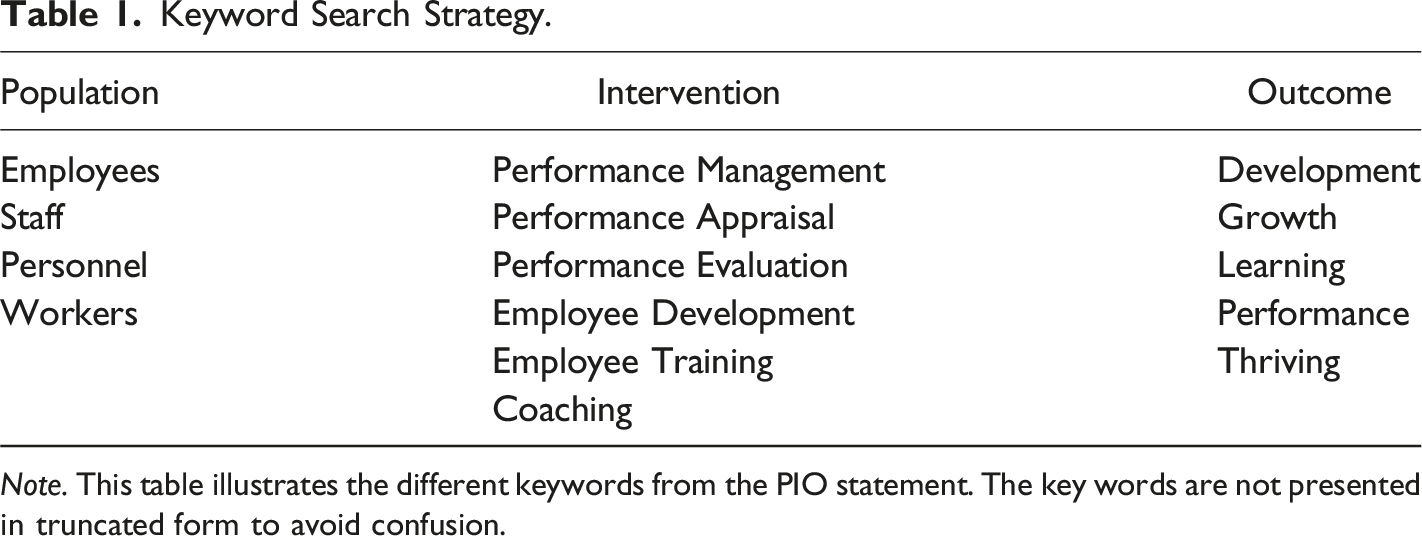
Note. This table illustrates the different keywords from the PIO statement. The key words are not presented in truncated form to avoid confusion.
Database Type and Databases Used in the Current Review.
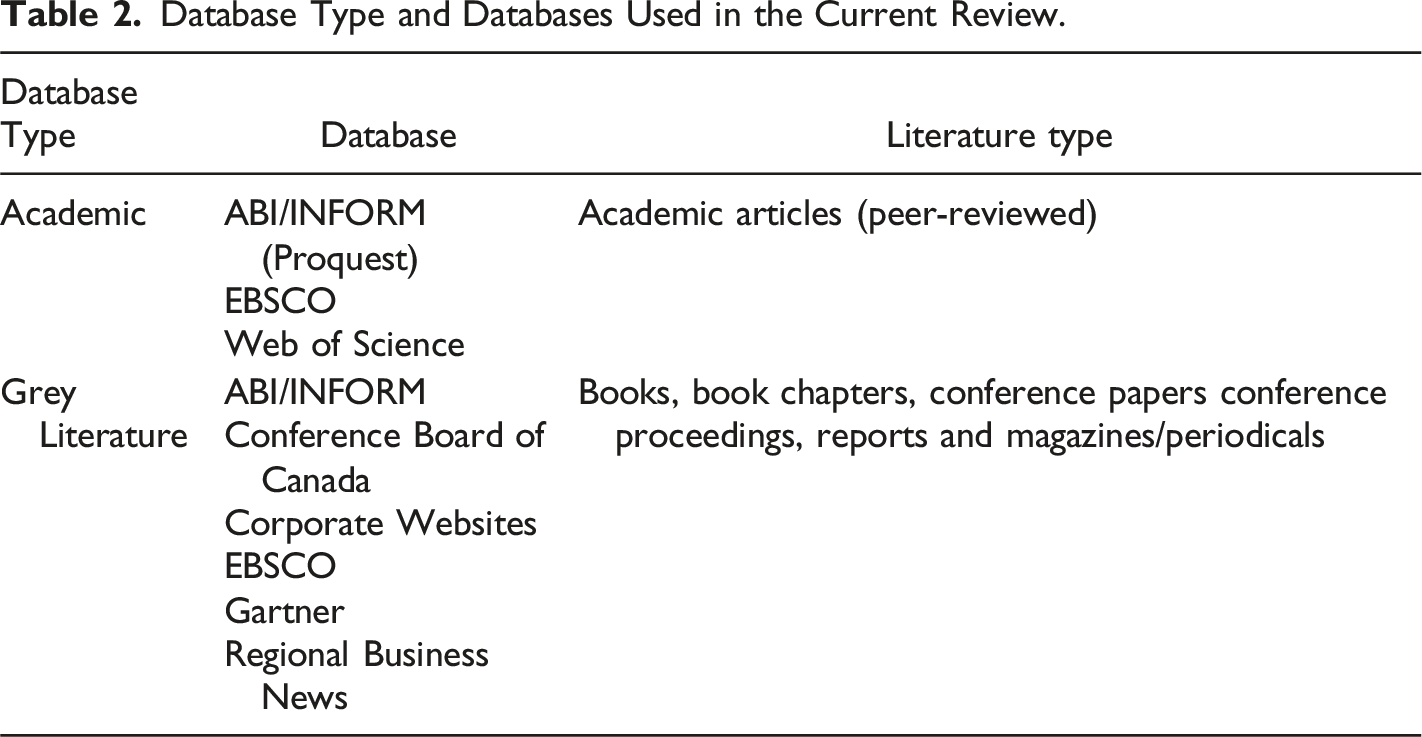
We conducted a backward search of key articles and searches on corporate websites (such as Adobe, Accenture, Deloitte, EY, etc.) to extract reports on the developmental approach to performance management that may not be annexed in non-academic databases (as cited in Table 2) (Brocke et al., 2009).
We also circumscribed the scope of our search. According to Cappelli and Tavis’s (2016), the shift in performance management toward more developmental practices was first documented in 2011. Using this date as our starting point, the research team investigated the last 12 years of the academic and non-academic literature on this topic (2011 to 2023). The reference management software End Note 20 was used to create a database that assisted the research team in organizing the selected studies and removing duplicates. 1
Stage 3: Study Selection
Inclusion and Exclusion Criteria for the Scoping Review.
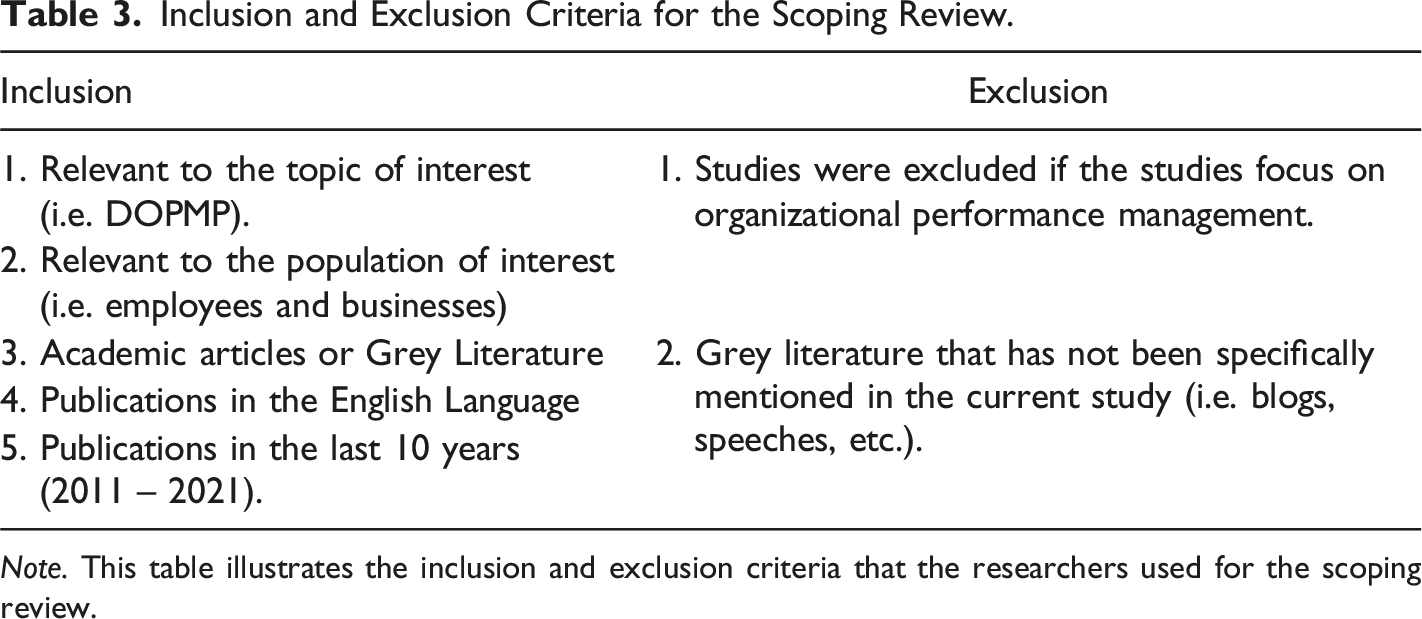
Note. This table illustrates the inclusion and exclusion criteria that the researchers used for the scoping review.
Before engaging in the selection of the retrieved articles, the inclusion/exclusion criteria were piloted to ensure that studies could be classified correctly (Meline, 2006). Two researchers on the team reviewed a sample (i.e., 10%) of the titles, abstracts, and full texts of the studies that emerged from the search independently. Issues with the inclusion/exclusion criteria were resolved through discussion, and the final decisions were taken by the lead researcher (Levac et al., 2010; Meline, 2006). The aim was to obtain a high level of inter-rater reliability (i.e. Cohen’s Coefficient Kappa of 0.85 or above; Howell, 2016), ensuring that the inclusion/exclusion criteria were valid (Anastasi & Urbina, 1997). We obtained an inter-rater reliability score of .88.
After the inclusion/exclusion criteria were piloted, the researchers conducted a full independent review of all the articles, reading thoroughly the titles, abstracts, and full texts. Through this exercise, the researchers selected the studies to be part of the current review. It is important to note, that instead of conducting a critical appraisal, we assessed the quality of the studies based on the relevance of the research question. We proceeded in this fashion as the topic is emergent, and because the literature is heterogeneous in nature.
Stage 4: Data Charting
Information to Include in the Data Chart.
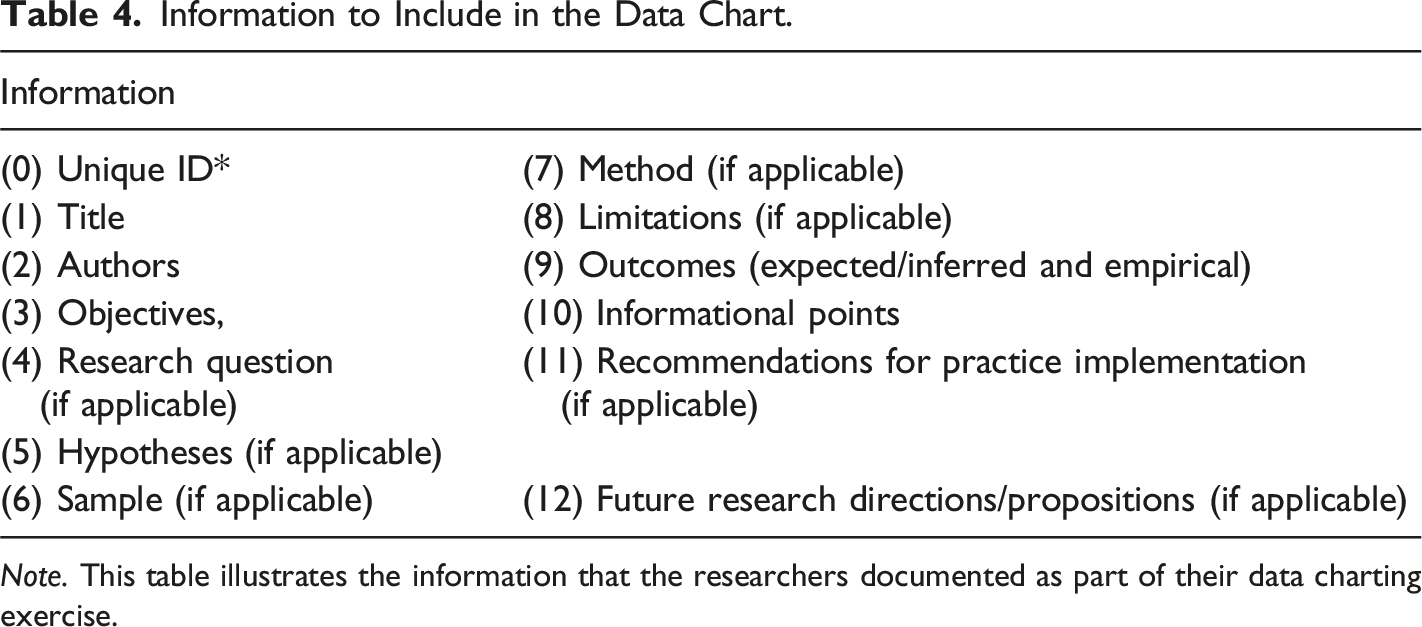
Note. This table illustrates the information that the researchers documented as part of their data charting exercise.
Stage 5: Synthesis of Results
To synthesize the findings that have been collected in the data charting form, we first used numerical frequency analysis; a technique that provides a quantitative summary of the various studies that are part of a literature review (Arksey & O’Malley, 2005; Levac et al., 2010). We summarized the following pieces of information: (1) the number of studies included the number of studies by (2) literature type (i.e. academic, grey literature), (3) study type (conceptual, empirical, report, etc.), and by (4) study design (cross-sectional, experimental, etc.).
Second, we used thematic analysis to identify the different DOPMPs and their implementation factors. Thematic analysis can be defined as a qualitative research technique that allows researchers to extract patterns (i.e. themes) that emerge from data (Braun & Clarke, 2012; Lester et al., 2020). We used a reflexive approach to conduct thematic analysis, whereby themes are developed inductively (Braun & Clarke, 2006, 2012, 2019). To do so, we followed the six-stage process by Braun and Clarke (2006) where researchers: (1) familiarize themselves with the data, (2) generate codes, (3) generate themes, (4) review them, (5) label the themes and (6) report them. A sample from our quotes to codes to themes process inspired by the Gioia methodology (see Gioia et al., 2012) is provided in the appendix.
Third, the outcomes of the different practices were synthesized from the academic/grey literature through narrative syntheses, a technique that helps combine information from heterogeneous streams of literature, and from both qualitative and quantitative research (Barnett-Page & Thomas, 2009).
Results
Selection of Sources of Evidence
After duplicates and unretrievable citations were removed, 336 citations were identified from searches of academic/non-academic databases, along with backward searches. Based on the title and abstract, 247 citations were excluded, with 89 full-text articles to be retrieved and assessed for eligibility. After reading the full texts of these 89 articles, 13 were excluded because they did not meet criteria. The remaining 76 studies were considered eligible for the current review. This process is depicted in Figure 1. PRISMA Flow Diagram: Selection of Sources of Evidence. Note. The PRISMA Flow diagram illustrates the number of databases that were selected, the number of citations that were retrieved per database, and the total number of articles that were retrieved after duplicates were removed and inclusion/exclusion criteria were applied.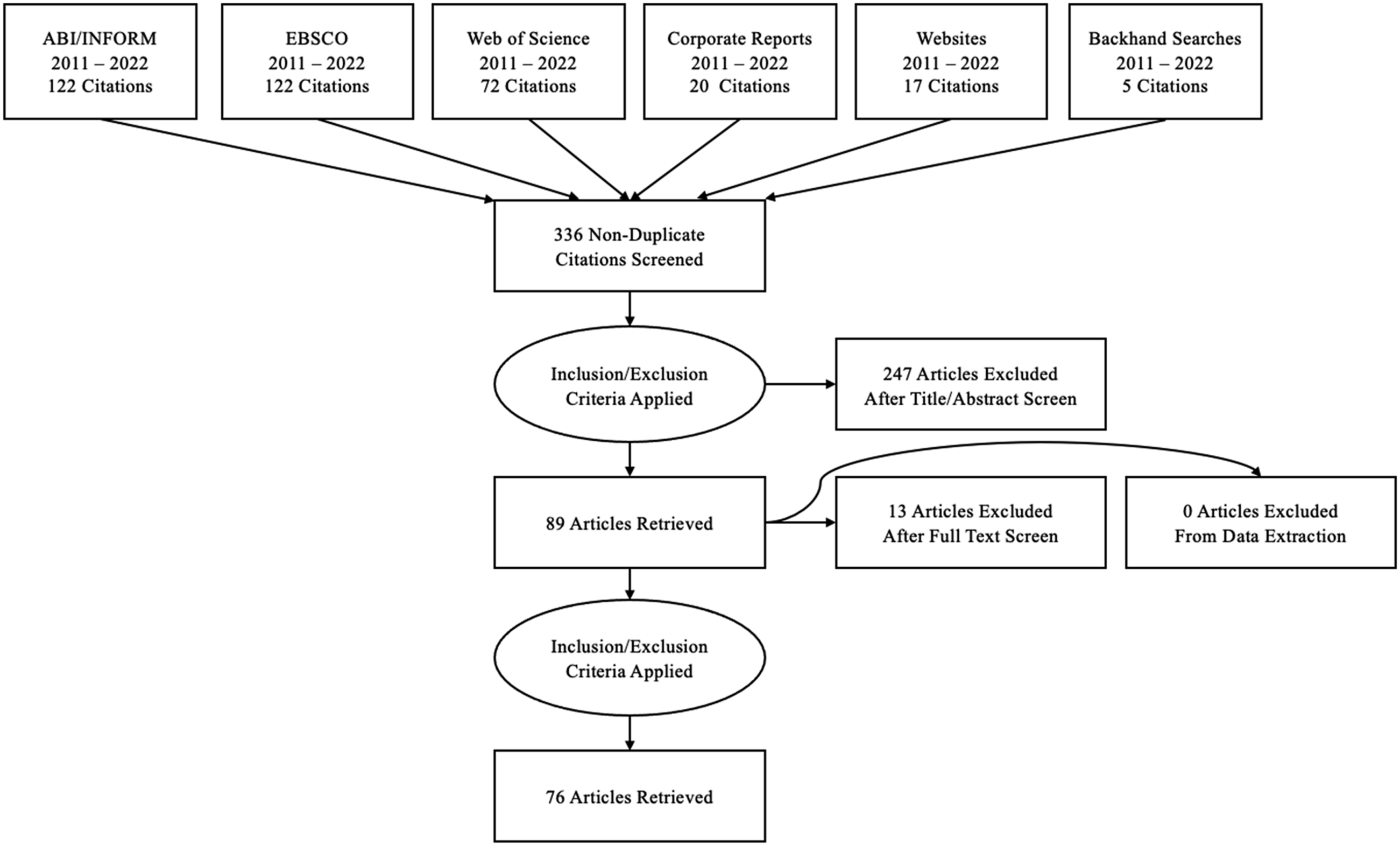
Characteristics of Sources of Evidence
After the inclusion of the 76 articles, we conducted a numerical frequency analysis of our data (see Figure 2). Of these articles, 22 were from the academic literature and 54 articles were from the grey literature. We also found that in terms of article type, most articles (n = 56) were not empirical (i.e., other and not specified), with only a minority of articles being empirical in nature where quantitative (n = 11), qualitative (n = 5), or mixed methods (n = 3) were used. We found that in terms of study design, most articles did not have a specified research design (n = 53). However, of the seven quantitative articles, all were correlational research designs. Moreover, of the six qualitative articles, three were case studies and three reported the use of interviews. In addition, of the three mixed methods articles, one was a comparative study, and the others were a mix of interviews paired with surveys. Numerical Frequency Analysis. Note. The current figure illustrates the numerical frequency analysis. The number of articles was classified by literature type, by article type, and then by study design. Through this exercise, we were able to map the literature and identify 22 DOPMPs.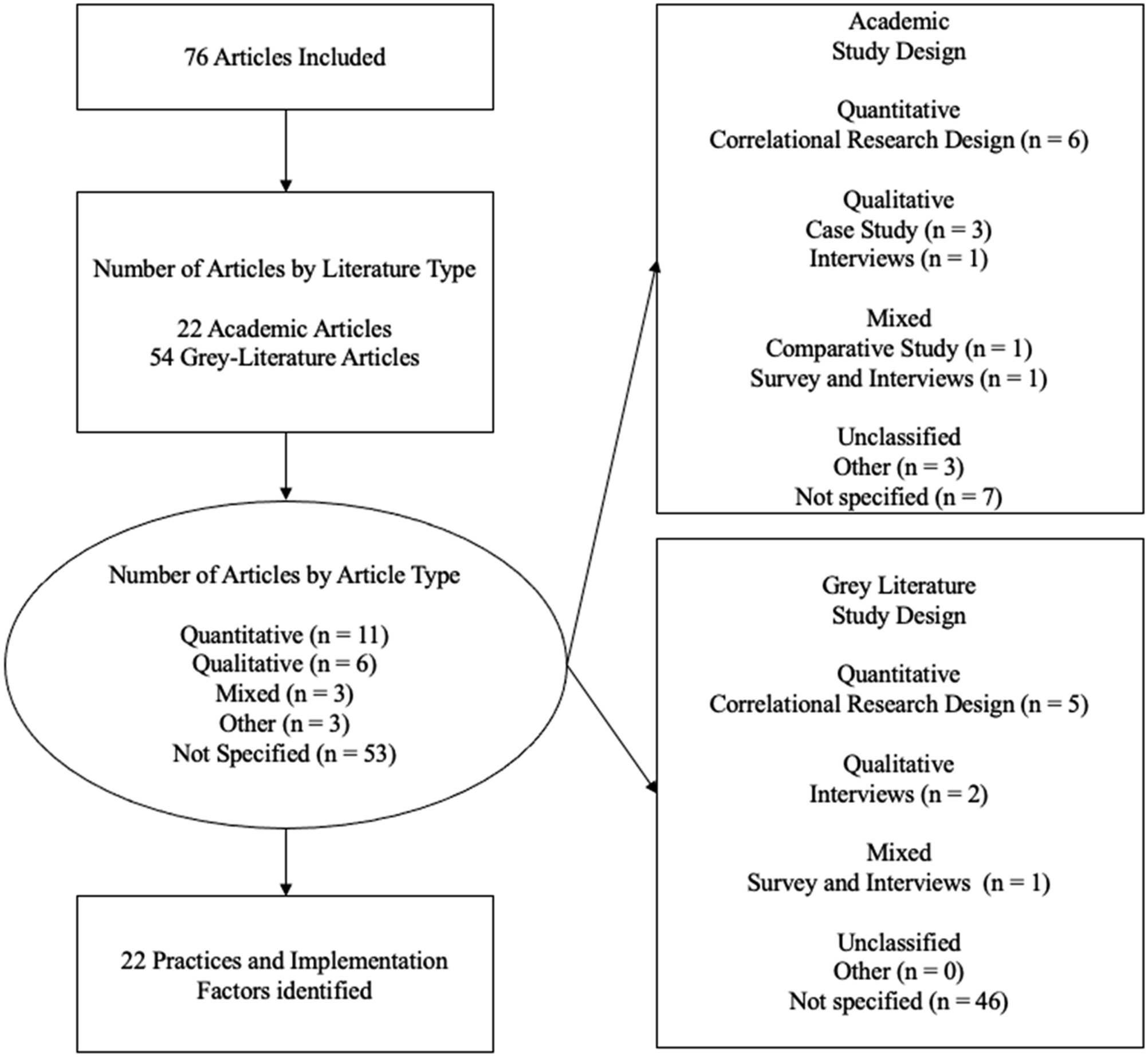
Identifying DOPMPs
Identified DOPMPs.
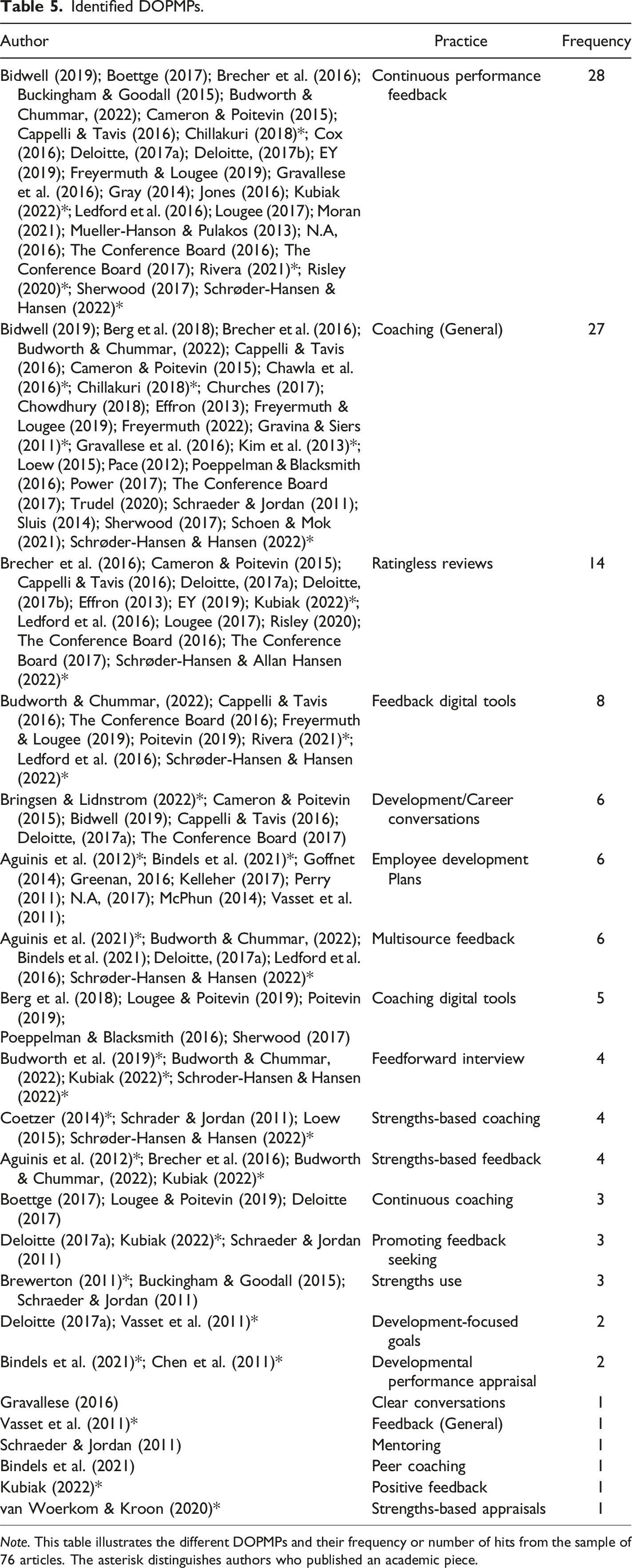
Note. This table illustrates the different DOPMPs and their frequency or number of hits from the sample of 76 articles. The asterisk distinguishes authors who published an academic piece.
We found that continuous performance feedback and coaching were the most prevalent DOPMPs with respectively 28 and 27 hits. Ratingless reviews, feedback digital tools, development/career conversations, employee development plans, multisource feedback, and coaching digital tools were less frequent in the literature but still significantly discussed by authors with 14 to 5 hits. Furthermore, we found 12 other practices with 4 hits or less, namely: feedforward interviews, strengths-based coaching, strengths-based feedback, continuous coaching, promoting feedback seeking, strengths use, development-focused goals, developmental performance appraisals, clear conversations, feedback (general), mentoring, peer coaching, positive feedback, and strengths-based appraisals. To better grasp where these practices fit in the formal performance management process, we positioned them within a typical annual performance management cycle (Aguinis, 2019), as shown in Figure 3. DOPMPs Within the Annual Performance Management Cycle. Source. The present figure draws on Aguinis’s (2023) and Schleicher’s (2018) PM process models.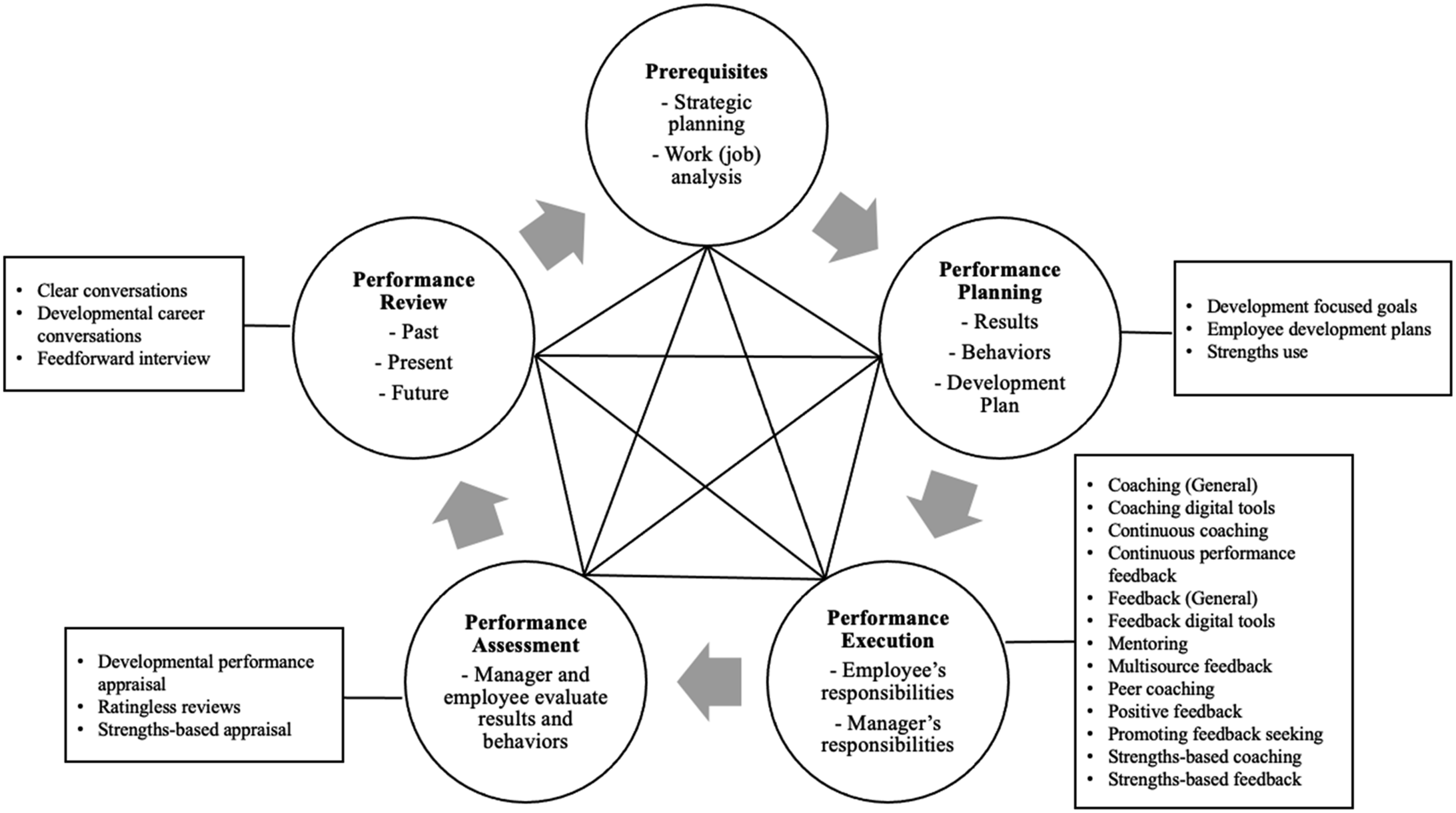
Identifying Outcomes of DOPMPs
Reported Outcomes of DOPMPs.
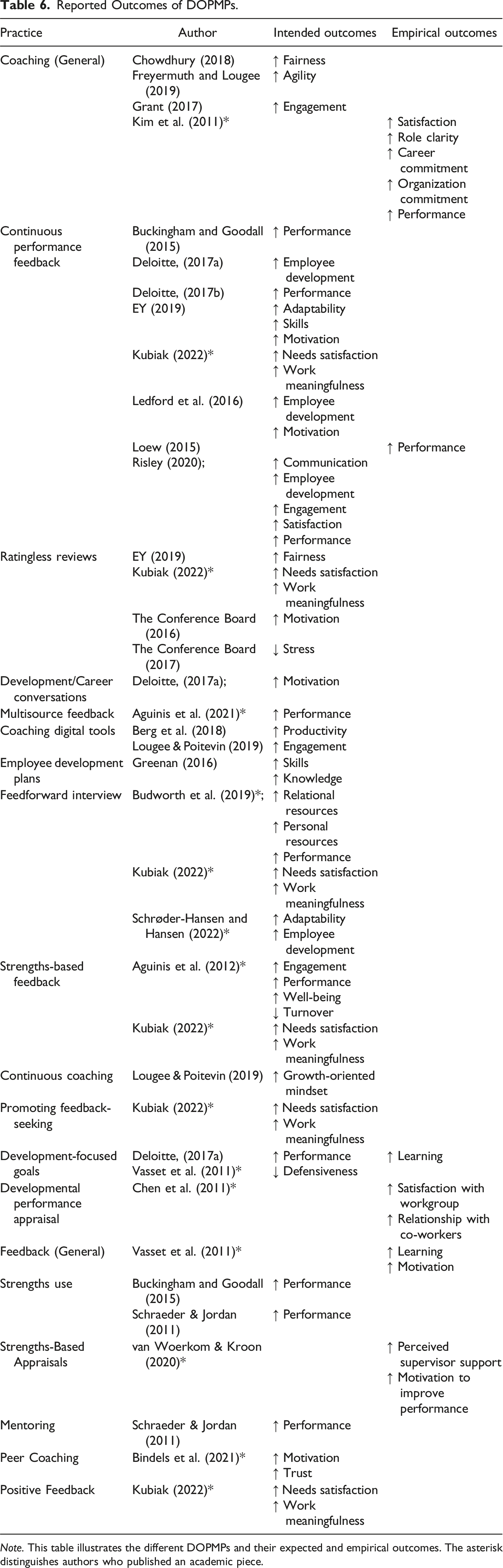
Note. This table illustrates the different DOPMPs and their expected and empirical outcomes. The asterisk distinguishes authors who published an academic piece.
We observed 28 different outcomes of DOPMPs (i.e., please note that some of the outcomes overlap). The most common expected outcomes of these practices were respectively employee performance (10 hits), engagement (5 hits), motivation (5 hits), needs satisfaction (5 hits), work meaningfulness (5 hits), employee development (4 hits), fairness (2 hits) and adaptability (2 hits). As for the empirical outcomes, the most common were employee performance (3 hits) and learning (2 hits). Finally, all other outcomes reported in Table 6 received only one hit.
Identifying Factors for DOPMP Implementation
Identified Implementation Factors for DOPMPs.
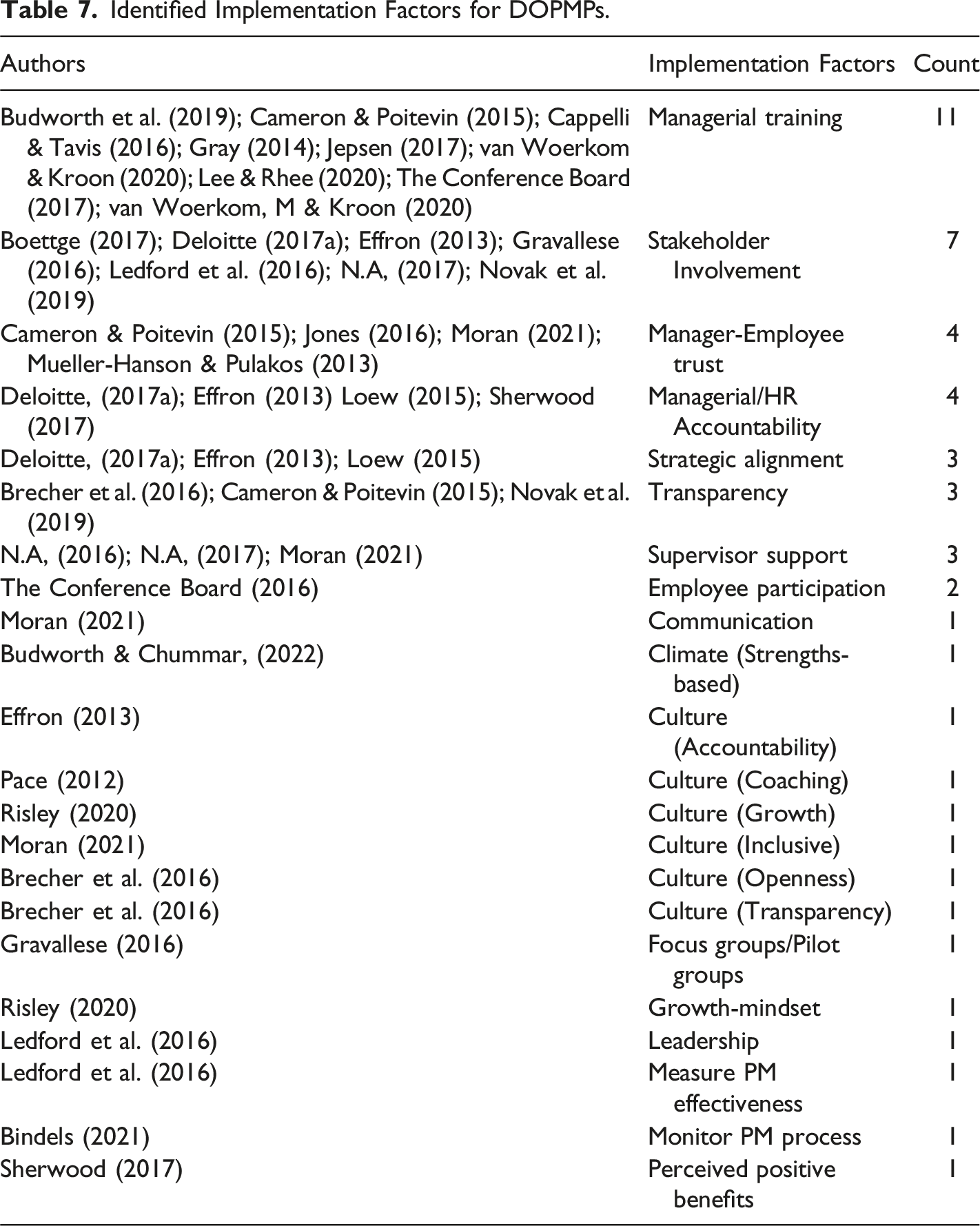
Among the factors identified, managerial training emerged as the most prevalent element with 11 hits. Additionally, stakeholder involvement and manager-employee trust garnered notable attention, with 7 and 4 hits, respectively. Furthermore, managerial/HR accountability, strategic alignment, transparency, supervisor support, and employee participation were also recognized as relevant factors, each appearing with 3 and 2 hits. All other key elements for the implementation of DOPMPs only had 1 hit.
Discussion
Summarizing the Data.
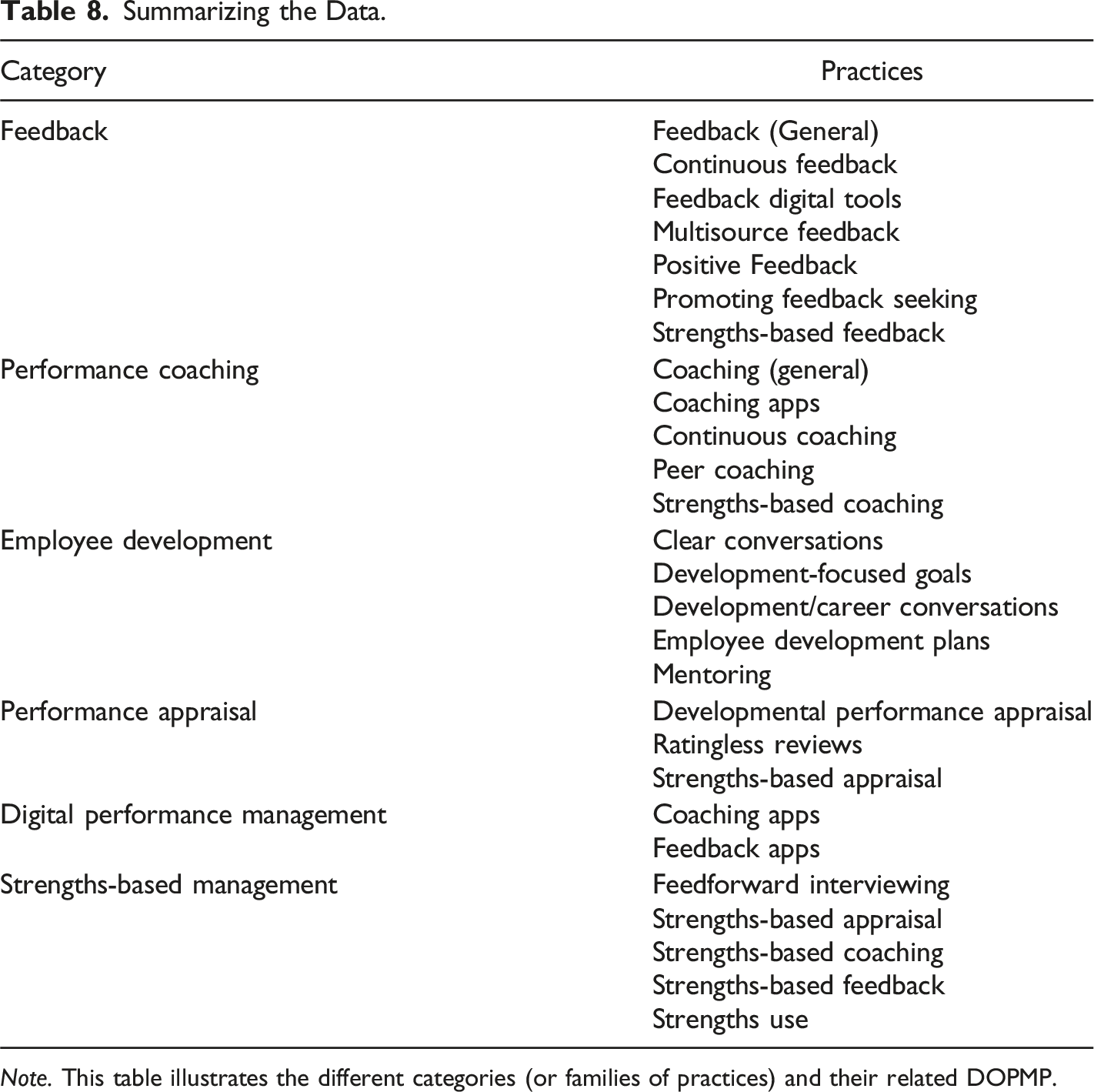
Note. This table illustrates the different categories (or families of practices) and their related DOPMP.
Two patterns emerged from the examination of each family of practices. On the one hand, some sets of practices contained different variations of a similar DOPMP. For instance, numerous articles focused on feedback, but from different angles. We found articles discussing continuous performance feedback, multi-source feedback, feedback apps, promoting feedback seeking, and feedback in general. These studies all have in common that they consider feedback as an effective performance management tool to promote the development and growth of individuals. To this point, many studies on feedback mentioned that there is a need for managers to administer feedback more frequently (i.e., continuously) to nurture employee performance regularly. Additionally, studies pointed out that promoting feedback from different sources (i.e. peers) and encouraging employees to seek feedback can also be helpful to achieve this end, moving away from the traditional view of feedback as a top-down process emanating from the manager. Similar patterns were found for coaching, where we observed multiple delineations of this set of practices, namely coaching (general), coaching apps, continuous coaching, and strengths-based coaching. Seen as a powerful tool for employee development, it appears there is also a need for coaching to become more frequent (i.e., continuous) in organizations and to allow more seasoned peers to coach their colleagues for performance development.
On the other hand, we observed that some families of practices were more akin to approaches through which DOPMPs can be enhanced. For instance, through digital performance management, practices such as coaching and feedback can be conducted virtually (rather than in person). The articles pointed out that technology can facilitate these practices as they would allow firms to reduce transaction costs, allow for better follow-ups, and allow employees to personally request their managers for coaching and development opportunities. Similarly, practices such as strengths use, strengths-based feedback, strengths-based appraisals, strengths-based coaching, and feedforward interviews, can be regrouped within a broader category of strengths-based performance management, as they all involve the identification, use, or development of employee strengths (Doucet et al., 2019). The strengths-based approach can be beneficial in terms of effectively identifying employees’ strengths, developing them, and making the best of their potential (Miglianico et al., 2020). These practices that are popular in positive psychology are an emergent trend for performance management.
Second, we observed that DOPMPs predominantly manifest themselves within the sphere of performance execution, indicating a strong alignment with the operational (day-to-day) aspects of performance management. However, a noticeable disparity arises when considering their application in the stages of performance planning, assessment, and review. DOPMPs appear to be less prevalent in these critical phases, signaling a potential gap in their comprehensive integration within the performance management cycle. We also noted the absence of any discernible DOPMPs at the very start of the performance management cycle (pre-requisites). For instance, there were no practices that were specifically part of strategic planning. This absence suggests a potential oversight within current DOPMPs, wherein the focus has been predominantly skewed toward the immediate and tangible facets of performance management rather than the strategic bedrock upon which these practices should be based upon. To ensure greater cohesion between DOPMPs and a better alignment with the organizational context, HRD professionals should take a greater part in strategic discussions on how employee performance is planned, managed, and evaluated.
Third, our study provided a comprehensive list of DOPMPs, but it is important to stress that we are not advocating for the adoption of all of the identified practices to enhance the effectiveness of performance management. In line with the systems approach that we put forward in our study (Bedford, 2020), we believe that organizations should select a set of coherent practices that meet their objectives based on their context, strategy, and the type of labor they employ (Lepak & Snell, 1999; Youndt et al., 1996) to form a performance management system that enables human capital growth, performance, and flourishing. Firms can evaluate which sets of practices are most effective by examining which practices mutually reinforce/diminish one another (i.e., complementarity/substitution) and how practices can come together to form a system that meets the purpose of DOPM systems and organizational goals (Grabner & Moers, 2013). Nevertheless, we acknowledge that not all firms may benefit to the same extent from the adoption of DOPMPs. For example, firms that have a low-cost strategy and employ unskilled laborers may not see the DOPM approach as helpful as other organizations, because the additional care and complexity that becomes part of PM may be viewed as an obstacle to meeting their objectives (i.e., profit maximization).
Fourth, we observed that most of the articles in the current review did not provide definitions for the various DOPMPs discussed and when definitions were available, they were not consistent throughout articles. This was somewhat expected as most articles that we analyzed were from the grey literature. Nonetheless, this finding has important implications, as it makes it difficult to build on the current results and evaluate the effectiveness of DOPMPs. For example, with respect to coaching, the lack of clear definitions (and considering our inclusion/exclusion criteria) allow us to implicitly assume that the articles deal with managerial coaching, a performance management practice to develop employees, and not other types of coaching such as career coaching, which is a talent management practice (Beattie et al., 2014; Claussen et al., 2014; Feldman & Lankau, 2005; Hagen, 2012). The same can be said for the practice of continuous performance feedback where there is no consensus regarding the frequency, nor the level of formalization of conversations between the manager and the employee. For some, continuous performance feedback meant that employees would receive feedback on a quarterly basis (Cappelli & Tavis, 2016), while for others they would receive feedback in real-time through digital tools like mobile applications for instance (Freyermuth & Lougee, 2019).
This point brings us to our fifth observation, which is the under-representation of scientific articles dealing with DOPMPs compared to the number of articles in the grey literature. Overall, we observe that the conversation about the developmental approach to performance management is taking place mainly amongst practitioners. Given the popularity of DOPMPs and their increasing adoption in organizations, researchers must address the issues raised by professionals and should conduct additional empirical research, to provide them with sound empirical evidence on the different applications of these practices and their effects.
Sixth, we found that the literature on DOPMPs seems to over-represent positive outcomes (expected/empirical). Of all the DOPMPs that were identified, none were associated with negative outcomes. While this may demonstrate the relevance and importance of these practices, the lack of critical perspective may lead to the adoption of certain practices without considering their potential adverse effects on employees’ attitudes, behaviors, and health. For instance, it has been discussed that strengths use can lead to lower levels of performance when employees are asked to use their strengths too frequently (i.e., strengths overuse) (Kaiser & Overfield, 2011; Kaplan & Kaiser, 2009; Niemiec, 2019). Furthermore, similar arguments can be made for continuous performance feedback where receiving feedback too frequently or in inappropriate contexts has been associated with feedback overload (i.e., cognitive exhaustion from feedback) (Kubiak, 2020; Lam et al., 2011; Morse, 2004).
Seventh, when considering the factors that can contribute to the successful implementation of DOPMPs, it becomes clear that the success of such practices depends not only on managers’ skills and abilities but also on the involvement of all organizational stakeholders. Indeed, while the training of managers and their capacity to foster strong managerial-employee relations are essential to increase the acceptance of these practices (Tseng & Levy, 2019) and hence the implementation of a developmental approach to performance management, the close alignment of these practices with the organizational strategy and the establishment of a supportive organizational culture, whether it be coaching-oriented, accountability-focused, or otherwise, depending on the organizational context, are crucial vectors of success. These results underline the importance of focusing on the prerequisite component of the performance cycle and involving the organization’s top management in the process.
Finally, we identified numerous factors contributing to the successful implementation of DOPMPs. However, we observed that the literature offered little insight into the potential impediments to DOPMP implementation. We encourage HRD scholars to explore this topic of research using case studies to shed light on facilitators and barriers to the implementation of DOPMPs. Such an approach would allow researchers to have a nuanced understanding of the contexts where DOPMPs are most and least effective (Dooley, 2002). HRD researchers are certainly well situated to explore DOPMPs in professional settings and to build more holistic performance management systems (Brown et al., 2018).
Implications for HRD Research
The current study provides a starting point for HRD researchers to carefully examine performance management practices that can encourage individuals to not only perform in the workplace but simultaneously foster their professional development (Joo et al., 2013). Even though significant attention has been given by HRD scholars to development-oriented practices such as coaching, mentoring, and career development, many of the cited practices in our study have not been fully studied in the context of HRD (Ellinger & Kim, 2014; Hezlett & Gibson, 2005; McDonald & Hite, 2005). As performance management systems are now being considered useful and powerful tools for employee development, increasing productivity and firm performance (Alagaraja, 2013; Buchner, 2007; Jiang et al., 2012). We believe that researchers should further investigate less mature practices such as feedforward interviews, peer coaching, or strengths-based appraisal.
To that end, our review has identified four major research gaps that can inspire future HRD research. First, as noted, DOPMPs have definitions that are either absent or inconsistent. Clearly circumscribing the main characteristics of specific DOPMPs is a necessary first step to develop a common understanding of these practices and develop research propositions and hypotheses (Jaccard & Jacoby, 2019). Clearer definitions should also help HRD researchers in terms of measuring DOPMPs, comparing them, and evaluating their effectiveness more rigorously. Furthermore, it will be beneficial for HRD practitioners to facilitate the use and implementation of DOPMPs in organizations to support the development and performance of their workforce.
Second, clear definition and measurement of DOPMPs must be paired with the use and/or development of theory that will help researchers establish how and why DOPMPs produce their effects (i.e., learning, performance, etc.) and in what context (e.g., culture, leadership, industry, etc.). Such an understanding is paramount because this can help organizations manage employee performance more effectively, better preserve their human capital, and foster organizational competitiveness (Pulakos, Kantrowitz et al., 2019; Troise et al., 2022). We believe that future researchers will benefit from mobilizing micro- and meso-level theories from positive psychology, human resource development and organizational behavior to explain relationships between DOPMPs and their outcomes as theories from these fields of study have been used to establish relationships between HRD practices and employee outcomes (Bakker & Demerouti, 2018; Chang & Chen, 2011; Dubreuil et al., 2014; Kubiak, 2020; Seo et al., 2019). Keeping this in mind, researchers must also think critically about DOPMPs’ potential downfalls, limitations, and unintended consequences.
Third, the majority of discussions about DOPMPs occur in practitioner circles, leaving academic researchers on the sidelines. This gap in the literature creates an opportunity for researchers to address important issues that have not been studied in an academic context. Specifically, there is a need to bridge the gap between the intended and actual (empirical) outcomes of DOPMPs. For example, while both academics and practitioners have discussed outcomes such as learning, motivation, and performance other key outcomes remain underexplored. For instance, wellness-related outcomes such as needs satisfaction, work meaningfulness, and well-being have not received sufficient attention in academic research. To build a strong case for DOPMPs in organizations, future research should explore the relationships between DOPMPs, performance, and well-being. Understanding these relationships can provide a stronger scientific foundation for these practices, a better business rationale, and see how these practices can provide the necessary architecture to enable employees’ flourishing (Gruman & Budworth, 2022).
Fourth, expanding on our previous point, we believe that future studies should not only focus on how DOPMPs lead to outcomes, but there should be an exploration of the specific bundles or configurations of practices that would maximize the effectiveness of these practices in terms of fostering employee growth, performance, and well-being (Bedford, 2020). By grouping DOPMPs into a larger set of practices or bundles, researchers can examine the effects of DOPM systems from a more strategic perspective, and link DOPM systems to macro-level outcomes such as operational and financial performance (see Pavlov et al., 2017).
To summarize, we believe that rigorous empirical and theoretical work on how and why DOPMPs sustain employee performance, learning, growth, and well-being will be highly beneficial, especially when we consider the dearth of research on this topic in the literature (Gruman & Budworth, 2022; Kowalski & Loretto, 2017; Peccei & van de Voorde, 2019). Understanding these relationships, are particularly relevant to organizations as they are grappling with an increasing number of employees that have important skills gaps and we may come to a better understanding of how we could better develop their human capital (Agrawal et al., 2020; Brunello & Wruuck, 2021).
Implications for HRD Practice
The current study provides insights for practitioners interested in participating in the transformation of their performance management practices from mere administrative tools to drivers of employee engagement and development. Favoring more agile, collaborative, and development-oriented performance management systems has been identified as one of the most pressing challenges organizations and HRD professionals must address to succeed in today’s rapidly evolving landscape (Brown et al., 2018; Wang, 2018). Our review identified relevant families of practices that HRD professionals can promote to effectively support the performance and development of employees. As HRD professionals are familiar with many of these practices, the work of integrating them into their organization’s current performance management processes can be done more easily. However, for other practices, such as strengths-based performance management, which are more novel, doing so may require HRD professionals to be trained on these practices to properly support and accompany the organization’s managers who must use these practices daily.
A considerable monetary investment may also be needed if digital performance management practices are to be implemented. Thus, the choice and the extent of the implementation of these practices should be based on a careful analysis of the contingency factors related to the organization’s strategy and culture (Kuchinke, 2003). For instance, organizations that have a quality strategy (i.e., improving product/service quality) and an innovation strategy (i.e., developing new products and services compared to rivals) are more likely to be concerned about the developmental aspects of employees’ performance management systems compared to organizations that are focused on a cost strategy (i.e., having the lowest costs to out-do competitors), and will give prominence to the administrative function of such systems (Bayo-Moriones et al., 2020; Sun & Pan, 2011). We believe that if HRD practitioners are mindful of these contingency factors, they will be more successful in implementing DOPMPs in a strategic way that can foster the human capital of organizations and drive business objectives and performance outcomes.
Our review identified several positive outcomes associated with the practices. Although many of these outcomes are more expected than confirmed. The empirical study results we identified support the view that investing in DOPMPs is beneficial to both employees and organizations. The results of our study can therefore be used to help HRD professionals build a business case for reorienting their organization’s performance management systems towards a developmental approach that supports human capital growth.
Limitations
While the current review carefully considered the methodological framework from scoping reviews (Arksey & O’Malley, 2005; Daudt et al., 2013; Levac et al., 2010) and based itself on the PRISMA-ScR guidelines, it is subject to some limitations (Tricco et al., 2016). First, the current review provided a narrative (or descriptive) account of the outcomes of DOPMPs. It is important to note that scoping reviews do not weigh or aggregate evidence to determine the extent to which an intervention/practice is effective (Arksey & O’Malley, 2005). Scoping reviews synthesize what is being said about a phenomenon of interest. To assess to what extent a practice or intervention is effective, it is best to conduct a review that allows for the aggregation of evidence, such as the meta-analysis (Paré et al., 2015). This type of systematic literature review would have been deemed pre-mature considering that DOPMPs are an emerging topic, but should be considered when once research on the subject is more developed.
Second, even though we conducted searches in multiple databases and included different types of literature (i.e. academic and non-academic literature), our review systematically excluded articles that were not written in the English language. While this did assist the researchers in narrowing the scope of the review and obtaining the most relevant findings, this may have introduced publication bias, which may have negatively affected the content validity of the current study (Meline, 2006). For instance, the cultural perspective on employee development may vary between English-speaking and non-English-speaking countries (Hofstede, 1980). To be more precise, in English-speaking countries, where individualism is prevalent, organizations may tend to prioritize practices that focus on individual development, while collectivist non-English-speaking countries may emphasize team development (Hofstede, 1980). Thus, publication bias may have not been fully mitigated and we encourage future research to be more inclusive of other languages and cultures.
Conclusion
The present study scoped the literature to determine what is known about DOPMPs. We did so by mapping the literature and synthesizing the expected and observed outcomes. Our data revealed that 22 DOPMPs were associated with positive outcomes. Furthermore, we found that a lot of the supportive evidence for DOPMPs mostly emerged from the grey literature. There is still a lot about DOPMPs that we do not know. We identified as such three pressing research gaps that need to be addressed for HRD academics to begin tying the knot between research and practice and help organizations reach the full potential of growth and development DOPMPs can bring.
Footnotes
Acknowledgments
We would like to sincerely express our gratitude to Prof. Guy Paré for his support throughout the development of this manuscript.
Declaration of Conflicting Interests
The author(s) declared no potential conflicts of interest with respect to the research, authorship, and/or publication of this article.
Funding
The author(s) disclosed receipt of the following financial support for the research, authorship, and/or publication of this article: The current research project has obtained funding from the Social Sciences and Humanities Research Council of Canada (SSHRC) (Insight Development Grant) and doctoral funding from the Fonds de Recherche du Québec - Société et Culture (FRQSC) (Doctoral Research Scholarship).

Note
Appendix
Sample Codes to Themes Structure. Note. The Gioia method was used to develop this quotes to codes to themes structure (see Gioia et al., 2012).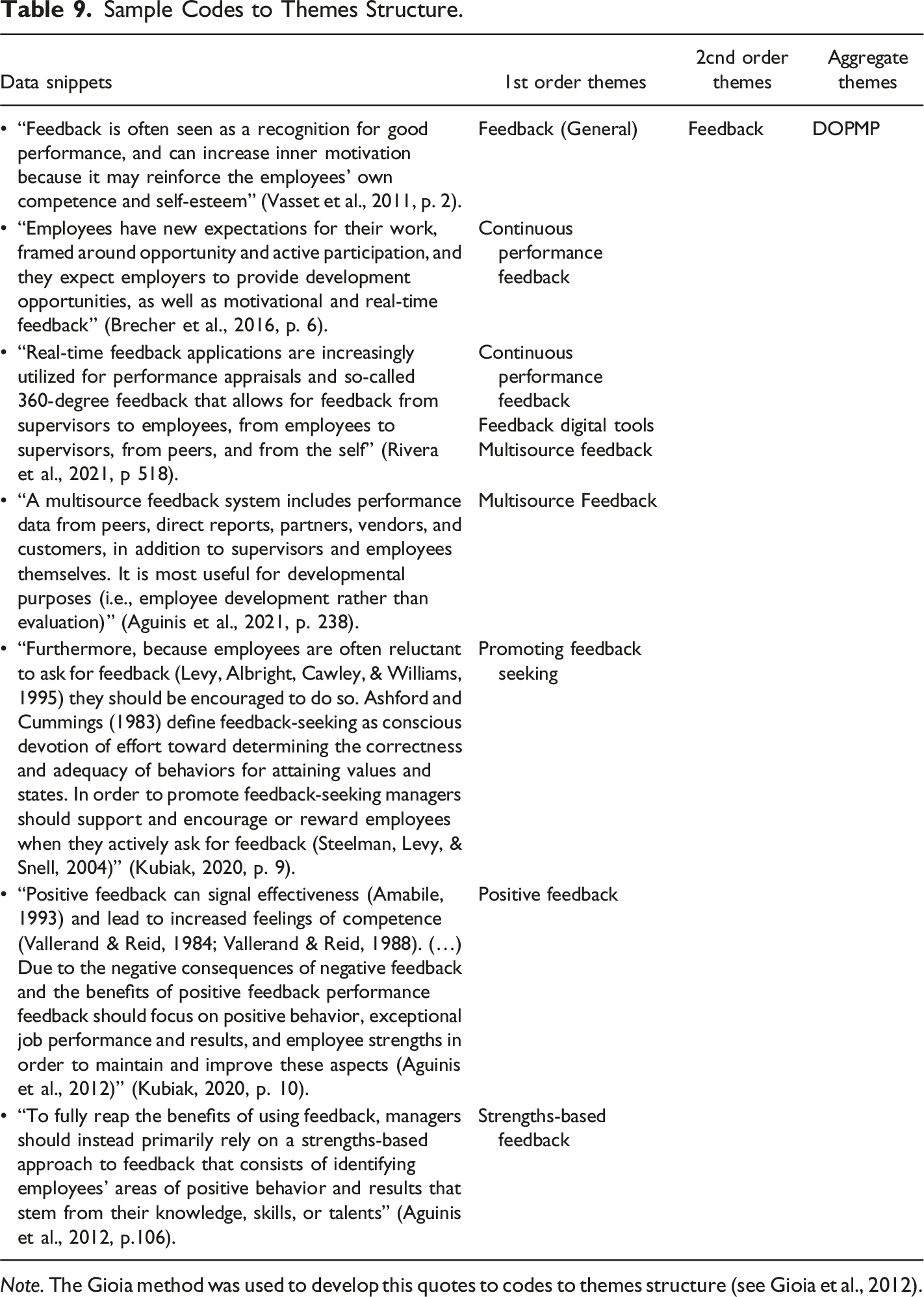
Data snippets
1st order themes
2cnd order themes
Aggregate themes
• “Feedback is often seen as a recognition for good performance, and can increase inner motivation because it may reinforce the employees’ own competence and self-esteem” (Vasset et al., 2011, p. 2).
Feedback (General)
Feedback
DOPMP
• “Employees have new expectations for their work, framed around opportunity and active participation, and they expect employers to provide development opportunities, as well as motivational and real-time feedback” (Brecher et al., 2016, p. 6).
Continuous performance feedback
• “Real-time feedback applications are increasingly utilized for performance appraisals and so-called 360-degree feedback that allows for feedback from supervisors to employees, from employees to supervisors, from peers, and from the self” (Rivera et al., 2021, p 518).
Continuous performance feedback
Feedback digital tools
Multisource feedback
• “A multisource feedback system includes performance data from peers, direct reports, partners, vendors, and customers, in addition to supervisors and employees themselves. It is most useful for developmental purposes (i.e., employee development rather than evaluation)” (Aguinis et al., 2021, p. 238).
Multisource Feedback
• “Furthermore, because employees are often reluctant to ask for feedback (Levy, Albright, Cawley, & Williams, 1995) they should be encouraged to do so. Ashford and Cummings (1983) define feedback-seeking as conscious devotion of effort toward determining the correctness and adequacy of behaviors for attaining values and states. In order to promote feedback-seeking managers should support and encourage or reward employees when they actively ask for feedback (Steelman, Levy, & Snell, 2004)” (Kubiak, 2020, p. 9).
Promoting feedback seeking
• “Positive feedback can signal effectiveness (Amabile, 1993) and lead to increased feelings of competence (Vallerand & Reid, 1984; Vallerand & Reid, 1988). (…) Due to the negative consequences of negative feedback and the benefits of positive feedback performance feedback should focus on positive behavior, exceptional job performance and results, and employee strengths in order to maintain and improve these aspects (Aguinis et al., 2012)” (Kubiak, 2020, p. 10).
Positive feedback
• “To fully reap the benefits of using feedback, managers should instead primarily rely on a strengths-based approach to feedback that consists of identifying employees’ areas of positive behavior and results that stem from their knowledge, skills, or talents” (Aguinis et al., 2012, p.106).
Strengths-based feedback