




Abstract
As organizations seek to enhance team collaboration and productivity, team-level job redesign has become a critical focus in organizational psychology and management. However, research mainly emphasizes individual-level redesign, leaving gaps in understanding how teams collectively shape their work. This systematic scoping review synthesizes evidence on team-level job redesign in organizations, with two objectives: (1) identifying study characteristics; and (2) analyzing concepts and practices teams use to shape jobs and improve well-being and performance collaboratively. Using a mixed studies review approach, which incorporates evidence from both qualitative and quantitative research designs, we searched electronic databases (e.g., Web of Science, PsycINFO, Scopus) and gray literature for empirical studies published in English from January 2000 to September 2025. After screening 12,946 studies, 90 met the inclusion criteria for the final analysis. These studies varied in methods, interventions, and outcomes. The review not only synthesizes key findings and identifies important knowledge gaps but also offers recommendations to advance research and practice in team-level job redesign. Beyond mapping existing studies, it introduces a typology of team-level job redesign initiatives – ‘cross-functional’, ‘bottom-up’, and ‘hybrid’ – providing a structured framework to integrate diverse approaches and guide future research.
Today’s organizations increasingly rely on teams to manage the complexities of modern tasks (Maynard et al., 2015). Successfully completing these tasks depends heavily on collaboration and coordination among team members, as they align their efforts to achieve shared goals (Chiaburu & Harrison, 2008; Marks et al., 2001; Mathieu et al., 2019; Schneider, 1987). For example, in bicycle production, coworkers must coordinate the assembly of parts, while in software development, cross-functional teams collaborate across project components to deliver a final product.
Building on this need for coordinated effort, we introduce ‘team-level job redesign’ as an umbrella concept encompassing deliberate modifications to the structure, tasks, roles, demands, or resources of a team that are initiated, enacted, or experienced collectively. These redesign activities may be driven by team members themselves or guided by organizational policies and involve collaboratively shaping and optimizing work – for example, by redefining roles, adjusting responsibilities, or reallocating resources – to enhance coordination and overall team functioning. Through such collaborative redesign, teams can improve efficiency, clarify task responsibilities, and reduce redundancies.
Although job redesign has been widely studied at the individual level, research explicitly addressing team-based approaches remains relatively scarce (van Woerkom, 2021). Existing work design research has predominantly focused on individual processes such as job crafting, while much less is known about how teams collectively reshape their work. Related team-level concepts – including agile work, team job crafting, and co-creation – offer valuable insights (Junker et al., 2022; Tims et al., 2013). However, much of the existing literature focuses on co-creation and co-production involving external stakeholders rather than on the internal collaborative redesign of team members’ own work (see Voorberg et al., 2015, for a review). Moreover, these streams of research differ in their scope, direction, and the degree of agency attributed to employees in redesign efforts. For instance, team job crafting typically focuses on proactive, bottom-up changes initiated by team members, whereas agile work and co-creation often emphasize process flexibility or collaboration with external actors rather than modifications to the team’s own work structure.
Despite these emerging perspectives, a comprehensive overview of team-level job redesign practices – particularly regarding their specific activities teams undertake and the extent of team member involvement – is still lacking. Clarifying this conceptual space is important given the increasing reliance on teamwork in modern workplaces. In team settings, members depend on one another to exchange ideas and coordinate tasks (LePine et al., 2008), meaning that work processes are often co-constructed rather than individually determined (Wrzesniewski & Dutton, 2001). Moreover, group-based redesign efforts may help cultivate supportive social environments that enhance commitment and motivation, increasing the likelihood that redesign initiatives lead to sustained improvements in work functioning (Knight et al., 2019).
However, much of the existing work design literature continues to focus primarily on individuals rather than teams. Most interventions target individual employees and often overlook the collective efforts and social environments in which job redesign occurs (van Woerkom, 2021). For example, Oprea et al. (2019) highlight that existing studies rarely examine how interventions affect participants’ colleagues. Moreover, such interventions frequently target individuals who are underperforming or unwell rather than addressing broader workforce dynamics (Schaufeli & Salanova, 2010). By overlooking the social dynamics that shape work processes, an individual focus may undermine the sustainability of redesign initiatives and lead to unintended consequences for coworkers, ultimately reducing the overall effectiveness of job redesign efforts.
Research on collaborative forms of job redesign is also scattered across disciplines – including sociology, organizational psychology, marketing, and education – and often uses inconsistent terminology (Parker, Morgeson, & Johns, 2017; Rock et al., 2018). Terms such as “co-creation” and “co-production”, for example, are frequently used interchangeably despite referring to distinct processes (Gebauer et al., 2010). Approaches also vary widely, ranging from participatory action research involving employees with diverse expertise to team job crafting initiatives in existing work groups performing similar tasks (Cornish et al., 2023; Tims et al., 2013). As Parker and Knight (2024) note, the proliferation of work characteristics in the literature risks fragmenting the field into a “long checklist” without theoretical coherence, highlighting the need for integrative models that consolidate and structure these approaches (Knight & Parker, 2019; Parker & Knight, 2024).
To bring greater conceptual clarity to this fragmented literature, we define team-level job redesign as the collaborative efforts of interdependent employees within organizational units (e.g., teams, departments) to modify their shared tasks, workflows, coordination patterns, or job demands and resources – whether through formally implemented interventions or naturally emerging adjustments – to enhance collective well-being and/or performance. While team job crafting represents one form of such redesign activities, the broader concept also includes initiatives that are initiated or facilitated by management but actively shaped and enacted by the team. Despite the growing relevance of these collaborative redesign processes, this broader perspective has not yet been systematically reviewed.
To address this gap, we conducted a scoping review using systematic procedures examining how teams collaboratively redesign their work. Specifically, we searched electronic databases for studies aligned with our definition of team-level job redesign: collaborative efforts of interdependent employees within organizational groups to shape their work environment in ways that influence well-being and performance outcomes. The review is particularly timely given the rise of remote and hybrid work arrangements and increasing global collaboration, which are transforming team dynamics and creating new demands for innovative approaches to job redesign (Spitzmuller et al., 2023).
Taken together, despite growing interest in team-level job redesign, conceptual ambiguity persists due to fragmented terminology and approaches across disciplines. Moreover, although several reviews have examined individual-level job redesign (e.g., Knight & Parker, 2021; Roczniewska et al., 2023), no comprehensive synthesis has focused specifically on team-level job redesign interventions and their outcomes. Against this background, this review has two primary aims. First, it provides a comprehensive overview of empirical research on team-level job redesign since 2000, examining its scope, key variables (e.g., predictors, outcomes, moderators, mediators), theoretical frameworks, and methodological trends. Second, it advances theoretical understanding by analyzing the specific activities through which teams redesign their work and identifying overarching types of redesign activities.
This review makes three main contributions. First, it integrates fragmented empirical evidence on team-level job redesign across disciplines, offering the first consolidated overview of this emerging research domain. Second, it identifies and organizes the specific activities through which teams reshape their work, developing a typology that provides a clearer conceptual structure for future research and practice. Third, by synthesizing findings across diverse literatures, the review highlights emerging trends and research gaps and lays the groundwork for a more coherent research agenda on collective forms of work redesign. This study is a scoping review, meaning we systematically looked at existing research to get an overview of the field. Our goal is not to evaluate the quality of studies or combine their results, but to clearly map the different ways team-level job redesign has been studied, explain how it differs from related concepts, and highlight areas for future research.
Theoretical Background and Literature Review
This review is guided by established theoretical perspectives on team processes and work design, which provide a lens for understanding how team-level job redesign unfolds and shapes work-related outcomes. Specifically, we draw on (1) team process theory (Marks et al., 2001), which highlights how coordination and interpersonal processes shape team functioning, and (2) work design theory (Hackman & Oldham, 1976; Parker, Van den Broeck, & Holman, 2017), which emphasizes how job characteristics influence psychological states and related work outcomes. Together, these perspectives inform our analysis of how team-level job redesign interventions operate and why they may lead to different outcomes. In the following, we integrate these theoretical perspectives with prior empirical research on job redesign and teamwork.
In modern organizations, work is increasingly organized around teams, with employees collaborating, coordinating interdependent tasks, and working jointly to achieve shared goals within a broader organizational context (Kozlowski & Ilgen, 2006; Maynard et al., 2015). Team membership often requires continuous collaboration within functional units such as customer service, production, or maintenance. As teams take on more complex responsibilities, demands on members grow significantly (Leicht-Deobald et al., 2022). Recognizing employees as interconnected elements within larger team systems underscores the need to move beyond an individual perspective and examine the social and interpersonal dynamics that shape teamwork. Such an approach can guide strategies to strengthen teamwork and promote the well-being of all team members.
From a team process perspective (Marks et al., 2001), effective teamwork hinges on coordination and collaboration among team members. Marks et al. (2001) conceptualize teams as “multitasking units that perform multiple processes simultaneously and sequentially to orchestrate goal-directed taskwork” (p. 356). They outline three critical phases of team processes: transition processes (e.g., planning and goal-setting), action processes (e.g., progress monitoring and resource management), and interpersonal processes (e.g., conflict resolution and communication for cohesion). Teams skilled in these processes tend to achieve higher performance and greater job satisfaction (LePine et al., 2008).
Beyond team processes, work design constitutes a key mechanism for enabling effective teamwork. From a work design perspective, this involves structuring and organizing tasks, responsibilities, and interactions, as well as shaping roles and work environments in ways that support both performance and well-being (Morgeson & Humphrey, 2008; Parker, 2014). A recent review by Parker et al. (2017) underscores its importance as a key antecedent or mediator in influencing individual and team outcomes. Traditional frameworks highlight factors such as job control, skill utilization, role clarity, and social support as critical for well-being and performance (e.g., Humphrey et al., 2007; Whitman et al., 2010; Wood et al., 2012). More recent research highlights the urgency of integrating psychological needs – autonomy, relatedness, and competence - into work design to address the demands of modern workplaces (Gagné et al., 2022). Contemporary perspectives also stress the importance of psychological safety, meaningful work, and inclusive work structures (Bailey et al., 2019; Newman et al., 2017; Roberson et al., 2017). Additionally, playful work design, which infuses tasks with elements of fun or competition, has emerged to boost intrinsic motivation and engagement without altering task structures (Scharp et al., 2023). These evolving perspectives reflect the need for innovative approaches to support employee well-being and performance in dynamic work environments.
Job Redesign Interventions
Building on the benefits of well-designed jobs, job redesign interventions aim to optimize and reshape work environments by modifying job characteristics. These interventions have gained recognition for their positive effects on well-being and performance (Daniels et al., 2017; Gordon et al., 2018; Knight & Parker, 2021). Accordingly, the present review focuses on performance and well-being as the primary outcomes of team-level job redesign, consistent with their longstanding role as core objectives of good work design (Hackman & Oldham, 1976; Humphrey et al., 2007; Parker, Morgeson, & Johns, 2017). Work characteristics influence psychological states that shape both employee attitudes (e.g., job satisfaction, work engagement) and behaviors (e.g., performance, absenteeism), and job redesign interventions often aim to improve both (e.g., Carolan et al., 2017; Daniels et al., 2017). Meta-analyses and systematic reviews support these links (e.g., Boehnlein & Baum, 2020; Daniels et al., 2017; Fox et al., 2022; Gutiérrez et al., 2020; Knight & Parker, 2019; Nielsen et al., 2017). At the same time, performance and well-being are often conceptualized as integrative categories encompassing multiple subdimensions (Humphrey et al., 2007). Accordingly, in this review, we adopt a similar approach and consider outcomes such as work engagement, work motivation, job satisfaction, and health as indicators of well-being, and innovation, creativity, safety, absenteeism, and customer satisfaction as indicators of performance.
While traditionally focused on individual jobs, there is increasing recognition of the potential for group-level interventions to address broader structures and team dynamics to produce sustainable outcomes (Heijkants et al., 2023; Nielsen et al., 2010). For instance, increasing autonomy and task variety enables teams to improve transition processes (e.g., greater control over planning), which potentially enhances job quality and employee well-being (Cousins et al., 2004; Lovejoy et al., 2021). These higher-level job redesign activities can follow two approaches: “top-down” or “bottom-up”.
Top-Down Job Redesign
Traditional theories often assume that managers take the lead in job redesign through top-down approaches, structuring roles and tasks for their teams (Grant & Parker, 2009; Oldham & Hackman, 2010). Examples include agile work methods (e.g., Scrum), autonomous work groups with decision-making authority, and strengths-based leadership (Cordery et al., 2010; Goodman et al., 1988; Junker et al., 2022; Tripp et al., 2016; van Woerkom et al., 2024). Leaders may also implement shared leadership by appointing peer leaders (Edelmann et al., 2023), introducing rotational leadership systems (Carson et al., 2007; Mlekus et al., 2022), or diversifying team composition by adding members or creating cross-functional roles (Gutiérrez-Broncano et al., 2025; Mathieu et al., 2014). In addition, leaders can adapt tasks to better meet team needs through job enrichment (e.g., increasing task variety and scope; Campion & McClelland, 1993) or by restructuring work schedules (e.g., introducing flexible hours or compressed workweeks; Moen & Chu, 2024; Neirotti et al., 2019). Evidence suggests the effectiveness of these top-down interventions, with studies showing that initiatives like granting employees greater autonomy in scheduling positively influence well-being and performance (Holman & Axtell, 2016; see also Daniels et al., 2017 for a meta-analysis).
Bottom-Up Job Redesign
Traditional top-down job redesign approaches have been criticized for failing to address employees’ unique work characteristics (Hornung et al., 2010). Indeed, from a socio-technical systems perspective, effective job redesign requires input from those directly affected (Cherns, 1987). The review by Daniels et al. (2017) highlights that training employees to actively improve their jobs is one of the most effective strategies for leveraging employment practices to achieve greater well-being and job quality (e.g., better alignment with skills). Hence, scholars now focus on bottom-up, employee-driven initiatives where employees shape their jobs to optimize their work environment (Grant & Parker, 2009). A prominent example is job crafting, which allows employees to modify job characteristics to better align with their individual needs and preferences (Demerouti et al., 2019). Research has consistently demonstrated the effectiveness of job crafting interventions and emphasized the importance of incorporating them into workplace practices (Knight et al., 2021; Oprea et al., 2019).
Recently, researchers have extended these bottom-up strategies to the team level. Such proactive team behaviors illustrate how job redesign can emerge and operate at the group level. An example of such proactive, bottom-up action is team job crafting, in which team members collectively reshape their job demands and resources to align work with team needs and preferences (Tims et al., 2013). Empirical studies demonstrate that team job crafting can enhance work attitudes, team efficacy, and performance (Leana et al., 2009; Mäkikangas et al., 2017).
Beyond team job crafting, team-level job redesign also encompasses participatory approaches such as agile work practices in organizational settings (Junker et al., 2022) and, particularly in public space and design contexts, various “co-concepts” (Lee et al., 2024). These include co-creation (active stakeholder engagement in shaping ideas and defining problems), co-design (collaborative development of solutions), and co-production (joint implementation and delivery). While all stress participation, they differ in scope; co-creation spans the full process, co-design centers on solution development, and co-production on execution. Yet, their boundaries are often blurred, with co-creation and co-production sometimes used interchangeably (Voorberg et al., 2015). Despite such differences – team job crafting being employee-driven, co-creation involving external stakeholders, and co-production focusing on service delivery – these approaches all emphasize collective redesign beyond the individual. Importantly, these concepts are only illustrative; other, less common terms also appear. We therefore treat them as related but distinct manifestations of team-level job redesign, including them only when they explicitly concern redesign at the team level.
Finally, in addition to top-down and bottom-up drivers, it is important to recognize that job redesign can also be influenced by broader contextual factors. Environmental pressures (e.g., organizational restructuring, technological advances, AI), structural changes (e.g., new work processes, team structures, shifts in formal roles), and other systemic influences (e.g., inter-organizational collaborations, policy changes, industry trends) can all affect how teams function and how jobs are designed (Hardy et al., 2005; Humphrey et al., 2007; Lovejoy et al., 2021; Mayer et al., 2025; Parker & Grote, 2022). Recognizing these additional drivers places top-down and bottom-up perspectives within a broader, context-sensitive framework for understanding job design and redesign.
Method
Study Design
True to its name, scoping reviews are particularly suited for examining the scope of a research field, mapping key concepts, and providing an overview of the extent, range, and nature of existing studies (Arksey & O’Malley, 2005; Munn et al., 2018). Accordingly, we conducted a scoping review to map the empirical literature on team-level job redesign.
To enhance transparency and reproducibility, we applied systematic procedures. We developed a predefined protocol for literature search and selection, following established scoping review methodology and drawing on prior guidance and applications (e.g., Chambers et al., 2011; Harfield et al., 2018; Peters et al., 2015; Peters et al., 2020), while maintaining the broader, exploratory aims of a scoping review (Munn et al., 2018). This included a predefined search strategy, explicit inclusion criteria, and structured data extraction. Consistent with scoping review methodology, we did not conduct a formal critical appraisal of study quality. Specifically, we followed Arksey and O’Malley’s (2005) five-step framework as refined by Levac et al. (2010) and the Joanna Briggs Institute (Peters et al., 2015). The protocol was preregistered on OSF (September 27, 2023; https://osf.io/t8ks7), and reporting adhered to PRISMA-ScR guidelines (Page et al., 2021; Peters et al., 2015). Figure 1 presents the PRISMA flow of studies (i.e., record identification, duplicate screening, study inclusion), and full checklists are provided in Appendix A. PRISMA 2020 flow diagram: systematic scoping review. *Note. Several articles did not meet multiple criteria (e.g., both population and intervention), resulting in overlapping exclusion reasons; thus, the total “n” for each reason does not sum to N = 691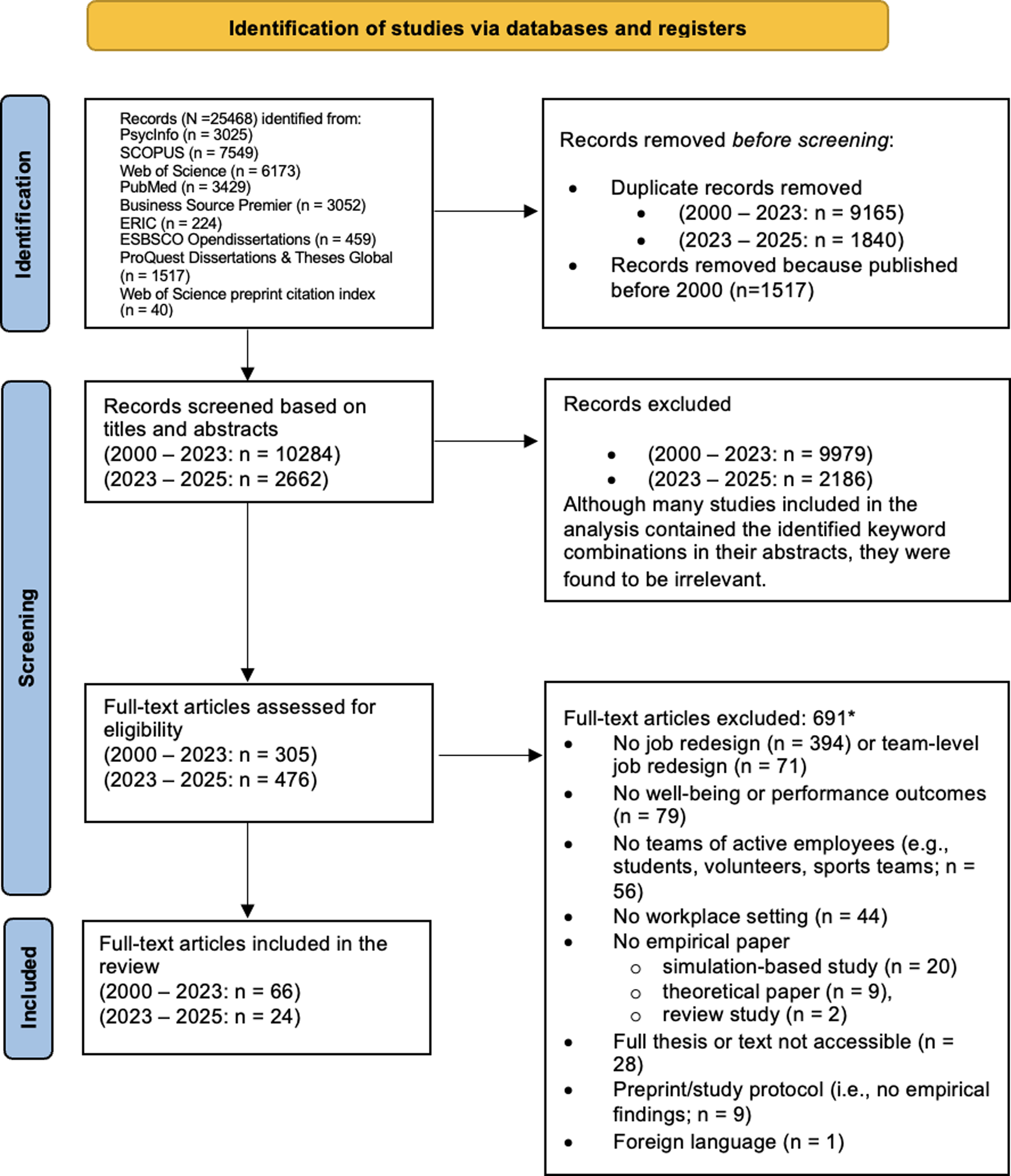
Following recommendations for systematic scoping reviews (e.g., Hong et al., 2018; Westphaln et al., 2021), we adopted a mixed-studies review approach, including quantitative, qualitative, and mixed-methods studies. Because research on team-level job redesign is still emerging, this approach allowed us to capture both evidence of effectiveness and insights into the processes and contexts of redesign. It also enabled us to identify methodological trends, such as whether quantitative studies were primarily cross-sectional or intervention-based.
Step 1: Defining the Research Aims
The primary research aim guiding this review was to provide a comprehensive overview of empirical research on team-level job redesign published since 2000. In doing so, we examined the scope of the literature, including key variables studied (e.g., predictors, outcomes, mediators, and moderators), theoretical frameworks, and methodological characteristics of the included studies. A second aim was to advance theoretical understanding of team-level job redesign by analyzing the specific activities teams undertake to redesign their work. By examining these activities across studies, the review sought to identify potential overarching types of team-level job redesign that capture how such redesign efforts unfold in practice.
Step 2: Identifying Relevant Studies
The search strategy was developed with an information specialist and combined five concept clusters: team, job (re)design, work setting, well-being, and performance. Search terms for each concept were generated based on expert input and grounded in theoretical and empirical literature. Specifically, we drew on prior systematic reviews in job (re)design – Daniels et al. (2017) and Roczniewska et al. (2023) for Concept 2 synonyms, and Knight and Parker (2019) for population- and outcome-related terms – alongside relevant empirical studies. Commonly used terminology in the work design literature (e.g., “team”, “group”, “collective”, “job design”, “work arrangement”, “crafting”) was integrated to maximize comprehensiveness. Concept 2 (“job (re)design”) required particular attention due to its diverse terminology, so we compiled an extensive list of related terms informed by both the literature and expert input (McManus et al., 1998). Altogether, this procedure resulted in multiple ‘free text terms’ for each concept. These included free text and subject headings (such as MeSH) where applicable. Truncation for certain keywords was used for completeness. We piloted dummy searches in two databases – Web of Science Core Collection (multidisciplinary) and PsycInfo (setting-specific) to assess the adequacy of our search strategy. Based on these initial results, search strings were further refined.
Search Strategy
For the retrieval of published research, electronic databases served as the primary source, and we consulted experts in the field to identify any potentially missing studies. We employed a three-step search strategy following Joanna Briggs Institute guidelines (Peters et al., 2015). First, an initial search in Web of Science and PsycInfo tested the strategy’s adequacy; the first 100 results in each database were screened to refine search terms. In the second step, a full bibliographic search was performed across multiple databases, as advised by Arksey and O’Malley (2005). The first author conducted searches in six key databases, employing the specified set of search terms identified in the abstract, subject, title, or keywords of the articles, and adapting terms to each database (e.g., proximity indicators): Web of Science Core Collection (SCI-EXPANDED, SSCI, AHCI, CPCI-S, CPCI-SSH, ESCI), PsycInfo (via Ovid), Business Source Premier (via EBSCO), PubMed (via National Library of Medicine), ERIC (via ProQuest), and Scopus. Filters for language, publication year, and document type were applied in line with eligibility criteria. The initial search was conducted on October 2, 2023. To ensure the review reflects the most recent evidence, the search was updated on September 1, 2025, using the same search strategy (see Appendix B for the full search strategy).
To capture unpublished literature, additional searches were conducted in ‘ProQuest Dissertations & Theses Global’, ‘ESBSCO Open Dissertations’, and ‘DART-Europe E-theses Portal’. Preprints were reviewed in the ‘Web of Science Preprint Citation Index’ to further expand the pool of studies. Additionally, we screened the reference lists of three key reviews on job crafting interventions, a systematic review by de Devotto and Wechsler (2019), and meta-analyses by Rudolph et al. (2017) and Oprea et al. (2019).
Step 3: Selecting Eligible Studies
The selection process followed the PRISMA-ScR flow diagram (Figure 1). The search yielded 25,468 records, reduced to 12,946 after deduplication and exclusion of pre-2000 publications. This large initial number reflects the broad and varied use of terms related to team-level job redesign, as well as the inclusion of activities captured by the comprehensive search strategy that did not align with our conceptual definition of team-level job redesign (e.g., co-creation processes involving multiple stakeholders).
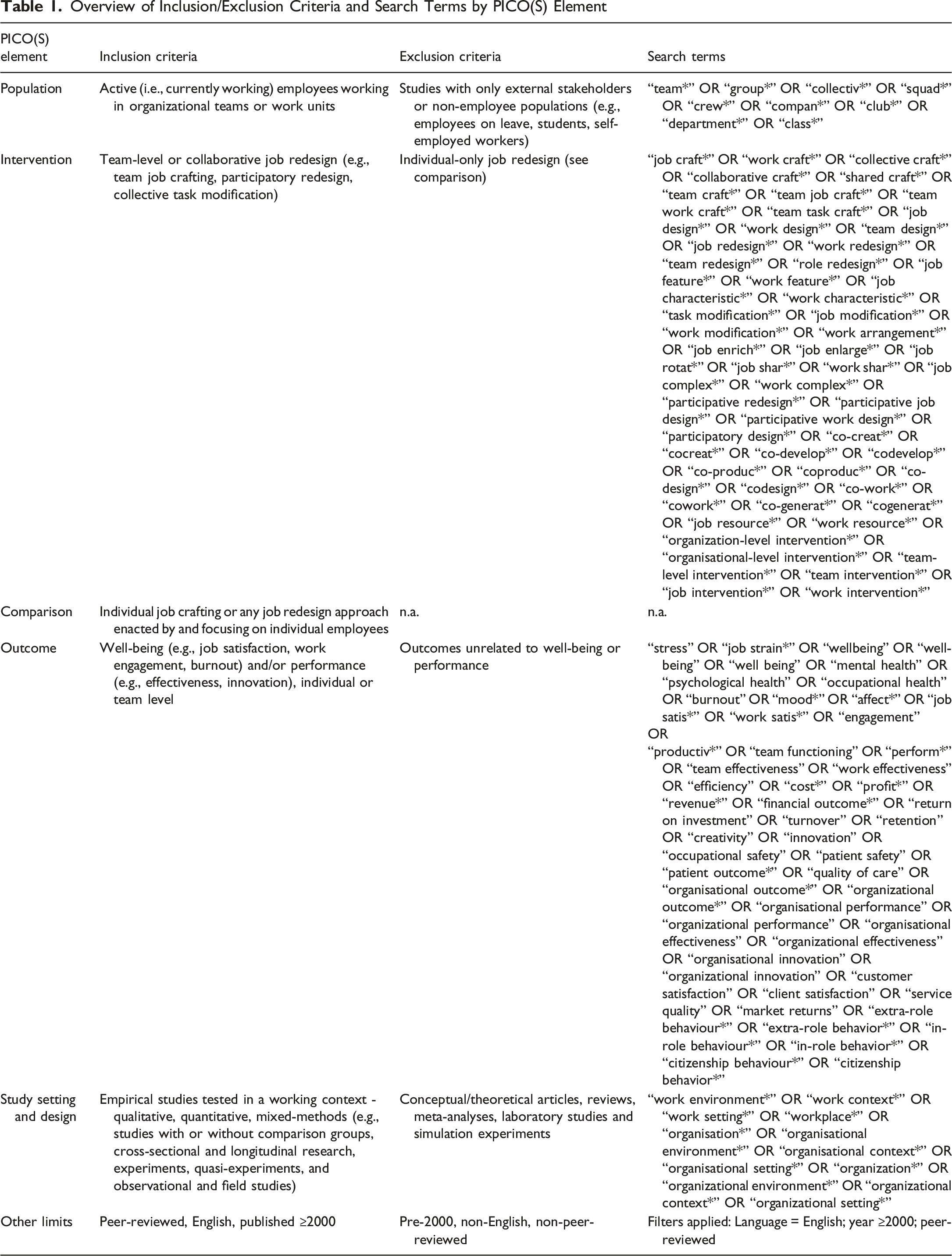
To determine which studies were included in the review, we applied a set of predefined eligibility criteria concerning publication type, study design, participants, and the nature of team-level job redesign examined. Eligibility criteria were developed through team deliberation using the PICO(S) framework (Population, Intervention, Comparison, Outcome, and Study design; Richardson et al., 1995; Shamseer et al., 2015). We included empirical studies of employees working within organizational entities, using qualitative, quantitative, or mixed methods, that examined collaborative changes to work design (e.g., team job crafting, participatory redesign, collective task modification). Recognizing the existence of related concepts, we maintained vigilance in clearly defining team-level job redesign. While terms like “co-creation” or “co-production” were included in the search, as they may occasionally suggest collaboration among team members, studies involving external stakeholders (e.g., customers) were excluded as they did not align with our definition of team-level job redesign. Studies focusing exclusively on individual-level redesign, conceptual or theoretical papers, laboratory experiments, panel data, and reviews were excluded due to limited ecological validity and weaker evidence of causality (see Knight & Parker, 2019). While a comparison with control groups was ideal, non-intervention studies (e.g., cross-sectional research on team job crafting) were retained if they addressed the topic.
Eligible outcomes included subjective or objective indicators of well-being (e.g., job satisfaction, work engagement, burnout) or performance (e.g., effectiveness, innovation) at individual or team levels. To ensure comprehensiveness, our search strategy included a wide range of subdomains of both performance and well-being. For performance, this included terms such as creativity, innovation, safety, customer satisfaction, and citizenship behavior. For well-being, search terms included mood, strain, health, work engagement, and turnover. This approach enabled us to capture a broad set of indicators that could reasonably be classified under the two higher-order outcome domains.
Overview of Inclusion/Exclusion Criteria and Search Terms by PICO(S) Element
Records were screened in Rayyan (Ouzzani et al., 2016) in two phases. First, titles and abstracts were reviewed against the inclusion criteria. To pilot the screening procedure and ensure consistency, we followed the approach used in other systematic reviews (e.g., Grindell et al., 2022). Two authors independently screened an initial subset of 100 records (Cohen’s κ = .66), and discrepancies (10 articles) were resolved through consensus-based discussion (Akers et al., 2009). Given the high level of agreement, the authors considered the procedure sufficiently robust for the first author to screen the remaining titles and abstracts independently. This resulted in the exclusion of 12,165 records.
Second, the full texts of 305 articles were assessed. To ensure reliability in the full-text screening phase, two authors independently screened an initial subset of studies. Inter-rater reliability for this phase was lower than desirable (κ = .33; 66% observed agreement vs. 49% expected by chance). While this indicates only fair agreement by conventional standards (Landis & Koch, 1977), the disagreements primarily involved borderline cases rather than clear misclassifications. Moreover, this relatively low kappa should be interpreted with caution, given the so-called kappa paradox (Feinstein & Cicchetti, 1990; Sim & Wright, 2005; Zec et al., 2017). Because one coding category (exclusion) was much more prevalent, chance agreement was high (49%), which made κ (.33) appear low despite moderate observed agreement (66%). This reflects both the statistical artifact of the paradox and the conceptual ambiguity in the team-level job redesign literature, which made eligibility decisions less straightforward. We therefore report both κ and percent agreement to provide a more complete picture of reliability.
To address this, all discrepancies were resolved through detailed consensus discussions, the coding framework was refined, and ambiguous cases were handled with a liberal inclusion approach. The disagreements primarily stemmed from differing interpretations of what qualifies as an intervention – whether it must be a formal, validated program or could also include informal activities where work is collectively shaped. To resolve these uncertainties and ensure consistent screening, the authors met to clarify the criteria, and it was agreed that both formal interventions and naturally emerging practices would be included. The authors then jointly resolved disagreements and finalized decisions on the inclusion of the disputed articles. Subsequent screening and coding followed the revised framework, with ambiguous cases still discussed between reviewers.
For the updated search, we repeated the intercoder reliability check for the 476 newly identified full-text articles, with the second author again screening 10% of the records. This yielded four disagreements, corresponding to substantial agreement (κ = .63). Of these four, three were indeed not relevant upon closer inspection, and the remaining article was discussed and jointly agreed upon for inclusion. The remaining texts were screened by the first author, with team consultation as needed. Ultimately, 90 studies met all criteria and were included in the review. Most exclusions occurred because articles did not describe activities consistent with our definition of job redesign, often focusing instead on the effects of specific team characteristics, shared leadership practices, or individual-level rather than group-level job redesign. A detailed overview of the selection process, including specific reasons for exclusion, is presented in the PRISMA-ScR flowchart (Figure 1).
Several additional measures were implemented to mitigate selection bias and ensure the robustness of the screening process. The search strategy underwent peer review by all authors. As a team, we critically discussed all keywords in the search query, with additional input from field experts. Moreover, the final eligibility-checking process was conducted collaboratively by all three authors, reinforcing the reliability of the decisions.
Steps 4 and 5: Data Extraction and Synthesis
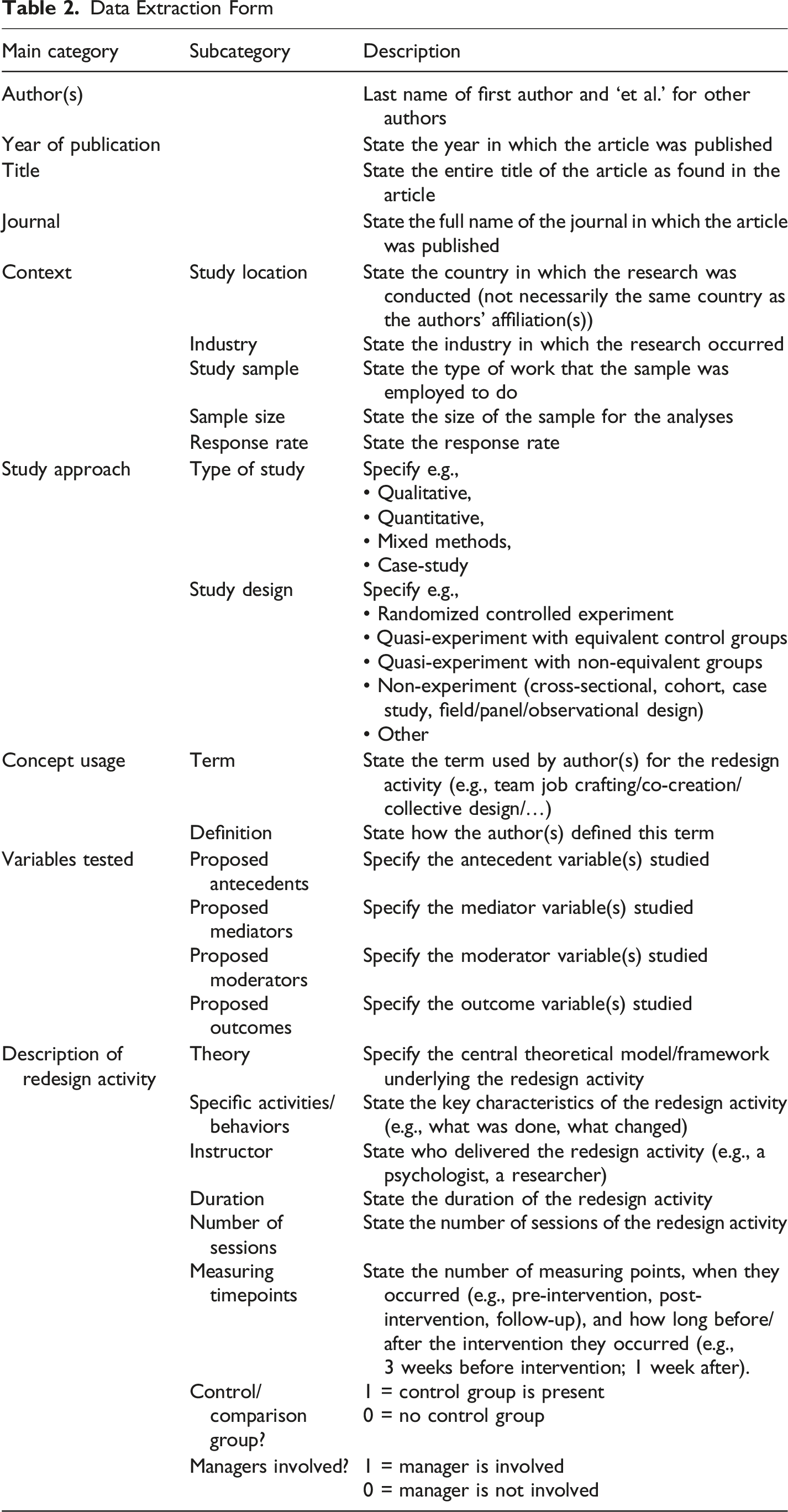
Data Extraction Form
Evidence Summary of Study Characteristics by Intervention Type

Overview of Examined Variables in Reviewed Studies by Team-Level Job Redesign Type

Note. *The number following each article represents the order in which the paper was reviewed and documented in the evidence summary table.
Results
The results are structured in line with the two overarching aims of this review. First, we provide a descriptive overview of the scope, characteristics, and key variables examined in empirical research on team-level job redesign. Second, we analyze the specific activities through which teams redesign their work, leading to the identification of three overarching types of team-level job redesign.
Study Characteristics
In line with the first aim, we begin by outlining the general characteristics of the included studies, including publication trends, geographical distribution, methodological approaches, and participant characteristics. Table 4 provides an overview categorized by the type of job redesign, detailing the journal in which the study was published, the country in which it was conducted, the industry context, and key design features of the job redesign activity (i.e., the concept studied, the underlying theoretical framework, and whether managerial involvement was reported). A comprehensive overview of these characteristics, including methodological details such as study design, number of measurement points, duration, and delivery of the intervention, which was documented during the full-text screening phase, is presented in Appendix C.
The included articles were published across a diverse range of peer-reviewed journals. The most frequent contributions came from journals in the field of management/business (32 journals, contributing 59 records), followed by healthcare (18 journals, contributing 19 records) and organizational psychology (12 journals, contributing 12 records). Additionally, seven records were publicly accessible doctoral dissertations, most of which originated from the United States. Regarding publication trends during the full search period, most studies were published in the 2010s (n = 36), with notable peaks in 2010 (8 records) and 2021 (10 records). The updated search further shows that this upward trajectory has continued, with 11 studies published in both 2024 and 2025, indicating sustained and growing scholarly attention to team-level job redesign in the most recent years (see Figure 2). Publication trend of included empirical studies over time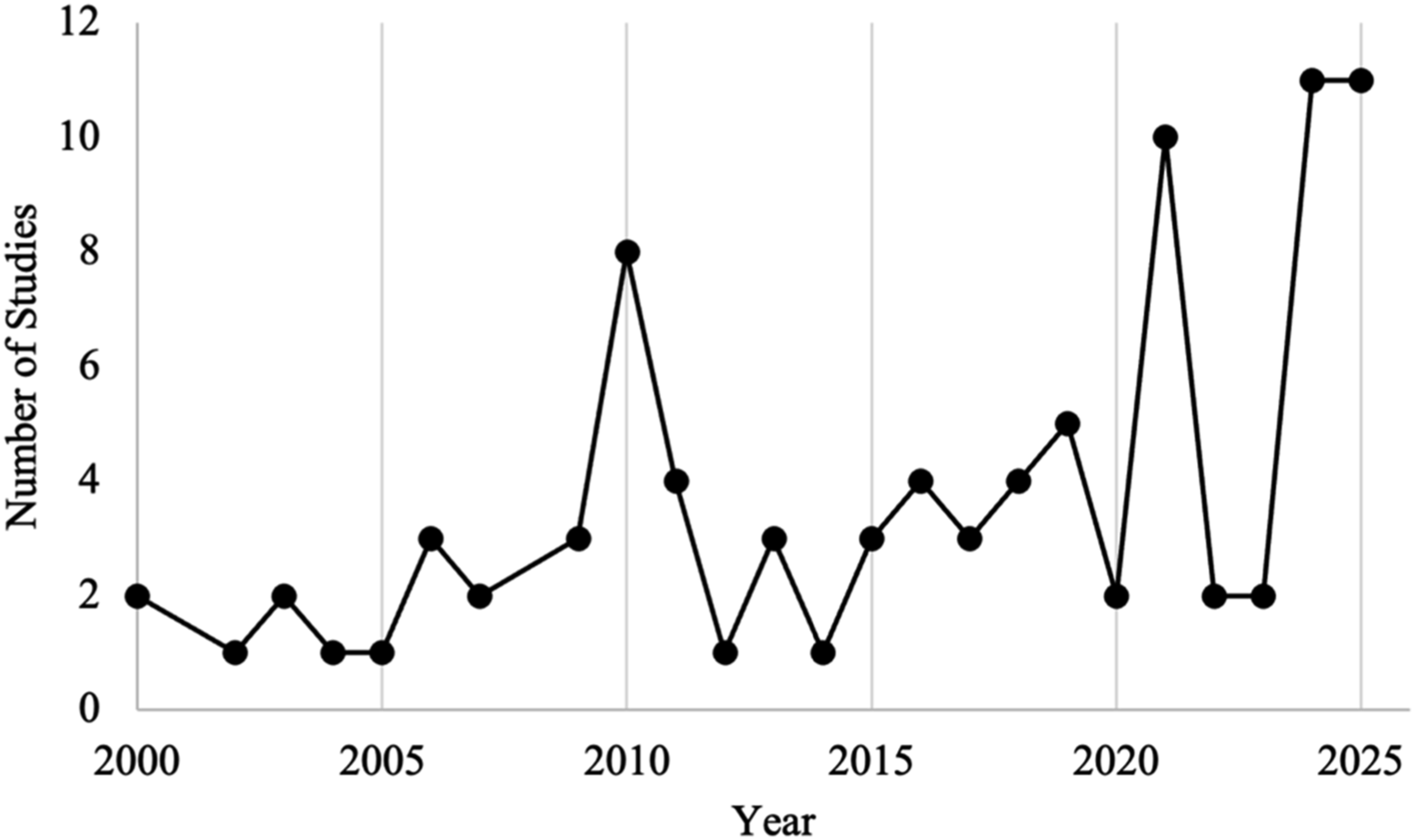
Next, the broad geographical diversity of the included articles underscores the global interest in team-level job redesign. Nearly half of the studies (55%, n = 51) were conducted in Europe, followed by North America (21%, n = 19), Asia (11%, n = 10), and Oceania (7%, n = 6). Contributing European countries include Denmark, Germany, Finland, France, Spain, Romania, Poland, Switzerland, Norway, Portugal, and Italy. In North America, the United States accounted for most studies (n = 17). Similarly, Australia was the sole contributor from Oceania (n = 6), while in Asia, studies were conducted in Taiwan, Pakistan, and Japan (each n = 2). The remaining studies involved multinational or multi-site industry contexts, global online environments, or cases in which the geographical origin was not explicitly specified. Additionally, one study was conducted in a multinational setting spanning Europe, Japan, and the United States.
Methodological Characteristics
Research Design
Among the 90 included studies, the majority employed a quantitative approach (n = 50), followed by qualitative design (n = 23) and mixed methods approaches (n = 18). Quantitative studies were dominated by quasi-experimental designs (n = 18), including pretest-posttest designs, cluster-randomized trials, and multi-site quasi-experiments. Non-experimental cross-sectional designs (n = 13), such as surveys and structured observational methods conducted at a single time point, were also common for examining interventions in real-world settings. Additionally, observational or field approaches (n = 10), such as participatory action research and experimental field studies, and longitudinal designs (n = 9), incorporating time-lagged and retrospective analyses, were used to track changes over time. Most quantitative studies (72%) incorporated a control group, comparing interventions across teams, departments, or control periods (e.g., wait-list control groups). In terms of measurement points, 18 studies used a single measuring point (cross-sectional), 10 studies included two waves (pre- and post-intervention), and 19 studies incorporated at least three waves of data collection (e.g., baseline, post-intervention, and follow-up). A smaller number of studies (n = 2) adopted complex designs with more than 10 measuring points, often involving large-scale or extended longitudinal studies.
Qualitative studies emphasized the contextual and process-oriented aspects of team-level job redesign. These studies predominantly used: case studies (n = 12), often exploratory or grounded theory-based (e.g., interviews, shadowing, and documentary analysis), observational designs (n = 4), including ethnographic approaches and social network analysis to explore team dynamics, and action research (n = 5), such as Participatory Action Research (PAR) or dialogic team meetings aimed at fostering collaboration and incremental innovation. One study (Debets et al., 2021) combined needs assessments, feedback tools, facilitated dialogue, and team training.
Mixed methods studies integrated quantitative and qualitative approaches to offer a comprehensive understanding of interventions. Key approaches included triangulation (n = 5) with multi-source data collection (e.g., combining surveys and focus groups), hybrid designs (n = 7), combining qualitative interviews with quantitative metrics, and mixed-method case studies (n = 6), employing semi-structured interviews, team surveys, and longitudinal data collection.
Participants
Approximately 63% of the included studies for which a response rate could be measured (i.e., 84 studies) did not report their response rates. For the remaining studies, the average response rate was 62.9%. The average sample size across studies was 503 participants, with interventions spanning an average of 76 teams, departments, organizations, or sites. The team-level job redesign activities were implemented across diverse organizational sectors, highlighting their broad applicability. Most studies were conducted in healthcare settings (31%, n = 28). Other notable industries included manufacturing (n = 9) and technology/software (n = 8), which is consistent with these industries’ focus on fostering innovation and improving team dynamics. The remaining 45 studies examined activities in less common or highly specific sectors, such as child welfare services, elementary education, and insurance. Approximately 79% of studies focused on a single industry, while 19 studies explicitly included employees from multiple organizational settings.
In line with the previous findings, the occupational profiles of the samples spanned private, public, not-for-profit, and multinational organizations, focusing on roles where collaboration and interaction are central. Key profiles included interdisciplinary healthcare teams (surgeons, nurses, physicians, and support staff), manufacturing teams (operators, mechanics, technicians, and production workers), and agile software development teams. Other occupations studied include teachers, customer service teams, municipal kitchen workers, administrative university staff, postal workers, flight attendants, and bus drivers.
Team-Level Job Redesign Characteristics
Addressing our second aim, we next examine the content and nature of team-level job redesign activities.
Key Characteristics
In analyzing the content of team-level job redesign activities, several notable patterns emerge. First, many of the identified concepts align with organizational development theories that prioritize collective efforts and participation. These approaches underscore the importance of team involvement, stakeholder engagement, and shared decision-making in shaping work processes. For instance, team job crafting focuses on teams collectively redesigning their roles or work environments (e.g., Tims et al., 2013). Similarly, participatory sessions described by Darses (2002) involved all relevant stakeholders in optimizing equipment design.
A second recurring theme was the emphasis on iteration and continuous improvement. These process-driven approaches focus less on who participates and more on how teams refine their work over time through repetition and incremental adjustments. Examples include Adaptive Design (Dekker-van Doorn et al., 2020) with structured, iterative cycles to test and refine workflows, and Agile Team Learning (Sleeva, 2021) with continuous learning and adaptation in response to changing conditions. Some activities integrate participatory approaches with iterative processes. For instance, Dekker-van Doorn et al. (2020) described a healthcare team redesigning workflows to enhance safety practices, including surgeons, nurses, and administrative staff. This approach combined active stakeholder involvement, ensuring the redesign addressed diverse needs within a hospital context (focus on who is involved), with iterative testing, where prototyping and small adjustments were made based on feedback before scaling the redesign to other departments (focus on how the process unfolds).
Third, a noticeable trend is the growing use of digital tools to complement participatory redesign efforts. Technology is increasingly employed to enhance real-time communication, streamline workflows, and bridge manual and digital systems for greater efficiency. Examples include mobile apps (Ballester et al., 2021) to provide real-time access to patient data, enabling collaborative decision-making during team interventions, and Social Network Analysis (Cannavacciuolo et al., 2017) to map knowledge networks, identify bottlenecks, and improve the flow of critical information in teams.
Types of Job Redesign Activities
Building on this analysis, we identify recurring patterns in how teams engage in job redesign. While similarities exist across studies, the specific activities of team-level job redesign differ notably in where the initiative originates and how strongly team members are involved. In some cases, employees proactively shape their own work; in others, collaboration across diverse expertise is central; and in still others, initiatives are externally driven – led by formal team leaders, management, or the wider organization, with team members mainly providing input for refinement. Based on these variations, we identified three recurring types of redesign activities: (1) collaborative cross-functional development, in which initiatives are driven by collective efforts across different functional areas; (2) bottom-up employee-led initiatives, initiated and steered primarily by team members themselves; and (3) hybrid models, where top-down management-driven efforts are combined with active team participation (see Table 4).
These categories emerged inductively from our analysis but are also strongly aligned with three well-established dimensions of work and team design: authority/control, autonomy, and interdependence. These dimensions, grounded in classic organizational theory (Hackman, 1987; Hackman & Oldham, 1976; Katz & Kahn, 1978; Mintzberg, 1984; Parker, Van den Broeck, & Holman, 2017; Wageman, 1995), are frequently used in team and work design research to describe, compare, and differentiate team structures and processes (e.g., Reiche, 2023). They fit our typology particularly well because the three types differ in who controls change, how much freedom teams have, and how much collaboration is required. Specifically, authority/control captures who drives and holds decision-making power in the redesign process; autonomy reflects the discretion teams have in determining how to enact changes; and interdependence reflects the degree to which team members must rely on one another’s input and expertise.
It is important to note that the typology itself was not predetermined but emerged through the synthesis of findings across studies. In this sense, the identification of cross-functional, bottom-up, and hybrid initiatives represents a key result of our review. Once these categories had been inductively derived, we used the established dimensions of authority/control, autonomy, and interdependence as reference points to clarify and justify the classification. To ensure consistency, all authors revisited the studies, compared interpretations, and discussed disagreements until consensus was reached. In cases where initiatives displayed features of more than one type, we emphasized the predominant process reported (e.g., whether authority rested mainly with employees or management, or whether cross-functional collaboration was central). To illustrate how the three types map onto core work design characteristics, we present a conceptual figure (Figure 3). Conceptual mapping of team-level job redesign types. Note. The figure positions the three types of team-level job redesign along three core dimensions. The X-axis represents autonomy, indicating the degree of discretion teams have in implementing changes (low = left; high = right). The Y-axis represents authority/control (i.e., who drives the redesign), ranging from team-driven (bottom) to management-driven (top). Interdependence is represented by circle size, reflecting the extent to which team members rely on one another’s input and coordination during the redesign process (small = low, medium = moderate, large = high)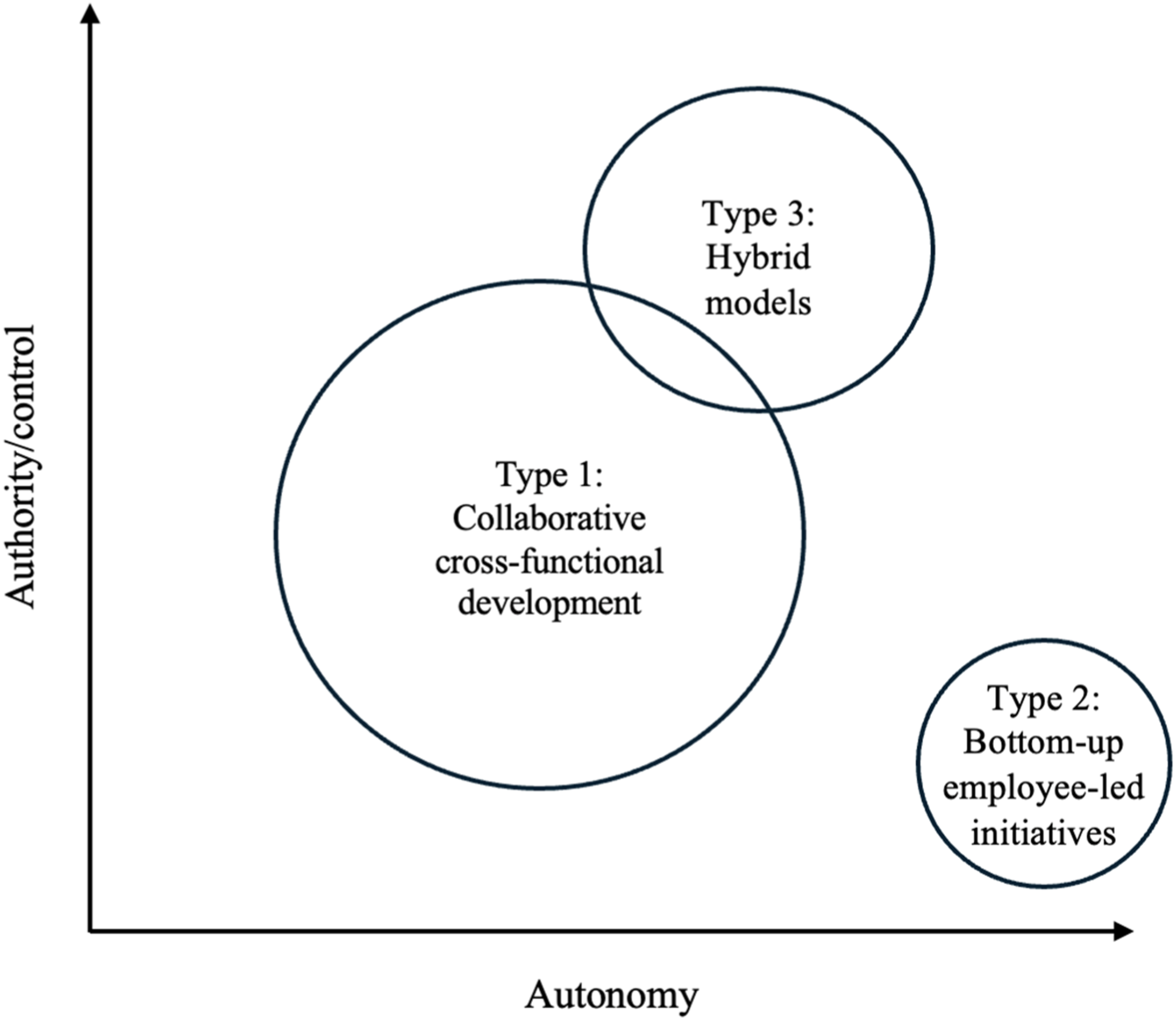
Type 1: Collaborative Cross-Functional Development
This type of redesign involves teams with diverse expertise or roles collaborating to develop solutions. It emphasizes co-creation, collective problem-solving, and innovation, often targeting the development or optimization of new tools, systems, and workflows. One example is the study by Johnson et al. (2011), in which cross-functional teams of physicians, nurses, administrative staff, and other medical personnel engaged in collaborative work redesign to improve workflows in their clinical areas. This initiative aimed to enhance patient outcomes and staff work-life satisfaction. Similarly, De Beijer et al. (2016) examined interprofessional collaboration through redesign initiatives that brought together medical specialists, nurses, occupational therapists, and administrative staff to develop clinical pathways and streamline workflows.
Type 2: Bottom-Up Employee-Led Initiatives
In this type, team members themselves proactively initiate changes in their work roles or tasks, often without formal guidance or structural frameworks from management. In other words, employees collaboratively redesign their roles and tasks driven by their own initiatives rather than explicit organizational mandates. For instance, Uen et al. (2021) examined team job crafting as a bottom-up approach in which “individuals, not supervisors or management, decide as a team what about their job they would like to alter”. (p. 147).
Type 3: Hybrid Models
This approach blends top-down direction from management with bottom-up input from the team. Organizations provide frameworks or initial guidance, while teams actively shape implementation. These activities are characterized by centralized planning during the design phase, followed by employee-driven adjustments and operational refinements during execution. For example, Darses (2002) examined a continuous design approach as a participatory and iterative method to redesign production line equipment. While management initiated and led the project, employees actively contributed feedback and operational adjustments during implementation.
Underlying Theoretical Frameworks
Among the 90 reviewed studies, 34 applied a single theoretical framework, while 56 adopted an integrated approach, combining multiple frameworks. Key frameworks included the Job Demands-Resources (JD-R) Model (n = 20), participation-based principles (e.g., Participatory Design, Action Research; n = 17), and Socio-Technical Systems (STS) Theory (n = 9), emphasizing employee involvement and the integration of social and technical aspects to optimize work systems. These foundational models were often used independently or in combination with other theories. Additional frameworks included Job Crafting Theory (n = 8), learning theories (e.g., team learning models, Organizational Learning Theory; n = 5), the Job Characteristics Model (n = 4), and Self-Determination Theory (n = 4).
Additionally, at least three studies drew on job (re)design theories (e.g., Work Design Model, Job Redesign Theory), process and effectiveness models (e.g., Input-Process-Output (IPO) Model, Hackman’s Model of Team Effectiveness), and broader psychological theories (e.g., Psychological Capital, Psychological Safety Climate theory, Positive Psychology theory). These patterns suggest a predominant reliance on frameworks centered on resource management, employee-driven processes, systems thinking, and participatory collaboration, with occasional integration of broader system-level and psychological concepts.
Intervention Delivery
Delivery Method
A total of 25 studies (28%) did not implement specific interventions but relied on observational designs or quasi-experiments analyzing natural processes. For the remaining 65 studies that involved interventions, the delivery methods varied between collaborative efforts (n = 28, 43%) involving researchers working alongside internal staff or mixed teams (e.g., union representatives collaborating with managers); internal staff-led interventions (n = 18, 28%) delivered by team members, internal management, or hospital personnel; and external facilitators (n = 15, 23%) relying on trainers, consultants or facilitators external to the organization. In the remaining four studies (5%), the method of delivery was not explicitly stated.
Number of Sessions
The number of sessions varied widely, reflecting the diversity of redesign approaches. Dedicated sessions were not applicable for 27 activities that were embedded into ongoing processes (e.g., agile-driven iterations, organizational redesigns, daily team workflows), as these approaches emphasized continuous training or systemic changes. In 13 studies, iterative team meetings or consultations were referred to without specifying the exact number of sessions. They were often tied to regular multidisciplinary meetings or longitudinal data collection. Among activities with specified session counts, formats ranged from one-time sessions (e.g., single feedback meetings) to ongoing processes spanning years (e.g., continuous informal interactions).
Structured interventions, such as agile frameworks with weekly ceremonies, were typical, while others featured flexible, evolving formats. Recurring sessions, often weekly or monthly, were most common, with interventions averaging five to 10 sessions when specified. Modes of delivery included face-to-face workshops and virtual formats like bi-weekly video calls. Finally, the level of participant engagement varied considerably, from minimal commitment with one-time assignments or single sessions to sustained involvement in intensive, multi-year interventions. These findings underscore the adaptability of delivery methods and session designs to meet the unique goals and contexts of each intervention.
Manager Involvement
Interestingly, although job redesign approaches primarily focus on activities within the team, managers (e.g., team leads) were involved in most cases. Only 13 studies (14%) excluded manager involvement, while two studies did not explicitly mention their role. In some cases, managerial involvement was indirect, such as defining the rationale for the activity or assessing its impact on team performance. In others, it was more direct, involving support, facilitation, or active engagement in the intervention process.
Variables
Table 4 presents an overview of the variables examined in the reviewed studies (i.e., outcomes, moderators, mediators), categorized by the three types of team-level job redesign.
While antecedents are not explicitly listed in the table, they generally refer to the implemented team-level job redesign activity described in Table 4.
Outcomes
Most studies (69%) assessed multiple outcome variables, highlighting a clear preference for capturing a broader spectrum of effects. While 27 studies focused on performance-related outcomes and 29 on well-being outcomes, only 12 explored both. Additionally, eight studies reported outcomes spanning performance, well-being, and other domains. These outcomes were measured directly, not as mediators or contextual factors, but as results of the redesign activities. They include metrics related to team processes and broader organizational effects (e.g., team dynamics, innovation, and competence development). A smaller group of studies (n = 14) focused exclusively on such process variables, including innovative work behavior (Uen et al., 2021) and psychological climate (Lawrence et al., 2016). Quantitative studies predominantly assessed well-being outcomes (e.g., burnout, work engagement, job satisfaction), whereas qualitative studies emphasized performance outcomes (e.g., productivity, workflow efficiency, task adaptability) and less commonly explored variables such as team innovation, learning, and identity formation.
Regarding the observed effects – both direct and indirect – on performance outcomes, including statistically significant effects in quantitative studies or positive trends in qualitative research, approximately 89% of the reviewed studies identified a (significant) positive impact of team-level job redesign on outcomes such as team performance and innovative work behavior (e.g., Tims et al., 2013; Uen et al., 2021). In contrast, a smaller proportion of studies (59%) reported a (significant) association between team-level job redesigns and well-being and health outcomes, such as increased work engagement and reduced emotional fatigue (Cifre et al., 2011; Rietze & Zacher, 2022). This suggests a general tendency for team-level job redesign to enhance performance and well-being. However, some studies found no positive effects. For instance, Knight et al. (2017) observed that while participatory action research improved autonomy, it did not affect work engagement. Similarly, Saleem et al. (2024) reported no impact of collaborative crafting on team performance. A minority of studies (n = 5; ∼7%) reported negative effects. For example, participatory ergonomics increased stress (Haukka et al., 2010); Lean redesign heightened burnout (Hung et al., 2018); workload planning in academia intensified work (Archontoulis, 2020); participatory change in nursing raised job demands (Knight et al., 2017); and self-managed work teams led to peer pressure and work overload (Proença, 2010).
Context and Mechanisms
Moderator Variables
Of the 90 studies, 44 (49%) tested moderator variables influencing the relationship between interventions and outcomes, grouped into several categories; leadership and managerial influences, including managerial support (DeJoy et al., 2010), leader job crafting (Khan et al., 2022), and leader support (Drach-Zahavy, 2004), dynamics and structure within teams, such as prior team success, team training (Strubler & York, 2007), team structure (Geoghegan et al., 2021), and team psychological safety (Salehi & Bernstein, 2018), as well as broader organizational factors, including organizational context (Morgeson et al., 2006), organizational support (Ballester et al., 2021; Sleeva, 2021), and organizational reforms (Haukka et al., 2010). Additional moderators related to the nature of work tasks, including project type (e.g., agile vs. plan-driven; Kakar, 2017), social support and job control (LeBlanc et al., 2007), and the complexity of patient cases (De Beijer et al., 2016). Furthermore, contextual factors at the meso level (e.g., department type) or macro level (e.g., industry-specific conditions or national context; Hull Kristensen & Lotz, 2011; Weigl et al., 2013) also played a role.
Mediator Variables
Among the studies, 59 (66%) examined mechanisms underlying redesign-outcome relationships, focusing on various mediators, such as team processes and dynamics, including team decision-making processes (Darses, 2002), interaction and collaboration among teams (Hull Kristensen & Lotz, 2011), team work engagement (Tims et al., 2013), and team functioning (Nielsen et al., 2021). Others addressed work characteristics, including job control and interdependence (McClelland et al., 2014), team autonomy (Johnson et al., 2011), and specific job demands and resources (Rietze & Zacher, 2022), as well as mechanisms related to learning and development, such as experiential learning (Dekker-van Doorn et al., 2020), team-centered learning culture (Sleeva, 2021), and organizational learning (Bitter et al., 2015). Finally, mediators involved the implementation of team-level job redesign, focusing on specific activities like participatory intervention (Stab & Hacker, 2018), team and collective job crafting (Debets et al., 2021; Khan et al., 2022; Silvestri, 2019), and job rotation (Bacon & Blyton, 2003). Together, these findings address the two aims of this review by providing both a structured overview of the literature and a theoretically informed typology of team-level job redesign activities.
Discussion
This review aimed to comprehensively identify and synthesize empirical evidence on team-level job redesign activities implemented to enhance employee well-being and performance. This effort arises from the observation that research on job redesign at the group level remains limited – an unexpected and noteworthy gap given the prevalence of team-based work in modern organizations. To map the extent of the, albeit limited, knowledge of how teams collaboratively shape their work, we conducted a scoping review using systematic procedures with two primary aims. Specifically, we sought to (1) examine the characteristics of the studies, including the methodological approaches most employed, and (2) assess the nature and content of the job redesign activities studied, with particular attention to their structural and behavioral components.
Although we ultimately identified only 90 studies across more than two decades, indicating that team-level job redesign remains a relatively underexplored and historically stagnant research domain, this limited number does not necessarily reflect a lack of scholarly interest or perceived value. Rather, it may be attributable to practical constraints, such as the inherent difficulties of collecting team-level data and implementing redesign activities in organizational settings. At the same time, the publication pattern suggests a shift: our initial search (2000–2023) yielded 66 studies, whereas the updated search of just the past two years added 24 more. This recent growth points to a renewed and accelerating interest in the topic, further underscoring both its relevance and the need for a comprehensive synthesis at this moment.
Despite its relative scarcity, our review highlights the diversity of the field, covering a range of settings, domains, and types of team-level job redesign. Across literatures, many constructs (e.g., team job crafting, co-creation, co-production, and beyond) have emerged to capture collective efforts to reshape work. This conceptual diversity has also produced overlapping terminology, with similar or partially distinct phenomena sometimes labeled interchangeably. While these approaches share a focus on redesign beyond the individual level, they differ in key respects – particularly in their degree of authority, autonomy, and interdependence.
To bring order to this diversity, we introduce team-level job redesign as an umbrella term. We consider interventions as team-level job redesign activities when they (a) target multiple team members simultaneously, (b) involve structural changes to tasks, roles, or resources, and (c) aim to improve outcomes such as well-being or performance. Based on these criteria, we propose a typology along the three dimensions of authority, autonomy, and interdependence, capturing both formal interventions and naturally emerging practices. This typology provides a clearer conceptual map for researchers and practitioners in the field of work design by organizing fragmented empirical findings and establishing a theoretical bridge between work design and team process perspectives.
Importantly, despite differences in conceptualization, most existing studies consistently report positive effects of team-level job redesign activities. Although still relatively underexplored, this field holds substantial potential, given its relevance to modern organizational contexts and the growing need for empirical insights into how teams collaboratively shape their work. In the following section, we first examine the scope and methodological approaches of existing studies before discussing key insights regarding the nature of team-level job redesign activities.
Scope and Methodological Approaches
A first notable observation is that research interest in this field peaked in 2010 and again in 2021. The rise in studies on team-level job redesign in 2010 may be attributed to broader societal and economic developments: in the aftermath of the 2008 financial crisis, organizations sought cost-effective ways to enhance productivity and employee well-being, spurring interest in team-based job redesign. Simultaneously, academic trends, such as the emergence of job crafting research and a growing emphasis on team-level interventions, supported this upward trend. In 2021, the COVID-19 pandemic disrupted traditional work patterns and accelerated the redesign of team processes to accommodate remote and hybrid work. While the need for flexibility and resilience became more pronounced, these developments built on an already growing recognition of the importance of team-level interventions, supported by advances in research methodologies and technologies. Notably, our updated search shows that the momentum has continued: the past two years alone produced a substantial number of additional studies, indicating that the field is not only recovering from earlier stagnation but is now experiencing renewed and growing scholarly attention.
Second, European researchers, particularly those from the Netherlands and the United Kingdom, were among the most prominent contributors, accounting for nearly half of the studies. This may be explained by the strong research presence of these countries in the fields of Positive Organizational Psychology (POP) and Occupational Health Psychology, which focuses on optimizing workplace functioning, including job redesign. A bibliometric review by Martín-del-Río et al. (2021) highlighted the Netherlands and the UK as leading contributors to this field. Moreover, systematic reviews have shown that, compared to other countries, the Netherlands and the UK have produced the highest number of studies on burnout (Verhoef & Blomme, 2022) and that the Netherlands, in particular, has made significant contributions to research on job crafting interventions (Mukherjee & Dhar, 2023). Similarly, a meta-analysis by Rattrie et al. (2020) found that the Job Demands-Resources (JD-R) theory, which underpins team-level job redesign in many of the studies identified in our review, is predominantly represented in research conducted in the Netherlands. This is unsurprising, considering that the original developers of JD-R theory are based in the Netherlands.
Third, we note that the most frequent contributions came from journals in the healthcare field, with most studies focusing on nurses in hospital wards, the Operating Room (OR), and surgical teams. Interdisciplinary healthcare teams were among the most studied groups, particularly in the context of Type 1 (cross-functional collaboration). This is likely due to the inherent need for surgeons, nurses, physicians, and support staff to coordinate across different areas of expertise to optimize patient care and improve workplace functioning. These findings align with those of Fox et al. (2022), whose review of organizational-level workplace interventions found that nearly 40% of studies were conducted in the healthcare industry.
Approximately two-thirds of the studies identified in our review implemented specific interventions rather than merely observing naturally occurring processes or activities. In some instances, these interventions are adapted to the context of the study sample, with the number and format of sessions being tailored to the organizational setting. For example, in healthcare settings, interventions often involved regular meetings among health professionals focused on operational tasks, whereas in development-oriented contexts (e.g., manufacturing, software development), interventions more commonly took the form of training and workshops aimed at professional growth.
Nature of Job Redesign Activities
Three distinct types of team-level job redesign emerged from the review, differentiated by the extent and nature of team member involvement. These include cross-functional collaboration, where job redesign occurs through interdisciplinary cooperation (Type 1); bottom-up initiatives, driven by employees themselves (Type 2); and hybrid models, which integrate efforts from both management and team members (Type 3). As illustrated in Figure 3, these types can be further differentiated along three core dimensions: authority/control, autonomy, and interdependence.
In Type 1, team members act as co-creators, actively participating as equal partners in the redesign process. They apply their expertise to collaboratively develop innovative solutions, design systems, and optimize workflows. In terms of the key dimensions, authority/control is typically shared within a broader organizational, top-down framework (management initiates, but teams shape implementation), autonomy is moderate to high (teams adapt solutions to local contexts), and interdependence is high, as successful redesign depends on intensive coordination across diverse roles and areas of expertise. This type aligns with established notions of participatory design (e.g., Bødker et al., 2004), cross-functional collaboration and boundary spanning (Ancona & Caldwell, 1992; Kinnie & Swart, 2020; Morgeson et al., 2010), and multiteam systems (Zaccaro et al., 2012), all of which emphasize that work increasingly depends on partners beyond team and organizational boundaries. It also resonates with the concept of co-creation, particularly studied in the healthcare sector, where collaboration among diverse stakeholders (e.g., caregivers and suppliers) is critical for achieving positive health outcomes (Partouche-Sebban et al., 2022).
In Type 2, team members take on the role of co-drivers, proactively shaping their work by independently initiating and leading the redesign of tasks and workflows with minimal external guidance (e.g., from their team leader). Authority/control rests primarily with the team (low managerial oversight), autonomy is very high (teams decide both what to change and how), and interdependence tends to be lower to moderate. Although coordination still occurs, it is often more loosely structured and may involve informal adjustments or smaller subgroups rather than tightly coupled collaboration across roles. This type resonates with research on team proactivity, specifically self-managing teams (Manz & Sims, 1987), job crafting (Leana et al., 2009; Wrzesniewski & Dutton, 2001), autonomous work groups (Wall et al., 1986), and employee-driven innovation (Høyrup, 2010), highlighting how teams autonomously and collectively take initiative to structure their workflow and improve work processes (Manz & Sims, 1987; Williams et al., 2010).
In Type 3, team members function as co-adopters, balancing top-down directives with their own innovative input. In this type, authority/control is typically shared between management and team members, resulting in a more balanced distribution of control (allowing teams to adapt within established parameters), and interdependence is moderate. This reflects the need for coordination among team members to translate centrally defined goals or structures into local practice, while aligning with broader organizational frameworks. Compared to bottom-up initiatives, coordination is more structured and collectively oriented, though typically less intensive than in cross-functional settings. This approach resonates with socio-technical systems approaches, which integrate management-led structures with participatory design (Pasmore et al., 1982, 2018; Trist, 1981), as well as hybrid work design models that operate simultaneously across multiple modes (Parker et al., 2025; Reiche, 2023). Such job redesign efforts align with the research on participatory organizational interventions, which typically span individual, team, and managerial levels, acknowledging their interdependence and fostering more sustainable change (Abildgaard et al., 2019). Their effectiveness further depends on formal leaders’ support and understanding of the intervention, particularly in recognizing that granting autonomy to team members does not diminish the leader’s central role (Edelmann et al., 2020; Hernaus et al., 2024). Taken together, the three types reflect increasing levels of interdependence from bottom-up to hybrid to cross-functional redesign, mirroring differences in coordination requirements and the integration of diverse expertise.
Prevalence of Redesign Types
In our review, most redesign activities (n = 37) fall under Type 1, likely due to its strong alignment with key organizational priorities, such as team innovation and problem-solving (Anderson et al., 2014; van Knippenberg, 2017). This type reflects the emphasis on interdisciplinary and cross-functional collaboration for innovation, knowledge sharing, cross-boundary teaming, and relational coordination (Ahmad & Karim, 2019; Edmondson & Harvey, 2018; Gittell, 2015), all of which help explain its overrepresentation in the literature compared to the more autonomous (Type 2) and hybrid (Type 3) models involving greater variability and complexity in execution (e.g., Edelmann et al., 2023; Khanagha et al., 2022; Reunamäki & Fey, 2023). The prevalence of Type 1 is also supported by increasing work interdependence, where tasks rely heavily on interactions across organizational boundaries, allowing both work and people to move more fluidly within and beyond the organization (Jesuthasan & Boudreau, 2018).
Slightly fewer studies (n = 33) involve Type 2, where teams themselves initiate change through autonomy and proactive behavior. This is unsurprising, as team members now enjoy substantial autonomy, which allows them to shape their tasks and work roles (Hackman, 1980). With increasingly flexible roles, individuals take initiative in crafting their work (Wrzesniewski & Dutton, 2001), complementing traditional manager-designed structures with worker-driven elements (Parker, 2014). As a result, organizations are increasingly focused on enabling employees to design their own work. Hybrid models integrating top-down and bottom-up elements (Type 3) are somewhat less represented in our sample (n = 20), possibly reflecting the difficulty of balancing structured frameworks with adaptability in practice.
Research Focus of Redesign Types
Beyond differences in who drives and enacts the changes, these team-level job redesign types also differ in their research focus. Figures 4 and 5 present normalized radar charts illustrating how different approaches to team-level job redesign are associated with distinct outcome profiles while sharing common underlying processes. Specifically, the figures are based on the proportion of studies examining particular categories of variables within each job redesign type. Normalized radar charts comparing key variables of job redesign types. Note. To ensure fair comparisons among types despite unequal sample sizes, data were normalized by expressing each value as a proportion of the total articles per job redesign type Impact of job redesign types on performance and well-being outcomes. Note. The left panel depicts key subcategories of performance variables; the right panel shows those of well-being variables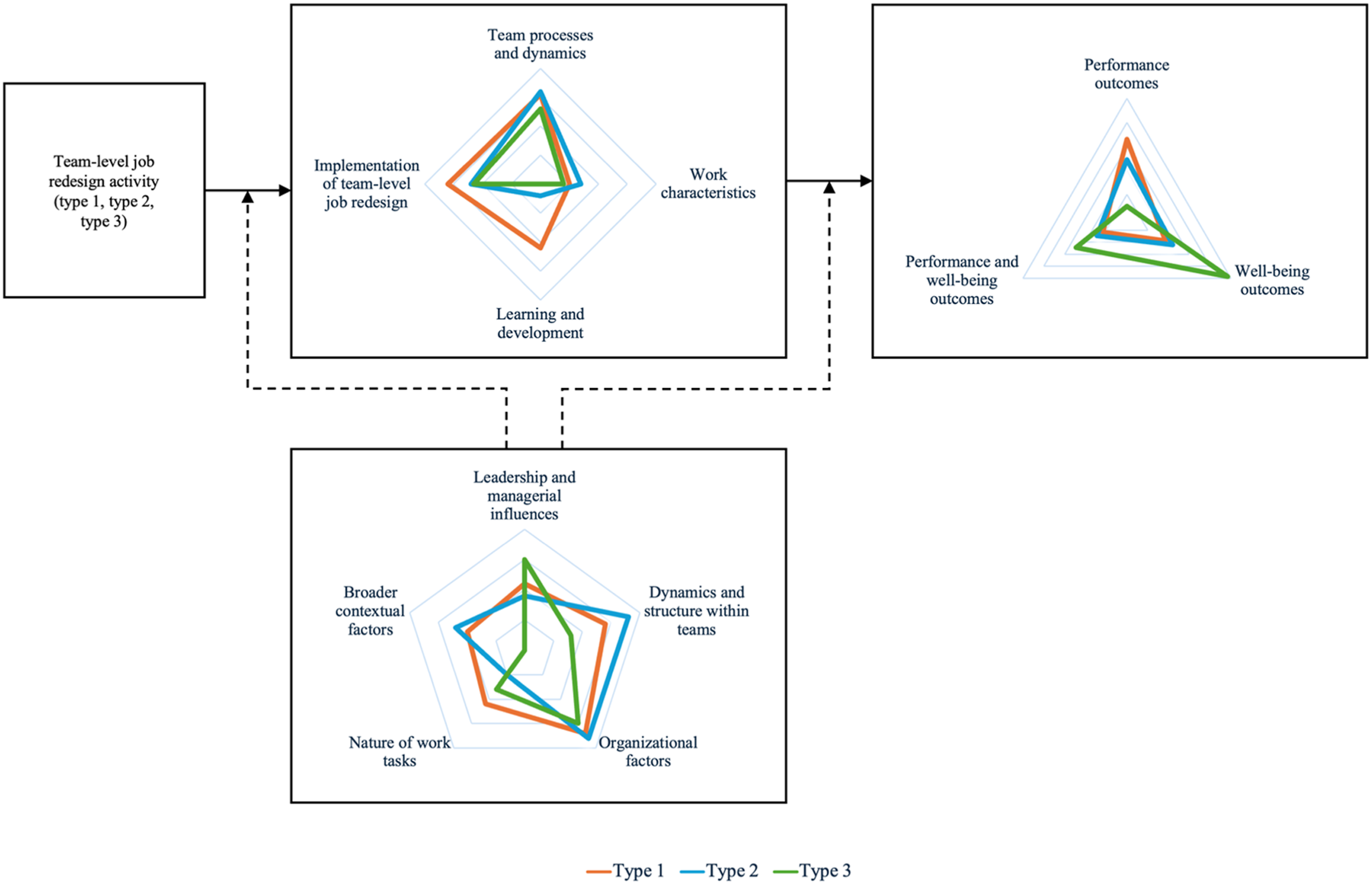
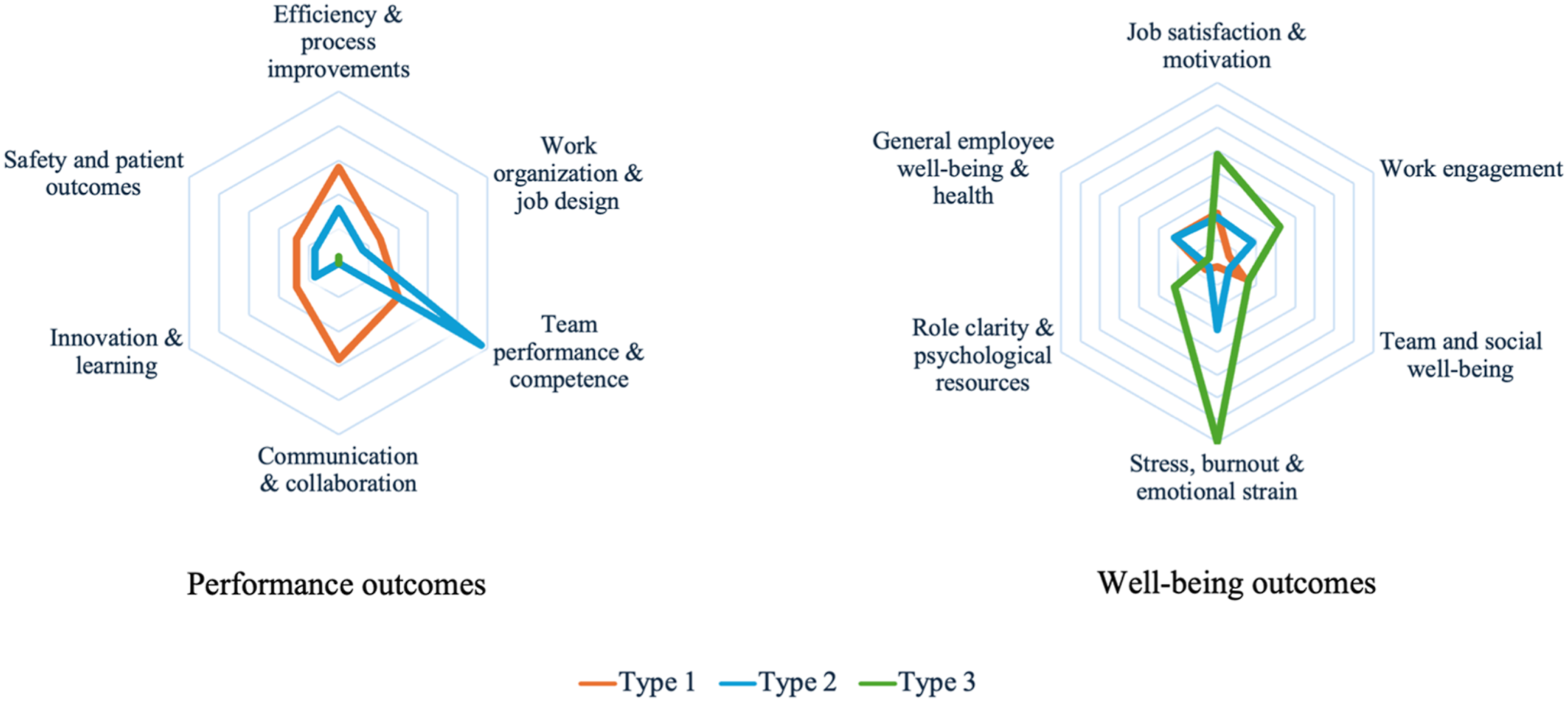
To construct Figures 4 and 5, we systematically extracted and coded all variables examined in the included studies, distinguishing between predictors, mediators (e.g., team processes), and outcomes (performance- and/or well-being-related). These variables were subsequently grouped into broader conceptual categories – such as team processes and dynamics, work characteristics, leadership and contextual factors, performance outcomes, and well-being outcomes – based on thematic similarities across studies. For each job redesign type, we calculated how frequently each category was examined across the included articles. Because the number of studies differed across the three types, these frequencies were normalized by expressing them as proportions of the total number of articles within each type. The resulting normalized values were visualized using radar charts to facilitate comparison of the relative emphasis placed on different categories. Importantly, these figures do not represent effect sizes or the strength of relationships. Rather, they reflect the extent to which specific variables and outcomes have been examined in the literature for each type of team-level job redesign. This approach enables the identification of patterns in research focus and highlights both similarities and differences across types (see Figures 4 and 5).
Type 1 activities are predominantly performance-oriented, featuring structured job modifications aimed at improving efficiency, coordination, workflow, innovation, and service quality, with well-being benefits emerging more indirectly. Type 2 interventions display a more balanced profile: alongside performance outcomes such as proactivity, engagement, and team effectiveness, many studies also report reductions in stress, burnout, and depression (see Figure 5). In contrast, Type 3 interventions primarily target well-being, emphasizing reductions in strain and emotional exhaustion, greater psychological safety, and enhanced satisfaction of basic psychological needs, while performance improvements play a secondary role. Figure 4 further shows that all three types depend heavily on team processes, with the implementation of redesign efforts frequently examined as a central mediating mechanism.
Notably, Type 1 activities draw on enhanced coordination, communication, and workflow alignment, consistent with their structured redesigns involving new skills, roles, and work processes. Type 2 activities draw on a broader set of team processes, including psychological safety, access to knowledge, and the development of shared understanding, reflecting their dual focus on performance and well-being. Type 3 activities rely most strongly on social and relational mechanisms, particularly team climate and ethical organizational culture, which align with their emphasis on well-being. Across all three types, broader organizational and contextual factors, such as leadership style and team dynamics, shape the success of redesign efforts, underscoring that team interactions play a crucial role in the success of job redesign efforts. Interestingly, the effectiveness of Type 3, in particular, appears to be strongly shaped by leadership and managerial influences, likely because, in these hybrid models, formal leaders play a key role in providing top-down support for interventions (e.g., stress-reduction initiatives, flexible work adjustments).
Finally, our analysis examined how job redesign activities impact well-being and performance metrics, revealing a broad range of studied outcomes. While some of these outcomes are more frequently studied (e.g., team performance), others receive less attention (e.g., team cohesion). Nearly 70% of studies assessed multiple outcomes, reflecting a tendency to capture comprehensive effects rather than a single dimension. However, research on teams actively shaping their work typically focuses on either well-being or performance, further distinguishing between subcategories within each (e.g., team/social well-being and innovation & learning; see Table 4). This suggests that team-level job redesign is not solely about efficiency or performance optimization. Instead, researchers also examine its effect on individual and collective well-being almost as often as performance, marking a shift from a performance-centric view to a more holistic perspective that includes, for instance, team satisfaction. This trend aligns with recent research emphasizing the importance of studying well-being at the team level (Nordbäck et al., 2024).
Theoretical Contributions
First, by introducing a typology of three redesign types, we extend existing work design and team process theories to the team level and synthesize previously fragmented evidence into an integrated framework that future research can build upon. Whereas traditional frameworks, such as the Job Characteristics Model (Hackman & Oldham, 1976) and subsequent work design research (Parker, Morgeson, & Johns, 2017), primarily focus on individual jobs, our typology conceptualizes redesign as a collective, team-level phenomenon shaped by (shared) authority, autonomy, and interdependence. In doing so, we move beyond an individual-centric perspective and provide a structured lens for understanding how teams, rather than individuals alone, actively shape their work.
Importantly, this typology is not merely an empirical classification but is grounded in established theoretical dimensions of work and team design. Specifically, the differentiation between the three types reflects variations in authority, autonomy, and interdependence (e.g., Hackman, 1987; Parker, Van den Broeck, & Holman, 2017; Wageman, 1995). In line with these perspectives, interdependence is highest when redesign requires the integration of diverse expertise and intensive coordination, as in cross-functional development (Type 1); moderate when coordination is structured within management-driven frameworks, as in hybrid models (Type 3); and lower when teams operate with high autonomy but less tightly connected structures, as in bottom-up initiatives (Type 2). By linking the typology to these established dimensions, we provide a conceptual bridge between work design and team process perspectives and offer an explanation for why different forms of team-level job redesign give rise to distinct patterns of coordination, autonomy, and outcomes.
Second, the typology synthesizes previously fragmented streams of research – such as team job crafting, participatory design, and co-creation – into an integrated conceptual framework. In doing so, it highlights the substantial terminological fragmentation in the field and underscores the need for greater conceptual consolidation and standardization, thereby supporting more cumulative theory development. Third, our findings bring greater attention to the role of processes in team-level job redesign. Rather than positioning team processes solely as outcomes or mediators, the review suggests that redesign unfolds through ongoing coordination, interaction, leadership support, and contextual boundary conditions, indicating that these processes are closely intertwined with the redesign process itself.
Finally, the review indicates that the effects of team-level job redesign are not uniformly positive. Across studies, mechanisms typically conceptualized as resources (e.g., autonomy, participation) may, under certain conditions, also function as demands (e.g., role ambiguity, pressure). This highlights the importance of theorizing the contextual and relational conditions under which redesign is more or less effective and aligns with work design and JD-R perspectives that emphasize the dynamic and context-dependent nature of job characteristics. Taken together, these contributions position team-level job redesign as a multi-level, dynamic, and socially embedded process that complements and extends established organizational theories to better reflect the realities of contemporary, team-based work.
Practical Implications
From a practical perspective, this review offers evidence-based insights for organizations seeking to implement team-level job redesign. In light of growing concerns about employee well-being and mental health at work (Nielsen et al., 2022), the findings highlight strategies through which teams can collaboratively reshape their work environments to improve coordination, autonomy, and overall functioning. At the same time, the reviewed studies indicate that effective team-level job redesign often requires structured guidance, clear frameworks, and organizational or leadership support to align individual needs with team and organizational goals.
Several practical insights emerge from the reviewed studies. First, leadership plays a crucial role in facilitating and sustaining redesign efforts. In more hierarchical teams, formal leaders (e.g., team leaders) help secure resources, align redesign initiatives with organizational priorities, and foster collaboration among team members. In contrast, more autonomous or self-managing teams rely more heavily on effective self-organization to coordinate and sustain redesign efforts. Prior research (Edelmann et al., 2020, 2023) similarly highlights the importance of leadership in empowering team-driven initiatives, including enabling informal leadership roles and fostering collective agency. Organizations should therefore invest in leadership development programs that equip leaders with coaching and facilitation skills to support team-driven change while ensuring access to relevant information on team capabilities, workload distribution, and strategic priorities. In self-managing teams, structured support should be provided to develop collaboration and decision-making capabilities among team members.
Second, the effectiveness of team-level job redesign varies by context and by the type of redesign activities involved. Type 1 redesign (cross-functional collaboration) may occur when professionals from different disciplines jointly redesign how work flows across (functional) boundaries. An example is a healthcare team consisting of nurses, physicians, and administrative staff who collaboratively redesign the patient intake process to reduce waiting times and distribute administrative and clinical tasks more efficiently across roles. Similarly, in innovation-oriented organizations, engineers, designers, and product managers may jointly redesign development workflows to improve coordination between technical and customer-facing functions. Type 2 redesign (bottom-up initiatives) is primarily initiated by team members themselves. For example, a self-managing customer service team might collectively redistribute tasks when some members experience high call volumes, with colleagues voluntarily taking over follow-up administration or providing real-time support during peak hours. Likewise, a teaching team may independently redesign how course preparation, grading, and student supervision are divided, allowing members to take on tasks that better match their expertise or current workload. In Type 3 redesign (hybrid models), management may introduce a new workflow or digital system, while teams are given autonomy to determine how tasks and responsibilities are distributed locally. A manufacturing unit implementing lean production practices may receive overarching process guidelines from management but rely on team discussions to determine how tasks are rotated, how problems are escalated, and how workload is balanced within the team. HR practitioners and managers should therefore tailor job redesign strategies to team structure, task interdependence, and work arrangements.
At the same time, team-level job redesign is not always uniformly beneficial. A small proportion of studies (∼7%) reported negative effects, including increased stress when concurrent organizational changes undermined the redesign (Haukka et al., 2010), and heightened burnout when Lean workflow redesigns were not accompanied by workload relief (Hung et al., 2018). Similarly, participatory interventions and self-managed teams sometimes generated ambiguity or peer pressure rather than fostering genuine autonomy and empowerment (Knight et al., 2017; Proença, 2010), and in higher education, workload planning led to perceived unfairness and work intensification when role clarity was lacking (Archontoulis, 2020). These findings highlight the importance of anticipating potential risks and integrating safeguards into redesign efforts.
Drawing on both successful and problematic cases across the reviewed studies, we distill five key principles as lessons learned. First, manage workload and timing by avoiding simultaneous implementation with major organizational changes and ensuring redesign efforts do not overburden staff (Haukka et al., 2010; Hung et al., 2018). Second, clarify roles and communicate clearly by providing consistent information about goals, responsibilities, and expected outcomes to prevent ambiguity or misinterpretation (Archontoulis, 2020; Wright & Nishii, 2013). Third, foster autonomy, participation, and support by engaging employees in decision-making, granting meaningful discretion over new workflows, and securing top-down managerial commitment to reinforce empowerment and motivation (Adler & Borys, 1996; Knight et al., 2017; Linzer et al., 2017). Involving employees in ongoing evaluation, rather than only in the initial design phase, may help identify emerging pressures early and enable corrective adjustments. Organizations may facilitate this by providing explanatory material and regular Q&A meetings to ensure employees understand the purpose and intended outcomes of the redesign effort (Wright & Nishii, 2013). Fourth, it is crucial to secure managerial and organizational alignment so that redesign efforts are supported rather than undermined by conflicting changes (Haukka et al., 2010; Nielsen et al., 2010).
Fifth, sustaining job redesign in the long term requires continuous monitoring and evaluation. This involves tracking stress, psychosocial factors, and intervention outcomes throughout implementation to detect unintended strain, as well as using multi-wave or longitudinal evaluations to identify emerging issues early (Haukka et al., 2010; Knight et al., 2017; Nielsen & Miraglia, 2017). Without such formal mechanisms (e.g., supportive policies, leadership commitment, ongoing training), teams may struggle to maintain changes once the initial momentum fades. Embedding a strengths-based rather than deficit-focused management approach (Breevaart & van Woerkom, 2024; Garcea et al., 2009) can further anchor redesign efforts by integrating positive psychology principles into HR and leadership practices. Team job crafting, for example, enables employees to align tasks with their strengths, thereby enhancing work engagement and organizational commitment (e.g., Chen et al., 2014; Leana et al., 2009). Practitioners can support this by offering structured workshops and establishing feedback loops (e.g., check-ins, pulse surveys) to monitor progress and refine strategies. In sum, careful planning, organizational alignment, and ongoing evaluation are essential not only to prevent unintended burdens but also to sustain the long-term benefits of team-level job redesign.
Strengths, Limitations, and Future Directions
A key strength of this review is that it combines the breadth of a scoping approach with systematic and transparent procedures, enhancing both comprehensiveness and reproducibility. In addition, our comprehensive search strategy – including the incorporation of gray literature (i.e., unpublished research) – allowed us to broaden the evidence base. Consistent with scoping review methods, we did not formally assess study quality or combine effect sizes, because our goal was to map the field rather than evaluate the strength of the evidence.
By integrating gray literature, such as dissertations and theses (seven out of the 90 identified studies), alongside published records, we sought to reduce publication bias and incorporate valuable insights that are often overlooked in systematic reviews (Adams et al., 2017; Booth et al., 2012). Preprints were also considered during the search process; however, they were ultimately excluded during the full-text review due to their lack of empirical findings. At the same time, we acknowledge several limitations of the current evidence base that may affect the interpretation of our findings. Building on these limitations and the patterns observed across the reviewed studies, we propose nine directions to guide future research, which can be organized under two overarching categories: methodological and conceptual challenges.
Methodological Challenges
A first limitation relates to the methodological constraints of the review process. Specifically, some relevant studies may have been overlooked because their titles or abstracts did not include the keywords used for inclusion. We therefore may have missed insights, and future research efforts may benefit from complementary search strategies to help capture relevant literature and insights beyond those identified here. For instance, although our review employed a comprehensive search strategy, it remains possible that some outcomes or mediators not directly linked to performance and well-being were overlooked. Future reviews would benefit from systematically mapping additional outcomes – such as ethical climate – as the evidence base expands.
A second limitation of this review is the relatively low inter-rater reliability observed during the full-text screening phase (κ = .33). Although coding rules were clarified through discussion, most of the subsequent screening and coding were conducted by a single author, which may raise concerns about potential selection bias and reduce the robustness of the findings. Such challenges in coordinating multiple coders and reaching consensus are common in systematic and scoping reviews, especially in emerging fields where concepts are novel and terminology is often inconsistent across studies (Daudt et al., 2013). To mitigate these risks, we implemented corrective measures – including consensus discussions, framework refinement, and a liberal inclusion approach – which, together with transparent reporting, help mitigate these risks. Despite this limitation, the review provides a valuable synthesis of a small and fragmented body of evidence in an emerging area, and may guide future reviews, which could benefit from multiple independent coders throughout the screening and coding process to further enhance reliability.
Third, given the scarcity of research on team-level job redesign, there is a clear need for further empirical studies. Although a full evaluation lies beyond the scope of this review, our analysis suggests that team-level job redesign can enhance performance, while findings on well-being are mixed. This highlights the need for future research to determine which activities support well-being and under what conditions. Based on our analysis, hybrid models that integrate both bottom-up and top-down influences warrant particular attention. In most workplace settings, teams operate within a broader management structure that not only initiates, supports, and monitors redesign processes but also empowers teams to shape their own work. While peer support within teams is valuable, formal leadership support is often indispensable; without it, the additional responsibilities required to sustain redesign can place undue burdens on team members (Chiu et al., 2021). Management can offer a way to provide structured support for naturally emerging job redesign activities. For example, teams may already engage in team job crafting, but such efforts can introduce challenges and risks (e.g., conflicting role expectations). A structured, leadership-supported approach could help mitigate these risks, ensuring that team-level job redesign is both effective and sustainable.
Fourth, future research should move beyond understanding what teams do to examine how they engage in the job redesign process. For example, when teams engage in job crafting, do they actively exchange job demands and resources (Peeters et al., 2016)? Does reciprocity in these exchanges matter? Scholars have argued that the effectiveness of structural interventions at the higher level is often best assessed through qualitative approaches, such as stakeholder interviews (Nielsen & Abildgaard, 2013). However, our review reveals that qualitative research in team-level job redesign remains underutilized despite its potential to provide richer, contextually grounded insights into how team-level job redesign unfolds in practice. This gap is especially notable in the studies identified in our review, where the impact on well-being has predominantly been examined through quantitative methods.
Fifth, regarding quantitative research, only two studies employed complex designs with more than ten measurement points. As job redesign is an ongoing process rather than a one-time intervention, capturing its variations over time – across days, weeks, or months – is crucial. Although challenging, experience sampling methods (ESM) and multi-wave designs are recommended to capture short- and long-term effects, providing a more comprehensive understanding of how job redesign evolves in teams and what factors contribute to the lasting impact of an intervention (Maxwell & Cole, 2007).
Conceptual Challenges
Sixth, individual and team member characteristics are notably absent despite their potential influence on the effectiveness of team-level job redesign. Relevant factors may include personality traits such as self-efficacy, resilience, or a proactive personality (Bakker & van Wingerden, 2021; Parker et al., 2010), as well as demographic factors such as age and tenure (Ng & Feldman, 2013). Additionally, individual team members’ behavioral contributions (e.g., team-boosting behaviors; Fortuin et al., 2021) and team-level factors such as functional diversity or member heterogeneity (Bunderson & Sutcliffe, 2002; Stewart, 2006) may play an important role.
Seventh, certain sectors were overrepresented in the studies analyzed, limiting the generalizability of our conclusions to the broader workforce. The dominant profiles included interdisciplinary healthcare teams (e.g., surgeons, nurses, and support staff), manufacturing teams (e.g., operators, mechanics, and production workers), and agile software development teams, whereas occupations such as teachers, customer service teams, and administrative university staff were less frequently studied. While these findings suggest that team-level job redesign is relevant across various occupations, other workplace settings remain underexplored. Future research should broaden its scope to include the underrepresented work populations and regions identified in this review. For example, scholars may specifically focus on exploring team-level job redesign in small and medium-sized enterprises (SMEs) – organizations with fewer than 250 employees (European Commission, 2024). Despite representing 90% of businesses worldwide (International Finance Corporation, 2024), SMEs remain notably underexplored and have even been described as the “invisible workforce” (Curran, 1986). This gap is surprising given SMEs’ distinct characteristics, including smaller team sizes, high interdependence, and strong collaborative dynamics – all of which foster a unique environment for teamwork and resource sharing, both essential for effective team coordination (Wikhamn et al., 2022). Moreover, their reliance on informal HR practices and self-management approaches (Harney & Alkhalaf, 2021) suggests that team-driven redesign could be especially feasible and impactful in these settings.
Eight, most studies on team-level job redesign have been conducted in Europe and the United States. This raises questions about the generalizability of findings to other regions, as work design practices, proactivity efforts, and team dynamics are strongly influenced by higher-level external context, including cultural, institutional, and sectoral factors (Demerouti, 2025; Kirkman et al., 2016; Parker, Morgeson, & Johns, 2017). We recommend conducting cross-cultural comparisons of team-level job redesign (e.g., in Asia, Africa, and Latin America) and investigating how local labor markets, organizational norms, and cultural values influence redesign practices. Collaborations with local scholars and organizations, as well as the use of culturally sensitive measures, would further help to bridge this gap.
Nineth, terminological inconsistencies are evident within Type 2 activities, where overlapping terms such as collaborative crafting (Leana et al., 2009; Saleem et al., 2024), collective job crafting (Mattarelli & Tagliaventi, 2015), shared job crafting (Mäkikangas et al., 2016), team crafting (De Jong et al., 2025), and team job crafting (Khan et al., 2022; Tims et al., 2013; Uen et al., 2021) are used interchangeably to describe similar, if not identical, concepts. These variations partly stem from our broad search strategy. While this approach ensured inclusivity, it also exposed the lack of scholarly consensus on distinguishing these terms. The use of multiple, overlapping labels for conceptually similar phenomena fragments the literature, making it harder to synthesize existing knowledge and identify gaps. This issue has been observed in other research areas, such as shared leadership, where inconsistent terminology has similarly hindered theoretical and empirical clarity (Edelmann et al., 2023). Future research would benefit from a dedicated review that clarifies how these concepts differ, thereby helping to resolve conceptual ambiguities, standardize terminology, and promote more coherent cumulative research. The typology presented in this review offers a useful starting point for researchers navigating the inconsistent terminology in the literature.
Conclusion
This review synthesizes a limited but promising body of 90 studies on team-level job redesign. The review makes two main contributions. First, theoretically, it advances understanding by introducing a typology of three types of team-level redesign activities that vary in team involvement, identifying key boundary conditions (e.g., organizational context, leadership support, team dynamics, task characteristics), and addressing conceptual fragmentation to provide a more integrated foundation for studying redesign as a collective process. We also identify broader challenges in the literature, including inconsistent terminology, weak methodological standards, and blind spots regarding underrepresented sectors and populations. These insights inform a concrete research agenda and support organizations in developing strategic, evidence-based redesign initiatives. Second, practically, it distills five principles for effective implementation, offering HRD practitioners concrete guidance to anticipate risks, prevent unintended strain, and translate redesign into sustainable improvements in performance and well-being. Together, these contributions position team-level job redesign as a promising yet underdeveloped lever for advancing both HRD scholarship and organizational practice.
Supplemental Material
Supplemental Material - A Systematic Scoping Review of Team-Level Job Redesign in Organizations
Supplemental Material for A Systematic Scoping Review of Team-Level Job Redesign in Organizations by Charlotte M. Edelmann, Arnold B. Bakker & Daantje Derks in Human Resource Development Review.
Footnotes

Funding
The authors disclosed receipt of the following financial support for the research, authorship, and/or publication of this article: this project was supported by Instituut Gak (grant nr: 14030003.029).
Declaration of Conflicting Interests
The authors declared no potential conflicts of interest with respect to the research, authorship, and/or publication of this article.
Data Availability Statement
This study used published sources only; extraction files are available from the corresponding author on request.
Supplemental Material
Supplemental material for this article is available online.
References
Supplementary Material
Please find the following supplemental material available below.
For Open Access articles published under a Creative Commons License, all supplemental material carries the same license as the article it is associated with.
For non-Open Access articles published, all supplemental material carries a non-exclusive license, and permission requests for re-use of supplemental material or any part of supplemental material shall be sent directly to the copyright owner as specified in the copyright notice associated with the article.
