




Abstract
This study provides a comprehensive examination of the current research landscape of People Analytics (PA) from Human Resource Development (HRD) perspectives. By leveraging the methodologies of bibliometrics and topic modeling, the paper aims to illuminate key trends and emerging themes. By conducting a comparative analysis of topics and grouped themes from topic modeling and clusters from bibliocoupling, the study reveals a convergence in research focuses. This convergence is particularly evident in areas such as workforce planning and management, data-informed decision-making, applying analytics to various HR functions, and emphasizing the ethical and societal implications of data analytics in HR. The paper also identifies gaps and future research needs for HRD research in the current PA landscape and discusses fertile grounds for future research.
Introduction
People Analytics (PA) is swiftly advancing and has become a broad practice area, notably within the fields of Human Resource (HR) and management. This expansion has led to a wealth of anecdotal cases and promises, particularly from practitioner sources. There is an abundance of success stories and untested effectiveness models from practitioner-oriented sources (Deloitte, 2017; Ferrar & Green, 2021). However, academic research on PA is still considered nascent and disjointed (Levenson & Fink, 2017; McCartney & Fu, 2022).
Many scholars note that while HR in organizations has accumulated a large volume of data, there is a shortage of frameworks detailing how to analyze and leverage this massive amount of HR-collected data (Jörden et al., 2022; McCartney & Fu, 2022; Rasmussen & Ulrich, 2015). Scholars have also raised several concerns about PA, including issues related to controlling people (Kellogg et al., 2020), the presence of hypes and a lack of value-adding insights (Levenson & Fink, 2017), ethical considerations (Edwards et al., 2022; Tursunbayeva et al., 2022), and cynicism (Jörden et al., 2022).
Despite these concerns, academic research on PA has helped clarify some confusions. For instance, although PA and HR analytics (HRA) are frequently interchangeably, the term PA has gained support beyond the HR due to its emphasis on business values, while HRA, originated earlier, remains more commonly used in academia (Tursunbayeva et al., 2018). Other related terms, such as “workforce analytics,” “human capital analytics,” and “talent analytics,” also exist, indicating a need for ongoing clarification and monitoring of definitions (Huselid, 2018; Margherita, 2022; Yoon, 2021).
The advent of advanced technologies and ever-increasing computing capability has sparked heightened interest in leveraging digital technologies and data analytics within academic communities. For example, two ABS-ranked journals, one in HRM, Human Resource Management Journal (2018, volume 57, issue 3 edited by Huselid) and the other in organizational research, the Journal of Organizational Effectiveness: People and Performance (2017, volume 4 and issue 2 edited by Minbaeva) published a special issue on workforce analytics and human capital analytics, respectively. Another Scopus-indexed journal, the International Journal of Human Resource Management published a special issue about digital trends in HRM (2021, volume 32 issue 12, edited by Meijerink et al., 2021). When searching Google Scholar or online library databases using keywords that combine topics of interest and research methods reflecting data analytical approaches, such as analytics, network analysis, machine learning, algorithmic management, or artificial intelligence, one can find an abundant number of articles. However, upon closer inspection, most sources appear to be exploratory and speculative about what new technologies and data can offer.
In light of these circumstances, scholars have emphasized the need for research on data analytics and technologies to pay greater attention to the roles, values, and development of people (Tursunbayeva et al., 2021). Jörden et al. (2022) underscored the dissonance between desired and actual practices of PA work, pointing out the current dominance of commercial considerations over scientific rigor. Angrave et al. (2016) also cautioned against the uncritical acceptance of HR analytics and emphasized the need for improved methods and approaches. Echoing these concerns, Rasmussen and Ulrich (2015) suggested that current HR analytics might fail to add real value to companies, urging the field to evolve and integrate itself into existing end-to-end business analytics with an “outside-in” approach.
Amongst these PA trends, the most pressing challenge for the HRD community is the lack of HRD voices and perspectives, such as employee development and their in the current PA literature. Academic journals that have published peer-referred articles on PA are exclusively from business, management, and technology fields, while few articles on PA can be found in the HRD scholarly literature. Additionally, authors who published articles and were cited frequently are associated with academic disciplines other than HRD. Within HRD, Yoon (2018) discussed the potential benefits of applying modern data analytical approaches, particularly network analysis, machine learning, text mining, and simulations, collectively known as “computational social science methods,” to examine HRD interests in workplace contexts. Later, Yoon (2021) adopted the term PA and presented an implementation framework illustrating how machine learning can help predict employees’ job satisfaction scores using numerous variables commonly captured in Human Resource Information Systems (HRIS). Another study published in an HRD journal reported a case where a company could reap benefits from predicting and managing employee turnover by collaborating with an academic institution applying advanced data analytics (King, 2016).
Interest in PA within the context of HRD is steadily growing, as indicated by the increasing number of poster sessions dedicated to this topic at the annual Academy of Human Resource Development (AHRD) conference. However, there are some disconnects that require attention. One clear indicator is the scarcity of HRD research and scholarship focusing on PA and data analytics in general. While some PA topics, such as data literacy and ethical use of people data, hold direct relevance to HRD research and practice, the extent to which current PA research and practice inform HRD, where HRD can and should position itself in the existing PA research landscape, and how HRD can contribute more to the current scene remains unclear.
As a starting point, examining research streams and themes of the PA literature critically from HRD viewpoints would be useful. There are several literature review articles on PA written by management and organizational scholars, as mentioned earlier, and they have revealed that hundreds of articles discuss various topics, such as strategies, technical and analytical affordances, proper use, implementation challenges, and continuous improvement needs. However, no previous HRD studies have examined relevance or intersections between PA and HRD research.
The existing scholarly PA literature has established a strong foundation for major PA themes and research scope. Therefore, HRD research does not need to reinvent the wheel or start from scratch. Instead, existing work from the management and technology literature can be used to identify cognate areas for HRD research in people analytics. Secondly, reviewing PA research literature critically from HRD standpoints will reveal the connection points, gaps, and hopefully future research needs necessary to further connect the fields of human resource management (HRM) and human resource development (HRD). Discussing the distinction or integration of HRM and HRD is beyond the scope of this study, but the nature of PA practices and workplace needs often involve integrating multiple cross-disciplinary constructs and data points to better assist both employees and managers (e.g., hiring employees based-on skills and career profiles, then aligning on-boarding and managerial coaching with employee career goals). Understanding the extent to which HRD knowledge, relevance, and application points are present in the PA research landscape will clarify the role and needed contribution from HRD research in the broader PA community.
Research Purpose and Questions
The purpose of this study is to identify the intersection of PA and HRD by examining the current PA research landscape from HRD perspectives. To address this purpose, the following three research questions were formed. 1. What are core research themes and topics in the PA research landscape based on keywords of HRD interests? 2. How do research clusters found from bibliometric clustering compare to or different from themes derived from keyword-based topics? 3. What specific areas within PA research and practice hold direct relevance to core and cognate domains of HRD, and what do these imply for future HRD research?
Methods
We adopted a scoping review suggested by Arksey and O’Malley (2005). Scoping review is effective for providing a comprehensive overview of a research area, encompassing both breadth and depth. In this study, our review aimed to identify and summarize the range of research activities related to the intersection of PA and HRD. To enhance the objectivity and accuracy in interpreting the findings, we also incorporated bibliometrics, following the process proposed by Zupic and Čater (2015). Bibliometrics is a quantitative analysis technique that examines patterns of publication, citation, and collaboration to gain insights into the research landscape. By employing bibliometrics, our study aimed to analyze frequently cited authors, journals, and academic affiliations within the current PA research landscape. Additionally, to explore the content of the literature and identify specific areas within PA research that hold direct relevance to HRD, we employed topic modeling. Topic modeling is a method for discovering topics or themes present in a large corpus of text (Blei et al., 2003). Finally we manually searched for research articles in the existing HRD literature that examined PA relevant issues, such as data analytics, HR technologies, artificial intelligence, and robots to further synthesize our findings.
Selection of the Literature
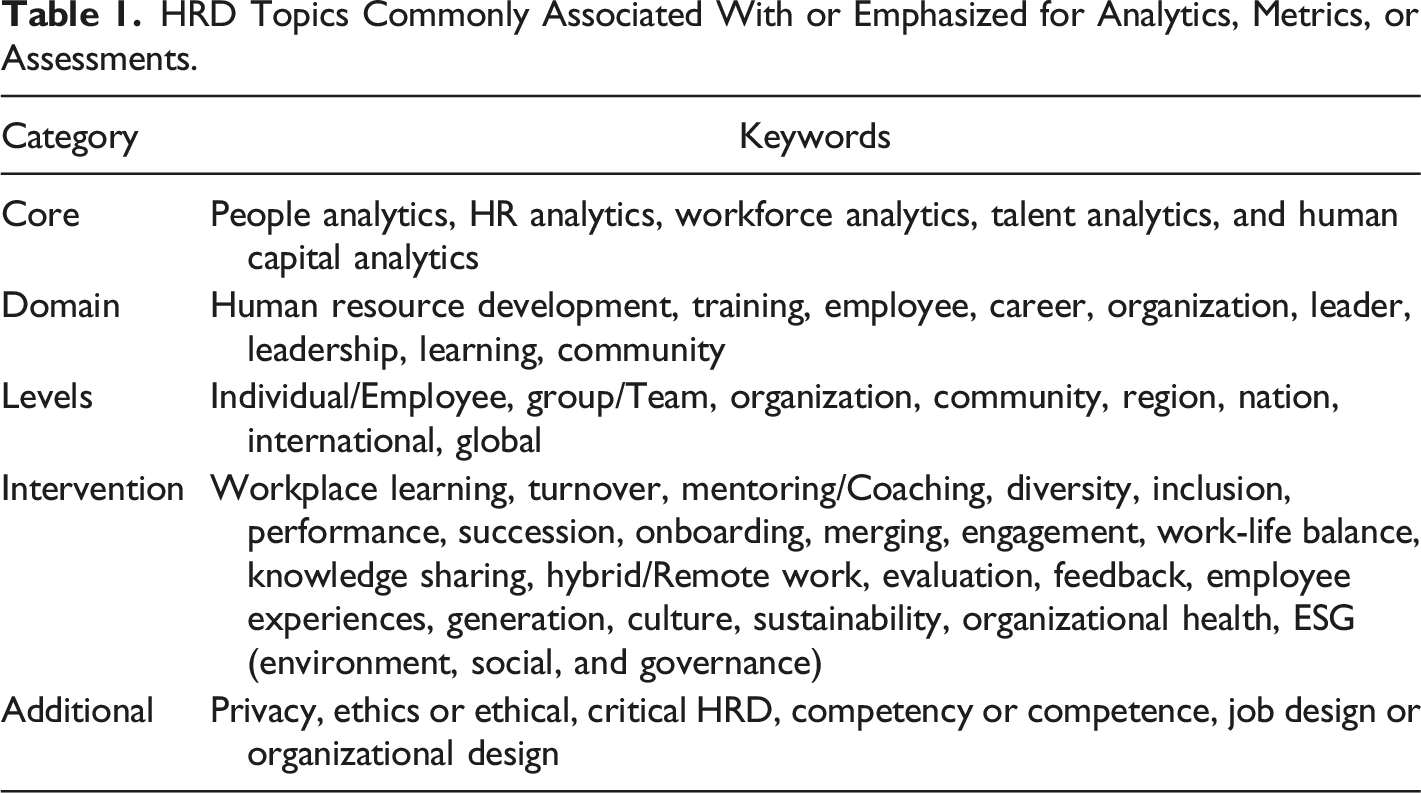
To capture the cross-points between HRD research and the PA literature, it was important to cast a broad net while still maintaining a focus on HRD relevance. With our domain knowledge in HRD and previous empirical experiences, we used the Clarivate Analytics’ Web of Science (WoS) database as our data source. The selection and retrieval of HRD-relevant PA articles were completed in steps. First, we initiated a preliminary search using seed keywords related to analytics, assessments, and measurement of people in organizational contexts. These search terms included “HR analytics,” “people analytics,” “workforce analytics,” “workplace analytics,” “HR metrics,” “human capital analytics,” and “talent analytics”. Because comparing results from this study to earlier literature reviews on PA was critical, we restricted our search to include only literature written in English.
HRD Topics Commonly Associated With or Emphasized for Analytics, Metrics, or Assessments.
Search Terms and Numbers of Articles Retrieved.
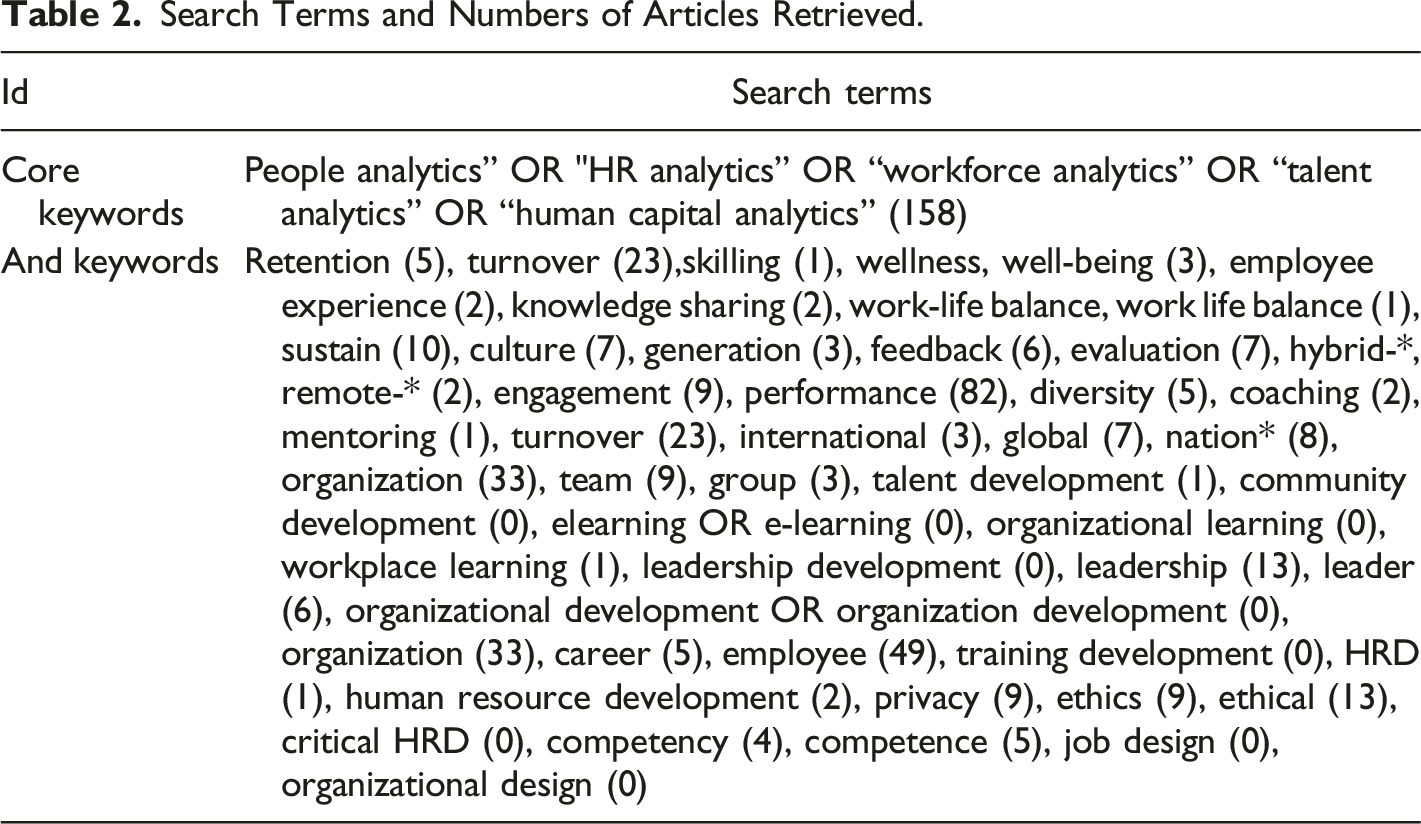
A closer examination of each search result reveals that some topics generated more articles than others. For instance, many articles were produced when the terms “performance” (#15, n = 82) and “employee” (#37, n = 49) were searched. This abundance indicates a high level of interest in these terms within the realm of PA. In contrast, no articles were found for the keywords “job design” (#48), “organizational design” (#49), or “critical HRD” (#45). This suggests that these topics are underrepresented in the current PA literature, although discussions about utilizing data and analytics are not uncommon.
Ethics, privacy, leadership, and organizational issues all yielded a respectable number of articles, ranging from 6 to 13, demonstrating their significant presence in the field of HR analytics. However, themes such as “training development” (#38), “organizational learning” (#29), “community development” (#27), and “e-learning” (#28) failed to produce any articles. This suggests that while interest in and use of data analytics may exist in those areas, scholarly articles explicitly adopted the term ‘analytics’ when examining those topics are scarce. After completing this procedure, all search results were combined, resulting in the identification of 173 articles.
The results from Table 2 also indicate the presence of duplicate articles, as our manual checking found many articles appearing at different searches. These duplicates were subsequently removed from the final count. It’s worth noting that while the term “turnover” (#2) produced 23 articles, its opposite, “retention” (#1), yielded only five articles. Table 2 provides a preliminary idea of how the relevance of different HRD topics varies within data analytics.
Since the primary objective of this study was to capture the connectivity of PA and HRD research through scholarly sources, our search was limited to journal publications. Non-research formats, such as book reviews, editorials, and letters were subsequently excluded. As a result, the final bibliometric dataset included 159 research articles. The information from these articles was consolidated into a single file format, ISI-CE, which includes comprehensive index data from the WoS database. This data encompassing aspects such as title, abstract, publication type, year, keywords (both author-provided and machine-generated KeyWords PlusTM), authorship details, affiliations, and funding. This data was imported into the R programming environment for analysis (R Core Team, 2023). To conduct various analyses, we utilized multiple R packages: the stm package (Roberts et al., 2019) for structural topic modeling and the bibliometrix package (Derviş, 2019) for bibliometric analyses.
Data Analysis
When conducting a scoping review, the utilization of computational inductive techniques such as topic modeling, bibliocoupling, and hierarchical clustering provide complementary information based on the unique characteristics of source selection and features extracted that each technique requires. Bibliometrics allows researchers to determine the structural and compositional properties of a field through citation or author-collaboration network clustering (Zupic & Čater, 2015). In comparison, topic modeling identifies key research themes by eliciting latent topics from highly correlated keywords distributed within a text corpus (Blei et al., 2003). While both techniques yield grouped categories, themes identified from bibliometric clustering are best referred to as ‘clusters’, while themes extracted from topic modeling are more aptly described as emergent themes or topics.
Due to the exploratory nature of these analyses, the results can be synthesized complementarily. As demonstrated by Yoon and Chae (2022), combining the use of these techniques can reveal core research trends within a discipline more objectively than using only one technique or relying on more subjective interpretation, such as describing a visual keyword network. Given that themes identified from topics or topic-related keywords can be more descriptive of the text-based corpus, we applied topic modeling first, followed by clustering analysis. Understanding the exploratory nature of these analyses and recognizing that some key articles in the HRD literature were excluded, we synthesized these findings and applied them in the discussion and implications sections to address the last research question regarding HRD relevance, gaps, and needs within the PA research landscape.
Findings
Key Research Themes and Topics Based on Keywords
Topic Labels and Descriptions.
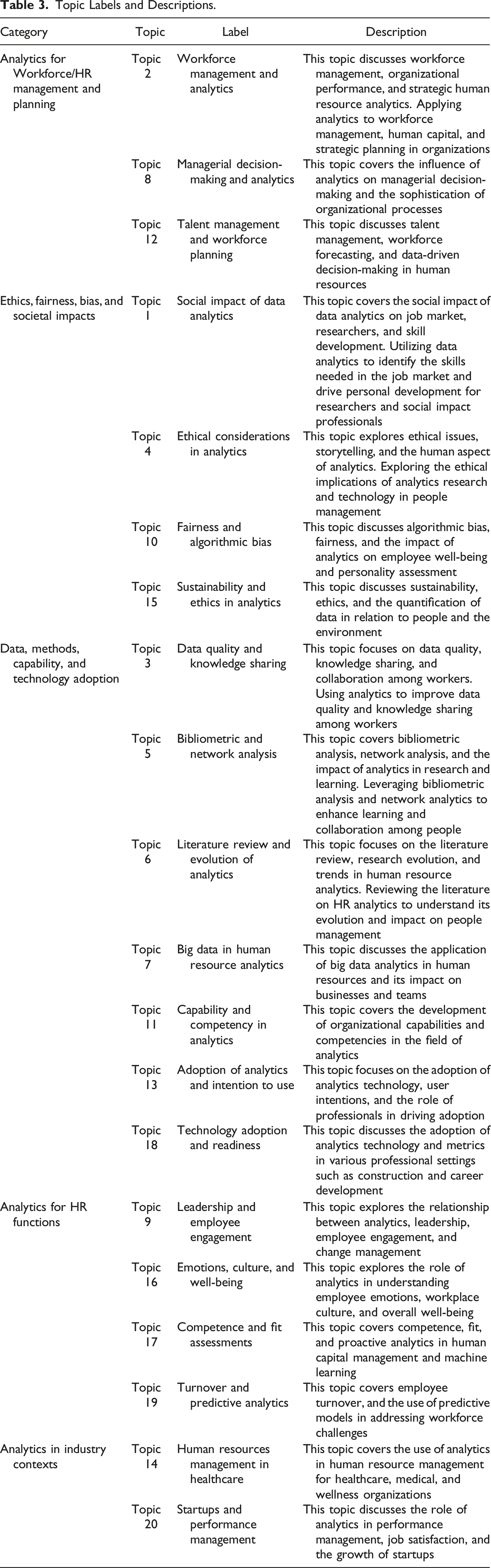
Our review of topic modeling results indicated that the number of extracted topics was higher in view of the number of documents and our previous analysis experiences, suggesting a low level of coherence. The content of keywords also indicated a wide variety of subjects observed in the PA literature. After deliberation with each member and team discussion, we agreed that some topics were similar in the research intention, and they could be grouped together. Extracted topics were grouped into five major themes, each reflecting shared focal areas and topic complementarity.
Analytics for Workforce/HR Management and Planning
This theme included topics that primarily dealing with the application of analytics on workforce management and planning. These two goals were closely related to improving recruitment, retention, and talent flow (Topics 2) to optimize labor capacity (Topics 8 and 12) and link HR processes to individual and organizational performance: • Topic 2: Workforce Management and Analytics • Topic 8: Managerial Decision-making and Analytics • Topic 12: Talent Management and Workforce Planning
Ethics, Fairness, Bias, and Societal Impacts
The next major theme of PA research consists of topics that center on the ethical, fair, and responsible use of analytics, and how these issues extend beyond the organization into societal concerns. Topics in this category delve into issues such as algorithmic bias, privacy, sustainability, and the wider social repercussions of data analytics on the job market and society: • Topic 1: Social Impact of Data Analytics • Topic 4: Ethical Considerations in Analytics • Topic 10: Fairness and Algorithmic Bias • Topic 15: Sustainability and Ethics in Analytics
Data, Methods, Capability, and Technology Adoption
The next theme included topics associated with the importance of data quality and relevance (Topic 3), the use of proper techniques for studying literature and work collaboration (Topic 5), the legitimacy of PA based on the history and revolution of data analytics (Topic 6), data-centric approaches for results (Topic 7), competency and skills for PA teams and professionals (Topic 11), and technology adoption and readiness issues within an organization. Together, this theme highlights how effective PA requires a team effort, strong organizational support, and effective change management: • Topic 3: Data Quality and Knowledge Sharing • Topic 5: Bibliometric and Network Analysis • Topic 6: Literature Review and Evolution of Analytics • Topic 7: Big Data in Human Resource Analytics • Topic 11: Capability and Competency in Analytics • Topic 13: Adoption of Analytics and Use and User Intentions • Topic 18: Technology Adoption and Readiness
Analytics for HR Functions
This theme identified four topics that capture the use of PA for improving specific HR functions. “Competence and Skills” (Topic 17) here referred to the PA focus on employees’ reskilling and upskilling (i.e., application areas as other topics in the group), whereas “Capability and Competency in Analytics” (Topic 11 from the preceding theme) pertains to the PA team’s ability to effectively conduct PA projects. Results showed that organizations most commonly use PA to manage employee turnover, improve employee skills and organizational capability, assess organizational climate through employee sentiments and experiences, and enhance employee engagement and leader development: • Topic 9: Leadership and Employee Engagement • Topic 16: Emotions and Workplace Analytics • Topic 17: Competence and Skills Analytics • Topic 19: Turnover and Uncertainty in Analytics
Analytics in Industry Contexts
The last two topics appear to focus on applying PA to addressing talent and performance issues in specific industry sectors (analytics in healthcare and start-ups). After debate, we decided to separate them from the HR functions category because these two industries are frequently discussed in relation to dealing with dynamic challenges, such as labor shortages, challenging work environments, and scarce resources: • Topic 14: Human Resources Management in Healthcare • Topic 20: Startups and Performance Management
Identifying core themes from many topics and their major characteristics provides a higher-level view of the prevailing themes in the current PA research landscape grounded in data rather than subjective groupings. Through topic modeling, we can see that several topics, such as using analytics for improving the skills and competency of employees and PA teams, digital literacy, ethical and responsible use, and leadership and employee engagement are primary interest domains of HRD research. However, other themes and topics invite HRD scholars to note the current managerial (than developmental) focus in the PA landscape and pay greater attention to analytic methods, workforce planning, and incorporation of data into decision making.
Research Clusters based on Article Networks
Bibliocoupling Cluster Profile.
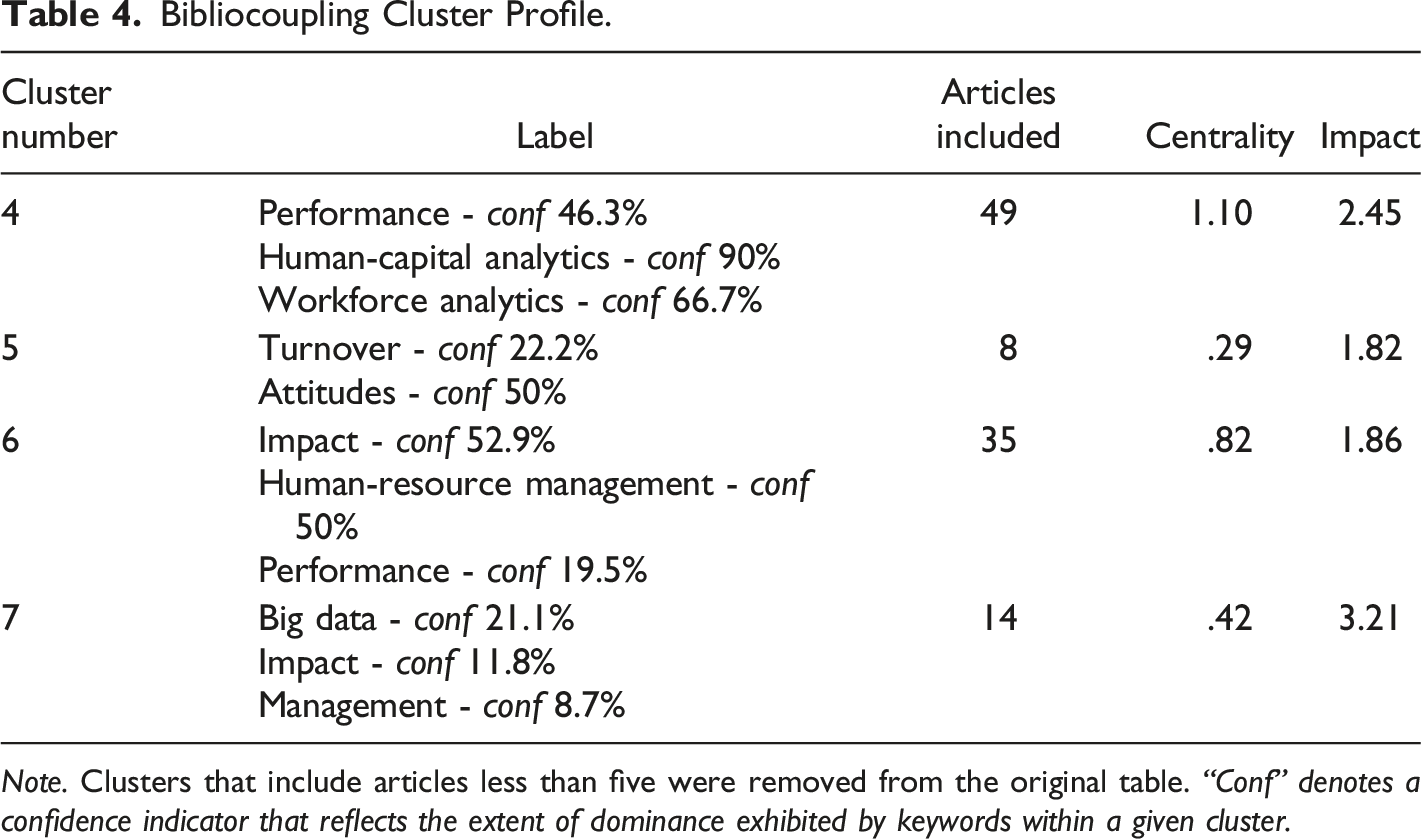
Note. Clusters that include articles less than five were removed from the original table. “Conf” denotes a confidence indicator that reflects the extent of dominance exhibited by keywords within a given cluster.
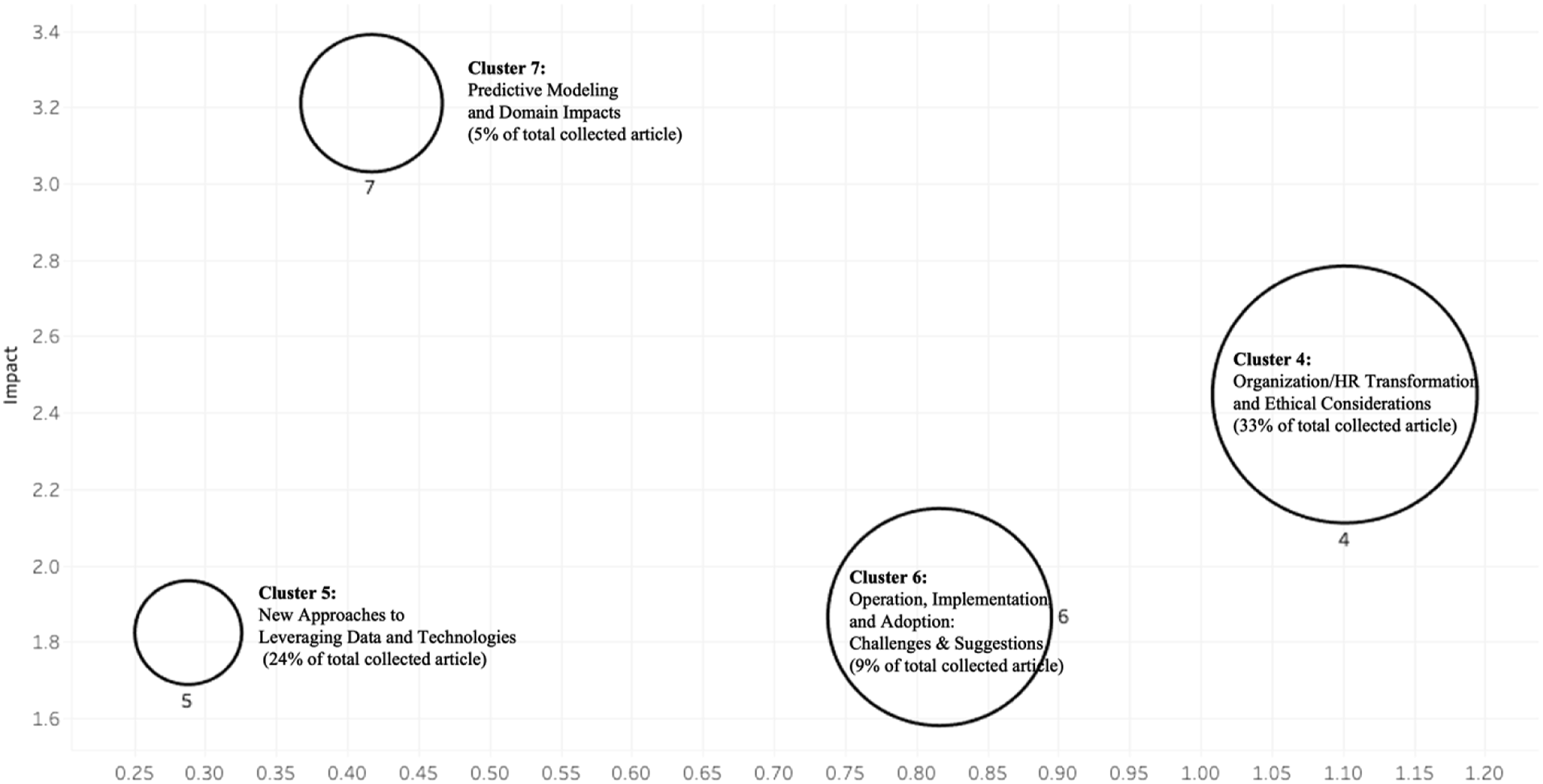
Topology of bibliocoupling clusters.
To determine the cluster’s label and characterize each cluster, influential articles were further examined. In topic modeling, deeper analysis of key articles for the topic is difficult because topic-comprising keywords are spread over the aggregated corpus. On the other hand, sub-groups in cluster analysis are formed based on articles or author connectivity, and their position and influence can be captured by various network metrics. Each cluster or topic can be represented graphically using a particular tool called a strategic or thematic map (Cobo et al., 2011). The prominence of a subject is gauged in this mapping paradigm by “Centrality,” while its development stage is determined by “Density.” The proportion of articles in the cluster is shown by the size of the circle in Figure 1. The cluster centrality is displayed on the x-axis using Callon’s Centrality index to measure the degree to which each subject is connected to all other themes in the dataset (Callon et al., 1991). The mean Normalized Local Citation Score (NLCS), in contrast, is displayed on the y-axis to show the cluster influence. The R documentation states that NLCSs are calculated for papers by “dividing the actual count of citations from local sources by the expected citation rate for documents published in the same year.” By accounting for variations in projected citation rates based on the year of publication, this method offers a fair comparison of the effects of citation among articles published in different years.
Cluster 4: Organization/HR Transformation and Ethical Considerations (33% of Total Collected Articles)
Articles in this cluster underscore how HR analytics can enhance organizational performance, employee management, and strategic change. The transformative role of technology in HR management is another common thread, with the adoption of technology, including big data and artificial intelligence (AI), leading to changes in jobs, organizations, and HR activities. Several articles discussed various barriers to the adoption and implementation of HR analytics within an organization spanning technological issues, lack of proper data, inadequate skills in analytics, cultural constraints, privacy concerns, algorithmic opacity, and regulatory and ethical concerns.
Prominent articles in this cluster highlight the importance of HR analytics in decision-making processes within organizations. Hamilton and Sodeman’s (2020) article, for instance, focuses on the potential of big data analytics in HR for identifying and developing star performers, employees who contribute disproportionately to firm performance. Minbaeva’s (2021) work discusses the influence of global mega-trends on HRM, particularly in the context of disruptions such as the COVID-19 pandemic. Margherita’s (2022) article provides a systematic literature review to identify key topics related to HR analytics and explores the potential of AI and cognitive technologies. Kim et al.’s (2021) work provides a comprehensive review of 60 years of research on technology’s critical role in HRM, while Dahlbom et al.’s (2020) article presents a case study on the adoption of HR analytics in Finnish companies. These highly cited articles underscore the transformative and strategic role of PA for HR management decision making.
Several articles addressed the importance of ethical approaches to PA. Tursunbayeva et al. (2018) highlighted the absence of ethical considerations in the PA literature, while Gal et al. (2020) presented a virtue ethics approach. These sources emphasize the need for careful consideration in the design and implementation of PA to address privacy concerns, algorithmic fairness, accountability, and the datafication of behaviors that enhance employee work performance. Greasley and Thomas (2020) examined changes in professional practice, particularly in the context of data-rich well-being projects and evaluations. Lastly, Peeters et al. (2020) introduced the PA Effectiveness Wheel as a framework for successfully executing PA projects to overcome organizational barriers. This cluster of research indicates that the academic PA literature does not separate PA promises and benefits from organizational reality and societal responsibilities.
Cluster 5: New Approaches to Leveraging Data and Technologies (24% of Total Collected Articles)
The common theme across articles in this group is their emphasis on new approaches to analyzing and leveraging data and technologies. Many articles highlight how these advancements in analytical methods and technologies are reshaping traditional HR practices, including talent management, workforce analytics, internal mobility, and data-driven decision making. They also collectively emphasize the necessity for HR professionals to adapt to these changes and develop a deeper understanding of these technologies to effectively leverage them to improve HR outcomes.
As discussed in Claus’ (2019) paper, these changes are driven by shifts in demographics, globalization, and technologies. Claus asks HR professionals to integrate design thinking, agile management, behavioral economics, and analytics into their competencies to navigate this rapidly changing landscape effectively. In doing so, the roles of AI, machine learning, and big data analytics for managing HR are highlighted, which are also explored in Jana et al., (2022). Highly cited articles in this cluster also present various data-driven methods and models. Examples include Levenson’s (2018) systems diagnostics approach that analyzes enterprise-level factors for competitive advantages, Xu et al., (2018) job transition networks for talent flows linked to stock price movements, and Bossi et al., (2022) comparison of different predictive models for job satisfaction, including Structural Equation Modeling, Lasso, Bagging, and k-NN. Leveraging data and technologies is a key focus in other articles as well. Jana and Kaushik’s (2022) paper discusses the application of the Technology-Organization-Environment (TOE) Model to study the adoption of HR Analytics in IT companies. The concept of data sophistication in HR analytics and its impact on decision-making, as explored in Kalvakolanu and Madhavaiah’s (2019) paper, also falls under this theme. Collectively, these articles underline the necessity for HR professionals to adapt to technological and analytical changes and develop a deeper understanding of new approaches that are necessary in current businesses and work environments.
Cluster 6: Operation, Implementation, and Adoption: Challenges & Suggestions (9% of Total Collected Articles)
Articles in this cluster mainly focus on providing various perspectives on the operation, implementation, adoption, and expansion of PA. They collectively discuss the value of data-grounded decision making for HR practices, while also highlighting the current challenges and potential solutions. The commonalities of this cluster can be summarized as Importance of HR Analytics, Challenges in Implementation, and Return-On-Investment (ROI) of HR Analytics.
Minbaeva (2018) discusses the struggles of organizations to move from operational reporting to human capital analytics (HCA), stressing the importance of data quality, analytical capabilities, and strategic abilities. Similarly, McIver et al., (2018) emphasize the integration of agile development with scientific research to achieve organizational success with workforce analytics. Chalutz Ben-Gal (2019) provides an integrative analysis of the literature on HR analytics, offering a return on investment (ROI) based perspective. Simón and Ferreiro (2018) detail the development of a workforce analytics initiative in a large multinational company, reporting how the company addresses implementation issues. These authors and other scholars have highlighted how analytics and technologies are essential for talent management (Nocker & Sena, 2019; Sivathanu & Pillai, 2020).
Several articles also offered a framework to tackle various challenges that arise in the implementation or adoption of PA. Minbaeva (2018) underscores the importance of considering Human Capital Analytics (HCA) as an organizational capability. This is complemented by McIver et al., (2018), who advocate for the integration of agile development with scientific research, and Chalutz Ben-Gal (2019) who promotes an ROI-based perspective. For adoption, Vargas et al., (2018) suggested innovation theory and the Theory of Planned Behavior to scrutinize individual decisions concerning the adoption of PA. In comparison, Wang and Cotton (2018) emphasize the social capital theory and its usefulness to create team performance. Piazza and Abrahamson (2020) similarly support the use of social capital theory, discussing the successful spread of social media as a social capital platform. Lastly, Van der Laken et al. (2018) proposed latent bathtub models and optimal matching analysis in addressing the multilevel and longitudinal nature of HR data.
Cluster 7: Predictive Modeling and Domain Impacts (5% of Total Collected Articles)
Articles in this last group showcase examples of using PA to specific HR domains and functions. The first reason supporting this label is the pervasive use of advanced technological tools, such as machine learning and predictive analytics, across the articles. For instance, in a study conducted by Hickman et al., (2021), machine learning is applied to infer applicant characteristics from job interview responses. Similarly, Lee et al., (2022) proposes combining machine learning techniques with the experimental research design in leadership research to enhance intervention causality.
Secondly, many articles in the cluster demonstrate the use and impact of predictive analytics. For instance, Brandt and Herzberg (2020) employed the Linguistic Inquiry and Word Count (LIWC) tool to predict the success of job applications, while Michelotti et al., (2021) analyzed the impact of new technology on selection interviews, illustrating how these technologies are reshaping traditional HR practices. Karwehl and Kauffeld (2021) discussed the need for a data-driven approach in HR, addressing the employees’ skills and competence needs, while Guo et al., (2021) presented text mining and natural language processing methods for predicting company rating. Speer (2021) explored the implications of attrition models and their adversarial impacts, and Becker (2022) used text mining and machine learning to identify positive management practices that lead to employee satisfaction. Another significant article in this cluster is Hamilton and Davison (2022), which discusses the legal and ethical implications of machine learning in the context of HR, highlighting the challenges and potential problems that may arise from its application. Lastly, it is interesting to note that while this cluster has lower centrality than the first two large clusters, its impact metric is much higher than all other clusters, indicating a high influence of articles in this cluster based on ‘average’ citations.
Discussion
Examining the PA research literature from the HRD perspectives reveals that PA is a multidisciplinary research area with contributions from fields such as management, HR, information systems, supply chain management, healthcare, computer science, and systems engineering. The captured landscape encompasses a range of conceptual and empirical works, both qualitative and quantitative, emphasizing the potential of technologies and powerful computational methods. This study supports that the PA research landscape has established a substantial body of work concerning (a) the goals and potential value of PA for workforce/HR management and planning, (b) the critical importance of ethical principles, (c) new approaches to and needs for harnessing relevant data and technologies, (d) the importance of enhancing data and technology skills for HR, and (e) the availability and utilization of advanced analysis techniques, particularly machine learning in various HR domains and functions.
Comparison of Key Research Themes Between Topic Modeling and Bibliometric Clustering.
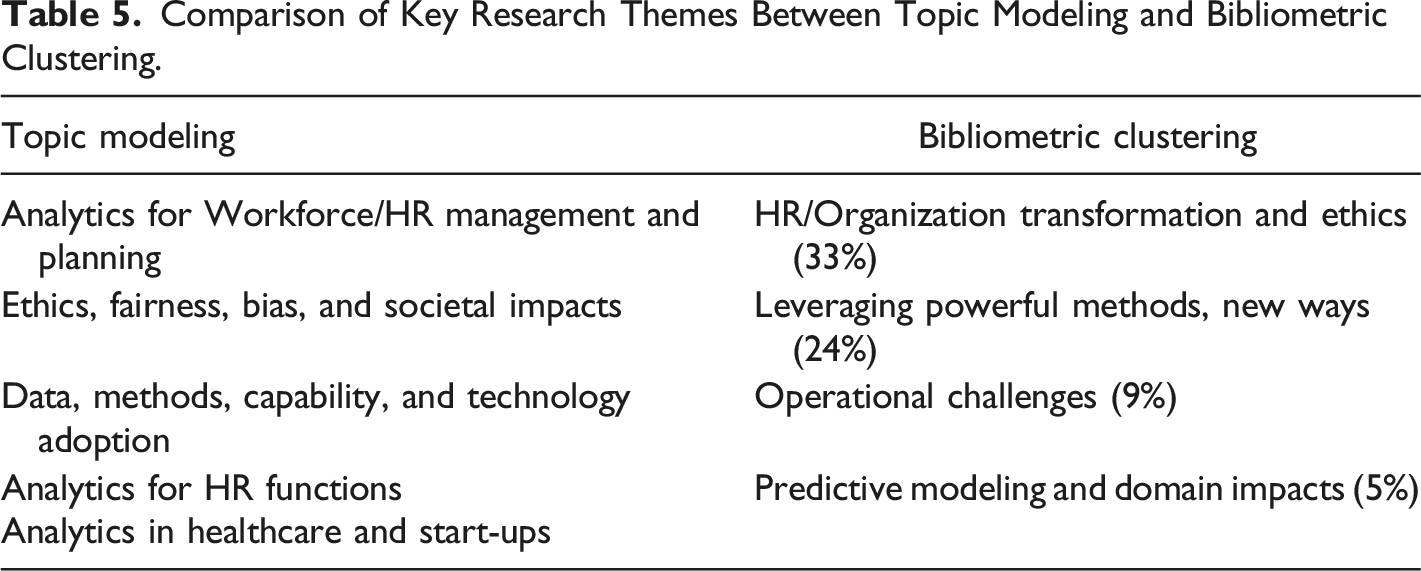
Major themes identified in Table 5 indicate that distinguishing HRM and HRD can be limiting and may not serve the best interests of the HRD field. Findings from this study clearly show that some domains of PA research are closely related to HRD. Examples include PA applications to topics of leadership and engagement, employee skills and competency development, ethical and fairness considerations, and change management for technology adoption and use. On the other hand, other major themes of PA research are predominantly domains of human resource management and workforce planning, such as hiring, compensation, turnover management, and performance management. These topics have not been the primary research areas for HRD scholars. Rather than considering these themes and topics as irrelevant or outside the HRD scholarly interests, however, it is helpful to consider them as cognate issues.
Extracted themes and topics challenge us to revisit the role of HRD in the PA research landscape. For instance, topics such as organization and HR transformation, data-driven decision making, HR management, and workforce planning are strongly present in the PA literature, and ignoring or treating them as extraneous to HRD interests creates the risk of further sidelining the field from the PA research community. Additionally, the presence of empirical research in the Predictive Modeling and Domain Impacts cluster, despite its smaller size, highlights the importance of empirical studies in PA research. While conceptual discussions are prevalent, empirical research plays a crucial role in understanding the practical applications and impacts of PA in HR.
Last but not least, the themes identified in this study highlight the uniqueness of PA themes when compared to major research themes in HRD. This invites HRD scholars to pay greater attention to areas such as assessment, organizational transformation, business impacts, and capability building for HR. For instance, Yoon and Chae’s (2022) bibliometric review of the Human Resource Development Review journal identified workplace learning, performance, leadership, culture, diversity, and critical HRD as major HRD research foci. That list did not include technology or analytics indicating the relatively low status and influence that topics related to technology and data analytics have in the HRD research landscape.
Implications for Future Research
In the field of Human Resource Development (HRD), scholars have emphasized the importance of rigor in research methods (Anderson, 2017; Gubbins, et al., 2018; Nimon, 2016). There is also a growing recognition of how computational approaches can provide new insights and avenues for examining various HRD issues (Yoon, 2018, 2021). The increasing interest in data analytics within the HRD scholar community is driven by the digitalization (adoption and use of technologies) and digitization (datafication) of workplaces. Given this trend and the findings of our study, the following questions are worth exploring; What is the connection between PA research and HRD? How can HRD scholars integrate, engage with, and contribute more to the PA research landscape?
Notably, our study revealed that the selected articles for this study did not include any HRD publications that previously examined PA relevant issues, highlighting a concerning gap. The relatively nascent status of PA research in the HRD scholar community presents an opportunity for HRD scholars to build upon established theoretical frameworks and empirical evidence related to the emerging PA themes identified in this study. For instance, topics like workplace learning, skills improvement, and coaching as a developmental solution are well established in HRD literature. To illustrate, Ardichvili (2022) examined the influence of AI on the practices of accounting professionals and discussed how technology adoption has redefined their work and expertise. Similarily, Graßmann and Schermuly (2021) compared practices used by human coaches and AI coaching and found how initial phases of capturing emotional concerns and constant evaluation of coaching impacts will benefit more from human judgment, while administrative tasks and accessibility will constantly improve and be changed by AI. These insights into human-machine interaction shaping work practices have also been highlighted by other HRD scholars (Kim, 2022; Yorks et al., 2021).
Recently, Ratnam & Devi, (2023) proposed a conceptual framework for addressing resistance and challenges related to HR analytics adoption in organizations. They stressed the importance of building internal capabilities within HR teams and recommended multi-facted approaches, including open learning sources, coaching and collaboration with academic institutions, and a focus on commitment, change management, data quality, governance, and security.
The theme of “New Approaches to Analyzing and Leveraging Data and Technologies” also warrant attention from the HRD community. HRD publications offer examples and opportunities to explore new analytical paradigms, such as social network analysis (Han et al., 2019; Hatala, 2006; Parise, 2007), machine learning (Yoon, 2021), and bibliometrics (Yoon & Chae, 2022). These methods can provide valuable insights, as demonstrated by Yoon (2021), who compared the usefulness of supervised machine learning with traditional regression analysis for multi-variable examination in HR datasets. Additionally, he presented a PA implementation framework for aligning data analysis with business and HR goals.
Analytics is a very fertile ground for HRD scholars, as techniques, such as text mining, can be applied to clustering employee skills or assessing organizational climates based on employee sentiments. Open-source simulation tools, such as Netlogo (Tisue & Wilensky, 2004) also offer opportunities to experiment with various organizational and technology-related behaviors, further enhancing the understanding of human-machine interactions. By referencing and building upon these resources, HRD scholars can connect their research interests with specific PA themes identified in this study.
Until now, we deliberately refrained from presenting definitions of PA due to the evolving nature of the field. Scholars recognize that a field matures and advances through debates and iterative cycles of theory development and empirical research. Multiple definitions for PA and HRA exist in the literature. Popular ones include PA as “an area of HRM practice, research and innovation concerned with the use of information technologies, descriptive and predictive data analytics and visualisation tools for generating actionable insights about workforce dynamics, human capital, and individual and team performance that can be used strategically to optimise organisational effectiveness, efficiency and outcomes, and improve employee experience” (Tursunbayeva et al., 2018, p. 231), and HRA as “an HR practice enabled by information technology that uses descriptive, visual, and statistical analyses of data related to HR processes, human capital, organisational performance, and external economic benchmarks to establish business impact and enable data-driven decision making” (Marler & Boudreau, 2017, p. 15).
Another popular practitioner source emphasizes that PA is not about HR and should deliver commercial values while also benefiting employees, the workforce, and executives for effective people-related decisions based on facts (Ferrar & Green, 2021). HRD scholars will see that although concerns for employees and HR can be found, these definitions often place business or performance over people. We propose that PA should focus on finding and using insights from primarily workforce and employee data to improve business outcomes and HR practices aligned with organizational strategies. We believe that this proposed definition can guide HRD scholars interested in PA to align and implement their research projects by incorporating various themes and topics found in this study. For example, whether the career development opportunities and mentoring support (primary interest area of HRD) positively correlates with or predicts successful recruiting and retention can be tested through data analytical approaches, such as social network analysis or machine learning.
Implications for Practice
The evolution of HR technology, as expounded by Thite (2022), has profoundly shaped HRD strategies, practices, and execution, ushering in the era of digital HR. The integration of the digital realm into design thinking and strategic planning within HRD has become a tangible reality. As noted by Su et al. (2021), the impact of AI on the job market, work design, and skills and competencies will be substantial. Presently, a bewildering number of HR technology vendors tout their HR solutions as AI-based. AI, on its developmental trajectory, has the potential to create new job opportunities but will also disrupt existing work practices and roles. Mukerjee et al. (2022) emphasized the imperative of maintaining a continuous focus on key skills, learning aspects, and talent investment to ensure sustainability and resilience amidst rapid digital transition and AI expansion.
For HRD practitioners, this study underscores that utilizing data analytical approaches goes beyond collecting and analyzing learning or behavioral change data. It is evident that when analytics are applied or conceived for HR functions, major application areas encompass both HRM and HRD domains, including recruitment, performance management, compensation (Huselid, 2018; Mondore et al., 2011), as well as skills (Su et al., 2021) and leadership development (Lee et al., 2022), which have been considered the purview of HRD. The pronounced emphasis on meaningful impacts and outcomes in PA (People Analytics) beckons HR practitioners to contemplate integrating their intervention focus with additional and adjacent facets of the employment cycle for a comprehensive perspective on employee management, development, and support. Notably, the salient themes identified in the PA literature also prompt HR practitioners to weigh system and process factors when adopting analytics or technologies, including the contribution of interventions to organizational goals and strategies, as well as change management.
Moreover, comprehending the various themes and topics enables organizations and practitioners to pinpoint pivotal areas for investment and prioritization, guiding their resource allocation and efforts. For instance, questions frequently raised among HR professionals interested in PA/HRA (Human Resource Analytics) include which projects the HR analytics team should initiate, what data to collect, and what internal capacity the team needs to develop. Conversely, managers and top-level leaders often concentrate on investment costs and business value.
Above all else, the findings from this study dispel the notion that PA is a short-term endeavor confined to a few projects. For HRD professionals, the study reveals that improving employee skills and competencies, enhancing employee engagement, fostering leadership development, understanding employee sentiments, promoting technology adoption, cultivating digital literacy, championing ethical and responsible technology use, and embracing analytics are all HRD-relevant areas teeming with ample conceptual and empirical research opportunities. Furthermore, the study underscores the imperative for organizations to invest in building their analytics capabilities and data infrastructure.
However, HRD typically upholds a ‘people-centric’ approach that prioritizes human interactions, especially when addressing sensitive issues like human rights, inclusion, and equality. These matters demand profound understanding, empathy, and situational awareness—qualities currently lacking in AI systems. The utilization of AI in these areas risks diluting the essential human connection and empathy crucial in these sensitive and intricate domains. Nevertheless, as illustrated by Graßmann and Schermuly’s (2021) study, HRD scholars are poised to explore which human interactions and experiences remain invaluable and indispensable in an increasingly digital environment. HRD practices offer valuable opportunities for examining rich human experiences in technological contexts. In summary, while AI, PA, and emerging technologies present significant potential and challenges for both HRD scholars and practitioners, it is imperative to remember that HRD, as the primary field for nurturing and unleashing human expertise, has much to contribute.
Limitations, Suggestions, and Conclusion
We acknowledge several limitations and offer suggestions for future research. Firstly, this study exclusively relied on the Web of Science as the primary data source. While this database is renowned for publishing leading journals in academic disciplines relevant to PA, and it allowed us to effectively capture descriptive study keywords, researchers looking to cast a wider net for article selection could consider using additional journal databases, such as Google Scholar and Scopus.
Secondly, our objective was to compare the perspective of this review, conducted from an HRD viewpoint, with previous literature review studies, which were predominantly conducted by scholars from other disciplines such as HRM, information systems, strategic management, and supply chain management. It’s worth noting that these previous studies also focused on articles written in English. We recognize that PA/HRA practices and research are actively conducted and disseminated in languages other than English. While direct translation may not always be feasible for these studies, conducting more research in non-English contexts could significantly enrich our understanding of how culture influences PA/HRA practices.
We would also like to highlight that while computational methods, such as topic modeling and bibliometric clustering, can significantly enhance the objectivity of identifying major research themes and reduce the possibility of omission or human bias in theme determination, they are fundamentally exploratory approaches. Further analysis can provide valuable insights. In this study, we complemented these methods by conducting additional searches using our domain knowledge and comparing our findings to Yoon and Chae’s (2022) study. However, future research in this area could explore different methodologies, such as expert judgment, integrative literature review, or systematic review, with a more specific focus on narrower PA issues. This represents a promising direction for future research.
Lastly, this study demonstrates that the current PA research landscape is expansive, multi-dimensional, and continuously evolving with the integration of new technologies, analytical methods, and application areas. This can be somewhat daunting for researchers initiating their exploration of data analytics within their specific areas of interest. However, we believe that by clearly defining the focus of the study and providing relevant keywords aligned with PA themes and issues, both individual authors and the scholarly community can benefit.
Our comprehensive review of the PA research landscape, from the perspective of Human Resource Development (HRD), underscores the progressive expansion and diversification of this domain. Leveraging bibliometrics and topic modeling techniques has enabled us to conduct a thorough examination of the research landscape, revealing key themes. This study has highlighted the synergy between HR management, data analytics, organizational behavior, and the potential for HRD research in PA to discover relevant examples and explore new opportunities. The PA literature will continuously introduce frameworks and analysis methods that facilitate the connection and alignment of various HRD and HRM perspectives and interventions, ultimately leading to greater HR and business impacts. In light of this, we extend an invitation to more HRD scholars to situate and examine their work by embracing the strategic and data-analytic approaches emphasized in PA.
Footnotes
Declaration of Conflicting Interests
The author(s) declared no potential conflicts of interest with respect to the research, authorship, and/or publication of this article.
Funding
The author(s) received no financial support for the research, authorship, and/or publication of this article.
