



Abstract
Herbal medicines for the treatment of Alzheimer’s disease (AD) have attracted considerable attention nowadays. Alzheimer’s disease is described in traditional Persian medicine (TPM) by the term Nesyān. In this study, 5 main medicinal medieval Persian manuscripts were reviewed to filter plants reported for the treatment of Nesyān. Databases were searched for related possible mechanisms of action of these medicinal plants. Each herb was searched for along with these keywords: “acetyl and butyryl cholinesterase inhibition,” “antioxidant,” “anti-inflammatory,” and “anti-amyloidogenic.” In Total, 44 herbs were used for the treatment of Nesyān; 40 of those were authenticated. Also, 30 plants had at least one of the mechanisms of action that were searched for or related pharmacological functions known for the treatment of AD. In this work, we introduce promising candidates in TPM that could undergo further investigation for identification of their active compounds and clinical validation in the treatment of AD.
Introduction
With the aging of the population nowadays, we can see an increase in the prevalence of dementia. 1 The most common cause of irreversible dementia is known to be Alzheimer’s disease (AD). 2 There are many genetic as well as environmental factors that trigger the related pathological decline. 3 Over the past few years, numerous studies have been conducted on this disease. Many of these have resulted in discoveries that revealed the complex pathophysiological processes responsible for its progression. Despite these advances, there is no effective medication for AD yet. Many agents that showed effects in primary researches failed to demonstrate efficacy in the improvement of AD when studied in clinical trials. 4 The reason for this is the complex nature of this disease. It is a syndrome and the result of multiple molecular abnormalities. Any effective treatment should target the neurodegenerative cascade responsible. 2 Its main pathological feature is the presence of β-amyloid peptide brain plaques. 5
However, research today suggests that the pathogenesis of this disease is not restricted to the neuronal factors but includes immunological reactions in the brain. Inflammatory reactions are responsible for the progression and severity of the disease. 6 Neuroinflammation is observed in the brain in affected cases. As a result, increasing inflammatory cytokines and free radical attack could be seen in them. 7 Oxidative stress is another factor that contributes to the progression and initiation of this disease. 8 As regards its treatment—although therapeutic effectiveness still remains uncertain—treatments of choice for AD are cholinesterase inhibitors and N-methyl-D-aspartate (NMDA) receptor antagonists. 9 One of the therapeutic approaches today is the multi-target-directed ligand strategy. The aim is to hit different targets of AD. 2 A multicomponent and, therefore, multi-target approach could also be seen in the treatments of traditional systems of medicine. 10
In recent years, traditional herbal medicines for the treatment of AD have attracted considerable attention among researchers. 11 These medications have been used for thousands of years by humankind. It is unlikely that their side effects have been neglected during these years. 12 Iran has a rich history of traditional medicine. This system of medicine has its roots in ancient Persia and has been influenced by medical systems of great ancient civilizations. Iranian scholars were engaged in the study of cognitive disorders as well. 13 Their findings have been recorded in their books, which are still available today. 14
Alzheimer’s disease is discussed in traditional Persian (TP) books under the term Nesyān. The clinical manifestation of Nesyān was defined in TP books as difficulty in remembering recent events, while recollections of happenings of the past are easier in the early stages. 15 We studied Nesyān from famous Persian medieval medical books and collected information about herbs used in the treatment of Nesyān. These herbs could be an interesting subject for further research and in clinical trials.
Materials and Methods
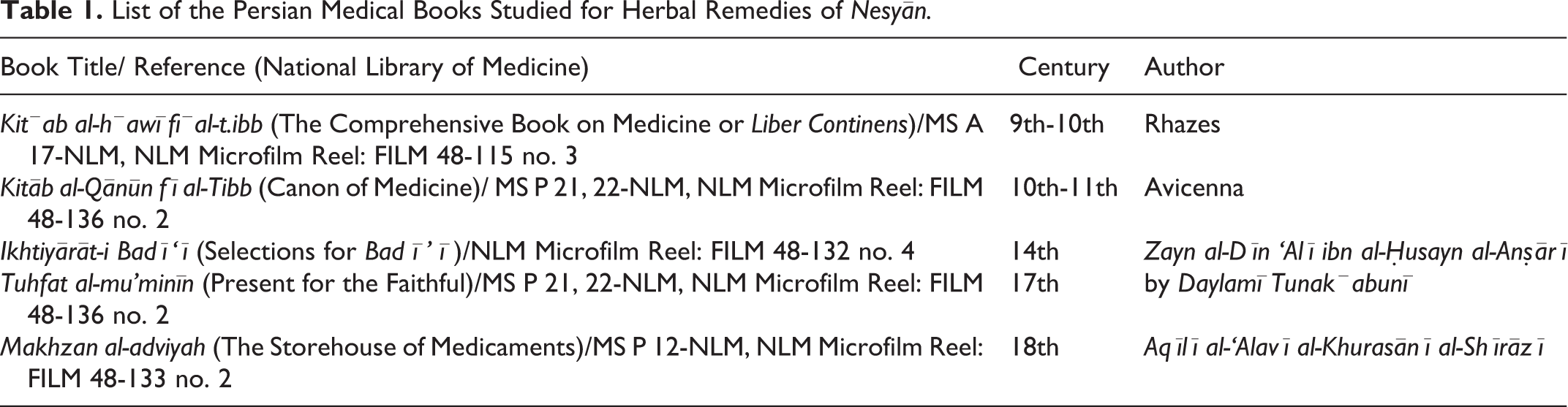
To collect the necessary data, 5 main medicinal medieval Persian manuscripts were studied for plants used in Nesyān. The books that were studied were Kit ¯ ab al-h ¯ awı¯ fı¯ al-t.ibb (The Comprehensive Book on Medicine) by Rhazes (9th-10th centuries), Canon of Medicine by Avicenna (10th-11th centuries), Ikhtiy ¯ ar ¯ ati Badı¯’ı¯ (Selections for Badı¯’ı¯) by H¯ ajjı¯ Zayn al-’At.t.¯ ar (14th century), Tuhfat al-mu’minı¯n (Present for the Faithful) by Daylamı¯ Tunak ¯ abunı¯ (17th century), and Makhzan al-adviyah (The Storehouse of Medicaments) by Alavı¯ Shı¯r ¯ azı¯ (18th century). These books are listed in Table 1.
List of the Persian Medical Books Studied for Herbal Remedies of Nesyān.
The plants used in the treatment of Nesyān, according to these manuscripts, were listed. Authentications of the plants were confirmed in accordance with botanical books, such as the Dictionary of Medicinal Plants, Matching the Old Medicinal Plant Names with Scientific Terminology, Indian Medicinal Plants, and Dictionary of Iranian Plant Names. Databases such as PubMed and ScienceDirect were searched for related possible mechanisms of action of these medicinal plants. Hence, each herb was searched for along with these keywords: “Acetyl and butyrylcholinesterase inhibition,” “antioxidant,” “anti-inflammatory,” and “anti-amyloidogenic.” Each herb was searched for in the PubMed database for clinical trials and AD.
Results
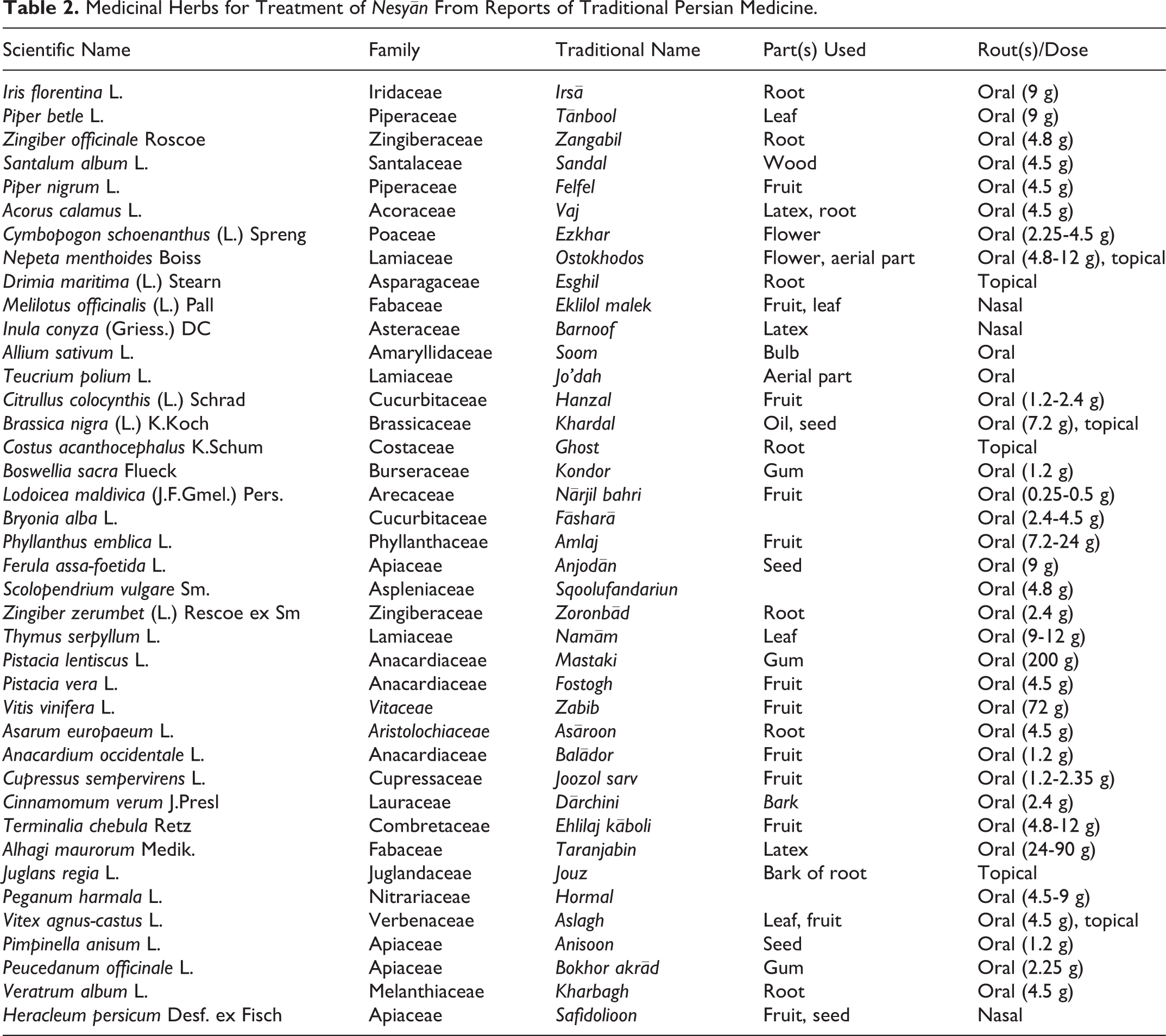
In the Persian manuscripts studied, a total number of 44 herbs used for the treatment of Nesyān was found; 40 of them could be identified botanically (Table 2). From this number, 30 herbs had at least one of the mechanisms of action that were searched for or related pharmacological functions known for the treatment of AD (Table 3). We introduced 30 herbs derived from TP medicine, the suitable properties of which in the treatment of AD have been proven by modern medicine. Modern research had proven that all these herbs have antioxidant activity. From the medicinal herbs found for the treatment of Nesyān, 15 had proven acetyl cholinesterase and/or butyrylcholinesterase inhibition effects. The method of determination in most cases was by the Ellman assay. From the plants searched for, Persian walnut, garlic, and ginger had proven antiamyloidogenic effects. Twenty-four of these plants showed anti-inflammatory effects proven by experimental analysis. In the next step, we highlighted the herbs that had all the mechanisms of action searched for and that are related to the treatment of AD. In this respect, we found Zingiber officinale Roscoe and Allium sativum L., which have proven acetyl and butyrylcholinesterase inhibition, antioxidant, anti-inflammatory, and antiamyloidogenic properties. The effect of these 30 herbs on AD was not studied in clinical trials.
Medicinal Herbs for Treatment of Nesyān From Reports of Traditional Persian Medicine.
AD-Related Pharmacological Activities for Selected Plants.
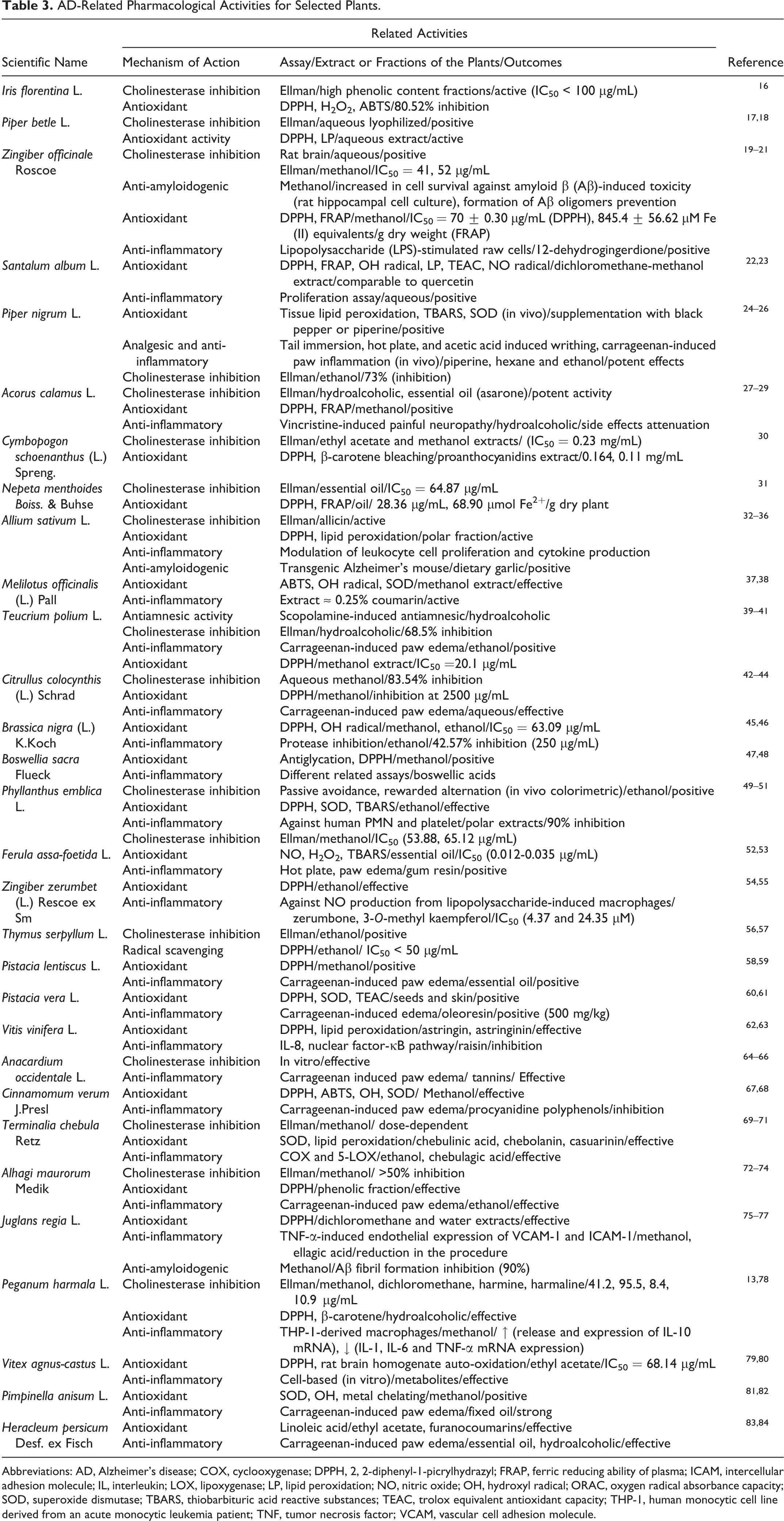
Abbreviations: AD, Alzheimer’s disease; COX, cyclooxygenase; DPPH, 2, 2-diphenyl-1-picrylhydrazyl; FRAP, ferric reducing ability of plasma; ICAM, intercellular adhesion molecule; IL, interleukin; LOX, lipoxygenase; LP, lipid peroxidation; NO, nitric oxide; OH, hydroxyl radical; ORAC, oxygen radical absorbance capacity; SOD, superoxide dismutase; TBARS, thiobarbituric acid reactive substances; TEAC, trolox equivalent antioxidant capacity; THP-1, human monocytic cell line derived from an acute monocytic leukemia patient; TNF, tumor necrosis factor; VCAM, vascular cell adhesion molecule.
Discussion and Conclusion
Alzheimer’s disease is a chronic condition and the most common cause of irreversible dementia. It increasingly leads to mental disability and death. The available treatments only aim to relive the symptoms and not its progression. 85 Despite tremendous efforts invested in drug discovery research to identify an effective medication for AD, there is no successful cure yet. Currently, there are many compounds being investigated for the treatment of this disease. Although the etiology of AD remains unknown, research has suggested several pathological and biological factors that contribute to AD. Acetylcholinesterase (AChE) and butyrylcholinesterase have been found to be important compounds in cognitive impairment associated with AD. 86 High activity of AChE enzyme in patients with AD leads to the presence of acetylcholine in the synapses of the cerebral cortex and its deficiency in the cerebral cortex. Acetylcholinesterase inhibitors are commonly prescribed drugs for the treatment of AD. Their use has limitations, such as adverse side effects. 15 Three drugs approved by the Food and Drug Administration for the treatment of AD possess acetyl cholinesterase inhibition properties. These are donepezil, galantamine, and rivastigmine. These drugs can slow down the process of progression of the symptoms of AD for 6 to 12 months. These drugs are nowadays prescribed to patients with mild to severe symptoms related to AD. They inhibit AChE from hydrolyzing acetylcholine. Owing to its heavy hepatic toxicity, tacrine—which is also an AChE inhibitor—is hardly prescribed today. 85
In recent years, researchers have evinced interest in the compounds derived from traditional medicines as sources of medicinal phytochemicals. 86 Traditional Persian medicine is a system of medicine mainly based on herbal therapies. What makes this system significant is that all records of physicians and pharmacists are available in the extant manuscripts of these scholars. 87 Cognitive disorder was known to these physicians; they described a clinical condition that had similar clinical manifestations as AD. 15 Herbal treatments were recommended in TP books. 88 If these herbs were effective in the treatment of AD, they should have related mechanisms of action as well. In this review, we have introduced 40 herbs from traditional Persian medicine (TPM) for the treatment of Nesyān, which has the same clinical manifestations as AD, according to TPM books. We found that 30 of these herbs had at least 1 mechanism89,90 ,of action related to AD treatment (Table 3). 13,16 -77,78 , 85-90 From the found herbs of TPM, 15 had proven AChE and/or butyrylcholinesterase inhibition effects. Recent research into drug discovery has focused on phytochemicals such as AChE inhibitors with the least side effects. 19 From the list of found herbs recommended by Persian scholars, Iris florentina L., 16 Piper betle L., 17 Z officinale Roscoe, 19 Piper nigrum L., 26 Acorus calamus L., 27 Cymbopogon schoenanthus (L.) Spreng., 30 Nepeta menthoides Boiss. & Buhse, 31 A sativum L., 32 Teucrium polium L., 40 Citrullus colocynthis (L.) Schrad., 42 Phyllanthus emblica L., 49 Thymus serpyllum L., 56 Terminalia chebula Retz., 69 Alhagi maurorum Medik., 72 and Peganum harmala L. 13 have acetyl and/or butyrylcholinesterase inhibition properties. Possession of this property was confirmed by Ellman method in the modern literature that was searched. Even though it was not a mechanism known to the ancient Persians, it does indicate that the use of these herbs in the treatment of AD can be explained by modern pharmacology as well.
Evidence has suggested that inflammation, too, plays a role in the pathogenesis of this disease. 6 As a result, another group of compounds suggested for the treatment of AD are of anti-inflammatory agents. The chronic use of nonsteroidal anti-inflammatory drugs is today recognized as a factor that delays the onset of AD and reduces its risk. 89
Twenty-four of the herbs that were recommended by ancient Persians to treat Nesyān also have proven anti-inflammatory activity. Their anti-inflammatory activity has been proven by experimental analysis in modern research. These herbs include Z officinale Roscoe, 21 Santalum album L., 23 P nigrum L., 25 A calamus L., 29 A sativum L., 35 Melilotus officinalis (L.) Pall, 38 T polium L., 40 C colocynthis (L.) Schrad., 44 Brassica nigra (L.) K. Koch, 46 Boswellia sacra Flueck., 48 P emblica L., 50 Ferula assa-foetida L., 53 Zingiber zerumbet (L.), Rescoe ex Sm, 55 Pistacia lentiscus L., Pistacia vera L., 59 Vitis vinifera L., 61 Anacardium occidentale L., 63 Cinnamomum verum J. Presl, 66 T chebula Retz., 68 A maurorum Medik., 74 Juglans regia L., 76 P harmala L., 78 Vitex agnus-castus L., 80 Pimpinella anisum L., 82 and Heracleum persicum Desf. ex Fisch. 84
Another biochemical factor associated with AD is oxidative damage. It occurs as an early event of AD. Increasing administration of antioxidants has been shown to be helpful in lowering conversion of mild cognitive impairment to dementia. 90 From the herbs prescribed by TPM for AD treatment, all had proven antioxidant property. Their antioxidant activity was confirmed in the research mainly by DPPH assay.
Neuritic or senile plaques could be observed pathologically in the brains of patients with AD. The major constituent of these plaques is amyloid β-protein (Ab). 77 Although soluble Ab is a normal constituent of blood and cerebral fluid in AD, it assembles into insoluble fibrils. Studies on synthetic Ab have shown that this compound is neurotoxic; this effect is correlated with the extent of fibril formation. The drugs that could convert the fibrillar form of Ab to its nonfibrillar form and have antiamyloidogenic effects are considered potential drugs in treating and preventing AD. 77 Three of the recommended herbs used by TPM for the treatment of AD had proven effects on β-amyloid peptide brain plaques. Z officinale Roscoe, 20 A sativum L., 36 and Juglans regia L. 77 showed Ab fibril formation inhibition in animal studies.
Although the feasibility of applying TPM in AD therapy was demonstrated here, further preclinical and clinical studies should be conducted to investigate the therapeutic function in patients with AD.
Taken as a whole, 3 of the recommended medicinal plants used by TPM for the treatment of AD had possessed all activities (cholinesterase inhibition, antioxidant, anti-inflammatory, and antiamyloidogenic activities, based on Table 3; Figure 1). These medicaments could be suggested as lead natural medicines for further clinical and pharmaceutical aspects. On the other side, remedies such as P nigrum L., A calamus L., C colocynthis (L.) Schrad., P emblica L., T chebula Retz., A maurorum Melik, and P harmala L. have exerted 3 out of all suggested activities including cholinesterase inhibition, antioxidant, and anti-inflammatory effects (Figure 2).
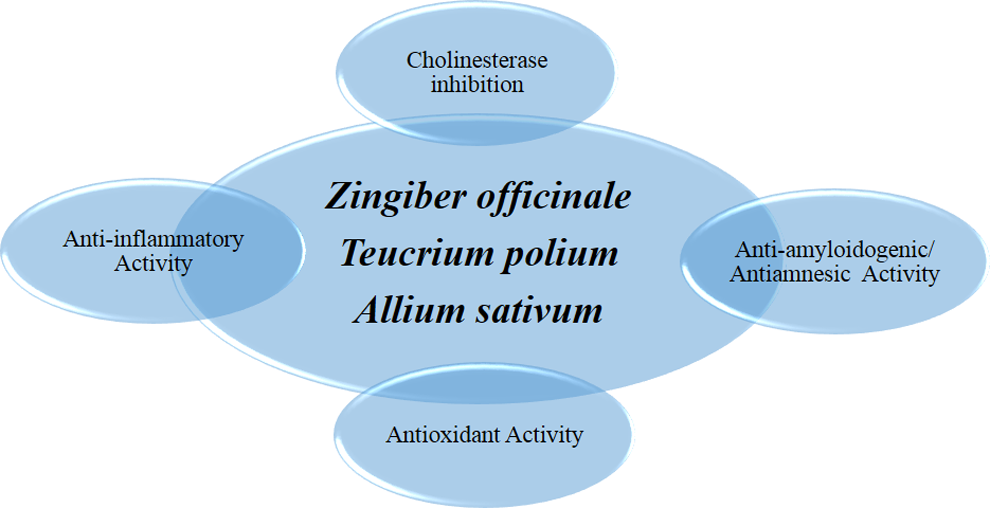
Schematic view of lead natural medicament possessing all suggested activities.
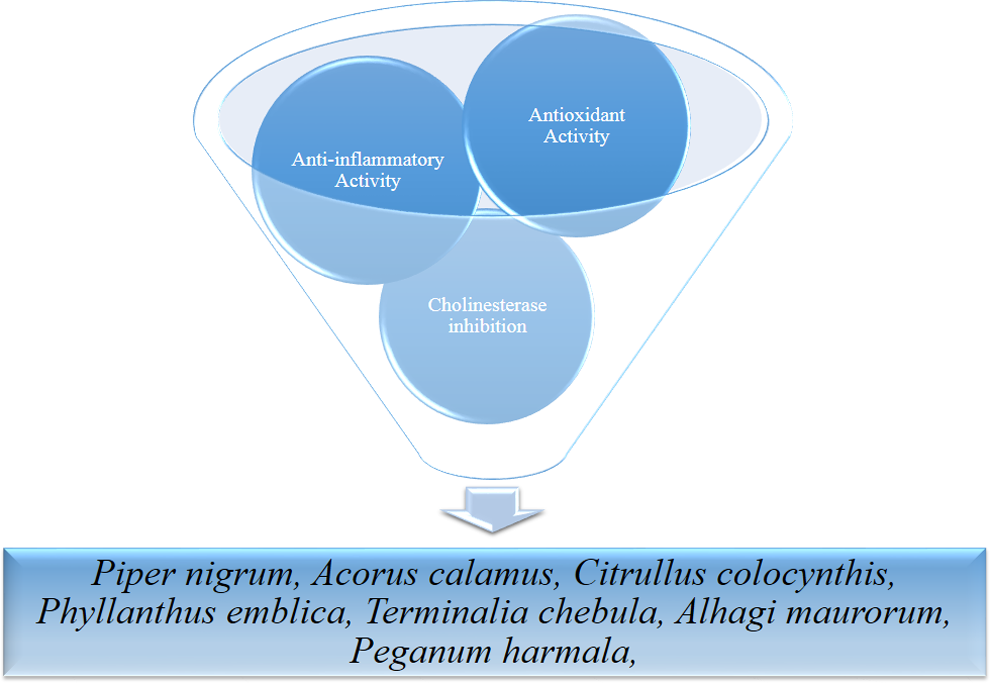
Schematic view of lead natural medicament possessing 3 out of all suggested.
Despite much effort being invested by scientists to discover new drugs for the treatment of AD, there is no effective medicine for this disease yet. Even though many compounds are undergoing investigation, only a few show significant effects in clinical trials. Traditional systems of medicine contain valuable information on medication used by our ancestors. In this work, we introduced promising candidates in TPM that could undergo an investigation for the identification of their active compounds and clinical validation in the treatment of AD.
Footnotes
Declaration of Conflicting Interests
The authors declared no potential conflicts of interest with respect to the research, authorship, and/or publication of this article.
Funding
The authors received no financial support for the research, authorship, and/or publication of this article.