




Abstract
Purpose:
Diabetes is a high risk factor for dementia. Employing a diabetic rat model, the present study was designed to determine whether the content of
Methods:
Diabetes was induced by a single intravenous injection of streptozotocin (STZ). The insulin treatment began 3 days after STZ injection.
Results:
We found that both water maze learning and hippocampal CA1 long-term potentiation (LTP) were impaired in diabetic rats. The contents of glutamate,
Conclusions:
These results suggest that insulin treatment has a potent protection effect on CA1-LTP, spatial learning and memory ability of the diabetic rats in vivo. Furthermore, insulin may take effect by inhibiting the overactivation of N-methyl-
Introduction
Type 1 diabetes mellitus is caused by the destruction of insulin-producing β cells of the pancreas. Type 1 diabetes mellitus can lead to cognitive impairments both in humans 1,2 and in animals. 3 Although several factors such as vascular complications, metabolic disturbances, and the release of free radicals are implicated in the pathogenesis of cognitive impairment, the mechanisms underlying these complications are not fully understood.
Long-term potentiation (LTP), a persistent and activity-dependent increase in synaptic strength, is widely regarded as a cellular mechanism underlying learning and memory. 4,5 The phenomenon of LTP at hippocampal CA3-CA1 synapses, called CA1-LTP, is intensively used as an experimental model for studying cellular underpinnings of learning in mammals. 5,6 Different lines of evidence corroborate that CA1-LTP also occurs naturally in the brain and, at least in several mammalian species, is essential for the acquisition of spatial memories. 5,7
Activation of the N-methyl-
Apart from the physiological aspects of NMDA’s functions, studies have also demonstrated remarkable protective effects of the glycine site antagonists against NMDA receptor-mediated neuronal injury both in vitro 13 and in vivo, 14 indicating that overactivation of NMDA receptors can be harmful to neurons. 15
The previous studies have proved that streptozotocin (STZ)-induced diabetes rats exhibited impaired CA1-LTP in vivo and severe deficits in spatial learning and memory. Further, treatment with insulin may prevent those impairments in STZ-induced diabetic rats.
16,17
In the present study, we sought to investigate whether the impairment of spatial learning and memory in STZ-induced diabetic rats are associated with an inappropriate activation of NMDA receptor, such as
Material and Methods
Animals
Six-week-old male Sprague-Dawley rats (starting weight: 190-210 g) were purchased from Department of Liaoning Medical University (LMU) and were housed 2 rats per cage in an air-conditioned (humidity 50%-60%) and temperature-controlled (22°C ± 1°C) room under 12-hour light/12-hour dark cycle, with free access to food and water throughout the experiments. Rats were weighed weekly. We used male rats exclusively to minimize any potential variability due to sex-specific effects in behavioral performance. Every effort was made to minimize the used animal number and their suffering. The Animal Care and Use Committee of LMU approved all procedures.
Animal Model of Diabetes and Treatment
Rats were fasted the night before drug administration and injected by caudal vein at a single dose of STZ (Sigma, Chaoyan District, Beijing, china 50 mg/kg of body weight) dissolved in citrate buffer (0.1 M, pH 4.2) or citrate buffer only. Rats administered with citrate buffer were grouped as control (CON) animals (n = 10). Seventy-two hours after the STZ injection, blood glucose was determined in blood samples, obtained by tail prick, by a strip-operated blood glucose sensor (Onetouch Ultraeasy, Ningbo Qihao International Trade Co., Ltd). In all STZ-injected animals, blood glucose levels were >15.0 mmol/L and defined as diabetic rats. 17,18 The diabetic rats were then randomly divided into 2 groups: an untreated diabetic group (n = 9) and an insulin-treated diabetic (INS) group (n = 8). Insulin treatment was initiated directly after confirmation of diabetes and continued throughout the experiment. Insulin was administered through subcutaneous sustained release insulin implants at a dose ∼3 U/24 hour (Linplant; LinShin Canada, Canada). The inserted implants were removed at 48 days after insertion and new implants were inserted at once. The treatment schedule and the intervals for estimation of various parameters are illustrated in Figure 1. At 81 days after STZ injection, the rats were trained in water maze paradigm for spatial learning analysis and measured for LTP before killing for hippocampus preparation.
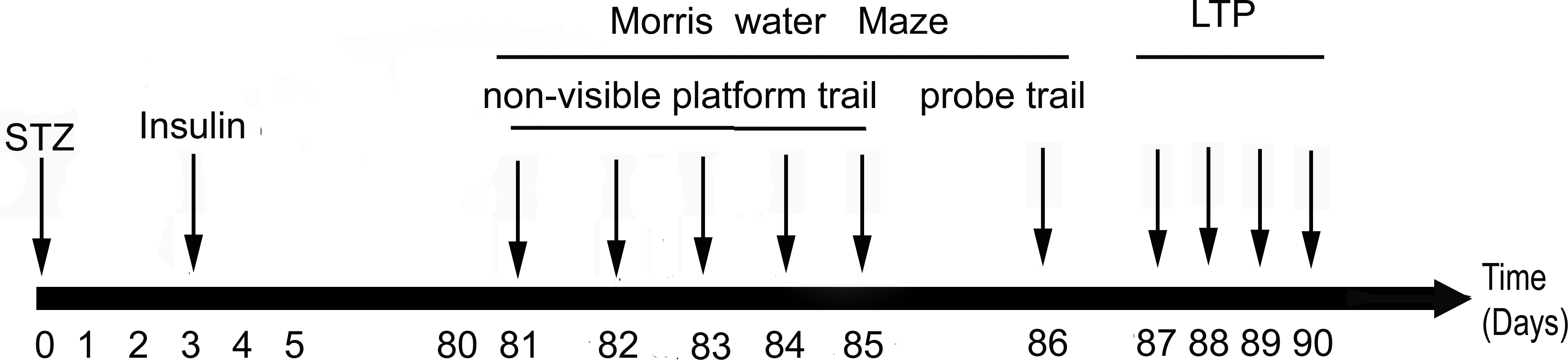
The design of the treatment schedule and intervals of various parameters.
Morris Water Maze
At 81 days after the STZ injection, rats were subjected to the Morris water maze test to analyze cognitive function as previously reported. 19 All experiments were carried out in a quiet, dimly lit room with larger designs in visible areas around severed as distal cues. Rat swam in a circular pool (2.1 m diameter, 0.8 m high) filled with 25°C ± 1°C water made opaque by polystyrene foam. Within the pool, a submerged platform (transparent, round, 8 cm diameter, 1 cm below surface) was hidden at the midpoint of 1 quadrant, and the location of the platform remained constant throughout training. The rat could climb on the platform to escape from the necessity of swimming.
During in nonvisible platform trial, each rat was placed on the platform for 20 seconds before being placed in 1 of the 3 remaining quadrants. The animals were left in the pool facing the wall and allowed to swim freely to the escape platform. The rat was given a maximum of 120 seconds to find the hidden platform and allowed to stay on it for 30 seconds. Rats that failed to locate the platform were put onto it by the experimenter. The animals were given acquisition trials on 5 consecutive days.
Following the 5-day training session, a probe trail was performed, in which the platform was removed and animals were allowed to search in the pool for 60 seconds. Measure the amount of time that the subject spent searching in each quadrant.
The swimming path and the escape latency (time to reach the platform) were recorded in real time by video camera assisted with Microcomputer Running Maze Software (Institute of Materia Medica, Chinese Academy of Science). The mean escape latency and the percentage of time spent in the platform quadrant were calculated and used for statistical analysis.
Induction and Maintenance of CA1-LTP in Vivo
Urethane anesthetized rats were positioned in a stereotaxic instrument (−3 mm bite bar) and maintained at 37°C ± 1°C with a hot water heating pad. A concentric bipolar stimulating electrode was placed on Scherffer/Commissural collateral (3.8 mm posterior to bregma, 3.8 mm lateral to the midline, and 3.8 mm ventral). A glass micropipette recording electrode (3-5 µm tip diameter, 3 MΩ; 3.8 mm posterior to bregma, 1.8 mm lateral to the midline) was lowered into the dendrites of CA1 pyramidal until the maximal response was observed (2 mm ventral). The glass micropipettes filled with 3M KCl were used for extracellular recordings.
In order to determine the optimal placement of the stimulating and recording electrodes, constant-current cathode pulses of 0.1-millisecond duration were delivered every 10 seconds through the stimulating electrode as test stimuli before the formal experiment. Final positions of the stimulating and recording electrodes were confirmed by maximizing the amplitude of the field potential recorded in the CA1 region. Once the position of the electrodes was verified, recordings were allowed to stabilize for 30 minutes prior to the experiment. Baseline responses were recoding following the delivery of test stimulus every 60 seconds. The intensity of test stimulus current was adjusted at an intensity yielding 40% of the maximal amplitude of population spike (PS). The PS amplitude is measured by taking the distance between the negative minimum and the point that corresponds to the projection of the minimum on the line joining the 2 positive peaks. The LTP was induced by a train of high-frequency stimulation (HFS, 1 seconds 100 Hz stimulation). The PS was measured for 60 minutes after application of tetanic stimulation. The definition of LTP was regarded as 20% increase in amplitude of the average responses and lasted for 60 minutes. 17,20
Sample Preparation
After the completion of LTP determination, hippocampus was harvested and put it into liquid nitrogen immediately, then transferred to −80°C refrigerator till used.
Measurement of d -Ser Levels
The simultaneous determination of the
The resultant sample was derivatized with N-tertbutyloxycalbonyl-
Western Blotting Analysis of SR in Hippocampus
The hippocampus was sonicated briefly in ice-cold buffer. Following sonication, the soluble extract was obtained by centrifugation at 10 000g at 4°C 30 minutes. Protein concentration in the soluble was then measured using a Bradford assay, with bovine serum albumin as the standard. Protein of 20 mg for each sample was loaded in 10% sodium dodecyl sulfate–polyacrylamide gels. Blots were incubated with an SR rabbit polyclonal antibody (Santa Cruz biotechnology, Pudong New District, Shanghai, china), followed by incubation with horseradish peroxidase-linked goat antirabbit immunoglobulin G, and developed using enhanced chemiluminescence. 23 Densitometric analysis of serine racemes (SR) was conducted using (Image J software, Wayne Rasband, National institutes of Health, USA) as described. 24,25
Statistical Analysis
SPSS 16.0 software (SPSS Co, Ltd, Armonk, New York) was used to carry out all statistical analysis. Summary data are presented as group means ± standard deviation. The difference in measurement data among groups was analyzed using 1-way analysis of variance followed by Dunnett test when F was significant. P < .05 was considered significant statistically.
Results
Effect of the Insulin Treatment on the Body Weight and Blood Glucose in Diabetic rats
To verify the adverse effects of the diabetic model, we measured body weight and glucose levels of the blood plasma. Our results showed that, in contract to the citrate buffer-injected CON animals (CON group), the rats in the STZ-injected DM group failed to gain weight, and their body weight was significantly lower at the end of the experiment (P < .05; Table 1). In the INS rats group, the rats showed near-normal weight gain, and their final body weights were close to those of the CON group. Meanwhile, DM rats were developed with abnormally high blood glucose level compared to CON rats, whereas blood glucose level in the INS rats was relatively stable and close to those in CON group (P > .05; Table 2).
Effect of Insulin on Body Mass in Diabetes Mellitus (DM) Rats.a
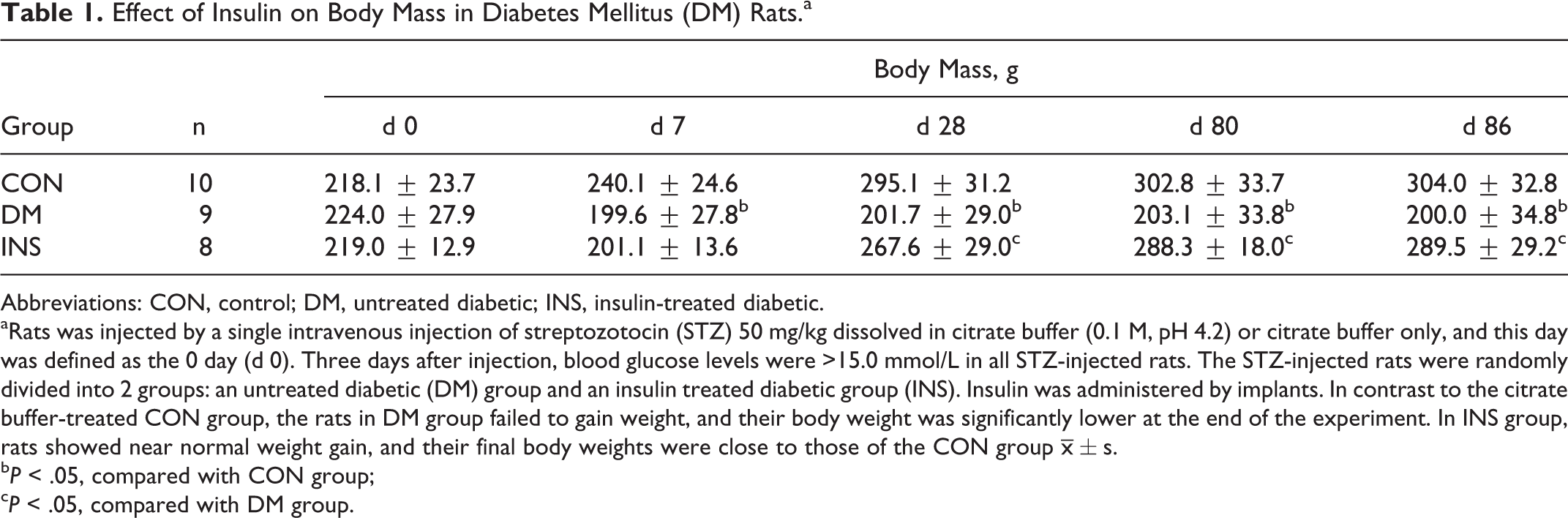
Abbreviations: CON, control; DM, untreated diabetic; INS, insulin-treated diabetic.
aRats was injected by a single intravenous injection of streptozotocin (STZ) 50 mg/kg dissolved in citrate buffer (0.1 M, pH 4.2) or citrate buffer only, and this day was defined as the 0 day (d 0). Three days after injection, blood glucose levels were >15.0 mmol/L in all STZ-injected rats. The STZ-injected rats were randomly divided into 2 groups: an untreated diabetic (DM) group and an insulin treated diabetic group (INS). Insulin was administered by implants. In contrast to the citrate buffer-treated CON group, the rats in DM group failed to gain weight, and their body weight was significantly lower at the end of the experiment. In INS group, rats showed near normal weight gain, and their final body weights were close to those of the CON group
b P < .05, compared with CON group;
c P < .05, compared with DM group.
Effect of Insulin on Blood Glucose in DM Rats.a
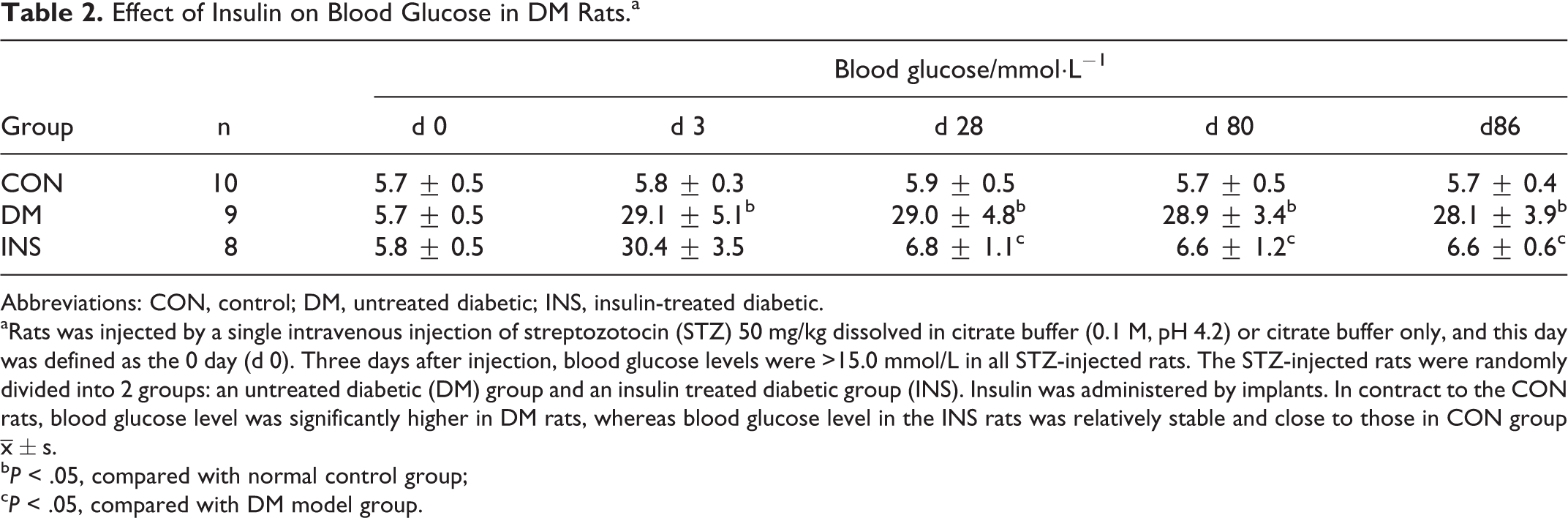
Abbreviations: CON, control; DM, untreated diabetic; INS, insulin-treated diabetic.
aRats was injected by a single intravenous injection of streptozotocin (STZ) 50 mg/kg dissolved in citrate buffer (0.1 M, pH 4.2) or citrate buffer only, and this day was defined as the 0 day (d 0). Three days after injection, blood glucose levels were >15.0 mmol/L in all STZ-injected rats. The STZ-injected rats were randomly divided into 2 groups: an untreated diabetic (DM) group and an insulin treated diabetic group (INS). Insulin was administered by implants. In contract to the CON rats, blood glucose level was significantly higher in DM rats, whereas blood glucose level in the INS rats was relatively stable and close to those in CON group
b P < .05, compared with normal control group;
c P < .05, compared with DM model group.
Effect of the Insulin Treatment on the Spatial Learning in Diabetic Rats
Morris water maze is regarded as a typical instrument to evaluate cognitive abilities of rodents. The hidden platform acquisition could reflect the function of hippocampus, 21 and hippocampus-dependent spatial learning and memory of animals are frequently investigated in the water maze. 26 To test whether the DM would affect spatial learning and memory function in rats, we performed Morris water maze tests.
In the nonvisible trials, we observed that the rats in DM group took a longer time to find the platform on training days 3, 4, and 5 compared with rats in the CON group (Table 3). In the probe trials, DM group rats spent less time in the target quadrant compared with CON group rats (Table 3), and these differences were statistically significant (P < .05). There are no differences in nonvisible trials and the probe trials between CON and INS groups. We also found that the swimming speed was indistinguishable among 3 groups, so the performance deficit was unlikely to be due to motivational factors or sensorimotor deficits.
Effect of Insulin on Escape Latencies and Percentage of Time Spent in Target Quadrant of DM Rats.a
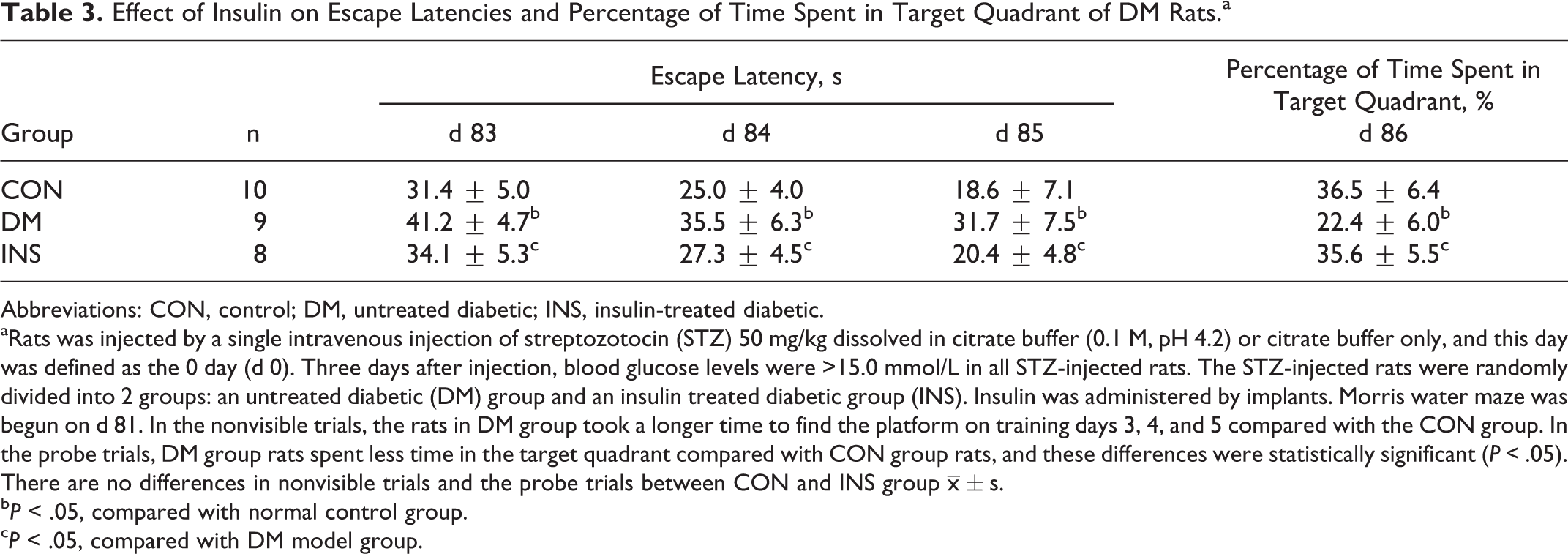
Abbreviations: CON, control; DM, untreated diabetic; INS, insulin-treated diabetic.
aRats was injected by a single intravenous injection of streptozotocin (STZ) 50 mg/kg dissolved in citrate buffer (0.1 M, pH 4.2) or citrate buffer only, and this day was defined as the 0 day (d 0). Three days after injection, blood glucose levels were >15.0 mmol/L in all STZ-injected rats. The STZ-injected rats were randomly divided into 2 groups: an untreated diabetic (DM) group and an insulin treated diabetic group (INS). Insulin was administered by implants. Morris water maze was begun on d 81. In the nonvisible trials, the rats in DM group took a longer time to find the platform on training days 3, 4, and 5 compared with the CON group. In the probe trials, DM group rats spent less time in the target quadrant compared with CON group rats, and these differences were statistically significant (P < .05). There are no differences in nonvisible trials and the probe trials between CON and INS group
b P < .05, compared with normal control group.
c P < .05, compared with DM model group.
On examination of the eyes, 7 of the 9 rats from the DM group had no evidence for cataract, and the other 2 rats had a unilateral cataract. There were no apparent differences in performance between diabetic rats with or without cataract. Previous studies in nondiabetic rats also show that impaired visual acuity does not invariably affect maze performance. Rats in which 1 eye is occluded perform as well as rats with binocular vision. 27 Moreover, even blind rats learn to locate the platform, although their performance can be slightly impaired as compared to CONs. 28
These results indicate that spatial learning and memory were significantly impaired in the diabetic rats, and insulin treatment could prevent such impairments and maintained the cognitive ability at normal level. These results are consistent with previous report. 29
Effect of the Insulin Treatment on the CA1-LTP of Hippocampus In Vivo
In vivo electrophysiological analysis within distinct subregions is an elegant strategy that permits both evaluation of synaptic plasticity together with network properties, where the contribution of the native neuronal circuitry is intact. 30 Using this approach, we investigated the effect of insulin treatment on CA1-LTP in diabetic rats.
Prior to the induction of LTP by HFS, PS amplitudes, which represent the baseline synaptic transmission, were examined. The average PS amplitude evoked by single pulse before HFS was 1.41 ± 0.02, 1.27 ± 0.04, 1.39 ± 0.02 mV in CON, DM, and INS, respectively (Figure 2A). There were no significant baseline differences among those groups.
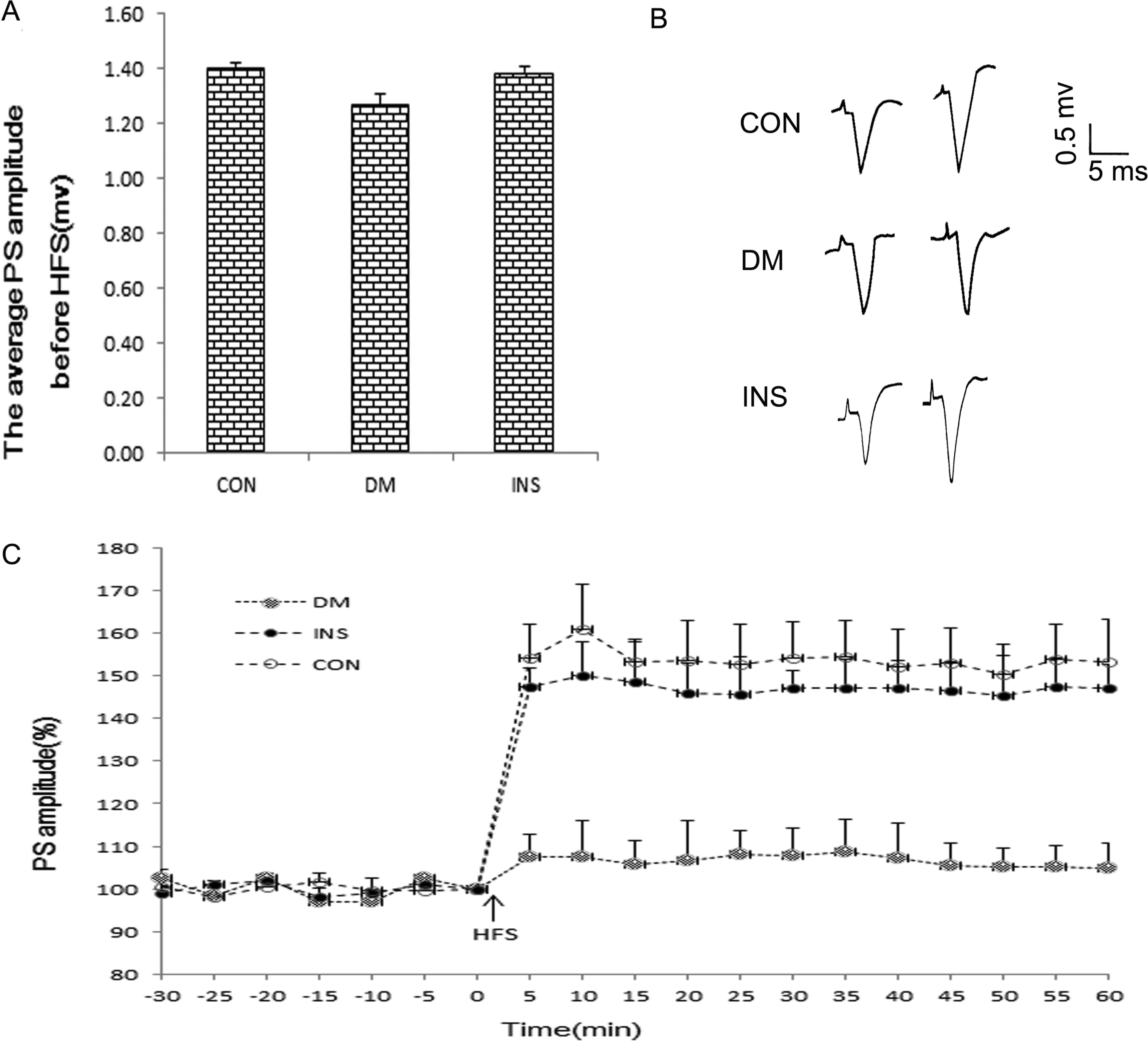
Effects of insulin treatment on the LTP in diabetic rats. A, The average PS amplitude evoked by single pulse before HFS (n = 6). B, The representative waveforms of PS amplitude before and after HFS in CA1 region of hippocampus. C, The time trends of the PS potentiation rate before and after HFS (n = 6). Baseline responses were recoding following the delivery of test stimulus every 60 seconds, checking the stability for 30 minutes. The LTP was induced by 1 seconds 100 Hz stimulation. The PS was measured for 60 minutes after application of tetanic stimulation. HFS indicates high-frequency stimulation; LTP, long-term potentiation; PS, population spike.
The effects of insulin treatment on the change in PS before and after HFS were examined. In DM group, the PS had no significant change compared with its baseline. In both the CON and the INS groups, the PS was significantly higher than its baseline after HFS (Figure 2B and C), and those changes can sustain at least for 60 minutes. These results showed that expression of CA1-LTP was significantly impaired in the DM rats when compared to the CON and INS group and that there were no distinguishable difference between CON and INS group.
Insulin Treatment Inhibits the Increase in d -Ser and Glutamine in the Hippocampus of Diabetic Rats
High-performance liquid chromatography analysis demonstrated a substantial increase in
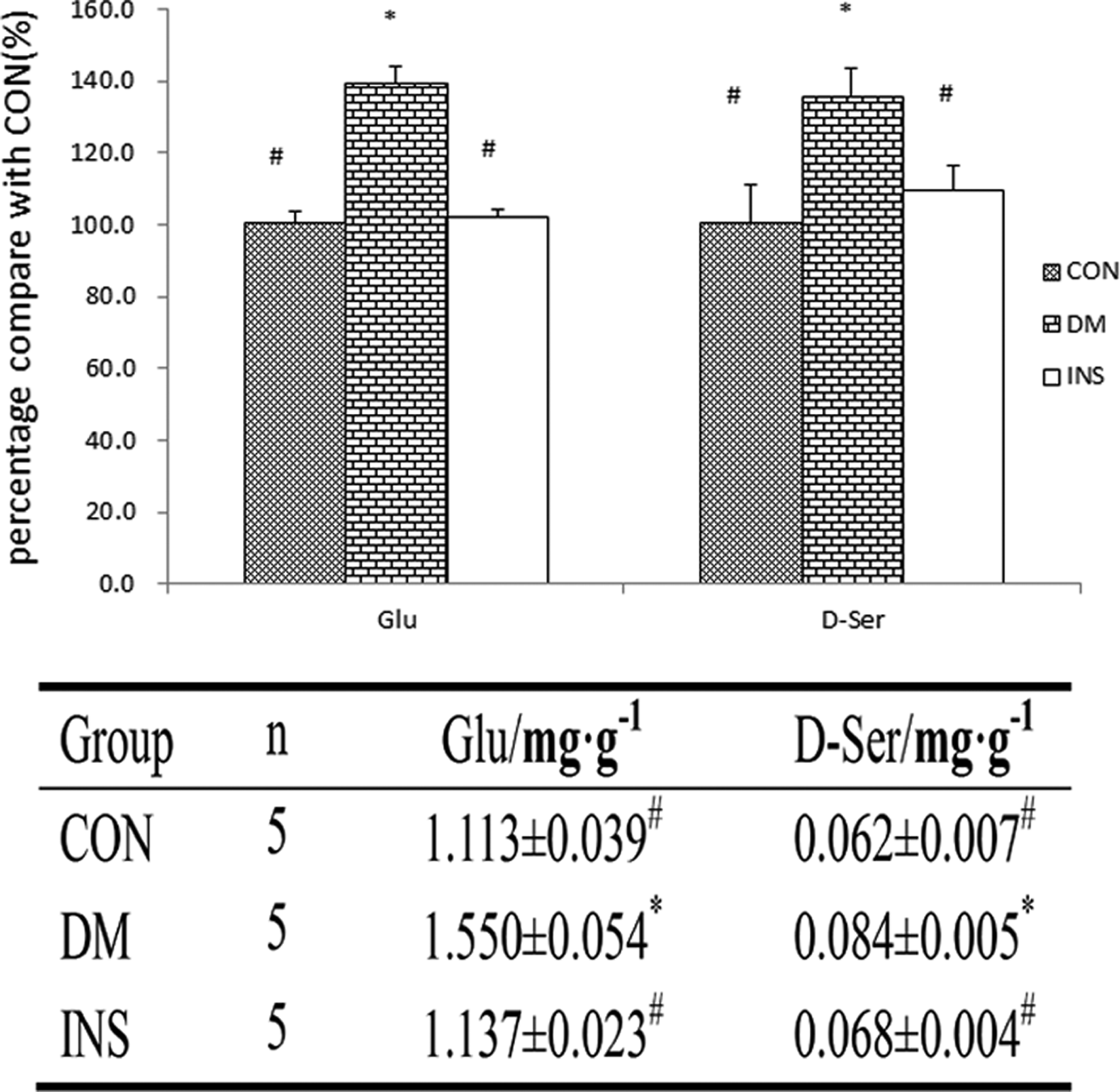
Effect of insulin on levels of glutamate (Glu),
Insulin Treatment Inhibits the Increase in SR in the Hippocampus of Diabetic Rats
The
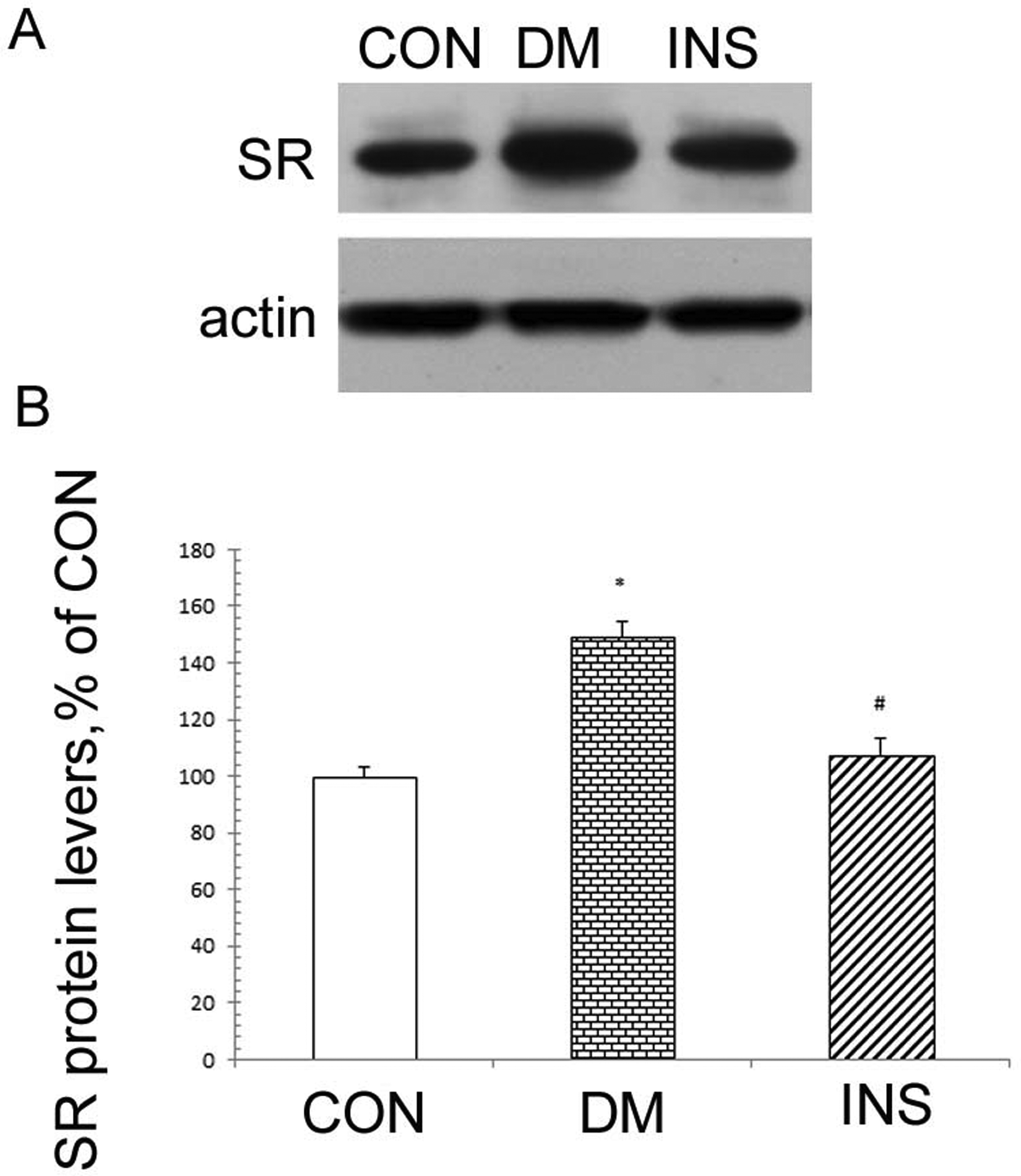
Western bolt analysis of hippocampal SR protein levels in CON rats, DM rats and INS rats. A, The SR was detected as a single band at 37 kDa in hippocampal fractions isolated from control rats (CON), streptozotocin (STZ)-injected diabetic rats (DM), and insulin-treatment rats (INS). The SR was increased in DM and was restored back to normal level after insulin treatment (INS). B, Quantitative analysis of hippocampal SR protein levels (n = 3). *P < .05, compared with normal control group; # P < .05, compared with DM model group. DM indicates diabetes mellitus; SR, serine racemes.
Discussion
In the present study, we used a single-dose injection of STZ to induce diabetes in a rat model. The diabetogenic action of STZ is mediated through a reduction in NAD levels and formation of intracellular free radicals in the insulin-producing β cells of the isles of Langerhans. Streptozotocin is mainly taken up into the cell via the glucose transporter 2, which is absent at the blood–brain barrier; therefore, STZ itself does not affect the brain following intravenous administration. 31 In our experiments, we found that cognitive ability was significantly impaired in diabetic rats, as demonstrated by both water maze (Table 3) and hippocampal CA1-LTP (Figure 2), whereas insulin treatment could prevent such functional impairments. These results are consistent with previous report. 17 Previous studies have suggested that LTP-like forms of hippocampal synaptic plasticity is related to spatial learning and memory. 8,32,33 In the present study, both diabetes and insulin treatment consistently had parallel effects on water maze learning and hippocampal LTP.
Activation of NMDARs is a well-studied pathway for the induction of LTP.
4,5
Because levels of
We also notice a report where the authors found that hippocampal
Conclusions
Insulin treatment can prevent the impairment of spatial learning and memory ability in STZ-induced diabetic rats. The mechanisms of insulin function are related to prevent the content of SR increase and finally result in maintenance of the content of
Footnotes
Authors’ Note
The authors alone are responsible for the content and writing of the article.
Declaration of Conflicting Interests
The authors declared no potential conflicts of interest with respect to the research, authorship, and/or publication of this article.
Funding
The authors disclosed receipt of the following financial support for the research, authorship, and/or publication of this article: This work was supported by the grant No.