




Abstract
Background:
Cancer is associated with genetic variants of DNA repair genes that alter DNA repair capacity. The aim of this meta-analysis was to evaluate the relations between the rs13181 and rs1799793 XPD gene polymorphisms and risk for hepatocellular carcinoma (HCC) and gastric cancer.
Methods:
Relevant publications were systematically sought from Web of Science, Pubmed, and China Academic Journals Full-text Database. The selection of eligible studies was performed by 2 independent authors. A total of 32 case-control studies were included. Meta-analyses were undertaken in all study participants and each ethnic group.
Results:
The risk of HCC was significantly increased with the XPD rs13181 G allele (P = 0.028, pooled odds ratio (OR) = 1.36, 95% confidence interval (CI) = 1.03-1.80) in all study participants. A subgroup analysis by ethnicity showed that the association was significant in Chinese (P = 0.009, pooled OR = 1.49, 95% CI = 1.11-2.02), but not in Caucasians (P = 0.619, pooled OR = 1.17, 95% CI = 0.64-2.13). Meta-analysis of the XPD rs1799793 polymorphism and HCC showed an association between its variant T allele and increased HCC risk in all study participants (P = 0.017, pooled OR = 1.23, 95% CI = 1.04-1.46, all Chinese). Our results showed no associations between the XPD rs13181 G allele and rs1799793 T allele and gastric cancer risk (rs13181: P = 0.298, pooled OR = 1.10, 95% CI = 0.92-1.31; rs1799793: P = 0.068, pooled OR = 1.31, 95% CI = 0.98-1.74).
Conclusions:
This meta-analysis demonstrated that the XPD rs13181 G allele and rs1799793 T allele have significant associations with HCC and may be risk factors for HCC in the Chinese population. Current evidence indicated that they are not related to gastric cancer risk.
Introduction
Repair of genetic damage is important for humans to prevent multiple diseases including cancer. A large body of research has repeatedly shown that there is inter-individual variation in capacity for DNA repair and individuals with reduced DNA repair capacity are more vulnerable to developing cancer. 1 Therefore, genetic variants of DNA repair genes that alter DNA repair capacity are considered to have a significant influence on individual predisposition to cancer. The Xeroderma pigmentosum complementation group D (XPD, also known as ERCC2) gene encodes an adenosine triphosphate-dependent DNA helicase mediating DNA unwinding in the 5’-3’ direction. 2 The enzyme plays a vital role in the nucleotide excision repair (NER) pathway, 2 which is the major DNA repair pathway for removing bulky DNA lesions caused by environmental carcinogens, compounds, and oxidative stress. Researchers have identified several XPD polymorphisms in the coding regions, including a change of lysine to glutamine in codon 751 (Lys751Gln, rs13181) and a transition of aspartic acid to asparagine in codon 312 (Asp312Asn, rs1799793). 3 The Gln allele of XPD rs13181 and the XPD rs1799793 Asn allele have been associated with reduced NER capacity. Since XPD is an important gene for DNA repair, the association between XPD polymorphisms and cancer risk is of particular interest.
Hepatocellular carcinoma (HCC) and gastric cancer are 2 common types of digestive system cancer, which cause severe morbidity and mortality worldwide. Emerging evidence suggests that defects in the DNA repair mechanisms are implicated in the initiation and progression of HCC and gastric cancer. 4,5 Accordingly, a number of studies have evaluated the association of polymorphisms in the DNA repair genes, especially XPD rs13181 and rs1799793, with the risk of HCC and gastric cancer. However, some studies have found associations with increased risk of these cancers, while some others have not. Therefore, the purpose of this study was to systematically evaluate the published studies and offer an updated analysis of the association of XPD rs13181 and rs1799793 polymorphisms with the risk of HCC and gastric cancer.
Methods
Included Studies
We searched Pubmed, Web of Science and China Academic Journals Full-text Database to identify all studies reporting the genotypes of XPD rs13181 and rs1799793 among patients with HCC or gastric cancer. The search terms were XPD or Xeroderma pigmentosum complementation group D; genetic polymorphism or gene; HCC, hepatocellular carcinoma, liver cancer or gastric cancer. Since an online database search might miss relevant published studies, the references of important review articles in the field were also screened. The studies meeting the following criteria were included: a) original case-control studies that assessed the XPD rs13181 and rs1799793 polymorphisms and risk of HCC or gastric cancer; and b) sufficient data were provided for meta-analytic comparison.
Data Extraction and Study Quality Assessment
This process was performed by 2 authors (QZ and YF) using a data-collecting form. The data extracted included year of publication, family name of the first author, ethnicity of the studied sample, region or country where the studied was performed, case group number, control group number, age, variant type of the XPD polymorphisms, methods used for detecting the variant, allele distribution and major findings of the study. In the process of data extraction, any discrepancies between the 2 authors were resolved by mutual consensus. The Newcastle-Ottawa Scale (NOS) is one of the most frequently used method to evaluate the quality of non-randomized studies in meta-analysis, which contains 3 major domains including selection, comparability, and exposure. The quality of each study was assessed using the NOS. Studies with ≥5 scores were considered as high quality studies.
Meta-Analysis Methods
All the meta-analyses were performed using the STATA software. Between-study heterogeneity was evaluated with the I2 statistic. I2 values > 50% suggest high heterogeneity. 6 As an effect measure, a pooled odds ratio (OR) and its 95% confidence interval (CI) were calculated to evaluate the association between the XPD polymorphisms and risk of HCC or gastric cancer. Random- or fixed-effects models were used for the calculation. A pooled OR > 1 indicates an increased risk. The Z-test was used to test the significance of the pooled OR. We used funnel plots to graphically evaluate publication bias and conducted the Egger test to quantify funnel plots’ asymmetry. 7 The significant results of meta-analyses were verified using trial sequential analysis (TSA) and false positive report probability (FPRP) test. 8
Results
Study Characteristics
Figure 1 shows the literature inclusion and exclusion process using a flow diagram. We identified 329 studies meeting the search criteria in total. One hundred forty-two duplicates were removed after screening the titles. One hundred forty-six irrelevant studies that did not meet the inclusion criteria were excluded after carefully evaluating the abstracts. These steps left 41 articles for full-text evaluation. In the end, 32 studies were included in the meta-analyses: 15 studies evaluated the association between XPD polymorphisms and HCC risk, 9 -23 and 19 studies examined the relation of XPD polymorphisms with gastric cancer risk. 16,23 -40 The basic information of the included studies was shown in Tables 1 and 2. Regarding study origin, China was the most common country. The other countries were mainly from Europe and Asia, including Poland, Italy, Sweden, Spain, Turkey, India and Pakistan. Allele distribution of the XPD polymorphisms was shown in Supplemental Tables 1 and 2.

Flow diagram for identification of studies.
Basic Information of the Included Studies for HCC.
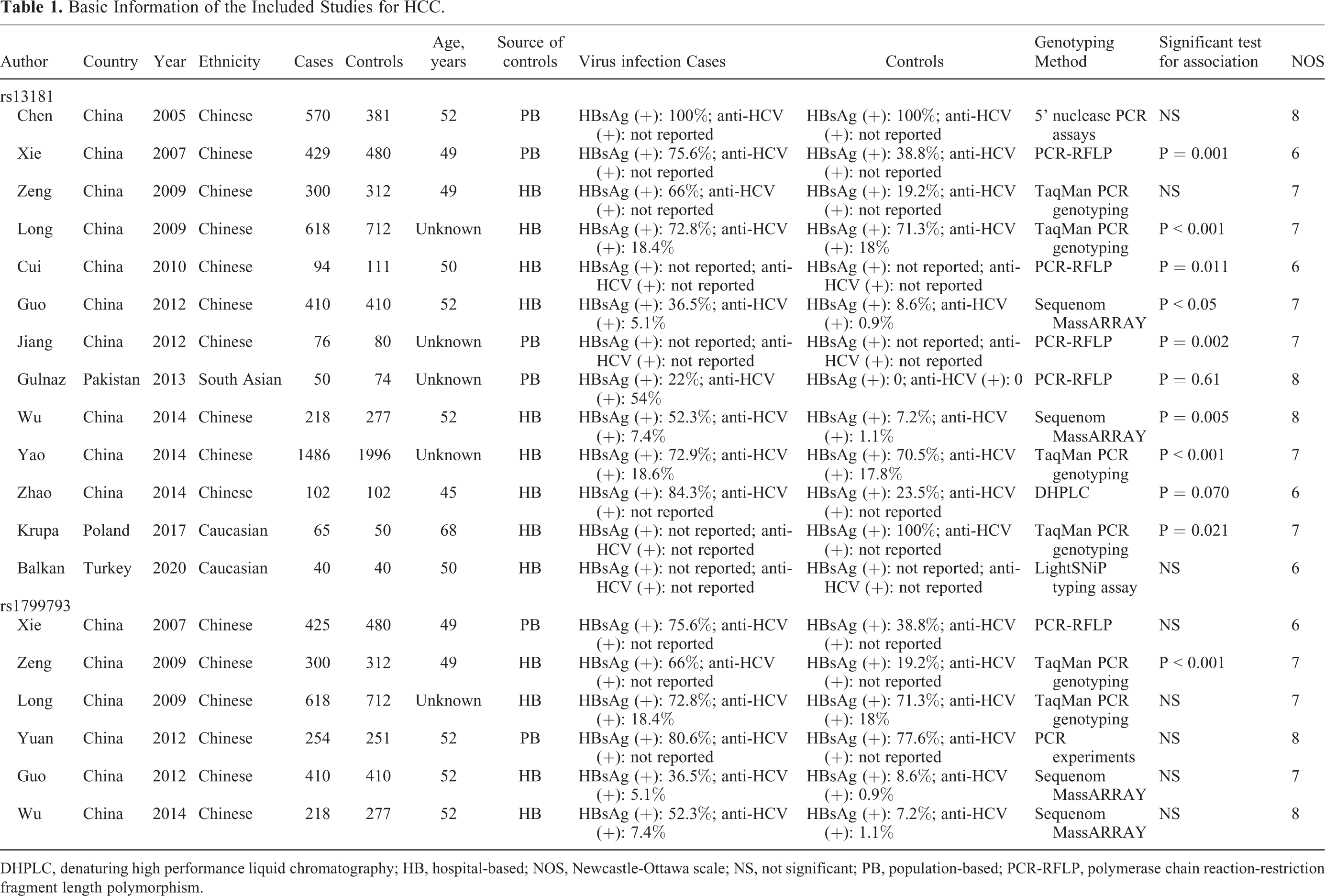
DHPLC, denaturing high performance liquid chromatography; HB, hospital-based; NOS, Newcastle-Ottawa scale; NS, not significant; PB, population-based; PCR-RFLP, polymerase chain reaction-restriction fragment length polymorphism.
Basic Information of the Included Studies for Gastric Cancer.
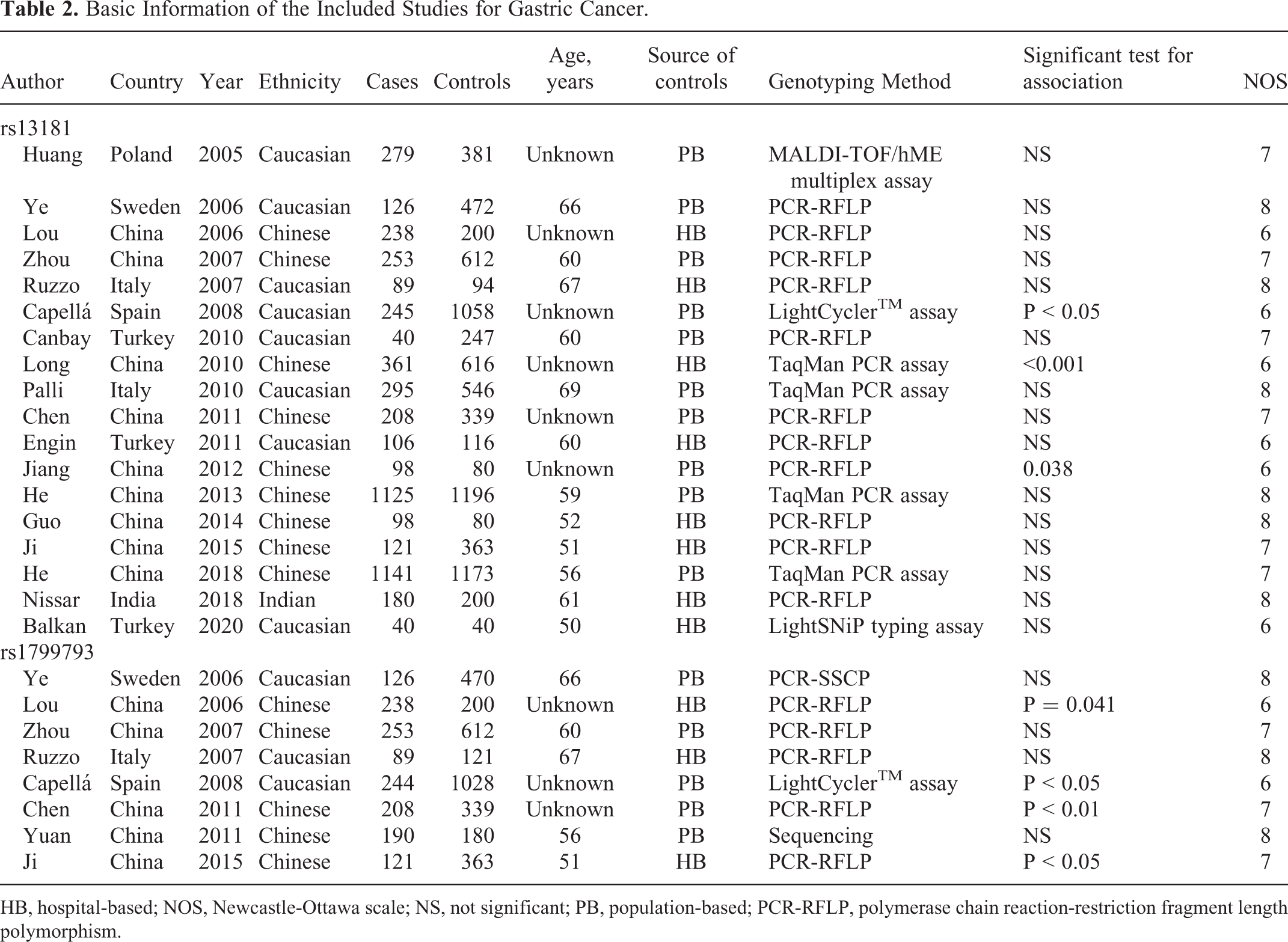
HB, hospital-based; NOS, Newcastle-Ottawa scale; NS, not significant; PB, population-based; PCR-RFLP, polymerase chain reaction-restriction fragment length polymorphism.
Meta-Analyses Results
After conducting a meta-analysis of 13 eligible studies, we found that the variant G allele of XPD rs13181 polymorphism was significantly associated with an increased risk of HCC (P = 0.028, pooled OR = 1.36, 95% CI = 1.03-1.80; Figure 2). A subgroup analysis by ethnicity showed that this significant association only existed in Chinese (P = 0.009, pooled OR = 1.49, 95% CI = 1.11-2.02) but not in Caucasians (P = 0.619, pooled OR = 1.17, 95% CI = 0.64-2.13). Moreover, a pooled analysis of XPD rs1799793 polymorphism showed an increased risk of HCC with the T allele (P = 0.017, pooled OR = 1.23, 95% CI = 1.04-1.46; Figure 3). All of the eligible studies for XPD rs1799793 were done in Chinese HCC patients and controls.

Forest plot of HCC risk related to the G allele of XPD rs13181 polymorphism.
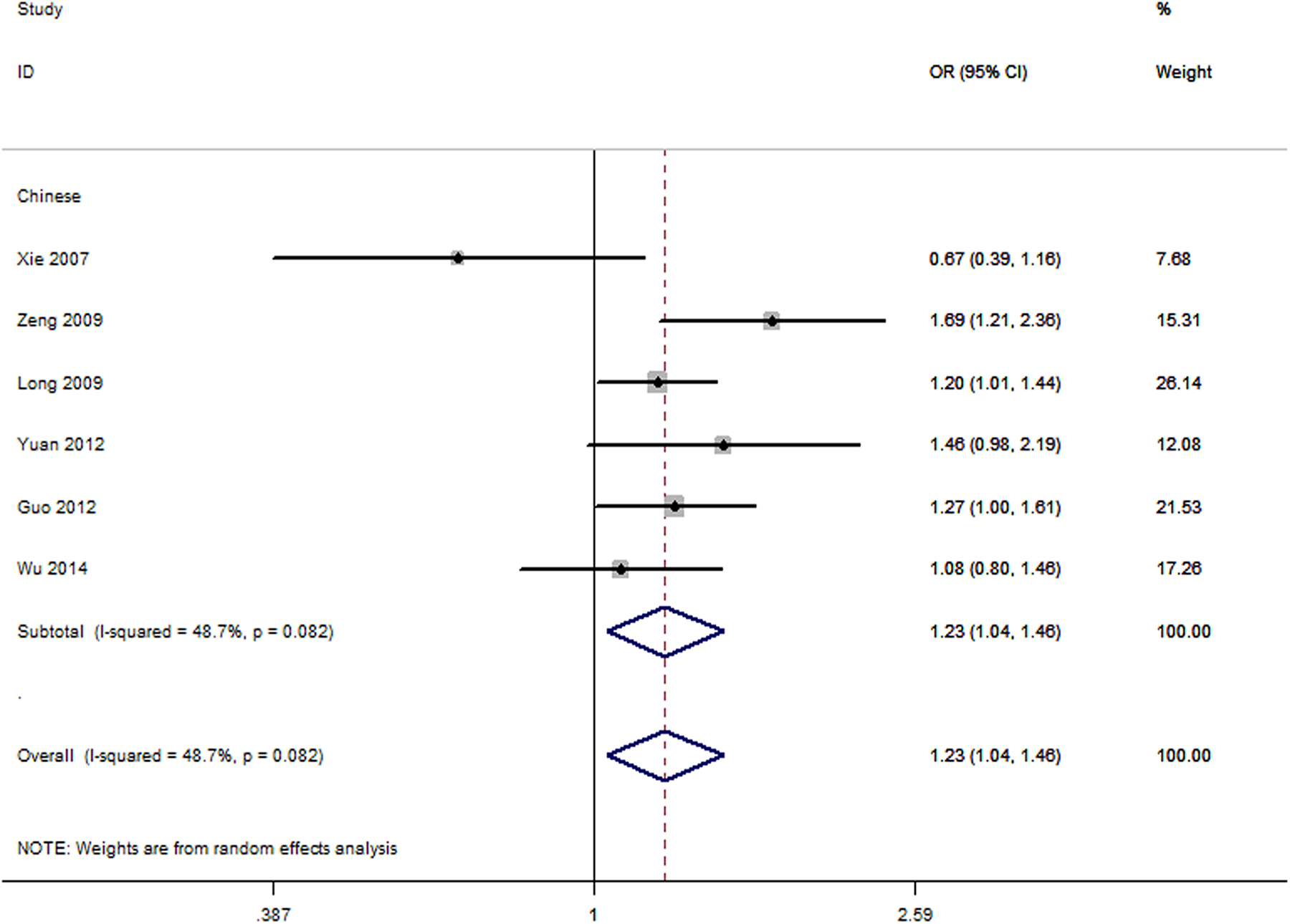
Forest plot of HCC risk related to the T allele of XPD rs1799793 polymorphism.
As shown in Table 3, a pooled evaluation of 18 eligible studies did not show statistically significant association between the XPD rs13181 G allele and gastric cancer risk (P = 0.298, pooled OR = 1.10, 95% CI = 0.92-1.31; Figure 4). In addition, our results did not support any significant association of the XPD rs1799793 T allele with gastric cancer (P = 0.068, pooled OR = 1.31, 95% CI = 0.98-1.74). Subgroup analysis of ethnicity did not show any significant results for the rs13181 G allele and rs1799793 T allele.
The Results for the Meta-Analyses Evaluating HCC and Gastric Carcinoma.

CI, confidence interval; HCC, hepatocellular carcinoma; OR, odds ratio.

Forest plot showing no association between the XPD rs13181 G allele and gastric cancer risk.
Heterogeneity and Meta-Regression
Heterogeneity among studies that evaluated the XPD rs13181 G allele and HCC was very high (P = 0.000, I 2 = 90.5%). Therefore, we performed a meta-regression analysis to explore the factors associating with the heterogeneity. Sample size, ethnicity, source of control subjects (hospital-based or population-based) and year of publication were assessed in the meta-regression analysis. However, the results showed that these variables did not explain the heterogeneity (sample size: P = 0.173, ethnicity: P = 0.382, source of control subjects: P = 0.083, year of publication: P = 0.351).
TSA and FPRP Analysis
TSA analysis was performed using the TSA software (0.9.5.10 Beta version, Copenhagen, Denmark). For XPD rs13181 and HCC risk, the cumulative Z curve did not cross the the traditional boundary (Figure 5A), indicating that further relevant studies are needed to confirm the present findings. With respect to XPD rs1799793 and HCC risk, the cumulative Z curve crossed the traditional boundary, suggesting that the meta-analysis results were stable (Figure 5B). In addition, the FPRP values were calculated for these polymorphisms. With the assumption of a prior probability of 0.1, the FPRP values were noteworthy for XPD rs1799793 (<0.2) but not XPD rs13181 (>0.2), consistent with the results of TSA analysis.

Trial sequential analyses of the association of the XPD rs13181 and rs1799793 polymorphisms with HCC risk. (A) XPD rs13181; (B) XPD rs1799793.
Publication Bias
Visual evaluation of the funnel plots indicated no publication bias for studies evaluated the association between XPD polymorphisms and risk of HCC and gastric cancer (Supplemental Figures 1 and 2), because there was no significant asymmetry in these plots. Moreover, the P values of Egger test were > 0.05, suggesting the absence of publication bias.
Discussion
DNA repair capacity is critical to the maintenance of genomic stability and has long been suggested as a potential candidate modifying susceptibility to cancer. This meta-analysis was intended to evaluate 2 important polymorphisms of the DNA repair gene XPD, including rs13181 and rs1799793 and their contribution to the risk of HCC and gastric cancer. The main findings were that the variant G allele of XPD rs13181 and the variant T allele of XPD rs1799793 were associated with increased risk of HCC in Chinese populations (rs13181 G, OR = 1.49; rs1799793 T, OR = 1.23).
XPD is a key member of the human TFIIH complex. It is involved in basal transcription and the NER pathway. During NER, XPD participates in the DNA unwinding, which is one of the main NER steps. 2 Genetic defects in the XPD gene can lead to various human diseases including xeroderma pigmentosum, Cockayne syndrome and cancer through alterations of DNA repair capacity. 41 The XPD gene consists of 23 exons and several polymorphisms have been identified. The XPD rs13181 polymorphism (Lys751Gln) is one of the commonly identified genetic variant leading to amino acid substitution. It causes a non-synonymous substitution of lysine by glutamine in codon 751 (exon 23), which results in decreased DNA repair capacity. 23 An early meta-analysis performed by Peng and colleagues suggested that XPD rs13181 was associated with a statistically significant increased HCC risk. 42 Conversely, Wang et al found no significant association between XPD rs13181 and risk for HCC. 43 These early meta-analyses were done before 2015 and were limited by a small sample size. For example, the Wang et al’s meta-analysis only involved 4 studies. 43 A lack of statistical power could affect pooled analyses and influence the results.
Compared with them, this meta-analysis increased the statistical power and performed comprehensive subgroup analyses. Thirteen studies were included in this meta-analysis for evaluating XPD rs13181 and HCC risk. We concluded that the variant G allele of XPD rs13181 was associated with increased HCC risk in the Chinese ethnic group but not in Caucasians. It is not surprising that XPD rs13181 did not have associations with HCC in all ethnic groups. The genotype distribution of XPD rs13181 changes by geographical distance. The variant G allele frequency in Chinese was lower than that of Caucasians (14.8% vs 31.9%). Another reason is that, for Chinese, chronic infection with hepatitis B virus is the predominant risk factor of HCC, whereas hepatitis C virus infection is the most common infection that causes chronic liver disease including HCC in Caucasians. Low statistical power may also influence the results of subgroup analysis for Caucasians, because Caucasian studies used small sample sizes (105 cases and 90 control subjects). In this study, the XPD rs13181 association was also evaluated in different subgroup analyses considering covariates such as source of the control group. Hospital-based studies showed significant association between XPD rs13181 and HCC. With respect to XPD rs1799793, this meta-analysis found that it was associated with increased HCC risk in Chinese, which was consistent with an early meta-analysis by Yang et al 44 but contrasted with the results of Peng et al’s meta-analysis. 42
Gastric cancer is the third most common cancer worldwide. The established risk factors for gastric cancer included family history, Helicobacter pylori (H. pylori) infection, diet and smoking, but they were not enough to explain the risk of developing gastric cancer. For example, gastric cancer occurs only in a minority of H. pylori-infected subjects although high rates of H. pylori infection were reported in the general population. 45 Genetic variations in the DNA repair gene such as the XPD rs13181 and rs1799793 polymorphisms were postulated to have an impact on the risk of gastric cancer. In a hospital-based case-control study with 361 cases and 616 control subjects, Long et al observed that the XPD rs13181 G allele was associated with increased risk of gastric cancer in a southern Chinese population. 31 Jiang et al also reported a positive association between the XPD rs13181 polymorphism and gastric cancer. 16 With respect to the XPD rs1799793 polymorphism, the study by Lou et al showed increased gastric cancer risk associated with individuals who carried at least 1 variant T allele. 26 Ji et al found the T allele contributed to gastric carcinogenesis. 38 However, other Chinese studies reported no association between the XPD rs13181 and rs1799793 polymorphisms and gastric cancer, including Zhou et al, Chen et al, and He et al. 27,33,36 In addition, most Caucasian studies did not indicate any relationship between these XPD polymorphisms and gastric cancer. Thus, published studies yielded contradictory results. Several meta-analyses were performed to evaluate the published evidence in an early period. In 2012, Xue et al’s meta-analysis noted associations between the XPD rs13181 and rs1799793 polymorphisms and gastric cancer only in Chinese but not in Caucasians. 46 The results of Yin et al’s meta-analysis suggested a role of XPD rs1799793 in gastric cancer risk but did not find significant associations for XPD rs13181. 47 In line with Yin et al’s results, Du et al suggested a null effect of XPD rs13181 in the pathogenesis of gastric cancer. 48 Compared with these meta-analyses, we included 18 studies for XPD rs13181 and 8 studies for XPD rs1799793. It is worth mentioning that we included new evidence such as articles published in 2020. Our results showed no associations between the 2 XPD polymorphisms and gastric cancer in the overall analysis, Chinese and Caucasians.
Some limitations of this meta-analysis need to be addressed. Firstly, we only calculated crude ORs and 95% CIs. Although some selected publications reported adjusted ORs, there was considerable heterogeneity in the methods they used. So we did not combine these adjusted ORs in this meta-analysis. Secondly, the control group of some studies did not include healthy individuals but hepatitis patients. Thirdly, we did not perform subgroup analysis according to virus status, because only a few studies provided detailed information on HBV and HCV infection. Fourthly, significant between-study heterogeneity was observed. Meta-regression analysis did not identify the exact contributor to heterogeneity, but the amount of heterogeneity was reduced in subgroup analysis. Future studies may needed to pay more attention to study design to decrease the impact of potential covariates on effect sizes.
Conclusions
In summary, this is the most up-to-date meta-analysis that evaluated the association between the XPD rs13181 and rs1799793 polymorphisms and risk for HCC and gastric cancer. These polymorphisms were associated with increased risk of HCC in the overall analysis and Chinese. No association between them and gastric cancer was identified.
Supplemental Material
Supplemental Material, sj-pdf-1-tct-10.1177_1533033821990046 - XPD Polymorphisms and Risk of Hepatocellular Carcinoma and Gastric Cancer: A Meta-Analysis
Supplemental Material, sj-pdf-1-tct-10.1177_1533033821990046 for XPD Polymorphisms and Risk of Hepatocellular Carcinoma and Gastric Cancer: A Meta-Analysis by Qiang Zhou, Yu Fu, Lijia Wen, Yu Deng, Junhong Chen and Kai Liu in Technology in Cancer Research & Treatment
Supplemental Material
Supplemental Material, sj-pdf-2-tct-10.1177_1533033821990046 - XPD Polymorphisms and Risk of Hepatocellular Carcinoma and Gastric Cancer: A Meta-Analysis
Supplemental Material, sj-pdf-2-tct-10.1177_1533033821990046 for XPD Polymorphisms and Risk of Hepatocellular Carcinoma and Gastric Cancer: A Meta-Analysis by Qiang Zhou, Yu Fu, Lijia Wen, Yu Deng, Junhong Chen and Kai Liu in Technology in Cancer Research & Treatment
Supplemental Material
Supplemental Material, sj-tif-1-tct-10.1177_1533033821990046 - XPD Polymorphisms and Risk of Hepatocellular Carcinoma and Gastric Cancer: A Meta-Analysis
Supplemental Material, sj-tif-1-tct-10.1177_1533033821990046 for XPD Polymorphisms and Risk of Hepatocellular Carcinoma and Gastric Cancer: A Meta-Analysis by Qiang Zhou, Yu Fu, Lijia Wen, Yu Deng, Junhong Chen and Kai Liu in Technology in Cancer Research & Treatment
Supplemental Material
Supplemental Material, sj-tif-2-tct-10.1177_1533033821990046 - XPD Polymorphisms and Risk of Hepatocellular Carcinoma and Gastric Cancer: A Meta-Analysis
Supplemental Material, sj-tif-2-tct-10.1177_1533033821990046 for XPD Polymorphisms and Risk of Hepatocellular Carcinoma and Gastric Cancer: A Meta-Analysis by Qiang Zhou, Yu Fu, Lijia Wen, Yu Deng, Junhong Chen and Kai Liu in Technology in Cancer Research & Treatment
Footnotes
Abbreviations
Authors’ Note
The need for ethics approval by an institutional board review was waived as this article does not directly involve human participants. QZ, YF, and KL contributed conception and design of the work; QZ and YF performed database search and data extraction. QZ, YF, LW, and YD conducted the statistical analyses; QZ wrote the draft of the manuscript. LW and JC made critical revisions to the manuscript. JC and KL revised the final manuscript. All authors read and approved the submitted version.
Ethical Statement
Ethical permission is not necessary, because this is a meta-analysis Consent is not necessary, because this is a meta-analysis
Declaration of Conflicting Interests
The author(s) declared no potential conflicts of interest with respect to the research, authorship, and/or publication of this article.
Funding
The author(s) disclosed receipt of the following financial support for the research, authorship, and/or publication of this article: This study was supported in part by a special medicine development grant of the Jilin Provincial Department of Science and Technology, grant number (20191102031YY).

Supplemental Material
Supplemental material for this article is available online.
References
Supplementary Material
Please find the following supplemental material available below.
For Open Access articles published under a Creative Commons License, all supplemental material carries the same license as the article it is associated with.
For non-Open Access articles published, all supplemental material carries a non-exclusive license, and permission requests for re-use of supplemental material or any part of supplemental material shall be sent directly to the copyright owner as specified in the copyright notice associated with the article.
