




Abstract
Background:
The mortality and recurrence of patients with cancer is of high prevalence. SET-binding factor 2 (SBF2) antisense RNA1 (lncRNA-SBF2-AS1) is a promising long non-coding RNA. There is increasing evidence that SBF2-AS1 is abnormally expressed in various tumors and is associated with cancer prognosis. However, the identification of the effect of lncRNA SBF2-AS1 in tumors remains necessary.
Materials and Methods:
Up to November 2, 2020, electronic databases, including PubMed, Cochrane Library, EMBASE, Medline, and Web of Science, were searched. The results were evaluated by pooled odds ratios (ORs) and hazard ratios (HRs) with 95% confidence intervals (CIs).
Results:
A total of 11 literatures on cancer patients were included for the present meta-analysis. The combined results revealed that high expression of SBF2-AS1 was significantly associated with unfavorable overall survival (OS) (HR = 1.48, 95% CI: 1.34-1.62, P < 0.00001) in a variety of cancers. In additional, the increase in SBF2-AS1 expression was also correlated with tumor size ((larger vs. smaller) OR = 2.34, 95% CI: 1.47-3.70, P = 0.0003), advanced TNM stage ((III/IV vs. I/II) OR = 2.78, 95% CI: 1.75-4.41, P < 0.0001), lymph node metastasis ((Positive vs. Negative) OR = 3.06, 95% CI: 1.93-4.86, P < 0.00001), and histological grade ((poorly vs. well/moderately) OR = 2.58, 95% CI: 1.47-4.52, P = 0.001) in patients with cancer. Furthermore, The Cancer Genome Atlas (TCGA) dataset valuated that SBF2-AS1 was upregulated in a variety of tumors, and predicted the worse prognosis.
Conclusions:
Our results of this meta-analysis demonstrate that high SBF2-AS1 expression may become a potential target for predicting the prognosis of human cancers.
Introduction
Cancer is one of the major leading causes of death worldwide. 1 However, the exact mechanism of cancer remains under investigation. Furthermore, the surveillance of patients with early-stage cancer remains difficult. Hence, many cancer cases are identified at the advance-stage with dismal prognosis. According to the National Cancer Center in 2018, 1,735,350 new cancer cases and 609,640 deaths are expected, indicating that cancer remains as a primary public health problem and challenge. 2 Therefore, early diagnosis and interventions have become a vital link for improving the overall survival of cancer patients.
Noncoding RNAs, which usually include microRNAs (miRNAs), small molecular interfering RNAs (siRNAs) and long non-coding RNAs (lncRNAs), do not encode proteins. 3 Long non-coding RNAs are a class of non-coding transcripts with more than 200 nucleotides in molecular length. 4 In recent years, lncRNAs have been found to play tremendous regulatory roles in a variety of diseases, especially in the biological process of malignant tumors, including differentiation, migration, apoptosis, and dose compensation effect. 5,6 Studies have shown that lncNONHSAAT081507.1 (LINC81507) plays an inhibitory role in the progression of non-small cell lung cancer(NSCLC), and acts as a therapeutic target and potential biomarker for the diagnosis and prognosis of NSCLC. 7 In cervical cancer, SIP1 expression is upregulated by lncRNA NORAD to promote the proliferation and invasion of cervical cancer cells. 8 Accumulating studies in the field of oncology have indicated that the aberrant expression of lncRNA is associated with tumorigenesis, metastasis, and prognosis in cancers. 9 Therefore, lncRNAs have attracted comprehensive attention as a potential indicator for cancer patients. 10 -12
SET-binding factor 2 (SBF2) antisense RNA1 (lncRNA-SBF2-AS1), which is 2708 bp in length, can direct the posttranslational modification of nucleolar small-molecule RNA, and has a link with the prognosis and development of cancer. 13 Recently, accumulating evidences from fundamental and clinical researches have revealed that lncRNA SBF2-AS1 takes part in tumorigenesis, and is at the risk of poor prognostic effect in a variety of cancer types. 14,15 In non-small-cell lung cancer, the study conducted by Chen et al revealed that the high expression of SBF2-AS1 is a significant risk factor correlated to poor overall survival and advanced clinical stage. 16 However, no systematic meta-analysis could explain the prognostic value of SBF2-AS1 in these cancers. Thus, a meta-analysis was performed to investigate the clinical prognostic value of lncRNA SBF2-AS1 in cancer patients.
Materials and Methods
Literature Search
The present meta-analysis, with respect to the prognosis, was performed on the basis of the guidelines on the Preferred Reporting Item for System Reviews and Meta-Analyses (PRISMA) and the meta-analysis of observational studies in epidemiology (MOOSE) statement. A full-scale and systematic literature retrieval was conducted. Two different reviewers independently completed the search on the electronic databases, which included PubMed, Cochrane Library, EMBASE, Medline, and Web of Science, and identified the relevant articles. The following search terms were used: “long noncoding RNA SBF2-AS1,” “lncRNA SBF2-AS1,” “SET-binding factor 2 antisense RNA1,” “tumor,” “cancer,” “carcinoma,” and “prognosis.” In case of any discrepancy, a third reviewer would join in the discussion.
Inclusion and Exclusion Criteria
The studies were included based on all of the following criteria: (1) the SBF2-AS1 expression must be detected in human cancer tissues; (2) the correlation between the prognostic and clinicopathologic features of lncRNA SBF2-AS1 in patients with malignant tumor was described; (3) there was sufficient information to extract the pooled hazard risk (HR) and 95% confidence interval (CI).
The studies were excluded based on the following criteria: (1) studies without the clinical outcomes and prognosis of cancers; (2) duplicate publications; (3) non-human studies, letters, case reports, letters, review articles and other studies without survival data.
Data Extraction and Quality Assessment
The data extraction was independently completed by investigators, and reached a consensus. For all the included studies, the following information was successively collected: (1) generally necessary elements, including author, region, year of publication, tumor size, type of cancers, follow-up time, detection method and cut-off value, and total number of patients; (2) the clinicopathological characteristics, including lymph node metastasis (LNM), distant metastasis (DM), differentiation, histological grade and tumor stage; (3) the relationship between the expression level of SBF2-AS1 and overall survival; (4) survival curves.
If only the Kaplan-Meier survival curves are available, the investigators obtained the information from the graph survival plot using Engauge Digitizer V4.1 (http://digitizer.sourceforge.net/), in order to estimate the survival time and HR. If the HRs, 95% CIs and P-values from the multivariate for OS were reported, there were directly collected. The Newcastle–Ottawa Quality Assessment Scale (NOS) score, which ranged within 0-9 points, was used to evaluate the quality of each eligible study. A study with a NOS score over 6 was considered of high quality.
Statistical Analysis
The meta-analysis was performed using the Review Manager (RevMan) 5.3 software and Stata SE 12.0 software. The pooled HRs with the corresponding 95%CIs were used to estimate the link between the SBF2-AS1 expression and clinical prognosis of cancer patients. The lncRNA SBF2-AS1 expression with the clinicopathological features were assessed by calculating the aggregated odds ratios (ORs) with the 95% CIs. The significance of heterogeneity among the studies was examined using the I 2 statistics. The fixed-effects model was selected for the data analysis when I 2 < 50%. Otherwise, the random-effects model was applied for the data analysis. A subgroup and sensitivity analysis were used when the heterogeneity between studies was significant and the source of heterogeneity failed to be identified (I 2 > 50%). The assessment for publication bias was utilized by using Begg’s test. A P < 0.05 was considered statistically significant.
Results
Characteristics and Basic Information of the Included Literature
After the preliminary online search, the investigators retrieved a total of 103 relevant literatures from the electronic databases. After the removal of duplicates, a total of 49 studies were excluded. Then, after thoroughly screening the titles and abstracts, 31 publications were subjected for inclusion. After carefully assessing the full texts, 11 literatures published between 2015 and 2020 were enrolled for the present meta-analysis. The screening process for the literature presented in Figure 1. These eligible literatures included a total of 984 patients. In the present meta-analysis, a variety of tumors types was reported, which included pancreatic cancer, 17 hepatocellular carcinoma, 18,19 esophageal squamous cell carcinoma, 20,21 colorectal cancer, 22 non-small cell lung cancer, 16,23 gastric cancer, 24 papillary thyroid cancer, 25 and breast cancer. 26 The expression of SBF2-AS1 in these included studies was quantified using real-time fluorescent PCR (qRT-PCR). The median was selected as the cut-off value to distinguish between the high expression and low expression of SBF2-AS1. A total of 9 eligible literatures used OS to estimate the patient survival. The detailed clinical characteristics of the 11 published literatures are summarized in Table 1. The NOS scores for all included studies were ≥6.
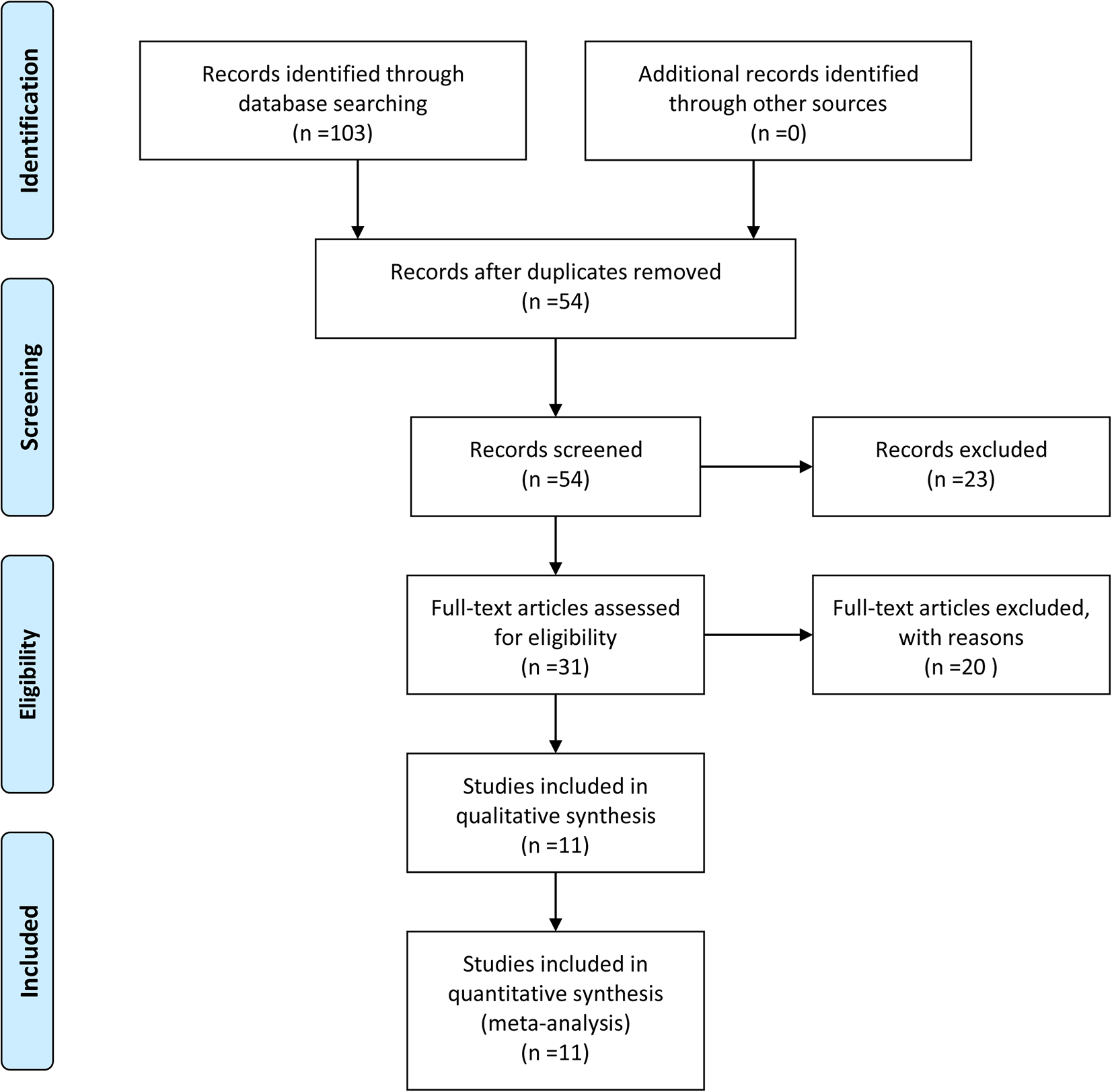
Flow diagram of the literatures selection procedure in this meta-analysis.
The Main Characteristics of the Eligible Literatures Included in the Meta-Analysis.

Abbreviations: NA, not available; OS, overall survival; NOS: Newcastle-Ottawa quality assessment scale; GC, gastric cancer; CRC, colorectal cancer; HCC, hepatocellular carcinoma; BRCA, breast cancer; LC, liver cancer; PTC, Papillary thyroid cancer; PC, pancreatic cancer; NSCLC, non-small cell lung cancer; ESCC, esophageal squamous cell carcinoma.
The Expression of SBF2-AS1 Was Significantly Correlated With OS
Figure 2 presents the forest plot results for the lncRNA SBF2-AS1 expression and patient outcomes. A total of 9 datasets of SBF2-AS1 expression for OS, which included 874 cancer patients, with the reported HR and 95% CI, were included for the present meta-analysis. The fix-effect model was adopted to calculate the pooled HR due to no significant heterogeneous among the literatures (I2 = 46%, P = 0.07). Obviously, the aggregated data indicated that the elevated SBF2-AS1 expression levels were significantly correlated with poor overall survival (OS) (HR = 1.60, 95%CI: 1.37-1.88, P < 0.00001). In order to investigate the pooled HR among the different cancer types, the investigators conducted 2 subgroups (digestive system tumors and non-digestive system tumors). The subgroup for the different of cancer types indicated that the high SBF2-AS1 expression was strongly correlated to poor OS in both subgroups (digestive system tumors: pooled HR = 1.65 95%CI: 1.32-2.07, I2 = 56%, P < 0.00001; non-digestive system tumors: pooled HR = 1.70 95%CI: 1.20-2.41, I2 = 39%, P = 0.003) (Figure 2). This means that the cancer patients with low SBF2-AS1 expression may have a better prognostic outcome. Furthermore, the investigators performed a subgroup meta-analysis stratified by the analysis method and sample size, and this suggested that the high SBF2-AS1expression is obviously correlated with poor OS (Figure 3).

Forest plots of the included literatures evaluating the association between SBF2-AS1 expression with overall survival (OS).

Forest plots of the included literatures evaluating the association between SBF2-AS1 expression with overall survival: (A) stratified by analysis type, (B) stratified by sample size.
The Association Between SBF2-AS1 and the Clinicopathologic Characteristics
According to the evaluation of the 11 included eligible literatures that contained detailed clinicopathologic characteristics, it was observed that the elevated expression of SBF2-AS1 positively correlated to the tumor size ((larger vs. smaller) OR = 2.34, 95%CI = 1.47-3.70, P = 0.0003), advanced TNM stage ((III/IV vs. I/II) OR = 2.78, 95%CI = 1.75-4.41, P < 0.0001), lymph node metastasis ((Positive vs. Negative) OR = 3.06, 95%CI = 1.93-4.86, P < 0.00001), and histological grade ((poorly vs. well/moderately) OR = 2.58, 95%CI = 1.47-4.52, P = 0.001) (Figure 4). Furthermore, for the other clinical parameters, including age, gender, and differentiation, no significant correlation was found between the SBF2-AS1 expression and the parameters (Figure 5). The details are presented in Table 2.

Forest plots of the included literatures evaluating the correlation between SBF2-AS1 expression and clinicopathological characteristics: (A) tumor size; (B) TNM stage; (C) lymph node metastasis; (D) histological grade.

Forest plots of the included literatures evaluating the correlation between SBF2-AS1 expression and clinicopathological characteristics: (A) age; (B) gender; (C) distant metastasis.
Summary of Correlation Between SBF2-AS1 Expression and Clinicopathological Characteristics of Cancers.

Abbreviations: LNM, Lymph node metastasis; DM, Distant metastasis.
Boldface values indicate significant results if P < 0.01.
Sensitivity Analysis and Publication Bias
In order to determine the impact of a single study to the overall results for OS, a sensitivity analysis was performed. The results revealed that the pooled HR was not altered by removing one study at a time, illustrating that these results are considerably stable and reasonable (Figure 6(a)). In additional, according to the Begg’s test, the publication bias of the included studies in the present meta-analysis for OS was not obvious (P = 0.108) (Figure 6(b)).
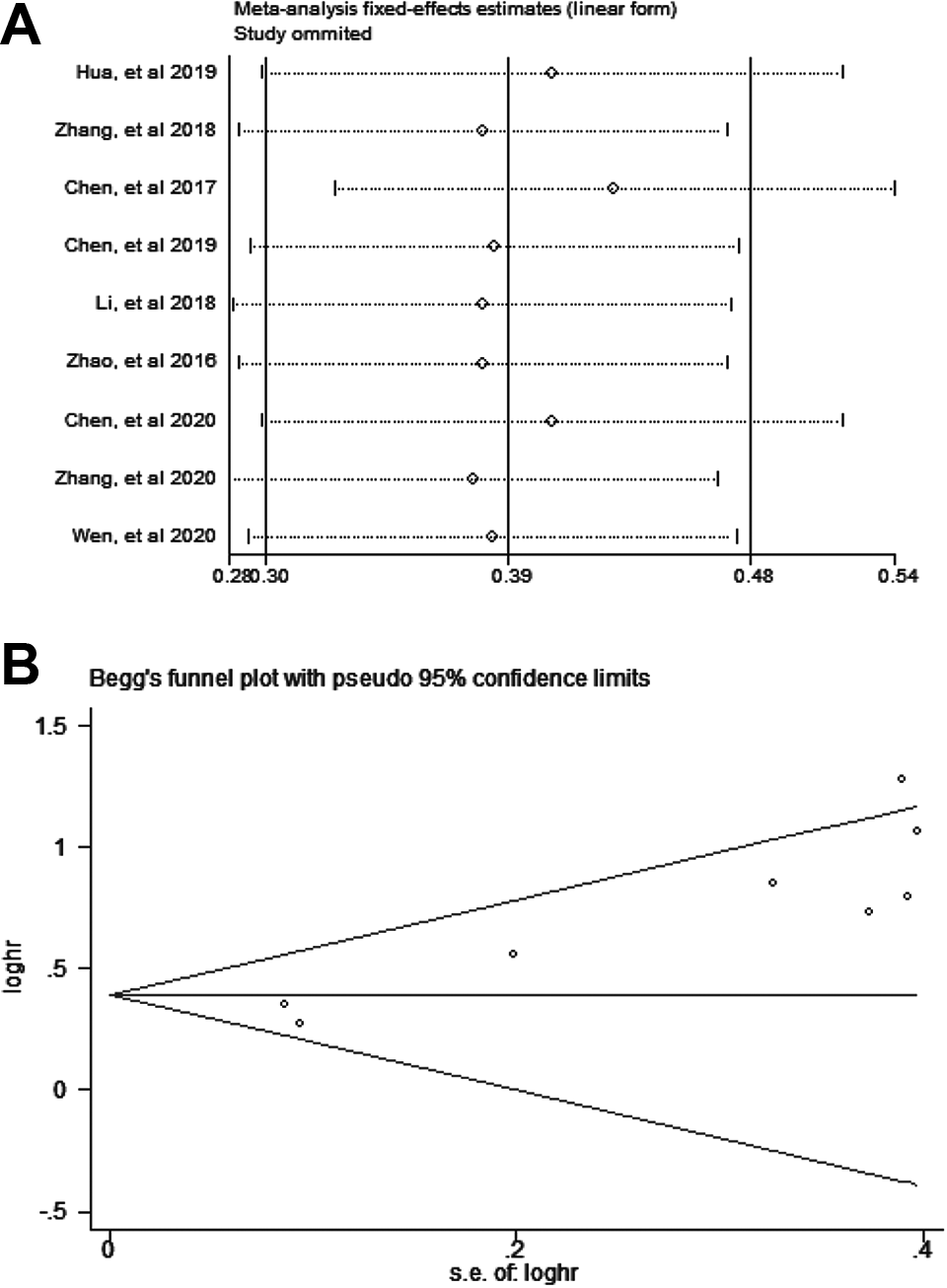
Sensitivity analysis and publication bias for OS in this meta-analysis: (A) sensitivity analysis; (B) Begg’s funnel plots.
Validation of the Results in the TCGA Dataset
Furthermore, in order to validate these results, the investigators took full advantage of The Cancer Genome Atlas (TCGA) dataset, analyzed the expression of SBF2-AS1 in the different types of cancers. As shown in Figure 7, it was found that SBF2-AS1 was significantly overexpressed in tumor tissues, especially in patients with Cholangio carcinoma, Lymphoid neoplasm diffuse large Bcell lymphoma, Kidney chromophobe, and Thymoma (Figure 7(a)). Furthermore, the information in the violin plot elucidated that the SBF2-AS1 expression was also correlated with the clinical stage of human tumors (P < 0.05, Figure 7(b)). In addition, the investigators utilized the survival plots in the TCGA dataset to explore the association between the SBF2-AS1 expression and prognosis of cancer patients. The results revealed that the upregulated SBF2-AS1 expression exhibited negative effects on OS (Figure 7(c)) and DFS (Figure 7(d)), and these were in accordance with the consequences in the present meta-analysis.

Validation of the role of lncRNA SBF2-AS1 in human cancers in the TCGA dataset: (A) the expression of SBF2-AS1 in cancers and normal tissues; (B) violin plot of clinical stage of SBF2-AS1 expression in human cancers; (C) overall survival plot of SBF2-AS1; (D) disease-free survival plot ofSBF2-AS1.
Discussion
At present, with the rapid development of molecular genetics and molecular biology, researchers have focused on long non-coding RNAs, which have previously been regarded as the “transcriptional noise,” due to its potential role in predicting the prognosis of cancer patients in recent years. 27,28 Previous studies have demonstrated that lncRNA participates in a variety of biological processes, and enables tumor cells to take part in the course of epigenetic regulation and immune response, cell cycle control, apoptosis and induced pluripotent stem cell reprogramming and so on. 29,30 It is noteworthy that an abnormal lncRNA expression may be involved in various biological processes of tumorigenesis and have an effect on its progression. 31 -33 For instance, the high expression of MALAT1 was markedly associated with pathological grade, LNM, and OS in cancer patients and is engaged in tumor proliferation, and drug resistance. 34 -36 Studies have shown that lncRNA can be used as a target for the new therapy and prognosis of cancer, providing a novel strategy for the prognosis assessment of cancer. 37,38
The lncRNA SET-binding factor 2 (SBF2) antisense RNA1 (lncRNA-SBF2-AS1), located at the 11p15.1 locus, is a novel carcinogenic lncRNA. 39 Increasing studies have indicated that SBF2-AS1 is notable for its upregulated expression and plays a vital role in different types of malignant tumors that commonly imply the worse clinical outcomes. In 2020, the study conducted by Wang suggested that the elevated SBF2-AS1 expression was correlated with advanced TNM stage and poor overall survival in non-small cell lung cancer (NSCLC) and could accelerate the growth and migration of tumor cells by targeting miR-362-3p to enhance the GRB2 expression, which could promote lung cancer cell proliferation, migration and invasion. 40 Meanwhile, Yang’s study revealed that SBF2-AS1 was described as a key regulator in the proliferation and migration of clear cell renal cell carcinoma cells via sponging miR-338-3p and suppressing E26 transformation specific-1 (ETS1). 41 Zhang’s study found that the overexpression of SBF2-AS1 led to the promotion of temozolomide-resistance in glioblastoma patients, which may provide treatment strategies for TMZ-resistant GBM patients. 42 Another research demonstrated that the high SBF2-AS1 expression could downregulate the miR-122-5p expression and then promoted the X-linked inhibitor of apoptosis protein (XIAP) expression, which in turn, led to the proliferation of pancreatic cancer cells. 43 The majority of other mechanism studies demonstrated that SBF2-AS1may be functioned as a ceRNA to modulate target genes through the miRNA sponge, and regulate specific classical signaling pathways in different cancers, including miR-338-3p availability in glioblastoma, 44 miR-361-5o in cervical cancer, 13 miR-30a in osteosarcoma. 45 Radiotherapy-resistance is a hard nut to crack in the treatment of tumors. However, Previous studies have confirmed that muscleblind-like 3 (MBNL3) is closely correlated to macrophage-associated organs, such as the lung. 46 The research conducted by Yu noted that the inhibition of SBF2-AS1 coule induce NSCLC to be sensitive to radiotherapy via the modulation of the MBNL3 expression, provided that SBF2-AS1 could be regarded as a therapeutic target for NSCLC. 47 Taken together, it is essential to further identify the relationship between lncRNA SBF2-AS1 and cancer clinical outcomes.
Until now, this is the first meta-analysis conducted to comprehensively explore the correlation between the expression and clinical outcomes of tumors, and determine the predictive value of SBF2-AS1 in cancers. In the present study, the combined results revealed that the hoisted SBF2-AS1 expression can be regarded as a sign of poor OS in cancer patients. The present analysis demonstrated that the high expression of SBF2-AS1 might be an essential predictive factor for OS in various cancers. What’s more, the subsequent pooled results demonstrated that cancer patients with an elevated expression level of SBF2-AS1 had a significant property to metastasize to lymph nodes and exhibit malignant biological behaviors, further indicating that the high SBF2-AS1 expression could serve as a predictable hallmark for clinical outcomes. Besides, based on the TCGA analysis data, the results verified that the high SBF2-AS1 expression was link to unfavorable prognosis. This was observed in multiple tumor tissues.
Of note, it is noteworthy that the present study had some limitations. First, few of the subjects were from countries other than China. This may make the results best suitable for the clinical characteristics of Asian patients with tumors. Second, due to the relatively limitation in sample size, a single type of tumor stills need to be investigated in a larger number of samples, and more literatures are needed to evaluate the DFS and PFS. Finally, the HRs and 95%CIs were extracted using the indirect method, which would inevitably lead to some bias. Hence, there is a need to increase of the number of follow-up studies, in order to avoid these various factors in the compound.
In conclusion, SBF2-AS1 can be an effective independent predictive biomarker for estimating the overall survival of cancer patients. However, more prospective researches are warranted to further confirm the value of SBF2-AS1 in cancer.
Supplemental Material
Supplemental Material, sj-pdf-1-tct-10.1177_15330338211004915 - The Clinical Prognostic Value of lncRNA SBF2-AS1 in Cancer Patients: A Meta-Analysis
Supplemental Material, sj-pdf-1-tct-10.1177_15330338211004915 for The Clinical Prognostic Value of lncRNA SBF2-AS1 in Cancer Patients: A Meta-Analysis by Jie Wang, Pingyong Zhong and Hao Hua in Technology in Cancer Research & Treatment
Footnotes
Abbreviations
Authors’ Note
Conceptualization: Jie Wang. Data curation: Hao Hua. Formal analysis: Jie Wang, Pingyong Zhong, Hao Hua. Funding acquisition: Hao Hua. Investigation: Jie Wang, Pingyong Zhong, Hao Hua. Project administration: Pingyong Zhong. Software: Jie Wang. Supervision: Hao Hua. Writing—original draft: Jie Wang. Writing—review & editing: Hao Hua. All authors agree to publish. All data supporting this meta-analysis are from previously reported studies and datasets, which have been cited. The processed data are available from the corresponding author upon request. Our study did not require an ethical board approval because it did not contain human or animal trials.
Acknowledgment
The authors would like to thank Dr. Hua for his guidance on this article and for his editing and proofreading of this English manuscript. The authors would also like to thank the authors of the primary studies.
Declaration of Conflicting Interests
The author(s) declared no potential conflicts of interest with respect to the research, authorship, and/or publication of this article.
Funding
The author(s) received no financial support for the research, authorship, and/or publication of this article.

Supplemental Material
Supplemental material for this article is available online.
References
Supplementary Material
Please find the following supplemental material available below.
For Open Access articles published under a Creative Commons License, all supplemental material carries the same license as the article it is associated with.
For non-Open Access articles published, all supplemental material carries a non-exclusive license, and permission requests for re-use of supplemental material or any part of supplemental material shall be sent directly to the copyright owner as specified in the copyright notice associated with the article.
