



Abstract
The Mars Sample Return (MSR) Campaign aims to retrieve a set of carefully selected and documented samples collected by NASA’s Perseverance rover in and around Jezero Crater on Mars and deliver this set to Earth for comprehensive laboratory analyses. To emphasize the immense scientific return of this unique collection, this work presents a Sample Science Traceability Matrix (SSTM), a systematic framework that aligns each sample with the MSR campaign’s defined science objectives, subobjectives, and critical research questions. The SSTM explicitly connects prioritized goals—including geologic history, astrobiology, planetary evolution, and human exploration science—to each of the individual samples gathered in and around Jezero Crater on Mars. This matrix offers a structured, quantitative method to assess each sample’s capacity to address key scientific questions, while highlighting synergies across the sample suite and showcasing the overall value of the collection. The SSTM provides a valuable tool for guiding future sample analyses and identifying the most impactful samples that could be collected in the future to complete the set collected by the Mars 2020 mission. It also supports the next phase of Mars sample science and informs strategies for future Mars exploration missions. Key Words: Mars Sample Return—Perseverance—Jezero Crater—Laboratory—Sample collection—Science goals. Astrobiology 25, 725–741.
Introduction
Returning samples from Mars to Earth for detailed laboratory studies has long been a priority goal of the planetary science community (National Academies of Sciences, Engineering, and Medicine, 2022). The Mars Sample Return (MSR) Campaign is a joint strategic initiative between the US National Aeronautics and Space Administration (NASA) and the European Space Agency (ESA). Its aim is to retrieve a diverse set of carefully selected, documented, and hermetically sealed martian samples collected by NASA’s Mars 2020 Perseverance rover and transport them to Earth for detailed scientific analyses (Beaty et al., 2019; Carrier et al., 2025; Grady, 2020; Haltigin et al, 2022). If successful, this would mark the first-ever return of samples from another planet, a historic milestone for planetary exploration. This report provides a Sample Science Traceability Matrix (SSTM) that showcases how well these samples can address the highest priority science questions of the community.
The Perseverance rover is currently exploring Jezero Crater on Mars and the surrounding area to meet the goals of the planetary science community, in large part, through the collection of samples. Once on Earth, these samples, preserved in a controlled environment, would enable future researchers to address an enormous number of the major questions in planetary science. These include decoding Mars’s geological history, constraining its past habitability, searching for potential biosignatures of ancient life, providing unprecedented insights into early solar system processes, planetary differentiation, volatile cycling, and the emergence of habitable environments (Borg and Kruijer, 2025; Bosak et al., 2024; Grady, 2025; Hausrath et al., 2024; Herd et al., 2025; McSween et al., 2025; Sephton et al., 2025; Simon et al., 2023; Swindle et al., 2025; Udry et al., 2025; Weiss et al, 2025; Zorzano et al., 2024). Ultimately, MSR could transform our understanding of planetary evolution and profoundly inform the search for life beyond Earth. These goals were ranked among the most important in planetary science by the last two Planetary Science Decadal Surveys (National Academies of Sciences, Engineering, and Medicine, 2022; National Research Council, 2011).
MSR also serves as a technological and operational bridge to future human exploration. By characterizing in situ resources (e.g., volatiles and water-bearing minerals) and environmental hazards (e.g., dust and toxic elements or molecules), it contributes essential data for risk mitigation in crewed missions to Mars (Whetsel et al., 2025). Furthermore, MSR plays a pivotal role in advancing planetary protection protocols to ensure that both forward contamination (Earth to Mars) and backward contamination (Mars to Earth) are meticulously managed (Kminek et al., 2022; Siegel et al., 2025). Thus, MSR is a vital proving ground for sample handling and biosecurity technologies that will underpin future robotic and human missions to Mars and future sample return from other planetary environments.
The iMOST (International MSR Objectives and Sample Team) defined seven scientific objectives for MSR based on two decades of previously published international priorities (Beaty et al., 2019): (1) interpret the primary geologic processes and history that formed the martian geologic record, with an emphasis on the role of water; (2) assess and interpret the potential biological history of Mars, including assaying returned samples for the evidence of life; (3) quantitatively determine the evolutionary timeline of Mars; (4) constrain the inventory of martian volatiles as a function of geologic time and determine the ways in which these volatiles have interacted with Mars as a geologic system; (5) reconstruct the processes that have affected the origin and modification of the interior, including the crust, mantle, core, and the evolution of the martian dynamo; (6) understand and quantify the potential martian environmental hazards to future human exploration and the terrestrial biosphere; and (7) evaluate the type and distribution of in situ resources to support potential future Mars exploration.
Building upon these foundational science objectives, the MSR Sample Receiving Project tasked the Measurement Definition Team 1 (MDT-1) (Carrier et al., 2025) with refining the scientific strategy in light of the actual sample collection cached by the Perseverance rover at Jezero Crater (Bosak et al., 2024; Farley et al., 2020; Farley and Stack, 2022, 2023, 2024a, 2024b; Hausrath et al., 2024; Herd et al., 2025; Simon et al., 2023; Zorzano et al., 2024). This updated framework focuses on identifying and prioritizing key investigations, measurements, and analytical protocols to be conducted at the Sample Receiving Facility (Carrier et al., 2025). The MDT-1 strategy organizes investigations under four primary science objectives: Geologic history: Reconstruct the formation and alteration history of the returned samples to transform our understanding of the geological processes and environments of Mars. Astrobiology: Determine the astrobiological significance of the martian geological record represented by the samples. Planetary evolution: Provide new insights into the planetary-scale formation and evolution in the inner solar system. Science for future human missions: Identify and characterize potential risks and opportunities for future human missions.
These objectives are, in turn, divided into multiple subobjectives, investigations, and research questions.
The purpose of this work is to develop an SSTM to explicitly link the scientific objectives, subobjectives, investigations, and research questions to the specific samples collected by the Perseverance rover. The SSTM ensures that each sample directly addresses priority science questions, reinforcing the scientific basis for sample return within the broader MSR mission framework (Beaty et al., 2019). This work presents the matrix that corresponds to those samples for which initial reports (Farley and Stack, 2022, 2023, 2024a, 2024b) were publicly available at the time of article submission. The proposed metric is generalizable and can be applied to the subsequently acquired samples once their initial reports are released. Furthermore, the SSTM framework provides a consistent basis for evaluating future samples collected by Perseverance.
The SSTM serves as a strategic framework for evaluating the scientific value of the samples collected by Perseverance. This matrix highlights the significance of a unique suite of martian samples, collected from documented locations and contextualized within a geological framework informed by in situ and remote observations. It enhances the interpretation of the entire sample collection by identifying opportunities for comparative analyses across suites of multiple specimens and synergies that would be missed through isolated investigations of single samples. This integrative approach is especially critical for reconstructing the geologic history of Jezero Crater and for understanding variations in past habitability in space and time. Furthermore, the SSTM informs considerations and current gaps in knowledge relevant to future human exploration, including potential hazards and in situ resource availability. The SSTM also points out which samples are especially valuable and, for those left unsealed, what would be lost if they were replaced because of their importance to specific types of scientific studies. Information in the matrix also supports logistical planning and decisions on sample storage, handling, transport, and prioritization for return to Earth as well as the definition of analytical instrumentation needs, curation protocols, and scientific priorities at Earth-based facilities. Overall, the SSTM provides a coherent view of the collective scientific value of the Perseverance sample collection.
The Perseverance rover continues to expand its scientifically significant collection of geological samples from the ancient and diverse terrains in and around Jezero Crater on Mars (see Fig. 1). These samples are being systematically acquired by the sampling system on Perseverance (Moeller et al., 2021), and the local environments of these samples are being analyzed by using the rover’s instrument payload that includes PIXL (Allwood et al., 2020), SHERLOC, (Bhartia et al., 2021), WATSON (Edgett, 2019), SuperCam (Wiens et al., 2021), Mastcam-Z (Bell et al., 2021), RIMFAX (Hamran et al., 2020), and MEDA (Rodriguez-Manfredi et al., 2021). This payload enables detailed in situ characterization of mineralogy, elemental and organic chemistry, texture, and the geological and atmospheric environment, before sampling and caching. The entire sampling campaign—from site selection to abrasion, coring, sealing, and preliminary analyses—has been thoroughly documented in mission reports, publicly released datasets by the NASA Mars 2020 Science Team and publications that describe sample suites acquired during earlier rover campaigns (Bosak et al., 2024; Farley et al., 2020; Farley and Stack, 2022, 2023, 2024a, 2024b; Hausrath et al., 2024; Siljeström et al., 2024; Simon et al., 2023; Weiss, et al., 2024; Zorzano et al., 2024), with five sampling campaigns to date (Herd et al., 2025; see also Fig. 1). Samples from the Crater Floor Campaign represent a suite of igneous rocks with varying degrees of aqueous alteration (Liu et al., 2022; Scheller et al., 2022; Tosca et al., 2025), which are potentially linked through common petrogenetic origins (Wiens et al., 2022). In contrast, Fan Front samples preserve fluvial to deltaic sediments deposited from the Jezero watershed, alongside regolith materials that may record both globally transported dust and locally sourced clasts (Bosak et al., 2024; Hausrath et al., 2024; Stack et al., 2024). Upper Fan samples chronicle the final stages of aqueous activity in the region (Kizovski et al., 2025; Weiss et al., 2024), while Margin Campaign samples provide evidence of lacustrine, shoreline, or early igneous processes (Farley and Stack, 2022, 2023, 2024a, 2024b; Herd et al., 2025; Hurowitz et al., 2025; Siljeström et al., 2024; Williford et al., 2024). At the time of writing of this article, the rover is conducting the Crater Rim Campaign (Klidaras et al., 2025; Mayhew et al., 2025).
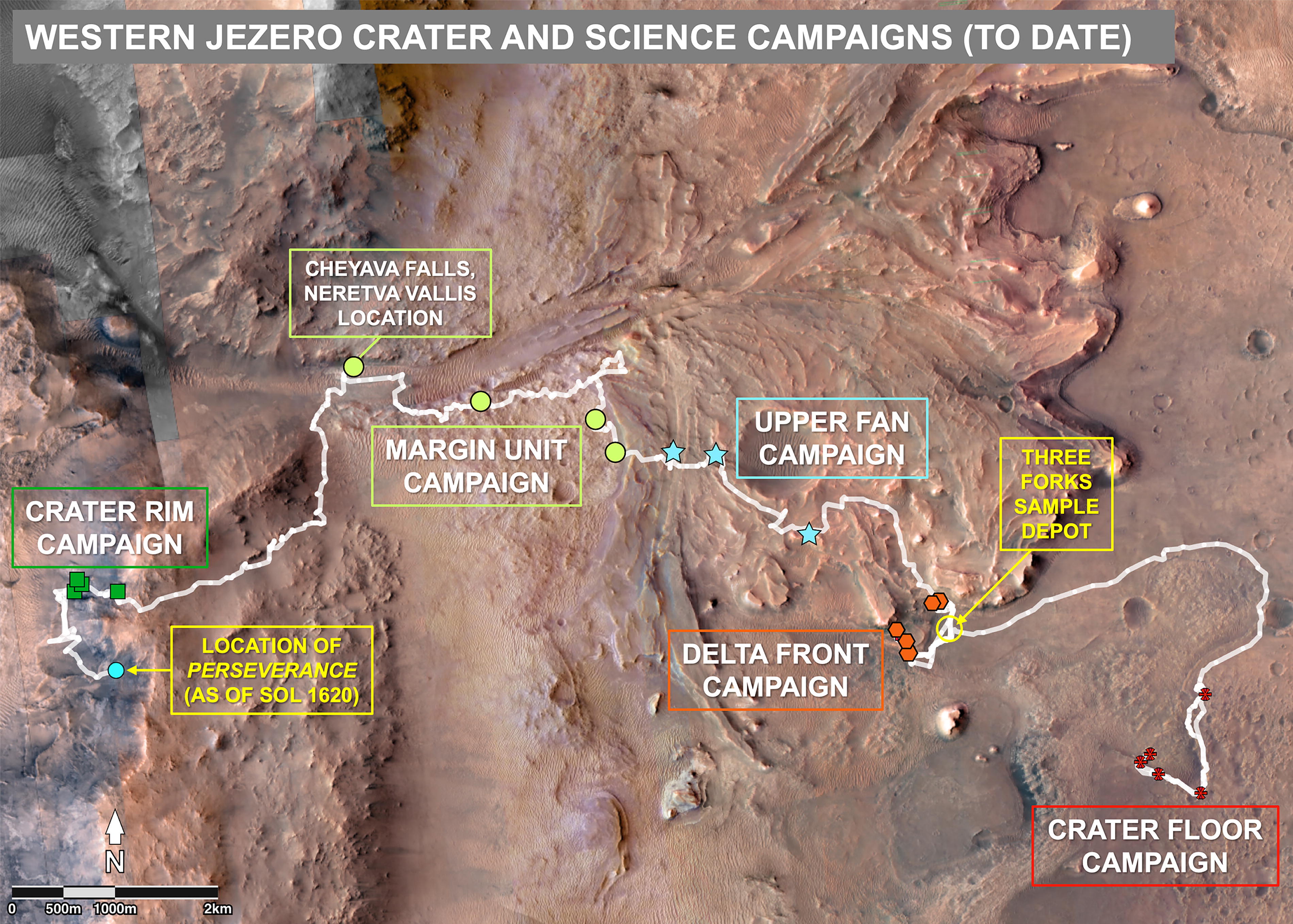
Satellite image of the Jezero Crater floor, delta, valley, and rim, showing the Perseverance rover’s traverse (white line), rover position (cyan circle) as of September 8, 2025, and sample acquisition sites by campaigns: red asterisks show samples from the Crater Floor campaign, orange hexagons from the Fan Front campaign, blue stars from the Fan Top campaign, lime green circles from the Margin campaign, and dark green squares from the Crater Rim Campaign. Credit: Campaign Analysis Mapping and Planning tool (CAMP) geospatial mapping software system.
The samples collected by Perseverance at Jezero Crater are distributed across two distinct caches: the Three Forks depot cache, as detailed in the work of Czaja et al. (2023), and the primary cache stored by the rover. The Three Forks cache contains samples from the Máaz and Séítah formations of the crater floor, sedimentary rocks from the Fan Front, a regolith sample, an atmospheric sample, and a witness tube for contamination knowledge (see Fig. 2-left). In addition to this atmospheric sample, all sealed sample tubes contain a headspace volume with martian atmosphere (Zorzano et al., 2024), which offers opportunities to address atmospheric questions (e.g., volatiles, noble gases, and isotope ratios). Samples from the crater floor represent ancient igneous rocks that contain a record of near surface alteration with high potential for reconstructing early martian geologic and aqueous history (Farley et al., 2022; Simon et al., 2023, Scheller et al., 2022; Liu et al., 2022; Tosca et al., 2025), while samples from the Fan Front represent different subaqueous and fluvial regimes (Stack et al., 2024; Bosak et al., 2024; Hausrath et al., 2024). Perseverance’s main cache includes a duplicated collection of all the Three Forks samples (with the exception of the atmospheric sample) augmented by a broader and evolving collection of sedimentary rocks collected during the Fan Top campaign, carbonate-bearing rocks from the margin of the crater collected during the Margin Campaign, and unique samples from the crater rim, including what are expected to be some of the oldest collected during the Crater Rim Campaign (see Fig. 2-right). For paired samples, the core collected that contained more material or sampled more significant or interesting features was retained in Perseverance’s cache (Czaja et al., 2023).
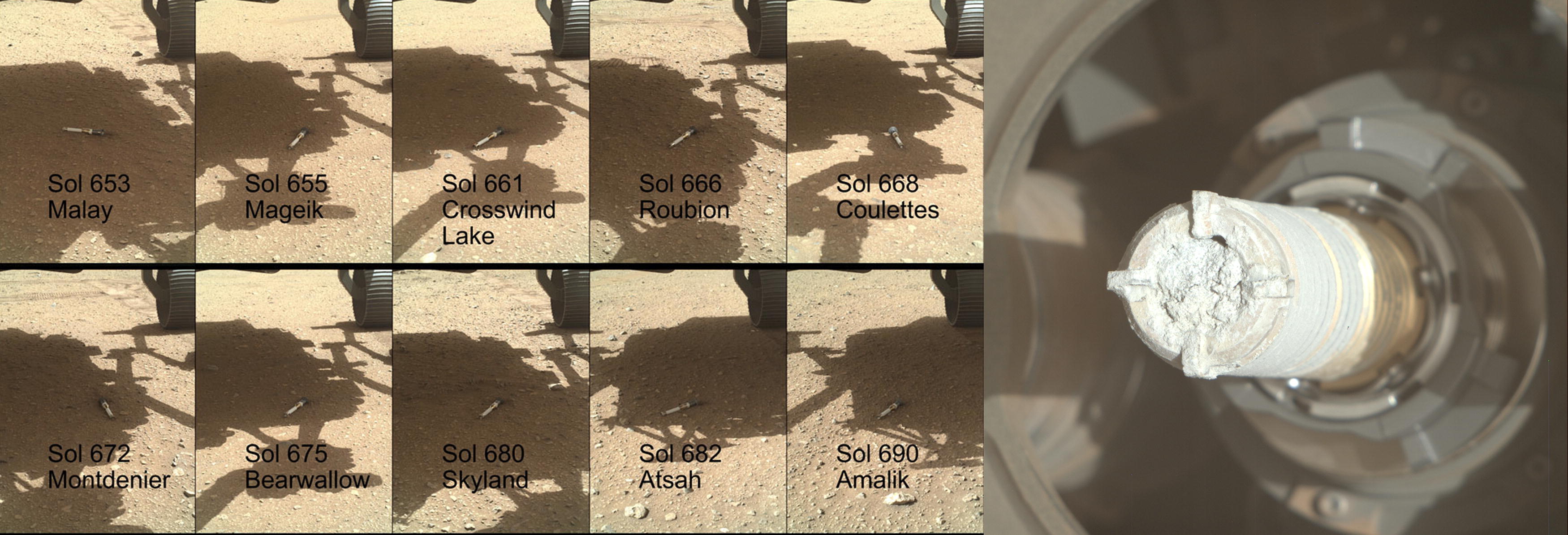
(Left) Three Forks cache: This photomontage shows each of the sample tubes annotated with the name of each sample and the martian day, or sol, that it was deposited, as viewed by the WATSON camera. Credit: NASA/JPL-Caltech/MSSS. (Right) Sealing the “Green Gardens” sample collected from a rock dubbed “Tablelands” along the rim of Jezero Crater on February 16, 2025. The sample was sealed on March 2. Credit: NASA/JPL-Caltech/ASU/MSSS.
The mission also deployed Witness Tube Assemblies (WTAs), which are versions of sample tubes that contain an assembly that includes inert, although adsorbent, materials to monitor potential forward contamination from Earth and provide contamination knowledge for samples returned to Earth. These tubes were periodically deployed in the same manner as sample tubes and exposed to rover operations to produce a control to distinguish indigenous martian organic and inorganic materials from any terrestrial contamination—a critical requirement for planetary protection and scientific fidelity (Moeller et al., 2021). The WTAs were not incorporated into the SSTM evaluation; however, they are essential as controls for organic analyses and contain martian atmosphere.
The current assessment of the scientific value of the samples detailed here is grounded in in situ observations conducted by the Perseverance rover, integrated with a comprehensive interpretation of the geological context, including context from orbital observations. Based on the current understanding of the geologic context and formation mechanisms of the materials in the collected samples, the SSTM shows that the returned samples have the potential to address all of the established scientific objectives and investigations of the MSR campaign. The following section presents a summary of the resulting SSTM resolved to the investigation level. The complete SSTM, extended to the level of individual research questions, can be found in the Supplementary Data.
At the time of writing, the Perseverance rover has collected 30 samples and 3 WTAs. The rover still has 6 empty tubes and 2 WTAs to deploy. Figure 3 presents a mosaic of workspace environments that correspond to each acquired sample. The drilled boreholes produced during sampling measure ∼2.7 cm in diameter, while the cylindrical rock cores collected within the sample tubes are about 1.3 cm in diameter and up to ∼7 cm in length. The abraded surface patches created for investigation of the characteristics of the sampled material using the rover’s instruments measure about 5 cm in diameter. For contextual reference, two images include portions of the rover; the Main River workspace shows the rover arm in the process of acquiring a sample from the target rock, whereas the Bell Island workspace depicts the sampling site alongside a rover wheel. Table 1 provides a summary of samples collected to date as well as sampling details and lithology. Starting with the Bell Island sample (Sol 1552), samples have not been sealed immediately after acquisition. This strategy was implemented to allow for future substitutions given the limited number of available empty sample tubes and uncertainty about what materials might be encountered during future campaigns outside of Jezero Crater. Such swaps—where the unsealed sample may be discarded and replaced with a new one—would be made to optimize the diversity and value of the sample collection. This includes acquiring new rock samples of opportunity or increasing the sample mass of the already sampled lithologies.
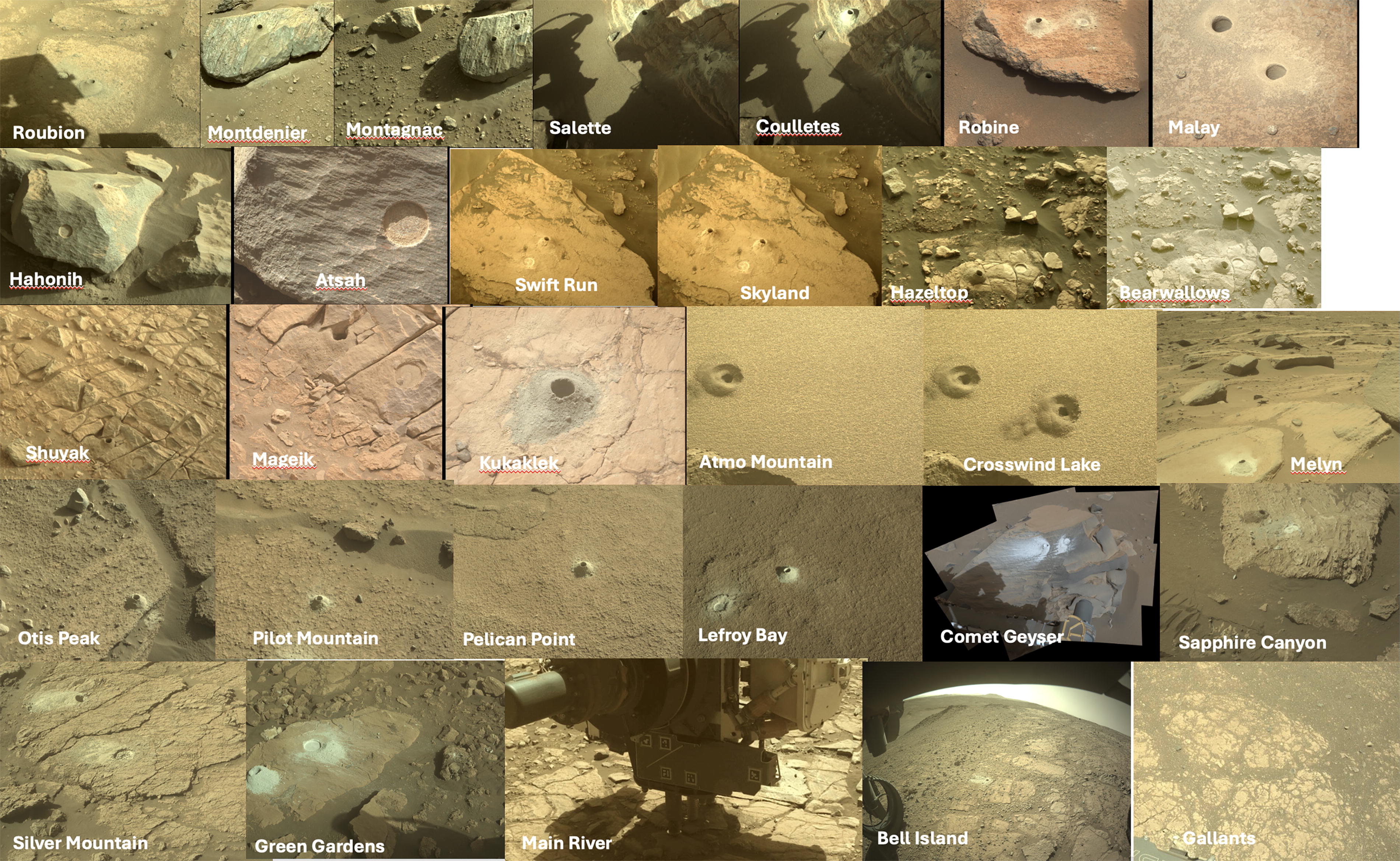
Mosaic of the workspaces where the samples were collected. Drilled holes for sample acquisition measure approximately 2.7 cm in diameter, and the abraded patch about 5 cm in diameter. For contextual reference in relation to sampling activities and documentation, two images include parts of the rover. As of this article’s submission, initial reports for all samples up to the Sapphire Canyon have been publicly released (Farley and Stack, 2022, 2023, 2024a, 2024b). This study focuses on the samples for which publicly available initial reports exist. Future updates may extend the analysis to the most recently acquired samples. Image credit: NASA/JPL-Caltech/ASU/MSSS.
Summary of Samples Collected to Date As Well As Sampling Details and Lithology
Rover = onboard the Perseverance rover; TFD = Three Forks sample depot; TBD (To Be Defined) indicates samples that remain unsealed at this stage. These tubes have been deliberately left open to allow for potential future sample exchanges.
The SSTM was created based on the output of the MSR MDT-1 (Carrier et al., 2025). It was organized into four main goals: (1) geologic history, (2) astrobiology, (3) planetary evolution, and (4) human exploration, each of which includes several subobjectives and investigations, and each investigation includes one or more research questions. The SSTM team then assessed the ability of each sample (Table 1) to address these questions. This assessment is indicated in the SSTM by scores ranging from 0 to 4. The scores are visually represented by colors from white to dark green and an equivalent scale of empty, partial, or full circles for a color-independent scale. The rationales for assigning each value varied with the research question (see Supplementary Data), but in general, a score of 4 signifies that the sample could fully address the question(s); a score of 3 indicates that the sample could address the question(s) at least moderately, but not completely; a score of 2 suggests that the sample could at least partially address the question(s), but with notable gaps; a score of 1 reflects that the sample could only minimally address the question(s); and a score of 0 means that this sample does not contain materials that can be used to address that question. This visual and numerical system summarizes the science values of the samples to specific research questions.
To provide the most useful information for various present and future stakeholders, versions of the SSTM were produced at three different degrees of granularity. The most granular has assessments at the level of individual research questions (Supplementary Data), the next has assessments at the level of research questions but grouped into investigation topics (Figs. 4–7). The last has assessments at the level of subobjectives (Figs. 8, 9). The scores of 0–4 for the SSTM at the level of research question are based on the assignment rationales given in the full SSTM in the Supplementary Data. The scores for the less granular version of the SSTM were calculated by averaging all the scores of the questions within a given subobjective and then rounding that value up to the nearest integer. The same color and circle scales are used for these values.
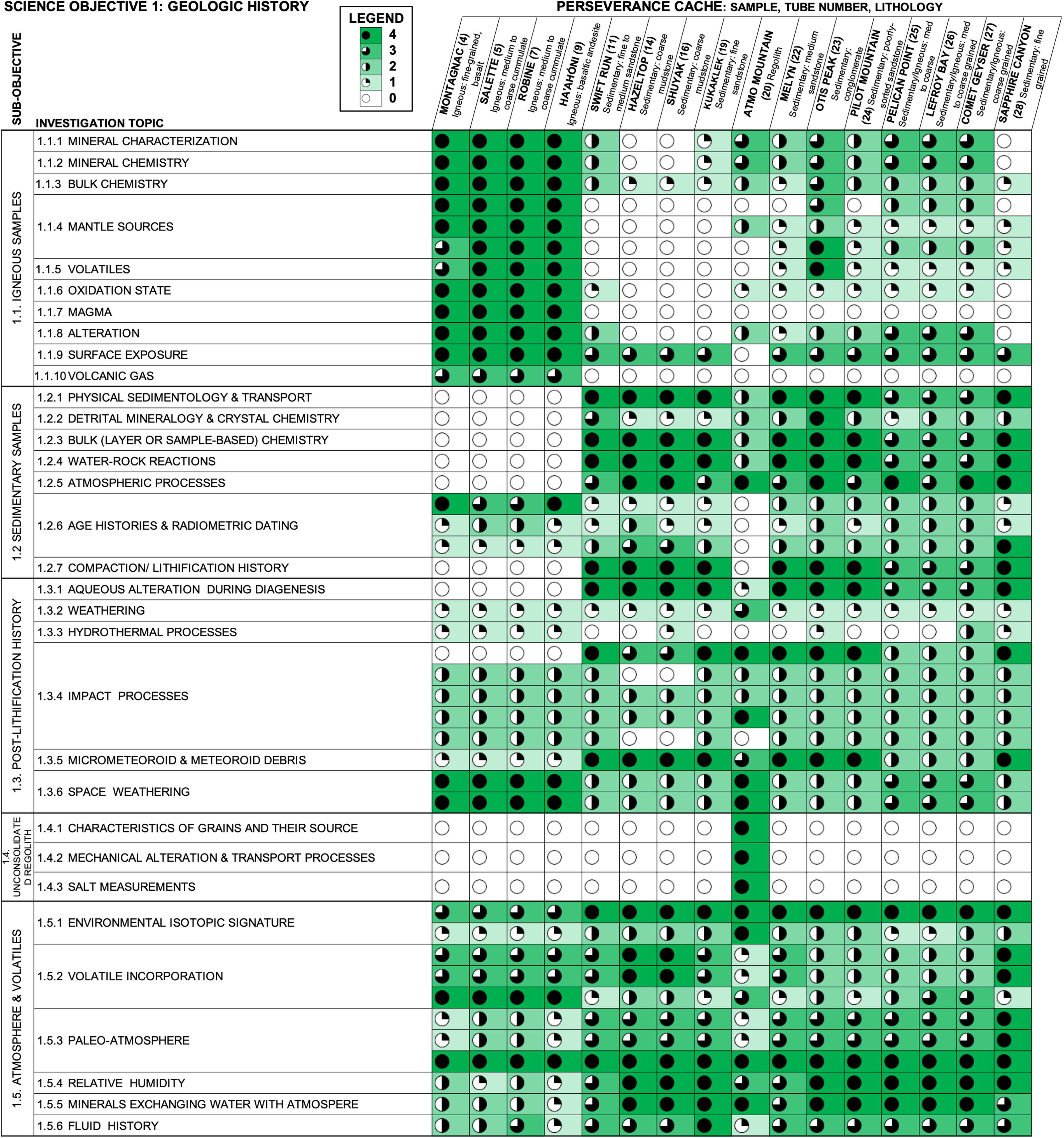
Sample Science Traceability Matrix (SSTM) at the level of investigations for Science Objective 1 (geologic history) and the samples in the Perseverance rover cache. See text for an explanation of what the different number values mean (and corresponding colors and symbols).
This exercise produced a set of matrices for both sets of samples: those in the Three Forks cache and those onboard the Perseverance rover. The complete SSTMs that are organized at the level of individual research questions and include the specific assignment rationale for each question are provided in the Supplementary Data due to their extensive size. Here, we present higher level overview of SSTMs: at the investigation topic level for the cache currently stored within Perseverance (Section 3.1) and at the subobjective level for both the Perseverance and Three Forks caches (Section 3.2).
i) Objective 1: Geologic history
A suite of samples from Jezero Crater with known stratigraphic and geologic contexts can resolve key questions about Mars’s history. Igneous rocks from the crater floor, potentially ∼3.8–3.9 Ga, contain minerals suitable for radiometric dating and provide the first field-contextualized absolute ages for early martian magmatism and planetary evolution. Sedimentary rocks from the Jezero Crater delta capture aqueous processes and volatile cycling, offering constraints on the duration and intermittency of surface water, redox conditions, and climate transitions during the Noachian–Hesperian. Together, igneous and sedimentary samples enable reconstruction of Mars’s geologic, climatic, and volatile history, thus anchoring its timeline and addressing fundamental questions about planetary climate and habitability, see Fig. 4. The radiometric ages of samples collected from key crater-retaining surfaces would help calibrate the crater counting chronology of Mars (Bosak et al., 2024).
Specific examples of scoring criteria for research questions are provided below (see the Supplementary Data for the complete scoring criteria description).
Example: 1.1.1. Mineral characterization
4 = Igneous rock;
3 = Regolith or coarse-grained sedimentary rock with ‘large' igneous clasts or if it is a possible igneous sample;
2 = Medium-grained sedimentary rock;
1 = Fine grained sandstone;
0 = Atmosphere or fine grained sedimentary rock/mudstone.
Example: 1.2.2. Detrital mineralogy and crystal chemistry
4 = Rocks with grains > mm-sized;
3 = Rocks of mid sand sized;
2 = Rocks of fine sand sized or regolith;
1 = Smaller silisiclastic sedimentary rocks;
0 = Atmosphere, igneous rocks, or not a sedimentary rock that is part of margin/fan/delta front.
ii) Objective 2: Astrobiology
A carefully selected suite of samples from Jezero Crater—collected from sedimentary, igneous, and aqueously altered rocks with well-constrained geologic and stratigraphic contexts—provide an unparalleled record of Mars’s early watery environments. Jezero preserves evidence of ancient lake and delta systems active over 3.5 billion years ago, ages for which Earth has almost no well-preserved analogs due to tectonic recycling and erosion. By targeting these specific rocks, scientists can reconstruct the habitability of Mars through deep time, search for the signatures of organic evolution, and probe for prebiotic or biological processes in a setting uniquely suited to capture the planet’s early chemical and environmental history, see Fig. 5.
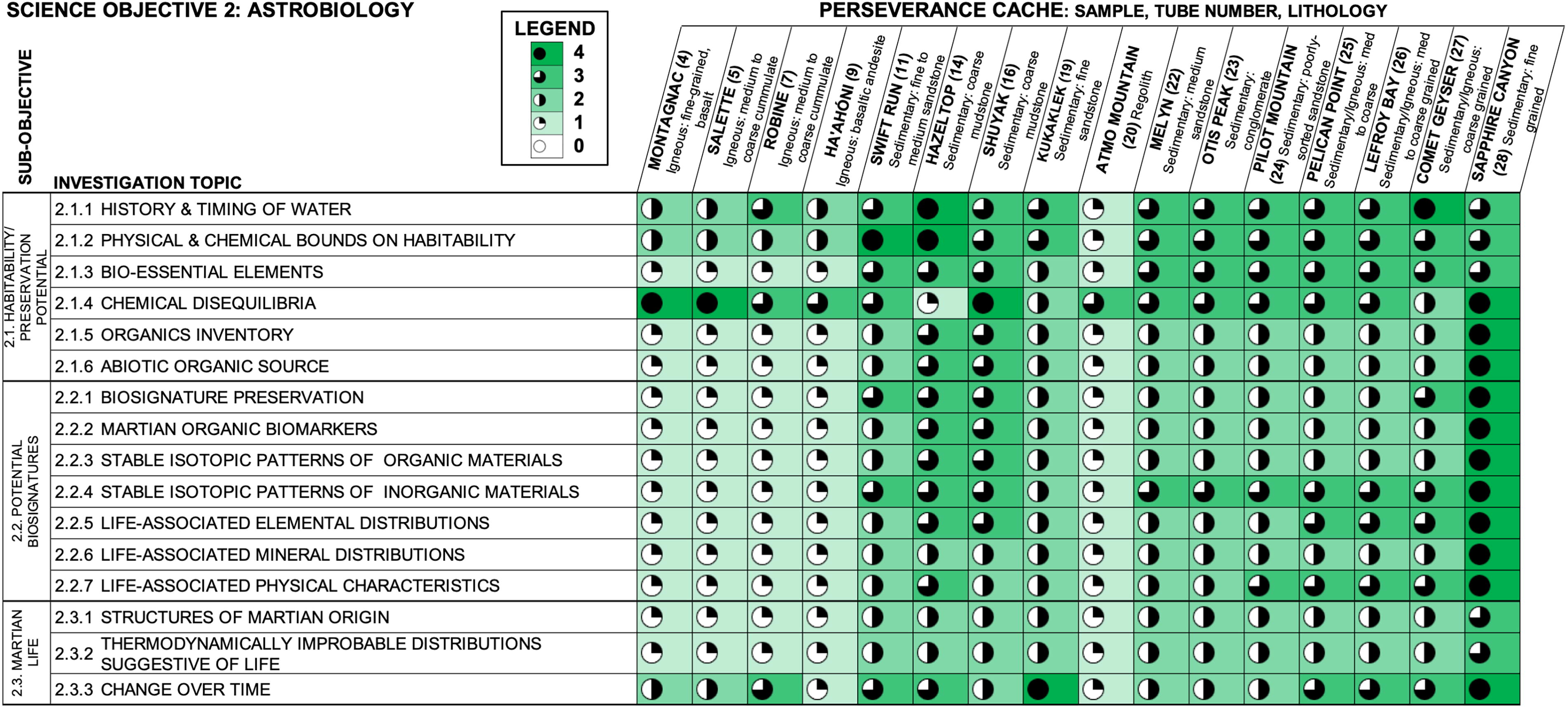
Sample Science Traceability Matrix (SSTM) at the level of investigations for Science Objective 2 (astrobiology) and the samples in the Perseverance rover cache. See text for an explanation of what the different number values mean (and corresponding colors and symbols).
An example of scoring criteria for one of the research questions of this goal is provided below (see the Supplementary Data for the complete scoring criterion description).
Example 2.2.2 Martian organic biomarkers
4 = Materials contain organic compounds;
3 = Materials are fine-grained or otherwise have a high potential for the preservation of organic compounds;
2 = Materials have medium to low potential for the preservation of organic compounds;
1 = Materials have a very low potential for the preservation of organic compound and regolith;
0 = No potential for preservation of martian organic compounds.
iii) Objective 3: Planetary evolution
A well-characterized suite of igneous and sedimentary rocks from Jezero Crater, collected with precise stratigraphic and geologic context—including samples from the crater floor, delta, and the surrounding rim—provide an unprecedented record of early planetary processes on Mars. The igneous rocks, potentially older than 3.8–3.9 Ga, represent some of the oldest unmetamorphosed materials available, while sedimentary deposits capture aqueous and chemical interactions over 3.5 billion years ago. Samples from the crater rim may expose even older crustal materials, offering insight into the formation and differentiation of Mars’s early crust and mantle. Together, these rocks allow scientists to investigate how terrestrial planets differentiate, generate, and sustain a magnetic field, respond to repeated impact events, and evolve toward habitability. By capturing ancient magmatic impact and surface processes in a single well-preserved location, the Jezero collection uniquely enables reconstruction of Mars’s early interior, magnetic history, and surface evolution—filling gaps that Earth’s highly reworked and overprinted rock record cannot address, see Fig. 6.
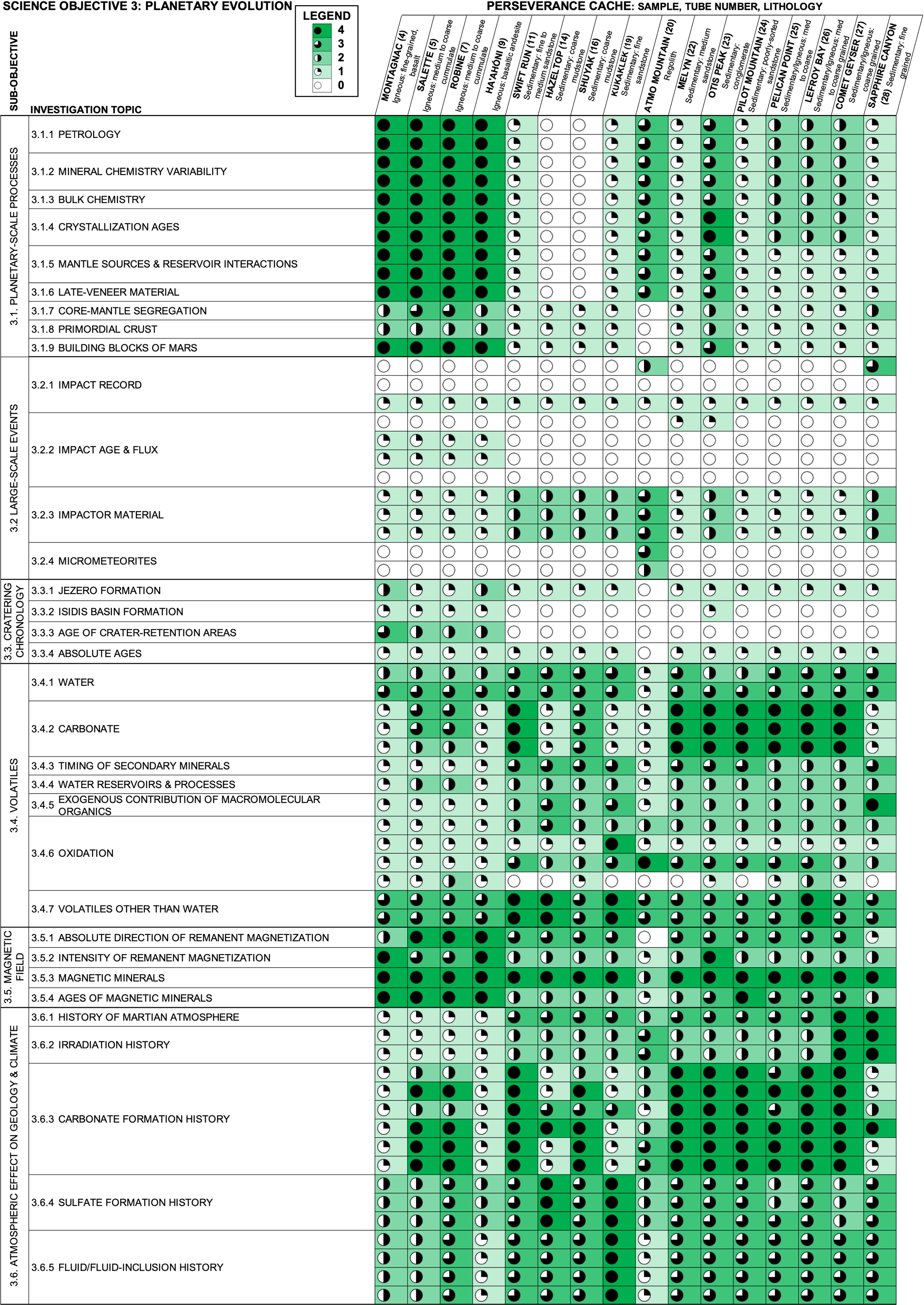
Sample Science Traceability Matrix (SSTM) at the level of investigations for Science Objective 3 (planetary evolution) and the samples in the Perseverance rover cache. See text for an explanation of what the different number values mean (and corresponding colors and symbols).
An example of the scoring criteria for one of the research questions of this goal is provided below (see the supporting information for the complete scoring criterion description).
Example 3.1.1. Crystallization ages
4 = Igneous rocks and conglomerate with diverse igneous clasts;
3 = Regolith;
2 = Possible igneous rock;
1 = Sandstone;
0 = Siltstome and finer or atmosphere.
iv) Objective 4: Human exploration
A carefully collected suite of samples from Jezero Crater, with well-constrained geologic and stratigraphic context, provide critical insights for planning human missions across Mars. The collection includes igneous rocks, sedimentary deposits, aqueously altered materials, and regolith, each revealing chemical composition, mineral resources, and potential hazards. Regolith samples are especially valuable for understanding in situ resources, such as water, oxygen, and building materials, and assessing mechanical properties relevant to landing and construction. Analyses of these samples also inform the risks posed by toxic minerals, chemical substances (e.g., perchlorates, chromium), and fine atmospheric dust, which could impact both human health and equipment (Wang et al., 2025). By characterizing these materials, the Jezero collection helps guide mission planning and safety protocols for landings on Mars beyond this specific crater, see Fig. 7.
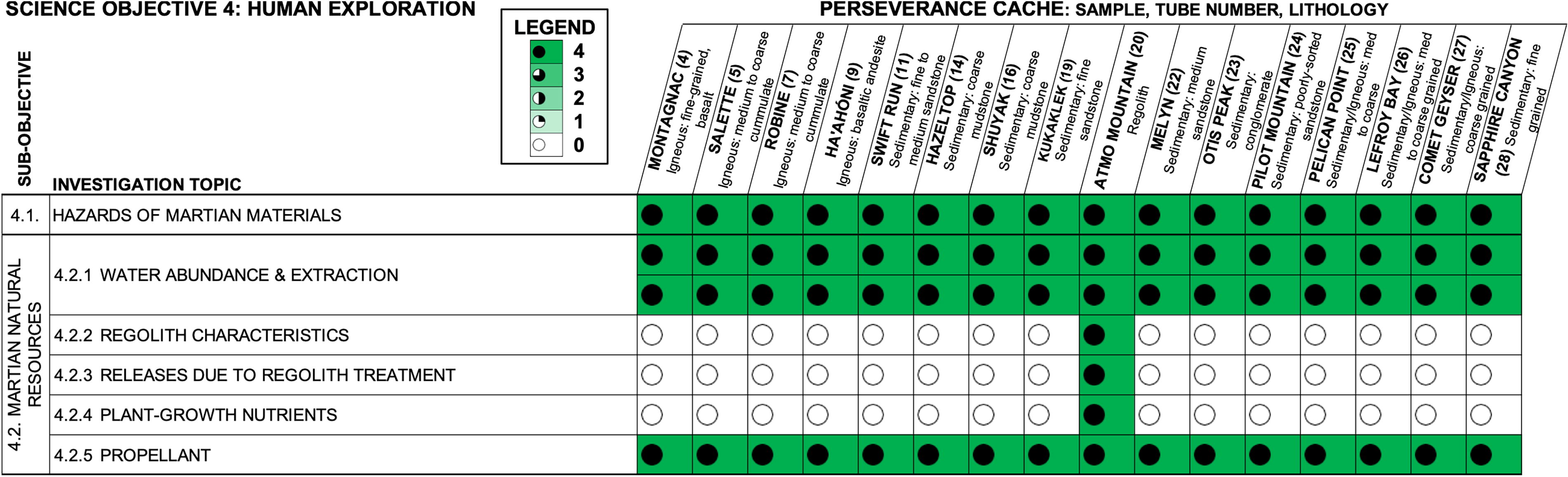
Sample Science Traceability Matrix (SSTM) at the level of investigations for Science Objective 4 (human exploration) and the samples in the Perseverance rover cache. See text for an explanation of what the different number values mean (and corresponding colors and symbols).
Because all samples may contain chemical hazards, water, and propellants in solid, liquid, or gaseous form, each sample was assigned a qualification score of 4. All other investigations are fully covered with the regolith sample.
In this section, we present high-level overview matrices that illustrate the scientific value of the cache currently stored aboard Perseverance (Fig. 8) and the cache deposited at Three Forks (Fig. 9).
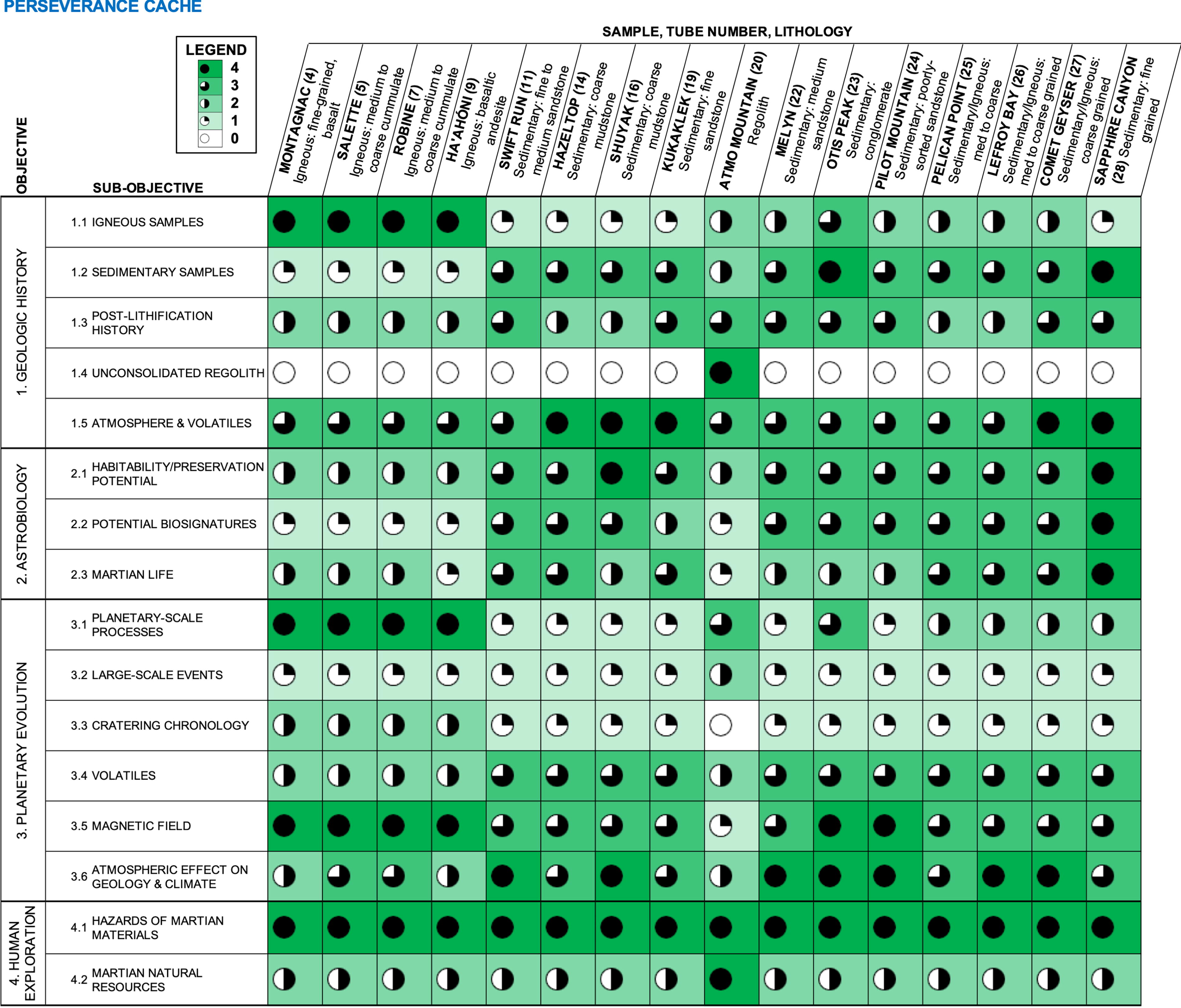
Sample Science Traceability Matrix (SSTM) at the level of sub-objectives for all four of the objectives and the samples in the Perseverance rover cache. See text for an explanation of what the different number values mean (and corresponding colors and symbols).
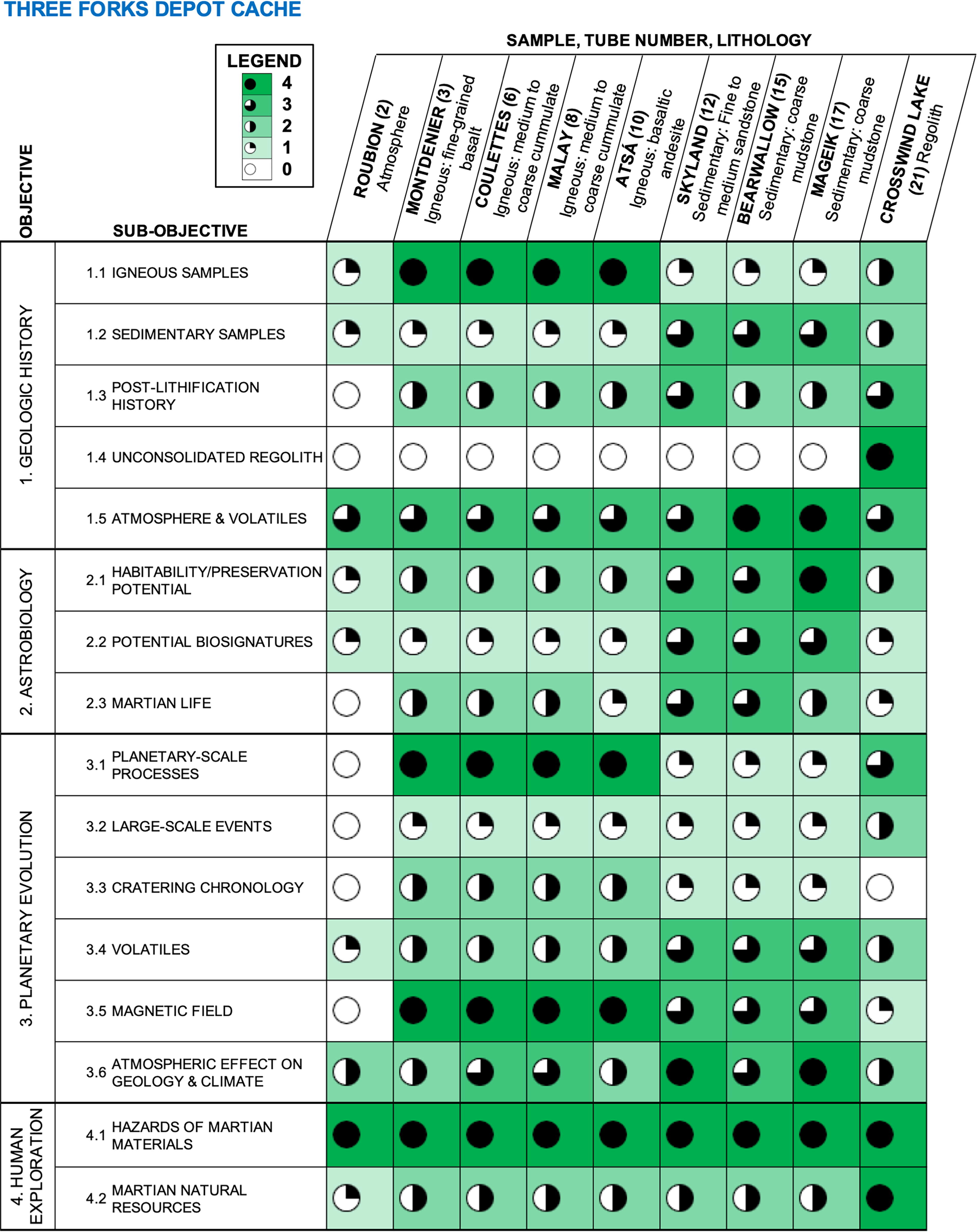
Sample Science Traceability Matrix (SSTM) at the level of sub-objectives for all four of the objectives and the samples in the Three Forks depot cache. See text for an explanation of what the different number values mean (and corresponding colors and symbols).
By the end of its mission, the rover will have collected up to 36 scientifically curated samples and 5 witness tubes from Jezero Crater—an ancient lake-delta system within a crater, with an eroded crater rim that exposes ancient crustal rocks and a more recent igneous crater floor (Mangold et al., 2021), see Fig. 1. Ten of these samples (including one WTA) were strategically deposited at the Three Forks depot cache as a contingency for the MSR campaign, while the rest remain onboard Perseverance for eventual retrieval and return to Earth. The Perseverance rover’s cache represents a landmark achievement in planetary science, offering an unprecedented scientific resource for understanding Mars’s geological and astrobiological history. As a mobile laboratory equipped with cutting-edge rover instrumentation, Perseverance is implementing a highly selective sample collection strategy designed to optimize scientific return across geological, chemical, temporal, and environmental dimensions (Farley et al., 2020; Sun et al., 2023).
This assessment of the scientific value of Perseverance samples with respect to specific high-priority research questions did not incorporate sample mass (or rock length; see Table 1) as a parameter in the evaluation. Nevertheless, the physical mass of samples remains a critical consideration for downstream analyses, particularly those involving destructive techniques such as isotopic or molecular characterization of solvent extracts, which consume sample material and, for some measurements, can require relatively large mass amounts. Therefore, future strategies for sample allocation, handling, and analysis must explicitly incorporate sample mass alongside this SSTM framework to optimize the balance between maximizing scientific return and preserving material for subsequent investigations (e.g., Carrier et al., 2025). Moreover, the MSR strategy emphasizes not just sample collection but also forward planning for Earth-based analysis. These efforts are supported by the development of stringent curation protocols and facility design considerations already underway (McCubbin et al., 2025).
The SSTM clearly shows the extraordinary value of the diverse sample collection to answer the high-priority scientific questions that were previously defined, over the past decades of exploration, by the community. The cache deposited at Three Forks meets the scientific goals of such a mission (Czaja et al., 2023), but the value of the Perseverance cache is much greater.
Sample diversity
The SSTM shows how the diversity of the sample suite is aligned with science goals that include astrobiology, geochronology, and planetary differentiation studies (e.g., Bosak et al., 2024; Hausrath et al., 2024; Herd et al., 2025; McSween et al., 2025; Simon et al., 2023). The diversity and complementary nature of the sample collection showcase the rigor of this selection process based on the technical capabilities of the Mars 2020 rover and the broad expertise of the Mars 2020 science team. Since landing in February 2021, Perseverance has traversed more than 39 km (as of this writing). Its sampling mechanism has drilled cores up to 7.4 cm deep, sealing them in titanium tubes for contamination-controlled caching (Moeller et al., 2021). The rover’s analytical payload allows in situ geochemical and mineralogical assessment, which enables targeted sampling decisions informed by the surrounding geological context (see Farley and Stack, 2022, 2024a, 2024b).
Jezero Crater was chosen as the landing and exploration site precisely because of its well-preserved sedimentary environments and evidence of aqueous alteration—ideal conditions for hosting and preserving biosignatures. Perseverance’s traverse encompasses terrains that represent billions of years of martian history, including igneous, sedimentary, and potentially hydrothermal precipitates (Beck et al., 2025; Hickman-Lewis et al., 2022; Stack et al., 2020), see Fig. 1. This temporal and spatial diversity is essential for understanding the planet’s evolving habitability, crustal evolution, and surface–atmosphere interactions.
Each sample tube retains “headspace gas,” sealing a martian atmosphere fraction with the rock or soil sample. This gas can reveal in situ volatile release or contamination. A dedicated atmospheric sample tube offers unprecedented access to Mars’s atmospheric isotopic composition, which is essential for understanding escape processes, potential biosignatures, and calibrating Earth-based remote sensing (Swindle et al., 2025). The headspace gas in all tubes and any returned WTAs may be used to address some or all of the atmospheric questions.
The SSTM shows that each sample is uniquely valuable: igneous rocks offer radiometric dating anchors; sedimentary units such as “Hazeltop” contain hydrated minerals that inform about the water cycle; and regolith samples contribute to In-Situ Resource Utilization (ISRU) studies. Governed by the astrobiological interest in early habitable environments and the potential to search for signals of prebiotic and biological processes, the sample set heavily emphasizes aqueous environments, fluvio-deltaic sedimentary rocks, and aqueously altered igneous rocks. The samples from Jezero Crater capture records of aqueous activity and the deposition of fluviolacustrine and deltaic sedimentary rocks on Mars that potentially span the late Noachian through Hesperian periods. The collection includes igneous rocks, which enable absolute age dating, carbonate-bearing units that may record climate signals, and deposited salts such as perchlorates and sulfates, which provide evidence of past water–rock interactions.
However, early Noachian crust, potential hydrothermal vent deposits, and impactites may be underrepresented in the sample collection. No duplicate atmospheric sample exists—introducing a single-point failure risk, but it might be mitigated, at least in part, by collecting headspace gas from the WTAs and sample tubes.
The sample collection not only advances Mars science, but it also underpins mission design for both robotic and human missions. This cache will aid hazard prediction and mitigation for astronauts: dust toxicity, perchlorate content, and grain morphology can inform space suit design, habitat shielding and dust mitigation strategies, and permissible exposure limits. Also, this cache can help prepare simulants, as the detailed mineral- and grain-scale analysis of the samples will enable more realistic Mars soil analogs for rover mobility, ISRU trials, and extravehicular activity preparation.
Cross-sample science
The Perseverance rover has enabled the most geologically and geochemically diverse and carefully tailored planetary sample return effort ever attempted. Although each sample is irreplaceable, that is, tied to its location with geospatial and analytical context, the collective value of multiple samples boosts the scientific return exponentially even if any specific sample cannot be returned. By targeting both igneous and sedimentary rocks, along with atmospheric and regolith samples, this collection establishes a strong foundation for investigating Mars’s geological history, surface processes, habitability, and potential organic evolution on a broad range of spatiotemporal scales (Farley et al., 2020).
Before human missions can safely land and operate on Mars, key questions about the present-day environment, as well as the variability and reactivity of the martian atmosphere, should be addressed. How do seasonal and diurnal cycles influence the abundance of water vapor, oxygen, methane, and other trace gases? How do UV radiation, solar illumination, and atmospheric dust affect photochemical and catalytic reactions? What are the size, shape, and chemical composition of micrometer-sized dust particles, and can they carry an electrical charge? The space suit materials carried as calibration targets for the SHERLOC instrument on Perseverance can begin to answer some of these questions (Fries et al., 2022), but returning samples is key to closing many of the existing strategic knowledge gaps that exist for sending humans to Mars. Understanding these factors is essential for assessing in situ resource availability, environmental hazards, and the reliability of life-support systems.
One key potential of this tailored sample collection is to study the seasonal and diurnal variability of atmospheric gases—particularly water vapor, oxygen, methane, argon, krypton, xenon, and other trace species—which in situ measurements have shown to fluctuate over time (Conrad et al., 2016; Savijärvi et al., 2019; Trainer et al., 2019; Webster et al., 2018). The sampling strategy includes an atmospheric sample, headspace gases from rock cores, and sealed witness tubes, some of which were collected under differing solar illumination, UV flux, and atmospheric dust conditions—all parameters monitored by the MEDA instrument onboard Perseverance. These factors may influence photochemical and catalytic reactions in the martian atmosphere (Atreya et al., 2007, 2011; Lefèvre and Forget, 2009). To date, the full collection encompasses 2 martian years of headspace gas samples, providing a valuable record for understanding current climate dynamics, atmospheric processes, and the implications for future human exploration.
Perseverance has found that rocks in the Bright Angel region of Jezero Crater—represented by the Sapphire Canyon sample—are uniquely organic-rich relative to other targets that have been measured in Jezero Crater by SHERLOC, providing another example of a mudstone on Mars outside of Gale Crater that contains significant quantities of organic carbon and potential biomarkers (Hurowitz et al., 2025; Murphy, 2025). Mass spectrometry analyses conducted by the Curiosity rover in Gale Crater have detected a variety of organic compounds in aqueously deposited and aeolian rocks. These compounds include aliphatic and aromatic molecules, such as long-chain alkanes, thiophenes, benzene, toluene, and small carbon chains such as propane and butene (Eigenbrode et al., 2018; Freissinet et al., 2015, 2025; Millan et al., 2021, 2022; Ming et al., 2014; Stern et al., 2022; Szopa et al., 2020). The presence of these organic molecules, preserved in ancient lacustrine mudstones, suggests that Gale Crater may have provided habitable conditions in Mars’s distant past. Perseverance’s SHERLOC instrument lacks comparable sensitivity (e.g., Bosak et al., 2024; Scheller et al., 2024), which emphasizes the importance of sample return for organic detections and analyses to understand processes that delivered, formed, and destroyed organic matter on Mars throughout its history. Furthermore, Curiosity’s detections of organic compounds in rocks from past habitable environments, as well as in rocks that are typically not considered to be good organic preservers such as aeolian bedforms (Millan et al., 2021), underscore the need to compare the organic inventories of different lithologies. Igneous rocks are generally expected to contain minimal, but measurable, indigenous organics (Schmitt-Kopplin et al., 2023; Steele et al., 2012, 2018, 2022), so those collected by Perseverance may serve as critical background controls for constructing the abiotic baseline and interpreting any organic detections in the fine-grained and other aqueously deposited sedimentary rocks from Jezero Crater, where the formation and preservation of organic compounds and biosignatures would have been favored (Bosak et al., 2021, 2024; McMahon et al., 2018; Summons et al., 2011). This comparative approach between fine-grained sedimentary rocks and igneous rocks has been successfully applied to test and correct the earliest record of organic biomarkers on Earth (French et al., 2015). Accordingly, a similar comparative approach can be applied to returned Mars samples to strengthen interpretations of the origin of detected organics—whether they are indigenous, exogenous, or formed under habitability-supporting conditions. Analyses of the MSR collection that compare the organic contents and molecular diversities, mineral indicators of past redox gradients, and isotopic composition of organic and inorganic materials will provide additional constraints on abiotic controls for environments where prebiotic or metabolic processes were possible or even took place. Moreover, the analysis of minerals such as carbonates and the volatiles and isotopic compositions of hydrated phases such as sulfate minerals from different depositional settings will provide constraints on past aqueous activity, paleoenvironmental chemistry and climate conditions, and volatile evolution. The accompanying geochronological analyses can then help estimate the timing and duration of aqueous activity on the surface and subsurface of Jezero Crater (Bosak et al., 2024; Ehlmann and Edwards, 2014).
Sampling along stratigraphic sequences—from crater rim units to deltaic deposits—provides a critical means by which to reconstruct sedimentary pathways and better understand the environmental evolution of Jezero Crater (Stack et al., 2020). Variations in grain size, mineralogy, and geochemistry along these sequences reveal the relative contributions of fluvial, lacustrine, aeolian, and intermittent volcanic processes in shaping the crater’s sedimentary architecture. Coarser sediments derived from the crater rim suggest episodic high-energy transport events, such as flooding or debris flows, whereas finer grained deltaic deposits indicate lower energy depositional environments within standing water bodies. Intermittent volcanic activity likely contributed ash layers, tephra, or localized lava flows, leaving distinct mineralogical and geochemical signatures—including feldspar, pyroxene, and volcanic glass—that can be distinguished from purely sedimentary inputs. By integrating sedimentary and volcanic records, researchers can reconstruct paleo-hydrological gradients, sediment transport processes, and episodic environmental changes, offering a more complete picture of Jezero Crater’s geologic and climatic history. Notably, these kinds of scientific investigations are not achievable with a single sample, but rather they require a collection.
Paleomagnetic analyses of all igneous samples and coarser grained sedimentary rocks within the MSR collection would enable reconstruction of the martian magnetic field’s history across geological time. By examining natural remnant magnetization preserved in these rocks—particularly those with well-defined crystallization ages or depositional contexts—scientists can assess changes in the intensity and direction of Mars’s ancient dynamo (Weiss et al, 2025). Comparing magnetization across samples of varying ages and lithologies, from older volcanic units to younger sedimentary deposits that contain detrital magnetic grains, would provide critical constraints on the onset, duration, and eventual cessation of Mars’s global magnetic field. This, in turn, offers valuable insight into the planet’s thermal evolution, core dynamics, and implications for atmospheric retention and planetary habitability.
The analysis of the full collection would be invaluable for preparing for human exploration by providing the first opportunity to study pristine and contextualized martian materials in terrestrial laboratories. Unlike with the study of martian meteorites or single-point grab-and-go missions, the broad geological context provided by the MSR sample suite will enable a better understanding of the types and prevalence of potential geochemical hazards and/or areas of high-resource utilization potential. Detailed characterization of igneous rocks, sedimentary deposits, aqueously altered materials, and regolith will reveal their chemical composition, mineralogy, mechanical properties, and potential hazards such as perchlorates, chromium, fine dust, and reactive minerals. Preliminary studies investigating the inflammatory potential of an array of astromaterials indicate that even relatively slight variations in sample geophysicochemical properties can lead to statistically disparate responses in vitro and in vivo, all of which indicate the potential for disparate health outcomes as well (Harrington et al., 2019). Given that it is unknown how the body will respond to the compounded exposures of radiation, microgravity, and potentially dust and perchlorates, studying these variables simultaneously before astronauts are on the surface could be a way to mitigate potential risk (Wang et al., 2025). Furthermore, astronaut physical safety can be enhanced by understanding regolith variability and atmospheric interactions—including dust adherence and electrostatic charging. This information could mitigate operational risks to the astronauts by informing material selections, infrastructure and suit design, and standard operating procedures. Physical properties such as hardness, cohesiveness, and density could also guide the feasibility of construction and resource extraction using martian materials. Taken together, these complete datasets could hold significant value for landing site selection on Mars, in situ resource utilization strategies, and the design of habitats, life-support systems, protective measures, and counter measures. By providing a comprehensive and high-fidelity record of surface materials, the MSR collection will bridge robotic reconnaissance and human exploration.
Conclusions
Together, the carefully chosen suite of samples positions the MSR campaign to address interlinked scientific questions across multiple disciplines, from geologic history and planetary evolution to astrobiology and human exploration. By providing a systematically documented and context-rich collection, the MSR campaign establishes a robust foundation for reconstructing Mars’s habitability, surface and climate evolution, and potential resources for future exploration. The SSTM measures this value by linking each sample to specific science objectives and critical research questions, enabling a quantitative assessment of their capacity to address high-priority investigations. The overall conclusion of this effort is that the diverse set of samples collected by the Mars 2020 mission can meet all the objectives for Mars sample science detailed by the planetary science community. This framework also highlights synergies across the sample suite that would maximize scientific return.
Footnotes
Acknowledgments
The authors thank the Mars 2020 Science and Operations teams for the amazing work that allowed to produce this document. Any use of trade, firm, or product names is for descriptive purposes only and does not imply endorsement by the US Government. A portion of this work was carried out at the Jet Propulsion Laboratory, California Institute of Technology, under a contract with NASA (contract number 80NM0018D004). The decision to implement Mars Sample Return will not be finalized until NASA’s completion of the National Environmental Policy Act (NEPA) process. This document is being made available for planning and information purposes only.
Authors’ Contributions
This article is the product of a collaborative effort by the Science Traceability Matrix Working Group. All authors jointly assessed the significance of the samples with respect to the guiding research questions. All listed authors contributed to the writing, discussion, and revision of the manuscript.
Author Disclosure Statement
No competing financial interests exist.
Funding Information
This work was supported by multiple funding sources. M.-P.Z. was supported by grant PID2022-140180OB-C21 funded by MCIU/AEI/10.13039/501100011033/FEDER, UE. A.D.C. was funded through the Mars 2020 Science Office Subcontract 1716035. C.D.K.H. acknowledges support from the Canadian Space Agency Mars 2020 Participating Scientist Grant CSA CGCPU 20EXPMARS. T.B. was funded by the Mars 2020 Science Office JPL subcontract no. 1718087. J.I.S., A.D.H., and F.M.M. acknowledge support from NASA’s Science Mission Directorate and Mars Exploration Program. K.H.-L. was supported by the UK Space Agency Aurora Research Fellowship (grant no. ST/Z000491/1). K.L.F. acknowledges support from the US Geological Survey Energy Resources Programs. S.S. was supported by the Swedish National Space Agency (contracts 2021-00092 and 2024-00240).
Supplementary Material
Supplementary Data
Associate Editor: Sherry L. Cady
Abbreviations Used
References
Supplementary Material
Please find the following supplemental material available below.
For Open Access articles published under a Creative Commons License, all supplemental material carries the same license as the article it is associated with.
For non-Open Access articles published, all supplemental material carries a non-exclusive license, and permission requests for re-use of supplemental material or any part of supplemental material shall be sent directly to the copyright owner as specified in the copyright notice associated with the article.
