




Abstract
In this article, we summarize key findings from 20 years of research conducted at the intersection of developmental psychology and juvenile justice in the United States. We predominantly examine data from two large-scale, multisite longitudinal studies involving justice-system-involved adolescents—the Pathways to Desistance study and the Crossroads study. Topics of discussion include predictors of offending and desistance from crime; youth outcomes and psychosocial needs; and emerging research, programs, and policy initiatives. First, individual-level (e.g., age, psychosocial maturity) and contextual-level (e.g., antisocial peers, exposure to violence) risk factors associated with offending are explored. Second, we discuss short-term and long-term outcomes of justice-system contact for youths engaging in moderate offenses. We highlight main findings from the Crossroads study indicating that youths who are sanctioned by the justice system at their first arrest have worse outcomes than youths who are diverted from formal processing. Additionally, we discuss the high prevalence of youths’ exposure to violence and mental health disorders as well as the differential treatment of youths of color in the justice system. Third, we extend the conversation to justice-system-involved young adults and discuss emerging, innovative legal solutions, including young adult courts. Last, we discuss real-world implications of these findings.
Keywords
With guidance from developmental science, the field of juvenile justice in the United States has significantly expanded over the last 20 years. Throughout this article, we summarize the most commonly discussed predictors of offending during adolescence and highlight what has been learned about the unique needs of youthful justice system populations. We focus on adolescence and early young adulthood because this is a sensitive period of development that includes unique vulnerabilities along with tremendous opportunities for growth and change. Antisocial and illegal behavior also tend to peak during this time. Although this article highlights a variety of individual and contextual risk variables for antisocial behavior during adolescence and early young adulthood, it is important to keep in mind that most youths, even those convicted of serious offenses, desist from crime by the time they reach early adulthood (Monahan et al., 2013; Mulvey, Steinberg, et al., 2010). In the final section of this article, we describe the next critical wave of developmentally informed juvenile justice research and policy initiatives, and we offer translational guidance for researchers, policymakers, justice-system-involved stakeholders, health practitioners, and parents of youths. As will be apparent throughout the article, enormous strides have been made in the juvenile justice system since its inception in 1899, but we still need to build better bridges between science and practice.
Primary Sources of Data Used for Describing the Experiences and Outcomes of Justice-System-Involved Youths
Although we draw from other pivotal studies, much of the research described throughout this article comes from two large-scale longitudinal studies with predominantly male justice-system-involved youths (also referred to as justice-involved youths), both of which were led or co-led by the first author. The Pathways to Desistance study was initially launched to understand the factors that promoted desistance from crime among male and female youths convicted of serious crimes during adolescence (Mulvey & Schubert, 2012; Schubert et al., 2004). The second study, the Crossroads study, was designed to understand how male youths’ first contact with the justice system (mainly for misdemeanor offenses) was related to short-term and long-term outcomes (Cauffman et al., 2021). In particular, the Crossroads study was designed to answer the question of whether formal processing (i.e., court appearance) during adolescence was related to better (or worse) long-term outcomes than informal processing (i.e., court diversion). Both Pathways and Crossroads are large-scale, multisite studies and had high participant retention rates. Together, the studies represent a diverse sample of justice-system-involved youths in four states. For more information about the studies and the measures used in the research studies described throughout this article, visit the study websites: https://www.pathwaysstudy.pitt.edu/ and https://sites.uci.edu/crossroadsinfo/. See Table 1 for methodological details about the Pathways and Crossroads studies.
Methodological Details About the Pathways to Desistance and Crossroads Studies
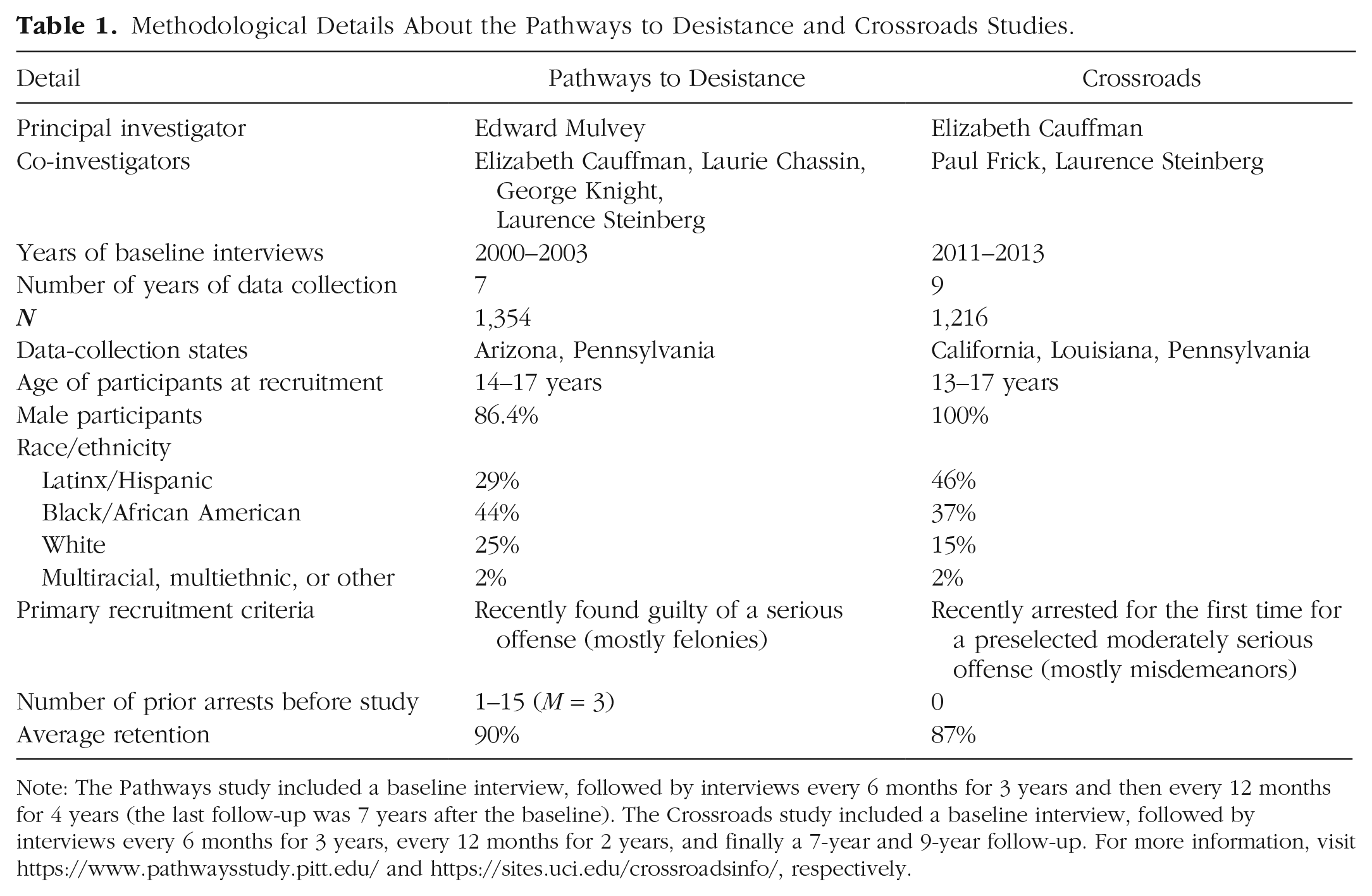
Note: The Pathways study included a baseline interview, followed by interviews every 6 months for 3 years and then every 12 months for 4 years (the last follow-up was 7 years after the baseline). The Crossroads study included a baseline interview, followed by interviews every 6 months for 3 years, every 12 months for 2 years, and finally a 7-year and 9-year follow-up. For more information, visit https://www.pathwaysstudy.pitt.edu/ and https://sites.uci.edu/crossroadsinfo/, respectively.
Risk Factors Associated With Offending, Recidivism, and Desistance
The past few decades of academic research have identified several individual-level and contextual-level risk factors that are related to offending and desistance from crime during adolescence and young adulthood. Below, we summarize the primary risk factors that have been observed in the Pathways and Crossroads studies. None of the factors described below are sufficient or necessary for adolescent offending to occur. Adolescent offending is complex, and thus the risk factors for it are dynamic, cumulative, and compounding.
Individual-level factors
There are six primary individual-level risk factors for adolescent offending (see Fig. 1).
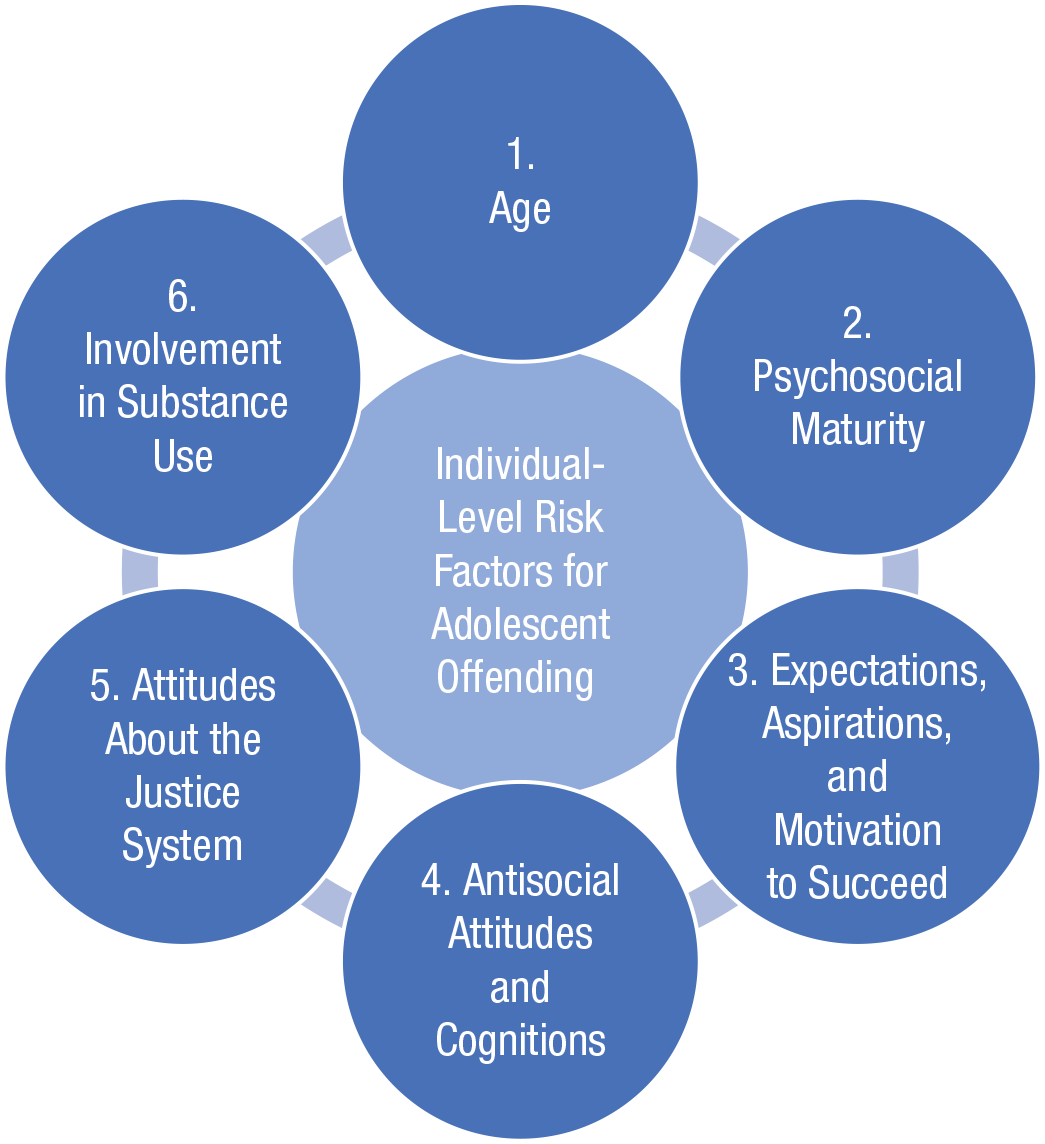
Individual-level risk factors for adolescent offending.
Individual Factor 1: age
One of the most reliable predictors of antisocial and illegal behavior (as well as risky behavior in general) is age (Farrington, 1986; Le Blanc, 2020; Loeber & Farrington, 2012). Although the precise reason that age is such a strong correlate of antisocial and illegal behavior is not completely understood, there are many potential neurocognitive, behavioral, social, and biological changes that occur across development that likely account for a large portion of the underlying link. For example, one popular theory explaining the heightened risk-taking during adolescence is rooted in the idea that the reward system and the cognitive control system develop along different timetables (Steinberg, 2010). The reward system is highly activated and responsive in early adolescence, whereas the system that governs behavior and controls emotions and behavior (e.g., prefrontal cortex) develops slowly and gradually across adolescence and early adulthood. Indeed, the prefrontal cortex is not fully restructured and adultlike until the mid-20s (Steinberg, 2010). The fact that adolescents are particularly responsive to rewards during a time that their cognitive control and executive functioning are underdeveloped may explain why (to some extent) adolescents may be more likely to engage in risky, and sometimes illegal, behavior than children or adults (Steinberg, 2010).
Nonetheless, both self-report and official arrest data demonstrate that the prevalence of illegal behavior, a serious type of risk-taking, increases from childhood to adolescence and tends to decrease during young adulthood and beyond (DeLisi, 2015; Laub & Sampson, 2001; Sampson & Laub, 2003). This pattern of offending is commonly referred to as the age–crime curve (see Fig. 2). Although the precise shape and peak of the curve may shift depending on the specific illegal behavior under question (e.g., property vs. violent vs. drug offenses), crime generally peaks during late adolescence and early young adulthood and declines thereafter. See Figure 2 for a sample of the age–crime curve using hypothetical/theoretical data, self-reported data from the Pathways and Crossroads studies, and official U.S. arrest records, respectively.
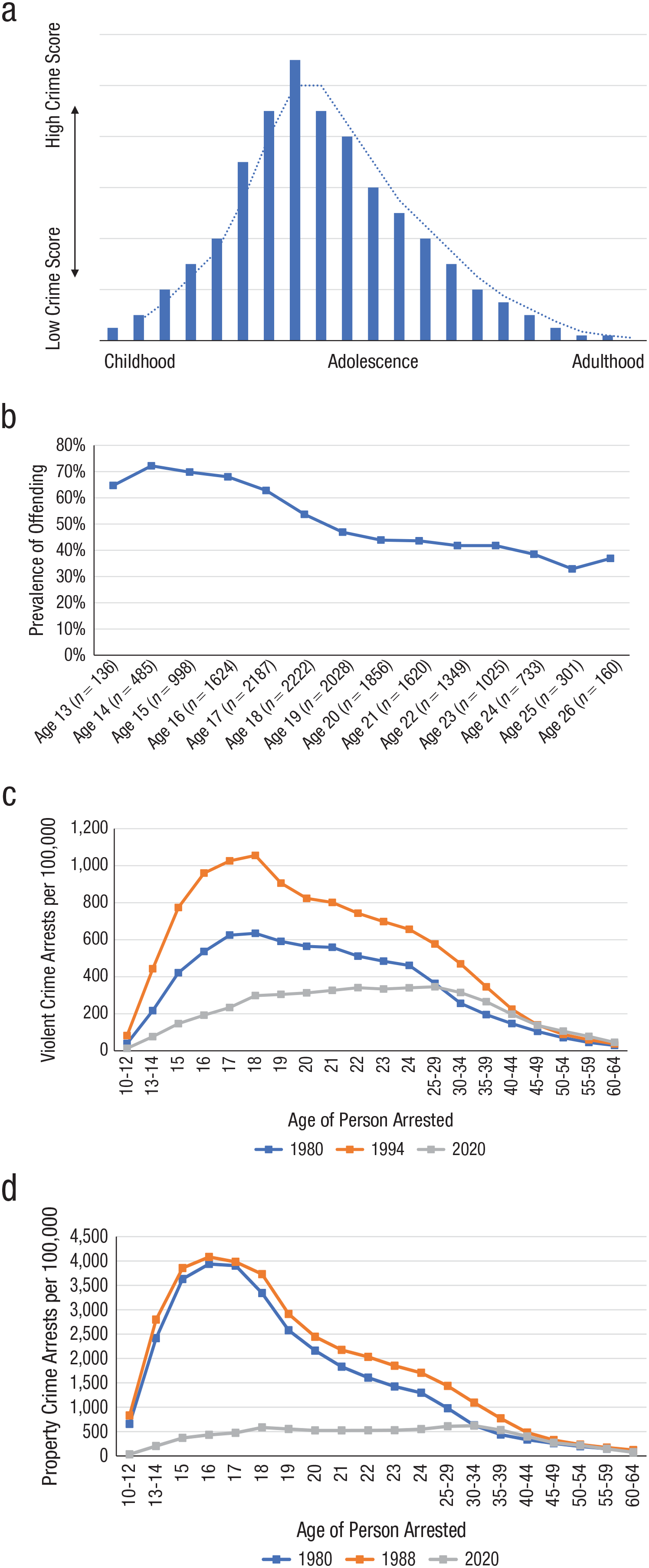
Association between age and crime. The age–crime curve (a), highlighted by the dotted line, refers to the finding that the prevalence of criminal behavior tends to increase during adolescence, peak during late adolescence, and decline in early young adulthood. This graph uses hypothetical data representing the general pattern typically observed in studies examining crime and arrest rates by age. The prevalence of endorsing any of the self-reported offending items (b) is shown separately for each age group, collapsed across data from the Crossroads study (age range = 13–26 years) and Pathways study (age range = 14–26 years). The number of violent crime arrests (c) and property crime arrests (d) are each shown as a function of the age of the arrestee and year of the arrest. Violent crimes include murder, nonnegligent manslaughter, robbery, and aggravated assault. Property crime includes burglary, larceny/theft, motor vehicle theft, and arson. Data for (c) and (d) were obtained from U.S. Department of Justice, Office of Justice Programs (2022). Note that the COVID-19 pandemic struck the United States and other nations in 2020 and had an impact on the type and volume of illegal behaviors committed by individuals as well as the behaviors that were detected and filed by police departments. None of the Pathways interviews were conducted during or after 2020, and only approximately 7% of Crossroads interviews were conducted after March of 2020.
However, the de-escalation or desistance in offending that would be expected from the shape of the right side of the age–crime curve does not happen at the same exact time for everyone. Furthermore, although offending is more prevalent during adolescence than childhood or adulthood, many adolescents never engage in illegal behavior. Thus, it is important to identify additional risk factors that place individuals at risk for engaging in (or failing to desist from) antisocial and illegal behavior during these vulnerable developmental periods.
Individual Factor 2: psychosocial maturity
Data from the Pathways study, Crossroads study, and other seminal studies on adolescence have shown that several developmental factors in addition to chronological age are consistently linked with offending. One overarching and consistent predictor of offending and desistance is psychosocial maturity—a multifaceted construct that encompasses a variety of cognitive, social, and emotional features related to decision-making (Cauffman & Steinberg, 2000). Key features of psychosocial maturity include the ability to control impulses, think about the future and plan ahead, resist the influence of other people, and delay gratification (Cauffman & Steinberg, 2000; Monahan, Steinberg, et al., 2009; Steinberg & Cauffman, 1996). In general, psychosocial maturity tends to develop gradually across adolescence into the mid-20s, which tends to align temporally with neurodevelopmental studies that have shown that key areas of the brain responsible for higher order cognitive tasks and emotional control are restructuring and creating stronger connections to other regions and systems during this period.
Although some contexts may restrict maturation of this construct (Dmitrieva et al., 2012), psychosocial maturity generally improves with age for almost all young people, even among the Pathways youths who were convicted of serious crimes during adolescence (Monahan, Steinberg, et al., 2009). Psychosocial immaturity may also partially explain why adolescents are more likely than children and adults to engage in criminal behavior, given that normative features of adolescent development—such as heightened sensation-seeking, increased risk-taking, and reduced capacities for future orientation, long-term planning, and impulse control—are also risk factors for antisocial and illegal behavior (Cauffman & Steinberg, 2000). It is also important for legal practitioners to understand that youths, especially younger adolescents, may be especially prone to false confessions, coercion, and legal competency 1 issues (Arndorfer et al., 2015; Grisso et al., 2003; Malloy et al., 2014; Steinberg & Scott, 2003) because of their (developmentally expected) psychosocial immaturity (see Fig. 3).
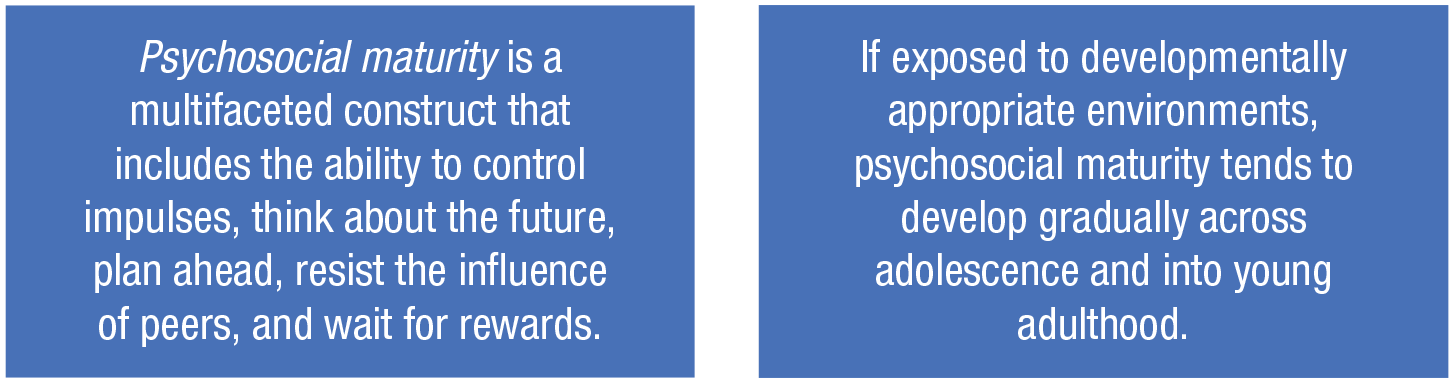
Summary statements on psychosocial maturity.
Many studies using the Pathways and Crossroads data have shown that lower levels of psychosocial maturity 2 are related to higher levels of offending (Bechtold et al., 2014; Fine, Steinberg, et al., 2016; Ray et al., 2016) and that higher levels of psychosocial maturity are key components of the desistance process (Monahan et al., 2013; Monahan, Steinberg, et al., 2009). For example, one key study using Pathways data found that psychosocial maturity was a critical variable that distinguished the youths who persisted in offending after adolescence from the youths who abstained (Monahan et al., 2013). In this analysis, the researchers identified five subgroups of individuals who followed similar patterns of offending from age 14 to approximately age 25 (see Fig. 4), including a small group who persisted in their offending into young adulthood (the “persisters”; 7.5% of Pathways youths).
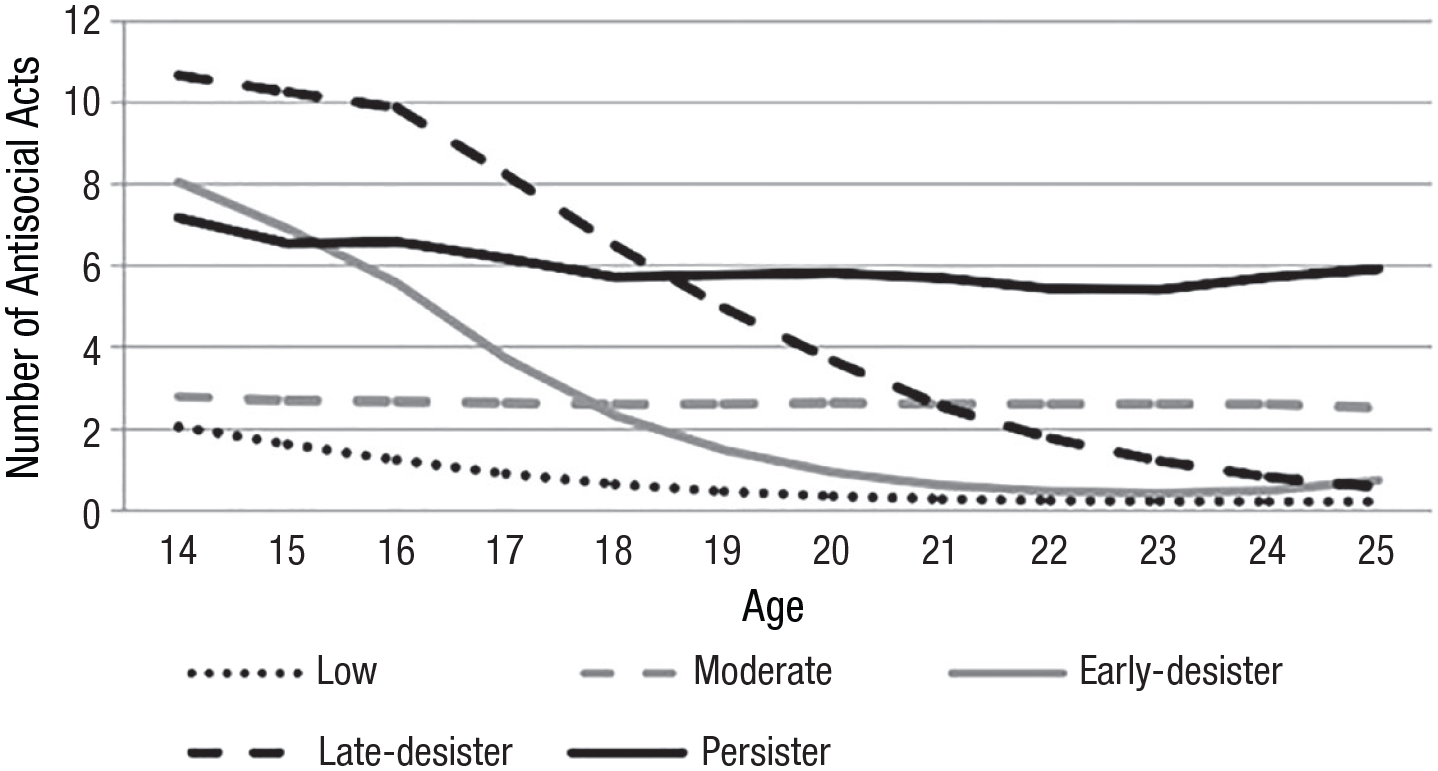
Number of antisocial acts as a function of age and offending subgroup in the Pathways to Desistance study. Adolescents convicted of serious crimes tend to fall into five different subgroups who follow similar patterns of offending across time: low offenders (37.2% of Pathways youths; habitually low), moderate offenders (13.5% of Pathways youths; consistently moderately low risk of offending), early desisters (31.3% of Pathways youths; offended only in early adolescence), late desisters (10.5% of Pathways youths; peaked around age 15 and then steadily declined into young adulthood), and persistent offenders (“persisters”; 7.5% of Pathways youths; consistently high risk of offending). Figure reproduced from Monahan et al. (2013).
As demonstrated by the proportion of youths who fell into each group, the vast majority of justice-system-involved young people—even among Pathways youths who were convicted of serious offenses—did not continue offending in early adulthood. Even in the Pathways study, almost 40% of the sample had a very low probability of offending across the study period, and only 7.5% of the young men persisted in criminality into adulthood. The researchers found that youths who persisted in offending had significantly lower psychosocial maturity than those who desisted from offending (see Fig. 5; Monahan et al., 2013).
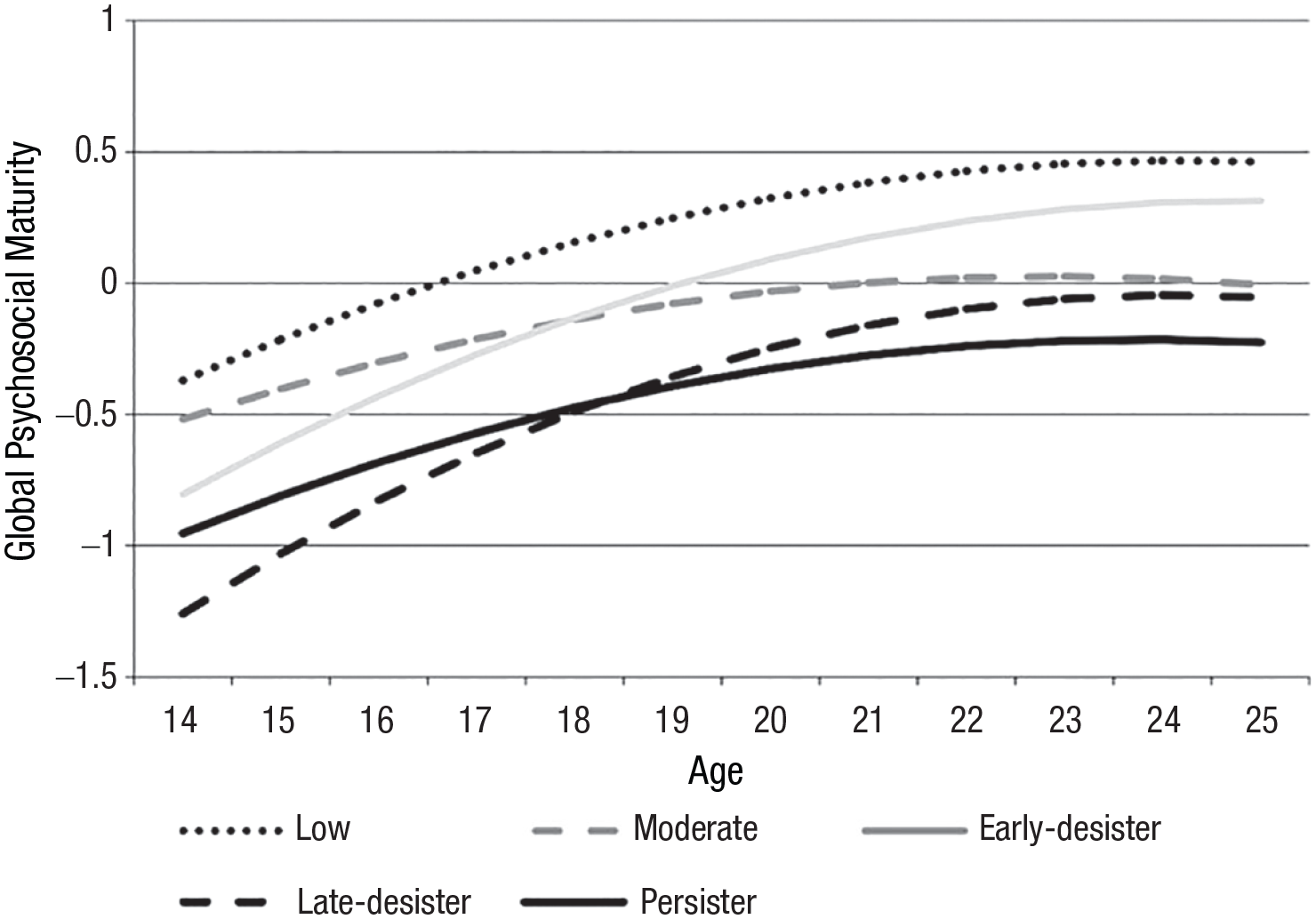
Global psychosocial maturity as a function of age and trajectory group in the Pathways to Desistance study. Global psychosocial maturity includes measures of impulse control, consideration of other people, future orientation, personal responsibility, and resistance to peer influence. Youths who fell into the persistent-offender group (“persisters”; 7.5% of Pathways youths) had the lowest levels of psychosocial maturity and demonstrated the least amount of growth in psychosocial maturity between ages 14 and 25. Youths who fell into the low-offender group (37.2% of Pathways youths) had the highest psychosocial maturity and demonstrated the greatest amount of growth from ages 14 to age 25. Figure reproduced from Monahan et al. (2013).
It makes intuitive sense that youths who are better able to inhibit their impulses, consider the future consequences of their present actions, and take other people’s perspectives into consideration would also exhibit less antisocial behaviors as they age (Moffitt et al., 2013). Interestingly, other studies with Pathways and Crossroads data have demonstrated that some types of contact with the justice system (e.g., secure confinement) and exposure to serious violence may actually inhibit the development of psychosocial maturity during adolescence and early young adulthood (Dmitrieva et al., 2012; Monahan et al., 2015; Myers et al., 2018), which may ultimately lead to more offending. Within the context of normative adolescent psychological development, psychosocial maturity evolves throughout one’s mid-20s and is positively influenced by healthy and nurturing peer, family, and school relationships and contexts (Steinberg et al., 2004). Beyond the field of juvenile justice, some investigators have examined models of psychosocial maturity development from a multidisciplinary perspective, noting that impulsivity may be an adaptive response to harsh or unpredictable environments (Fenneman et al., 2022). It would therefore follow that incarcerated 3 youths with weakened access to social supports and embedded in a harsh environment may be less likely to attain strong levels of psychosocial maturity by their mid-20s and may in turn fail to “age out” of criminal behavior as they enter young adulthood (Dmitrieva et al., 2012). Indeed, individual differences in the development of psychosocial maturity may partially explain why some adolescents do not age out of criminal behavior as the age–crime curve would predict (see Fig. 6).
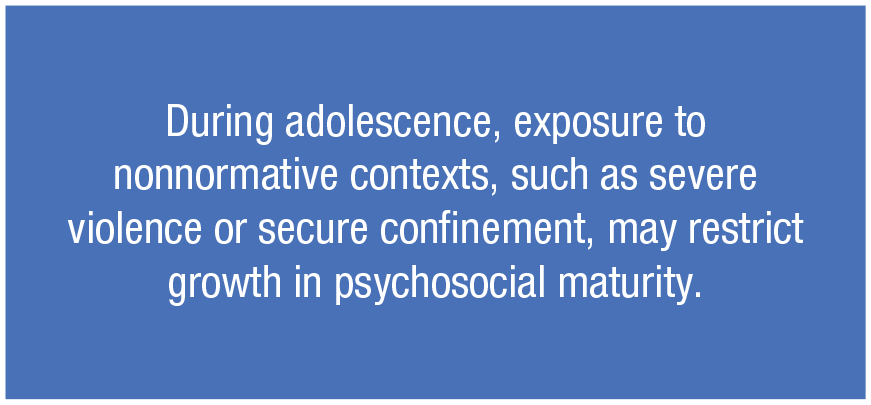
Summary statement on nonnormative contexts and psychosocial maturity.
Individual Factor 3: expectations, aspirations, and motivation to succeed
In addition to psychosocial maturity, the Crossroads and Pathways studies have demonstrated that adolescents’ beliefs about their ability to have future success are also related to their propensity to engage in antisocial and illegal behavior (Iselin et al., 2012; Mahler et al., 2017). For example, the Crossroads study findings show that adolescents’ aspirations for future success (i.e., importance of future goals) and expectations for future success (i.e., likelihood of achieving future goals) were independently related to subsequent antisocial and illegal behavior, even after analyses controlled for confounding factors such as age, IQ, parental education, race/ethnicity, impulse control, and prior offending (Mahler et al., 2017). However, the protective impact of positive aspirations was significant only among youths who had higher impulse control. In other words, adolescents who are impulsive may minimize the importance of long-term goals in certain situations, or they may be particularly vulnerable to other strong risk factors related to antisocial and illegal behavior. Interventions that facilitate growth in components of psychosocial maturity may increase the protective impact of positive expectations and aspirations for the future. Another study with the Pathways data specifically examined the extent to which aspirations and expectations for staying out of trouble with the law were related to self-reported offending. As in Crossroads findings, youths who expected to engage in law-abiding behavior self-reported lower antisocial and illegal behavior in the subsequent 12 months (Iselin et al., 2012). Taken together, results from the Crossroads and Pathways studies provide important real-world implications: Programs aimed at improving youths’ attitudes and beliefs about their ability to have future success, along with programs aimed at improving impulse control and other components of psychosocial maturity, may help reduce recidivism.
Individual Factor 4: antisocial attitudes and cognitions
Data from the Crossroads and Pathways study have also demonstrated that antisocial attitudes and cognitions are also consistently related to antisocial and illegal behavior during adolescence and early adulthood. For example, a study with the Crossroads data found that youths who reported higher callous-unemotional traits (i.e., shallow or inappropriate affect, deficits in ability to feel empathy, inappropriate feelings of guilt; Frick et al., 2014) were more likely to engage in antisocial and illegal behavior across time (Ray et al., 2016), which is consistent with prior work in this area (Frick et al., 2014; Lynam, 1996). In a study with the Crossroads data, Ray and colleagues (2016) first identified subgroups of youths who reported similar histories of self-reported offending before their first arrest (~age 13 to 17; see Fig. 7). The authors found that youths who reported higher callous-unemotional traits were more likely to be in the highly delinquent, varied group (Ray et al., 2016), even after controlling for other strong predictors of offending, such as impulse control and neighborhood conditions.
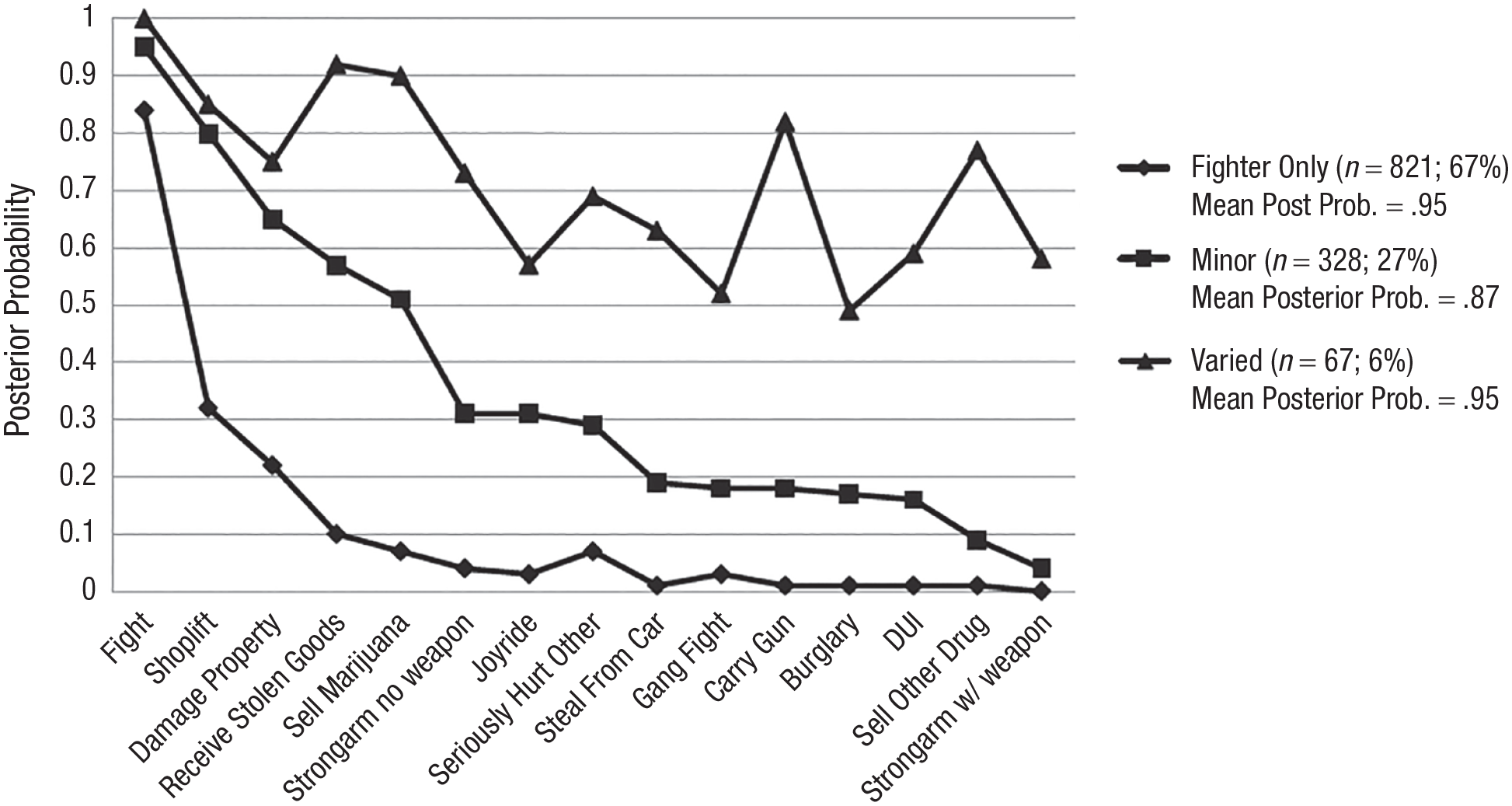
Probability of engaging in various types of offending by latent class group in the Crossroads study. Latent class groups represent youths’ histories of offending prior to first arrest. Three subgroups of youths reported similar histories of prior offending. The first group mostly engaged only in fighting (“fighter only”); the second group engaged in a few minor offenses, such as shoplifting (“minor”); and the final group had a relatively high probability of engaging in nearly all of the 15 offenses included in the analysis (“varied”). Figure reproduced from Ray et al. (2016).
Similar to callous-unemotional traits, moral disengagement has also been identified by the Pathways study as an important risk factor for antisocial and illegal behavior. Moral disengagement is a form of mental gymnastics that allows someone to reinterpret or reappraise an antisocial behavior to rationalize, justify, or diminish the wrongness of it in certain situations (Bandura et al., 1996; Shulman et al., 2011). Researchers using the Pathways data found that declines in moral disengagement during adolescence and early young adulthood were related to declines in subsequent self-reported offending and reduced likelihood of being rearrested during this developmental period, even after controlling for callous-unemotional traits, prior lifetime offending, and opportunity to offend/incarceration time (Shulman et al., 2011).
Individual Factor 5: attitudes about the justice system
Having positive perceptions of the justice system is also important for reducing youth recidivism. One finding that has been replicated several times is that youths who perceive the justice system as fair are less likely to engage in antisocial and illegal behavior than youths who perceive it as unfair (Bolger & Walters, 2019; Fagan & Tyler, 2005; Fine et al., 2022; Fine, Wolff, et al., 2018; Kaiser & Reisig, 2019; Penner et al., 2014; Piquero et al., 2005; Walsh et al., 2019; Walters & Bolger, 2019). Youths develop beliefs about the legal system’s procedural justice, or its perceived fairness, through their own contact with the system as well as through the experiences of their peers and parents (Cavanagh & Cauffman, 2015; Fine, Cavanagh, et al., 2016; Flexon et al., 2009).
As demonstrated with the Crossroads data, youths’ perceptions of justice system legitimacy may mediate the association between perceived fairness and other components of procedural justice and subsequent offending (Fine et al., 2022). Specifically, youths who felt that their voice was heard and that the police were neutral in the way they handled their case were more likely to believe that the justice system was legitimate (e.g., proud of the police, respect for the police), which was ultimately related to lower future self-reported offending (Fine et al., 2022; see Fig. 8). Interestingly, some Crossroads studies show that the association between procedural justice and subsequent offending may actually be stronger for youths who are more psychosocially mature (Fine, Wolff, et al., 2018) and for youths who are exposed to lower levels of peer delinquency (Walsh et al., 2019). Indeed, perceptions of procedural justice may be less predictive of offending for youths who are psychologically immature because of their difficulties regulating their behavior, which may lead them to engage in offending regardless of how they feel they were treated (Fine, Wolff, et al., 2018). Along these lines, antisocial peers have such a strong influence during adolescence that positive perceptions of the justice system may have less of a buffering impact on youths who affiliate with delinquent peers (Walsh et al., 2019).
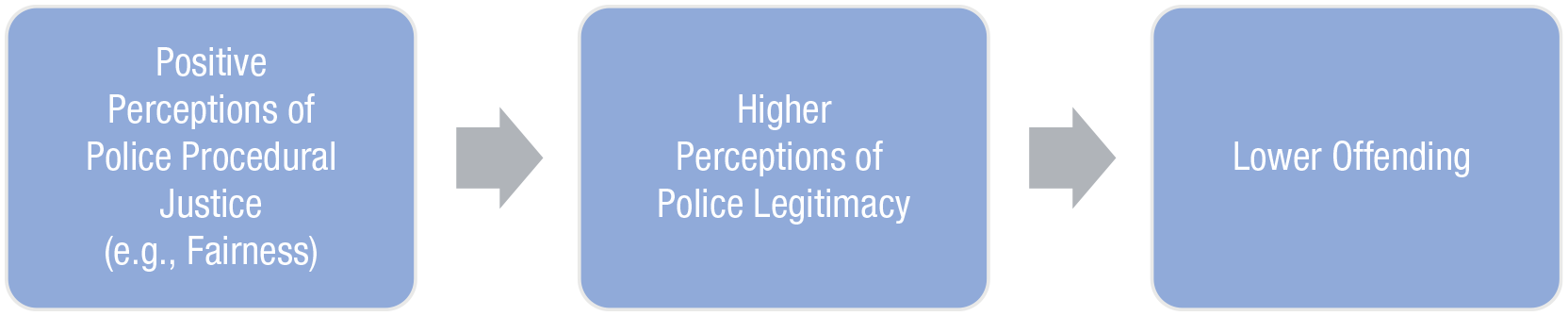
Mediating role of higher perceptions of police legitimacy on the path from positive perceptions of police procedural justice to lower offending, as observed in the Crossroads study (Fine et al., 2022). Youths who perceive the justice system as fair have higher perceptions of police legitimacy, which is related to lower recidivism.
Individual Factor 6: involvement in substance use
In addition to developmental factors, attitudes, and cognitions, robust longitudinal data show that justice-system-involved youths have higher rates of substance use than community youths, and substance use and offending tend to co-occur in community and justice-system-involved samples (Hussong et al., 2004; Mulvey, Schubert, et al., 2010; Ray et al., 2016; Sullivan & Hamilton, 2007; Teplin et al., 2002), although the reason why these two behaviors tend to co-occur is unclear. The association between substance use and offending could be due to the type of youths who engages in both behaviors, another factor causing both substance use and offending (e.g., poor parenting; poor psychosocial maturity; exposure to stress, trauma, or violence), or one behavior putting youths at risk for the other (e.g., substance-induced intoxication heightening the risk that youths will do something else illegal).
Nonetheless, the high overlap between offending and substance use is indisputable. For example, approximately 43% to 45% of youths in the Pathways study met lifetime diagnostic criteria (using the fourth edition of the Diagnostic and Statistical Manual of Mental Disorders [DSM-IV]; American Psychiatric Association, 1994) for alcohol/drug abuse or dependence at baseline (Mulvey & Schubert, 2012). For comparison, a similar analysis concluded that approximately 20% of 12- to 18-year-old adolescents in a community sample met the DSM-IV criteria for substance use dependence (Young et al., 2002). Table 2 compares the prevalence of different types of substance use between justice-system-involved and community samples.
Percentage of Community and Justice-System-Involved Samples With Lifetime Substance Use
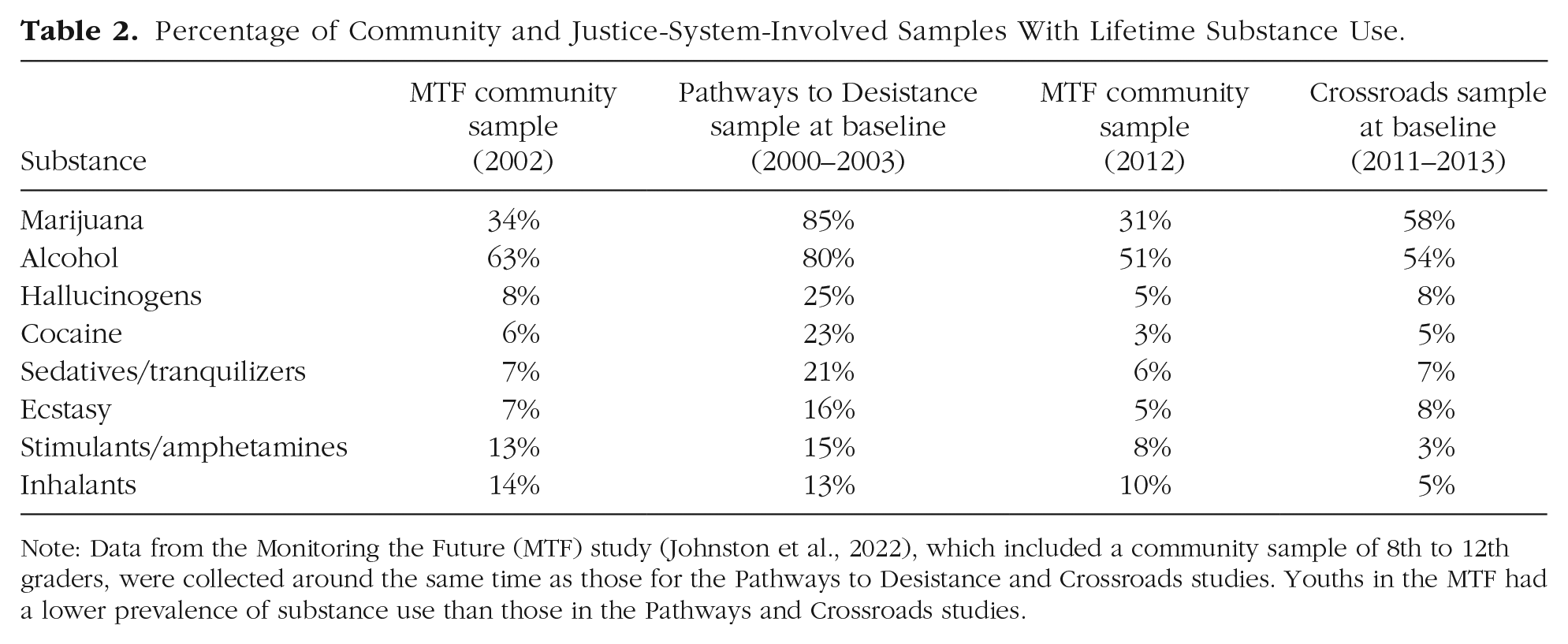
Note: Data from the Monitoring the Future (MTF) study (Johnston et al., 2022), which included a community sample of 8th to 12th graders, were collected around the same time as those for the Pathways to Desistance and Crossroads studies. Youths in the MTF had a lower prevalence of substance use than those in the Pathways and Crossroads studies.
Analyses with the Pathways data have also found that youths with a substance use disorder had the highest risk of being rearrested and yielded high levels of self-reported offending across time, even after controlling for other critical criminogenic risk factors (Schubert et al., 2011). However, one set of encouraging findings with the Pathways data suggest that substance use treatment that included a component of family involvement was related to declines in substance use as well as non-drug-related offending (Chassin et al., 2009; see Fig. 9).
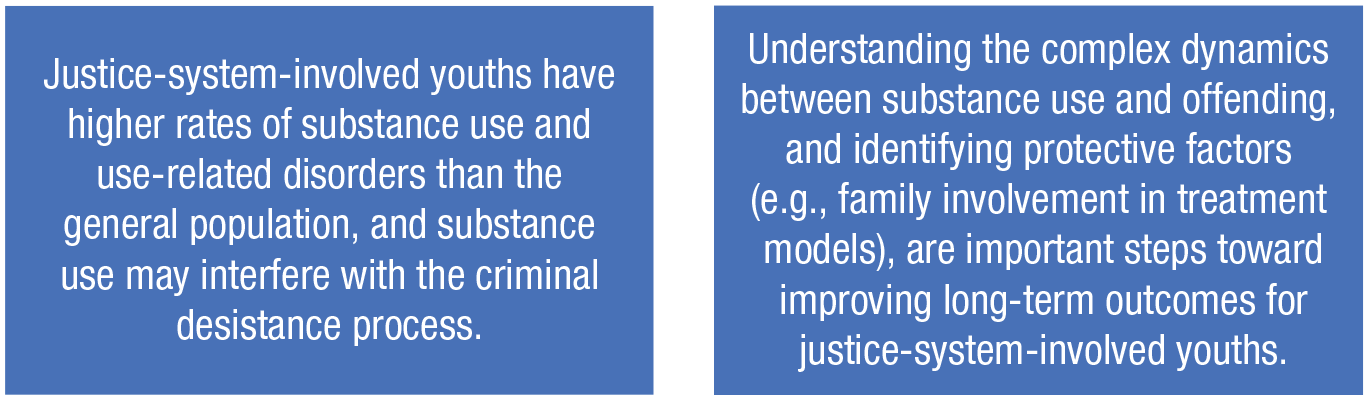
Summary statements on substance use in justice-system-involved samples.
Summary
A variety of individual factors are related to adolescent offending. For example, the age–crime curve demonstrates a very predictable pattern of offending based on age. In general, the prevalence of criminal behavior tends to increase during early and midadolescence, peak in late adolescence, and decline in early young adulthood. Indeed, the vast majority of individuals age out of criminal behavior by the time they reach early adulthood—even among youths who are charged with serious felonies. Other risk factors for adolescent offending include having poor expectations for the future, lacking an intrinsic motivation to succeed, and having poorly developed psychosocial maturity (e.g., impulse control, future orientation). The key construct of psychosocial maturity (e.g., impulse control, ability to plan and delay gratification) appears to play a crucial role in whether youths desist or persist in their crime trajectories. Given some of the typical features of adolescence and the developing psychosocial maturity systems, it is important for parents and other caregivers to encourage healthy and productive risk-taking in order to satiate adolescents’ inherent desire to experiment with risky activities (Duell et al., 2018). Furthermore, individuals working with youths should take advantage of adolescents’ inherent preference for rewards when trying to correct maladaptive behavior. As will be discussed later, certain types of justice system contact and exposure to violence may actually suppress the natural development of psychosocial maturity, which may ultimately explain the high rates of recidivism among some justice-system-involved youths.
Another individual-level risk factor for offending is a youth’s attitudes. For instance, having antisocial attitudes that can be used to justify criminal behavior and having poor perceptions of the justice system are related to higher rates of offending. Youths who feel more emotionally connected to others, more morally responsible for their behaviors, and like they were treated fairly by the justice system are less likely to continue engaging in behaviors that cause harm to their community and are more likely to follow the rules of society. Justice system practitioners should strive to treat youths fairly and with respect, as youths who have positive perceptions of the justice system are less likely to recidivate. Finally, the link between substance use and offending cannot be ignored. Substance use prevention and intervention programs should consider adopting family-centered components, as these programs have been associated with positive outcomes among youths convicted of serious crimes. It is also important to consider the potential impact of substance use on adolescent brain development, given that substance use tends to peak during the same developmental period during which the brain is undergoing significant restructuring. Because of the brain’s malleability during adolescence, it may be especially vulnerable to the negative impact of drug and alcohol experimentation. Indeed, some studies have found that heavy substance use during adolescence has a negative impact on brain development, white matter, neural activation patterns, and cognitive functioning (Squeglia et al., 2009). In particular, heavy alcohol use during adolescence may be related to deficits in memory, attention, and executive functioning (Squeglia et al., 2009). All things considered, multifaceted programs aimed at targeting a variety of risk factors—such as reducing substance use, improving youths’ attitudes and beliefs about their ability to have future success, and improving impulse control and other components of psychosocial maturity—may help reduce recidivism.
Contextual-level factors
There are six primary contextual-level risk factors for adolescent offending (see Fig. 10).
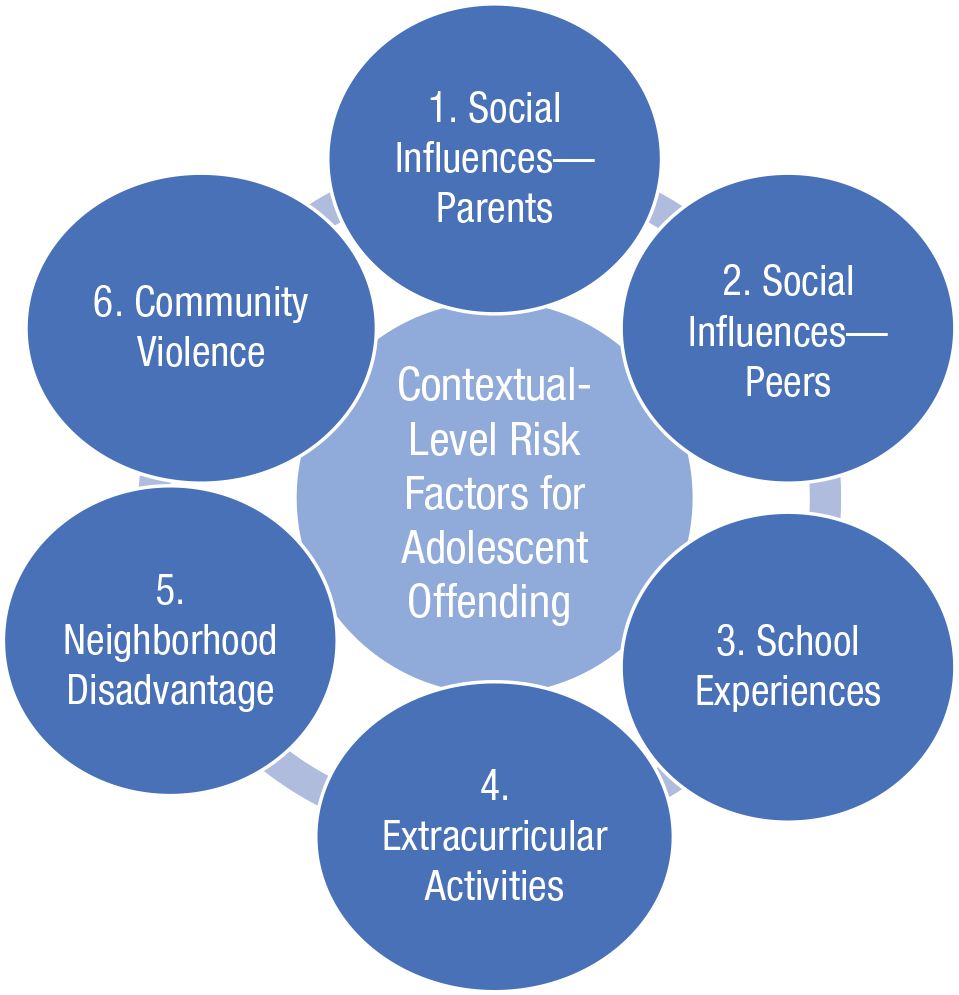
Contextual-level risk factors that have been significantly linked to juvenile offending.
Contextual Factor 1: social influences—parents
In addition to the individual-level factors described previously, the social influences in adolescents’ lives and the contexts to which they are exposed can have substantial impacts, for better and for worse, on adolescent behavior. One of the most commonly examined risk factors for delinquency during adolescence is parents. Decades of robust research studies have shown that parent–child relationships and parenting behaviors are related to youths’ antisocial attitudes and behavior during adolescence and even young adulthood (Barnes et al., 2006; Chung & Steinberg, 2006; Gorman-Smith et al., 2000; Hoeve et al., 2009; Johnson et al., 2011; Pardini et al., 2005; Van Ryzin et al., 2012). For example, overtly negative parental behaviors (e.g., neglect, hostility, rejection), low emotional support, inconsistent discipline, and poor supervision are associated with increased rates of delinquency. Most of the work on parents has typically been conducted with youths’ mothers. However, an interesting variable to investigate is absenteeism of youths’ fathers (Harper & McLanahan, 2004). Researchers attempting to build on this growing literature used the Crossroads data to further understand the impact of fathers’ presence on youths’ propensity for engaging in illegal behavior (Simmons et al., 2018). In this study, the researchers were interested in identifying whether it is worse to have an absent father or a poor father–son relationship after controlling for mother–child relationship quality and other potentially confounding variables. The results showed that having a poor father–child relationship was a stronger predictor of future offending (and substance use) than having an absent father (Simmons et al., 2018). These results are in conflict with public service messages that coerce all fathers to be involved in their children’s lives, no matter the quality of that relationship. As controversial as it may sound, having a harsh, unloving father in a child’s life may be worse than not having a father at all, even despite having a supportive and warm relationship with a mother.
Overall, the association between parent and youth behavior is likely complicated and may even include indirect paths through other contextual factors (e.g., neighborhood and peers). As shown in the Pathways and other studies, poor parental monitoring or poor parent–child relationship quality may engender an unmet need for connection whereby adolescents link up with (and are influenced by) antisocial peers, ultimately leading adolescents to develop antisocial attitudes or engage in antisocial and illegal behavior (Chung & Steinberg, 2006; Pardini et al., 2005; Van Ryzin et al., 2012).
Contextual Factor 2: social influences—peers
In addition to parents, one of the most commonly identified social risk factors for offending during adolescence and young adulthood is peer delinquency and gang involvement (Beardslee et al., 2018; Dodge et al., 2006; Fergusson et al., 2002; Monahan, Steinberg, & Cauffman, 2009; Vitaro et al., 2015; see Fig. 11). Peer contact with the justice system may even shape youths’ perceptions of the legal system, which may in turn influence youths’ offending behavior (Fine, Cavanagh, et al., 2016). Although youths who engage in antisocial and illegal behavior tend to affiliate with peers who do the same, the precise reason for this association is unclear. It could be that youths who engage in illegal behavior seek out similar peers (i.e., selection; Kandel, 1978; Vitaro et al., 2015), that peers teach or reinforce illegal behaviors (i.e., socialization; Dishion et al., 1999), or that certain environments tend to cultivate antisocial norms and climates (e.g., neighborhood- or community-level factors).
Summary statement on social influences.
One study using Pathways data attempted to untangle the influence of peer selection and relationships during adolescence and young adulthood (Monahan, Steinberg, & Cauffman, 2009). The authors found that both selection and socialization partly explained the link between peer delinquency and youths’ own offending up until ages 15 or 16, but socialization became more influential from age 16 to age 20 (Monahan, Steinberg, & Cauffman, 2009). Interestingly, when resistance to peer influence—a feature of psychosocial maturity—peaks, peer behavior is less correlated with youths’ own behavior (Monahan, Steinberg, & Cauffman, 2009). This study supports the work described previously and suggests that improvements in psychosocial maturity are critical for desistance from crime.
Contextual Factor 3: school experiences
Just like parents and peers, school policies and school type can have strong influences on adolescent behavior. One topic in this area that has been examined with the Crossroads data is the impact of changing school types (Fine, Simmons, et al., 2018). In the Crossroads study, youths who transferred to alternative schools self-reported more subsequent offending (particularly violence) than youths enrolled in traditional schools, controlling for prior self-reported offending (Fine, Simmons, et al., 2018). Interestingly, and despite these differences in offending, youths at alternative schools self-reported better academic performance than youths at traditional schools (Fine, Simmons, et al., 2018). These results support prior work suggesting that alternative schools may be beneficial for at-risk youths in terms of school outcomes (Cox, 1999; Cox et al., 1995; Kemple & Snipes, 2000) but additionally suggest that school changes may also inadvertently increase antisocial behavior.
Another set of school policies that may be related to recidivism among justice-system-involved youths is school discipline. Using comprehensive data from the Pathways study, Monahan and colleagues (2014) found that youths who were suspended or expelled from school had a heightened risk of being arrested in that same month. In fact, the odds of being arrested were more than 2 times higher in months during which youths were suspended or expelled from school. Furthermore, the link between school disciplinary techniques and justice system involvement appeared to be stronger for youths who had fewer risk factors (e.g., low history of problem behavior, lower peer delinquency). Interestingly, these associations were significant regardless of youths’ race and ethnicity, which suggests that being removed from school seems to be a universal risk factor for police contact and arrest (Monahan et al., 2014). Given that continued contact with the justice system during adolescence may lead to other poor life outcomes (e.g., extended incarceration, school dropout, poor academic engagement and performance; Bushway & Reuter, 2003; Gatti et al., 2009; Hirschfield, 2009; Hjalmarsson, 2008; Kirk & Sampson, 2013; Sweeten, 2006), schools should be motivated by these findings to identify alternative methods of discipline that allow youths to physically remain in schools.
Contextual Factor 4: extracurricular activities
Many policy-related conversations about delinquency prevention also include discussions about extracurricular activities (e.g., sports, music, school clubs). Some prior studies have found that youths enrolled in extracurricular activities are less likely to engage in school misconduct, antisocial behavior, and illegal behavior than youths who do not participate in these activities (Bohnert et al., 2009; Feldman & Matjasko, 2005; Fleming et al., 2008; Fredricks & Eccles, 2008; Guest & McRee, 2009; McHale et al., 2005). However, the bulk of the work in this area has been cross-sectional, which means that unmeasured confounding factors, such as socioeconomic status or parental involvement, might account for the association. This means that it is unclear whether extracurricular engagement precedes or causes prosocial youth behavior.
Researchers using the Crossroads data attempted to learn more about extracurricular participation and the direction of the association between extracurricular activity and self-reported offending (and school misconduct; Simmons et al., 2021). First, the authors found that the proportion of Crossroads youths who participated in extracurricular activities was lower than similarly aged high school students in the United States (~50% vs. 70%; Feldman & Matjasko, 2005; Simmons et al., 2021). Second, higher self-reported offending in one year was related to reduced engagement in extracurricular activities in the next 12 months. However, a relationship in the opposite direction was not found: Participating in extracurricular activities had no effect on subsequent offending. In other words, a youth who reported many offenses in 2012 was less likely to join a soccer team in 2013; but a youth on the soccer team in 2012 did not self-report any fewer offenses in 2013 (see Figs. 12 and 13; Simmons et al., 2021).
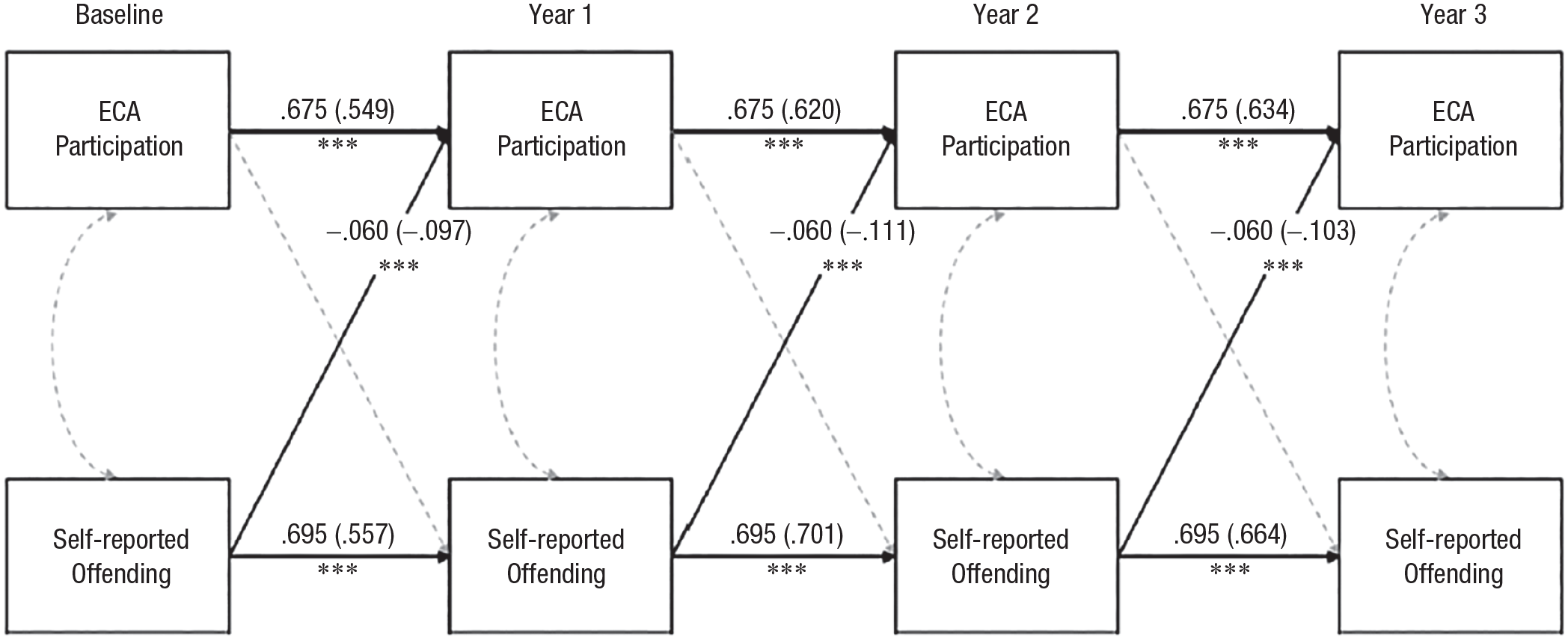
Bidirectional associations between participation in extracurricular activities (ECA) and self-reported offending. Data are from the Crossroads study. Solid black arrows represent significant paths, dashed gray single-headed arrows represent nonsignificant paths, and dashed gray double-headed arrows represent the concurrent covariances between the constructs. The paths from offending to ECA participation demonstrate that youths who engaged in high levels of offending were less likely to engage in ECA at the next time point than youths who engaged in lower levels of offending. The paths from ECA participation to offending indicate that participating in ECA did not lower youths’ levels of offending. Values outside parentheses are unstandardized coefficients; values inside parentheses are standardized coefficients. Asterisks indicate significant paths (p < .001). Figure reproduced from Simmons et al. (2021).
Summary statement on extracurricular activities.
Contextual Factor 5: neighborhood disadvantage
Similar to the influence of school settings, the neighborhood in which youths live may also present unique risk factors for their behavior (Chung & Steinberg, 2006; Fabio et al., 2011; Odgers et al., 2012; Sampson et al., 1997; Sampson & Groves, 1989; Shaw & McKay, 1942). Justice-system-involved youths are disproportionately more likely to live in disadvantaged neighborhoods, as evidenced in both the Pathways and Crossroads samples. In the Pathways study, 75% of the youths lived in neighborhoods where the median annual household income was $30,000 or less, and half of the youths lived in neighborhoods where the median annual household income was $23,000 or less (Chung & Steinberg, 2006). In the Crossroads study, youths lived in areas where an average of 29% of households were at or below the poverty line. Crossroads youths who lived in neighborhoods with higher community disadvantage were more likely to have extensive delinquency histories (as well as higher probabilities of non-marijuana drug use and other substance use), even after analyses controlled for other risk factors, such as callous-unemotional traits and low impulse control (Ray et al., 2016).
Researchers using both the Pathways and Crossroads data have attempted to understand why neighborhood conditions are related to youth offending. In one analysis with Pathways data, parenting behaviors (e.g., low warmth, knowledge, monitoring) and delinquent peer affiliation emerged as key mediators between neighborhood and youth offending (Chung & Steinberg, 2006). This also supports some literature showing that parents living in privileged neighborhoods and schools may be less vulnerable to stress stemming from financial hardships and may have more time and resources to support youths’ academic pursuits and well-being (Şengönül, 2022), which may in turn reduce delinquency. In another study using Crossroads data, youths in poorer neighborhoods believed that they would die at younger ages, which in turn was related to higher offending (see Fig. 14; Kan et al., 2021). Interestingly, this indirect association was significant regardless of the type of offending outcome (e.g., property, violent, drug related), and was also significant when analyses examined other types of risky behavior (e.g., substance use, risky sexual behavior). Kan and colleagues (2021) proposed a life-history framework (Roff, 1993; Stearns, 1992; Stearns et al., 2008) whereby youths who witness high levels of disadvantage may expect to die at a young age, subsequently causing them to adopt a fast-paced and risk-taking lifestyle in pursuit of short-term goals and rewards (see also Dunkel et al., 2013).

Mediating role of lower perceived life expectancy on the path from high neighborhood disorder to higher offending, substance use, and risky behavior, as observed in the Crossroads study (Kan et al., 2021).
Contextual Factor 6: community violence
Data from the Crossroads and Pathways studies have been used to specifically examine the associations between exposure to violence and youth behavior. Shulman and colleagues (2021) found that youths reported elevated reactive aggression (as well as anxiety) in the same years when they were exposed to more violence, even after accounting for prior aggression/anxiety as well as other risk factors (i.e., peer delinquency, neighborhood disadvantage, incarceration, gun carrying, and the death of a loved one). This suggests that youths who experience violence may be more prone to aggressively react to neutral or ambiguous stimuli that they perceive as hostile. The authors emphasized the need for policymakers to prioritize more robust violence prevention programs (particularly gun control laws) and mental health service provision in communities more likely to be impacted by violence and gun crimes (Shulman et al., 2021).
Myers and colleagues (2018) also examined the “cycle of violence” in the Crossroads study by testing potential mediators explaining the relationship between exposure to violence and future aggression. Consistent with prior research on justice-system-involved boys, Kimonis et al.’s (2011) study found that violence exposure was linked to future aggression and, similar to Shulman and colleagues’ (2021) findings, violence exposure was specifically related to reactive aggression. Moreover, impulse control emerged as the strongest mechanism for this link, beyond the significant mediating effects also found for callous-unemotional traits, consideration for other people, and anxiety. These findings suggest that youths who are exposed to serious violence are less likely to develop sufficient impulse control, which ultimately is related to increased reactive aggression. This is consistent with prior work that has found impulsivity to be a strong predictor of reactive aggression (Marsee & Frick, 2007) and intuitively explains how youths exposed to threatening situations may react impulsively in aggressive ways (see Fig. 15).
Summary statement on violence exposure.
Summary
There are many contextual risk factors for adolescent offending, such as poor father–son relationships, low parental warmth and monitoring, antisocial peer relationships, change of school settings, out-of-school placements (especially for low-risk youths who depend on the consistency of being in school), and exposure to violence. One controversial finding that emerged in the Crossroads study was that having a harsh, unloving father may be worse for a child than not having a father at all. Analyses with the Crossroads data also emphasized the importance of examining the direction of effects. For instance, a lack of engagement in extracurricular activities may be a marker of past delinquent behavior rather than a predictor of future offending. Although research with the justice-system-involved youths in the Crossroads study did not show that engagement in extracurricular activity deterred criminal behavior, research with community samples has demonstrated that engagement in extracurricular activity may be related to increased self-esteem, well-being, academic success, and resiliency (Fredricks & Eccles, 2008; Gadbois & Bowker, 2007; Simpkins, 2015). Future research should examine the extent to which specific components of certain extracurricular activities may have positive benefits for justice-system-involved youths. Given that extracurricular programs vary greatly, some may be more effective than others at promoting positive outcomes. It is also possible that youths’ motivation and reason for participating in the program, as well as whether a youth enjoys the program (or is good at it), likely influence the degree to which extracurricular activities have lasting positive impacts. Last, living in disadvantaged and violent neighborhoods may lead already vulnerable justice-system-involved youths to develop maladaptive cognitive processes, which may promote offending (e.g., low life expectancy fueling risky behavior, low impulse control fueling reactive aggression).
Adolescent Development and the Justice System
As described in the preceding section, there are a variety of factors that raise (and lower) the risk that an adolescent will break the law. Indeed, adolescence and the transition to young adulthood are periods during which risky, antisocial, and illegal behavior tend to peak. However, only some youths are officially arrested and sanctioned. Although the goal of the juvenile justice system is to rehabilitate youths and prevent recidivism, many prior studies suggest that justice system contact is related to high rates of reoffending (Gatti et al., 2009). For example, one large-scale study with more than a thousand youths found that those who were arrested between ages 10 and 17 years were almost 7 times more likely than youths who were never arrested to have an official adult criminal record by age 25, even after controlling for several potential confounding variables, such as self-reported delinquency, family income and structure, impulsivity, peer delinquency, and parental monitoring (Gatti et al., 2009).
Because many studies in this area are observational, there are likely many differences between youths who are and are not arrested, and these differences are difficult to measure and control. One obvious possibility is that arrested youths simply engage in more frequent (or more severe) illegal behavior than nonarrested youths. These potential between-person behavioral differences make it nearly impossible to know whether sustained involvement with the justice system in adulthood is due to the initial contact itself or to the type of youths who was arrested in the first place.
Short- and long-term outcomes associated with contact with the justice system
Impact of the justice system on recidivism
Comparing youths who were arrested with similar youths who were not arrested
One study using Crossroads data attempted to address this issue by recruiting a sample of youths who were similar to the original justice-system-involved participants but who had never been arrested. Most importantly, these “no-contact” youths were the same age, came from similar schools and neighborhoods, and self-reported engaging in similar illegal behavior (Beardslee et al., 2019). In addition to the targeted recruitment, the researchers also used a statistical matching technique to further reduce differences between the arrested (i.e., Crossroads youths) and no-contact youths, and thus any differences observed on the outcomes could be attributed to system contact and not to individual differences that predated the contact. This step is important because researchers were not able to randomly assign some youths to be arrested and others not to be arrested.
Nonetheless, the researchers were particularly interested in understanding (a) whether youths who were arrested engaged in more offending and were more likely to be arrested in the future (i.e., 6 months later) than the youths who had not been previously arrested (i.e., no-contact youths) and (b) whether the way in which arrested youths were processed influenced the extent to which system contact was related to subsequent delinquency. Interestingly, youths in the no-contact group did not significantly change their rate of self-reported offending between the baseline and 6-month follow-up assessments. However, the group that was treated in the most informal way (i.e., sanction and dismiss) generally displayed reductions in self-reported offending, whereas self-reported offending increased in the group that was processed in the most punitive way (i.e., formal adjudication). Moreover, the study found that all justice-system-involved Crossroads youths were more likely than no-contact youths to be arrested during the 6-month study period, even after accounting for self-reported offending (Beardslee et al., 2019; see Fig. 16).
Summary statement on adolescent arrest.
Comparing the impact of different types of justice system sanctions
As shown in the Beardslee and colleagues (2019) study, after youths are arrested, the justice system can process them in a variety of ways, and the way in which youths are processed may have differential impacts on subsequent behavior. In general, prior work suggests that more intense contact with the justice system is related to worse outcomes, including higher rates of recidivism (Gatti et al., 2009; Petitclerc et al., 2013; Petrosino et al., 2010; Wilson & Hoge, 2013). Using the same sample as Gatti and colleagues (2009), Petitclerc and colleagues (2013) found that among youths who were arrested during adolescence, those who were processed formally (i.e., required to make a court appearance) were more than 3 times as likely to have an adult criminal record than those who were arrested but diverted from being formally processed in the criminal justice system (diversion; Petitclerc et al., 2013), even after statistically matching the formally processed and diverted youths on 14 background variables. However, because the Petitclerc and colleagues (2013) study was observational, it may be that youths who were processed in court were different from (or engaged in different behaviors than) youths who were diverted. Youths who were processed more formally may have also had more extensive histories of engaging in illegal behavior. Unfortunately, the study does not provide information about why youths were selected for formal processing or diversion, and there are a variety of factors that may have influenced justice system decision-making.
As described previously, the Crossroads study was specifically designed to address the question of whether formal processing after youths’ first arrest is related to different long-term outcomes than informal processing. The most important components of the Crossroads study are that youths were eligible for the study only if they had never been arrested in the past and that they were currently being charged with a preselected eligible charge, which included charges that had similar probabilities of being processed formally and informally. In one analysis with the Crossroads data, the researchers examined whether formally processed youths engaged in more offending and were more likely to be rearrested compared with informally processed youths up to 5 years after the first arrest (Cauffman et al., 2021). Although the study’s authors were not able to randomly assign youths to be formally processed, they did attempt to reduce baseline differences between formally and informally processed youths by creating statistical matching weights with more than 30 variables.
Results of the study indicated that formal processing during adolescence was not related to reduced rates of rearrest or lower self-reported offending (or any other positive outcome) during the 5 years after the first arrest (Cauffman et al., 2021). Indeed, after testing 19 potential outcomes across multiple domains, the study’s authors found that formal processing was never related to better life outcomes compared with informal processing. In particular, youths who were formally processed were more likely to engage in violence and more likely to be rearrested and incarcerated within the next 5 years (see Fig. 17). Specifically, more than 60% of youths who were formally processed in adolescence were rearrested within 5 years (compared with 43% of informally processed youths) and approximately 28% were incarcerated (compared with 17% of informally processed youths; Cauffman et al., 2021). In general, the impact of formal processing was similar for youths regardless of age at first arrest, race, and ethnicity, although youths who entered the justice system at younger ages and youths of color generally had worse outcomes than older youths and White youths.
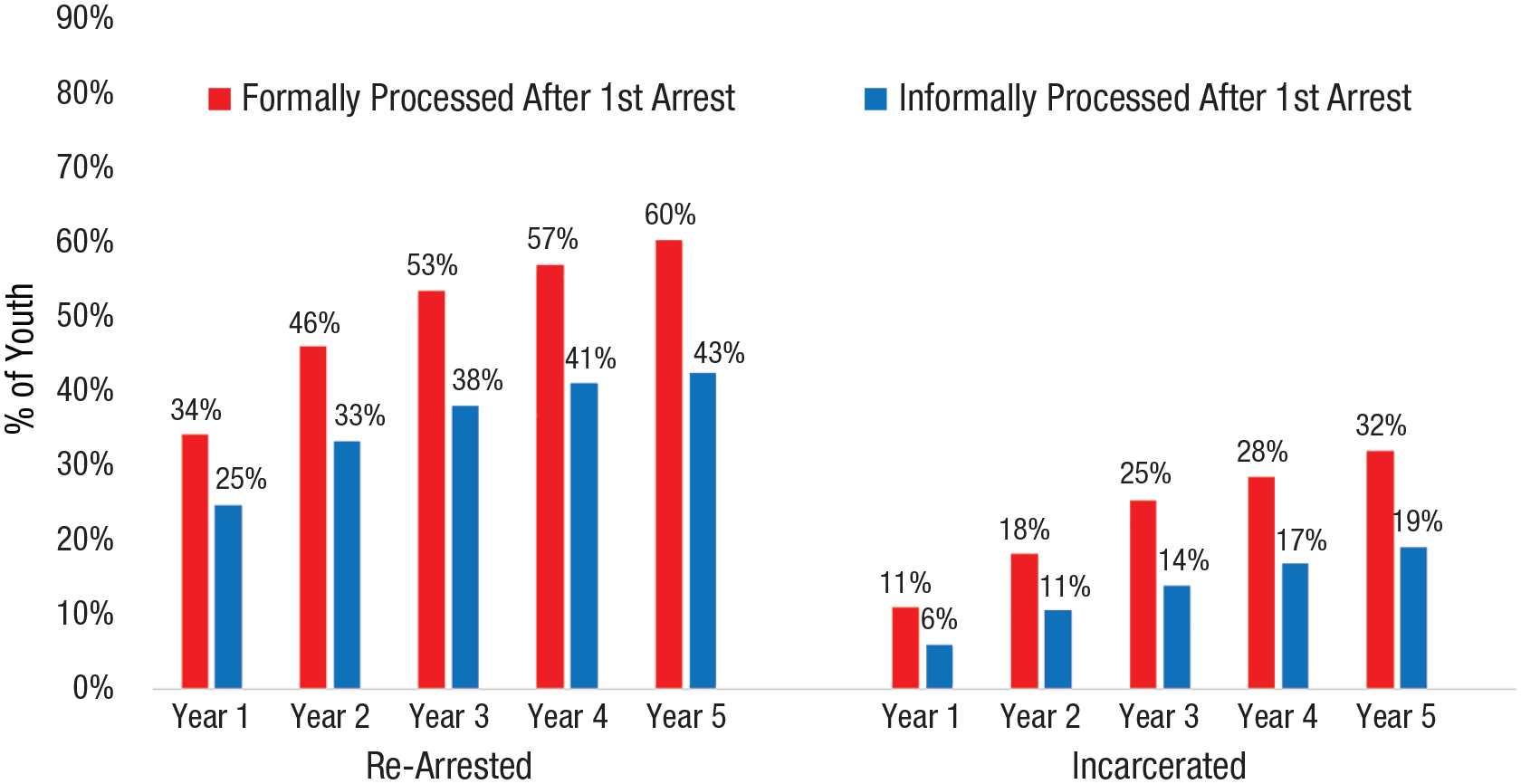
Percentage of youths in the Crossroads study who were formally and informally processed after first arrest by year, separately for youths who were rearrested and youths who were incarcerated. Figure reproduced from Cauffman et al. (2021).
Impact of confinement on recidivism
In addition to processing type, sanction types and the way in which youths are treated by the justice system have been associated with recidivism (Gatti et al., 2009; Schubert et al., 2012; see Fig. 18). For example, Gatti and colleagues (2009) found that youths who served time in secure placements (e.g., detention) had a higher likelihood of being arrested during adulthood than youths who served time on community supervision and youths who were never arrested (Gatti et al., 2009). Moreover, the climate inside secure facilities has also been related to reoffending. For example, Brown and colleagues (2019) examined the predictors of violence for incarcerated youths and found that those who perceived staff as fair were less likely to engage in institutional violence than those who perceived staff as unfair. Furthermore, institutional climate has also been shown to influence youths’ behavior after release. One analysis with the Pathways data showed that youths who had more positive perceptions of their confinement experience were less likely to be rearrested after release, less likely to return to a secure facility, and less likely to self-report that they had reoffended in the year after being released (Schubert et al., 2012).
Summary statement on the impact of sanctions and youths’ perceptions of the justice system on reoffending.
Impact of the justice system on developmental and socioeconomic outcomes
The research presented thus far has described the ways in which different types of contact with the justice system may be related to recidivism (see Fig. 19). In addition to reoffending, contact with the legal system may be related to additional poor life outcomes. For example, as mentioned previously, secure confinement may suppress the development of psychosocial maturity (Dmitrieva et al., 2012). Diminished psychosocial maturity is concerning because it is related to many positive outcomes throughout the life course, such as better health, employment, education, and psychological resiliency (Johnson et al., 2014). Formal processing and police contact may also be related to reduced motivation to succeed and lower expectations for future success, as demonstrated in both the Crossroads study (Cauffman et al., 2021) and Pathways study (Testa et al., 2021).
Summary statement on the impact of formal processing.
Contact with the justice system has also been directly related to poor academic and occupational outcomes. For example, justice-system-involved youths are less likely to graduate from high school (Hjalmarsson, 2008), less likely to enroll in college (Kirk & Sampson, 2013), more likely to be unemployed as adults, and more likely to be dependent on welfare (Sampson & Laub, 1990). In the Crossroads study, youths who were formally processed at their first arrest were less likely than those who were diverted to be enrolled in school and less likely to have obtained a high school diploma or equivalent 5 years later (Cauffman et al., 2021). A lack of sufficient education is concerning because ample research shows that individuals without high school diplomas or the equivalent are less likely to earn a livable wage and maintain stable, gainful employment (Bridgeland et al., 2006; Kienzl & Kena, 2006). Indeed, it is possible that justice system involvement is related to poor long-term occupational and economic outcomes because of the impact of the justice system on education attainment.
Summary
Contact with the justice system can be related to a variety of poor outcomes in the short and long term. For example, youths who are arrested and formally sanctioned by the justice system are more likely to engage in offending and be arrested at a later time point than youths who are not arrested during adolescence and youths who are diverted from the criminal justice system. In addition to offending, contact with the justice system has also been related to poor psychosocial and academic outcomes. From a policy perspective, the research suggests that decision-makers in the juvenile justice system should strive to minimize formal processing and time in detention for youths who have committed moderately serious offenses. Simultaneously, juvenile justice policymakers should work to expand existing diversion programs and alternatives to secure detention. Of course, not all adolescents will be appropriate for these programs, and further, community stakeholders are more willing to divert youths for lower level offenses, but research on recidivism suggests that most youths who are charged with moderately serious offenses would benefit from these kinds of opportunities. From an academic perspective, future research should focus on understanding why contact with the justice system may be related to poor long-term outcomes, with the goal of producing evidence-based guidelines to improve current interventions.
Mental health and psychosocial needs of youths involved with the justice system
When distributing sanctions, justice system decision-makers should consider the high behavioral, psychosocial, and health needs of the youths in their care, as well as the violence that youths experience prior to their contact with the law. Many justice-system-involved youths are exposed to serious violence in their lifetimes (Shulman et al., 2021; Teplin, Meyerson, et al., 2021). A good illustration of the high levels of violence exposure among justice-system-involved populations comes from the Northwestern Juvenile Project, a sample of nearly 2,000 justice-system-involved youths who were recruited while in a Chicago juvenile detention facility and followed by the research team for more than a decade (Teplin, Meyerson, et al., 2021). At recruitment, youths were approximately 15 years old (range = 10–18). Approximately 10% of the male youths in the Northwestern Juvenile Project were injured in a shooting prior to age 18, and approximately 33% had been injured or killed by a firearm prior to age 32 (Teplin, Meyerson, et al., 2021). Similarly, analyses with the Crossroads data found that approximately 64% of participants were direct victims of a serious violent event when they were 14 to 17 years old, and approximately 39% were exposed to gun violence during the 5-year period after their first arrest (Shulman et al., 2021).
In addition to prior exposure to trauma and violence, justice-system-involved youths have higher rates of mental health problems than do community youths (Fazel et al., 2008; Thompson & Morris, 2016). Indeed, studies have found that 45% to 73% of youths in the juvenile justice system meet criteria for one or more psychiatric illnesses, with substance use disorders being the most common (Shufelt & Cocozza, 2006). Table 3 compares male and female youths in the Northwestern Juvenile Project and in community samples. With respect to the Pathways participants, approximately 58% met the criteria for at least one mental health problem at the baseline interview (14–17 years of age), with substance use disorder also being the most common (Schubert et al., 2011). Unfortunately, research with the Northwestern Juvenile Project showed that two thirds of males and one third of females who were diagnosed with a psychiatric disorder around age 15 were still diagnosed with a disorder when they were assessed 15 years later (Teplin, Potthoff, et al., 2021).
Percentage of Justice-System-Involved and Community Samples Diagnosed With a Psychiatric Disorder Around Age 15
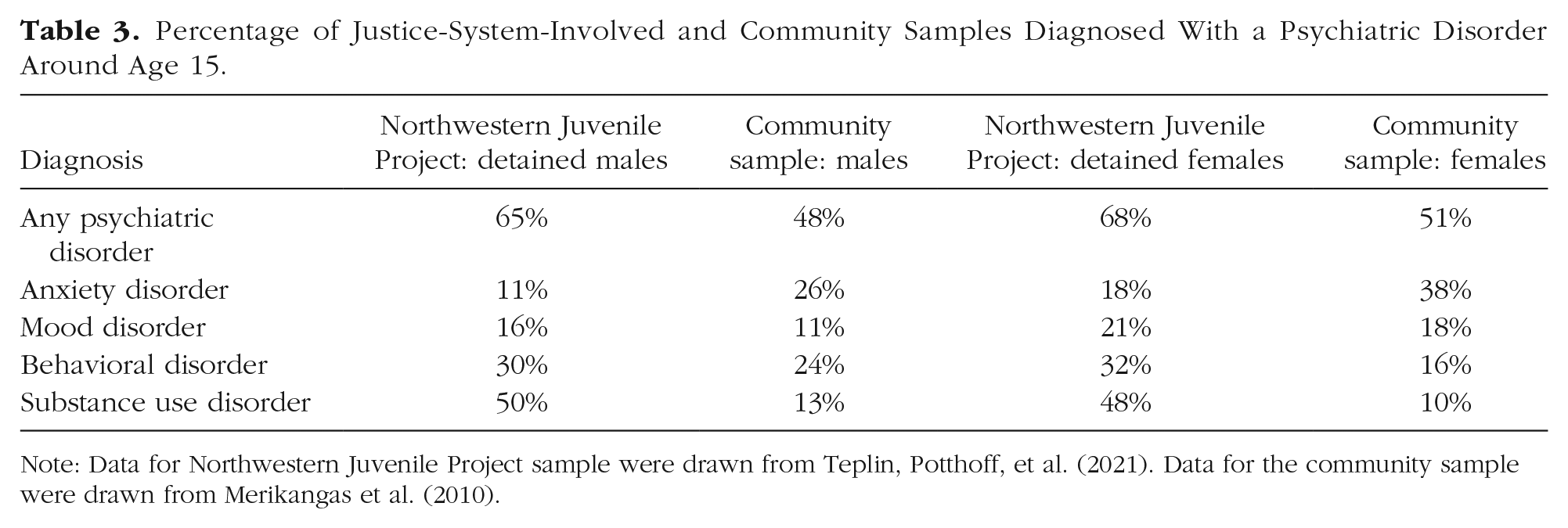
Note: Data for Northwestern Juvenile Project sample were drawn from Teplin, Potthoff, et al. (2021). Data for the community sample were drawn from Merikangas et al. (2010).
Youths arrive in the justice system with a variety of mental health and behavioral problems and histories of prior trauma and exposure to violence. Justice system practitioners should strive to evaluate and measure youths’ needs and histories at various points of contact and should take these needs and histories into account when imposing sanctions and designing intervention plans.
Youths of color and the justice system
Myriad studies over the last law few decades have revealed that youths of color do not experience the justice system in the same way as their White counterparts. Even after controlling for criminogenic risk and offending behaviors, researchers have found that youths of color, and especially Black adolescents, are more likely than White youths to be arrested, to be referred to juvenile court than be diverted, to receive harsher and longer sentences, and to be tried and treated as adults in the legal system (Andersen, 2015; Campbell et al., 2018; Dmitrieva et al., 2012; Hockenberry & Puzzanchera, 2016; Schlesinger, 2018). Padgaonkar and colleagues (2021) examined racial inequalities in the Crossroads study, controlling for several legal factors (e.g., severity of crimes) and extralegal variables (e.g., race, socioeconomic status, age at arrest). In line with prior research, Black Crossroads males were rearrested more often than their White counterparts despite equal or sometimes even lower self-reported offending rates. The authors posit that these disparities are due to increased police presence and monitoring in Black communities (Padgaonkar et al., 2021). These findings are similar to those of other analyses with the Crossroads data that have shown that Black and Latino youths were more likely to be rearrested than White youths across the 5-year study period, even though youths of color did not self-report more offending (Cauffman et al., 2021).
The literature suggests that implicit racial biases play a part in prosecutorial charges and judicial dispositions. For instance, youths of color are often viewed as more disrespectful and less remorseful than White youths, possibly because of body language cues characteristic of certain cultures (Bridges & Steen, 1998; Villarruel & Walker, 2002). Black youths are also frequently viewed as older and less innocent compared with White youths, thereby being denied the assumptions and protections of childhood (Goff et al., 2014). Even when validated risk assessment tools are used to determine sentencing, racial biases may still exist because of subtle racism embedded in the development of these measures (i.e., prior arrest history being used as a predictor of risk when this factor is already racially biased). Although awareness about racial biases has increased in the justice system, more work needs to be done to systemically change the ways in which legal practitioners are trained, risk assessments are created, and decisions are made—which all ultimately impact the youths entrusted to the care of the U.S. justice system.
In summary, research shows that justice-system-involved youths of color are not treated the same as White youths. Youths of color, and especially Black adolescents, are more likely to be arrested, less likely to be diverted, and more likely to receive harsher sanctions than White youths. There are many potential explanations for the racial bias observed in the justice system. For example, youths of color may be perceived as older, more guilty, and less remorseful—potentially because of cultural differences. There also may be racial bias in certain risk assessment screenings that use prior arrests as a marker of risk, given that youths of color are much more likely than White youths to be monitored, patrolled, contacted, and arrested by police (see Fig. 20).
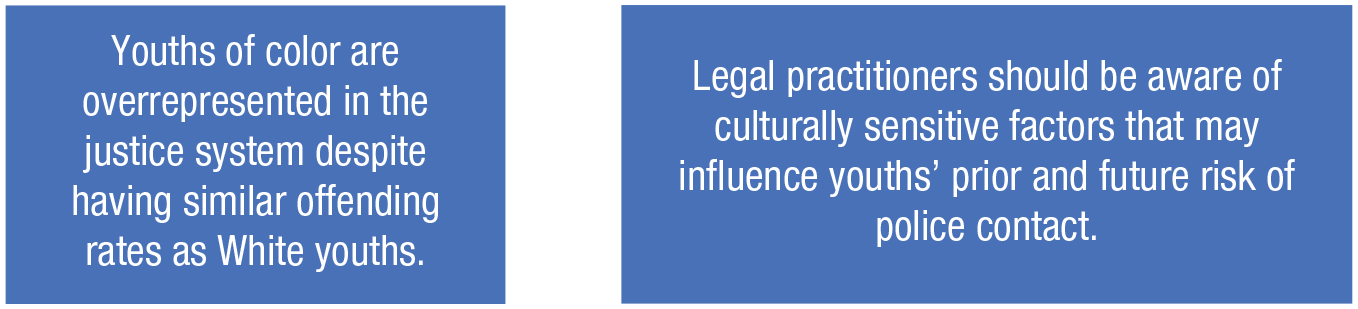
Summary statement on considerations for youths of color in the justice system.
Extending the Rights and Protections of Young Adults in the Criminal Justice System
Findings from developmental science suggest that the justice system has already been making positive improvements in how juveniles (< 18 years old) are treated under the law. For example, U.S. Supreme Court cases such as Roper v. Simmons (2005), Graham v. Florida (2010), Miller v. Alabama (2012), and Montgomery v. Louisiana (2016) have determined that juveniles convicted of serious crimes cannot be executed or be sentenced to mandatory life without the possibility of parole because of their developmental immaturity. 4
In recent years, research teams and policy initiatives have begun pushing for some of the developmental protections of adolescence (< 18 years old) to be extended to transitional-age youths (18–25 years old). This movement is based on the understanding that transitional-age youths are developmentally more similar to adolescents than to mature adults. In fact, many prior studies show that transitional-age youths are similar to adolescents in terms of behavior, maturity, development, and potential for rehabilitation. Specifically, transitional-age youths, just like adolescents, are more impulsive and are willing to sacrifice long-term gain for immediate rewards (Casey et al., 2011; Konrad et al., 2013; Richards et al., 2012; Romer et al., 2017; Shulman et al., 2015, 2016). Data from neuroimaging studies also show that the brain continues to develop and refine itself during the teens and early 20s (Casey et al., 2005, 2008, 2011; Giedd et al., 1999; Simmonds et al., 2017). Thus, it should not be surprising to learn that the illegal behaviors for which transitional-age youths are typically arrested (e.g., drug-related offenses, peer-related fighting) are often rooted in impulsive, risky, sensational, and emotionally arousing situations—similar to the behaviors for which adolescents are arrested.
Furthermore, young adulthood is a sensitive period of development during which individuals must navigate critical transitions in several domains (e.g., education, employment, housing, partnerships, social networks, parenthood), which may be particularly challenging for justice-system-involved transitional-age youths, especially those who have a felony on their record. In fact, one of the most detrimental consequences of being arrested after age 18 is a felony conviction. A felony carries enormous and potentially lifelong financial, social, and personal collateral consequences, which are considerably worse for transitional-age youths of color. Nationwide, there are more than 44,000 collateral consequences linked to being convicted of a felony (Berson, 2013; U.S. Department of Justice, Office of Justice Programs, n.d.). For example, individuals with a felony on their record are often disqualified from applying for financial aid and educational scholarships (Wheelock & Uggen, 2006), denied housing and welfare assistance, and denied various occupational licenses and jobs (Chesney-Lind & Mauer, 2003; Love et al., 2013; Travis, 2005). Ironically, although quality employment is one of the strongest predictors of desistance from crime, individuals with felonies on their record are often denied access to stable employment (Agan & Starr, 2017; Sampson & Laub, 1995; Schmitt & Warner, 2010).
Emerging programs for transitional-age youths
Although transitional-age youths have traditionally been processed through the adult criminal justice system, which likely results in a developmental mismatch between the needs and capabilities of young adulthood and the ways in which the legal system treats them, approximately half of the U.S. states have recently implemented policies specific to transitional-age youths (see Fig. 21). Policies directed toward transitional-age youths have included a variety of programs designed specifically for this age group, such as prearrest programs for individuals at risk of committing crimes, pretrial programs (i.e., postarrest diversion) intended to divert youths prior to sentencing, posttrial diversion programs aimed at expunging one’s criminal record after sentence completion, and correctional-based programs that treat transitional-age youths differentially during incarceration in adult facilities. In general, many programs for transitional-age youths are offered to those with few or no prior convictions or to those who have committed low-level or nonviolent offenses. Although empirical evaluations of transitional-age youth programs are limited, a few do exist (see Lone Star Justice Alliance, 2021).
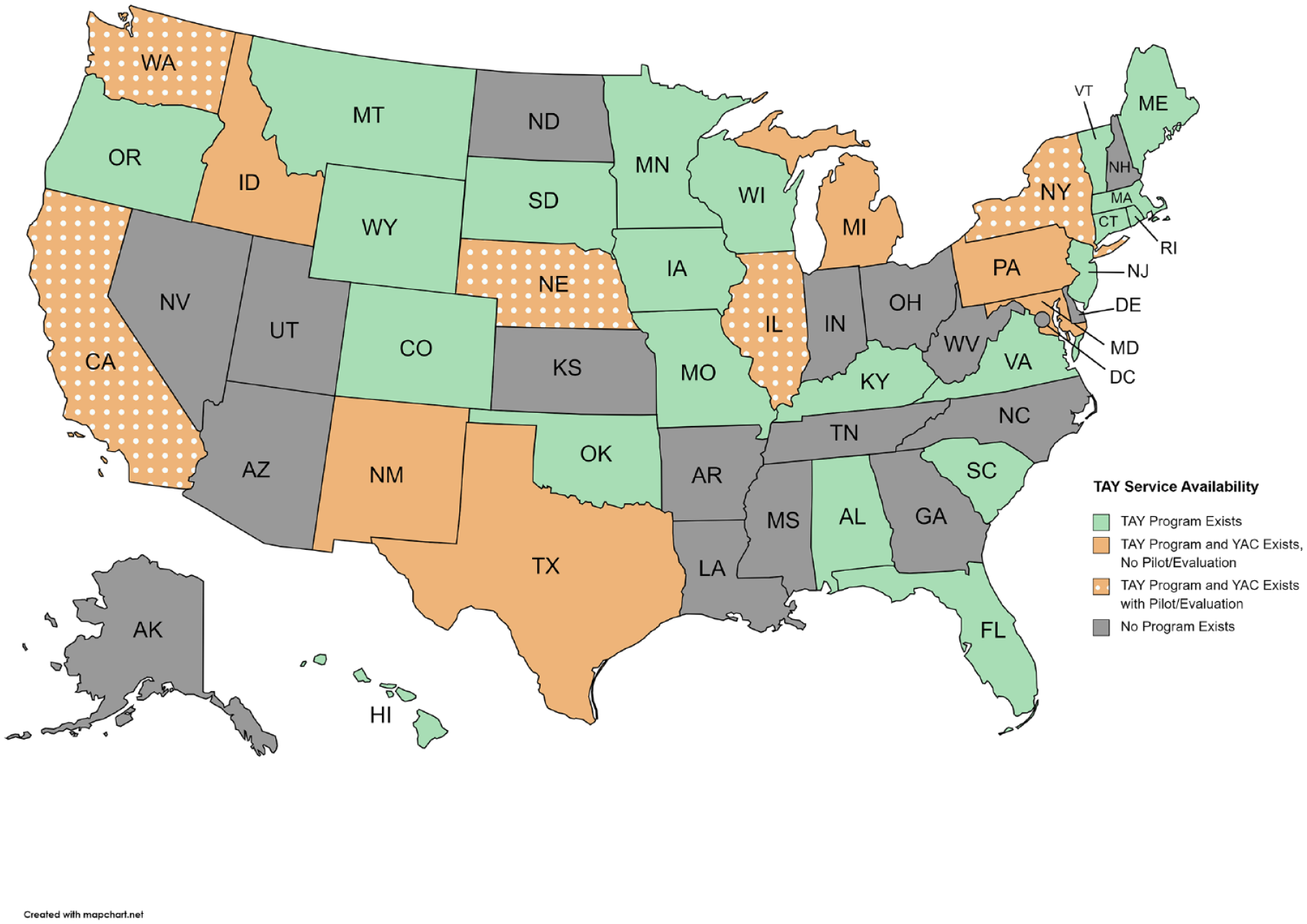
States with criminal justice programs specifically designed for transitional-age youths (TAYs). This map was created in October 2021 and may not be a comprehensive list of policies nationwide, as laws constantly change. Furthermore, the criteria for policies vary widely from state to state, with some states setting the cutoff for program eligibility at the age of 25 and other states setting it at age 19. Figure reproduced from Gillespie et al. (2023). YAC = young adult court.
Young adult court
One unique type of promising diversion program for transitional-age youths is the young adult court (YAC)—a specialized judicial entity designed to process individuals only between the ages of 18 to 25. YACs are separate from juvenile courts and balance accountability (e.g., probation and court appearances) with the provision of rehabilitation services (e.g., therapy, substance use treatment, case management, life-skills training, housing and employment support) to avoid the long-term consequences associated with sanctioning. These programs are brought to fruition through the dedication of developmentally informed judges and legal partners, close partnerships and collaborations with community stakeholders and legal entities, and frequent, supportive contact with transitional-age defendants. Several United States–based YACs are currently operational; however, they remain uncommon, and most YAC program outcomes are anecdotal.
In an effort to robustly research the outcomes of a YAC, we are conducting a randomized controlled trial of the Orange County YAC (https://www.occourts.org/directory/collaborative-courts) to examine potential differences in outcomes between young adults who are randomly assigned to participate in the court and those participating in “treatment as usual” (i.e., processed as they typically would be through the legal system). The Orange County YAC is a collaborative effort among researchers at the University of California, Irvine; the Orange County Superior Court; the Orange County District Attorney’s Office, Public Defender’s Office, and Probation Department; the Orange County Health Care Agency; the Orangewood Foundation; Community Action Partnership of Orange County; and several other community providers and private (Fudge Family Foundation) and federal (National Institute of Justice) funders.
Young males who plead into the Orange County YAC are supervised for a minimum of 18 months by the court and by a probation officer trained in the developmental framework underlying transitional-age youth behavior. Intensive case-management services and clinical programming provide youths with resources to strengthen their health and wellness, life skills and employment, housing, and education. Voluntary therapy services are readily available to youths and their families at no cost, and YAC graduates provide peer mentoring to youths. Clients of the YAC advance through four incentivized, graduated levels of the program, which incrementally move young men toward addressing criminogenic, employment, educational, and housing needs while rewarding success (e.g., public verbal praise and encouragement, certificates) and providing corrective sanctions (e.g., GPS monitoring, increased supervision). Using developmentally appropriate scaffolding approaches, YAC personnel first help transitional-age youths identify realistic steps and gradually expand on goals to promote future orientation. After completing the four program phases, a young man is recommended for graduation, at which time the initial felony charge is dismissed or reduced to a misdemeanor by the presiding judge. Although data collection is ongoing (i.e., regular interviews with young men in the YAC as well as young men in the “treatment as usual” group for 4 years), the randomized controlled trial of the Orange County YAC has been designed to provide important data on how the legal system can hold young adults accountable while providing age-appropriate supports that reduce recidivism and promote successful trajectories. Importantly, the research team, led by the University of California, Irvine, will have critical data on all aspects of transitional-age youths’ lives both during and after they are involved with the YAC. We hope to understand the extent to which involvement with the YAC is related to short- and long-term positive outcomes in behavior, mental and physical health, school and work, and other domains.
Where the field is heading
In addition to research studies, several task forces have been created to address the developmental disparities evident in the criminal legal system. For example, the Emerging Adult Justice Project (EAJP; http://www.eajustice.org/) at the Columbia Justice Lab conducts research and policy projects aimed at transitional-age youth justice reform. This laboratory disseminates research and policy products and organizes collaborative learning environments with stakeholders around the nation. The EAJP highlights reforms such as “Raise the Age,” which expands the age at which individuals are adjudicated in juvenile courts. Along these lines, the American Psychological Association (2022) recently called on U.S. courts, Congress, and state legislatures to ban the death penalty for individuals younger than 21 years of age, raising it from its current cutoff of age 18. This call has been supported by the American Bar Association (Death Penalty Information Center, 2018).
There is some indication that developmental research and policy initiatives related to transitional-age youths are having a positive impact on legislation. Indeed, youthful offender statutes for transitional-age youths are increasingly emerging, with states such as New Jersey defining individuals 18 to 30 years old as warranting differential treatment. Similarly, New York, Connecticut, and Illinois have introduced bills to further raise the age of juvenile adjudication to 21, which has led to decreases in fiscal spending and rearrests for youths impacted by those laws (Kenmore, 2019; Lindell & Goodjoint, 2020). Finally, in 2017, California became the only state to grant parole eligibility to people serving life sentences who were younger than 26 at the time of their offense, which operationally applied Miller v. Alabama to young adults (Cal. Penal Code § 3051).
Practical and Clinical Implications
In this article, we have summarized the factors associated with offending during adolescence and young adulthood, discussed the potential long-term consequences of justice system involvement, described the high needs of justice system populations, and offered some thoughts about the next wave of justice system reform. The biggest takeaway is that we need to build better bridges between research and practice. Below, we highlight and integrate the primary findings and provide practical guidance for specific audiences.
Researchers
Robust longitudinal and randomized controlled study designs are needed to make informed and legitimate determinations regarding the impact of justice system involvement. Successful implementation of these designs requires careful collaboration with law enforcement and judicial organizations. When designing the methods through which phenomena will be studied, researchers should give thoughtful attention to within-person changes, causal factors, mechanisms of change, and mixed-methods designs. Last, it is imperative that researchers work harder to build stronger reciprocal connections between science and practice in order to advance the field. One example of this is by working with legal practitioners to develop and evaluate treatment courts and other developmentally appropriate programs.
Policymakers
If policymakers could take away one finding from the research summarized in this article, it would be that formal sanctioning (e.g., court appearance) was never related to better life outcomes compared with informal sanctioning (e.g., precourt diversion) for youths charged with moderately serious offenses (e.g., vandalism). Furthermore, most youths age out of crime by early adulthood—regardless of legal punishment—indicating that expensive, punitive, and lengthy sanctions may not be necessary for most youths. This is an especially important consideration given that early contact with the justice system may precipitate a life trajectory that leads to negative outcomes in a variety of legal and nonlegal domains, such as subsequent (and more severe) contact with the justice system, and poor psychosocial, developmental, health, and economic outcomes. Nonetheless, although there are admittedly many legal and extralegal factors that should be weighed, policymakers should seriously consider available diversion programs for appropriate youths and young adults and champion continued funding of these specialized programs. Finally, policymakers should consider ways to engage additional advocates for youths who enter the justice system, as analyses with the Crossroads data have shown that parents of justice-system-involved youths may have limited legal knowledge (Cavanagh et al., 2020).
Justice-system-involved stakeholders
The manner in which youths are treated—from first contact to secure confinement—and the way in which youths perceive that treatment has great potential to influence youths’ recidivism and other domains of health and well-being. Indeed, it is not just what the justice system does in response to juvenile crime, it is also how it does it that matters. Stakeholders should remain aware that implicit racial biases impact all professionals (including researchers). Indeed, youths of color are perceived as being older than White youths, which subsequently affects their likelihood of receiving sanctions. Further, stakeholders should try to understand that youths’ psychosocial immaturity leaves them vulnerable to false confessions and susceptibility to coercion (Arndorfer et al., 2015; Malloy et al., 2014) as well as competency issues (Grisso et al., 2003; Steinberg et al., 2003; Steinberg & Scott, 2003). As such, youths may not fully understand the legal consequences of their actions or their legal rights (Grisso et al., 2003; Steinberg et al., 2003). As mentioned previously, collaboration with multidisciplinary teams—including researchers—in various domains will create innovative solutions to justice system disparities. For example, California’s Senate Bill 203 was passed in 2021 and requires youths under the age of 18 to consult with an attorney prior to police interrogation and prior to waiving their Miranda rights. This law cites developmental research as justification for increasing these protections to older adolescents, as the previous Senate Bill 395 provided this protection only to children under the age of 15. Furthermore, the way in which youths perceive legal practitioners and law enforcement matters greatly with respect to their overall health and well-being as well as their responsiveness to intervention and rehabilitative potential. Be mindful of the developmental needs of this population, the racial disparities ingrained in every aspect of contact with the legal system, and the widespread and far-reaching consequences of punitive sentencing (e.g., felony convictions). Ongoing staff trainings regarding the developmental needs, mental health, and socioeconomic factors of the populations served will undoubtedly improve outcomes for justice-system-involved youths. Last, and importantly, be mindful of the opportunity for growth inherent in the youths encountered. Treatment effectiveness and propensity for change does not halt when individuals are 18 years old, and emerging adults also warrant differential approaches and legal treatment.
Health practitioners
Development of health behaviors are heavily impacted by contact with the legal system. Moreover, justice system involvement is a traumatic experience and should be treated under the same auspice of care. Collaboration with ecological systems—such as parents, peers, and teachers—when providing treatment is likely to increase treatment effectiveness. Substance use disorders and behavioral disorders may be a cause or consequence of justice system contact, and early intervention leads to the best prognoses. Stakeholders should be mindful of the criminogenic risks and needs of the population served and know that the predictors of antisocial behavior are still malleable well into young adulthood.
Caregivers
Adolescents may seek connection with peers (potentially delinquent peers) when individuals at home are perceived as inefficient. Further, a caregiver’s presence, knowledge, and encouragement can make a significant difference in their child’s behaviors and attitudes. Offspring also deeply absorb a caregiver’s negative experiences—for example, parents’ own incarceration experiences, mental health, substance use, education, employment, and intimate relationships have extensive effects on their child’s life trajectories (Mears & Siennick, 2016). Last, caregivers should not assume that the legal system will provide them with comprehensive information regarding their children’s rights—they should remain informed, ask questions, and collect knowledge from a variety of resources.
Conclusion
A word of caution to readers: When you are considering the insights from the Crossroads and Pathways studies (especially Pathways, given that the data are older), it is important to contextualize them within the cultural, political, and policy shifts that have occurred during the past two decades. This includes societal changes stemming from the COVID-19 global pandemic, the rise of social media, and increased calls for police reform. Additionally, it is possible that the prevalence and/or context of some risky or illegal behaviors (especially marijuana use) have changed over the past decades. Although we do not believe that these historical shifts and movements would have a substantive influence on the predictors of offending or the implications of this work, it is important to consider how these cultural phenomena may impact the issues discussed here. Furthermore, many of the developmentally informed specialty courts, diversion programs, and other policies, including the Orange County YAC, are still relatively new and exist only in limited jurisdictions. It is important to measure program effectiveness using rigorous, empirical research studies (and to present the work to appropriate stakeholders) in order to extend and expand these programs to other jurisdictions and ultimately help to serve more justice-system-involved young people.
Footnotes
Transparency
Editor: Nora S. Newcombe