




Abstract
When children return to school from juvenile detention, they face a severe stigma. We developed a procedure to orient educators and students toward each other as positive relationship partners during this period. In Study 1, through a structured exercise, students reentering school powerfully articulated to an educator of their choosing their prosocial hopes for school as well as challenges they faced. In a preliminary field trial (N = 47), presenting this self-introduction to this educator in a one-page letter via a third-party requesting the educator’s help reduced recidivism to juvenile detention through the next semester from 69% to 29%. In Study 2 (preregistered), the letter led experienced teachers (N = 349) to express greater commitment to, anticipate more success for, and feel more love and respect for a student beginning their reentry into school, potentially initiating a better trajectory. The results suggest how relationship-orienting procedures may sideline bias and make school more supportive for students facing stigma.
Keywords
Every year, tens of thousands of children, disproportionately Black, Latino, and Indigenous boys from lower social-class backgrounds, are incarcerated in juvenile-detention facilities (Sickmund & Puzzanchera, 2014). Although much attention has been paid to the “school-to-prison pipeline,” students’ return to mainstream schooling is just as important. Students who are reentering school experience severe rates of dropout and recidivism (Kubek et al., 2020), harms that can be exacerbated by incarceration itself (Aizer & Doyle, 2015). If schools do not receive students in ways that help them reintegrate successfully, children may be unable to access the opportunities for growth and learning that schools are supposed to provide. Then, the disadvantages that led to incarceration can perpetuate harm into children’s adult lives—undermining educational attainment, civic and workforce participation, health, and well-being. The stakes could not be higher.
Students reentering school face a stigma as severe as that faced by any group (Greene et al., 2017; Pager et al., 2009; Shalaby, 2017). In the present research, we sought to create a procedure that could sideline the bias that these students confront and thus foster a more supportive environment on their return to school. First, we designed an opportunity for students to describe their positive sense of self, hopes, and goals as they began reentering school. We examined whether this structured exercise could elicit from students a compelling self-representation to an educator of their choosing. Next, we delivered students’ self-introduction to this educator, elevating students’ voices and positive self-identity in a request for help. At a high level, the intervention orients students and teachers toward positive relationships with each other, inviting each person to reflect on and become their best self in relation to one another. We examined whether this approach would improve teachers’ receptivity to students and students’ fundamental outcomes when they reenter school.
Despite its significance, little past experimental research has explored the experience of youths in juvenile detention. Moreover, there has been very little literature evaluating practices to support students reentering school (Kubek et al., 2020; but see Ostrom et al., 1971). Indeed, research with this population is challenging for many reasons. Therefore, we based our literature review primarily on ethnographic studies, including our pilot work, and broader research examining psychological factors that contribute to conflict and school disciplinary problems.
Children ensnared in the juvenile-justice system face many challenges. Many have experienced violence or trauma (Crosby, 2015), have corresponding mental health difficulties (Grisso & Schwartz, 2000), and are behind academically (Hirschfield, 2014). Thus, there is not one problem but many. In this context, we focus on positive relationships children can form with adults. Such relationships serve many functions for children. One ethnography described the experience of “being known” by adults as “ordinary magic” for adolescents (Chhuon & Wallace, 2012, p. 394). The importance of positive teacher–student relationships and teachers’ expectancies for students’ success in general is well-established (Wentzel, 1997). Moreover, adult mentors seem to improve criminal-justice and academic outcomes for disadvantaged youths (Hanham & Tracey, 2017; Spencer et al., 2019; Tolan et al., 2013).
Teacher–student relationships readily become self-fulfilling as positive expectations and trust either build or erode (Raudenbush, 1984), particularly in contexts of stereotyping and stigma (Goyer et al., 2019; Okonofua, Walton, & Eberhardt, 2016; Yeager et al., 2017). Thus, it is critical to begin relationships well. How can we help students and educators (teachers, counselors, administrators, coaches) establish a better trajectory from the outset when students reenter school?
Many people pursue careers in education because they aspire to support children (Yarrow, 2009). Yet positive relationships may be compromised by negative stereotypes that label youths as offenders and boys of color as violent and out of control (Shalaby, 2017). For students, stereotypes can give rise to mistrust and worries about belonging and thus a vigilance to signs of disrespect or mistreatment from adults (Goyer et al., 2019). Indeed, our focus-group students with experience in juvenile detention expressed an abiding uncertainty about their relationships with adults in school and society broadly. Such concerns are not unfounded (Riddle & Sinclair, 2019). Well-controlled studies have found that teachers judge a misbehaving child as a “troublemaker” more quickly if that child is Black (as opposed to White), even when those misbehaviors are minor (Okonofua & Eberhardt, 2015). If minor misbehaviors lead to negative judgments of Black children generally, such behaviors by Black children with a history of incarceration certainly can (Greene et al., 2017; Pager et al., 2009). Over time, worries about mistreatment and social stereotypes can create toxic cycles between students and educators to both students’ and teachers’ detriment (Okonofua, Walton, & Eberhardt, 2016).
Recent years have seen an explosion of research demonstrating that precise psychological interventions that address students’ worries about belonging can help them succeed in school. However, the social environment that students enter can be a profound barrier to success. How can we encourage educators to better support students, especially students who face pervasive stigma? In contrast to past efforts to reduce bias through training programs, the present research was designed to sideline bias by orienting teachers toward positive relationships with students. To do so, we created a procedure to elevate students’ voices—an opportunity for students to articulate their positive and prosocial hopes and goals and the challenges they faced in introducing themselves directly to, and requesting help from, an educator of their choosing. We show that among students who face one of the most severe stigmas in school—those reentering school after a period in juvenile detention—this deeply asset-based approach can improve educators’ initial response to students and, preliminarily, students’ downstream outcomes.Statement of Relevance
Yet this process is not inevitable. Interventions that precisely target how students and teachers make sense of each other as their relationships begin show that improvement is possible. One 50-min exercise to address students’ worries about belonging and relationships with teachers at the outset of sixth grade reduced disciplinary citations among Black boys through 12th grade by 65%, seemingly by improving cycles of teacher–student interactions (Goyer et al., 2019; see also Borman et al., 2019).
A second intervention encouraged teachers to take an empathic rather than a punitive mind-set toward misbehaving students. This 70-min exercise cut the rate of suspensions among the 1,682 racially diverse middle-school students whom teachers taught over the school year from 9.8% to 4.6% (Okonofua, Paunesku, & Walton, 2016). Of particular relevance, this “empathic-discipline” intervention was premised on the idea that even though teachers are commonly exposed to racist stereotypes of misbehavior and a punitive model of school discipline (e.g., zero-tolerance policies), teachers also have access to and, indeed, prize an empathic model for interacting with students who are having difficulty (Yarrow, 2009).
Likewise, we presume that even though educators commonly have access to negative stereotypes about justice-involved youths, they also have access to a positive model for interacting with children who are having difficulty—one in which they help a child recover from setbacks to grow and succeed. Thus, the primary goal of our intervention was not to overturn biases but to sideline them and help educators apply, instead, a more positive existing model when welcoming a child in need to their class (Okonofua et al., 2020). The intervention was simple to implement yet precisely designed, timed, and targeted. Students reflected on their values and goals in school and identified and introduced themselves to an educator with whom they wished to build a stronger relationship—all in a 45-min to 60-min one-on-one session a few days after reentering school. This educator then received the student’s self-introduction in a one-page letter from our team requesting their support.
Unlike past interventions, this approach focuses on students and educators simultaneously in an integrated manner. When reentering school, youths have already been told that they do not belong, stereotypes are palpably on the table, and trust has been broken. Even if students approach an educator with a positive mind-set, they may not be well-received. Thus, we aimed to support (a) students’ belief in the value and possibility of cultivating positive relationships with educators as well as (b) educators’ receptiveness to those efforts. We targeted the relationship, not either person alone.
Study 1 served a dual role. First, within the student-treatment condition, it was a structured qualitative study that examined the sense of self and positive values and goals that students can articulate as they begin reentering school through the exercise we designed, including how children can present themselves to an educator who could help them overcome the challenges they faced. Second, it was a small randomized intervention field experiment providing a preliminary test of whether this self-introduction can improve students’ fundamental outcomes—to stay in mainstream school and not recidivate to juvenile detention. Finally, Study 2 examined how this self-introduction shifted teachers’ initial response to a student reentering school, potentially facilitating a better relationship.
Study 1: An Intervention Field Experiment to Improve Students’ Reentry to School
Method
Participants and design
Participants were 47 children in the Alameda County Juvenile Justice Center returning to middle and high school in the Oakland Unified School District in Oakland, California (age: M = 15.93 years, SD = 1.26, range = 13–17). Consistent with the juvenile-justice population in this community, the sample was mainly composed of boys (87%) and youths of color (98%), primarily African/African American (62%) or multiracial African/African American and another group (21%). Most participants’ mothers had no college experience (60%). Almost all were native-English speakers (96%). For complete demographics as well as a comparison with all youths who transitioned from the Juvenile Justice Center to this district during the same period, see Table S1 in the Supplemental Material available online. As this comparison reveals, the participant sample was broadly representative but slightly older and had stayed somewhat longer in custody compared with the full population.
This sample size reflects the number of children we were able to recruit over 2 successive academic years of committed data collection. The primary challenges were logistic. For instance, many youths are released at unpredictable times as their cases are processed and when a parent or guardian can come pick them up, including on evenings and over weekends. Because we were unable to initiate the study (i.e., obtain consent) before a parent or guardian came to the Juvenile Justice Center, if research staff were not present when a youth was released, we could not include the youth in the study. Although we did not track consent rates, most families who were approached agreed to participate. Staff estimated that fewer than 10% of families who were approached declined to participate. Refusals to participate primarily reflected the constraints of the lengthy and complex process of release from the Juvenile Justice Center itself.
This sample size was appropriate for the qualitative purpose of Study 1 and for the development of stimuli for Study 2. However, it is relatively small for the purpose of a randomized controlled experiment. Given this as well as the novel nature of the procedure, the experimental comparison should be understood as preliminary. However, considering the difficulty of obtaining longitudinal field-experimental data from this population, the lack of relevant research evaluating strategies to support students reentering school (Kubek et al., 2020), the inherent importance of this population, and the significance of the primary outcomes, we see this experimental test as important both for theory and as a foundation for future research. In addition, we followed best practices in data reporting and analyses. For instance, data were not analyzed during collection, we make every effort to report results transparently including in robustness tests across statistical models, and we make data available where possible. We also discuss the importance of replication and questions of heterogeneity and generalizability in the General Discussion.
There were three between-subjects conditions: a control condition and two student-treatment conditions, in one of which a letter requesting support for the student was delivered to an educator of the student’s choosing when they reentered school (control: n = 17, student treatment: n = 15, and student treatment plus letter: n = 15). The student-facing experience was identical for students in the two student-treatment conditions (see Fig. 1).
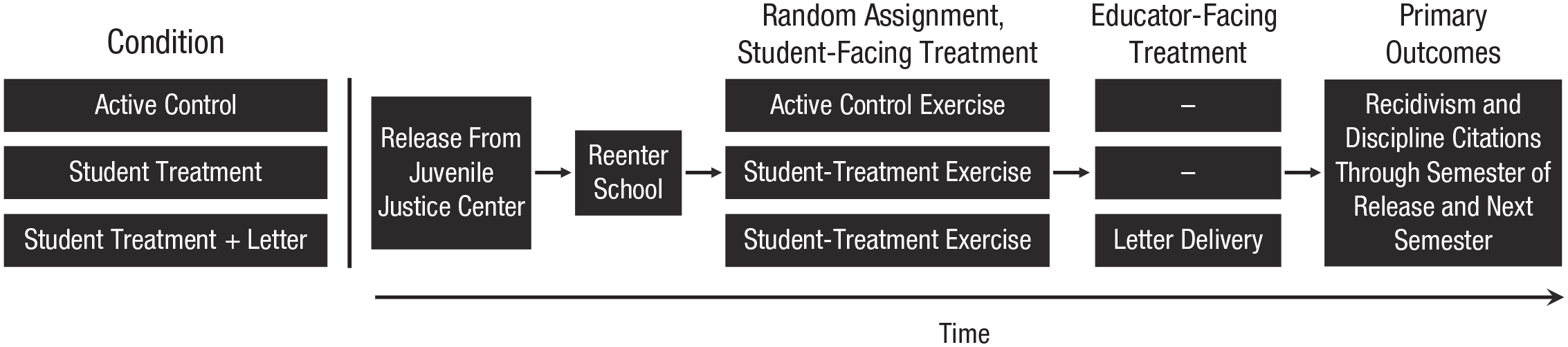
Overview of the procedure in the three conditions (Study 1).
Procedure
Consent at the Juvenile Justice Center
Children being released from the Juvenile Justice Center received a series of wraparound services, including those focused on physical health, mental health, and school placement. Following this process, they were released from the custody of the county to their parent or guardian. At this point, a representative of the Oakland Unified School District introduced our study to the child and their legal guardian as an effort on the part of teachers, staff, the Juvenile Justice Center, and researchers “to understand how students feel about their school and the transition to school.” Children were told that they would receive a $10 gift card for participating in the initial portion of the study (intervention delivery) and a $5 gift card for completing a follow-up survey. If the child was interested, they and their guardian met with a member of the research team in a private room where, with assurance of confidentiality, the parent or guardian gave consent and the child gave assent to participate, which included the release of school records.
Baseline measures at the Juvenile Justice Center
Next, the parent or guardian was asked to leave the room so the child could complete baseline psychological and demographic measures in private. These measures were selected for their potential relevance to subsequent outcomes. The psychological measures were (a) grit, (b) fixed theories of personality, (c) school identification, and (d) a novel sensitivity to incarceration-based rejection measures based on past research (Mendoza-Denton et al., 2002). Demographic questions consisted of (a) number of parents born in the United States, (b) number of grandparents born in the United States, (c) first language, (d) highest level of education completed by the mother (or primary guardian), (e) highest level of education completed by the father (or secondary guardian; however, we used only the level of education completed by the mother/primary guardian in analyses because it tends to be more variable and predictive than the level of education completed by the father/secondary guardian and because single-parent households are more likely to be led by mothers than by fathers), (f) gender, (g) race/ethnicity, and (h) date of birth (to calculate age and match records). We used these measures (a) to test for equivalence across conditions and (b) as covariates, to control for alternative sources of variance, increasing power and ensuring robustness. For complete items, reliability information, and sources, see the Supplemental Material.
Student-treatment exercise: orienting students re-entering school toward positive relationships with educators
Development
The intervention was developed in a 15-month highly collaborative process among the research team, the Juvenile Justice Center, the Oakland Unified School District, and community after-school groups and programs in Oakland, California. This process featured qualitative methods to elevate the voices of children with experience in juvenile detention. For details of this process, see the Supplemental Material.
Context of intervention session in school
Several days after release, students took part in a one-on-one session with a member of the research team in a private area in the student’s school (e.g., empty classroom, library). Materials were completed on paper, included some audio, and were read aloud when necessary. In total, this session took 45 to 60 min.
Overview and representation. The intervention drew on techniques developed in past social-belonging interventions (Walton & Brady, 2020). It was interactive and honorific, not remedial or punitive. Students read, heard, and reflected on stories from older students describing common challenges when reentering school and how their experiences could improve over time with the support of educators. They were asked to share their own experiences and told that their responses would be shared with future students reentering school in order to help them in their transition: Every year, many students come back to school in Oakland from the Juvenile Detention system. We want to learn more from you about what this is like. That way, we can help future students learn more about what to expect when they come back to school. . . . We think future students can learn from you.
Thus, participating students were treated as benefactors and not beneficiaries, an empowering rather than a potentially stigmatizing role (see Ostrom et al., 1971).
Normalizing challenges and identifying opportunities for improvement. In the first step of the intervention, students were told that we had talked with older students who had made this transition and summarized the main points they had made: (a) Students said that coming back to school was hard at first. For example: Students worried about getting in trouble again. They worried about being behind on schoolwork. . . . Sometimes they felt marked by wearing a GPS tracker. (b) Students said that their experience in school got better with time. Students were able to develop positive relationships with teachers. Students made progress on their schoolwork. Students were able to get involved in activities and groups they valued. (c) Students said their experience in school got better in two ways.
Students’ experience improved, first, by identifying values and goals in school. Next, participants were told the following: Students said it helped to think about what was important to them personally: What kind of person they wanted to be in school and after, what kind of difference they wanted to make for their families and their community, and how they can grow into that kind of person.
Students were given a list of eight values (“ideas from other students”) and asked to circle one to three that were important to them. These included four interdependent and relational values (“Be a good role model for my younger brother or sister,” “Help support my family,” “Make my parents proud of me,” and “Have good relationships with people”), three achievement-related values (“Learn skills that could help me get a good job,” “Prepare myself for college,” “Try my best in school”), one other value (“Use art or music as a way to express myself,”), and an open-ended option. Students were then asked to describe why a value they selected was important to them.
By assuming that students held positive prosocial values and goals, this exercise reinforced a positive rather than stigmatized, punitive, or remedial representation of students. The emphasis on interdependent values further reflected our pilot work and research suggesting the centrality of such values in lower income and racial-minority communities (e.g., Stephens et al., 2012). Finally, inviting students to connect their values and goals to school draws on the prosocial-purpose intervention, which suggests that doing so can enhance academic outcomes (Yeager et al., 2014).
Students’ experience improved, second, by developing positive relationships with educators in school. Next, participants were told the following: Students said it helped to get to know teachers and other adults in school better. This took time and persistence, but [this] helped students get started, and make progress toward the things that were important to them.
Participating students were given bullet-point examples of what past students did to build relationships with adults in school (e.g., “They talked more with teachers and other adults about what mattered to them”).
Next, participating students were given four stories from older students and one from a teacher that were gathered, refined, and tested in our pilot process. The stories were described as typical (“These are the kind of stories we heard a lot”) and as depicting common challenges that students experienced when reentering school and how students responded. Participating students were told that the stories had been edited for clarity and privacy. They were provided in written form and, additionally to increase engagement, impact, and realism, as audio recordings created by students in our pilot process. Participating students were told that, for privacy, the recordings were made by different students from those who had originally shared them, as was the case. They were played as participating students read them. To encourage interactivity, we asked participants after each story, “What, if anything, stood out to you in this story? Please highlight anything you found important or interesting.”
Each story depicted significant challenges in the transition from juvenile detention back to school and how thinking about one’s goals and values and developing positive relationships with educators could help. Importantly, the stories depicted the process of developing these relationships as hard, as not always successful, and as requiring persistence but ultimately as paying off. For full transcripts, see the Supplemental Material.
Saying-is-believing exercises. A powerful way to help people internalize a message and see its relevance to their life is to ask them to describe it in their own terms, often in the form of advice for a younger audience whom they can help—this is termed “saying is believing” (e.g., Walton & Cohen, 2007). To do so, following the stories, we asked participating students to share their ideas to help future students reentering school: We want to learn from you. You are in the perfect position to help future students. We’ll share some of your ideas about coming back to school and other students’ ideas with future students.
Students were told that, as much as possible, we would share their contributions with future students “like you . . . same gender, age, and experience.” They were assured of their confidentiality: “Everything you tell us is private. . . . So please be totally honest. That way we can give future students the most help.” Students provided written responses to questions about (a) common challenges students face coming back to school, (b) how relationships with adults in school can help, and (c) how students can develop these relationships.
To reinforce the experience, we told participating students, “We think it will be most helpful for future students if they hear directly from you, in your own voice, instead of just seeing words on paper.” Students were then asked whether they would be willing to also address these issues orally and were reminded that their responses would be confidential (see Walton & Cohen, 2007). Almost all students agreed (92.9%). Students who did were asked the same three questions orally and provided their spoken responses to an audio recorder. After doing so, participants were thanked and reminded of their contribution (“Thank you very much for your help. Your answers will help future students coming back to school in Oakland”).
Identifying and introducing oneself to an educator who could help. Finally, students were asked to identify “an adult in school you would like to get to know better, for instance, someone you do not know well yet” such as “a specific teacher, coach, counselor, or other adult in school.” They were given an example (“Assistant principal, Mrs. Johnson”) and space to list up to three people. Finally, participants were asked, “What would you like one of these adults to know about you?” and asked the following questions: 1. What would you like your teacher to know about who you are as a person and what is important to you? Write 1-2 things. 2. What would you like your teacher to know about your goals in school? Write 1-2 things. 3. What would you like your teacher to know about what is difficult for you in school that you would like to improve, so they can help? Write 1-2 things.
In both student-treatment conditions, participating students were told that their responses might be shared with the educator of their choosing: We may be able to share some of your thoughts with one of the adults you selected. This way, they will understand you a little better, and can help you in your transition back to school. . . . Thank you very much for your help. Your contribution, and those of other students, will help future students succeed in coming back to school in Oakland from the Juvenile Detention system.
No student expressed discomfort with sharing their responses with an educator they had chosen.
The letter to an educator: orienting educators toward a positive relationship with a student reentering school
For a random half of participants in the student-treatment condition, we delivered a one-page letter to one of the named educators. The letter came from our team and requested the educator’s support for the student. It included the student’s self-introduction and specific social-psychological elements (e.g., anticipating and normalizing difficulties: “The transition back to school . . . is difficult for many students. Some days will be easier and some days will be harder”) and was honorific (“Thank you for your work”). By elevating students’ voices and self-introduction in a request for help for a student in need, we sought to sideline negative stereotypes attached to justice-involved youths, which could otherwise undermine the student–educator relationship (see Fig. 2).
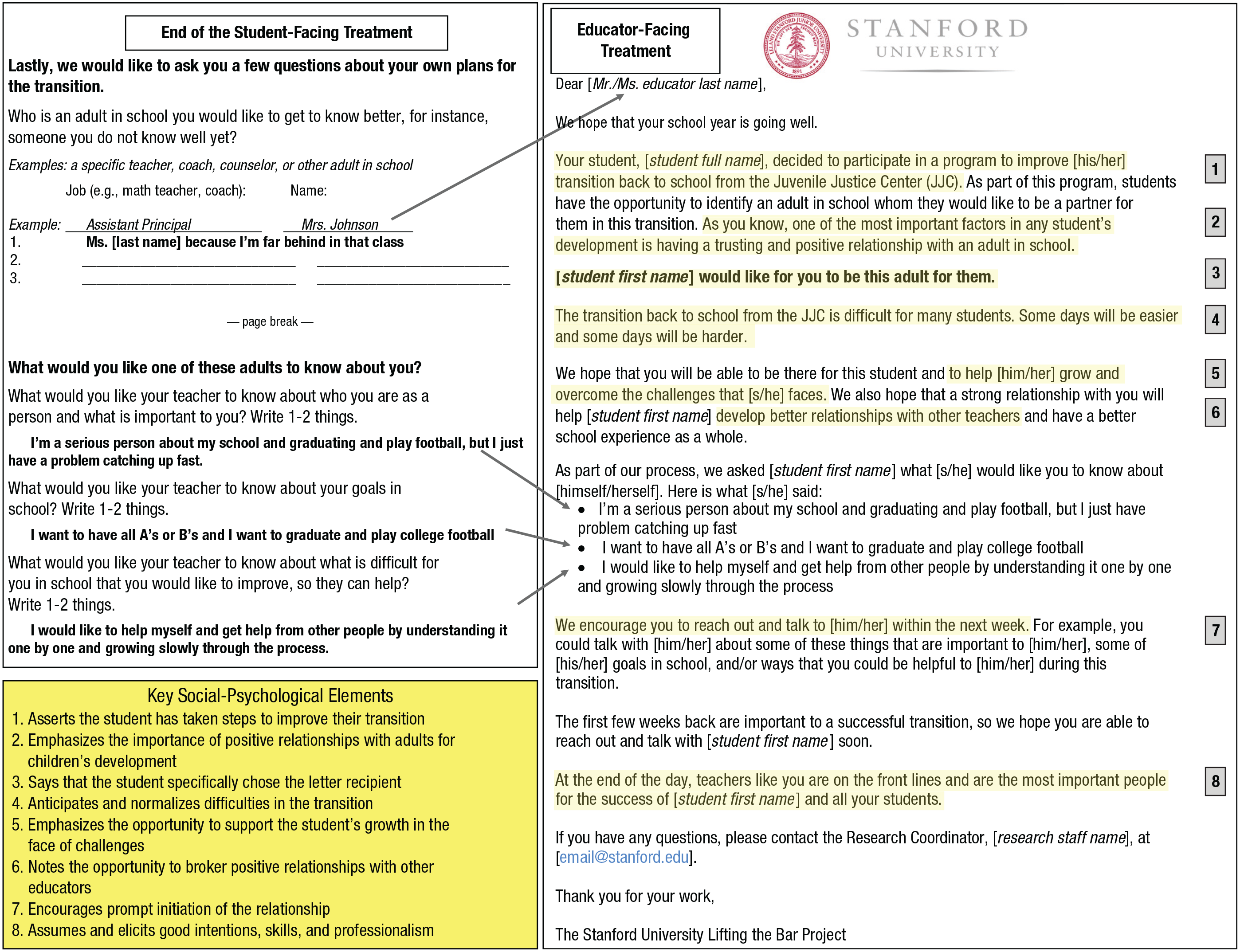
Generation of the personalized letter to the educator nominated by the student (Study 1). The end of the student-facing treatment is shown on the left, and the full educator-facing treatment is shown on the right. Arrows indicate how students’ self-introduction solicited in the student-facing treatment was inserted into the educator-facing treatment. The yellow box at the bottom left and the corresponding enumerated highlights in the educator-facing treatment illustrate how key social-psychological themes were embedded in the letter.
Critical to this practice is that students chose the educator; further, this choice was explicit to the educator. In giving students this choice, we assumed that they were best positioned to identify who in school was not yet but could be valuable for them. This approach further drew on ethnographic research, which suggests that student-initiated relationships may garner more trust and commitment from both at-risk children and adults than relationships assigned by third parties (Spencer et al., 2016, 2019; see also Schwartz et al., 2013). In addition, student agency may render this relationship more authentic. It also allows students to attribute success building the relationship to their own agency and efforts rather than to an external program, potentially supporting their confidence to build other important relationships with adults. Finally, the focus on a single educator reflects the insight in past research that enhancing trust with even one teacher can improve adolescents’ outcomes (Okonofua, Paunesku, & Walton, 2016; Yeager et al., 2017).
If the first educator the student listed was not available (e.g., no longer at the student’s school), we delivered the letter to another educator the student listed. The letter was delivered in person by research staff using a standard script, ensuring receipt and allowing recipients to ask any questions.
Active control condition
The randomized control condition included the same representation and structure. Like the treatment, it normalized challenges in the return to school from juvenile detention, included student stories and interactive elements, and placed students in the role of benefactor (e.g., it was described as an opportunity to help future students). However, instead of focusing on goals, values, and relationships, the content focused on how students could meet challenges by developing “better study skills to catch up and be more successful in school.” Thus, although potentially helpful, it did not address the critical dimensions that may orient students reentering school and educators toward each other as positive relationship partners. Students (a) reflected on study skills that would be most helpful to them, (b) read and heard stories from older students that described how they developed better study skills to improve their transition, (c) described why study skills are important and what kinds of study skills students can develop, and (d) recorded their advice for future students about developing study skills. They were then asked what specific study skills they would like to get better at and listed one to three ways they would improve this study skill (“I will . . .”). Finally, students were told, “Thank you very much for your help. Your contribution, and those of other students, will help future students succeed in coming back to school in Oakland from the Juvenile Detention system.”
Measures
Manipulation check
Participants were asked what was the “primary idea of the stories you read” and given four options. One matched the treatment material (“Developing positive relationships with teachers and other adults in school who can help you achieve your goals”), one matched the control material (“It’s helpful to learn new study skills to do better on tests and homework assignments in school”), and two matched neither (“Avoiding drugs and alcohol to live a healthier lifestyle,” and “How exercise and healthy eating can be helpful”). We examined the percentage of participants who identified the response option that matched their condition.
School records (primary)
Given the high rates of recidivism and school dropout in this population (Kubek et al., 2020), the primary outcomes focused on students’ opportunity to participate in mainstream schooling (i.e., to not recidivate to juvenile detention) and conflicts they might experience that could imperil this (school-discipline citations). Both outcomes were assessed in the semester of release and through the next academic semester. We chose to define the assessment period by the school calendar, rather than as a fixed time period (e.g., 6 months), because the intervention focused on students’ relationships in school and one of the two outcomes was tied directly to school. We were also able to control for time since release in analyses.
Data were obtained from official school records and the Juvenile Justice Center. We also obtained other school records, including attendance (e.g., absences) and achievement (e.g., credits attained, grade point average), but given our focus simply on participation in mainstream schooling, these are not included in the present article.
Self-report measures (secondary)
In an effort to detect any immediate psychological change, we had students complete a brief survey following the randomized procedure assessing their experiences in and perceptions of school along a variety of established self-report measures (e.g., belonging, possible academic selves, school identification; see Walton & Cohen, 2007). However, when we examined basic psychometric qualities of these measures, we found them lacking. For the two measures that included both positively and negatively worded items (self-efficacy and the perceived payoff of education), these items did not correlate, raising doubt about their reliability and validity. We suspect that this arose because of inattention among participants following the (more personally relevant) randomized materials. For this reason, we consider these measures secondary and report them in Table S6 in the Supplemental Material. For items, see the Supplemental Material.
We also attempted to survey students some weeks later, using similar items. However, given pragmatic challenges associated with the instability of students’ lives as well as the need to focus on intervention delivery to new students, we were able to reach only 33 students (79%), making it quite underpowered. The time to follow up also ranged widely (M = 43.8 days, SD = 18.8, range = 22–122), creating additional variability and interpretational ambiguity. Therefore, we do not report it further.
Results
Data availability
A limited data set is available at https://osf.io/dbn7e/. Analyses are available at https://osf.io/yjbge/. The data set is limited to protect the confidentiality of participants, who are underage and by definition involved in the juvenile-justice system. It allows for the reproduction of the Model 1 test of the condition effect on recidivism (i.e., raw analysis) and the primary test of the condition effect on school-discipline citations, but it does not include additional variables whose inclusion could risk violating participant confidentiality.
Success of random assignment
To assess the success of random assignment, we tested whether the four baseline psychological measures, eight demographic factors, and two behavioral measures—school disciplinary citations in the semester prior to incarceration and the number of days in custody—varied by condition (see Table S2 in the Supplemental Material). On 12 of 14 measures, there were not baseline differences by condition. The two exceptions were that students in the student-treatment conditions, compared with those in the control condition, endorsed a fixed theory of personality more and reported that their mothers were somewhat more educated. Therefore, we included models that controlled for these measures.
Manipulation check
Most participants in each condition correctly identified the primary theme of the stories they read for their condition (control: 94%; student treatment: 60%; student treatment-plus-letter: 73%). We suspect that the rates may have been lower in the student-treatment conditions given limits in students’ attention following the randomized materials and order effects—the control theme was the first option presented, and 79% of participants in the student-treatment conditions who did not select the correct response option for their condition chose this option.
Qualitative measures: how did students describe themselves in response to the intervention prompts?
First, we examined whether the intervention provided students a structure in which they could effectively (a) articulate their positive and prosocial selves, (b) describe challenges they faced and how they could overcome these by building relationships with educators, and (c) introduce their positive and prosocial selves and challenges to an educator of their choosing.
Values that students endorsed
When asked about values that were important to them, most students (76.67%) endorsed and described at least one interdependent value. Often, these involved family (see Fig. 3).
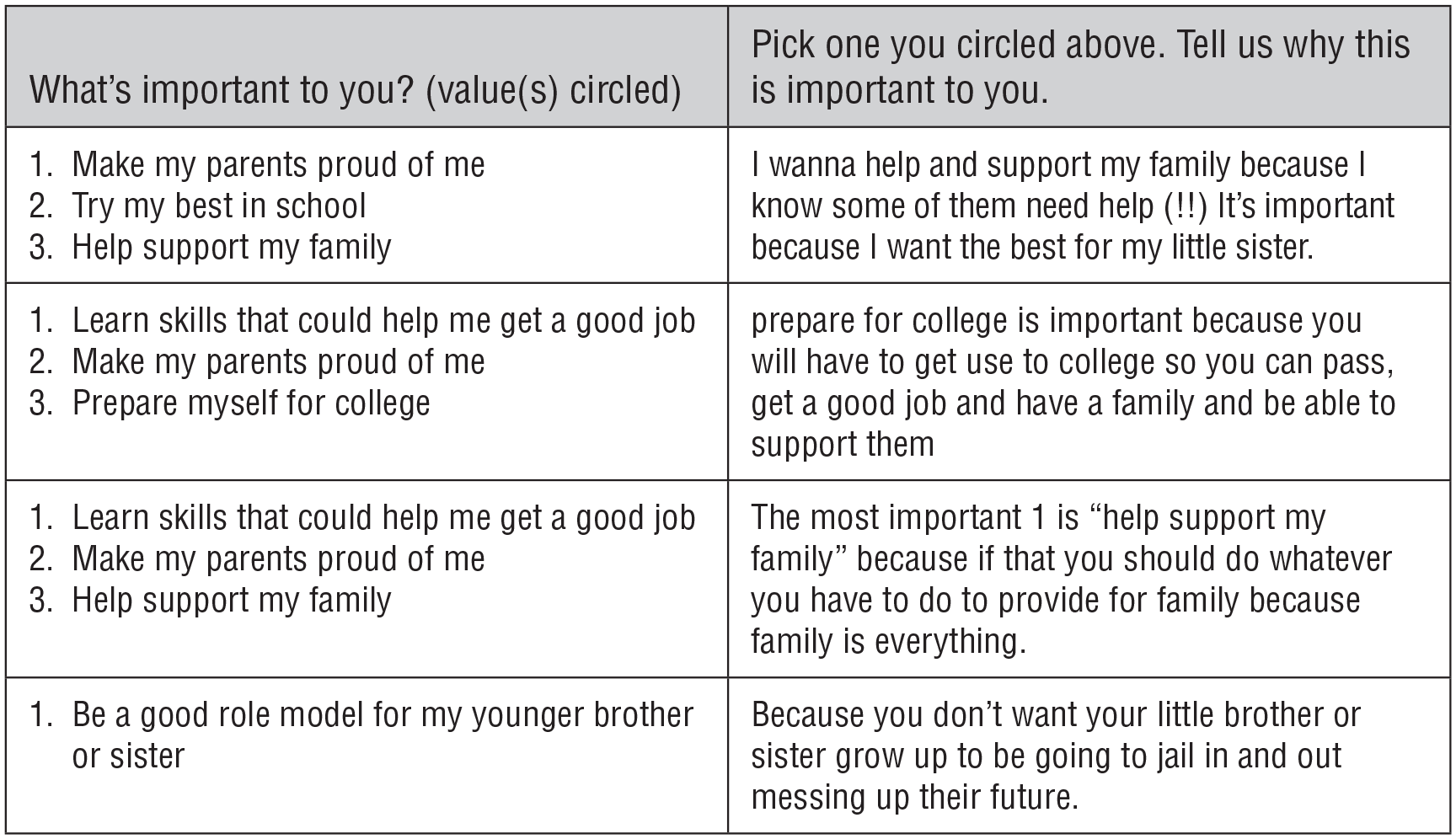
Representative values that students reentering school selected as being important to them (left), along with their open-ended elaborations (right; Study 1). The questions are shown in the gray boxes.
Challenges students perceived when reentering school and the role of relationships with educators
Our student participants perceived many challenges, including being behind in coursework, getting in trouble, experiencing self-doubt, and managing relationships with adults. Yet they also endorsed relationships with educators as a way to address these challenges, consistent with the focus of the intervention (see Fig. 4).
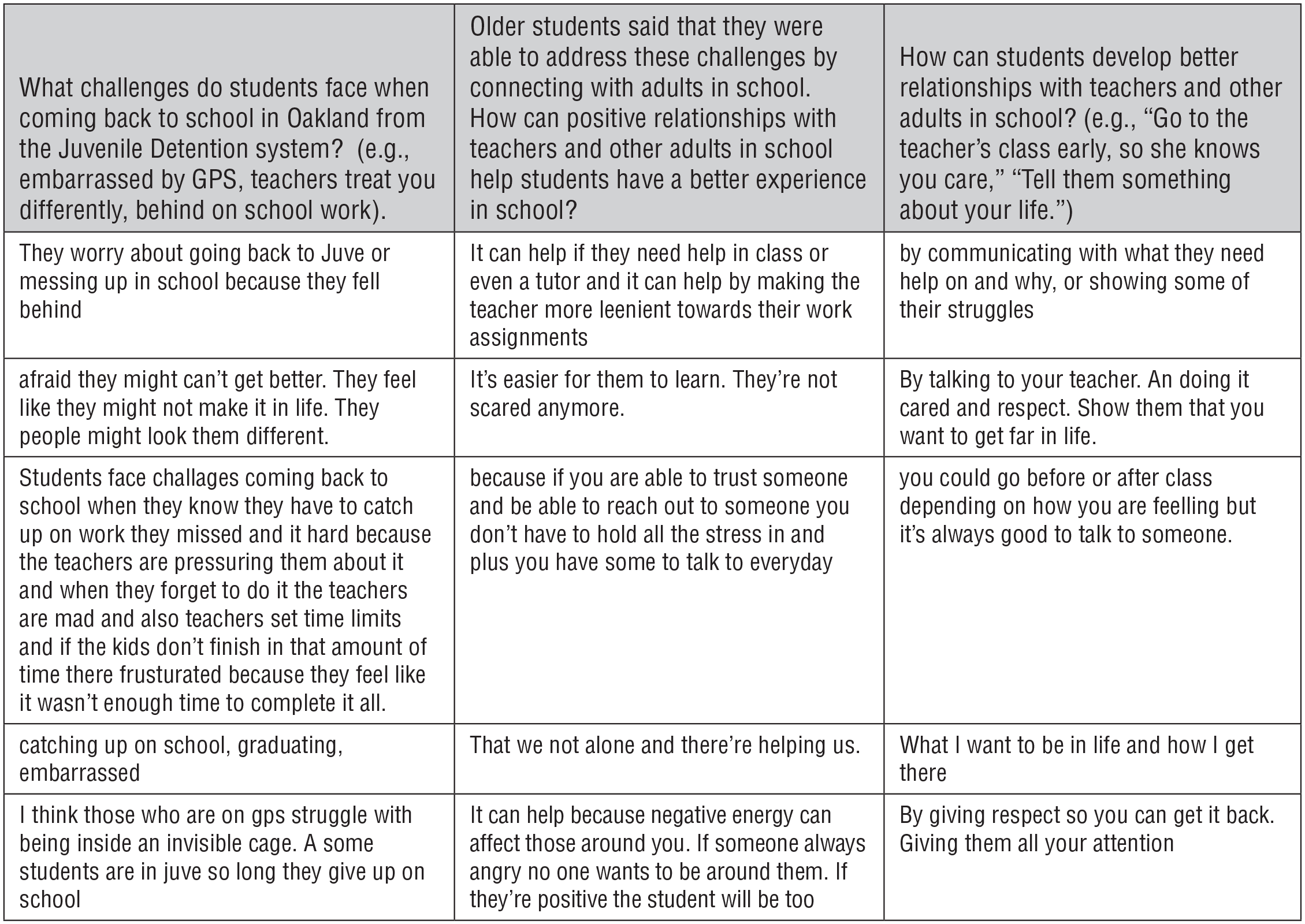
Sample student responses to open-ended questions asking about challenges they believe students face reentering school from juvenile detention and how they think relationships with educators can help (Study 1). Questions are shown in gray boxes.
Audio-recorded message for future students reentering school
Participating students conveyed the same themes in their audio recordings for future students reentering school (see Table S3 in the Supplemental Material).
Self-introduction to an educator (piped into the letter)
In general, what students wrote in introducing themselves to an educator they nominated as someone who could support them was deeply moving. Students said, in essence, “I’m a good person, I work hard and want to succeed, but it’s very hard. Please help” (see Fig. 5).
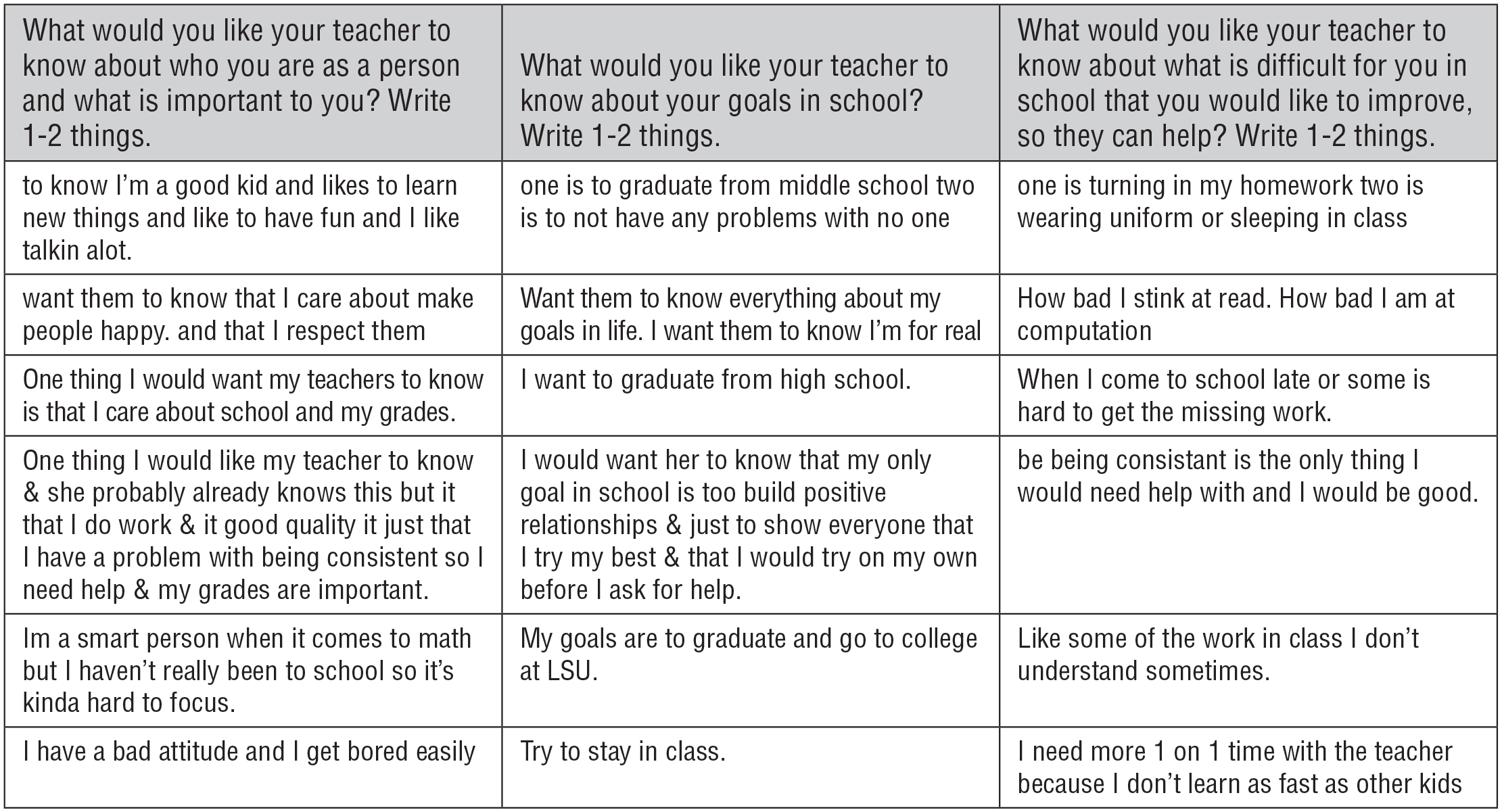
Sample student responses to open-ended questions asking what the student would like teachers to know about them (Study 1). Questions are shown in gray boxes.
Quantitative measures: did the randomized intervention reduce recidivism to juvenile detention and school disciplinary citations?
Recidivism to juvenile detention
Primary analyses examined recidivism obtained from official juvenile detention records using logistic regression. Raw figures showed that, whereas 69% of children in the control condition recidivated during the assessment period, just 29% of those in the student-treatment-plus-letter condition did, which was a significant reduction (Model 1: odds ratio [OR] = 0.18, z = 2.13, p = .033). In the student-treatment condition, 64% of children recidivated, which did not differ from the control condition (OR = 0.82, z < 1, p = .796). Only when students and educators were both oriented toward positive relationships with each other did recidivism drop significantly (see Fig. 6 and Table 1).
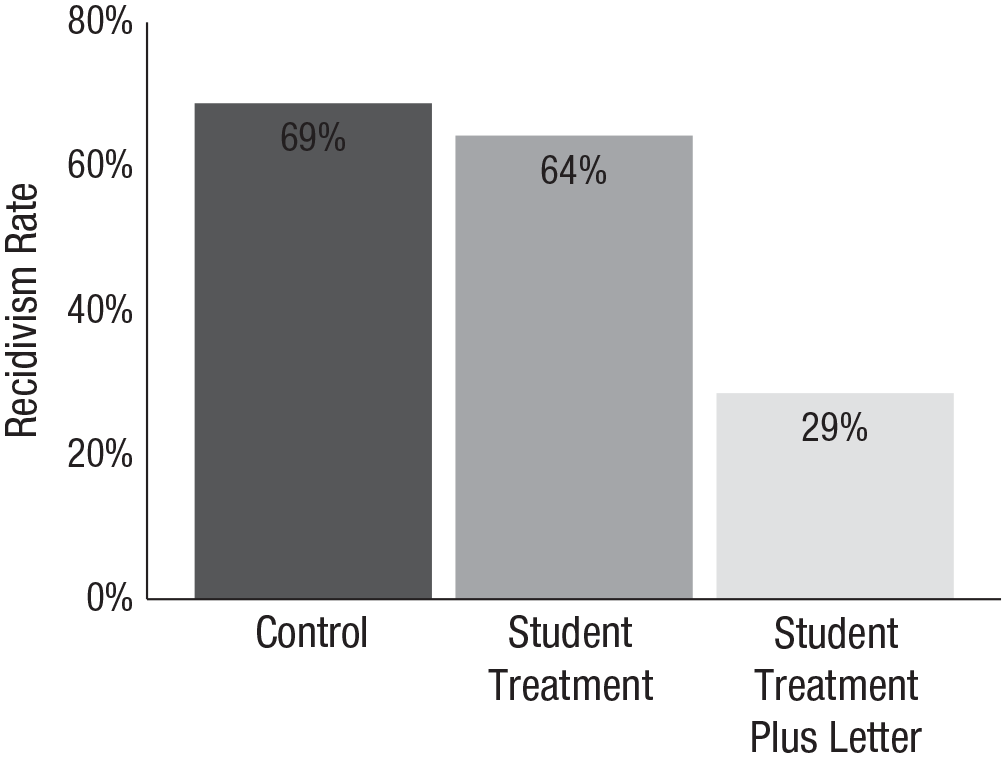
Recidivism to juvenile detention during the semester of release and the subsequent academic semester, separately for each of the three conditions (Study 1). Results are based on raw values from Model 1. Outcomes were obtained from official juvenile-detention records. N = 44 (control: n = 16, student treatment: n = 14, and student treatment plus letter: n = 14).
Recidivism to Juvenile Detention Through the Semester of Release and the Next Academic Semester, From Official Juvenile-Detention Records (Study 1)
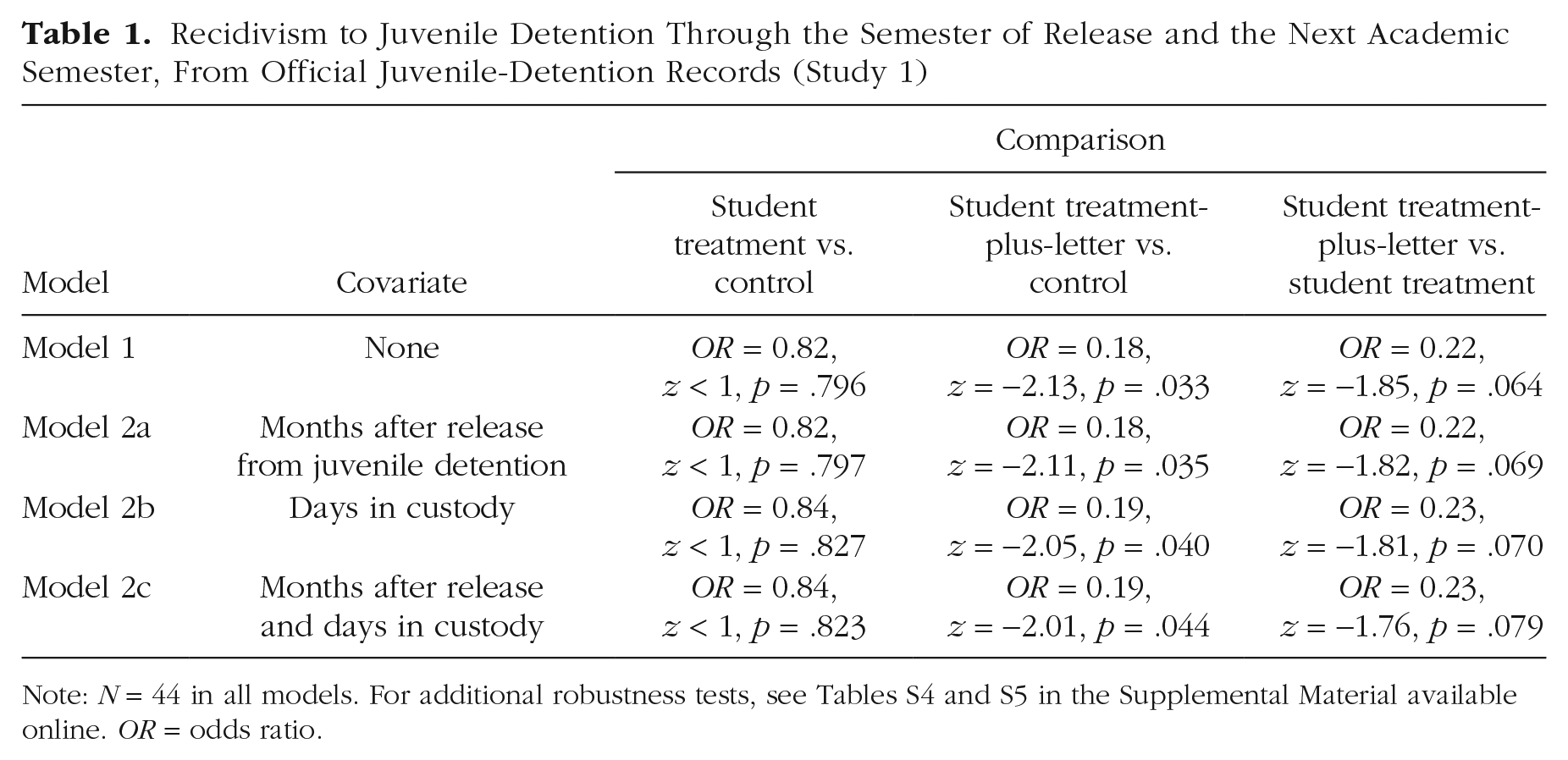
Note: N = 44 in all models. For additional robustness tests, see Tables S4 and S5 in the Supplemental Material available online. OR = odds ratio.
Given the small sample available, it was particularly important to subject the analysis to additional tests to ensure that the effect was not overly dependent on specific analytic decisions. When we did, we found it was robust across models.
First, because students were released from juvenile detention at different points during the semester, the assessment period (the semester of release plus the next semester) varied some, thus giving some students more time in which to recidivate than others. There was also some variability in how long students had been in custody prior to release (see Table S1), which may reflect the significance of the past crime committed and be of importance unto itself (Aizer & Doyle, 2015). Controlling for these variables, separately or together, did not alter the results (Models 2a, 2b, and 2c; see Table 1).
Additional models included all baseline demographic and psychological measures (Model 3) or only those that were predictive or that differed by chance by condition at baseline (Model 4). Additionally, because four participants were missing values on baseline measures (mother’s education), we tested these models both dropping these participants (Models 3a and 4a) and imputing missing values with the sample mean to retain them (Models 3b and 4b). Because models with more variables are more complex and may be unstable, we report them in the Supplemental Material. Nonetheless, in all cases, the effect of the student-treatment-plus-letter condition was significant (zs > 2.25, ps < .025). In none was the student treatment alone significant. The difference between the student-treatment condition and the student-treatment-plus-letter condition fluctuated some across models, ranging from significant to marginally significant (see Table S4 in the Supplemental Material).
Official recidivism records were missing for three children. To further test the robustness of the effect, we also used official district attendance records to infer recidivism. Although this allowed us to retain the full sample, school officials warned that attendance records may fail to identify some students who had recidivated. Nonetheless, across all eight models, the effect of the student-treatment-plus-letter condition versus control condition was stable (.092 ≤ ps ≤ .012; see Table S5 in the Supplemental Material).
School-discipline citations from official school records
Discipline citations were analyzed using negative binomial regression, given the skew present in these data (Goyer et al., 2019). We represent the effect size as an incident-rate ratio (IRR), which is a proportional change that is the exponentiated form of the corresponding log-count regression coefficient (alternatively, IRR – 1 expresses the same ratio as a percentage change). To avoid overfitting and given that we had a baseline assessment of the outcome, we limited the control variables to (a) the number of disciplinary citations in the semester prior to juvenile detention and (b) the two variables that differed at baseline—mother’s education and fixed theories of personality.
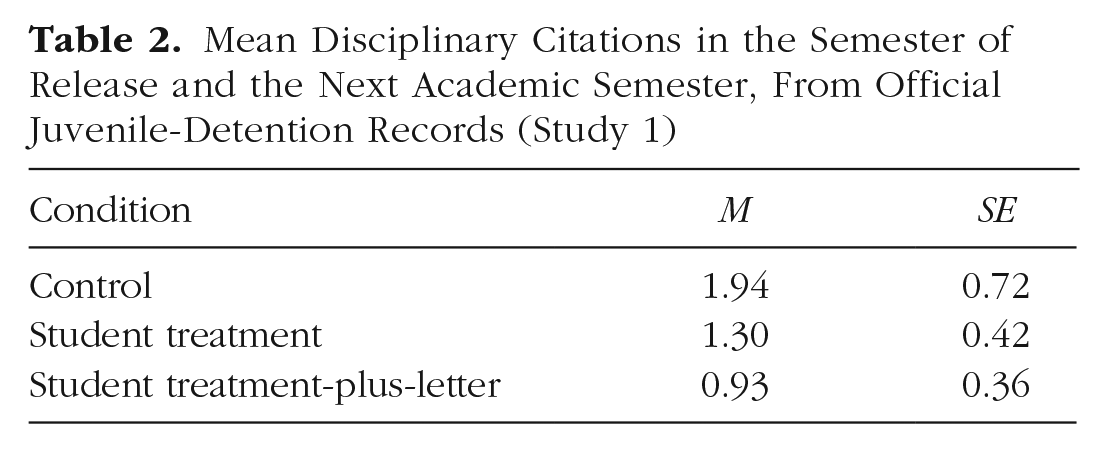
In a base model without controls, the effect of the student treatment-plus-letter condition on raw citation counts did not reach significance (b = −0.73, z = −1.33, p = .185, IRR = 0.48, 95% confidence interval [CI] = [0.16, 1.43]). However, when we included the control variables, the student treatment-plus-letter condition caused a 91% reduction in school disciplinary citations (b = −2.37, z = −2.63, p = .008, IRR = 0.09, 95% CI = [0.02, 0.55]). There was also a marginal reduction in the student-treatment condition (b = −1.44, z = −1.75, p = .080, IRR = 0.24, 95% CI = [0.05, 1.19]). Descriptive statistics are presented in Table 2.
Mean Disciplinary Citations in the Semester of Release and the Next Academic Semester, From Official Juvenile-Detention Records (Study 1)
We also examined several additional models. First, given the skew present in discipline citations, we examined the same model, having subjected both the baseline and the dependent measure of discipline citations to a natural log transformation (natural log of 1 + the original variable). Second, we took into account 10 participants who were missing data on the baseline measures, primarily on preincarceration disciplinary citations. These were evenly distributed across condition (missing control: n = 5, missing student treatment: n = 3, missing student treatment plus letter: n = 2), and missingness seemed to be completely at random; across the 14 baseline psychological and demographic measures (see Table S2), it correlated significantly only with one (grit; r = .288, p = .049). We thus also tested a model imputing the missing variables, retaining them. However, with both the log transformation and imputation, the control variables as well as the model as a whole became markedly less predictive than the model with controls (Nagelkerke’s R2s: base = .06; base with controls: .44; base with log transformations: .35; base with imputation: .19). Therefore, we primarily report the base model with controls. For completeness, the effect of the student-treatment-plus-letter condition in the alternative models became statistically weaker, consistent with the interpretation that less error variance is accounted for by the control variables (with log transformations: b = −1.35, z = −1.75, p = .081, IRR = 0.26, 95% CI = [0.05, 1.14]; with imputation: b = −1.02, z = −1.61, p = .11, IRR = 0.36, 95% CI = [0.11, 1.13]).
Thus, despite some variability across models, there is evidence that the student-treatment-plus-letter condition reduced postrelease disciplinary citations as well as recidivism.
Summary
An important finding in Study 1 was how powerfully children described their positive and prosocial hopes in school and the challenges they faced through the student-treatment exercise. These responses offer a completely different perspective on students reentering school. They are revealed to be not the surly, antisocial, disruptive students they are often seen as, but as vulnerable students facing an important transition with specific hopes and concerns actively seeking support. Moreover, when this self-introduction was provided to an educator of students’ choosing, students’ rate of recidivism to juvenile detention dropped by 40 percentage points. The sample was small, so the experimental effect is preliminary; yet it was robust across models. Among students in a very difficult circumstance in which every improvement matters, the findings suggest the potential impact of the relationship-orienting intervention.
Study 2: How the Letter Shifts How Teachers Perceive Students Who Are Reentering School
How might educators’ initial response to a student who is reentering school shift if only they knew of the student’s hopes, goals, and challenges as presented in the letter? Study 2 addressed this question.
Method
Participants and design
We aimed to recruit 350 participants to achieve 80% power to detect an effect (d) of 0.30 (two-tailed, two-sample t test). A total of 349 teachers (66% female, 32% male, 1% nonbinary) were randomly assigned to condition from an online pool. Teachers reported having taught for an average of 16.8 years (SD = 7.57). Most taught middle school (23%) or high school (81%; some taught at multiple levels). Teachers completed materials online in exchange for a small payment.
The online pool and the participant sample were developed without reference to juvenile justice or any other specific subject, thus mitigating selection factors into the study. We collected email addresses from websites of public school district and invited teachers to participate in paid online research surveys, the content of which was not specified. All teachers who agreed to participate in these surveys, and who indicated that they taught middle or high school, were invited to participate in the present study, which was described generically (“our brief research study that will take 15-30 minutes to finish”).
Each participant was randomly assigned to a letter or a no-letter condition nested within one of 30 targets, which corresponded to the 30 students in the student-treatment and student-treatment-plus-letter conditions in Study 1. The study was preregistered at http://osf.io/2p67z.
Procedure and materials
When beginning the study, teachers were told that we were interested in “teachers’ thoughts and experiences about students as they come back from juvenile detention” and that they would read about “an actual student who returned to school from juvenile detention.” They were told that the student’s name had been changed to protect his or her identity, as was the case. They then read the following passage: Imagine the school year is underway and you are teaching your normal subjects. One day, you receive word from the principal’s office that a new student, who has been incarcerated at the local Juvenile Detention center, is returning to your school. The student’s name is [student name], and [student gender pronoun] is [student race-ethnicity]. [Student gender pronoun] will enter your class next week.
No information was given about the student’s criminal history. However, students’ race-ethnicity and gender were made explicit because in real-world settings, as in Study 1, this is apparent to teachers.
In addition, in the letter condition only, teachers read the following: You also learn that the student has decided to participate in a program called, “Lifting the Bar,” designed to help students in their transition back to school from juvenile detention. You receive a letter from Lifting the Bar with more information. Please take a moment to read this letter. We’ll ask you about it later.
Teachers then received the same letter used in Study 1 but with the (changed) student name and the personal introduction that students shared piped in. The page did not allow teachers to advance until 30 s had elapsed to ensure that teachers began reading the letter. To encourage active processing, we asked teachers after viewing the letter, “What themes does this letter describe?”
To protect students’ identity while preserving personalization, realism, and race-ethnicity information conveyed by names, we swapped first and last names of participating students in Study 1 within race-ethnic groups as much as possible in presenting names in Study 2. Thus, for instance, same-race participants in Study 1 named John Williams and Michael Smith would be presented as “John Smith” and “Michael Williams” in Study 2. The content of students’ personal introductions was additionally randomized so that it was not associated with either the original respondent’s true first or last name.
Primary and secondary outcomes: perceptions of the target student
Measures were assessed in the order listed below. Items referring to the target student piped in the target student’s ostensible first name and gender pronoun. All items are reported in the Supplemental Material. In parentheses below, we indicate whether each measure was preregistered as primary or secondary. In the preregistration, we predicted significant effects of the letter on all seven primary outcomes. Secondary (and tertiary) outcomes were preregistered as exploratory. Open-ended responses were not preregistered.
Commitment to the target student (preregistered as primary)
Teachers were asked how “responsible” they would feel for, how “motivated” they would feel to help, and how “committed” they would feel to helping the target student in returning to school (three items; 1 = not at all, 7 = extremely; α = .90).
Open-ended responses (not preregistered)
Teachers were given space to respond to two open-ended prompts: (a) “Please describe the thoughts and feelings you might have about [student name] entering your class in more detail. How might you react to this news? What would you anticipate about your experiences with [student name] as [he/she] comes to your class?” and (b) “Please describe what, if anything, in particular you would do as [student name] enters your class.”
We examined these responses in two ways. First, we examined teachers’ references to the letter in the letter condition, to identify the valence of their response to it and themes they highlighted. Second, one goal of the letter was to sideline biases associated with the student’s criminal background in how teachers perceive and treat the student. To index this, two independent trained coders, who were unaware of participants’ condition, coded whether each teacher expressed curiosity about the crime the student had committed—whether for unspecified reasons, out of a stated desire to support the student, or out of a stated desire to protect other people (Cohen’s κ = .95). Although these reasons differed, we combined them because, in each case, the teacher was expressing that their thoughts, feelings, and behavior toward or with respect to the student would be predicated on the crime the student had committed.
Emotions about the target student entering their class (preregistered as primary)
Teachers were asked how much they would feel five positive and seven negative emotions about the target student entering their class: enthusiastic, excited, glad, hopeful, and prepared as well as afraid, angry, annoyed, apprehensive, challenged, frustrated, and overwhelmed (1 = not at all, 7 = extremely). Order of items was randomized. We examined both overall emotions by averaging the positive and reverse-coded negative items (α = .84) and positive (α = .89) and negative (α = .83) emotions separately.
Anticipated success and positive influence (or failure and negative influence) in class (preregistered as primary)
Teachers were asked how likely the target student would be to succeed and be a positive influence in class (five items; e.g., “Be a positive influence on other students in class,” “Distract other students in class” [reverse coded], “Interfere with your teaching” [reverse coded]; 1 = not at all likely, 6 = extremely likely; α = .78). We also examined the positive items (r = .64) and negative items (α = .87) separately.
Anticipated success and positive influence (or failure/violence and negative influence) in school (preregistered as primary)
Teachers were asked how likely the target student would be to succeed and be a positive influence in school (five items; e.g., “Be successful upon returning to school,” “Be a danger to others” [reverse coded], “Have significant disciplinary problems in school in the future” [reverse coded]; 1 = not at all likely, 6 = extremely likely; α = .80). We also examined the positive items (r = .75) and negative items (α = .87) separately.
Anticipated success and positive influence (or failure/violence and negative influence) in society (preregistered as primary)
Teachers were asked how likely the target student would be to succeed and be a positive influence in society in the future (four items; “Contribute positively to society,” “Commit another crime” [reverse coded], “Be reincarcerated in the future” [reverse coded], and “Be violent in the future” [reverse coded]; 1 = not at all likely, 6 = extremely likely; α = .79). We also examined the positive item and negative items (α = .89) separately.
Feelings of love, hope, respect, and trust (preregistered as primary)
Teachers were asked how much love, hope, respect, and trust they would feel for the target student (four items; 1 = none, 6 = a great deal; α = .86).
Opportunity to realize goals as an educator (preregistered as secondary)
Teachers were asked the extent to which the target student presented them with an opportunity “to do something meaningful as an educator” and “to reach my goals as an educator” (two items; 1 = not at all, 6 = a great deal; r = .79).
Negative judgment following a minor misbehavior (preregistered as primary)
Teachers were asked to imagine that, a week after entering their class, they found the target student sleeping in class and, when they tried to wake him or her, he or she refused to do the work. First, teachers were asked how they would respond to this behavior (open ended). Next, they completed three items: how worried they would be that the student would “be a problem student,” that the student’s behavior “could get worse over time,” and that they “might have to refer [student name] to law enforcement in the future” (three items; 1 = not at all, 7 = extremely; α = .88).
Perceived age (preregistered as secondary)
Teachers were asked to guess how old the target student was with options ranging from 10 to 18 years. (Student age was not provided elsewhere.)
Tertiary outcomes: probing general beliefs
Although our primary goal was to understand teachers’ responses to the target student, we also took the opportunity to assess teachers’ beliefs about the prospects for success of students reentering school from juvenile detention in general as well as their beliefs about adult offenders reentering society. On the one hand, it is possible that the letter could have a positive general effect on teachers’ beliefs about students reentering school if they generalize from the positive self-presentation of the target student to others. On the other hand, the letter could lead teachers to see the target student as exceptional and thus highlight a negative comparison with others. To explore these possibilities, following the primary and secondary measures, we assessed the success that teachers anticipated in class, school, and society among students reentering school from juvenile detention in general as well as the success they anticipated of adult offenders in society, among those reentering society from prison. The former measures were identical to the anticipated-success measures for the target student. The latter drew on and extended the measures assessing the anticipated success in society of students reentering school. The measures are described in full in the Supplemental Material.
Results
Data availability
Data and analysis code for Study 2 are available at https://osf.io/dzw5b/ and https://osf.io/eykhu/, respectively.
Success of random assignment
We tested for baseline condition differences in teacher demographics, the proportion of White and Black students that teachers reported among students in their school, teachers’ experience teaching students in juvenile detention, and the school level and subject they taught. Ten of 11 measures showed no between-conditions differences (see Table S7 in the Supplemental Material). The exception was that teachers in the letter condition reported that somewhat more students in their schools were White. Thus, analyses controlled for this measure.
Open-ended measures (not preregistered)
Response to the letter
First, we examined teachers’ response to the letter. As Fig. 7 indicates, responses were almost uniformly positive. Teachers emphasized (a) that the student had chosen them personally, (b) the value of learning that the student wanted to succeed, (c) their feeling of connection to the student, and (d) their desire to help the student achieve their goals.
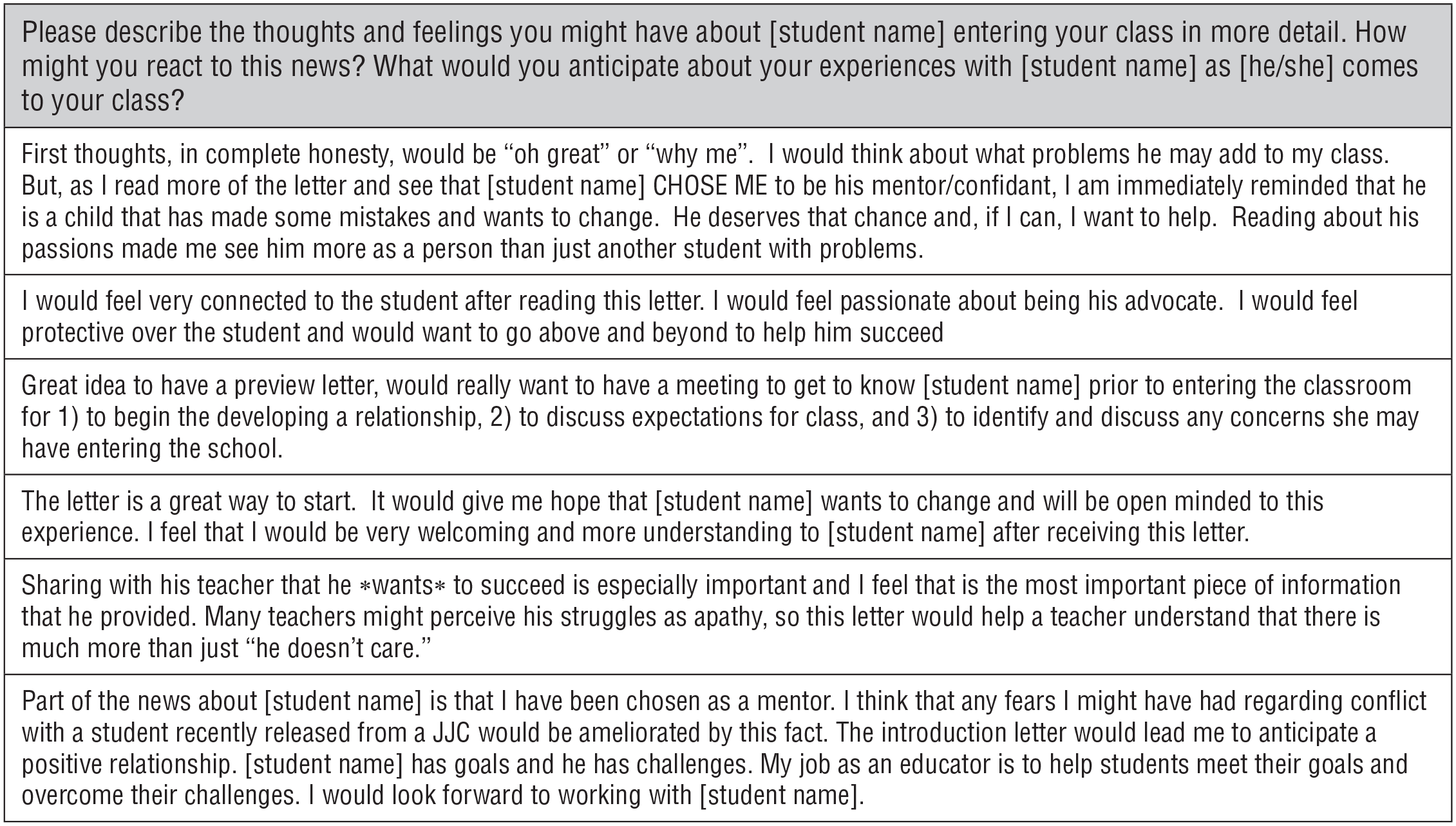
Sample open-ended responses to the letter among teachers in the letter condition (Study 2). Questions are shown in the gray box.
Crime curious
Consistent with our theorizing that introducing the student personally through the letter would reduce the extent to which teachers perceived the student in terms of their criminal background (“as a person [rather] than just another student with problems”; see Fig. 7), results showed that teachers were less likely to express curiosity about the student’s criminal background in the letter condition compared with the control condition (see Fig. 8 and Table 3). Each of the subcategories showed the same pattern (see Table S8 in the Supplemental Material).
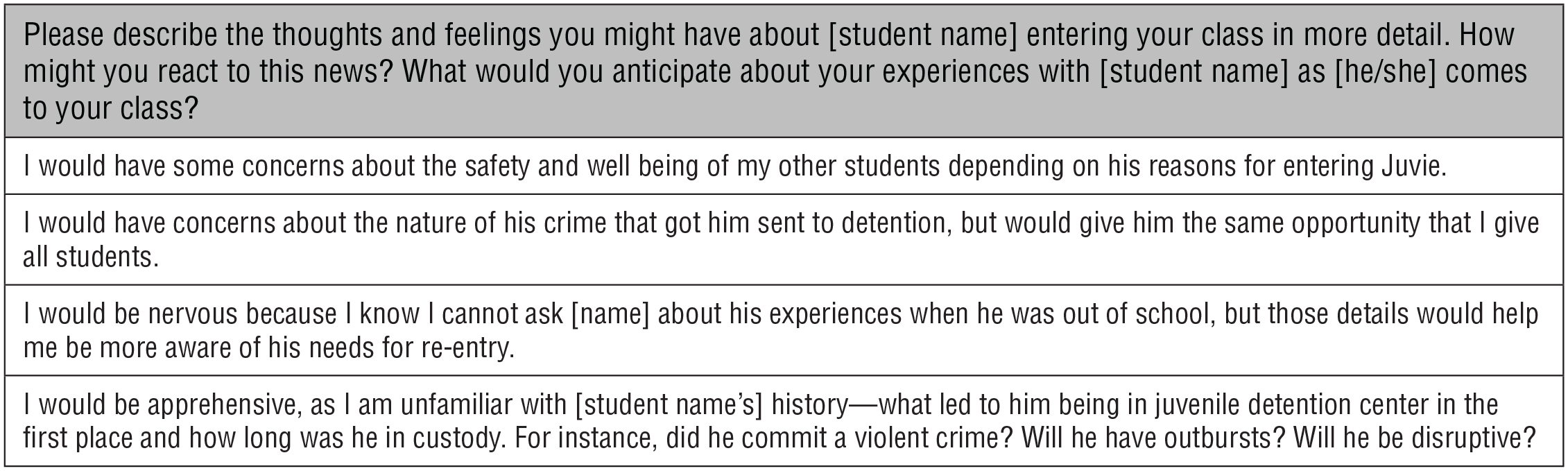
Sample expressions of curiosity among teachers about the crime the student committed (Study 2). Questions are shown in the gray box.
Teachers’ Responses to a Student Reentering School (Study 2)
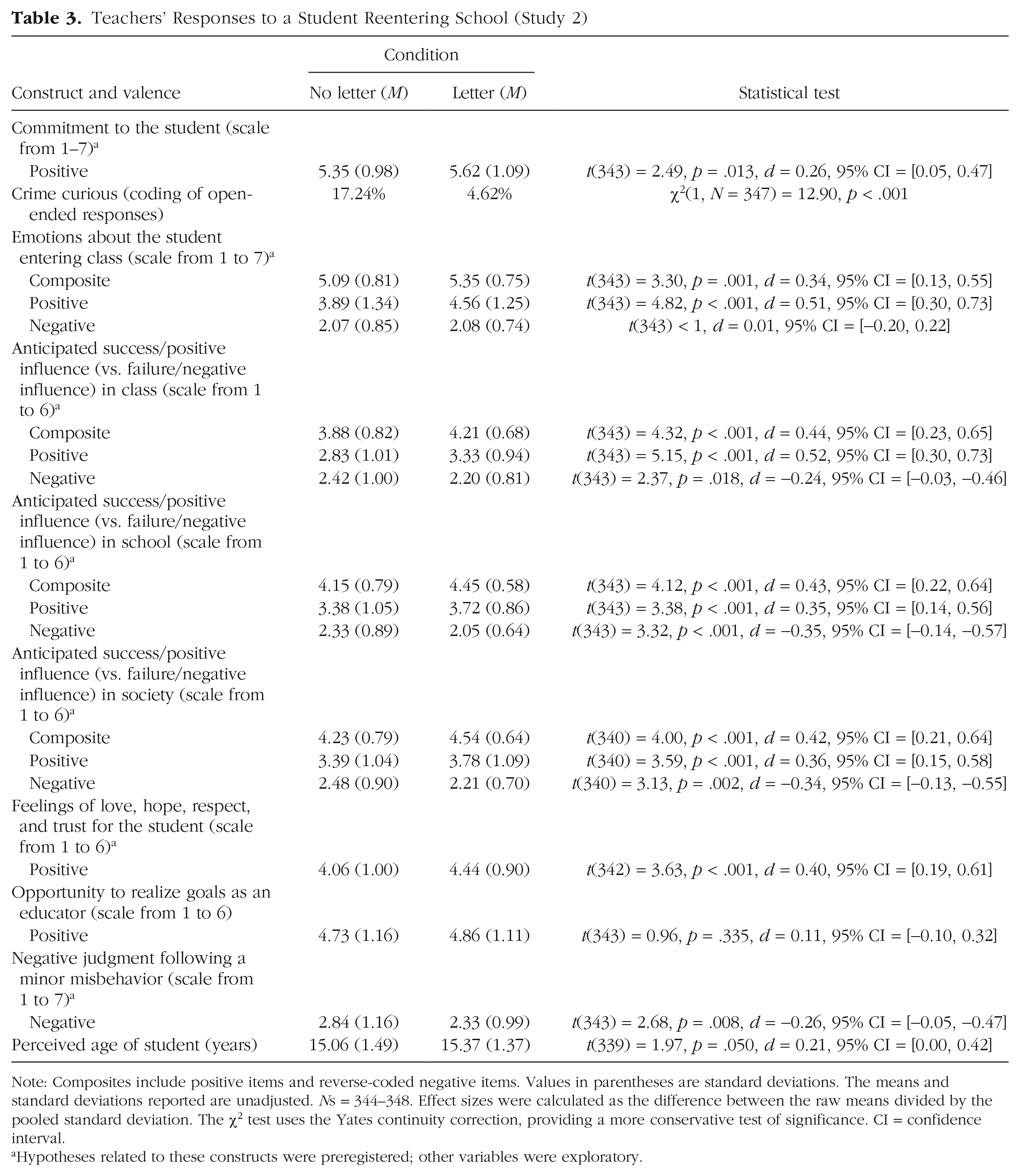
Note: Composites include positive items and reverse-coded negative items. Values in parentheses are standard deviations. The means and standard deviations reported are unadjusted. Ns = 344–348. Effect sizes were calculated as the difference between the raw means divided by the pooled standard deviation. The χ2 test uses the Yates continuity correction, providing a more conservative test of significance. CI = confidence interval.
Hypotheses related to these constructs were preregistered; other variables were exploratory.
Primary and secondary quantitative analyses: perceptions of and response to the target student reentering school
Analyses controlled for teachers’ reports of the percentage of White students who attended their school. We also tested a random intercept for the target student. However, this explained little to no variance and consistently increased the Akaike information criterion (see Table S9 in the Supplemental Material); therefore, it was dropped. Both retaining the random intercept and simple t tests yielded the same results.
Primary outcomes (preregistered)
A multivariate analysis of covariance across the seven primary preregistered outcomes found a significant overall effect of the letter condition, F(7, 334) = 375, p < .001. Moreover, as seen in Table 3, this effect was significant along each outcome. The letter increased teachers’ commitment to the student; enhanced positive feelings about the student entering their class; increased their anticipated success for the student in class, school, and society; and even increased their feelings of love, hope, respect, and trust for the student.
Of particular interest, the letter also mitigated negative judgment of the student following a minor misbehavior—a critical process in the escalation of conflict and mistrust between students and teachers (Okonofua & Eberhardt, 2015; Okonofua, Paunesku, & Walton, 2016; Okonofua et al., 2020).
In general, positive and negative items yielded similar effects. The one exception was for emotions, where the condition difference was driven by an increase in positive emotions with no reduction in negative emotions. It is possible that this pattern reflects the letter’s effect. Yet teachers may also have been unwilling to report significant negative emotions about a student who entered their class from juvenile detention, perhaps especially in the context of a scenario. Indeed, the mean level of negative emotions reported in both conditions was notably low.
Secondary outcomes (exploratory)
The effect of condition on teachers’ reports of the degree to which the target student presented them with an opportunity to realize their goals as an educator did not reach significance (see Table 3).
The second secondary measure, teachers’ perception of the student’s age, showed a small increase with the letter treatment. Originally, we had included this measure from an interest in the way that Black boys are seen as older and less childlike than White boys (Goff et al., 2014). We anticipated that humanizing the student through the letter might lead teachers to perceive the child as younger and thus to take more responsibility for him or her. Yet in combination with the primary outcomes, this finding raises the intriguing possibility that the letter may have led teachers to view the child as more responsible, consistent with their emphasis on the child’s desire to succeed (see Fig. 7) and greater expectations and feelings of love, hope, respect, and trust for them. If so, perhaps the greater commitment that teachers expressed toward the student with the letter reflected a sense of partnership with the student and respect for his or her agency and autonomy rather than the assumption of a caretaking role that would be more appropriate for a younger child.
Exploratory tests of moderation
Exploratory analyses examined whether the results differed by teacher characteristics, specifically by whether teachers reported experience teaching students who were reentering school from juvenile detention. No such moderation was found (ts < 1.95, ps > .055). The one marginal pattern was for negative judgments following a minor classroom misbehavior, in which marginally greater treatment effects were shown by teachers without experience teaching students who were reentering school, compared with those who were unsure or had such experience. However, because no other interaction approached significance (ts < 1.55, n.s.), we did not interpret this pattern further.
Tertiary analyses: anticipated success of students reentering school in general and adults reentering society
The measures assessing teachers’ expectations of success for students who were reentering school from juvenile detention in general and for adults who were reentering society from prison were directionally more positive with the letter than without for every outcome. However, in most cases, the effect of condition did not reach significance. When the three measures assessing the anticipated success of students reentering school in general were pooled, there was a statistical trend for a positive effect of the letter condition, t(444) = 1.64, p = .101, d = 0.16, 95% CI = [−0.05, 0.37]. Details are reported in Tables S10 to S12 in the Supplemental Material. Thus, if anything, the results point more to the generalization process than to a subtyping process and to potentially broader benefits for person perception.
General Discussion
Children who are reentering school from juvenile detention are among the most stigmatized students in school. The present research shows how we can orient educators and students in this circumstance toward each other as positive relationship partners. In Study 1, with a structured exercise, students were able to introduce themselves powerfully and positively to an educator of their choosing. In a small field-experimental test, providing this self-introduction to the educator reduced recidivism to juvenile detention and, in some models, school-discipline citations through the next semester. Informing process, in Study 2, the educator letter increased the initial receptivity of teachers to a student reentering school, including greater commitment to and feelings of love and respect for these children. This response is particularly significant given how readily teacher–student relationships become self-fulfilling, especially in contexts of stereotypes and stigma.
For policy and practice, the improvements in children’s outcomes are highly promising yet preliminary. It is essential to replicate the field trial with larger samples to further understand effectiveness, to track psychological processes and teacher–student relationships as they occur, and to explore contextual heterogeneity. Indeed, psychological interventions are not magic bullets that work uniformly across contexts (Walton & Wilson, 2018; Yeager & Walton, 2011) but depend on affordances in social contexts for their effectiveness (Walton & Yeager, 2020).
One contribution of the present research is to shed light on the psychological experience of children reentering school—a severely disadvantaged population at a critical juncture we know little about. Study 1 revealed that with the relationship-orienting procedure, children beginning reentry into school could frankly articulate positive and prosocial hopes for themselves, challenges they faced, the kinds of people they would like to become, and the relationships they would like to form in school. Study 1 shows how we can elevate students’ voices. Study 2 shows that doing so can elicit greater support from important people in the school environment.
A second contribution addresses a critical question for the field: How can we effectively reach adults who hold power over students—to shift adults’ mind-sets to create more supportive environments for students? Whereas strategies to support students’ belonging and confidence in school can be effective (Walton & Brady, 2020), there is also an opportunity—and sometimes a need—to improve school contexts, including to mitigate biased perception and treatment. Past research has developed training programs to reduce bias, but the effects are often limited (Forscher et al., 2017; Lai et al., 2016). Instead, understanding that bias is triggered by the social environment (Eberhardt, 2019), we altered that environment with an intervention that oriented students and teachers toward positive relationships with each other. To accomplish this, the intervention went beyond simply creating a point of similarity or connection between students and teachers (Gehlbach et al., 2016). Instead, it aligned students’ and teachers’ goals in school with a positive relationship (see Fitzsimons & Finkel, 2018). For teachers, it evoked a professional commitment toward the student for which bias would be nonfunctional. Thus, our aim was to sideline bias (Okonofua et al., 2020) to reduce its hold on teachers’ behavior toward children during a critical period. Reflecting this process, in Study 2, the letter reduced the likelihood that teachers considered the crime the youth had committed when determining how to think, feel, and behave toward him or her. The results suggest basic research exploring how strategies to sideline bias, including by elevating alternative valued goals and identities, may mitigate the expression of bias in behavior. They also invite us to consider where else in society we can sideline bias through relationship-orienting strategies.
Supplemental Material
sj-docx-1-pss-10.1177_09567976211013801 – Supplemental material for Lifting the Bar: A Relationship-Orienting Intervention Reduces Recidivism Among Children Reentering School From Juvenile Detention
Supplemental material, sj-docx-1-pss-10.1177_09567976211013801 for Lifting the Bar: A Relationship-Orienting Intervention Reduces Recidivism Among Children Reentering School From Juvenile Detention by Gregory M. Walton, Jason A. Okonofua, Kathleen Remington Cunningham, Daniel Hurst, Andres Pinedo, Elizabeth Weitz, Juan P. Ospina, Hattie Tate and Jennifer L. Eberhardt in Psychological Science
Footnotes
Acknowledgements
We thank the Oakland Unified School District (OUSD) and the Juvenile Justice Center in Alameda County, California, for partnership; OUSD teachers, principals, and staff and the Juvenile Justice Center Transition Center team, including Deputy Chief of Probation Ian Long, Alicia Mitchell, Jordan Seiden, and Rownee Winn, for assistance; Michael Harris at the National Center for Youth Law for assistance; the East Bay Asian Youth Center, Youth Uprising, and Castlemont High School for hosting focus groups; and individual students for sharing their stories, experiences, challenges, and feedback to help future youths. We also thank Adamari Alamillo, Natalie Chapman, Isabel Dibble, Shoval Gilead, Andrea Goepel, Andrew McReynolds, Anna Mistele, Sheba Naderzad, Saskia Op den Bosch, Chasson Randle, Michael Ruiz, and Carolin Schaefer for assistance.
Transparency
Action Editor: Leah Somerville
Editor: Patricia J. Bauer
Author Contributions
G. M. Walton, J. A. Okonofua, and J. L. Eberhardt conceived of and designed the research. For Study 1, G. M. Walton, J. A. Okonofua, K. Remington Cunningham, D. Hurst, A. Pinedo, H. Tate, and J. L. Eberhardt carried out the design process, including interviewing and data gathering, and created the intervention. D. Hurst implemented the study with support from H. Tate. D. Hurst, E. Weitz, and J. P. Ospina processed and analyzed the data. For Study 2, G. M. Walton, J. A. Okonofua, K. Remington Cunningham, E. Weitz, and J. L. Eberhardt designed the materials; J. A. Okonofua supervised the data collection; and E. Weitz processed and analyzed the data. G. M. Walton drafted the manuscript. All the authors reviewed and provided revisions on the manuscript and approved the final manuscript for submission.

References
Supplementary Material
Please find the following supplemental material available below.
For Open Access articles published under a Creative Commons License, all supplemental material carries the same license as the article it is associated with.
For non-Open Access articles published, all supplemental material carries a non-exclusive license, and permission requests for re-use of supplemental material or any part of supplemental material shall be sent directly to the copyright owner as specified in the copyright notice associated with the article.
