




Abstract
Mood fluctuations, influenced by factors such as workplace stress, academic pressure, and interpersonal relationships, can significantly affect mental health and decision making. Effective mood regulation is essential for maintaining psychological well-being, especially during critical developmental phases such as adolescence. Traditional mood management methods often rely on personal willpower and subjective techniques, which can be inadequate in high stress situations. Recent advancements in wearable technology, particularly in the field of smart textiles, have led to continuous and objective mood regulation. This review explores the integration of wearable smart textiles with mood regulation, focusing on emerging technologies that incorporate psychological principles into fabric designs. It examines various wearable textiles equipped with sensors, actuators, and biofeedback mechanisms that monitor physiological indicators related to mood, such as the heart rate and skin conductivity. These technologies not only provide real-time feedback but also offer interactive elements, such as temperature regulation, light modulation, and tactile feedback, allowing users to actively engage with their emotional states. In addition, the integration of mobile applications allows users to track mood patterns and identify emotional triggers, thereby enhancing their self-awareness. In the end, through a synthesis of the current research, this review discusses the psychological impacts of these wearables, including their efficacy in stress reduction, anxiety management, and overall emotional resilience. It also highlights the challenges and future research directions in the realm of wearable mood regulation.
Keywords
Introduction
Emotional fluctuations are a common experience for many individuals and are often triggered by various factors such as workplace pressure, academic stress, challenging interpersonal relationships, and physical health issues. These emotional shifts can significantly impact behavioral and decision-making processes. While feelings of sadness, dread, worry, and unease are integral to human experience, they can be detrimental when individuals frequently find themselves overwhelmed by intense emotions without the ability to manage them effectively.1,2 Research indicates that emotions profoundly influence thoughts, behaviors, self-expression, social interactions, and even physical health. 1 Notably, mood variations linked to stress, anxiety, and depression can have far-reaching effects on personal relationships and can potentially lead to emotional separation or divorce. Moreover, these mental health challenges significantly increase the risk of suicidal ideation.1,3 Given these potential consequences, effective mood regulation has emerged as a critical component of emotional intelligence, significantly contributing to an individual’s overall mental and physical health. Mood regulation involves the ability to manage and respond to emotional experiences, especially during periods of heightened stress. 4 This capacity is particularly vital for maintaining psychological well-being and adaptive functioning, particularly during key developmental stages such as adolescence. 5 Furthermore, studies suggest that the ability to regulate mood can predict future efforts to manage affect, especially in the context of task engagement. 6 This insight underscores the complexity of mood regulation, which may involve different mechanisms for both positive and negative emotions. 7
Traditionally, individuals have relied on personal willpower and various techniques to control their emotions. However, in challenging situations, it can be difficult to maintain composure, as many people may find themselves overwhelmed by intense emotional states. 2 This has prompted a broader exploration of mood regulation techniques, including seeking psychological guidance, engaging in introspection, participating in physical activities, practicing yoga and meditation, and expressing emotions through catharsis. Despite their effectiveness, these methods have inherent limitations such as subjective bias, infrequent assessments, and reliance on personal recall, highlighting the need for more robust solutions. Consequently, researchers are increasingly focusing on digital technologies to facilitate mood regulation.2,8 In this context, the rise of wearable technology is particularly noteworthy. These devices address many of the limitations of traditional methods by providing continuous, objective, and passive monitoring of mood-related physiological and behavioral data. 9 For instance, wearable devices can track physiological patterns associated with mood changes, thereby offering a less invasive alternative to conventional patient care practices, especially in inpatient psychiatric settings. 10 Furthermore, the integration of artificial intelligence and advanced algorithms with these wearable devices enhances their potential for mental health monitoring and early diagnosis.11,12
Among the various forms of wearable technology, wearable smart textiles, including smart fabrics and fitness trackers, represent significant advancements designed to enhance emotional regulation and the overall functionality of users. These devices have transitioned from simple fitness trackers to sophisticated medical tools capable of real-time data collection and monitoring. 13 Smart textiles are specifically engineered fabrics that can sense environmental stimuli, react accordingly, and adapt to various integrated functionalities.10,14 This innovative technology is rapidly expanding in scope for mental health management, enabling personal health monitoring through smart clothing and connected mobile devices. Consequently, users can benefit from continuous monitoring, early disease detection, and personalized health interventions.13,14
A particularly relevant technique within this framework is biofeedback, which employs visual, auditory, or haptic cues to help individuals regulate their involuntary bodily functions, thereby empowering them to manage their physiological responses and gain a clearer understanding of their emotional states. 2 Various biosignals related to emotions, including electromyograms (EMG), blood volume pulses (BVP), electrodermal activity (EDA), and electroencephalograms (EEG), have been utilized for biofeedback and embodied interactions. For instance, Valenza et al. 15 explored the changes in electrodermal response to detect emotions using textile electrodes incorporated into a glove, whereas Wu et al. 16 developed a wearable system for emotion management based on textile materials and heart rate variability (HRV) biofeedback mechanisms. Similarly, Zhou et al. 17 investigated the use of pressure-sensitive smart textiles to monitor emotional states by detecting changes in facial expressions using integrated textile pressure mapping arrays. In addition to biosignal-based interactions, body motion has been explored in affective interaction research. Hook’s SenToy Doll project 18 allows users to express their physical and emotional states by interacting with a doll using various emotional gestures. In another project by Hook, an instant messaging application transformed user gestures into emotional expressions. For example, angry gestures are visualized as a strong, aggressive, colorful background, 2 enabling the receiver to perceive the sender’s emotions through system interaction.
It is worth noting that, many existing emotion-related interactive textiles primarily focus on recognizing emotions through physiological signals,15,16,19 facial expressions,17,20 or body motions,2,18,21 driven by an increase in affective computing. However, there is a growing need to enhance this interaction. Research is increasingly shifting towards presenting and amplifying emotions, modulating mood states, and creating new emotional experiences. 22 Consequently, advancements in technology and increasing consumer awareness suggest that the market for mood-sensitive clothing could be substantial, potentially worth $42 billion, by 2027. 23 This projected growth reflects the evolving landscape of wearable technology and a heightened interest in mental health solutions. Factors contributing to this anticipated market expansion within the next few years may include innovations in user-friendly design, enhanced functionality, and growing acceptance of wearable devices in everyday life.
Despite the evident potential for body-centered affective design, smart textiles have not achieved significant market penetration, and studies specifically addressing mood regulation are still limited. Furthermore, while advancements have been made in technology and data analysis, there is a notable gap in the understanding of the long-term psychological effects of wearable textiles for mental health monitoring. User acceptance and comfort in various contexts such as healthcare and sports also require further investigation. 24 As these technologies are integrated into everyday life, their potential impact on user behavior and self-perception has become increasingly critical. Therefore, this review aimed to explore the convergence of smart textiles and emotion regulation, focusing on the potential of wearable technologies to assist in managing mood and emotional states. The primary objectives of this review are to examine the current state of wearable textiles designed for mood recognition and regulation, analyze their technological foundations, and identify research gaps regarding their psychological impact. It covered a range of topics related to smart textiles, including movement-based interactions for emotion regulation, integration of electronics with textiles for biomonitoring, and application of biofeedback interventions, such as scent-based mood regulation. By identifying existing knowledge gaps and assessing real-world applications, this review encourages cross-disciplinary discussion among scientists, product developers, and mental health experts. Ultimately, this suggests future research directions that could deepen our understanding of how wearable textiles might enhance mental health outcomes.
Review methodology
The methodology for reviewing “Wearable Smart Textiles for Mood Regulation: A Critical Review of Emerging Technologies and Their Psychological Impact” employed a systematic approach to collect and evaluate pertinent literature. The scope of the review was narrowed to wearable textiles designed for emotional regulation and their psychological effects, focusing on research published over the past few decades. An extensive search was performed using databases like PubMed, IEEE Xplore, Google Scholar, and Scopus, utilizing keywords such as “wearable textiles,” “mood regulation,” “interactive textile,” “affective textile,” “smart textiles,” “mood regulation,” and “psychological impact.” Studies were included if they specifically addressed wearable textile technologies and their impact on emotional well-being; non-English publications and unrelated studies were excluded. The selection procedure involved initial screening of titles and abstracts, followed by a detailed examination of the full text to determine eligibility. Information was extracted from the selected studies using a standardized form, capturing key details, such as author information, study design, examined technologies, and findings related to mood regulation. The data synthesis was organized thematically, emphasizing key areas such as technology types, mechanisms of action, and psychological outcomes. Narrative synthesis was used to summarize the findings and identify patterns across studies. The discussion highlights insights into the psychological impacts of wearable textiles, addressing practical applications, and implications for future research. This review acknowledged some limitations, including a short study duration and variability in the study designs. It concludes with a summary of key findings and suggests future research directions, stressing the need for longitudinal studies and interdisciplinary collaboration in this emerging field.
Wearable textiles
Wearable textiles, commonly known as smart textiles or e-textiles, represent a remarkable fusion of traditional textile structures with integrated electronic components and advanced technologies. 25 These innovative materials are designed to not only serve as clothing but also to actively engage with their environment. They can sense and respond to various stimuli, including mechanical, thermal, chemical, biological, and magnetic factors. 26 This capability enables smart textiles to perform myriad functions, including sensing, actuating, generating, and storing power and facilitating communication and interaction.27,28
Components of wearable textiles
Typically, smart textiles consist of five main components: sensors, actuators, communication devices, data processing units, and interconnections.
29
The integration of these components has numerous advantages over conventional wearable devices, such as enhanced comfort, flexibility, and seamless incorporation into everyday clothing.
30
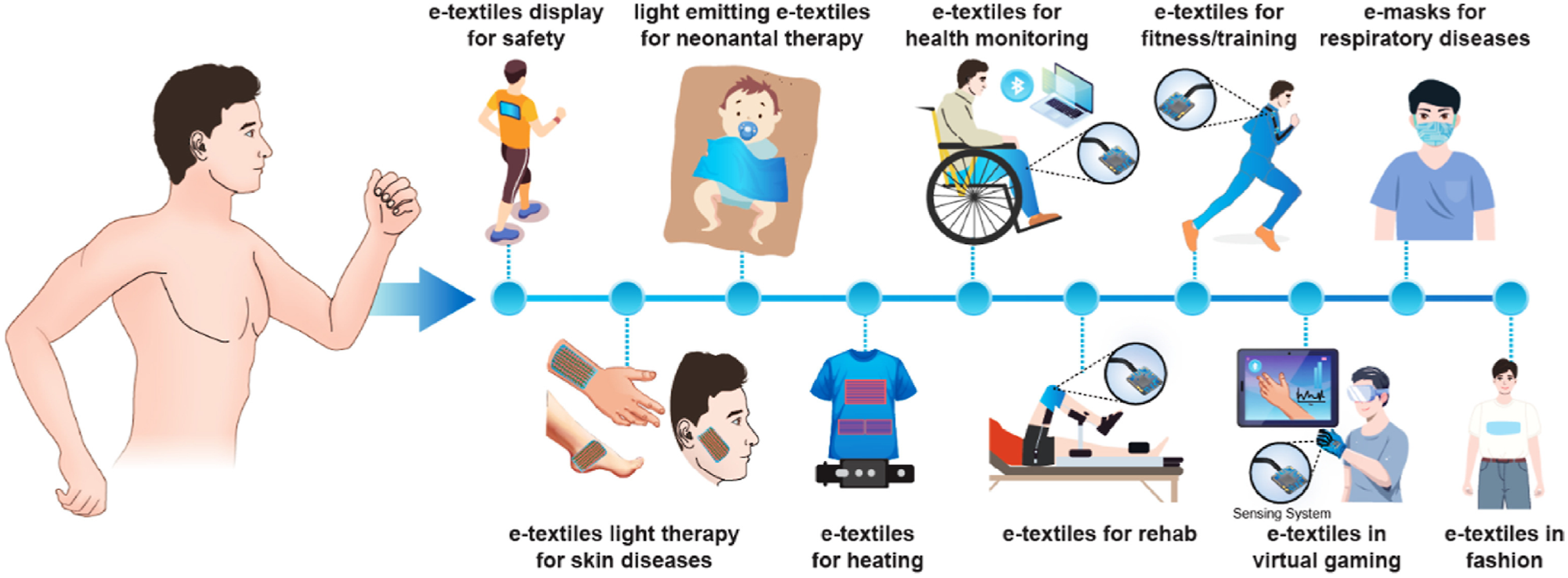
Consequently, smart textiles are particularly well-suited for a wide range of applications, including health monitoring, safety, sports performance tracking, and promotion of healthy lifestyles.25,26 Figure 1 illustrates the diverse applications of e-textiles across various fields, addressing critical issues such as respiratory illness prevention, joint injury mitigation, skin disease management, neonatal jaundice treatment, road safety enhancement, training improvement, and fashion innovation.
31
The inclusion of the running man emphasizes the dynamic nature of wearable e-textiles and their potential applications across various domains, including sports and physical activities. Moreover, the growing global population of elderly individuals and people with disabilities underscores the increasing importance of wearable e-textile prototypes for health monitoring and treatment.32,33 For example, e-textiles equipped with interactive sensors can transmit real-time monitoring data to healthcare facilities, thereby reducing reliance on cumbersome and costly monitoring equipment and leading to fewer hospital visits. This capability signifies a paradigm shift in patient care, making health care more proactive and accessible.
31
Schematic illustration of e-textile application pathways in different areas.
31
Classification of wearable smart textiles
Wearable textiles can be classified into various categories, based on their applications and functionalities. One prominent category is biosensing fabrics monitor physiological parameters and convert biomechanical, biochemical, and body heat energy into electrical signals for real-time health and emotion monitoring. 34 These fabrics incorporate sensors and conductive materials for detecting and transmitting vital signs, movement data, and other health information. For example, piezoelectric nanogenerators (PENGs), triboelectric nanogenerators (TENGs), and magnetoelastic generators (MEGs) can convert biomechanical energy into electrical signals, whereas thermoelectric generators (TEGs) can harness body heat for energy conversion. 34 Another significant classification is therapeutic textiles, which are designed to provide various therapeutic benefits, such as pain relief, wound healing, mood regulation, and drug delivery. Smart textiles incorporating conductive yarns and polymers can be utilized for temperature regulation, muscle stimulation, or as part of drug delivery systems.35,36 Wearable textiles can also be categorized on the basis of their level of intelligence and functionality. These include passive smart textiles, which primarily sense environmental stimuli; active smart textiles, which can sense and react to stimuli; and ultra-smart textiles, which can sense, react, and adapt to changing conditions.29,37 Some wearable textiles also incorporate energy harvesting and storage capabilities, such as solar textiles, which convert light into electrical energy to power portable electronics. 38 For instance, Stylios and Yang 39 developed the MoodWear SMART garment, an innovative design entirely powered by a solar system, with careful integration of all components within the garment’s architectural framework. This garment exemplifies how a photonic, highly fashionable piece can respond to a wearer’s mood. The harvested solar energy is stored and can be utilized to power mobile devices. This diverse classification highlights the vast potential of smart textiles across various sectors, including healthcare, sports, military, and consumer electronics, ultimately revolutionizing personal health management and enhancing daily life experiences.29,34,36
Materials used in wearable smart textiles
Wearable smart textiles employ a diverse array of materials to achieve smart and interactive functionalities. These e-textiles exhibit sensing, actuation, and communication capabilities by integrating conventional textiles with electronic components and advanced materials, these e-textiles exhibit sensing, actuating, and communication capabilities.27,40 Conductive materials are essential for wearable textiles, with metals and semiconductors dominating the landscape. However, recent advancements have introduced more sustainable and efficient alternatives. 41
Conductive polymers
Conductive polymers, including polypyrrole, polyaniline, and polythiophene, as well as carbon-based materials, such as graphene and carbon nanotubes, are increasingly being incorporated into textile substrates for various sensory applications.
41
Electrotextiles, crafted from conductive yarn or fabrics combined with these materials, are also utilized in flexible wearable antenna designs.
42
Furthermore, smart materials such as shape-memory polymers and smart gels are being explored as ultra-smart textiles with adaptable properties.
43
However, the substrate materials used in wearable textiles are crucial. Figure 2(a) illustrates the most frequently employed conductive materials in recent e-textile development, including conductive polymers such as PEDOT:PSS, carbon-based substances, metallic elements, metal-organic frameworks (MOFs), and carbide/carbonitride (Ti3C2Tx) MXene.30,44 In addition, metals can be integrated into textile fibers or blended in their pure form using thin metal nanoparticles and nanowires. Literature indicates that for wearable applications, metals or other conductive materials are often applied as thin layers on the insulating surfaces of untreated fabrics. Ultimately, electrically conductive fabrics can be transformed into functional wearable e-textile systems by integrating them with computers, mobile devices, and power sources through connectors or wireless modules for data collection in health and fitness assessments.
31
Figure 2(b) depicts the commonly employed techniques for creating conductive textiles and integrating devices or sensors into fabrics, including dyeing, dip coating, jet printing, embroidery with conductive fibers, roll-to-roll coating, screen/stencil printing, spray coating, and spinning.44,45 There is also growing emphasis on sustainable and eco-friendly materials for e-textiles. Researchers are exploring biodegradable and recyclable materials to address environmental concerns associated with electronic waste.
46
This shift toward sustainability is driving the development of next-generation smart and sustainable wearable e-textiles that can be recycled or decomposed without negative environmental impacts.40,46 (a) Common conductive materials (conductive polymers, carbon materials, metals, MOF, and MXenes). (b) Fabrication techniques (dyeing, dip coating, jet printing, embroidery, roll-to-roll coating, screen/stencil printing, spray coating, and spinning) for the development of electrically functional textiles.
31

Utilization of piezoelectric and piezoresistive sensors with various polymers. 48
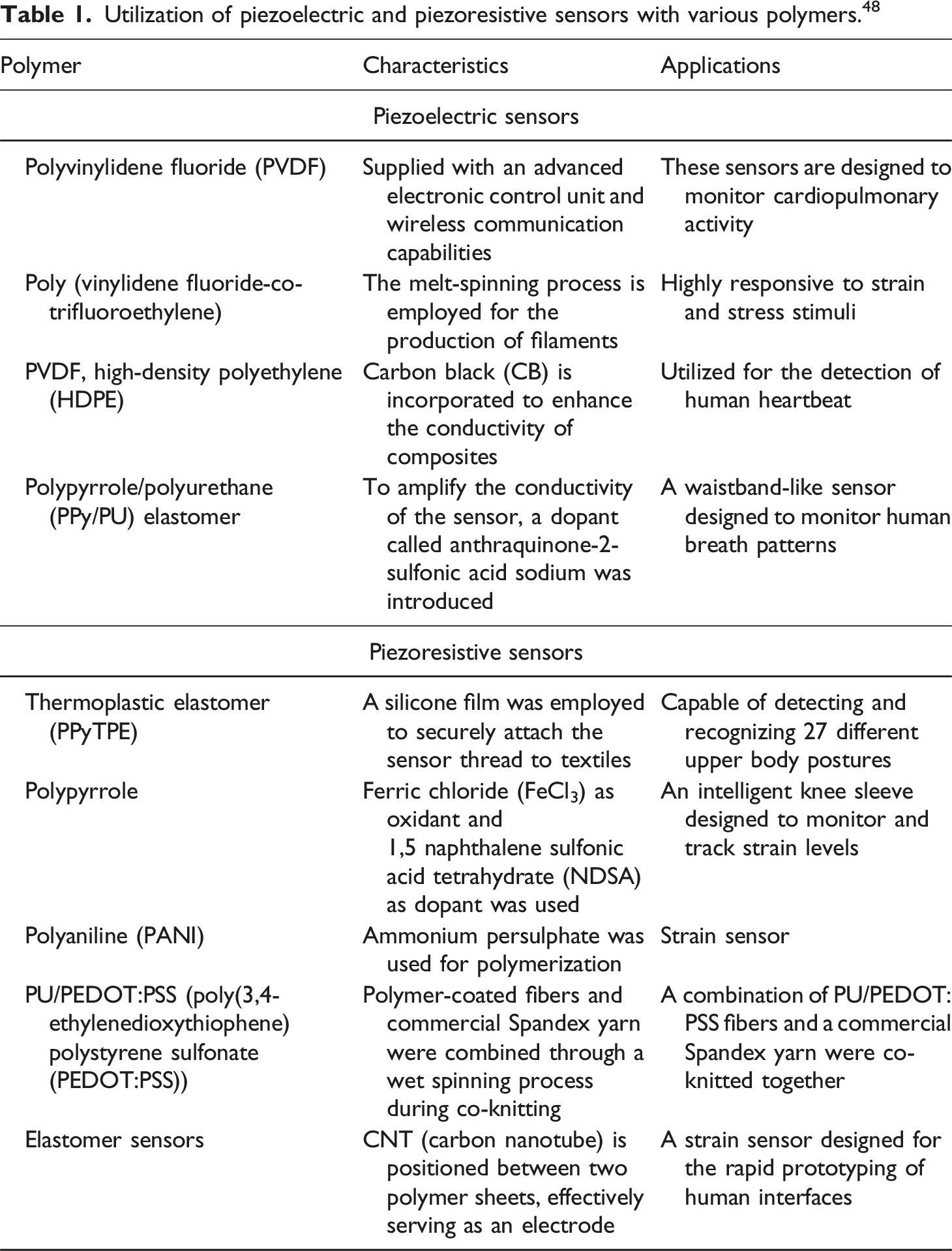
Despite advancements in sensor technology for wearable textiles, understanding their effectiveness in real-world applications remains crucial. The integration of various sensors can significantly enhance the functionality of smart textiles, allowing improved emotion regulation and health monitoring. For instance, various studies have demonstrated the innovative use of sensors in wearable technologies aimed at addressing emotional and psychological needs. Jiang et al. 49 developed a smart t-shirt utilizing vibrotactile mechanisms and audio feedback, specifically designed to facilitate emotion regulation among healthcare workers. In another study, Harvey et al. 50 employed the UpRight wearable posture device coupled with a smartphone app to assess the effects of posture feedback on health and mood in a student population. Similarly, Jiang et al. 8 (in a different context) explored interactive textiles that incorporated various sensors for movement detection, although the specific types of sensors were not detailed. Wang et al. 51 focused on interactive parent-child clothing, employing materials such as DuPont Tyvek, 3M luminous reflective fabric, TPU transparent film, and specialized sensors to enhance emotional connections between parents and autistic children. In contrast, van der Lugt 52 did not provide specific materials in the truncated content pertaining to stress-reduction wearables. Huang and Romano 53 incorporated soft-robotic materials, pulse sensors, and interactive textiles to create a textile installation aimed at mindful emotion regulation. Profita et al. 54 used fiber optic fabric, low-profile light sources, and wearable textiles for light therapy targeting Seasonal Affective Disorder (SAD).
Conductive fibers

Importantly, the development of conductive fibers is expanding beyond traditional materials to include biodegradable composites, which are gaining traction for sensor applications owing to their biocompatibility, eco-friendliness, and cost-effectiveness. 60 This innovation not only addresses environmental concerns, but also maintains the functional properties required for sensing applications. Ongoing research in this area has focused on optimizing the balance between conductivity and stretchability, developing cost-effective production methods, and exploring new materials and structures.61,62 With technological advances, conductive fibers are expected to become fundamental components in modern electronic applications, driving innovation across health monitoring, sports performance, and other fields.56,62
Natural and synthetic fibers
Wearable textiles utilize a broad range of natural and synthetic materials, each possessing unique properties and applications. Natural fibers such as cotton, wool, silk, and linen have traditionally been favored in textile production because of their comfort and breathability. For example, cotton is widely used in sportswear and casual clothing, owing to its moisture-absorbing properties. Wool and silk were prized for thermal insulation and luxurious feelings, respectively. Additionally, other natural fibers such as sisal and Enset fibers are used in textiles and fiber-reinforced composites. Their porous structure may facilitate the integration of sensors within these composites and textile structures.63–65 However, the sustainability of some natural fibers has been increasingly scrutinized; for instance, cotton cultivation requires significant water and pesticide usage, while silk production often involves ethical concerns. 66 On the other hand, synthetic fibers, derived from petroleum resources, offer advantages such as durability, elasticity, and specific functional properties. Polyester, nylon, and acrylic are commonly employed in sportswear and performance clothing owing to their moisture-wicking and quick-drying capabilities. 67 Spandex, known for its exceptional stretching and recovery, is essential for creating form-fitting and flexible garments. 68 However, the non-renewable and non-biodegradable nature of synthetic fibers raises environmental concerns at the end of their lifecycle.66,69,70
Notably, the textile industry is increasingly exploring blends of natural and synthetic fibers to combine the best attributes of both. For instance, viscose-polyester blends with fire-retardant properties are being developed, addressing the challenge of maintaining flame resistance in synthetic-natural fiber combinations. 71 Blending is essential in wearable textiles. Wang et al. 72 highlighted the connection between smart textiles and human emotions, resulting in interactive apparel among couples. Their designs incorporated a cotton-filled cold-resistant lining, thermoplastic polyurethane, LED strips, ultrasonic sensor, and single-chip microcontroller. Proximity served as the primary interaction trigger, illuminating LED lights when couples wearing the prototype garments moved closer to each other. Innovative approaches are also being explored, such as using cellulose-based hydrophilic fibers (cotton, modal, viscose rayon) in combination with hydrophobic synthetic fibers (polyester) in interlock structures. This combination aims to enhance the thermo-physiological comfort and moisture management in fabrics. 73 Ultimately, the selection of materials for wearable textiles involves balancing performance, comfort, sustainability, and specific functional requirements. Although traditional natural fibers retain their inherent properties, synthetic fibers expand the possibilities of textile design and functionality. The future of wearable textiles is likely to focus on sustainable alternatives, innovative blends, and the incorporation of advanced materials such as nanofibers and composite fibers to meet the evolving consumer and industry demands.67,74
Textile fabrication techniques
The structure of textiles is created through the interlacing of fibers and yarns using various bonding methods. Common textile formation techniques include weaving, knitting, braiding, nonwoven methods, and 3D textile structures, as shown in Figure 3(a).
75
These methods each have distinct advantages and limitations. For example, weaving allows for adjustable dimensions but may lack elasticity, while knitted fabrics offer stretchability but have a lower Young’s modulus. Braided fabrics are known for their durability but exhibit lower porosity compared to other types. Three-dimensional structured fabrics can achieve superior mechanical properties, although their production processes can be complex.
76
Particularly 3D knitted and woven spacer fabrics are better suited for the easy integration of sensors. They provide comfort due to their cushioning effect and allow for the manipulation of properties.77,78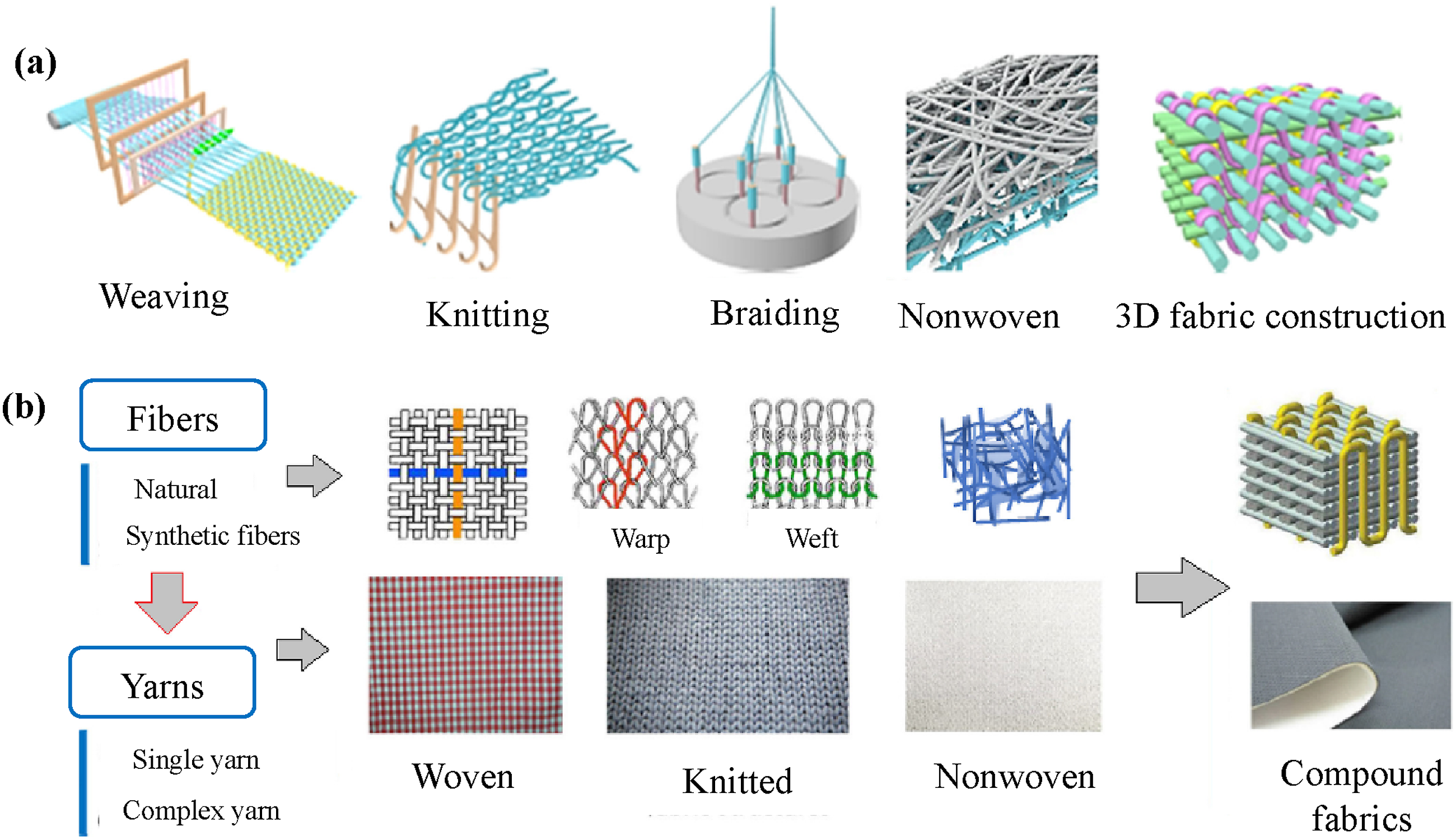
Additionally, Wang et al. 76 examined the manufacturing processes from fiber to yarn and subsequently to multilayered composite fabrics, as shown in Figure 3(b). These fabricated textiles can be utilized in both conventional clothing and electronic textile applications. 75 In the case of wearable smart textiles for mood regulation, some studies do not precisely describe the types of textile materials and fabric types used. Instead, they primarily focus on the integration of sensors and their conductivity.22,39 Future researchers should emphasize the manipulation of fabrics and fibers to create highly mood-sensitive textiles, as these materials are in close proximity to our bodies.
Advancements and key parameters in wearable textile materials
Smart textiles signify a revolutionary approach to wearable technology that integrates electronic components and advanced materials into traditional textile structures to enhance their functionality and comfort. 25 These innovative materials range from functionalized nanoparticles embedded in fiber matrices to specialized or modified polymers used in intelligent filaments, yarns, and fabrics. 79 A significant advancement in smart textile materials is the development of composite fabrics using carbon nanotubes (CNTs), which can render waterproof, antibacterial, antimicrobial, and fire-resistant fabrics without altering their inherent characteristics. CNTs also help create lightweight fabrics that filter contaminants, change shape, conduct electricity, and exhibit good strength. 80 Moreover, the creation of all-yarn-based all-textile sensors (AATS) utilizes commercial knitting technology to produce ultra-stretchable (up to 133%), stable, and sensitive textiles for health and motion monitoring. 81 Some smart textiles incorporate directional liquid transport (DLT) technology, which is vital for areas such as wearable smart materials and environmental protection. These DLT textiles were prepared using various strategies, including fiber-based, fabric-based, and fiber/fabric hybrid approaches. 82 Furthermore, the development of knittable composite coaxial fibers has led to naturally integrated force-sensing textiles with high detection performances and outstanding integration properties. 83
Importantly, the development of wearable smart textiles for mood regulation is an interdisciplinary endeavor that integrates textile engineering, psychology, and technology. As highlighted by Rawal et al.,
84
in their exploration of fiber architecture for textile materials, understanding the underlying structural and physical attributes of textiles is crucial for enhancing performance characteristics. Similarly, for smart textiles, various parameters significantly influenced their effectiveness in mood regulation, as shown in Figure 4. Key factors include fiber properties (e.g., type, diameter, and moisture management), which influence comfort and breathability. Physical parameters such as weight, thickness, and porosity significantly affect the user experience, whereas constructional parameters such as weave type and yarn count determine the fabric’s flexibility and functionality.24,26,36,44,85 The incorporation of user feedback mechanisms is crucial for real-time mood management. Features such as biometric feedback (heart rate variability and skin conductance), visual indicators (LED lights), and auditory cues can help users understand and regulate their emotional states.8,50,52,86,87 Additionally, adaptive learning features that personalize responses based on user data can enhance the overall effectiveness of textiles.
22
Ultimately, understanding the interplay between these parameters could lead to more effective smart textiles that support emotional well-being. Overview of key parameters influencing wearable smart textiles for mood regulation.
Mechanisms of mood regulation
Wearable textiles have emerged as innovative tools for mood regulation and mental-health management. By employing various mechanisms such as biofeedback and sensory stimulation, these smart textiles integrate sensors and actuators to detect physiological changes and provide real-time feedback, aiding users in regulating their emotional states. 88 These textiles utilize various other mechanisms, such as color-changing fabrics and movement-based feedback, to help users understand and manage their emotions. This section delves deeper into the mechanisms of mood regulation, exploring their physiological underpinnings and the technological advancements that enhance their efficacy.
Physiological responses and mechanisms of action
To understand the physiological underpinnings of these technologies, biosensors integrated into wearable textiles can detect physiological and mental changes, making them valuable for monitoring emotions and mood. These sensors are comfortable, cost-effective, and easily attached to textiles. 89 When humans interact with their surroundings, they experience emotions linked to various levels of physiological arousal, with the autonomic nervous system (ANS) playing a significant role. 90 Physiological signals, such as heart rate, skin conductance, electrocardiograms (ECG), blood volume, and temperature, are widely used to identify emotions. Among them, heart rate variability (HRV) and skin conductance response are the dominant signals for distinguishing basic emotions, such as happiness, sadness, indifference, anger, and stress. 91 A healthy resting heart rate for adults is typically between 60-80 beats per minute (BPM). Changes in the heart rate can be monitored using ECG technology, revealing how factors such as emotional outbursts affect heart function. 92 Research has shown that negative emotions such as anxiety and anger can lead to irregular heartbeats, whereas positive emotions such as sympathy and love result in more consistent heart rhythms. 89 Additionally, higher HRV is associated with greater cognitive reactivity and vulnerability to depression, indicating that individuals with a diminished capacity to regulate emotions may be more susceptible to negative mood states. 93 Cognitive reappraisal, an adaptive emotion regulation strategy, has been shown to decrease HRV when individuals encounter anger-inducing situations. 94 For example, Rakshit et al. 95 examined the relationship between emotional states and heart rate variations by focusing on three emotional conditions: sadness, happiness, and neutrality. Their research employed HRV derived from photoplethysmography (PPG) signals to analyze correlations with emotions and calculate and evaluating 10 distinct characteristics for each measurement cycle.
The skin temperature can also serve as an effective indicator of human sensation. Research indicates a correlation between stressful work environments and skin temperature, with individuals experiencing stress or negative emotions often exhibiting increased skin temperature. 89 Unusual changes in skin temperature or hyperthermia may indicate abnormal health conditions, including internal bleeding or infection. Several e-textiles utilize resistive or thermoelectric sensing to monitor skin temperature. 96 Electrodermal activity (EDA), also known as skin conductance (SC), reflects changes in the electrical conductance of the skin due to variations in sweat gland activity. 90 Skin conductance, often measured as skin conductance level (SCL) or skin conductance response (SCR), represents sympathetic arousal in response to stress. 97 Subjective sensation relies on thermoreceptors on the skin, which detect the core temperature and convert it into electrical signals. This feedback mechanism helps maintain core thermal comfort at fluctuating temperatures, thereby enabling the body to regulate its environment. 44
Increased SCL and altered skin conductance responses have been observed in patients with schizophrenia, along with a stronger coupling between SCL and heart rate, compared to healthy individuals. 98 This suggests that sympathetic modulation may be heightened under certain psychiatric conditions, potentially affecting mood regulation. For instance, Dzedzickis et al., 99 explored methods for developing a color-changing wearable display with rapid response times, creating AmbiKraf, a non-emissive analog fabric display that utilizes thermochromic inks integrated with semiconductor Peltier junctions. This system allows thermochromic ink to exhibit various colors while managing fabric temperature. 100 The autonomic nervous system is crucial for maintaining homeostasis and adaptability, with the parasympathetic system reflected in HRV and the sympathetic system evident in electrodermal activity. 97 The interplay between these systems is essential for effective mood regulation, as higher resting HRV correlates with greater subjective well-being, positive mood, and life satisfaction, likely mediated by the habitual use of executive emotion regulation strategies. 101
Integrating physiological indicators for enhanced mood regulation
Emotion states according to heart rate and skin temperature. 102


Smart scarf with both heart rate and skin conductance sensors. Reprinted with permission from Ref. 91 © 2016, Springer Nature.
Emerging technologies in wearable textiles for mood regulation
The intersection of technology and textiles ushered in a new era of approaches to health and wellness. As global mental health challenges continue to rise, with estimates indicating that nearly one in five adults experience mental illness each year, there is a growing recognition of how clothing and wearable devices can significantly influence emotional well-being. At the forefront of this movement are cutting-edge technologies in wearable textiles that employ sophisticated materials and intelligent features to create garments that go beyond mere aesthetics or practicality. 103 Innovative solutions such as BIO dress exemplify this trend; this technology-enabled garment not only communicates environmental data, but also fosters a deeper connection between the wearer and its surroundings. The dynamic pleats of garments mimic breathing patterns, whereas sensory elements respond to emotional cues, providing a calming influence. 104 These groundbreaking textiles are designed to track physiological indicators, offer instantaneous feedback, and modulate mood through various mechanisms. By incorporating sensors that measure heart rate, skin conductance, and other vital parameters, these garments provide a comprehensive picture of the wearer’s emotional state.
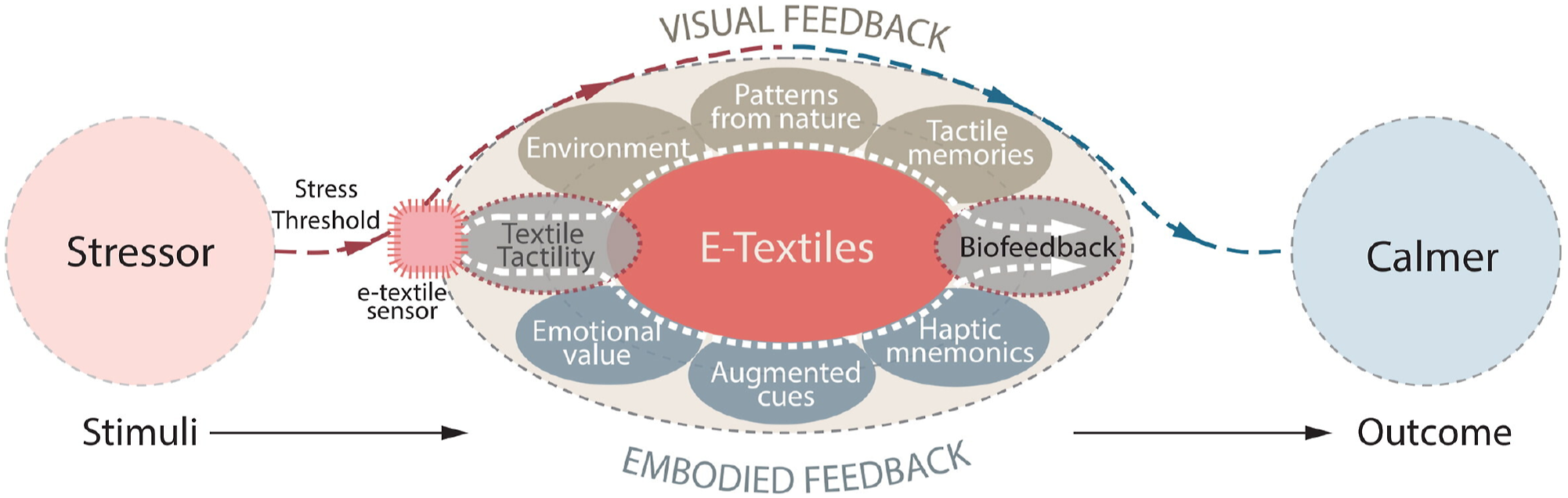
Furthermore, advancements in biofeedback technology enable users to actively participate in managing their mental health and acquire skills to control their reactions to stress and anxiety in real-time. The integration of chromotherapy, which utilizes color to affect mood, with textiles infused with aromatherapy, which emit scents based on the wearer’s needs, demonstrates the multidimensional strategy of these emerging technologies. Designers concentrate not only on functionality but also on crafting a comprehensive experience that addresses emotional well-being through sensory stimulation
103
(Figure 6). The investigation of cutting-edge wearable textile technologies for emotional regulation reveals that these advancements are more than just passing fads; they signify a fundamental change in our approach to utilizing clothing and personal accessories to improve mental well-being. This examination explores various technologies, their practical applications, and their potential impact on mood management.105–109 As we explored these emerging technologies in greater detail, one of the most promising approaches is the integration of biofeedback mechanisms. These systems not only provide real-time physiological data, but also enable users to actively manage their emotional well-being. Multisensory feedback mediated through e-textiles.
103
Biofeedback mechanisms (mood awareness)
Biofeedback is a crucial mechanism used by wearable textiles to influence mood and mental health, involving the real-time monitoring of physiological signals. These systems are designed to sense and detect a range of psychological indicators, including physiological markers such as heart rate and skin temperature as well as behavioral cues such as sound and movement.
110
By providing feedback through multiple modalities such as visual displays, auditory signals, and shape-changing features, these technologies enhance the wearer’s awareness of their emotional state (Figure 7). Consequently, this process empowers individuals to identify patterns in their emotions and physiological responses, ultimately enabling them to implement effective mood regulation strategies.8,53,111 However, it is important to note that these mechanisms are primarily passive; they inform the wearer of their emotional state without actively responding. As a result, biofeedback technologies serve as passive smart textiles that enhance self-awareness rather than facilitating direct intervention or emotional regulation. This distinction highlights their role in promoting mindfulness and self-reflection rather than acting as adaptive tools that modify the user experience based on detected emotional states. Emotional data sources and their biofeedback mechanisms.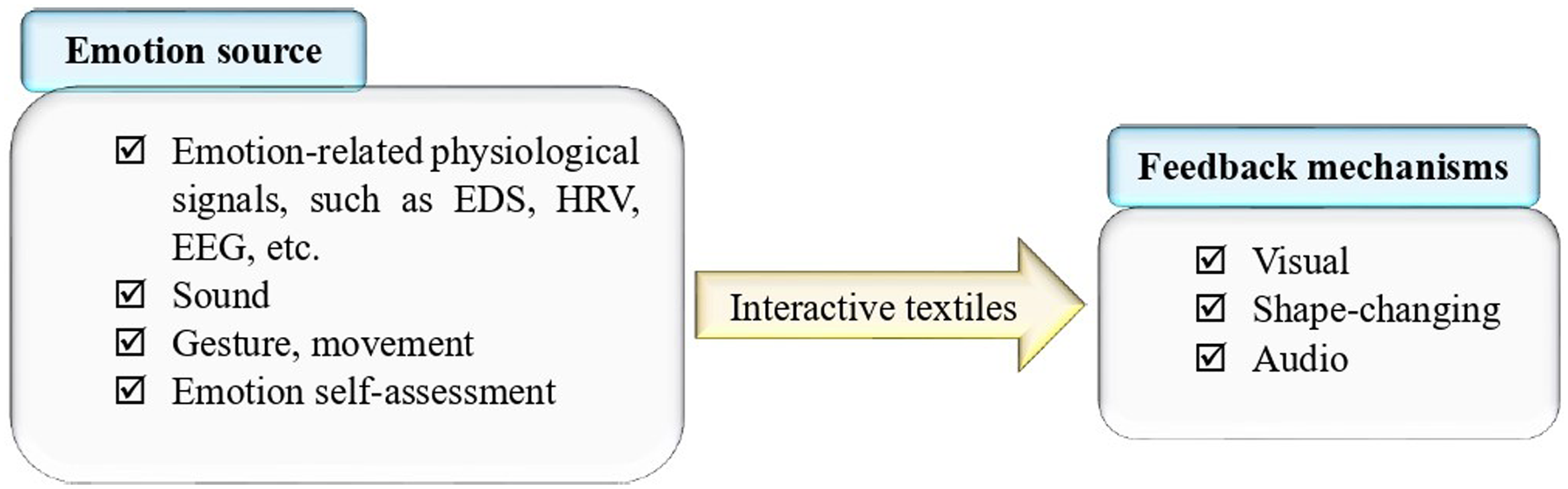
By transitioning from the general concept of biofeedback, we can observe its practical applications in specific devices. Similarly, Jiang et al. 2 developed a smart interactive shawl that incorporated electrodermal activity sensors to monitor emotional arousal. The shawl reacts to the wearer’s physiological signals by providing light and vibration feedback, thereby creating a dynamic visual representation of their emotions. This feedback loop not only enhances users’ understanding of their emotional state but also empowers them to take proactive measures to manage their feelings. Nevertheless, individual responses to such feedback mechanisms may differ significantly. Not all users find the same level of benefit from the same intervention, highlighting the need for personalized approaches.2,110 Ye et al. 112 developed a wearable smart device that detects body temperature changes linked to emotions, enabling clothing color alterations (blue, red, green, and brown) to reflect moods. This innovation promotes social interaction by visually communicating emotional states through color changes. However, focusing on the specifics of biofeedback, physiological sensing, and visual feedback play crucial roles in this process. By measuring key indicators such as heart rate variability, these textiles offer actionable insights that empower users to enhance their emotional regulation.2,113
Visual feedback modality
Visual feedback is a vital modality in emotional data processing, which effectively integrates physiological information, sounds, gestures, and self-reports. It provides real-time visual representations of physiological data, such as heart rate and skin temperature, using graphs or color changes to help users understand their emotional states. For instance, a wearable device may display a fluctuating heart rate graph that changes color based on stress levels, allowing users to recognize patterns and triggers. Howell et al.
114
developed the Ripple Shirt, a biosensory display that changes color in response to skin conductance. This innovative design aimed to explore how users interpret their emotions through visual feedback, encouraging them to engage in personal reflection and critical questioning of their feelings. The gradual color changes of the pinstripes, as illustrated in Figure 8(a), serve as subtle cues that invite users to reflect on their emotional states rather than present definitive emotional categories. One of the key findings of the study was that the Ripple Shirt effectively facilitated social interactions and discussions about emotions. Participants often linked color changes to specific moments in their daily lives, such as stress related to movement or excitement during social events. For instance, Figure 8(b) shows participants interpreting the color changes during a lunch conversation, demonstrating how technology can serve as a catalyst for discussions about feelings and emotional experiences. The study also revealed that the volatility of the display, influenced by both skin conductance and environmental factors, allowed participants to rationalize the changes in ways that aligned with their own feelings or circumstances. This ambiguity promotes critical questioning rather than blind acceptance of the data, empowering users to actively reflect on the relationship between the display and their emotions. In general, the ripple shirt exemplifies how visual feedback can be integrated into everyday life to enhance emotional awareness and facilitate social interactions. By allowing for diverse interpretations of visual changes, the design encourages users to navigate their emotional landscapes flexibly and contextually, ultimately fostering a deeper connection to their emotions. (a) (top) Ripple, a shirt whose three shoulder pinstripes change color in response to skin conductance, was produced with multiple colors and sizes. (bottom, from left to right) Pinstripes fade to white one by one, then all return to gray. (b) Friends wore Ripple, a shirt with three pinstripes that change color in response to skin conductance throughout daily life: (a) interpreting the display over lunch; (b) pinstripes changing color. Reprinted with permission from Ref.
114
(c) AWE goosebump design. (d) Body diagrams from the interviews: Where do you feel goose bumps? (e) Hand-cut Kiragami on excitement grains.
115
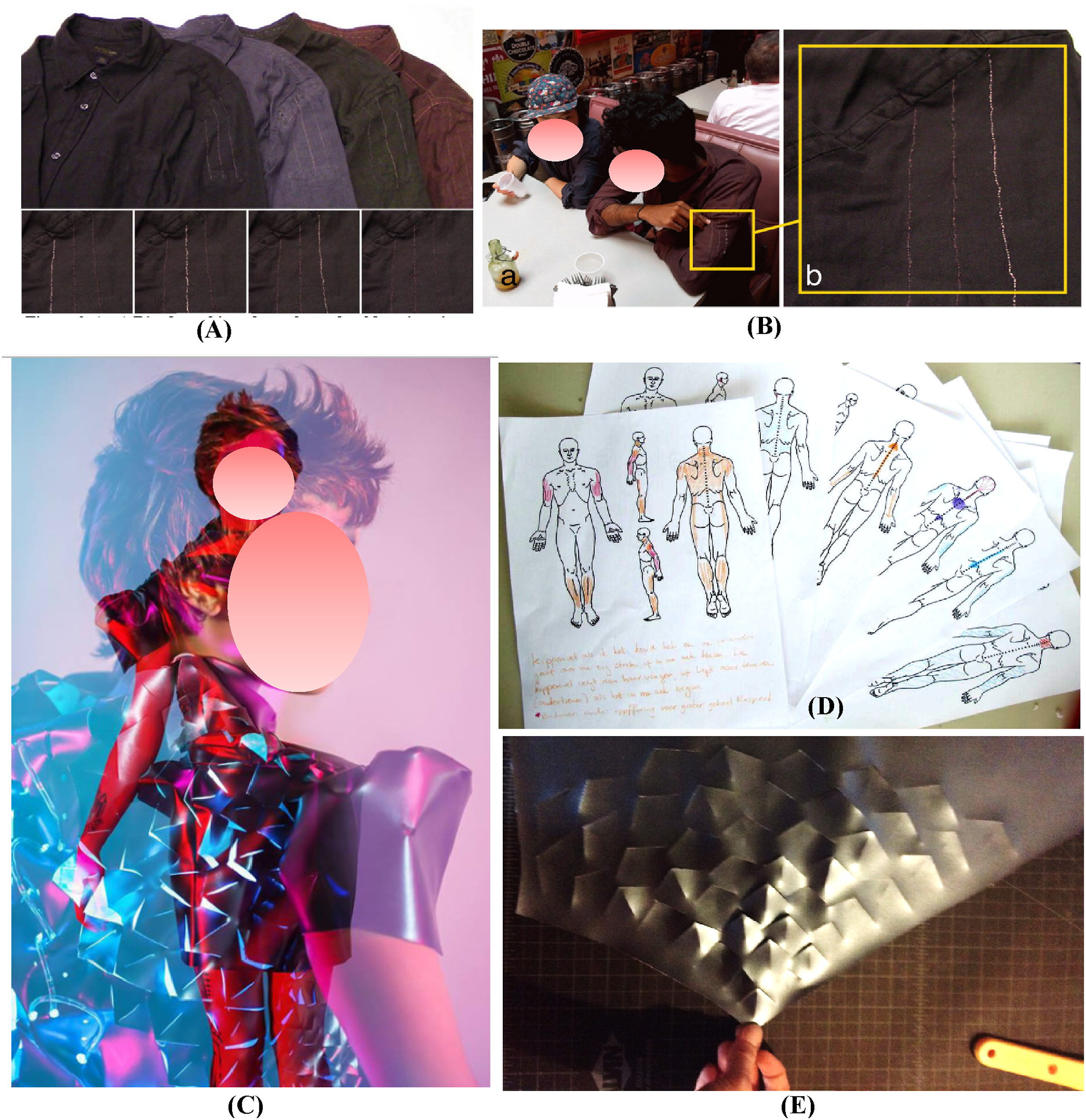
Neidlinger et al. 115 also developed the AWE Goosebumps, a wearable technology designed to externalize and animate the sensation of awe through performative biofeedback. This innovative garment utilizes biosensors such as galvanic skin response (GSR), breathing, and heart rate variability to detect physiological signals of excitement and awe. The system translates these signals into visible feedback, including color changes and inflatable elements, effectively animating the sensation of goose bumps. The AWE Goosebumps garment creates a biofeedback loop that enhances the wearer’s awareness of their emotional states. Participants reported feelings of joy and wonder when experiencing silicone inflation, indicating that the garment successfully prompted an emotional response. As shown in Figure 8(c), the design features illuminated the silicone elements that responded to the physiological data of the wearer. Additionally, the design was informed by user interviews that explored how different individuals experienced goosebumps and the colors associated with these sensations, as illustrated in Figure 8(d). Neidlinger et al. also emphasized the concept of “extimacy,” referring to the externalization of intimate feelings, which play a crucial role in design. This garment not only enhances self-awareness but also serves as a tool for nonverbal communication, inspiring wonder in others. For example, Figure 8(e) shows the hand-cut Kiragami technique used in garments, which contributes to their aesthetic and functional qualities. By integrating visual feedback through color changes and physical inflation, the AWE Goosebumps allow wearers to communicate their inner excitement and awe, bridging personal experiences with social interactions. This innovative approach highlights the potential of wearable technology to foster connections between individuals through the shared expressions of awe and wonder.
It is worth noting that when combined with auditory biofeedback, visual elements can significantly enhance emotional experiences. Soothing visuals paired with calming sounds worked together to promote relaxation. Researchers have discussed wearable smart textiles that change color based on the wearer’s mood by utilizing a miniaturized circuit with an audio sensor to analyze voice data, thereby regulating mood through visual feedback via LEDs in the garment.39,116 For example, the “MoodWear” project by Stylios and Yang
39
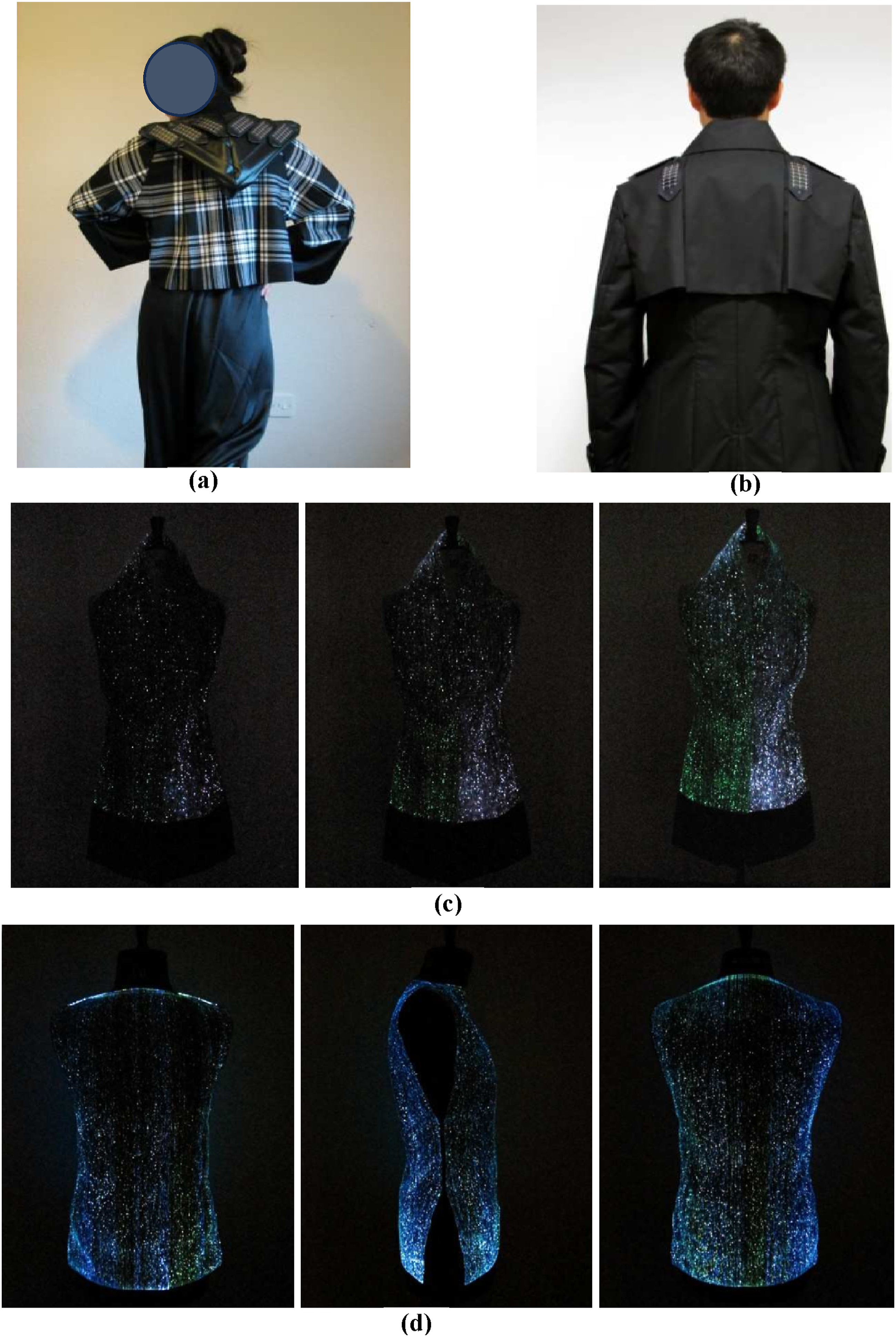
closely aligns with the concept of visual feedback in emotional data processing. This project aims to fuse technology with fashion design and enhance visual feedback by incorporating color-changing LEDs and luminescent fabrics that represent the wearer’s emotional state. By detecting mood changes through sound, garments translate audio input into dynamic visual representations, providing real-time feedback that increases self-awareness, similar to how physiological indicators visually inform users of their emotional states. The integration of solar energy to power these mood-sensing features allows for continuous visual feedback without constant recharging or reinforcing functionality. The optimized luminescent effects achieved in the prototypes create vibrant displays that respond to emotional stimuli by engaging users with immediate and appealing visual cues. The final products included a women’s solar harvesting jacket (Figure 9(a)) and a men’s solar coat (Figure 9(b)), both carefully designed to incorporate solar panels and electronic components. In addition, the collection features mood-changing photonic vests for both women and men (Figures 9(c) and 9(d)), showing luminescent color effects that change with sound. The collection represents a successful blend of advanced textile technology and fashion design, culminating in a visually dynamic and responsive clothing line. (a) Lady’s ready-made solar jacket. (b) Man’s ready-made solar coat. (c) Presentation of microcontroller PCB prototype with single-colored gradual luminance induced by increasing sound. (d) The man’s mood changing vest front and back side. Reprinted with permission from Ref.
39
Additionally, visual feedback can respond to user movements by encouraging modifications in posture or behavior through real-time display. Jiang et al. 8 investigated the emotional effects of movement-based interactions and their sensory feedback mechanisms. They developed a smart clothing prototype, E-motion Wear, that responds to four movements: elbow flexion/extension, shoulder flexion/extension, open and closed arms, and neck flexion/extension. This prototype incorporates fabric-based detection sensors and three types of feedback mechanisms: audio, visual, and vibrotactile mechanisms. An experiment was conducted using a combined qualitative and quantitative approach to gather objective and subjective emotional responses from participants. The results indicated no interaction effect between movement type and feedback mechanism on the overall emotional outcomes. Participants expressed a preference for vibrotactile and audio feedback over visual feedback while performing four upper-body movements. Among these movements, shoulder flexion/extension and open-closed arm movements were found to be more effective in enhancing positive emotions than elbow flexion/extension. Participants reported that the E-motionWear prototype was comfortable wearing and provided new emotional experiences. Self-reported data can also be visualized, enabling users to correlate their emotional assessments with their physiological signals. Overall, visual feedback offers an engaging and comprehensive approach to monitoring and regulating emotional states, enhancing self-awareness and supporting proactive emotional management
Shape-changing feedback
Shape-changing feedback in wearable textiles enhances emotional engagement by dynamically altering their structures in response to various inputs. This technology integrates physiological information such as heart rate and skin conductance to provide real-time biofeedback on the wearer’s emotional state.
117
By utilizing sound, garments can create a multisensory experience that complements visual changes, whereas gesture recognition allows intuitive user interaction. Additionally, self-reports enable wearers to express their perceived emotions, further personalizing garment responses. These mechanisms foster self-awareness and emotional regulation, making such wearables valuable in health and wellness contexts, expressive fashion, and performance training.
22
For instance, In the “Touch Mood” project by Wei et al.,
117
the authors developed an innovative wearable technology that integrates Galvanic Skin Response (GSR) sensors and facial infrared temperature imaging (FITI) to assess and communicate emotional states in real time. This wearable device, designed as a glove, enables users to interact with subjects by measuring their physiological responses and providing immediate feedback through shape-changing elements and visual displays. A key feature of the project is its use of nitinol wire-enabled transforming fabric arrays, which offer shape-changing feedback based on the detected emotional states. This dynamic response not only enhances the visual appeal of the wearables, but also serves as an essential communication tool, allowing the wearer to convey emotional information effectively. The integration of GSR sensors on the fingertips and a thermal camera on the palm allows for comprehensive data collection regarding the subject’s emotional state, facilitating a deeper understanding of interpersonal emotions. The design of Touch Mood combines aesthetics with functionality, utilizing both hard and soft materials to create an armor-like appearance that is both comfortable and protective. This unique approach challenges conventional aesthetics in wearable technology, as illustrated in Figure 10(a), which shows the shoulder harness. Additionally, Figure 10(b) depicts the actuated fabric panel, highlighting its role in providing shape-changing feedback in response to the emotional data. By merging sensor technology with innovative feedback mechanisms, they created a novel approach to enhancing emotional intelligence and interpersonal communication. The Touch Mood project exemplifies how wearable technology can facilitate a deeper understanding of human emotions, transforming personal interactions through responsive design and real-time feedback systems. (a) Touch Mood back. (b) Touch Mood and actuated fabric panel.
117
(c) Five still and moving textile textures used in this study. From left to right, Textures 1-5. (d) A person using vision and touch (black arrows) to receive affective feedback (red arrow) from a textile. Adapted with permission from Ref.
118
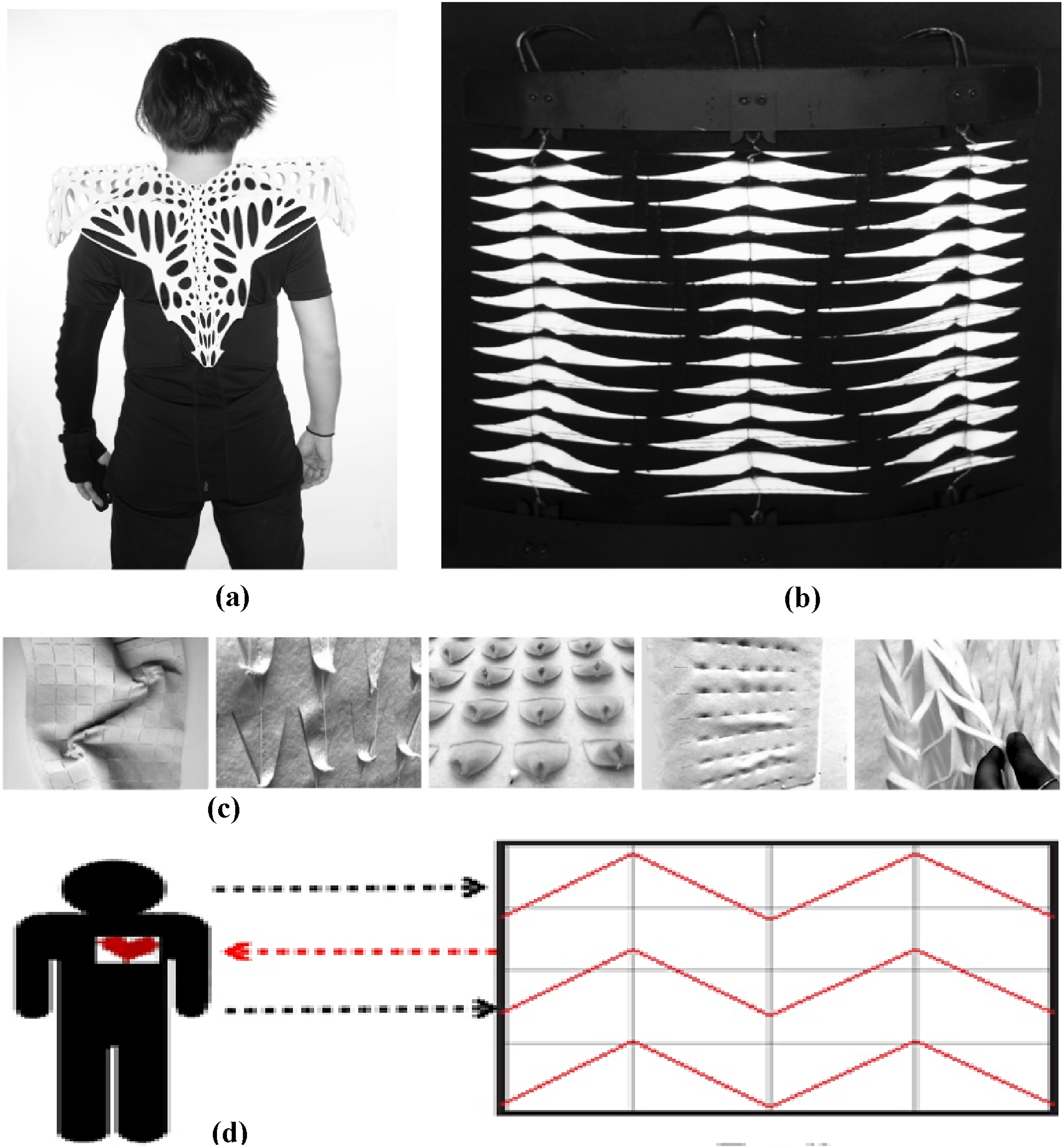
Davis 118 developed an innovative textile-image-indexing system that integrates human emotions with textile design, particularly emphasizing the role of computational techniques. Their research focused on how various textile attributes, such as color, texture, and pattern, elicit specific emotional responses from viewers. This integration is crucial for designers looking to create textiles that not only serve functional purposes, but also resonate emotionally with users. A significant aspect of their work involves the development of a fuzzy-logic system that utilizes machine-learning algorithms. By establishing fuzzy rules, they categorized emotional responses based on pairs of textile characteristics, such as warm/cold or soft/hard. This nuanced approach allows for a deeper understanding of how different textures can evoke distinct feelings, providing designers with a framework to effectively predict emotional responses. Figure 10(c) illustrates the indexing framework, showing the connections between various textile attributes and their associated emotional impact. This figure is particularly relevant in the context of shape-changing textiles because it emphasizes how the dynamic aspects of texture can enhance emotional communication. Designers can leverage this information to create textiles that not only shift in appearance but also feel, thereby intensifying their emotional experience. Additionally, Figure 10(d) presents a graphical representation of the dimensional analysis employed in their study. This mapping of textiles onto a grid of emotional responses demonstrates how the integration of shape-changing feedback can influence viewer sentiments. As textiles transform in response to environmental stimuli, their emotional impact can change, allowing for richer interaction between the user and the material. The findings underscore the potential of computational textiles, especially those that change shape, to convey complex emotional narratives. By understanding the interplay between material characteristics and emotional responses, designers can create textiles that not only adapt visually, but also resonate at a deeper emotional level with users. This approach paves the way for innovative designs that enhance user experience through emotional engagement.
Auditory feedback
Auditory feedback is crucial in wearable textiles designed for mood regulation through biofeedback mechanisms and is particularly important for users with visual impairments or other disabilities. These systems integrate various emotional data sources, including physiological information, sounds, gestures, and self-reports.
111
When stress is detected, calming sounds or music can be played to promote relaxation, while energizing audio may uplift low mood. In addition, the system can respond to gestures and movements, recognize practices such as deep breathing, and provide supportive auditory affirmations. Self-reporting features enable users to log their feelings, allowing the system to tailor responses based on the user input. This integration of auditory feedback creates a holistic approach to emotional regulation, enhancing users' awareness and empowering them to manage their moods effectively, thereby advancing their applications in mental health and well-being.
119
The study “Wearing Emotions” by Iaconesi
111
explored the integration of wearable technologies that visualize and represent human emotions, closely aligning with the concept of auditory feedback in wearable textiles for mood regulation. They developed several prototypes, termed “emotional skins,” which serve as interactive visualization surfaces that reflect the emotional states of individuals or groups. This functionality enhances social communication and cognitive processes related to emotions, emphasizing the potential of these technologies to create immersive experiences that can influence emotional states. A key finding of this study is the integration of multisensory feedback, where visual representations are complemented by auditory cues. For example, in the “Talkers” performance, the emotional states of dancers were visualized in real time and accompanied by sound, fostering a hybrid experience that engages both sight and sound. These devices utilize various sensors to capture physiological and emotional data, allowing for the incorporation of auditory feedback mechanisms that enhance user interaction. The following figures effectively illustrate these concepts. Figure 11(a) depicts the “Talkers” performance, showcasing the wearable device that connects live and online audiences through emotional feedback loops. Figure 11(b) highlights the interaction and visualization strategies employed during the performance, underscoring the importance of auditory feedback in enriching emotional expressions. Figure 11(c) presents the generative audio tag cloud, which translates audience emotions into sound and dynamically captures the emotional atmosphere of the event. In general, the findings demonstrate the potential of wearable technologies to visualize emotions while using auditory feedback as a means of emotional regulation, creating a richer emotional experience with significant applications in mental health and well-being. (a) Talker Performance: Device testing. (b) Talker Performance: Visualizations and user interactions. (c) Generative audio tag cloud. Reproduced with permission from Ref.
111

Notably, participants preferred auditory feedback to visual feedback when using the E-motion Wear prototype for movement-based emotion regulation, as noted by Jiang et al. 8 This study indicated that auditory feedback, alongside vibrotactile feedback, effectively contributed to enhancing positive emotional experiences during specific upper-body movements. Robertson 120 explored how sonic textiles can enhance health and wellbeing by integrating sound, potentially aiding mood regulation. Auditory feedback through wearable textiles may provide sensory experiences that positively influence emotional states and personal identity, particularly in individuals with sensory impairments. Similarly, Hernandez 121 discussed Touch Acoustics, a textile surface that generates soundscapes in response to touch and facilitates multi-sensory encounters. This interaction can influence emotional reactions, potentially aiding mood regulation through auditory feedback linked to tactile experience. Desai et al. 119 developed a system that integrates audio feedback to significantly enhance user interactions within digital interfaces. This innovative approach recognizes the vital role played by sound in the communication between users and technology. The system creates a more engaging experience by providing immediate auditory responses to user actions. For instance, when a user interacts with a musical interface, audio feedback serves to confirm the action taken, ensuring clarity, and reinforcing the user’s understanding of the system’s functionality. Moreover, audio feedback functions as a valuable guide for users to navigate complex tasks. Specific sounds can indicate successful actions or prompt necessary corrections, effectively reducing cognitive load and making the interaction more intuitive. This aspect is particularly important in applications in which users may need to perform multiple steps, as clear audio cues can enhance confidence and streamline the process. Emotional engagement is another critical benefit of integrating audio feedback with digital interfaces. Tailored soundscapes can evoke specific emotional responses, enriching the overall user experience. For example, different audio feedbacks can be employed to create immersive environments in creative applications, such as music composition. This not only enhances enjoyment but also fosters a deeper connection between the user and technology. Finally, the inclusion of audio feedback was essential for accessibility. For users with visual impairments or other disabilities, sound provides an alternative means of interaction, making the technology more inclusive. By catering to diverse user needs, the system developed by Author et al. not only improves functionality, but also enriches the quality of interaction, ensuring that technology is enjoyable and accessible to everyone.
It is summarized that, integrating biofeedback mechanisms into interactive textiles significantly enhances emotional interaction, particularly in mood regulation. One key benefit is the increased emotional awareness provided to users. By offering real-time data on physiological states, such as heart rate and skin conductivity, biofeedback allows individuals to become more attuned to their emotional responses. This heightened awareness is crucial for mood regulation, enabling users to identify shifts toward negative emotions, such as anxiety or stress.22,89,90,122 In addition, biofeedback facilitates personalized emotional regulation. Interactive textiles can adapt their responses based on individual physiological signals; for instance, when a user shows signs of heightened stress, the textile can initiate calming mechanisms, such as gentle vibrations or soothing color changes. This tailored feedback helps users manage immediate emotional states and empowers them to develop better long-term mood regulation strategies.49,123 Moreover, these textiles promoted mindfulness and relaxation. When elevated stress levels are detected, they can prompt users to engage in practices, such as deep breathing exercises, helping them regain emotional balance and improve their overall mood.6,34,123 The connection between interactive textiles and biofeedback also opens new avenues for research and development of mood regulation. As these textiles learn from physiological data, they become increasingly effective in providing support tailored to individual emotional needs, potentially leading to breakthroughs in wearable technology. Finally, the application of biofeedback-enhanced textiles in various contexts underscores their importance for mood regulation. In therapeutic settings, these textiles can assist mental health professionals in monitoring and managing patients’ emotional state. In everyday life, they help individuals navigate through emotional challenges by providing real-time feedback for more effective mood regulation.
Sensory and affective feedback mechanisms (mood regulation)
Building on biofeedback, sensory and affective responses play crucial roles in the mechanisms of mood regulation. Sensory responses refer to how individuals perceive and react to environmental stimuli through their senses, such as sight, sound, touch, taste, and smell. Different sensory inputs can evoke specific emotional responses; for instance, bright colors may energize a person, whereas soft sounds can soothe. These stimuli can trigger physiological changes, such as alterations in heart rate or skin temperature, which are linked to emotional states, thereby aiding mood regulation. Wearable technologies often manipulate these sensory inputs through vibrations, sounds, or visual changes to promote desired emotional states.22,53 For example, Calm Wear, introduced by Goncu-Berk et al., 88 is a smart clothing system that employs a textured air bladder to deliver tactile (haptic) stimulation in response to changes in the heart rate variability and respiration rate. This dynamic compression technique aims to alleviate anxiety by offering non-pharmacological intervention for anxiety disorders. Gentle pressure from a garment mimics comforting sensations, promoting feelings of security and relaxation. 124 While the effectiveness of tactile stimulation is evident, there should also be potential variability in how individuals perceive and respond to such stimuli, which can affect overall efficacy.
To explore sensory feedback further, Jiang et al. 8 investigated the emotional effects of movement-based interactions. Their findings revealed that the participants preferred vibrotactile and audio feedback during upper-body movements aimed at emotion regulation. This suggests that incorporating multisensory feedback can enhance the user experience and the effectiveness of mood regulation interventions. For example, a wearable textile that vibrates in response to specific movements can reinforce positive habits and provide immediate feedback, thereby contributing to a more engaged and aware state of mind. Additionally, visual stimuli, such as LED lights that change color based on physiological signals, and auditory feedback, such as calming sounds, can create a holistic sensory experience that promotes emotional well-being.88,125,126 In summary, while sensory stimulation is beneficial, it requires active user participation and should be integrated with other emotion-regulation strategies for effective stress management. On the other hand, affective responses encompass the emotional reactions individuals experience in response to sensory stimuli, including feelings of happiness, sadness, stress, or calmness. These responses are shaped by personal experiences and contexts, which influence how one reacts to sensory inputs. Positive affective responses, such as joy elicited by pleasant sounds, can enhance mood, whereas negative responses, such as discomfort from harsh lighting, can lead to stress or anxiety. This interaction creates a feedback loop in which positive sensory experiences enhance mood and negative ones detract from it. Together, the sensory and affective responses form a comprehensive mechanism for mood regulation. Interventions can be designed to promote emotional well-being by understanding how sensory inputs affect emotion. Techniques such as aromatherapy and music therapy leverage these mechanisms to facilitate mood regulation and emotional healing.22,53,127 Ultimately, the interplay between sensory and affective responses is fundamental to mood regulation, allowing individuals to influence their emotional states and effectively manage their overall well-being effectively. 53 By reacting to emotional signals, the sensory components of these fabrics enhance user interaction and support effective emotional management.
Physiological sensing and feedback modalities
At the forefront of these technologies is the heart rate variability (HRV), which is a critical indicator of emotional health. Research indicates that fluctuations in HRV correlate strongly with stress levels; thus, garments equipped with HRV sensors can provide actionable insights. For instance, when an increase in heart rate is detected, the garment may trigger cooling mechanisms or calming vibrations, thereby promoting relaxation. 93 A notable innovation in this area is the Affective Umbrella developed by Chen et al. 90 This wearable system is designed to visualize physiological data, such as heart rate variability (HRV) and electrodermal activity (EDA), through an integrated biofeedback mechanism within an umbrella handle. This innovative system aims to assist users in regulating their emotions by providing real-time visual feedback based on physiological responses. Affective Umbrella employs a feedback loop that adjusts the color and intensity of LED lights according to the user’s emotional arousal, influenced by the collected EDA and HRV data. Two primary visual feedback patterns were tested: mirror and inversion effects. A user study involving 21 participants demonstrated that Affective Umbrella significantly influenced emotions. Statistical analysis revealed that the mirror effect resulted in higher emotional arousal (p = .0277) and lower dominance scores compared to baseline measures (p = .0277). Additionally, physiological measures indicated a significant increase in arousal (p < .0001) when using biofeedback, showing the system’s effectiveness in promoting emotional regulation.
Notably, Figure 12(a) illustrates the concept of the Affective Umbrella, depicting how light intensity changes and color variations reflect the user’s physiological state. The system promotes somaesthetic appreciation, allowing users to reflect on their emotional states as they interact with an umbrella. The visual feedback represented in Figure 12(b) is divided into three parts labeled (a), (b), and (c), which show the umbrella’s sensing handle and biofeedback features that help users connect their physiological states to their emotional conditions. Part (a) details the umbrella sensing components, showcasing the integration of weather-related sensors, such as temperature and humidity, alongside physiological sensors that capture electrodermal activity (EDA) and heart rate data. This component highlights how an umbrella collects real-time data to inform the biofeedback mechanism. Part (b) depicts the data streaming process, illustrating the umbrella communication with a PC server using a client-server model. This section emphasizes wireless connection and data transmission, ensuring that physiological data are processed in real time for immediate feedback. Finally, part (c) focuses on the visualization aspect, demonstrating how the processed data translate into visual feedback displayed on the umbrella. Furthermore, the data showed that participants experienced increased physiological arousal and emotional regulation, as indicated by both self-reported measures using the Self-Assessment Manikin Scale and physiological data (pNN50 and RMSSD). In general, these findings illustrate the potential of integrating wearable technology with emotion regulation strategies, emphasizing the connection between physiological data and user experience, as further detailed in Figure 12(c), which displays the data communication and streaming system used in the umbrella. In a related study, Wu et al.
16
created a wearable system for managing emotions based on textile materials, which employed a HRV biofeedback mechanism. Their findings indicated that HRV biofeedback in real-time was particularly effective in addressing negative emotional states. (a) Affective Umbrella: Somaethestic appreciation through heart activity (light intensity change) and electrodermal activity (number of peaks influencing color) to augment emotion regulation in the real world using an umbrella. Dashed circles illustrate the virtual effect of the device in action around the user. (b) Affective Umbrella: sensing handle and visual biofeedback. (c) Data communication in streaming system.
90

Tactile (vibration and haptic) feedback
Tactile feedback, particularly through vibration and haptic technology, plays an essential role in the design of wearable textiles for mood regulation. These technologies provide sensory experiences that influence emotional states and promote well-being. Vibration feedback involves the use of small motors embedded in textiles to create tactile sensations through vibrations. 128 This mechanism has a significant physiological impact, in which vibrations can stimulate sensory receptors in the skin, leading to changes, such as reduced heart rate and lower anxiety levels. Different vibration patterns can evoke feelings of comfort or alertness depending on their frequency and intensity. In terms of applications, wearable devices that provide gentle vibrations can help alleviate anxiety by promoting relaxation and grounding. Additionally, vibration feedback can guide users in maintaining proper posture or breathing control, thereby enhancing overall emotional stability.129,130 For instance, Fino et al. 131 discussed a soft vibrotactile wearable device capable of rendering vibration frequencies between 183 Hz and 233 Hz, providing significant haptic feedback. This technology can potentially be utilized for mood regulation through controlled tactile stimulation in wearable textiles. In another study, Fino et al. 132 discussed a soft vibrotactile wearable device that provides controllable feedback through fluidic mechanisms, enabling high-frequency vibrations (160-260 Hz) and varying amplitudes (13-38 g), which can potentially be utilized for mood regulation through tactile stimulation.
Haptic feedback refers to the use of tactile sensations to convey information or emotional cues through pressure, texture, or movements. This technology enhances sensory interaction, creating a sense of presence or connection that can be calming or stimulating. Haptic sensations can trigger emotional responses, making interactions more immersive and enhancing user experience. In practical applications, haptic feedback can simulate comforting sensations, such as a gentle squeeze, helping individuals feel more secure and relaxed. 133 Smart textiles can also incorporate sensors to monitor physiological signals, such as heart rate, and adjust tactile feedback in real time, thereby providing a responsive emotional support system. Additionally, therapeutic wearables often incorporate haptic feedback to enhance emotional regulation techniques such as mindfulness and relaxation exercises.
Study of iFeel_IM! The Emotion-Enhancing Garment, conducted by Tsetserukou et al.,
128
explored innovative approaches to enhance emotional communication through tactile feedback in wearable textiles. This study introduced a system designed to reinforce users' feelings and simulate emotions during online interactions via integrated haptic devices. The authors developed several key haptic devices within iFeel_IM! HaptiHeart simulates heartbeat patterns to evoke emotions such as fear, joy, and sadness; HaptiHug, which provides a realistic hugging sensation through pressure applied to the chest and back; HaptiTickler, designed to create a fluttery sensation in the abdomen to induce feelings of joy; HaptiCooler, which generates a cooling effect to simulate fear; and HaptiWarmer, which alters skin temperature to evoke aggression or pleasant feelings. These devices are specifically engineered to produce tactile sensations corresponding to distinct emotional states, thereby enhancing the emotional intimacy of online conversations. The findings of this study emphasize the potential of haptic feedback in significantly improving online communication. Architecture of the iFeel_IM! system (Figure 13) illustrates the integration of various components, including haptic devices and the Affect Analysis Model, which successfully identified nine emotions from textual messages, allowing for real-time emotional feedback during interactions. User studies have demonstrated that the system considerably enriches the expressiveness and social interactivity of online communications, enabling users to better convey and perceive emotions. Moreover, the integration of tactile feedback creates a more immersive experience, making online interactions feel closer to face-to-face communication. Overall, the study concluded that iFeel_IM! system can effectively bridge the emotional gap in mediated communication, allowing users to express and feel their emotions more authentically. Architecture of iFeel_IM System. Adapted with permission from Ref.
128

Similarly, Huang’s
129
study on shape-changing fashion and textiles explored the intersection of tactile interaction and emotional experiences through innovative design strategies. This research focuses on developing haptic interactions that enhance both the aesthetic and affective qualities of fashion and textiles. One of the key developments from this study is E-coral installation (Figure 14(a)), a craft-based, shape-changing textile that mimics the movement of brain corals. This installation employs a pneumatic design method that utilizes sewing techniques to create temporal forms using variable stitch patterns. During user interaction, the installation embeds touch sensors that detect the location and duration of contact, prompting different shape changes as tactile feedback. This interaction revealed that shape-changing movements could influence users' breathing patterns and emotional states, indicating a significant link between tactile feedback and mindfulness practice. The study further progressed with the skeleton-wear project (Figure 14(b)), which focuses on creating wearable technology that senses body movements to provide contextual haptic feedback. This design was inspired by the theme of skin and bone, where compliant mechanisms represent bones, and flexible structures act as skin. The Skeleton-Wear enhances the wearer’s soma awareness during activities such as yoga by responding to specific poses with tailored haptic feedback. User feedback highlighted that this wearable device was perceived as understanding and emotionally intelligent, effectively sharpening bodily sensitivity and promoting psychological relief. Analysis, collages, and prototypes generated in workshops.
129

Additionally, the research utilized Research through Design (RtD) methodology, engaging design students in workshops to explore stress-relieving haptic designs. Through these collaborative sessions, the participants created low-fidelity prototypes and artistic collages that translated tactile experiences into design languages (Figure 14(c)). Key insights from these workshops include the need for designers to cultivate self-awareness regarding their emotional connections with materials and the potential of fashion crafts to construct meaningful haptic interactions. Overall, Huang’s study underscores the transformative potential of integrating shape-changing technologies into fashion and textiles, revealing that thoughtful design can enhance sensory experiences and foster deeper emotional connections with users.
In a related study, Bordegoni et al.
134
developed a design practice centered on wearable technologies for haptic communication of emotions. Their work emphasized the integration of tactile stimulation to enhance emotional connections in digitally mediated communication. The authors introduced a comprehensive framework for designing wearable technology that facilitates tactile communication, based on Hertenstein’s model. This framework outlines the process from the application of tactile stimuli to the elicitation of emotional responses. A user survey conducted with 100 participants revealed that emotional experiences are often localized in specific parts of the body; for instance, love was predominantly felt in the chest, whereas fear was associated with the belly, as shown in Figure 15(a). Participants identified distinct tactile sensations linked to emotions: warm sensations were correlated with love and joy, whereas cold sensations were associated with fear and sadness, as summarized in Figure 15(b). The study also presented two prototypes: Skin Deep, which simulates heartbeat sensations to convey emotions, and Hand Muffs, which is designed to send and receive emotional hand gestures. These prototypes facilitate intimate communication, as shown in Figure 15(c) and (d). User testing revealed that participants developed unique tactile communication patterns, often creating their own tactile languages, with many reporting a heightened sense of intimacy and connection when using prototypes. In conclusion, this study highlights the potential of wearable technology to enhance emotional communication through tactile interaction, suggesting that such innovations can foster deeper intimacy and connections in digitally mediated environments. (a) Survey results “in which part of the body the participants felt about each specific emotion? (b) Survey results “what kind of sensation they experience during the specific emotion?” (c) Deep skin used. (d) Hand muffs in use.
134

Coulter et al.
103
developed a series of innovative e-textile concepts aimed at enhancing the emotional wellbeing of female students, particularly in response to the significant mental health challenges exacerbated by COVID-19. Employing bricolage methodology, the researchers integrated qualitative data from student experiences and prior workshops to inform the design of textiles capable of sensing and responding to physiological stress markers. The main findings revealed that e-textiles effectively moderated stress levels and enhanced emotional awareness. Students reported positive emotional responses and a stronger connection to the natural environment through textiles. The incorporation of affective touch and haptic feedback played a crucial role in enabling users to engage with tactile memories that fostered a sense of calm and relaxation, as illustrated in Figure 16, which outlines the research methodology framework. E-textiles are equipped with sensors that monitor physiological signs of stress, such as heart rate variability and skin temperature. By detecting these changes in real time, the textiles provide immediate feedback, helping users become more aware of their emotional states and allowing them to take proactive steps to manage stress. This responsive design creates a dynamic interaction where textiles can emit gentle vibrations or warmth when stress is detected, promoting relaxation and reducing anxiety. Such haptic sensations can evoke comfortable tactile memories and enhance emotional regulation. The focus groups indicated that the e-textiles not only provided comfort but also facilitated a deeper understanding of personal emotional states, as shown in Figure 17(a), which presents haptic schematics inspired by patterns in nature: (a) concentric, (b) spiral, and (c) ripple. These designs draw on natural forms that are known to elicit feelings of calm and stability, further supporting emotional well-being. Additionally, the design process for the Haptic Dandelion is depicted in Figure 17(b), which shows the iterative development and refinement of the prototype. This process included feedback from users, ensuring that the final product was not only functional, but also aligned with students' preferences for intuitive, simple interactions. The e-textiles were designed for seamless integration into everyday clothing, making them accessible and easy to use in various contexts from classrooms to social settings. Moreover, the research highlights the potential of e-textiles as effective tools for self-managed well-being in educational settings, particularly for students navigating the complexities of mental health. By combining physiological monitoring with engaging tactile experiences, these textiles promote emotion regulation and resilience. They encourage regular interaction, which can help stabilize mood over time, ultimately contributing to improved emotional health and a greater sense of connection between oneself and the environment. Methodological framework.
103
(A) Haptic schematics inspired by natural patterns: (a) concentric, (b) spiral, and (c) ripple. (B) (a–d) Design process for haptic dandelions.
103
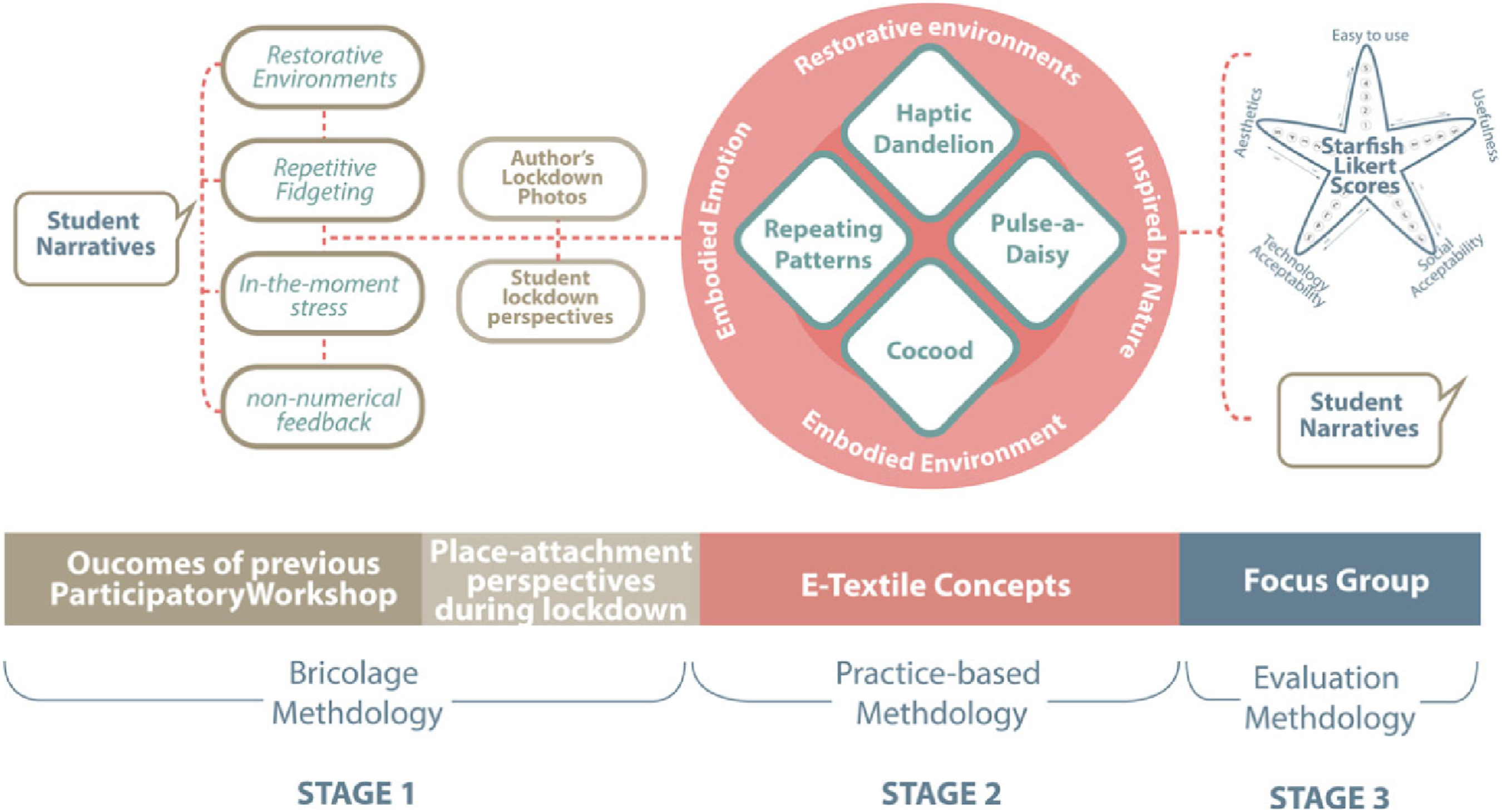

Olfactory stimulation and feedback
Incorporating aromatherapy into wearable textiles offers a multisensory approach to emotion regulation. By embedding fabrics in microscopic capsules containing essential oils, these garments can release soothing fragrances in response to the wearer’s emotional state.110,135 This method utilizes olfactory stimulation through responsive clothing that emits scents based on biometric feedback, aiming to regulate mood by releasing tailored aromas when the stress levels exceed a certain threshold. This approach enhances emotional well-being and addresses mental health conditions. One notable development is the eScent system, a wearable biofeedback intervention that delivers localized “scent bubbles” in response to mood changes. The eScent system exemplifies this concept by using machine learning to detect stress or environmental shifts, providing immediate olfactory feedback to help the wearer manage their emotional state effectively.
110
However, it is crucial to consider the durability of microcapsules; they must be designed to withstand normal wear and tear while still being sensitive enough to break under intended stimuli. For instance, Tillotson’s
135
work on Scentsory Design innovatively merges fashion with scent technology to create garments capable of delivering fragrances based on the wearer’s emotional state. One of the key prototypes is Smart Second Skin, which illustrates how responsive fabrics interact with human emotions through scent delivery. This concept is visually represented in Figure 18(a), which depicts a fabric membrane designed with microtubes that pulse aromatic benefits according to the wearer’s emotional response. Another significant development is eScent® Jewelry, a user-worn scent dispenser that employs microfluidics to control fragrance release in real time, adapting to the user’s needs and behaviors. This jewelry system exemplifies the potential for personalized scent experiences, further enhancing emotional well-being. Additionally, Tillotson introduced the idea of walking therapy, which combines reflexology and light therapy into footwear designed to massage reflexology points, promoting emotional health through the act of walking. This integration of therapeutic elements into everyday fashion supports the notion that clothing is a medium for health and wellness. The main findings emphasized the powerful influence of olfaction on mood regulation and psychological states, proposing that fragrances can serve as an “emotional support system” to alleviate stress and enhance mental health. The integration of microelectromechanical systems (MEMS) into fashion enables responsive interactions and transforms traditional clothing into tools for personal well-being. This research is further illustrated in Figure 18(b), which shows the prototype of the Smart Second Skin dress, highlighting its interactive fabric and fragrance delivery system. Figure 18(c) features the “Light Sleeper” bedding, demonstrating how technology can be integrated into textiles to provide emotional support. This research highlights a forward-thinking approach at the intersection of sensory experiences, technology, and fashion aimed at enhancing emotional health through innovative design. (a) “Smart Second Skin” is a fabric membrane consisting of microtubes fused with microfluidics and drug-delivery systems. The fabric forms an invisible carrier for the delivery of liquids, inspired by the circulation system of the body and references to color therapy. It also serves as a new scent system, which “pulses” fluids around clothing, to illustrate the delivery of aromatherapeutic benefit chemicals for emotional well-being. (b) “Smart Second Skin” constructed from silk and micro-tubes containing colored liquid that demonstrates well-being fragrances “pulsed” around the body to reduce stress, depending on the emotion of the wearer. (c) Responsive bedding using electroluminescent technology allows traditional textile surfaces to become reactive light sources. Reproduced with permission from Ref.
135
© 2009, Taylor & Francis.
In another study presented by McMillan
136
in “From Scent Projection to Respiratory Protection,’ the integration of olfactory feedback mechanisms in wearable textiles is explored as a means to influence mood and emotional well-being. A key development in this area is the AURA Project, particularly the Auramaton project (Figure 19), which utilizes IoT technology to deliver scents dynamically based on the wearer’s brain activity. This innovative device emphasizes the connection between physiological responses and olfactory experiences, allowing tailored scent interactions that can significantly impact mood and perception. Community workshops further highlighted the potential of olfactory feedback to enhance social interactions and emotional states, demonstrating how scents can evoke memories and promote psychological well-being. This research involved extensive trials with various materials, including essential oils and aroma chemicals, to develop effective olfactory displays that provide both aesthetic enjoyment and emotional resonance. Figure 19(a) illustrates the materials used in these scent embellishment trials, showing the integration of fresh flowers and aromatic chemicals in the prototyping process. (A) Embellishing with scent: (a) Botanical couture moulage with fresh flowers; and (b) Detail of experimental perfumery prototyping. (B) Speculative prototyping: (a) prototyping a mask with scented, botanical materials; (b) ionized air purification mask design iteration; (c) Aura: clear olfactory respirator. (C) Graphical representation of end-to-end process flow for Aura: clear. Reproduced with permission from Ref.
136
© 2021, Taylor & Francis.
Figure 19(b) presents an olfactory feedback mechanism model, illustrating how different scents interact with the brain’s emotional centers, such as the amygdala and hippocampus. This model highlights the pathways through which olfactory stimuli can evoke specific emotional responses, emphasizing the potential of wearable devices to harness scents for mood enhancement. For instance, calming scents, such as lavender, could be linked to reduced anxiety levels, while invigorating scents, such as citrus, might be associated with increased alertness and energy. Figure 19(c) shows mood regulation outcomes, presenting data from community workshops that visualize the emotional impacts of various scents on participants. This figure may include graphs or charts illustrating the participants' self-reported mood changes before and after exposure to specific scents. For example, floral scents could correlate with increased feelings of happiness and relaxation, whereas earthy scents might be associated with grounding and stability. This direct feedback underscores the practical application of olfactory wearables in regulating mood and enhancing emotional well-being. This study underscores the significance of olfactory stimuli in personal expression and emotional regulation, paving the way for the development of mood-regulating technologies within the realm of wearable fashion.
Shape changing feedback
Fashion and textile designers are increasingly focusing on creating interactive textiles that respond to users' emotions and physical states. This involves developing shape-changing surfaces that integrate expressive patterns with actuation systems for seamless interaction.
137
For example, Huang and Romano
53
developed the Coral Morph, an innovative interactive textile installation designed to facilitate mindful emotion regulation through shape-changing feedback modality. This installation effectively combines soft robotic materials with real-time heart rate monitoring and tactile interactions to enhance sensory engagement and emotional well-being among users. The Coral Morph responds dynamically to user interactions, creating an engaging experience that participants find emotionally intelligent and lifelike. One of the key findings of this study was the significant sensory engagement reported by the participants. Many expressed that the tactile feedback provided by shape-changing textiles contributed to a calming and pleasant experience. The soft textures and responsive movements of the installation were particularly appreciated, highlighting how somesthetic aspects can enhance emotion regulation. This connection between physical interaction and emotional response was further emphasized by the installation’s ability to reflect the users' heart rates through breathing patterns. As users interacted with Coral Morph, the textile visually represented their heart rate by changing colors, which not only promoted mindfulness but also fostered a deeper awareness of their physiological states. Figure 20(a) illustrates the feedback system of Coral Morph, detailing how user interactions influence textile movements. The shape-changing capabilities of Coral Morph also empowered users by allowing them to directly influence the installation movements through touch. This interactivity fosters a sense of agency and connection, making the experience more immersive. Figure 20(c) shows the emotional responses before and during interaction, indicating a shift toward more positive emotions, while Figure 20 (b) and (d) from the study further illustrate the relationship between design elements and user experiences, emphasizing the nuanced ways that individual differences shape interactions with the Coral Morph installation. These findings underscore the potential of wearable textiles equipped with shape-changing feedback to enhance emotional regulation, offering valuable insights for future design innovations in the realm of human-computer interaction and emotional well-being. This study highlights the importance of integrating aesthetic and tactile elements in interactive installations to create meaningful emotional experiences, paving the way for further exploration in this field. (A) Coral Morph feedback system (B) The design and evaluation framework of Coral Morph. (C) Frequency of emotions occurring (a) before and (b) during the interaction (D) The exhibition. (a) Pulse sensor connected to the participant’s finger; (b) participant interacting with the Coral morph.
53

Huang and Romano 53 also made significant observations regarding individual differences and their impact on the experience of interacting with the Coral Morph installation. These differences encompassed factors such as gender, age, emotional abilities, and prior engagement in mindfulness practices, all of which played crucial roles in shaping participants' emotional responses and overall engagement with textile installation. Gender was found to influence how participants related to the tactile and visual feedback provided by the Coral Morph. For instance, male and female participants reported varying levels of emotional connections and engagement, suggesting that gender may affect the interpretation and appreciation of sensory experiences. Previous literature supports this idea, indicating that men and women can have different emotional responses to interactive installations, which may be influenced by socialization and cultural factors. Age was also a critical factor in this study. Younger participants, particularly those in their twenties and thirties, often reported higher levels of excitement and engagement than older participants. This difference may stem from generational variations in technology use and familiarity with the interactive systems. Older participants, while still appreciating the installation, tended to approach it with a more cautious and reflective mindset, which could have affected their emotional responses and willingness to engage. Emotional abilities, as measured by the Trait Meta-Mood Scale (TMMS-24) used in the study, provided insights into how well participants could understand and regulate their emotions. Individuals with higher emotional intelligence reported more positive experiences with the Coral Morph, indicating that their ability to recognize and manage their feelings enhanced their interactions. This finding aligns with existing research suggesting that people with greater emotional awareness are more likely to benefit from interactive systems designed for emotional regulation. Participants’ prior engagement in mindfulness practice significantly influenced their experiences. Those who regularly practiced mindfulness activities, such as meditation, yoga, or Tai Chi, reported a more profound and positive interaction with the installation. They were more attuned to subtle changes in their emotional states and the installation’s feedback, allowing them to fully leverage the benefits of shape-changing textiles. This suggests that prior familiarity with mindfulness techniques can enhance the effectiveness of interactive systems, such as Coral Morph, facilitating a deeper connection between users and installation.
Overview of various wearable textile technologies and their applications in enhancing emotional experiences, mood regulation, and therapeutic interventions.

Visual feedback in affective computing (manage mood in social contexts)
Visual feedback in affective computing is pivotal for understanding emotional contagion, particularly when integrated into wearable smart textiles designed for mood regulation.
91
Emotional contagion refers to the phenomenon in which individuals unconsciously influence one another’s emotional states, highlighting the importance of technologies that can effectively manage moods in social contexts.
141
Wearable smart textiles equipped with sensors can monitor physiological signals such as heart rate and skin temperature, providing real-time insights into the wearer’s emotional state. These textiles can incorporate visual feedback mechanisms such as color changes or integrated display technologies such as LEDs to visually communicate emotional states.
142
This enhances self-awareness and fosters social awareness, allowing individuals to better understand and respond to the emotions of those around them. Moreover, visual cues can assist wearers in engaging in self-regulation techniques such as mindfulness or breathing exercises, thereby promoting emotional well-being. Guo et al.
91
created a color-changing olfactory scarf aimed at influencing emotional states in group settings. The scarf employs heart rate and skin conductance sensors to detect emotional states, helping to enhance positive feelings or reduce negative ones, and utilizes laughter as an emotional catalyst to explore psychophysiological mirroring in human-computer interactions. The design process incorporates user-centered discussions across various design forms (Figure 21(a)). Given the wearability and comfort characteristics of the scarves, they decided to choose cotton scarves as a solution to regulate emotions. The LilyPad controller processed the most negative emotions first and then changed the color of the scarf to cheer up or calm down individuals. A scarf measures the wearer’s emotions when alone, which can provide comfort. However, it is important to acknowledge that color interpretations vary across cultures. For example, while blue may signify calmness in some cultures, it may also represent sadness in others. Addressing these cultural differences is crucial for ensuring that the garment’s intended emotional communication is effective and universally understood. A potential solution could involve a mobile app that allows users to customize color settings based on their cultural background. This smart scarf can help customize the display color according to user preferences, ensuring a more personalized experience for individuals in a group setting.
In a separate study, Almukadi 89 designed a color-changing smart scarf, also called scarf, that reflects an individual’s emotional state, particularly for those who struggle to express their feelings, such as elderly individuals, children, and those with special needs, during the COVID-19 pandemic. The scarf uses a heart rate and skin sensor to detect and recognize emotional information and changes its color based on the state detected (neutral, angry, happy, or sad). The interface provides emotional data and displays emotional statistics and daily histories. A user evaluation showed that wearing a scarf with changing colors based on emotional status was a comfortable way to express feelings and enhance social engagement (Figure 21(b)). These examples of affective computing demonstrate the potential of technology to facilitate emotional expression and enhance social connections, paving the way for further advancements in mood-regulation technologies. As these innovations in affective computing illustrate, the interplay between wearable technology and emotion regulation is becoming increasingly complex. To further enhance this interaction, the integration of wearable textiles with mobile applications offers significant advancements, enabling users to analyze and manage their emotional patterns with greater precision.
Key findings and discussions
As previously mentioned, when discussing the connection between wearable smart textiles and biofeedback mechanisms, these cutting-edge fabrics are instrumental in monitoring various physiological signals, along with motion sensing and analysis. This integration enables a more comprehensive understanding of emotional and mood states. 22 Many studies focusing on mood expressions have utilized physiological signals as emotional data sources, which are then communicated through sensory feedback mechanisms embedded in textiles. This method, known as embodied emotion biofeedback, offers the advantage of operating independently of computers or smartphone applications. A key benefit of wearable smart textiles is their proximity to physiological signals. With advancements in e-textiles, the detection of these signals has become less intrusive, allowing garments to integrate seamlessly into users' daily wardrobes. Consequently, individuals can use these mood-regulating textiles not only in clinical environments, such as hospitals or rehabilitation centers, but also in any setting where emotional support might be needed. In addition to physiological signals, other methods, such as voice, gesture, movement, and self-assessment scales, have also been employed for emotional signal recognition.39,122 However, e-textiles offer unique benefits for detecting gestures and movements. Unlike traditional methods, which often depend on bulky and invasive camera systems, e-textile devices can continuously monitor gestures and movements without external cameras, making them more adaptable and convenient. By combining these technologies, smart wearable textiles for mood regulation can offer immediate feedback and assistance, enabling users to manage their emotional health both discreetly and stylishly. This capability for ongoing emotional monitoring and intervention marks a significant step forward in emotional well-being, making these textiles a valuable resource for individuals aiming to improve their mood and overall emotional states.
The development of smart wearable textiles that incorporate sensory feedback and interactive features is crucial for improving mood regulation and the user experience. The fabric-integrated sensory feedback module enabled users to receive crucial information and react appropriately. Tactile feedback, which includes vibrations, pressure, compression, and temperature changes, is particularly important in this process. Because textiles cover the entire body, different areas can perceive feedback in various ways, making tactile stimulation an effective tool for modifying emotions and generating new emotional experiences. For example, specific vibrations of particular body parts can trigger distinct emotional responses, allowing customized mood regulation.22,49,138 In addition to tactile feedback, integrating LED lights and optical fibers with textiles can create innovative visual cues.49,90,138 To optimize their impact, it is recommended that these visual elements be positioned within the user’s field of vision. This placement ensures that users can easily perceive feedback and strengthen their emotional connection with the garment. Moreover, some research has explored multi-sensory feedback, which is expected to provide a different experience compared to single-sensory stimulation. This multisensory approach can create a unique bodily experience, capture users' attention, and foster a stronger link between perception and emotions. This level of engagement often surpasses that achieved through conventional computers or smartphone applications.22,143
The key findings of this review are that, by leveraging various feedback modalities, interactive textiles can effectively assist in mood regulation, allowing users to experience and reflect on their emotions. This tangible means of managing emotional states aligns with the broader objectives of using e-textiles to enhance emotional well-being in everyday life. According to Jiang et al.,
22
two pie charts illustrate the forms of prototypes used in the reviewed studies and the feedback modalities employed in interactive textiles for emotional interaction (Figure 22). The first chart shows that smart clothing constitutes the largest category, representing 40% of the prototypes, indicating a strong emphasis on wearable technology. Arm wear, which includes wristbands, armbands, and sleeves, accounted for 16%. Other textile-based wearables make up 12% of the total, showcasing a variety of designs beyond traditional clothing. The chart also includes interactive textiles at 11%, emphasizing installations or innovations that are not worn. The remaining prototypes consisted of gloves, scarves, hats, masks, and toys, reflecting the diverse applications of textiles in emotional interaction. The second chart focuses on feedback modalities, revealing that tactile feedback dominates this area, with 25% utilizing vibrations and 16% employing haptic feedback. This indicates a significant reliance on touch-based interactions to engage users emotionally. Additionally, visual feedback is represented by 21% of prototypes that use LED lights or optical fibers, whereas auditory feedback appears in 12% of the designs. Notably, shape-changing feedback was used in 8% of the cases, suggesting a dynamic interaction that responds to user input. The pie charts show the (a) textile form and involved body parts and (b) involved feedback modalities of the reviewed papers. Adapted with permission from Ref.
22
© 2024, Springer Nature.
Integration with mobile applications (mood tracking and user experience)
The emerging technology of wearable smart textiles for mood regulation encompasses biofeedback mechanisms (mood awareness) and sensory responses (mood regulation), as discussed in two sections. The integration of these textiles into mobile applications serves as a third mechanism to enhance the user experience and mood management. The convergence of wearable textiles and mobile applications represents a significant advancement in mood-regulation technologies. This integration enables comprehensive data collection and analysis, allowing users to gain insights into their emotional patterns and stimuli. By harnessing these technologies, individuals can receive personalized solutions tailored to their specific needs, enhancing their emotional well-being.144,145 Furthermore, these apps provide adaptable responses, enabling users to customize how their smart textiles react to various emotional states. 145 By adjusting their experience to their specific needs, individuals can improve the efficacy of garments in supporting their emotional health. The integration of wearable textiles with mobile applications not only enhances emotional tracking but also personalizes user experience, representing a crucial step forward in the field of mood regulation. 91 By leveraging data from wearable textiles, mobile applications empower users to identify and understand mood fluctuations, thereby paving the way for personalized solutions that cater to their emotional needs.
Overview of accompanying mobile applications
Wearable textiles are supported by various mobile applications that significantly enhance their mood-regulating capabilities. 146 One of the primary features is the ability to continuously track and analyze moods. This allows users to observe emotional changes over time, helping them recognize patterns associated with specific activities, environments, or times of day. 147 For example, Guo et al. 91 proposed a color-changing olfactory scarf designed to influence emotional states in a group setting. The goal was to uplift depressed individuals and soothe those who were overly excited. However, cultural differences in color interpretation may lead to misunderstanding. To address this, a mobile app allows users to input demographic data, enabling the scarf to adapt its color display according to individual preferences. This adaptability enhances the user experience and ensures the effective communication of emotional states. Moreover, an innovative e-textile system known as a sweatshirt has been developed for remote biomedical signal monitoring. This system consists of a textile sensing shirt, electronic data transmission unit, and dedicated Android app for real-time signal visualization. It collects various physiological signals, including electrocardiographic and bicep electromyographic data, while prioritizing user comfort. Advanced signal processing algorithms facilitate quick clinical assessments, underscoring the potential of sweatshirts as valuable clinical tools. 148
In addition to tracking data, mobile applications provide visualization tools that present mood information in user-friendly formats such as graphs and charts. This visual feedback simplifies the complex information, allowing users to identify trends and relationships in their emotional states more effectively. For instance, Almukadi et al. 89 designed a color-changing scarf that detects emotional states and used a mobile app to track these changes graphically. Such data can inform future improvements to emotion tracking systems. Mobile applications also offer customized feedback based on the user data. For example, if a user frequently experiences heightened stress during specific activities, the app may suggest tailored recommendations such as mindfulness exercises or adjustments to daily routines. This personalized approach not only boosts user engagement, but also promotes effective mood management, making these applications essential tools for emotional well-being.22,144–147,149 Although adaptability is crucial for enhancing the user experience, the effectiveness of these mobile applications also hinges on the advanced sensor technologies that underpin them. These sensors are vital for accurately capturing physiological signals, thereby providing meaningful insights into the emotional states of the users.
Advanced sensor integration and data transmission
The intricate interplay between wearable textiles and mobile applications involves various types of biofeedback and affective sensors. Fang et al.
150
developed an advanced wireless textile sensing network for continuous cardiovascular monitoring by utilizing machine learning within an IoT context. This system demonstrated a high signal-to-noise ratio and rapid response time, demonstrating the capabilities of the textile triboelectric pulse sensors. These sensors convert biomechanical strain into electrical signals and are designed with flexibility and water resistance to ensure user comfort and utility. Figure 23(a) illustrates the conceptual design of a self-powered textile triboelectric sensor for heart and blood vessel monitoring that transmits data to a mobile phone. Figure 23(b) shows the structure of the triboelectric textile sensor, and Figure 23(c) shows the working mechanism of the sensor’s generation of electricity in response to a radial artery pulse. Additionally, Figure 23(d) and (e) present digital photographic images of the CNTs textiles produced using a spray-coating technique, highlighting the innovative methods used in sensor development. (a) Conceptual design of a self-powered textile triboelectric sensor for heart and blood vessel monitoring that transmits data to a mobile phone. (b) Structure of the triboelectric textile sensor. (c) Working mechanism of triboelectric textile sensor electricity generation in response to radial artery pulses. (d and e) Digital photographs showing the CNTs textile produced using the spray-coating technique. Reproduced with permission from Ref.
150

These sensors play a critical role in accurately monitoring physiological signals and relaying information to mobile applications. Yang et al. 151 introduced a non-printed integrated-circuit textile (NIT) developed through weaving techniques for theranostic applications. This innovative textile functions as a self-sufficient IC for health monitoring and can provide continuous assessment and emergency alerts for conditions such as diabetes and COVID-19. NIT integrates various electronic components into a fabric-like system, allowing real-time health monitoring without the need for external power sources. This advancement represents a significant challenge for wearable technology. The system operates continuously, monitoring health metrics and generating alarms for emergencies, thereby functioning as a personal AI caregiver. The combination of wearable textiles and mobile applications represents a significant step forward in mood regulation technology. 152 By utilizing features such as mood tracking, data visualization, and individualized feedback, these apps can enhance the functionality of textiles by adopting a user-focused approach. With these advanced sensors facilitating real-time monitoring and data transmission, the user experience has become paramount. However, effective user interface (UI) and user experience (UX) designs are essential for ensuring that these sophisticated technologies are accessible and engaging for users.
User interfaces and user experience design
The success of mobile apps in boosting the utility of wearable textiles depends largely on their user interface (UI) and (UX) design. An optimally designed app should emphasize simplicity, accessibility, and user involvement. 153 The essential aspects of effective UI/UX design include user-friendly navigation, enabling users to easily locate features, such as mood monitoring and input. Straightforward icons and a sensible layout enhance user experience, making the app more approachable. Visual design is another vital component: visually attractive interfaces can boost user motivation for regular app interactions. Incorporating soothing color schemes and user-centric layouts contributes to a more pleasant experience and promotes consistent usage.153,154 Furthermore, customization options allow users to tailor their app experiences such as choosing preferred metrics for tracking or modifying alert preferences. This level of personalization can result in increased engagement and contentment. Additionally, implementing feedback systems enables users to share their thoughts on textiles and apps, providing developers with crucial information to enhance and refine functionality over time.155,156
However, user interface design for wearable mood regulation textiles presents both challenges and opportunities. According to a study on textile user interfaces for smart homes, users prefer non-wearable textile input devices with no noticeable electronics, particularly for use in living spaces. 152 This suggests that the design of mood regulation textiles should prioritize the seamless integration of technology into the fabric while maintaining a natural look and feel. The study also found gender differences in preferences, with women favoring health applications and men preferring media control. 152 These insights highlight the importance of tailoring the user interface to individual preferences for increased acceptance. However, the success of these applications depends on the creation of intuitive, personalized interfaces that seamlessly integrate into the user’s daily life, while providing effective mood regulation support. As the field of smart textiles continues to evolve, we expect to find more sophisticated and user-friendly solutions for emotional well-being emerging in the wearable textile technology market.
Psychological impact of wearable textiles
As discussed in previous sections, numerous researchers have found that wearable smart textiles can influence mood.32,45,52,55,75 This influence is achieved through several mechanisms: biofeedback systems that promote mood awareness, sensory feedback mechanisms that facilitate mood regulation, and integration of smart textiles with mobile applications for mood tracking and enhanced user experience. While many studies have reported interesting results in this area, most are still in the prototype stage, and few have thoroughly examined the user experience and engagement. Additionally, many studies do not consider important factors such as age, gender, and emotional awareness of the participants, although one study addressed these aspects. 53 Furthermore, the quantifiable effects of wearable textiles on emotions and their psychological impact on users have not been clearly determined. This review aims to present the psychological impacts of wearable smart textiles, highlighting both the positive effects, most of which were discussed in the previous section, and the negative effects. The subsequent sections delve into specific studies to further elucidate these findings and their implications based on the research conducted. By analyzing both the beneficial and detrimental psychological impacts of wearable textiles, this section seeks to offer a thorough understanding of their role in mental health, laying the groundwork for future advancements that prioritize user well-being.
Positive effects on mood regulation
Reduced anxiety and stress
Wearable textiles present a multifaceted approach to reducing anxiety and stress by leveraging advanced technologies to create supportive environments for users.22,89,91,103,122,157,158 Wearable smart textiles, such as the smart scarf proposed in this research, influence emotional responses by leveraging subconscious processes to mitigate anxiety symptoms. By integrating psychological conditioning therapy through a mobile app, these devices provide a less invasive approach that can be worn anytime, promoting mood regulation without the stress of reflective self-analysis. This method aims to reduce anxiety by subtly influencing the user’s emotional state, thus offering a promising alternative to traditional mental health interventions. 159 One of the key features is biofeedback, which allows textiles to monitor the physiological signals related to emotional arousal. For instance, a smart shawl can utilize embedded sensors to detect stress indicators, and subsequently provide light and vibration feedback. This immediate response helps users regulate their emotions by prompting them to engage in calming practices when needed, thereby fostering a greater sense of emotional control.2,113 Research has shown that biofeedback training, often incorporated into wearable devices, demonstrates psychological effects, such as anxiety reduction and enhanced self-control. 160 This suggests that wearable textiles equipped with biofeedback capabilities could be effective tools for managing stress and improving the overall mental wellness. In addition to biofeedback, smart textiles incorporate sensory feedback such as movement-based interactions. 8 These textiles can capture body movements and translate them into sensory feedback, thereby guiding the users to adjust their breathing patterns. By encouraging deep, measured breathing, these textiles not only help individuals manage anxiety, but also promote overall relaxation, enhancing the body’s natural calming response. A study on interactive textiles found that movement-based interactions can be designed to apply various emotion regulation strategies, leading to reduced anxiety and stress through bodily engagement. 113
Furthermore, smart textiles facilitate embodied perceptions, allowing users to become more aware of their physical sensations and emotions. 158 This heightened awareness can be instrumental in identifying stress triggers, empowering individuals to respond proactively rather than reactively to their emotional states. Such insights contribute to a more profound understanding of one’s well-being and emotional landscape. The ability of wearable devices to track physical activity can indirectly contribute to stress reduction by affecting mental activity and reducing cognitive load. 160 Moreover, these textiles can serve as well-being barometers, helping users monitor and manage their stress levels effectively. 158 Research has shown that smart fabrics can enable individuals to effectively recognize and address their stress levels. 158 The concept of using smart textiles as personal well-being monitors highlights their potential impacts on emotional awareness and regulation. Another innovative concept in mood regulation is the use of a “scent bubble,” a technology that responds to sudden mood changes. This emotionally responsive data-driven platform for connected clothing and jewelry offers a personalized scent as a self-delivery intervention for mental distress.135,136 Using machine learning to detect stress increases or environmental changes, this technology could potentially deliver fragrances of well-being to complement other therapeutic interventions for mood disorders. 110
The psychological impact of wearable textiles extends beyond direct moods regulation. A study on qigong, a mind-body practice that often involves specific clothing, showed significant positive changes in depression, anxiety, and stress scales as well as improvements in quality of life and physiological measures of stress, such as cortisol levels and blood pressure. 161 Although not directly related to smart textiles, this study suggests that clothing associated with mindfulness practices can have substantial effects on mood regulation and stress reduction. This indicates that research on wearable textiles and their psychological impacts is diverse and promising. One of the most significant avenues through which wearable textiles can enhance psychological well-being is to directly address anxiety and stress. Although the reduction in anxiety and stress is a crucial benefit of wearable textiles, these technologies also play a vital role in enhancing emotional awareness. Understanding one’s emotions is fundamental for effective mood regulation. The following section explores how interactive textiles facilitate deeper emotional engagement.
Enhanced emotional awareness
Wearable textiles have shown promising potential to positively impact psychological well-being, particularly mood regulation and enhanced emotional awareness.23,91,113,136,162 Research in this area has yielded several interesting results. Ye et al. 112 presented a wearable smart device that detects body temperature changes linked to emotions, enabling clothing color changes (blue, red, green, brown) to reflect feelings like hilarity, fear, soothing, and anger, enhancing emotional awareness and social interaction. In a related study, Hendriksma et al. 163 discussed the design of interactive clothing, specifically “ECHO,” which aims to comfort individuals suffering from anxiety and raise awareness about the disorder. Garments stimulate different senses to aid grounding during anxiety episodes, potentially influencing emotional responses and mood regulation. For instance, the jacket initiates conversations about anxiety, the sweater provides comfort, and the jeans analyze fidgeting behavior, collectively offering a subtle yet effective means to manage anxiety and enhance emotional well-being. Additionally, SCAH!RF smart scarf utilizes subconscious processes to mitigate anxiety symptoms and combines psychological conditioning with wearable technology to provide continuous support without inducing additional stress. Indeed, the impact of wearable textiles on consumer reactions has been investigated, revealing that hedonic, symbolic, and utilitarian benefits affect emotional reactions to high-tech wearable textiles. 164 Notably, hedonic benefits had a stronger effect on emotional reactions than other benefits, suggesting that pleasure and enjoyment derived from using these textiles played a significant role in users' emotional experiences. In the context of health-related applications, wearable electronic textiles have shown promise in improving the quality of life of specific populations. A study of breast cancer survivors found that psychological interventions incorporating body image concerns led to enhanced emotional regulation strategies, specifically cognitive reappraisal and expressive suppression. 165 While the intervention also increased awareness of body image issues, it demonstrated the potential of wearable textiles to support emotional regulation in clinical settings.
Moreover, the functionality of smart textiles in informing, protecting, and relaxing wearers has been highlighted. 166 This study emphasizes the importance of e-textile materials in clothing, suggesting that these advanced properties can contribute to the wearer’s overall well-being and comfort, potentially influencing their mood and emotional states. Importantly, research on music and mood regulation provides insights that can be applied to the design of wearable textiles for emotional awareness and regulation. 167 This study found relationships between positive valence and various mood regulation strategies, suggesting that similar principles could be incorporated into the design of interactive textiles to enhance their effectiveness in mood regulation. Additionally, Janus textiles with asymmetric wettability have shown potential for wearable applications in biofluid control and monitoring. 168 While primarily focused on physical comfort, these textiles could indirectly affect mood and emotional well-being by enhancing the wearer’s overall comfort and reducing the stress related to sweat management. Ultimately, the research suggests that wearable textiles have significant potential to positively impact mood regulation and enhance emotional awareness. From interactive designs that engage the body in emotion regulation to smart textiles that improve overall comfort and well-being, these technologies offer promising avenues for supporting psychological health. The market for mood-sensitive clothing could be huge, worth $42 billion, by 2027. These findings have significant implications for mental health. More than one in five U.S. adults had mental illness. Clothes that show our inner feelings can help improve our well-being. 23 Beyond fostering emotional awareness, wearable textiles can also significantly increase user engagement and motivation. The next section examines how the functionalities of smart textiles can inspire proactive emotional management, leading to sustained interaction and positive psychological outcomes.
Increased engagement and motivation
Wearable textiles, particularly smart textiles, have shown potential for positive psychological impact, especially in mood regulation and increased engagement. Research indicates that these technologies can influence emotional states and motivation through various mechanisms. Smart textiles have demonstrated capabilities in monitoring and potentially regulating the physiological states associated with mood. For instance, wearable devices can track heart rate, body temperature, and other vital signs, providing valuable data for understanding and managing emotional states. 169 This continuous monitoring allows for real-time feedback, potentially enabling users to become more aware of their emotional states and to take proactive steps in mood regulation. Notably, the emotional flow experienced while engaging with smart textiles may promote sustained interaction and enhance the persuasive influence. As proposed in narrative persuasion research, a series of emotional shifts in response to unfolding experiences can promote continued engagement. 170 This concept can be applied to smart textiles, where the dynamic interaction between the user and wearable technology might create an engaging emotional flow, potentially leading to increased motivation and sustained use. This indicates that, while direct research on the psychological impacts of wearable textiles is limited, the integration of emotion regulation principles and smart textile capabilities suggests promising potential. The ability of smart textiles to provide real-time physiological feedback and their capacity to create engaging experiences may contribute to positive mood regulation and increased motivation. Despite the promising psychological benefits associated with wearable textiles, it is essential to address their potential negative impacts. The subsequent section explores these challenges, focusing on how overreliance on technology and constant monitoring can affect mental health.
Potential negative impacts
Over-reliance on technology
Most of the reviewed research does not directly address the psychological impacts of wearable textiles, particularly potential negative impacts such as over-reliance on technology.39,111,114,115,118 However, this review can infer some relevant information and discuss related aspects based on the available content. Wearable smart textiles and clothing systems are rapidly advancing, offering a wide range of functionalities from health monitoring to environmental adaptation.109,171 These technologies are becoming increasingly integrated into our daily lives, with the market for smart clothing expected to reach $150 billion by 2026. 172 As these technologies become more ubiquitous, there is a potential for psychological impacts, including over-reliance on technology. The integration of sensors, actuators, communication devices, and data-processing units into textiles 29 can lead to a constant stream of information about one’s health, environment, and performance. While this can be beneficial for health monitoring and personal safety, 173 it may also create psychological dependence on these technologies for decision-making and self-assessment. Users might become overly reliant on smart clothing to manage their health, potentially neglecting their own intuition or traditional medical advice. For instance, over-reliance on these devices may lead to reduced self-awareness and reliance on external validation for mental health status, potentially diminishing personal agency in managing one’s mental health. 174
Furthermore, the rapid obsolescence of smart textiles and clothing, as mentioned in Goncu-Berk, 172 could contribute to the psychological stress related to constantly upgrading and adapting to new technologies. This constant need for the latest smart clothing could lead to anxiety about falling behind or not having access to up-to-date health and environmental information. In general, while smart textiles offer numerous benefits, it is crucial to consider the potential psychological impact of their widespread adoption. The next subsection discusses how the integration of these devices into daily life can lead to psychological dependence, potentially overshadowing their intended benefits, in addition to concerns about over-reliance, and data security issues that pose significant psychological risks for users of wearable textiles. The following section examines how these concerns affect user behavior and overall acceptance of wearable technologies.
Privacy and data security concerns
Wearable technologies, including smart and e-textiles, have raised significant concerns regarding privacy and data security, which can lead to various psychological effects on users. Research has shown that these concerns are prevalent among users and can affect the adoption and usage of wearable devices. A study on wearable healthcare devices revealed that irrational use of medical and health data could have negative psychological and physical effects. 175 This study identified five key factors affecting users' data security protection awareness: security knowledge, security attitude, security practice, security awareness, and security conduct. These factors highlight the importance of user education and awareness in mitigating the psychological impact. Another study found that data security is a significant consideration for at least 25% of wearable users when making purchase decisions. 176 This indicates that privacy concerns influence consumer behavior and potentially cause anxiety or hesitation in the adoption of wearable technologies. Research on hotel data security has revealed that data privacy concerns can lead to psychological anxiety and switching intentions among customers. 177 This finding suggests that similar psychological impacts could occur in the context of wearable textiles, where users may experience anxiety or choose to discontinue their use because of privacy concerns.
An experimental analysis of fitness-tracking bands uncovered significant security risks, including the collection and transmission of personal data for advertising. 178 The study also found that some applications requested access to sensitive device functionalities without a clear justification. These findings may contribute to the users' feelings of vulnerability and loss of control over their personal information. A survey conducted among young adults in Croatia revealed that despite acknowledging the advantages of wearable technology, the majority of respondents identified several disadvantages, including access to and theft of personal data, unwanted surveillance, and the impossibility of permanently erasing personal data. 179 These concerns can lead to psychological stress and anxiety among users. Research on older adults (65+ years) found that high concerns sometimes precluded them from taking full advantage of the potential benefits of digital media, including wearable technologies. 180 This suggests that privacy concerns can have a significant psychological impact on users, potentially leading to self-imposed limitations on technology use and missed opportunities for improved health monitoring and quality of life. Although privacy concerns can lead to anxiety and hesitation, the psychological effects of constant monitoring represent another layer of complexity. The next subsection explores how continuous health tracking using wearable textiles can inadvertently exacerbate anxiety and alter users’ health perceptions. Addressing these concerns through improved security measures, user education, and transparent data practices is crucial for the successful adoption and use of wearable technologies.
Psychological effects of constant monitoring
Wearable textiles offer numerous benefits for health monitoring and wellness; however, they also raise concerns about their potential negative psychological impacts. Several key research areas have explored the psychological effects of the constant monitoring of smart clothing. One significant concern is the potential for increased anxiety and stress. Continuous health monitoring may cause individuals to become hypervigilant and to obsess minor fluctuations in their health metrics. This heightened self-awareness can paradoxically elevate stress levels, undermining the intended benefits of stress reduction associated with biofeedback training. 160 Privacy issues warrant further investigation. The integration of sensors and IoT capabilities in smart clothing raises significant concerns regarding data security. 181 Users may experience psychological discomfort from the knowledge that their personal health data are being continuously collected and potentially shared, fostering feelings of constant surveillance and a loss of control over their personal information. Furthermore, the dependency on wearable technologies can diminish self-reliance. An overreliance on these devices for health monitoring may lead to a decreased sense of self-efficacy and autonomy. Users may feel less confident in managing their health without the continuous feedback provided by technology.109,182 Social impacts and stigma are also critical considerations. The visible nature of smart clothing technology can lead to social stigma and heightened self-consciousness. Users may feel uncomfortable or different from others, which can negatively affect their social interactions and self-esteem, especially in environments where privacy is valued, or in cultures that do not widely accept such technologies. 26
Additionally, a constant stream of information from smart textiles can result in cognitive overload. Users may struggle to process and interpret the extensive data generated by these devices, leading to increased stress and diminished decision-making abilities.109,160 Finally, the continuous monitoring of physiological parameters may alter individuals' perceptions of their own bodies. This could potentially lead to body dysmorphia or unhealthy obsessions with specific health metrics, adversely affecting overall mental wellbeing.173,183 The landscape of wearable textiles presents a dual narrative; although these technologies offer substantial benefits to mood regulation and emotional well-being, they also introduce significant psychological challenges that warrant careful consideration. As research in this field progresses, it is crucial to develop strategies that maximize the positive impact of wearable textiles while minimizing their potential drawbacks, and ensuring that these innovations contribute to holistic health and well-being.
Review of notable products and studies
Notable case studies and products in smart textiles for mood regulation.
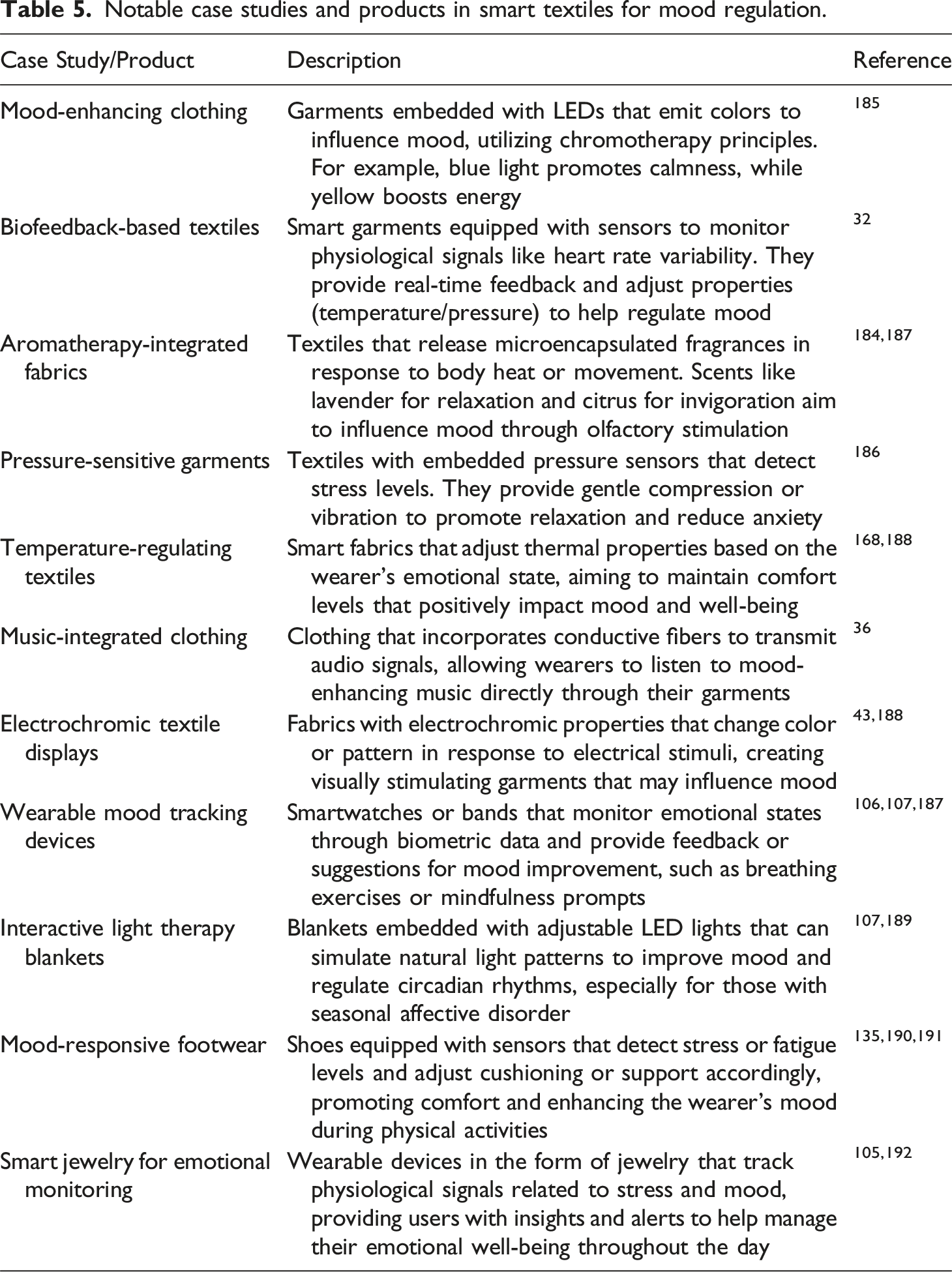
Although these applications show promise, it is important to note that the effectiveness of mood-regulating textiles may vary among individuals. Some studies have reported positive results, while others have found limited or inconclusive evidence of their impact on emotional well-being.32,185 This indicates that wearable textiles for mood regulation represent an innovative intersection of technology and fashion, offering potential benefits for mental health and well-being. However, further research is needed to fully understand their long-term effects and to optimize their design for maximum effectiveness. As the field of smart textiles continues to evolve, we expect to see more sophisticated and personalized mood-regulating garments in the future.32,187
User experiences and acceptance
User experience and the acceptance of wearable textiles for mood regulation have been explored in some studies, revealing both promising aspects and challenges.2,103,157,158 For instance, Coulter et al. 158 indicated that female students are receptive to wearable textiles for mood regulation, particularly the mood mood concept, which provides a sense of comfort and privacy. Participants expressed enthusiasm for its ease of use and social acceptability, highlighting its potential to address sensory overload in public spaces, which is a known source of anxiety. The findings suggest that e-textiles can empower students to take responsibility for their mental well-being, indicating positive user experience and acceptance of such interventions. In another study by Coulter et al., 103 crafted e-textile concepts were evaluated through a focus group, which affirmed their technology and social value in moderating stress and enhancing mood regulation. Participants experienced a sense of calm through the textiles' ability to sense physiological biomarkers and create augmented cues that triggered tactile memory. This suggests a positive user experience and acceptance of wearable textiles as effective tools for self-managing emotional well-being, particularly in the context of student mental health.
User experience and acceptance of wearable textiles for mood regulation are influenced by several factors, as highlighted in research papers, and performance expectancy and perceived benefits play a crucial role in user acceptance. Users are more likely to adopt wearable textiles if they believe the technology will effectively improve their mood and overall well-being.193,194 The ability of smart textiles to sense, react, and adapt to external conditions or stimuli is a key feature that can enhance user experience. 195 The ease of use and functionality are significant factors that affect user acceptance. Smart wearables must be user-friendly and comfortable to wear for extended periods.24,48 Jiang et al. 2 indicated 2 that user experience and acceptance of wearable textiles for mood regulation are influenced by interaction design and feedback modalities. Participants preferred placing a smart shawl on their upper body, where they could easily touch it and enhance their emotional engagement. Movement-based interactions and biofeedback mechanisms, such as light and vibration, were found to help users visualize and regulate their emotions, leading to a positive impact on their emotional well-being and social interactions. Similarly, Cochrane et al. 157 highlighted that user experience with the Breathing Scarf, a wearable textile designed for emotional regulation, was positive, as participants reported feeling “very warm” and “safe” under the scarf. The iterative design process emphasizes personal comfort, ownership, and individual meaning-making, which are crucial for user acceptance. Additionally, the integration of mindfulness exercises with emotional activities aims to enhance the overall experience, allowing users to better regulate negative emotions and maintain a calm emotional state. The integration of sensors and smart technologies into garments should not compromise the comfort or flexibility of textiles. 196 Design and aesthetics are important considerations. Users are more likely to accept wearable textiles that are visually appealing and align with their personal style preferences.24,197 The ability to customize the appearance of smart textiles can enhance user acceptance. For instance, Foo et al. 198 explored user expectations for SMA-based garments that communicate emotions through “warm touch” parameters, indicating potential applications in emotional communication. Insights gathered from user surveys on the effectiveness of these garments can inform design approaches, which may enhance user acceptance and experience in mood-regulation contexts.
Data-security concerns can significantly affect user acceptance. Users need assurance that their personal data, especially related to their mood and emotional state, is protected and used responsibly.24,193 Interestingly, context of use can affect user requirements and acceptance. For instance, there are differences in how users evaluate the importance of various features depending on whether a smart textile is used in sports or healthcare settings. 24 This indicates that to improve user experience and acceptance of wearable textiles for mood regulation, developers should focus on creating products that are effective, user-friendly, aesthetically pleasing, and secure. Involving users in the design process and adequately informing them of their data use can lead to more positive experiences and higher acceptance rates. Understanding user experience and acceptance is crucial for the successful integration of wearable textiles into everyday life, particularly when these technologies aim to assist in emotional regulation and mood management.
The integration of smart textiles into everyday objects has been proposed to increase user acceptance. For example, a sensorized smart toy was developed to assess psychomotor development in early childhood to facilitate user engagement in personalized healthcare monitoring. 199 This approach highlights the potential of combining smart textiles with familiar objects to enhance the user acceptance. Although the integration of familiar objects can enhance acceptance, we must also address the barriers users encounter when adopting these technologies. Understanding these barriers is crucial, as research shows that specific factors such as performance expectancy significantly influence user acceptance. A study based on the Unified Theory and Acceptance and Use of Technology 2 (UTAUT2) and the Smart Textile Technology Acceptance Model (STTAM) found that factors such as performance expectancy, hedonic motivation, washability, input modality, and connectivity significantly influence user acceptance of smart textiles. 200 This suggests that for wearable textiles aimed at mood regulation to be successful, they must not only be functional but also enjoyable to use, easy to maintain, and seamlessly integrated with other technologies.
Examination of user feedback and testimonials
Examination of user feedback and testimonials regarding wearable textiles for mood regulation reveals a growing interest in their potential to enhance emotional well-being. Unfortunately, most of the reviewed studies did not include user feedback and testimonials. Instead, they focus solely on developing the prototype and assessing its effectiveness without incorporating user experience.16,112,113,118,134,201 However, few studies have indicated that these innovative textiles can empower users to manage their stress and emotions effectively, along with user feedback and testimonials.2,103,157,158 Participants found the E-motionWear prototype comfortable and reported new emotional experiences. They preferred vibrotactile and audio feedback over visual feedback, indicating positive user feedback regarding the effectiveness of wearable textiles in mood regulation through movement-based interactions. 8 Common feedback themes included heightened awareness, convenience, and community support. Foerster 202 and Coulter 103 discovered that numerous users reported becoming more attuned to their emotional and physiological states through wearables, fostering a proactive approach to mental well-being. The ease of incorporating these textiles into daily routines is frequently mentioned in the user feedback. Testimonials often highlight how wearable textiles enhance accessibility to mental health support. Additionally, users frequently report feeling part of a community, particularly when wearables include social features allowing them to share experiences and progress with others.103,202
One study on wearable biofeedback devices reported a 30% reduction in anxiety levels among participants after 4 weeks of use. Pre- and post-measurements indicated significant improvements in self-reported mood and stress levels, correlating with physiological data showing increased heart rate variability.203,204 Coulter et al.
158
introduced innovative approaches and proposed five early design concepts aimed at monitoring, managing, and preventing stress among female students through the development of customized, wearer-centered e-textiles (see Figure 24). The overall average score for technology acceptance among the 11 participants was 73%, calculated by averaging the scores across all concepts. Conversations with the students indicated that the technology was appealing owing to its simplicity, clear analog output, and independence from data-driven methods or app support. The average social acceptability score was 69%, although the PulsePom device negatively affected this average because it was perceived as insufficiently discreet. Nevertheless, the overall results for social acceptability were promising, suggesting a reasonable likelihood that the proposed e-textile wearables could be socially accepted as early interventions for self-managing student well-being. Focus group discussions reinforced these findings, with students expressing preferences for feedback mechanisms in various settings. The results indicated that haptic vibrations were the most socially acceptable method for receiving feedback in any environment, followed by micro-LEDs, which could be used at the discretion of the wearer in specific contexts. Conversely, audible feedback is socially unacceptable. The average scores for ease of use and usefulness were 89% and 78%, respectively, indicating that the design is functionally effective. Additionally, aesthetics received an average score of 86%, suggesting that the textile concepts were visually well received. Among the samples, those with more developed textile designs, particularly Mood Hood, received the highest approval. Schematic of crocheted pulse-pump photoplethysmogram (PPG). (a) Pulse sensing with light. (b) The Baoding Ball is squeezed and tested using multiple haptic motors. (c) Laser-cut patterned fabric with micro-LEDs: green (relaxed) and red (stressed). (d) Concept for “Zip it” -Resistive sensing. (e) Participants interact with mood.
158

The combined averages for each element of the Starfish Likert scale are shown in Figure 25. Qualitative data and open discussions are crucial for providing deeper insights into the quantitative results. Mood Hood achieved the highest scores across all categories, supported by positive student narratives. Baoding Ball also received a high cumulative average, although its technology rating affected its overall score. The students appreciated the tactile experience of felt balls for stress relief. However, audible feedback was unpopular because it was perceived to draw unwanted attention to stress. The haptic vibration feedback was well received, leading to a version being piloted in focus Group 2, which featured haptic feedback only. The lower average PulsePom score was attributed to the visibility of the pulsing light, which was again considered indiscreet. Nonetheless, one student expressed interest in this device, stating that it helped her acknowledge and address her stress, although she preferred to engage with it in private settings. Similarly, with the “Breathing Patterns” concept, most students were open to using the textile as long as they could find a quiet space. They found that the ability to change visible feedback via color-changing lights was linked to intriguing thoughts. While many preferred color-coding systems, some preferred fewer lights and less complexity. The Zip-It sample received a high scoring average; however, 60% of the students felt that it would not be useful to them. This concept was presented as a virtual idea, intentionally left open to interpretation to encourage discussion, which may have influenced shared perspectives.
158
Participants cumulative average scores of the five concepts visualized.
158
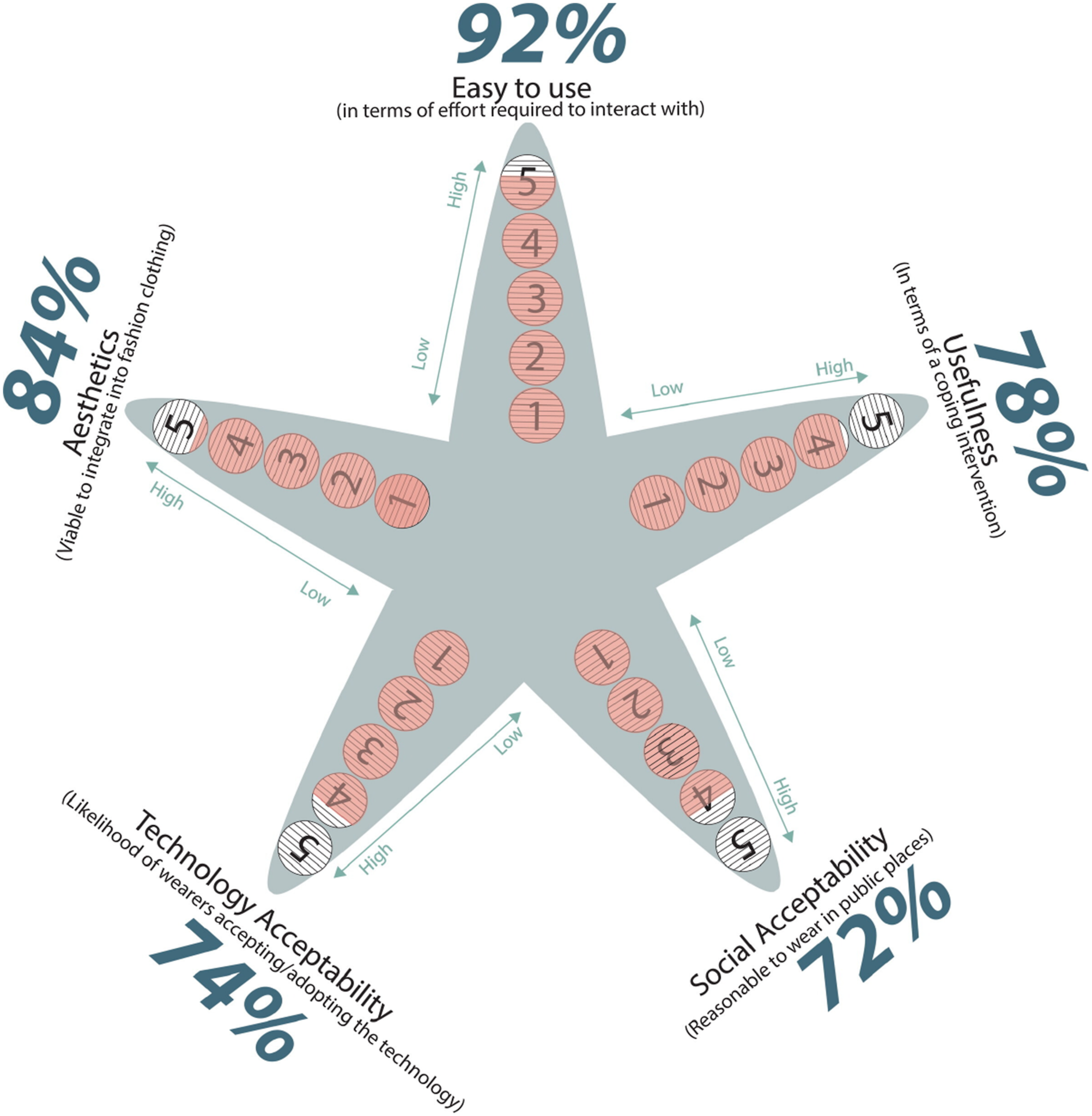
Another study examining smart therapeutic textiles for anxiety management revealed an average improvement of 25% in mood, as measured using standardized scales. Participants reported feeling more in control of their emotions and were better equipped to handle stress after consistent use of garments. 53 Research spanning extended periods of time has demonstrated enduring enhancements in the well-being of individuals using wearable textiles. A long-term study conducted by Lim et al. 205 revealed that subjects who integrated smart wearables into their daily lives experienced sustained improvements in mood and decreased stress over a 6-month period, indicating lasting advantages from consistent usage. The psychological benefits of wearable textiles have been corroborated by numerous case studies and user reports, emphasizing their capacity to boost mood and overall well-being. Successful applications have highlighted the potential of these textiles to offer both emotional assistance and functional advantages. Studies comparing the conditions before and after use further confirmed the positive mental health outcomes linked to their utilization, suggesting a promising direction for mental health interventions. Ongoing investigation and analysis in this field may result in more customized and efficient approaches to enhance mental well-being through wearable technologies.
Ethical considerations
The use of wearable textiles for mood regulation concerning ethical implications related to data security and user consent is a complex and multifaceted issue that requires careful consideration. Wearable technologies, including smart textiles, have become increasingly prevalent in healthcare and personal monitoring, offering valuable insights into individuals' health and lifestyle. 176 However, this advancement has raised significant concerns regarding data security, privacy, and informed consent. Although these devices provide real-time health data, they also collect sensitive personal information, making data security a crucial consideration for at least 25% of users when purchasing wearables. 176 The ethical implications of using wearable cameras for health behavior research highlight the intrusive nature of such technologies, generating unprecedented levels of image data that may be unflattering or unwanted. 206 This raises concerns about participant comfort and privacy, emphasizing the need for a formal ethical framework to protect all the parties involved. The framework should focus on respecting autonomy through appropriate informed consent procedures and adequate confidentiality controls. 206 However, there are contradictions in the user perceptions of data security across different countries. For instance, Hungarians are at least 10% more likely than Switzerland to believe that data collected by wearables are securely stored. 176 This disparity in trust levels highlights the need for a more standardized approach to data security in wearable technologies across different regions. Future research should focus on developing robust privacy protection systems, enhancing user education regarding risks, and establishing transparent informed consent processes. 207 Additionally, exploring blockchain technology for secure patient consent management in healthcare settings could provide innovative solutions to address ethical concerns. 208
Challenges and limitations
Wearable textiles for mood regulation face several challenges and limitations across technical, ethical, and research domains. The technical challenges in developing mood-regulating wearable textiles include durability, biocompatibility, and scalability. 168 The integration of sensors and nanomaterials into fabrics presents technological hurdles in maintaining comfort, washability, perspiration management, reusability, and durability. While many wearable sensors are designed for comfort and functionality, their durability in terms of washability remains a significant challenge. Additionally, the development of smart interactive textiles requires advancements in fabric production, sensor and actuator integration, and communication technologies. 209 Ethical considerations surrounding mood-regulating wearable textiles are significant. Issues related to access, inclusion, security, surveillance, autonomy, and regulation must be addressed. 210 The use of AI algorithms in conjunction with these textiles raises concerns about informed consent, accuracy, and reliability as well as the potential for misdiagnosis or overdiagnosis. 211 Furthermore, there are equity concerns regarding access to such technologies and the associated healthcare services. The current research on mood-regulating wearable textiles is limited by several factors. There is a need for more comprehensive studies on the long-term effects and efficacy of these technologies in the real-world setting. The integration of advanced materials such as MXenes into textile-based devices is still in its early stages, and further research is required to optimize their performance and scalability. In addition, there is a lack of standardized evaluation methods for smart textiles, which hinders comparative analysis and validation of different approaches. This indicates that, although wearable textiles show promise for mood regulation, they face significant challenges in terms of technical development, ethical implementation, and research validation. Addressing these limitations will require collaborative efforts among healthcare providers, technology developers, and policymakers to ensure responsible and effective use of these technologies in promoting mental health and well-being.
Future research directions
Future research on wearable textiles in mood regulation presents an exciting frontier, combining advancements in smart textiles with their potential applications in mental health and well-being. Future research on wearable textiles for mood regulation should focus on interdisciplinary approaches, user-centered design, advanced sensing and actuation technologies, and innovative applications of smart textile properties. One promising avenue for future research is the integration of chromic textiles into mood regulations. Chromic textiles, which can change color in response to various stimuli, have the potential to create adaptive environments that respond to a wearer’s emotional state. 212 For instance, researchers could explore the development of thermo- or electrochromic textiles that change color based on the wearer’s body temperature or electrical skin conductance, both of which can be indicators of the emotional state. This can provide visual feedback to the wearer and potentially influence their mood through color psychology. Notably, future studies could specifically investigate the effectiveness of color-changing textiles in controlled environments by measuring their impact on mood in a clinical setting.
However, while much of the current research focuses on using smart textiles for physical health monitoring, there appears to be a gap in their application to mental health and mood regulation.32,213 This presents an opportunity for interdisciplinary collaboration among textile engineers, psychologists, and neuroscientists to develop wearable textiles that are specifically designed for mood regulation. For example, collaborative projects could involve clinical trials assessing the efficacy of these textiles in reducing anxiety or depressive symptoms among participants. Future studies should consider adopting a user-centered design approach, as highlighted by Heek et al. 24 This study suggests that the user requirements for smart textiles differ according to the context of use. Therefore, early studies that focus on mood regulation should involve potential users in the design process to ensure that the resulting textiles meet specific needs and preferences. Conducting focus groups or surveys with potential users could provide valuable insights into their design and functionality preferences.
Additionally, researchers should address concerns regarding data security and ease of use, which have been identified as important factors for user acceptance. In terms of methodology, future studies could explore the integration of advanced sensing technologies into textiles to detect physiological mood markers. This could involve the use of MXene-based smart textiles that offer excellent conductivity and flexibility. 30 Targeted studies could investigate the correlation between physiological markers such as heart rate variability, skin conductance, and self-reported mood states in real-time scenarios. Researchers can investigate how to incorporate sensors for heart rate variability, skin conductance, and brain activity into comfortable wearable textiles. These physiological markers can then be used to infer emotional states and trigger appropriate responses in textiles, such as changes in color, temperature, or even the release of mood-enhancing scents. Another promising research direction involves the development of textile-based actuators for mood regulation. This could involve exploring methods for interweaving mechanical elements into fabrics, as described by Goudswaard et al., 214 to create textiles that can provide tactile feedback or gentle pressure for stress relief. Future research should include clinical trials to assess the effectiveness of these tactile feedback mechanisms in reducing stress levels among users. Future studies could also investigate the use of smart textiles in light therapy, potentially integrating light-emitting fibers into fabrics to create wearable solutions for mood disorders, such as seasonal affective disorders.
Moreover, future research on wearable textiles in mood regulation presents exciting opportunities for design innovation. Several studies have highlighted potential areas for development and exploration, and interactive textiles show promise in assisting emotion regulation through movement-based interactions. 8 This approach offers a new perspective on the potential of smart textiles for mood regulation, suggesting that future research should focus on developing more-sophisticated movement-based interactions that respond to and influence emotional states. For instance, studies could evaluate the effectiveness of specific movement patterns in enhancing mood and reducing anxiety, using both qualitative and quantitative measures. The integration of various emotion regulation strategies into the design of these textiles could lead to more effective and personalized mood regulation tools. Biofeedback-based interactions are another area of significant potential. Jiang et al. 2 described a smart interactive shawl that reacts to changes in emotional arousal, helping users visualize and regulate their emotions. Future research could expand this concept by conducting longitudinal studies to assess the long-term effects of biofeedback mechanisms on emotional well-being. Moreover, the aesthetics of smart textiles are crucial to user acceptance and market growth. Li et al. 215 proposed a design approach to enhance the aesthetics of conductive paths in electric stimulation garments. Future research could focus on developing more visually appealing and fashion-forward smart textiles that seamlessly integrate mood-regulation functionalities without compromising style or comfort. Investigating consumer preferences through market research can guide the design of aesthetically pleasing smart textiles. Chromic textiles, which can change color in response to various stimuli, offer another avenue for innovation in mood regulation. 212 Future research could explore how color-changing textiles can be used to influence mood or provide visual feedback on emotional states, potentially combining this technology with other smart textile features to enhance its effectiveness. Sustainability is an important consideration in the future development of smart textiles. Dulal et al. 46 emphasized the need for eco-friendly materials, manufacturing techniques, and end-of-life processes. Future research should focus on developing sustainable smart textiles for mood regulation that are not only effective, but also environmentally responsible, potentially exploring biodegradable materials or recycling methods for smart textiles. Additionally, Dejene and Geletaw 216 provide a thorough explanation of the green synthesis and mechanisms of ZnO nanoparticles (ZnO NPs), highlighting their potential applications in self-cleaning textiles. Their findings indicate that ZnO NPs are among several nanoparticles advantageous for self-cleaning textiles due to their exceptional physical and chemical properties. This suggests that future research should focus on enabling wearable textiles to possess self-cleaning properties, addressing washability issues and enhancing sustainability.
Conclusion
Wearable textiles represent a significant advancement in mood regulation and in emerging technologies with psychological benefits. Numerous researchers have found that wearable smart textiles can influence mood via several mechanisms. These include biofeedback systems that promote mood awareness, sensory feedback mechanisms that facilitate mood regulation, and integration of smart textiles with mobile applications for mood tracking and enhanced user experience. Biofeedback is a crucial mechanism in wearable textiles that involves real-time monitoring of physiological signals. These systems detect a range of psychological indicators, such as heart rate and skin temperature, and behavioral cues, such as sound and movement. By providing feedback through visual displays, auditory signals, and shape-changing features, these technologies enhance the wearers’ awareness of their emotional states. This process empowers individuals to identify patterns in their emotions and physiological responses, thereby enabling them to implement effective mood regulation strategies. However, it is important to note that these mechanisms are primarily passive; they inform the wearer about their emotional state without actively responding. Building on biofeedback, sensory and affective responses play crucial roles in mood regulation. This approach utilizes olfactory, tactile, and visual stimulation through responsive clothing that emits scents, light, and pressure or vibration, based on biometric feedback. The goal is to regulate mood by releasing tailored aromas, light, and pressure when stress levels exceed a certain threshold, thereby enhancing emotional well-being and addressing mental health issues. While biofeedback technologies serve as passive smart textiles that enhance self-awareness, sensory stimulation acts as an active element, in addition to facilitating direct intervention or emotional regulation. Users have appreciated the tactile experience of stress relief; however, audible feedback has been unpopular because it draws unwanted attention to stress. Although many studies have reported interesting results in this area, most are still in the prototype stage, and few have thoroughly examined user experience and engagement. Additionally, many studies did not consider important factors such as age, gender, and emotional awareness of participants. The quantifiable effects of wearable textiles on emotions and their psychological impact remain unclear. This leads to several concerns, including over-reliance on technology, privacy and data security issues, and psychological effects of constant monitoring. In addition, a continuous stream of information from smart textiles can result in cognitive overload. Users may find it challenging to process and interpret the extensive data generated by these devices, which can increase stress and impair their decision-making abilities. Moreover, challenges, such as durability, biocompatibility, and manufacturing scalability, must be addressed for widespread adoption. Therefore, it is essential to develop strategies that maximize the benefits of wearable textiles while minimizing their potential drawbacks to ensure that these innovations contribute to holistic health and well-being. Future research should focus on long-term effects and diverse user experiences to refine these tools for broader acceptance.
Footnotes
Acknowledgments
The author expresses gratitude to the current and previous group of researchers in the field of wearable textiles.
Declaration of conflicting interests
The author(s) declared no potential conflicts of interest with respect to the research, authorship, and/or publication of this article.
Funding
The author received no financial support for the research, authorship, and/or publication of this article.
