




Abstract
The design of impact protective gear is crucial to human safety against high-velocity impacts from explosions. The rigid and flexible foam sandwich composites with ACF foam as the core and fiber-reinforced composite panels or high-performance fabrics as front/back panel materials were selected in this study. Hopkinson pressure bar experiment was conducted to assess the dynamic response, energy absorption, and dissipation rates of two types of composites in high-velocity impact. The effects of the number of structural layers, front/back panel thickness gradient, and panel material type on the protective performance were examined. The results demonstrated that the three-layer structure presented better protection and increased the energy absorption rate by 5% compared to the five-layer configuration in rigid and flexible composites. Thickness gradient and material type of panels had minimal impact on the protective performance of rigid composites compared to structural layers. Adding Kevlar layers to flexible composites improved protection, with 95.89% energy absorption and 31.82% energy dissipation at a core thickness of 8 mm. These insights guide the development of advanced impact protection materials to elevate personnel safety against high-velocity impacts.
Keywords
Introduction
In recent years, explosion injuries with the changes in war situations have become a typical trauma in modern wars. Nearly 78% of the US military’s casualties in the wars in Iraq and Afghanistan were caused by explosions, reaching the highest value among significant wars in history. 1 Explosions release energy that compresses and accelerates surrounding air molecules, culminating in a supersonic shock wave with substantial energy. The impact of such a high-velocity shock wave on the human body can lead to severe injuries or fatalities.2,3 Consequently, advancing and deploying personal protective equipment have become crucial in mitigating the harmful effects of explosion shock waves on the human body. 4
Recent studies have been conducted to analyze the protective performance of different types of explosion-proof personal protective equipment, such as helmets,5,6 shoes, 7 and vests. 8 The primary objective of the gear is to create a physical barrier between the shock wave and the human body to provide better protection against explosions. 9 Plaster and plastic were initially used to shield the human chest from shock wave-induced damage. Although these materials afford some protection against low-velocity shock waves, their defensive performance significantly diminishes when confronted with high-velocity and high-energy shock waves. 10 Recent investigations elucidated that sandwich structures, which incorporate various foam materials as their core layers, possess enhanced specific stiffness and strength. These structures demonstrate formidable impact resistance and energy absorption capacities under explosive high-velocity impact conditions.11–13 The primary mechanism for energy absorption is attributed to the local wall collapse and volumetric compression within the foam core layer. Moreover, the front and back panels of the sandwich structure play a crucial role in withstanding shear forces, resisting bending, and facilitating energy dissipation.14,15 The impact energy absorption capacity in sandwich structure materials depends on several factors, such as the thickness and density of the foam core layer, the kind of panels utilized, and the coherence between the core and panel materials. Yang et al. 16 discovered that an increase in the thickness of the foam interlayer enhances its capacity to laterally disperse impact energy, thereby enlarging the area affected by impact damage while reducing the depth of damage. Liang et al. 17 and Wei et al. 18 studied the behaviors of different densities of metal foam sandwich materials under explosive loading. The study showed that a denser foam core layer reduces momentum transfer, which helps in better attenuation of explosive forces. Furthermore, Hong 19 demonstrated that augmenting the number of foam interlayers enhances impact resistance for a given constant material thickness. However, the impact resistance was evaluated in low-velocity impacts. There were few studies regarding foam sandwich materials in high-velocity impacts.
Anderson et al. 20 conducted a study on the impact resistance of foam core materials. They specifically focus on how the core density and the panel’s thickness affect the composite material’s energy absorption capabilities. Their findings suggest that the energy absorption of material could be enhanced by increasing both the foam core density and the panel thickness. Moreover, the layers' compatibility significantly influenced composite materials' dynamic response mechanism under identical impact energies. Avachat and Zhou 21 investigated how the thickness ratio of foam between the panel and core affects the material’s resistance to impacts when submerged in water. The results revealed that the thickness ratio of a constant core ranging from 0.15 to 0.4 yields optimal energy dissipation capacity and stiffness, thereby indicating the most efficient material utilization. Concurrently, the arrangement of front and back sandwich panels significantly affects energy transfer to the core and the human body. 22 This highlights the importance of the structural configuration in managing energy.
The foam core layer in composite materials increases impact resistance but reduces the material’s modulus through plastic deformation23–25 and destruction26,27 to absorb energy. However, this energy absorption mechanism makes these materials non-reusable post-impact, thus limiting their reliability for continuous multiple-impact protection in complex and extreme environments. Additionally, the weight of protective equipment is an essential factor for wearer comfort, so it’s necessary to select core materials that are not only lightweight and capable of large deformations but also potentially reusable. 28 The ACF artificial cartilage bionic material is a three-dimensional ultrastructure bionic metamaterial with remarkable energy absorption capabilities. It is inspired by the function and structure of human knee cartilage and can endure multiple low-velocity impacts without destruction.29,30 Under equivalent energy absorption conditions, its thinner profile significantly reduces the load, enhancing comfort for wearers in impact protection scenarios. Despite these advantages, the lack of research on ACF materials’ dynamic and static mechanical responses hinders their application, particularly under high-velocity impact conditions. The current study primarily assesses the impact resistance of materials by examining their damage mechanisms, such as compressive strength and deformation. However, it often fails to consider the specific targets requiring protection.31–33 Consequently, even if a material exhibits high compression or deformation resistance, it may not offer adequate protection for the human body as it does not accurately determine the specific impact strength needed to safeguard the target.
This study aims to establish a theoretical foundation for the structural design of protective materials in high-velocity impact scenarios to enhance personnel safety. The Hopkinson pressure bar is used to measure energy absorption and dissipation rates of materials under high-velocity impact, which can more accurately present the protection for blunt injury. The impact protective performance of materials was explored through the above two indicators rather than just focusing on the material’s performance. The rigid and flexible composite materials are selected to examine the effects of panel and core layers, material thickness, and type of material on protective performance under high-velocity impact. This investigation seeks to contribute to developing protective gear by systematically assessing the interplay of material properties and design parameters in high-velocity impact conditions.
Materials
The “hard-soft-hard” sandwich structure is widely used as an impact-resistant composite material in impact protection. This structure comprises panels reinforced with high-strength resin-based fibers and a central cushioning material. The panels are fused using molding techniques and adhesive. The structure consists of three layers arranged from the outermost layer inward, including a front panel, a foam core, and a back panel. Moreover, flexible composite materials have gained attention due to their notable advantages in lightweight design. The existing flexible impact protection structures were used for reference 31,32. The cushioning material was placed in the middle layer to absorb energy effectively, and the high-performance fiber layers were reinforced to make the flexible composite materials challenging against bending and impacting. Leveraging the superior structural properties of sandwich materials, two types of composites were developed in this study. The first type is a rigid composite designed primarily for torso protection in situations where mobility requirements are minimal. The second type is a flexible composite suitable for applications involving greater mobility, such as in limb protection. The specific material structures and composite configurations will be outlined in the following sections.
Single-layer material
Foam core
Basic information on foam core.

Front and back panel materials
Carbon fiber laminate possesses high specific strength, low density, corrosion resistance, durability, and excellent design flexibility. They exhibit good impact resistance and damping properties. However, carbon fiber composite panels under dynamic impact conditions tend to display some brittleness, leading to localized damage. Incorporating aramid material into the laminate structure can improve the composite’s overall plastic deformation capacity and reduce brittle failure. The fiber composite panels were manufactured with 1 mm or 2 mm thickness to meet lightweight design requirements for composite materials. They consisted of alternating carbon fiber and aramid fiber layers, corresponding to six-layer and ten-layer fiber plies, respectively.
Basic information of fiber composite panels.

Basic information of high-performance fiber layers.

Composite material design
Experimental samples of rigid composite materials.

Experimental samples of flexible composite materials.

Upon obtaining the conclusions regarding the effects of the number of structural layers and the thickness gradient of front/back panels’ impact on resistance to high-velocity impacts, further composite materials were designed based on these conclusions to investigate the influences of different front and back panel material types on the impact resistance performance of composite materials. For the rigid composites, carbon fiber aramid (CA) and aramid (AR) composite panels with a thickness of 2 mm were selected. The above two panels were combined to form four combinations with different front and back panel materials (CA/CA, CA/AR, AR/CA, AR/AR). Four high-strength and flexible fabrics (Kevlar basket weave fabric, Kevlar, PBO, and UHMWPE plain weave fabrics) were evaluated to assess their protective capabilities in flexible composites. Additionally, different types of ACF were selected: EA1 (5 mm, 0.4 g/cm3), EA3 (5 mm, 0.6 g/cm3), and EA4 (8 mm, 0.6 g/cm3) to gain a deeper understanding of the effect of front and back panel material type on rigid/flexible composites’ protection under varied core parameters.
Experimental designs
Method
A Split Hopkinson Pressure Bar (SHPB) with a 30 mm diameter was employed in this experiment. The test apparatus mainly comprises an energy device, a launcher device, a pressure rod device, and a data acquisition system. The pressure rod device, which serves as the primary testing component, includes an incident rod, a transmission rod, and an absorption rod, as depicted in Figure 1. Strain gauges are attached to both the incident and transmission rods to record the changes of the shock wave over time during the experiment, including the incident and reflected waves in the incident rod and the transmission wave in the transmission rod. Due to the relatively low impedance of the sandwich material designed in this study, organic glass was chosen as the material for the pressure rod, with a density of 1200 kg/m3 and an elastic modulus of 3.16 GPa. The projectile length is 800 mm, with a loading pressure set at 0.1 MPa, and the material sample size is 12 mm × 12 mm. Under these conditions, the material can achieve a strain rate ranging from 102 s−1 to 105 s−1, meeting the strain rate range required for high-velocity impact conditions. Schematic diagram of Split Hopkinson Pressure Bar.
Evaluation criteria
Through the data collected by the strain gauges on the incident and transmission rods of the Hopkinson pressure bar, the incident energy W
I
(t) and transmission energy W
T
(t) of the sample during loading can be calculated, as shown in Equations (1) and (2).

Additionally, the reflected energy W
R
(t) of the material and the energy dissipated by the sample W
A
(t) during the experiment can be calculated using Equations (3) and (4).

The material’s impact wave protection capability can be represented by the energy absorption rate (η), which is the difference between the incident energy and the transmitted energy divided by the incident energy (Equation (5)). A higher energy absorption rate indicates better impact wave protection performance of the material. The energy absorption rate index of the material reflects the relationship between the energy absorbed and the input energy under impact loading, independent of the material’s stress equilibrium state, making it more suitable for evaluating the material’s impact resistance performance in this experiment.
Furthermore, the material’s resistance to damage can be represented by the energy dissipation rate (θ), the ratio of the dissipated energy to the incident energy (Equation (6)). The energy dissipation rate is positively correlated with the degree of damage to the material. Under the same air pressure conditions, a smaller energy dissipation rate indicates less damage to the material. The larger the energy dissipation rate, the stronger the material can resist damage from impact waves.
Statistical methods
We used ANOVA to compare the means of energy absorption and dissipation rates among different composite configurations. The significance level was set at p < .05.
Results and discussion
Influence of structural layers on protective performance
Two control groups were used to evaluate the effect of the number of structural layers on the protective performance of the rigid composite materials. Figure 2 shows the energy-time curve results of the rigid composite materials with different layers. The process of the SHPB test for all samples was divided into three stages: (1) Compaction Stage (Stage I): The samples were compressed and the internal pores were gradually closed; (2) Energy Accumulation Stage (Stage II): The energy rose linearly, the samples were damaged and started to absorb the incident energy; (3) Steady Stage (Stage III): The values of the energy were no longer changed significantly, indicating the end of the energy evolution process. Energy-time curves of the rigid composite materials.
A similar trend was found for the four types of energy for each rigid composite material, but the final values were different. In Figure 2(a), the energy of the four materials was similar because the incident energy was determined by the speed of the impact rod, which was the same due to the identical air pressure settings in the test. In Figure 2(b), the reflection energy of the three-layer structure materials (M1 and M3) was greater than that of the five-layer structure materials (M2 and M4) of the same thickness. In addition, the reflection energy of the three-layer structure M1 (12 mm) was 13.97% higher than that of the five-layer structure M2 (12 mm), and the three-layer structure M3 (11 mm) was 15.77% higher than that of the five-layer structure M4 (11 mm). However, the dissipation energy of the three-layer structure materials was not different from that of the five-layer structure materials of the same thickness. Hence, with the same incident and dissipation energy, materials with higher reflection energy exhibited lower transmission energy. The transmission energy of the three-layer structure materials was lower than that of the five-layer structure materials of the same thickness, as shown in Figure 2(d). The transmission energy of the three-layer structure M1 (12 mm) was 31.84% lower than that of the five-layer structure M2 (12 mm), and the transmission energy of the three-layer structure M3 (11 mm) was 43.68% lower than that of the five-layer structure M4 (11 mm). From the above comparative results of the two control groups, it was concluded that the three-layer structure materials had better protective capabilities than the five-layer structure materials. The higher energy absorption rate of the three-layer structure materials was due to the greater reflection energy, resulting in less transmission energy at the back of the rigid composite materials under similar incident energy conditions.
Comparison of the protective performance of the rigid composite materials with different structural layers.

The energy absorption rate of the rigid composite material M1 was found to be higher than that of the rigid composite material M2 (difference of 4.96%). The rigid composite material M3 was higher than the rigid composite material M4 (difference of 7.22%), indicating that the protective performance of the three-layer material was better than that of the five-layer material under the same overall thickness. The enhanced performance of the three-layer structure might be attributed to the ACF being impacted and compressed uniformly. Examination of the stress-strain curve for the foam material reveals an expansion in the curve’s area under higher deformation levels during compression, indicating increased energy dissipation. Consequently, the foam rebounded, releasing more energy post-compression. This suggested that the three-layer material’s superior deformability allows for more effective mitigation of impact energy, reducing energy transmission to the material’s posterior.
Furthermore, for the energy dissipation capacities between three-layer and five-layer constructs, statistical examination revealed negligible differences between the M1 and the M2 (0.17% difference, p > .05) and between the M3 and the M4 (0.08% difference, p > .05). Figure 3 illustrates that neither material sustained damage post-impact, suggesting that the rigid composite materials of both three and five layers exhibited comparable damage resistance. Consequently, the three-layer structure was inferred to offer superior protection under equivalent conditions of damage resistance. Appearance of the rigid composite materials after the impact.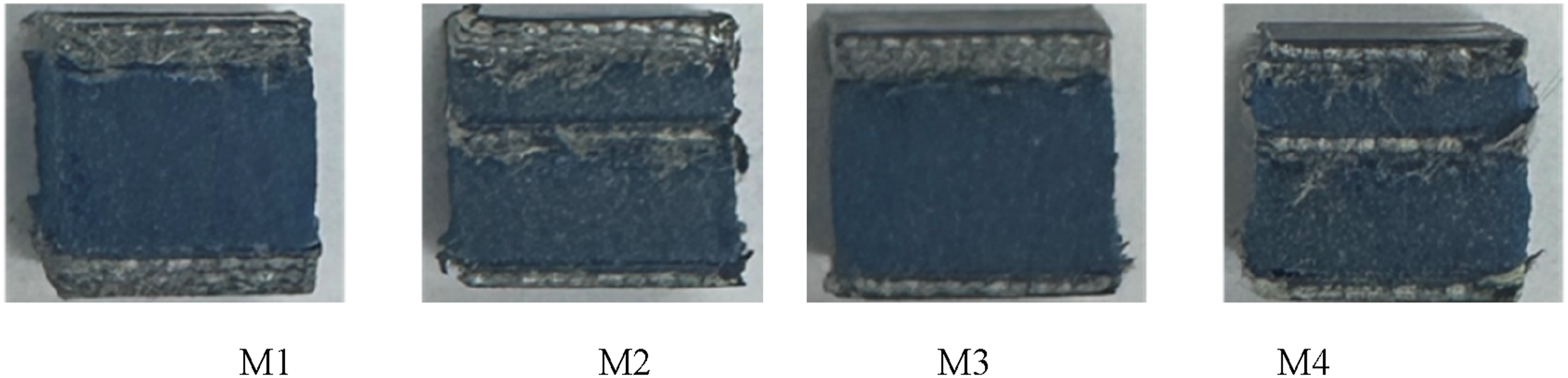
Figure 4 shows the energy-time curves for flexible composite materials with different layers. The energy-time curves for these materials were similar to those of rigid composite materials, comprising three stages: the compaction stage, the energy accumulation stage, and the steady stage. Energy-time curves of the flexible composite materials.
The trends and duration of changes in incident energy, reflection energy, dissipation energy, and transmission energy over time were similar for each material, but the final energy values differed at the end of the test. In Figure 4(a), the incident energy trends over time for S1 and S2 were similar because the same air pressure was set during the test, resulting in nearly identical impact rod speeds and incident energy. In Figure 4(b), the reflection energy of the three-layer structure material S1 was 19.40% greater than that of the five-layer structure material S2 of the same thickness, and the energy reflection speeds of S1 and S2 were close. In Figure 4(c), the dissipation energy of the three-layer structure material was not significantly different from that of the five-layer structure material of the same thickness. Additionally, combining Figure 4(b)–(d), it was evident that with similar incident and dissipation energy, materials with higher reflection energy had lower transmission energy to the back of the material. Therefore, the transmission energy of the five-layer structure material was 69.97% greater than that of the three-layer structure material of the same thickness. These results indicated that the three-layer structure flexible materials had better protective capabilities than the five-layer structure materials, consistent with the findings for rigid composite materials.
Comparison of the protective performance of the flexible composite materials with different structural layers.

The experimental results were further compared with the prior research. This research investigated the damage behavior of foam sandwich composites with three, five, and seven layers, all having the same overall material thickness and foam core.
19
It was found that the five-layer structure has a higher unit volume dissipation energy than the three-layer structure. Our study observed a 7.10% increase in unit volume dissipation energy, while literature reported a 6.67% increase. This suggests that the five-layer composite materials are more prone to damage than the three-layer ones. Thus, the three-layer structure exhibited enhanced damage resistance under the same impact conditions for both composite types. Appearance of the flexible composite materials after the impact.
Influence of front/back panel thickness gradients on protective performance
Comparison of the protective performance of the rigid composite materials with different front/back panel thickness gradient.

The M3 had a 0.83% higher energy absorption rate than the M5, while the M6 absorbed 0.62% less energy than the M7. Subsequent statistical analysis revealed no significant differences between the M3 and the M5 or the M6 and the M7 (p > .05). This indicated that the thickness gradient of the front/back panel did not markedly impact the protective performance of rigid composite materials as long as the overall material and foam core thickness remained constant. This outcome might stem from the fact that rigid composites’ attenuation of shock waves primarily relies on their internal composition. When the type of material contained in the composite materials and the overall thickness of the internal material parallel to the direction of impact were consistent, the ability to attenuate the impact was the same. Thus, the energy transmitted to the posterior of the material was similar.
The energy-time curves of various materials were further examined (Figure 6(a)). It was observed that only the incident energy of the materials with the same thickness had similar trends, durations, and amplitudes (Figure 6(a)). The final energy values for reflection, dissipation, and transmission differed at the end of the test. It was also discovered that altering the thickness gradient of the front and back panels of the materials with the same overall thickness did not lead to significant differences in reflection and transmission energy (p > .05). The thickness of the foam core, with consistent panel thickness, significantly affected reflection energy, dissipation energy, and transmission energy. The reflection and dissipation energy of M3 and M5 (11 mm) were higher than those of M6 and M7 (6 mm). The energy transmission of the M3 and M5 (11 mm) was lower than that of the M6 and M7 (6 mm). This led to the conclusion that the thickness of the foam core played a more significant role in influencing the energy absorption rate of the rigid composite material compared to the thickness gradient of the front and back panels. Energy-time curves of the rigid composite materials.
Comparison of the protective performance of the flexible composite materials with different front/back panel thickness gradient.

The energy absorption rate of the S3 was higher than the S5 (difference of 0.19%), and the S4 was higher than the S6 (difference of 2.41%). Further significance analysis revealed no significant difference between the S3 and the S5, nor between the S4 and the S6 (p > .05). The results indicated that the front/back panel thickness gradient also had no significant effect on the protective performance of the flexible composite materials under the same thickness of the overall material and the foam core. The reason might be the same as the above analysis of the rigid composite materials.
Additionally, the energy dissipation rate of the S3 was lower than the S5 by 1.85%, while the S4’s rate exceeded the S6’s by 0.57%. Subsequent statistical analysis indicated no significant differences between the S3 and the S5 and between the S4 and the S6 (p > .05). These findings suggested that variations in the front/back panel thickness gradient did not significantly influence the damage resistance of flexible composite materials, assuming uniform total material thickness.
Moreover, the energy absorption rate of flexible composite materials S3 and S4 showed a 5.98% increase with an increased front panel thickness, while the back panel’s thickness remained constant. Comparing the flexible composite materials, S5 and S6 showed a 3.55% increase in energy absorption rate when the thickness of back panel increased while the front panel thickness remained constant. The results indicate that introducing aramid fabric layers, recognized for their high-impact durability, can effectively reduce the energy of shock waves. By increasing the number of fabric layers from three to five, the energy absorption rate was improved in both the front and back panels. An increase in impact resistance was observed when an additional layer was added to the front panel. Aramid fibers are well known for their outstanding impact resistance and energy absorption capabilities. When used in composite structures, these fibers add an extra layer of energy dissipation. By increasing the thickness of the front panel, the material’s ability to absorb and dissipate initial impact energy is significantly improved. A thicker front panel can absorb more energy before the shock wave reaches the back panel. While increasing the thickness of the back panel also enhances energy absorption, it is less effective because the back panel mainly deals with the residual energy that has already passed through the front panel.
The energy-time curves of various materials were further examined (Figure 7). It was observed that for materials of the same thickness, only the incident energy and dissipation energy had similar trends, durations, and amplitudes over time (Figure 7(a), Figure 7(c)), while the magnitudes of reflection energy and transmission energy differed. Energy-time curves of the flexible composite materials.
Further observation of Figure 6 revealed that when the overall thickness of the material was the same, changing the thickness gradient of the front and back panels did not result in significant differences in reflection energy and transmission energy (p > .05). However, the overall thickness of the material, specifically the ACF foam thickness (with a consistent number of fabric layers in the panels), significantly affected the reflection energy, dissipation energy, and transmission energy. The reflection energy and dissipation energy of S4 and S6, which had a thickness of 9.08 mm, were higher than those of S3 and S5, which had a thickness of 7.72 mm. Additionally, the transmission energy of S4 and S6 was lower than that of S3 and S5. This trend aligns with the behavior of rigid composite materials, indicating that the thickness of the flexible composite material is an important factor influencing the impact resistance of sandwich materials.
Influence of front/back panel materials types on protective performance
In Sections 4.1 and 4.2, the findings revealed superior protective performance in the three-layer structure, with the thickness gradient of the front/back panels exerting no significant impact on its efficacy. Consequently, this section adopted a three-layer composite material characterized by a uniform thickness gradient across front/back panels to investigate the effect of front/back panel material type on protective performance.
Figure 8 illustrates that with foam cores EA1, EA3, and EA4, the maximum discrepancies in energy absorption rates were 2.87%, 5.28%, and 1.98%, respectively, while the peak differences in energy absorption rates were 0.92%, 2.61%, and 0.90%, respectively. Except for the notable deviation with foam core EA3, variations among the materials were minimal. It was found that the composition of the front/back panel materials (CA/CA, CA/AR, AR/CA, AR/AR) did not significantly influence the energy absorption or dissipation rates of the rigid composite materials (p > .05). Comparison of the protective performance of the rigid composite materials with different types of front/back panel materials. Note: CF/CF means that both the front/back panel were made of carbon fiber/aramid laminates; CF/F implies that the front panel was made of carbon fiber/aramid laminates and the back panel was made of aramid laminates; F/CF means that the front panel was made of aramid laminates and the back panel was made of carbon fiber/aramid laminates; F/F implies that both the front/back panel were made of aramid laminated panels.
This indicated that the cross-sectional area of the impact rod in the Split Hopkinson Pressure Bar experiment was larger than that of the material, so the impact stress was uniformly distributed on the material. At the same time, the carbon fiber/aramid laminates and aramid laminates both were rigid laminates with similar compressive strength. Therefore, the front/back panel material type had a relatively limited influence on the absorption energy rate and the energy dissipation rate when both the front/back panel material were laminated.
It was found in Section 4.2 that augmenting the fabric layers in the front panel of flexible composite materials predominantly improves the protective performance. A flexible composite material was used to assess the impact of material types on protective performance. The front panel consisted of five layers of fabric, while the back panel had a single layer. Both panels used identical fabric types.
As depicted in Figure 9, when utilizing foam cores EA1, EA3, and EA4, the maximal disparities in energy absorption rates were 6.56%, 8.97%, and 1.85%, respectively, while the peak variances in energy dissipation rates reached 9.23%, 6.39%, and 11.41%, respectively. This indicated that the type of material used for the front/back panel significantly influences the energy mitigation and dissipation capabilities of flexible composite materials compared to rigid composite materials. Across three distinct foam cores, the influence of the material type of front and back panel on the rate of energy absorption followed the hierarchy of Kevlar basket weave > Kevlar plain weave > PBO plain weave > UHMWPEF plain weave, with the order reversing for the rate of energy dissipation. These findings underscored that the Kevlar basket weave exhibited superior protective performance and enhanced damage resistance compared to the other materials assessed.
36
Comparison of the protective performance of the flexible composite materials with different types of front/back panel materials.
Considering fiber types, Kevlar exhibited a higher energy absorption rate than PBO and UHMWPEF, attributable to its superior strength and impact toughness. From the fabric weaves and structures standpoint, basket weave fabrics demonstrated enhanced protective performance.37,38 This advantage stems from fewer interweaving points between warp and weft yarns than plain weaves, allowing for greater yarn mobility and, consequently, higher breaking strength. Such structural characteristics could let the fabric dissipate more impact energy through yarn deformation and inter-yarn friction.
Conclusions
The impact protection of ACF foam sandwich composites considering the number of layers, panel thickness gradient, and material type features was evaluated. Results reveal that the three-layer structure was better than the five-layer configuration for rigid and flexible composite materials. The energy absorption rate was increased by approximately 5%. This superior energy absorption in the three-layer structure was due to the ACF foam functioning as a unified entity, surpassing the efficiency of the divided foam core of the five-layer structure during compression. For rigid materials, both three-layer and five-layer structures exhibit similar energy dissipation rates (with a difference of approximately 0.1%), indicating that both structures provide similar damage resistance. However, the three-layer structure was more durable in flexible materials, providing reduced damage and enhanced protective performance.
When the overall and foam thicknesses were kept consistent in the rigid composite materials, the thickness gradient of the front and back panels and the front/back panel materials type had no significant impact on their energy absorption or dissipation rates (P > 0.05). Conversely, adding more fabric layers to flexible composite material panels significantly improves protective performance, especially in the front panel. Furthermore, flexible composites made with Kevlar fabric on both face and back panels exhibit improved protective capabilities and damage resistance. At a core thickness of 8 mm, the energy absorption rate reached 95.85%, while the energy dissipation rate was only 31.82%. This research emphasizes the importance of material choice and design in improving composite protection and guiding the development of advanced protective equipment.
Footnotes
Declaration of conflicting interests
The author(s) declared no potential conflicts of interest with respect to the research, authorship, and/or publication of this article.
Funding
The author(s) disclosed receipt of the following financial support for the research, authorship, and/or publication of this article: This study is supported by The authors would like to acknowledge the financial support from Shenlan Project of Naval Medical University (21TPSL0102, 21TPSL0102), Qianghai Project of Naval Medical University (24TPSL0101), Zhuoyou Talent Project of Naval Special Medical Center (21TPZY0101), and Application Promotion Project (20AH0103).
