




Abstract
The textile industry contributes significantly to global warming and pollution, especially the leather industry, which uses livestock and toxic tanning processes that have a great environmental impact. Currently, efforts are being made to mitigate the negative impacts of the textile industry by using alternative non-toxic chemicals or by recycling fabric. More recent efforts explore utilization of non-conventional biomaterials and organisms, such as mushroom mycelia, algae or genetically-engineered microorganisms. In this study, we implemented slime mold Physarum polycephalum perfused through leather-like fabrics made from air-dried simple nutritious media in order to develop environmentally friendly, easy-to-manufacture and sustainable fabrics. Plasmodium was validated for its viability and propagation under non-sterile conditions and in contaminated environments on different media compositions made from agar, peach gum, gelatin, carrageenan or glycerol. We determined optimal media components to be agar, gelatin and glycerol which supported plasmodium growth and yielded sturdy and flexible fabric sheets after air-drying. Ultimately, plasmodium-perfused fabric sheets were sewed into apparel and footwear. This study demonstrates the use of simple media as a clothing fabric perfused with plasmodium, which produces intricate colors and patterns on the fabric. Plasmodium has the ability to enhance fabric properties due to its natural problem-solving abilities, such as biosensing, fabric self-repair, and distant fabric communication.
Introduction
Global warming and pollution are becoming increasingly significant concerns, with the textile industry playing a significant role in contributing to their detrimental effects on human health and the environment. Due to the release of toxic chemicals used in dyeing and processing of textiles, the textile industry consumes a considerable amount of water and also substantially contaminates water sources. 1 There are additional negative impacts associated with leather production, specifically the livestock rearing and tanning processes, which involve toxic chemicals, such as formaldehyde and chromium salts, which pose a great risk for water contamination. 2 In the face of these numerous concerns associated with textiles and particularly leather production, it is necessary to develop alternatives and innovate in their production.
As part of the ongoing efforts to reduce its impact, there are a number of ways in which textile pollution is currently being managed. Most notably, environmentally friendly dyeing and processing chemicals, such as plant-derived pigments, 3 are used, along with sustainable materials, such as organically grown or recycled fabrics. 4 Recent innovative textile technologies involve the use of biological materials and organisms. Using mushroom mycelium to create leather-like fabrics is being explored as a fast-growing and sustainable alternative to leather. 5 The use of algae for producing bioplastics has also been explored as an alternative to conventional plastics in textile manufacturing. 6 The advancement of genetic engineering and synthetic biology has enabled lab-grown microbes to synthesize biomolecules that are used as fabrics. For instance, the growth of cellulose-producing bacteria in sheets using simple nutritious media can be used to make leather-like fibers. 7 It is now possible to biosynthesize silk, which is primarily obtained from silk moths for the manufacture of fabrics, by engineered bacteria or yeast, which can even produce spider silk in vast quantities for the production of spider silk fibers.8,9 Despite synthetic biology efforts in fabric production, using genetically engineered microorganisms requires specialized laboratory equipment and, more importantly, biocontainment, which currently limits their broad manufacturing potential. Nevertheless, conventional and ubiquitous microorganisms exhibit great potential for use in textile production, but their implementation has not been well explored.
One of the underexplored microorganisms for fabric production, yet well studied for its unique decision-making abilities, is the protist amoeba Physarum polycephalum. P. polycephalum is most frequently studied in its plasmodial stage, where it forms yellow pseudopodia that spread out from the central organism in search of nutrients. In contrast to most single-celled organisms, P. polycephalum does not undergo cellular division during growth. Instead, it expands and develops multiple nuclei, enabling it to reach a considerable surface area. 10 Despite being an organism without a central nervous system, the plasmodium demonstrated incredible problem-solving skills, including finding the shortest route to food in a maze, 11 creating pseudopodia networks to optimize nutrition supply, 12 or spatially remembering toxins’ presence. 13 P. polycephalum can easily be grown on simple nutrient media, as it grows naturally in forests, where it feeds on decaying organic material and other microorganisms. With such simple growth requirements and no reported harmful effects on humans, plasmodium is an attractive candidate for fabric implementation. Moreover, plasmodium-infused fabrics can deploy additional benefits and functionality to the fabric itself, such as decorating colors and patterns, antimicrobial and antifungal properties, fabric self-repair, or wearer’s skin nurturing.
In this work, we explored P. polycephalum culturing and growth with minimal, easily obtained and simply prepared nutritious media components and their processing into malleable fabrics which can be turned into clothing with leather-like properties (Figure 1). For the growth of plasmodium, we validated commonly used gelling agents mixed with water, which require only boiling to dissolve and then solidify in any container (Figure 1A). In order to directly use plasmodium grown on media for fabric production, we further processed them by air-drying to produce flexible sheets with different fabric-like properties and colors as determined by the composition of the media (Figure 1B). Ultimately, we demonstrated that such fabrics can be sewed into clothes and manufactured into shoes (Figure 1C). Our findings provide a basis for sustainable leather-like fabric production that requires minimal energy and processing by using simple media ingredients and the ubiquitous organism P. polycephalum.
Materials and methods
Materials
List of reagents used.

List of consumable items and equipment used.

P. polycephalum culturing, growth and viability
P. polycephalum was grown in Petri dishes at ambient temperature of 25 ± 5°C, 40 ± 5% relative humidity (rh) and in the dark. P. polycephalum was passaged every 5–7 days when it reached confluency.
Inoculation and seeding
Pure water was added to a filter paper placed in the middle of an empty Petri dish until fully wet. Then, a piece of P. polycephalum seed culture was placed with a tweezer face up on the filter paper and gently pressed to wet it thoroughly.
Feeding
Oatmeal weighing 3 ± 2g was wetted with 2–3 mL water and placed near the pseudopodia of the slime mold. After 1–2 days, P. polycephalum fully covered the oatmeal, at which point fresh oatmeal was added. The feeding process was done 3–5 times a day.
Passaging and culture merging
After 5–7 days, P. polycephalum fully propagated and densified on the Petri dish with oatmeal feeding. The culture was passaged by cutting a small piece of the culture and placing on a wet filter paper in a new dish. For culture merging, P. polycephalum cultured in three different Petri dishes was cut with scissors and the three pieces were placed close together in a new dish and incubated.
Growth in contaminated environment with mold or mushroom
For growth validation containing mold, following culturing and feeding, three pieces of P. polycephalum were incubated on three filter papers, one of them being sterile, with different amounts of culture for 10 days. The filter papers were either plainly wetted with water, or supplemented with mold obtained from rotting food. For growth validation containing mushroom, P. polycephalum was placed in spherical glass Petri dishes and after one-day incubation, both oatmeal and the mushroom soaked in cold water for 4 h were put as food to feed for 15 days. On day 9, only part of the oatmeal was supplemented and the rest of the old food remained unchanged.
Determination of plasmodium’s optimal nutrient requirements
P. polycephalum was fed oatmeal, fungus, mushrooms or beef in agar. The 1.5% agar media was prepared in following way: 100 mL of pure water was added into a pot and boiled. Then, 1.5 g of agar powder was poured in and stirred well. The mixture was further heated for 1–2 min. When the solution boiled again and clarified, the heat was turned off and the floating powder was skimmed off. Then, hot agar was poured into Petri dishes. After about 1 h, when the agar cooled down and solidified, P. polycephalum patches were placed on top of the agar and incubated. Food was intermittently added after inoculation.
Determination of plasmodium’s ability to search out and remember source of nutrients
The agar media was prepared in a 10*10-cm dish with plastic obstacles to create a labyrinth with two “exits” at the opposite edges of the plate. The maze outline was reproduced from Nakagaki et al. 11 The plasmodium piece was placed in the center of the maze and two oatmeal flakes were placed at the exits on both sides as a nutrient source. The maze was then placed in an acrylic box with a tight lid and incubated for 4–5 days.
Plasmodium growth on different fabrics
Four different fabrics (linen rayon, cotton, double cotton and silk) were put into four Petri dishes and ∼1 mL of pure water was dripped into them. When the fabrics were fully wetted, pieces of P. polycephalum fed oatmeal and grown for 5–10 days were placed in each dish. Then, agar was poured on top of plasmodium and fabric. Once solidified, a piece of mushroom with mucilage was placed in the middle of the agar and incubated for up to 11 days.
Media validation and optimization for plasmodium growth as a living fabric
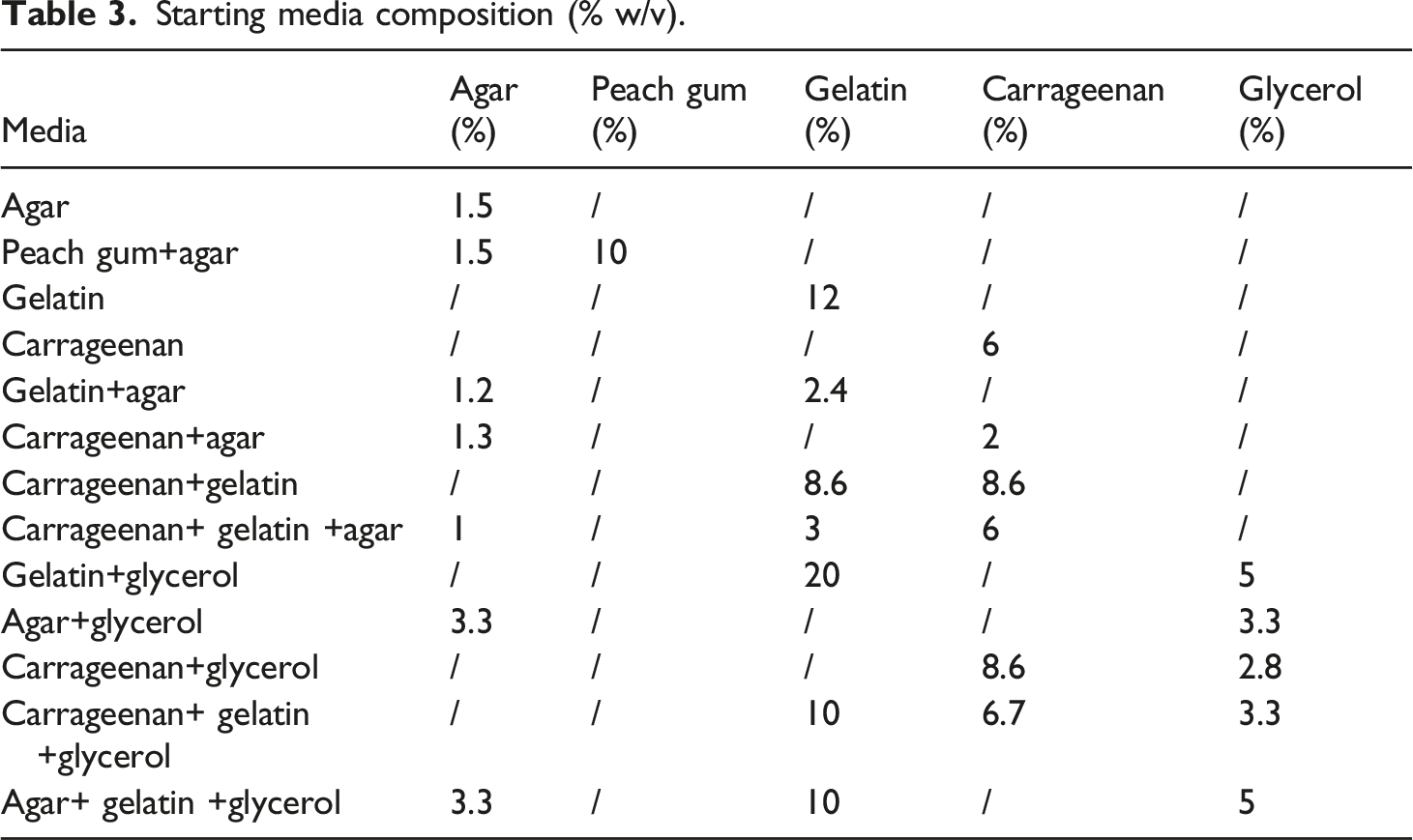
Starting media composition (% w/v).
Optimal media composition (% w/v).

Bio-leather mechanical testing
To validate bio-leather’s mechanical properties, Shore A hardness tester was used.
Production of media-based garments and shoes for sustained plasmodium growth (“bio-leather”)
Jacket
Optimal agar + gelatin + glycerol media was prepared as described in previous section at 1050 mL total volume. For colored media fabrics, optimal gelatin + glycerol media or agar + glycerol media were prepared as described in previous section at 800 mL or 1000 mL total volume, respectively. During final boiling step, 10–20 mL of rice vinegar was added and continued heating for 10 min. The solutions were poured into a 53.0*32.5*6.5 cm acrylic box and let it completely solidify for 1 day. Then, the media was removed from the box and placed on drying nets to air dry for 4–5 days. It took about 24–32 pieces to make one jacket.
Shoes
Optimal gelatin + glycerol media was prepared as described in previous section at 1000 mL total volume and processed for fabric production as described for jacket. It took about 2–4 pieces to make a pair of shoes. The shoes were made using a standard shoe manufacturing method in shoe factory Hangzhou Jiazhuo Trading Co. Briefly, the bio-leather is cut to the required size and then hand-laid onto a shoe last and shaped with hot air. Steel nails were used to fix the leather in the sole part of the shoe and finally, the sole is fitted. Then, the shoes were placed in the Sopu BOD biochemical slime mold incubator and incubated at 30°C and 80% rh. The power was turned off after 2 h of incubation and let rest for 2-3 h. Then, the plasmodium patches of 3 ± 1.5 cm*4 ± 1-cm area were placed on the shoe surface and incubated at 25°C and 40% rh for 1-2 days until the plasmodium fully covered the shoes (Figure 1C). Bio-leather production and manufacturing scheme. A) Preparation of nutritious media from environmentally friendly gelling agents and food-grade ingredients in water and sustained growth of plasmodium. B) Production of fabric sheets made from air-dried media and plasmodium for clothing and footwear. C) Clothes and shoes made from sustainable bio-leather.
Results and discussion
P. polycephalum is a robust organism that can be easily grown in non-sterile and contaminated environment
First, we validated plasmodium P. polycephalum growth and viability in non-sterile lab settings to investigate its potential for simple and scalable fabric production. The yellow P. polycephalum patch inoculated on a wet filter paper showed propagation over the filter paper and outwards to the glass Petri dish bottom within hours (Figure 2A, B). It grew in dark on broad ambient temperature which varied from 15°C to 30°C and the rh around 40%. Appearance of fungal or bacterial contamination was not observed. Next, we investigated how placement of nutrients affects plasmodium’s growth and propagation. We placed oatmeal near the plasmodium’s pseudopodia and observed its growth. In the presence of oatmeal, plasmodium preferably grew towards the oatmeal and the culture was denser in oatmeal proximity compared to pseudopodia not in direct contact with the nutrient source (Figure 2C). Further on, large surface areas of a material are needed for production of fabrics, so we wanted to investigate if separately cultured plasmodia can be merged into a larger confluent culture. Indeed, plasmodia grown in three separate dishes once placed in proximity in a single dish spread towards each other within 1-2 days and created a single confluent patch (Figure 2D). These results showed that plasmodium can be simply grown with minimal nutritive requirements in non-sterile conditions without significant cross-contamination by ambient microbes. Lastly, plasmodium patches grown independently can be merged into a larger patch by placing and growing individual patches in proximity. Inoculation, growth and feeding of P. polycephalum. A) P. polycephalum seed culture placed on a wet filter paper in the middle of a Petri dish. B) A yellow-veined mass of protoplasm started appearing after 3–15-h of undisturbed incubation. C) P. polycephalum fed with oatmeal grew over the food source and grew denser compared to pseudopodia not in direct contact with oatmeal. D) Three separately grown patches of P. polycephalum from C) were put proximally on the same dish and after 1-2 days of incubation the patches merged together.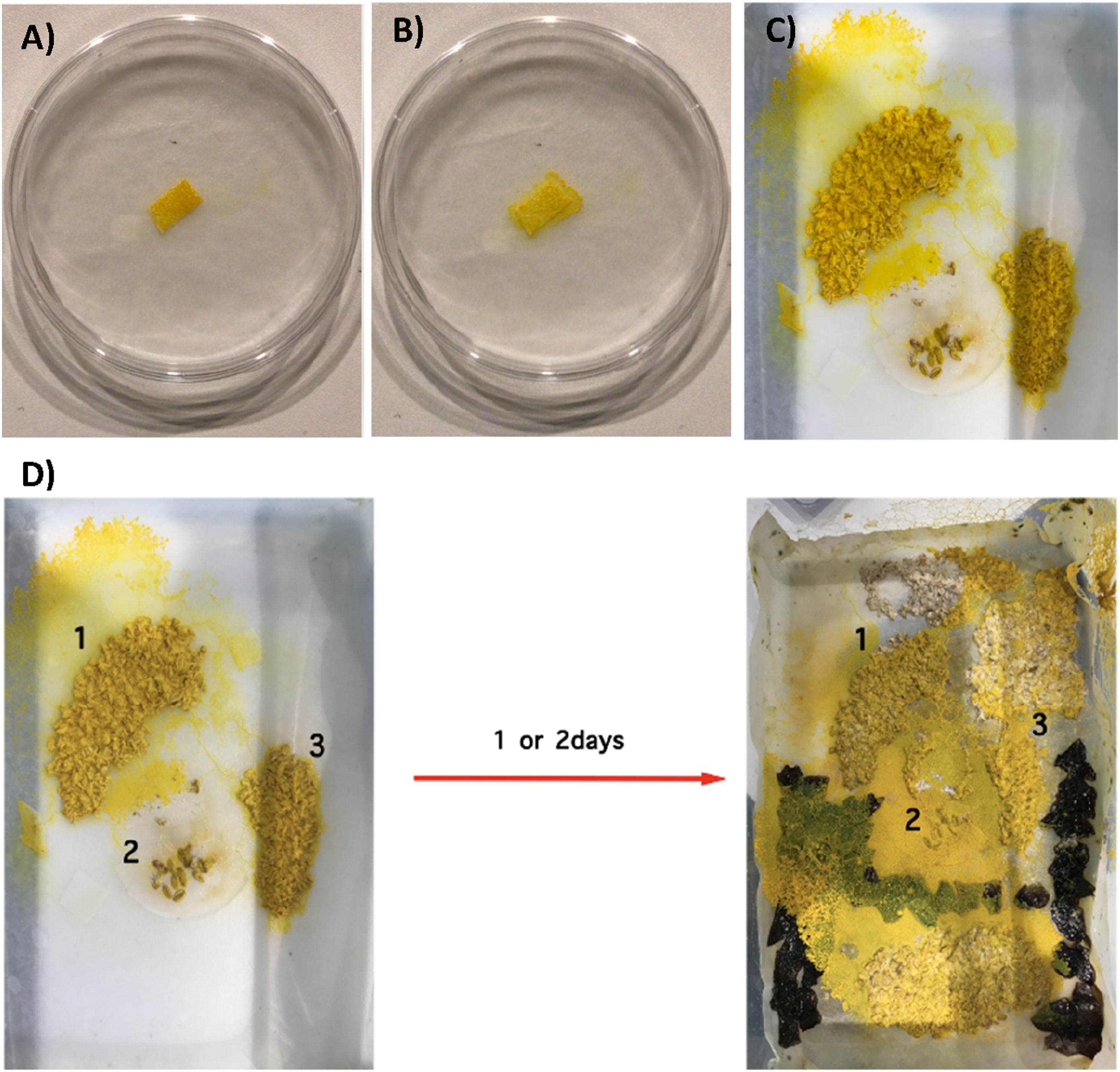
To further investigate the robustness of plasmodium’s growth in contaminated environment, we co-incubated the plasmodium with added mold or mushroom on filter paper (Figure 3A). For mold validation, plasmodium was incubated on either mold-soaked or sterile filter paper and its growth compared to plasmodium incubated on a plain filter paper. The plasmodium under all three conditions grew uniformly without significant differences in appearance and growth rate. Oatmeal was placed proximally to inoculated plasmodium which preferably propagated towards and over the oatmeal by incubation day 2. On Day 6, plasmodium was additionally fed with more oatmeal and the mold filter paper developed black mold contamination, while plain and sterile filter papers did not demonstrate visible growth of contaminants. Despite black mold presence, plasmodium did not show hindered growth and the mold did not grow over the plasmodium. By incubation day 8, plasmodium almost fully covered plain and mold filter paper and readily grew over filter paper area covered in mold and engulfed it. Plasmodium continued propagating by incubation day 10 under all three conditions and it fully overgrew over any contaminating molds. Plasmodium growth and propagation were not adversely affected by mold contamination. Next, we validated plasmodium growth when co-cultured with mold (Figure 3B). We inoculated plasmodium patch and oatmeal with proximally placed large pieces of mushroom and co-incubated them. By day 5, white mold and yeast propagated over the plate, while the plasmodium was not affected by contamination propagation. The plasmodium utilized both contaminating mold and the mushroom as nutrients. By day 9 the plasmodium spread over the inoculated mushroom, as well as mold and yeast contamination. Finally, by incubation day 15 the plasmodium fully grew over the contaminants engulfing them. The inoculated fungus was not significantly degraded or engulfed by the plasmodium, but it was readily utilized by the plasmodium as a nutritious surface. With these results, we showed that plasmodium can robustly grow under non-sterile and various contaminating environments without compromising its growth rate or structural integrity. Plasmodium robustly grows despite mold and mushroom contamination. A) Day 1: Plasmodium grown on plain, inoculated with mold or inoculated by sterile filter paper. Day 2: Plasmodia reached and grew over oatmeal randomly placed on filter papers. Day 4: Mold appeared on Plain and Mold filter papers, but plasmodium growth and propagation was not affected. Day 6: Additional oatmeal was added and the mold continued to expand on plain and mold filter paper. Day 8: Plasmodium fully covered plain and mold filter papers and engulfed mold contamination. Day 10: Plasmodium on all three filter papers showed comparable culture density and health. B) Day 1: Plasmodium inoculated on filter paper with oatmeal and fungus. Day 5: Yeast contamination emerged (circled) and represented the majority of filter paper culture. Day 9: Plasmodium grew over and engulfed yeast and fungus. Day 15: Plasmodium further grew and engulfed yeast and mold contamination. The fungus was not fully engulfed and it preserved its texture.
P. polycephalum can utilize various nutrients for sustained growth
Next, we tested different nutrient sources to see the scope of food variety which can be used to feed the plasmodium (Figure 4). We co-incubated plasmodium with oatmeal, wood ear mushroom, enoki mushroom and agar. Plasmodium readily grew over and extended its pseudopodia over these food items showing the versatility in nutrient selection. However, when plasmodium was introduced to a chunk of raw beef, the pseudopodia radially avoided beef proximity. The reason for that could be high electrolyte and nutritional contents in red meat which lead to unfavorable osmotic pressure. Previous studies showed that P. polycephalum was capable of directionally growing towards a nutrient source with optimal carbohydrate:protein ratio and total nutrient concentration. Dussutour et al. demonstrated that nutritionally starved plasmodium selectively extends its pseudopodia towards nutritional source of carbohydrate:protein ratio 2:1 when given multiple-choice nutrition offers on the same dish.
12
Moreover, total nutrient concentration affected plasmodium growth density with lower nutrient density yielding thinner and more extensive pseudopodia, while high nutrient density led to more compact plasmodium growth.
12
This kind of computational ability is rare among single-celled organisms and this capability can be exploited for modulating plasmodium morphology for different fabric properties. Plasmodium prefers oats, fungus, mushrooms and agar, while it avoids beef. Plasmodium was co-incubated with various food items for 2-3 days and showed preference for oats, fungi and agar by readily growing around and over them. Plasmodium avoided beef cube.
P. polycephalum can find nutrient source in a maze and remembers and avoids unsuccessful paths
To determine plasmodium’s ability to actively sustain its growth by seeking out nutrient sources, we conducted a maze experiment, where the plasmodium is challenged to search for an oat flake through an elaborate labyrinth (Figure 5). The plasmodium was placed in the middle of the maze, while the oat flakes were put on two distant locations and the maze had multiple dead-end pathways. The plasmodium was uniformly spreading from the middle of the maze and explored all immediate pathways. As the plasmodium reached closest dead ends, it continued further exploring correct directions towards the oats. The plasmodium retracted from unsuccessful paths as it can be seen from Day 1-6, Day 2-1, and Day 2-2. Once plasmodium learnt that the lower end of the left inner side was a dead end, it retreated and propagated upwards for a new route, and the left inner side was a route that it never repeated. Despite plasmodium’s main body retraction, pseudopodia network remains in the already taken pathways, which enables plasmodium to “memorize” which paths it took and whether they were closer to the food source. All the inside error routes it has travelled were not repeated. The routes explored towards the outside, although the correct route was not explored all at once it “remembered” which was the correct route and it would repeat that correct route a second time, thus eventually finding the food. Although on Day 2-3 it turned immediately to the left after briefly sampling the right route without success, and even though it did not reach the bottom of the outermost left side the first time, it “remembered” that this was the correct route and went on to explore the outermost right side. Similarly, although it did not reach the bottom of the right outermost side the first time, it “remembered” that this was the correct route, but then incorrectly turned to the left inner route to continue exploration. However, on Day 3-1, it found food directly on the right outermost side, since it “remembered” from previous days that this was the correct route. The same can be seen on Day 4-2, and Day 4-4, where it relied on the memory of its previous exploration of the left outer side and took the fastest route directly to the bottom of the left outer side to find the food. This experiment demonstrated plasmodium’s ability to memorize paths taken in search of nutrients. This ability was confirmed in previous studies. Nakagaki et al. showed that the plasmodium could search through a maze and create pseudopodia that make shortest distance between nutrient sources, while pseudopodia reaching dead ends shrank.
11
Further on, plasmodium’s behavior was interpreted through computation, where numerical simulations mimicked plasmodium’s search through the maze through chemo-attractant propagation.14,15 Plasmodium can further be used to aid in the development of computers or combined with artificial intelligence to explore further possibilities. For example, signals passed between plasmodium colonies or their regular pulsations can be extracted for data programming,16,17 or for controlling their output behavior through engineered biosensors in conjunction with fabrics, environmental cues, or robotics.18,19 With our results, we explored the possibility of plasmodium’s utilization as a responsive and programable living component for smart fabrics. Plasmodium finds the correct path in a maze towards a food source. Column numbers (1-6) represent 4th, 8th, 12th, 16th, 20th and 24th hour in the row’s day, respectively. Day 1: Plasmodium uniformly grew in all three available directions. Day 2: Plasmodium stopped propagation in two bottom passages which were not correct paths towards the oatmeal. Plasmodium continued propagating through top passage, where upon reaching intersection, it took both top and bottom direction. Day 3: After unsuccessful exploration of the inner path, plasmodium managed to find the oatmeal in the bottom right path. Day 4: Plasmodium memorized all the previously explored paths and determined the shortest path to find the oatmeal below the outer left path.
Agar-infused fabrics can sustain P. polycephalum growth
Next, we investigated how plasmodium grew on different fabrics which can be used for clothing and footwear manufacturing (Figure 6). We selected linen:rayon, cotton, double cotton and silk as representative fabrics. Plasmodium did not grow when inoculated on dry fabric alone (data not shown). Therefore, to provide minimal growth conditions, we layered water-wetted fabric with a patch of plasmodium inoculated in the middle with plain agar media. As such, plasmodium showed robust growth and propagation throughout all tested agar-infused fabrics and reaching confluency by day 11. On day 5, oatmeal was added for supplemental nutrition to further support plasmodium growth. On agar media alone, mushroom was added upon plasmodium inoculation as a food source. Upon mushroom removal after day 5, plasmodium could still grow to confluency by day 11. Fabrics incubation with agar and plasmodium developed mold contamination, most strongly on linen:rayon. With these results we confirmed that agar is a minimal nutritive requirement needed for plasmodium growth, so we further explored agar’s potential as a plasmodium-sustaining fabric without utilizing conventional fabrics tested herein. We proceeded with this strategy in order to eliminate the reliance on conventional fabrics, enhancing the environmental sustainability of our materials. Plasmodium grows on agar-infused fabrics. Linen:rayon, cotton, double cotton or silk fabrics infused with agar and plasmodium inoculated in between. Control agar was inoculated with mushroom. Day 1-3: Plasmodium perfuses and grows over the fabrics and agar media. Day 5: Oatmeal was added as supplemental nutrient source while plasmodium grew and spread. Day 8: Plasmodium covered the food, leaving a network of feeding trails on the fabrics. The fungus in the agar medium was removed, but the plasmodium grew. Day 11: the oatmeal on the fabrics was consumed and mold grew on the fabrics. In the absence of a new food supply, plasmodium gradually died.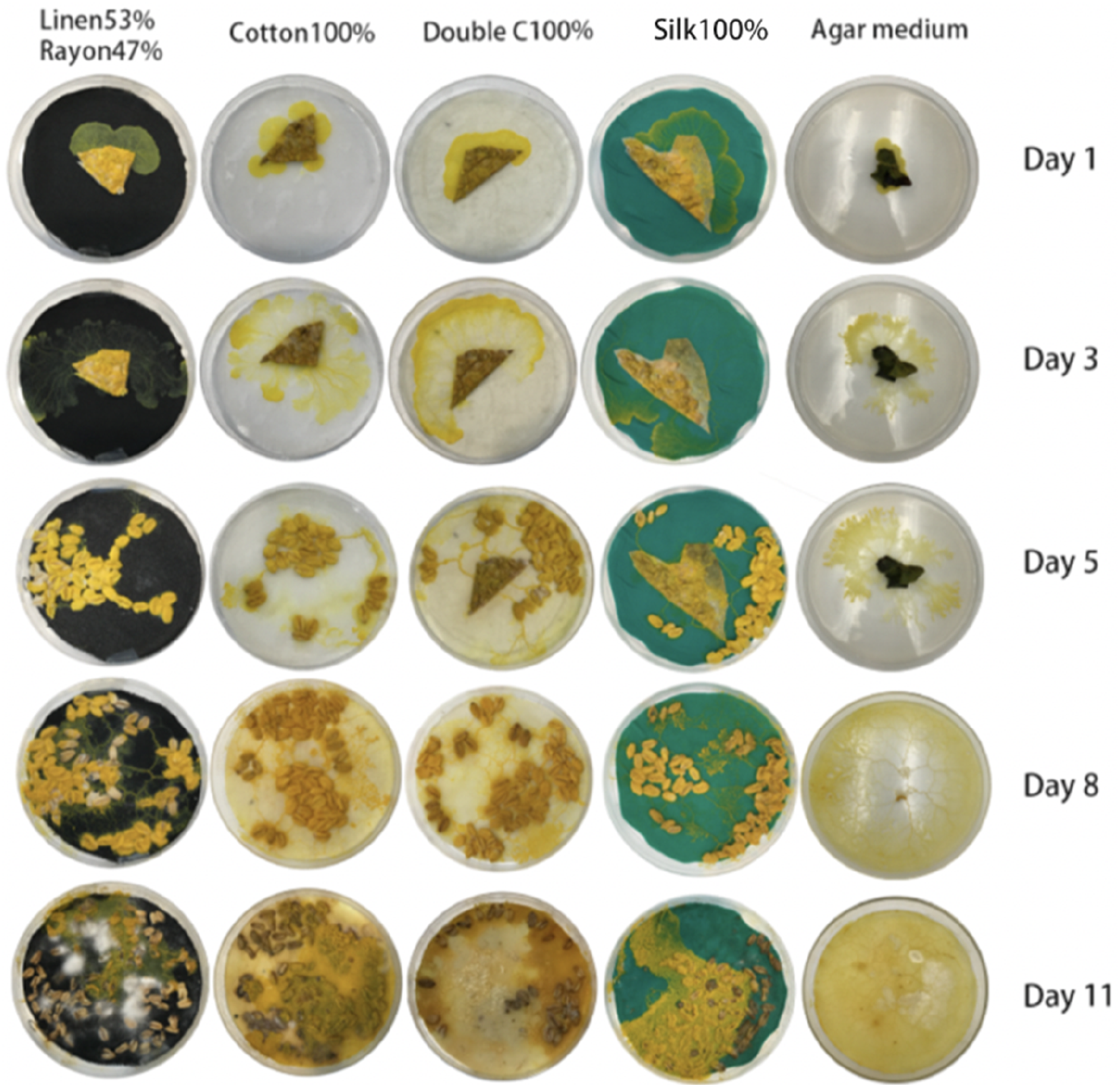
Agar with gelling supplementation and glycerol yields malleable sheets of fabric that support plasmodium growth
Gelling supplementation and glycerol yield media suitable for plasmodium growth and production of durable fabrics.


Bio-leather can be used for leather-like garment and shoe production
Finally, we implemented air-dried optimal media with inoculated plasmodium as fabric sheets for wearable clothes and footwear production (Figure 7). First, we upscaled media preparation to about one-L batches boiled and poured into 53*32.5*6.5 cm acrylic boxes for cooling and solidification. At that point, plasmodium can be inoculated and incubated until confluency in order to perfuse the media (Table 5). Afterwards, solidified media with or without plasmodium is taken out of the acrylic box and let to air-dry for 4-5 days (Figure 7A). Resulting material formed large flexible sheets which can be stacked, hung and archived without sticking together (Figure 4B). Depending on the amount of different gelling agents (Table 4), bio-leather fabrics can be made with different thickness, softness and stiffness. Also, by adding dark vinegar during boiling step, fabric sheets can have different colors (Figure 7C). Next, by using bio-leather fabric sheets made from optimal agar + gelatin + glycerol media, we sewed together a long-sleeved un-dyed jacket (Figure 7D) and jacket dyed with vinegar (Figure 7E). The bio-leather sheets were easy to handle and sew on a standard sewing machine. Further on, we went to manufacture footwear using our bio-leather fabric sheets. For that, we collaborated with a shoe factory which provided standard shoe-making instruments and expertise (Figure 7F). The bio-leather sheets without plasmodium were cut to appropriate size and shaped using hot air. Such fabric was then fitted and fixed to sole using steel nails. In order to perfuse the shoes with plasmodium, the shoes were primed in order to sustain plasmodium growth by placing them in Sopu BOD biochemical slime mold incubator and incubated at 30°C and 80% rh, so to regain some moisture (Figure 7G). Then, the plasmodium patches were inoculated on the shoe surface and incubated at 25°C and 40% rh until the plasmodium fully covered the shoes. The resulting clothes and footwear were sturdy and comfortable for wearing with intricate color and pattern design due to plasmodium propagation throughout the fabric (Figure 1C). With these results, we demonstrated that simple gelling agents and food-grade ingredients which are easily and cheaply purchased and boiled in water can be used for sustainable fabric production with leather-like properties and they can be additionally inoculated with plasmodium which robustly grows on such biomaterials and adds to fabrics design and properties. Living plasmodium can be continuously reused and re-inoculated to permeate newly manufactured agar-based fabrics. It can thrive on the fabric for an extended period by consuming components of the fabric, such as agar and gelatin. Over time, the plasmodium will perish due to drying and nutrient depletion. Nonetheless, the fabric remains usable and functional until it begins to biodegrade. Production of bio-leather clothes and footwear from air-dried media sheets inoculated with plasmodium. A) Boiled and cooled optimal agar + gelatin + glycerol media solution. B) The air-dried biomaterial is flexible with texture similar to soft cowhide leather. C) Bio-leather archive with fabric sheets made from different optimal media (without plasmodium) and dyed with vinegar for darker color. D) Casual top made from bio-leather. E) Suit made from bio-leather dyed with vinegar. F) Bio-leather shoes (optimal gelatin + glycerol media) produced in collaboration with a shoe factory. G) Sopu BOD biochemical slime mold incubator for optimal plasmodium growth on bio-leather shoes.
Conclusion
In this work, we demonstrated the use of plasmodium-perfused fabric sheets (bio-leather) made from simple gelling agents and glycerol dissolved in water for clothing and footwear production. Having validated plasmodium growth on media containing different gelling agents, we determined that agar, gelatin, and glycerol provided the best-performing fabric sheets with tunable stiffness, flexibility, and durability based on the optimal amount of each component. We showed that plasmodium can grow robustly on non-sterile media without being affected by contamination, such as mold. We also confirmed plasmodium’s remarkable ability to seek out nutrients through a maze and remember wrong paths, which could have broader implications in plasmodium’s utilization in fabric production. Plasmodium can act as a living, responsive element within the fabrics until it exhausts its nutrients and dies. Like all living biomaterials, its functionality will depend on the viability of the living component. However, in our bio-leather, the inherent fabric qualities—such as sturdiness, flexibility, and durability—persist even after the plasmodium’s living functionality ceases, hence prolonging material’s overall usage after plasmodium’s death. The findings of this study provide a basis for further development of environmentally friendly bio-leather in order to mitigate harmful global impacts of the conventional textile industry. More broadly, problem-solving plasmodium utilization into wearable fabrics can yield clothing with novel functionalities and properties, such as environmental and wearer biosensing, fabric self-repair, or communication between distant fabric parts.
Footnotes
Acknowledgments
We thank employees from Hangzhou Jiazhuo Trading Co for the help with shoe manufacturing, photographer Yifan Qian and model Fei for realizing photography for Figure 1. Generative AI ChatGPT 4 was used for language polishing.
Author contribution
Z. B. conceived the project idea, executed all experiments and analyzed all data. T. C. wrote the manuscript.
Declaration of conflicting interests
The author(s) declared the following potential conflicts of interest with respect to the research, authorship, and/or publication of this article: A patent application no. 2023115939825 was filed 2024 Jan naming Z. B. as an inventor.
Funding
The author(s) received no financial support for the research, authorship, and/or publication of this article.

Data availability statement
Raw data and materials can be provided upon reasonable request.