




Abstract
This study investigates the performance degradation and prediction of polyvinylidene fluoride (PVDF) membrane materials under natural aging conditions (2 MPa prestress) and artificially accelerated aging conditions. Initially, the tensile strength, elongation at break, elastic modulus, tear strength, and apparent properties (transmittance, reflectivity, and conjugated double bond absorption area) of the membrane material were measured through uniaxial tensile testing, trapezoidal tear testing, and ultraviolet (UV) testing. These measurement results were then compared and analyzed in relation to tear strength and apparent properties under artificially accelerated aging conditions. The results indicate that UV irradiation and 2 MPa prestress play a crucial role in the degradation of PVDF membrane material properties. Finally, an enhanced Arrhenius equation, accounting for the triple effects of irradiation, oxygen pressure, and temperature, and Schwarzschild’s law, were employed to establish a correlation between natural (2 MPa prestress) and artificially accelerated aging performance of PVDF. The results demonstrate that the enhanced Arrhenius equation provides a more accurate prediction compared to Schwarzschild’s law.
Keywords
Introduction
Membrane structural materials offer advantages such as light weight, attractive appearance, short construction period; thus, they are used extensively in public facilities such as sports stadiums, airports, and shopping malls.1–3 Membrane materials are mainly classified into thermoplastic and fabric membranes. 4 Coated fabric membrane materials, particularly those with polyvinyl chloride (PVC) and polyvinylidene fluoride (PVDF) coatings, are widely used because of their high strength-to-weight ratio, good flexibility and inexpensive. PVDF membrane materials possess superior self-cleaning and durability properties compared with PVC membranes; as such, they are widely used in membrane structure engineering. 5 Because the safety and durability of membrane structures are determined by the membrane materials, investigations into the membrane material properties are critical for the design and practical application of membrane structures.5–7
In membrane structural engineering, membrane structures interact directly with the environment and are thus exposed to conditions such as ultraviolet (UV) radiation, temperature, and humidity, which can significantly affect their mechanical performance. 8 Luís et al. 9 discovered that the tensile strength of PVC membrane materials decreased by 15% after natural aging for 90 days in Portugal. Yang et al. 10 investigated changes in the mechanical properties of PVDF membrane materials used in engineering applications and conducted a reliability analysis. They discovered that the mechanical properties of PVDF membrane materials decreased as their service life extended and speculated that prestress was the main factor contributing to the degradation in membrane material reliability. Asadi et al. 11 investigated the effects of UV radiation, humidity, and temperature on the tensile strength of PVC membranes. Their results showed that UV radiation exerted the most significant detrimental effect on the tensile strength of the membrane material, followed by humidity or temperature.
To analyze the changes in the performance of membrane materials, researchers have primarily conducted atmospheric natural and artificially accelerated aging tests. Atmospheric natural aging tests are more similar to the actual usage conditions of membrane materials but require long test durations and incur high costs. Meanwhile, artificially accelerated aging tests enhance the natural exposure conditions via the control of factors such as radiation, temperature, and humidity, thereby shortening the testing period. Furthermore, they allow for a more rapid and cost-effective evaluation of performance changes in membrane materials. 12 The aging mechanisms of PVDF membrane materials are similar under both natural and artificially accelerated aging conditions. This is because the intensity of UV radiation and temperature can disintegrate the coating molecular chains. High temperatures can cause yarn expansion and rupture, thereby degrading the mechanical properties of the membrane materials.13,14 However, the artificially accelerated test environment differs from the actual aging conditions. The use of performance test results from artificially accelerated aging tests to extrapolate natural aging outcomes is questionable; thus, further investigations are warranted to determine the correlation between artificially accelerated and natural aging.
Studies pertaining to the correlation between the natural and artificially accelerated aging of PVDF membrane materials are scarce. However, researchers have conducted similar studies for other polymer materials and believe that the key to predicting the lifespan of polymer materials is to establish a correlation between natural and artificially accelerated aging performance using mathematical models.15–17 To establish a correlation between the natural aging and artificially accelerated aging performances of membrane materials, researchers have employed Schwarzschild’s law and the Arrhenius equation. The reciprocity law suggests that the photo-oxidative aging of materials is solely dependent on the total absorbed radiant energy and independent of the radiation intensity and exposure time. 18 Baker et al. 19 discovered that under the same cumulative UV radiation energy, the performance of polypropylene geotextiles obtained from artificial accelerated aging tests was equivalent to that of geotextiles aged naturally in the atmosphere. Astronomer Schwarzschild introduced a constant “p” to modify the reciprocity law, thus resulting in Schwarzschild’s law. Schwarzschild’s law is written as IPt = constant, which becomes the reciprocity law when p = 1. When the product of the pth power of the UV radiation intensity and aging time is equal, the aging effect of the materials is the same under different radiation intensity conditions. The value of p is determined based on the test materials and experimental conditions. 20 Yang et al. 21 discovered that the residual tensile strengths from accelerated aging and natural aging can be mutually converted using Schwarzschild’s law and that they correlated well with each other.
The Arrhenius equation was initially used to describe the relationship between temperature and the chemical reaction rate of materials at different temperatures. 22 The Arrhenius equation and its modified forms are the basis for predicting the lifespans of polymer materials.14–17 Zhurkov et al. proposed an enhanced Arrhenius equation to consider the effects of stress on the rate of thermal-oxidative aging. 22 Lv et al. 12 proposed an enhanced three-parameter Arrhenius equation by considering the effects of temperature, radiation, and oxygen pressure, which correlated the outdoor exposure aging behavior of isotactic polypropylene (iPP) with indoor accelerated aging behavior. They predicted the outdoor-exposure aging performance of iPP and compared it with their experimental results, which showed good agreement. Depending on the location of outdoor exposure (natural aging conditions), the rate of indoor-accelerated aging was shown to be 8–30 times faster than that of outdoor-exposure aging.
Although extensive studies have been conducted on the performance variations of PVDF membrane materials under natural aging and artificially accelerated aging conditions, simultaneously considering the effect of low-stress (2 MPa) and natural aging conditions on the aging performance of the materials remains challenging. Additionally, the prediction of the natural aging performance of PVDF membrane materials, particularly when considering multiple factors such as oxygen, remains limited. Therefore, the main objective of this study is to investigate the artificially accelerated and natural aging performance of PVDF membrane materials in non-prestressed and 2 MPa prestressed groups. This involves comparing their degradation performance and establishing their correlation under various aging conditions. To achieve this, natural aging tests are conducted in Qionghai, which represents the typical warm and humid climate of China, for the two groups mentioned above.
Subsequently, through uniaxial tensile testing, trapezoidal tear testing, and apparent property (UV) testing, the tensile strength, elongation at break, elastic modulus, tear strength, and apparent properties (light transmittance, reflectivtiy, and conjugated double-bond absorbance area) of the membrane material were measured. These measurements were then compared with tear strength and apparent properties under artificially accelerated aging conditions. The study investigates the impact of aging time (UV irradiation) and stress on the mechanical and microstructural properties of the membrane material. Finally, using Schwarzschild’s law, which considers only the influence of UV radiation, and an enhanced Arrhenius equation that accounts for the combined effects of oxygen pressure, radiation, and temperature, a correlation was established between the natural and artificially accelerated aging performance. This correlation can predict the time required for the membrane material to reach a certain level of aging under different aging conditions. This research provides valuable insights for establishing a predictive model of the material properties under various aging conditions.
Experimental method
Test materials
Performance indicators of test membrane materials.

Aging test
In this study, natural aging tests in were conducted in accordance with the GB/T 3681-2000 “Plastics - Methods of Exposure to Atmospheric Environment”
23
standard. Owing to the typical tropical and subtropical climate in Qionghai, Hainan Province, China, which is characterized by abundant rainfall, intense sunlight, and long sunshine hours, all of which accelerate the aging of polymer materials, the PVDF membrane samples were placed in an atmospheric exposure aging test field at the National Key Laboratory of Industrial Product Environmental Adaptability of the China National Electric Apparatus Research Institute located in Qionghai (Figure 1). The climatic characteristics of the PVDF membrane exposure fields are presented in Table 2. PVDF membrane samples undergoing natural aging test. (a) Non prestress group (b) 2 MPa prestress group. Climate characteristics data for Qionghai. E is the east longitude, N the north latitude, 

According to the European Tensile Membrane Structure Design Guidelines for PVC-coated polyester fiber membrane structures, the prestress values in the warp and weft directions must not be less than 1.3% of the strip tensile strength. 24 Therefore, a prestress value of 2 MPa is specified for the PVDF membrane material of the prestressed group in this study. The membrane materials were categorized into the natural aging group and 2 MPa prestressed group, with natural aging periods of 0, 2, 4, 8, and 12 months.
In this study, a UV accelerated aging test machine (QUV, Q-Lab, USA) was used in accordance with the current national standards, i.e., “Textiles-Resistance to Weathering-Exposure to Ultraviolet Radiation Test Method” (GB-T31899-2015) 25 for the artificially accelerated aging tests. PVDF membrane specimens were subjected to UV radiation at 340 nm (irradiance of 0.89 W/m2) for 8 h at a blackboard temperature of 60°C, followed by 4 h of condensation at a blackboard temperature of 50°C, and each test cycle lasted 12 h. The durations of the artificially accelerated aging test were 0, 96, 192, 384, 576, 768, and 960 h.
Mechanical property testing and UV spectroscopy testing
After conducting natural and artificially accelerated aging tests on the PVDF membrane, a uniaxial tensile test (Figure 2(a)) and a trapezoidal tear test (Figure 2(b)) were performed using a SANS-CMT4204 microcomputer-controlled electronic universal test machine from Tongji University in accordance with the “Membrane Structure Inspection Standard” (DG/TJ08-2019-2019) of the Engineering Construction Specification of Shanghai, China.
26
Mechanical test sample size. (a) Uniaxial tensile specimen size (mm) (b) trapezoidal tear specimen size (mm).
The membrane samples were subjected to UV–visible near-infrared spectrophotometry using a U-4100 spectrophotometer equipped with an integrating sphere accessory to examine changes in the transmittance, reflectivity, and absorbance of the membrane samples after aging.
Results and discussions
Tensile strength
The tensile strength of the membrane material refers to the material’s ability to maintain a certain level of tensile strength after experiencing a certain degree of aging, damage, or exposure to external environmental conditions. The elongation at break reflects the ultimate deformation capacity of the material and is an important indicator of its toughness. These performance indicators are typically used to assess the long-term durability and resistance of the materials to aging.
The tensile strength and elongation at break of the PVDF membrane material after natural aging, along with the corresponding standard deviations of the experimental data, are presented in Figures 3 and 4. As shown in Figures 3 and 4, the tensile strength and elongation at break of the PVDF membrane material decreased gradually during the natural aging period of 0–12 months, which corresponded to UV radiation energies ranging from 43165 to 252038 kJ/m2. Aging of the PVDF membrane material resulted in relaxation hardening, which reduced its elongation at break. However, the decrease in the tensile strength and elongation at break in the warp direction was greater than that in the weft direction. This is because the stretching curve of the warp yarn was larger during the membrane manufacturing process, and the weft yarn was curled excessively in the layered coating. The coating of the weft yarn was thinner and more susceptible to UV radiation, thus resulting in a greater decrease in its tensile strength compared with that of the warp yarn.27,28 Tensile strength of PVDF membranes after natural aging and standard deviation of test data. (a) Warp (b) weft. Elongation at break of PVDF membranes (with 2 MPa prestress) after natural aging and standard deviation of test data. (a) Warp (b) weft.
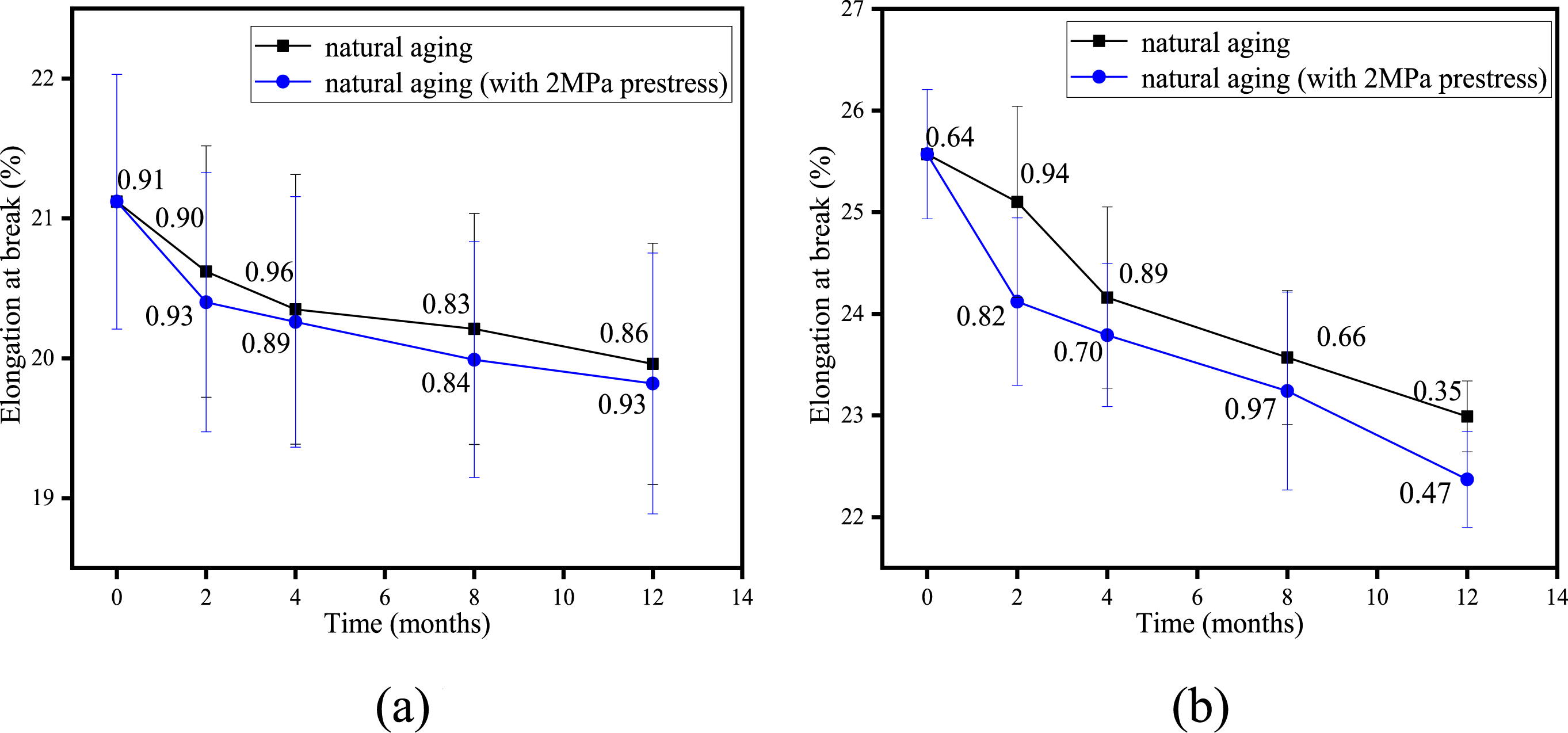
After 1 year of aging and exposure to 252038 kJ/m2 of UV radiation energy, the tensile strength in the warp and weft directions of the PVDF membrane materials and those under 2 MPa stress decreased by 12.65% and 14.14%, and 14.76% and 17.03%, respectively, compared with those of the new materials. The elongation at break in the warp and weft directions of the aged PVDF membrane materials decreased by 5.13% and 9.91%, and 5.8% and 12.42% (with 2 MPa prestress), respectively, compared with those of the new materials. Under the same aging time (accumulated radiation energy) of the PVDF membrane material, the tensile strength and elongation at break of the membrane material subjected to 2 MPa prestress decreased to a greater extent than those of the group without prestress. This is because the 2 MPa prestress exceeded the critical stress of the membrane materials, which increased the number of molecular chain fractures and artificially accelerated the degradation reaction, thus deteriorating the mechanical properties at the macroscopic level. This experimental phenomenon illustrates the effect of stress on the aging rate of the polymer materials and is consistent with the concept of critical stress proposed by Neto. 29
Stress–strain curve and modulus of elasticity
The stress–strain curves of the PVDF membrane materials obtained from the uniaxial tensile tests are shown in Figure 5. As shown in Figure 5, the stress and strain curves of the aged PVDF membrane materials decreased gradually compared with those of the new materials. Uniaxial stress–strain curves of PVDF membrane materials (with 2 MPa prestress) after natural aging. (a) Warp (b) weft (c) warp (with 2 MPa prestress) (d) weft (with 2 MPa prestress).
The PVDF membrane material exhibits anisotropic nonlinearity, viscoelasticity, and inelasticity.30–32 Meanwhile, a universally accepted method for calculating the elastic modulus does not exist. Therefore, four typical calculation methods are introduced herein, i.e., the integral modulus, tangent modulus, secant modulus, least-squares modulus, and standard deviation of each group test data as shown in Figure 6.
33
The integral modulus is a method to calculate the elastic modulus based on elastic modulus–strain analysis. It is expressed as follows: Four methods of obtaining elastic modulus.
33
(a) Tangent modulus, secant modulus, and least-squares modulus; (b) integral modulus.


The elastic modulus of the PVDF membrane was obtained using the four methods above to calculate the E values, as presented in Figure 7. After 1 year of aging, the tangent modulus, secant modulus, integral modulus, and least-squares modulus of the non-stress group and 2 MPa prestress PVDF membrane materials decreased compared with those before aging, as shown in Table 3. The decrease in the elastic modulus was greater for the membrane material subjected to 2 MPa prestress than for the material without prestress. Table 3 shows that the reduction in the elastic modulus (E value) of the weft yarn was greater than that of the warp yarn. This is because only the weft yarn in the membrane material was bent. During the initial stretching process, the weft yarn gradually straightened and supported the external tensile stress. During the stretching process, the membrane material experienced slippage between the coating and yarns, which reduced the protective level of the coating. This rendered the membrane material more susceptible to external environmental factors, which ultimately resulted in a greater reduction in the elastic modulus of the PVDF membrane material.
13
In this regard, the decline in the 2 MPa prestressed membrane materials was greater than that in the non-prestressed membrane materials. This is because long-term load effects were detrimental to the surface coating and consequently altered the curvature of the substrate. The combined effect of environmental factors and stress induced fatigue effects in the yarn, thus affecting the hardening effect of the material, accelerating the degradation of the elastic modulus, and ultimately resulting in the relaxation of the membrane structure.
34
Elastic modulus value of membrane material after aging and standard deviation of test data. (a) Warp (b) weft (c) warp (with 2 MPa prestress) (d) weft (with 2 MPa prestress). Reduction in elastic modulus after 1 year of membrane aging.
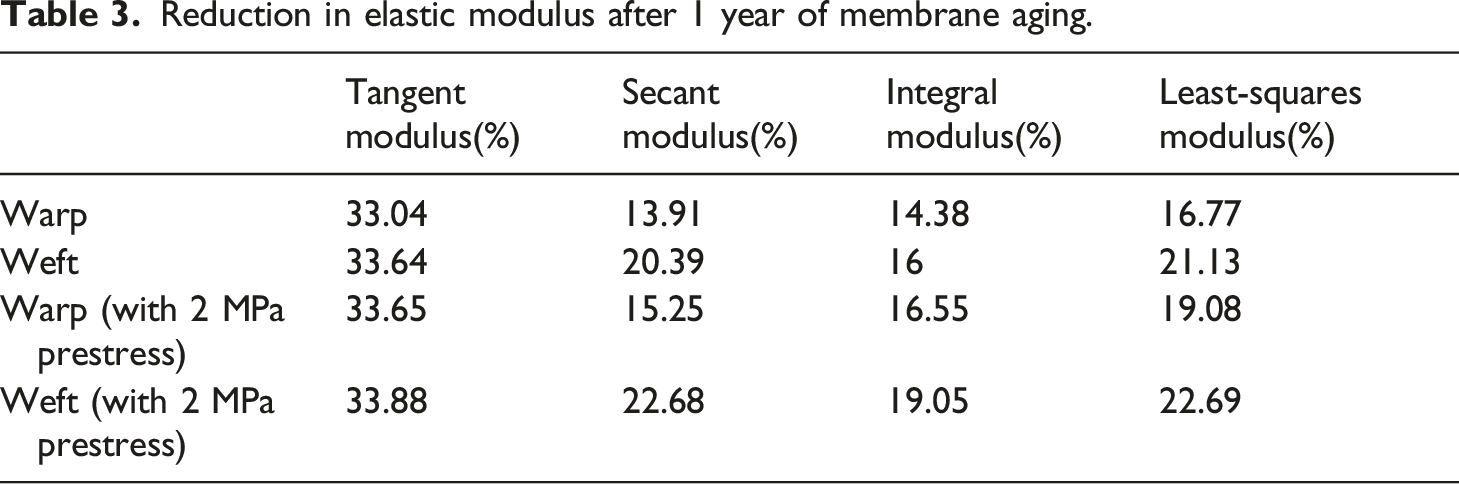
Among the four methods used for calculating the elastic modulus, the tangent method differed significantly from the other three methods. This is because the stress and strain changed significantly at the 1/8 point of the stress–strain curve of the PVDF membrane material. The integral method accurately describes the elastic modulus of the membrane under different deformations; however, in practical engineering, the elastic modulus of the membrane mainly depends on the linear approximation of the stress–strain stage. 33 The values of the tangent and least-squares moduli were lower than those of the other two calculated E values, and the results of the integral and secant moduli were relatively similar.
Tear strength
Tear strength is closely related to the installation and safety of membrane materials, and it is widely emphasized in the field of membrane structural engineering. It is an essential indicator for evaluating the performance of flexible composites, reflecting the membrane material’s resistance to localized stress concentration and damage.
13
Therefore, the effects of stress and irradiation energy on the tear strength of membrane materials were investigated in this study. Variations in the tear strengths of the PVDF membrane materials after natural and artificially aging and standard deviation of each group test data are shown in Figure 8. Tear strength of PVDF membrane after aging. (a) Natural aging (b) artificially accelerated aging.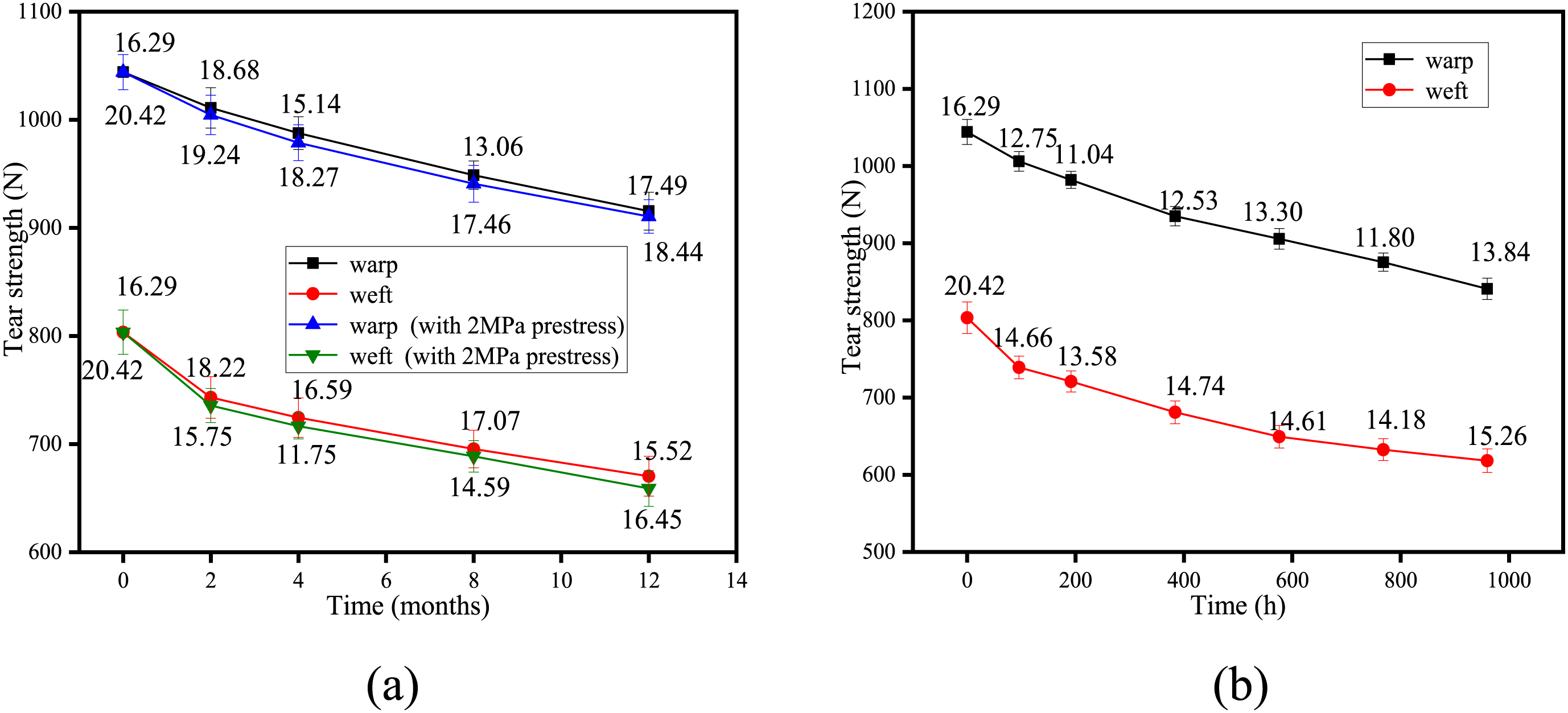
After 12 months of natural aging, the tear strengths in the warp and weft directions of the PVDF membrane materials in the non-prestress and 2 MPa prestress groups decreased by 12.23% and 16.58%, and 13.41% and 17.99%, respectively. After 960 h of artificially accelerated aging (UV irradiation energy of 111232.26 kJ/m2), the tear strength in the warp and weft directions of the membrane materials decreased by 19.46% and 23.07%, respectively. This is because stress and UV radiation increased in the number of broken molecular chains in the membrane material, thus accelerating the aging of the material molecules and deteriorating the tear performance of the PVDF membrane material. 35 Under artificially accelerated aging, the tear strength of the PVDF membrane material decreased consistently. This is because the environmental factors in artificially accelerated aging were mainly UV irradiation energy and temperature, which were more intense compared with those under natural conditions, 36 thus resulting in a greater decrease in tear strength in artificially accelerated aging than in natural aging.
UV spectroscopy analysis
UV light incident on the surface of the membrane material exhibited reflection, absorption, and transmission, as depicted in Figure 9. In this study, UV absorption spectroscopy was used to measure the transmittance, reflectivity, and absorbance of the PVDF membrane material after aging and to investigate the influence of stress and radiation on these properties. UV irradiation diagram.
57

Transmittance
To investigate the effects of different aging conditions on the light transmission of the membrane material, the PVDF membrane was subjected to natural aging and artificially accelerated aging tests, followed by a UV spectroscopy analysis of the aged materials, as shown in Figure 10. Owing to the PVDF membrane material, the transmittance was approximately zero in the UV light wavelength range (280–380 nm). The transmittance increased gradually from 380 nm onwards. The wavelength range of visible light in UV radiation is 380–780 nm.
37
As shown in Figure 10, the transmittance of the aged PVDF membrane material was approximately zero in the wavelength range of 380–400 nm, and the transmittance change in the range of 500–600 nm remained fixed. As the natural or artificially accelerated aging progressed, the light transmission spectrum of the aged membrane material decreased gradually compared with that of the new material. This is because, as the duration of use increased, the membrane material underwent aging owing to environmental factors such as UV radiation and temperature. The surface gradually became yellowish and darker, and the accumulation of dust and pollutants further reduced the transmittance of the material.
38
Transmittance of PVDF membrane after aging and standard deviation of test data. (a) Natural aging (b) natural aging (with 2 MPa prestress) (c) artificially accelerated aging.
After 12 months of aging for both the non-prestress and 2 MPa prestress groups (with a total UV irradiation energy of 252038 kJ/m2), the transmittance (average transmittance in the 380–780 nm range) decreased by 3.53% and 4.46% (compared with the new membrane), respectively. The decrease in transmittance of the 2 MPa prestress PVDF membrane material was greater than that of the non-prestress group, thus indicating that stress accelerated the aging of the PVDF membrane material at the micro level. After 960 h of artificially accelerated aging (with a UV irradiation energy of 111232.6 kJ/m2), the transmittance (380–780 nm) decreased by 7.01%, which exceeded the decrease after 12 months of natural aging.
After aging, the decrease in light transmittance of PVDF membranes is primarily attributed to two factors. Firstly, with aging time increasing, changes occur in the surface morphology and color of the material coating, resulting in surface roughness. This roughness causes incident light on the membrane surface to undergo diffuse reflection, leading to a decrease in both transmittance and reflectivity, but the absorbance increases. 39 Secondly, as aging progresses, the molecular chains of the membrane material break, and crystallization occurs, also contributing to a reduction in transmittance.36,40 The temperature and light intensity of natural aging are both lower than those of artificially accelerated aging. 36 High-intensity UV radiation can elevate the temperature in the test environment, and both UV radiation intensity and temperature can promote molecular chain breakage in the coating and substrate, causing the coating surface to yellow and darken, resulting in increased surface roughness of the membrane material.13,41–43 The crystalline products generated during natural aging are lower than those produced during artificially accelerated aging, hence resulting in a higher degree of reduction in light transmittance for artificially aged membrane materials.
Reflectivity
To assess the stability and weather resistance of the PVDF membrane material under different aging conditions, reflectance analysis was conducted on the PVDF membrane materials before and after aging, as shown in Figure 11. As presented in the Figure 11, the reflectivity of the aged PVDF membrane was extremely low in the UV wavelength range (280–380 nm), whereas the average reflectivity of the new membrane was only 5.65%. In the wavelength range of 380–415 nm, the reflectivity of the membrane increased significantly. The PVDF membrane material exhibited a reflection valley in the wavelength range of 500–700 nm. This is because the PVDF membrane material may exhibit distinct absorption peaks at specific wavelengths that correspond to the material’s absorption of light at specific wavelengths. Simultaneously, a reflection valley within the wavelength range that corresponds to the absorption peaks, where the reflectivity is lower. By contrast, the average reflectivity of the membrane in the visible light range (380–780 nm)
37
was higher, 88.56% at the maximum for the new membrane. As the aging time (UV irradiation energy) increased, the reflectivity of the membranes decreased gradually. Combining this with the results of transmittance, the transmittance in the UV wavelength range as well as the reflectivity were low; this indicates that most of the UV light energy was absorbed by the membrane, thus causing the membrane to age and its mechanical properties to degrade. Reflectivity of PVDF membrane after aging (380–780 nm). (a) Natural aging (b) natural aging (with 2 MPa prestress) (c) artificially accelerated aging.
As shown in Figure 11(a) and (b), the average reflectivity of the PVDF membranes in the prestress and non-prestress groups decreased by 21.64% and 22.76%, respectively, after 1 year of aging in the wavelength range of 380–780 nm. Meanwhile, Figure 11(a) and (b) show that in the wavelength range of 400–800 nm, the reflectivity images of the PVDF membrane material aged for 2 and 4 months differed significantly. This is because the accumulated radiant energy at 4 months of aging was 2.3 times that at 2 months of aging. After 960 h of artificially aging, their average reflectivity decreased by 24.57% under the same wavelength range. The average reflectivity of the PVDF membrane material in the UV light spectrum decreased more significantly during the artificially accelerated aging testing than after 12 months of natural aging.
The primary reason for the decrease in reflectivity of PVDF membrane material after aging is the presence of fluoropolymer in the coating, owing to its distinctive C-F structure, exhibits a higher mid-infrared emissivity. 44 During the aging process, PVDF membrane material generates substances such as F2 or HF, leading to a reduction in the C-F structures within the membrane and subsequently lowering its reflectance. 45 Natural aging conditions are generally milder than artificially accelerated aging, 46 resulting in a lower degree of defluorination during natural aging. Compared to natural aging, the reflectivity of PVDF membrane material decreases to a greater extent after artificially accelerated aging.
Absorbance
Changes in the absorbance of the PVDF membrane material before and after aging are shown in Figure 12. After natural and artificially accelerated aging, the absorbance spectra of the PVDF membrane material exhibited consistent trends, with no significant changes in shape and a relatively high absorbance in the UV wavelength range (Figure 12). Meanwhile, the absorbance decreased significantly in the range of 350–400 nm, and the absorbance in the visible light wavelength range remained unchanged at a lower value compared with that in the UV wavelength range, thereby indicating that the membrane material absorbed most of the UV radiation. As aging progressed, the absorbance of the membrane material at the same wavelength (400–600 nm) increased gradually. Absorbance of PVDF membrane after aging (380–780 nm). (a) Natural aging (b) natural aging (with 2 MPa prestress) (c) artificially accelerated aging.
Relationship between conjugated double-bond (C=C) length (n) and UV absorption wavelength. 38

As shown in Figure 13, after 12 months of natural aging, the absorbance of the PVDF membrane material in both the non-prestress and 2 MPa prestress groups increased by 88% and 92.3%, respectively, under n = 10, whereas it decreased by 9.3% and 9.9%, respectively, under n = 4. After 960 h of accelerated aging, the absorbance under n = 10 and n = 4 increased by 140% and decreased by 10.7%, respectively. As aging progressed time, the UV absorption in the range of 200–400 nm weakened, thus resulting in fewer aged membrane materials with broken conjugated double bonds formed (n = 4). As aging progressed in the UV range, the absorbance decreased gradually, thus indicating that the PVDF membrane material underwent degradation reactions during aging, thus resulting in the generation of numerous longer carbon chains with conjugated double bonds. This is because large molecules are sensitive to UV light, and the UV light energy absorbed by the membrane material exceeded the bond energy of the large molecular chain. The molecular chains disintegrated, thus resulting in material degradation, and degrading the mechanical properties of the PVDF membrane material.
38
Change in C=C conjugated sequence of PVC after aging and standard deviation of test data. (a) Natural aging (b) natural aging (with 2 MPa prestress) (c) artificially accelerated aging.
The Peak-fit software was used to perform a peak-fitting analysis on the UV absorption curves to analyze the changes in different lengths of C=C conjugated sequences with respect to the aging time. The results of this analysis, as presented in Figure 13, shows that as aging progressed, the absorption peak area of the C=C conjugated double bonds with n ≧ 8 increased gradually. This is because, as the cumulative UV irradiation energy increased, the degradation degree of the PVDF membrane materials gradually aggravated.
Additionally, the results indicate that the transmittance, absorbance, and conjugated double bond absorption area of the PVDF membrane material did not change significantly after 4 months and 2 months of aging. This is because aging may have caused the breakage or rearrangement of chemical bonds in the material, thereby affecting its optical properties. 48 This chemical degradation may change the absorbance and transmittance, although the change is typically not as pronounced as change in reflectance. After 1 year of natural aging, the reduction in the tensile strength, elastic modulus, and tear strength of the PVDF membrane with 2 MPa prestress was greater than that of the PVDF membrane without prestress. As aging progressed, the transmittance and reflectivity of visible light (380–780 nm) of the PVDF membrane decreased gradually, whereas the absorbance and absorbance area of the wave peaks of the conjugate double bonds with different lengths increased gradually increased, thus degrading the macroscopic mechanical properties of the membrane. Based on the changes observed in the mechanical properties of the PVDF membrane material and its apparent performance after 1 year of aging in the Qionghai and artificially accelerated aging tests, one may conclude that UV radiation intensity, temperature, and stress affected its aging performance.
Correlation between natural and artificially accelerated aging performances
To investigate the correlation between the performance of artificially accelerated aging and the performances of the 2 MPa prestressed and non-prestressed groups of PVDF membrane materials, the relationship between the performance of the PVDF membrane material under the two aging test conditions was examined using Schwarzschild’s law and the enhanced Arrhenius equation based on experimental data obtained from artificially accelerated and natural aging.
Tear strength prediction methods
Tear strength prediction based on Schwarzschild’s law
Changes in the tear strength of the artificially accelerated aged PVDF membrane specimens and naturally aged membrane specimens with accumulated UV irradiation energy are shown in Figure 14. The mathematical distribution model expressed in equation (5) was used to fit the lifetime data. Tear strength data fitting of PVDF membrane material after aging under life function. (a) Natural aging (b) natural aging (with 2 MPa prestress) (c) artificially accelerated aging.
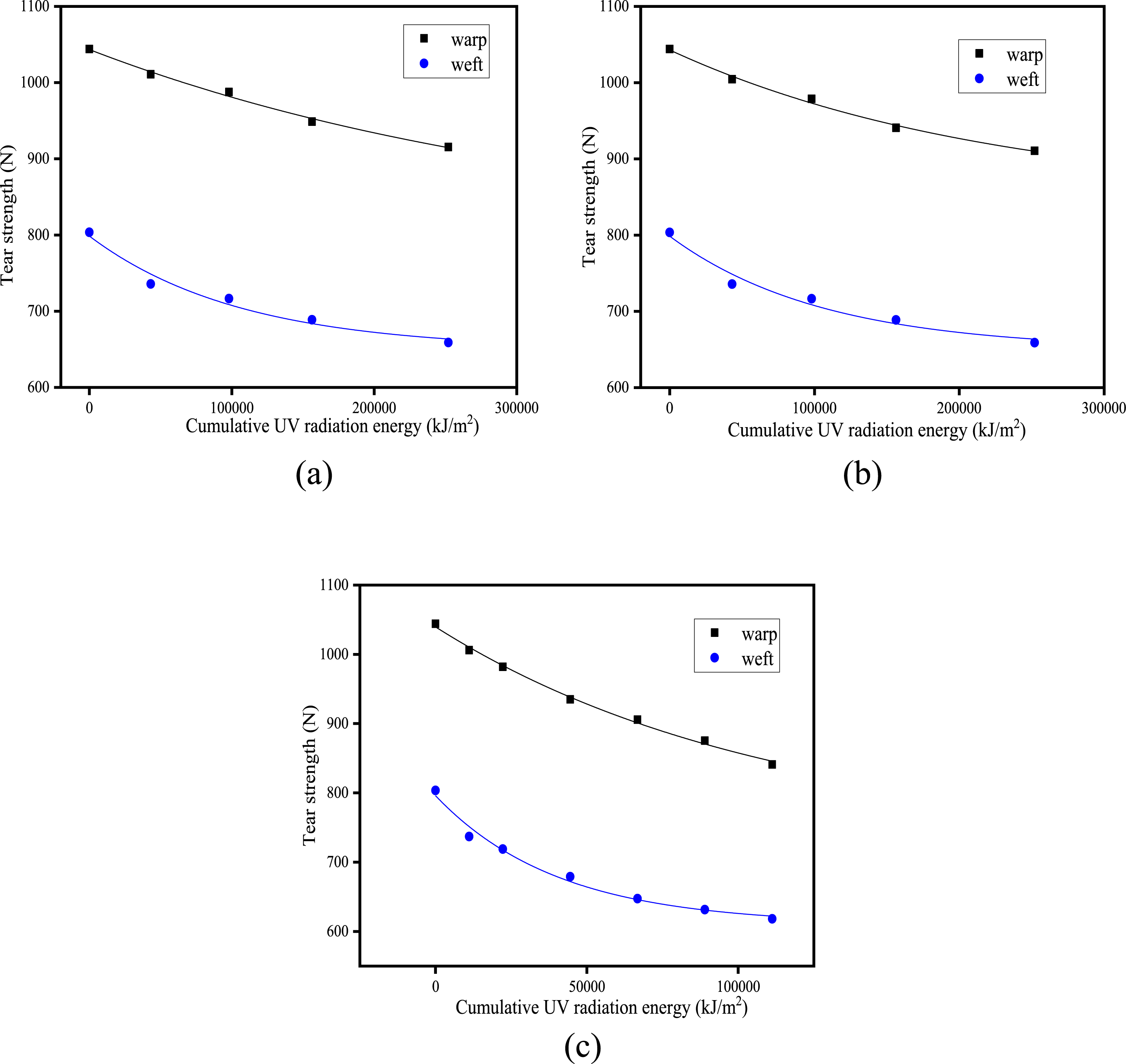
As shown in Figure 14, the tear strengths of the aged membrane materials fitted well with the life prediction function. Because the tear strengths in the warp and weft directions of the membrane material were significantly different, the tear strength in each direction was analyzed separately using Schwarzschild’s law. The lifetime functions for the tear strength of the PVDF membrane material after aging in the warp direction are shown in equations (6)–(8), R2 is the standard error of the fitted formula. (Figure 15) Tear strength curve of PVDF membrane under different aging conditions after correction (warp). Tear strength curve of PVDF membrane under different aging conditions after correction (weft).



The tear strength (weft) lifetime functions of the PVDF membrane after natural and artificially accelerated aging are shown in equations (10)–(12), R2 is the standard error of the fitted formula.


Next, the values of t
1
and t
2
from -equations (10)–(12) are substituted into Schwarzschild’s law, 
In the correction functions for the tear strength of the membrane material in the warp and weft directions, y represents the tear strength, I the UV irradiance intensity, and t the artificially accelerated aging time. Hence, one can calculate the aging time required to obtain the tear strength values of the PVDF membrane material under different UV radiation intensities.
Tear strength prediction based on enhanced Arrhenius equation
The classical Arrhenius equation is typically used to predict the lifespan of materials by considering factors such as irradiation energy and temperature, as well as by introducing acceleration factors to correlate different aging experiments. Because oxygen concentration is a key factor that affects the degradation of polymer materials, oxygen pressure is introduced.
49
The three-parameter Arrhenius equation is adopted to establish a relatively accurate and reliable correlation for investigating the aging law of the PVDF membrane material, as shown in equations (14) and (15).
12


E
a
is an important indicator to determine the degradation rate of membrane materials, and the relationship between degradation rate constant and E
a
can be expressed in the form of Arrhenius equation (16).
50
The E
a
(kJ/m2) in this paper is estimated by the Arrhenius equation for the reaction at two temperatures, where equation (17) assumes that E
a
is constant.
51


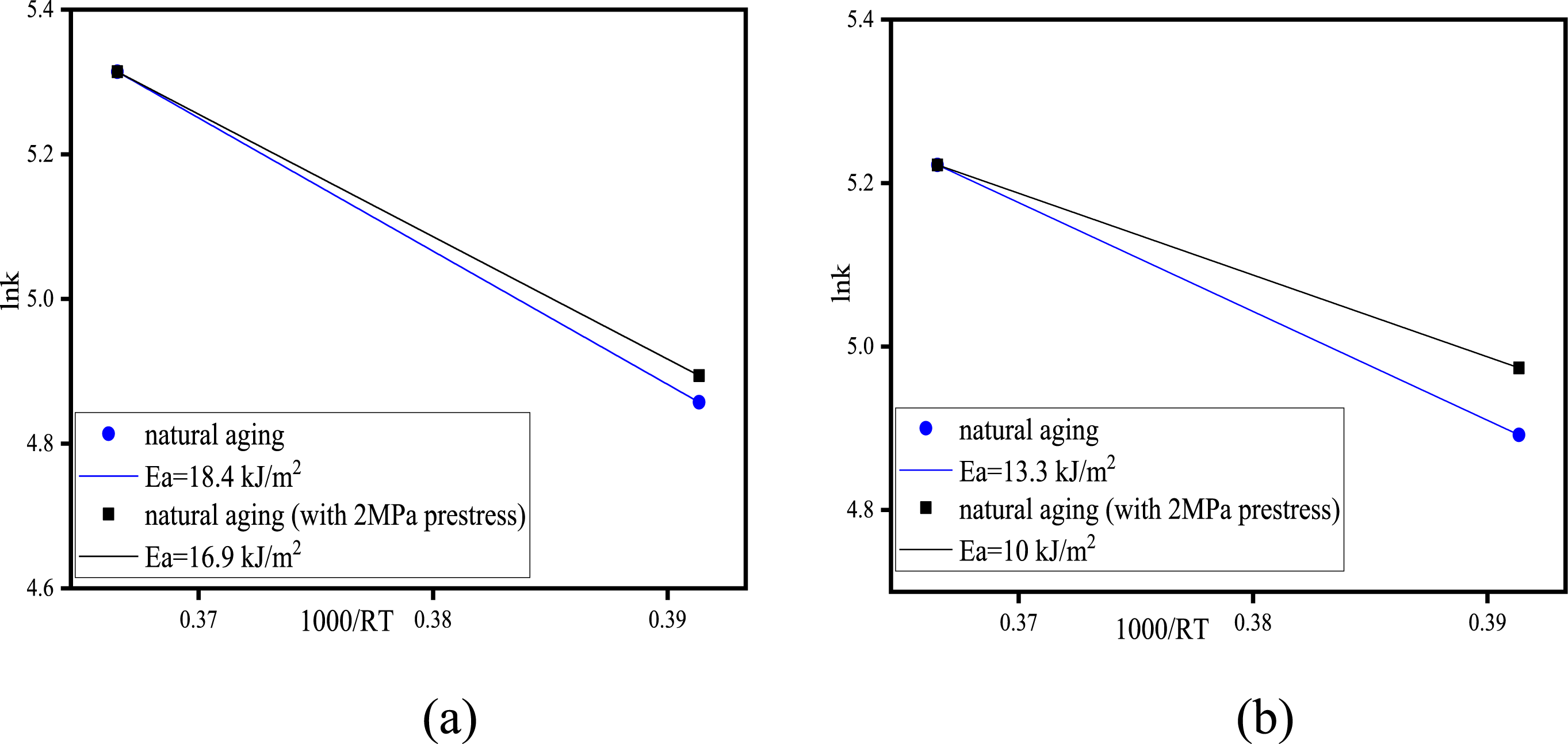
Based on Figure 17, the degradation activation energies of the PVDF membrane for the tear strength in the warp and weft directions were 18.4 kJ/mol and 16.9 kJ/mol (with 2 MPa prestress), and 13.3 kJ/mol and 10 kJ/mol, respectively. This is because the degradation activation energy is associated closely with the overall oxygen consumption of the PVDF membrane material and the degradation of the mechanical properties.52,53 A direct comparison of indoor and outdoor temperatures is not practical because of the continuously changing outdoor temperature. Therefore, the maximum average outdoor ambient and indoor temperatures were used for comparison.
54
The average maximum ambient temperature in Qionghai was 34.2°C; meanwhile, the average temperature recorded in the test box for artificially accelerated aging was 55°C. Based on monitoring data from the laboratory, the UV irradiation energy in Qionghai from June 2020 to June 2021 was 252.04 MJ/m2. The power used for artificially accelerated aging was 0.89 W/m2 at 340 nm, which corresponded to an annual average irradiation energy of 1015 MJ/m2 in the UV wavelength band. The oxygen pressure in Qionghai was 0.021 MPa, whereas it was 0.078 MPa in the artificially accelerated environment box. The oxygen pressure coefficient q was set as 1,
55
and the UV irradiation intensity coefficients p
0
for tear strength in the warp and weft directions, were 1.08 and 1.07, and 1.03 and 1.02, respectively.
56
Degradation activation energy of PVDF membrane for warp and weft tear strengths. (a) Warp (b) weft.



The corresponding times of the artificially accelerated aging results were multiplied by the derived accelerated aging factor to predict the evolution of the tear strength values (Figure 18) of the PVDF membrane material at different outdoor exposure locations. The warp tear strength of the PVDF membrane material after 1 year of natural aging was calculated to be 593 h and 525 h for the artificially accelerated aging time based on Schwarzschild’s law and Arrhenius equation, respectively. Comparison of results of natural and artificially accelerated aging based on predicted tear strength. (a) Warp (b) weft (c) warp (with 2 MPa prestress) (d) weft (with 2 MPa prestress).
As shown in Figure 19, when the PVDF membrane material was exposed in the Qionghai area, the Arrhenius equation was more suitable than Schwarzschild’s law for establishing a correlation between the results of natural and artificially accelerated aging tests in terms of macroscopic mechanical properties. This is because Schwarzschild’s law considers only one factor, namely the cumulative UV irradiation energy, whereas the Arrhenius equation considers three factors, namely temperature, UV radiation, and oxygen pressure, and establishes a quantitative expression of the effect of environmental factors on the aging behavior of the membrane material. Comparison of fitting results of tear strength aging time of PVDF membrane material based on Schwarzschild’s law and Arrhenius equation. (a) Natural aging (b) natural aging (with 2 MPa prestress).
Transmittance prediction methods
Transmittance prediction based on Schwarzschild’s law
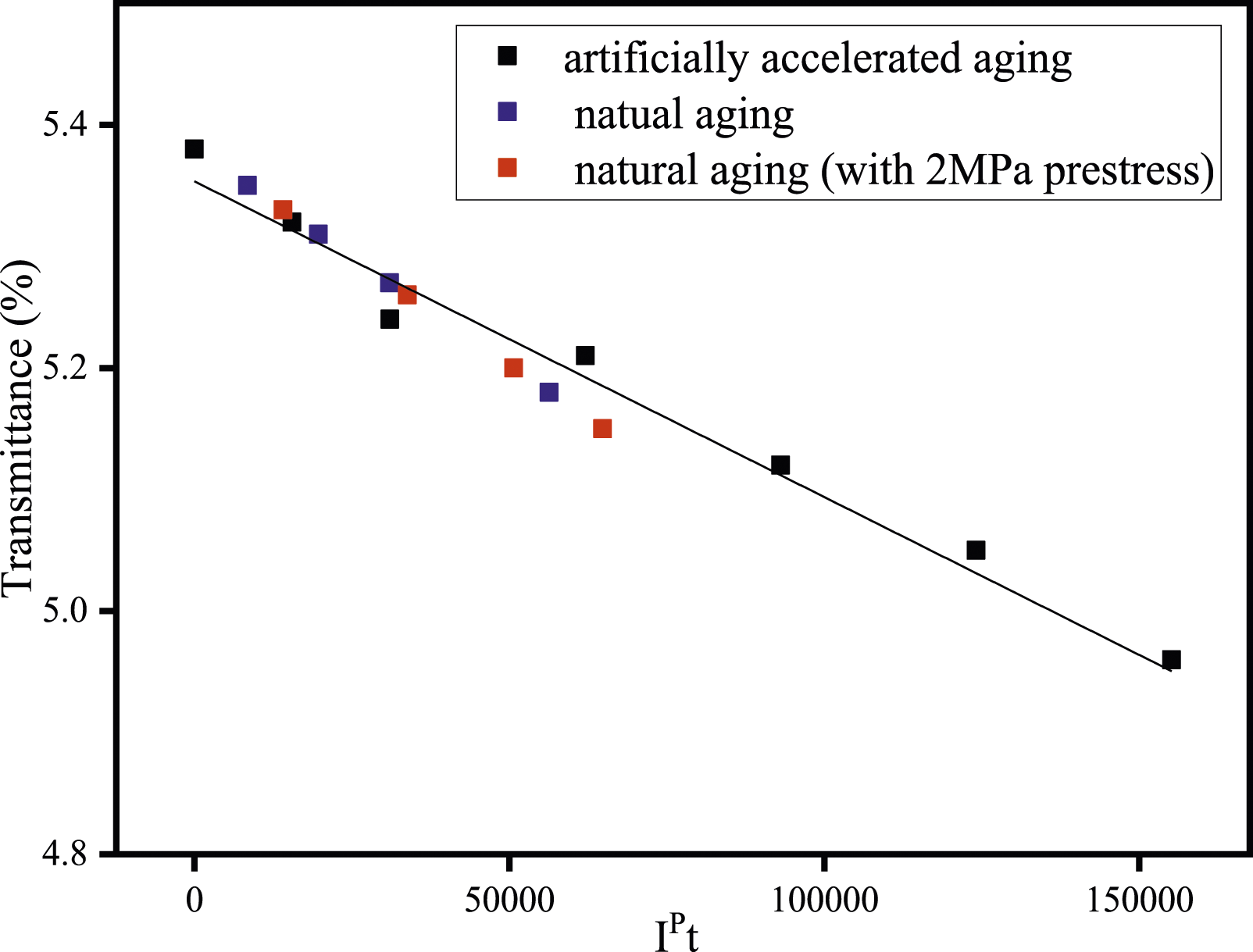
The variation in light transmittance with accumulated UV irradiation energy for the artificially accelerated aged membrane material and naturally aged PVDF membrane material is shown in Figure 20. As the UV radiation energy increased, the light transmittance of the membrane decreased gradually. The UV radiation intensity and lifetime function of light transmittance (equations (22)–(24)) showed a good correlation, with the R2 of the fitting function ranging from 0.98 to 0.99. Transmittance data fitting of PVDF membrane material after aging under life function. (a) Natural aging (b) artificially accelerated aging.


Based on Schwarzschild’s law, p was calculated to be 1.08 or 1.07 (with 2 MPa prestress). To further establish the aging correlation for transmittance under different UV radiation intensities under natural and artificially accelerated aging, the modified light transmittance index was fitted with p = 1.07, as shown in Figure 21. For the coefficient p = 1.07, a good correlation was obtained between artificially accelerated and natural aging after correction. Therefore, Schwarzschild’s law is applicable for predicting the lifetime of PVDF membrane materials. Subsequently, an equation for estimating the light transmittance of the PVDF membrane material under artificially accelerated aging was obtained, as shown in equation (25). Transmittance of PVDF membrane modified using Schwarzschild’s law under different aging conditions (380–780 nm).
Transmittance prediction based on enhanced Arrhenius equation
Using the three-parameter Arrhenius equation (15), the aging performance of the PVDF membrane material was investigated. Based on the calculation results shown in Figure 22, the activation energies for the transmittance degradation of the PVDF membrane materials were determined to be 29.9 and 24.3 kJ/mol (with 2 MPa prestress). p
0
as calculated using Schwarzschild’s law, was of 1.08 or 1.07 (with 2 MPa prestress), whereas the other parameters were set the same as those in equation (13). By substituting the known data into equation (13), the accelerated aging factors were determined to be 16.7 and 16.5 (with 2 MPa prestress). By substituting these artificially accelerated aging factors into the predictive form of the Arrhenius equation for the membrane material transmittance (equation (15)), the predicted transmittance formula corresponding to permeability was obtained, as shown in equations (24) and (25) above. Degradation and activation energy of PVDF membrane transmittance under different aging conditions.


The transmittance evolution (Figure 23) of the PVDF membrane materials under different exposure aging times in outdoor conditions was determined by multiplying the results of the artificially accelerated aging with the calculated aging factor. Based on Schwarzschild’s law and the Arrhenius equation, the transmittance values for the naturally aged membrane materials of the non-prestressed and 2 MPa prestressed groups after 1 year were 478 and 523 h, and 528 and 531 h, respectively. Transmittance fitting results based on Arrhenius equation. (a) Natural aging (b) natural aging (with 2 MPa prestress).
As shown in Figure 24, based on Schwarzschild’s law and the enhanced Arrhenius equation, a correlation between the artificially accelerated and natural aging time can be established. Using Schwarzschild’s law, R2 = 0.97 was obtained, which was lower than that yielded by the enhanced Arrhenius equation’s (i.e., R2 = 0.99, including the 2 MPa prestressed group). Therefore, when the PVDF membrane material is exposed in the Qionghai region, the Arrhenius equation is more suitable for establishing a correlation between the results natural and artificially accelerated aging tests in terms of transmittance. Comparison of fitting results of transmittance aging time of PVDF membrane materials based on Schwarzschild’s law and Arrhenius equation.
Reflectivity prediction methods
Reflectivity prediction based on Schwarzschild’s law
As shown in Figure 25, the reflectivity of the membrane material shows a strong correlation with the accumulated UV irradiation energy, and the R2 values of the fitting functions (equations (26)–(28)) for reflectivity exceeded 98%. As the accumulated UV irradiation energy increased, the reflectance of the PVDF membrane material decreased gradually. Reflectivity data fitting of PVDF membrane material after aging under life function. (a) Natural aging (b) artificially accelerated aging.


Using the lifespan prediction functions shown in equations (28)–(30), the values of t
1
and t
2
obtained were substituted into Schwarzschild’s law: Reflectivity (380–780 nm) after applying Schwarzschild’s law.
Linear fitting was performed on the results and the aging conditions of the PVDF membrane material based on the artificially accelerated aging time were obtained, as shown in equation (31). Schwarzschild’s law can be used to predict the relationship between the reflectivity and life of the membrane after aging.
Reflectivity prediction based on Arrhenius equation
Using the three-parameter Arrhenius equation equation (15), the aging law of the membrane materials was investigated. Using equation (16), the degradation activation energies corresponding to the transmittance of the PVDF membrane material were calculated to be 16.1 and 14.2 kJ mol−1 (with 2 MPa prestress group). The coefficient of the UV radiation energy p0 was calculated using Schwarzschild’s law, which resulted in p = 1.11 or 1.10 (with 2 MPa prestress), whereas the other parameters were the same of those in equation (15). The acceleration factors were calculated to be 17.4 and 17.2 by substituting the known data into equation (15). By substituting the values of the acceleration factor into the membrane lifetime prediction formula based on the Arrhenius equation equation (15), the corresponding lifetime prediction formulas for the transmittance were obtained, as shown in equations (32) and (33).

As shown by the fitting results based on the Arrhenius equation (Figure 27), the reflectivity of the membrane material aged artificially for 1 day is equivalent to that aged naturally for 17.4 days (17.2 days for 2 MPa prestress group). Fitting results of the reflectivity based on the Arrhenius equation. (a) Natural aging (b) natural aging (with 2 MPa prestress).
As shown in Figure 28, based on Schwarzschild’s law and the enhanced Arrhenius equation, a correlation between the natural (including the 2 MPa prestressed group) and artificially accelerated aging time can be established. Based on Schwarzschild’s law, an R2 = 0.97 was achieved (including the 2 MPa prestressed group), which was lower than that of the enhanced Arrhenius equation’s (R2 = 0.99, including the 2 MPa prestressed group). Therefore, when PVDF membrane materials are exposed in the Qionghai region, the Arrhenius equation is more suitable than Schwarzschild’s law for establishing a correlation between the results of natural and artificially accelerated aging tests in terms of reflectivity. Comparison of fitting results of reflectivity aging time of PVDF membrane materials based on Schwarzschild’s law and Arrhenius equation.
Absorption prediction methods
Absorption prediction based on Schwarzschild’s law
When the length of the conjugated double bond (n) exceeded 8, the membrane material began to absorb blue light from visible light, thus causing the surface color of the membrane material to shift gradually toward yellow. Therefore, in this study, the UV absorption area of the conjugated double bonds (n = 10) was selected to predict the aging time, as described in ref.
37
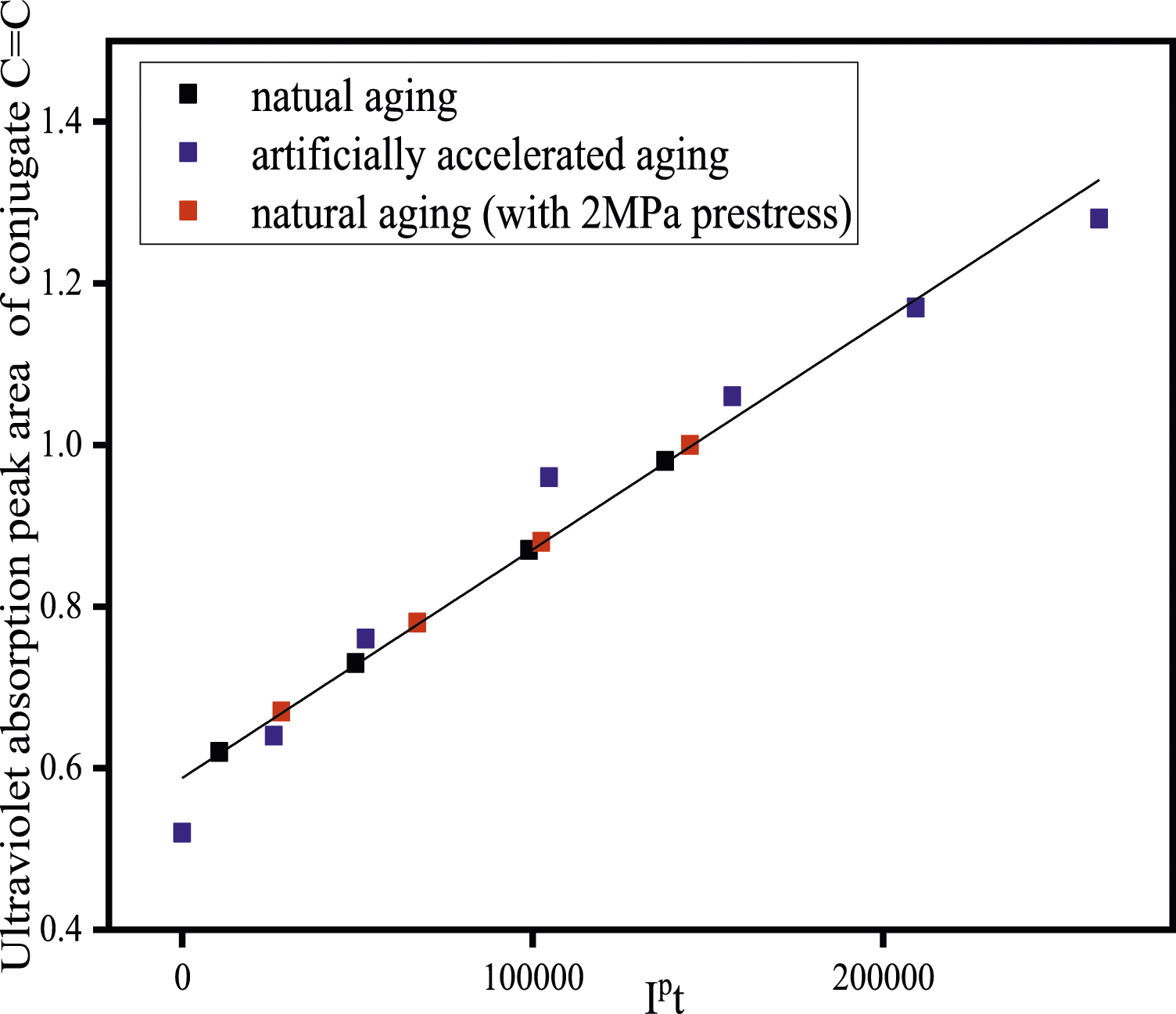
Figure 29 shows the variation in the UV absorption peak area of the conjugated double bonds (n = 10) in the artificially accelerated and naturally aged PVDF membrane materials with cumulative UV irradiation energy. As the UV irradiation energy increased, the UV absorption peak area of the conjugated double bonds (n = 10) in the membrane materials increased gradually, which consequently deteriorated the macroscopic mechanical properties of the membrane materials. The lifetime formulas (equations (34)–(36)) for the UV irradiance and the UV absorption peak area of the conjugated double bonds (n = 10) exhibited a good correlation, with the R2 values of the fitting functions ranging from 0.98 to 0.99. UV absorption peak area lifetime function of conjugate double bond (n = 10). (a) Natural aging (b) artificially accelerated aging.


Based on Schwarzschild’s law, the values of p were calculated to be 1.18 and 1.18 (with 2 MPa prestress); in this study, p = 1.18 was selected to enable scientifically reasonable calculations. As shown in Figure 30, a good correlation was indicated between artificially accelerated and natural aging when a modified p value of 1.18 was used, thus indicating that Schwarzschild’s law is applicable for predicting the lifetime of PVDF membrane materials. Subsequently, an equation (equation (37)) to predict the aging of the UV absorption peak area of the conjugated double bonds (n = 10) in the PVDF membrane materials during artificially accelerated aging was obtained. Ultraviolet absorption peak area (n = 10) of conjugate C=C after modification using Schwarzschild’s law and data fitting.
Absorption prediction based on enhanced Arrhenius equation
The degradation activation energies of the conjugated double-bond peak absorption area (n = 10) for the non-prestress and 2 MPa prestress groups of the PVDF membrane material were 20.2 and 17.7 kJ mol−1, respectively. p
0
as calculated using Schwarzschild’s law, were p = 1.18 and 1.18 (with 2 MPa prestress), and the other parameters were the same of those in equation (14). Substituting the known data into equation (15), the acceleration factors were calculated to be 17.4 and 17.2. Substituting the accelerated aging factor values into the prediction formula based on the Arrhenius equation, the corresponding lifetime prediction formulas for the conjugated double-bond peak absorption area (n = 10) were obtained as shown in equations (38) and (39).

As shown by the fitting results based on the Arrhenius equation (Figure 31), the PVDF membrane material artificially aged for 1 day is equivalent to that naturally aged for 17.4 days (17.2 days for the 2 MPa prestress group). Fitting result of absorbance peak area based on Arrhenius equation. (a) Natural aging (b) natural aging (with 2 MPa prestress).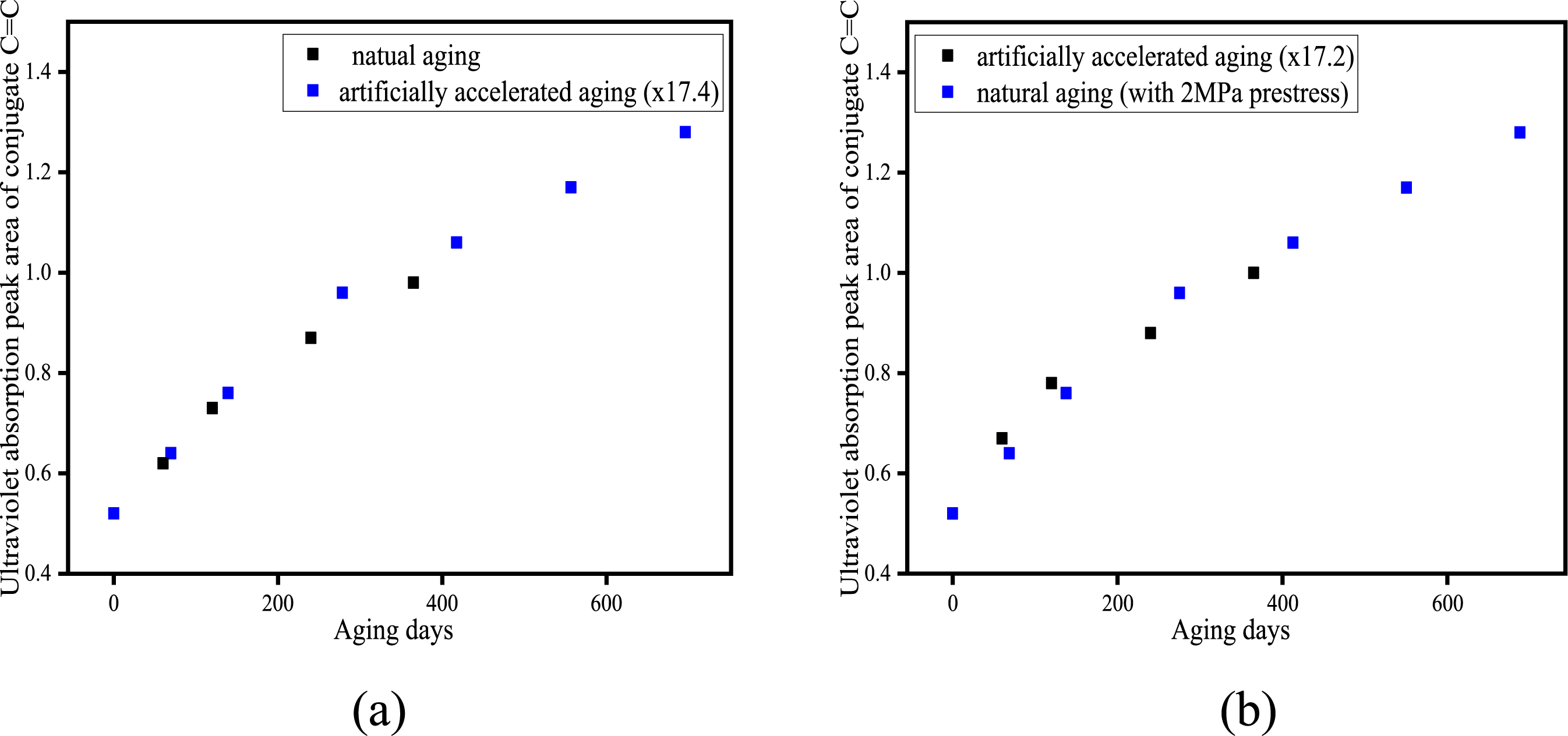
As shown in Figure 32, based on Schwarzschild’s law and the enhanced Arrhenius equation, a correlation between the artificially accelerated and natural aging times can be established. Using Schwarzschild’s law yielded R2 = 0.97, which was lower than the value yielded by the enhanced Arrhenius equation’s (i.e., R2 = 0.99, including the 2 MPa prestressed group). Therefore, when PVDF membrane materials are exposed in the Qionghai region, the Arrhenius equation is more suitable than Schwarzschild’s law for establishing a correlation between the results of natural and artificially accelerated aging tests in terms of the UV absorption peak area of the conjugated double bonds (n = 10). Comparison of fitting results of UV absorption peak area aging of conjugated double bonds (n = 10) for PVDF membrane materials based on Schwarzschild’s law and Arrhenius equation.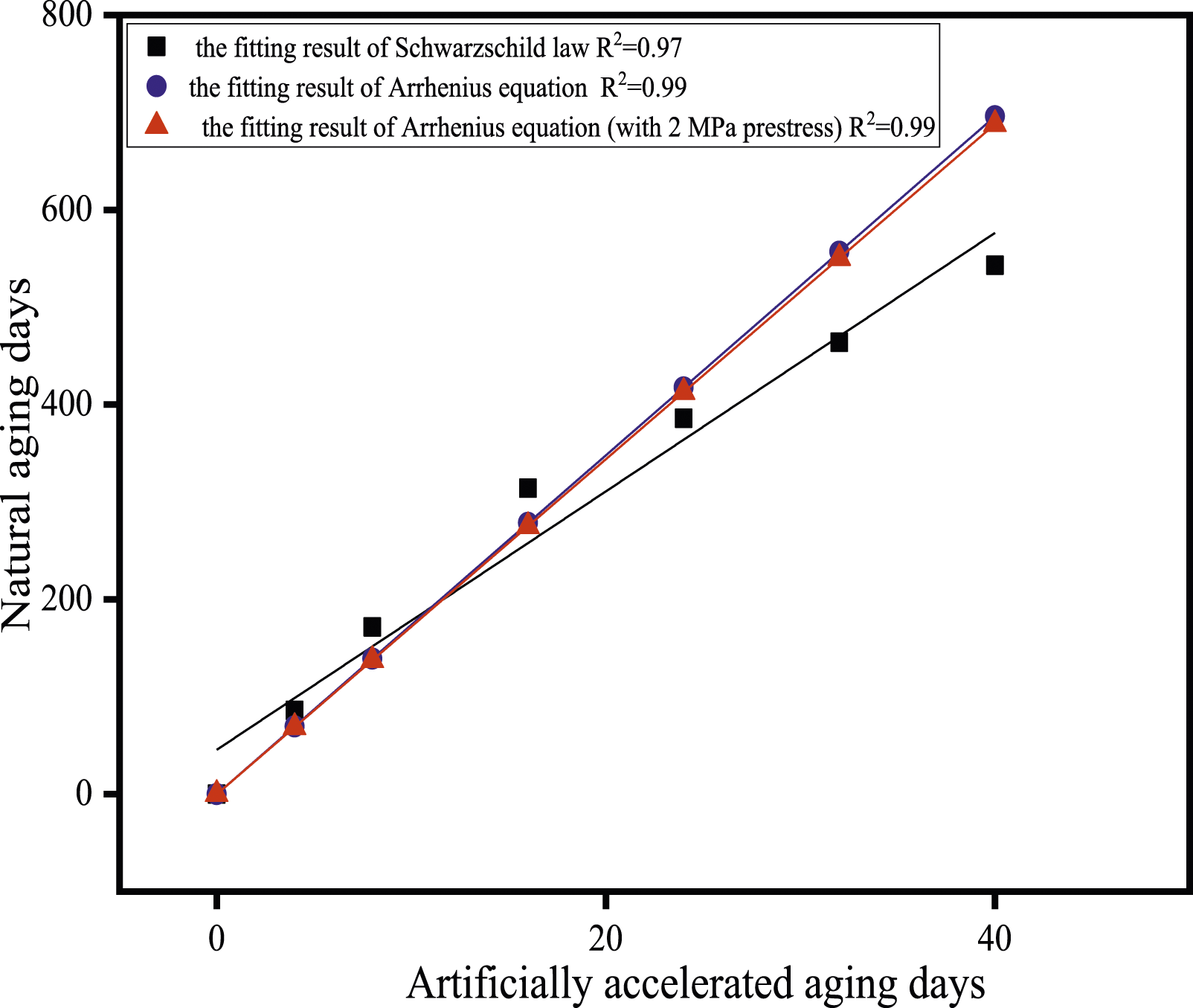
The aging factors of the 2 MPa prestress group were smaller than those of the non-prestress group because the 2 MPa prestress group aged faster, and the corresponding artificially aging time after 1 year of natural aging for the 2 MPa prestress group was shorter than that of the non-prestress group. The experimental results of this study indicate that the quantitative indicators of PVDF membrane materials, such as tear strength, transmittance, reflectivity, and conjugated double bond area, exhibit varying degrees of change under the same artificially and natural aging times. To determine the acceleration factor of the PVDF membrane material, this paper adopts and establishes the acceleration factor based on the improved Arrhenius equation and different quantitative indicators. Subsequently, the artificially accelerated aging time is multiplied by the derived acceleration factor to obtain the evolutionary predictions of different quantitative indicators of the PVDF membrane material. The applicability of the predictions is then validated and analyzed. The study reveals that different acceleration factors correspond to different quantitative aging indicators, and their evolutionary predictions adhere to scientific principles. However, further experiments are required to validate these findings. The Arrhenius equation can directly convert natural and artificially aging times based on the aging factor, whereas Schwarzschild’s law requires a conversion based on the aging performance and UV irradiance, with a larger margin of error compared with the Arrhenius equation.
The Arrhenius equation used in this study does not consider the effects of humidity and thermal cycles on the degradation of the membrane material. To predict the lifespan of membrane materials more accurately, these factors must be considered. In further studies, a comparative analysis of results from artificially and natural aging tests in various prestressed groups should be conducted, and the effect of stress on the aging mechanism of membrane materials should be investigated. This study was conducted to develop a predictive model for membrane material lifetime that considers the effect of stress. An enhanced three-parameter Arrhenius equation can be derived to obtain a more accurate form for predicting the lifetime of membrane materials. Additionally, designing aging tests with longer time frames can provide ample data support to derive more precise fitting equations.
Conclusion
In this study, the natural aging (2 MPa prestressed group) and artificially accelerated aging behavior of PVDF membrane materials were investigated, and their aging performances were compared. The aim of this study was to establish a relationship between the aging of PVDF membrane materials under natural and artificially accelerated aging. The main conclusions obtained were as follows: (1) With the increase in aging time (UV irradiation energy), the tensile strength, elongation at break, elastic modulus, tear strength, transmittance, and reflectivity of PVDF membrane material gradually decrease. Meanwhile, the area of conjugated double bond absorbance shows an increasing trend. (2) Under the same aging conditions (UV irradiation energy), the mechanical properties of the weft yarn of PVDF membrane material are more susceptible to the influence of external environmental factors compared to the warp yarn. A prestress of 2 MPa has a promoting effect on the aging of PVDF membrane material. Under artificial acceleration conditions, the magnitude of aging performance changes in PVDF membrane material is greater than that of the naturally aged membrane material in the 2 MPa prestress group; (3) The improved Arrhenius equation provides a more accurate prediction of the aging performance of PVDF membrane material compared to predictions based on the Schwarzschild’s law. The acceleration factors calculated for different quantitative indicators using the improved Arrhenius equation fall within the range of 15.4 to 17.4.
Footnotes
Declaration of conflicting interests
The author(s) declared no potential conflicts of interest with respect to the research, authorship, and/or publication of this article.
Funding
The author(s) received no financial support for the research, authorship, and/or publication of this article.
