




Abstract
Among different types of Fiber Reinforced Polymer (FRP) composites, the conventional Glass Fiber Reinforced Polymers (GFRPs), along with the emerging natural fiber replacement options, have attracted widespread attention in different manufacturing sectors. Despite their light weight and high specific strength and stiffness, the long-term durability of these composites remains a gray area, often forcing designers to incorporate large safety factors to account for uncertainties in estimating aging limits. This manuscript aims to provide a review of the fundamentals and case studies on natural and accelerated weathering degradation processes of GFRPs and select Natural Fiber Reinforced Polymers (NFRPs) that involve climatic exposure. Main degradation agents considered range from tap water, moisture, UV, sea water and corrosion. Emphasis is made to differentiate between reported weathering effects on GFRPs and NFRPs, primarily owing to the hydrophilic nature of natural fibers.
Keywords
Introduction
Over the past decades, applications of Glass Fiber Reinforced Polymer (GFRP) composites have been widespread in industry, ranging from aerospace, construction and marine to architecture, power supply utility poles, electrical insulating systems, biomedical devices, among several others. The high strength-to-weight and stiffness-to-weight ratios have particularly made GFRPs a preferred choice as light and yet strong materials for industrial applications.1,2 Despite all these advantages, there is a major outstanding concern, particularly for high risk applications, about the long-term durability of these materials under varying environmental conditions.
3
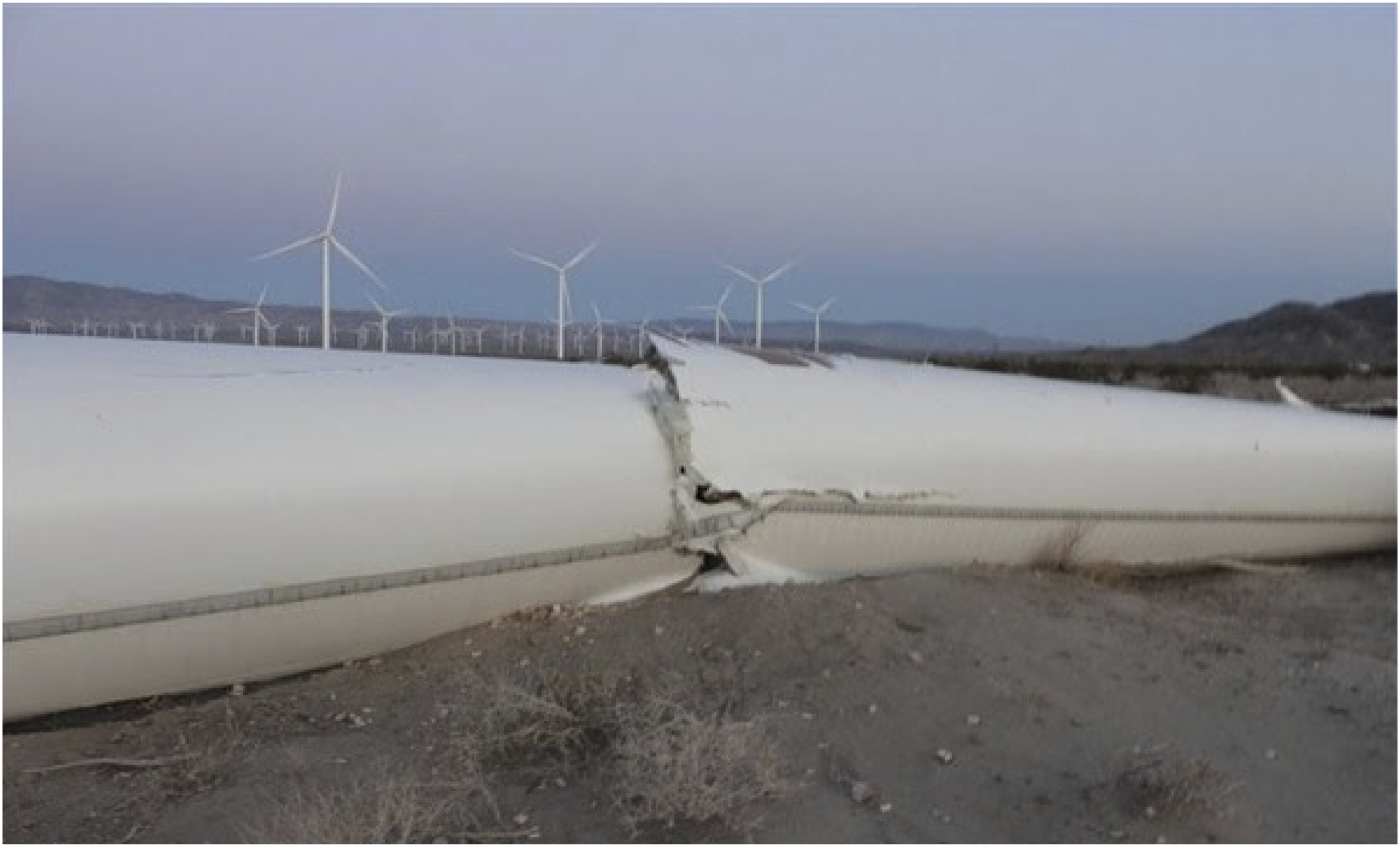
As an illustration, turbine blades usually encounter extreme climatic conditions, particularly those installed in offshore wind farms. These climatic service conditions usually include wet/dry service periods, high/low-temperature cycles, UV radiational exposures, and sand erosions. Synergistic effect of these climatic agents, together with the impact of reciprocating fatigue loading during their service period has been reported to have crucial effect on the long-term durability of composite turbine blades (Figure 1). Such natural degradation may be limited or controlled by optimally synthesizing the initial product through the optimal selection of material constituents and processing parameters. Careful maintenance instructions during the service period is also deemed to have crucial impact on long-term durability of GFRP products. Aligned with this motivation, an ongoing focus of the pertinent literature is to study the engineering aspects of failure for naturally aged composites.2–5 Example of weathering-induced failure in a GFRP turbine blade.
6
In parallel, Natural Fiber Reinforced Polymers (NFRPs) are now increasingly being considered as a potential replacement for GFRP due to their environmentally friendly nature, while still offering comparable mechanical properties in many (structural and non-structural) applications. However, as compared to GFRPs, a primary design consideration for NFRPs is their higher moisture absorption along with other degradation mechanisms, owing to the hydrophilic nature of natural fibers like flax, hemp, and jute.
Several climatic agents are known to be responsible for the degradation of polymer-based composites, including GFRPs and NFRPs, each of which are well studied separately to investigate the resultant degradation procedures and/or patterns on composite materials. Both the aging rate and degradation magnitude are well-known to be dependent upon the individual and combinative effects of all involved climatic agents, including but not limited to, UV radiation, relative humidity, daily/seasonal changes in temperature, and exposure to oxidizing media. 1 Although the individual impact of each climatic agent on the degradation of composites are well studied in the previous literature, studies targeting their synergistic (combinative) effect appear to be scarce. To address this issue and assess the long-term outdoor durability of composite materials, numerous studies have instead aimed at artificial (accelerated) aging experiments.1,3,7–17 These experiments broadly involve an accelerated aging chamber simulating natural climatic exposures under controlled conditions.
In this article, an enhanced review has been provided over select state-of-the-art literature focusing on weathering of polymer-based composites, with a preliminary focus on glass and natural fibers. An enhanced understanding of aging has been provided firstly for conditions under exposure to humid, moist, and chemically corrosive media, followed by a review over the effect of photo-degradation on the aging of composites. Aging under the lab-scaled accelerated weathering chambers has been reviewed next, along with observations helping engineers to make conclusions towards synergistic (combinative) impact of weathering agents under controlled lab conditions. Select natural weathering investigation are then reviewed, followed by the conclusive remarks of this article.
Effect of water/moisture uptake and exposure to chemically corrosive media
Effect of tap/deionized water
Polymer composites are prone to moisture absorption either when exposed to humid environment or when immersed under water.18,19 Prolonged moisture absorption may cause composites to lose their properties and functionality. Moisture uptake in composites depends upon several factors, such as temperature of the exposure media, fiber volume fraction, reinforcement types and orientations, fiber-resin interface, permeability nature of fibers, exposure area, diffusivity, chemical/physical reactivity between water and matrix media, and finally, manufacturing procedure selected for the final product; for example, application of protective agents on the surface.18–24 The effect of moisture uptake on composites has been summarized in Figure 2. The main effects of moisture absorption in composites.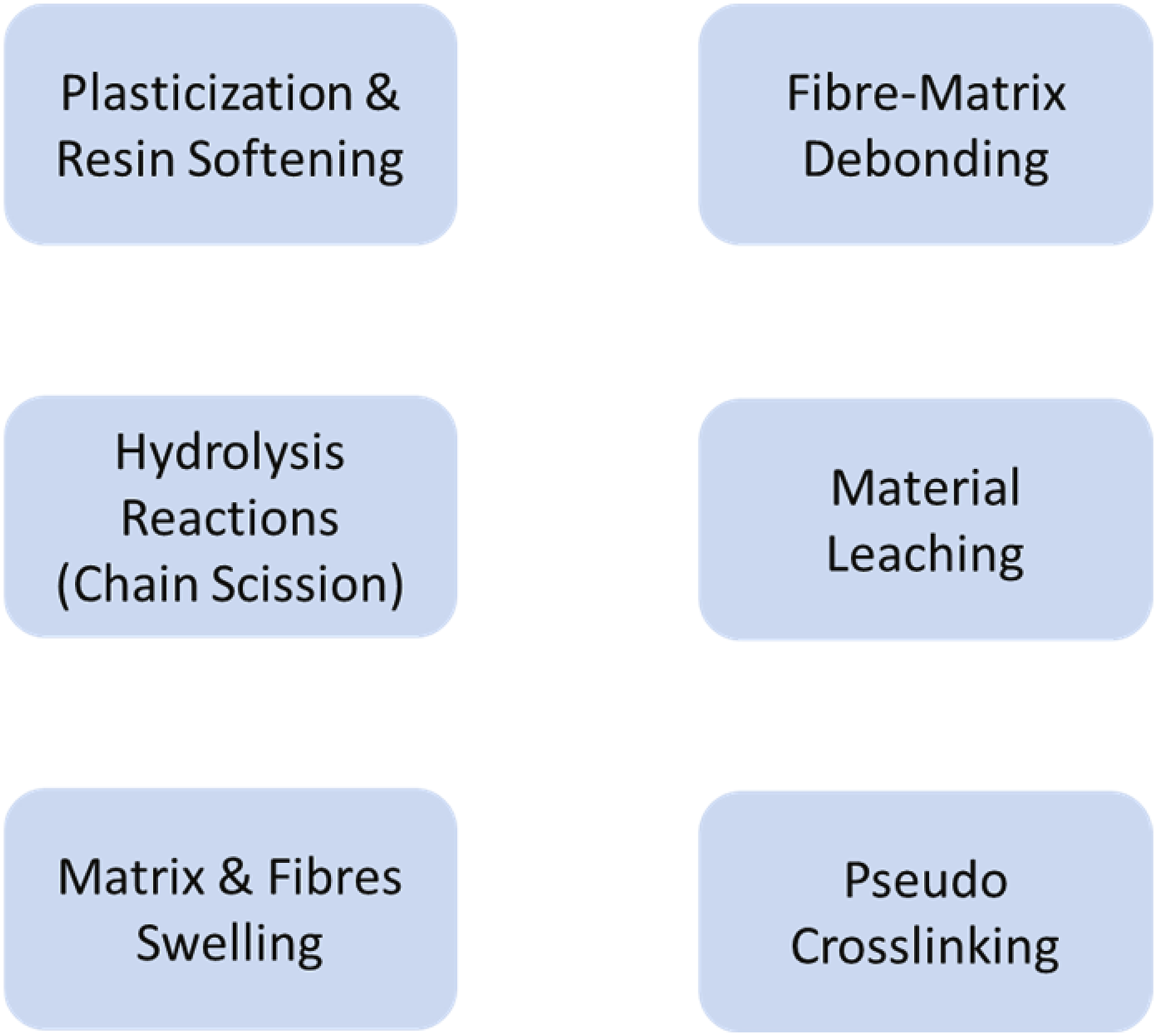
Aldajah et al. 25 investigated the effect of fiber alignment on moisture uptake. More potential for moisture absorption was detected for composites with symmetrically aligned fibers than their counterparts with asymmetric alignment of reinforcements. Degradation of properties was found to be more intense in the symmetrically aligned fiber reinforced composites, with up to a 60% loss in flexural stiffness compared to 30% for anti-symmetric samples exposed to the same environments.
Matrix media, broadly composed of polymers for fiber reinforced composites, also plays a crucial role in composites moisture uptake. Moisture diffusion in polymers is dependent upon chemical composition factors, such as chemical polarity, extent of crystallinity (mainly for thermoplastic polymers), and the existence of any other water-attracting agents, like residual hardeners and crosslinking agents.26–28 For instance, polyester resins are particularly vulnerable to alkali ion erosion, while thermoplastic resins tend to offer better durability and toughness, albeit with lower viscosity. Polyester resins are also less resistant to temperature fluctuations and chemical erosion, while vinyl ester and epoxy resins demonstrate superior resistance to weathering and environmental degradation. 29
Resins with more polarity in their molecular structure have more potential for moisture absorption, as polar groups are inherently moisture-absorbent chemical agents. Pigments are mainly made up of polar composition as well and their addition to resin can accordingly increase the risk of moisture absorption. Besides, most hardeners and crosslinking agents are moisture-absorbent materials; therefore, their residual in matrix structure can increase the rate of moisture absorption.26–28
Applying a thin layer of gel coat, as a frontline surface protective agent,
18
can reduce the moisture absorption rate for the additional protection brought by gel coat and the lower density of microcracks generated in the bulk after prolonged exposure. Water can, however, accumulate in the interface regions between the protective gel coat layer and the main bulk of composites,
30
resulting in cracks generating and propagating at the gel coat interface, moisture uptake, and degradation of properties after prolonged exposure (Figure 3). Peeling of gel coat from the bulk of a GFRP material (micro-CT image courtesy of Composites Research Network, UBC).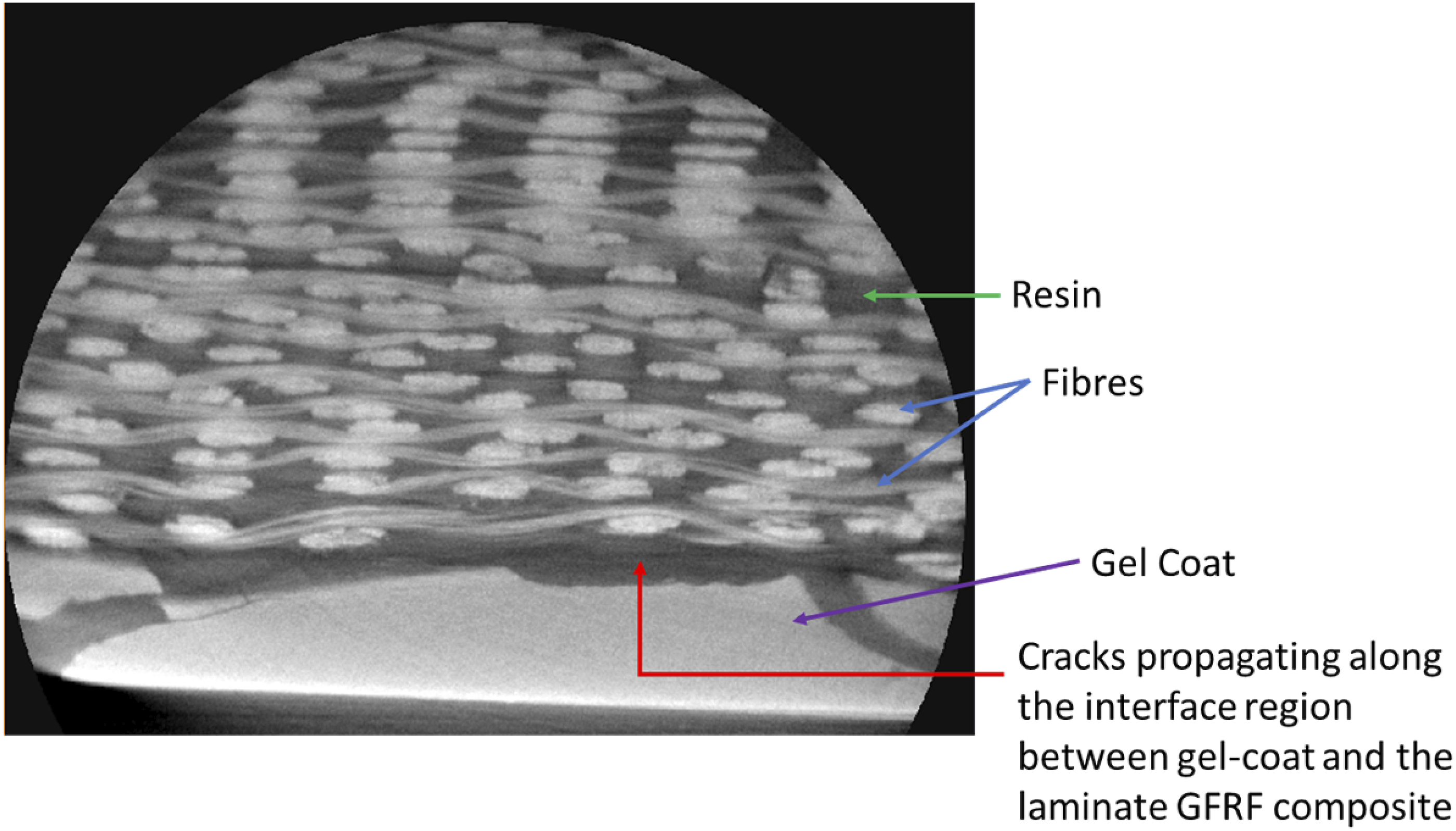
Water uptake behavior is more predictable and well documented in the literature for short exposure times; however, for prolonged exposures, other effects, such as fiber-matrix interface cracking, 31 material leaching, 32 and polymer relaxation 33 play a role adding more uncertainty sources to the material system and complexity to their design process.
To measure moisture absorption in polymer-based composites, gravimetric techniques are widely used. These techniques involve immersing samples in a solution maintained at a constant temperature, where the water absorption process is tracked over time. This approach provides insights into the diffusion of moisture into the material and records the overall mass change caused by water uptake or loss. Moisture content (

Moisture absorption for fiber-reinforced composites generally follow the Fickian Diffusion Curve, as shown in Figure 4, at room temperature.19,35 This behavior is driven by the presence of free, unbound water molecules in microvoids within the composite material.
28
Initially, water absorption increases linearly with the square root of time until it reaches about 60% of the maximum moisture content the material can hold (referred to as saturation/equilibrium content, Fickian curve for moisture absorption.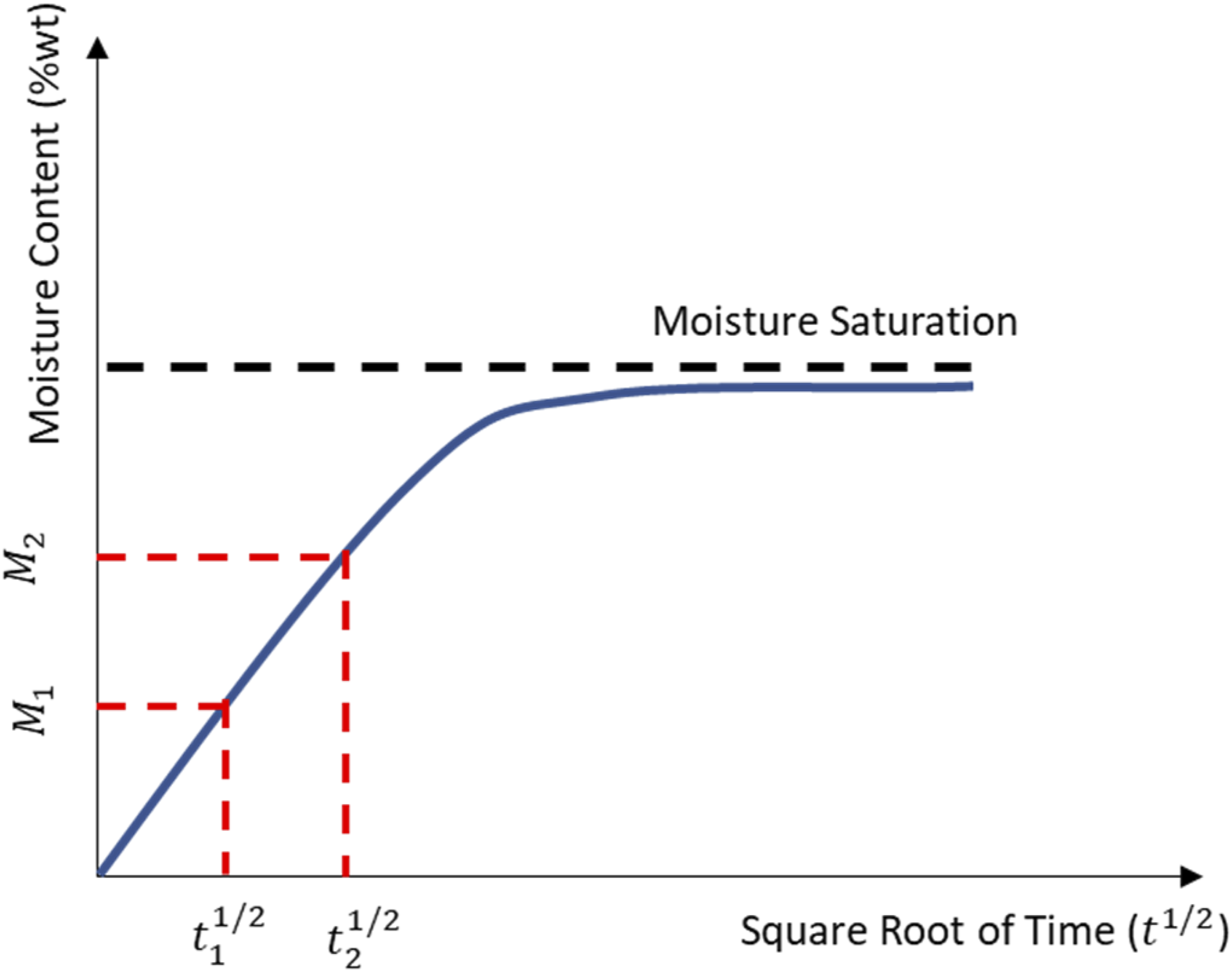
Moisture absorption pattern for neat polymer-based resins mainly follows the Fickian curve, although minor deviations have been reported in some studies.2,33,36,37 These deviations are mainly attributed to resin relaxation 33 and hydrolytic chemical reactions. 38 In composites, however, although the Fickian behavior can be initially detected, significant deviations are often observed after prolonged exposure times.2,37,39–41 According to Rocha et al., 2 in long-term immersion experiments, moisture uptake continues even after the first phase of saturation. In fact, moisture sorption in composites is found to be in more than one phase. Fickian curve is followed for the first phase until the first saturation point is reached. Under certain conditions, moisture uptake may persist beyond the expected equilibrium as polymer chains adapt to the presence of water molecules, resulting in continued absorption at a slower rate compared to the initial water uptake phase.28,42,43
For composites exposed to prolonged immersion under water, moisture uptake further continues until the next saturation point (Figure 5). The next phases, arising after previous saturation points, are mainly attributed to the additional free volume caused by topological changes in the material microstructure: formation of microcracks and fiber-matrix debonding.
32
This extended exposure can alter the physical, chemical, and mechanical properties of the composites, highlighting the importance of studying moisture uptake profiles to better evaluate Fiber Reinforced Polymers (FRP) long-term behavior and durability for various applications.28,42,43 Different phases of moisture absorption in composites.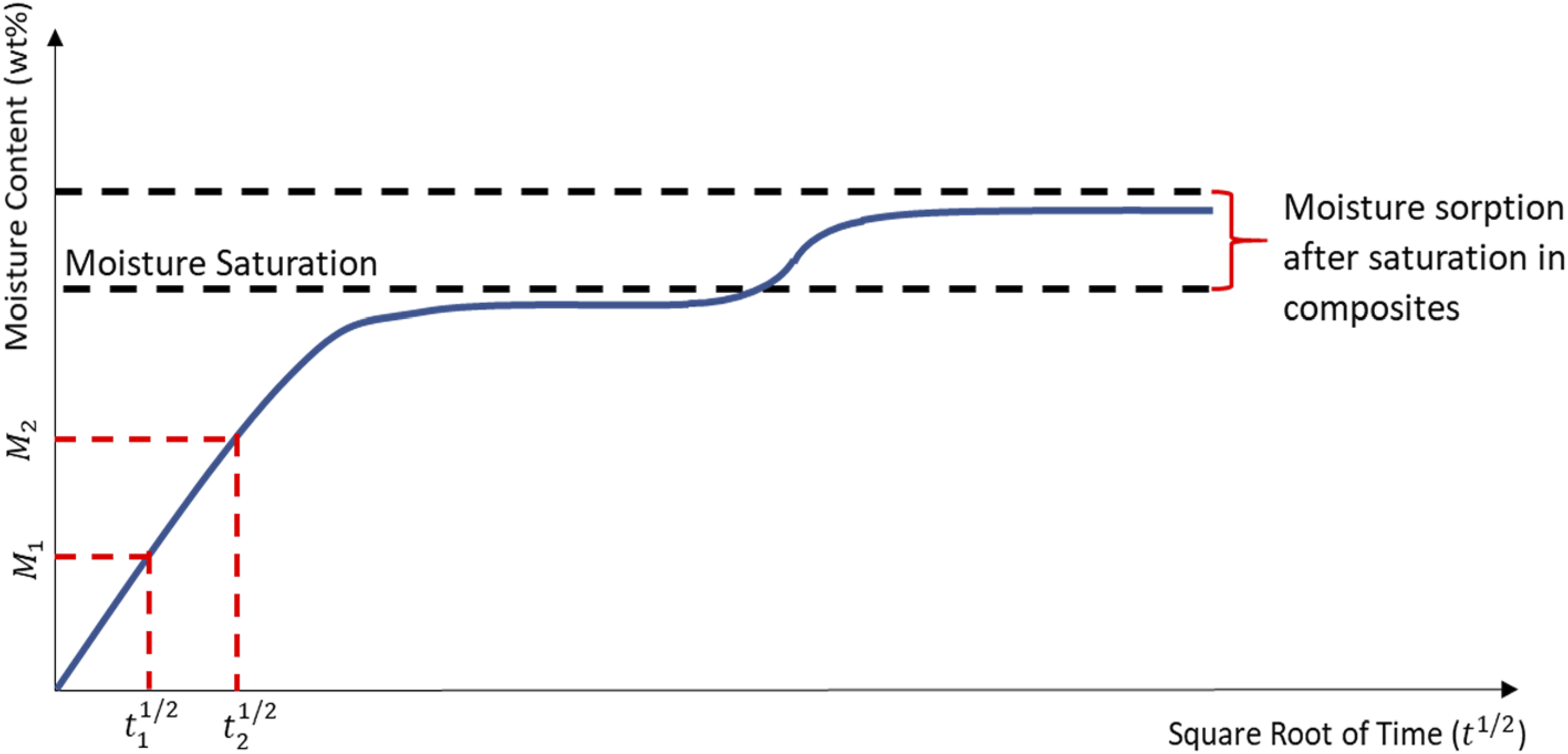
Moisture sorption in composites is through the combined action of diffusion in matrix and capillarity along fibers (either diffusion through fibers, broadly reported for natural fibers, or cracks at fiber-matrix interface region, stated for both natural and synthetic reinforcements in the literature).2,28,44,45
Composites are proven to be more diffusive along their fibers.46,47 During diffusion through the matrix medium, hydrogen bonds generates between water molecules and the hydrophilic groups in polymers, resulting in more brittle structure of matrix. This mechanism can be particularly relevant to hybrid composites that also include natural fibers, where capillary action along the interface between the natural fiber/polymer plays a key role in water transport.28,45 Water can also fill up the void content in the polymeric network resulting in volume increase in matrix structure and generation of microcracks. The expansion and swelling the composite matrix and fiber, particularly in the case of Natural Fiber Reinforced Polymers (NFRPs), also lead to plasticization and hydrolysis, which further promote the development of cracks as water fills the newly developed empty spaces. This can increase the capacity for moisture absorption even after the FRP has reached saturation (see the second stage of moisture sorption in Figure 5).28,48,49
Moisture uptake is accelerated at elevated temperatures.1,50–52 The higher density of microcracks in composites at elevated temperatures provides more void content and higher moisture permeability. The decreased viscosity of water at high temperature and the thermal gradient generated in the material also increase the water penetration rate and, therefore, intensifies the risk of moisture sorption.26,53–56 While elevated temperatures are known to accelerate moisture absorption, studies on thermoset and thermoplastic materials indicate that the total moisture content at saturation remains unaffected by temperature at an initial stage. 57 However, prolonged exposure to elevated temperatures can damage the polymer chain structure, further increasing moisture uptake over time. 58
Mechanical tests have implied that combined aging effects such as matrix plasticization or resin softening 36 and weakened fiber-matrix bonding,38,59,60 all dominating both resin and interfacial regions, can lead to degradation of effective mechanical properties. 39 Moreover, swelling of both fibers and matrix, as well as delamination of layers can lead to surface roughening61,62 and deteriorates the composite surface quality.
Imposed changes on matrix structure
Polymers absorb water to varying extents, depending on the network structure in thermosets or the degree of crystallinity and polarity of the molecular chains in thermoplastics.
58
Absorbed water molecules may cause resin softening through a phenomenon known as “plasticization.” In this phenomenon, water molecules penetrate between polymeric chains in matrix molecular structure (Figure 6(a)) and act as a lubricant in the amorphous regions, facilitating chain mobility (Figure 6(b)). Plasticization effect; water molecules act as a lubricant and facilitate the mobility of chains. (a) Water penetration between polymeric chains and (b) higher mobility of chains after saturation.
Plasticization imposes a drop in the glass transition temperature (
Another effect of absorbed moisture is the chemical interaction of water molecules with polymeric chains, known as the “hydrolysis reaction” (Figure 7). The hydrolysis reaction results in chain scission and leaves the matrix’s molecular structure with chains of shorter length and therefore weaker intermolecular Van der Waals bonds. Given the dwindled intermolecular forces between scissioned-chains, these reactions are generally followed by the leaching of the broken chains from the bulk of the material, and ultimately affects the surface quality.39,63 Hydrolysis reaction for polyesters.
Apart from the surface quality, the diminished intermolecular bonds between the broken chains mean the degradation of mechanical properties. Hydrolysis reaction may also degrade the bonding of fibers to their surrounding matrix. Dissolution of fiber sizing in water, 36 and fiber corrosion under moisture invasion, 64 may even worsen this scenario and lead to ultimate interfacial fiber-matrix debonding. Leaching of composite constituents, namely fibers and matrix, or their interface regions, is experimentally confirmed by Rocha et al. 2 As an important clue to the leaching phenomenon, weight loss was evidenced for aged GFRP samples after undergoing a desorption cycle, compared to their unaged counterparts.
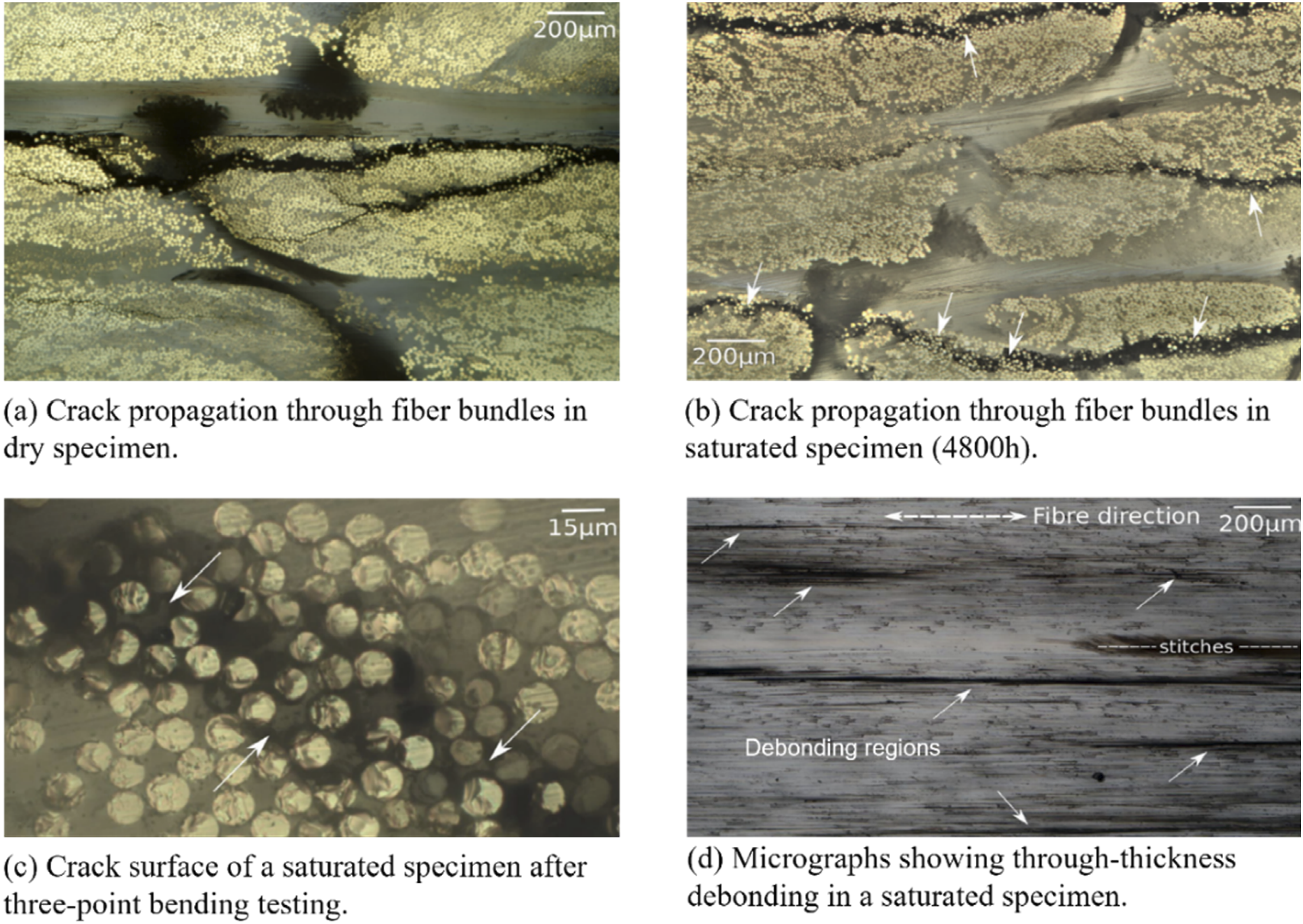
Among the two competing degradation mechanisms in matrix media, namely plasticization and hydrolysis reaction, the former is the dominant.2,65 Firstly, stress-strain curves suggested more ductility of GFRP composites saturated by water rather than their dry counterparts. 2 Dry samples were of less ultimate strain, with a steeper drop experienced in their load tolerance before ultimate failure. The cracks propagation pattern reported in the same study also confirmed more ductility of soaked composites. 2 After destructive tests, cracks were propagated and then arrested inside fiber bundles in saturated samples, as opposed to dry composites where cracks were propagated along fiber bundles. This more ductile failure denoted the dominance of matrix plasticization over chemical hydrolytic reactions.
Moisture absorption may result in additional hardening after desorption due to pseudo/secondary crosslinking.2,49 The resin network has two types of bound water as follows (Figure 8). The first type, Type I, is of less activation energy and thus, it is removed more easily through the desorption cycle. This bound water originates from single hydrogen bonds between one polymeric chain and diffused water molecules (Figure 8(a)).
49
The formation of these bonds leads to reduced intermolecular Van der Waals forces, as water molecules fill the free volume between chains. Hence, the mobility of the polymeric chains is enhanced, and accordingly, the matrix structure softens or plasticizes. Type I bound water also yields matrix swelling because of more volume occupied by water molecules. Different types of hydrogen bonds formed in the epoxy network: (a) a single hydrogen bond formed between a water molecule and a polymeric chain (Type I), (b) multi-site interconnective hydrogen bonds formed by water molecules, bridging between the polymeric chains (Type II).
49
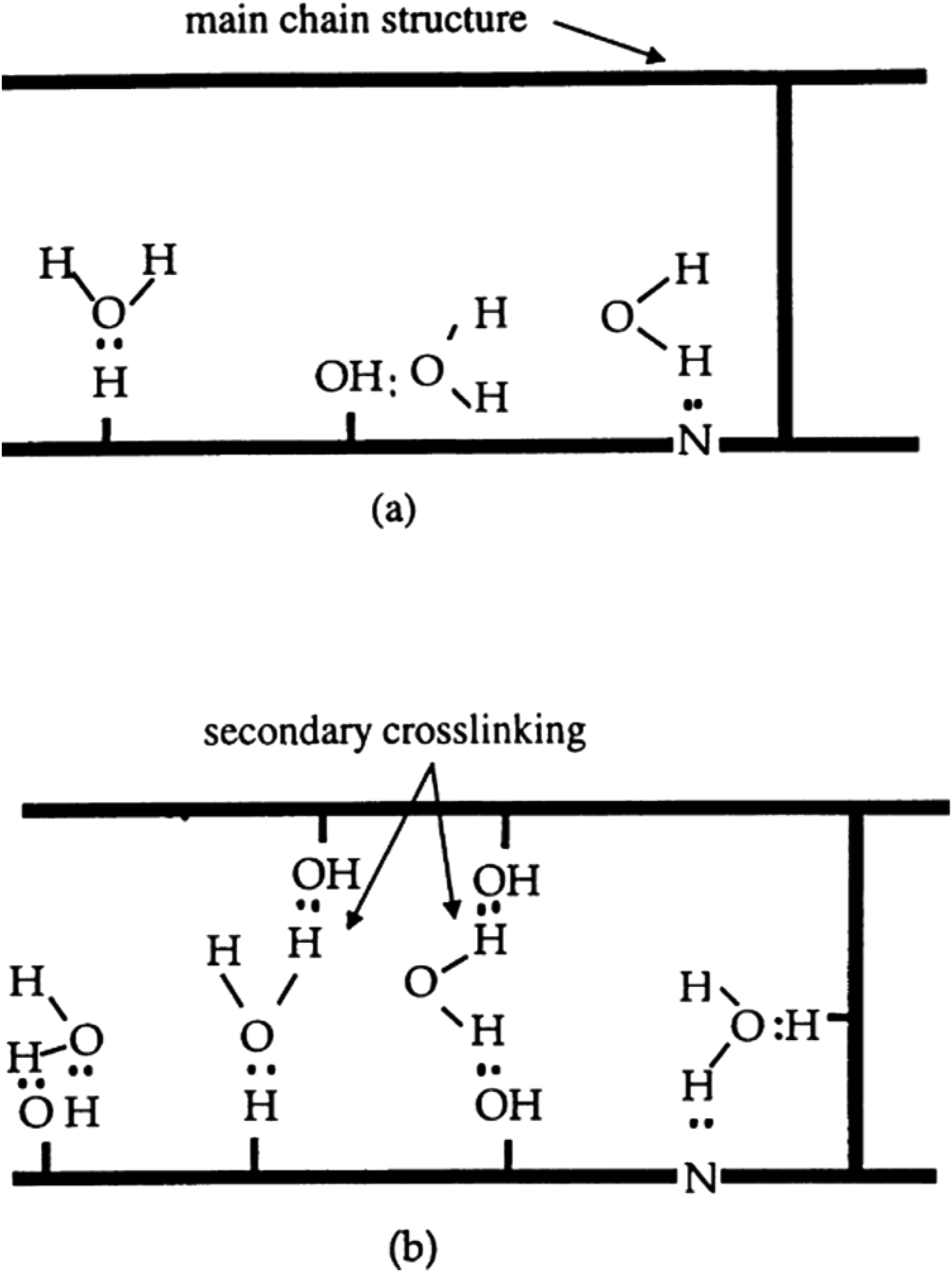
On the other hand, Type II bound water, with more activation energy, is the product of a multi-site interconnective hydrogen bonding model (Figure 8(b)). This type of bound water, known as a pseudo/secondary crosslinking, bridges between two polymeric chain segments leading to reduced chain mobility in the polymeric network.
49
Although widely discussed in the literature for epoxy resins, pseudo-crosslinking is also reported for polyesters.66,67 Indeed, in polyester resins, a water molecule can attach through hydrogen bonds to either hydroxyl groups (
The formation of Type II bound water was also experimentally confirmed by Rocha et al.
2
Firstly, the residual weight in the unreinforced samples dried after their saturation was a meaningful clue to Type II bound water molecules. This residual weight revealed the presence of water molecules, more strongly bound to the resin network compared to their Type I counterparts and, accordingly, needing more energy for desorption. Secondly, compared to unaged unreinforced samples, neat resin specimens have their glass transition temperature (
Imposed changes on fiber-matrix interface
Weakened bonds between fibers and their surrounding matrix or ultimate debonding, may be another outcome of moisture sorption in composites. These are reported as the dominant damages that moisture absorption may impose on GFRP composites.2,45 Weakened interfacial bonds are the result of both matrix plasticization and chemical hydrolysis reactions45,68–72 and affect the thermomechanical properties of the composites.61,73–76
Attenuated interfacial bonds under the moisture invasion have been experimentally witnessed by Rocha et al.
2
as illustrated in Figure 9. Cracks were propagating along fiber bundles in aged GFRP samples after destructive tests and did not affect the surrounding resin (see Figure 9(a)–(d)). This clean debonding palpably signified degradation at interfacial bonds in the saturated samples. Additionally, mechanical properties in GFRP composites had degraded more when saturated compared to their neat thermosetting resin counterparts, with shear strength decreasing by up to 36% and fatigue life being reduced by as much as three orders of magnitude relative to dry conditions. The more significant degradation of saturated GFRP composites further supports the hypothesis that the fiber-matrix interface is notably affected by moisture uptake. Microscopic observation of crack surfaces in (a) dry specimens and (b, c) specimens saturated after 4800 hours of demineralized water immersion, tested in three-point bending with fibers oriented out of plane. Arrows highlight regions of predominant plastic resin failure. (d) Through-thickness microscopy of saturated specimens, with darkened fibers indicating interface cracks—a sign of weak adhesion as the cracks do not propagate into the surrounding resin. Adapted from Rocha et al.
2
Notably, the combined effects of differential swelling stress,
59
chemical hydrolytic reactions,
63
matrix plasticization,
40
fiber corrosion
64
and dissolution of fibers sizing
2
lead to the ultimate fiber-matrix debonding. Generally, debonding promotes capillarity in the material structure, as moisture may invade the resultant free volume.
2
Based on the chemical composition of fibers, two different mechanisms may be involved in this debonding, as described in Figure 10. Different swelling rates between the hydrophobic fibers (represented by black lines) and a typical polymeric matrix (shown as the yellow area), leading to their ultimate debonding. (a) Before saturation, (b) After saturation.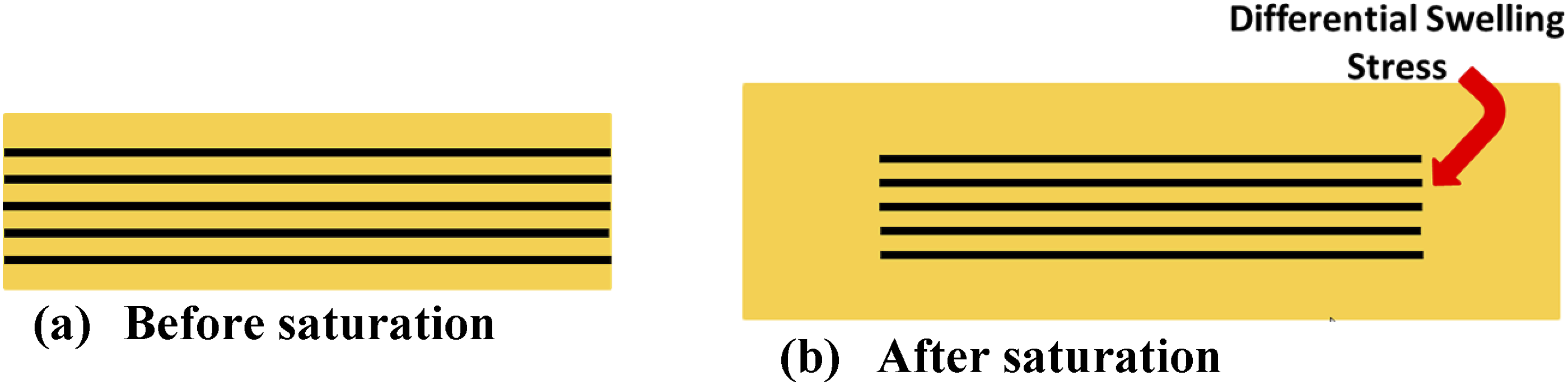
In composites reinforced with hydrophobic fibers, such as glass fibers, the absorbed water (under extreme exposure conditions) causes swelling in the matrix, while these types of fibers rarely swell due to their negligible water uptake. Different swelling rates between fibers and matrix result in internal stresses (Figure 10) and crack formation. Generated cracks may propagate more easily along corroded interfacial phases, eventually leading to interfacial debonding.2,59 The interfacial debonding was visually reported by Rocha et al. 2 (see Figure 9). Unlike unaged GFRP samples, fiber bundles were visibly traceable in their saturated counterparts. Visually detectable fiber bundles in aged samples represented cracks propagating along fibers and their debonding from the surrounding matrix.
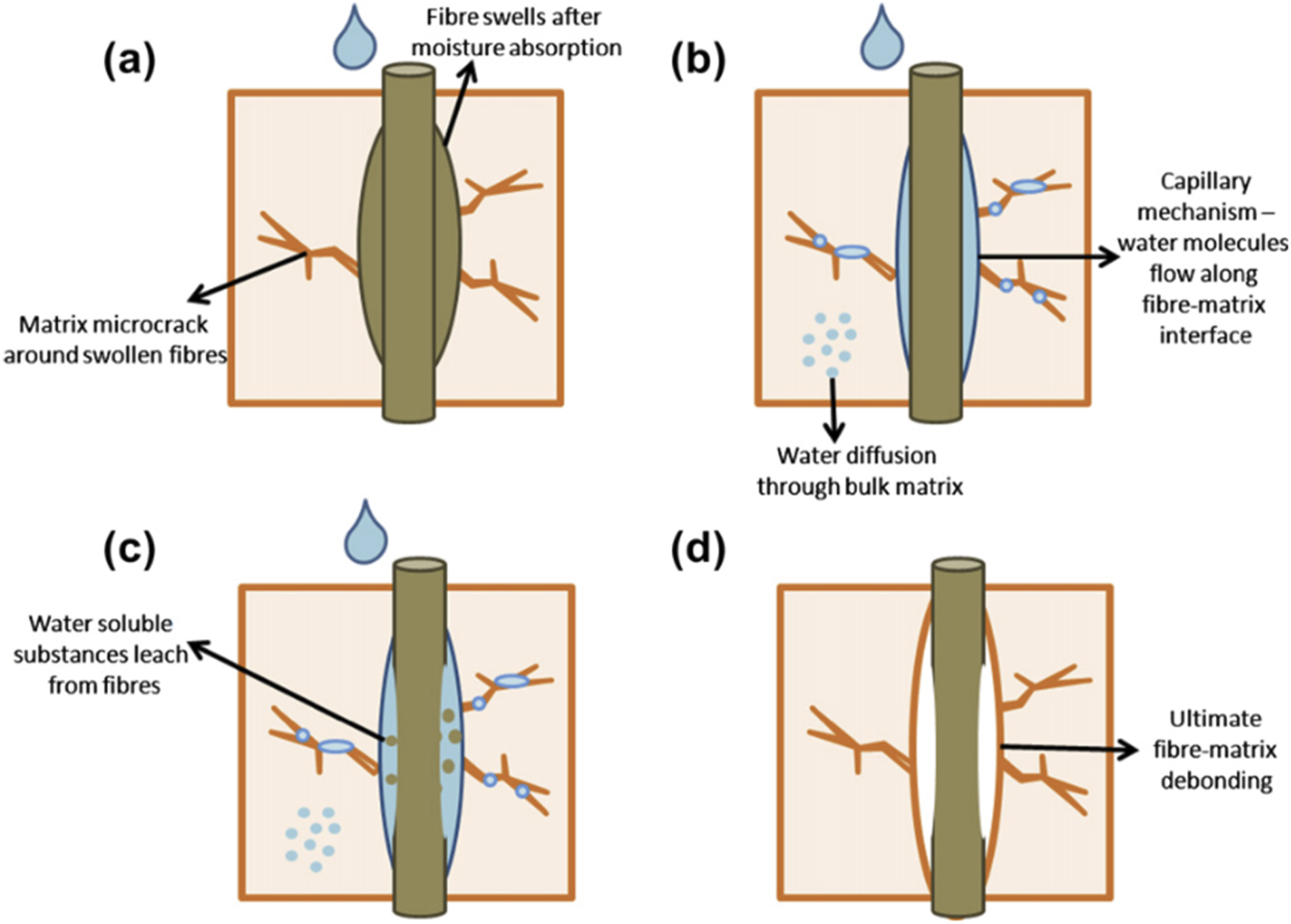
The debonding mechanism is slightly different for composites/hybrid composites including hydrophilic reinforcements, such as natural fibers and occurs in multiple steps as illustrated in Figure 11.18,44,77–79 These types of fibers are known for significant swelling under moisture absorption. First, the water penetrates the composite through microgaps of the polymer matrix or hydrogen bonding the hydrophilic groups of the natural fiber. Thus, the lignocellulose fibers swell due to water saturation, causing microcracks in the composite which can intensify even more the water accumulation in NFRPs. Next, water flows along the fiber-matrix interface via microcracks through the capillarity phenomenon. Finally, the leaching of water-soluble substances from fibers further aggravates this scenario and leads to ultimate debonding, leading to the degradation of NFRP’s mechanical properties.18,80 Additionally, the water absorption-desorption processes can induce damage in the laminates because of fatigue internal stresses.
40
Another drawback caused by uptake water refers to the dimensional variation of natural fiber composites.
80
Effect of water absorption on the fiber-matrix interface of natural fiber reinforced composites. The initial stage of absorption is shown in (a), with progressive changes over time due to water uptake as illustrated in (b) and (c), leading to ultimate fiber–matrix debonding as shown in (d).
18
The water uptake of natural fiber-reinforced polymers is typically observed to range from 0.7% to 2% after 24 hours, increase to 1–5% over the course of a week, and rise to 18–22% after several months.28,61 The water uptake causes the softening of the polymer matrix and the cellulose structure of the natural fiber reinforcement, increasing the material strain.10,80 Due to the hydrophilic nature of natural fibers, water tends to bond to cellulose molecules, allowing them to move freely. As a consequence, the plasticization effect implies a reduction in the glass transition temperature (Tg) and an increase in damping properties of FRP composites.10,17
Over time, the accumulation of moisture can promote natural fiber degradation through microbial attack. 18 The hemicellulose and pectin are usually the first plant components to be breakdown by fungi and bacteria. 81 Surface treatments can be applied to NFRP to improve moisture and microbial resistance. By modifying the hydroxyl (-OH) groups on the fiber surface, chemical treatments can reduce the water absorption in natural fiber reinforced thermoplastics. 82 This reduction in water uptake consequently decreases swelling and mitigates biological degradation. Similar findings have been observed in other thermoplastic composites reinforced with natural fibers. 28
The use of coupling agents to improve fiber-matrix adhesion, such as maleic anhydride, have also been found to reduce the moisture saturation content of NFRP submersed in water.28,78,83 Bonadies et al. 84 incorporated maleic anhydride modified polyethylene (MAPE) into thermoplastic composites made from recycled polyethylene and multilayer cartons. The addition of MAPE resulted in a slight reduction in moisture absorption, attributed to the formation of a polymeric layer on the fiber surfaces. This layer reduced the fibers’ tendency to bind water, thereby improving the mechanical properties of the composites. Thus, optimizing the natural fiber and matrix interface in manufacture is essential for the good durability and mechanical performance of biocomposites. 85
Recent research by the Composites Research Network (CRN)86,87 confirmed the feasibility of applying a new technique called “plastination” to natural fibers in hybrid GFRP composites, with the objective of hindering their moisture degradation. Plastination is a technique originally used in the preservation of human and animal body organs, which consists of replacing the water and fat present in the tissues with a polymer.86,87 The water removal aims to increase natural fiber durability by preventing degradation through biological activities. The results not only indicated lower moisture absorption in plastinated samples when used for outdoor structural applications, but also the plastination enhanced the mechanical properties of the base composite. Thus, plastination can be an ideal process for improving the performance and durability of the natural fibers applied to outdoor environments. 86
Finally, the literature reports fiber content as one of the main factors that affect moisture absorption in composites including NFRPs. That is because using a higher natural fiber volume fraction increases the presence of voids and cellulose, as well as the porosity of the composite.18,80 Thus, it is recommended that the fiber content be minimized to meet only the strength requirements of the material system. 80 This strategy can enhance the durability of the NFRP under exposure to outdoor environments.
Some moisture-induced damages, such as material leaching,2,88,89 microcracking, and interfacial debonding, are known to be irreversible. 2 On the other hand, plasticization and differential swelling stresses are fully recoverable after desorption, together with hydrolysis reaction as a partially recoverable degradation process.2,7 Presence of hydroxylic groups in fibers sizing may slightly mitigate fiber-matrix debonding.7,90–92 Namely, intermolecular hydrogen bonds may form between these hydroxylic groups and matrix polymeric chains. Therefore, water molecules, bridging fibers to the matrix, may promote some extent of reversibility to debonding.
Effect of sea water and corrosive media
Under immersion in seawater, the degradations of GFRP composites have been reported to be generally the same as those for deionized water.25,39 Fang et al. 39 conducted experiments using an artificial solution as representative of sea water and found it less damaging than tap for glass fiber/polyester composites. The salt solution has higher molecular weight and higher density compared to tap water; therefore, its flow into the composite matrix is restricted. Also, salt crystals may penetrate to the material structure and impose additional hindrance to penetration of destructive water molecules.29,39,93–96
High temperatures accelerate the degradation of GFRP under wet conditions; however, the durability of GFRP bars in seawater has been reported to be enhanced compared to those exposed to tap water, particularly under high-temperature conditions.29,97 Almusallam et al. 97 observed that, over an 18-month period, GFRP bars in seawater exhibited an 8% lower retention of tensile strength compared to those in tap water at room temperature. However, GFRP bars exposed to seawater at 50°C retained 84% of their tensile strength, compared to 76% for those exposed to tap water under similar conditions. At elevated temperatures, a thin salt layer can form on the surface of GFRP bars immersed in seawater. This layer acts as a protective barrier, limiting the ingress of water molecules into GFRP composites.29,97
Immersion in seawater has also shown to cause less water uptake in glass fiber-reinforced thermoplastics.95,98 Robert, Roy, and Benmokrane 95 found that, for a given period, the saline solution uptake (up to 1% wt) was lower than the uptake of tap water (up to 2.5% wt) at 23°C in glass fiber/polypropylene thermoplastic composites. Despite this, seawater had a greater effect on flexural strength loss (up to 44%) compared to tap water (24%) at the same temperature, which is attributed to fiber/matrix degradation caused by the NaCl molecules in seawater.
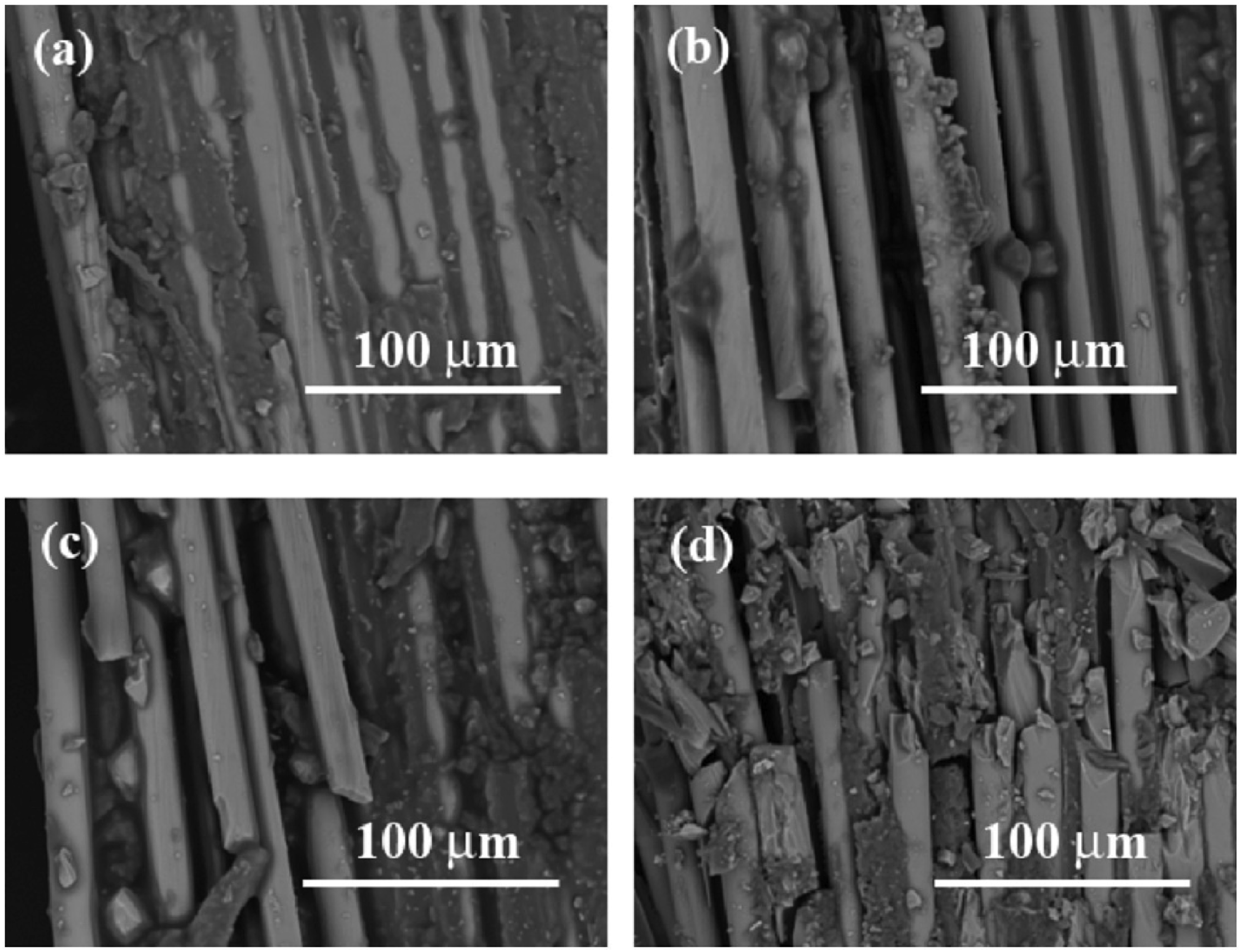
Fang et al.
39
observed similar behavior in GFRP composites immersed in seawater, where prolonged exposure led to increased fiber breakage, fiber pull-out, and accelerated polymer degradation, as shown in Figure 12. For samples immersed for 6 months, Figure 12(d) demonstrates that debonding occurred at the fiber-matrix interface, resulting in subsequent fiber pull-out. In the presence of moisture, resin hydrolysis and interface debonding were identified as the primary factors contributing to the reduction in the flexural properties of GFRP composites. Morphological images of GFRP composite surfaces after different seawater immersion periods: (a) 0 days, (b) 2 months, (c) 4 months, and (d) 6 months.
39
Similarly, poly(phenylene sulfide)/glass fiber reinforced thermoplastic composites exposed to distilled water (0.7%) also exhibited more water uptake than artificial seawater (0.3%) after reaching the saturation point. 98 In the latter study, wet conditioning induced strong matrix plasticization, which reduced the shear strength of the GFRP composites. However, seawater was found to have a much less adverse effect compared to distilled water (12% loss vs 40% loss in ultimate tension values). This difference was partly due to the higher temperature of distilled water (80°C) compared to seawater (room temperature).95,98
On the other hand, natural seawater is reported by Aldajah et al. 25 as a media with more damaging effects on polymer matrix deterioration and fiber/matrix adhesion weakening in GFRP composites compared to tap water. The impact of natural seawater is mainly dependent upon its chemical composition and should vary from place to place. This degradation by natural seawater should be based on its greater alkalinity than tap water. 99
In a study by Bazli et al., 99 alkaline media was reported as the most destructive environment to GFRP composites (up to 44% mechanical property loss), compared to acidic (31%) and seawater media (30%), ranked consecutively next. Manalo et al. 100 also reported that the alkaline solution was more aggressive toward GFRP bars than tap water or saline solution, significantly reducing their interlaminar shear strength. After 112 days of exposure to the alkaline solution at 60°C, GFRP bars retained only 30% of their interlaminar shear strength, compared to 41% and 54% for those exposed to tap water and saline solution, respectively.
Immersion under natural seawater more dramatically affects the surface quality of synthetic-fiber reinforcing polymers. 101 Indeed, sodium hydroxide may form in a reaction between seawater sodium ions and hydroxyl groups in polymeric chains. The resultant pressure from this formation causes blisters on the surface of submerged composite and affects the surface quality.
Ultraviolet (UV) irradiation and photo-degradation effects
Ultraviolet (UV) radiation also adversely affects composites, specifically their matrix structure, as summarized in Figure 13. It usually leads to more significant changes than extreme temperature exposures and thermo-oxidative media.
46
Although the fleeting period of UV irradiation normally has minor effects on composites
102
and moderate exposure time tends to stiffen the matrix structure, prolonged UV radiation can trigger photo-degradation or photo-oxidation in composites.
44
As a result, long UV radiation exposure leads to changes in molecular structure (in both monomer units and polymeric chains),
7
in the appearance (their color and glossiness),
103
and in the mechanical properties of composites.
46
Main effects of UV irradiation on composites.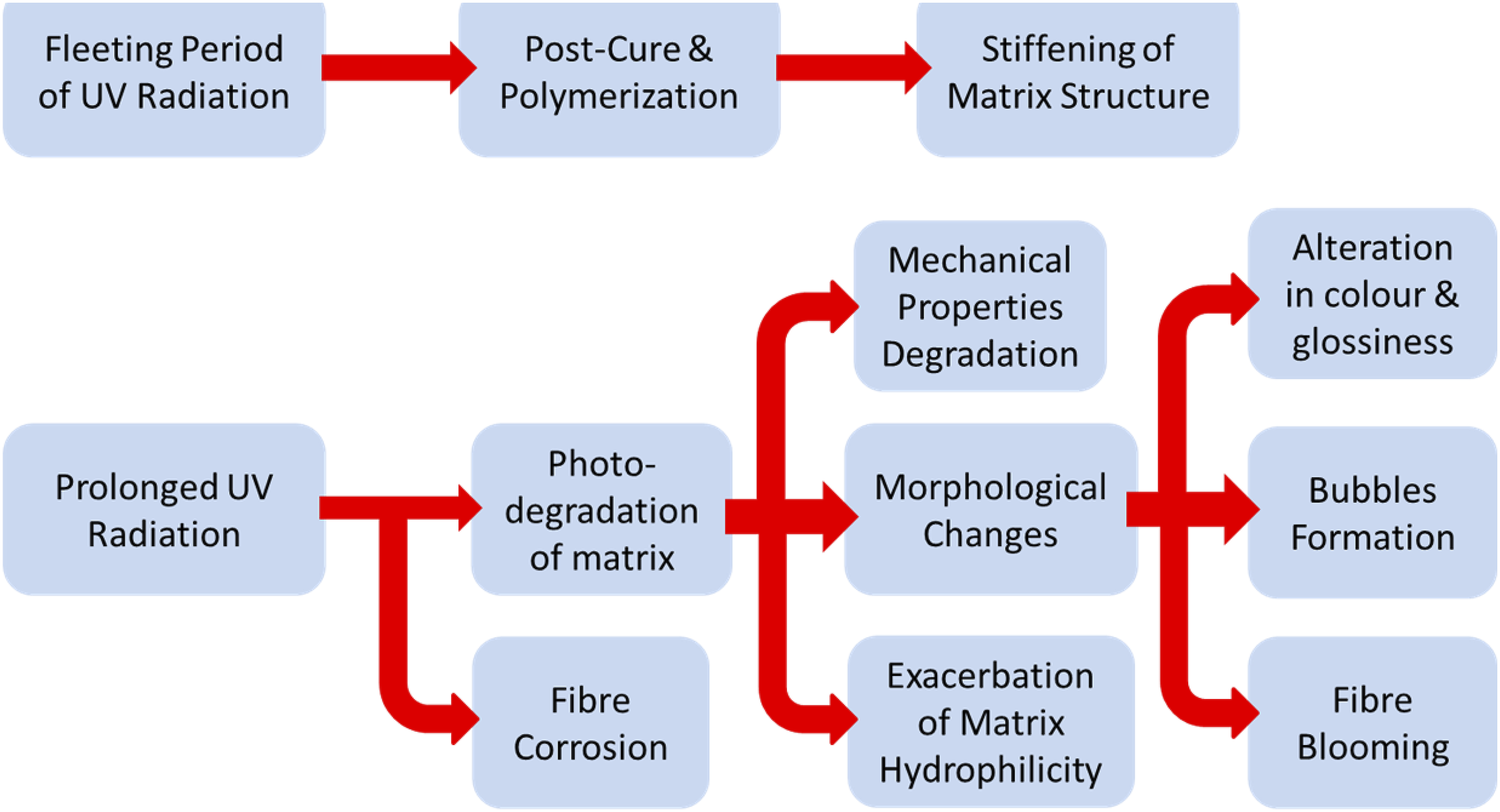
The flow of oxygen and the resultant effects were investigated under UV irradiation by Liau and Tseng. 104 More degradation was evidenced for composites under synergistic exposure to both UV radiation and airflow, rather than those irradiated in a vacuum. Broken chains in the latter case were not capped by external molecules and hence re-bonded again.
UV radiation may accelerate oxidation as a destructive reaction. 102 Degradation inflicted by UV is mainly limited to the vicinity of the irradiated surface. 44 Indeed, outlying layers protect internal sections from degradation, as they consume diffused oxygen and retard UV rays.
UV radiation has also reported to slightly mitigate the repercussions of moisture ingress in glass fiber reinforced polymer composites.
9
The irradiated surface starts to shrink as crosslinking actions make the matrix structure more compact (exaggerated in Figure 14). The resistance of protected unexposed layers against this shrinkage leads to the imposition of internal compressive stress (Figure 14(b)), promoting fiber-matrix bonding and alleviating matrix swelling. Therefore, minor mitigation of moisture sorption side-effects is plausible by exposure to UV radiation effects in synthetic fiber-reinforced polymers. Shrinkage of the UV irradiated surface, improving the interfacial bonds (black lines represent fibers, and the yellow area shows the surrounding matrix). (a) Before irradiation and (b) after irradiation.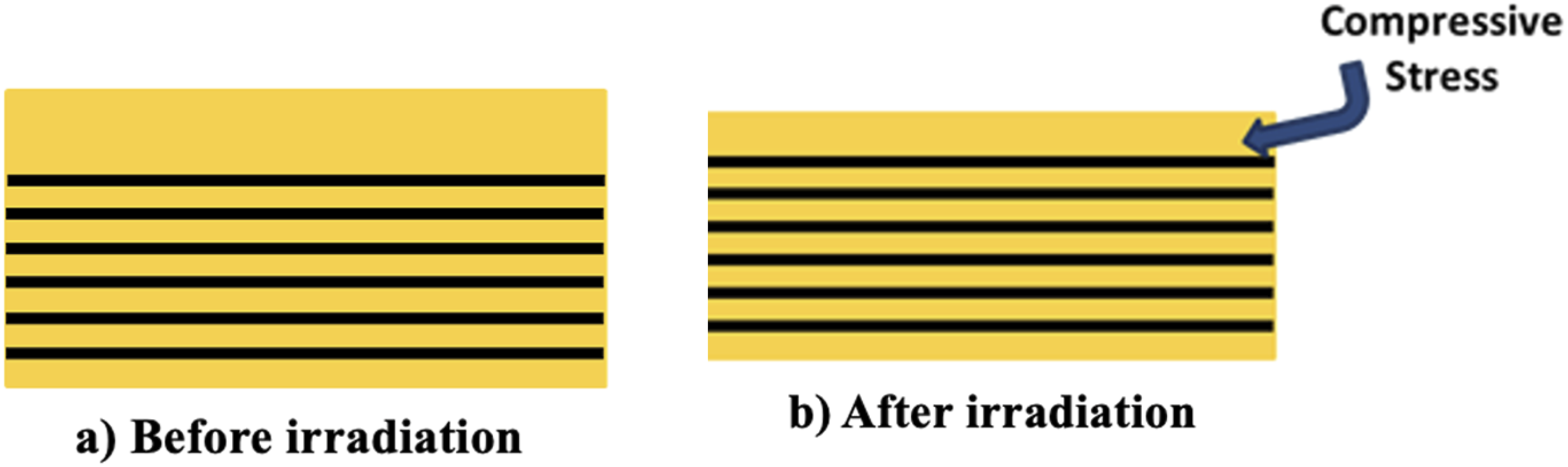
However, such mitigation may not be possible for natural fiber-reinforced polymers (as used often in hybrid with glass fibers) due to their more complex degradation mechanisms attributed not only to the polymer but also to the reinforcement. 16 While UV radiation induces crosslinking in synthetic polymers, making the matrix structure more compact and reducing swelling (as noted by Bajracharya et al. 9 ), this benefit is counteracted in NFRP by the swelling behavior of natural fibers under humidity exposure (see Figure 11). 18 The contrasting responses of the polymer matrix (shrinkage) and natural fibers (swelling) generate internal stresses, accelerating the degradation of the polymer matrix, leading to crack formation and compromised mechanical integrity.14,16,18 This degradation mechanism was observed in the studies by Yan et al., 14 which, for example, demonstrated that UV exposure can slightly increase the moisture absorption and thickness swelling of the flax/epoxy composites. Moreover, the limited penetration depth of UV light and the diffusion behavior of water further complicate the degradation process, with impacts dependent on specimen thickness. 16 These factors underscore the complexity of applying UV exposure as a mitigation strategy for moisture effects in the NFRP.
Studies on UV radiation and the resultant photo-degradation are developed by either complex structural analysis techniques or data analysis methods.103,105–108 Scanning Probe Microscopy (SPM) and Fourier Transform Infrared Spectroscopy (FTIR) are the popular structural analysis techniques in the literature that evidence changes in atomic scale. Data analysis techniques are commonly applied to measure mechanical properties to assess how the material performance shifts due to exposure conditions.
Imposed changes in molecular structure
On the molecular scale, UV radiation may lead to chain scission after prolonged exposure. For instance, in polyesters, the dissociation energy of
Apart from matrix degradation, reinforcements may similarly corrode by exposure to UV.
102
As an illustration, oxide groups contained in glass fibers, such as
Scissioned-chains with lower molecular weight and accordingly dwindled intermolecular Van der Waals bonds are more susceptible to being leached from the bulk of the material. This leaching from the bulk of resin affects surface quality and leads to excessive roughness on the irradiated surface.
103
The removal of broken chains is evidenced by Wang et al.,
46
as illustrated in Figure 15. For GFRP composites aged under UV radiation, exposure of reinforcements was a significant clue to the leaching of broken chains from the external layers. Morphology of the GFRP composite surfaces: (a) before aging, (b) after 240 days of thermo-oxidative aging, and (c) after 240 days of artificial UV radiation aging using a xenon arc lamp.
46
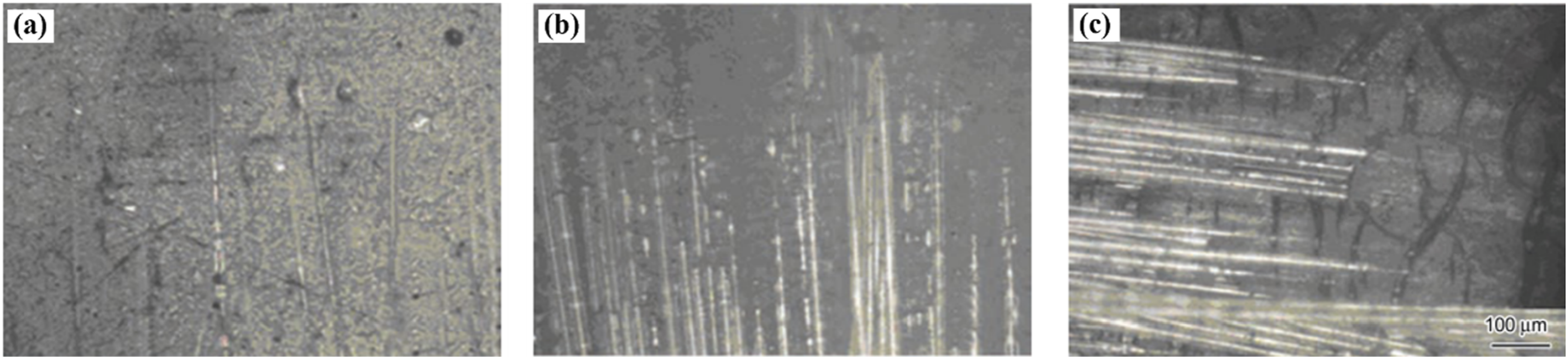
Photo-thermal oxidation and the resultant chain scission may also increase polarity in the matrix structure and raise the potential for moisture sorption. 103 Polar groups, such as alcohols and hydroperoxides, 7 may form after chain scission. Owing to the potential of these groups in developing intermolecular hydrogen bonds with water molecules, the risk of moisture absorption is enhanced.
Before the outset of photo-degradation, UV radiation leads to a firmer matrix structure, typically on the irradiated surface. Chains, including those that remained unsaturated in their chemical structure (
Cracks formation
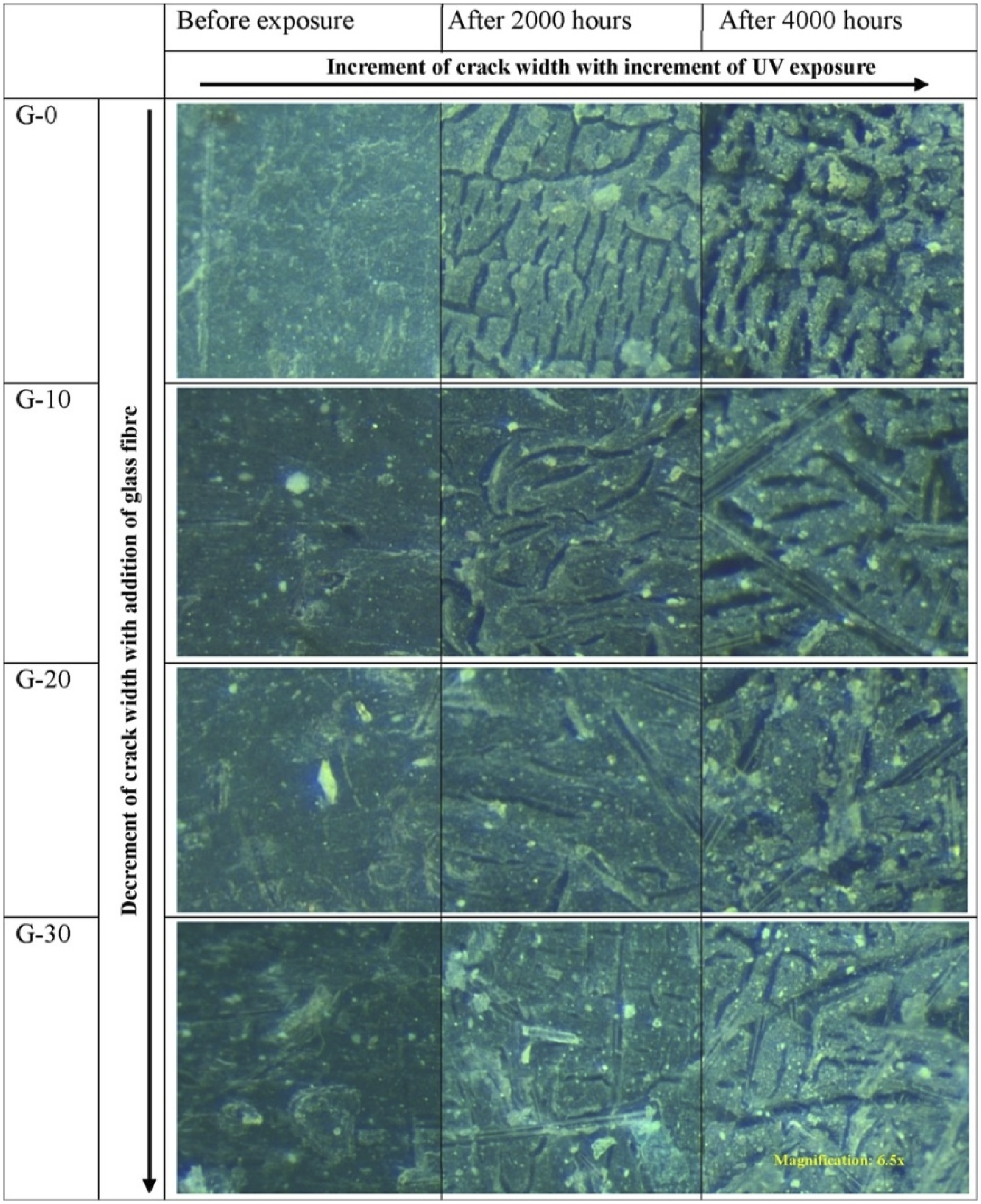
UV radiation also leads to the evolution of slight density gradients and residual stress in composites, ultimately precipitating crack formation in their structure. Photo-degradation and the resultant chain scission leave composites with lower density on their outer layers. On the other hand, both post-curing and polymerization, as short-term UV exposure outcomes, lead to a denser and more compact structure at the irradiated surface. The consequent residual stress in the material, either after short or extended exposure to UV, results in internal stress and, ultimately, the generation of microcracks in the material structure as evidenced in Figure 16.9,112,113 Surface degradation and fiber content’s role in micro-crack formation in short glass fiber-reinforced thermoplastic composites after UV radiation.
9
Daily temperature variation is another contributory climatic factor in crack formation. 104 Considering differences in the coefficient of thermal expansion (CTE) between fibers and matrix, daily variations in temperature can impose internal thermal stress (residual stress) and eventually form cracks. Generated cracks are additional pathways to invasive oxygen, contributing to further aggravation of the thermoplastic matrix erosion. 9
Imposed changes in performance of composites
Firstly, GFRP composites change their visual performance due to UV radiation, which results in photo-degradation. UV affects surface quality and alters both color and glossiness of these materials.46,103,114 Evident bubbles formed by the photochemical changes in the matrix structure 102 may also affect visual and mechanical performances.
Delamination of reinforced layers was verified for irradiated GFRP composites by Croitoru et al.,
103
where the material surface roughness was more intense after irradiation. Namely, the leaching of broken polymeric chains from the bulk of the material led to the inferior surface quality of samples after prolonged radiation exposure. Significant color changes were also reported for composites aged under UV irradiation.
103
Chromophoric groups, such as groups containing
Photo-degradation is also affecting glossiness in GFRP composites. In the matrix structure, metallic ions, like cobalt ions, may further deteriorate this loss of glossiness.
46
Typically used as promoters, these metallic ions take part in chemical reactions and hasten chain scission in the matrix molecular structure. Inorganic fillers, such as
Besides their visual performance, UV radiation may also affect their mechanical properties. However, their changes are proven to be minor since only a thin layer adjacent to the irradiated surface is affected. 102 Both tensile and bending strengths were evidenced to rise at the first radiation stage (by up to 26% and 7%, respectively), followed by their decline after prolonged aging (by up to 10% and 20%, respectively, compared to their initial properties). 46 The initial rise was attributed to the combined effect of polymerization and post-curing, while the subsequent decline is the aftermath of photo-degradation. Formation of microcracks after UV radiation and debonding of fibers from the surrounding matrix may also lead to additional degradation of mechanical properties. As a clue to debonding induced by UV radiation, fiber pull-out was evidenced by Gu 102 after the failure of GFRP samples and mainly around their irradiated surface.
More fiber content in composites generally implies an improved aging resistance and better properties retention. 102 As an essential clue, fiber reinforcements were identified by Bajracharaya et al. 9 to defer aging discoloration for GFRP composites. Firstly, fibers bind the matrix structure and therefore hinder its degradation. Secondly, photochemical reactions are delayed when composites contain more fiber content, as fibers impede the penetration of UV rays into the material’s internal sections. 114
Coating application is also known to be effective in limiting the erosion of composites under UV radiation. 103 Veils and coatings absorb UV rays and impede their entrance to the body of the composite material. However, coatings are also permeable and often transparent to some ranges of UV wavelength spectrum. The color of the applied gel coat also plays a significant role. For instance, white coatings were evidenced to be more transparent to UV rays in Croitoru et al., 103 compared to their red counterparts and more damage was detected in samples with a white gel coat on their surface.
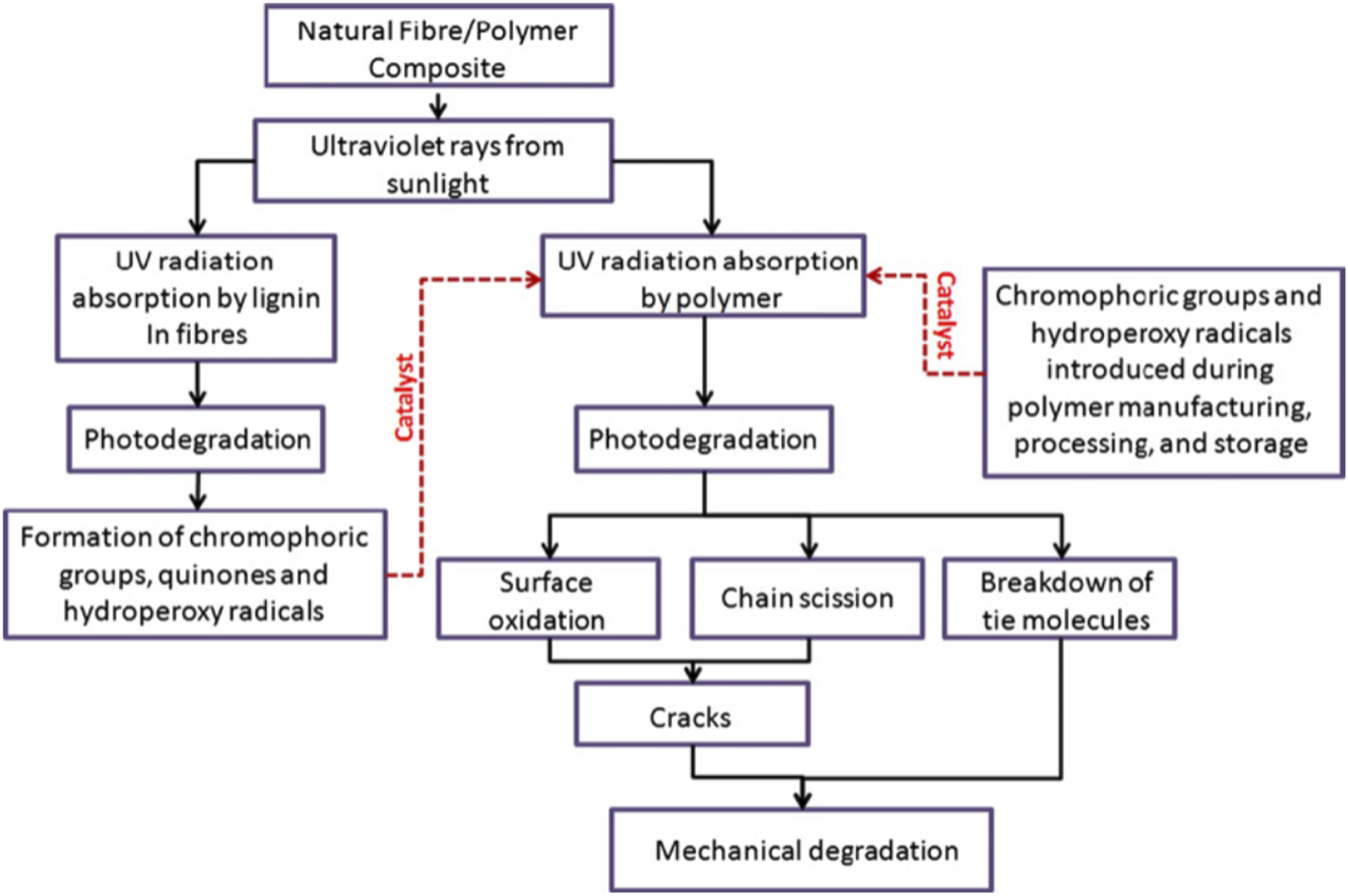
For NFRP composites, the lignocellulose components are the first to be affected by UV exposure, as summarized in Figure 17. More specifically, the lignin structures present in plant fibers are responsible for 80–95 % of the UV radiation absorption.
18
The photo-degradation process leads to the formation of chromophoric groups and hydroperoxyl radicals, which tend to cause yellowing in the lignin and loss of glossiness of the composite material.44,46,115 These chemical groups, combined with other residual catalysts introduced composite manufacturing, can promote the photo-oxidation of the polymer matrix surface. Thus, the composites have their chemical structure modified due to chain scission, which results in molecular weight reduction. Over time, the photo-oxidation process tends to lead to the formation and propagation of cracks in the composite structure. As a result, NFRP becomes more prone to moisture and biological degradation, in addition to having mechanical properties such as the modulus of elasticity decreased.18,44,46,115–117 Moreover, the presence of cracks on the surface of the composites also causes discoloration/whitening due to light diffusion.18,115 Main effects of UV irradiation on natural fiber reinforced polymers.
18
Despite the harmful effects of sunlight absorption on the NFRP composites, minor improvements in tensile and bending performance were noted in polymer composites under a fleeting UV exposure period. 46 This phenomenon is known as post-curing and consists of the polymerization of unsaturated chains of the composite matrix under UV radiation. Thus, UV sunlight absorption by polymeric composites can increase their crosslinking density as well as their material strength.46,118 On the other hand, post-curing tends to restrict the material’s molecular mobility by making the polymer chains longer. This stiffening of the polymer matrix has a negative effect on the damping performance of the composites, reducing the energy absorption capacity of the NFRPs.46,119
Accelerated weathering
Although the individual impact of each climatic agent on composites weathering is well studied in the literature, studies targeting their synergistic (combinative) effect are scarce. 120 Numerous studies1,3,7–17 have aimed at artificial aging experiments to meet this objective and assess composites’ long-term environmental performance. The reproducibility and swiftness of these controlled aging experiments have made them popular among researchers as a convenient method.112,121
In artificial aging, natural climatic exposures are simulated by an aging chamber under controlled conditions. Composites undergo cyclic exposure to UV radiation, moisture, and heat in aging chambers. Accelerated aging experiments are generally carried out at elevated temperatures to precipitate degradation. The performance of composites is monitored in predefined intervals, and their changes are evaluated in different conditions. 18
Glass fiber reinforced polymers
Both reinforced and unreinforced isophthalic polyester resin samples have been artificially aged in a study by Mouzakis et al. 7 Composites were reinforced with 20% in volume of glass fibers, while other samples were neat resin specimens. Aging was carried out at an elevated temperature in an aging chamber, under cyclic exposure to UV radiation and humidity. Post-curing and pseudo-crosslinking notably led to the stiffening of neat samples. However, no significant changes were reported for glass fiber reinforced composites specimens, mainly due to inaccuracies crept into experiments. As an illustration, differences between the dimensions of reinforced and unreinforced samples were clear sources of uncertainties in this study.
The durability of pultruded E-glass fiber reinforced polymers (E-GFRP) was studied by Carra et al. 1 Samples synthesized from three different types of resin, namely isophthalic polyester, orthophthalic polyester, and vinyl ester, were artificially weathered in an aging chamber. Aging comprises extreme conditions, such as high temperatures, freeze-thaw cycles, moisture, and UV radiation. All samples were declining monthly in mechanical and visual performance after 6 months of aging. Vinyl ester resin specimens had lower moisture absorption and mechanical properties variation than the other two counterparts, implying their higher hydrolytic stability and degradation resistance. Flexural strength was evidenced as the mechanical property most affected by aging, compared to tensile strength and stiffness.
The synergistic effect of climatic agents was investigated on E-glass and ECR-glass-based thermoset composites in Lu’s work. 8 Aging was carried out at an elevated temperature in an aging chamber, whose environment was comprised of UV radiation and water condensation. The weight of samples was monitored during the aging span; similarly, surface quality was inspected, yet only at the end of exposure period. More substantial and more extensive erosion was evidenced under the combined action of climatic agents rather than their individual influence. This was firstly due to the formation of hydroperoxides, and secondly due to the removal of water-soluble and insoluble particles. Hydroperoxides, formed under synergistic exposure to UV radiation and moisture, are highly reactive intermediates and contribute to the scission of unaffected polymeric chains.122,123 Decreased intermolecular forces between broken chains suggest their potential to be removed from the material bulk and imply a decline in mechanical performance. The former material leaching from the surface leaves inner layers unprotected and, therefore, at risk of damage and further degradation.
The durability of polypropylene thermoplastic composites with varying densities, reinforced with chopped (short) glass fibers, was investigated by Bajracharya et al. 9 at elevated temperature and under exposure to UV radiation and moisture. Test specimens comprised mixed Plastic Solid Waste (PSW) with reinforcement weight fraction varying from 10% to 30%. Results showed 4% higher property retention for reinforced specimens than the neat PSW samples. Additionally, the higher fiber content in samples seems to have boosted their property retention during aging. In particular, fibers hindered additional degradation in this experiment, as they held the resin chunk and hampered cracks formation. Also, considering the discontinuity of fibers, fiber-matrix debonding was not a paramount issue in this case. Overall, the higher fiber content in composites with chopped reinforcements reduced moisture absorption from 1.4% to 0.71% compared to PSW and led to more retention of properties upon 4000 hours of exposure. Results also suggested UV radiation as a mitigating agent for moisture absorption side-effects such as matrix swelling and weakened fiber-matrix bonds. Namely, the shrinkage of irradiated layers is inhibited by unexposed internal sections; hence the resultant compressive stress can lead to improved fiber-matrix bonding.
Pultruded E-glass fiber reinforced epoxy bars in four different diameters were artificially aged in Ashrafi et al. study.
3
In an aging chamber, samples were subjected to a sequential exposure to UV radiation and water vapor condensation at elevated temperatures. Each degrading agent’s impact and effect on the bars’ mechanical properties were investigated at different stages. Morphologically, microcracks caused by differential density stresses were deemed a significant concern. Cracks, mainly formed by UV radiation, were evident on the surface of bars aged for 3000 h. Among agents involved in moisture absorption, relative humidity was more detrimental than water immersion, as water molecules are more mobile in a gaseous state. Although a general decline was evidenced in flexural performance, aging did not significantly changes tensile properties. Indeed, tensile performance is more strongly related to fiber properties, which are not dramatically affected by climatic aging. Variations in tensile properties were detected only when the surrounding temperature was reaching
NFRP composites
Accelerated weathering tests were performed on kenaf/sisal reinforced bioepoxy composites. 11 Samples were exposed to UV irradiation of 0.35 w/m2, extreme temperature up to 63°C and 30% humidity for 24 days. The results indicated that the mechanical properties of neat bioepoxy are more prone to degradation than its kenaf/sisal biocomposites. According to the authors, 11 kenaf and sisal reinforcements can help retain the properties of the composite and, therefore, are promising materials for semi-structural applications.
A study on sisal/hemp reinforced biobased epoxy composites 12 showed an increase in Young’s modulus and elongation at break values after 2222 h under accelerated weathering conditions. This result was attributed to the chain crosslinking and stiffening of the epoxy matrix catalyzed by the photo-degradation process. However, the UV light and water spray cycle were found to damage the fiber-matrix interface through the swelling and deswelling effect, reducing the flexural strength and modulus of the biocomposites. Despite this drawback, sisal/hemp hybrid composites showed potential for outdoor structural applications that require high impact resistance. 12
The water absorption effect on the physical properties of flax/biobased epoxy and flax/polyurethane composites was investigated by Cuinat-Guerraz, Dumont and Hubert. 10 Samples were aged at 90 %RH and 30°C for up to 30 days. Flax/biobased epoxy showed higher moisture uptake (10 %) due to its weaker interface bonding compared to flax/polyurethane (8%). As the water absorption increased, the mechanical failure mode of both composites changed from brittle to plastic due to the plasticizing effect of water. Hence, the composites’ short beam strength and glass transition temperature were also reduced. 10 Similar studies13,17 showed that moisture uptake increases the damping properties of flax/epoxy fiber composites while reducing their bending modulus. Interestingly, the effect of water on the damping properties of biocomposites was proven to be reversible when drying the aged samples. 17
Yan, Chouw and Jayaraman 14 analyzed the effects of UV light exposure and water spraying on flax fiber reinforced epoxy composites. Discoloration, microcracking and fiber/matrix interface bonding degradation were observed after 1500 h of the accelerated aging test at temperatures up to 60°C. Tensile and flexural mechanical properties were reduced by up to 35% and 14%, respectively. Additionally, UV exposure was shown to slightly increase the moisture absorption and thickness swelling of the flax/epoxy composites. 14 Although natural fiber composites are more susceptible to degradation, a similar study 15 noted a 29% decrease in transverse tensile strength of carbon fiber/epoxy composites under UV radiation and condensation for 1000 h.
A recent study from Xu et al. 16 investigated the effect of UV-water weathering on the mechanical properties of flax/polyester composites manufactured using vacuum infusion. Samples were subjected to a 1500-h accelerated weathering cycle that included UV light exposure, water spray, and condensation. The study revealed that thinner samples (2 mm) were more significantly affected by the weathering process, exhibiting reductions of 17% and 38% in tensile strength and modulus, respectively, and 24% and 52% in flexural strength and modulus. In contrast, thicker samples (4 mm) showed reductions of only 11% and 26% in tensile strength and modulus, respectively, and 18% and 35% in flexural strength and modulus. The study also concluded that UV-water exposure leads to a more significant reduction in tensile and flexural modulus compared to tensile and flexural strength, with thinner samples being more severely affected than thicker samples.
Natural weathering
While the speed of experiments in accelerated aging tests has convinced many researchers to use artificial aging chambers in material weathering studies, reports are showing no exact correlations between artificial and natural aging scenarios, 124 especially regarding mechanical properties degradation.1,9
Aging cycles are regular and predictable in aging chambers, unlike unpredictable and “chaotic” cycles that parts may experience in real (natural) weather conditions. 124 The composite degradation rate primarily depends on several factors, such as UV radiation, temperature, humidity, precipitation, and their intensity. 125 Differences in the severity of climatic agents may change the involved degradation process, as different weathering regimes result in different degradation patterns. 113 Hence, artificial aging experiments may not ensure a deep insight into the natural weathering of composite parts.
Natural aging has scarcely been addressed in the literature, as significant time and effort is required for such tests. 18 These experiments are mostly performed in the exposure to a climate in which a designed product is expected to be during its service. 124 Long-term performance of specimens is typically monitored by real-time measurements during the aging period. 44
Glass fiber reinforced polymers
The natural durability of pultruded E-glass fiber reinforced polymers was studied by Sousa et al. 126 Test specimens of either polyester or vinyl ester matrixes were subjected to accelerated or natural aging. Vinyl ester samples presented more stability in their properties during the experiment than their polyester counterparts and, accordingly, more resistance against aging. Artificial and natural aging significantly altered the visual performance of the specimens, such as surface color and glossiness. Fiber blooming was an additional concern after aging in both scenarios, affecting surface quality. Photochemical degradation and the subsequent leaching of degraded segments notably led to unveiled exposure of glass fibers. While this study revealed a strong correlation between artificial and natural aging in the visual appearance of aged samples, such correlation was not evident for tensile strength. Indeed, samples consistently declined in their tensile strength when aged artificially (between 14–21%), while fluctuation was evidenced for this property during natural aging. The discussed study could not address the effect of seasonal climatic changes on composite performance, as measurement increments were so wide (>1 year) for the natural aging experiment. 126 Also, the effect of each climatic degrading agent, namely temperature, UV radiation, humidity, and precipitation, was not precisely studied as an exploratory multivariate analysis.
Carra et al. 1 also studied the natural aging of pultruded E-glass fiber reinforced polymer composites and detected variations in their mechanical and aesthetical performances. However, no meaningful correlations were revealed between natural and artificial aging results. Differences between artificial and natural weathering cycles led to this contradiction between the results. As an illustration, the two aging scenarios are not necessarily the same in the wavelength of the involved UV rays or the intensity of other degrading agents. Additionally, changes in the composite properties were not diligently monitored during the natural exposure period, only at the end of the year.
NFRP composites
Natural aging effects on the properties of wood/polypropylene composites have been reported by Homkhiew, Ratanawilai and Thongruang. 127 In this study, test specimens with various wood content were placed on a rack at 45° in Thailand for 360 days. By increasing the composite wood reinforcement from 25 to 45 wt%, the flexural strength and modulus decreased approximately 5% and 6%, respectively. Higher fiber content leads to more fiber swelling, which causes microcracks and compromises stress transfer efficiency between fiber and matrix exposed to outside environments. Despite this, wood composite showed better degradation resistance than its neat polymer, especially regarding hardness. 127
The physical-mechanical properties of pultruded jute/phenolic composites were evaluated under natural weathering exposure for 5 years. 128 After 1 month of exposure, a slight improvement up to 7 % in tensile and flexural strength was observed. The mechanical degradation and swelling of the biocomposites were intensified after 3 months of exposure, reaching a loss of 23% in tensile modulus and 40% in bonding strength after 2 years. At the end of the 5 years, aged samples had their color and surface roughness changed as consequences of lignin degradation and fiber debonding, respectively. 128
Date palm fiber reinforced polypropylene thermoplastics were naturally weathering for 9 months in Saudi Arabia. 121 Unlike neat PP and its composites using compatibilized additives, the melting temperature of date palm/PP uncompatibilized composites remained stable as a function of weathering time. Small changes in stress and strain at maximum load were noticed in the first 3 months. At 9 months of aging, PP lost more than 50% in tensile strength, while the biocomposites reduced their performance by less than 20% within 9 months. 121
Concluding remarks
This article reviewed a number of earlier studies on polymer composites degradation, focusing on glass fiber as well as natural fiber reinforced composites. The incurred changes under the climatic exposures, both under artificial and natural aging, could be justified by the following factors: • FRP degradation rate is dependent on a variety of contributory climatic agents, such as UV irradiation intensity, temperature, and humidity, together with proximity to oxygen. • Moist and humid environments notably diminish composites’ strength and stiffness. The primary outcomes of moisture absorption were found to be matrix plasticization, swelling of both fibers and matrix, broken polymer chains under hydrolysis reactions, weakening of fiber-matrix bonds and eventually their debonding, and finally matrix hardening after desorption (pseudo-crosslinking). • Elevated temperatures accelerate moisture uptake in composites by increasing the density of microcracks, which in turn raises void content and moisture permeability. The decreased viscosity of water at higher temperatures, coupled with the thermal gradients within the material, further enhances the rate of water penetration, thereby increasing the risk of moisture sorption. • Immersion in seawater results in reduced water uptake in GFRP compared to tap water, with this effect becoming more pronounced at elevated temperatures. The reduced water uptake is due to the higher molecular weight and density of the salt solution, which restricts its flow into the composite matrix. Additionally, the formation of salt crystals within the material structure creates a barrier that further impedes the penetration of harmful water molecules. • UV irradiation is generally involved in photo-degradation and microcracks formation. Before the outset of photo-degradation, UV exposure results in post-curing of resin, making matrix structure more brittle. As UV mostly impacts the irradiated surface, post-curing is mainly concentrated on the outer layers, imposing minimal changes to laminate mechanical properties. Thus, changes inflicted by UV radiation are typically evidenced in composites’ appearance rather than their mechanical performance. • UV radiation has been shown to slightly mitigate moisture ingress in glass fiber-reinforced polymer composites by inducing crosslinking, which reduces swelling. However, this effect may not be as effective in natural fiber-reinforced polymers. While UV radiation causes the polymer matrix to shrink, natural fibers swell when exposed to humidity, creating internal stresses that accelerate polymer degradation and lead to crack formation. These cracks, induced by UV exposure, can, in turn, increase moisture absorption and swelling in flax/epoxy composites. • To simulate long-term natural outdoor exposure of composites, a number of studies were provided in an artificial aging chamber under controlled condition. Aging cycles, however, have been regular and predictable in weathering chambers. The intensity of climatic agents in artificial aging is also not necessarily the same as those under a natural aging condition. Thus, no precise correlations may exist between artificial and natural aging research results.
Even though degradation is found to be significant under the synergistic interaction of climatic agents, studies reporting composite natural weathering are seen to be very infrequent, with minor emphasis on the effect of seasonal changes, plus the impact of the manufacturing process and design variables. Namely, most pertinent literature has neglected the role of variables such as reinforcement architecture type, coating application, and the initial curing process. In parallel with optimization of composite design and manufacturing factors mentioned, future studies, including multivariate exploratory (statistical) data analyses, are recommended for enhanced understanding and durability estimation of FRP products under accelerated/natural weathering. Future study may also explore the weathering effects on the inherent coupled mechanical properties of fiberglass fabric reinforced composites, which are known to be a driving mechanism for altering the onset of defects during manufacturing and in service. 129
Footnotes
Acknowledgments
The authors would like to thank Mr Chungyeon Cho from The University of British Columbia, Canada for aiding in the editorial aspects of the work. The intellectual support and brainstorming of colleagues at the Composites Research Network (CRN) in Canada are greatly valued.
Declaration of conflicting interests
The author(s) declared no potential conflicts of interest with respect to the research, authorship, and/or publication of this article.
Funding
This study was partly supported by Natural Sciences and Engineering Research Council (NSERC) of Canada.
Data Availability Statement
Data sharing not applicable to this article as no datasets were generated or analyzed during the current study.