




Abstract
In order to design glass fiber weft-knitted biaxial tubular (WKBT) fabric with the excellent dimensional stability and outstanding mechanical properties, six kinds of WKBT fabrics were prepared by four kinds of knitting structures (1 + 1 rib structure, face plating structure, back plating structure and face and back plating structure) and two kinds of stitch yarns (polyester and polytetrafluoroethylene fiber). The tensile properties, tearing properties and bursting tearing properties of WKBT fabrics with different binding tightness were investigated. The results showed that the failure of WKBT fabric was composed of the breakage of insertion yarns and the breakage of knitting structures. The tightness of knitting structures have significant effect on the mechanical properties of WKBT fabric. Compared with 1 + 1 rib structure, the plating structure affects the mechanical properties of WKBT fabrics by improving the weft density, binding tightness and dimensional stability. The kind of stitch yarn is another factor that affects the mechanical properties of WKBT fabrics.
Keywords
Introduction
The weft-knitted biaxial tubular (WKBT) fabric is a special kind of weft-knitted tubular preform that consists of knitting structure and insertion yarns. The single or multiple filaments are inserted in the special direction and bound by knitting structure, such as plain stitch and rib stitch. Due to the good elasticity and extensibility of weft knitting structure, the WKBT fabric has excellent near-net-shape formability and structural designability. 1 The key advantage of WKBT fabrics is the ability to form relatively complex tubular shapes without wrinkled yarns, which is unmatched by other tubular fabrics. Using high performance fibers as the insertion yarns gives the fabrics in-plane and out-of-plane mechanical properties superior to conventional weft-knitted fabrics. 2 Unlike the composites reinforced by stacking fabrics or fibers in a certain sequence, stitched composites have excellent delamination resistance, impact resistance and fatigue life.3,4 For these reasons, the WKBT fabrics reinforced composites are widely used in oil and gas flexible pipeline, fire hose and filter bag. 5
It is known that the knitting structures are consist of loops of stitch yarns whose main function is to bind the insertion yarns together. The types of knitting structure6,7 and the kinds of stitch yarn determine the properties of composites. The interlaminar properties of aramid binding and polyester binding multilayered biaxial weft knitted (MBWK) fabric reinforced epoxy composites were experimentally investigated by Qi et al. 8 They found that the higher tensile strength of stitch yarn, the higher bending and interlaminar shear properties of the MBWK fabric reinforced composites. The increment of bending strength, interlaminar shear strength and the bending modulus were 14.21%, 12.70% and 25.49%, respectively. In addition, the aramid yarns had good effect on restraining the delamination of composites to a certain extent. They also found that the volume fraction of insertion yarns had a significant effect on the tensile strength of MBWK fabric reinforced composites. 2 Pham et al. 9 tested and simulated the tensile properties of two types of biaxial weft-knitted fabrics, they found the macro-scale model have a good fit with the experimental data, and the tensile strength of the fabrics increased with the increase of the increase of the increase of the reinforcement yarn density. Ma et al. 10 studied the tearing properties of Co-woven-knitted (CWK) fabric along the different directions. The results indicated that the knitting loops have significant on the tearing failure mechanism. Xu et al.11,12 found that the anisotropy of co-woven-knitted and multi-layered biaxial weft-knitted fabric reinforced composites can be shortened by designing the buckling and distribution of the warp and weft yarns. Kong et al. 13 investigated the effect of the knitting structure on the forming limits and deformation mechanisms, the results showed that density, line-tension and location of the warp knitted stitches are the important factors of the resistance to bias deformation biaxial and triaxial fabric. Zhao et al. 14 explored the tensile properties of biaxial carbon warp-knitted reinforced composites, the results indicated that knitting structure and stitch yarn have significant effect on the impregnation of resin, and the glass fiber bound composites with tricot stitch have the higher tensile strength due to the good impregnation of resin. Demircan et al.15,16 investigated the mechanical properties of biaxial warp knitted (BWK) compsoites with different fabrics and different stacking sequences. The results showed that the biaxial warp-knitted preforms with lower weft and warp densities showed higher impact, tensile and bending properties than those with higher weft and warp fiber densities. Zhao et al.17,18 found that the linear density of insertion yarns, wales and course density of insertion yarns had significant effect on the mechanical properties of biaxial warp-knitted fabrics reinforced flexible composites. Chen 19 supposed the multiaxial warp-knitted fabric reinforced composite bound with high performance yarn have excellent tensile properties. The angles between wale, course direction and underlaps of tricot stitch and cord laps were the important factors affecting the tensile properties of reinforced composites. Gao et al. 20 compared the tensile properties of triaxial warp-knitted fabrics with chain stitch and tricot stitch, the results showed that the knitting structures restrict the slippage of insertion yarn and endow higher tensile strength and modulus to the fabric. In their further studies, the tear properties of triaxial warp-knitted fabric were discussed along the 0°, 45° and 90°, respectively. 21 The results indicated that the tricot stitch is more firmer than chain stitch, and the fabrics with tricot stitch have better tear resistance.
The high performance fibers are widely used in industrial application due to their high strength and modulus. Glass fiber, a high performance fiber, is extensively used in tubular composites due to its high mechanical properties and performance/cost ratio.22,23 In order to obtain glass-fiber WKBT fabric with stable and compact structure, it is significant to explore the relationship between different knitting structures and stitch yarns of WKBT fabrics and basic mechanical properties. Six kinds of WKBT fabrics were prepared, which respectively were PET1-GF-GF,
Experimental and characterizations
Material and preparation
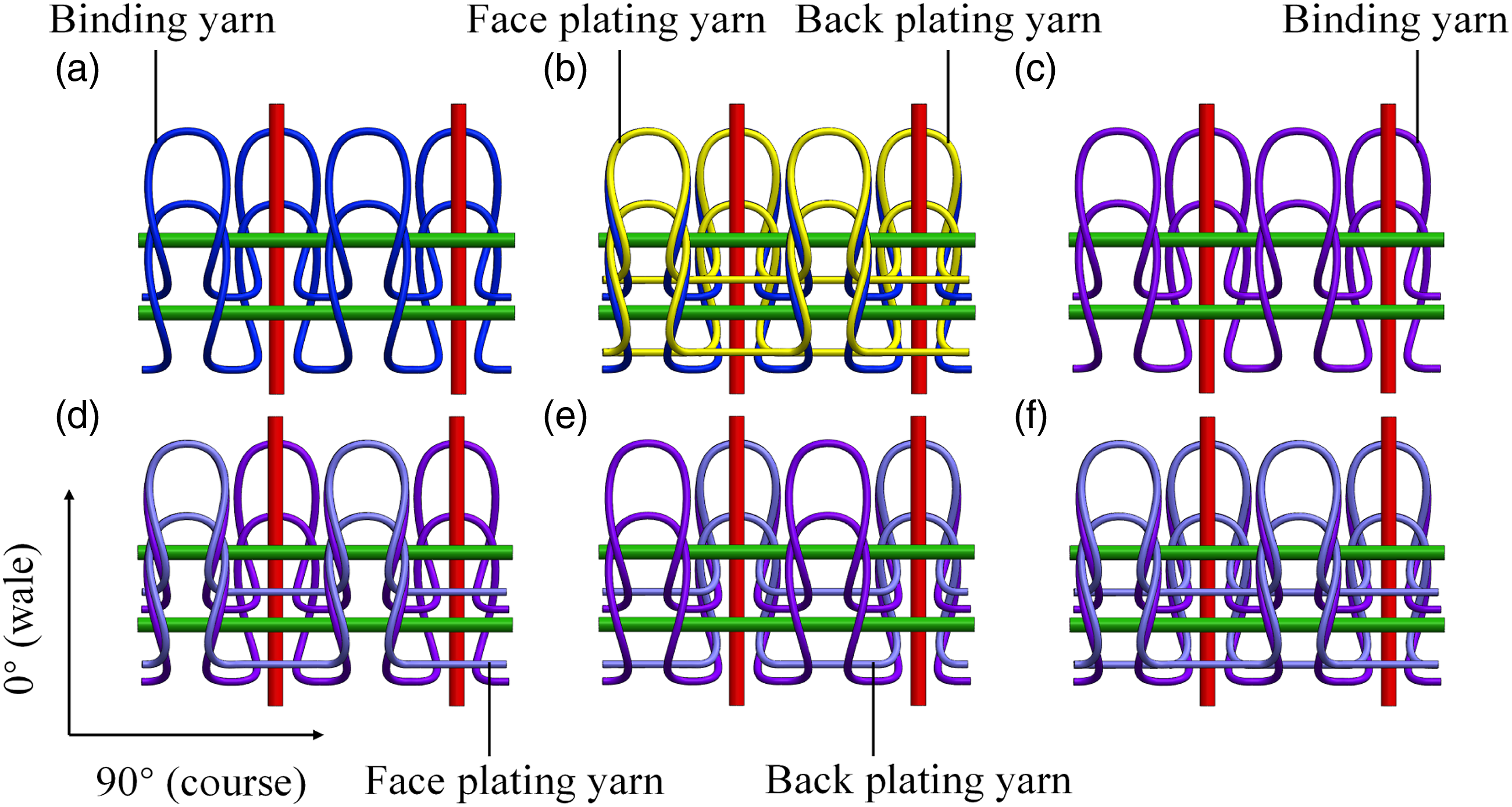
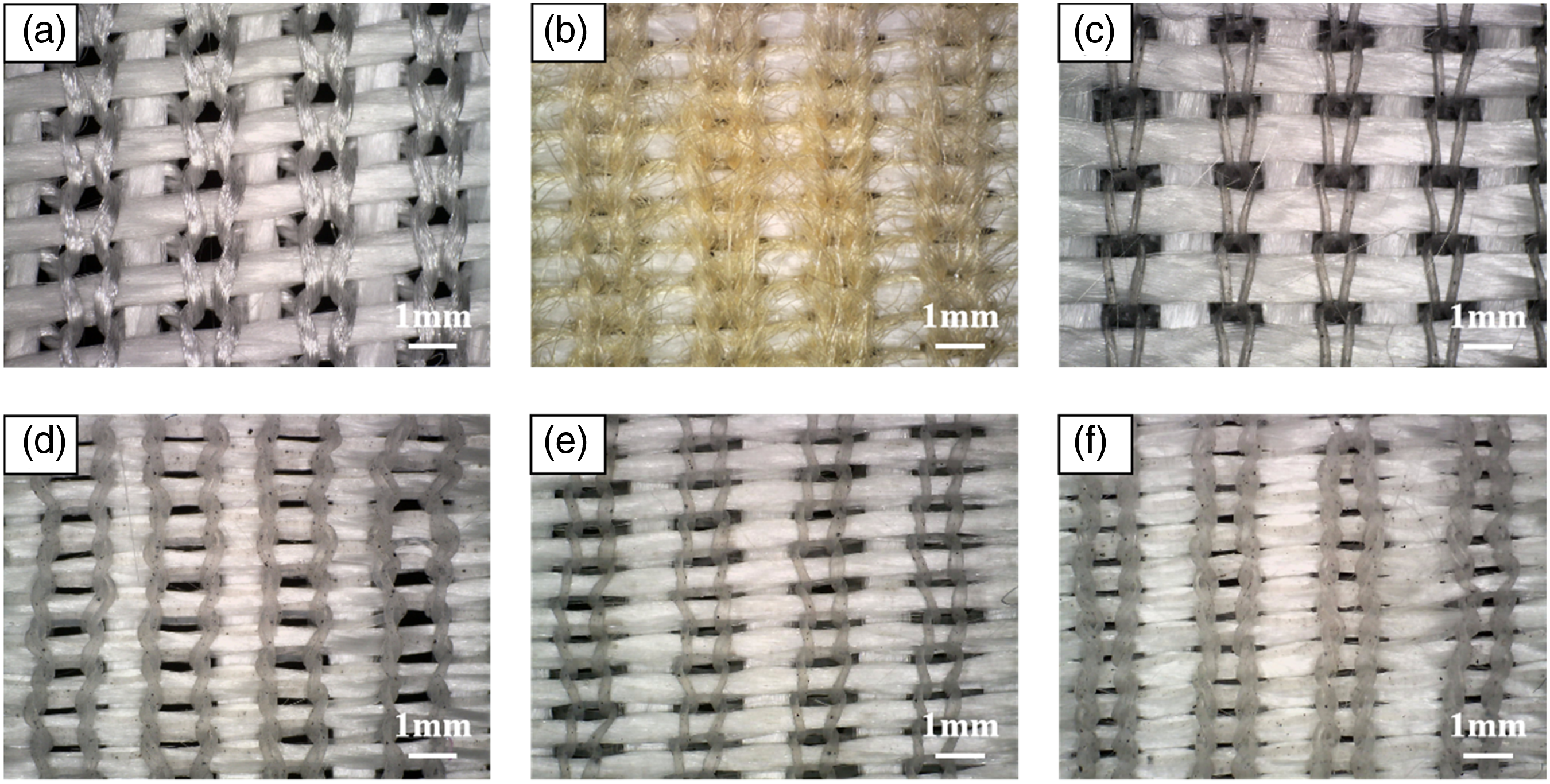
In this study, the WKBT fabrics were produced by a modified circular knitting machine of E9.5 in the Engineering Research Center for Knitting Technology (Ministry of Education, Jiangnan University, China). According to the characteristic of the circular knitting machine, six kinds of WKBT fabrics were designed and knitted with the same sinking depth. The WKBT fabric was composed of two main yarn systems, one was knitting structure and the other was insertion yarn. The insertion yarns consisted of weft yarns and warp yarns that were made of glass fiber (GF), without any weaving points. As shown in Figure 1, the red lines refer to the parallel and straight warp yarns and the green line refers to the spiral weft yarn. The knitting structure was made of binding loops formed by stitch yarn, which bound the warp yarns and weft yarn together. The stitch yarns can be divided into binding yarn and plating yarn. As shown in Figure 2, the blue lines and dark purple lines are binding yarns, which made of the polyester fiber (PET1) and polytetrafluoroethylene fiber (PTFE). The yellow lines and light purple lines are plating yarns, which are made of polyester fiber (PET2) and polytetrafluoroethylene fiber (PTFE). The performance parameters of the fibers are presented in Table 1. In the test, 0° direction was defined as the direction along the warp yarn of the piece of the WKBT fabric, i.e., wale direction. 90° direction was defined as the direction along the weft yarns, i.e., course direction. The optical images of the WKBT with different knitting structures and stitch yarns are presented in Figure 3. The WKBT fabric was made of two different knitting structures, which are 1 + 1 rib stitch and plating stitch, respectively. According to the types of fiber in the fabric in Table 2, plating yarn-binding yarn-warp yarn-weft yarn is defined to describe the type of WKBT fabric. The WKBT fabrics were spread by the spreading device with a diameter of 115 mm, so the warp density of all WKBT fabrics were the same in this study. Structures of WKBT fabric. (a) Schematic diagram and (b) the arrangement of insertion yarn. The piece structures of WKBT fabrics. (a) PET1-GF-GF; (b) Fiber performance parameters. The optical image (40×) of WKBT fabric with different knitting structure. (a) PET1-GF-GF; (b) Fabric parameters. The arrangement of insertion yarns in piece WKBT fabric.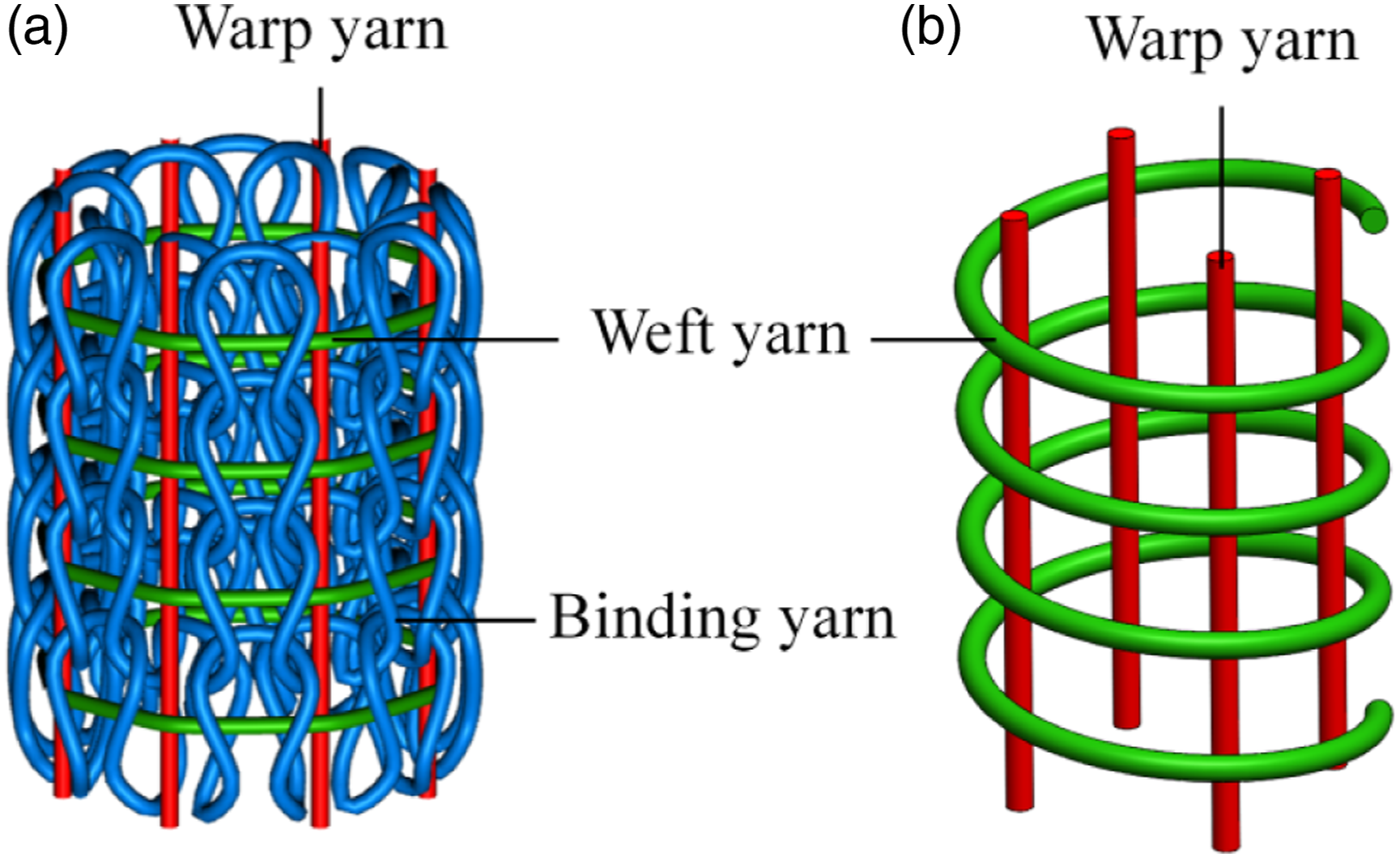



Testing
The insertion yarns have significant effect on the mechanical properties of WKBT fabric. The buckling and damage of insertion yarns will directly affect the mechanical properties of WKBT fabrics to some extent, which is caused by binding tightness of knitting structure. The tightness of insertion yarns was used to indirectly characterize the binding tightness, which resulted from various knitting structures and stitch yarns. The arrangement of insertion yarns in piece WKBT fabric is shown in Figure 5(a). Five photos of each WKBT fabric were captured under the microscope at a magnification of 40x. Using the ruler tool in photoshop to measure the diameter of the warp and weft yarns, the center distance between adjacent warp yarns, and the center distance between adjacent weft yarns. The average tightness of insertion yarns is calculated and recorded for each WKBT fabric. The tightness of insertion yarns
15
can be calculated according to the following formula. The size and shape of samples. (a) Tensile specimen, (b) tearing specimen and (c) bursting specimen.



The air permeability was also used to characterize the tightness of WKBT fabric. The air permeability test was conducted according to the test standard GB/T 5453-1997 that is the standard test method for determining the permeability of textiles to air. The air permeability of WKBT fabrics were tested by YG 411E-III Automatic Air Permeability Meter (Ningbo Textile Instrument Factory), and the pressure differentials was 200 Pa and the circular test area was 20 cm2. 10 values were measured and the average air permeability of each WKBT fabric was calculated by measuring 10 values for each specimen.
The tensile testing was conducted according to the test standard GB/T 3923.1-2013 that is the standard test method for tensile properties of fabrics. The size and shape of tensile specimens are shown in Figure 5(a). Remove the insertion yarns on the both sides of the fabric with a width of 40 mm to ensure that there is no cut and broken insertion yarns within 25 mm. The tensile test was conducted by MTS universal material testing machine. Two groups of specimens were cut for each WKBT fabric in the 0° and 90° direction, respectively, and five specimens were tested in each group. The gauge was 150 mm and the loading speed was 50 mm/min.
The strength efficiency of insertion yarn is an index to characterize the effect of different knitting structures and stitch yarns on strength utilization rate of glass fiber. The breakage of insertion yarns occurred at the first tensile failure stage of WKBT fabric, so the maximum tensile strength of insertion yarn is the peak value of the first stage of the tensile load-displacement curves. The mathematical formula of the strength efficiency of insertion yarn ef is established as follows:
The tearing test was conducted according to the test standard GB/T 3917.3-2009 that is the standard test method for tearing properties of fabrics. The size and shape of tearing specimens are shown in Figure 5(b). The tearing properties of the WKBT fabrics were investigated in 0° and 90° directions and five specimens were tested in each direction. The tearing test was conducted by MTS universal material testing machine. The loading speed was 50 mm/min. Because the width of clamp was less than the width of fabric, the tearing test characterized the deformation and mechanical properties of the WKBT fabric under clamping and unclamping. After the first peak appeared in the load-displacement curve, each specified tearing length was divided into one region. The maximum tearing strength was obtained by averaging the maximum load peak values in the five consecutive regions.
The bursting test was conducted according to the test standard GB/T 19976-2005 that is the standard test method for bursting properties of fabrics. The size and shape of tearing specimens are shown in Figure 5(c), the blue areas refer to the fabric cured by resin and the yellow area refer to the bursting area. Three specimens of each WKBT fabric were tested. The bursting test was conducted by MTS universal material testing machine. The diameter of top rod was 25 mm and the loading speed was 50 mm/min.
Results and discussion
The tightness of WKBT fabric
When the stitch yarns are same, the addition of plating yarns increases the density of weft insertion yarn in Table 2. When PET was used as the stitch yarn, the tightness of insertion yarns of 2# in 90° direction was higher, as well as it had higher total tightness and lower air permeability in Figure 6. That is to say, knitting structure with plating yarns increase the binding tightness of fabric. When PTFE was used as the stitch yarn, the tightness of insertion yarns of 6# in 90° direction was higher than that of 3#, 4# and 5#. The performance of WKBT fabrics. (a) Tightness of insertion yarns; (b) Total tightness of insertion yarns; (c) Air permeability.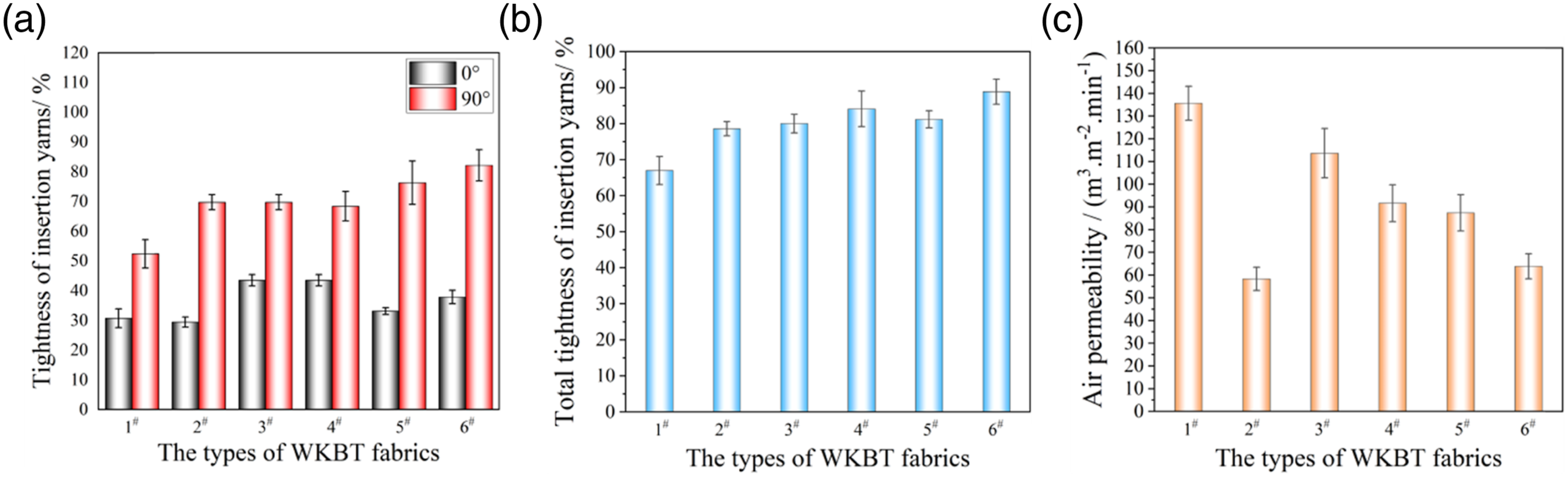
Tensile properties
Tensile stress-strain curves
Figure 7 shows the load-elongation curves of six WKBT fabrics, which are PET1-GF-GF (1#), The tensile load-elongation curves of WKBT fabrics in (a) 0° and (b) 90° direction.
There are two main peaks of the entire load-elongation curves in Figure 7. One peak is the failure of insertion yarns, which bear the high load at low elongation. All the insertion yarns bore the tensile load simultaneously and the load-elongation curves are presenting approximately linear until the insertion yarns break. The other is the damage of the knitting loops, the stitch yarns bore the low load of high elongation at this stage. With the accumulation of damage and the redisbution of the tensile load of stitch yarns, all load-elongation curves are not smooth and appear small fluctuations. The second peaks of 1# and 3# in the 90° direction were not measured due to the loop drop and the range limitation of MTS.
The tensile performance of WKBT fabrics
In Figure 8, the difference in the tensile strength efficiency of the insertion yarns of same WKBT fabric in 0° and 90° direction is due to the buckling and damage of insertion yarns, which is caused by knitting structure and stitch yarns. Due to the higher density of insertion yarns in 90° direction, the tensile strength and modulus in 90° direction are superior than those in the 0° direction. The variation of tensile properties of six WKBT fabrics in the 90° direction could be well explained by the the tightness of the fabric caused by different knitting structures and stitch yarns. For the addition of the plating yarn in knitting structure, the tightness of 2#, 4#, 5# and 6# in 90° direction increases. When PTFE mono-filament was used as the stitch yarn, the density and tightness of knitting structure increased with the addition of the plating yarns. The lower tensile properties of 6# in the 0° and 90° directions were recorded which is due to the higher binding tightness of knitting structure and stiffer stitch yarn, resulting in the serious damage to the insertion yarns. The inferior tensile modulus of 4# and 5# can be revealed that the buckling and damage of insertion yarns caused by the plating yarns. The ef of each WKBT fabric in 90° direction was 70.50%, 84.68%, 81.40%, 71.64%, 77.20%, 62.09%, respectively. And ef in 0° direction was 70.48%, 63.88%, 69.14%, 73.82%, 58.10%, 46.02%, respectively. As show in Figure 6, the tightness of 3# was higher than 4#, so the strength efficiency of insetion yarn of 3# was higher than 4#. ssThat is to say, large buckling and damage of insertion yarns occurred when PTFE was used as the face and back plating yarn. The above results shown that the different tensile properties of WKBT fabrics are dominated by the density, buckling and damage of insertion yarns. The tensile properties of WKBT fabrics. The (a) tensile strength, (b) modulus and (c) strength efficiency in 0° direction. The (d) tensile strength, (e) modulus and (f) strength efficiency in 90° direction.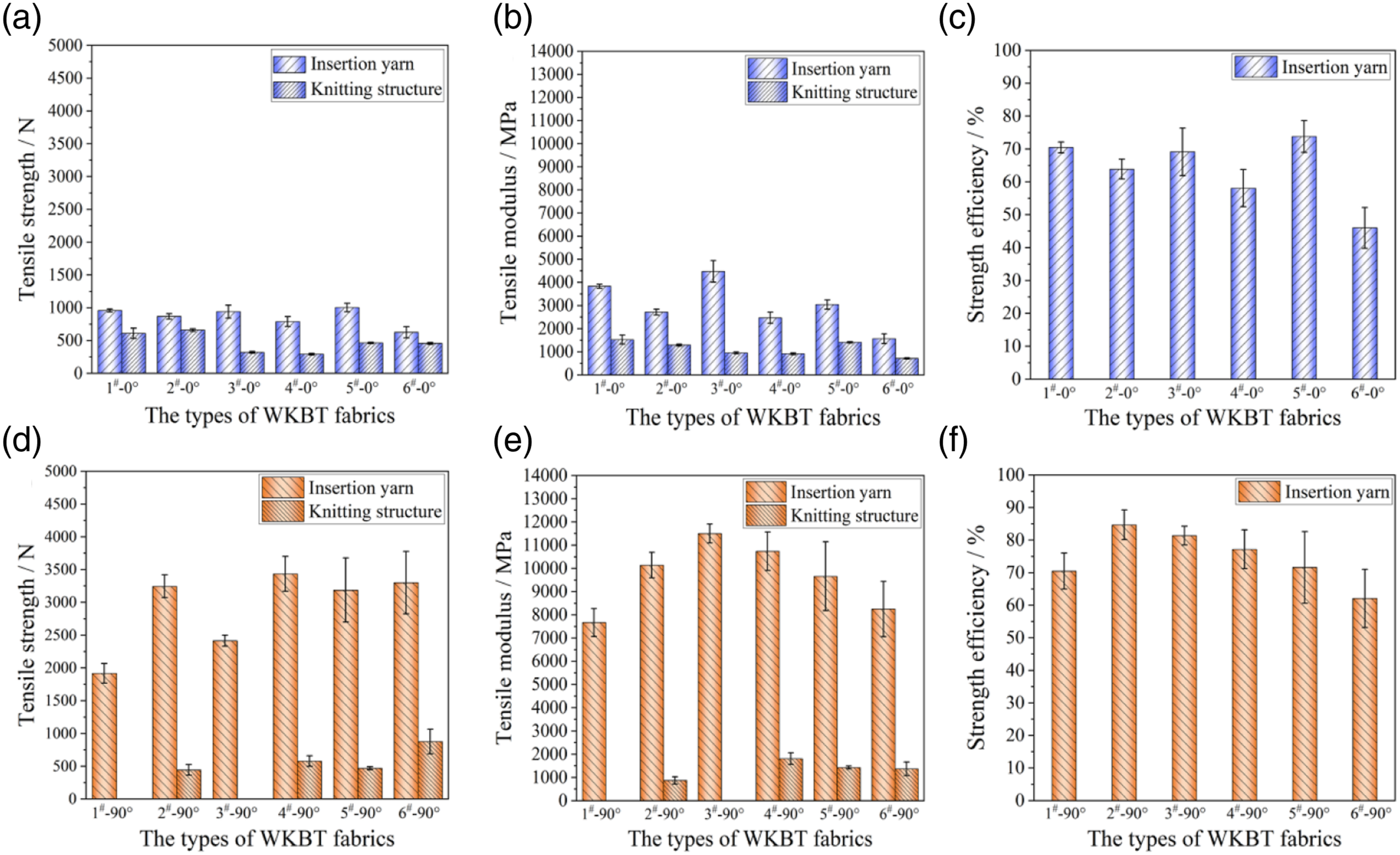
Tensile failure analysis
There are two failure stages of each WKBT fabric as shown in Figure 9. At the first stage, the insertion yarns and stitch yarns were stretched under the tensile load, the insertion yarns bore the main tensile load until it broke and the WKBT fabrics had small deformation. Because the parallelism and straight of insertion yarns, the breakage of insertion yarns occurred simultaneously and the each insertion yarn bore the tensile load evenly. As the tensile test continued, the insertion yarns slipped and pulled out, and the tensile load was redistributed in the stitch yarns. The knitting structures of WKBT fabrics were stretched by large deformations until it fails. Under the tensile load, the loop arc were transferred to the loop column in 90° direction, while the loop arc and loop column were straightened in 90° direction. The loops of 1# and 3# were straightened and dropped in 90° direction. The deformation process and failure morphology of WKBT fabric. “a, b, c, d” are defined as the starting, breaking of insertion yarns, stretching of knitting loops and break of knitting loops in the 0° direction, respectively. “e, f, g, h” are defined as the starting, breaking of insertion yarns, stretching of knitting loops and break of knitting loops in the 90° direction, respectively.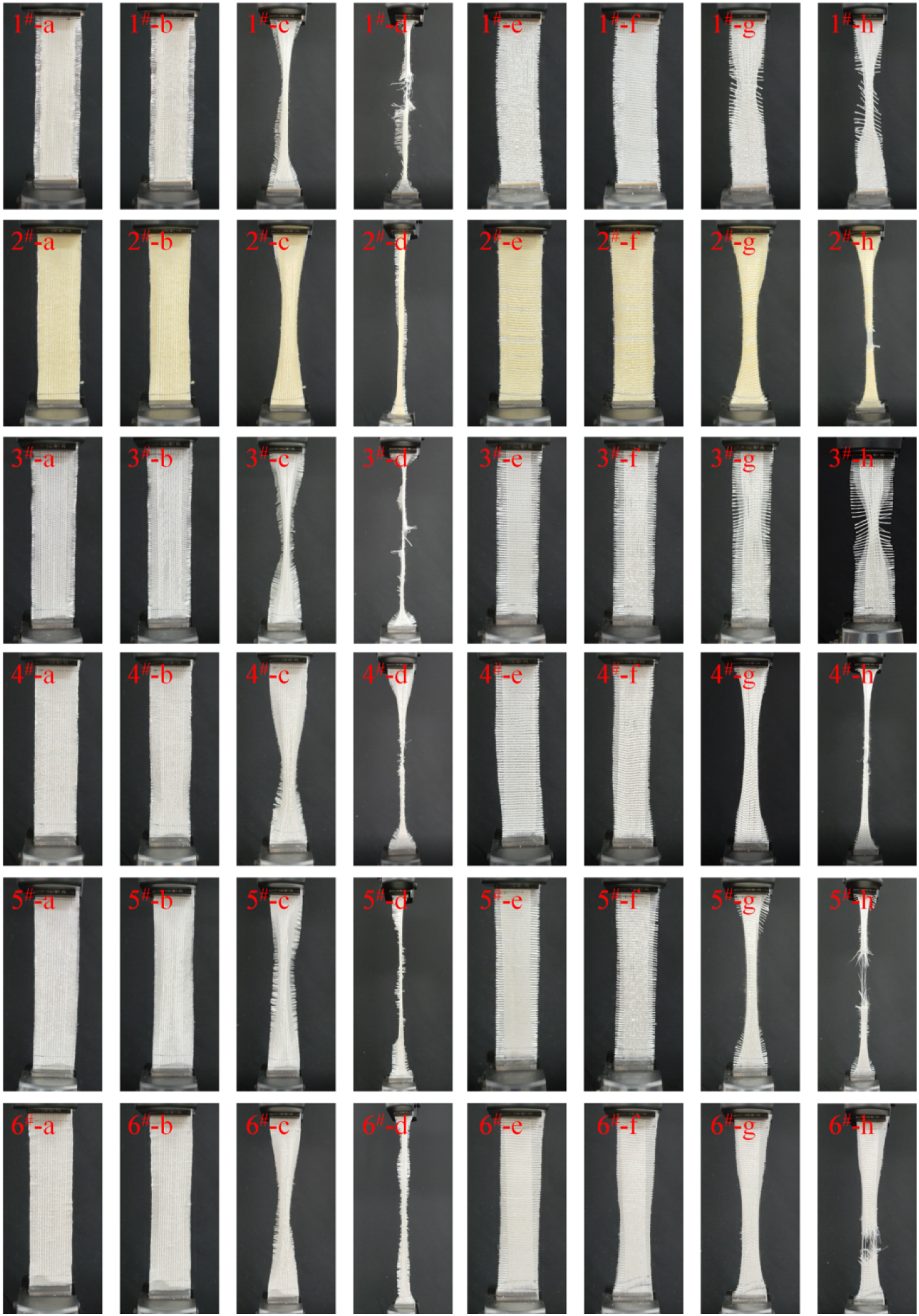
Plating yarns increased the dimensional stability of WKBT fabric, the slippage of insertion yarns was reduced, while the buckling degree of insertion yarns increased with tightness of knitting structures. In Figure 7, the breakage elongation of insertion yarns in 0° and 90° direction increased with the increase of the buckling degree of insertion yarns. Plating yarns increased the density of knitting structure in 90° direction, while plating yarns decreased the breakage elongation of knitting structure in 90° direction.
Tearing properties
The tearing load-displacement curves
In Figure 10, load-displacement curves consist the stage of the fabric clamping area and the stage of the fabric unclamping area. When the fabric was clamped, the fibers broke one by one and the curves rose. When the fabric was unclamped, insertion yarns and knitting loops fractured under tearing load, the curves rose with large fluctuate until the WKBT fabrics fail. The tearing properties of 6# in 90° direction is better than that of 3#, 4# and 5#. That is because plating yarns increase the weft density and dimensional stability of WKBT fabrics, which have a positive effect on the tearing properties in 90° direction. Similarly, the tearing properties of 1# is higher than that of 2# in 90° direction. The displacement of 6# is higher than that of 2# at the first peak value, due to the higher buckling of insertion yarns of 6#, which is caused by the tight knitting structure formed by the face and back plating yarns (PTFE). The tearing properties of WKBT fabrics are slightly different in 0° direction under the same warp density, which is caused by the different buckling and damage of warp insertion yarns in 0° direction. It can be suggested that the tearing properties of WKBT fabrics are mainly influenced by their density and tightness. The load-displacement curves of WKBT fabrics in 0° direction and 90° direction. (a) 1#; (b) 2#; (c) 3#; (d) 4#; (e) 5#; (f) 6#; The load-displacement curves of six WKBT fabrics in (g) 0° direction and (h) 90° direction. (i) The tearing strength of WKBT fabrics in 0° direction and 90° direction.
Tearing failure analysis
Figure 11 shows the deformation process and failure morphology of WKBT fabrics. When the fabrics were held by the clamps, the insertion yarns broke one by one and the knitting loops were stretched. Then the insertion yarns and knitting loops were stretched and fractured along the crack. Plating yarns increased the number of yarns in the tear triangle area of WKBT fabrics in 90° direction, so the WKBT fabrics with the plating structure can bear higher tear forces in 90° direction. While 1# and 3# have inferior tear resistance due to the slippage of insertion yarns and loose knitting structure. Due to the presence of face plating yarn and back plating yarn, the 2# and 6# have superior tear resistance and the fabric was torn and damaged in relatively neat areas. The deformation process and failure morphology of WKBT fabrics. “a, b, c, d” are defined as the starting, the insertion yarns broke under clamping, the stitch yarns broke under clamping, the insertion yarns and stitch yarns broke without clamping in the 0° direction, respectively. “e, f, g, h” are defined as the starting, the insertion yarns broke under clamping, the stitch yarns broke under clamping, the insertion yarns and stitch yarns broke without clamping in the 90° direction, respectively.
Bursting properties
The bursting load-displacement curves
It can be shown in Figure 12(a) that the bursting process of WKBT fabrics is divided into two stages. One is the breakage of insertion yarns with low displacement. The load-displacement curves are smooth at the first stage, the insertion yarns bear the bursting load together and break simultaneously. Due to the errors in the preparation of bursting specimens, the displacement of insertion yarns fracture is much higher than that of glass fiber resulting from the slippage of insertion yarns in the bursting test. The other is the breakage of knitting loops with high displacement due to the large deformation of knitting loops. There are small fluctuations of curves at the second stage caused by the continuous damage and breakage of loops and redistribution of the bursting load. In Figure 12(b), the superior bursting strength of 2# with face plating yarn and back plating yarn is recorded. When the PTFE was used as the stitch yarn, the bursting properties at the first stage improve due to the density of insertion yarns increase with addition of the plating yarns. The bursting properties of knitting loops are higher than that of insertion yarns, that is because the loop arc and loop column bear the load together under the bursting test as well as the density of loops are higher. It is surmised that plating yarns have positive effect on the bursting properties. The performance of WKBT fabrics. (a) The load-displacement curves; (b) Bursting strength.
Bursting failure analysis
The photographs of front and back views of WKBT fabrics after bursting test are presented in Figure 13 Photographs of front and back views of WKBT fabrics after bursting test. “i, j” are defined as the front and back of the fabric, respectively.
Comparison of mechanical properties of WKBT fabrics
The mechanical properties of WKBT fabrics.

Conclusions
Six kinds of WKBT fabrics with PET and PTFE stitch yarns were produced successfully on the modified circular knitting machine. Glass fiber were inserted into the knitting structure individually, such as 1 + 1 rib, face plating structure, back plating structure, face and back plating structure. The relationship between knitting structure, stitch yarn, tensile properties, tearing properties and bursting properties was investigated. (1) Knitting structure has significant effect on the mechanical properties of insertion yarns, and the kind of stitch yarn is the second factor. The tensile properties of WKBT fabrics are low due to the higher binding tightness of knitting structure and hardness of stitch yarn. In fact, the failure process of WKBT fabrics is the process of the damage accumulation and load redistribution, which consists of the breakage of insertion yarn with small deformation and breakage of stitch yarns with large deformation. (2) It was found that the mechanical properties of WKBT fabrics were mainly influenced by the binding tightness and density of insertion yarns due to the different knitting structure and stitch yarns. The tearing properties of WKBT fabrics in 90° direction increase, the reason is that the increasing of binding tightness and the density of weft insertion yarns caused by the plating yarns. The superior bursting properties of 2# and 6# were recorded due to the face and back plating yarns. (3) The failure process of WKBT fabric includes the following stages, which are straightening of insertion yarns and knitting loops, breaking of insertion yarns, straightening and breaking of knitting loops, respectively. The tensile fracture of insertion yarns and knitting loops are the main reason for the failure of WKBT fabric under the tearing and bursting loads. The hardness of stitch yarns is another key factor to determine whether the insertion yarns is straightened and the final mechanical properties of WKBT fabrics. (4) It was also found that the WKBT fabrics have significant anisotropy in this study. Based on comparing the basic mechanical properties of WKBT fabric, the WKBT fabric with excellent dimensional stability and mechanical properties can be designed with various knitting structure and kinds of stitch yarns.
Footnotes
Declaration of conflicting interests
The author(s) declared no potential conflicts of interest with respect to the research, authorship, and/or publication of this article.
Funding
The author(s) disclosed receipt of the following financial support for the research, authorship, and/or publication of this article: This work was supported by the Fundamental Research Funds for the Central Universities (JUSRP122003), 2022 Jiangsu Province Graduate Research and Practice Innovation Program Project (KYCX22_2353).
