




Abstract
In order to investigate the dynamics and vortex shedding of flexible supersonic canopies, a compressible permeability model combined with fabric structure parameters is proposed, and the periodic oscillation of the supersonic parachute which is referred to as breathing phenomenon is simulated based on the Arbitrary Langrangian Eulerian (ALE) method. The calculated results by new permeability model are consistent with the experimental results. The underlying mechanism of canopy breathing motion is then investigated. Moreover, the influence of canopy permeability on breathing phenomenon of supersonic parachute is analyzed. The results indicate that the periodic growth and shedding of the canopy vortex causes the variation of the pressure differential, which finally lead to the periodic oscillation of the canopy. With the increase of fabric permeability, the vortex rolled up from the canopy skirt move backward and become more slender. The influence of vortex shedding on canopy breathing motion weakened. Those lead to the decrease of the average value of canopy projected area and parachute dynamic load. So are the oscillation amplitude and frequency. The parachute deceleration performance decreases while the parachute swing angle decreases as the canopy permeability increases.
Keywords
Introduction
Parachutes are widely used in the aerospace field as aerodynamic decelerators, and wind tunnel tests of various parachutes have indicated that aerodynamic performance of parachute are closely related with canopy permeability. 1 For example, the subsonic wind tunnel test of the disk-gap-band parachute by Cruz indicated that resistance coefficient of parachute decreases while stability of parachute increase with the increase of canopy permeability. 2 Taguchi carried out the supersonic wind tunnel test of hemispherical parachute and indicated that lower permeability of canopy fabric induce larger drag fluctuation of supersonic parachute. 3 However, the scaled parachute model are used in the supersonic wind tunnel tests while the canopy permeability is not scaled, so it may cause remarkable error when used for designing supersonic parachutes. Therefore, the numerical method is more effective in aerodynamic performance analysis of supersonic permeable parachutes.
The canopy fabric is permeable due to the micro-pore structure between the yarns. 4 However, the local mesh refinement for pore-structure is not appropriate, because the pore structure is micron magnitude while the canopy diameter is meter magnitude. A general method is adopted by simplified the canopy fabric as homogeneous porous media, and the flow field models were established to predict the aerodynamic performance of parachutes based on Computational Fluid Dynamics (CFD) method. 5 For example, Cheng studied the canopy permeability of cross parachute by using porous jump boundary, but the results were inconsistent with experimental data because the canopy were simplified as one dimensional porous model. 6 Sarpkaya used the vortex element method to examine the effect of fabric permeability on the two-dimensional flow field around the canopy, while the permeability coefficient of canopy fabric were manually corrected. 7 Takizawa simulated the three-dimensional flow field of subsonic permeable canopy by using the conventional Forchheimer equation to describe the pressure drop of permeable canopy. 8 Yang induced the compressible Ergun equation to the source term of momentum equation of flow field, and investigated the flow field of supersonic parachute with different fabric permeability, the results showed that the wake vortex area of supersonic canopy with high permeability are narrower. 9
These researches mentioned above used the CFD method to study the flow field of permeable parachute, however, the flexible parachute significantly deforms due to the interaction with air flow at deceleration process, the canopies used in above researches were all treated as rigid body so the dynamics of flexible canopies were not investigated. In recent decades, the fluid structure interaction (FSI) methods, which takes both fluid motion and structural deformation into account, were generally used in the aerodynamic performance study of flexible parachutes.10-12 Typical FSI methods are Ghost Fluid Method (GFM) method 13 and ALE (Arbitrary Langrangian Eulerian) method.14,15 The GFM method mainly uses the level set method to simulate the solid boundary in the Cartesian fluid solver. For example, Gao et al.imposed a pressure drop at the interface between the canopy and the fluid according to the Ergun equation, and used the GFM method to simulate the flow field around the plane circular parachute. The results showed that canopy projected diameter oscillates periodically at constant velocity, which is referred to as the canopy breathing phenomenon, and canopy with permeability has lower resistance coefficient and oscillation amplitude. 16 The ALE method takes the relative velocity of the fluid and the canopy as the air permeability velocity, and the pressure differential obtained by Ergun equation is applied to the canopy fabric as contact force. Moreover, the ALE method uses Euler and Lagrange grids to describe the fluid field and solid structure, respectively, and has high efficiency in solving the moving boundary problem. For example, Liu et al. used the ALE method to simulate the airdrop process of plane circular parachute, the results indicated that dynamic load decrease while the steady descent speed increase with the increase of canopy permeability. 17 The above FSI studies on permeable parachute are all based on the Ergun equation, the fabric permeability coefficients are corrected with the data of canopy fabric permeability tests, and could not be obtained by fabric structure parameters directly. Additionally, the permeability model used in above FSI research are all only applicable in incompressible flow. Therefore, it is crucial to establish the compressible permeability model to investigate the influence of fabric permeability on dynamics of flexible supersonic canopies.
Up to now, some scholars investigated the aerodynamic performance of permeable parachutes based on CFD method or FSI method.18,19 The FSI method can simultaneously calculate the structure and flow field of the parachute canopy, and accurately obtain the transient canopy shape and flow field. Despite extensive previous work, the understanding about the physical mechanism for canopy breathing motion is incomplete, and how the canopy permeability influence the aerodynamic performance of flexible parachute is unclear. 20 Therefore, the supersonic flow fields obtained via FSI simulations should be further examined to analyze the underlying mechanism of the canopy breathing motion and the influence of canopy permeability on the aerodynamic performance of flexible parachute in detail.
In this study, a compressible permeability model considering the fabric structure parameters is proposed. The steady landing process of the supersonic disk gap band parachute is numerically simulated based on the ALE method. The new model can well simulate the canopy breathing motion, and the opening dynamic load is consistent with the flight test. On this basis, the underlying mechanism of canopy breathing motion is investigated, and the influence of fabric permeability on the breathing phenomenon of parachute is analyzed. The numerical results can provide reference for parachute fabric design.
Mathematical model
ALE algorithm
Governing equations of fluid
The supersonic flow field around parachute is obtained by solving the 3-D compressible Navier-Stokes equations:

Governing equations of structure
The governing equation of structure element is:

Canopy permeability model
As shown in Figure 1, L is fabric thickness. pin, pout are the pressure inside and outside of the parachute fabrics, respectively. which can be expressed as: Fabric structure under pressure differential.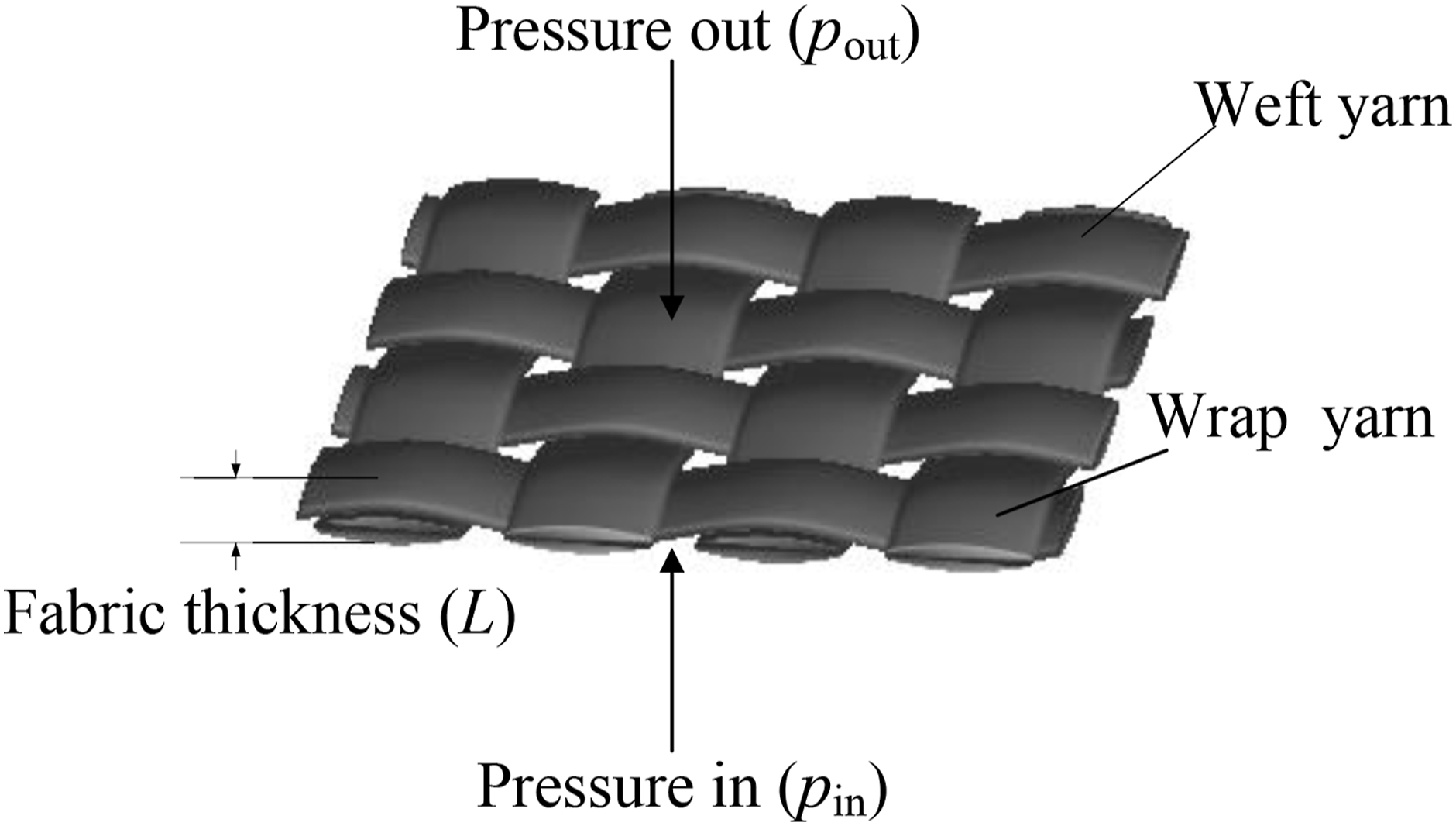
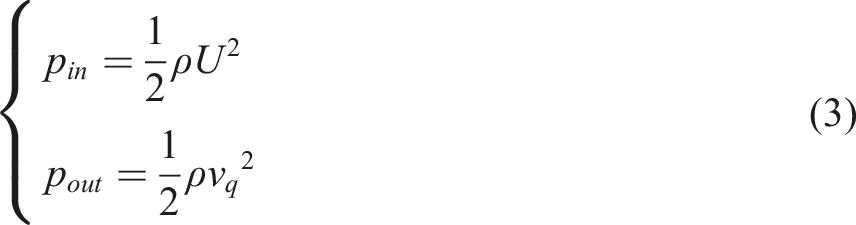

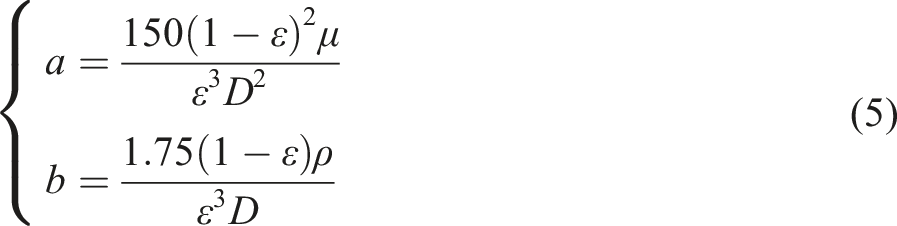

According to,
22
the fabric porosity could be represented by the air permeability of the fabric and the fictitious freestream airspeed:

The relationship between the fabric air permeability under supersonic freestream and the pressure differential can be obtained according to equations (1), (2), (4) and (5):

FSI coupling method
Mesh smooth algorithm
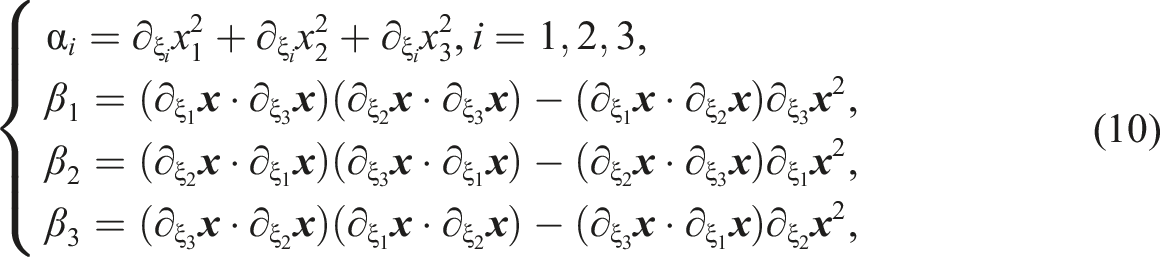
During simulation process, flexible parachute deforms due to the interaction with high-speed flow, The structural mesh will be smoothed during the Lagrangian time step of the structure field. The equipotential method developed by Winslow
23
was used for mesh smoothing. The nodal position of smoothed mesh is determined by the following equation:

Coupling process
The coupling process with ALE method is shown in Figure 2. First, the finite element model of the canopy is established, then the flow field is obtained by solving governing equations based on the initial finite element model. After that, the structural field is solved with the velocity and pressure information from fluid solver, and the coupling force between the air flow and the canopy is obtained according to the equation (8). After the mesh of structure elements are smoothed and the flow field variables are updated, the calculation of next time step starts. Coupling process with ALE method. Geometric model of disk-gap-band parachute.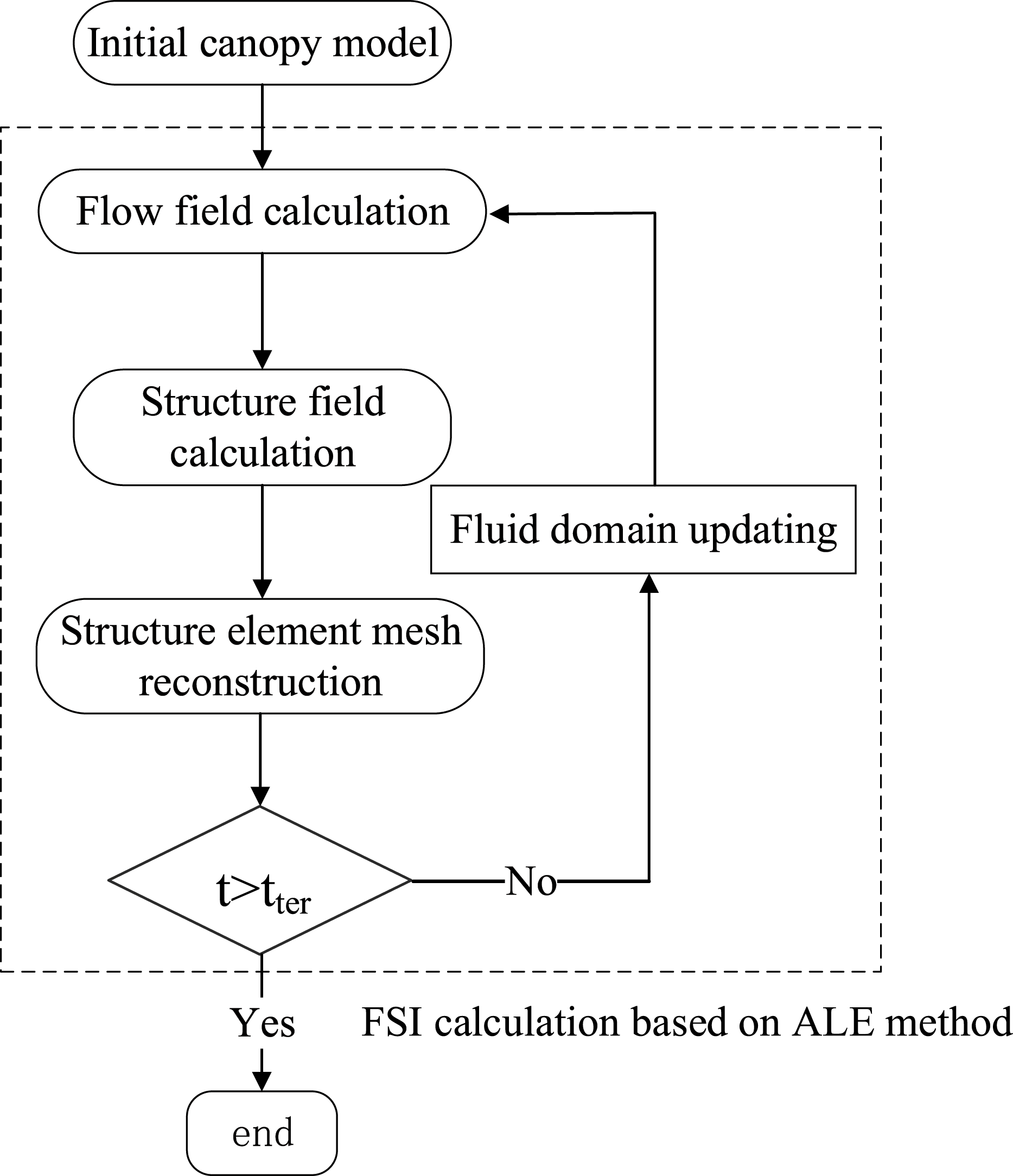

Geometric and numerical model
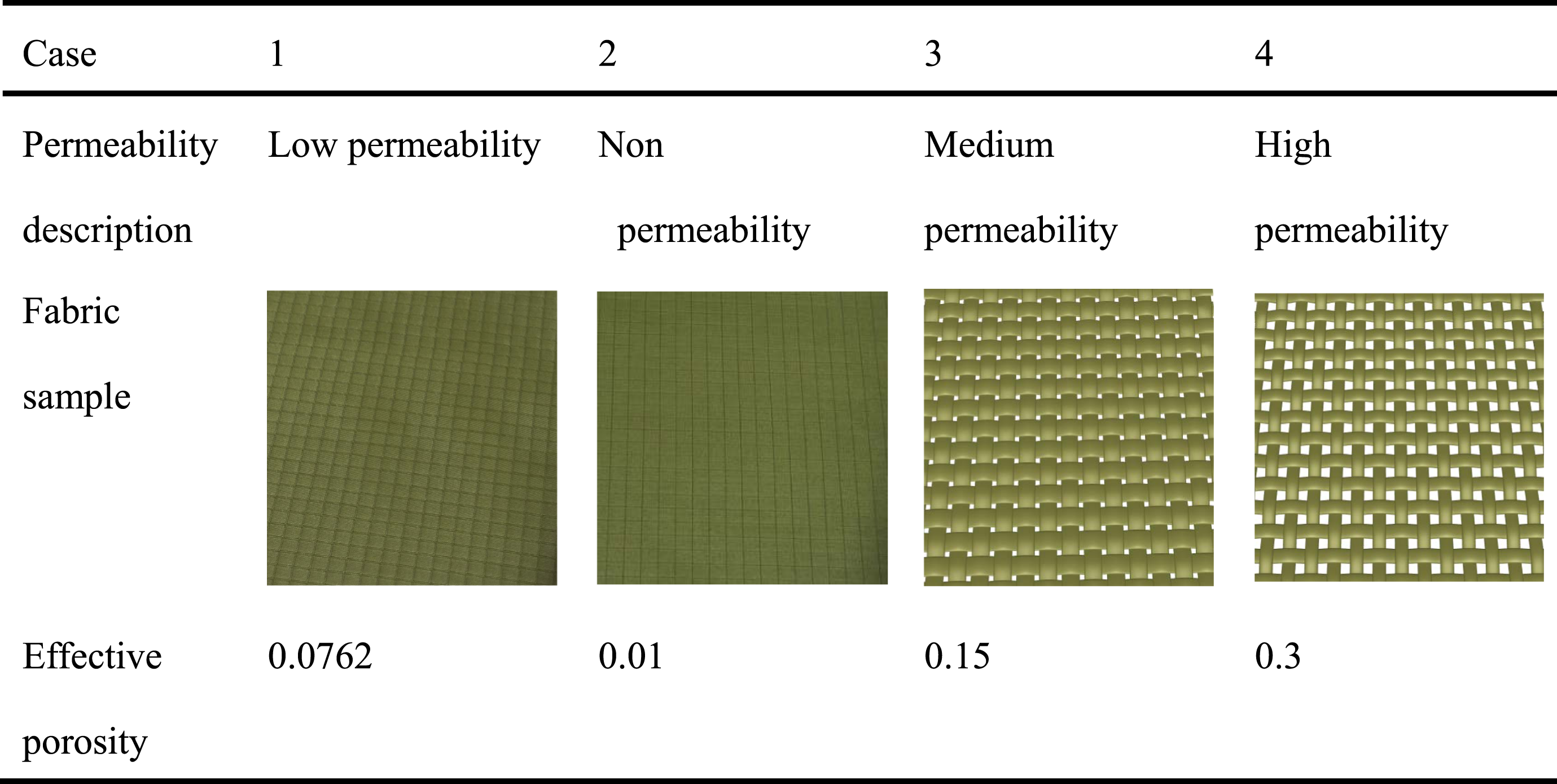
Structure parameters of canopy fabrics.


Mesh model of supersonic parachute.
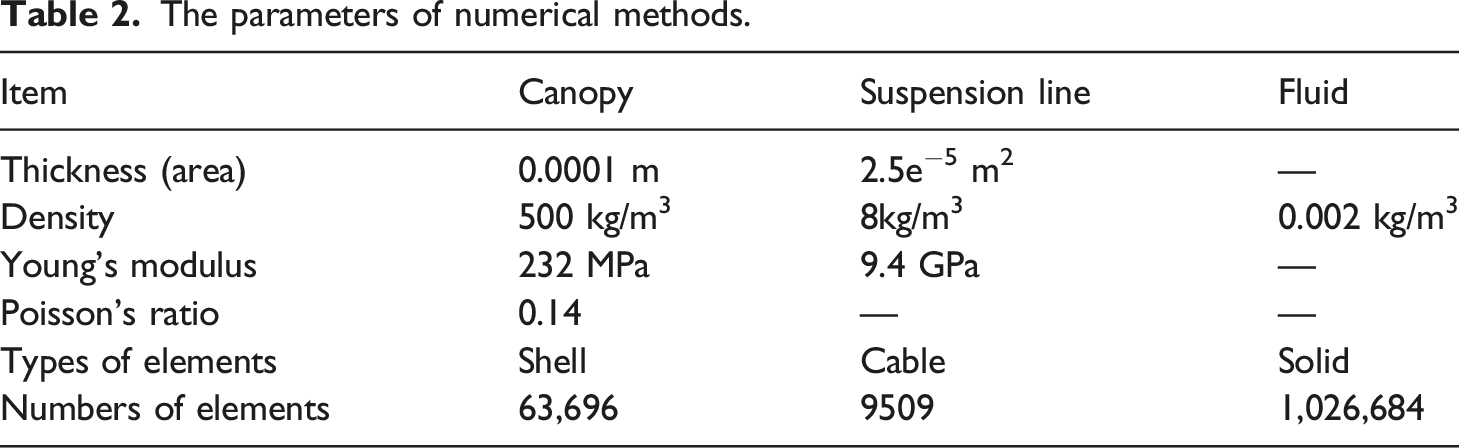
The parameters of numerical methods.
Validation and discussion
Validation
To validate the accuracy of the permeability model, the calculated result of case1 was compared with the test data.
24
Figure 5 compares the canopy projected diameters between numerical simulation and flight test. The canopy projected diameters show periodic fluctuation around a mean value which is referred as canopy breathing phenomenon. The simulated and tested average projected diameters are 11.58 m and 11.6 m, respectively. As shown in Table 3, the error of fluctuations period between simulated and tested projected diameter is 4.3%, and the error of fluctuations amplitude is 5.9%. Canopy projected diameter. Comparison of Projected diameters and dynamic load between simulation and flight test.

Figure 6 compares the canopy dynamic load obtained from numerical simulation and flight test. The dynamic loads show similar cyclical fluctuation due to the periodic change of canopy shape. the dynamic load decreases when the canopy shrinks and increases as the canopy expands. The average values of the calculated and experimental dynamic load of the canopy are 36 kN and 36.5 kN, respectively. Figure 7 compares the parachute swing angles between numerical simulation and flight test. The parachute swing angle increases initially and then decreases. The error between calculated and experimental maximum swing angle values is 5.5%. The numerical results are in consistent with tasted data. Canopy dynamic load. Parachute swing angle.

Mechanism of canopy breathing motion
To analyze the underlying mechanism of the canopy breathing motion, The flow filed around canopy of five moments (a, b, c, d, e in Figure 5) are shown in Figure 8. VL1, VL2, VL3 and VR1, VR2, VR3 are vortex on the left and right side of canopy surface, respectively. The vorticity contour reveals that the canopy vortex gradually rolled up and eventually shedding during the period of breathing motion. The canopy vortex rolled up and shedding asymmetrically, this might explain why the canopy swing along the axis in Figure 7. As shown in Figure 8(b), the low pressure zone grow away from canopy surface in a breathing period. At t = T, the new low pressure zone generated near the canopy outer surface. As we can see, the canopy outer pressure first increases and then decreases after reaching the minimum value, which occurs at t = T/2. On the contrary, the canopy outer pressure first decreases and then increases in a breathing period. So is the pressure differential between the canopy surface in a canopy breathing period. The periodic growth and shedding of the canopy vortex causes the variation of the pressure differential, which finally lead to the periodic oscillation of the canopy projected diameter. Flow field around canopy.
Figure 9 shows the mean value of vortex center in the canopy wake, that is, the mean center value of vortex VL1, VL2, VL3, and VR1, VR2, VR3. The The mean value of vortex center. The axial velocity at different positions.

Effect of canopy permeability on the breathing process
Effect of canopy permeability on the canopy shape and flow field
In order to assess the influence of canopy permeability on the canopy breathing process, the breathing motion of canopy with different permeability are simulated. The canopy projected diameters with different permeability are presented in Figure 11. The canopy projected diameters with different permeability all fluctuate periodically. The average projected diameters of impermeable fabrics, medium permeability fabrics and high permeability are 11.75 m, 11.35 m and 10.75 m respectively. The average projected diameters decrease with the increase of fabric porosity. Moreover, the amplitude of the canopy projected diameter fluctuation increases and the frequency decreases with the increase of canopy porosity. The reason why canopy fluctuation range decrease with increased canopy permeability can be explained by Stevens theory.
27
The canopy fluctuation range is proportion to the pressure differential. The canopy pressure differential decreases as the canopy permeability increases, which lead to a smaller fluctuation amplitude of canopy projected diameter. Canopy projected diameter with different permeability.
To compare the vorticity field around parachute with different canopy permeability, the vorticity contour around canopy at five different moments (a, b, c, d, e in Figure 11) are obtained. As shown in Figure 12, the vortex of canopy with different air permeability are rolled up and then shedding in a canopy breathing period. With the increase of fabric permeability, the vortex on both sides of the canopy become thinner and longer, and the vorticity magnitude decreases, while the cross-section area of vortex near the canopy vent increases and the vorticity magnitude increases. With the increase of the canopy permeability, the axial vortex center mean value increases, and the influence of vortex shedding in canopy wake on canopy breathing motion weakened. Vorticity contour around canopy with different permeability.
Effect of canopy permeability on the dynamic load and swing angle
Figure 13 shows the dynamic load of the canopy with different permeability. The dynamic load also undergoes similar variations as the canopy projected area. With the increase of the fabric permeability, the average value of the canopy dynamic load decreases, and the fluctuation frequency and amplitude decrease simultaneously. The respiratory oscillation frequency of the canopy is in direct proportion to the dynamic load of the canopy as indicated by Stevens.
27
The average vortex shedding distance increases as the canopy permeability increases (Figure 12), and the deceleration performance of the canopy weakens, which reduces the dynamic load of the canopy and the respiratory oscillation frequency of the canopy. Figure 14 shows the swing angle of the canopy with different permeability. It’s clear that with the increase of the canopy permeability, the swing angle of the canopy decreases significantly, and the canopy is more stable. The dynamic load of the canopy with different permeability. The swing angle of the canopy with different permeability.

Conclusion
In this study, a compressible permeability model considering the microstructure of the canopy is proposed. The steady landing process of the supersonic disk gap band parachute is numerically simulated based on the ALE method. The dynamic load is consistent with the flight test. On this basis, the fluid structure interaction mechanism of the ‘breathing’ of the permeable canopy is investigated, and the influence of fabric porosity on the breathing phenomenon of parachute is analyzed. The main conclusions are as follows: (1) The canopy projected diameters show a periodic motion associated with canopy breathing. The dynamic load decreases when the canopy shrinks and increases as the canopy expands. (2) The canopy projected diameters show a periodic motion associated with canopy breathing. the dynamic load decreases when the canopy shrinks and increases as the canopy expands. The canopy swing along the axis because the canopy vortex rolled up and shedding asymmetrically. (3) The average projected diameters decrease, and the amplitude of the canopy projected diameter fluctuation increases and the frequency decreases with the increase of canopy permeability. (4) The axial vortex center mean value increases, and the distance from the beginning of rolling up to the shedding also increases as the canopy porosity increases. The influence of vortex shedding in canopy wake on canopy breathing motion weakened. (5) With the increase of the canopy permeability, the deceleration performance of the canopy weakens, the swing angle of the canopy decreases significantly, and the canopy is more stable.
Footnotes
Declaration of conflicting interests
The author(s) declared no potential conflicts of interest with respect to the research, authorship, and/or publication of this article.
Funding
The author(s) disclosed receipt of the following financial support for the research, authorship, and/or publication of this article: This work was supported by the Chinese National Natural Science Foundation (11972192).
