




Abstract
This study examined the water and moisture vapor permeable and thermal wear comfort of different ceramic imbedded fabrics for workwear protective clothing, and the results are discussed in terms of the thermal radiation and the emissivity characteristics of these fabrics. The water and moisture vapor permeable and thermal wear comfort properties of the ceramic-imbedded fabrics incorporating aluminum oxide (Al2O3)/graphite, zinc oxide (ZnO)/zirconium carbide (ZrC) and ZnO/antimony tin oxide (ATO) were superior to those of the regular polyethylene terephthalate (PET) fabrics due to the greater heat emission of the ceramic-imbedded fabrics. Of three ceramic imbedded fabrics, ZnO/ATO-imbedded fabric exhibited poorer water absorbing and drying properties than those of the Al2O3/graphite and ZnO/ZrC ceramic-imbedded fabrics. The heat retention rate and breathability were also inferior to those of the Al2O3/graphite and ZnO/ZrC ceramic-imbedded fabrics, which were due to the lower far-infrared (FIR) emissivity of the ZnO/ATO-imbedded fabrics. Summarizing the water and moisture vapor permeable and thermal wear comfort properties with heat release characteristics of the different ceramic imbedded PET fabrics, Al2O3 and ZrC ceramic particles imparted a good wear comfort characteristics with superior heat release property, whereas, the ZnO and ATO ceramic particles imbedded fabrics exhibited inferior water and moisture vapor permeable and thermal wear comfort due to the lower heat release of ZnO particles and the heat shielding effect of ATO particles, which is supposed to impart an uncomfortable feeling while wearing workwear protective clothing in cold/dry environments in cold weather regions. These findings suggest that ZnO and ATO particles need to be mixed with ZrC and Al2O3 particles in the yarns to enhance wear comfort of workwear protective clothing.
Introduction
Improving thermal wear comfort of textiles mainly involves three kinds of technology: heat of wetting by moisture absorption, heat development using phase change material and heat release/storage by ceramic-imbedded technology.1–3 Recently, attention has focused on the ceramic imbedded technology for improving thermal wear comfort of high performance fabrics. Of these three mentioned above, the heat release/storage textile goods using a ceramic imbedding method have been developed and commercialized by many Japanese companies.4–9 Many studies10–16 on the ceramic-imbedded fabrics were performed using ceramic particles such as zirconium carbide (ZrC), aluminum oxide (Al2O3), zinc oxide (ZnO) and titanium dioxide (TiO2), which are well known to be very effective heat release storage additives.
Kim and Kim10,11 investigated the wear comfort of ZrC/Al2O3 imbedded fabrics in relation to the heat release and storage properties due to far-infrared (FIR) emitted from ceramic particles imbedded in the yarns. Pooley et al. 12 reported calculated emissivity in FIR region of TiO2 imbedded fabrics and compared it with the emissivity measured using TSS-5X measuring equipment. Stygiene et al. 13 examined the thermoregulation of various ceramic included knitted fabrics made of bioceramic polyethylene terephthalate (PET) spun yarns (Resistex® and Mirawave®) and PA66 textured microfiber filament (Nilit®). They measured moisture vapor permeability, water absorbing and drying properties, heat release temperature by infrared (IR) rays with the elemental analysis by Bruker X-ray and morphological investigation by scanning electron microscope (SEM) analysis. But they could not have the detailed information for production of ceramic included yarns because they used commercialized yarns in their study.
On the other hand, some studies14–16 using TiO2- and ZnO- nanoparticles were carried out to improve ultra-violet (UV) protection of fabrics, which were carried out using coated or laminated finishing method, but they showed limitation to the durability of the function after laundering and wearing. Accordingly, bi-component yarns imbedded the ceramic particles in the core were commercialized with technical information by various fiber manufacturing companies. Recently, many functions with high performance such as anti-static, UV-protection and flame retardation (FR) applicable to ceramic-imbedded fabrics using nanotechnology were commercialized using various ceramic particles in the textile industry. Of these various ceramic particles, it is known as TiO2, ZnO, silica (SiO2) and Al2O3 are used as UV blockers, among them, TiO2 and ZnO are commonly used for UV protection, and antimony tin oxide (ATO) particle provides anti-static property. 17 In particular, ZrC, Al2O3 and TiO2 particles exhibited superior heat release and storage characteristics due to FIR radiation in the PET yarns.12,18,19 These ceramic particles mentioned above are associated with IR (or FIR) radiation property, accordingly, many researches20–25 were performed to investigate interrelation between heat release/storage characteristics with UV protection and FIR radiation from these ceramic particles in the yarns and fabrics.
However, in general, addition of FR to the yarns and fabrics is imparted with anti-static property,26–28 and mainly given by three methods: coating with deposition of metal compound, melt compounding, and covalently link by grafting or copolymerization,29–33 which differs from FIR radiation characteristics emitted from ceramic imbedded yarns and fabrics. According to prior studies,26–28 commercialized FR fibers such as Kanekalon® and SNIA® are used as staple spun yarn mixed (blended) with anti-static PET, Beltron®, which are now applied to various textile goods with famous company brands such as sleepwear, bedding, and fire fighting clothing even workwear protective clothing.
Concerning the importance of FIR with difference between FR and FIR, ceramic imbedded fabric absorbs visible and NIR solar rays and converts them into thermal energy, in addition, ceramic particles in the yarns reflect the FIR radiation, preventing the heat in the fabric from flowing out. The energy of sunlight is composed of three zones: infrared (IR), visible light and ultra-violet (UV). Of these, IR is approximately 45% and mostly transmits through the textiles as exposed to the IR radiation, 20 and IR is classified as a near-IR (NIR, 0.8–2.5 μm) and mid-IR (MIR, 2.5–16.7 μm) region. In particular 7.5 and 14 μm region is sometimes referred to as a far-infrared (FIR) in the textile field. 18 The distribution of the solar radiation on the earth forms a peak in the vicinity of 0.5 μm, and more than 95% of the total solar energy is distributed between 0.3 and 2 μm wavelength. Furthermore, the ceramic particles absorb FIR rays from the human body reflected from fabric as well as radiate those rays back to the body, which results in increase of thermal energy to the fabric. 13 On the other hand, the wavelength of the heat generated by the human body is estimated to be around 10 μm, 18 which is approximately equivalent to the radiation of the FIR spectrum, resulting in good thermal wear comfort and positive effect to the body. 13 In addition, clothing made of ceramic imbedded yarns and fabrics is more comfortable because of their excellent wear comfort with good water/moisture permeabilities and warmth keepability (heat insulation rate) when wearing clothing,10,11,13,18,19,25 whereas, FR characteristics of the fabric are mainly given using the staple yarns made of FR fibers with anti-static property, and partly imparted to the fabrics using coating with FR aditives. These are main differences between FR treated fabric and FIR radiation of the ceramic imbedded fabrics.
Despite the technical information provided by many famous companies, the heat release/storage characteristics of the various ceramic-imbedded fabrics are less well known due to the confidentiality limit by the companies. Nevertheless, many studies18–25 on the relationship between the emissivity by FIR and the heat release property have been carried out using ceramic-imbedded yarns with a relation to the thermal insulation of the fabric. Lin et al. 21 studied the FIR ray emission property and heat preservation of bamboo charcoal/PVA fiber using an IR camera. In addition, the FIR radiation property of the polyamide fabrics was examined with the total absorption (%) over the IR wavelength range of 6–14 μm, emissivity and the temperature difference according to the fiber cross-sectional shape. 22 The negative air ion release and FIR emission properties of germanium-imbedded PET yarn were studied according to the content of germanium particles by Chen et al. 23 They examined the FIR emission between the wavelength of 4 and 14 μm and the negative air ion release property. Anderson et al. 24 examined the performance of thermal outerwear made of ceramic-imbedded fabrics designed for cold-weather applications in relation to the IR radiation energy from sunlight. They reported that increased solar absorption with increased ceramic (TiO2) content and subsequent re-emission of energy at the FIR are beneficial to warm the outer surface of the garment. On the other hand, of the various ceramic particles, ZnO is commonly used as UV blocker agents and is more efficient at absorbing and scattering UV radiation than the other ceramic particles.31–33
In addition, ZnO and ATO (antimony tin oxide) particles provide an anti-static property because of their electrically conductive characteristics.34,35 In particular, ATO has a thermal insulation property due to its heat shielding effect. 36 Some studies related to the various physical properties of the ZnO/ATO ceramic particle-coated materials were reported.37–39 Li et al. 37 studied the IR radiation energy of the Zn/ZnO-coated cotton fabric over the IR wavelength range of 6 and 14 μm. Ahn et al. 38 examined the thermal insulation property of the ATO-coated glass materials applicable to the green energy field. Sun et al. 39 investigated the electrical conductivity of the ATO-coated PET film applicable to the anti-static electrical field. The hazard posed by static electricity is heightened considerably in cold, dry environments such as winters in cold weather regions where oil and gas industries are located. The workingman engages in this field has to wear anti-static protective clothing.
On the other hand, apart from dramatically reducing exposure to the sun to the workingman exposed to sunlight, the most frequently recommended form of UV protection is the use of UV protective clothing. In recent, we40,41 examined UV protection and anti-static characteristics of the ZnO and ATO imbedded PET fabrics with improved scheme and revealed the applicability of these fabrics to the workwear protective clothing. In particular, Kim 40 reported that ATO particles imbedded PET yarns provide superior anti-static property with lower rub-static charge to the Al2O3 and TiO2 particles, and which was verified by the lower surface electrical resistivity of the ATO-imbedded PET fabric with improved scheme. In another study, Kim 41 reported that ZnO/ZrC and ZnO/ATO-imbedded PET fabrics exhibited superior UV-protection factor (UPF) to the regular PET fabric, which indicated the superior UV-protection characteristics of the ZnO particles.
However, workwear protective clothing requires superior water and moisture vapor permeable and thermal wear comfort during wearing workwear. Therefore, based on the previous work, 41 the present study aimed to examine the wear comfort properties such as moisture absorption, breathability and thermal property of the fabric specimens made of sheath/core PET yarns imbedded with Al2O3/ATO/ZrC/ZnO particles. For this purpose, three types of sheath/core PET yarns imbedded with these ceramic particles in the core part were spun on the conjugated spinning machine, and three types of woven fabric specimen were fabricated using these sheath/core yarns and a regular PET fabric was prepared using regular PET yarn as a control fabric. Finally, this paper reports the water and moisture vapor permeable and thermal wear comfort characteristics of the ceramic-imbedded fabrics for workwear protective clothing used in cold weather region according to the imbedding of various ceramic particles.
Experimental
Preparation of different types of ceramic-imbedded master batch chip
Preparation of ceramic particle imbedded master batch chips.

Note: * PET base chip= IV = 0.635±0.005.
MP = 250±4°C.
ATO = Antimony Tin Oxide (Sb2SnO5).
Yarn specimen preparation
Mixing ratio of M/B in the spinning.

Figure 1 presents a schematic diagram of conjugated spinning used in this study. Al2O3/graphite-imbedded sheath/core PET yarn (75d/24f) was spun with PET base polymer (50 wt.%) in the sheath part and Al2O3/graphite-imbedded PET polymer (50 wt.%) in the core part on a pilot conjugated spinning machine. ZnO/ZrC-imbedded sheath/core PET yarn was spun with PET base polymer (50 wt.%) in the sheath and ZnO/ZrC-imbedded PET polymer (50 wt.%) in the core and ZnO/ATO-imbedded sheath/core PET yarn was spun with PET base polymer (50 wt.%) in the sheath and ZnO/ATO-imbedded PET polymer (50 wt.%) in the core. The PET polymer was supplied by Hyosung Co Ltd (Anyang, Korea): the intrinsic viscosity was 0.665; Tg (glass transition temperature) was 80.7°C; the melting temperature was 252°C; and the content of TiO2 was 0.36%. As shown in Figure 1, the spinning temperature in the spintube of the three types of yarn specimen was 287°C and 280°C. The heating temperature in the extruder ranged from 310°C to 320°C in the sheath, and 287°C–315°C in the core. The first godet roller (GR) speed of ATO/graphite yarn was 3160 m/min, 3100 m/min for second GR roller and 3000 m/min for feed roller (F/R).
42
The first GR speed of ZnO/ZrC and ZnO/ATO yarn specimens was 1360 and 1300 m/min, respectively and roller temperature was 90°C. The second godet roller speed of these yarns was 4010 m/min and 4050 m/min, respectively and roller temperature was 120°C. Finally, the feed roller speed was 4000 m/min. Tenacity and breaking strain of the yarn specimens were measured using JIS L 1013 method. A 24-hole spinneret was used with a capillary diameter of 0.2 mm and a length of 0.5 mm. Table 3 lists the spinning and heating temperatures, first/second godet roller speeds and temperatures and feed roller speed of the three types of yarn specimen in the spinning process. Schematic diagram of conjugated spinning machine. Spinning conditions of the yarn specimens on the conjugated spinning machine.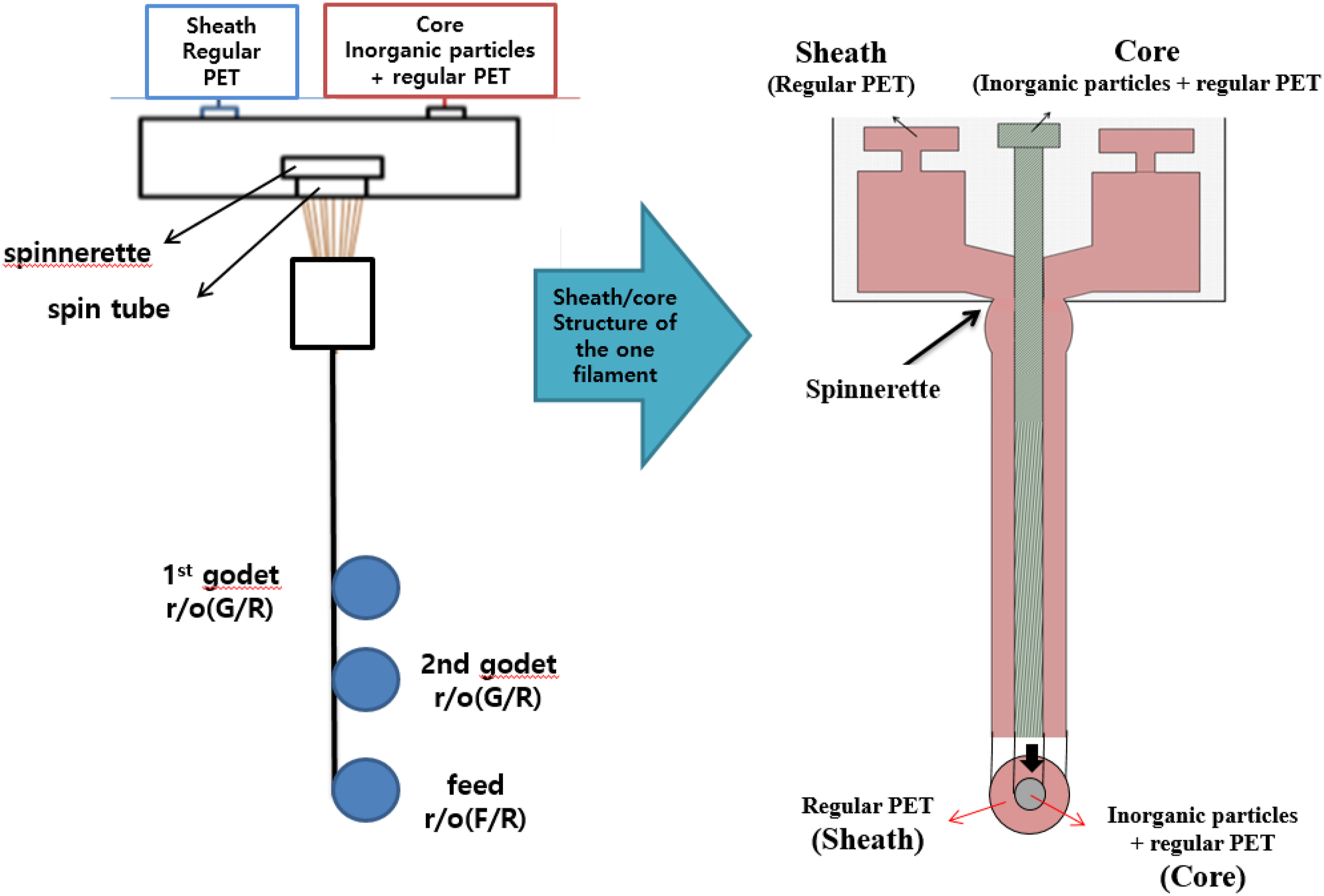

Fabric specimen preparation
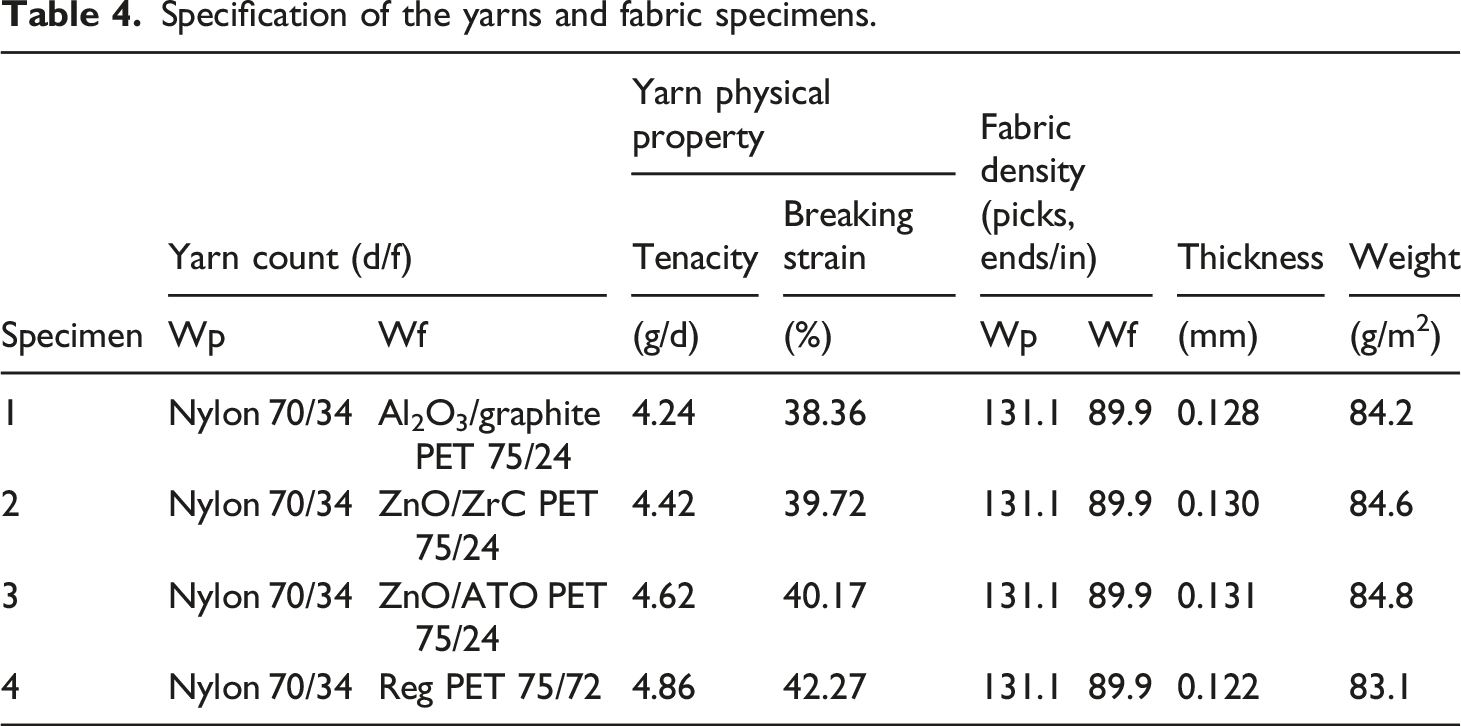
Specification of the yarns and fabric specimens.
Elemental analysis and SEM measurement of yarn specimens
Elemental analysis of the four types of yarn specimen was carried out using energy dispersive X-ray spectroscopy (EDS: Jeol LV 8500, Tokyo, Japan). Cross-sections of the yarn specimens were measured to find out the ceramic particles imbedded in the yarns using SEM (S-4300, Hitachi Co, Japan),. In addition, yarn cross-sectional image measurement was carried out using an optical microscope (I-Camscope 305A, Korea).
Measurement of FIR and thermal radiation of the yarn and fabric specimens
When the ceramic particles in a yarn are heated or irradiated, the heat energy is emitted by FIR radiation. 43 The FIR emission experiment was carried out using a Fourier transform IR (FT-IR) spectrometer (Midac M 2400-C, Irvine, USA). The emissivity and emissive power (W/m2·μm) were measured at 40°C, and over the wavelength range of 5–20 μm. The mean and deviation for five readings of experimental data were obtained. Thermal radiation of the fabric specimens was measured using a light heat emission apparatus (UL chemical, Daegu, Korea). 40 The lamp set on the upper position of the light heat emission apparatus was white tungsten one (Iwasaki, 3200K, Japan). The specimens sized 10 x 10 cm were prepared under a temperature of 20°C ± 2°C and relative humidity of 65 ± 2% RH. The heat emission bulb (220 V/500 W/3200K) separated from each specimen by 30 cm was switched on and the temperature change in the specimen was measured with a thermometer, equipped with contact-type sensor (PT 100, Omega engineering, USA) according to the measuring time.
MMT measurement of the fabric specimens
The water absorption and drying properties of the four types of fabric specimen were measured using a Moisture Management Tester (MMT) in an air-conditioned room (temp : 20±1°C and R.H. : 65±2%) according to the standard AATCC (American Association of Textile Chemists and Colorists) Test Method 15 (AATCC, 2002). Five pieces for four types of fabric specimen were prepared with 80 x 80 mm squares. To simulate sweating, a special solution (0.15g) mixed with distilled water and sodium chloride was injected automatically onto the top surface of each specimen. 27 MMT is designed to measure the liquid moisture transport behaviors in multiple directions. When moisture is transported in a fabric, the contact electrical resistance of the fabrics changes, which depends on two factors: the components of the liquid and the water content in the fabric. 27 The liquid components were fixed in this study, so the measured electrical resistance is related to the water content in the fabric specimens, and the four measured items are as follows. The wetting time (sec) was measured on the top and bottom surfaces of the fabric specimen, which is the time period in which the top and bottom surfaces of the fabric just start to become wetted. The absorption rate (%) is the average moisture absorption ability of the fabric, which was calculated automatically by the initial slope of the water content versus time curve. The maximum wetted radius (MWR, mm) is the radius of the circle, which was recorded in this apparatus, automatically. The spreading speed (mm/sec) is defined as the velocity from the center of the wetted ring to the MWR, which was calculated automatically by MWR/t, where t is the time to reach the maximum wetted ring.
Measurement of the thermal property of the fabric specimens
The thermal property of the fabric specimens was measured using KES-F7 (Kato Tech. Co, Japan) at 20 ± 1°C and 65± 5% RH, and three items were assessed in this apparatus: heat retention rate (I), thermal conductivity (K) and maximum heat flow at transient state (Qmax). The fabric specimen is placed between the water bath and cupper plate attached under B.T. box, which is composed of an electrical system equipped with temperature sensors. The B.T. box temperature is set to 30°C and water is circulated at a constant temperature of 20°C in a water bath. Heat flows from B.T. box to a water bath in the apparatus through a cupper plate and specimen. The B.T. box then measures the heat emanating from the plate as watts (W) from the change in electrical voltage.
44
Five readings of each specimen were performed. The heat retention rate (I) was calculated using equation (1).


Moisture vapor resistance measurement
The moisture vapor resistance of the various ceramic-imbedded fabrics is important to examine the wear comfort of the workwear protective clothing. The moisture vapor resistance (Ret) of the fabric specimens was measured using a sweating guarded hot plate apparatus (Therm DAC, U.K.) according to the ISO 11092 method. A fabric specimen sized 30 cm x 30 cm was prepared and conditioned in the standard atmosphere with an RH of 65% and a temperature of 20°C. The temperature of the guarded hot plate in the chamber was kept at 35 ± 0.5°C and an RH of 40% with an air speed of 1 m/s. The specimen is placed over the thin membrane on perforated metal on a hot plate of the apparatus, which prevents water on the perforated metal of the hot plate from wetting the fabric specimen.
44
The arithmetic mean of five readings from each fabric specimen was calculated. The moisture vapor resistance of the fabric specimen was calculated using equation (4).
Results and Discussion
Characteristics of the ceramic-imbedded sheath/core PET yarns
Figure 2 presents the SEM and microscopy images of the cross-sections of the four yarn specimens. In these SEM images, many white spots appeared on the yarn cross-sections in Figures 2(a) to (c), which were assumed to be mixed with ceramics (Al2O3/ZnO/ZrC/ATO) and TiO2 particles, whereas, many white spots in Figure 2(d) were TiO2 particles, which are usually imbedded as a delustre in PET yarn, but these particles appeared as black spots in the microscopy images, as shown in Figures 2(e) to (h). SEM (x1500) and microscopy images (x250) of the four types of yarn cross-section (a) Specimen 1 (×1500) (b) Specimen 2 (×1500) (c) Specimen 3 (×1500) (d) Specimen 4 (×1500) (e) Specimen 1 (×250) (f) Specimen 2 (×250) (g) Specimen 3 (×250) (h) Specimen 4 (×250).
As shown in Figures 2(a) and (b), the particle size of the Al2O3 (Figure 2(a)) was greater than that of the ZrC (Figure 2(b)), which was verified by particle size distribution shown in Figure 3.
10
Figure 3 shows particle size distribution of Al2O3 and ZrC particles, and the particle size of Al2O3 was distributed between 0.1 μm and 10 μm with average size, 869 nm, and ZrC was distributed between 0.05 μm and 1.1 μm with average size, 548 nm. The particle size and content of particles imbedded in the yarns affect yarn physical property such as tenacity and breaking strain. As shown in Table 4, the tenacity and breaking strain of the Al2O3/graphite yarn specimen 1 showed the lowest values, and regular PET yarn specimen 4 exhibited the highest tenacity and breaking strain. These results were attributed to the particles size and content of particles imbedded in the yarns, i.e. the particle size of Al2O3 imbedded in yarn specimen 1 was the largest as 869 nm whereas, weight content of TiO2 imbedded in the regular yarn specimen 4 was the smallest as 0.36 wt % (0.8 wt % in yarn specimens 2, 3 and 4), resulting in the lowest tenacity and breaking strain of Al2O3/graphite imbedded yarn, and the highest values of regular PET yarn (Table 4). Ceramic particles used in this study were made by SM Platek Co Ltd (Ansan, Korea). Particle size distribution of ceramics (a) Al2O3 (b) ZrC.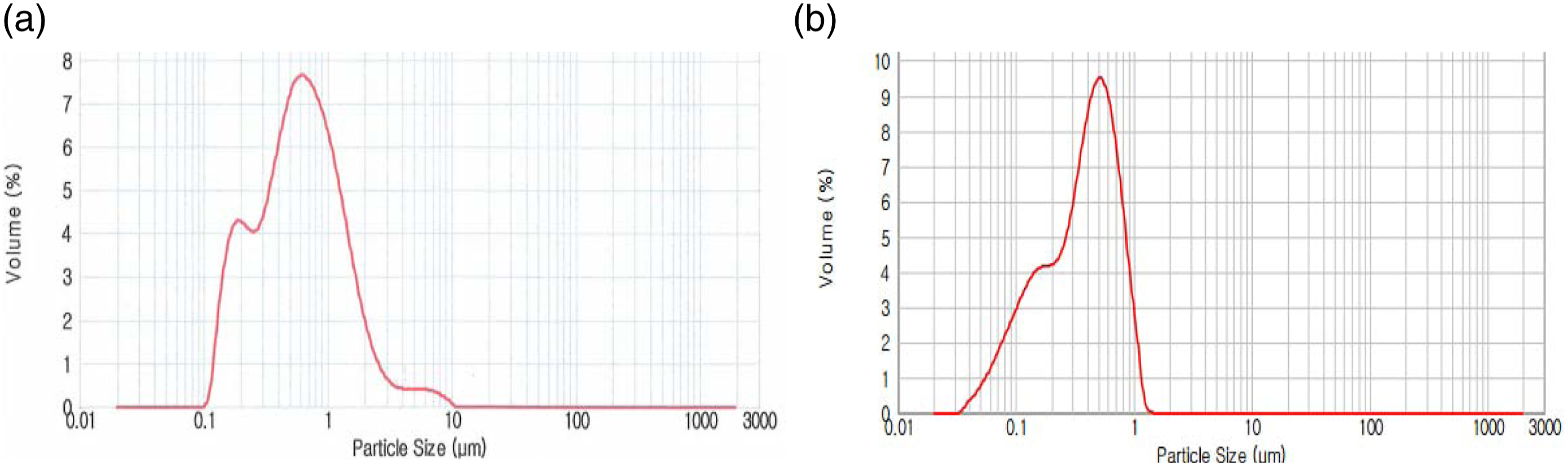
The particle size of the various ceramics was decided according to the characteristics of ceramics to make efficiently M/B by SM Platek, accordingly, which was prepared as nano-sized particles (NPs) for good spinnability, as fine as possible. Therefore, the average size and size distribution of various ceramic particles differed from each other, i.e. we could not consider the particle size and its distribution, which is the reason why the average sizes of the ceramic particles used in this study are different each other. In addition, the effect of ceramic particle size on the wear comfort of fabrics could not considered. On the other hand, the ceramic particles imbedded in the yarns were verified by the elemental analysis using an FT-IR spectrometer. Figures 4(a) to (d) show the results of the elemental analysis of the different types of ceramic-imbedded PET yarn. Peaks appeared for Al and Ti in Figure 4(a), for Zn, Zr and Ti in Figure 4(b), and for Zn, Sb, Sn and Ti in Figure 4(c). The PET polymer used in this study included TiO2 (0.36 wt. %). Figure 4(d) shows the results of the elemental analysis of regular PET yarn, in which Ti, C and O peaks appear. Elemental analysis of the four types of yarn specimen by FT-IR (a) Specimen 1 (b) Specimen 2 (c) Specimen 3 (d) Specimen 4.
Thermal radiation characteristics of the ceramic-imbedded fabrics
One concern in this study is to examine which ceramic particles exhibit superior heat release/storage characteristics to obtain good thermal wear comfort when wearing workwear protective clothing in cold/dry environments in cold weather regions. Therefore, thermal radiation of the fabric specimens was measured and compared with FIR emission characteristics of the ceramic imbedded yarn specimens. Figure 5 presents the thermal radiation characteristics of the four types of ceramic-imbedded fabric specimen. The characteristic curve exhibits the temperature change on the fabric surface according to the time lapsed by the heat emanated from the fabric as the light was irradiated from 30 cm upward from the fabric specimen. Thermal radiation diagram of the fabric specimens.
Emissivity and emissive power of the yarn specimens.

Note: dev = max. – min.
ANOVA of the emissivity and emissive power.

As shown in Table 5, the emissivity and emissive power of the Al2O3/graphite, ZnO/ZrC and ZnO/ATO-imbedded yarns were higher than those of the regular PET yarn, which indicated that the Al2O3/graphite, ZnO/ZrC and ZnO/ATO-imbedded fabrics were more effective for FIR emission than the regular PET fabric. In addition, the effectiveness of the Al2O3/graphite and ZnO/ZrC-imbedded yarns was higher than that of the ZnO/ATO-imbedded yarn, which was attributed to the greater heat release from the Al2O3/graphite and ZnO/ZrC-imbedded yarns than that from the ZnO/ATO-imbedded yarn. According to the previous study 25 related to the emissivity of the ceramic-imbedded yarns and fabrics, the emissivity of the ZrC-imbedded PET yarn was 0.906, however, current findings shown in Table 5 were slightly lower than that of the previous study. This means that the heat release and storage properties of the ceramic-imbedded yarns mixed with the ZnO and ATO were inferior to the ceramic-imbedded yarns mixed with the ZrC or Al2O3, which was attributed to the lower heat release of ZnO particles and the heat shielding effect of ATO particles,40,41 i.e. the ATO particles in the core of the yarns enable them to shield the FIR emitted from light heat, resulting in lower emissivity of the ZnO/ATO-imbedded yarn. In addition, even though the ZnO particles mixed with ZrC particles in the ZnO/ZrC imbedded yarns lower heat release, ZrC particles are much more dominant in heat release, resulting in higher maximum fabric surface temperature (Figure 5) due to higher emissivity (Table 5) of ZnO/ZrC imbedded yarns. This indicates that ZnO and ATO particles need to be mixed with ZrC and Al2O3 particles to enhance both heat release and anti-static or UV-cut properties.
Water absorption and drying properties by MMT
Water absorption and drying properties of the fabric specimens measured by MMT.

ANOVA analysis of the MMT data.
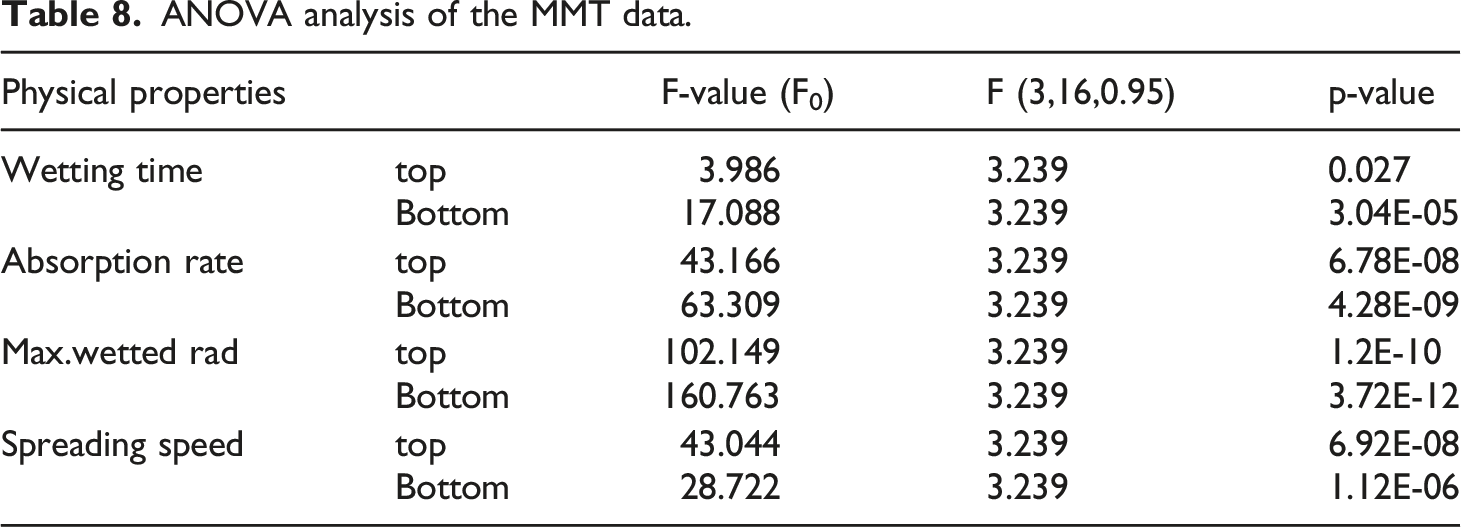
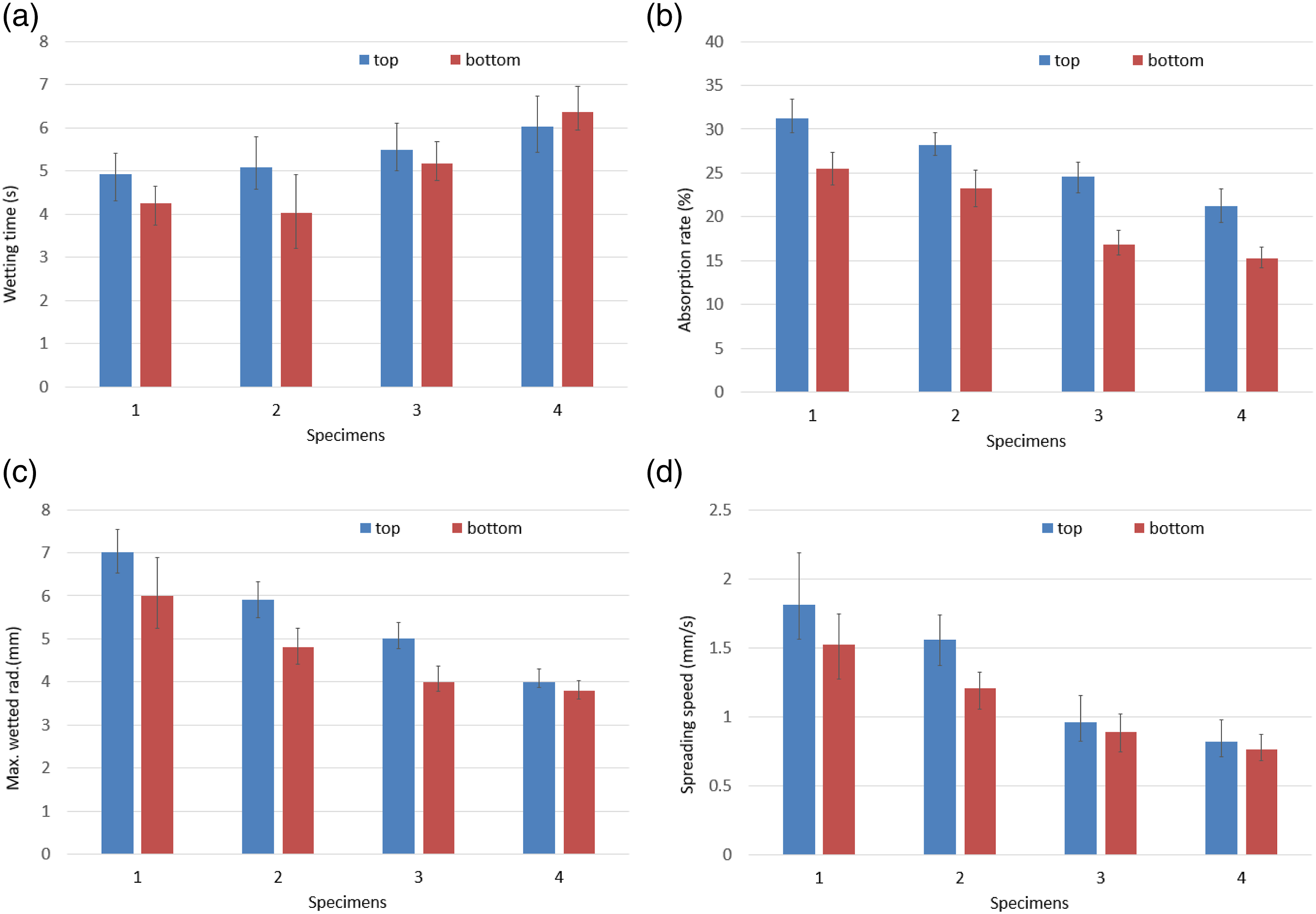
Diagram of MMT results of the fabric specimens. (a) Wetting time (b) Absorption rate (c) Max.wetted rad. (d) Spreading speed.
As shown in Figure 6(a), the wetting times of the Al2O3/graphite, ZnO/ZrC and ZnO/ATO-imbedded fabrics (specimens 1, 2 and 3) were shorter than that of the regular PET fabric (specimen 4), which indicated that the water absorption property of the ceramic-imbedded fabrics is superior to that of the regular PET fabric. This result may be explained by the rapid drying of absorbed water in the ceramic-imbedded yarns due to the heat emitted from the more FIR by ceramic particles such as Al2O3/graphite, ZnO/ZrC and ZnO/ATO in the yarns, i.e. a rapid drying due to the heat emitted from the FIR radiation accelerates the capillary wicking toward the horizontal and vertical directions in the fabrics, resulting in shorter wetting time, which was consistent with the previous studies.19,25 They reported that Al2O3, SiO2 and ZrC imbedded PET fabrics exhibited superior drying property than the regular PET fabric due to the higher FIR emissivity of the ceramic imbedded fabrics.
In addition, the wetting time of the ZnO/ATO-imbedded fabric (specimen 3) was longer than that of the Al2O3/graphite and ZnO/ZrC-imbedded fabrics (specimens 1 and 2), which indicated that the water absorption property of the ZnO/ATO-imbedded fabric was inferior to that of the Al2O3/graphite and ZnO/ZrC-imbedded fabrics. This was attributed to the lower heat release characteristics due to the lower emissivity of the ZnO/ATO-imbedded fabric than the Al2O3/graphite and ZnO/ZrC-imbedded fabrics, as shown in Table 5, i.e. the ATO particles in the ZnO/ATO-imbedded yarn make it possible to shield the heat radiated from ZnO and TiO2 particles in the yarns, resulting in lower heat release emitted from the ZnO/ATO-imbedded fabric, and thereby inferior drying and water absorption characteristics, which was verified by the lower FIR emissivity of the ZnO/ATO-imbedded yarns (Table 5). On the other hand, as shown in Figure 6(b), the absorption rate of the Al2O3/graphite, ZnO/ZrC, and ZnO/ATO-imbedded fabrics was higher than that of the regular PET fabric, which was attributed to the faster drying property of the Al2O3/graphite, ZnO/ZrC and ZnO/ATO-imbedded fabrics than that of the regular PET fabric, as mentioned previously in Figure 6(a).
In addition, the absorption rate of the ZnO/ATO-imbedded fabric was lower than that of the Al2O3/graphite and ZnO/ZrC-imbedded fabrics, which indicated that the water absorption of the ZnO/ATO-imbedded fabric was inferior to that of the Al2O3/graphite and ZnO/ZrC-imbedded fabrics. The reason for this is similar to the explanation presented above for the wetting time, which can be explained by the lower heat release of ZnO and the heat shielding effect of ATO particles. Figure 6(c) shows the MWR which affects the drying time of the fabric. 45 The MWR of the Al2O3/graphite, ZnO/ZrC and ZnO/ATO-imbedded fabrics was larger than that of the regular PET fabric, and the ZnO/ATO-imbedded fabric exhibited shorter MWR than Al2O3/graphite-and ZnO/ZrC-imbedded fabrics. This means that the drying property of the ceramic-imbedded fabrics was superior to that of the regular fabric, and the drying property of the ZnO/ATO-imbedded fabric was inferior to that of the Al2O3/graphite and ZnO/ZrC-imbedded fabrics. These results revealed that, because of the higher heat release due to higher emissivity of the Al2O3/graphite and ZnO/ZrC-imbedded fabrics than ZnO/ATO-imbedded fabric, the water dropped in the MMT apparatus was absorbed and dried rapidly by heat radiated from Al2O3 and ZrC in the yarns, and then penetrated rapidly into fabrics, resulting in a short wetting time and an increase in the absorption rate and MWR.
The spreading speed (mm/s) of the ceramic imbedded fabric specimens 1, 2 and 3, as shown in Figure 6(d), was faster than that of the regular PET fabric, which was attributed to the superior drying characteristics due to high heat release by high emissivity of the ceramic-imbedded fabrics. The current findings were consistent with the previous studies.2,18,19,25 They reported that Al2O3, SiO2 and ZrC particles-imbedded PET fabrics showed superior water absorption and drying properties than those of the regular PET fabric. In addition, the spreading speed of the ZnO/ATO-imbedded fabric was much lower than that of the Al2O3/graphite and ZnO/ZrC-imbedded fabrics for a similar reason to the explanation presented above for the MWR. The current findings suggest that ZnO/ATO-imbedded fabric has inferior water absorbing and drying properties than the Al2O3/graphite and ZnO/ZrC-imbedded fabrics, which results in an uncomfortable feeling when wearing workwear protective clothing, which suggests the importance of the ceramic-imbedded yarns mixed with the ZrC or Al2O3 particles to obtain good water absorbing and drying properties of workwear protective clothing.
Thermal property of the ceramic-imbedded fabrics
Thermal properties and Ret of the fabric specimens.
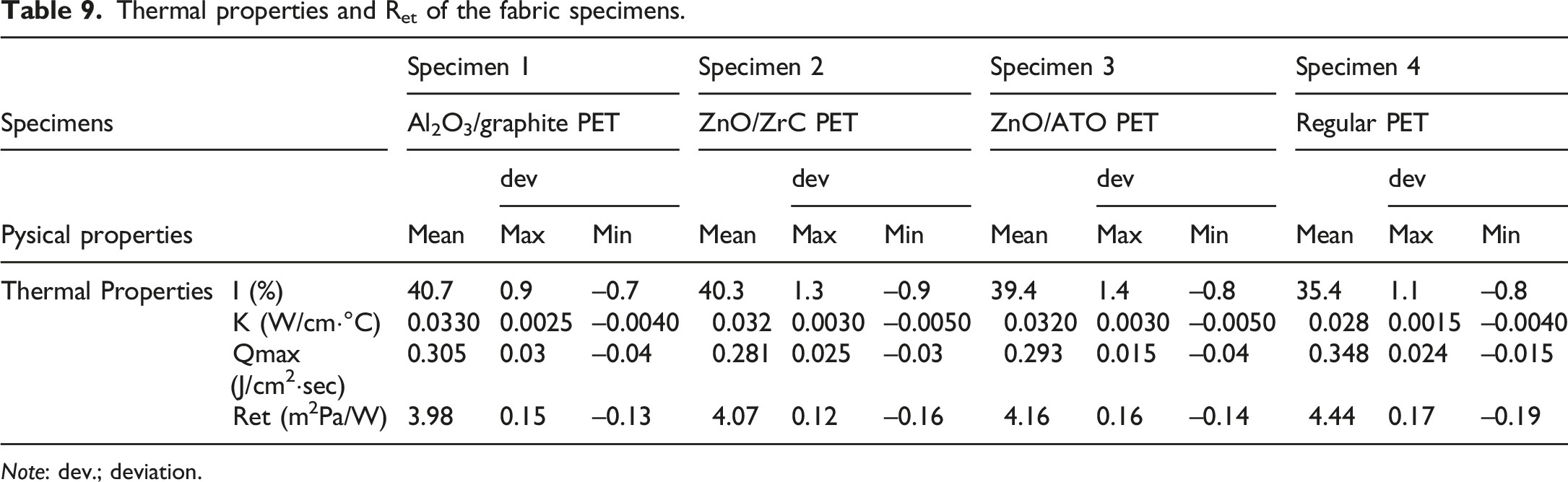
Note: dev.; deviation.
ANOVA analysis of the thermal properties and Ret.

Figure 7 presents the thermal properties of the four types of ceramic-imbedded fabric. As shown in Figure 7(a), the heat retention rates (I) of the ceramic-imbedded fabrics (specimens 1–3) were higher than that of the regular PET fabric (specimen 4), which was attributed to higher FIR radiation emitted from ceramic particles in the yarns (higher emissivity in Table 5). In addition, the heat retention rate of the Al2O3/graphite and ZnO/ZrC-imbedded fabrics was higher than that of the ZnO/ATO-imbedded fabric, which was caused by the higher FIR emissivity emitted from the Al2O3 and ZrC particles in the Al2O3/graphite and ZnO/ZrC-imbedded yarns and partly attributed to the heat shielding effect of ATO particles in the ZnO/ATO-imbedded yarns. This indicated that the Al2O3/graphite and ZnO/ZrC-imbedded fabrics imparted more heat release/storage characteristics than the ZnO/ATO-imbedded fabric did, resulting in a higher heat retention rate, which suggests that ZnO/ATO-imbedded fabric imparts an uncomfortable feeling due to the lower heat retention rate compared to the Al2O3/graphite and ZnO/ZrC-imbedded fabrics when wearing workwear protective clothing related to static electricity in cold/dry environments such as winters in cold weather regions. Thermal properties of the four fabric specimens. (a) I (b) K (c) Qmax.
As shown in Figure 7(b), the thermal conductivity(K) of the ceramic-imbedded fabrics (specimens 1–3) was higher than that of the regular PET fabric, which was attributed to the higher thermal conductivities of Al2O3, ZrC and ZnO than that of the TiO2 particles imbedded in the regular PET yarn. 46 Qmax is defined as a measure of coolness, i.e. the maximum heat loss from the human skin as soon as the fabric contacts the human skin. As shown in Figure 7(c), Qmax of the ceramic-imbedded fabrics (specimens 1–3) was lower than that of the regular PET fabric, which might be explained that the thermal energy accumulated by highly emitted FIR in the fabric specimens 1, 2 and 3 prohibited the heat from flowing between the human skin and the fabric, resulting in lower Qmax of the ceramic-imbedded fabrics than that of the regular PET fabric. However, any significant trend of Qmax among the ceramic imbedded fabric specimens 1, 2 and 3 was not found. Our findings were similar to those of a previous studies19,25 that reported a lower Qmax for a ZrC-imbedded knitted fabric than that of the regular PET one due to the inhibited heat flow between the skin and the knitted fabric by the FIR emitted from ZrC particle, 25 and that reported the higher thermal insulation of the Al2O3 imbedded fabric than the regular PET fabric. 19
Moisture vapor resistance of the ceramic-imbedded fabrics
The moisture vapor resistance (Ret) of a fabric is a very important property to evaluate its wear comfort. Figure 8 presents the moisture vapor resistance of the fabric specimens. Moisture vapor resistance of the fabric specimens.
As shown in Figure 8, the moisture vapor resistance of the ceramic-imbedded fabrics (specimens 1, 2 and 3) was lower than that of the regular PET fabric (specimen 4), i.e. they exhibited superior breathability to the regular PET fabric. This was attributed to the greater heat emission due to the higher emissivity of the FIR from the ceramic-imbedded yarns in fabric specimens 1, 2 and 3, which assisted to accelerate the perspiration of moisture vapor from the human skin, enabling the moisture vapor from the human body to escape easily and thereby lowered the moisture vapor resistance. Our findings are consistent with those of previous findings,18,19 which revealed that the moisture vapor permeability of the ceramic-imbedded fabrics increased with increasing content of ceramic particles imbedded in the yarns such as ZrC, Al2O3, and SiO2 and they exhibited superior breathability compared to that of the regular PET fabric.
In addition, the moisture vapor resistance of the Al2O3/graphite and ZnO/ZrC-imbedded fabrics (specimens 1 and 2) was lower than that of the ZnO/ATO-imbedded fabric (specimen 3), which was attributed to the higher heat release due to the higher emissivity of the FIR from the Al2O3/graphite and ZnO/ZrC imbedded fabrics than from the ZnO/ATO-imbedded fabric, and partly caused by the heat shielding effect of ATO particles and the lower heat release of the ZnO particles in the yarns. This demonstrated the superior breathability of the Al2O3/graphite and ZnO/ZrC-imbedded fabrics compared to the ZnO/ATO-imbedded fabric, which results in an comfortable wear comfort when wearing workwear protective clothing. Therefore, ZnO and ATO particles imbedded yarns are required to mix with the ZrC or Al2O3 particles to obtain a good moisture vapor permeable workwear protective clothing.
Conclusions
This study examined the water and moisture vapor permeable and thermal wear comfort properties of the Al2O3/graphite, ZnO/ZrC and ZnO/ATO ceramic particles-imbedded fabrics for workwear protective clothing in relation to regular PET fabric. The water absorption and drying, moisture vapor resistance and thermal property of the ceramic-imbedded fabrics were measured and the results were compared in terms of the thermal radiation and the emissivity characteristics of the fabric specimens. The water and moisture vapor permeable and thermal wear comfort properties of three types of ceramic-imbedded fabric were superior to those of the regular PET one due to the greater heat emission arising from the higher FIR emissivity by the ceramic particles in the yarns, which suggests that workwear protective clothing made of these ceramic-imbedded fabrics may be comfortable to wear than clothing made of regular PET fabric. Of three ceramic-imbedded fabrics, the Al2O3/graphite and ZnO/ZrC-imbedded fabrics exhibited better water absorbing and drying properties than the ZnO/ATO-imbedded fabric did, which was verified by the higher maximum fabric surface temperature and higher emissivity of the Al2O3/graphite and ZnO/ZrC-imbedded fabrics by the thermal radiation and FIR experiments, respectively.
The heat retention rate of the Al2O3/graphite and ZnO/ZrC-imbedded fabrics was higher than that of the ZnO/ATO-imbedded fabric, which indicated that the Al2O3/graphite and ZnO/ZrC-imbedded fabrics impart greater thermal wear comfort than the ZnO/ATO-imbedded fabric when wearing workwear protective clothing in cold/dry environments in cold weather regions. Furthermore, the Al2O3/graphite and ZnO/ZrC-imbedded fabrics exhibited superior breathability to the ZnO/ATO-imbedded fabric, which also imparts comfortable feeling to Al2O3/ZrC-imbedded fabrics. Summarizing these findings, of the ceramic-imbedded fabrics, the ZnO/ATO-imbedded fabric exhibited inferior wear comfort than the ZnO/ZrC and Al2O3/graphite-imbedded fabrics, which revealed that the heat release characteristics of the ZnO and ATO particles imbedded in the yarns were inferior to the Al2O3 and ZrC particles, which was attributed to the lower heat release of the ZnO and the heat shielding effect of the ATO particles. This imparted poorer water and moisture vapor permeable and thermal wear comfort, resulting in an uncomfortable feeling while wearing workwear protective clothing. Finally, ZnO and ATO particles imbedded in the yarns are required to be mixed with Al2O3 and ZrC particles to obtain superior wear comfort fabrics for workwear protective clothing.
Footnotes
Declaration of conflicting interests
The author(s) declared no potential conflicts of interest with respect to the research, authorship, and/or publication of this article.
Funding
The author(s) received no financial support for the research, authorship, and/or publication of this article.
