




Abstract
Face masks are commonly used to protect an individual’s respiratory system from inhaling fine particulate matter (PM2.5) in polluted air, as well as the airborne pathogens, especially during the ongoing coronavirus disease 2019 (COVID-19) pandemic. However, all conventional masks with anti-PM2.5 function suffer from insufficient facial thermal comfort, particularly in a hot and humid environment. Herein, we demonstrated a novel infrared-transmittance visible-opaque PM2.5 media for radiative cooling utilizing rutile titanium dioxide particle-embedded polyamide 6 (PA6-TiO2). The transmission of visible light and infrared and PM2.5 removal performance of composite media containing a variety of microstructures, such as TiO2 particles of varying sizes, shapes, and contents, were numerically examined to determine the optimal ranges. Then the PA6-TiO2 media was effectively electrospun by controlling the arrangement of fibers and the morphology of TiO2 particles. By transmitting more than 85% of the thermal radiation from the human body and selectively blocking solar irradiance, the developed PA6-TiO2(flower-shaped) media cooled the simulative skin by 10.3°C as compared with commercial masks under strong solar irradiance. Additionally, they demonstrated a high PM2.5 removal efficiency of 95.3%, a low air resistance of 22.5 Pa (at 5.3 cm/s), and a sound water vapor transmission rate of 0.0169 g cm−2 h−1. This study presents an effective strategy for making thermally comfortable anti-PM2.5 masks, which will significantly benefit the public health prevention and control.
Introduction
Fine particulate matter (PM2.5) pollution has become a global air pollution problem that endangers human health. 1 Face masks are the most extensively used personal respiratory protection devices to reduce exposure to PM2.5 and pathogens. 2 Wearing masks in public places has been proven to meaningfully prevent the community spread of COVID-19, particularly during the ongoing epidemic.2,3 Surgical masks and high-efficiency particulate air filtering masks such as KF94 or N95 are all manufactured of nonwoven fabric, which have relatively low cost and high PM removal efficiency. 4 Due to resistance to airflow and thermal discomfort related to buildup of facial heat, especially in hot and humid weather, many people use a mask with lack of compliance to safety regulations.5,6 According to a report on 17 people wearing N95 masks and exercising on a treadmill at a low-moderate work rate for 1 or 2 h showed that the temperature and humidity of the mask dead zone were much higher than the environmental level, and the average apparent heat index in the dead zone of filtering facepiece respirators was 54°C. 7 The thermo-physiological comfort properties of a mask are closely related to its ability to provide thermo-regulation and moisture transportation from the micro-climate (the area between the skin and the first layer of fabric) to the surrounding environment. 8 The masks that can quickly transfer heat and moisture away from the face are considered to provide higher levels of comfort. The fabric thickness and packing density are the key indicator of thermal resistance, and they are closely related to the PM removal efficiency and respiratory resistance. Therefore, it is very challenging to improve the masks’ thermal comfort and breathability while maintaining their respiratory protection function.
Radiative cooling, a zero-energy-consumption surface cooling technology, appears to be a viable option for the development of thermal comfort masks. The human body emits thermal radiation mostly in the mid-infrared (mid-IR) range between 7 and 14 μm with a maximum emission at the wavelength of 9.5 μm and a net radiation power density of approximately 100 W m−2. 9 This mid-IR thermal radiation can pass directly through the atmospheric window to the cold outer space (3 K) for heat dissipation, accounting for more than 50% of a human body’s total heat loss. 10 However, normal mask media have a low mid-IR transmittance and increase the temperature of the areas they cover , 11 resulting in reduced thermal comfort. Meanwhile, the human facial skin is heated by solar irradiance when exposed to outdoor sunlight. The wavelengths of solar irradiance that can be converted to heat energy are visible light (VIS) spanning from 400 to 700 nm with a total radiation power density of around 1000 W m−2. 12 More than 60% of the total solar irradiance can be absorbed by the bare skin based on its averaged solar reflectivity value. Therefore, Tong et al. proposed a conceptual framework to thermally and optically design an infrared-transmittance visible-opaque (ITVO) fabric. 13 They noted that the fabric required a minimum IR transmittance of 0.644 and a maximum IR reflectance of 0.2 to ensure thermal comfort at an ambient temperature as high as 26.1°C. To meet these specifications, the ITVO fabric was developed using synthetic polymer fibers with inherent low IR absorption properties. Hsu et al., proposed a nanoporous polyethylene (nanoPE) to enhance radiative cooling effectiveness. 14 PE, which is constituted entirely of aliphatic C=C and C–H bonds, has narrow absorption peaks that are all located well beyond the peak of human body radiation. NanoPE has interconnected nanopores, that scatter visible light and are opaque to the eyes. Cai et al. demonstrated a novel spectrally selective nanocomposite textile (ZnO-PE) for outdoor personal cooling. The textile can reflect more than 90% solar irradiance and selectively transmit out human body thermal radiation, enabling the simulated skin to avoid overheating by 5–13°C compared to normal textile like cotton under peak daylight condition. 15 Xiao et al. presented a novel IR-enhanced membrane with polyamide 6 (PA6) nanofibers and randomly distributed silica particles, that selectively radiated thermal radiation from the human body to cold outer space. 16
However, the radiative cooling media mentioned above are only suited for human clothes. When utilized as mask media, their ability to remove PM and breathing resistance are considered. Yang et al. developed a composite nanofiber/nanoPE filter which achieved high PM removal efficiency (99.6% for PM2.5) and high IR transparency of 92.1% simultaneously. 17 Nevertheless, the nanoPE was required to be pierced with a microneedle to generate some micropores, and its cooling effectiveness in an outdoor environment remained unknown.
In this study, we proposed a solution to obtain a composite filter with excellent ITVO function and PM removal performance. Because the PA6 nanofibers have a huge surface area, a large dipole moment of 3.67 D, 18 and the abundance of static charges embedded in them during electrospinning, they show a high PM removal efficiency. In addition, the PA6 demonstrates an IR transmission performance similar to PE, although it contains more chemical groups, such as amide groups which generate additional vibrations at wavelengths of 6–8 μm and 13–14 μm. However, the solar reflectance of PA6 is not satisfactory for outdoor sunlight environment, because of its relatively low refractive index of 1.75. 19 Rutile titanium dioxide (TiO2) solids typically have a higher refractive index of 2.71, 20 which can reflect approximately 87% of solar irradiance. 21 These intrinsic material properties render the combination of TiO2 and PA6 uniquely suitable as mask materials with indoor and outdoor radiative cooling functions. Electrospinning is one of the most promising methods of creating micro/nanoscale fibers. The advantage of electrospinning technology is the ease of incorporating other components into the electrospinning solution to develop multifunctional filter media.22,23 Herein, we first fabricated PA6-TiO2 media with highly-oriented nanofibers by adjusting the pulling direction of electrostatic field. Then the VIS-IR transmission and PM2.5 removal performance of PA6-TiO2 inorganic–organic composite media with a variety of TiO2 sizes, morphologies, and contents were numerically evaluated to get the optimal microstructure ranges. Within these ranges, the composite PA6-TiO2 media was successfully constructed and electrospun. The resulting PA6 filter with randomly-distributed flower-shaped TiO2 particles exhibited a high PM2.5 removal efficiency of 95.3% and a low air resistance of 22.5 Pa. Moreover, it cooled to 5°C and 10.3°C than commercial masks in an indoor environment and under a strong solar irradiance of 650 W/h.
Experimental
Preparation of irregular TiO2 particles
Absolute ethanol (>99.7%, 100 mL, Shanghai Aladdin Biochemical Technology Co., Ltd) was mixed with NaCl solution (0.1 M, 0.4 mL) and tetrabutyl titanate (98.0%, 2 mL, Shanghai Aladdin Biochemical Technology Co., Ltd.), and magnetically stirred for 10 min at room temperature until white precipitation appeared. The suspension was statically aged in an air atmosphere at 25°C for 10 h, followed by centrifugation, washing with deionized water and absolute ethanol, drying in an oven at 70°C for 24 h to obtain the raw TiO2 microspheres. Then dispersed the TiO2 microspheres (0.8 g) into a mixture of ethanol (20 mL) and deionized water (10 mL) with magnetic stirring, and subsequently added sodium fluoride (0.18 g) into the mixture and sonicated it for 1 h. Finally, microwave irradiation was used to heat the resulting suspension at 180°C for 60 min, followed by repeatedly and ultrasonically washing with deionized water and absolute ethanol, drying at 70°C for 24 h to obtain the honeycomb TiO2 particles.
Ammonium hexafluorotitanate (0.158 g, Shanghai Xianding Biological Technology Co., Ltd.) and boric acid (0.445 g, Jiangsu Qiangsheng Functional Chemical Co., Ltd.) were dissolved into deionized water (160 mL) and reacted in an oven at 90°C for 2 h. The reaction solution was filtered and washed by suction using a Buchner funnel, and the product was dried at 80°C for 1 h to get dried TiO2 spheres. The spheres were calcined at a temperature of 800°C and ball milled to obtain the flower-shaped TiO2 particles.
Preparation and characterization of PA6-TiO2 media
PA6 pellets (Mw = 6.0 × 10⁴, Hunan Yuehua Chemical Co., Ltd., China) were dissolved in formic acid (99%, Shanghai Aladdin Biochemical Technology Co., Ltd.) with a concentration of 24 wt%. Then, spherical TiO2 particles with diameters ranging from 20 to 300 nm and the prepared irregular TiO2 particles were added to create PA6-TiO2 solutions containing TiO2 concentrations of 0.5 wt%, 0.7 wt%, 0.9 wt%, 1.1 wt%, and 1.3 wt%. The prepared solutions were magnetically stirred at room temperature until a homogeneous mixture was obtained. Take note that the spherical TiO2 particles were purchased directly from Shanghai Aladdin Biochemical Technology Co., Ltd.
The mixed solution was injected into a 5 mL syringe and spun by an electrospinning machine (SS-2535H, Beijing Ucalery Technology Development Co., Ltd., China). As shown in Scheme 1(a), a high-voltage electrical potential is applied between the polymer drop held at the end of the needle and the grounded roller. When the applied electric field overcomes the surface tension of the droplet, a jet of charged polymer solution is ejected. The charged jet extends through the spiralling loops, becoming longer and thinner, until it solidifies or collects on the receiver. The brass meshes with square hole sizes of 1.18, 0.85, 0.425, 0.25 and 0.18 mm (Meidi Family Co., Ltd., China) were pasted on the roller as receivers. The PA6-TiO2 fibers were uniformly collected on the brass meshes and were stripped from it after 10–12 h, as seen in Scheme 1(b). The electrospinning parameters were as follows: collecting distance 10 cm; voltage 25 kV; propulsion speed 0.03 mm min−1; needle inner diameter 0.23 mm; cylindrical roller diameter 10 cm; roller width 30 cm; rotation speed of rotating receiver 60 r min−1; ambient temperature 22.5 ± 3°C and relative humidity (RH) 48%. (a) Electrospinning machine and (b) stripping filter material from copper metal mesh.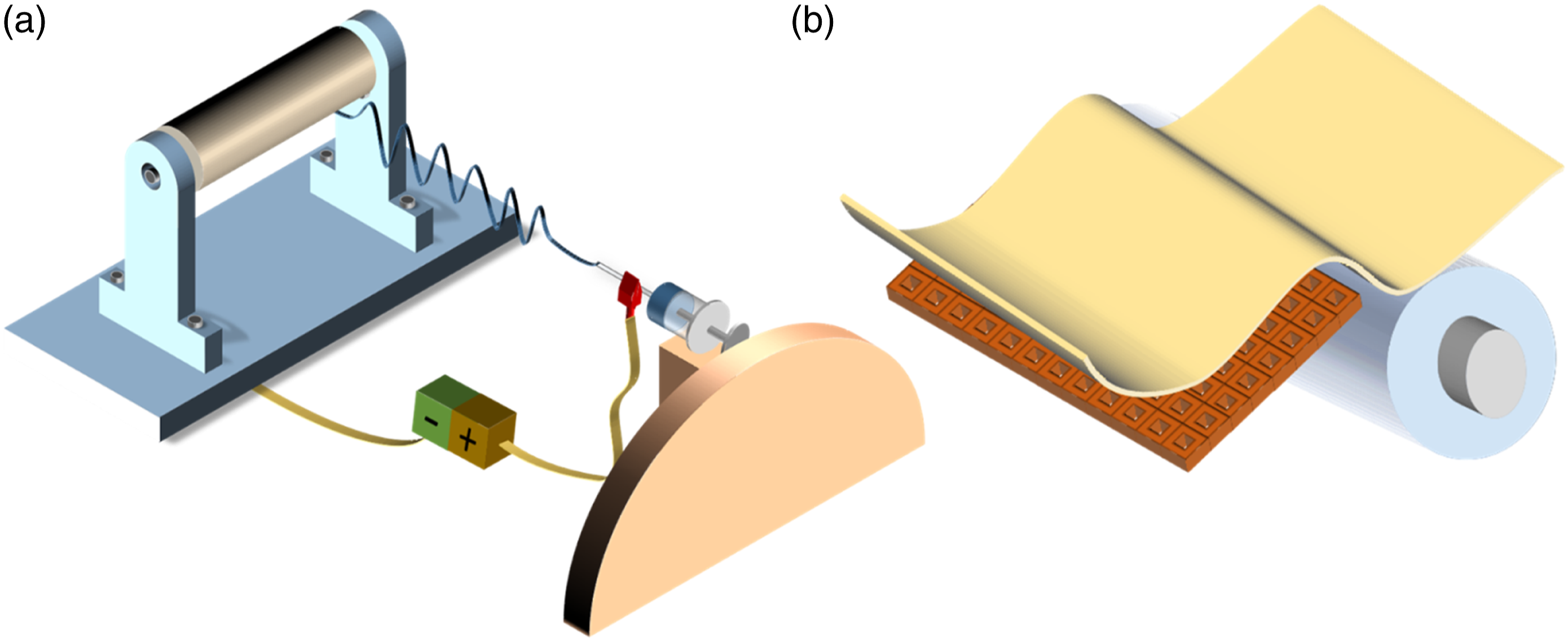
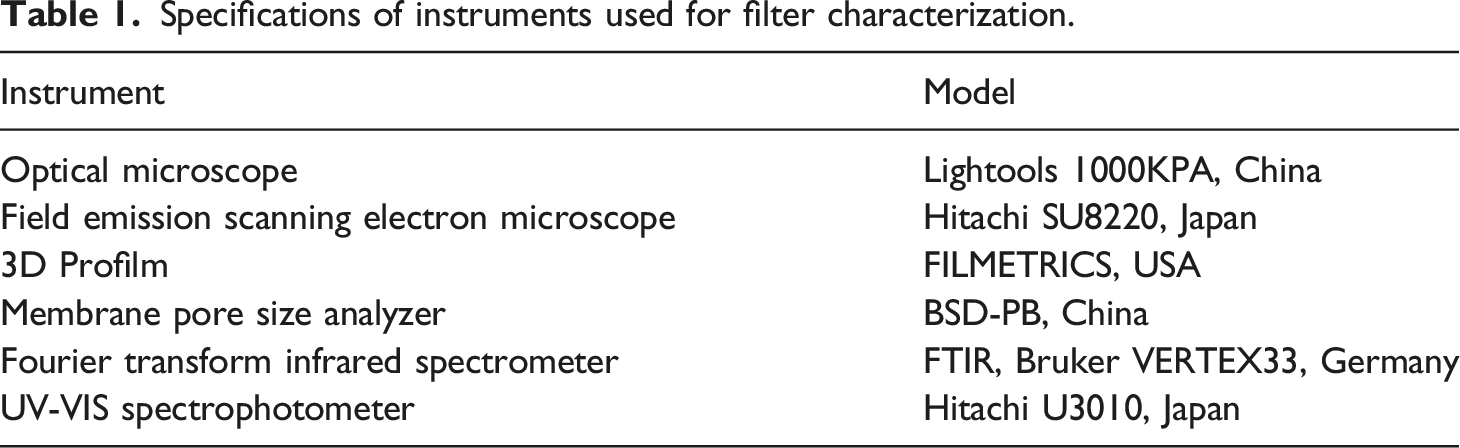
Specifications of instruments used for filter characterization.
The WVTR (water vapor transmission rate) was measured using a homemade fabric moisture permeability apparatus according to ASTM E96 standard. 24 The filter was sealed at the mouth of a 100 mL bottle filled with 80 mL distilled water. The apparatus was placed in a chamber with a constant temperature of 37°C and a constant RH of 37% for 24 h. The total mass of the filter and bottle were monitored periodically, and the decreased mass was due to the evaporation of water vapor. The decreased mass was then divided by the exposed area to obtain the rate of water vapor transmission.
Radiative thermal measurement
The IR heat dissipation performance was measured by a homemade device in an indoor environment. As shown in Scheme 2, the device was comprised of an electric heater (SG1501B, China) simulating the human skin, two thermocouples (0.3 mm in diameter, E-type, ±0.1°C of accuracy, China), and a data collector (Agilent 34970A, USA). The power density of the skin heater was set to be constant at 104 W/m2, which was comparable to the human body metabolic heat generation rate. (Cai et al., 2018) It was resulted in a skin temperature of 35.8°C ± 0.2°C at an ambient temperature of 25.5°C ± 0.2°C. The thermocouples were contacted with the ambient environment and the top surface of simulative skin to measure their temperature variations simultaneously. To avoid heat loss to the bottom, an insulating foam was placed beneath the simulative skin heater. The entire device was enclosed in a temperature-controllable chamber with no air circulation. An IR thermal imager (FLIR A6702Sc, USA) was used to record the temperature distributions of face wearing different masks. The working distance was approximately 30 cm. Schematic of measurement device for mid-IR heat dissipation.
The outdoor radiative cooling performance was also measured by a homemade device. As shown in Scheme 3, the device was composed of a simulative solar light source (PLS-SXE300), a heater simulating the skin, two thermal couples, and a data collector. The intensity of the light source was maintained at 650 W/m2, comparable to the average daily solar irradiance in summer in Guangzhou, China (from Guangzhou Meteorological Bureau, http://gd.cma.gov.cn/gzsqxj/). A heating power input of 104 W/m2 was applied to the heater to simulate the metabolic heat generation rate of the skin. The thermocouples recorded the temperature of the simulated skin covered by a sample and the ambient environment simultaneously. To avoid the effects of thermal convention, the integral test device was placed in an enclosed area. Schematic of measurement device for heat dissipation under simulative solar irradiation.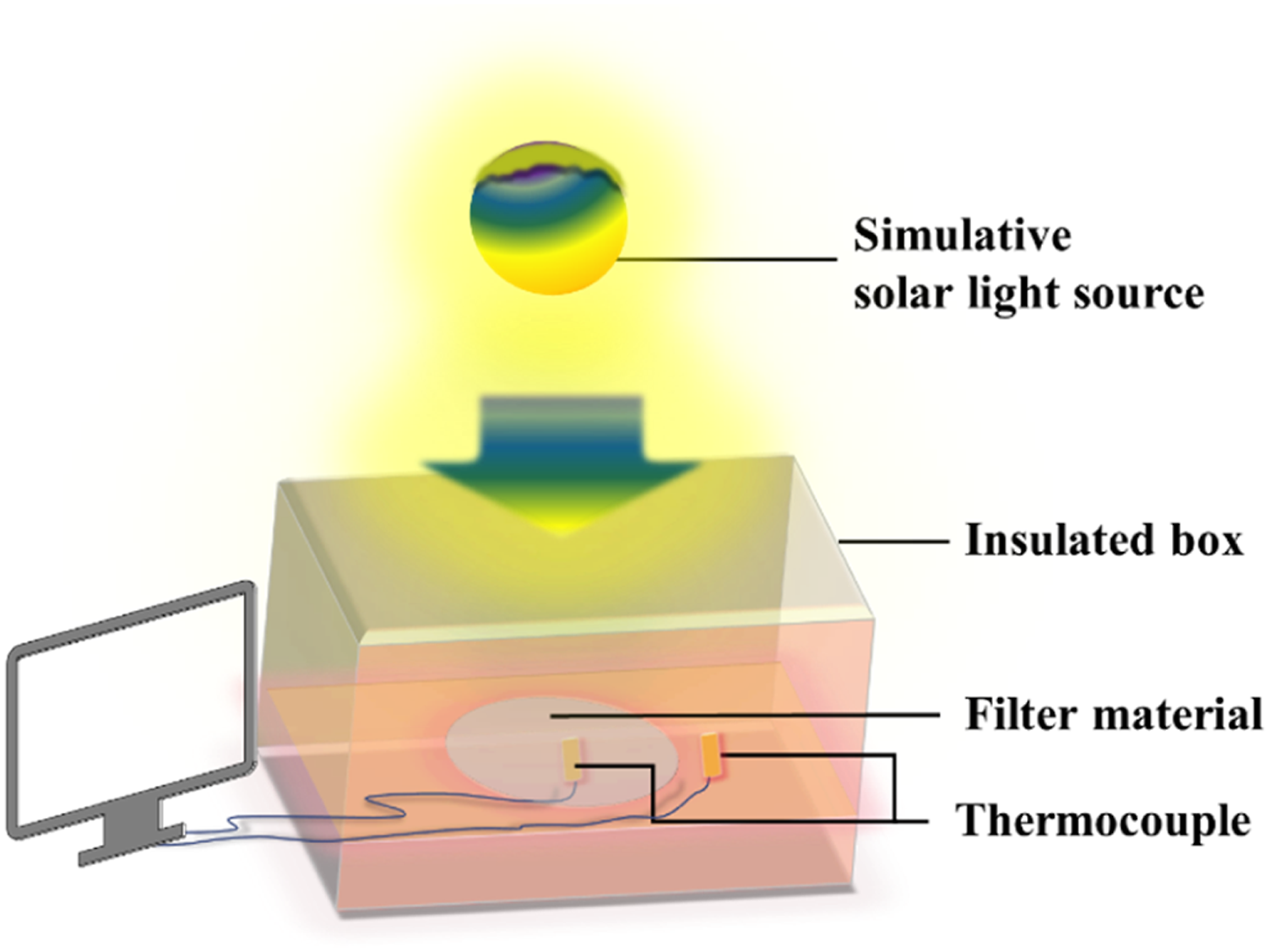
PM2.5 caption performance measurement
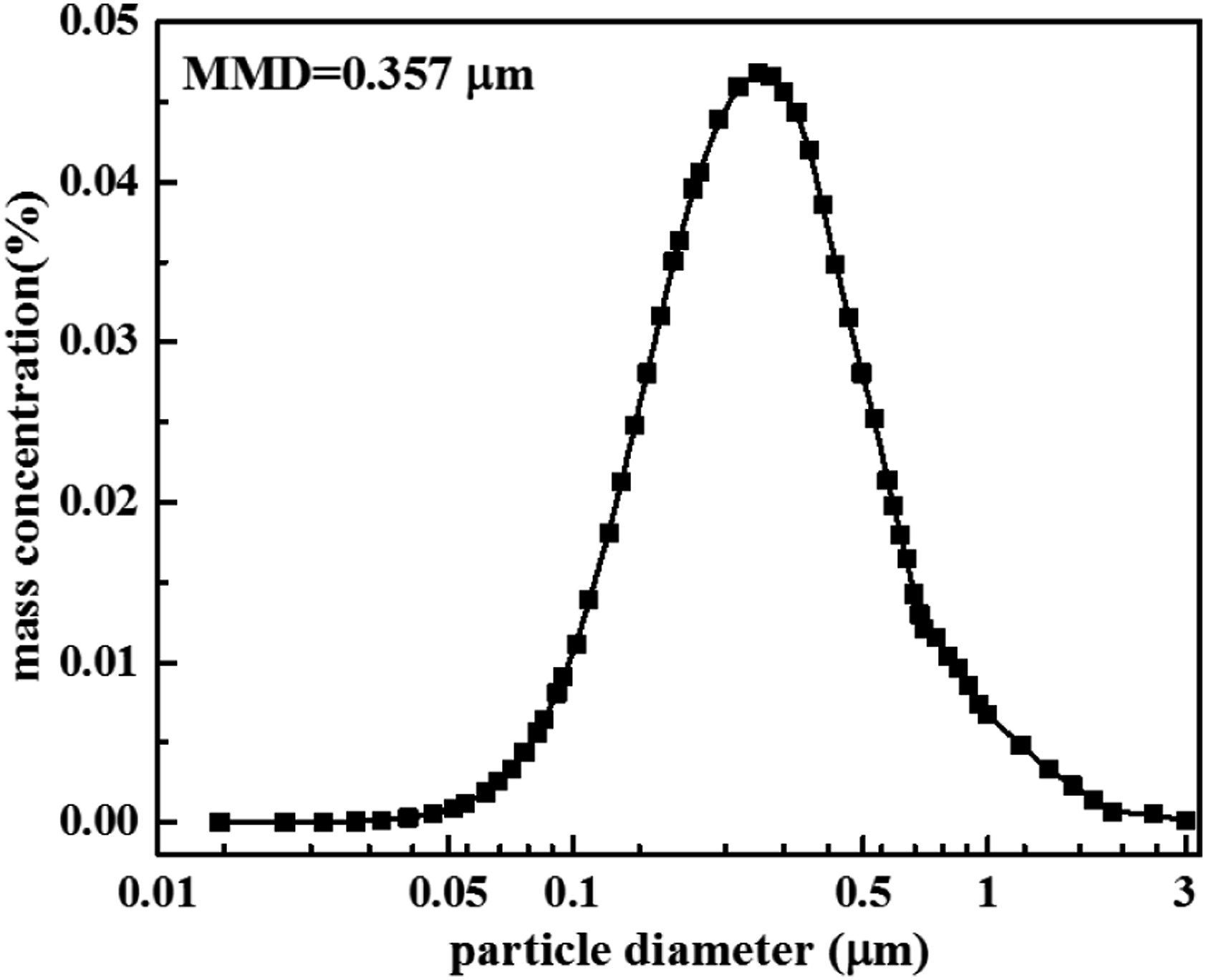
The PM2.5 removal performance of the PA6-TiO2 media was evaluated by measuring its filtration efficiency and air resistance. As schematized in Scheme 4, the polydisperse sodium chloride (NaCl) aerosols that simulate PM2.5 were produced by an aerosol atomizer generator (TSI 3079A, USA), and further neutralized by a neutralizer (TSI 3088, USA) to bring particles to be Boltzmann equilibrium to minimize the effect of electrostatic depositions. Figure 1 illustrated the particle size distribution of the NaCl aerosols. The aerosols ranged in size from <0.1 μm to 3.0 μm, with a medium diameter of 0.34 μm. The inflow PM concentration was regulated by diluting the NaCl aerosols with clean air to a hazardous pollution level equivalent to a PM2.5 index >300. The filter media was fixed to the center of the filter holder with a cylindrical magnet. The removal efficiency (η) was defined as η = 1− Cdown/Cup, where Cup and Cdown were the number concentrations of particles measured by two particle counters (Chinaway HPC600, China) at upstream and downstream of the filter, respectively. The air resistance (ΔP) was monitored by a differential pressure gauge (Benetech GM505, China). The airflow velocity was maintained constantly to be 5.3 cm/s. Schematic of PM2.5 removal performance measurement. Size distribution of NaCl aerosols.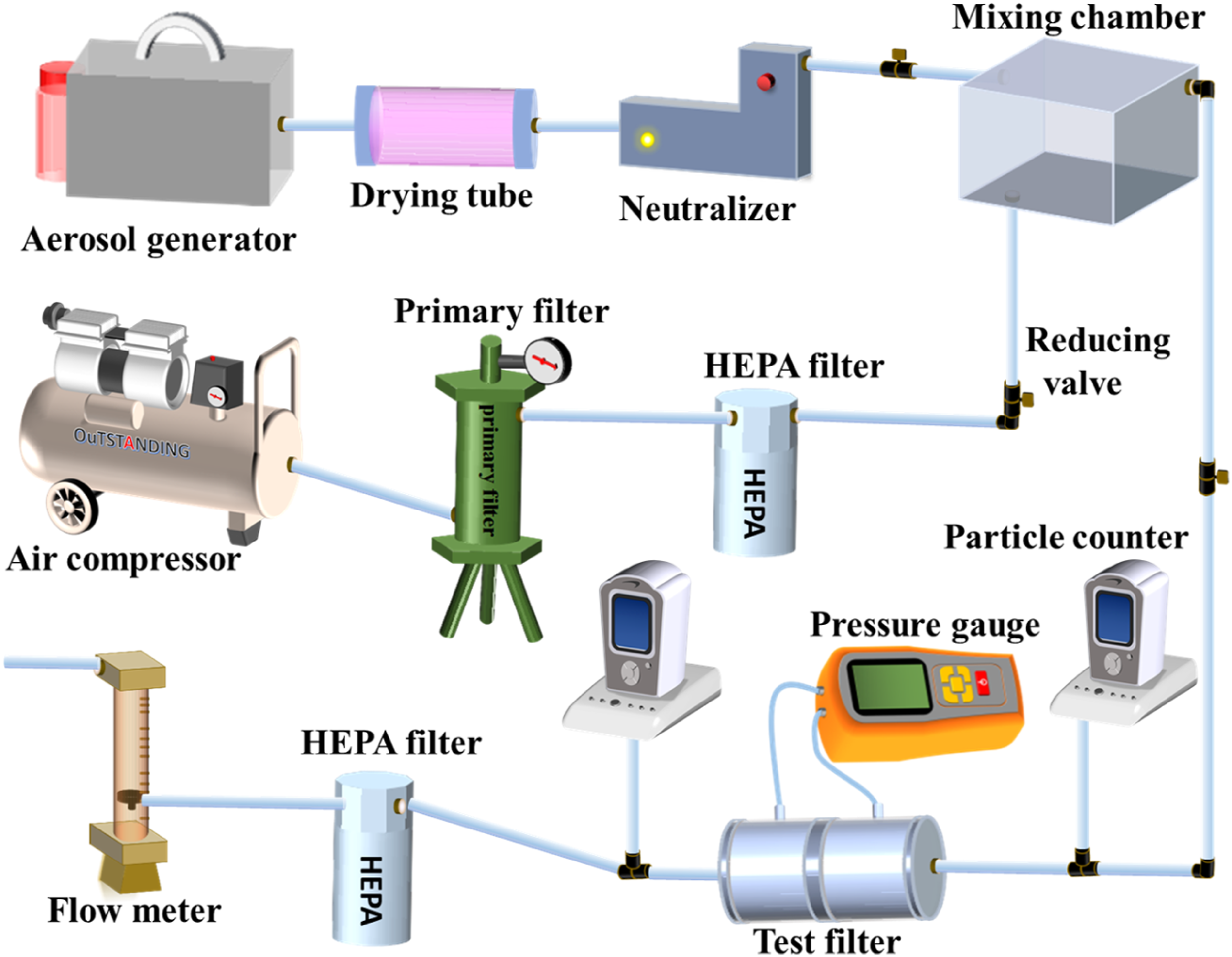
Numerical simulation
The 3D finite-difference time-domain (FDTD) method25,26 was used to explorer the thermal radiation properties of PA6-TiO2 media in visible light and mid-IR ranges. The algorithm was implemented with Lummerical FDTD solution that is a commercial photonic design software. The TiO2 embedded PAN nanofiber filter was modeled as a random medium containing uniformly distributed scattering particles. (see Supplementary Note S1, Figure S1) The effects of TiO2 size, morphology, content, as well as filter thickness were parametrically investigated.
The particle-laden airflow and particle deposition processes in the PA6-TiO2 porous media were simulated to clarify the influence of the filter microstructure on the PM2.5 removal efficiency and air resistance. Several virtual fibrous structures representing PA6-TiO2 media were generated. The particle-laden airflow through the virtual fibrous structures was simulated using lattice Boltzmann combined with discrete particle method (LB-DPM). 27 (see Supplementary Note S2, Figure S2)
Results and discussion
Simulation and optimization
The composition and structure of PA6-TiO2 media were initially optimized using FDTD and air-particle flow simulation. Figure 2(a) demonstrated the normalized scattering cross sections of a single spherical TiO2 particle in the medium of PAN over the spectral wavelengths from 0.4 to 16 μm with varying particle sizes from 0.01 to 10 μm. As seen, for TiO2 particle sizes below 0.1 μm, the scattering cross sections over the entire wavelengths were all smaller than 0.1. While, for particle sizes above 1 μm, the scattering cross sections were all bigger than 0.05. These particle size ranges result in very little spectrum selectivity. When the particle sizes were between 0.1 and 1 μm, which were comparable to the wavelengths of solar irradiance, strong Mie scattering occurred. This would significantly increase the scattering cross sections in the VIS range, whereas scattering in the mid-IR remains small. Therefore, proper selection of TiO2 particles within 0.1–1 μm is very crucial for achieving low transmission in the VIS region and high transmission in the mid-IR region. Simulation and optimization of radiation property and PM2.5 removal performance (a) The normalized scattering cross sections of a single spherical TiO2 particle in the medium of PA6 over VIS-IR band with particle diameter ranging from 0.01 to 10 μm (b) Effect of TiO2 size and TiO2 content on VIS-IR transmittance of PA6-TiO2 media (The mid-IR transmission is averaged over the human body thermal radiation wavelengths from 4 to 16 μm. The VIS transmission is averaged over the solar irradiance spectrum from 0.3 to 0.8 μm) (c) Effect of thickness on VIS-IR transmittance and air resistance of PA6-TiO2 media (d) The normalized scattering cross sections of single smooth spherical, rough spherical and rough ellipsoid TiO2 particle in the medium of PA6 over VIS-IR band with particle size of 0.2 μm.
Then, the effects of TiO2 size and content on VIS-IR transmittance of PAN-TiO2 media were explored by FDTD simulation. As seen in Figure 2(b), for TiO2 content of 1.0 wt%, with the increase of TiO2 size from 0.05 μm to 2.0 μm, the mid-IR transmittance decreased from 0.903 to 0.835 while the VIS transmittance decreased sharply from 0.733 to 0.509. Similarly, when the content of TiO2 particle increased from 0.2 wt% to 2.0 wt%, the mid-IR transmittance decreased slowly from 0.915 to 0.862 while the VIS transmittance decreased significantly from 0.733 to 0.496. Thus, there is an optimal range that enabled the PAN-TiO2 media to have the best ITVO property. The influence of PAN-TiO2 media thickness can be observed in Figure 2(c). As the thickness increased, the ability to block VIS light was enhanced, while this effect becomes weaker with increasing thickness. Meanwhile, the mid-IR thermal radiation from human was also difficult to penetrate for thicker media. Moreover, an excessively thick filter medium might lead to a high air resistance, causing suffocation when wearing it. Under the premise of ensuring air resistance,28,29 a thickness of between 20 and 60 μm would be desirable for both low VIS transmittance and high mid-IR transmittance.
Furthermore, we considered three TiO2 particles of the same projected area but varying morphologies, namely smooth sphere, rough sphere, and rough ellipsoid. Figure 2(d) compared the scattering cross sections of the TiO2 particles with an air pore of the same size (i.e., 0.2 μm) in a PA6 medium. The comparison illustrated that all TiO2 particles induced stronger scattering in the VIS range than the air pore, demonstrating the advantage of TiO2 for achieving higher visible reflectance. In addition, the rough ellipsoid TiO2 parties has the largest scattering cross sections. Because the rough surface morphology of these particles enhanced the energy dissipation at interface and weakened the thermal radiation properties of particle.
Thermally comfortable media
For filter media, there is an inherent contradiction between improving filtering performance and enhancing IR transmission. While increasing packing density and thickness could improve PM2.5 removal efficiency, it variably leads to the air resistance increase and mid-IR transmission reduction. Fortunately, we discovered that homogenization of the media’s pore size distribution can maximize both mid-IR transmission and PM2.5 removal performance. We employed a high-conductivity red copper mesh as the receiving substrate and adjusted the pulling direction of electrostatic field by changing the hole size of red copper to get the directional fiber arrangement (see Supplementary Figure S3). After experimental exploration, it was determined that using a copper mesh with a square hole size of 0.425 mm as the receiving substrate would bring the PA6 nanofibers closest to the cross-shaped arrangement, as seen in Figure 3. And the resulting PA6 nanofibers obtained a high mid-IR transmittance of higher than 90%, while maintaining their PM2.5 removal efficiency above 99%, as depicted in Supplementary Figure S4. SEM images of PA6 fibers and PA6 fibers with spherical, honeycomb and flower-shaped TiO2 particles.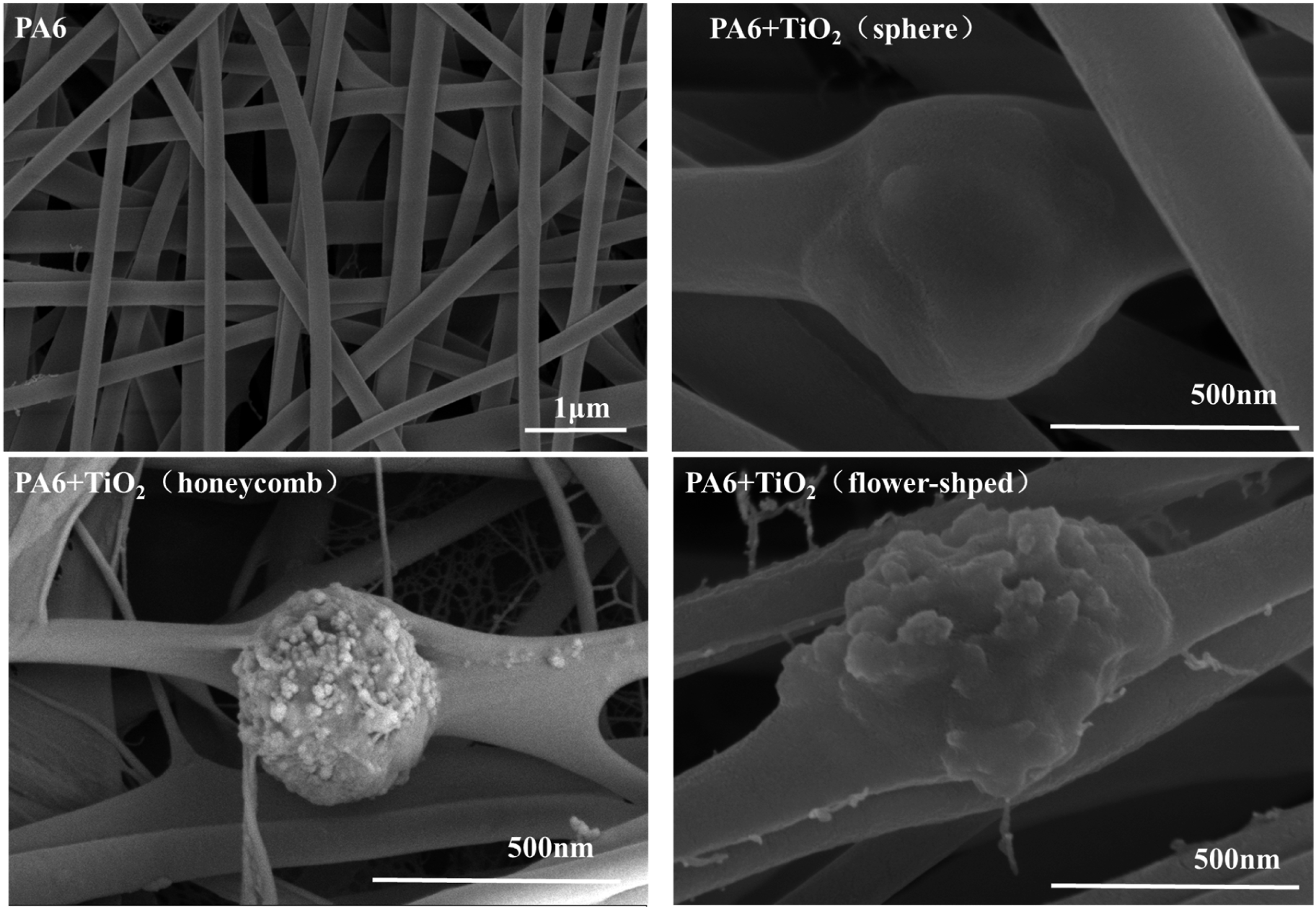
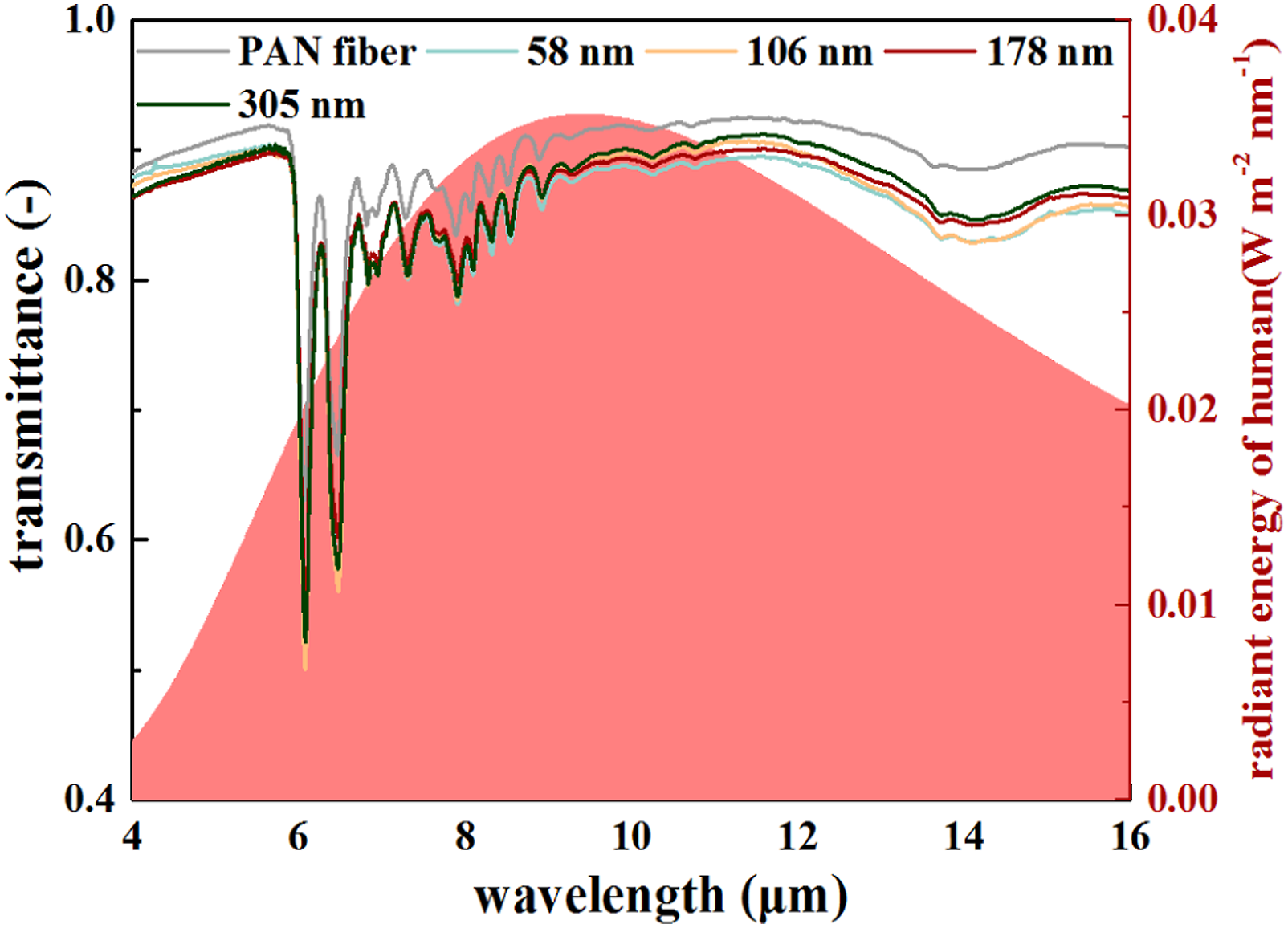
The PA6 filter with highly-oriented nanofibers and a high emissivity at the atmospheric window (8–13 μm) demonstrated a transmittance around 90% in the IR band of the human body. Its VIS reflectivity was enhanced by the addition of TiO2 particles with a high refractive index. As mentioned in Section 3.1, TiO2 sizes between 0.1 and 1 μm and weighting ratio of 0.5 wt%‒1.3 wt% were recommended to attain both low VIS and high mid-IR transmission simultaneously. In addition, the Fresnel’s rules state that the optimal reflection occurs when the particle size equals half the wavelength.30,31 Given that the 300–800 nm is the most significant solar radiation power received on earth, we investigated the VIS-IR transmittance of PA6-TiO2 media with the dispersed TiO2 of 50–400 nm and 0.5 wt%–1.3 wt%. As shown in Figure 4(a), with the increase of TiO2 size from 58 nm to 305 nm, the VIS transmittance of PA6-TiO2 media at first decreased sharply and then gradually. Diffuse reflection occurred when a beam of VIS radiation penetrates into TiO2 particles and was mirrored by the borders and edges of the particles. In diffuse reflectance when the particle size decreased, the number of reflections at the particle borders increased, leading to a decrease in VIS transmittance. Figure 4(b) depicted the VIS transmittance of a PA6 filter with 178 nm TiO2 of different contents. When the TiO2 content was increased from 0 wt% to 1.1 wt%, the VIS transmittance decreased by 8.62%; however, when it continued to increase to 1.3 wt%, the VIS transmittance increased. Because when the TiO2 content was 1.3%, the TiO2 precipitated in the spinning solution and agglomerated on the produced fibers, which made the opacity of the media to VIS light uneven. This may be also verified by measuring the light transmittance of various PA6-TiO2 media, in which PA6 nanofibers with 1.1 wt% TiO2 can penetrate the least amount of lighting from the sun and sight-viewing (see Supplementary Figure S5). The effect of TiO2 addition on mid-IR transmittance was also tested. As displayed in Figure 5, adding 1.1 wt% spherical TiO2 particles of size about 178 nm lowered the VIS transmittance as more as 8.62%, while the mid-IR transmittance only decreased 2.74%. VIS transmittance of PA6 fibers containing spherical (a) TiO2 of different diameters (b) TiO2 of different contents. (the red shaded indicates the solar radiation power received on earth per square meter, Direct+Circumsolar).
32
FTIR transmittance of PA6 fibers, PA6 fibers containing spherical TiO2 of different diameters (human body radiation is indicated by the red shaded region).
Moreover, as discussed in Section 3.1, changing the morphology of TiO2 particle could further improve the ability to block VIS light. By adding different forms of TiO2 particles in the electrospinning solution, the filter media containing TiO2 particles of various morphologies was fabricated. As demonstrated in Figure 3 and Supplementary Figure S6, the media were marked as PA6-TiO2(sphere), PA6-TiO2(honeycomb), and PA6-TiO2(flower). The VIS-IR transmission performance of PA6 fibers with TiO2 particles of different shapes was shown in Figure 6. The PA6-TiO2 (flower, ∼170 nm, 1.1 wt%) decreased the VIS transmittance most, as high as 5.9%, as compared to PA6-TiO2(sphere). While its mid-IR transmittance was only reduced by 0.16%. Since the irregular TiO2 particles were made by calcination treatment, the original anatase TiO2 with an average refractive index of 2.55
33
was converted to a rutile type with an average refractive index of 2.75, thereby increasing scattering efficiency. VIS-IR transmittance performance of PA6 fibers with TiO2 particles of different shapes (∼170 nm, 1.1 wt.%).
The biohealth safety of PA6-TiO2 media was further evaluated, as it is critical for its practical application. The most concern is that the TiO2 submicron/nanoparticles attached to the PA6 fibers may be wear out and inhaled during the use, posing a potential threat to human health. We blew the PA6-TiO2 media with a fan (3 h, flow rate of 1.7 L/min/cm2) and compared the content of TiO2 by an energy-dispersive X ray spectroscopy (EDS) test. As seen in Supplementary Figure S7, the concentration of Ti was almost unchanged, which indicated that the TiO2 particles were adhered tightly to the PA6 fiber surface. Additiaonally, the coarse rutile TiO2 particles (∼170 nm) were used in the study, which had much lower toxic effect than the anatase TiO2 NPs.34,35
The resulting PA6-TiO2 (flower) filter were mainly composed of stacked PA6 nanofibers with a diameter of 170 ± 50 nm (see Figure 7) and the evenly-distributed submicron diameter TiO2 particles. The TiO2 particles were tightly wrapped around the fiber surface and blended with the fiber, which enlarged some of the PA6-TiO2 nanofiber diameters from 170 nm to 400–500 nm. This range was closer to the VIS band and enhances the opacity to VIS light. In addition, the originally smooth PA6 fibers became rough after being loaded with TiO2 particles, and the specular reflection that occurs on smooth fibers became the diffuse reflection, which interfere with each other and improved the extinction ability of PA6-TiO2 (flower) fibers.
36
The pore size distribution of the PA6-TiO2 (flower) filter was within 600–980 nm, and the average pore size was 756 nm, as shown in Figure 8. It satisfied conditions for blocking VIS light (the aperture range is 50–1000 nm) and was capable of achieving good opacity in the VIS light band.
14
The resulting PA6-TiO2 (flower) filter was 33.36 ± 3.8 μm thick (Supplementary Figure S8) and had a packing density as low as 2.7% and specific pore sizes (600–980 nm). These parameters all fell within the ranges of numerical optimization, ensuring radiative cooling effect and filtration performance. Fiber diameter distribution in the PA6-TiO2(flower) filter. Pore size distributions of the PA6-TiO2(flower) filter.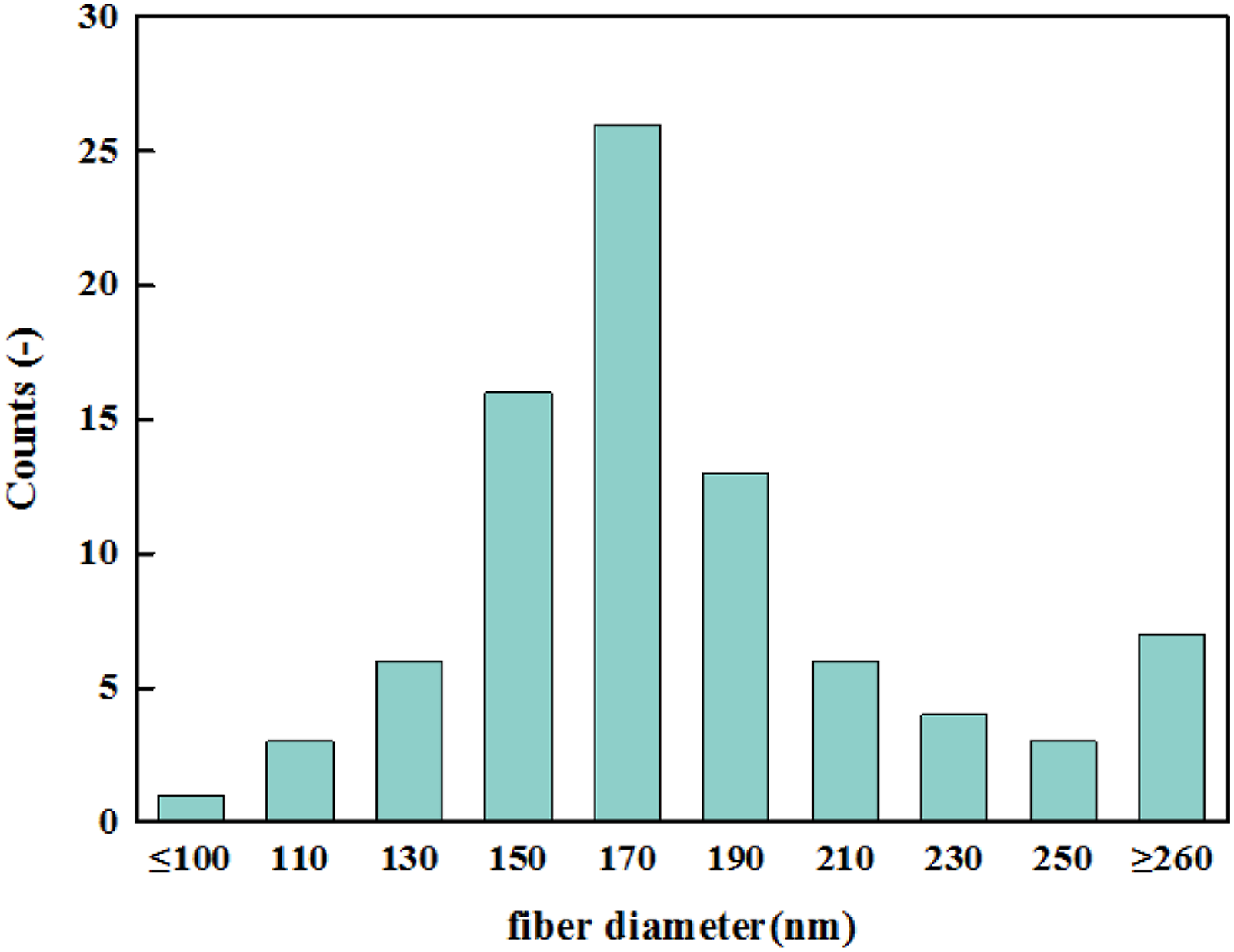

Radiation cooling performance
It is important to test the performance of PA6-TiO2 (flower) media in human body cooling in practice. We first evaluated the mid-IR heat dissipation of an artificial skin with a homemade device in an indoor environment. By placing different filter media on the simulative skin, two thermocouples in contact with the environment and top surface of the simulative skin recorded their temperature variations. Two commercial and commonly used face masks, namely disposable surgical mask (Logistics Department of the South China University of Technology, China) and N95 mask (SUERIANR company, China) were chosen as comparisons, which represented typical masks with different PM removal performance. The disposable mask and N95 mask were abbreviated as Com-1 and Com-2, and their structure specifications were displayed in Supplementary Figure S9. As shown in Figure 9, the PA6-TiO2 (flower) media increased the simulative skin temperature by only 0.7°C, which was much smaller than 2.2°C and 2.4°C for Com-1 and Com-2. Indoor measurement of temperature variations of simulative skin uncovered/covered with filters.
The IR images of the facial temperature distribution when wearing the different facemask samples were measured using an IR thermal camera (FTIR A6702Sc, USA), to assess the performance of media in transmitting mid-IR radiation from face skin. As illustrated in Figure 10, the temperatures of bare face, outer surfaces of PA6, PA6-TiO2(flower), Com-1, and Com-2 were approximately 35.8°C ± 0.2°C, 35.6°C ± 0.5°C, 35.5°C ± 0.6°C, 27.1°C ± 0.5°C, and 25.3°C ± 0.8°C, respectively. This indicated that the commercial masks had low transparency to mid-IR radiation and thus their IR images produced substantially cooler than the PA6 and PA6-TiO2 (flower) media. Although the PA6-TiO2 (flower) was less transparent than the PA6 due to the IR absorption of TiO2 (Figure 5), its IR image was still very close to that of the bare face, demonstrating its superior heat dissipation capabilities for the human body. IR images of face skin uncovered and covered by PA6, PA6-TiO2(flower) and commercial masks.
Furthermore, we evaluated the outdoor radiative cooling performance using a homemade device that simulated solar irradiation and face skin. As depicted in Figure 11, the initial ambient temperature was set to 22.5°C ± 0.5°C. After 30 min of irradiation, the simulative skin covered by PA6-TiO2 (flower) displayed a temperature of 50°C, which is 4.8°C, 10.3°C, and 15.2°C lower than those covered by PA6 filter, Com-1, and Com-2. The notably cooling performance of PA6-TiO2 was attributed to its high solar reflection, which reduced heat input from sunlight, and its high transmission for human mid-IR thermal radiation that maximizes radiative heat output. Temperature variations of simulative skin covered by PA6, PA6-TiO2(flower) and commercial masks.
PM2.5 removal performance
The PM2.5 removal performance of PA6-TiO2(flower) media was compared with those of commercial masks. As seen in Figure 12, the PA6-TiO2(flower) media displayed a high PM2.5 removal efficiency of 95.56% and a low air resistance of 22.0 Pa, which met the standard for a high-efficiency mask (95%–100%). Com-1 showed a comparable air resistance to PA6-TiO2(flower), but its efficiency for PM2.5 was as low as 91.81%. Com-2 had the highest efficiency of 99.11% for PM2.5 removals. Nevertheless, its thickness was as high as 0.3 mm, which is much larger than that of Com-1 of 0.08 mm and PA6-TiO2 of 33.5 μm, resulting in a significantly larger air resistance of 48.2 Pa. To quantitatively compare the performance of the mask media, the filter quality factor (QF) was computed. It is defined as the ratio between the PM2.5 removal ability and air resistance of the filter, QF = −1n (1 − η)/ΔP. The filter media with higher QF values are considered to provide better anti-PM2.5 performances, since they have the characteristic of high-efficiency and low-resistance. As shown in Figure 12, the PA6-TiO2 (flower) presented the QF of 0.142 Pa−1, compared to Com-1 of 0.089 Pa−1 and Com-2 of 0.098 Pa−1. Therefore, the developed high-efficiency PA6-TiO2 (flower) had lower breathing resistance and was more comfortable. PM2.5 removal efficiency and air resistance of PA6-TiO2 (flower) and commercial masks.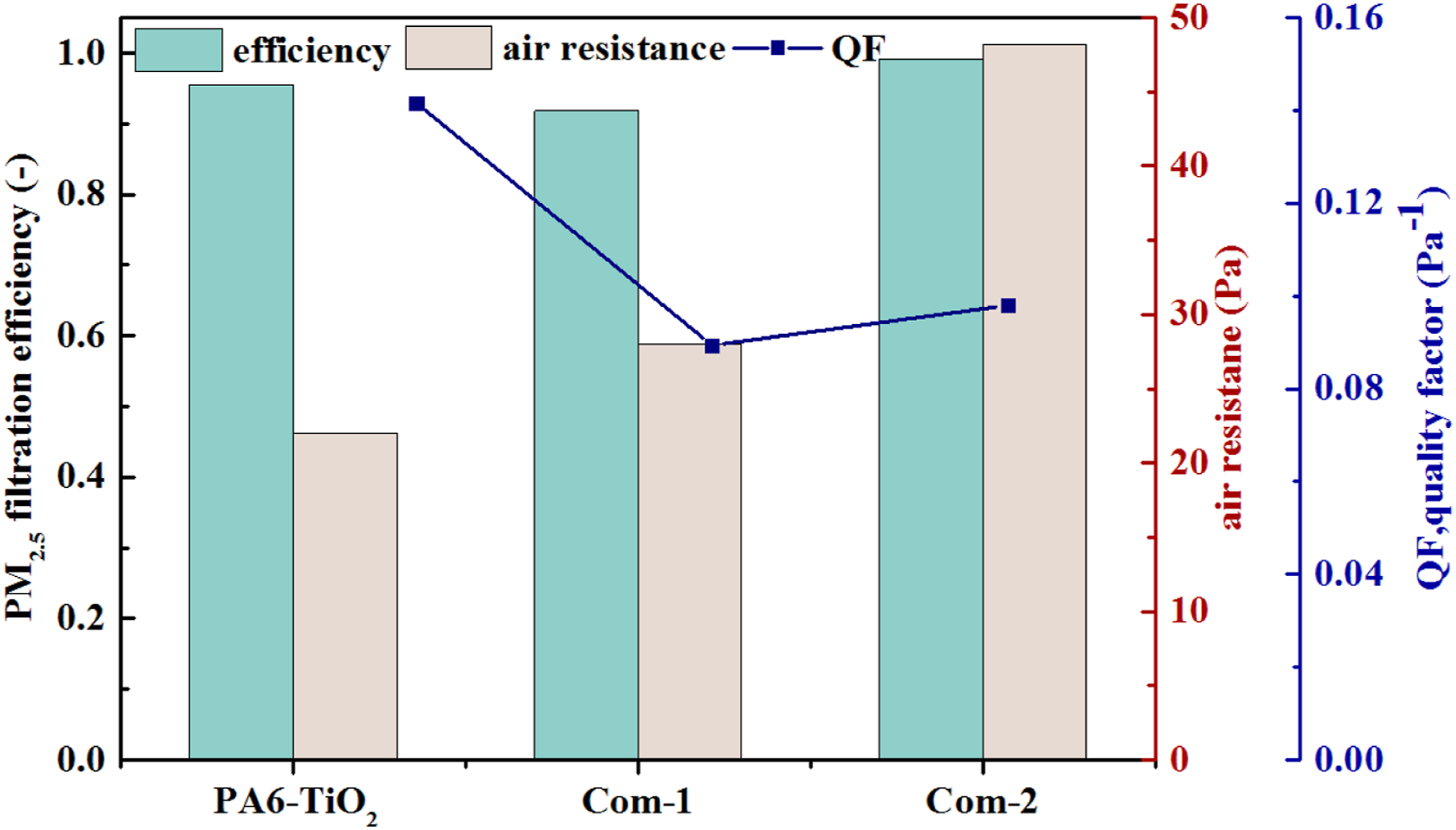
Water vapor transmission rate
The water vapor permeability of the PA6-TiO2 (flower) filter was compared with other wearable textiles in published documents. As shown in Figure 13
Conclusions
In summary, we developed a novel, easy-to-fabricate PA6-TiO2 media with excellent anti-PM2.5 function and superior radiant cooling performance both in indoor and outdoor environments. By optimizing the fiber receiving mode in electrospinning, the PA6 filters having highly-oriented nanofibers were obtained, which increased the transmission of mid-IR from human radiation while maintaining the PM2.5 removal performance. The addition of TiO2 particles makes the PA6-TiO2 composite media have spectrally selective radiation properties, which is favorable for passive outdoor cooling of the human body. The precise regulation of the morphology, size, and content of TiO2 particles further improve its ITVO performance. The PA6-TiO2 (flower, ∼170 nm, 1.1 wt%) decreased the VIS transmittance as high as 23.5% compared to PA6, while its mid-IR transmittance was only reduced by 0.55%. The resulting PA6-TiO2 (flower) composite media can cool 2–2.5°C 10.3°C more than commercial masks in an indoor environment and under strong solar irradiance while having a high PM2.5 removal efficiency of 95.3% and a low air resistance of 22.5 Pa. The remarkable indoor/outdoor cooling performance of PAN-TiO2 (flower) depicts the prominence of radiative heat dissipation mechanism, which is lacking in normal masks. Given its practical compatibility with large-scale fabrication, it is expected that this thermal-comfort PM2.5 mask media will greatly benefit personal health and public health prevention and control.
Supplemental Material
Supplemental Material - Spectral selective composite mask media for personal cooling and efficient PM 2.5 removal
Supplemental Material for Spectral selective composite mask media for personal cooling and efficient PM 2.5 removal by Yang Lei, Rong-Rong Cai, Rui-Qi Lin and Li-Zhi Zhang in Journal of Industrial Textiles
Footnotes
Declaration of conflicting interests
The author(s) declared no potential conflicts of interest with respect to the research, authorship, and/or publication of this article.
Funding
The author(s) disclosed receipt of the following financial support for the research, authorship, and/or publication of this article: This project is supported by the Natural Science Foundation of China (No. 52176155, 51936005). It is also supported by the Science and Technology Plan of Guangzhou city, China (No. 3210540) and the Natural Science Foundation of Guangdong Province, China (No. 2019A1515010648).

Supplemental material
Supplement material for this article is available in online.
References
Supplementary Material
Please find the following supplemental material available below.
For Open Access articles published under a Creative Commons License, all supplemental material carries the same license as the article it is associated with.
For non-Open Access articles published, all supplemental material carries a non-exclusive license, and permission requests for re-use of supplemental material or any part of supplemental material shall be sent directly to the copyright owner as specified in the copyright notice associated with the article.
