




Abstract
This study deals with the development of hybrid layered structures combining natural fabric reinforced composite plates and warp knitted spacer fabric for acoustic applications, and the evaluation of the sound absorption performances. Vacuum infusion technique was used to produce the composite plates. Jute and linen woven fabrics were used as reinforcing materials, and they were impregnated with epoxy resin. The composite plates were combined with warp knitted spacer fabric in different stacking sequences in three-layer structures. All samples were subjected to the measurement of sound absorption property using impedance tube method. The combinations of a single layer and double layers of warp knitted spacer fabric with natural fabric reinforced composite in the appropriate sequences were found to provide superior sound absorption coefficients (SAC) compared to non-hybrid layered structures. Based on the overall evaluation regarding SAC, noise reduction coefficient (NRC), and weight of the structure, the sample with the best performance was regarded as the double layers of spacer fabric backed with a jute fabric reinforced composite plate. The integration of natural fabric reinforced composites with warp knitted spacer fabric had better sound absorption performance compared to the glass fabric reinforced composites, and they were considered to have the potential of being used in interior noise control mainly in vehicles and buildings.
Keywords
Introduction
Controlling the noise in daily living and working environments is critical to increase the comfort level of the existing environment or not to adversely affect the external environment. High sound levels can cause negative physiological and psychological effects on human health, such as hearing damage, increased stress, lack of concentration, and disturbed sleep patterns. For this reason, noise control becomes more and more important every day in buildings, manufacturing facilities, vehicles, equipment, and household goods. Materials used for noise control in such applications can absorb sound energy by dissipating the energy and converting some of it into the form of heat (sound absorbing), or physically block the transmission of sound (soundproofing). The former types of materials are porous structures in the cellular, granular, and fibrous forms, which are appropriate for sound absorption at medium to high frequencies, or resonant type structures with a solid plate and air cavity behind, which are appropriate for a narrow range of low frequency sound absorption. The latter type of materials requires solid and heavy structures that are dense enough to reflect the sound. Sound absorbing materials are used to reduce the noise within a space, whereas soundproofing materials keeps the sound in one space [1]. Porous sound absorbers, such as textiles, have pores on the surface to allow the sound waves to penetrate the material, and the pores within the material are interconnected to propagate the sound waves continuously. In such a structure, sound energy is dissipated through the viscous resistance due to the flow of air within the material and the heat loss generated due to the friction between the air and material [2].
Textile materials and their composites are fibrous structures that act as a kind of porous sound absorbing materials [1]. In various studies, the acoustic performances of textile materials in different forms (i.e. fiber, roving, and fabric) and their composites have been investigated. Textile reinforced composites in particular have the potential to be promising materials for structural applications in vehicles, buildings, industrial machines and equipment, and home appliances. Although the textile based reinforcing materials in composites can consist of natural or manmade fibers, the use of natural fibers has drawn attention due to the environmental concerns, their abundance in some locations, and not posing a health risk compared to the materials such as glass fiber, rock wool, and mineral wool, which are commonly used in acoustic applications [3]. Moreover, thanks to their low density and fibrillar structure, lightweight materials with very good sound absorbing performances can be obtained [4]. The researches on the composite materials reinforced with textiles made of natural fibers have proved that these fibers provided very good sound absorption properties [5–17]. Most commonly used natural fibers in acoustic applications are flax, hemp, jute, and coir [18]. Among these fibers, jute is one of the most preferred fibers due to its low cost and easy availability [19]. It is the most abundant one with the annual production of approximately 3 million tons in 2019 [20]. Flax is another widely used natural fiber in composite manufacturing and has a good performance in terms of sound absorption [21]. Studies on the sound absorption properties of the composites reinforced with unidirectional (UD) fabric or plain woven fabric made of jute and flax fiber revealed that they exhibited better performances compared to composites reinforced with fabrics made of manmade fibers, such as glass and carbon [12,14,16,22–24]. Therefore, natural fabric reinforced composites were suggested in these studies as promising environmentally safe and sustainable replacements for manmade fabric reinforced composites. In some of these studies, the performances of natural fabric reinforced composite plates were investigated by developing hybrid layered structures in combination with manmade fabric reinforced composite plates [22,24] or by using them as the skin layers in sandwich materials with a porous core material (generally foams and honeycomb structures) [22,23], to evaluate the influence of stacking sequences on the sound absorbing property and to build proper designs for obtaining high performance sound absorbing materials. One reason for the development of layered and sandwich structures is thought to be the fact that during the composite manufacturing process, the pores in the material can diminish due to compression. Besides, compared to textile materials in the form of fibers or fabrics, resin impregnation in composites reduces the SAC as it fills the cavities and pores in the fabric and the internal structure of the natural fibers, which may cause a decrease in sound absorption [12,16]. Another reason for the development of layered and even hybrid layered and sandwich structures is the increment of energy dissipation when the sound meets with different materials [23].
Based on the literature reviewed, it can be concluded that natural fabric reinforced composite plates have an obvious advantage over manmade fabric reinforced composite plates and, it is important to build layered or sandwich structures and to combine different materials for obtaining good sound absorbing performances. On the other hand, comprehensive research is still needed to understand the use of different textile materials in combination with natural fabric reinforced composites in hybrid layered structures, either in sandwich form or in different stacking sequences, which can enable thin and lightweight materials with superior acoustic performances to be obtained and expand the use of natural fibers in acoustic applications. One of the textile materials that can be used for this purpose is spacer fabrics. As a special knitted structure, spacer fabrics, which are manufactured by connecting two knitted fabric layers on the upper and lower surfaces with a binding yarn to form a gap between them, are offered in the applications where sound insulation is required due to 3 D fiber disposition, interconnected pores, and low density [25,26]. Several studies have examined the acoustic properties of spacer fabrics. The results of the studies examined the effect of different features of spacer fabrics on the sound absorption performance revealed that the spacer fabrics and their composites can attenuate the high amount of sound energy [26–31]. However, there is no study available in the literature combining natural fabric reinforced composites and spacer fabrics, which are important textile materials in noise control, and investigating their acoustic performances.
The main motivation of this study is to integrate natural fabric reinforced composites and warp knitted spacer fabric to obtain high performance sound absorbing materials as an attempt to fill the research gap in systematic and comprehensive investigation conducted on the acoustic performance of such hybrid structures. For this aim, natural fiber (jute and linen) woven fabric reinforced composite plates were combined with warp knitted spacer fabric in different stacking sequences to build hybrid layered structures. To compare the performance of natural fibers, a glass fabric reinforced composite plate was produced. In the end, the most suitable components and stacking sequences in terms of sound absorption were determined. The novelty of this study lies in the development of lightweight structures combining the benefits of natural fibers and spacer fabric for acoustic applications, and it is expected to provide an approach for building convenient textile based sound absorbers for interior noise control mainly in vehicles and buildings.
Experimental part
Materials
In the present study, plain woven fabrics made of jute and flax fiber were used in the manufacturing of natural fabric reinforced composite plates. The term linen was used for the fabric made of flax fiber. In addition, plain woven fabric made of glass fiber was used as a reinforcing material in the manufacturing of composite plates for comparison. All fabrics were chosen to have similar weights. Jute fabric was supplied by Ege Cuval (Turkey), linen fabric was provided by Koza Tekstil (Turkey), and glass fabric was supplied by Kompozitsan (Turkey). Epoxy resin (F-1564, supplied by Kompozitsan, Turkey) and hardener (F-3486, supplied by Kompozitsan) was used as the matrix material. Epoxy resin can be used in the production of both natural and manmade fiber reinforced composite materials. Due to its wide area of application and versatility, epoxy resin has been frequently used as a matrix material in the studies examining the acoustic properties of composite materials [12,14,16,24]. It was also mentioned to have remarkable sound absorption properties in a study [32].
100% polyester warp knitted spacer fabric used in the production of hybrid layered structures was provided by Gerçek Plastik (Turkey), with a thickness of 2.3 ± 0.2 mm and weight of 180 g/m2, produced in Raschel machines with double needle rails. The structure of the spacer fabric was given in Figure 1.

Structure of warp knitted spacer fabric a. face view, b. back view, c. cross sectional view.
Manufacturing of woven fabric reinforced composite plates
The vacuum infusion technique was used in the manufacturing of woven fabric reinforced composite plates. The schematic representation of vacuum infusion process was shown in Figure 2. The surface of the vacuum table was cleaned and then one layer of liquid mold release agent was applied on the surface. A release film was put onto the vacuum table and fixed to the surface with sealing tape. Fabrics used in production were kept at 80 C° for 2 hours before the process and their moisture was removed. Then they were stacked on top of the vacuum table. After all layers were laid, a peel ply, a resin-dispersing film, and vacuum bag were put on the fabric layers, respectively and they were carefully adhered with sealing tape. When all the air inside was evacuated with the help of vacuum and ensured that there was no air leak, the resin system consisting of epoxy resin (75%) and hardener (25%) with the recommended mixing ratio of the supplier was fed. After the resin was impregnated and composite plates were produced, curing was carried out for 1 hour at 90° C as suggested by the supplier.

Schematic representation of vacuum infusion process.
Table 1 presents the sample codes and stacking sequences of the samples. In the sample codes, J corresponds to jute, L corresponds to linen, G corresponds to glass, and S corresponds to spacer fabric. The first group of samples evaluated were non-hybrid layered samples, in other words, the samples containing a single type of fabric reinforced composite plates in all layers, as well as a three-layer spacer fabric sample. Non-hybrid layered samples were produced to evaluate the sound absorbing performance of composite plates reinforced with different fabrics comparatively and to observe the change in the performance when they are integrated with warp knitted spacer fabric. In the second group of samples, two layers of composite plates of the same kind were combined with a single layer of spacer fabric in different stacking sequences. In the third group of the samples, one layer of composite plate and double layers of spacer fabric were combined. In the fourth group, alternative hybrid layered samples, which were the combinations of two layers of composite plates reinforced with different types of natural fabrics and a single layer of spacer fabric, were developed and evaluated in terms of sound absorption characteristics.
Sample codes and sequences of the layers in hybrid layered samples.

The fabric reinforced composite plates and the warp knitted spacer fabric were cut in accordance with the dimensions of specimens required for sound absorption coefficient testing and a thin layer of resin system was applied by hand with a brush to bond the layers [33]. Schematic representations of some of the layered structures were shown in Figure 3.

Schematic representations of some of the layered structures.
In composite manufacturing, depending on the type of fiber used, the resin absorption amount of the fabric is different, so different weight ratios and even fiber volume ratios are obtained. For instance, due to their multiscale structure and hence porous nature, natural fibers absorb more resin, therefore fiber weight ratios for the composite plates reinforced with these fibers are lower than manmade fiber reinforced composite plates [34,35]. When it is desired to keep these ratios constant, the number of fabric layers in composite production usually varies, and this changes the thickness of the composite plates obtained [36]. In studies examining the acoustic properties of composite materials, there are some researches about the effect of both fiber volume ratio and thickness of the material. While various conclusions were drawn regarding the effect of the fiber volume ratio [16,24,37], the results concerning the thickness could be generalized. That is, in the materials developed for sound absorption, the thicker the material, the higher the sound absorption coefficient [2,37]. For this reason, the fabrics were laid in the different number of layers (3 layers of jute fabric, 4 layers of linen fabric, and 8 layers of glass fabric) to keep the thickness of the composite plate approximately identical and also similar to that of warp knitted spacer fabric to compare the sound absorption properties of the samples more accurately.
Testing methods
The properties of the fabrics used in the production of composite plates were determined according to the related standards [38–40]. Fiber weight ratio and fiber volume ratio of the composite plates were calculated by using equations (1) and (2) below.


Cross section of the fabric reinforced composite plates.
Void content of the composite plates was calculated according to ASTM D2734-16 standard by using equation (4) [42].

Experimental density of the composite plates was measured by dividing the measured weight (g) of the sample by the measured volume of the sample (cm3), and by using the weight and volume values determined by the optical microscopy method.
For the calculations, densities of jute fiber and flax fiber were approximated as 1.45 g/cm3 and 1.50 g/cm3 respectively in accordance with the literature [23,43–46]. The density of glass fiber and epoxy resin was used as 2.6 g/cm3 and 1.15 g/cm3 as specified by the supplier.
Bulk density and porosity of the warp knitted spacer fabric was also calculated. Bulk density was calculated by dividing the measured weight (g) of the sample by the measured volume of the sample (cm3). Porosity was calculated using equation (6) [26].
Measurement of the SACs of the samples was carried out by using TestSENS acoustic performance measurement system, an impedance tube with double microphones developed by BIAS Engineering (Turkey). Schematic presentation of the measurement system and the configuration of the three-layer samples were shown in Figure 5. Impedance tube was preferred because it allows the measurement of small samples. Circular samples with a diameter of 50 mm were prepared using a CNC supported material cutting device. The measurements were conducted according to ASTM E-1050-19 standard at frequencies from 100 to 4000 Hz at room temperature [47].

Schematic presentation of impedance tube with double microphones and configuration of the test samples.
The performance of the materials used in acoustic applications is commonly evaluated in terms of SAC or STL (sound transmission loss). The samples produced in the present study contained textile based composite plates and warp knitted spacer fabric, both of which are acting as sound absorbing materials. Sound absorbers work by absorption of the sound wave, whereas the sound proofing materials work on transmission loss [1]. Thus, the SACs of the samples were measured instead of STL. The SACs of the samples were calculated by the measurement system according to equation (7).
The SAC indicated by α can take values between 0 and 1. The SAC value of α = 0 corresponds to the fully reflective surfaces, and α = 1 corresponds to the surfaces that absorb all of the sound energy. Generally, a material with a SAC value of α > 0.5 is considered as a good sound absorbing material [48].
In addition to SAC, noise reduction coefficients (NRC) were calculated to compare the performance of the samples with a single quantitative value. In most of the earlier studies, NRC was calculated as the arithmetic average of SACs at the frequencies of 250, 500, 1000, and 2000 Hz, which represents the acoustic performance in low to medium frequency range [11,26,49,50]. However, in the present study, the SACs at frequencies above 2000 Hz were included in the calculation of NRC as done in some of the previous studies in the literature [24,51–53] since textile materials as porous absorbers provide better sound absorption at medium to high frequencies [26,28,50,51,54,55]. The SACs at the frequencies of 3000 and 3500 Hz were included in the NRC calculation, as the samples developed within the scope of the study generally reached the highest SACs around 3000–3500 Hz. The NRC of samples was calculated by using equation (8). NRC can take values from 0 to 1, the value of 0 means that the material absorbs no sound, and the value of 1 means that the material absorbs all sound.
Thickness measurements of the composite plates and the warp knitted spacer fabric were done with a James H. Heal thickness measurement device according to BS EN ISO 5084 standard [56], and the mass per unit area measurements were done according to ASTM D3776/D3776M-20 standard [38].
Results and discussion
The properties of the reinforcing fabrics used in the production of the composite plates in terms of weave type, weight, tensile strength, and elongation were given in Table 2. Thickness, weight, fiber weight ratio, fiber volume ratio, theoretical density, experimental density, and void content of the fabric reinforced composite plates were given in Table 3.
Properties of reinforcing fabrics used in composite production.

Woven fabric reinforced composite plates.

*Ct: Calculated by using equations (1), (2), and (5); OM: Measurement done by optical microscopy.
As seen in Table 3, fiber volume ratio was close to each other for jute and glass fabric reinforced composite plates, while it was higher for linen fabric reinforced composite plate. Jute fabric reinforced composite plate had a lower fiber weight ratio than the others. The theoretical and experimental density values were the lowest for the jute fabric reinforced composite plate, followed by linen and glass fabric reinforced composite plates, respectively. Besides, jute fabric reinforced composite plate had the highest void content, and glass fabric reinforced composite plate had the lowest. Void content in composites is influenced mainly by the capability of the resin system to displace the trapped air in the fabric [57,58], and the wetting ability (incomplete or complete wetting) of the fabric by the resin system [58]. Although it was mentioned in some studies that the void content generally increases with the increase of fiber content, some researchers claimed that there is not a distinct relationship between void content and fiber content [59–61]. The findings obtained in the present study agreed with the latter findings. Void content in composites is mainly examined in terms of its effect on mechanical properties. Because the increment of void content negatively affects the mechanical properties. However, higher void content helps the absorption of the sound [62]. The bulk density and the porosity of the warp knitted spacer fabric were calculated as 7.83 g/cm3 and 0.83 respectively.
In Table 4, thickness, weight, and frequency range for the SAC value above 0.5, and maximum SAC value and corresponding frequency of three-layer structures were given. The sample thicknesses were 7.14 ± 0.24 mm and weights were between 540 g/m2 and 9932.71 g/m2. Considering only the hybrid layered structures, the weights of the samples were measured between 2883.69 g/m2 and 6801.80 g/m2. The lightest of the composite plates of the identical thickness was the jute fabric reinforced composite plate, and it was followed by the linen and glass fabric reinforced composite plates, respectively. Hence, the hybrid layered samples including jute fabric reinforced composite plate were the lightest samples, whereas the ones including glass fabric composite plates were the heaviest samples.
Characteristics of non–hybrid and hybrid layered samples.

The SACs within the measured frequency range were shown in Figures 6 to 13, and the NRC values in addition to the SACs at the frequencies used in NRC calculations were given in Tables 5 to 12. The measurement results revealed that all samples had low SACs at low frequencies, but they had SACs of above 0.5 at high frequency ranges (>2400 Hz). Porous sound absorbing materials perform better at high frequencies as referred to in the introduction part. Fabric reinforced composites have also good sound absorbing capability when they are exposed to high frequencies [63]. Therefore, the results obtained in the present study were consistent with the performance expected from the layered structures developed. Details on the different structures were evaluated in the following sub-headings.
SACs of non-hybrid layered samples between 250 and 3500 Hz and NRC values.

Sound absorption performance of non-hybrid layered structures (group 1)
The SACs of non-hybrid layered samples were comparatively shown in Figure 6. It was observed that the SAC of the non-hybrid layered sample, where jute fabric reinforced composite plates were used in all layers (sample code JJJ), was the highest at frequencies of about 2000 Hz and above, and it was followed by the LLL sample. The maximum SACs of the samples were measured as 0.78 and 0.73 respectively. In the non-hybrid structure using jute fabric (JJJ), the SAC was obtained above 0.5 in the frequency range of 2660–3880 Hz, and it was obtained above 0.5 in the frequency range of 3156–4000 Hz in the non-hybrid structure using linen fabric (LLL) as seen in Table 3. The maximum SAC of the GGG sample, which was measured as only 0.40, was much lower than the maximum SAC values of JJJ and LLL samples. Compared to the non-hybrid layered sample of glass fabric reinforced composites, the superior performance of non-hybrid samples consisting of natural fabric reinforced composites can be attributed to the lower density and higher porosity of the fabrics made of natural fibers. Besides, the multiscale and fibrillar structure of natural fibers dissipates sound energy better and it results in higher performance compared to manmade fibers [64]. The findings also revealed that the tendency of sound absorption properties of the non-hybrid layered samples were in parallel with their void content.
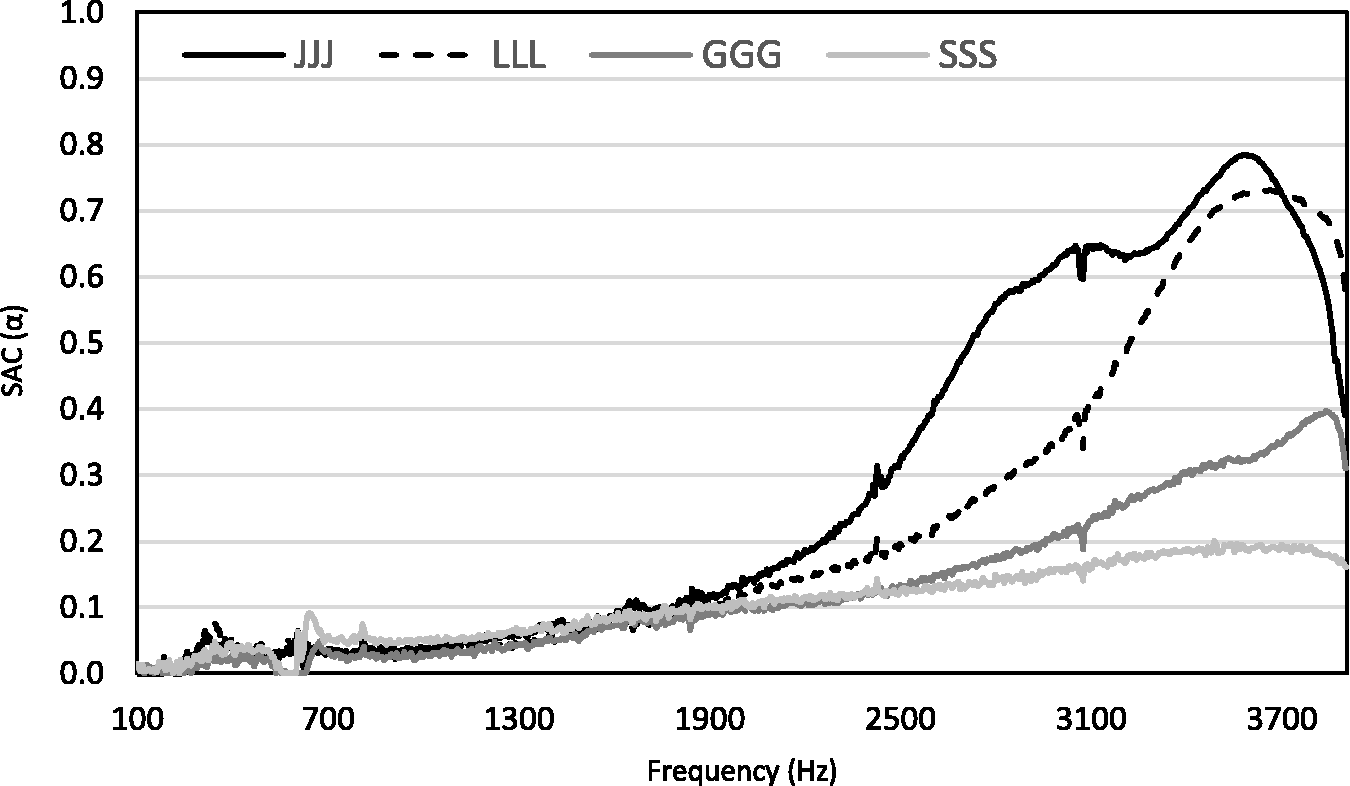
SACs of non-hybrid layered samples.
On the other hand, it is noteworthy that the SAC of the spacer fabric sample (SSS) reached the highest value of 0.20 in the frequency range measured, which was in parallel with the findings in previous studies [28,65]. The spacer fabric used in the present study has a hexagonal net-like face with low weight and thickness. As concluded by Arumugam et al, hexagonal fabrics have a more open structure, and this causes low airflow resistivity that allows air vibration passing through the fabric easily, so the sound absorption decreases. Besides, low fabric weight decreases the airflow resistivity [26]. These factors explain the low sound absorption performance of the non-hybrid layered structure made of spacer fabric. According to the findings revealed by Liu and Hu (2010) [29], who considered the warp knitted spacer fabric as microperforated panel (MPP) sound absorber, a thin sample of warp knitted spacer fabric without an air back cavity showed quite a low SAC value (maximum value reached 0.2). MPP sound absorber is defined as a type of resonant absorber with a perforated panel on the face, a rigid-back wall with an air-back cavity in-between [66].
In Table 5, the NRC values of non-hybrid layered samples were shown. It can be seen that the layered sample produced by using jute fabric reinforced composite plates (JJJ) showed the best performance since it had higher SAC values, especially at 3000 Hz and 3500 Hz. It was followed by the non-hybrid layered sample made from the linen fabric composite plate (LLL) with an NRC value of 0.21. It was observed that non-hybrid samples with the lowest performance were made of glass fabric reinforced composite plates (GGG) and spacer fabric (SSS). The NRC values calculated for the non-hybrid layered samples were compatible with the SAC graphs drawn in the frequency range measured and were as expected.
Sound absorption performance of hybrid layered structures with a single layer of spacer fabric (group 2)
Figures 7 to 9 show the SACs of hybrid layered structures containing two layers of composite plates of the same reinforcing material and a single layer of spacer fabric. The results were evaluated for the samples where the spacer fabric was used in the front layer, intermediate layer, and back layer, respectively.
Figure 7 shows the SAC measurements of the samples, where the spacer fabric was used in the front layer, and two layers of fabric reinforced composite plates of the same type were placed behind it. Compared to the non-hybrid layered samples of jute fabric reinforced composite plate (JJJ) and linen fabric reinforced composite plate (LLL) (Figure 6), an increase in the SAC was observed when the front layer, where the sound energy first encountered, was replaced by the spacer fabric. The SAC reached a peak value of 0.91 at 2980 Hz and 0.85 at 3252 Hz for SJJ and SLL samples, respectively. There was an almost 17% increase over JJJ and LLL samples. Besides, higher performance was obtained in the SGG sample, which had a peak value of 0.75 at 3184 Hz. The samples had SAC values above 0.5 in the frequency range of around 2400 Hz to 3800 Hz. Compared to the SSS sample, an obvious increase in sound absorption performance was observed in the hybrid layered samples where the spacer fabric was placed in the front layer and combined with fabric reinforced composite plates. The increase in sound absorption performance of spacer fabric backed with porous sound absorbers was compatible with the findings of previous studies [29,67]. Gokarneshan [67] stated that warp knitted spacer fabric can be considered to behave like a resonant type absorber, and when it was backed by a porous absorber (such as textile materials and their composites), its sound absorbing performance was far greater than when it was placed behind a porous absorber. Thus, higher performance was achieved in hybrid layered structures, where the first layer encountered noise was the spacer fabric and the other two layers were fabric reinforced composite plates, compared to the non-hybrid sample consisting of spacer fabric layers (SSS). Consequently, the combination of two different structures with this configuration yielded positive results.

SACs of the hybrid samples with spacer fabric in the front layer.
In Table 6, the SACs (between 250 and 3500 Hz) and NRC values for the samples with spacer fabric in the front layer are given. The highest NRC value was obtained in the SJJ sample, followed by the SLL and SGG samples, respectively. Besides, an increment was observed in NRC values of the all samples in comparison to non-hybrid reference samples.
SACs of the hybrid samples with spacer fabric in the front layer between 250 and 3500 Hz and NRC values.

When the spacer fabric was used in the intermediate layer of three-layer structures (Figure 8), it was observed that the samples gave very good results around 2800 Hz and above. LSL sample had a peak value of 0.95 at the frequency of 3484 Hz. In the JSJ sample, a peak value of 0.86 was obtained at 3220 Hz. Besides, the SAC reached a peak value of 0.83 at 3360 Hz for the GSG sample. However, the combination of natural fabric reinforced composites and spacer fabric reached a SAC value of above 0.5 in a wider frequency range (around 2500 Hz to 3900 Hz) than the combination glass fabric reinforced composite plates with spacer fabric (around 2800 Hz to 3400 Hz).

SACs of the hybrid samples with spacer fabric in the intermediate layer.
The three-layer samples with spacer fabric in the intermediate layer can be regarded as sandwich structures containing spacer fabric as a core material with high porosity. The sandwich structures provide good sound absorption performance because the sound energy is dissipated gradually as it reaches different layers when compared to the performance of individual core materials or composite plate skins (front and back layers) [23]. Hence, the use of spacer fabric in the intermediate layer improved the sound absorption performance of three-layer structures when compared to non-hybrid layered structures. As seen in Table 7, similar results to the NRC values obtained in the samples where the spacer fabric was used in the front layer were also obtained in these samples.
SACs of the hybrid samples with spacer fabric in the intermediate layer between 250 and 3500 Hz and NRC values.

Figure 9 shows the SACs of hybrid layered samples produced by combining a spacer fabric behind two layers of fabric reinforced composite plates. It was observed that the performances of these samples were not good. It was noted that although the SAC of the JJS sample increased after 2884 Hz, its performance was quite below the performance of the non-hybrid sample made of jute fabric reinforced composite plates (JJJ). As mentioned before, no study in the literature has examined the acoustic performance of structures integrating fabric reinforced composite plates and spacer fabrics. Nevertheless, in some of the previous studies, warp knitted spacer fabrics were said to act as a resonant type absorber [29,67]. When they were placed behind a porous sound absorber, they functioned as air-back cavity and this led to an increase in the thickness. As a result, in such a layered structure, the sound absorption performance was expected to increase at low frequencies, whereas to decrease at high frequencies [67]. Therefore, the use of spacer fabric in the back layer of three-layer structures can be the reason for the decrease of sound absorption performance in high frequencies. However, no increase was observed at low frequencies, which can be attributed to the low thickness of the spacer fabric. Because the increase in low frequencies could be observed when the thickness or number of layers of the warp knitted spacer fabric used behind the porous absorber were increased [29]. Besides, the spacer fabric may be exposed to compression when used in the back layer, which may be another reason for the decrease in sound absorption at high frequencies [2]. As seen in Table 8, although the NRC value of the JJS sample was higher compared to LLS and GGS samples, the values were lower than that of non-hybrid samples and also the hybrid samples with a single layer of spacer fabric in the front layer and intermediate layer.
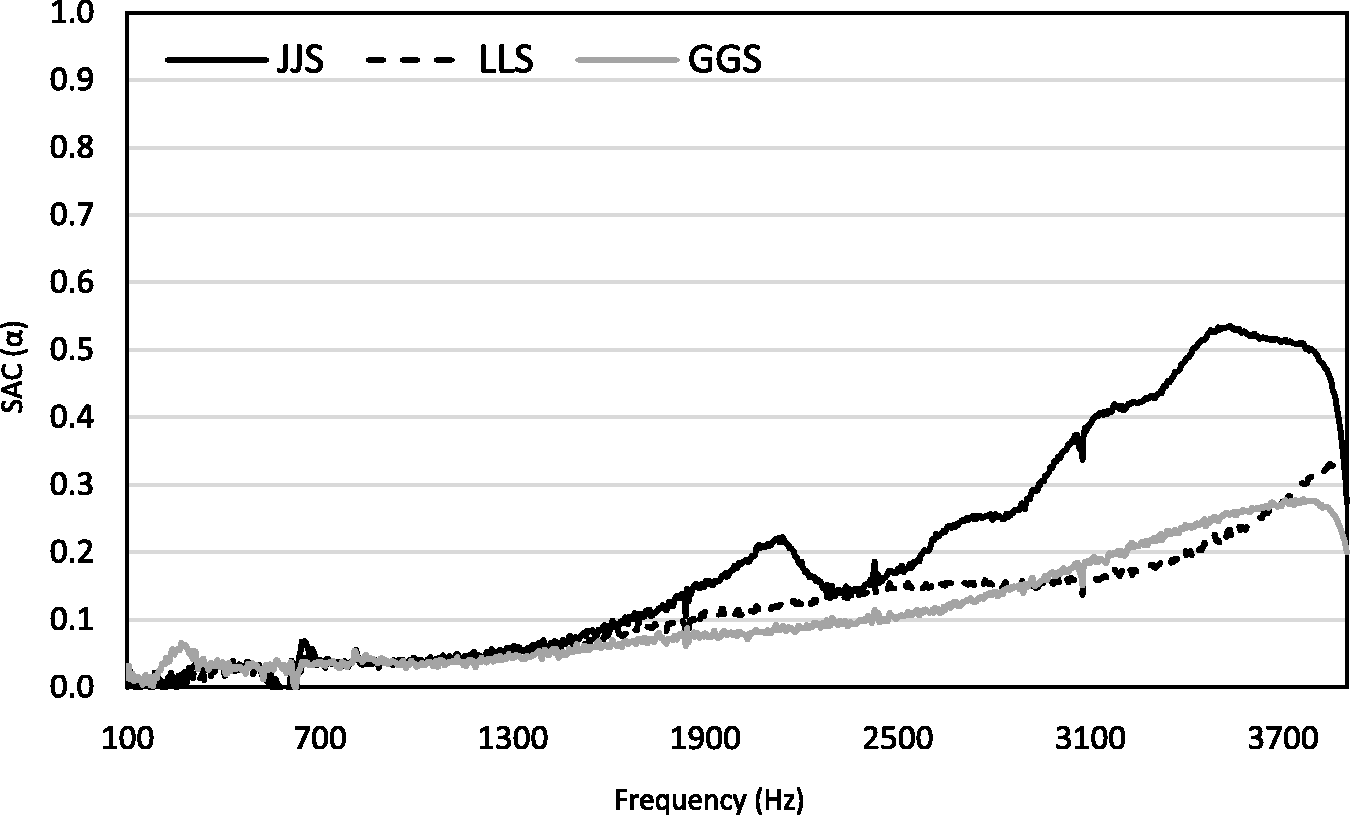
SACs of the hybrid samples with spacer fabric in the back layer.
SACs the hybrid samples with spacer fabric in the back layer between 250 and 3500 Hz and NRC values.
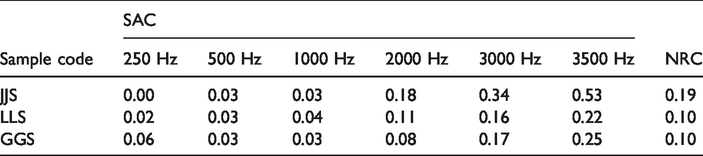
Concerning the group of samples discussed in this part, an increase in the SAC values was observed in the hybrid layered structures, in which a single layer of spacer fabric was used in the front layer or intermediate layer compared to the non-hybrid layered samples. Besides, natural fabric reinforced composite plates performed better than glass fabric reinforced composite plate.
Sound absorption performance of hybrid layered structures with double layers of spacer fabric (group 3)
The combinations of one layer of fabric reinforced composite plate and double layers of spacer fabric in three-layer structures were done in three ways. In the first type of samples, spacer fabric layers were placed in the front of the samples, in the second type of the samples, one layer of spacer fabric was placed in the front layer and the other was placed in the back layer, and in the third type of samples, two spacer fabric layers were used in the back of the three-layer structure. The SACs of all these samples were given in Figures 10 to 12, respectively.
It was previously observed that the sound absorption performance was increased in the samples where a single layer of spacer fabric was used in the front or intermediate layer. When the spacer fabric was included in both layers, the SAC performance was further increased (Figure 10). While the SAC reached the peak value of 0.89 for the SSL sample, the maximum SAC was achieved as 0.97 for the SSJ and SSG samples. It was seen in Table 4 that the SACs of the samples had values above 0.5 in the frequency range of around 2400 Hz to 3900 Hz. When the NRC values in Table 9 were observed, it was seen that the SSJ sample had the highest value (0.35), and the SSL and SSG samples had similar NRC values to each other.

SACs of the hybrid samples with spacer fabric in the front two layers.
SACs of the hybrid samples with spacer fabrics in the front two layers between 250 and 3500 Hz and NRC values.

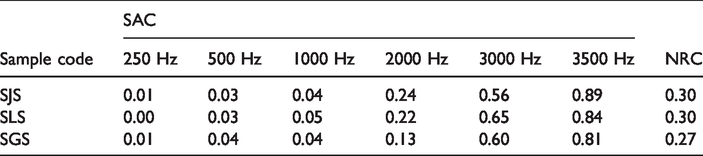
As seen in Figure 11, when the spacer fabrics were placed in the front and back layers, the highest SAC values were obtained as 0.89, 0.88, and 0.85 for the samples SJS, SLS, and SGS respectively. The SACs of the samples had values above 0.5 in the frequency range of around 2800 Hz and 3900 Hz. Although very low SAC values were obtained when a single layer of spacer fabric was used in the back layer in the samples shown in Figure 9, the negative effect of the spacer fabric in the back layer was not observed in the samples in Figure 11. When these structures are considered as a kind of sandwich structure, it can be thought that easier and higher distribution of sound energy when meeting different layers may prevent the SAC values to decrease [23]. On the other hand, this configuration resulted in a narrower frequency range of SAC above 0.5 compared to non-hybrid layered samples and hybrid layered samples with good performances. When the spacer fabrics were used in the front and back layers, it was observed that the samples combining natural fabric reinforced composite plates and spacer fabrics had NRC of 0.30, and the samples combining manmade fabric reinforced composite plate and spacer fabrics had NRC of 0.25 (Table 10). These values were generally lower than the values calculated for the samples with double layers of spacer fabric in the front.
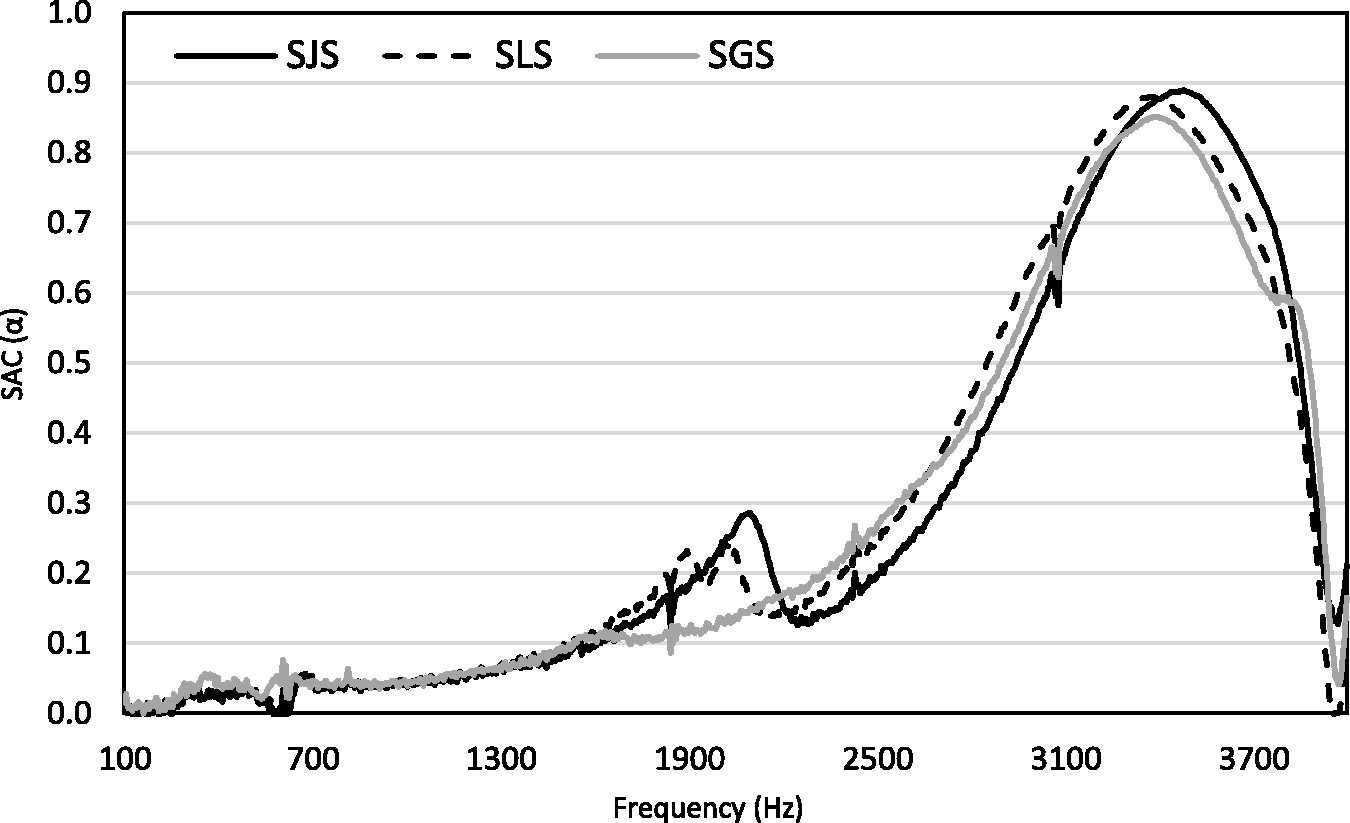
SACs of the hybrid samples with spacer fabric in the front and back layers.
SACs of the hybrid samples with spacer fabric in the front and back layers between 250 and 3500 Hz and NRC values.
As remembered, the sound absorption performance was considerably reduced when a single layer of spacer fabric was used at the back of three-layer structures (Figure 9). However, findings from some previous studies have suggested that higher sound absorption performance can be obtained when the number of warp knitted spacer fabric layers behind a porous absorber was increased [29,66]. Therefore, although a single layer of spacer fabric at the back of three-layer structures did not contribute to the sound absorption performance, even decreased the SACs of the samples, structures with double layers of spacer fabric at the back were developed and their sound absorption characteristics were analyzed. The results revealed that the performance further reduced when double layers of spacer fabric were used at the back of the three-layer structures (Figure 12). Since the spacer fabric, which was chosen and used to develop thin and light structures, was thin even in double layers, it did not provide high performance when used behind a layer of fabric reinforced composite plate. As seen in Table 11, low NRC values were obtained in all samples by using double layers of spacer fabric in the back.

SACs of the hybrid samples with spacer fabric in the back two layers.
SACs of the hybrid samples with spacer fabrics in the back two layers between 250 and 3500 Hz and NRC values.

SACs of alternative hybrid layered samples between 250 and 3500 Hz and NRC values.
In the structures developed so far, a single type of fabric reinforced composite plate was combined with warp knitted spacer fabric. The results provided information about the configurations and the stacking sequences of warp knitted spacer fabric and fabric reinforced composite plates in hybrid layered structures. At this point, it should be noted that the sample with the best performance was regarded as the sample with double layers of spacer fabric backed with a jute fabric reinforced composite plate (coded with SSJ) based on the overall evaluation regarding SAC, noise reduction coefficient (NRC), and weight of the structure.
Sound absorption performance of alternative hybrid layered structures (group 4)
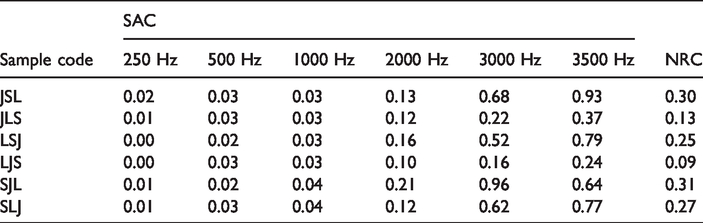
In this group of structures developed, the acoustic performances of hybrid structures created by combining different fabric reinforced composite materials with warp knitted spacer fabric were examined. These structures were called alternative hybrid layered samples, and their SAC graphs were drawn in Figure 13, and the SAC (between 250 and 3500 Hz) and the NRC values were shown in Table 12.

SACs of alternative hybrid layered samples.
It was observed in Figure 13 that the highest SAC values were obtained as 0.97 and 0.96 for the SJL and JSL samples respectively. The performance of the spacer fabric in the front and intermediate layer, and also the performance of jute fabric reinforced composite plate were already proven. Therefore, the use of these materials in the front and the intermediate layers gave the highest SAC values. They had SACs above 0.5 around 2500 Hz to 3900 Hz. When spacer fabric and linen fabric reinforced composite plates were used in the front and intermediate layers, maximum SAC values of 0.83 and 0.81 were reached in SLJ and LSJ samples, respectively. The SACs of these samples had values above 0.5 in the frequency range of around 2600 Hz to 3900 Hz. As one can expect, the SACs of the structures, where a single layer of spacer fabric was used in the back, were low. As seen in Table 12, the samples with jute fabric reinforced composite plate and spacer fabric in the front and intermediate layers had NRC values of around 0.30, which was the highest among all alternative hybrid layered samples. Lower values were obtained in alternative hybrid layered structures where linen reinforced composite plates are used in front and intermediate layers. Last, very low NRC values were observed in the samples with the spacer fabric in the back layer.
The important results of the study were summarized below: The use of a single layer of warp knitted spacer fabric in the front layer backed with fabric reinforced composite plates in the intermediate and back layers produced good results. In this configuration, natural fabric reinforced composites performed better. The use of a single layer of warp knitted spacer fabric in the intermediate layer, as the core material in sandwich-like structures also produced goods results. In this configuration, natural fabric reinforced composites provided not only better sound absorption capability but also had SAC values above 0.5 in a wider frequency range compared to the glass fabric reinforced composite plate. The use of double layers of warp knitted spacer fabric in the front yielded good performances. The performance of this configuration was independent of the back layer, however, the use of natural fabric reinforced composite plates in that layer was an advantage due to their lower weights. The integration of warp knitted spacer fabrics in the front and back layers with an intermediate layer of fabric reinforced composite plate revealed good performances. In this configuration, natural fabric reinforced composite plates had better performances, but the sound absorbing frequency range narrowed slightly in general. Alternative hybrid layered structures, except for the ones that contain warp knitted spacer fabric in the back layer, also provided good sound absorbing properties compared to non-hybrid layered structures. The combination of double layers of warp knitted spacer fabric in the front and jute fabric reinforced composite plate in the back layer gave the best results, with the highest SAC value of 0.97, the NRC value of 0.35, and the weight of 2883.69 g/m2. The hybrid layered structures integrating natural fabric reinforced composite plates and warp knitted spacer fabric in the appropriate stacking sequences provided promising results for acoustic applications around the frequencies between 2500 Hz and 3900 Hz. They can be used in interior hood/bonnet liner, interior headliner, interior door panels, and seats in vehicles for interior noise control, where frequency range of 1200–4000 Hz is critical [68]. Besides, they can be assembled to walls and floors in buildings, where the frequency range of noise control is usually defined as 100–3150 Hz, to reduce the reverberation [69]. Alternative hybrid layered structures with good sound absorbing performances can be preferred in applications where it is desired to benefit from the specific mechanical properties of linen fabric in addition to acoustic purpose [45]. While obtaining composite plates with similar thicknesses, 2–2.5 fold more glass fabric was required. Therefore, fabrics made of natural fibers will result in lower costs in these applications. The structures developed in the present study showed good acoustic performances with thicknesses lower than 1 cm. However, if the materials used here are combined in higher number of layers, higher sound absorption performances can be certainly obtained as a result of increasing thickness. Thus, high sound absorption performance can be achieved in a wider part of the mentioned critical frequency ranges.
Conclusion
In the present study, three-layer hybrid structures combining natural fabric reinforced composite plates and warp knitted spacer fabric were developed for acoustic applications. It was concluded that the samples integrating natural fabric reinforced composite plates and warp knitted spacer fabric in an appropriate stacking sequence are promising materials in terms of acoustic performance and weight. The fact that the composite material contains renewable resources is also an advantage of this combination.
With this study, a significant contribution has been made to the literature by examining the acoustic performance of the hybrid layered structures obtained by using natural fabric composite plates and warp knitted spacer fabrics together in such a comprehensive experimental evaluation. A better and wider range of sound absorbability can be obtained if a higher number of layers or thicker materials are used. However, for future research, it is suggested to investigate the combination of nanofiber webs with natural fabric composite plates and spacer fabric to make the sound absorption frequency range of such layered structures wider due to the potential of nanofibers of increasing sound absorbing performance for low and medium frequencies. Thus, high sound absorption capability can be obtained in a wider range without losing the advantage of low thickness and weight in the currently developed structures.
Footnotes
Acknowledgements
Authors acknowledge Textile Engineer Semih Ozkur at Prof. Dr. Mustafa Koseoglu Textile Based Composites Advanced Technology and Innovation Center at ITU Faculty of Textile Technologies and Design for supporting composite manufacturing and measurement of sound absorption.
Declaration of conflicting interests
The author(s) declared no potential conflicts of interest with respect to the research, authorship, and/or publication of this article.
Funding
The author(s) disclosed receipt of the following financial support for the research, authorship, and/or publication of this article: This study is funded by Istanbul Technical University Scientific Research Projects Unit (ITU-BAP) under Grant No. MYL-2018-41882.
