



Abstract
Motorcycle protective clothing is designed to protect motorcyclists from injuries during accidents. It helps to protect the motorcyclist and pillion passengers during the collision and acts as a barrier between the rider’s skin and tarmac surface. Soft tissue trauma is common in motorcycle accidents and protective clothing can protect the soft tissue of the riders up to a certain extent during accidents. Though there are many reasons for road accidents and injuries, the reasons such as uncomfortable clothing, thermally inefficient protective clothing during hot climatic conditions, and ineffective performance of the personal protective equipment (PPE) are also to be considered seriously. Motorcycle clothing is specially designed in such a way that it could give better protection against impact and abrasion during the collision. An increase in the usage of the motorcycle has also in turn increased the crash statistics. This paper deals with the significance of motorcycle clothing, materials, test standards, and their performance characteristics. As per the review results, most of the motorcycle protective clothing has failed to meet out the quality standard protocols. Impact resistance, abrasion resistance, thermal comfort, and ergonomics are the major areas where more focus is required. Design of appropriate fabrics assuring requisites of motorcycle clothing is very challenging and extensive research is still intended in these areas.
Keywords
Introduction
Motorcycle riding helps not only to commute but the act of joy and health benefits go along. The usage of motorcycles has increased globally, and the number of accidents associated with them has also increased.1–3 Çetinus and Ekerbiçer have concluded that wearing protective gear by motorcyclists could prevent them from severe injuries during road accidents. 4 Motorcycle clothing is designed and developed with many layers to protect the riders from severe injuries during the collision and various elements of the environment. Motorcycle clothing protects the wearer from high levels of abrasion and impact, in case if the rider falls from the bike and slides along the road surface. Since motorcycle clothing has many layers, it may sometime lead to discomfort, restrictive body movements, fatigue, and thermal inefficiency. The rate of protection during impact is high when the material retains its structural integrity. All types of motorcycle protective clothing such as trousers, jackets, and suits should meet the requirements of the standards. As very limited studies are available in the area of motorcycle protective clothing and as per the growing industrial interest in motorcycles, this study will contribute to the current literature in the field of designing or selecting the appropriate fabrics and protective clothing for motorcyclists.
Evolution
In the late 19th century, motorcyclists used tweed suits for riding the bike. As the years pass by, the usage of motorcycles got increased and became more dangerous because of rash/fast riding. Police and military personnel initially introduced motorcycle uniforms with multiple layers, gloves and boots for better protection. During World War I, usage of motorcycles increased and motorcyclists put on military coats for protection. In 1921, Irving Schott from New York designed the first leather motorcycle jacket named “Perfecto” for Harley Davidson. Later, the jackets with buttons were replaced with zippers. In the 1970s and 1980s, the jackets had the punk touch. Metal chains were added to give the punk touch. And jackets became unisex garments.
The people from the US and UK had so much passion for bike riding and they used jackets for protection. By that time, waterproof jackets were invented to protect the riders from rain. Hunting jackets made up of cotton were coated with wax and that was used during rainy days. Then special jackets were introduced with a waterproof finish for rainy days. The new movement was created in the 1950s after watching the movie “The wild one” where people got inspiration from motorcycle gang clothing such as leather jackets, denim trousers, and tall boots. Later 1970s and 1980s leather vests were preferred by motorcyclists as outfits. In the 1980s, motorcycle fashion got declined and sports bikes were introduced. People preferred to dress up like the racers and extra protection was given to the garment. The length of the coat was made shorter so that it does not get stuck in between the wheels while riding the racer bikes. Till then most of the motorcycle protective clothing was made up of leather only, especially horsehide; and it was one piece garment only, though it was heavy, but did not give that much protection and was not safe enough.5,6
Nowadays, leather jackets have armors inside the jackets for main areas such as the back, shoulders, knee, elbow, and hip. The armors act as energy absorbers and reduce the impact of the collision. Mesh fabrics, high-density foams, composites, and foam-backed hard polymers are few examples of armors. Fabrics such as Kevlar®, Carbon fiber, and Cordura® are also widely used for making jackets and armors, and Gore-tex® fabrics for waterproof application. There are also armors available in the market which can be inserted whenever required to prevent injuries in the areas like shoulder, elbow, knee-chest, back, and hip. The jackets with armors or heavy leather jackets are not suitable for hot climatic conditions in the country like India and Australia. Hence, it is very much required to use special performance fabrics to protect the motorcyclists and to provide comfort as well.7–9
The need for protective clothing
Figure 1 displays the road accidents, fatalities, and injuries which took place during 2017 and 2018. As observed from Figure 1, the number of accidents, persons killed, and persons injured through two-wheelers was elevated when compared to other vehicles such as auto-rickshaws, cars, buses, and trucks.
10
Hence, it is imperative to necessitate protective clothing for motorcyclists in order to defend from extremities. European Commission in April 2019 mandated CE certification for motorcycle clothing in Europe by any manufacturer from any country. Though many countries are using motorcycle protective clothing, usage of motorcycle protective clothing in India is comparatively less due to high cost and less comfort. On the other hand, professional riders demand high quality and standard in their protective clothing in order to fit their purpose. According to World Road Statistics in 2018, India ranks first in the number of persons killed across the 199 countries. Figure 1 clearly depicts the importance of protective clothing for motorcyclists. Due to the unavailability of 2019 results on road accidents through different type of vehicles, only 2017 and 2018 results of the same were compared. These results have indicated that protective clothing for motorcyclists should be designed in such a way that it provides better protection against impact and abrasion and also offers better comfort to the wearer. Number of accidents that occurred/persons killed/persons injured by type of impacting vehicle—2017 and 2018.
When compared to car users, motorcyclists are subjected to high risk. The hospital admission rate of motorcyclists is 10 times higher than that of car users.11,12 Statistics show a drastic increase in motorcycle accidents year by year. The common problems associated with motorcycle clothing are abrasions, lacerations, and contusions due to road crashes. The causes may be due to sliding, tumbling, or rolling. 13 Motorcycle clothing was not preferred by light motorcycle riders. Motorcycle protective clothing and license governing rules may lessen the injury rates during light motorcycle crashes. 14 Similarly, paying less attention to personal protective clothing/gear may lead to morbidity and mortality in these types of motorcycle accidents.15,16 Therefore, essential laws, restrictive regulations, and effective programs may reduce the risk factors associated with motorcycle accidents.17–19
Though motorcycle clothing was not protective against extreme injuries such as fractures it was protective against soft tissue injuries. However, in few cases, this protective clothing is not standardized. Similarly, jackets and gloves were used commonly by motorcyclists; whereas pants or footwear are not used for the specific application.20–22
Therefore, it is significant to use the appropriate motorcycle clothing that satisfies the quality standards, to protect the wearer during a collision. It is very much important to analyze the performance characteristics of fabrics, clothing, and certifying them before selling. To determine the performance characteristics of fabrics/clothing, it is required to assess the physical, mechanical, and comfort properties. The reasons behind analyzing the fabric properties are to check whether the fabrics are meeting the quality standards and are fit for motorcycle clothing or not. The physical properties of the fabrics deal with the structure and characteristics; the mechanical properties deal with the tests such as tensile, tear, abrasion, and impact; and the comfort properties of the fabric deals with thermal comfort properties, air permeability, moisture vapor transport properties, etc.
Materials for Motorcycle protective clothing
Fabrics
The fabrics that are used for motorcycle clothing play an important role in protection. Numerous fabrics are used for motorcycle protective clothing on which high-performance fabrics such as UHMWPE, SuperFabric®, Kevlar®, Cordura®, and Goretex®; synthetic materials such as polyester, polyurethane, polyvinyl chloride, faux leather, and nylon; and natural materials such as cotton with wax finish are used. The fabrics with different combinations of high-performance materials, synthetic materials, and natural materials are also used. Protective denim fabrics specifically designed for motorcycle riders with different combinations of materials are also used. Few materials are also made waterproof using explicit coatings. Type of the fabric used in motorcycle clothing decides the cost of the garment. If the fabric quality standards are higher, then it gives more protection. Different materials give different results with tear/cut, abrasion, and so on. 23
Ultra-high-molecular-weight polyethylene (UHMWPE) marketed in many trade names (i.e., Dyneema® and Spectra®) possess low density, high tenacity, high modulus, high strength, excellent abrasion resistance, and UV protection characteristics. In many helmets, the impact protection liners are made up of UHMWPE. It is also used in ballistic applications, gloves, and so on. 24 Dyneema® fabrics can provide excellent energy absorption ability, greater thermal, and cutting resistance properties. 25 Therefore, Dyneema® fabrics and Dyneema® with a different combination of materials can be used for motorcycle protective clothing.
Both knitted and woven fabrics are used as lining materials for motorcycle protective clothing. The materials used for manufacturing knitted and woven lining materials are cotton, silk, wool, polyethylene, polyester, nylon, aramid, etc. The most widely used knitted lining structures are single jersey, double jersey, rib, interlock, french terry, fleece, and woven structures are plain weave and twill weave. Recycled materials, spacer fabrics, and mesh fabrics are also used as liners. Different combinations of materials are also used as liners. Liners can be made permanent or detachable. 26 Thermal liners and waterproof rain liners are examples of detachable liners, which can be attached and detached on the clothing based on the environmental/climatic condition. 27
Impact Protectors
Additional features such as coatings, paddings, and armors also assist to increase the protection rate. In many studies done across the world, it was shown that the accidents associated with the upper part of the body were also predominant. 28 For instance, cervical injuries and spinal cord injuries/lumbar spine were the most common injury types with motorcycle accidents. These injuries may lead to serious lifetime impact, as well as noticeable social and economic effects for both the patients and society.29,30 Therefore, the paddings/armors are normally given to protect the areas such as elbows, neck, shoulder, back, and knee. Materials such as foam, silicone, and reinforced plastics are used for paddings. Some paddings/armors are detachable and used whenever required.
Test Standards for Motorcycle Clothing
The European standard EN 13595 is used to assess the standard of the motorcycle clothing using tests, namely, impact, abrasion, burst, cut, and tear. Protective clothing classified into four different zones is depicted in Figure 2. Table 1 represents levels of risks and protection related to these four different zones. Level 2 garments give better protection than level 1 garments. Level 1 garments are low in weight and have minor ergonomic limitations, whereas level 2 garments are increased weight clothing and increased ergonomic conditions.
31
Standard clothing template. Tests and its specifications for motorcycle clothing, for injury protection.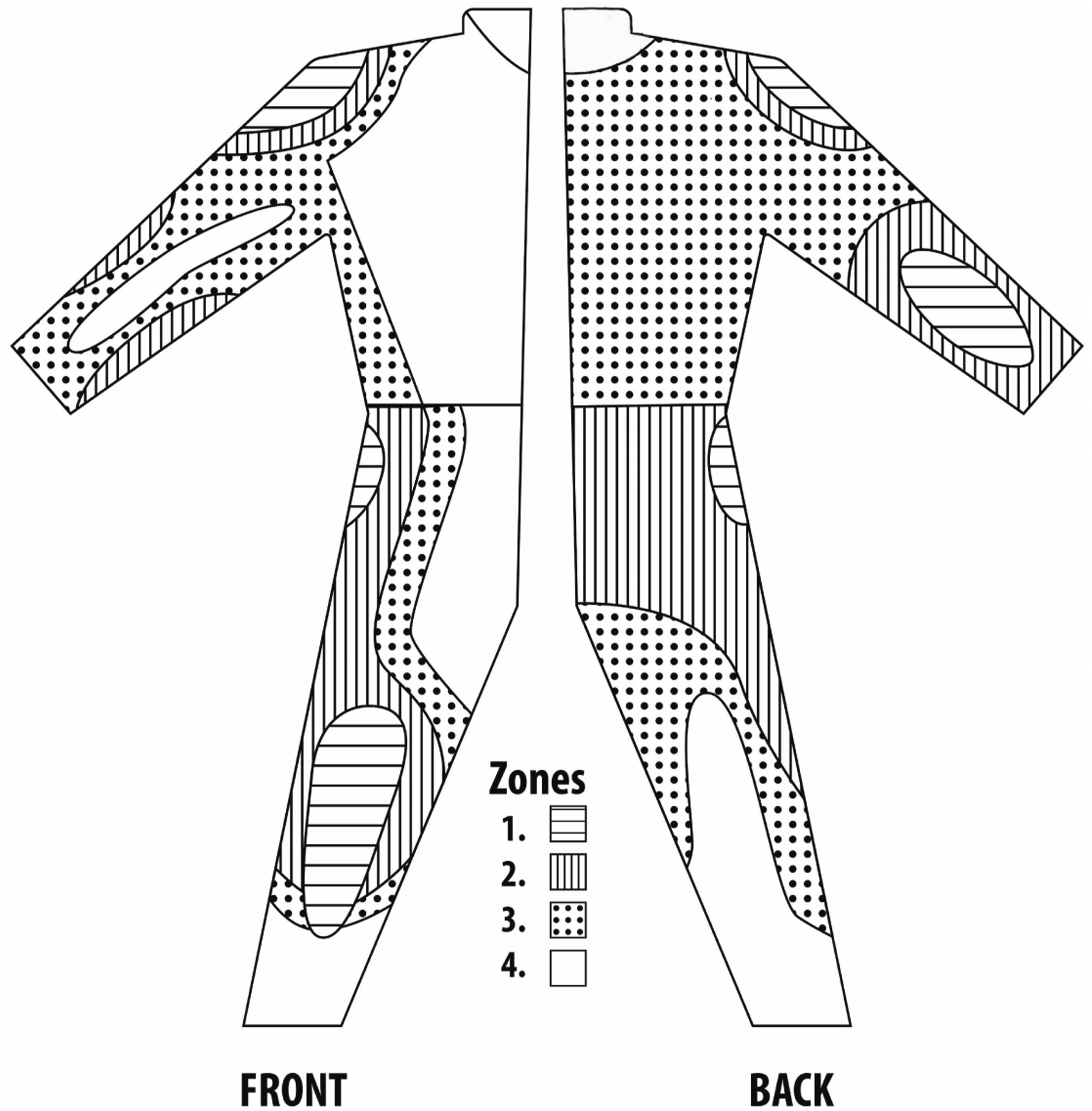

EN13595- Protective Clothing for professional motorcycle riders—Jackets, trousers, and one-piece or divided suits
Zones, risk level, and protection.
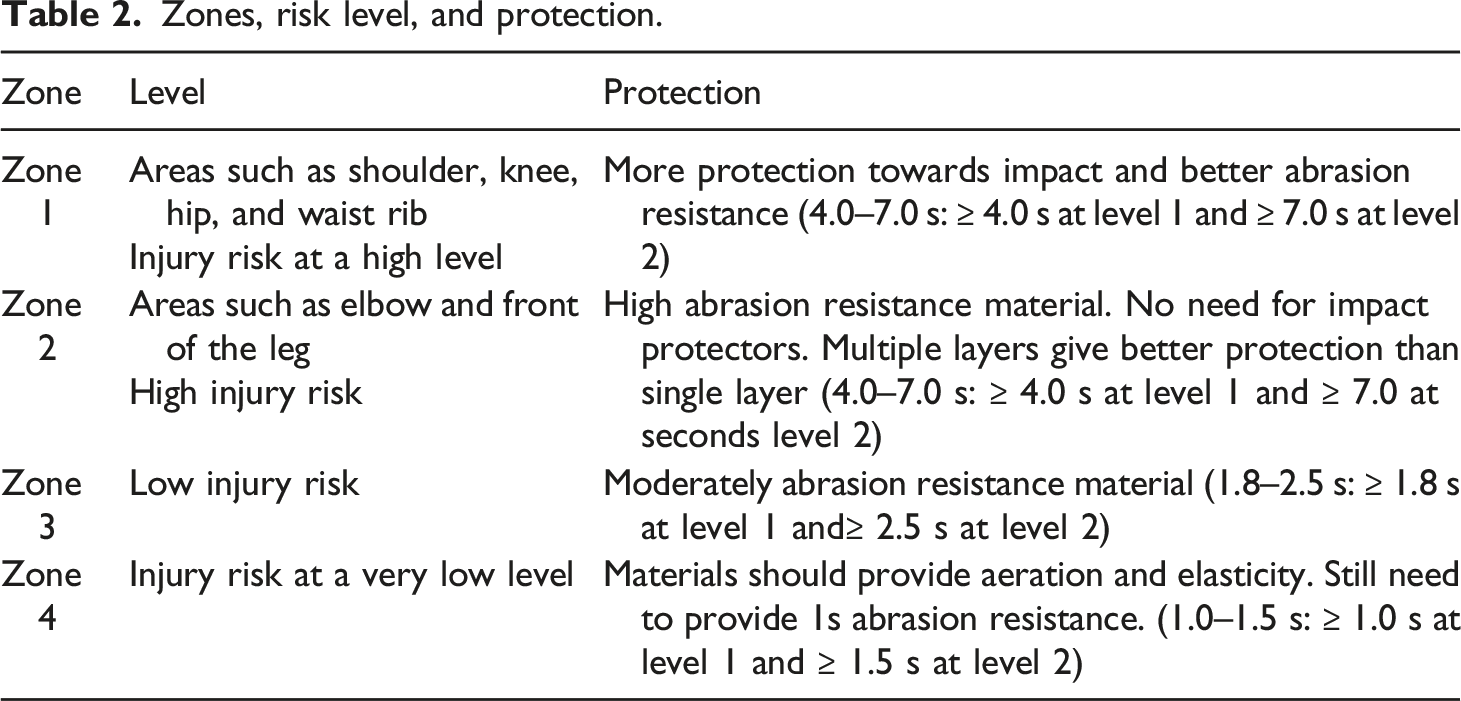
According to French Protocol, EN standard 13595–1:2002, motorcycle clothing requires the same impact abrasion resistance and tear strength in the areas of zone 2 and zone 3. Concerning European standards, 100N force is used for leather and textile materials; whereas, for French protocol, 50N force is used for leather and textile materials when testing with EN 13595-1:2002 standard. During the course of selecting motorcycle protective clothing, it is mandate to ensure that garments abide minimum Conformite Europeenne (CE) standards. CE marking in the clothing authenticates that the clothing is manufactured with safety and protection standards. It is advisable to add the CE standard permanently to the garment when it meets the CE standards, which assures the customers that the garment satisfies at least a minimum level of quality standards. Three different types of labels could be added to the protective clothing based on the process.
CE Tested—The manufacturer would have tested the whole garment or the part of the garment within their facility to check the quality standards. The garments are not necessarily to be tested in a certified testing facility to meet the standards.
CE Certified—It refers that the samples were tested in a certified testing facility. Part of the garment has been tested to be found in this case.
CE Approved—It refers to several parts of the garment been tested in the certified testing facility and are qualified or outshine the necessary standards in all zones .33,34
EN17092- Protective garments for motorcycle riders
EN17092 standards.
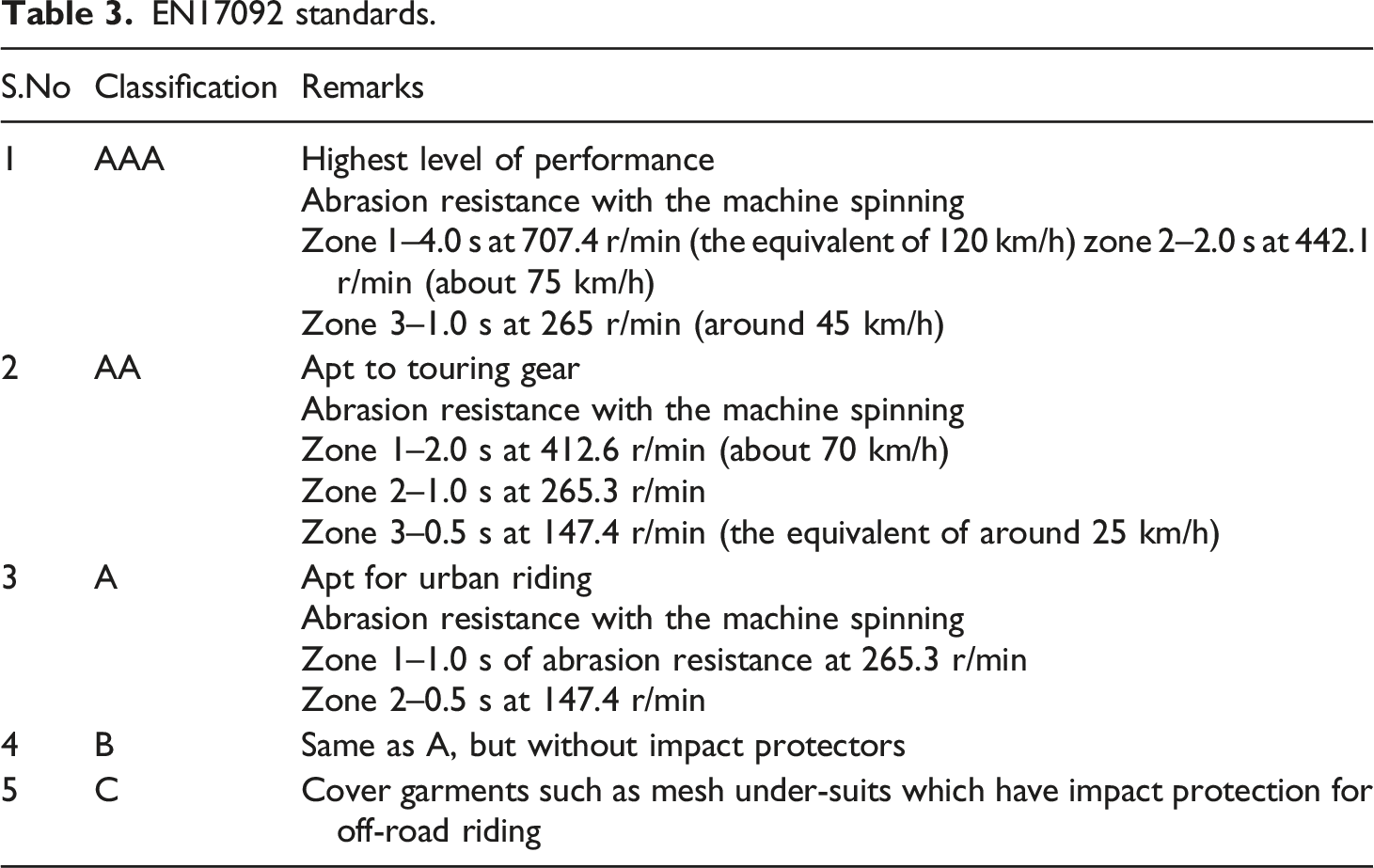
The parts 1 to 4 associated with EN13595 are due to be withdrawn by March 2023. However, parts 1 and 3 will remain active as references for the test method. The new standard EN17092 came into effect in March 2020. 37
Performance characteristics of fabrics for motorcycle protective clothing
The studies associated with Australian motorcycle clothing showed the efficiency level of fabrics on protective clothing against the body parts to a great extent. It also showed the sign of protection from nerve injuries on wearing motorcycle pants and boots. 38 Jeans made of Kevlar® are evidence for protective clothing. Additional stitches provide better durability. Research findings have shown that majority of the riders tend to protect the upper part of the body but they are very less concerned about the lower body part. 39
Apart from protection, motorcycle clothing is at times given a waterproof finish to protect the wearer from rain and wind. It can also be embedded with a reflective patch intended for visibility at night. But the main reason for wearers not showing interest to wear protective clothing is because of the hot weather and lack of comfort at times. Four jackets of different materials such as mesh, polyurethane, and denim were bought and analyzed for impact resistance. Few were with padding and waterproof. The materials used for protective clothing are Leather, Kevlar®, Denim, Polyurethane, Nylon, and a combination of synthetic materials. Studies have also shown the performance of Leather and Kevlar® was good for durability, tear resistance, cut puncture resistance, abrasion, and burst resistance. Cushioning effect given to the protective clothing could provide enhanced protection on the back, neck, chest, shoulder, elbows, knee, and so on. Foam/mesh/reinforced plastics/silicon is used for padding. Because of the fabric structure mesh fabric seems to be breathable and gives more comfort. Airbags are also used for protection. 40
The protective lining materials such as twill weave p-aramid fabric, double jersey (DJ) knit p-aramid fabric, 1×1 rib knit aromatic polyester liquid crystal polymer (LCP), and un-brushed terry knit p-aramid/ultra-high molecular weight polyethylene (PE) fabrics were tested for abrasion resistance using LAB. belt abrasion tester according to EN13595-1 standards. 41 In the test result, the performance of woven fabrics was less compared with knitted fabrics. But denim fabrics showed better results in the woven category. DJ knitted fabrics along with heavy denim and protective layer showed better results. The abrasion resistance of LCP knitted fabric showed better performance as in a structure, but would not be expected to perform well as a garment due to the high difference in mass per unit area and concerning thickness. The looped knitted fabric had shown extremely good results because of the high thickness, mass per unit area, and loop structure absorbing high abrasion impact without degrading base fabric. Though many types of protective layers performed well and results were similar to leather, but most of the garments failed to meet CE level 1 standard itself, which is the lower level of European conformity standard for abrasion resistance. 41
Single cloth with Ne 6.4/1 Cotton/Cordura® yarn in the warp and T400® polyester yarn in the weft and the use of higher yarn densities increased the performance of the tensile strength. This fabric showed higher tear strength because of the presence of T400® polyester filling yarns but did not provide a sufficient result with impact abrasion resistance. Hence, double-layered fabrics and backed materials were produced. Double cloth Ne 6.4/1 Cotton/Cordura® in the warp and Ne 5.2 (4 plied) Kevlar®/Polyester in the weft; along with Single cloth Ne 6.4/1 Cotton/Cordura® in the warp and the weft; along with Backing fabric Ne 5.4 (3 plied) Kevlar® in the warp and Ne 2.5 (4 plied) Kevlar® in the weft showed excellent abrasion resistance. Double cloth Ne 6.4/1 Cotton/Cordura® in the warp and Ne 5.2 (4 plied) Kevlar®/Polyester in the weft reached the abrasion resistance requirement for level 1 in zones 1, 2, 3, and 4. Double cloth construction with 92 tex cotton/Cordura® in the warp and 28 × 4 tex (4 plied) Kevlar®/polyester in the weft reached the impact abrasion resistance requirement for level 1 in zones 3 and 4. The abrasion resistance by Kevlar® knitted fabric showed a much low level as compared to Kevlar® woven backing fabric. 42
Different test methodologies show different results. Few fabric samples were tested using a Taber abrasion tester, on which paving stones were used for fine structure, and lawn edging stones were used for coarser fabric surfaces. Kevlar®-ceramic fabrics have shown good results when paving stones were used but when lawn edging stones were used it created holes in the fabric. When abrasion testing for carbon-kevlar® and Cordura® fabrics was done using paving stones and lawn edging stones, holes were found in one or more cases. Renowned fabrics such as carbon-kevlar® and Cordura® have also shown poor results with paving stones. SuperFabric® and Cordura® got destroyed completely during abrasion with lawn edge stone. Simple calf leather and the skate (fish) leather showed a loss. Automotive leather with a special coating, Cordura®, Polyethersulphone (PES) with epoxy resin plates, fish leather, and Kevlar®/Nomex®/Polybenzimidazole (PBI) had shown better results with abrasion testing using Taber Abraser—lawn edge stone test. 43
Large varieties of fabrics are being used for motorcycle clothing and the performance of clothing varies based on the fabrics. It is required to validate the performance of fabrics for protective clothing as per the EU standards. Post the work of Woods in 1996, there has not been significant research on the competence of the test methods. According to this paper, utmost importance was given to abrasion resistance when compared to other types. Meredith et al.assessed the relationship between abrasion resistance of motorcycle clothing to that of real-time injury rate. Samples were taken from no damaged locations of the motorcycle clothing who met with an accident and cut into a circular shape in the warp, weft, and true bias direction. The abrasion resistance performance of the samples was evaluated. The majority of the clothes have failed to meet even the level 1 abrasion resistance requirements as per the standards with the Cambridge abrasion testing machine. Therefore, it is very significant to design motorcycle protective clothing that could improve the quality and performance. Meredith et al.had concluded that when the time taken to abrade the clothing increases then the motorcyclist protection rate to protect the soft tissue also increases. 44
The fabrics such as Lined Denim, Heavy cotton, Kevlar®, Aromatic polyester, and leather were taken for testing. The fabrics were single and double-layered. Testing of lower and upper garments was done using Cambridge type abrasion machine using protocol EN13595. The test was conducted among motorcyclists who met with an accident to examine the relationship between abrasion resistance of clothing and soft tissue injury. From the study, Meredith et al.have found that only one garment out of six garments (four upper and two lower) have met the requirements of level 1 and only one lower garment has met the requirements of level 2. Also, it was found that the upper garment lasted longer than the lower garments. Concerning soft tissue injury and abrasion resistance of clothing, the test results have shown a relatively very low probability rate of soft tissue protection in both level 1 and level 2. In this study, the distribution of impact locations, damage in the protective clothing due to collision, and soft tissue trauma were examined. The results endorsed the appropriateness of the standard clothing template. But high frequencies of impacts were observed in the study, in the areas such as chest, forearm, and thigh than predicted in the template. Therefore, the fabric layers to be selected appropriately for protective clothing in such a way it could serve better in those areas as well. 45
Performance of the fabric associated with comfort
Comfort is an important factor while riding a motorcycle. Therefore, motorcycle protective clothing has to be designed with utmost care facilitating comfort and protection to the wearer. It has to protect the wearer from injuries and also possess thermal insulation properties. 46 Though, motorcycle protective clothing reduces the extent of injury and improves protection, it is thermally inefficient during hot climatic conditions. Thermal inefficiency causes thermal strain and discomfort due to low vapor permeability of clothing. Since evaporation of sweat is very much necessary for regulating the body temperature, control of this process may increase the temperature leading to thermal strain. The study was conducted to evaluate the thermal management properties of personal protective clothing and the psycho-physiological impact of ineffective thermal management during hot climatic conditions. For this study, participants were given a set of personal protective equipment (PPE) such as a helmet, boots, gloves, underwear, motorcycle jacket, and pants which were made up of 600 denier polyester. The protective clothing also has an inner lining for water resistance and comfort. The test results have shown an increase in core temperature, in the first half, by half a degree (0.51°C), and more quickly increased in the second and third stages with 0.75°C and 0.74°C respectively. It was found that there was an increase in heart rate and skin temperature to 27 bpm and 1.9°C, respectively, in the first stages and continued to increase in a lower rate in the second and third stages, respectively. During the break, both heart rate and skin temperature were lowered. Liz de Rome analyzed the results associated with physiological measures and mood. The initial study of the test with motorcycle protective clothing had restricted the thermoregulatory function and had caused a severe thermal strain in hot conditions. This study has shown that motorcycle Personal Protective Equipment (PPE) is inefficient and thermally unstable during hot climatic conditions, which leads to discomfort and hyperthermia. Moreover, determination of optimal location and ventilation parts in motorcycle jackets without compromising the integrity of garments is very essential. 47
The riders who use standard bikes, scooters are probably to ride unprotected. The usage of motorcycle clothing differs according to the motorcycle type that the riders own. Most of the time, reasons for not wearing protective clothing such as pants are due to the hot climatic conditions and also because of the type of motorcycle being used. But few riders are made to wear forcefully by their family, friends, and relatives. The materials used in protective clothing seem to be very heavy leading to physiological stress-causing discomfort and risk. Designing and constructing cost-effective motorcycle protective garments would reduce heat stress and satisfy the primary concern of safety.48,49 Besides motorcycle clothing hampers heat exchange between the environment and the body of the wearer. Motorcycle riders prefer wearing leather clothes as they are appealing to eyes, trendy, and possess a good protection rate. However, the problem associated with leather clothes is its high cost. Hence, it is indispensable to produce motorcycle clothing at a reasonable price in order to avail it for commuting. Meanwhile, it is significant that motorcycle clothing possesses high strength, proper air permeability, and water resistance. Thereby, the clothing for motorcyclists is to be assessed in many aspects. A denim and leather combination jacket was evaluated for air permeability. The test was performed under 200 Pa pressure on five different areas of each leather and denim with the rate of airflow in 4 min. Denim has shown a higher air permeability rating when compared with leather. Since the leather structure is complex with collagen bundles, it showed a lesser air permeability rating compared to denim, whereas denim is a 2-dimensional structure where air can easily pass. Therefore, the introduction of denim in combination with a leather jacket had reduced the cost of the product, and it is suitable for both climatic conditions—winter and summer. Based on the requirement or according to the climatic conditions, other materials such as liners can be used. Care needs to be taken that the different materials used in the motorcycle clothing are compatible with each other. 50
During motorcycle accidents, the only protection factor for the body is protective clothing. But it is very significant that motorcycle protective clothing is capable enough to dissipate the heat and provides thermal comfort to the wearer. From the literature review, it is confirmed that most of the motorcyclists wore protective clothing such as jackets and pants, made of denim, nylon, Kevlar®, faux leather, and leather. Leather provides more protection but the problem associated with it is all about preventing heat dissipation and leads to thermal discomfort. 51
For thermal testing, YG606H sweating guarded hotplate was used. Samples were tested in dry mode at 20°C and 65% humidity. Denim along with protective layers was taken for thermal testing. Internal mesh fabric had been avoided from all the samples of the garments, except liquid crystal polymer (LCP), as it had internal and external spacer fabrics attached to it as a part of the protective mechanism of the fabric. Terry loop knitted fabric structure and rib knitted fabric structure were thicker than woven and other knitted fabrics; hence, those fabrics could retain heat due to increased volume of trapped air. The spacer fabrics could be used to reduce the impact on the body because of the additional cushioning effect and thicker enough for protection. By increasing the thickness of the fabric, it would perform well against abrasion, but the thermal comfort would be decreased. Hence, using an appropriate protective layer for thermal comfort is very much necessary especially during hot conditions. 52 Thermal management ratings are measured based on the thermal resistance and moisture vapor resistance tests. Thermal management is evaluated based on how the clothing traps the metabolic heat, restricting the thermoregulatory system of the body. 53
It is important to analyze the physiological and cognitive impact under different climatic conditions. Hot weather may lead to physiological strain. Increased thermal discomfort and thermal strain can affect the riding performance of the riders. Ventilation ports in the garment layers could assist in reducing thermal discomfort. Thermal manikins are used to analyze the thermal resistance and vapor resistance of the fabrics. It is also very much required to measure the indices such as heart rate of the wearer, skin, and body temperature at regular intervals during the test. Fabrics can also be weighed before and after the tests to determine the moisture retention properties and to evaluate the evaporation rate. 54 The investigation was made for the physiological consequences of motorcycle protective clothing at 25°C under a controlled state (street clothing). The test results had intended that design features of the motorcycle clothing are to be improved in such a way that it can show improved drying ability and heat dissipation, especially during the hot summer season, without compromising on the injury protection part. Also, the examination towards physiological strain at the temperature 35°C needs to be done. 55 Hence to design and develop clothing that could give more thermal regulation during hot climatic conditions and comfort to the wearer is very much required. The tests should be done to analyze the thermal balance of the bike rider’s protective clothing.
The other stress that the motorcyclist may undergo is cold stress during extremely cold conditions. The effects they face are loss of feeling in hands and feet, feeling cold, and lower core temperature which may lead to discomfort while riding the bike, irritation, anxiety, etc. Insulation and windproofing are the key elements to avoid cold stress. This permits a thick layer of air between the rider’s body and the outer layer of clothing. And the close-fitted garment design features in the areas of neck, wrist, and bottom prevents wind entry and heat loss. It is also advised to wear close-fitted helmets, gloves, and boots which in turn reduces the cold stress. One more form of stress that motorcyclists face is wet stress. Not only because of the rain but also due to perspiration, factors associated with wind chill factors, are also the reasons for wet stress. This may draw heat from the body. Waterproof breathable clothing is the best solution to prevent the rider from wet stress and to keep them dry and comfortable.56,57
Kinematic analysis of motorcycle and the impact of clothing
Motorcycle protective clothing though has multiple layers, which is very much required to provide proper fit and comfort to the wearer. Fit can be achieved by the proper way of pattern making and constructing the garment. As the 2D flat pattern technique fails to give the appropriate fit and comfort with body locomotion, it is better to go with 3D techniques for pattern making, where critical analysis on body movements and postures can be done.
Motorcycle riders wear multilayer clothing to protect the rider during a collision. But multilayer clothing could restrict body motions, increases strain, and lead to fatigue, which can cause accidents. Apart from that, uncomfortable riding posture is also one of the reasons for accidents. Hence, the body measurements during various postures and movements need to be studied and considered during designing and constructing motorcycle protective clothing .58, 59
Kanika Jolly et al. 60 in their research made the motorcycle placed at a fixed location, and the motorcycle riders were recommended to approach the motorcycle, to be seated, and acquire the riding posture. Three Canon D50 cameras were fixed on the tripod of 0.76 m height and kept at a distance of 3 m away from the rider. The video was recorded about three to four times to analyze the data. A skinned multi-person linear (SMPL) model was used for this test. This model helps to produce the change in shape or deformation of people during the pose. Similar to the human being, the 3D models were animated and different poses, body movements, movable joints, and soft tissue deformation were analyzed. Thus, with the help of the 3D design concept, the garment pattern was designed considering different zones as in clothing template. Then with the aid of 3D design, 2D flat patterns were created. The pattern was repeated for all four postures such as static, trying to lift the leg, lifting the leg, and seating position holding the accelerator. The patterns obtained from the 3D method will replicate the curves in the body and also curves in posture. Therefore, the motorcycle protective clothing developed with ergonomic standards will provide a better fit, comfort to the rider; and will not restrict the body movement or cause fatigue during riding. 60
Impact Protectors and its role on protective clothing
Impact protectors have a risk reduction capability associated with soft tissue injury, but no protection associated with severe injuries. The reason could be the variations in quality parameters concerning impact protectors. In countries like Australia, performance standards were not mandatory for motorcycle clothing and impact protectors. Hence in those countries, they follow the star rating regulations for quality parameters associated with motorcycle clothing. In European countries, they follow the standards for protective clothing, and the clothing should be certified with CE. Motorcycleprotective clothing against mechanical impact is tested with the standards EN1621. Concerning CE certification, motorcycle clothing and impact protectors must meet minimum energy attenuation performance and minimum impact performance requirements. 61
In a study, it was clearly stated that protective clothing with body armors have shown better results than protective clothing without body armors. The clothing without armors have shown reduced risks associated with cut and abrasion injuries, whereas much stronger results have been obtained for the clothing with body armors. 62 It is expected that the presence of specially designed armors for motorcycle clothing can protect severe injuries such as fractures as well. Therefore, more researches can happen in the areas of body armors and their protection against severe injuries. 63 A wide range of impact protectors are available in the market for motorcyclists. To determine the durability and safety of the protectors, accelerated aging on mechanical and structural properties was tested and analyzed. Commercially available protectors were used for DMTA, FT-IR, and Impact tests. The tests were conducted for the protectors before and after the aging processes. Both DMTA and FT-IR methods have shown that the samples have sustained their protective properties after accelerated aging. The tested samples have resulted that they withstand and provide protection as per the ISO standards even after force being transmitted through the samples after accelerated aging process. 64
Spacer yarns in the spacer fabrics provide better compression and resilience characteristics. The spacer fabrics with three plies can provide optimum thermal properties and make the wearer warm and maintain the body temperature with good moisture comfort. For ballistic applications, during the impact stage by the striker, the spacer fabric stores and absorbs energy and possesses superior force reduction performance under flat impact. The fabric sustains severe damages when the kinetic energy was increased by the straight impact of the spacer fabric with the anvil and striker. At the same time, there was no cut or holes produced on the fabric surface after the impact and there was some serious damage to the spacer yarn. 65 The 3D warp-knitted polyester spacer fabrics provide good cushioning effects. Warp-knitted spacer fabrics are the perfect assembly for energy absorption and to provide a cushioning effect. Based on application, the structural parameters of the spacer fabrics can modify to achieve better energy absorption and cushioning effect. The spacer fabric with a thickness of 3.1 mm can provide the optimum level of thermal conductivity with good air and water vapor permeability. The fundamental construction of 3D spacer fabrics is formed of two surface textile layers held by spacer threads in a defined spacing. This structure provides tortuous spaces that let heat and moisture be transferred through the fabric with air easily. In general, mechanical behaviors like tensile, tear, and peeling are the other attributes of spacer fabrics that can be utilized in innumerable applications varying from cushioning to activewear to extreme sporting apparel applications. 66
Therefore, the concept behind the ballistic impact and cushioning effects with spacer fabrics can be employed for motorcycle clothing to find the impact resistance properties and comfort properties of the motorcycle clothing where spacer fabrics are used as impact protectors.
Conclusion
From the study and review, most of the garments have failed to meet the required level of quality standards. It is very much necessary to have protective clothing for motorcyclists, which could protect them during the collision and safeguard their lives. The protective clothing can perform well when it can withstand impact and abrasion. Hence, it is significant to have the standard protocols and testing procedures, to analyze the performance of the motorcycle protective clothing in terms of impact, abrasion, cut resistance, bursting, and tear strength. The above-said factors are not sufficient to provide comfort to the wearer because discomfort may arise due to increased weight of the material, thermal strain, or immobility, and at times which may lead to accidents. The comfort properties and ergonomic factors associated with motorcycle clothing also play a vital role. Therefore, to design/develop the right fabrics and clothing for motorcycle riders is essential. Very little research is being carried out in this field; whereas more research can be encouraged in these areas where the clothing can satisfy various properties such as abrasion resistance, impact resistance, comfort, ergonomics, and cost factors. This type of invention is more concerned with society, reducing injuries during accidents, safeguarding the lives of the people, protecting animals (minimizing the usage of leather), motivating interdisciplinary projects, and preferably for the wellbeing of humans.
Footnotes
Declaration of Conflicting Interests
The author(s) declared no potential conflicts of interest with respect to the research, authorship, and/or publication of this article.
Funding
The author(s) received no financial support for the research, authorship, and/or publication of this article.
