



Abstract
Corn husk is an agro waste which poses a problem of its disposal. Hence, fibres were extracted from corn husk to utilize it. The fibres extracted from corn husk were coarse with linear density of 86 deniers, had bundle strength of 1.3 g/d and elongation at break of 18.5%. Water retention of corn husk fibres was also found to be 200%, which makes them suitable as absorbent material. Therefore, the possibility of using corn husk fibres in the absorbent layer of sanitary napkins was explored. Corn husk fibres were mixed with wood pulp in different proportions for use in sanitary napkins. The developed sanitary napkins were evaluated for various physical and hygiene parameters like pH, water retention, absorbency and ability to withstand pressure, disposability, bacterial and fungal bio-burden, and presence of common skin pathogens and compared with other sanitary napkins for all the parameters. The water retention and absorbency of corn husk napkins were comparable to branded napkins, which had higher absorbancy probably due to the presence of SAP in their absorbent layer or difference in the quality of top sheet and technology used to manufacture the napkins. The bacterial and fungal bio-burden for the developed napkins was found to be lowest and within acceptable limits of 1000 c.f.u/ml. The common skin pathogen Staphylococcus aureus and uterine pathogen Candida albicans were found to be absent. Thus, use of corn husk fibres for developing various absorbent hygiene products could be sought as an opportunity for transforming waste to useful products.
Introduction
Utilizing renewable natural resources through value addition is an ideal transition from a petroleum-based economy to bio-based economy. Organic wastes, which are otherwise a challenge to the environment, could prove to be a potential alternative for production of value-added products [1]. Many ligno-cellulosic fibres have been produced from wood or non-wood–based biomass as new alternatives to replace both cotton and polyester production, which burdens the environment and consumes oil resulting in depletion of natural resources. For achieving economic sustainability, the development of alternative means for generating income and wealth, which do not cause hazards to the environment, is essential.
Maize, also known as corn, is the third most important food crop after rice and wheat in India. It is cultivated in all the states in India, except Kerala, throughout the year for various purposes [2]. Corn production in India has been on a constant rise and has reached up to 30.20 million metric tonnes in 2020–21, which is 5% more than the previous year (28.8 million metric tonnes in 2019–20) [3]. If 30 million metric tons of corn is produced in India annually, it could generate approximately 6 million metric tons of husks which could in turn lead to production of about 0.6 million metric tons of fibres [4]. The corn husk which is a bio-waste can be utilized for extraction of fibres for various textile applications.
Sustainability being the imperative aspect of development, many researches have been carried out exploring the possible applications of corn husk in textile and non-textile areas.
Anticipating the enormous scope of corn husk, Bridgehouse ES and Hawthorne WM (1982) pioneered the use of corn husk, generally considered a waste, to manufacture twines and ropes [5]. Various researches on other non-textile applications of corn husk fibres included their use in pulping [6], paper industry [7], composites with poly propylene [8] and low density composites with polyethylene for packaging [9].
A major breakthrough in research on corn husk was achieved by Yang and Reddy [4] who patented the process of extraction of corn husk fibres. The properties of the extracted corn husk fibres were found to be comparable to cotton and linen.
Researchers have been continuously making efforts to refine the process of extraction of corn husk fibres by studying various parameters involved in the process like effect of alkali concentration and treatment time [10,11] on the properties of extracted corn husk fibres and xylanase enzyme on the mechanical properties of fibres extracted from fresh and dried corn husk [12]. Treatment with banana pseudo stem sap was also given to improve thermal stability of corn husk fibres [13].
An extensive study on extracting corn husk fibres using alkali, enzyme and bleaching treatments was conducted by Jain et al. The authors found the extracted fibres suitable for use in developing variety of products such as yarn, rope and hand-made mats [14]. Considering the multifarious applications of corn husk fibres, as reported by various researchers, corn husk fibres were extracted and characterized for their properties [15]. The fibres extracted from corn husk were found to have high water retention; hence their suitability for use in sanitary napkins was explored. They were used in the absorbent layer of sanitary napkins along with wood pulp in different proportions. The developed napkins were evaluated for various physical and hygiene parameters.
Methods and materials
The husk was collected from fully mature cobs of Syngenta Sugar-75, a variety of sweet corn, from Aterna village in Panipat (Haryana). The husk collected directly from fields had very high moisture content. With such high percentage of moisture content, it was highly susceptible to growth of microorganisms, especially fungi, during storage and further processing. Hence, the husk was dried at room temperature and checked for moisture content levels after two and 5 days. The moisture content after 2 days of air-drying was found to be 69.5% while after drying for 5 days, the moisture content had decreased to 10.65% [16]. The moisture content of 10.65% was considered optimum for storage as most of the bast fibres have moisture content of 10% [17]. Considering the above data, the husk was air dried at room temperature and stored in a properly ventilated room.
The fibres were extracted from corn husk using a standardized procedure of treatment with alkali and enzyme [16] which is described as follows:
The extracted corn husk fibres were characterized and tested for their various physical and mechanical properties.
Estimation of composition of corn husk fibres
[16] The composition of the extracted fibres was determined to understand their behaviour under various conditions.
Assessment of physico-chemical properties of corn husk fibres
[16] After the analysis of composition of corn husk fibres, their physical and chemical properties were evaluated using standard test methods.
Development of sanitary napkins using corn husk fibres
Since the water retention properties of corn husk fibres were found to be quite high, their use in the absorbent layer of sanitary napkins was explored. Due to the relative harshness of fibres, they were not used in 100% proportion; instead, they were blended with the wood pulp which was being used conventionally in sanitary napkins. Two blend ratios of corn husk fibres and wood pulp for construction of sanitary napkins were studied, viz. 30:70 and 50:50. The napkins were made in accordance with the norms given in IS: 5405-1980. As this was meant to be an initial exploration, only one type of sanitary napkin , that is, beltless in regular size was constructed. The napkins were manufactured at a unit called Gulmeher Green, Ghazipur Dairy Farm, Delhi. This unit was established to make low cost sanitary napkins in collaboration with an NGO, Aakar Innovations (Navi Mumbai).
Process of manufacturing sanitary napkins using corn husk fibres in absorbent layer.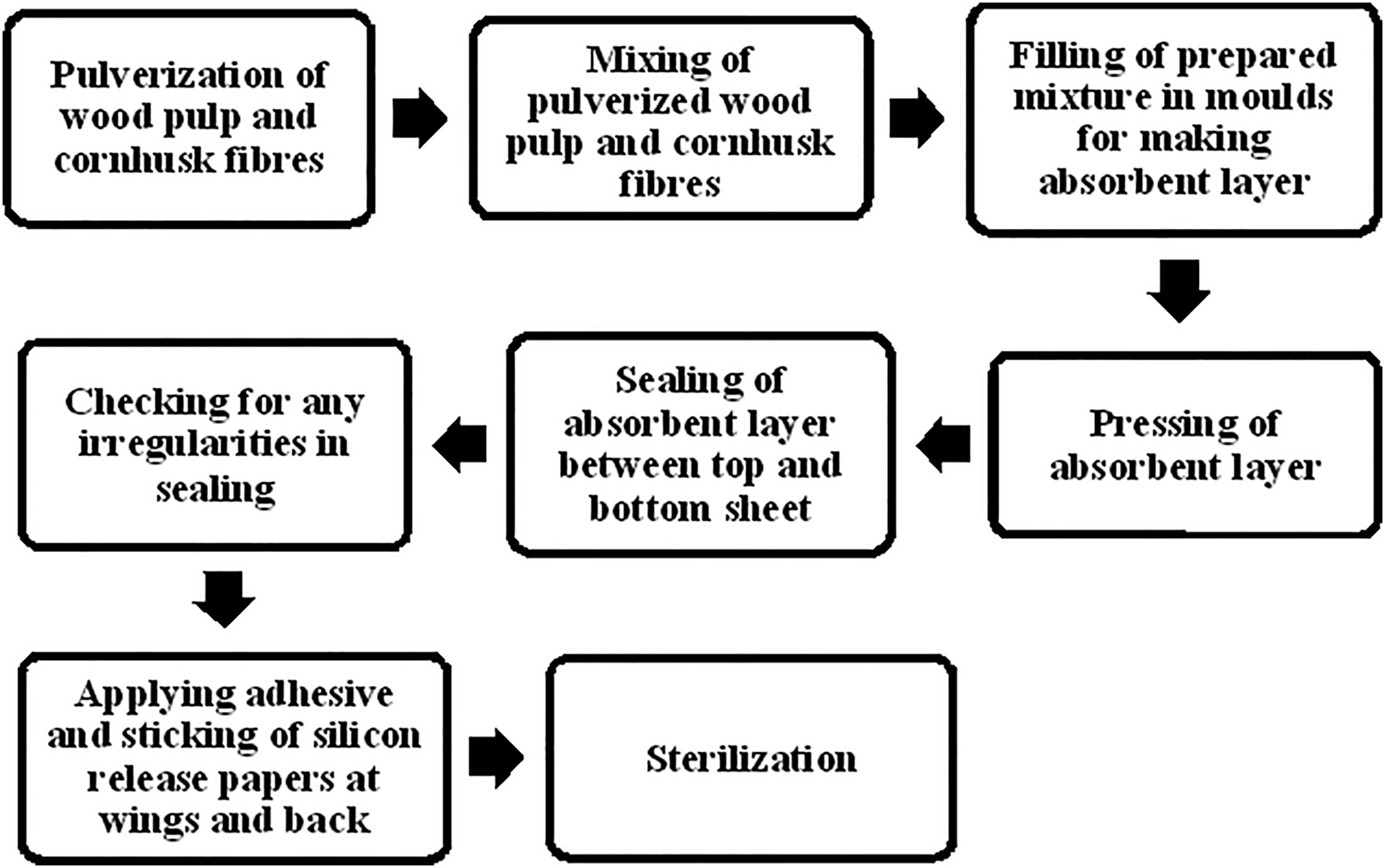
6–7 g of the blended pulp was then filled manually in steel moulds, shaped according to sanitary napkins, for preparation of absorbent layer. Moulds filled with the mixture of pulp and corn husk fibres were then compressed by a pressing machine which was operated manually. The pressing machine uses gravitational force to properly compact the fluffed pulp to ensure that liquid can be absorbed, the pad remains dry and breathable, and the absorbent layer is strong enough to keep its structure. After pressing, the absorbent layer was taken out of the mould and placed in a sealing machine with the bottom sheet below it. The top layer was then placed above, and it was sandwiched between top and bottom sheet (made of compostable material) and pressed by closing the lid with force, manually. The sealing machine makes pads through heat sealing, cutting and embossing technology. The temperature was maintained at 133–134°C as per the specifications. The thickness of the complete pads ranged from 8 to 10 mm.
After sealing the napkins, they were checked to ensure that none of the edges remained opened. If any napkin was found open from any side, it was sealed again. Napkins were then applied with an adhesive (water-soluble gum (CPW), using a screen, at the back and wings. This was followed by the pasting of the silicon release papers. Finally, the napkins were sterilized by keeping them in a UV-ray sterilization chamber for 30 min.
Good absorbency prevents any leakage from taking place. The napkins were observed for any leakages from the sides or back after placing weight over them. This test was conducted in accordance with IS: 5405-1980. The napkins were laid on a level flat transparent surface, so that the underside of the sanitary napkin can be observed. Then 20 mL test fluid, prepared by the method mentioned in the standard, was poured at the rate of 10 mL per minute on to the centre of the sanitary napkin from a height of approximately 1–2 mm. The temperature was maintained at 27° ± 2°C. After the napkin had absorbed the full amount of fluid, a standard weight of 1 kg was kept for 1 minute on the portion where fluid was poured. After removing the weight, back and sides of the sanitary napkin were observed for any fluid showing up.
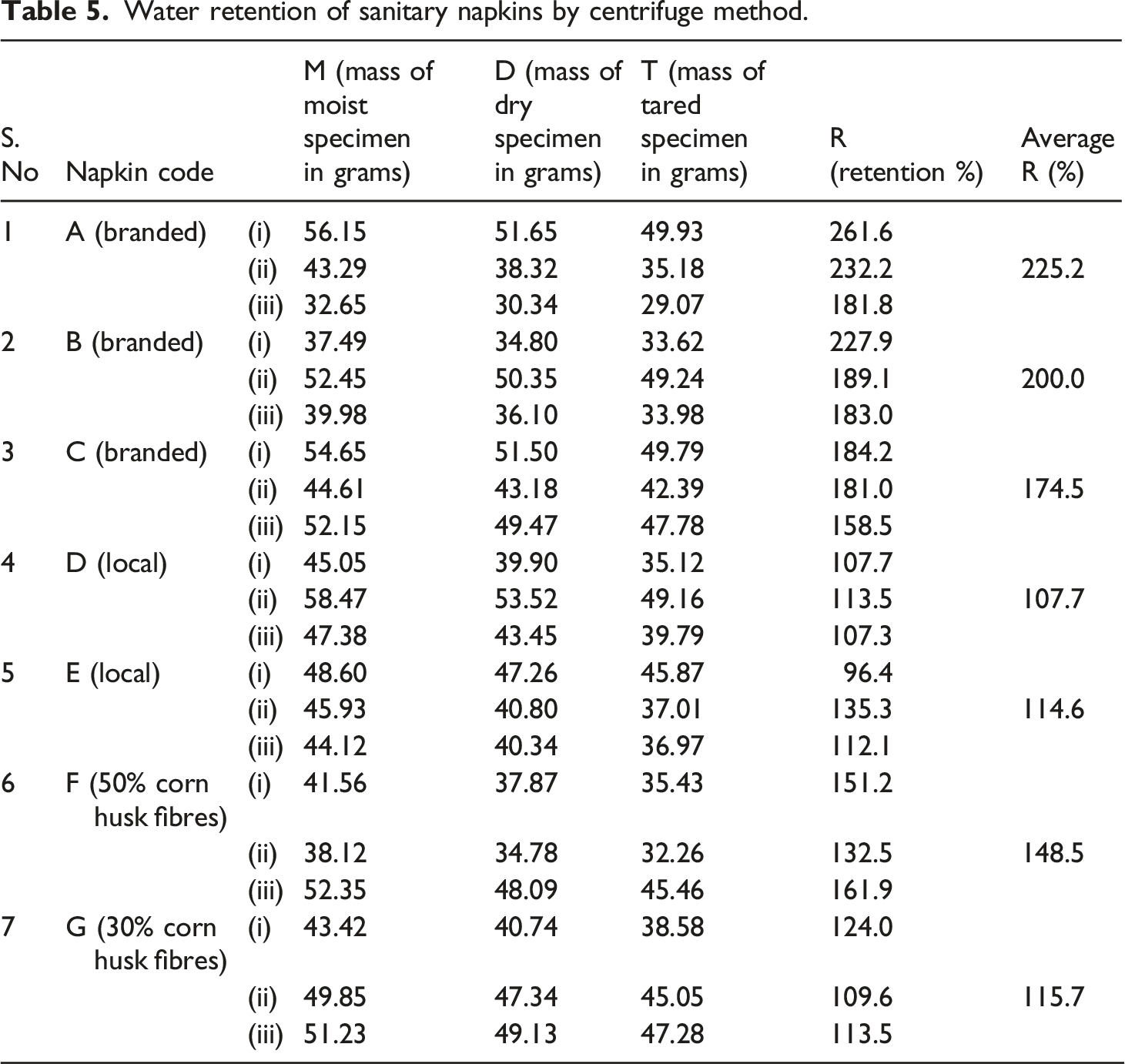
R = water retention % M = mass of moist specimen with its tare mass in grams D = mass of dried specimen with its tare mass in grams T = mass of the tare.

Results and discussion
Extraction and characterization of corn husk fibres
Composition of bleached corn husk fibres.

Some physical properties of the extracted corn husk fibres.

The drop penetration time of corn husk fibres was less than 1 s. Water retention of corn husk fibres was also found to be 200%, which is very high [15]. Sari et al. [20] studied the effect of water immersion and fibre content on properties of corn husk fibres–reinforced thermoset polyester composite and concluded that increase in corn husk fibre content lowered the mechanical strength but enhanced the swellability and amount of water absorbed by the composite. High water retention coupled with good water absorbency favoured the application of corn husk fibres in various absorbent materials.
Sanitary napkins with (a) 30% corn husk fibres (b) 50% corn husk fibres in absorbent layer.
All the napkins were tested for various physical and hygiene characteristics, which are discussed below.
pH of sanitary napkins.

Absorbency and ability to withstand pressure of sanitary napkins.
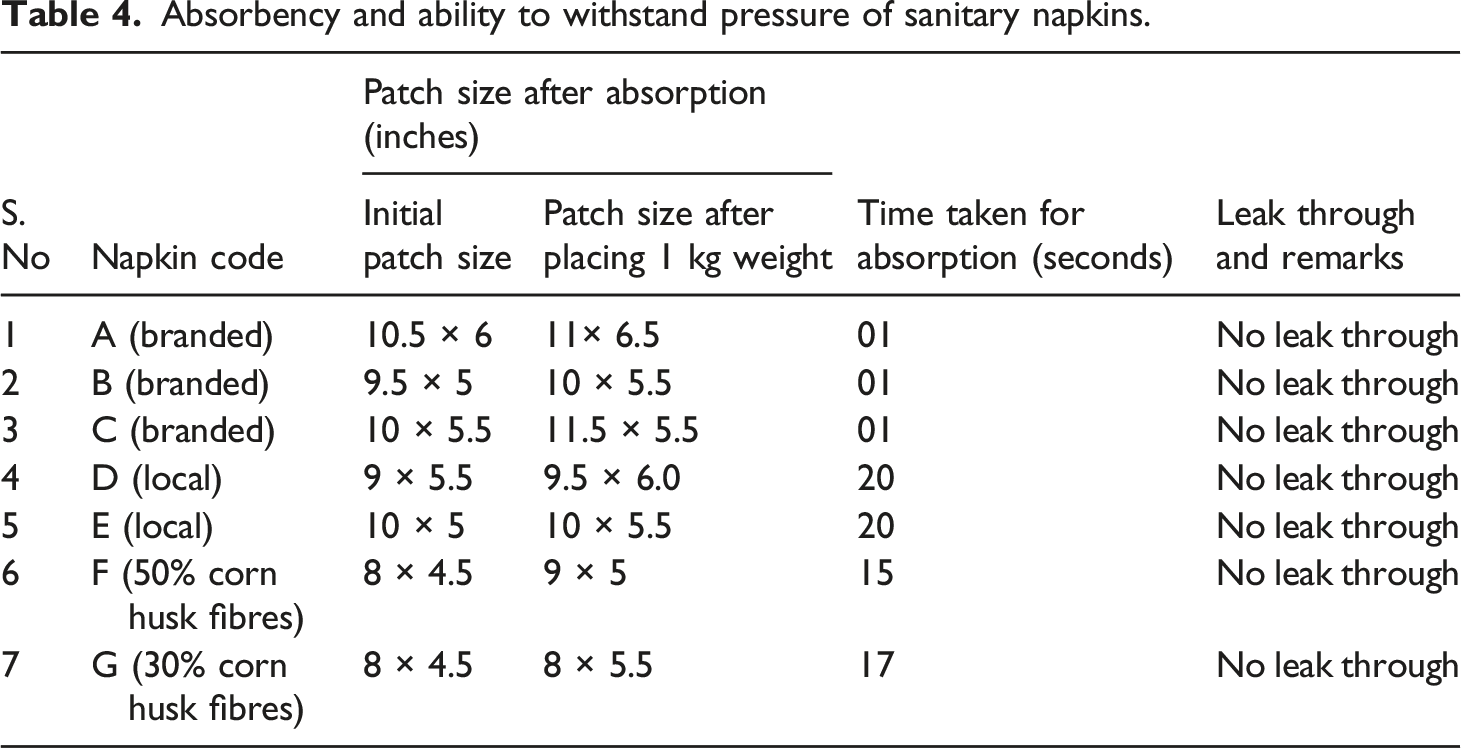
The time taken for absorption of fluid by different sanitary napkins ranged from 01 s to 20 s. Locally made napkin brands took a maximum of 20 s while branded napkins took the lowest time, that is, 01 s. Both the napkins which were made by using 30% and 50% corn husk fibres recorded water absorption time of 17 s and 15 s, respectively. The lesser time for absorption by napkins having 50% corn husk fibres implies that corn husk fibres might be having higher absorbency as compared to wood pulp used. The difference in quality of web due to variable thickness, compactness and adhesion affects the absorbency level of napkins [18]. Another important factor affecting the absorbency is the top sheet of the napkins. The top sheet of branded napkins was perforated which aids in wicking action, while all other napkins had non-woven top sheet. The wicking action of the top layer might have aided fast absorption of fluid in brand A, B and C napkins.
The spread (patch size after placing the weight) of the patch formed by the fluid absorbed varied from 8 × 4.5 inches square to 10.5 × 6 inches square for various napkins. Fluid retention is dependent on density of the absorbent layer. Most of the sanitary napkins available in market these days have super absorbent polymer (SAP) in compressed and uncompressed form which greatly enhances the absorbency and water retention properties of the napkins [22]. All the napkins showed an increase in patch size after placing of weight.
None of the napkins showed any kind of leakage at back or sides. Though, some of the napkins showed a narrow line of liquid flowing lengthwise, through capillary action, apart from the patch formed in centre (Figure 3). Corn husk fibre napkins had the smallest patch size before placing the weight, but it was highest after placing the weight. The ability to withstand pressure is not dependent solely on the type of fibres used in absorbent layer rather it gets affected by multiple factors. Density of the absorbent layer also influences the absorption and stability of the product to a large extent. A highly compressed fibre expands on absorption while lightly compressed fibre gets collapsed due to absorption [19]. Napkins with corn husk fibres after absorption of fluid (a) front (b) back, branded napkin after absorption of fluid (c) front and (d) back.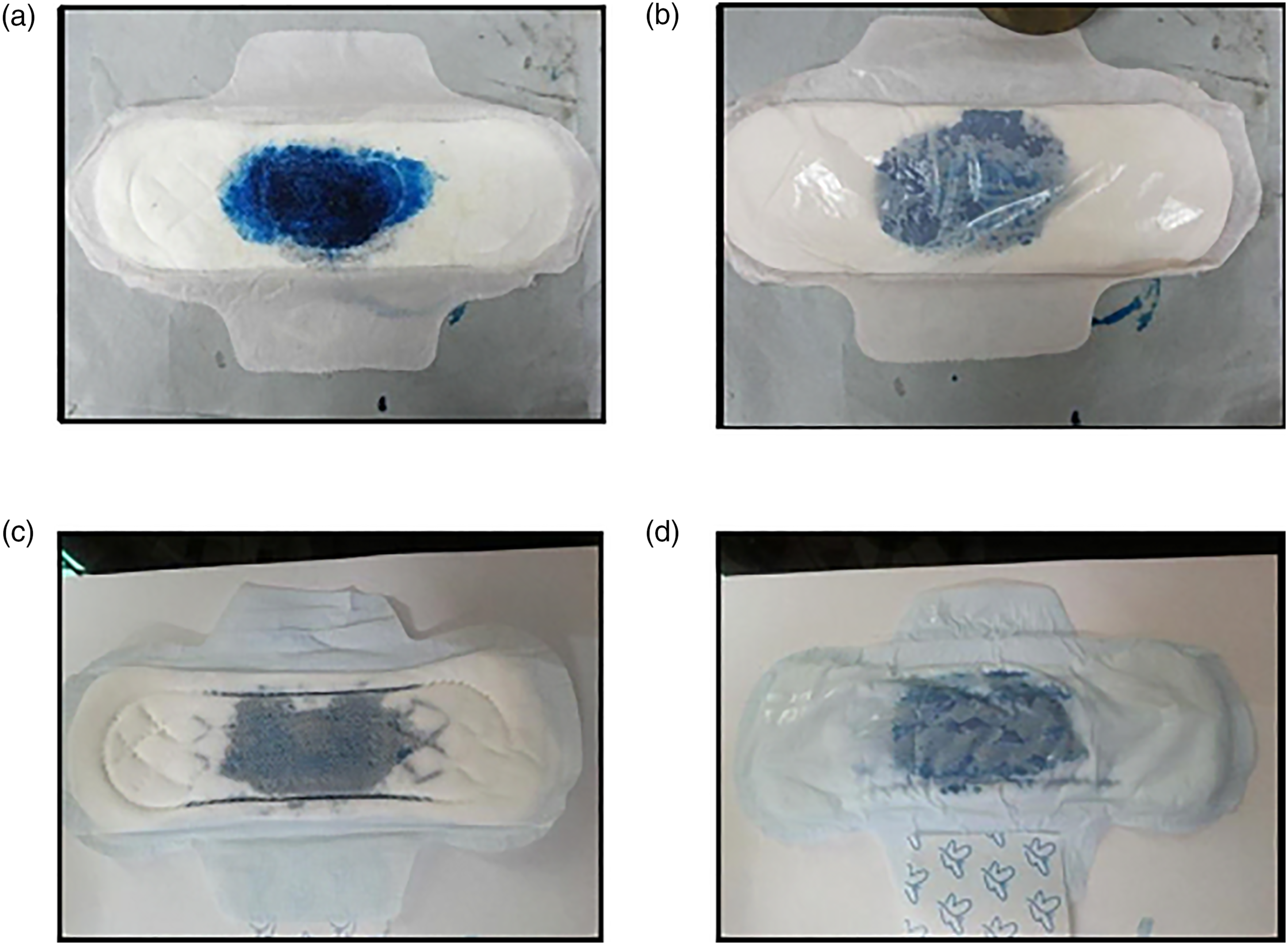
Water retention of sanitary napkins by centrifuge method.
Bacterial and fungal bio-burden of sanitary napkins.

The bacterial bio-burden of all the sanitary napkins was found between 1.2 × 10² and 4.8 × 10³ c.f.u./ml while fungal bio-burden ranged from 1.1 × 10² to 4.9 × 10³ c.f.u./ml (Figure 4). The napkins made with 50% corn husk fibres had lowest bacterial and fungal bio-burden while napkins with 30% corn husk fibres were also found to have low bacterial (510 c.f.u./ml) and fungal (400 c.f.u./ml) bio-burden. Napkin brand C had much more bacterial and fungal bio-burden than the tolerance limit of 1000 c.f.u/ml. Thus, the bacterial and fungal bio-burden of the napkins made with corn husk fibres was found to be within permissible and acceptable limits. Typical colony characteristics of (a) and (b) bacterial bio-burden, (c) and (d) fungal bio-burden.
Conclusion
The results of the study clearly indicate that corn husk fibres could prove to be a promising alternative in various hygiene products like sanitary napkins, diapers and absorbent sheets. The napkins developed with absorbent layer having corn husk fibres were found to be comparable to the napkins already available in the market. Various parameters like pH and bacterial and fungal bio-burden were within the range specified as per BIS standards and common skin and uterine pathogens were found to be absent. Though the absorbency and water retention of corn husk fibres are very high, the napkins having corn husk fibres in absorbent layer were less absorbent as compared to the branded napkins. This might have resulted due to factors such as the top sheet and SAP, used in the construction of sanitary napkins. As this was an exploratory study, only two proportions of corn husk fibres in absorbent layer were used. The study aimed to find out the feasibility of using corn husk fibres as a replacement of wood pulp in the absorbent layer of sanitary napkins/hygiene products. As consumption of hygiene products is on a continuous rise, alternative sources are required to replace wood pulp due to environmental concerns. Thus, an extensive study to standardize all the parameters for construction of sanitary napkins using corn husk fibres in absorbent layer shall be carried out so that application of corn husk fibres for various hygiene products could be undertaken successfully at the commercial level. As corn husk is considered a waste, its utilization as replacement of wood pulp will be a big leap in conservation of natural resources.
Footnotes
Acknowledgments
Authors are grateful to Northern India Textiles Research Association, Ghaziabad, and Director, Lady Irwin College, New Delhi, for allowing the use of laboratory to conduct the experiments. We are also thankful to Amity School of Food Technology, Noida, for conducting all the microbiological testing of samples.
Declaration of conflicting interests
The author(s) declared no potential conflicts of interest with respect to the research, authorship, and/or publication of this article.
Funding
The author(s) received no financial support for the research, authorship, and/or publication of this article.
