



Abstract
In this paper, bismuth oxide (Bi2O3) as the main functional powder, lead (Pb) and tantalum (Ta) as the metal additives, epoxy resin as the matrix and polyester–cotton blended woven fabric as the substrate, Bi2O3 coating nuclear radiation protection composite, Bi2O3/Pb coating nuclear radiation protection composite, and Bi2O3/Ta coating nuclear radiation protection composite with different process parameters were prepared. The cross-section scanning analysis and the influence factor analysis of γ-ray protection performance were carried out, and the mechanical properties of the composites were discussed. The results show that an increase in Bi2O3 content (mass fraction) and an increase in coating thickness can improve the shielding rate of the composite materials to γ-rays. When the thickness of the coating is 1.6 mm and the content of Bi2O3 is 50%, the shielding rate of the composite to γ-rays (at 59.5 keV) reaches 46.1%. The shielding rate of the composite can be increased by adding appropriate metal additives, and the effect of adding Ta is better than that of Pb. The shielding rate of the composite to γ-rays (59.5 keV) can be increased from 28.4% to 31.5% by adding 5% Ta. An increase in Bi2O3 content (mass fraction) and an increase in the coating thickness can aggravate the agglomeration of functional particles in the material. The addition of metal additives can reduce agglomeration to a certain extent. Bi2O3 content, coating thickness, and metal additives all have an effect on the mechanical properties of the composite. If the coating is too thick or the functional particle content is too high, the tensile strength and elongation at break of the composite will be reduced.
Introduction
As an electromagnetic radiation, gamma rays (γ-rays) have very short wavelength, high frequency, and high energy, so they have a very strong penetrating force and are difficult to shield effectively. 1 Since the discovery of gamma rays, they have been widely used in applications such as industrial flaw detection, medical detection, and so on.2–4 However, gamma radiation is harmful for the human body and the environment.5,6 Gamma radiation can enter the human body and ionize the cells in vivo, destroy proteins, nucleic acid, and other genetic material in human cells, and cause human genetic variation, radiation sickness, and even death. For external radiation hazards, there are generally three protective measures: reducing the time of contact with radioactive sources, increasing the distance from radiation sources, and using protective materials. 5 The best approach for research is to develop effective and practical protective materials. Traditional shielding materials for gamma rays include water, concrete, steel, lead, and lead glass.7–9 Lead has always been the most popular radiation shielding material due to its excellent shielding performance, but the toxic hazards and environmental pollution of lead are getting more and more attention. In addition to lead, most of the traditional shielding materials have poor shielding effect, which needs to reach a certain thickness to meet the protection needs. Therefore, it is crucial to replace lead with non-toxic materials. At present, the research focuses on the development of nontoxic, lightweight, efficient, and low-cost radiation shielding materials.
In recent years, with the improvement of protection requirements and the deepening of research, researchers have begun to explore new materials with good performance. Many researchers have studied and reported various glass systems,10–13 such as bismuth borate glass, phosphate glass containing Bi2O3, PbO, and BaO. In addition, the better protective effect is alloy sheet, rubber composites with a certain thickness. Most of the existing γ-ray protective materials contain lead, which are toxic to the human body and easy to cause environmental pollution. These protective materials are heavy, have poor mechanical properties, have complex production process, and are difficult to industrial production. Therefore, it is particularly important and urgent to study new γ-ray shielding materials with excellent comprehensive performance and simple process.14–16
Bismuth oxide (Bi2O3) is an important metal oxide semiconductor, and due to its outstanding optical and electrical properties, it has attracted wide attention. In recent years, it has been widely reported that Bi2O3 is used in the field of nuclear radiation protection. As a kind of functional powder material, the shielding application of Bi2O3 to gamma rays is a new field to be studied and developed.17–20
Epoxy resin filled with suitable high Z elements can be a potential shield for X‐rays and γ‐rays. In a 2020 study by Muthamma et al., 21 they explored the ray attenuation properties of epoxy composites filled with (0–30 wt%) tantalum pentoxide (Ta2O5) and Ta2O5-Bi2O3 prepared by open mold casting. The results show that mass attenuation coefficients (MACs) of epoxy‐Ta2O5 (30 wt%) composites at γ‐ray energies 59.54 and 662 keV were found to be 0.876 cm2 g−1 and 0.084 cm2 g−1, while that of epoxy‐Ta2O5‐Bi2O3 (30 wt% Bi2O3) composite were 1.271 cm2 g−1 and 0.088 cm2 g−1, respectively. They believe that the epoxy‐5% Ta2O5‐30% Bi2O3 composites with higher μ/ρ value and tensile strength may be a potential γ‐ray shield in various radiation environments.
In 2021, the Pawel Sikora 22 team prepared cement pastes with various ratios of cement (up to 30 wt%) replaced with Bi2O3 micro and nanoparticles in, the effects of micro-Bi2O3 and nano-Bi2O3 powders on the mechanical properties, microstructure and γ/neutron shielding properties of silicate cement paste were compared. Gamma attenuation tests results indicate that the addition of Bi2O3 powders enhances the shielding capability of pastes, in the energy range of interest (0.08–2.614 MeV). However, the effects of particle size on γ-ray attenuation are negligible in that energy range.
Bi2O3 composites can shield a variety of ray sources. The Srilakshmi Prabhu 23 research team explored the efficacy of bismuth (III) oxide (Bi2O3) loaded, calcium ion cross‐linked solution cast sodium alginate composite films for radioprotective applications. The γ‐ray attenuation experiments showed that MACs of the composites at various γ‐ray energies increased with filler loading. These composites are effective in shielding γ‐rays from radioactive sources like 137Cs, 22Na, 133Ba, and 60Co that are widely employed in several medical and industrial applications.
In the study of Araz et al. 24 in 2021, 10 open-cell aluminum foams with 30 mm thickness two pores/cm and 10 mm thickness 16 pores/cm pore sizes, respectively, were fabricated by filling with different mixtures which have Epoxy(60wt%)-B2O3(20wt%)-CeO2(15wt%)-(BaO, Cr2O3, WO3, Bi2O3, TiO2) (5wt%) chemical compositions. It was found that the WO3 and B2O3-doped metal foams had the highest MAC values, whereas the lowest MAC values belonged to the TiO2-doped samples. Half Value Layers obtained for two different metal foam samples of 30 mm and 10 mm thickness with Bi2O3-doped were found as 0.096 cm–2.962 cm and 0.090 cm–2.921 cm, respectively, which can be used as alternative shielding materials.
The common protective materials are alloy, rubber composite, resin composite, etc. Resin composite is a new type of potential radiation protection material with light weight, environmental protection, and excellent comprehensive performance. In the preparation process of radiation protection materials, coating is the most common and effective method. Protective materials should not only have good ray shielding ability, but also have good mechanical properties and service performance. Epoxy resin has excellent physical, mechanical, and electrical insulation properties, adhesive properties with various materials, and flexibility in use process, which other thermosetting plastics do not have. Therefore, it can be made into coatings, composite materials, casting materials, adhesives, molding materials, and injection molding materials and has been widely used in various fields of industrial material manufacturing. It is the most commonly used resin in the preparation of composite materials.
Based on the good shielding performance of Bi2O3 to gamma rays, combined with the advantages of the textile materials such as softness, light weight, and strong adaptability to environment, materials suitable for this study were selected. Polyester/cotton fabric has good elasticity and wear resistance in dry and wet conditions, stable size, small shrinkage and is straight and not easy to fold. In this study, polyester/cotton fabric is selected as the base cloth. In addition, plain weave fabric has the characteristics of firmness, stiffness, flatness, light weight, and good wear resistance. Therefore, plain weave is selected in this study. Finally, we used Bi2O3 as the functional material, epoxy resin as the matrix, and polyester–cotton blended fabric as the base cloth prepared the shielding composites by coating technology and studied the protective ability and mechanical properties of the composites against γ-ray.
The Bi2O3/epoxy-coated fabric prepared in this paper can provide environment-friendly and efficient innovative solutions for radiation protection materials used in hospital CT room, X-ray room, operating room, industrial flaw detection room, and other scenes. It can broaden the application range of Bi2O3 composites.
Experimental
Materials and instruments
Polyester/cotton blended (polyester 65%, cotton 35%) woven fabrics used in this work were provided by the Huawei Textile Co., Ltd. The fabric is plain weave, warp density is 340/10 cm, weft density is 220/10 cm, fabric thickness is 0.24 mm, gram weight is 80 g/m2.
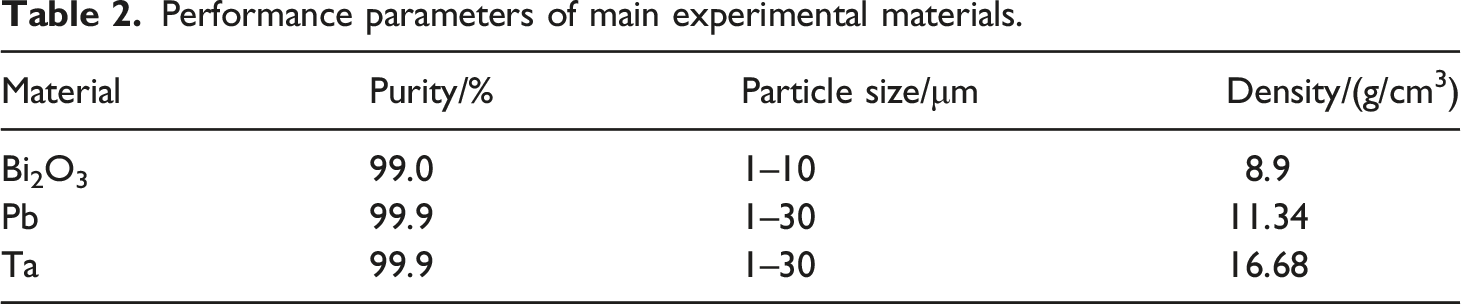
Main experimental reagents.

Performance parameters of main experimental materials.
Main experimental instruments.

Preparation of the Bi2O3/epoxy resin coating composites.
An appropriate amount of adhesive epoxy resin was taken and mixed with a certain amount of diluent anhydrous ethanol (10 wt% of epoxy resin), using an electric mixer for 30 min until mixed evenly. Then, specified quantities (10–50 wt% of total coating solution) of Bi2O3 powder, Pb powder, and Ta powder were added into the mixture and mixed for 20 min until mixed evenly. Finally, a certain amount of curing agent polyamide resin (60 wt% of epoxy resin) was added into the mixture and stirred until mixed evenly. At this point, the coating solution was finished.
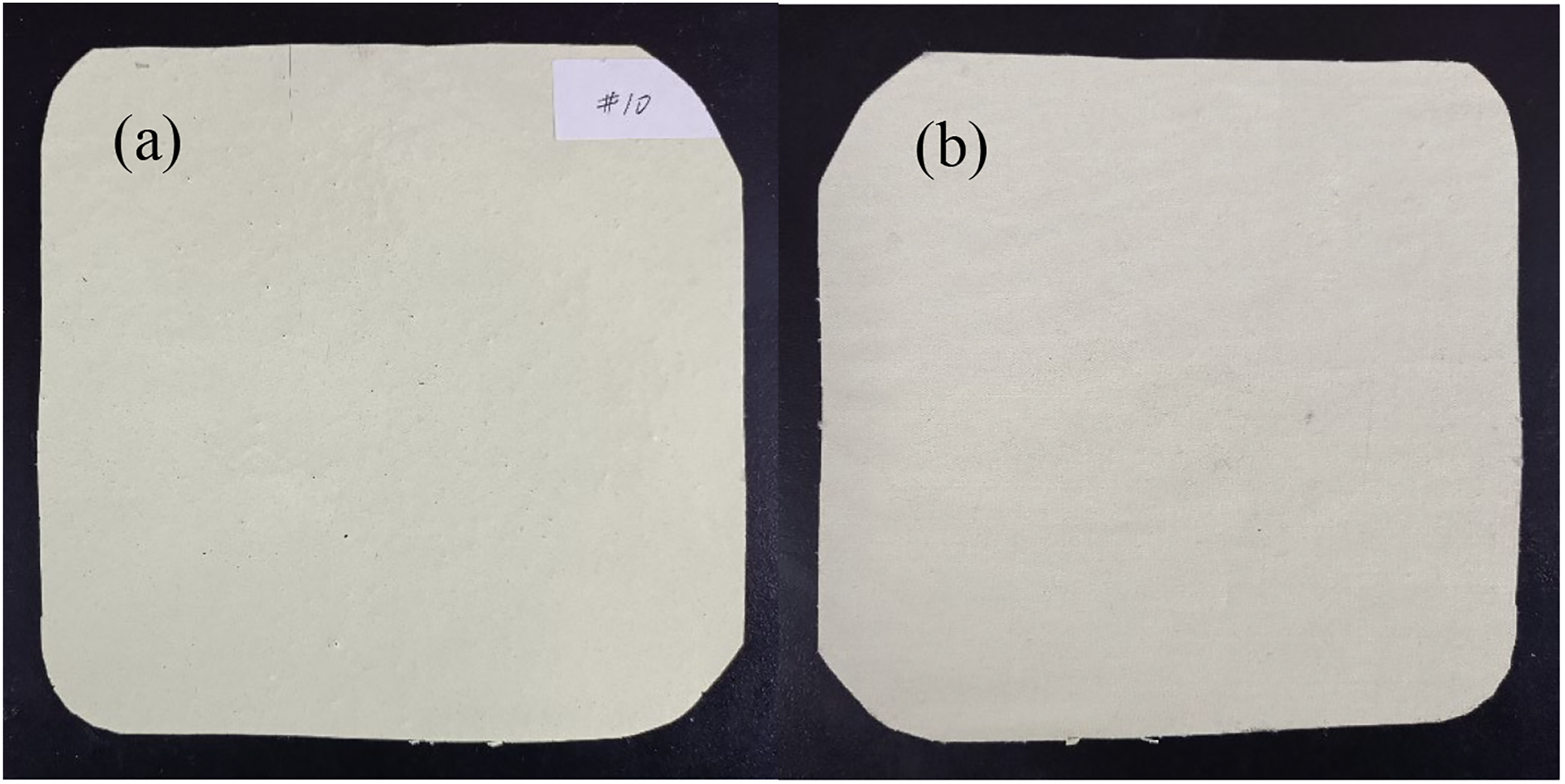
The base cloth of appropriate size was fixed on the needle board of the coating machine. The prepared coating solution was applied on the base cloth on the coating machine. After the coating was applied, the coated fabric was put on a horizontal test table and left at room temperature for 24 h to cure. The coated fabric was now prepared. The coating structure is shown in Figure 1; photographs of coated fabric sample are shown in Figure 2. Coated fabric composite structure. Photos of coated fabric samples. (a) Front, (b) back.
The microstructure testing
A TM3030 scanning electron microscope (SEM) and an APOLLO XL energy dispersive spectrometer (EDAX) were used to conduct microscopic analysis on the distribution of cross section powder of coated fabric composite materials (JY/T 010-1996 standard was implemented). 25 The test surface is the tensile fracture surface of the material.
Tensile performance testing
Tensile strength and elongation at break of coated textile composites were tested using an YG028 universal testing machine (The reference standard is HG/T 2580-2008).
26
The test method is constant speed tensile strip test, and the test sample is shown in Figure 3. Sample size is 200 mm × 50 mm, nominal gauge length is 100 mm, and the tensile speed is 100 mm/min. Samples after tensile fracture. (a) Front, (b) back.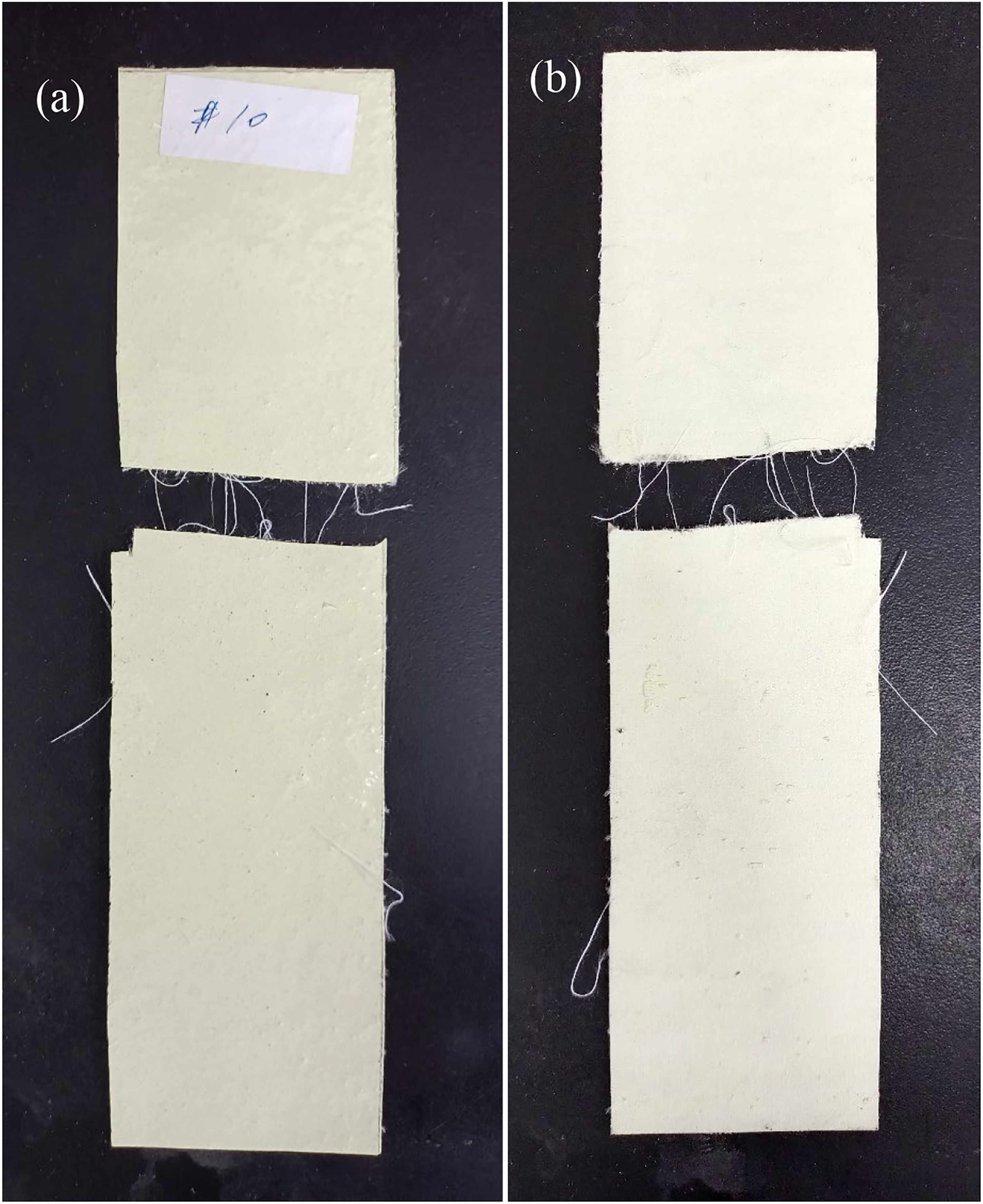
γ-ray protection performance testing
A BE3830 type wide energy ultra-low background high purity germanium (HPGe) gamma spectrometer system (provided by Beijing Institute of Defense and Chemical Research, as shown in Figure 4, with the point source of 241Am, 137Cs, and energies of 13.9, 20.7, 26.3, 32.1, 59.5 keV) produced by CANBERRA Company of the United States was used to determine the protective performance of the composite against γ-rays. The test method is a relative measurement. When the parameters of the spectrometer system (source distance, test time, test environment, and other conditions) are exactly the same, the shielding of radioactive sources with or without radiation shielding materials were used to measure and obtain the individual energy spectrum, and the shielding efficiency is calculated by using the total peak net area per unit live time. The distance between the source and the probe was 15 cm, and each detection was 180 s apart. BE3830 type wide energy ultra-low background high purity germanium gamma spectrometer system.
Results and discussion
Section analysis of Bi2O3/epoxy resin–coated composites
In order to explore the distribution of functional particles, SEM and Energy Dispersive X-ray Analysis (EDAX) tests were carried out on the cross section of the composite, and the results are shown in Figures 5–11. SEM images of the coated composites with different Bi2O3 contents. (a) 0% Bi2O3 content, (b) 20% Bi2O3 content, (c) 35% Bi2O3 content, (d) 50% Bi2O3 content. SEM images for coated composites with different coating thickness. (a) 0.6 mm, (b) 1.1 mm, (c) 1.6 mm. SEM images of Bi2O3-coated composites with different metal doping. (a) 5% Pb doping, (b) 10% Pb doping, (c) 2% Ta doping, (d) 5% Ta doping. EDAX images of Bi2O3-coated composites with 5% Pb doping. EDAX images of Bi2O3-coated composites with 10% Pb doping. EDAX images of Bi2O3-coated composites with 2% Ta doping. EDAX images of Bi2O3-coated composites with 5% Ta doping.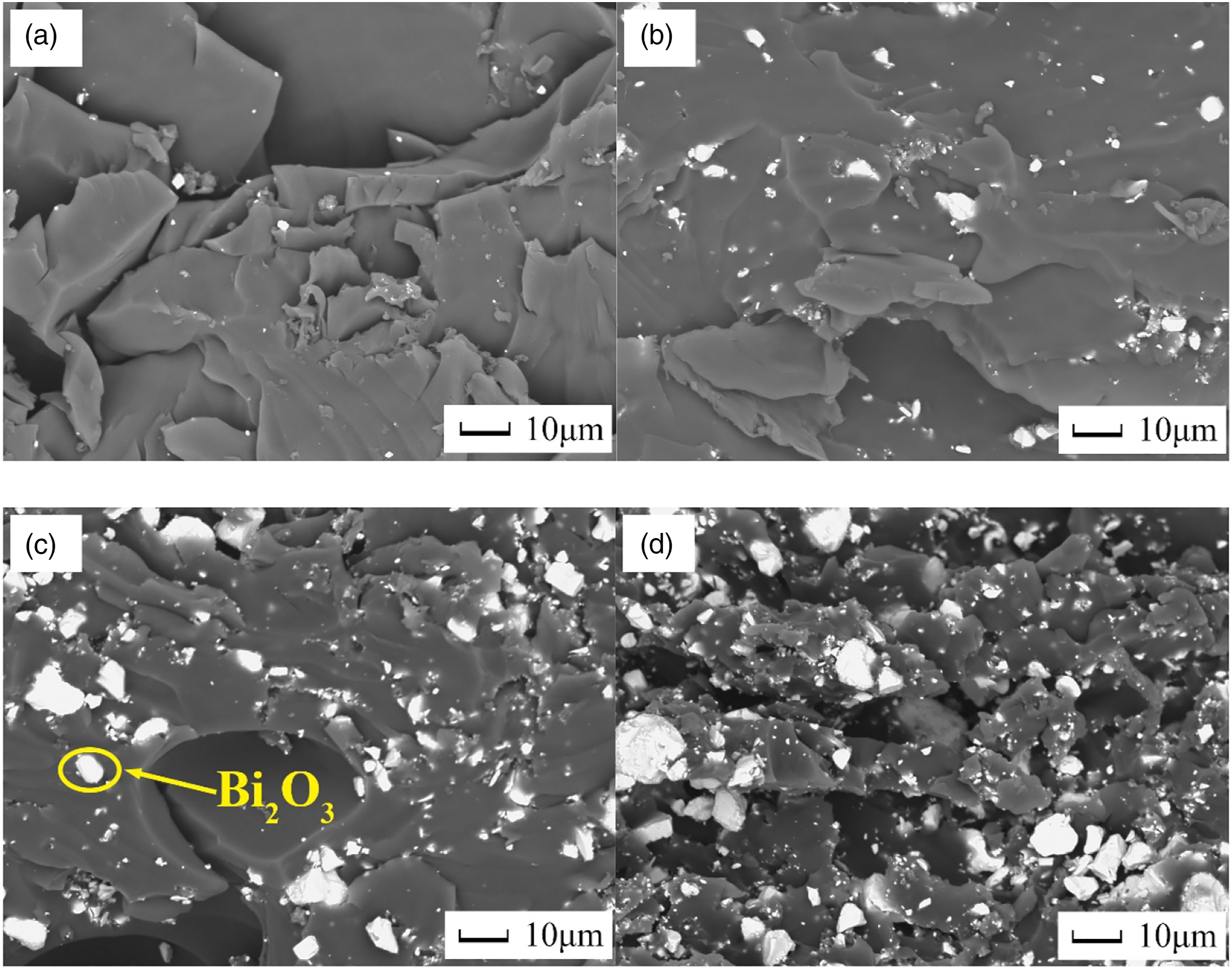


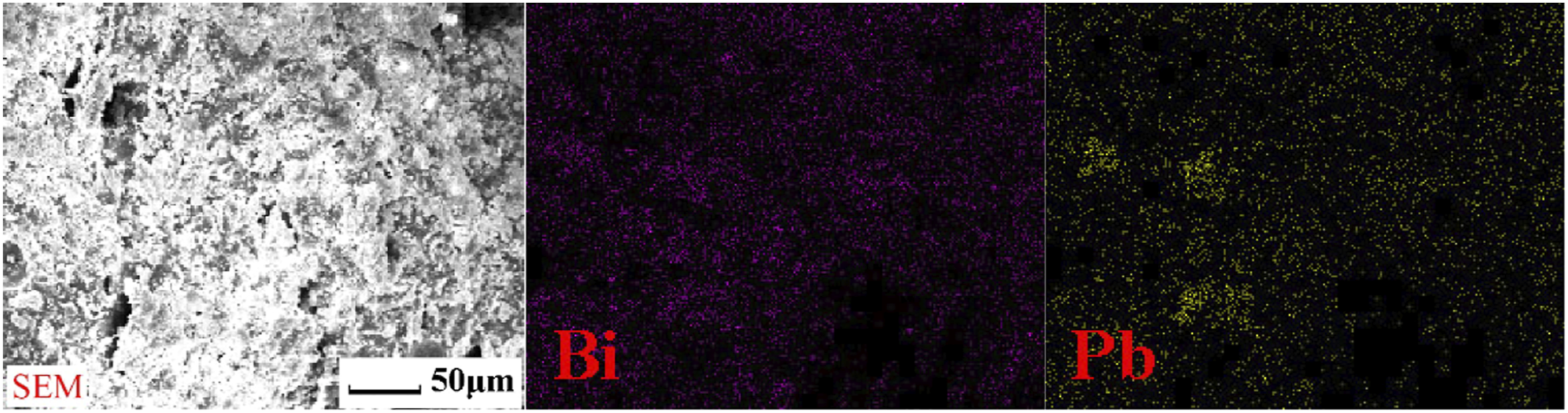


SEM images of coated composites with different process parameters are shown in Figures 5–7. Figure 5 shows the SEM images of the composite materials with different Bi2O3 contents. It can be seen that the distribution of the Bi2O3 particles is relatively uniform, but there are more obvious agglomerations. It may be because the inorganic Bi2O3 particles cannot react with the resin matrix and have weak intermolecular interactions with the resin. In addition, Bi2O3 is a heavy metal oxide with high density, which is easy to agglomerate due to gravity when the sample is not solidified. With an increase in Bi2O3 content, the distribution density of particles in the resin increases, and agglomeration becomes more obvious. As the content of the Bi2O3 increases, the number of particles per unit volume increases. These particles cannot be completely and uniformly dispersed in the resin, which increases the probability of agglomeration. As shown in Figure 5(d), when the content of Bi2O3 is 50%, aggregates with a particle size of up to about 20 μm appear on the material
Figure 6 is the SEM images of the composite with different coating thickness. With an increase in the coating thickness, agglomeration becomes more obvious. When the content of the functional particles is constant, the number of particles per unit area is certain, but the increase in the coating thickness increases the number of particles in the direction perpendicular to the coating layer, and the total number of particles in the composite increases. Due to the increased coating thickness, the number of Bi2O3 particles in the composite is increased. When the coating is not cured, the particles will precipitate downward in the resin due to gravity, which increases the probability of agglomeration of the functional particles.
Figure 7 is the cross-sectional SEM images of Bi2O3 coating composites with different types and contents of metal doping. EDAX images of coated composites with different process parameters are shown in Figures 8–10. The distribution of Bi element represents the distribution of Bi2O3 particles. It can be seen from Figures 7–11, for Pb doping and Ta doping, the agglomeration of functional particles in the composite decreases as the doping amount increases. This may be due to the different physical and chemical properties of Pb and Bi2O3 versus Ta and Bi2O3 after doping with the metal particles, the different adsorption points and capacities of the resin molecular chains, 27 after doping metal particles, Bi2O3 particles are separated in a small range, and Bi2O3 particles produce more dispersion areas in the matrix, resulting in more uniform dispersion in the matrix.
The influence factors of γ-ray protective properties of Bi2O3/epoxy coating composite
The influence of Bi2O3 content on γ-ray protection
Specification parameters for composite materials with different Bi2O3 contents.

When the content of Bi2O3 is 0%, the coating is only E44 epoxy.

γ-ray shielding rate of coating composite materials with different contents of Bi2O3. (a) Energy < 60 keV (b) energy = 59.5 keV.
γ-ray interaction with matter is mainly characterized by the photoelectric effect, Compton scattering, and the electron–positron pair effect. For shielding of low-energy γ-rays, the photoelectric effect and Compton scattering are mainly considered.31,32 The photoelectric effect is a gamma-photon interaction with bound electrons in a material atom,8,29 transferring all energy to the bound electrons, and the photons disappear and allow the bound electrons to overcome the binding energy (ionization energy) in the atomic shell and be emitted to form photoelectrons. Since the ionization energy of the bound electrons is generally much smaller than for the incident γ-rays, the kinetic energy of the photoelectrons is approximately equal to that of the incident γ-rays. Compton scattering refers to the collisions between the incident γ photons and the electrons. The electrons gain part of the energy of the photons and bounce back, which are called recoil electrons. The energy of the photons decreases and scatters in different directions. The electrons that can produce the scattering effect can be either free electrons or bound electrons within the atoms.
For low-energy γ-rays, the protective materials reduce part or all of the energy of the incident γ-rays mainly through the photoelectric effect or Compton scattering. The total absorption of photon energy depends mainly on the photoelectric effect, 31 and when the energy of the incident γ-rays is low, the photoelectric effect should be dominant; when the energy increases to a certain extent, it will tend to transition to Compton scattering. Therefore, improving the probability of the photoelectricity effect between materials and low-energy γ-rays can improve the γ-ray protection ability of materials. 28
The shielding rate of Bi2O3 crystals to γ-rays is affected mainly by the average particle size of the powder and its dispersion stability in the matrix. When the average particle size of the particles decreases and can be dispersed uniformly in the composite material, the shielding capacity to γ-rays increases.6,29 With an increase in Bi2O3 content, γ-ray absorption particles in the composite increase. When Bi2O3 is evenly dispersed in the composite, the density of absorption particles per unit area in the material increases, which improves its shielding ability to γ-rays. On the other hand, with an increase in the energy of the γ-rays, the photoelectric effect cross section and Compton scattering cross section decrease, so the shielding ability of the material to γ-rays decreases.
The influence of coating thickness on gamma ray protection
Specification parameters for composite materials with different coating thickness.
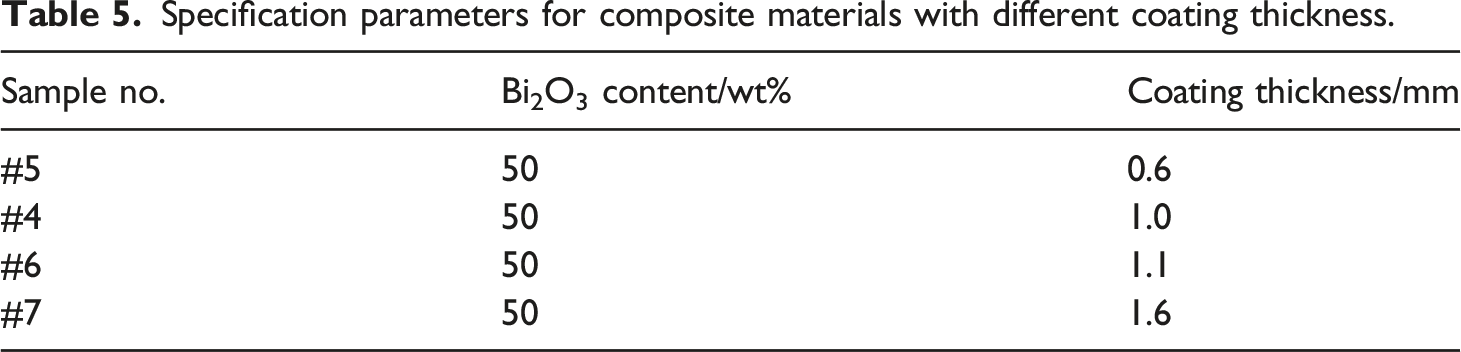

γ-ray shielding rate for coated composite materials with different coating thickness. (a) Energy < 60 keV (b) energy = 59.5 keV.
With increasing thickness of the coating, the number of γ-ray absorbing particles (Bi2O3) in the composite increases. When the γ-rays are incident on the material, more functional particles will hinder the radiation passing through the material along the incident direction; thus, the protection ability to γ-rays is improved. In general, the thicker the protective material is, the more absorbing particles are contained in the material along the direction of the incident γ-rays, which increases the probability of the photoelectric effect and Compton scattering between the incident γ photons and electrons, and improves the protective ability of the protective material to γ-rays. On the other hand, with an increase of γ-ray energy, the photoelectric effect cross section and Compton scattering cross section decrease, so the shielding ability of the material to the γ-rays decreases.
The influence of metal additives on γ-ray protection
The influence of Pb on γ-ray protection
Sample specifications and parameters for composite materials with different Pb contents.


Shielding rate of Pb doped Bi2O3-coated composites to γ-rays. (a) Energy < 60 keV (b) energy = 59.5 keV.
As for the attenuation of the γ-rays, the most common material besides uranium is lead. 5 Pb has a high attenuation coefficient and a good protective effect against the γ-rays. When the addition of Pb increases, γ-ray absorption particles (Bi2O3 and Pb) in the composite material increase, which improves the γ-ray protective ability of the material.
The influence of Ta on γ-ray protection
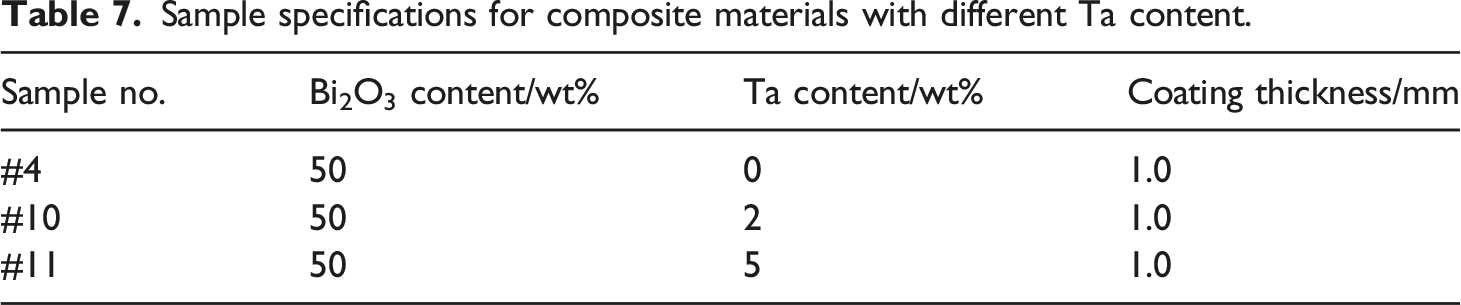
Sample specifications for composite materials with different Ta content.

Shielding rate of Ta doped Bi2O3-coated composites to γ-rays. (a) Energy < 60 keV (b) energy = 59.5 keV.
The influence of different metals on γ-ray protection
Specification parameters for composite samples with different metals added.

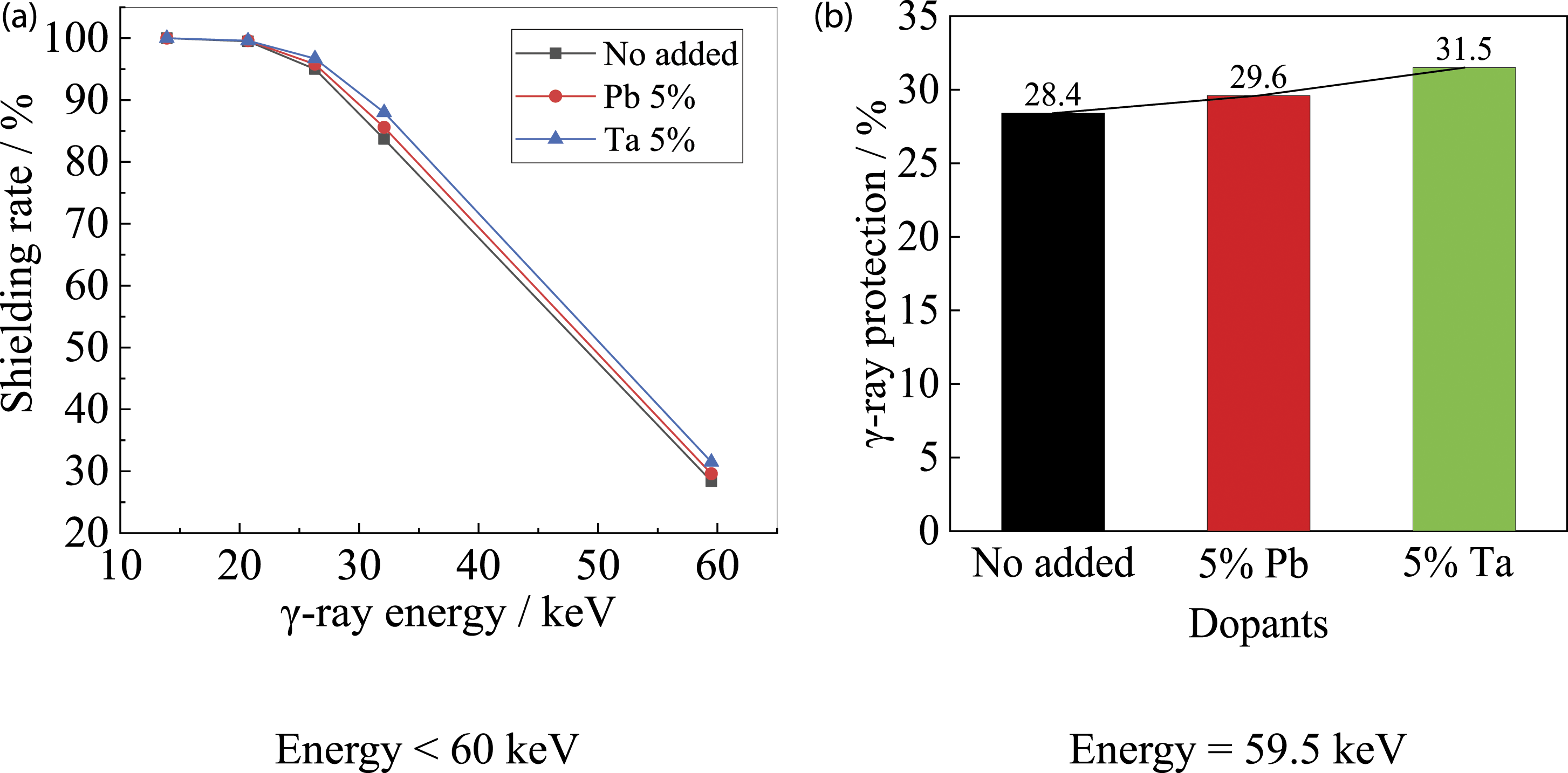
Shielding rate of different metal-doped Bi2O3-coated composite to γ-rays. (a) Energy < 60 keV (b) energy = 59.5 keV.
Mechanical properties of Bi2O3/epoxy-coated composite
The mechanical properties of the coated composites with different process parameters are shown in Figures 17–19. Figure 17 shows the displacementload curve and the tensile strength of the coated composite at different Bi2O3 contents. The coating thickness was 1.0 mm. It can be seen from Figure 17(a) that the elongation at break for the composite changes slightly with an increase in Bi2O3 content; it tends to increase initially and then decrease. When the content of Bi2O3 is 35%, the elongation at break of the composite reaches a maximum value of 1.91%; the elongation at break of the coated composite is considerably less than compared to the base cloth itself (14.03%). In this study, the base cloth is polyester/cotton blended woven fabric, which is a porous textile material with high strength and good elasticity. The epoxy resin used in the coating is easy to cross-link with the curing agent to form an insoluble polymer with a three-way network structure. After curing, the product is stable, its hardness is high, and its flexibility is good; but compared with the textile material, its elongation at break is decreased. The addition of micro/nano inorganic particles can enhance and toughen the polymer matrix to a certain extent.
6
When the content of Bi2O3 increases, the particles in the resin matrix increase, which serves to toughen the composite. When the content of Bi2O3 is too high, the resin content in the composite decreases and the elongation at break of the material decreases. Figure 17(b) shows that with an increase of Bi2O3 content, the tensile strength of the composite increases gradually, reaching its maximum (22.4 MPa) when the content of Bi2O3 is 50%. The results show that the addition of Bi2O3 improves the tensile strength of the composites. This may be because the surface of Bi2O3 particles forms a crosslinking point with the resin molecules,
28
which leads to an increase in the degree of crosslinking for the resin, thus improving the mechanical properties of the resin composites. Mechanical properties of composite materials with different Bi2O3 content. Mechanical properties of coated composites with different thickness. Mechanical properties of Bi2O3-coated composites doped with different metals.


Figure 18 shows the displacement–load curve and tensile strength for composites with different coating thicknesses. It can be seen from Figure 18(a) that the elongation at break of the composite materials is less than that for the base fabric alone. As the thickness increases, the main mechanical properties of the composite material are affected by the resin coating, and the elongation of the resin layer after curing is less than the elongation of the base fabric, so the elongation of the composite material is decreased. Figure 18(b) shows that as the thickness of the coating increases, the tensile strength of the composite decreases initially and then increases slightly, showing an overall downward trend. This may be due to the increase of the coating thickness, since the agglomeration of functional particles in the resin becomes more apparent, easy to produce stress concentration, resulting in a decrease in tensile strength of the composite.
Figure 19 shows the displacement–load curve and tensile strength for coated composites doped with different metals. The coating thickness is 1.0 mm. As can be seen from Figure 19(a), the elongation at break of 10% Pb-doped composite is less than for the 5% Pb-doped, and the elongation at break of the 5% Ta-doped composite is greater than for the 2% Ta-doped, and the 5% Pb-doped and 5% Ta-doped composites have almost the same elongation at break. After adding metal particles, only the 5% Pb-doped composites have a slightly longer elongation at break than for the base fabric. Micro/nano inorganic particles have a certain strengthening and toughening effect on the polymers, 6 but when the content of functional particles in the resin matrix is high, the addition of metal particles will increase the total content of inorganic particles in the resin. When the thickness of the composite is constant, the resin content decreases, which leads to a reduction in the elongation at break for the material. It can be seen from Figure 19(b) that the tensile strength of 10% Pb-doped composites is less than for 5% Pb-doped, and the tensile strength of 5% Ta-doped composites is greater than for 2% Ta-doped. The tensile strength of the doped metal composite is less than for the undoped Bi2O3-coated composite, which may be due to the different crystal forms and structures of the Pb, Ta, and Bi2O3 particles. As a result, the arrangement in the composite material is different, which can easily cause stress concentrations, thereby reducing the mechanical properties of the material.
Conclusions
By utilizing the coating process described, taking Bi2O3 as the functional powder, Pb and Ta as the metal additives, epoxy resin as the matrix, polyester/cotton blended woven fabric as the substrate and a Bi2O3-coated nuclear radiation protection composite, a Bi2O3/Pb-coated nuclear radiation protection composite and a Bi2O3/Ta-coated nuclear radiation protection composite were developed, and the properties of each composite were studied. The conclusions are as follows: (1) An increase in Bi2O3 content (mass fraction) can significantly improve the shielding efficiency of the composite material to γ-rays; the higher the content of Bi2O3, the better the shielding effect. When the content of Bi2O3 is 50% (coating thickness 1 mm), the shielding rate of the composite material to γ-rays (59.5 keV) reaches 28.4%; (2) An increase in coating thickness can significantly improve the shielding rate of the composite materials to the γ-rays; the greater the thickness, the better the shielding effect. When the coating thickness is 1.6 mm (Bi2O3 content 50%), the composite material has a shielding rate of 46.1% to the γ-rays (59.5 keV); (3) The addition of Pb and Ta can improve the shielding efficiency of the composite materials, and the larger the amount added, the better the shielding effect. Ta (with the same mass fraction as Pb) improves the shielding efficiency of the composite materials better than Pb does. The gamma-ray shielding rate at 59.5 keV increases from 28.4% to 31.5% with a 5% Ta addition; (4) An increase of Bi2O3 content (mass fraction) and an increase in coating thickness will aggravate the agglomeration of functional particles in the material, and the addition of metal additives can improve the dispersion of functional particles in the composite to a certain extent; (5) With an increase in Bi2O3 content (mass fraction), the fracture elongation of the composite increases initially and then decreases, and the tensile strength is increased. With an increase of coating thickness, the tensile strength and elongation at break of the composite are decreased. With the addition of metal additives, the tensile strength and elongation at break of the composite are reduced. Therefore, to ensure better mechanical properties while pursuing better radiation protection capabilities, a balanced combination of process parameters is required.
The Bi2O3/epoxy resin–coated composites prepared in this study have good properties γ ray shielding ability and mechanical properties. It has the advantages of simple preparation, low cost, and easy mass production. They are also relatively environment-friendly, efficient, and lightweight nuclear protection materials, which can be applied to mobile radiation protection screens, plates, doors, walls, etc.; application scenarios include hospital CT (Computer Tomography) room, X-ray room, operating room, Digital Radiography (DR) room, industrial flaw detection room, mining area, and so on. It can provide a reference for the research and development of green, light, and efficient nuclear radiation protection materials.
Footnotes
Acknowledgments
We acknowledge the funding support from the Natural Science Foundation of Tianjin City (18JCYBJC86600, 18JCZDJC99900) and the Gamma Protective Clothing Development Project (ECP No.008-ZB-B-2020-C45-P. T. 99-00229).
Declaration of conflicting interests
The author(s) declared no potential conflicts of interest with respect to the research, authorship, and/or publication of this article.
Funding
The author(s) received no financial support for the research, authorship, and/or publication of this article.
